

Dietary cholesterol drives fatty liver-associated liver cancer by modulating gut microbiota and metabolites
Open accessThe DOI matches its Crossref record; 43 of the 43 references it cites were found in a registry or an index.
Abstract
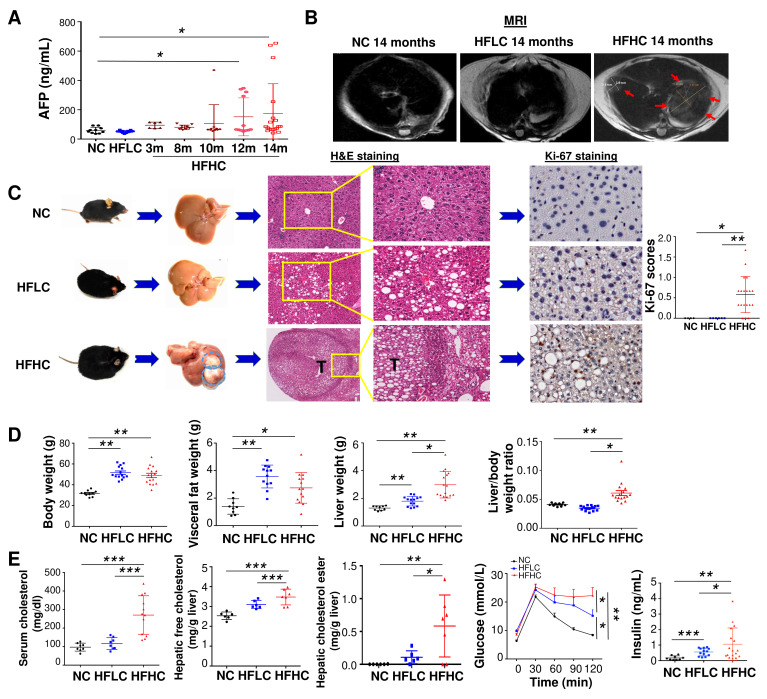
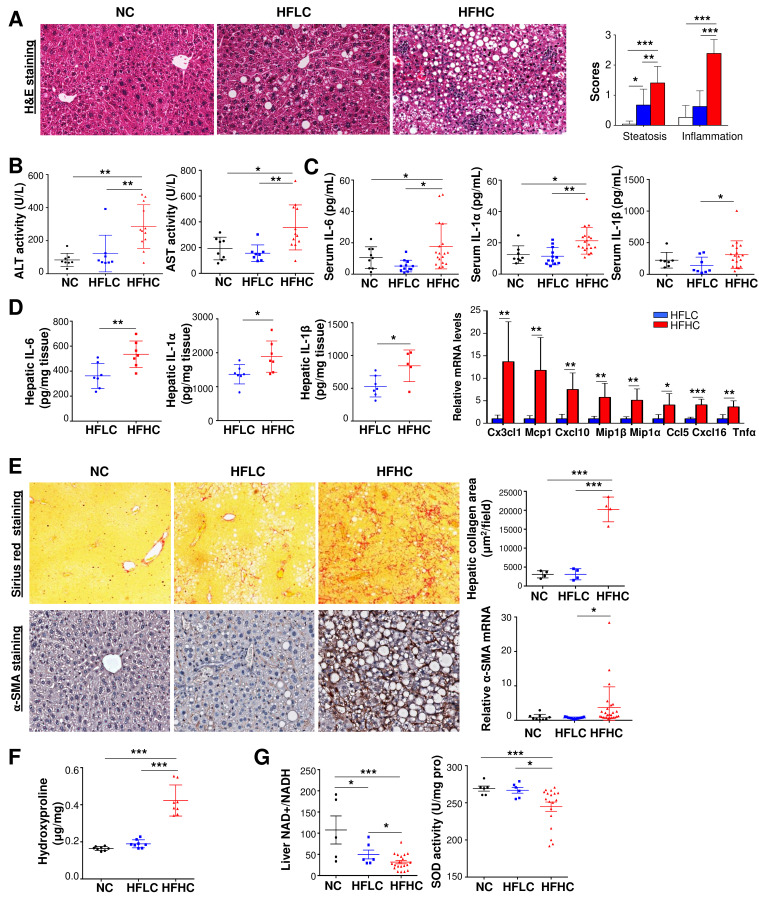
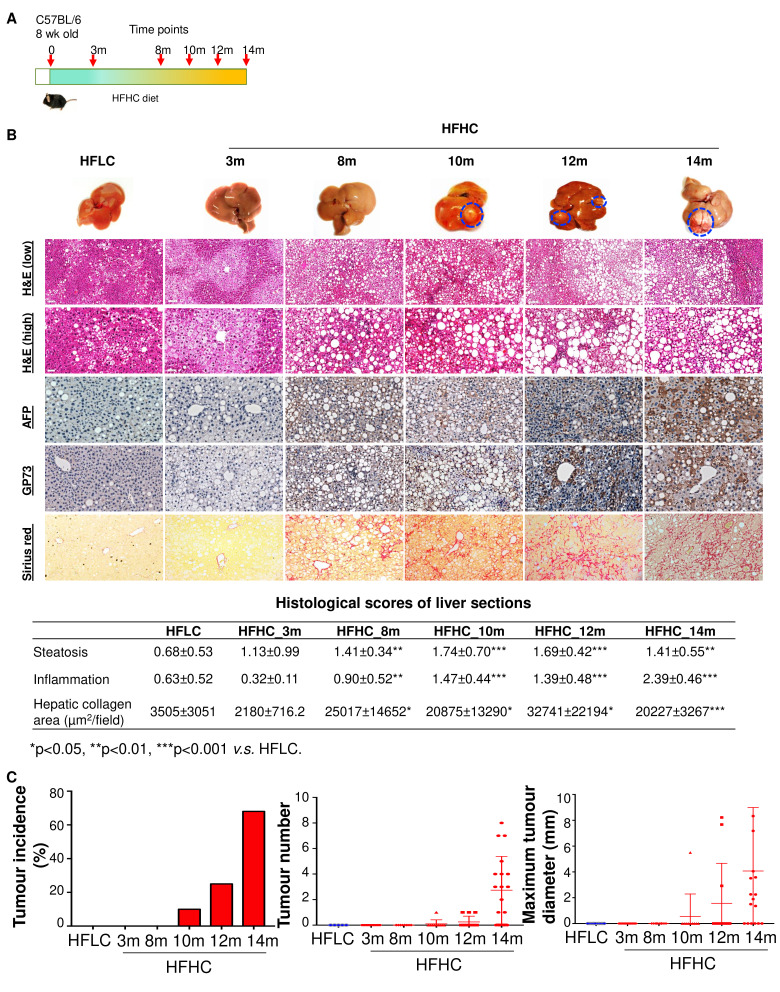
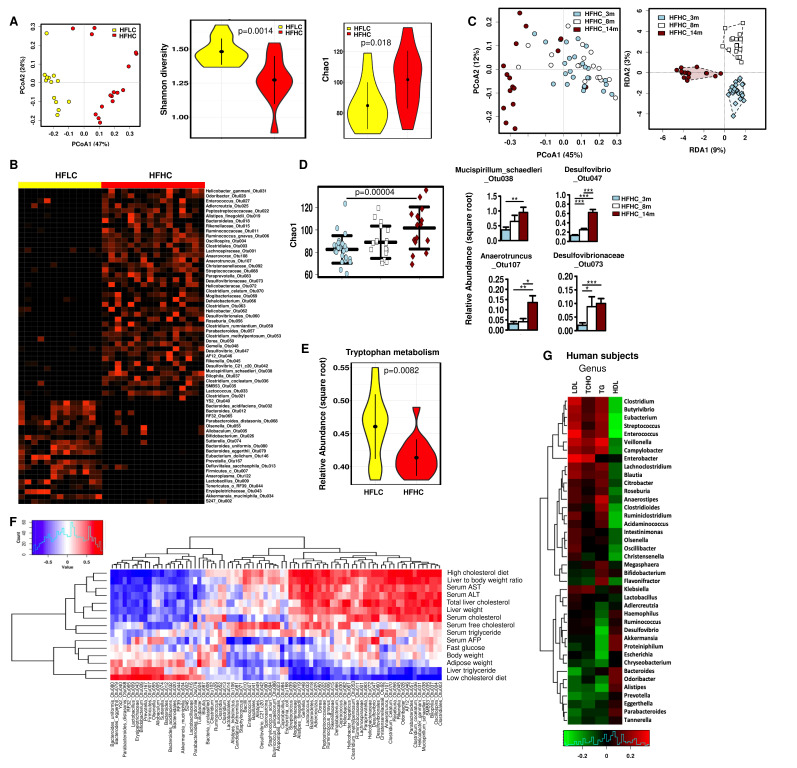
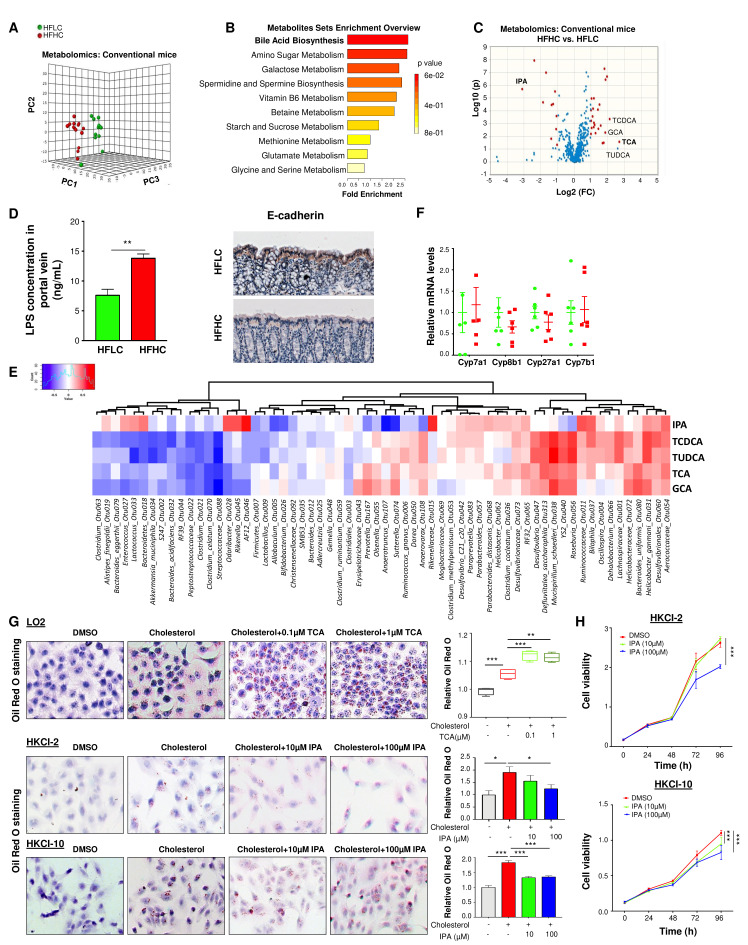
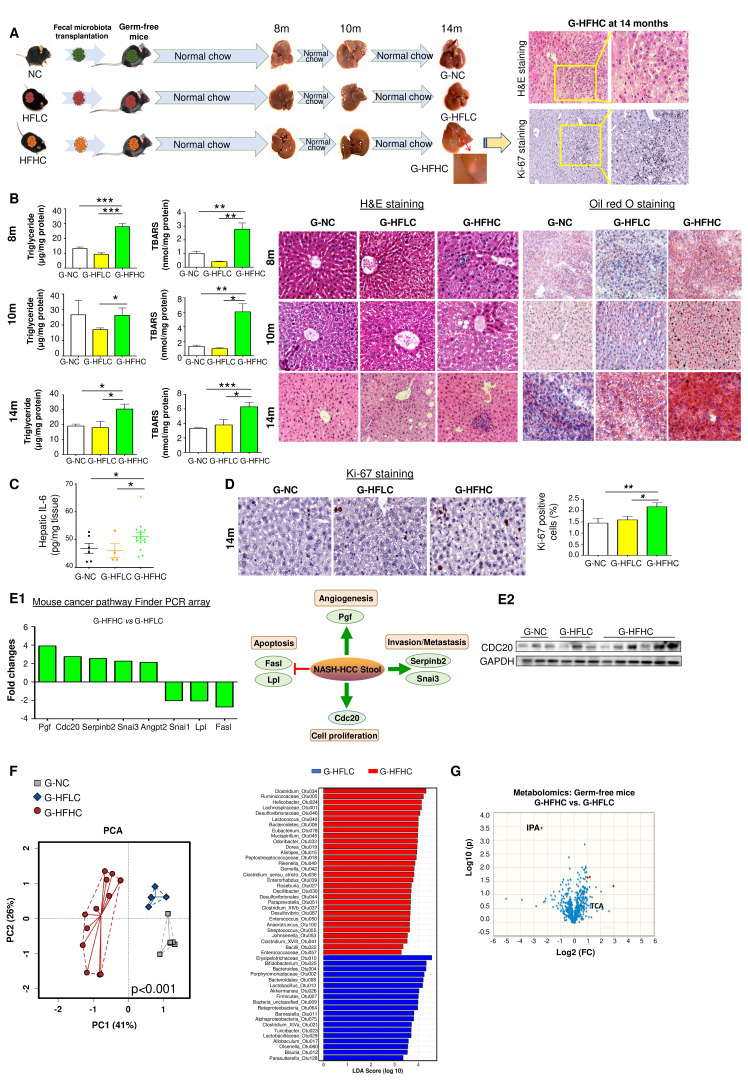
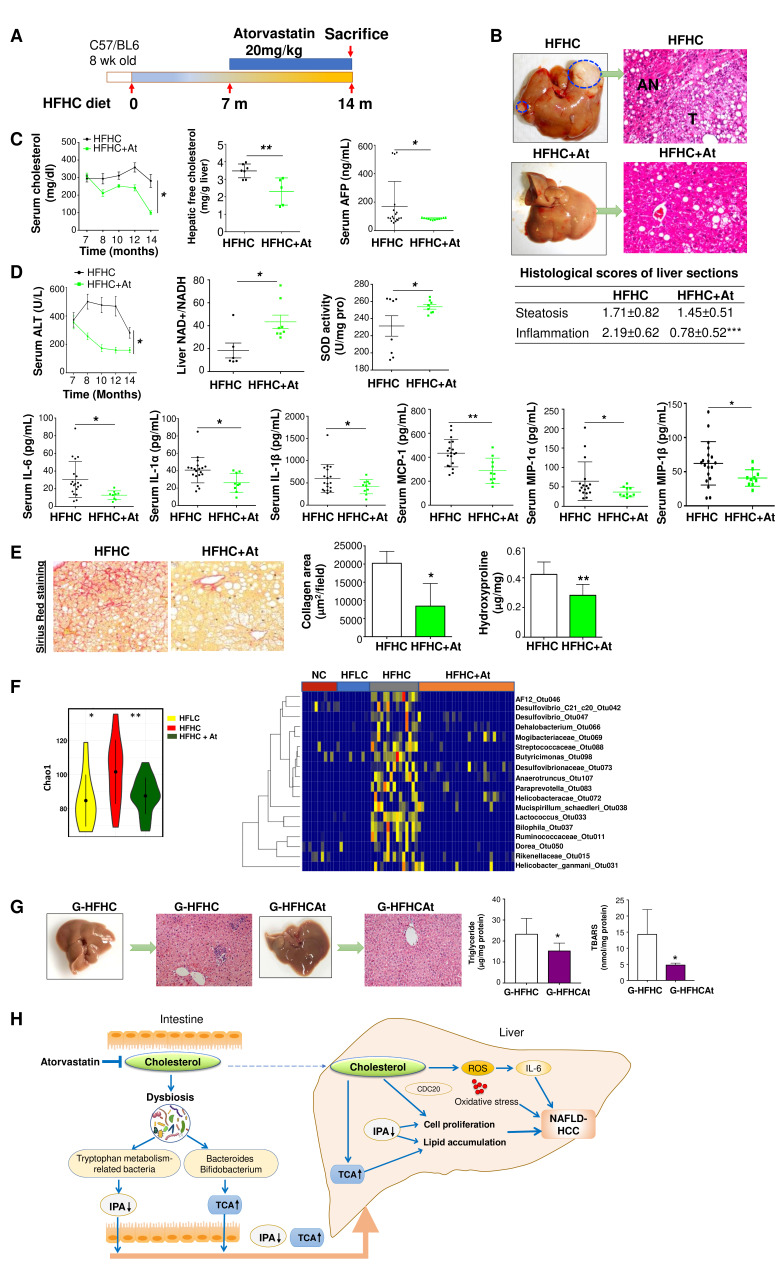
Objective: Non-alcoholic fatty liver disease (NAFLD)-associated hepatocellular carcinoma (HCC) is an increasing healthcare burden worldwide. We examined the role of dietary cholesterol in driving NAFLD–HCC through modulating gut microbiota and its metabolites. Design: High-fat/high-cholesterol (HFHC), high-fat/low-cholesterol or normal chow diet was fed to C57BL/6 male littermates for 14 months. Cholesterol-lowering drug atorvastatin was administered to HFHC-fed mice. Germ-free mice were transplanted with stools from mice fed different diets to determine the direct role of cholesterol modulated-microbiota in NAFLD–HCC. Gut microbiota was analysed by 16S rRNA sequencing and serum metabolites by liquid chromatography–mass spectrometry (LC–MS) metabolomic analysis. Faecal microbial compositions were examined in 59 hypercholesterolemia patients and 39 healthy controls. Results: High dietary cholesterol led to the sequential progression of steatosis, steatohepatitis, fibrosis and eventually HCC in mice, concomitant with insulin resistance. Cholesterol-induced NAFLD–HCC formation was associated with gut microbiota dysbiosis. The microbiota composition clustered distinctly along stages of steatosis, steatohepatitis and HCC. Mucispirillum, Desulfovibrio, Anaerotruncus and Desulfovibrionaceae increased sequentially; while Bifidobacterium and Bacteroides were depleted in HFHC-fed mice, which was corroborated in human hypercholesteremia patients. Dietary cholesterol induced gut bacterial metabolites alteration including increased taurocholic acid and decreased 3-indolepropionic acid. Germ-free mice gavaged with stools from mice fed HFHC manifested hepatic lipid accumulation, inflammation and cell proliferation. Moreover, atorvastatin restored cholesterol-induced gut microbiota dysbiosis and completely prevented NAFLD–HCC development. Conclusions: Dietary cholesterol drives NAFLD–HCC formation by inducing alteration of gut microbiota and metabolites in mice. Cholesterol inhibitory therapy and gut microbiota manipulation may be effective strategies for NAFLD–HCC prevention.
Overview
The claims and statistics of this paper haven’t been checked yet.
Free: it reads the open-access text and checks the first 5 claims that cite a source we can check. Create a free account to check every claim.
Integrity signals
Registry
Cites
Statistics
Figures
Verification
Claims the paper makes
The claims and statistics of this paper haven’t been checked yet.
Free: it reads the open-access text and checks the first 5 claims that cite a source we can check. Create a free account to check every claim.
Claims other papers make about this one
Each is checked against this paper’s own text: does it say what the citing paper says it does?
In the citing paper
“this genus has been associated with the pathogenesis of fatty-liver-associated liver cancer36.”
From Nivolumab plus ipilimumab with or without live bacterial supplementation in metastatic renal cell carcinoma: a randomized phase 1 trial (2022) · cites this paper as [36]
Self-check
Percentages, sums and reported differences re-computed from the paper’s own numbers.
The self-check needs the paper’s full text.
Citations
Cites
Vernon, G., Baranova, A., & Younossi, Z. M. (2011) · Alimentary Pharmacology & Therapeutics · doi:10.1111/j.1365-2036.2011.04724.x · Cited by 3,074 · cited 1×
“27 28 There are evidences that Bifidobacterium has cholesterol-lowering activity through gut microbiota modulation.”
Sayin, S. I., Wahlström, A., Felin, J., Jäntti, S., Marschall, H.-U., Bamberg, K., Angelin, B., Hyötyläinen, T., Orešič, M., & Bäckhed, F. (2013) · Cell Metabolism · doi:10.1016/j.cmet.2013.01.003 · Cited by 2,331
Microbial tryptophan catabolites in health and disease
Roager, H. M., & Licht, T. R. (2018) · Nature Communications · doi:10.1038/s41467-018-05470-4 · Cited by 2,236 · cited 1×
“IPA is a specific metabolite whose production completely depends on tryptophan metabolism by the gut microbiota 18 and characterised as being anti-inflammatory and protective of intestinal barrier integrity.”
Bile acid-microbiota crosstalk in gastrointestinal inflammation and carcinogenesis
Jia, W., Xie, G., & Jia, W. (2018) · Nature Reviews Gastroenterology & Hepatology · doi:10.1038/nrgastro.2017.119 · Cited by 1,924 · cited 2×
“40 Therefore, the decreased Bifidobacterium and Bacteroides in the stool of HFHC-fed mice may account for the accumulated taurine-conjugated bile acids in HFHC-fed mice.”
Zhu, L., Baker, S. S., Gill, C., Liu, W., Alkhouri, R., Baker, R. D., & Gill, S. R. (2013) · Hepatology · doi:10.1002/hep.26093 · Cited by 1,708 · cited 3×
“27 28 There are evidences that Bifidobacterium has cholesterol-lowering activity through gut microbiota modulation.”
Gut microbiome–mediated bile acid metabolism regulates liver cancer via NKT cells
Ma, C., Han, M., Heinrich, B., Fu, Q., Zhang, Q., Sandhu, M., Agdashian, D., Terabe, M., Berzofsky, J. A., Fako, V., et al. (2018) · Science · doi:10.1126/science.aan5931 · Cited by 1,508 · cited 1×
“21 We therefore explored the potential involvement of the gut microbiota in mediating dietary cholesterol-induced NAFLD–HCC.”
Gut microbial metabolites in obesity, NAFLD and T2DM
Canfora, E. E., Meex, R. C. R., Venema, K., & Blaak, E. E. (2019) · Nature Reviews Endocrinology · doi:10.1038/s41574-019-0156-z · Cited by 1,493
A gut bacterial pathway metabolizes aromatic amino acids into nine circulating metabolites
Dodd, D., Spitzer, M. H., Van Treuren, W., Merrill, B. D., Hryckowian, A. J., Higginbottom, S. K., Le, A., Cowan, T. M., Nolan, G. P., Fischbach, M. A., et al. (2017) · Nature · doi:10.1038/nature24661 · Cited by 1,425 · cited 1×
“…and potentially, those of other enriched bile acids to the pathogenesis of cholesterol-induced NAFLD–HCC. Additionally, IPA, which is exclusively produced by commensal gut microbes, 41 42 was depleted in both HFHC-fed conventional mice and germ-free mice transplanted with stools from HFHC-fed mice.”
Venkatesh, M., Mukherjee, S., Wang, H., Li, H., Sun, K., Benechet, A. P., Qiu, Z., Maher, L., Redinbo, M. R., Phillips, R. S., et al. (2014) · Immunity · doi:10.1016/j.immuni.2014.06.014 · Cited by 1,066 · cited 2×
“36 Disruption of bile acid homeostasis alters metabolic homeostasis in the liver and can lead to hepatic inflammation and metabolic diseases including diabetes and NAFLD.”
Gut microbiota and human NAFLD: disentangling microbial signatures from metabolic disorders
Aron-Wisnewsky, J., Vigliotti, C., Witjes, J., Le, P., Holleboom, A. G., Verheij, J., Nieuwdorp, M., & Clément, K. (2020) · Nature Reviews Gastroenterology & Hepatology · doi:10.1038/s41575-020-0269-9 · Cited by 1,063
Cited by
Items 601–700 of 916
Fang, S., Han, H., Wang, R., Li, S., Yang, R., Mehmood, S., & Jia, Q. (2025) · Scientific Reports · doi:10.1038/s41598-025-27783-3 · Cited by 4
The versatile interplay between steatotic liver disease and liver cancer
Rahbari, M., Gris‐Oliver, A., Ramadori, P., Aicher, D., Sia, D., MALEK, N. P., Loomba, R. S., Bataller, R. A., Llovet, J. M., & Heikenwälder, M. F. (2026) · Nature reviews. Cancer · doi:10.1038/s41568-026-00918-y · Cited by 4
“Interestingly, transplantation of faeces from high-fat and high-cholesterol diet-fed mice into germ-free mice was sufficient alone to induce MASLD and eventually promote tumorigenesis 175 .”
Qiao, S., Fan, S. Y., Xu, J., Xu, Z., Peng, C., Qu, J., Bing, Z., Zhou, S., Shen, S., Xu, G., et al. (2026) · Advanced Science · doi:10.1002/advs.202514830 · Cited by 4
Gut microbiota and pancreatic cancer: tumorigenesis, progression, and clinical applications
Cheng, C., 王劲松, Xie, J., Yin, H., Xu, Z., Xie, Y., He, T., Jiang, Z., Wang, Y., Wu, W. Z., et al. (2026) · Cancer Biology and Medicine · doi:10.20892/j.issn.2095-3941.2025.0650 · Cited by 4
Self-citationWyss, J., Raselli, T., Wyss, A., Telzerow, A., Rogler, G., Krupka, N., Yılmaz, B., Schmidt, T., & Misselwitz, B. (2024) · BMC Microbiology · doi:10.1186/s12866-024-03195-7 · Cited by 4
Maiuolo, J., Liuzzi, F., Spagnoletta, A., Oppedisano, F., Macrì, R., Scarano, F., Caminiti, R., Nucera, S., Serra, M. D. R., Palma, E., et al. (2024) · Plants · doi:10.3390/plants13152123 · Cited by 4
“Nevertheless, it thrives best in a narrow coastal region in Reggio Calabria, Calabria, Italy [22], where the plant yields superior quality.”
BackgroundLiu, Y., Song, H., Li, J., Xing, W., Li, J., Wu, R., & Wu, J. (2024) · Food and Bioprocess Technology · doi:10.1007/s11947-024-03562-2 · Cited by 4
“Cholesterol is a waxy, fatlike substance generated principally by the liver (Zhang et al., 2021).”
Butoyi, C., Iqbal, M. A., & Boateng, I. D. (2025) · Human Nutrition & Metabolism · doi:10.1016/j.hnm.2025.200313 · Cited by 4
Rodríguez-Rojas, L. A., Bucio, L., Souza-Arroyo, V., Gutiérrez‐Ruíz, M. C., Gómez-Quiroz, L. E., & Miranda-Labra, R. U. (2025) · Exploration of Digestive Diseases · doi:10.37349/edd.2025.100583 · Cited by 4
Effects of High-Fat Diet on the Gut Microbiota of Renalase Gene Knockout Mice
Fang, H., Aoki, K., Tokinoya, K., Yonamine, M., Sugasawa, T., Kawakami, Y., & Takekoshi, K. (2022) · Obesities · doi:10.3390/obesities2030025 · Cited by 4
“Increased abundance of Anaerotruncus and Desulfovibrionaceae were corroborated in human hypercholesteremia patients [46].”
BackgroundPrecision Nutrition from the View of the Gut Microbiome
Dikarlo, P., Dorst, I., Moskalenko, O., & Yateem, M. (2022) · Springer eBooks · doi:10.1007/978-3-031-10153-3_4 · Cited by 4
Shen, Y., Li, X., Xiong, S., Hou, S., Zhang, L., Wang, L., Dai, X., & Zhao, Y. (2023) · Free Radical Research · doi:10.1080/10715762.2023.2226315 · Cited by 4
Association of lipid-lowering drugs with gut microbiota: A Mendelian randomization study
Shi, L., Liu, X., Li, E., Zhang, S., & Zhou, A. (2024) · Journal of clinical lipidology · doi:10.1016/j.jacl.2024.05.004 · Cited by 4
Han, H., Tian, L., Dong, Y., Han, Y., Wang, X., Cheng, Q., Zhang, H., & Zhang, Y. (2024) · Food Science and Human Wellness · doi:10.26599/fshw.2024.9250146 · Cited by 4
“Then FMT study was conducted according to a previously established protocol [36] .”
Shakarami, M., Zaman, B. A., Sedaghat, A., Qassem, H. M. A., Zedann, Y. A., Soud, N. A., Adil, M., Shirvani, S., & Nikbin, N. (2024) · BMC Endocrine Disorders · doi:10.1186/s12902-024-01697-z · Cited by 4
“Hepatic fat accumulation as a result of dietary cho- lesterol-induced gut microbiota dysbiosis and insulin resistance is also reported [27].”
BackgroundSu, F., Bai, C.-X., Zhang, W., Liu, M., Li, B., Sun, M., He, Y., Zeng, Y.-N., Sun, Y., Yang, B., et al. (2025) · International Journal of Biological Macromolecules · doi:10.1016/j.ijbiomac.2025.143932 · Cited by 4
Ding, M., Qi, X.-S., Huang, W., Lin, Y., & Yan, H. (2025) · Acta Biochimica et Biophysica Sinica · doi:10.3724/abbs.2025081 · Cited by 4
“Our study provides compelling evidence that CD24 + LCN2 + LPCs engage in multifaceted communication with TPPP3 + COL10A1 + macrophages through multiple inflammation - licensed signaling axes, including MIF [45], COMPLEMENT [46], ANGPTL [47], NOTCH [48], JAM [49], and CX3C [50].”
Desjonqueres, E., & Gigante, E. (2022) · Hepatoma Research · doi:10.20517/2394-5079.2021.136 · Cited by 4
Alterations of ileal mucosa-associated microbiota in hypercholesterolemia patients
Li, J., Ma, J., Wang, W., Du, H., Tang, S., Li, Y., Zhu, W., Zhang, R., & Wan, J. (2023) · Heliyon · doi:10.1016/j.heliyon.2023.e22116 · Cited by 3
“In addition to Crohn ’ s disease and ulcerative colitis, a growing number of studies have linked the gut microbiota to certain metabolic disorders, such as atherosclerosis [2], obesity [10], type 2 diabetes mellitus [11], and non-alcoholic fatty liver disease (NAFLD) [12].”
BackgroundSecond brain: reviewing the gut microbiome’s role in lifestyle diseases
Ray, H., Khatum, J., Haldar, S., & Bhowmik, P. (2025) · Biotechnologia · doi:10.5114/bta/195495 · Cited by 3
“A study revealed that a high-cholesterol diet leads to the accumulation of N,N,N-trimethyl-5-ami-novaleric acid (TMAVA), which induces liver inflammation and may be linked to hepatic carcinoma (Zhang et al., 2021).”
Wu, J., Xiang, J., Song, P., Bai, Y., Che, Q., Cao, H., Guo, J., & Su, Z. (2025) · Journal of Food Science · doi:10.1111/1750-3841.70361 · Cited by 3
Zhou, H., Du, Y., Yu, G., Liu, W., Zeng, J., Wang, B., Chen, M., Wang, Y., Zhang, W., & Wei, X. (2025) · Frontiers in Microbiology · doi:10.3389/fmicb.2025.1595651 · Cited by 3
Self-citationHermanson, J. B., Tolba, S. A., Gazi, M. A., Chrisler, E. A., Kaur, M., Sidebottom, A. M., Liu, Y.-J., Boggio, G. M., Lucas, L. N., Amador‐Noguez, D., et al. (2026) · Gut Microbes · doi:10.1080/19490976.2026.2668121 · Cited by 3
“20 While these findings implicate microbial metabolites in steatosis, their contribution to fibrogenesis, as well as the distinct roles of dietary cholesterol vs. saturated fat, remain unclear.”
InfluentialLin, Y., Jiang, P., Cai, W., Huang, Y., Lin, Q., Wang, M., Chen, F., Qi, Y., & Li, D. (2025) · Tissue and Cell · doi:10.1016/j.tice.2025.103134 · Cited by 3
Yu, H., Niu, X., Niu, B., Lei, P., Xu, N., Yang, S., Quan-yong, Y., Li, G., & Wang, L. (2025) · International Journal of Molecular Sciences · doi:10.3390/ijms26199746 · Cited by 3
“…abundance of Staphylococcaceae has been reported in pediatric nonalcoholic fatty liver disease [26] and cirrhosis-associated gut microbiota profiles [27], whereas Desulfovibrionaceae (sulfate-reducing, endotoxin-producing bacteria) have been implicated in steatohepatitis and liver cancer [28,29].”
Wang, R., Tang, D., Wu, L., Ou, L., Ding, L., Jiang, J., & Wu, Y. (2025) · The International Journal of Biochemistry & Cell Biology · doi:10.1016/j.biocel.2025.106873 · Cited by 3
Parida, D., Mishra, S., Mohapatra, A. P., Sethi, M., Das, K. R., Kar, S., Suresh, V., Bhagat, S. J., Mohapatra, A., Halder, S., et al. (2025) · Cellular and Molecular Gastroenterology and Hepatology · doi:10.1016/j.jcmgh.2025.101644 · Cited by 3
“23 In the present study, we demonstrated for the first time that high dietary cholesterol, along with cholic acid, develops phenotypes similar to nonobese MASLD and induces PDAC progression in KC mice.”
Cai, K., Chen, Z., Wu, J., Wang, Q., Zhou, X., Pan, B., Xie, Z., Li, P., Chen, F., Chen, H., et al. (2025) · Chinese Medicine · doi:10.1186/s13020-025-01237-4 · Cited by 3
“Research indicated a strong connection between NAFLD onset and gut microbiota dysbiosis [2, 3].”
Jiang, L., Wang, B., Wang, W., Bai, B., Hou, Z., Ye, X., Jiang, Z., & Chen, S. (2026) · Food Research International · doi:10.1016/j.foodres.2026.118633 · Cited by 3
Wu, L. H., Yang, J., Pakkiri, L. S., Monteiro, L. J., Peñailillo, R. S., Lim, P. L., Choolani, M. A., Kemp, M. W., Li, L.-J., Cantin, C., et al. (2026) · American Journal of Physiology-Heart and Circulatory Physiology · doi:10.1152/ajpheart.00854.2025 · Cited by 3
Luo, Y., Zhang, Y., Zhang, Q., Li, X., Cai, K., Xu, Y., Zhao, R., Zhang, S., Bai, X., Chen, H., et al. (2026) · Hepatology Communications · doi:10.1097/hc9.0000000000000975 · Cited by 3
“[11] In addition, obacunone (Oba) could rebalance gut-liver crosstalk via microbiota-derived metabolites in MASLD.”
Tearle, J. L. E., Sviriaeva, E. N., Zhang, F. C., Jackson, K., Kaye, J., Tavakoli, P., Koentgen, S., Warren, J., Liang, R. R., Malhotra, P., et al. (2026) · Nature Communications · doi:10.1038/s41467-026-75231-1 · Cited by 3
“Previous studies have similarly reported enrichment in Pseudomonas 7 and Blautia 42 in the PSC-UC mucosal microbiome, as well as Desulfovibrio in patients with chronic liver disease 49,50 .”
Vive la resistant starch: A potential treatment for metabolic dysfunction-associated steatohepatitis
Zhang, X., Yu, J. Q., & Wong, V. W. (2023) · Cell Metabolism · doi:10.1016/j.cmet.2023.07.004 · Cited by 3
Self-citationGut Microbiota and Cardiovascular Disease
Negm, S. H. (2023) · Wiley eBooks · doi:10.1002/9781119904786.ch9 · Cited by 3
Oh, H., & Yoon, Y. (2024) · Food Science and Human Wellness · doi:10.26599/fshw.2022.9250252 · Cited by 3
Chen, L., Zhang, J., Ding, L., Gu, T., Andoh, V., Ma, A., & Yao, C. (2024) · Comparative Biochemistry and Physiology Part D Genomics and Proteomics · doi:10.1016/j.cbd.2024.101344 · Cited by 3
Gorji, A. E., Ciecierska, A., Leontowicz, H., Roudbari, Z., & Sadkowski, T. (2024) · Nutrients · doi:10.3390/nu16233999 · Cited by 4
New insights into N6-methyladenosine in hepatocellular carcinoma immunotherapy
Li, M., Tian, H., Zhuang, Y., & Zhang, Z. (2025) · Frontiers in Immunology · doi:10.3389/fimmu.2025.1533940 · Cited by 3
An umbrella review of the association between dietary factors and hepatocellular carcinoma risk
Li, H., Cao, Q., Liu, H., Yan, L., Ding, Z., Wang, H., Dong, R., Tian, B., Han, C., Dong, Z., et al. (2025) · Food & Function · doi:10.1039/d4fo06165a · Cited by 3
Chen, T.-H., Hsu, C., Lin, H., Ho, C., Chang, C., Huang, C., & Wang, Y. (2025) · Life Sciences · doi:10.1016/j.lfs.2025.123839 · Cited by 3
Self-citation[Intestinal flora polymorphisms with different lesional stages in an animal model of MAFLD].
Xia, Q. Y., Lu, D., Zhang, J. M., Wei, Y. C., Yang, M. M., Yang, Z., & Cao, M. B. (2021) · PubMed Central · doi:10.3760/cma.j.cn501113-20200826-00478 · Cited by 3
Wei, R., Fan, G.-H., Zhang, C.-Z., Chen, K., Zhang, W., Li, C., Dong, S., Chen, J., Ling, S., Zheng, S., et al. (2022) · Hepatobiliary & pancreatic diseases international · doi:10.1016/j.hbpd.2022.05.005 · Cited by 3
Xu, P., Hong, Y., Chen, P., Wang, X., Li, S., Wang, J., Meng, F., Zhou, Z., Shi, D., Li, Z., et al. (2022) · Frontiers in Microbiology · doi:10.3389/fmicb.2022.970563 · Cited by 3
Hepatic macrophage mediated immune response in liver steatosis driven carcinogenesis
Tu, T., Alba, M. M., Datta, A. A., Hong, H., Hua, B., Jia, Y., Khan, J., Nguyen, P., Niu, X., Pammidimukkala, P., et al. (2022) · Frontiers in Oncology · doi:10.3389/fonc.2022.958696 · Cited by 3
“In several mouse models including those lacking p53 and Indian Hedgehog, consumption of a Western-style diet, or a high-fat/high-cholesterol diet to the point of developing hepatic steatosis was shown to promote higher liver tumor incidence than the control diet group (53, 54).”
BackgroundAntibiotics-Induced Intestinal Immunomodulation Attenuates Experimental Autoimmune Neuritis (EAN)
Sprenger‐Svačina, A., Klein, I., Svačina, M. K. R., Bobylev, I., Kohle, F., Schneider, C. A., Schweitzer, F., Piekarek, N., Barham, M., Vehreschild, M. J. G. T., et al. (2024) · Journal of Neuroimmune Pharmacology · doi:10.1007/s11481-024-10119-9 · Cited by 3
“On the family level, Bacillaceae , and, on the genus level, Anaerotruncus and UBA1819 were significantly reduced by antibiotics treatment in EAN rats, but not compared to healthy controls (Figs.”
BackgroundInfluentialInteresterified palm oil leads to distinct variation in the intestinal microbiota of mice
Menta, P. L. D. R., Umanets, A., Miyamoto, J. É., Siqueira, B. P., Sartoratto, A., Ignácio-Souza, L. M., Torsoni, A. S., Torsoni, M. A., Leal, R. F., Antunes, A. E. C., et al. (2024) · Food Bioscience · doi:10.1016/j.fbio.2024.105032 · Cited by 3
Liu, L., Fan, Y., & Pi, H. (2024) · Journal of Radiation Research and Applied Sciences · doi:10.1016/j.jrras.2024.101131 · Cited by 3
Beneficial Probiotics with New Cancer Therapies for Improved Treatment of Hepatocellular Carcinoma
Nakashima, M., Fukumoto, A., & Matsuda, S. (2025) · Diseases · doi:10.3390/diseases13040111 · Cited by 3
Wang, S., Yang, G., Wu, S., Liu, Y., Wen, X., Chen, S., Luo, D., & Liu, Q. (2025) · ONCOLOGIE · doi:10.1515/oncologie-2024-0667 · Cited by 3
“Chronic cholesterol feeding induces HCC in experimental mice [34].”
Drug-gut Microbiome Interaction in Atherosclerosis Therapeutics
Zhang, H.-J., Wang, Y., & Jiang, J. (2023) · Current Drug Metabolism · doi:10.2174/1389200224666230410094806 · Cited by 3
Self-citationPomegranate Seeds: The Antioxidant Marvel and Its Therapeutic Journey
Seher, S. S., & Ali, N. A. (2024) · Advances in medical diagnosis, treatment, and care (AMDTC) book series · doi:10.4018/979-8-3693-1986-4.ch008 · Cited by 2
Hao, J., Xie, Y., Yang, Z., Dou, J., Mao, M., & Li, X. (2024) · Natural Product Communications · doi:10.1177/1934578x241274900 · Cited by 2
“18 Therefore, JZPZ decoction combined with silibinin capsules or used silibinin capsules alone can has a hepatoprotective effect in MAFLD patients by improving liver function and reducing blood lipid.”
Influence of the gut microbiota on the response to immunotherapy in hepatocellular carcinoma
Wu, X., & Lee, T. K. (2025) · Hepatoma Research · doi:10.20517/2394-5079.2025.07 · Cited by 2
Aliyu, M., Zhang, K., Tang, S.-H., Wang, J.-H., Wu, H., Wang, P., Xue, H., Yang, T., Huang, W., & Guo, Y. (2025) · Journal of Proteome Research · doi:10.1021/acs.jproteome.5c00094 · Cited by 2
Glycosylation and sugar variations in tyrosol yield promising prebiotic-like effects
Sun, T., Yang, H. J., & Lu, L. (2025) · Current Research in Food Science · doi:10.1016/j.crfs.2025.101206 · Cited by 3
“Both tyrosol and salidroside exhibit excellent bioactivities, including neuroprotective, antioxidant properties, anti-inflammatory, anti-fa-tigue, and anti-hypoxia effects (Liu et al., 2018; Plotnikov and Plotni-kova, 2021; Zhang et al., 2020, 2021b; Zhu et al., 2021).”
Wei, F., Jiang, H., Zhu, C., Zhong, L., Lin, Z., Wu, Y., & Song, L. (2025) · Nutrients · doi:10.3390/nu17203228 · Cited by 2
“…are activated and secrete a variety of inflammatory cytokines, such as tumor necrosis factor-α (TNF-α ) and interleukin-6 (IL-6); this establishes a vicious cycle that further exacerbates hepatocellular injury, perpetuates hepatic dysfunction, and aggravates metabolic imbalance in the liver [4–6].”
Zhou, L., Li, J., Wei, W., Ma, X., Xu, Z., Ouyang, L., Guan, Y., Jia, X., Wu, Q., & Zhao, M. (2025) · Food & Function · doi:10.1039/d5fo03751d · Cited by 2
Bai, Z., Wang, Y., Li, Y., Xu, J., & Lai, Z. (2025) · Frontiers in Microbiology · doi:10.3389/fmicb.2025.1684303 · Cited by 2
Self-citationOhene-Marfo, P., Mohammed, S., Jiang, C., Bhaskaran, S., Kneuper, K., Matsuzaki, S., Hagy, B., May, R. J., Georgescu, C., John, M., et al. (2026) · Hepatology · doi:10.1097/hep.0000000000001830 · Cited by 3
Shan, M., Apolinario, M. E. C., Tokumaru, T., Shikano, K., Phurpa, P., Kato, A., Teranishi, H., Shinichiro, K., Shimizu, N., Kurokawa, T., et al. (2026) · International Journal of Molecular Sciences · doi:10.3390/ijms27020614 · Cited by 2
“The results of previous studies have shown that excessive dietary cholesterol induces hepatocellular stress, promotes DAMP release, and drives sterile inflammation, thereby contributing to MASLD and MASH progression [18,19].”
Li, M., Song, W., Wu, Y., Lin, H., Liu, W., & Chi, J. (2026) · Hepatoma Research · doi:10.20517/2394-5079.2025.57 · Cited by 2
Fu, Q., Zhi, C., Cai, S.-Y., Li, Z., Luo, H., Gao, H., Agbo, E., Huang, X.-L., & Huang, Y.-S. (2026) · Frontiers in Nutrition · doi:10.3389/fnut.2026.1759556 · Cited by 2
“Its abundance progressively increases with the progression of fatty degeneration, steatohepatitis, and hepatocellular carcinoma (HCC) (28).”
The Yin and Yang of tertiary lymphoid structures in primary liver cancer
Liu, H., Chen, S., Cao, M., Shu, L., Ji, M., Zhou, J., Fan, J., Wang, P., & Sun, Y. (2026) · Cancer Letters · doi:10.1016/j.canlet.2026.218461 · Cited by 2
Advances in microbiome in gastrointestinal cancer
Wong, C. C., & Yu, J. (2026) · Holistic Integrative Oncology · doi:10.1007/s44178-026-00241-4 · Cited by 2
Self-citationCerreto, M., Maestri, M., Pallozzi, M., Cerrito, L., Stella, L., Ianiro, G., Gasbarrini, A., & Ponziani, F. R. (2026) · Life · doi:10.3390/life16040641 · Cited by 2
“By contrast, Mucispirillum , Desulfovibrio , Anaerotruncus and Desulfovibrionaceae consistently increased along with disease progression [48].”
Cholesterol–LXR axis in metabolic regulation of liver fibrosis and hepatocarcinogenesis
Piccinin, E., Villani, G., & Moschetta, A. (2026) · Trends in Endocrinology and Metabolism · doi:10.1016/j.tem.2026.03.011 · Cited by 2
Tumor microenvironment and metabolic reprogramming in MASLD-related hepatocellular carcinoma
Zhang, V. X., Yu, T. C.-Y., Tsui, Y., & Ng, I. O. (2026) · Trends in Molecular Medicine · doi:10.1016/j.molmed.2026.04.010 · Cited by 2
Microbiome in Gastrointestinal Tumors: Implications in Oncogenesis and Therapeutic Response
Gómez-Montañez, E., Rojas-Salazar, Y. L., & Rojas-Salazar, J. G. (2026) · Current Oncology Reports · doi:10.1007/s11912-026-01793-4 · Cited by 2
“These changes were accompanied by increased taurocholic acid and reduced 3-indolepropionic acid, which respectively promoted lipid accumulation and cell proliferation [33].”
Zheng, S., Cheng, F.-E., Li, X., Du, H., Zhang, P., Zao, X., Ye, Y., & Shi, X. (2026) · Molecular Aspects of Medicine · doi:10.1016/j.mam.2026.101490 · Cited by 2
Zhou, X., Liu, C., Wei, W., Wang, X., Pan, Y., Jiao, Y., Li, S., Zhang, Y., Lau, H. C.-H., Zhang, R., et al. (2026) · Cell Metabolism · doi:10.1016/j.cmet.2026.09.005 · Cited by 2
Self-citationSleep Hormone Melatonin, Inflammation and Aging
Xia, Y., Wu, X., Yin, Z., Li, Y., & He, F. (2023) · Healthy ageing and longevity · doi:10.1007/978-3-031-22468-3_13 · Cited by 2
Dai, M., Lui, R. N.-S., & Lau, L. H. S. (2023) · Hepatoma Research · doi:10.20517/2394-5079.2023.33 · Cited by 2
Duan, M., Zhang, Z., He, R., Zhang, Y., Zhang, X., Dilshat, M., & He, J. (2025) · Scientific Reports · doi:10.1038/s41598-025-96010-w · Cited by 2
Self-citationDiet Modulates Gut Microbiome and Metabolites in Non-alcoholic Fatty Liver Diseases
Pan, Y., & Zhang, X. (2023) · Springer eBooks · doi:10.1007/978-981-19-4492-5_9 · Cited by 2
Self-citationInteraction of Intestinal Microbiota with Medications
Liu, M., Xu, J., Jin, Q., & Li, Y. (2023) · Current Drug Metabolism · doi:10.2174/1389200224666230418104540 · Cited by 2
Jia, X., Li, R., Zhang, X., Zhou, T., Sun, D., Yang, N., & Luo, Z. (2023) · Lipids in Health and Disease · doi:10.1186/s12944-023-01888-y · Cited by 2
“In addition, recent studies have shown that serum lipids are associated with some malignant diseases, including fatty liver-associated liver cancer, melanoma, prostate cancer, breast cancer, and gastrointestinal cancer [28–31].”
BackgroundSelf-citationThe effects of a high-fat diet on the liver of pregnant albino rats and their developing offspring
Gadallah, A. A., & Almasari, A. R. (2023) · Egyptian Journal of Basic and Applied Sciences · doi:10.1080/2314808x.2023.2245618 · Cited by 2
“As a general aspect, HFD was shown to elevate the levels of cholesterol in the blood-stream resulting in a condition known as hypercholesterolemia, which significantly increases the development of liver steatosis [5].”
BackgroundFu, K., Shou, N., Yuan, X., Xu, W., Wu, D., Wang, Q., Gu, L., Zeng, Y., Li, Y., & Shi, Z. (2024) · Journal of Agricultural and Food Chemistry · doi:10.1021/acs.jafc.4c02243 · Cited by 2
Self-citationChen, Y., Lin, R., Luo, Q., Liu, T., Li, X., Zheng, D., Su, S., Chen, M., Huang, J., Huang, Y., et al. (2024) · Cancer Pathogenesis and Therapy · doi:10.1016/j.cpt.2024.09.003 · Cited by 2
“29 Several studies corroborate the fi ndings of the present work and con fi rm the role of high IPA concentrations in inhibiting carcinogenesis.”
Ye, L., Yao, Z., Xuan, Q., Liu, Q., & Bo, T. (2025) · Biochemical and Biophysical Research Communications · doi:10.1016/j.bbrc.2025.151466 · Cited by 2
Du, X., Zhang, W., Sun, S., Liu, C., He, Y., Luo, F., Wu, H., & Liu, M. (2025) · Genes · doi:10.3390/genes16040448 · Cited by 2
“…in these combination settings, thereby further refining therapeutic strategies for HCC. Fecal microbiota transplantation (FMT) has been shown to improve the efficacy of PD-1 inhibitors by restoring a balanced gut microbial ecosystem, which in turn can enhance systemic antitumor immunity [26,27].”
Ma, Z., Chen, M., Cao, Y., Song, D., & Zhang, L. R. (2025) · Combinatorial Chemistry & High Throughput Screening · doi:10.2174/0113862073379080250701164923 · Cited by 2
“In addition, the enrichment of Oscillospira, Coprobacillus, Bacteroides and Parabacteroides was increased in the GZD group in comparison to the lean MASLD group, while the decrease of these bacteria is associated with high cholesterol feeding and lean MASLD phenotypes [34-36].”
Sun, W., Wan, K., Gui, J., Jin, G., & Shuai, L. (2024) · Frontiers in Microbiology · doi:10.3389/fmicb.2024.1361439 · Cited by 2
Liao, K.-C., Jhuang, J.-H., & Yao, H. (2021) · Food & Function · doi:10.1039/d1fo90070f · Cited by 2
Tryptophan catabolism by gut microbiota : A bridge connecting food science and human nutrition
Huang, Z. (2023) · doi:10.18174/583090 · Cited by 2
Yu, G., Ge, W., Yao, H., Bai, X., Wu, J., Wang, Y., Bai, J., Cui, Y., & Han, J. (2026) · Oncology Research Featuring Preclinical and Clinical Cancer Therapeutics · doi:10.32604/or.2026.080746 · Cited by 2
“Moreover, mice fed a high-fat, low-cholesterol diet did not develop NAFLD-associated HCC, and instead gradually recovered from hepatic steatosis, whereas mice receiving a high-fat, high-cholesterol (HFHC) diet developed NAFLD-associated HCC and insulin resistance [224].”
Self-citationImpact drugs targeting cardiometabolic risk on the gut microbiota
Balvers, M., van den Born, B. H., Levin, E., & Nieuwdorp, M. (2020) · Current Opinion in Lipidology · doi:10.1097/mol.0000000000000727 · Cited by 1
Khider, Q. L., Sofi, A. M. S., & Al-Barwary, M. (2023) · The Journal of The University of Duhok · doi:10.26682/sjuod.2023.26.2.15 · Cited by 1
Nursiswati, N., Sari, D. S., & Acob, J. R. U. (2024) · Journal Of Nursing Practice · doi:10.30994/jnp.v7i2.568 · Cited by 1
“Experiments on animals have shown that high serum cholesterol levels affect gut microbiota activity, leading to steatosis, steatohepatitis, and fibrosis, potentially causing liver cancer or hepatocellular carcinoma (HCC)(Zhang et al., 2021).”
BackgroundMetformin Attenuates Hepatic Fibrosis in Mice by Altering the Gut Microbiota
Huang, X., Peng, C., Ye, Z., Wei, K., & Zhang, Z. (2024) · Hepatitis Monthly · doi:10.5812/hepatmon-149965 · Cited by 1
“Conversely, dysbiosis triggered by a high-cholesterol diet has been linked to the progression of liver fibrosis and the development of hepatocellular carcinoma (14).”
Tian, Y., Yang, L., Liao, W., Xia, J., Wang, Y., Shi, Y., Xia, H. M., Pan, D., Wang, S., Yang, C., et al. (2025) · Food Science and Human Wellness · doi:10.26599/fshw.2024.9250459 · Cited by 1
Self-citationLink between dysbiosis and cancer: Contributing mechanisms and factors
Turner, N., Colunga-Minutti, J., Alekseev, S., Jenq, R. R., & Nurieva, R. (2025) · International review of cytology · doi:10.1016/bs.ircmb.2024.12.004 · Cited by 1
Enhanced Cytotoxicity of 10α,9β-Abiraterone Analogues Synthesized via LED Photocatalysis
Jiang, H., Liu, X., Zeng, C., Tang, J., & Jiang, G. (2025) · The Journal of Organic Chemistry · doi:10.1021/acs.joc.5c00709 · Cited by 1
Shao, Y., Liu, C., Zhuoma, D., Liu, Y., Liu, M., Zhaxi, P., Wang, J., Kou, X., & Xue, Z. (2025) · Critical Reviews in Food Science and Nutrition · doi:10.1080/10408398.2025.2534171 · Cited by 1
“Butyrate fosters the growth of Lactobacillus and Bacteroidete, with Bacteroides producing butyrate that antagonize pathogenic bacteria and inflammation (J. Zhang et al. 2020).”
Effect of metformin on cell proliferation and apoptosis in steatosis HepG2 cell model
Tanriverdi, A. M., Aydın, B., & Cabadak, H. (2025) · Northern Clinics of Istanbul · doi:10.14744/nci.2024.49775 · Cited by 1
“NAFLD is recognized as an inducible cause of HCC [22], and nonalcoholic steatohepatitis, a manifestation of NAFLD, can progress to HCC [23].”
Gut microbiota: contributing to high CVD prevalence in people living with schizophrenia?
Fu, C., Zhang, X., Qian, Y., Wang, X., Chen, X., Zeng, J. S., Zhang, N., Wang, L., Li, M., Li, Z., et al. (2025) · European Archives of Psychiatry and Clinical Neuroscience · doi:10.1007/s00406-025-02103-y · Cited by 1
Self-citationZhu, B., Li, S., Jia, C., Chen, Y., Cui, F., Wen, J., Hou, S., Hu, G., Luo, J., Wei, J., et al. (2025) · Food Science and Human Wellness · doi:10.26599/fshw.2025.9250671 · Cited by 1
Tong, Y., Li, Q., Zhang, W., Fan, X., Tu, H., & Gan, Y. (2025) · Cellular Oncology · doi:10.1007/s13402-025-01098-x · Cited by 1
Jiang, M., Ling, C.-J., Qian, S.-C., Zhai, J.-N., Huang, J.-Y., Su, K., Wu, X., Han, Q.-Z., & Wang, L. (2025) · Frontiers in Nutrition · doi:10.3389/fnut.2025.1598933 · Cited by 1
Alalwani, J., Derbala, M. F. M., Tayyem, R., & Bassil, M. S. (2025) · World Journal of Hepatology · doi:10.4254/wjh.v17.i11.111995 · Cited by 1
Metadata
- Authors
- Zhang, X., Coker, O. O., Chu, E. S., Fu, K., Lau, H. C. H., Wang, Y.-X., Chan, A. W. H., Wei, H., Yang, X., Sung, J. J. Y., & Yu, J.
- Affiliations
- Chinese University of Hong Kong (HK)
- Department of Imaging and Interventional Radiology, The Chinese University of Hong Kong, Hong Kong SAR, China
- Army Medical University (CN)
- Yale University (US)
- Corresponding author
- Yu, Jun
- ORCID
- Venue
- Gut
- Publisher
- BMJ
- Published
- 2020-07-21
- Volume
- 70
- Issue
- 4
- Pages
- 761-774
- ISSN
- 0017-5749 (ISSN-L)
- 1468-3288
- PMC
- PMC7948195
- OpenAlex
- W3045114299
- Cited by
- 841
- References
- 43
- Citations by year
- 2026: 94 · 2025: 180 · 2024: 218 · 2023: 155 · 2022: 139 · 2021: 51 · 2020: 4
- FWCI
- 28.28
- Type
- journal article
- Language
- en
- Open access
- hybrid
- doi.org
- Licence
- Locations
- Gut (publishedVersion, cc-by-nc)
- PubMed Central (publishedVersion, cc-by-nc)
- PubMed (publishedVersion)
- Funders
- Vice-Chancellor's Discretionary Fund CUHK
- CUHK direct grant for research
- RGC Theme-based Research Scheme Hong Kong (T12-703/19-R)
- RGC Collaborative Research Fund (C4041-17GF, C7026-18G, C7065-18G)
- Guangdong Natural Science Foundation (2018B030312009)
- Topics
- Life Sciences › Biochemistry, Genetics and Molecular Biology › Molecular Biology › Gut microbiota and health
- Health Sciences › Medicine › Hepatology › Liver Disease Diagnosis and Treatment
- Life Sciences › Biochemistry, Genetics and Molecular Biology › Cancer Research › Cancer, Lipids, and Metabolism
- Keywords
- dietary cholesterol, non-alcoholic fatty liver disease, hepatocellular carcinoma, gut dysbiosis, microbial metabolites, taurocholate, 3-indolepropionic acid, atorvastatin, hypercholesterolemia, steatohepatitis, liver fibrosis, insulin resistance, Desulfovibrio, Bacteroides, Bifidobacterium, Mucispirillum, hepatic lipid accumulation, cell proliferation
- MeSH terms
- Atorvastatin, Gastrointestinal Microbiome, Fecal Microbiota Transplantation, Animals, Cholesterol, Dietary, Carcinoma, Hepatocellular, Liver Neoplasms, Male, Mice, Inbred C57BL, Case-Control Studies, Disease Progression, Mice, Non-alcoholic Fatty Liver Disease
About these checks
Registry, retraction, Cites and statistics results are computed, not judged, with one exception: a printed reference that no index lists is read once by a model before it counts as a citation error. Claims are extracted by a model and kept only when their quote appears verbatim in the text; each cited source is then checked, with a model’s help, for whether it says what the claim relies on. Those verdicts can be wrong — read the claim’s quote and the cited source before relying on one.
Statistics and arithmetic are recomputed, not judged.
Confidence bands are shown only for fields calibrated on our annotated test set. None is calibrated yet, so no band is shown.
What counts as a claim ›How we measure confidence ›How we check this ›
Are you an author, or do you see a problem with this page? Request a review
Data sources
Bibliographic data: Semantic Scholar, OpenAlex, Crossref.
Contains information from the Semantic Scholar Academic Graph Datasets, made available under the ODC Attribution License (ODC-BY 1.0).
Semantic Scholar’s data is described in: Kinney, R., et al. (2023). The Semantic Scholar Open Data Platform. arXiv:2301.10140.
