

Dietary cholesterol drives fatty liver-associated liver cancer by modulating gut microbiota and metabolites
Open accessThe DOI matches its Crossref record; 43 of the 43 references it cites were found in a registry or an index.
Abstract
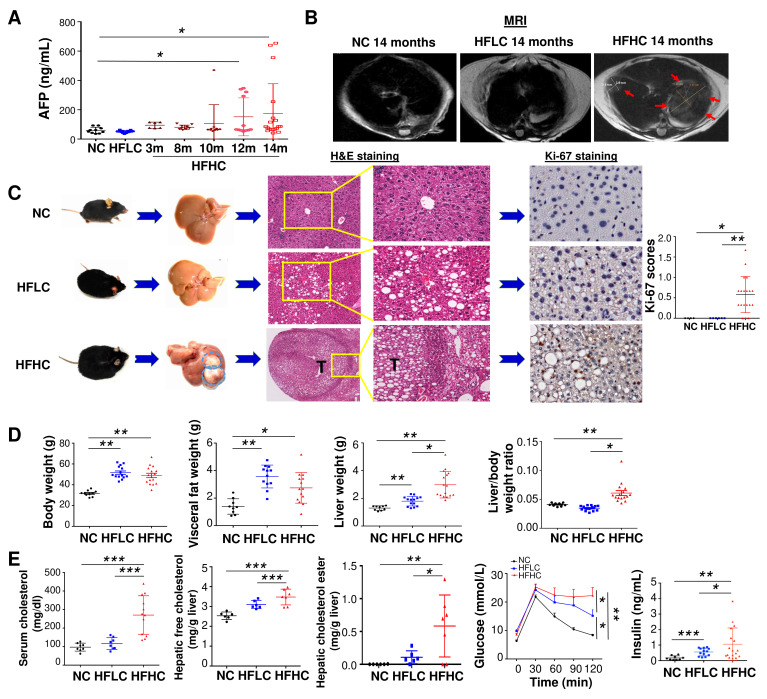
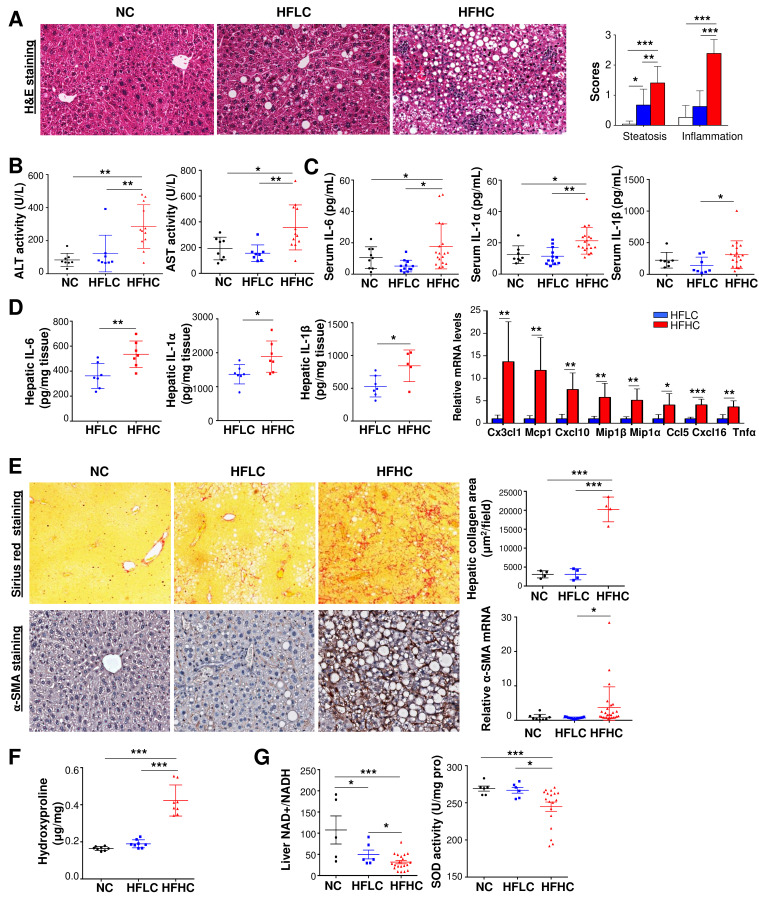
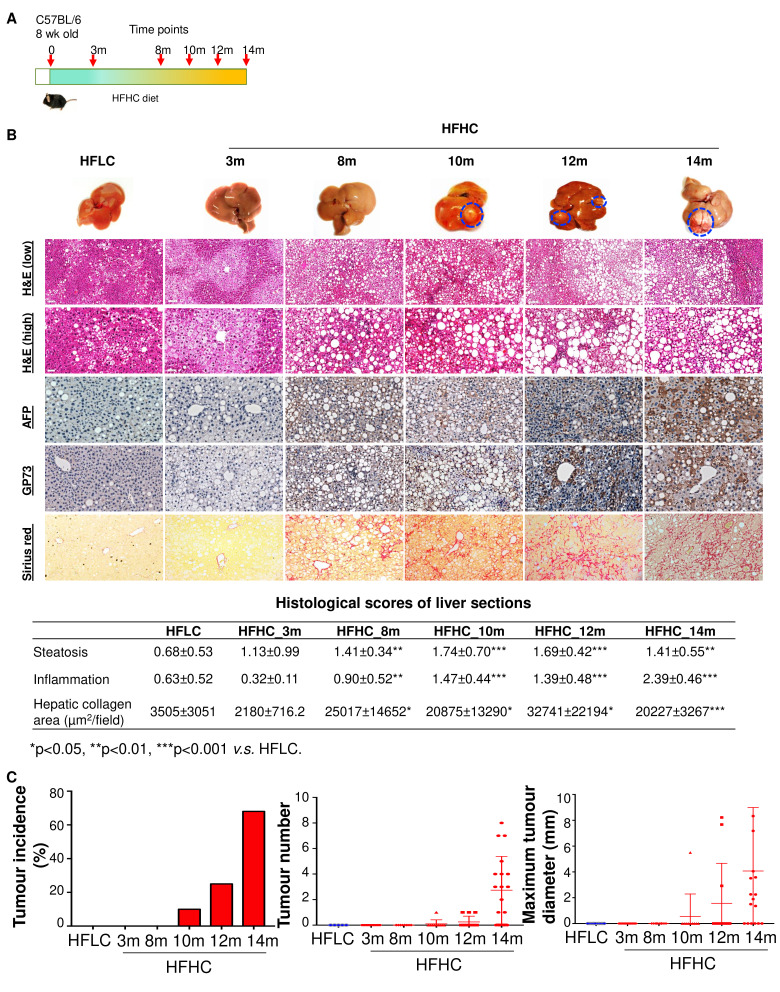
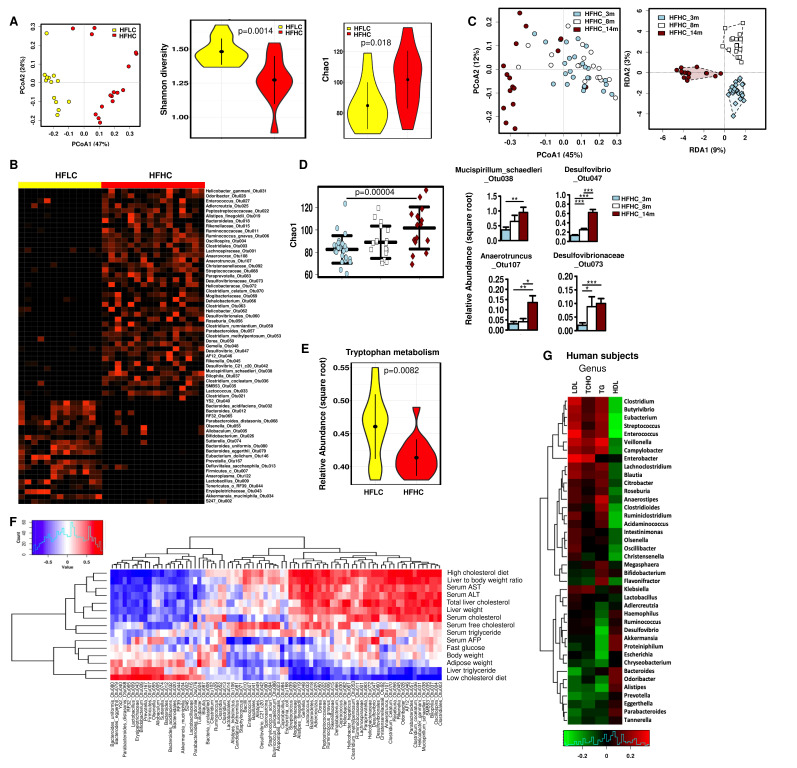
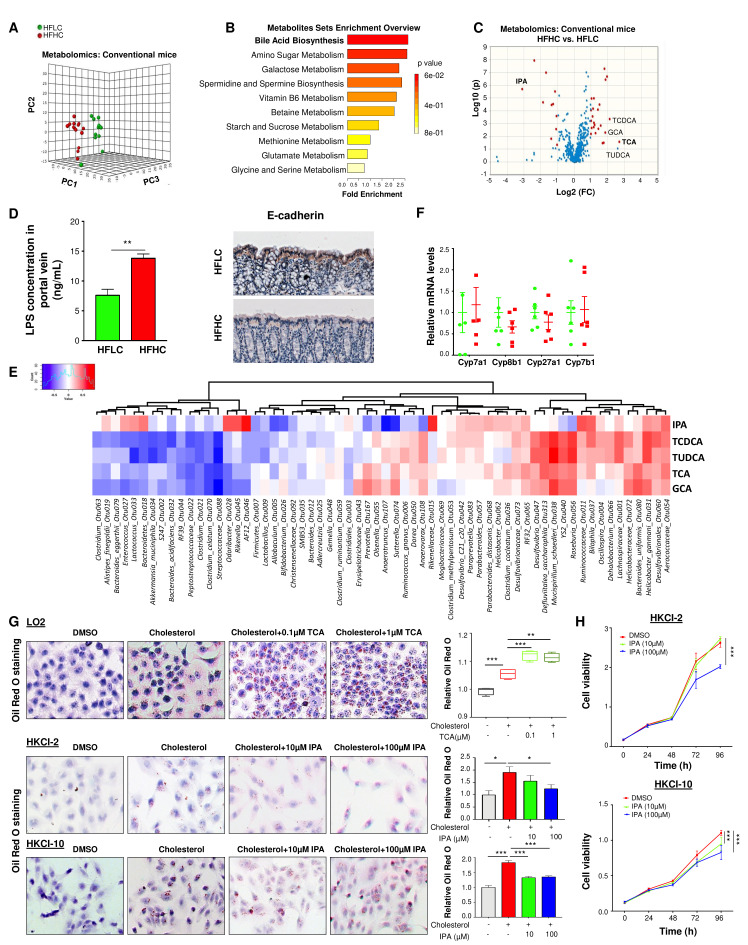
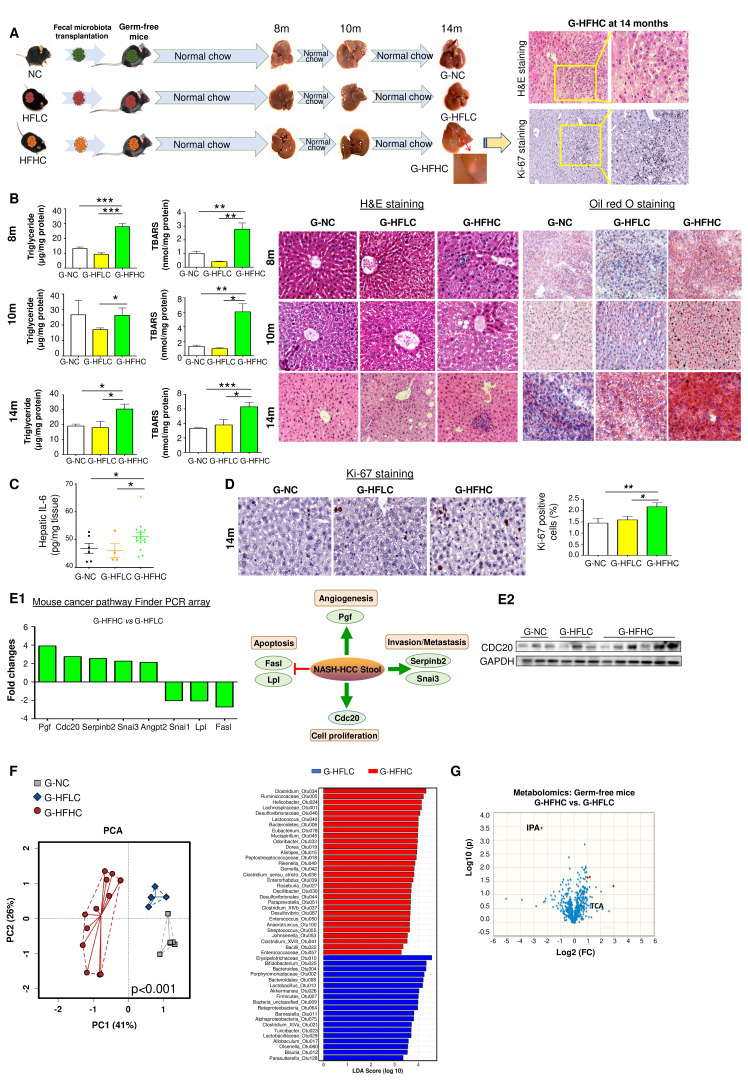
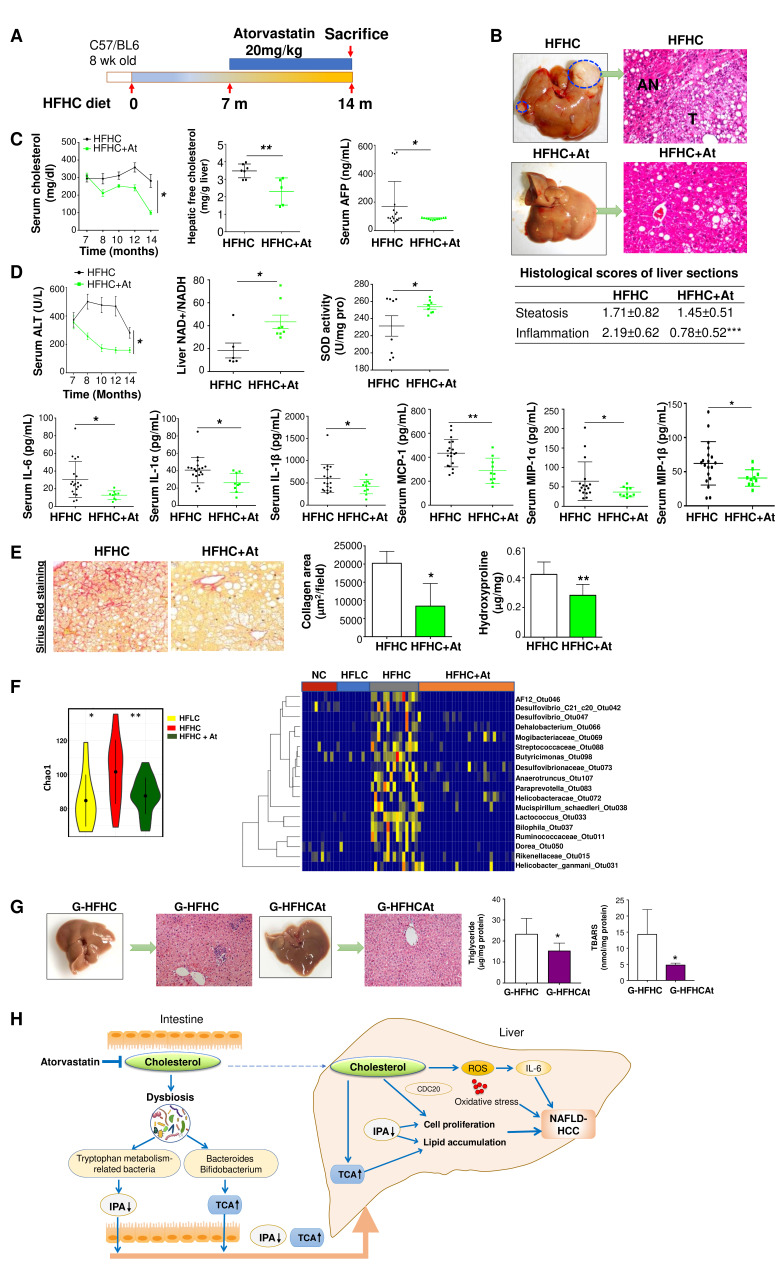
Objective: Non-alcoholic fatty liver disease (NAFLD)-associated hepatocellular carcinoma (HCC) is an increasing healthcare burden worldwide. We examined the role of dietary cholesterol in driving NAFLD–HCC through modulating gut microbiota and its metabolites. Design: High-fat/high-cholesterol (HFHC), high-fat/low-cholesterol or normal chow diet was fed to C57BL/6 male littermates for 14 months. Cholesterol-lowering drug atorvastatin was administered to HFHC-fed mice. Germ-free mice were transplanted with stools from mice fed different diets to determine the direct role of cholesterol modulated-microbiota in NAFLD–HCC. Gut microbiota was analysed by 16S rRNA sequencing and serum metabolites by liquid chromatography–mass spectrometry (LC–MS) metabolomic analysis. Faecal microbial compositions were examined in 59 hypercholesterolemia patients and 39 healthy controls. Results: High dietary cholesterol led to the sequential progression of steatosis, steatohepatitis, fibrosis and eventually HCC in mice, concomitant with insulin resistance. Cholesterol-induced NAFLD–HCC formation was associated with gut microbiota dysbiosis. The microbiota composition clustered distinctly along stages of steatosis, steatohepatitis and HCC. Mucispirillum, Desulfovibrio, Anaerotruncus and Desulfovibrionaceae increased sequentially; while Bifidobacterium and Bacteroides were depleted in HFHC-fed mice, which was corroborated in human hypercholesteremia patients. Dietary cholesterol induced gut bacterial metabolites alteration including increased taurocholic acid and decreased 3-indolepropionic acid. Germ-free mice gavaged with stools from mice fed HFHC manifested hepatic lipid accumulation, inflammation and cell proliferation. Moreover, atorvastatin restored cholesterol-induced gut microbiota dysbiosis and completely prevented NAFLD–HCC development. Conclusions: Dietary cholesterol drives NAFLD–HCC formation by inducing alteration of gut microbiota and metabolites in mice. Cholesterol inhibitory therapy and gut microbiota manipulation may be effective strategies for NAFLD–HCC prevention.
Overview
The claims and statistics of this paper haven’t been checked yet.
Free: it reads the open-access text and checks the first 5 claims that cite a source we can check. Create a free account to check every claim.
Integrity signals
Registry
Cites
Statistics
Figures
Verification
Claims the paper makes
The claims and statistics of this paper haven’t been checked yet.
Free: it reads the open-access text and checks the first 5 claims that cite a source we can check. Create a free account to check every claim.
Claims other papers make about this one
Each is checked against this paper’s own text: does it say what the citing paper says it does?
In the citing paper
“this genus has been associated with the pathogenesis of fatty-liver-associated liver cancer36.”
From Nivolumab plus ipilimumab with or without live bacterial supplementation in metastatic renal cell carcinoma: a randomized phase 1 trial (2022) · cites this paper as [36]
Self-check
Percentages, sums and reported differences re-computed from the paper’s own numbers.
The self-check needs the paper’s full text.
Citations
Cites
Vernon, G., Baranova, A., & Younossi, Z. M. (2011) · Alimentary Pharmacology & Therapeutics · doi:10.1111/j.1365-2036.2011.04724.x · Cited by 3,074 · cited 1×
“27 28 There are evidences that Bifidobacterium has cholesterol-lowering activity through gut microbiota modulation.”
Sayin, S. I., Wahlström, A., Felin, J., Jäntti, S., Marschall, H.-U., Bamberg, K., Angelin, B., Hyötyläinen, T., Orešič, M., & Bäckhed, F. (2013) · Cell Metabolism · doi:10.1016/j.cmet.2013.01.003 · Cited by 2,331
Microbial tryptophan catabolites in health and disease
Roager, H. M., & Licht, T. R. (2018) · Nature Communications · doi:10.1038/s41467-018-05470-4 · Cited by 2,236 · cited 1×
“IPA is a specific metabolite whose production completely depends on tryptophan metabolism by the gut microbiota 18 and characterised as being anti-inflammatory and protective of intestinal barrier integrity.”
Bile acid-microbiota crosstalk in gastrointestinal inflammation and carcinogenesis
Jia, W., Xie, G., & Jia, W. (2018) · Nature Reviews Gastroenterology & Hepatology · doi:10.1038/nrgastro.2017.119 · Cited by 1,924 · cited 2×
“40 Therefore, the decreased Bifidobacterium and Bacteroides in the stool of HFHC-fed mice may account for the accumulated taurine-conjugated bile acids in HFHC-fed mice.”
Zhu, L., Baker, S. S., Gill, C., Liu, W., Alkhouri, R., Baker, R. D., & Gill, S. R. (2013) · Hepatology · doi:10.1002/hep.26093 · Cited by 1,708 · cited 3×
“27 28 There are evidences that Bifidobacterium has cholesterol-lowering activity through gut microbiota modulation.”
Gut microbiome–mediated bile acid metabolism regulates liver cancer via NKT cells
Ma, C., Han, M., Heinrich, B., Fu, Q., Zhang, Q., Sandhu, M., Agdashian, D., Terabe, M., Berzofsky, J. A., Fako, V., et al. (2018) · Science · doi:10.1126/science.aan5931 · Cited by 1,508 · cited 1×
“21 We therefore explored the potential involvement of the gut microbiota in mediating dietary cholesterol-induced NAFLD–HCC.”
Gut microbial metabolites in obesity, NAFLD and T2DM
Canfora, E. E., Meex, R. C. R., Venema, K., & Blaak, E. E. (2019) · Nature Reviews Endocrinology · doi:10.1038/s41574-019-0156-z · Cited by 1,493
A gut bacterial pathway metabolizes aromatic amino acids into nine circulating metabolites
Dodd, D., Spitzer, M. H., Van Treuren, W., Merrill, B. D., Hryckowian, A. J., Higginbottom, S. K., Le, A., Cowan, T. M., Nolan, G. P., Fischbach, M. A., et al. (2017) · Nature · doi:10.1038/nature24661 · Cited by 1,425 · cited 1×
“…and potentially, those of other enriched bile acids to the pathogenesis of cholesterol-induced NAFLD–HCC. Additionally, IPA, which is exclusively produced by commensal gut microbes, 41 42 was depleted in both HFHC-fed conventional mice and germ-free mice transplanted with stools from HFHC-fed mice.”
Venkatesh, M., Mukherjee, S., Wang, H., Li, H., Sun, K., Benechet, A. P., Qiu, Z., Maher, L., Redinbo, M. R., Phillips, R. S., et al. (2014) · Immunity · doi:10.1016/j.immuni.2014.06.014 · Cited by 1,066 · cited 2×
“36 Disruption of bile acid homeostasis alters metabolic homeostasis in the liver and can lead to hepatic inflammation and metabolic diseases including diabetes and NAFLD.”
Gut microbiota and human NAFLD: disentangling microbial signatures from metabolic disorders
Aron-Wisnewsky, J., Vigliotti, C., Witjes, J., Le, P., Holleboom, A. G., Verheij, J., Nieuwdorp, M., & Clément, K. (2020) · Nature Reviews Gastroenterology & Hepatology · doi:10.1038/s41575-020-0269-9 · Cited by 1,063
Cited by
Items 401–500 of 916
Healthy diet intervention reverses the progression of NASH through gut microbiota modulation
Panyod, S., Wu, W., Hu, M.-Y., Huang, H., Chen, R.-A., Chen, Y., Shen, T. D., Ho, C., Liu, C., Chuang, H.-L., et al. (2023) · Microbiology Spectrum · doi:10.1128/spectrum.01868-23 · Cited by 15
“In mice, the [ Eubacterium ]_ xylanophilum _ group and Erysipelatoclostridium are enriched by a Western diet (44), while Anaerotruncus increases with a high-cholesterol diet (45).”
BackgroundHizo, G. H., & Rampelotto, P. H. (2023) · Microorganisms · doi:10.3390/microorganisms11122999 · Cited by 15
The Role of Type 2 Diabetes Mellitus–Related Risk Factors and Drugs in Hepatocellular Carcinoma
Mai, Y., Meng, L., Deng, G., & Qin, Y. (2024) · Journal of Hepatocellular Carcinoma · doi:10.2147/jhc.s441672 · Cited by 16
Advances in experimental animal models of hepatocellular carcinoma
Li, J., Wang, X., Ren, M., He, S., & Zhao, Y. (2023) · Cancer Medicine · doi:10.1002/cam4.6163 · Cited by 15
Fima, R., Dussaud, S., Benbida, C., Blanchet, M., Lanthiez, F., Poupel, L., Brambilla, C., Gélineau, A., Dessena, M., Blanc, M., et al. (2024) · Nature Communications · doi:10.1038/s41467-024-52735-2 · Cited by 14
“We next sought to exclude the possibility that the changes observed in KCs were derived from other mechanisms than the hypercholesterolemic state, such as dietary cholesterol-induced gut microbiota dysbiosis 29 .”
Li, X., Pan, C., Ma, W., Yang, T., Wang, C., Han, W., Zhang, W., Li, H., Li, Z., Zhao, T., et al. (2024) · Food & Function · doi:10.1039/d3fo02319b · Cited by 14
Hermanson, J. B., Tolba, S. A., Chrisler, E. A., & Leone, V. (2024) · The Journal of Nutritional Biochemistry · doi:10.1016/j.jnutbio.2024.109704 · Cited by 14
Differential effects of low or high-fat dairy and fat derived from dairy products on MASLD
Tirosh, O., Verman, M., Wajcman, D. I., Grinshpan, L. S., Isakov, N. F., Webb, M., Shibolet, O., Kariv, R., & Zelber‐Sagi, S. (2024) · JHEP Reports · doi:10.1016/j.jhepr.2024.101194 · Cited by 14
“38 Serum cholesterol levels can be in fl u-enced by variables other than dietary cholesterol intake.”
Mogna-Peláez, P., Riezu‐Boj, J. I., Milagro, F. I., Clemente‐Larramendi, I., Echeverría, S. E., Herrero, J. I., Elorz, M., Benito, A., Tobaruela-Resola, A. L., González‐Muniesa, P., et al. (2024) · Nutrients · doi:10.3390/nu16234198 · Cited by 14
Sun, Y., Huang, S., Li, M., Yang, Y., Ma, J., Xie, R., Wang, J., Zhao, Q., Qin, S., He, L., et al. (2025) · Communications Biology · doi:10.1038/s42003-025-07836-z · Cited by 15
“Previous studies have shown that dietary alteration could affect gut microbiota composition and thus in fl uence bacterial metabolism 41 – 43 .”
Bai, T., Guo, H., Wang, F., Kang, Y.-Y., Zhang, H., Dong, L., & Yang, Y. (2025) · Frontiers in Pharmacology · doi:10.3389/fphar.2025.1532590 · Cited by 14
Innovations in the diagnosis, treatment, and management of disorders of gut-brain interaction (DGBI)
Krynicka, P., Koulaouzidis, G., Marlicz, W. M., & Koulaouzidis, A. (2025) · Expert Review of Gastroenterology & Hepatology · doi:10.1080/17474124.2025.2508967 · Cited by 14
Lee, K. S., Cho, Y., Kim, H., Hwang, H., Cho, J. W., Lee, Y., & Lee, S.-G. (2022) · Biomedicines · doi:10.3390/biomedicines10061216 · Cited by 14
“By contrast, a high-cholesterol diet was also reported to induce NAFLD [26].”
BackgroundSong, W., Wang, T., Cui, X., Li, L., Chen, B. Y., Li, Y., & Yue, T. (2023) · Journal of the Science of Food and Agriculture · doi:10.1002/jsfa.12774 · Cited by 13
Yang, H. (2024) · Frontiers in Microbiology · doi:10.3389/fmicb.2024.1336101 · Cited by 13
Gut-immunity-joint axis: a new therapeutic target for gouty arthritis
Chen, P., Luo, Z., Lu, C., Jian, G., Qi, X., & Xiong, H. (2024) · Frontiers in Pharmacology · doi:10.3389/fphar.2024.1353615 · Cited by 13
Yang, M., Xie, Q., Xiao, Y., Xia, M., Chen, J., Tan, B., & Yin, Y. (2024) · International Journal of Molecular Sciences · doi:10.3390/ijms25073657 · Cited by 13
“The composition and nutritional value of the diets are presented in Table S1 as previously described [15,45,46].”
MethodZeng, J., Chen, L., Tang, J., Xue, J., Wang, Q., Feng, X., Chen, X., Huang, K., & Gan, F. (2024) · Free Radical Biology and Medicine · doi:10.1016/j.freeradbiomed.2024.11.027 · Cited by 15
Wan, M., Zhao, W., Cai, Y., He, Q., & Zeng, J. (2025) · American Journal of Translational Research · doi:10.62347/zwsr4476 · Cited by 13
Lü, Y., Feng, X., Wang, Z., Zou, M., Xu, Z., Liu, Q.-J., Chen, W., Ding, J., & Liu, H. (2025) · Precision Clinical Medicine · doi:10.1093/pcmedi/pbaf020 · Cited by 13
“Subsequently, the increased proliferation of hepatocytes further leads to HCC development [ 56 ].”
Chen, Q., Wang, Y., Wu, D., Zhang, H., Xia, Q., & Qu, D. (2025) · Frontiers in Microbiology · doi:10.3389/fmicb.2025.1653249 · Cited by 13
Self-citationZhang, L., Chen, X., Li, J., Hou, Q., Song, J., Fu, X., Liu, Y., Jin, B., Feng, Y., Zhang, W., et al. (2025) · International Journal of Biological Macromolecules · doi:10.1016/j.ijbiomac.2025.147728 · Cited by 14
He, Z., Zhang, L., Gong, S., Yang, X., & Xu, G. (2025) · International Journal of Molecular Medicine · doi:10.3892/ijmm.2025.5667 · Cited by 14
Self-citationUtilizing Gut Microbiota to Improve Hepatobiliary Tumor Treatments: Recent Advances
Qin, H., Yuan, B., Huang, W., & Wang, Y. (2022) · Frontiers in Oncology · doi:10.3389/fonc.2022.924696 · Cited by 13
“The prevalence of nonalcoholic fatty liver disease (NAFLD) is mainly increased by obesity and type 2 diabetes mellitus, and high-fat or high-cholesterol diets are closely linked to NAFLD-associated HCC, which animal experiments and clinical research have confirmed (32, 33).”
BackgroundSelf-citationGenetic Insights into Intestinal Microbiota and Risk of Infertility: A Mendelian Randomization Study
Zhang, F., Xiong, Y., Wu, K., Wang, L., Ji, Y., & Zhang, B. (2023) · Microorganisms · doi:10.3390/microorganisms11092319 · Cited by 13
“Meanwhile, Anaerotruncus was reportedly associated with the formation of hepatocellular carcinoma related to non-alcoholic fatty liver disease [37].”
BackgroundJiang, H., Song, T., Li, Z., An, L., He, C., & Zheng, K. (2023) · Frontiers in Microbiology · doi:10.3389/fmicb.2023.1255650 · Cited by 14
Yue, C., Tang, Y., Chang, M., Wang, Y., Peng, H., Wang, X., Wang, Z., Zang, X., Ben, H., & Yu, G. (2024) · Journal of the Science of Food and Agriculture · doi:10.1002/jsfa.13344 · Cited by 13
Self-citationOhene-Marfo, P., Nguyen, H. V. M., Mohammed, S., Thadathil, N., Tran, A., Nicklas, E. H., Wang, D., Selvarani, R., Farriester, J. W., Varshney, R., et al. (2024) · International Journal of Molecular Sciences · doi:10.3390/ijms25052813 · Cited by 13
“Similarly, a high-cholesterol diet exacerbates liver fibrosis in mice [62] and dietary cholesterol drives progression of MAFLD to HCC in mice [63].”
BackgroundGu, X., Jiang, C., Zhao, J., Qiao, Q., Wu, M., & Cai, B. (2022) · Frontiers in Cell and Developmental Biology · doi:10.3389/fcell.2022.883059 · Cited by 13
“Among the drugs that affect lipid metabolism, statins are best known for lowering cholesterol levels, and some studies have demonstrated that atorvastatin restores cholesterol-induced gut microbiota dysbiosis and completely prevents NAFLD-HCC development (Zhang et al., 2021).”
BackgroundHu, H., Zhang, P., Liu, F., & Pan, S. (2024) · Nutrients · doi:10.3390/nu16132002 · Cited by 12
“Strong correlations were observed between changes in cholesterol levels and microbiota composition [8–10].”
BackgroundMatsui, T., Morozumi, T., Yamamoto, Y., Kobayashi, T., Takuma, R., Yoneda, M., Nogami, A., Kessoku, T., Tamura, M., Nomura, Y., et al. (2024) · Medicina · doi:10.3390/medicina60071150 · Cited by 12
“Blautia spp. are decreased in the feces of liver cancer patients [46], Bacteroides spp. are decreased in the feces of mice that developed liver cancer due to a high-fat, high-cholesterol diet [47], and Butyricicoccus spp. are decreased in the feces of patients with esophageal cancer [48].”
BackgroundHe, C., Chen, M., Jiang, X., Ren, J., Ganapathiraju, S. V., Lei, P., Yang, H., Pannu, P. R., Zhao, Y., & Zhang, X. (2024) · Molecular Nutrition & Food Research · doi:10.1002/mnfr.202400535 · Cited by 12
Self-citationThe role of the gut microbial metabolism of sterols and bile acids in human health
Tang, J., Xu, W., Yu, Y., Yin, S., Ye, B.-C., & Zhou, Y. (2024) · Biochimie · doi:10.1016/j.biochi.2024.11.003 · Cited by 12
Chen, M., Liu, X., kong, L., Yu, Y., Zang, J., Li, X., Guo, R., Zhang, L., & Liu, Y. (2025) · International Journal of Pharmaceutics · doi:10.1016/j.ijpharm.2025.125360 · Cited by 12
Shu, J., Huang, Y.-H., He, X., Liu, F., Liang, Q.-Q., Yong, X. N., & Xie, Y. (2025) · World Journal of Hepatology · doi:10.4254/wjh.v17.i3.103854 · Cited by 12
The interactions between gut microbiota and Chinese herbal medicine in colorectal cancer
Hou, X., Li, X., Chen, W., Zhu, W., Guo, H., & Zhao, L. (2025) · Acupuncture and Herbal Medicine · doi:10.1097/hm9.0000000000000153 · Cited by 12
Chen, L., Zhang, Z., Deng, W., Jiang, G., Xie, D., & Cao, A. (2025) · Poultry Science · doi:10.1016/j.psj.2025.105319 · Cited by 12
“A study demonstrated that feeding high-fat diets to mice increases the relative abundances of Mucispirillum, Desulfovibrio, Anaerotruncus , and Desulfovibrionaceae , while the abundances of Bifidobacterium and Bacteroides decrease, leading to hepatic fat metabolism disorders (Zhang et al., 2021).”
Wang, L., Qiao, W., Zhen, X., Zhang, Y., & Dong, Z. (2025) · Frontiers in Oncology · doi:10.3389/fonc.2025.1646897 · Cited by 12
Singh, G., Ansari, S., Yadav, S., & Aran, K. R. (2025) · Microbial Pathogenesis · doi:10.1016/j.micpath.2025.108273 · Cited by 12
Iacob, S., Beckebaum, S., Iacob, R. A., Gheorghe, C., Cicinnati, V. R., Popescu, I., & Gheorghe, L. S. (2022) · Frontiers in Nutrition · doi:10.3389/fnut.2021.787430 · Cited by 12
“The gut microbiome represents an environmental factor contributing to the development of NAFLD and there are studies suggesting that dietary cholesterol caused advanced fibrosis by cholesterol-induced gut microbiota changes and metabolomic alterations (34).”
BackgroundSingle ethanol binge causes severe liver injury in mice fed Western diet
Yeh, Y., Wu, X., Ma, Y., Ying, Z., He, L., Xue, B., Shi, H., Choi, Y., & Yu, L. (2023) · Hepatology Communications · doi:10.1097/hc9.0000000000000174 · Cited by 12
“One study fed mice a high-cholesterol diet for up to 14 months[30] while another for 1 week,[31] both of which showed increased AST and ALT.”
BackgroundZhu, S., Wu, Z., Wang, W., Wei, L., & Zhou, H. (2023) · Journal of Endocrinological Investigation · doi:10.1007/s40618-023-02216-y · Cited by 12
Gut microbe and hepatic macrophage polarization in non-alcoholic fatty liver disease
Chen, Y., Gan, Y., Zhong, H., Liu, Y., Huang, J., Wang, W., & Geng, J. (2023) · Frontiers in Microbiology · doi:10.3389/fmicb.2023.1285473 · Cited by 12
Tong, M., Yang, X., Qiao, Y., Liu, G., Ge, H., Huang, G., Wang, Y., Yang, Y., & Fan, W. (2024) · Biomedicine & Pharmacotherapy · doi:10.1016/j.biopha.2024.116223 · Cited by 12
Self-citationZhao, G., Shi, R., Ma, M., Lin, H., Zhang, J., & Sheng, B. (2024) · Clinics and Research in Hepatology and Gastroenterology · doi:10.1016/j.clinre.2024.102363 · Cited by 12
Cilostazol Attenuates Hepatic Steatosis and Intestinal Disorders in Nonalcoholic Fatty Liver Disease
Min, T., Qiu, S., Bai, Y., Cao, H., Guo, J., & Su, Z. (2024) · International Journal of Molecular Sciences · doi:10.3390/ijms25116280 · Cited by 12
Taurine alleviates ochratoxin A‐induced pyroptosis in PK‐15 cells by inhibiting oxidative stress
Qu, J., Liu, K., Liu, S., Yue, D., Zhang, P., Mao, X., He, W., Huang, K., & Chen, X. (2022) · Journal of Biochemical and Molecular Toxicology · doi:10.1002/jbt.23249 · Cited by 12
A New Treatment Landscape for RCC: Association of the Human Microbiome with Improved Outcomes in RCC
Piao, X., Byun, Y. J., Zheng, C.-M., Song, S. J., Kang, H. W., Kim, W. T., & Yun, S. J. (2023) · Cancers · doi:10.3390/cancers15030935 · Cited by 12
Gao, W., Chen, X., Wu, S., Lu, J., Chen, X., Mao, G., Wan, X., & Xing, W. (2024) · Food Science & Nutrition · doi:10.1002/fsn3.4208 · Cited by 11
Microbial tryptophan catabolism as an actionable target via diet-microbiome interactions
Huang, Z., Wells, J. M., Fogliano, V., & Capuano, E. (2024) · Critical Reviews in Food Science and Nutrition · doi:10.1080/10408398.2024.2369947 · Cited by 11
Wu, J., Ji, K., Kang, G., Zhang, M., Wang, J., Wang, L., Gao, M., Jia, X., Lu, X., Wang, Y., et al. (2025) · Pharmacological Research · doi:10.1016/j.phrs.2025.107642 · Cited by 11
Self-citationGoyal, H., Fatima, K., & Kaur, J. (2025) · Cancer Cell International · doi:10.1186/s12935-025-03840-9 · Cited by 12
“This shift in the microbiome alters the bile acid (BA) biosynthesis pathway with increased taurocholic acid (TCA) and decreased 3-indole-propionic acid (IPA), thereby fostering lipid accumulation and cell proliferation, ultimately assisting in the disease progression [41].”
Pamungkas, K. M. N., Dewi, P. I. S. L., Alamsyah, A. Z., Dewi, N. L. P. Y., Dewi, N. N. G. K., Mariadi, I. K., & Sindhughosa, D. A. (2025) · World Journal of Hepatology · doi:10.4254/wjh.v17.i7.106810 · Cited by 11
Pan, D., Bao, Y., Lu, X., Gu, Q., Zhang, Y., & Zheng, Y. (2025) · International Journal of Molecular Medicine · doi:10.3892/ijmm.2025.5655 · Cited by 11
Communication between gut microbiota-derived metabolites and the tumor microenvironment
Hu, X., Li, B., Li, Y., Liang, Y., & Huang, T. (2025) · Frontiers in Immunology · doi:10.3389/fimmu.2025.1649438 · Cited by 11
The Immune Microenvironment in Liver Cancer: From Analysis to Targeting
Lan, J., Li, H., Xue, J., Duan, Y., Sun, J., & Niu, M. (2025) · Advanced Science · doi:10.1002/advs.202518487 · Cited by 11
Zuo, S., Ma, J., Li, X., Fan, Z., Li, X., Luo, Y., & Su, L. (2025) · Microorganisms · doi:10.3390/microorganisms14010073 · Cited by 11
“High-cholesterol diets may disrupt the gut microbiota balance by elevating Mucispirillum and Desulfovibrio while depleting Bifidobacterium [39].”
Experimental model and novel therapeutic targets for non-alcoholic fatty liver disease development
Jin, Y., & Heo, K. (2023) · Korean Journal of Physiology and Pharmacology · doi:10.4196/kjpp.2023.27.4.299 · Cited by 11
“Accordingly, various secreted factors move into the liver through the portal veins and aggravate the inflammatory signaling pathway, progressing NAFLD fibrosis to HCC by activating oxidative stress, ER stress, lipid accumulation, and hepatocyte cell death [55].”
BackgroundPetito‐da‐Silva, T. I., Villardi, F. M., Penna‐de‐Carvalho, A., Mandarim‐de‐Lacerda, C. A., Souza‐Mello, V., & Barbosa‐da‐Silva, S. (2023) · Molecular Nutrition & Food Research · doi:10.1002/mnfr.202300148 · Cited by 11
Zhang, Q., Dong, Y., & Fan, J. (2023) · Hepatobiliary & pancreatic diseases international · doi:10.1016/j.hbpd.2023.12.007 · Cited by 11
Therapeutic Role of Polyphenol Extract from Prunus cerasifera Ehrhart on Non-Alcoholic Fatty Liver
Ren, J., Zhang, X., Perhat, S. H., Yang, P., Han, H., Li, Y., Gao, J., He, E., & Li, Y. (2024) · Plants · doi:10.3390/plants13020288 · Cited by 11
“The results revealed significant negative correlations between DCA and LCA in feces and certain gut microbiota species, including Turicibacter [34] and Ne-glecta, while positive correlations were observed with others such as Mucispirillum [36,37] and Erysipelatoclostridium [38].”
ResultSelf-citationZhang, S., Chau, H.-T., Tun, H. M., Huang, F., Wong, D. K.-H., Mak, L., Yuen, M., & Seto, W. (2024) · EBioMedicine · doi:10.1016/j.ebiom.2024.105101 · Cited by 11
“46 A relevant study 47 demonstrated that a combination of different serum metabolites, including GCA, could serve as a non-invasive blood-based diagnostic test for advanced fi brosis in NAFLD participants.”
BackgroundImpact of diet and gut microbiota changes in the development of hepatocellular carcinoma
Scarlata, G. G. M., Cicino, C., Spagnuolo, R., Marascio, N., Quirino, A., Matera, G., Dumitrascu, D. L., Luzza, F., & Abenavoli, L. (2024) · Hepatoma Research · doi:10.20517/2394-5079.2023.122 · Cited by 11
Common Denominator of MASLD and Some Non-Communicable Diseases
Ferenc, K., Jarmakiewicz-Czaja, S., Sokal-Dembowska, A., Stasik, K., & Filip, R. (2024) · Current Issues in Molecular Biology · doi:10.3390/cimb46070399 · Cited by 11
Liakina, V., Strainienė, S., Stundienė, I., Maksimaityte, V., & Kazėnaitė, E. (2022) · World Journal of Hepatology · doi:10.4254/wjh.v14.i7.1277 · Cited by 11
Valdes, J., Sansfaçon, J. G., Nicolás, V. R., Cayarga, A. A., Cofino, G. M., Moyo, M. M., Ramanathan, S., Perreault, N., Ilangumaran, S., Rivard, N., et al. (2022) · The Anatomical Record · doi:10.1002/ar.25083 · Cited by 11
Li, H., Zheng, X., Sabina, R., Amrish, T., Meng, G., Zhang, Q., Liu, L., Wu, H., Gu, Y., Zhang, S., et al. (2022) · British Journal Of Nutrition · doi:10.1017/s0007114522000629 · Cited by 11
“Recently, studies in animal models have demonstrated that dietary cholesterol could induce both reactive oxygen species and proinflammatory cytokines, thereby promoting NAFLD development (36,37) .”
Self-citationLi, S., Chen, F., Zou, Y., Ning, L., Zhang, G., Zhang, S., & Yao, Q. (2022) · Annals of Translational Medicine · doi:10.21037/atm-21-4809 · Cited by 10
Zhu, Z., Chen, Y., Qin, X., Liu, S., Wang, J., & Ren, H. (2023) · Smart Medicine · doi:10.1002/smmd.20220029 · Cited by 10
Zhang, J., Chen, K., & Chen, F. (2024) · Journal of Pharmaceutical Analysis · doi:10.1016/j.jpha.2024.101077 · Cited by 10
“In addition, we performed a thorough analysis of fecal metabolites in mice with NAFLD using untargeted metabolomics combined with liquid chromatography-mass spectrometry (LC-MS) [12].”
Dong, A., Ding, X., Wang, J., Zeng, Q., Bai, S., Liu, Y., Xuan, Y., Li, S., Mu, Y., Peng, H., et al. (2025) · Frontiers in Microbiology · doi:10.3389/fmicb.2025.1530319 · Cited by 10
Martín, M. H., Bocanegra, A., Garcimartín, A., Macho‐González, A., Redondo‐Castillejo, R., García-Fernández, R. A., Ticona, L. A., Bastida, S., Benedí, J., Sánchez-Muniz, F. J., et al. (2025) · Food & Function · doi:10.1039/d4fo06277a · Cited by 10
Lu, Z., Yu, L., Bai, Y., Cui, Y., Shi, M., Li, Z., Li, X., Zhong, X., Ye, J., & Wei, C. (2025) · mSystems · doi:10.1128/msystems.00518-25 · Cited by 10
“Studies have indicated that the gut microbiota contributes to the development of MASH by undermining the integrity of the intestinal barrier and boosting the production of harmful metabolites (11, 12).”
InfluentialThe Role of Gut Microbiota and Its Metabolites in Mitigating Radiation Damage
Zhu, H., Yan, X., Shi, H. S., Chen, Y., Huang, C., Zhou, Y., Yan, S., Zhang, N., Wang, J., Zhang, J., et al. (2025) · Microorganisms · doi:10.3390/microorganisms13092151 · Cited by 10
“As research into the gut mi‑ crobiota and its metabolites continues to deepen, there is growing interest in the potential of manipulating the microbial community to prevent or treat disease [27,33,34].”
Li, D., & Zhang, X. (2025) · Hepatology Communications · doi:10.1097/hc9.0000000000000846 · Cited by 10
“[195] Nevertheless, clinical recommendations for HCC patients are currently not affected by etiologies.”
Self-citationInteraction of microbiome and immunity in tumorigenesis and clinical treatment
Yu, Y., & Zhong, W. (2022) · Biomedicine & Pharmacotherapy · doi:10.1016/j.biopha.2022.113894 · Cited by 10
Chen, G., Wang, Z., Song, W., Liao, Y., Wang, X., Chen, C., Ming, J., Cui, J., & Xu, K. (2023) · European Journal of Pharmacology · doi:10.1016/j.ejphar.2023.175800 · Cited by 10
Yang, Y., He, Y., Yang, X., Qiao, Y., Yi, G., Fan, W., Liu, H., & Tong, M. (2024) · ACS Pharmacology & Translational Science · doi:10.1021/acsptsci.3c00276 · Cited by 10
Self-citationQiao, Y., Xia, Q., Cao, X., Xu, J., Qiao, Z., Wu, L., Chen, Z., Yang, L., & Lu, X. (2024) · Naunyn-Schmiedeberg s Archives of Pharmacology · doi:10.1007/s00210-024-03043-5 · Cited by 10
“Xiaoyaosan reduces the tumor volume in CRC xenograft mice, and its efficacy is associated with the improvement of gut dysbiosis (Zhang et al. 2020).”
Zhang, Z., Sun, Y., Zeng, Y., Cui, N., Li, B., Zhang, W., Bai, H., Xing, N., Kuang, H., & Wang, Q. (2024) · Journal of Ethnopharmacology · doi:10.1016/j.jep.2024.118052 · Cited by 10
Chang, Y., Guo, R., Gu, T., Zong, Y., Sun, H., Xu, W., Chen, L., Tian, Y., Li, G., Lu, L., et al. (2024) · Poultry Science · doi:10.1016/j.psj.2024.103726 · Cited by 10
“…microorganisms are primarily associated with the degradation of complex heteropolysaccharides, in fl ammatory response glycogen storage, lipid metabolism, and immunomodulation (Kovatcheva-Datchary et al., 2015, Qin et al., 2019, Zhang et al., 2021, L € uck and Deppenmeier, 2022, Wu et al., 2023) .”
BackgroundLi, M., Zhang, D., Yang, Q., Zhao, Z., Zhang, C., Zhou, Y., Bai, Y., Chen, L., Tang, X., Liu, C. H., et al. (2024) · Respiratory Research · doi:10.1186/s12931-024-02837-8 · Cited by 10
Li, C., Liu, Z., Wei, W., Chen, C., Zhang, L., Wang, Y., Zhou, B., Liu, L., Li, X., & Zhao, C. (2024) · Nutrients · doi:10.3390/nu16132010 · Cited by 10
“In the gut of patients and animals with MASLD, the abundance of Ruminococcus_torques_group is increased [65].”
BackgroundSelf-citationGuo, Z., Yao, Z., Huang, B., Wu, D., Li, Y., Chen, X., Lu, Y., Wang, L., & Lv, W. (2024) · International Immunopharmacology · doi:10.1016/j.intimp.2024.112821 · Cited by 10
Chen, J., Rao, H., & Zheng, X. (2024) · Frontiers in Genetics · doi:10.3389/fgene.2024.1464865 · Cited by 10
Xue, X., Zhou, H., Gao, J., Li, X., Wang, J., Bai, W., Bai, Y., Fan, L., Chang, H., & Shi, S. (2024) · Heliyon · doi:10.1016/j.heliyon.2024.e38339 · Cited by 10
Qiu, M., Ye, C., Bao, L., Wu, K., Zhao, Y., Zhao, X., Tang, R., Shang, R., Shang, S., Yuan, C., et al. (2024) · Journal of Advanced Research · doi:10.1016/j.jare.2024.09.023 · Cited by 10
Selvarani, R., Nguyen, H. M., Pazhanivel, N., Raman, M., Lee, S., Wolf, R. F., Deepa, S. S., & Richardson, A. G. (2024) · GeroScience · doi:10.1007/s11357-024-01418-3 · Cited by 10
“More recently, Zhang et al. reported the appearance of liver tumors in 10% (1 out of 10) of the mice after feeding a high-fat/high-cholesterol diet for 10 months, which increased to 68% (13/19) of the mice with tumors after 14 months of feeding the diet [58].”
Hong, R., Li, Z., Li, M., & Dai, Y. (2025) · Therapeutic Advances in Gastroenterology · doi:10.1177/17562848241311165 · Cited by 10
“55 Moreover, animal studies found that a high-fat diet can alter gut microbiota and predispose to hepatic steatosis, 56,57 suggesting dysbacteriosis may exert influence in the coexistence of IBD and NAFLD.”
Chen, M., & Bie, L. (2025) · Cancer Cell International · doi:10.1186/s12935-025-03745-7 · Cited by 10
Wang, W., Huang, G., Lin, H., Ren, L., Fu, L., & Mao, X. (2023) · Frontiers in Oncology · doi:10.3389/fonc.2022.1102392 · Cited by 10
Fei, N., Miyoshi, S., Hermanson, J. B., Miyoshi, J., Xie, B., DeLeon, O., Hawkins, M., Charlton, W., D’Souza, M., Hart, J., et al. (2023) · bioRxiv (Cold Spring Harbor Laboratory) · doi:10.1101/2023.01.09.523249 · Cited by 10
“These critical members of the gut microbiota community can be impacted by HF, high cholesterol, and high simple sugar diets (Natividad et al. 2018, Zhang et al. 2021), which can contribute to complex liver disease.”
Xu, Z., Luo, S., Wu, Z.-J., & Liao, R. (2025) · BioScience Trends · doi:10.5582/bst.2025.01103 · Cited by 9
Fu, Y., Bonifacio-Mundaca, J., Desterke, C., Casafont, Í., & Mata-Garrido, J. (2025) · Genes · doi:10.3390/genes16080920 · Cited by 9
Dong, X., Sun, W., Xu, H., Xie, Y., He, J., Liu, X., Liu, X., Ali, A. M. M., Chen, M., Zhang, L., et al. (2026) · Frontiers in Nutrition · doi:10.3389/fnut.2026.1714100 · Cited by 9
“…and preclinical studies further demonstrate UDCA’s capacity to remodel the hepatic inflammatory milieu and counteract fibrogenesis via inhibition of hepatic stellate cell activation and collagen deposition, highlighting its therapeutic potential in NASH and other chronic liver diseases (30, 31).”
Lin, Y., Fang, Q., Fu, S.-N., Li, X., Shi, R., Du, C., Qiao, X., Yin, X., Zeng, Y.-C., Zhao, X., et al. (2023) · Frontiers in Pharmacology · doi:10.3389/fphar.2023.1143785 · Cited by 9
Cao, L., Wei, S., Zongyi, Y., Chen, F., Ba, Y., Weng, Q., Zhang, J., & Zhang, H. (2024) · Heliyon · doi:10.1016/j.heliyon.2024.e24713 · Cited by 9
The Role of Gut Microbiota in Male Erectile Dysfunction of Rats
Xu, Z., Wang, S., Liu, C.-X., Kang, J., Pan, Y., Zhang, Z., Zhou, H., Xu, M., Li, X., Wang, H. Y., et al. (2024) · The World Journal of Men s Health · doi:10.5534/wjmh.230337 · Cited by 9
Han, Z., Ran, Y., Ji-wen, L., Zhang, X., Yang, H., Liu, J., Dong, S., Hao, J., Yang, Z., Li, Y., et al. (2024) · Frontiers in Nutrition · doi:10.3389/fnut.2024.1395801 · Cited by 9
Self-citationIntestinal microbiota homeostasis analysis in riboflavin-treated alcoholic liver disease
Shen, X., Shi, C., Xu, J., Zhi, F., Luo, K., Di, Y., Li, W., Ma, W., Jiang, Y., & Sun, H. (2024) · Communications Biology · doi:10.1038/s42003-024-06722-4 · Cited by 9
“A study has demonstrated that pro-in fl ammatory factor IL-17 was upregulated in alcohol-induced hepatic steatosis, in fl am-mation, fi brosis, and HCC. Inhibition of IL-17 could suppress the progression of alcohol-induced HCC 50 .”
Metadata
- Authors
- Zhang, X., Coker, O. O., Chu, E. S., Fu, K., Lau, H. C. H., Wang, Y.-X., Chan, A. W. H., Wei, H., Yang, X., Sung, J. J. Y., & Yu, J.
- Affiliations
- Chinese University of Hong Kong (HK)
- Department of Imaging and Interventional Radiology, The Chinese University of Hong Kong, Hong Kong SAR, China
- Army Medical University (CN)
- Yale University (US)
- Corresponding author
- Yu, Jun
- ORCID
- Venue
- Gut
- Publisher
- BMJ
- Published
- 2020-07-21
- Volume
- 70
- Issue
- 4
- Pages
- 761-774
- ISSN
- 0017-5749 (ISSN-L)
- 1468-3288
- PMC
- PMC7948195
- OpenAlex
- W3045114299
- Cited by
- 841
- References
- 43
- Citations by year
- 2026: 94 · 2025: 180 · 2024: 218 · 2023: 155 · 2022: 139 · 2021: 51 · 2020: 4
- FWCI
- 28.28
- Type
- journal article
- Language
- en
- Open access
- hybrid
- doi.org
- Licence
- Locations
- Gut (publishedVersion, cc-by-nc)
- PubMed Central (publishedVersion, cc-by-nc)
- PubMed (publishedVersion)
- Funders
- Vice-Chancellor's Discretionary Fund CUHK
- CUHK direct grant for research
- RGC Theme-based Research Scheme Hong Kong (T12-703/19-R)
- RGC Collaborative Research Fund (C4041-17GF, C7026-18G, C7065-18G)
- Guangdong Natural Science Foundation (2018B030312009)
- Topics
- Life Sciences › Biochemistry, Genetics and Molecular Biology › Molecular Biology › Gut microbiota and health
- Health Sciences › Medicine › Hepatology › Liver Disease Diagnosis and Treatment
- Life Sciences › Biochemistry, Genetics and Molecular Biology › Cancer Research › Cancer, Lipids, and Metabolism
- Keywords
- dietary cholesterol, non-alcoholic fatty liver disease, hepatocellular carcinoma, gut dysbiosis, microbial metabolites, taurocholate, 3-indolepropionic acid, atorvastatin, hypercholesterolemia, steatohepatitis, liver fibrosis, insulin resistance, Desulfovibrio, Bacteroides, Bifidobacterium, Mucispirillum, hepatic lipid accumulation, cell proliferation
- MeSH terms
- Atorvastatin, Gastrointestinal Microbiome, Fecal Microbiota Transplantation, Animals, Cholesterol, Dietary, Carcinoma, Hepatocellular, Liver Neoplasms, Male, Mice, Inbred C57BL, Case-Control Studies, Disease Progression, Mice, Non-alcoholic Fatty Liver Disease
About these checks
Registry, retraction, Cites and statistics results are computed, not judged, with one exception: a printed reference that no index lists is read once by a model before it counts as a citation error. Claims are extracted by a model and kept only when their quote appears verbatim in the text; each cited source is then checked, with a model’s help, for whether it says what the claim relies on. Those verdicts can be wrong — read the claim’s quote and the cited source before relying on one.
Statistics and arithmetic are recomputed, not judged.
Confidence bands are shown only for fields calibrated on our annotated test set. None is calibrated yet, so no band is shown.
What counts as a claim ›How we measure confidence ›How we check this ›
Are you an author, or do you see a problem with this page? Request a review
Data sources
Bibliographic data: Semantic Scholar, OpenAlex, Crossref.
Contains information from the Semantic Scholar Academic Graph Datasets, made available under the ODC Attribution License (ODC-BY 1.0).
Semantic Scholar’s data is described in: Kinney, R., et al. (2023). The Semantic Scholar Open Data Platform. arXiv:2301.10140.
