

The DOI matches its Crossref record; 69 of the 69 references it cites were found in a registry or an index.
Mediterranean diet intervention in overweight and obese subjects lowers plasma cholesterol and causes changes in the gut microbiome and metabolome independently of energy intake
Open accessAbstract
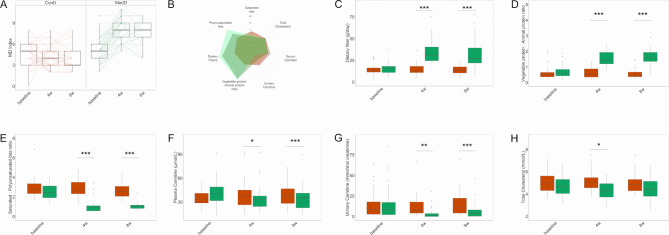
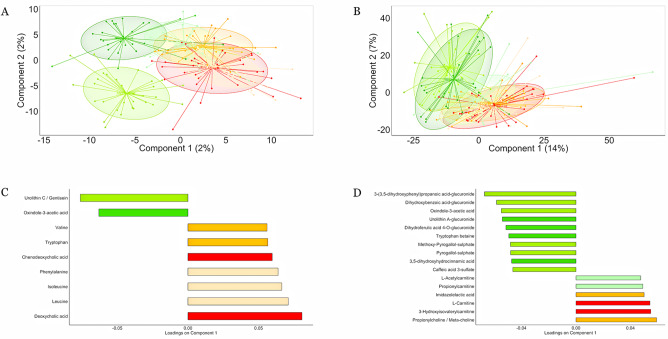
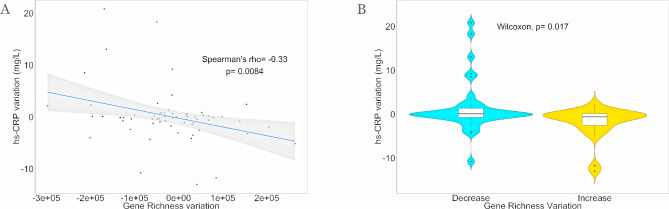
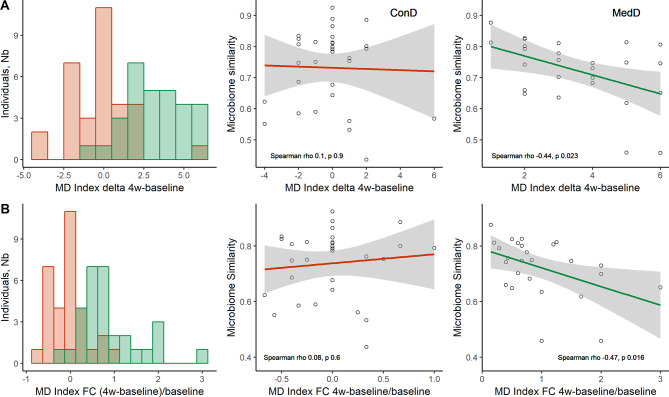
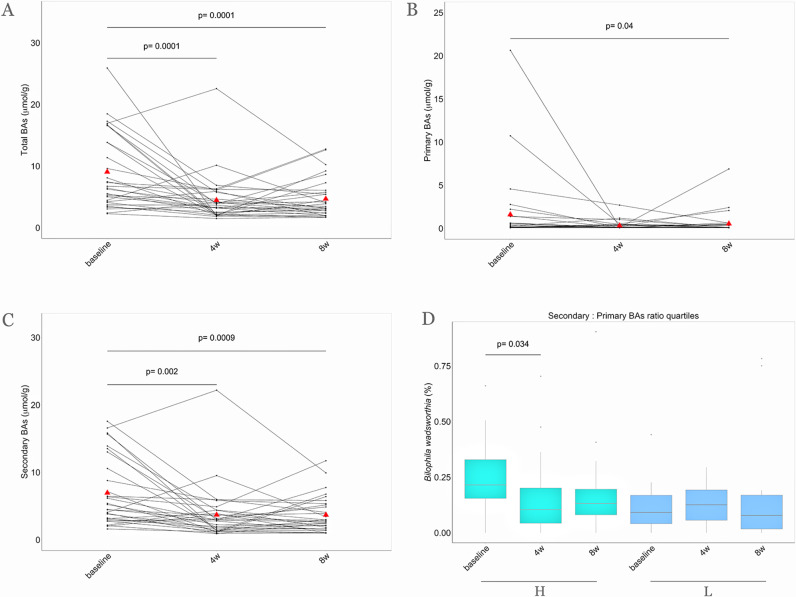
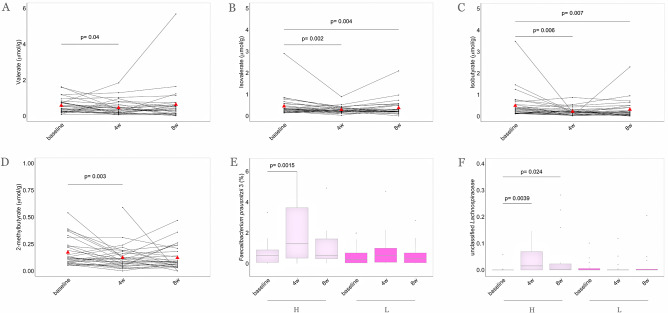
Objectives This study aimed to explore the effects of an isocaloric Mediterranean diet (MD) intervention on metabolic health, gut microbiome and systemic metabolome in subjects with lifestyle risk factors for metabolic disease. Design Eighty-two healthy overweight and obese subjects with a habitually low intake of fruit and vegetables and a sedentary lifestyle participated in a parallel 8-week randomised controlled trial. Forty-three participants consumed an MD tailored to their habitual energy intakes (MedD), and 39 maintained their regular diets (ConD). Dietary adherence, metabolic parameters, gut microbiome and systemic metabolome were monitored over the study period. Results Increased MD adherence in the MedD group successfully reprogrammed subjects’ intake of fibre and animal proteins. Compliance was confirmed by lowered levels of carnitine in plasma and urine. Significant reductions in plasma cholesterol (primary outcome) and faecal bile acids occurred in the MedD compared with the ConD group. Shotgun metagenomics showed gut microbiome changes that reflected individual MD adherence and increase in gene richness in participants who reduced systemic inflammation over the intervention. The MD intervention led to increased levels of the fibre-degrading Faecalibacterium prausnitzii and of genes for microbial carbohydrate degradation linked to butyrate metabolism. The dietary changes in the MedD group led to increased urinary urolithins, faecal bile acid degradation and insulin sensitivity that co-varied with specific microbial taxa. Conclusion Switching subjects to an MD while maintaining their energy intake reduced their blood cholesterol and caused multiple changes in their microbiome and metabolome that are relevant in future strategies for the improvement of metabolic health.
Overview
The claims and statistics of this paper haven’t been checked yet.
Run the check — free, no account needed. It reads the open-access text and checks the sources it cites.
Integrity signals
Registry
Cites
Statistics
Figures
Verification
Claims the paper makes
The claims and statistics of this paper haven’t been checked yet.
Run the check — free, no account needed. It reads the open-access text and checks the sources it cites.
Claims other papers make about this one
Each is checked against this paper’s own text: does it say what the citing paper says it does?
In the citing paper
“Greater microbial diversity as well as higher abundance of health-promoting bacterial taxa (i.e., Clostridium cluster XIVa, F. prausnitzii, Roseburia, Eubacterium, B. thetaiotaomicron, Parabacteroides distasonis, Bifidobacterium adolescentis, and Bifidobacterium longum) have been associated with consumption of the Mediterranean diet (38)(39)(40).”
From Diet and the Microbiota–Gut–Brain Axis: Sowing the Seeds of Good Mental Health (2021) · cites this paper as [40]
In the citing paper
“More recent human intervention studies also support the beneficial impact of a Mediterranean diet on microbiota profiles.”
From Diet and the Microbiota–Gut–Brain Axis: Sowing the Seeds of Good Mental Health (2021) · cites this paper as [40]
In the citing paper
“Additionally, adherence to a Mediterranean diet was linked to beneficial microbiota-related metabolomic profiles, such as increased levels of SCFAs and reductions in BCFAs, bile acids, and trimethylamine N-oxide (TMAO) (38,40,41).”
From Diet and the Microbiota–Gut–Brain Axis: Sowing the Seeds of Good Mental Health (2021) · cites this paper as [40]
Self-check
Percentages, sums and reported differences re-computed from the paper’s own numbers.
The self-check needs the paper’s full text.
Citations
Cites
Diet rapidly and reproducibly alters the human gut microbiome
David, L. A., Maurice, C. F., Carmody, R. N., Gootenberg, D. B., Button, J. E., Wolfe, B. E., Ling, A. V., Devlin, A. S., Varma, Y., Fischbach, M. A., et al. (2014) · Nature · doi:10.1038/nature12820 · Cited by 10,100
Complex heatmaps reveal patterns and correlations in multidimensional genomic data
Gu, Z., Eils, R., & Schlesner, M. (2016) · Bioinformatics · doi:10.1093/bioinformatics/btw313 · Cited by 10,037
Richness of human gut microbiome correlates with metabolic markers
Le Chatelier, E., Nielsen, T., Qin, J., Prifti, E., Hildebrand, F., Falony, G., Almeida, M., Arumugam, M., Batto, J.-M., Kennedy, S., et al. (2013) · Nature · doi:10.1038/nature12506 · Cited by 4,662
Self-citationSokol, H., Pigneur, B., Watterlot, L., Lakhdari, O., Bermúdez-Humarán, L. G., Gratadoux, J.-J., Blugeon, S., Bridonneau, C., Furet, J.-P., Corthier, G., et al. (2008) · Proceedings of the National Academy of Sciences · doi:10.1073/pnas.0804812105 · Cited by 4,413
Changes in diet and lifestyle and long-term weight gain in women and men
Mozaffarian, D., Hao, T., Rimm, E. B., Willett, W. C., & Hu, F. B. (2011) · New England Journal of Medicine · doi:10.1056/nejmoa1014296 · Cited by 2,527
Human gut microbes impact host serum metabolome and insulin sensitivity
Pedersen, H. K., Gudmundsdottir, V., Nielsen, H. B., Hyotylainen, T., Nielsen, T., Jensen, B. A. H., Forslund, K., Hildebrand, F., Prifti, E., Falony, G., et al. (2016) · Nature · doi:10.1038/nature18646 · Cited by 2,116
Dietary-fat-induced taurocholic acid promotes pathobiont expansion and colitis in Il10-/- mice
Devkota, S., Wang, Y., Musch, M. W., Leone, V., Fehlner-Peach, H., Nadimpalli, A., Antonopoulos, D. A., Jabri, B., & Chang, E. B. (2012) · Nature · doi:10.1038/nature11225 · Cited by 1,904
Current methods of the U.S. Preventive Services Task Force
Harris, R., Helfand, M., Woolf, S. H., Lohr, K. N., Mulrow, C. D., Teutsch, S. M., & Atkins, D. C. (2001) · American Journal of Preventive Medicine · doi:10.1016/s0749-3797(01)00261-6 · Cited by 1,720
De Filippis, F., Pellegrini, N., Vannini, L., Jeffery, I. B., La Storia, A., Laghi, L., Serrazanetti, D. I., Di Cagno, R., Ferrocino, I., Lazzi, C., et al. (2016) · Gut · doi:10.1136/gutjnl-2015-309957 · Cited by 1,638
Cited by
Sorted by citations
Asnicar, F., Berry, S. E., Valdes, A. M., Nguyen, L. H., Piccinno, G., Drew, D. A., Leeming, E., Gibson, R., Le Roy, C., Khatib, H. A., et al. (2021) · Nature Medicine · doi:10.1038/s41591-020-01183-8 · Cited by 995
Ghosh, T. S., Rampelli, S., Jeffery, I. B., Santoro, A., Neto, M., Capri, M., Giampieri, E., Jennings, A., Candela, M., Turroni, S., et al. (2020) · Gut · doi:10.1136/gutjnl-2019-319654 · Cited by 991
The gut microbiome as a modulator of healthy ageing
Ghosh, T. S., Shanahan, F., & O’Toole, P. W. (2022) · Nature Reviews Gastroenterology & Hepatology · doi:10.1038/s41575-022-00605-x · Cited by 817
Prevotella Diversity, Niches and Interactions with the Human Host
Tett, A., Pasolli, E., Masetti, G., Ercolini, D., & Segata, N. (2021) · Nature Reviews Microbiology · doi:10.1038/s41579-021-00559-y · Cited by 748
Self-citationThe interplay between diet and the gut microbiome: implications for health and disease
Ross, F. C., Patangia, D. V., Grimaud, G. M., Lavelle, A., Dempsey, E. M., Ross, R. P., & Stanton, C. (2024) · Nature Reviews Microbiology · doi:10.1038/s41579-024-01068-4 · Cited by 762
Metadata
- Authors
- Meslier, V., Laiola, M., Roager, H. M., De Filippis, F., Roume, H., Quinquis, B., Giacco, R., Mennella, I., Ferracane, R., Pons, N., Pasolli, E., Rivellese, A., Dragsted, L. O., Vitaglione, P., Ehrlich, S. D., & Ercolini, D.
- Affiliations
- Université Paris-Saclay (FR)
- University of Naples Federico II (IT)
- University of Copenhagen (DK)
- Department of Agricultural Sciences, University of Naples Federico II, Portici, Italy
- Université Paris-Saclay, INRAE, MGP, Jouy-en-Josas, France
- Institute of Food Science (IT)
- Federico II University Hospital (IT)
- Corresponding author
- Ercolini, Danilo
- ORCID
- Venue
- Gut
- Publisher
- BMJ
- Published
- 2020-02-19
- Volume
- 69
- Issue
- 7
- Pages
- 1258-1268
- ISSN
- 0017-5749 (ISSN-L)
- 1468-3288
- PMC
- PMC7306983
- OpenAlex
- W3007138124
- Cited by
- 583
- References
- 69
- Citations by year
- 2026: 67 · 2025: 116 · 2024: 118 · 2023: 87 · 2022: 85 · 2021: 73 · 2020: 36
- FWCI
- 23.17
- Type
- journal article
- Language
- en
- Open access
- hybrid
- doi.org
- Licence
- Locations
- Gut (publishedVersion, cc-by-nc)
- PubMed Central (publishedVersion, cc-by-nc)
- PubMed (publishedVersion)
- Research at the University of Copenhagen (University of Copenhagen) (publishedVersion, cc-by-nc)
- HighWire Press Open Archive (submittedVersion)
- INFM-OAR (INFN Catania) (submittedVersion, cc-by-nc)
- Funders
- Agence Nationale de la Recherche (ANR-11-DPBS-0001, ANR-15-HDIM-0002)
- Agria Djurförsäkring
- Topics
- Life Sciences › Biochemistry, Genetics and Molecular Biology › Molecular Biology › Gut microbiota and health
- Health Sciences › Medicine › Public Health, Environmental and Occupational Health › Nutritional Studies and Diet
- Life Sciences › Biochemistry, Genetics and Molecular Biology › Genetics › Nutrition, Genetics, and Disease
- Keywords
- Mediterranean diet, overweight, obesity, serum cholesterol, gut microbiota, metabolome, isocaloric diet, dietary adherence, Faecalibacterium prausnitzii, butyrate metabolism, bile acids, urolithins, insulin sensitivity, systemic inflammation, dietary fiber, L-carnitine, metabolic health
- MeSH terms
- Gastrointestinal Microbiome, Adult, Energy Intake, Cholesterol, Female, Humans, Male, Obesity, Diet, Mediterranean, Overweight, Metabolome
About these checks
Registry, retraction, Cites and statistics results are computed, not judged, with one exception: a printed reference that no index lists is read once by a model before it counts as a citation error. Claims are extracted by a model and kept only when their quote appears verbatim in the text; each cited source is then checked, with a model’s help, for whether it says what the claim relies on. Those verdicts can be wrong — read the claim’s quote and the cited source before relying on one.
Statistics and arithmetic are recomputed, not judged.
Confidence bands are shown only for fields calibrated on our annotated test set. None is calibrated yet, so no band is shown.
What counts as a claim ›How we measure confidence ›How we check this ›
Are you an author, or do you see a problem with this page? Request a review
