

The DOI matches its Crossref record; 48 of the 50 references it cites were found in a registry or an index, and 1 are not checked yet; none of the 34 sources its claims cite is checked for support yet.
The global burden of injury: incidence, mortality, disability-adjusted life years and time trends from the Global Burden of Disease study 2013
Open accessAbstract
Background: The Global Burden of Diseases (GBD), Injuries, and Risk Factors study used the disability-adjusted life year (DALY) to quantify the burden of diseases, injuries, and risk factors. This paper provides an overview of injury estimates from the 2013 update of GBD, with detailed information on incidence, mortality, DALYs and rates of change from 1990 to 2013 for 26 causes of injury, globally, by region and by country. Methods: Injury mortality was estimated using the extensive GBD mortality database, corrections for ill-defined cause of death and the cause of death ensemble modelling tool. Morbidity estimation was based on inpatient and outpatient data sets, 26 cause-of-injury and 47 nature-of-injury categories, and seven follow-up studies with patient-reported long-term outcome measures. Results: In 2013, 973 million (uncertainty interval (UI) 942 to 993) people sustained injuries that warranted some type of healthcare and 4.8 million (UI 4.5 to 5.1) people died from injuries. Between 1990 and 2013 the global age-standardised injury DALY rate decreased by 31% (UI 26% to 35%). The rate of decline in DALY rates was significant for 22 cause-of-injury categories, including all the major injuries. Conclusions: Injuries continue to be an important cause of morbidity and mortality in the developed and developing world. The decline in rates for almost all injuries is so prominent that it warrants a general statement that the world is becoming a safer place to live in. However, the patterns vary widely by cause, age, sex, region and time and there are still large improvements that need to be made.
Checked 2026-10-06 · 1 reference not checked yet
Overview
AI snapshot
Written from the paper’s full text.
TL;DR
In 2013, an estimated 973 million people sustained injuries warranting healthcare and 4.8 million died from injuries, while the global age-standardised injury DALY rate fell by 31% between 1990 and 2013. The decline was significant for 22 of 26 cause-of-injury categories, but patterns varied widely by cause, age, sex, region, and time.
Key findings
- In 2013, 973 million (UI 942 to 993) people had injuries warranting some healthcare and 4.8 million (UI 4.5 to 5.1) died from injuries. Major causes of injury death were road injury (29.1%), self-harm (17.6%), falls (11.6%), and interpersonal violence (8.5%).
- Injuries accounted for 10.1% (UI 9.5 to 10.8) of the global burden of disease; YLLs made up 85.2% (UI 81.2 to 88.7) of injury DALYs. Main DALY contributors were road injuries (29.3%), self-harm (14.0%), falls (12.0%), drowning (8.7%), and interpersonal violence (8.4%).
- Global age-standardised injury DALY rates declined by 30.9% (UI 26.1 to 34.7) from 1990 to 2013, an annualised decline of 1.6%. YLD rates fell by 37.0%, YLL rates by 29.6%, and incidence rates by 19.5%.
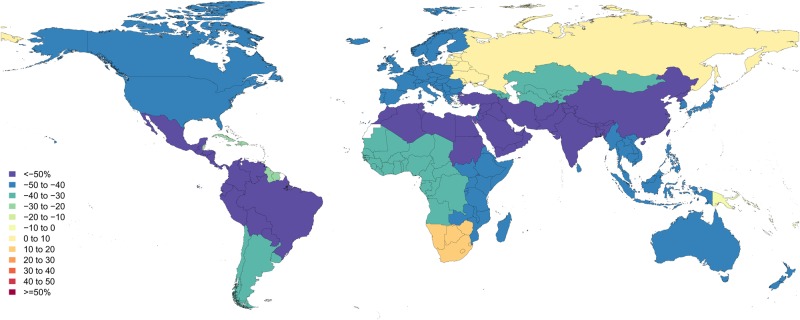
- Regional changes varied: Andean Latin America had a 54.8% decline in injury DALY rates, while Oceania had a non-significant 6.4% increase. Road injury DALY rates fell 15.7% globally, with large declines in high-income Asia Pacific (−66.9%) and western Europe (−61.1%), but non-significant increases in South Asia (6.5%), West sub-Saharan Africa (13.1%), and South sub-Saharan Africa (35.2%).
Methods
- GBD 2013 estimated injury mortality using the GBD mortality database, corrections for ill-defined cause of death, and the cause of death ensemble modelling (CODEm) tool. Morbidity estimation used inpatient and outpatient datasets, 26 cause-of-injury and 47 nature-of-injury categories, and seven follow-up studies with patient-reported long-term outcome measures.
- DALYs were calculated as YLLs plus YLDs; YLLs multiplied deaths by remaining life expectancy, and YLDs multiplied prevalent cases by disability weights. Incidence was estimated with DisMod-MR 2.0, cause-nature-of-injury matrices were applied, short- and long-term disability were modelled, uncertainty was propagated through 1000 draws, and rates were age-standardised to the GBD 2013 standard population.
- Data sources included vital registration, verbal autopsy, mortality surveillance, censuses, surveys, hospitals, police records, and mortuaries; police and crime reports were uniquely used for road injury, self-harm, and interpersonal violence deaths.
Limitations
- The paper states that vital registration coverage is low or absent in large parts of the world, requiring model-based prediction from covariates and verbal autopsy; police records tend to underestimate deaths; estimates for sparse data are less precise; and 95% UIs may not capture all uncertainty.
- The paper states that probabilities of long-term health loss relied on follow-up studies from only China, the Netherlands, and the USA; rare nature-of-injury codes had limited cases; different injury classifications and patient-reported outcome measures required mapping, adding uncertainty and potential bias; and some outpatient cases may have been misclassified.
- The paper states that short-term duration estimates were based on a limited sample from the Netherlands only and may be affected by recall bias, while untreated-injury durations relied on expert opinion; the health-system access proxy mainly reflects maternal and child health indicators and may not reflect trauma services. The text also makes evident that DisMod-MR’s steady-state assumption may be inaccurate if incidence or mortality trends are large, and that hospital data inclusion allowed a low bar of at least 45% cause-of-injury coding, which may not be representative.
Model-written summary. Check it against the paper before relying on it.
Integrity signals
Registry
Cites
Statistics
Figures
Verification
Claims the paper makes
74 Own result · 37 Own method · 19 Not checked yet · 14 No basis given · 12 Own interpretation
The paper states this without a source or data behind it here, so there is nothing to check it against. The quote shows it is in the paper.
In the paper
“Fire injuries and drowning are sizeable causes in sub-Saharan Africa, eastern Europe and South Asia.”
§ The global burden of injury: incidence, mortality, disability-adjusted life years and time trends from the Global Burden of Disease study 2013 > Results > Incidence, mortality and burden of disease of injuries in 2013
plain- Asserted: passes — The authors put it forward as true.
- Checkable: passes — It can be checked against evidence.
- Load-bearing: unclear — It is unclear whether the paper’s conclusions depend on it.
- Based: passes — The paper gives a reason why it holds.
A result the paper reports from its own data — it cites no other source for it, so there is none to check. The quote shows it is in the paper.
In the paper
“In 2013, 973 million (uncertainty interval (UI) 942 to 993) people sustained injuries that warranted some type of healthcare and 4.8 million (UI 4.5 to 5.1) people died from injuries.”
- Also stated in: § Incidence, mortality and burden of disease of injuries in 2013 · hedged
“In 2013, we estimated that 973 million (uncertainty interval (UI) 942 to 993) people sustained injuries that warranted some type of healthcare and 4.8 million (UI 4.5 to 5.1) people died from injuries.”
§ The global burden of injury: incidence, mortality, disability-adjusted life years and time trends from the Global Burden of Disease study 2013 > Abstract > Results
plain- Asserted: passes — The authors put it forward as true.
- Checkable: passes — It can be checked against evidence.
- Load-bearing: unclear — It is unclear whether the paper’s conclusions depend on it.
- Based: passes — The paper gives a reason why it holds.
- Also stated in: § Incidence, mortality and burden of disease of injuries in 2013 · hedged
The paper states this without a source or data behind it here, so there is nothing to check it against. The quote shows it is in the paper.
In the paper
“Falls are the dominant cause of injury DALY rates in the elderly.”
§ The global burden of injury: incidence, mortality, disability-adjusted life years and time trends from the Global Burden of Disease study 2013 > Results > Incidence, mortality and burden of disease of injuries in 2013
plain- Asserted: passes — The authors put it forward as true.
- Checkable: passes — It can be checked against evidence.
- Load-bearing: unclear — It is unclear whether the paper’s conclusions depend on it.
- Based: passes — The paper gives a reason why it holds.
A result the paper reports from its own data — it cites no other source for it, so there is none to check. The quote shows it is in the paper.
In the paper
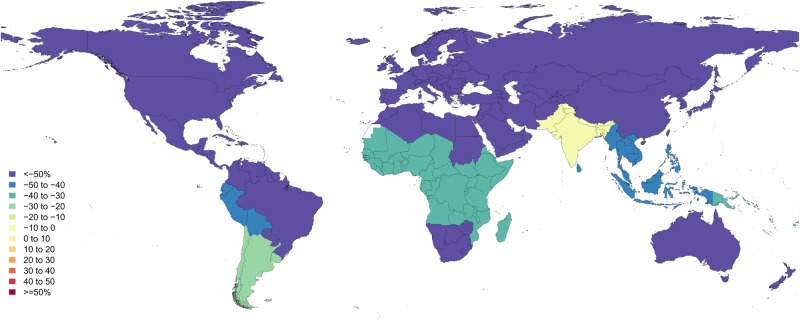
“The greatest declines in drowning DALY rates occurred in East Asia (−71.0%; UI −75.2 to −29.4) and southern sub-Saharan Africa (−62.3%; UI −73.2 to −26.4).”
§ The global burden of injury: incidence, mortality, disability-adjusted life years and time trends from the Global Burden of Disease study 2013 > Results > Changes between 1990 and 2013 in DALY rates for unintentional injuries
plain- Asserted: passes — The authors put it forward as true.
- Checkable: passes — It can be checked against evidence.
- Load-bearing: unclear — It is unclear whether the paper’s conclusions depend on it.
- Based: passes — The paper gives a reason why it holds.
A result the paper reports from its own data — it cites no other source for it, so there is none to check. The quote shows it is in the paper.
In the paper
“Among high-income regions, western Europe and Australasia showed the largest declines.”
§ The global burden of injury: incidence, mortality, disability-adjusted life years and time trends from the Global Burden of Disease study 2013 > Results > Changes between 1990 and 2013—all injury
plain- Asserted: passes — The authors put it forward as true.
- Checkable: passes — It can be checked against evidence.
- Load-bearing: unclear — It is unclear whether the paper’s conclusions depend on it.
- Based: passes — The paper gives a reason why it holds.
A result the paper reports from its own data — it cites no other source for it, so there is none to check. The quote shows it is in the paper.
In the paper
“East Asia, North Africa and the Middle East, Central Europe and Southeast Asia ranked second to fifth in terms of largest decrease in injury DALY rates.”
§ The global burden of injury: incidence, mortality, disability-adjusted life years and time trends from the Global Burden of Disease study 2013 > Results > Changes between 1990 and 2013—all injury
plain- Asserted: passes — The authors put it forward as true.
- Checkable: passes — It can be checked against evidence.
- Load-bearing: unclear — It is unclear whether the paper’s conclusions depend on it.
- Based: passes — The paper gives a reason why it holds.
A result the paper reports from its own data — it cites no other source for it, so there is none to check. The quote shows it is in the paper.
In the paper
“Of the people who sustained injuries that warranted some type of healthcare, 5.8% (56.2 million; UI 55.6 to 57.3) warranted inpatient care, of whom 38.5% (21.7 million; UI 21.3 to 22.0) sustained fractures (see online supplementary annex table 5.1).”
§ The global burden of injury: incidence, mortality, disability-adjusted life years and time trends from the Global Burden of Disease study 2013 > Results > Incidence, mortality and burden of disease of injuries in 2013
plain- Asserted: passes — The authors put it forward as true.
- Checkable: passes — It can be checked against evidence.
- Load-bearing: unclear — It is unclear whether the paper’s conclusions depend on it.
- Based: passes — The paper gives a reason why it holds.
A result the paper reports from its own data — it cites no other source for it, so there is none to check. The quote shows it is in the paper.
In the paper
“The distribution of nature-of-injury YLDs by cause-of-injury category also differs by sex, age category, injuries warranting inpatient versus outpatient care and high/low income countries.”
§ The global burden of injury: incidence, mortality, disability-adjusted life years and time trends from the Global Burden of Disease study 2013 > Results > Incidence, mortality and burden of disease of injuries in 2013
plaincorrelational- Asserted: passes — The authors put it forward as true.
- Checkable: passes — It can be checked against evidence.
- Load-bearing: unclear — It is unclear whether the paper’s conclusions depend on it.
- Based: passes — The paper gives a reason why it holds.
A result the paper reports from its own data — it cites no other source for it, so there is none to check. The quote shows it is in the paper.
In the paper
“Over the period 1990 to 2013 the burden of disease due to falls decreased −20.8% (UI −32.6 to −13.5).”
§ The global burden of injury: incidence, mortality, disability-adjusted life years and time trends from the Global Burden of Disease study 2013 > Results > Changes between 1990 and 2013 in DALY rates for unintentional injuries
plain- Asserted: passes — The authors put it forward as true.
- Checkable: passes — It can be checked against evidence.
- Load-bearing: unclear — It is unclear whether the paper’s conclusions depend on it.
- Based: passes — The paper gives a reason why it holds.
A result the paper reports from its own data — it cites no other source for it, so there is none to check. The quote shows it is in the paper.
In the paper
“The decrease was significant in 13 out of 21 GBD world regions.”
§ The global burden of injury: incidence, mortality, disability-adjusted life years and time trends from the Global Burden of Disease study 2013 > Results > Changes between 1990 and 2013 in DALY rates for unintentional injuries
plain- Asserted: passes — The authors put it forward as true.
- Checkable: passes — It can be checked against evidence.
- Load-bearing: unclear — It is unclear whether the paper’s conclusions depend on it.
- Based: passes — The paper gives a reason why it holds.
- It may state two separate claims as one. 53
- The quote only partly states this claim. 1
- Probably not a substantial claim. 35
A result the paper reports from its own data — it cites no other source for it, so there is none to check. The quote shows it is in the paper.
In the paper
“Drowning shows large variations with highest rates in sub-Saharan African and Asian regions.”
§ The global burden of injury: incidence, mortality, disability-adjusted life years and time trends from the Global Burden of Disease study 2013 > Results > Incidence, mortality and burden of disease of injuries in 2013
plaincorrelational- Asserted: passes — The authors put it forward as true.
- Checkable: passes — It can be checked against evidence.
- Load-bearing: unclear — It is unclear whether the paper’s conclusions depend on it.
- Based: passes — The paper gives a reason why it holds.
It may state two separate claims as one.
A result the paper reports from its own data — it cites no other source for it, so there is none to check. The quote shows it is in the paper.
In the paper
“The global decline in DALY rates of drowning was apparent in all age categories, but largest for age category 1–4 years (by 64.4%).”
§ The global burden of injury: incidence, mortality, disability-adjusted life years and time trends from the Global Burden of Disease study 2013 > Results > Changes between 1990 and 2013 in DALY rates for unintentional injuries
plain- Asserted: passes — The authors put it forward as true.
- Checkable: passes — It can be checked against evidence.
- Load-bearing: unclear — It is unclear whether the paper’s conclusions depend on it.
- Based: passes — The paper gives a reason why it holds.
It may state two separate claims as one.
A result the paper reports from its own data — it cites no other source for it, so there is none to check. The quote shows it is in the paper.
In the paper
“The proportion of DALYs due to disability (YLD) is much higher for collective violence (69.1%; UI 54.3 to 81.8), falls (46.4%; UI 38.3 to 54.1) and forces of nature (43.0%; UI 26.0 to 56.7).”
§ The global burden of injury: incidence, mortality, disability-adjusted life years and time trends from the Global Burden of Disease study 2013 > Results > Incidence, mortality and burden of disease of injuries in 2013
plain- Asserted: passes — The authors put it forward as true.
- Checkable: passes — It can be checked against evidence.
- Load-bearing: unclear — It is unclear whether the paper’s conclusions depend on it.
- Based: passes — The paper gives a reason why it holds.
It may state two separate claims as one.
A result the paper reports from its own data — it cites no other source for it, so there is none to check. The quote shows it is in the paper.
In the paper
“Over the period 1990–2013 the rate of YLDs from injuries decreased by −37.0% (UI −30.0 to −45.4) while YLLs due to injuries decreased only by −29.6% (UI −24.1 to −33.6).”
§ The global burden of injury: incidence, mortality, disability-adjusted life years and time trends from the Global Burden of Disease study 2013 > Results > Changes between 1990 and 2013—all injury
plain- Asserted: passes — The authors put it forward as true.
- Checkable: passes — It can be checked against evidence.
- Load-bearing: unclear — It is unclear whether the paper’s conclusions depend on it.
- Based: passes — The paper gives a reason why it holds.
It may state two separate claims as one.
A result the paper reports from its own data — it cites no other source for it, so there is none to check. The quote shows it is in the paper.
In the paper
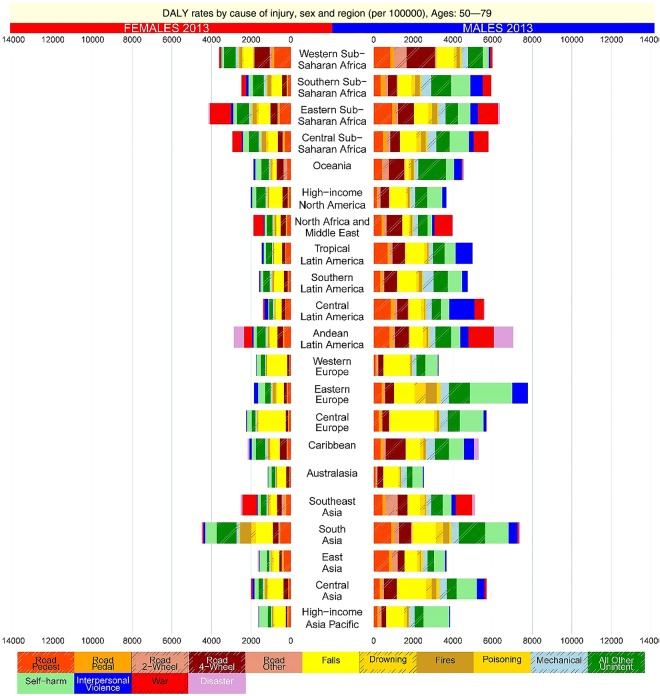
“Patterns of injury DALY rates in the age group 50–79 years follow similar patterns as those in the younger adult age group but the differences between regions and between men and women are less pronounced: DALY rates in high income regions are higher and those in other regions are lower.”
§ The global burden of injury: incidence, mortality, disability-adjusted life years and time trends from the Global Burden of Disease study 2013 > Results > Incidence, mortality and burden of disease of injuries in 2013
plaincorrelational- Asserted: passes — The authors put it forward as true.
- Checkable: passes — It can be checked against evidence.
- Load-bearing: unclear — It is unclear whether the paper’s conclusions depend on it.
- Based: passes — The paper gives a reason why it holds.
It may state two separate claims as one.
The paper states this without a source or data behind it here, so there is nothing to check it against. The quote shows it is in the paper.
In the paper
“Falls become a more prominent cause of DALYs in this age group and self-harm becomes a greater cause than violence in most regions.”
§ The global burden of injury: incidence, mortality, disability-adjusted life years and time trends from the Global Burden of Disease study 2013 > Results > Incidence, mortality and burden of disease of injuries in 2013
plaincorrelational- Asserted: passes — The authors put it forward as true.
- Checkable: passes — It can be checked against evidence.
- Load-bearing: unclear — It is unclear whether the paper’s conclusions depend on it.
- Based: passes — The paper gives a reason why it holds.
It may state two separate claims as one.
A result the paper reports from its own data — it cites no other source for it, so there is none to check. The quote shows it is in the paper.
In the paper
“All but four regions showed a significant decline with Oceania, and West, central and southern sub-Saharan Africa the exceptions.”
§ The global burden of injury: incidence, mortality, disability-adjusted life years and time trends from the Global Burden of Disease study 2013 > Results > Changes between 1990 and 2013—all injury
plain- Asserted: passes — The authors put it forward as true.
- Checkable: passes — It can be checked against evidence.
- Load-bearing: unclear — It is unclear whether the paper’s conclusions depend on it.
- Based: passes — The paper gives a reason why it holds.
It may state two separate claims as one.
A result the paper reports from its own data — it cites no other source for it, so there is none to check. The quote shows it is in the paper.
In the paper
“For transport injuries and intentional injuries the change in YLD rates has been greater than the change in YLL rates but the opposite is the case for unintentional non-transport injuries.”
§ The global burden of injury: incidence, mortality, disability-adjusted life years and time trends from the Global Burden of Disease study 2013 > Results > Changes between 1990 and 2013—all injury
plain- Asserted: passes — The authors put it forward as true.
- Checkable: passes — It can be checked against evidence.
- Load-bearing: unclear — It is unclear whether the paper’s conclusions depend on it.
- Based: passes — The paper gives a reason why it holds.
It may state two separate claims as one.
A result the paper reports from its own data — it cites no other source for it, so there is none to check. The quote shows it is in the paper.
In the paper
“Between 1990 and 2013 the global age-standardised injury DALY rate decreased by 31% (UI 26% to 35%).”
- Also stated in: § Changes between 1990 and 2013—all injury · plain
“Between 1990 and 2013 injury DALY rates have declined by 30.9%, an annualised rate of decline of 1.6% (table 3).”
§ The global burden of injury: incidence, mortality, disability-adjusted life years and time trends from the Global Burden of Disease study 2013 > Abstract > Results
plain- Asserted: passes — The authors put it forward as true.
- Checkable: passes — It can be checked against evidence.
- Load-bearing: unclear — It is unclear whether the paper’s conclusions depend on it.
- Based: passes — The paper gives a reason why it holds.
The quote only partly states this claim.
- Also stated in: § Changes between 1990 and 2013—all injury · plain
A result the paper reports from its own data — it cites no other source for it, so there is none to check. The quote shows it is in the paper.
In the paper
“The main contributors to injury DALYs are road injuries (29.3%; UI 26.4 to 32.2), self-harm (14.0%; UI 11.8 to 16.2), falls (12.0%; UI 9.8 to 14.1), drowning (8.7%; UI 6.3 to 11.2) and interpersonal violence (8.4%; UI 6.5 to 10.4).”
§ The global burden of injury: incidence, mortality, disability-adjusted life years and time trends from the Global Burden of Disease study 2013 > Results > Incidence, mortality and burden of disease of injuries in 2013
plain- Asserted: passes — The authors put it forward as true.
- Checkable: passes — It can be checked against evidence.
- Load-bearing: unclear — It is unclear whether the paper’s conclusions depend on it.
- Based: passes — The paper gives a reason why it holds.
It may state two separate claims as one.
A result the paper reports from its own data — it cites no other source for it, so there is none to check. The quote shows it is in the paper.
In the paper
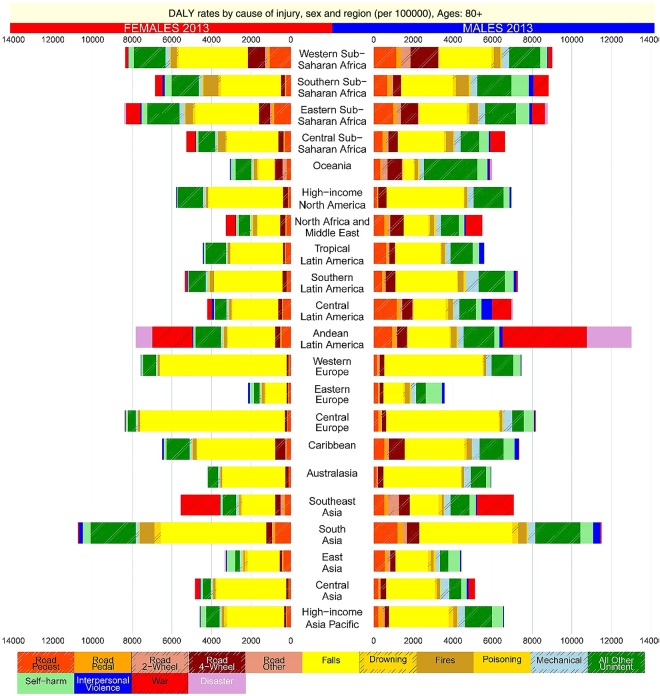
“In women, rates range from a low of 798 (UI 712 to 907) in Australasia to a high of 3268 (UI 2608 to 3985) in South Asia.”
§ The global burden of injury: incidence, mortality, disability-adjusted life years and time trends from the Global Burden of Disease study 2013 > Results > Incidence, mortality and burden of disease of injuries in 2013
plain- Asserted: passes — The authors put it forward as true.
- Checkable: passes — It can be checked against evidence.
- Load-bearing: fails — The paper’s conclusions may not depend on it.
- Based: passes — The paper gives a reason why it holds.
Probably not a substantial claim. The paper’s conclusions may not depend on it.
The paper states this without a source or data behind it here, so there is nothing to check it against. The quote shows it is in the paper.
In the paper
“At older ages the share of road injuries in pedestrians increases.”
§ The global burden of injury: incidence, mortality, disability-adjusted life years and time trends from the Global Burden of Disease study 2013 > Results > Incidence, mortality and burden of disease of injuries in 2013
plaindirect- Asserted: passes — The authors put it forward as true.
- Checkable: passes — It can be checked against evidence.
- Load-bearing: fails — The paper’s conclusions may not depend on it.
- Based: passes — The paper gives a reason why it holds.
Probably not a substantial claim. The paper’s conclusions may not depend on it.
A result the paper reports from its own data — it cites no other source for it, so there is none to check. The quote shows it is in the paper.
In the paper
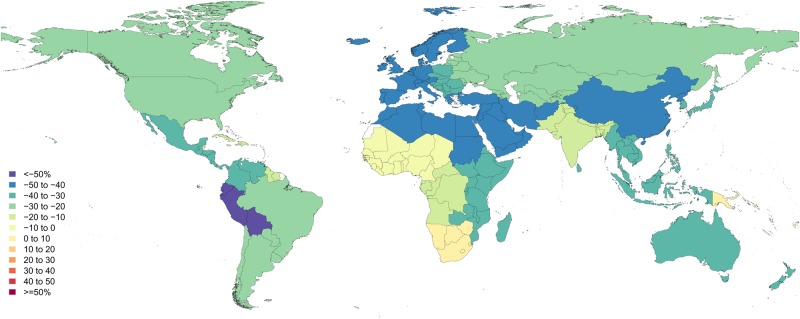
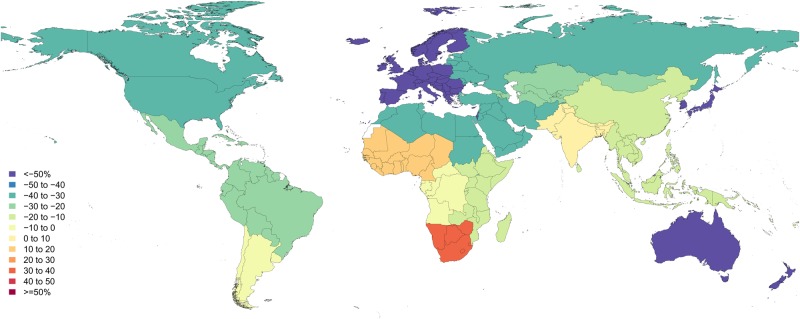
“Decreases were mainly apparent in high-income Asia Pacific (−66.9%; UI −69.8 to −63.9), followed by western Europe (−61.1%; UI −63.1 to −58.9), Australasia (−57.0%; UI −60.1 to −53.8) central Europe (−50.6%; UI −55.8 to −47.1) and eastern Europe (−38.3%, UI −42.9 to 33.5).”
§ The global burden of injury: incidence, mortality, disability-adjusted life years and time trends from the Global Burden of Disease study 2013 > Results > Changes between 1990 and 2013 in DALY rates for unintentional injuries
plain- Asserted: passes — The authors put it forward as true.
- Checkable: passes — It can be checked against evidence.
- Load-bearing: unclear — It is unclear whether the paper’s conclusions depend on it.
- Based: passes — The paper gives a reason why it holds.
It may state two separate claims as one.
A result the paper reports from its own data — it cites no other source for it, so there is none to check. The quote shows it is in the paper.
In the paper
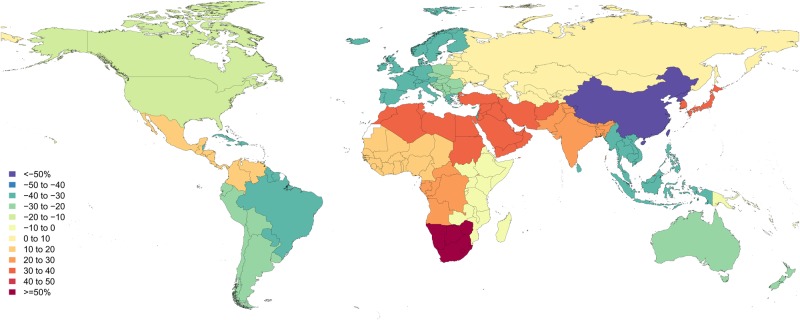
“Four-wheeled motor vehicle injuries significantly increased in South Asia (21.7%; UI 1.8 to 44.6) and sub-Saharan Africa (19.8%; UI 6.6 to 35.0).”
§ The global burden of injury: incidence, mortality, disability-adjusted life years and time trends from the Global Burden of Disease study 2013 > Results > Changes between 1990 and 2013 in DALY rates for unintentional injuries
plaindirect- Asserted: passes — The authors put it forward as true.
- Checkable: passes — It can be checked against evidence.
- Load-bearing: unclear — It is unclear whether the paper’s conclusions depend on it.
- Based: passes — The paper gives a reason why it holds.
It may state two separate claims as one.
A result the paper reports from its own data — it cites no other source for it, so there is none to check. The quote shows it is in the paper.
In the paper
“In 2013, 973 million (uncertainty interval (UI) 942 to 993) people sustained injuries that warranted some type of healthcare and 4.8 million (UI 4.5 to 5.1) people died from injuries.”
- Also stated in: § Incidence, mortality and burden of disease of injuries in 2013 · hedged
“In 2013, we estimated that 973 million (uncertainty interval (UI) 942 to 993) people sustained injuries that warranted some type of healthcare and 4.8 million (UI 4.5 to 5.1) people died from injuries.”
§ The global burden of injury: incidence, mortality, disability-adjusted life years and time trends from the Global Burden of Disease study 2013 > Abstract > Results
plain- Asserted: passes — The authors put it forward as true.
- Checkable: passes — It can be checked against evidence.
- Load-bearing: fails — The paper’s conclusions may not depend on it.
- Based: passes — The paper gives a reason why it holds.
Probably not a substantial claim. The paper’s conclusions may not depend on it.
- Also stated in: § Incidence, mortality and burden of disease of injuries in 2013 · hedged
A result the paper reports from its own data — it cites no other source for it, so there is none to check. The quote shows it is in the paper.
In the paper
“Rates in high-income North America are around 70% higher than in western Europe, Australasia and high-income Asia Pacific with generally higher rates for most injuries, but particularly so for interpersonal violence.”
§ The global burden of injury: incidence, mortality, disability-adjusted life years and time trends from the Global Burden of Disease study 2013 > Results > Incidence, mortality and burden of disease of injuries in 2013
plaincorrelational- Asserted: passes — The authors put it forward as true.
- Checkable: passes — It can be checked against evidence.
- Load-bearing: unclear — It is unclear whether the paper’s conclusions depend on it.
- Based: passes — The paper gives a reason why it holds.
It may state two separate claims as one.
A result the paper reports from its own data — it cites no other source for it, so there is none to check. The quote shows it is in the paper.
In the paper
“Major causes of injury death were road injury (29.1%), self-harm (17.6%), falls (11.6%) and interpersonal violence (8.5%).”
§ The global burden of injury: incidence, mortality, disability-adjusted life years and time trends from the Global Burden of Disease study 2013 > Results > Incidence, mortality and burden of disease of injuries in 2013
plain- Asserted: passes — The authors put it forward as true.
- Checkable: passes — It can be checked against evidence.
- Load-bearing: unclear — It is unclear whether the paper’s conclusions depend on it.
- Based: passes — The paper gives a reason why it holds.
It may state two separate claims as one.
The paper states this without a source or data behind it here, so there is nothing to check it against. The quote shows it is in the paper.
In the paper
“The patterns of change in injury DALY rates were similar between men and women.”
§ The global burden of injury: incidence, mortality, disability-adjusted life years and time trends from the Global Burden of Disease study 2013 > Results > Changes between 1990 and 2013—all injury
plain- Asserted: passes — The authors put it forward as true.
- Checkable: passes — It can be checked against evidence.
- Load-bearing: fails — The paper’s conclusions may not depend on it.
- Based: passes — The paper gives a reason why it holds.
Probably not a substantial claim. The paper’s conclusions may not depend on it.
A result the paper reports from its own data — it cites no other source for it, so there is none to check. The quote shows it is in the paper.
In the paper
“The lowest DALY rates per 100 000 for men (2873; UI 2668 to 3070) and women (1574.2; UI 1429 to 1720) are seen in Australasia while South Asia has the highest rates in men (7525; UI 6880 to 8172) and in women (4798; UI 4421 to 5173).”
§ The global burden of injury: incidence, mortality, disability-adjusted life years and time trends from the Global Burden of Disease study 2013 > Results > Incidence, mortality and burden of disease of injuries in 2013
plain- Asserted: passes — The authors put it forward as true.
- Checkable: passes — It can be checked against evidence.
- Load-bearing: unclear — It is unclear whether the paper’s conclusions depend on it.
- Based: passes — The paper gives a reason why it holds.
It may state two separate claims as one.
A result the paper reports from its own data — it cites no other source for it, so there is none to check. The quote shows it is in the paper.
In the paper
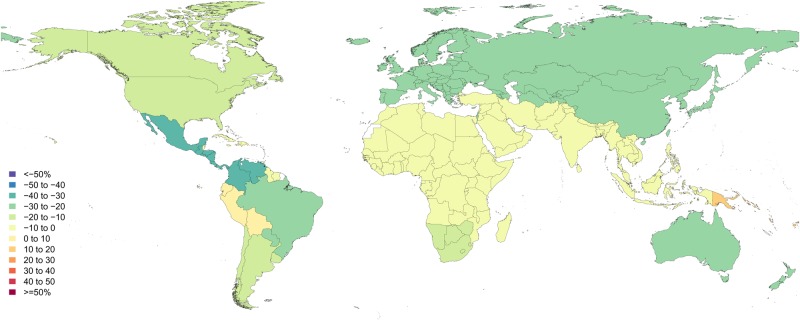
“Oceania was the only region recording an increase in drowning DALY rate, a non-significant change with large uncertainty (14.9%; UI −38.6 to 72.7).”
§ The global burden of injury: incidence, mortality, disability-adjusted life years and time trends from the Global Burden of Disease study 2013 > Results > Changes between 1990 and 2013 in DALY rates for unintentional injuries
plain- Asserted: passes — The authors put it forward as true.
- Checkable: passes — It can be checked against evidence.
- Load-bearing: unclear — It is unclear whether the paper’s conclusions depend on it.
- Based: passes — The paper gives a reason why it holds.
It may state two separate claims as one.
A result the paper reports from its own data — it cites no other source for it, so there is none to check. The quote shows it is in the paper.
In the paper
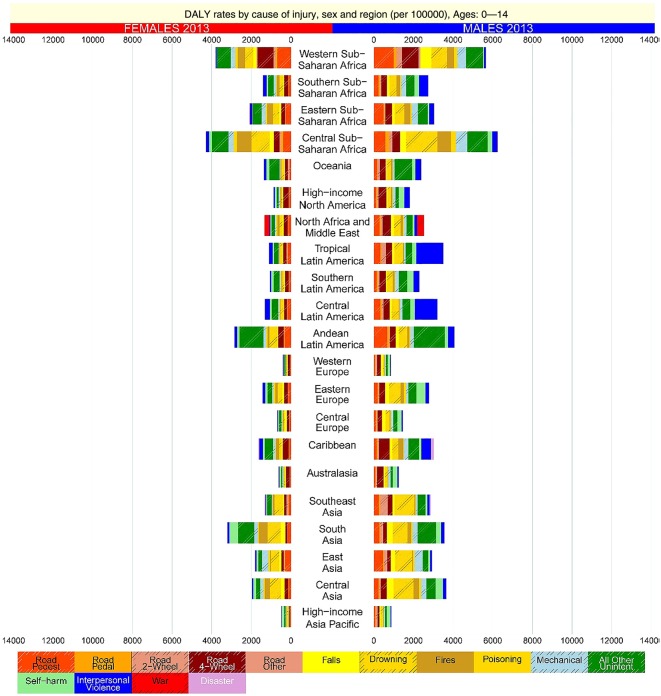
“In boys under the age of 15 years, DALY rates per 100 000 vary from a low of 468.4 (UI 427.7 to 509.7) in western Europe to a high of 6471.4 (UI 4197.1 to 8680.9) in central sub-Saharan Africa.”
§ The global burden of injury: incidence, mortality, disability-adjusted life years and time trends from the Global Burden of Disease study 2013 > Results > Incidence, mortality and burden of disease of injuries in 2013
plain- Asserted: passes — The authors put it forward as true.
- Checkable: passes — It can be checked against evidence.
- Load-bearing: fails — The paper’s conclusions may not depend on it.
- Based: passes — The paper gives a reason why it holds.
Probably not a substantial claim. The paper’s conclusions may not depend on it.
A result the paper reports from its own data — it cites no other source for it, so there is none to check. The quote shows it is in the paper.
In the paper
“In girls under the age of 15 years DALY rates vary from a low of 307.4 (UI 277.9 to 336.8) in western Europe to a high of 4788.1 (UI 3260.4 to 6354.7) in central sub-Saharan Africa.”
§ The global burden of injury: incidence, mortality, disability-adjusted life years and time trends from the Global Burden of Disease study 2013 > Results > Incidence, mortality and burden of disease of injuries in 2013
plain- Asserted: passes — The authors put it forward as true.
- Checkable: passes — It can be checked against evidence.
- Load-bearing: fails — The paper’s conclusions may not depend on it.
- Based: passes — The paper gives a reason why it holds.
Probably not a substantial claim. The paper’s conclusions may not depend on it.
The paper states this without a source or data behind it here, so there is nothing to check it against. The quote shows it is in the paper.
In the paper
“An ageing cohort of people with long-term disabilities from past wars and disasters is quite prominent in Andean Latin America, South-East Asia, North Africa and the Middle East and sub-Saharan African regions.”
§ The global burden of injury: incidence, mortality, disability-adjusted life years and time trends from the Global Burden of Disease study 2013 > Results > Incidence, mortality and burden of disease of injuries in 2013
plain- Asserted: passes — The authors put it forward as true.
- Checkable: passes — It can be checked against evidence.
- Load-bearing: fails — The paper’s conclusions may not depend on it.
- Based: fails — The paper may give no reason why it holds.
Probably not a substantial claim. The paper’s conclusions may not depend on it. The paper may give no reason why it holds.
A result the paper reports from its own data — it cites no other source for it, so there is none to check. The quote shows it is in the paper.
In the paper
“Rates increased in South Asia (6.5%; UI −11.2 to 26.1) and West (13.1%; UI −0.5 to 28.6) and South sub-Saharan Africa (35.2%; UI −14.1 to 60.6) but not significantly.”
§ The global burden of injury: incidence, mortality, disability-adjusted life years and time trends from the Global Burden of Disease study 2013 > Results > Changes between 1990 and 2013 in DALY rates for unintentional injuries
plain- Asserted: passes — The authors put it forward as true.
- Checkable: passes — It can be checked against evidence.
- Load-bearing: unclear — It is unclear whether the paper’s conclusions depend on it.
- Based: passes — The paper gives a reason why it holds.
It may state two separate claims as one.
A result the paper reports from its own data — it cites no other source for it, so there is none to check. The quote shows it is in the paper.
In the paper
“For communicable, maternal, neonatal and nutritional disorders and non-communicable disease DALY rates declined by 42.2% (UI −45.0 to −40) and 14.5% (UI −17.3 and −11.6), respectively.”
§ The global burden of injury: incidence, mortality, disability-adjusted life years and time trends from the Global Burden of Disease study 2013 > Results > Changes between 1990 and 2013—all injury
plain- Asserted: passes — The authors put it forward as true.
- Checkable: passes — It can be checked against evidence.
- Load-bearing: unclear — It is unclear whether the paper’s conclusions depend on it.
- Based: passes — The paper gives a reason why it holds.
It may state two separate claims as one.
A result the paper reports from its own data — it cites no other source for it, so there is none to check. The quote shows it is in the paper.
In the paper
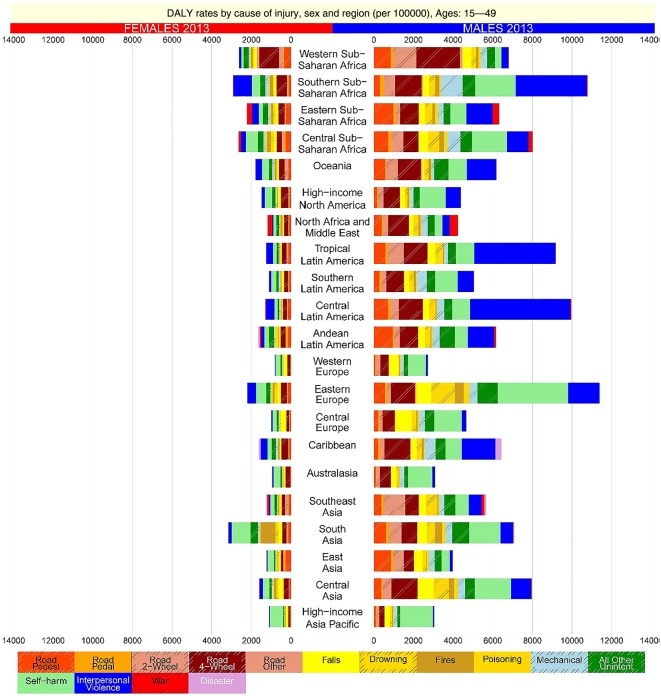
“In all regions injury rates are much higher in men than in women with the exception of the 80 years and older age group where the sex differential largely disappears.”
§ The global burden of injury: incidence, mortality, disability-adjusted life years and time trends from the Global Burden of Disease study 2013 > Results > Incidence, mortality and burden of disease of injuries in 2013
plaincorrelational- Asserted: passes — The authors put it forward as true.
- Checkable: passes — It can be checked against evidence.
- Load-bearing: unclear — It is unclear whether the paper’s conclusions depend on it.
- Based: passes — The paper gives a reason why it holds.
It may state two separate claims as one.
A result the paper reports from its own data — it cites no other source for it, so there is none to check. The quote shows it is in the paper.
In the paper
“For some cause-of-injury categories one or two nature-of-injury categories are responsible for the majority of YLDs (eg, fire, heat and hot substances, and burns), whereas for others a variety of nature-of-injury categories contribute to the cause-of-injury categories.”
§ The global burden of injury: incidence, mortality, disability-adjusted life years and time trends from the Global Burden of Disease study 2013 > Results > Incidence, mortality and burden of disease of injuries in 2013
plaincorrelational- Asserted: passes — The authors put it forward as true.
- Checkable: passes — It can be checked against evidence.
- Load-bearing: unclear — It is unclear whether the paper’s conclusions depend on it.
- Based: passes — The paper gives a reason why it holds.
It may state two separate claims as one.
A result the paper reports from its own data — it cites no other source for it, so there is none to check. The quote shows it is in the paper.
In the paper
“This is the peak age category for road injuries in all regions but with an eightfold difference in rates between high-income Asia Pacific and western sub-Saharan Africa.”
§ The global burden of injury: incidence, mortality, disability-adjusted life years and time trends from the Global Burden of Disease study 2013 > Results > Incidence, mortality and burden of disease of injuries in 2013
plaincorrelational- Asserted: passes — The authors put it forward as true.
- Checkable: passes — It can be checked against evidence.
- Load-bearing: unclear — It is unclear whether the paper’s conclusions depend on it.
- Based: passes — The paper gives a reason why it holds.
It may state two separate claims as one.
The paper states this without a source or data behind it here, so there is nothing to check it against. The quote shows it is in the paper.
In the paper
“The high rate of fire injuries in South Asian women stands out.”
§ The global burden of injury: incidence, mortality, disability-adjusted life years and time trends from the Global Burden of Disease study 2013 > Results > Incidence, mortality and burden of disease of injuries in 2013
plain- Asserted: passes — The authors put it forward as true.
- Checkable: passes — It can be checked against evidence.
- Load-bearing: fails — The paper’s conclusions may not depend on it.
- Based: passes — The paper gives a reason why it holds.
Probably not a substantial claim. The paper’s conclusions may not depend on it.
A result the paper reports from its own data — it cites no other source for it, so there is none to check. The quote shows it is in the paper.
In the paper
“The decline in rates in Oceania (−16.9%; UI −41.4 to 22.1), East Asia (−14.1%; UI −33.9 to 2.7) and central sub-Saharan Africa (−9.9%; UI −22.5 to 5.5) were not significant.”
§ The global burden of injury: incidence, mortality, disability-adjusted life years and time trends from the Global Burden of Disease study 2013 > Results > Changes between 1990 and 2013 in DALY rates for unintentional injuries
plain- Asserted: passes — The authors put it forward as true.
- Checkable: passes — It can be checked against evidence.
- Load-bearing: unclear — It is unclear whether the paper’s conclusions depend on it.
- Based: passes — The paper gives a reason why it holds.
It may state two separate claims as one.
A result the paper reports from its own data — it cites no other source for it, so there is none to check. The quote shows it is in the paper.
In the paper
“Our study shows that these countries have relatively high road injury mortality and DALY rates, but that DALY rates have significantly decreased in Brazil and Russia over the period 1990–2013 while rates for South Africa, India and China showed insignificant changes.”
§ The global burden of injury: incidence, mortality, disability-adjusted life years and time trends from the Global Burden of Disease study 2013 > Discussion > Road injury
plaincorrelational- Asserted: passes — The authors put it forward as true.
- Checkable: passes — It can be checked against evidence.
- Load-bearing: passes — The paper’s conclusions depend on it.
- Based: passes — The paper gives a reason why it holds.
It may state two separate claims as one.
A result the paper reports from its own data — it cites no other source for it, so there is none to check. The quote shows it is in the paper.
In the paper
“The trends in these regions are in opposite directions, decreasing significantly and by a great margin in East Asia but rising, though not significantly, in South Asia between 1990 and 2013.”
§ The global burden of injury: incidence, mortality, disability-adjusted life years and time trends from the Global Burden of Disease study 2013 > Discussion > Intentional injury
plaindirect- Asserted: passes — The authors put it forward as true.
- Checkable: passes — It can be checked against evidence.
- Load-bearing: unclear — It is unclear whether the paper’s conclusions depend on it.
- Based: passes — The paper gives a reason why it holds.
It may state two separate claims as one.
None of the sources cited for this claim have been checked yet.
In the paper
“Globally, the burden of disease due to road injury has decreased significantly since 1990, but this decrease is largely in high-income regions, with the reverse trend occurring in low-income and middle-income countries.”
§ The global burden of injury: incidence, mortality, disability-adjusted life years and time trends from the Global Burden of Disease study 2013 > Discussion > Road injury
plaincorrelational- Asserted: passes — The authors put it forward as true.
- Checkable: passes — It can be checked against evidence.
- Load-bearing: passes — The paper’s conclusions depend on it.
- Based: passes — The paper gives a reason why it holds.
It may state two separate claims as one.
A result the paper reports from its own data — it cites no other source for it, so there is none to check. The quote shows it is in the paper.
In the paper
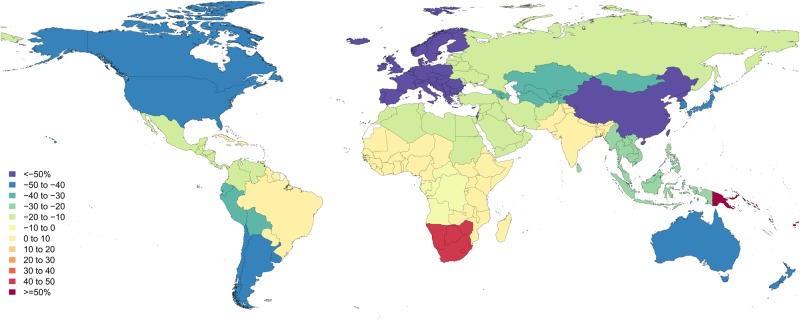
“However, the increase by around 50% in the rates of interpersonal violence DALYs in South sub-Saharan Africa and Oceania are reason for concern even though the large UI crosses zero (figure 11).”
§ The global burden of injury: incidence, mortality, disability-adjusted life years and time trends from the Global Burden of Disease study 2013 > Results > Changes between 1990 and 2013 in DALY rates for unintentional injuries
plain- Asserted: passes — The authors put it forward as true.
- Checkable: passes — It can be checked against evidence.
- Load-bearing: unclear — It is unclear whether the paper’s conclusions depend on it.
- Based: passes — The paper gives a reason why it holds.
It may state two separate claims as one.
A result the paper reports from its own data — it cites no other source for it, so there is none to check. The quote shows it is in the paper.
In the paper
“The decline in DALY rates for interpersonal violence was −19.1% (UI −24.2% to −11.5%), with significant decreases in 11 of 21 world regions with non-significant changes in the other regions.”
§ The global burden of injury: incidence, mortality, disability-adjusted life years and time trends from the Global Burden of Disease study 2013 > Results > Changes between 1990 and 2013 in DALY rates for unintentional injuries
plain- Asserted: passes — The authors put it forward as true.
- Checkable: passes — It can be checked against evidence.
- Load-bearing: unclear — It is unclear whether the paper’s conclusions depend on it.
- Based: passes — The paper gives a reason why it holds.
It may state two separate claims as one.
The paper states this without a source or data behind it here, so there is nothing to check it against. The quote shows it is in the paper.
In the paper
“Self-harm is the second leading cause of death from injury and it is a main contributor to injury DALYs.”
§ The global burden of injury: incidence, mortality, disability-adjusted life years and time trends from the Global Burden of Disease study 2013 > Discussion > Intentional injury
plain- Asserted: passes — The authors put it forward as true.
- Checkable: passes — It can be checked against evidence.
- Load-bearing: unclear — It is unclear whether the paper’s conclusions depend on it.
- Based: passes — The paper gives a reason why it holds.
It may state two separate claims as one.
A result the paper reports from its own data — it cites no other source for it, so there is none to check. The quote shows it is in the paper.
In the paper
“The rate of decline was significant for 22 of our 26 cause-of-injury categories, including all the major ones.”
§ The global burden of injury: incidence, mortality, disability-adjusted life years and time trends from the Global Burden of Disease study 2013 > Discussion > Conclusions
plain- Asserted: passes — The authors put it forward as true.
- Checkable: passes — It can be checked against evidence.
- Load-bearing: passes — The paper’s conclusions depend on it.
- Based: passes — The paper gives a reason why it holds.
It may state two separate claims as one.
The paper states this without a source or data behind it here, so there is nothing to check it against. The quote shows it is in the paper.
In the paper
“However, the results vary by cause, age group, sex, geography and over time.”
§ The global burden of injury: incidence, mortality, disability-adjusted life years and time trends from the Global Burden of Disease study 2013 > Discussion > Conclusions
plaincorrelational- Asserted: passes — The authors put it forward as true.
- Checkable: passes — It can be checked against evidence.
- Load-bearing: unclear — It is unclear whether the paper’s conclusions depend on it.
- Based: passes — The paper gives a reason why it holds.
It may state two separate claims as one.
What the paper did — it cites no source for this, so there is none to check. The quote shows it is in the paper.
In the paper
“We have propagated uncertainty from all these sources using standard GBD methods of repeating all calculations 1000 times, each time drawing from distributions rather than point estimates for all the relevant parameters in our models.”
§ The global burden of injury: incidence, mortality, disability-adjusted life years and time trends from the Global Burden of Disease study 2013 > Methods > Morbidity
plain- Asserted: passes — The authors put it forward as true.
- Checkable: passes — It can be checked against evidence.
- Load-bearing: fails — The paper’s conclusions may not depend on it.
- Based: passes — The paper gives a reason why it holds.
Probably not a substantial claim. The paper’s conclusions may not depend on it.
What the paper did — it cites no source for this, so there is none to check. The quote shows it is in the paper.
In the paper
“All rates of deaths and DALYs we present are age-standardised using the revised GBD 2013 standard population.”
§ The global burden of injury: incidence, mortality, disability-adjusted life years and time trends from the Global Burden of Disease study 2013 > Methods > Morbidity
plain- Asserted: passes — The authors put it forward as true.
- Checkable: passes — It can be checked against evidence.
- Load-bearing: fails — The paper’s conclusions may not depend on it.
- Based: passes — The paper gives a reason why it holds.
Probably not a substantial claim. The paper’s conclusions may not depend on it.
What the paper did — it cites no source for this, so there is none to check. The quote shows it is in the paper.
In the paper
“For the injury mortality estimates the estimation of model uncertainty is inherent to the ensemble modelling method.”
§ The global burden of injury: incidence, mortality, disability-adjusted life years and time trends from the Global Burden of Disease study 2013 > Methods > Morbidity
plaindirect- Asserted: passes — The authors put it forward as true.
- Checkable: passes — It can be checked against evidence.
- Load-bearing: fails — The paper’s conclusions may not depend on it.
- Based: passes — The paper gives a reason why it holds.
Probably not a substantial claim. The paper’s conclusions may not depend on it.
What the paper did — it cites no source for this, so there is none to check. The quote shows it is in the paper.
In the paper
“The lack of nationally representative mortality data in many low-income and middle-income countries emphasises the need for investment in vital registration and standardised cause of death certification.”
§ The global burden of injury: incidence, mortality, disability-adjusted life years and time trends from the Global Burden of Disease study 2013 > Discussion > Data limitations
plain- Asserted: passes — The authors put it forward as true.
- Checkable: fails — It may be too vague to check against evidence.
- Load-bearing: fails — The paper’s conclusions may not depend on it.
- Based: passes — The paper gives a reason why it holds.
Probably not a substantial claim. It may be too vague to check against evidence. The paper’s conclusions may not depend on it.
A conclusion the paper draws from its own results — it cites no other source for it, so there is none to check. The quote shows it is in the paper.
In the paper
“These findings correspond to the GBD 2013 changes in burden of disease rates due to collective violence.”
§ The global burden of injury: incidence, mortality, disability-adjusted life years and time trends from the Global Burden of Disease study 2013 > Discussion > Collective violence and legal intervention
plaincorrelational- Asserted: passes — The authors put it forward as true.
- Checkable: passes — It can be checked against evidence.
- Load-bearing: fails — The paper’s conclusions may not depend on it.
- Based: passes — The paper gives a reason why it holds.
Probably not a substantial claim. The paper’s conclusions may not depend on it.
None of the sources cited for this claim have been checked yet.
In the paper
“For forces of nature and collective violence we retrieved data from vital registrations as well as data sets that were set up particularly for the collection of data from armed conflicts and/or disaster.”
§ The global burden of injury: incidence, mortality, disability-adjusted life years and time trends from the Global Burden of Disease study 2013 > Discussion > Data limitations
What the sources say
- Not checked yetcites [53] International Institute for Strategic Studies. Armed Conflict Database. London, UK: International Institute for Strategic Studies. https://acd.iiss.org/https://acd.iiss.org/
- Not checked yetcites [54] source
plain- Asserted: passes — The authors put it forward as true.
- Checkable: passes — It can be checked against evidence.
- Load-bearing: fails — The paper’s conclusions may not depend on it.
- Based: passes — The paper gives a reason why it holds.
Probably not a substantial claim. The paper’s conclusions may not depend on it.
None of the sources cited for this claim have been checked yet.
In the paper
“Our findings on interpersonal violence tally with findings from the United Nations Office on Drugs and Crime (UNODC) Homicide Statistics and WHO which show that the overall trend in the global homicide rate is decreasing, but that regional trends are diverse:26 27 in Asia and Europe overall homicide rates are decreasing but other regions have continuing high levels of homicide.”
§ The global burden of injury: incidence, mortality, disability-adjusted life years and time trends from the Global Burden of Disease study 2013 > Discussion > Intentional injury
What the sources say
- Not checked yetcites [26] UNODC global study on Homicide 2013. United Nations Publication, 2014.
- Not checked yetcites [27] Global status report on violence prevention 2014. World Health Organization, 2014.
- Not checked yetcites [28] Injuries in the European Union, Report on injury statistics 2008–2010. Amsterdam: EuroSafe, 2013.
plain- Asserted: passes — The authors put it forward as true.
- Checkable: passes — It can be checked against evidence.
- Load-bearing: unclear — It is unclear whether the paper’s conclusions depend on it.
- Based: passes — The paper gives a reason why it holds.
It may state two separate claims as one.
None of the sources cited for this claim have been checked yet.
In the paper
“More recently, studies found evidence that there was an upturn in suicide rates during the financial crisis of 2007/2008 set against this overall decline.”
§ The global burden of injury: incidence, mortality, disability-adjusted life years and time trends from the Global Burden of Disease study 2013 > Discussion > Intentional injury
hedgedcorrelational- Asserted: passes — The authors put it forward as true.
- Checkable: passes — It can be checked against evidence.
- Load-bearing: fails — The paper’s conclusions may not depend on it.
- Based: passes — The paper gives a reason why it holds.
Probably not a substantial claim. The paper’s conclusions may not depend on it.
What the paper did — it cites no source for this, so there is none to check. The quote shows it is in the paper.
In the paper
“Rather than discarding these data sets we set a low bar for inclusion if at least 45% of cases had a cause-of-injury code.”
§ The global burden of injury: incidence, mortality, disability-adjusted life years and time trends from the Global Burden of Disease study 2013 > Discussion > Data limitations
plain- Asserted: passes — The authors put it forward as true.
- Checkable: passes — It can be checked against evidence.
- Load-bearing: passes — The paper’s conclusions depend on it.
- Based: passes — The paper gives a reason why it holds.
Probably not a substantial claim.
A conclusion the paper draws from its own results — it cites no other source for it, so there is none to check. The quote shows it is in the paper.
In the paper
“GBD 2013 provides a systematic quantification of mortality, incidence and disability over the time period 1990 to 2013, allowing analyses of time trends and comparison between regions.”
§ The global burden of injury: incidence, mortality, disability-adjusted life years and time trends from the Global Burden of Disease study 2013 > Discussion
plain- Asserted: passes — The authors put it forward as true.
- Checkable: passes — It can be checked against evidence.
- Load-bearing: passes — The paper’s conclusions depend on it.
- Based: passes — The paper gives a reason why it holds.
Probably not a substantial claim. It may state two separate claims as one.
In the paper
“These laws have shown to substantially reduce road injury mortality, underlining the importance of implementing these strategies to reduce road traffic injury.”
§ The global burden of injury: incidence, mortality, disability-adjusted life years and time trends from the Global Burden of Disease study 2013 > Discussion > Road injury
What the sources say
- Not checked yetcites [25] source
plaindirect- Asserted: passes — The authors put it forward as true.
- Checkable: passes — It can be checked against evidence.
- Load-bearing: passes — The paper’s conclusions depend on it.
- Based: passes — The paper gives a reason why it holds.
It may state two separate claims as one.
None of the sources cited for this claim have been checked yet.
In the paper
“Previous studies have reported similar trends in the most populated countries in these regions, India and China.”
§ The global burden of injury: incidence, mortality, disability-adjusted life years and time trends from the Global Burden of Disease study 2013 > Discussion > Intentional injury
plaincorrelational- Asserted: passes — The authors put it forward as true.
- Checkable: passes — It can be checked against evidence.
- Load-bearing: fails — The paper’s conclusions may not depend on it.
- Based: passes — The paper gives a reason why it holds.
Probably not a substantial claim. The paper’s conclusions may not depend on it.
A conclusion the paper draws from its own results — it cites no other source for it, so there is none to check. The quote shows it is in the paper.
In the paper
“Reduction in incidence would be the effect of measures preventing the occurrence of injuries (eg, road safety measures, gun control or safer tools).”
§ The global burden of injury: incidence, mortality, disability-adjusted life years and time trends from the Global Burden of Disease study 2013 > Discussion
hedgeddirect- Asserted: passes — The authors put it forward as true.
- Checkable: passes — It can be checked against evidence.
- Load-bearing: fails — The paper’s conclusions may not depend on it.
- Based: passes — The paper gives a reason why it holds.
Probably not a substantial claim. The paper’s conclusions may not depend on it.
In the paper
“However, the Human Security Report showed that in Africa conflicts and battle deaths have become more numerous in recent years and often are high-intensity conflicts, causing more than 10 000 battle deaths a year.”
§ The global burden of injury: incidence, mortality, disability-adjusted life years and time trends from the Global Burden of Disease study 2013 > Discussion > Collective violence and legal intervention
What the sources say
- Not checked yetcites [43] Human Security Report Project. Human security report 2013: the decline in global violence: evidence, explanation, and contestation. Vancouver, 2013.
plaindirect- Asserted: passes — The authors put it forward as true.
- Checkable: passes — It can be checked against evidence.
- Load-bearing: fails — The paper’s conclusions may not depend on it.
- Based: passes — The paper gives a reason why it holds.
Probably not a substantial claim. The paper’s conclusions may not depend on it. It may state two separate claims as one.
None of the sources cited for this claim have been checked yet.
In the paper
“Coverage of vital registration is low or absent in large parts of the world and there are issues of incompleteness and differences in death certification systems, definitions of variables and methods of data collection.”
§ The global burden of injury: incidence, mortality, disability-adjusted life years and time trends from the Global Burden of Disease study 2013 > Discussion > Data limitations
What the sources say
plain- Asserted: passes — The authors put it forward as true.
- Checkable: passes — It can be checked against evidence.
- Load-bearing: passes — The paper’s conclusions depend on it.
- Based: passes — The paper gives a reason why it holds.
It may state two separate claims as one.
What the paper did — it cites no source for this, so there is none to check. The quote shows it is in the paper.
In the paper
“The latter is problematic for injuries as our analyses make a strict distinction between cause and nature of injury and therefore requires dual coding of injuries.”
§ The global burden of injury: incidence, mortality, disability-adjusted life years and time trends from the Global Burden of Disease study 2013 > Discussion > Data limitations
plaindirect- Asserted: passes — The authors put it forward as true.
- Checkable: passes — It can be checked against evidence.
- Load-bearing: fails — The paper’s conclusions may not depend on it.
- Based: passes — The paper gives a reason why it holds.
Probably not a substantial claim. The paper’s conclusions may not depend on it.
None of the sources cited for this claim have been checked yet.
In the paper
“Globally, battle deaths have declined since 1945 and the number of interstate conflicts has decreased since 1990 while the peak of interstate conflicts with more than 1000 battle deaths per year was in the 1970s with a rapid decline thereafter.”
§ The global burden of injury: incidence, mortality, disability-adjusted life years and time trends from the Global Burden of Disease study 2013 > Discussion > Collective violence and legal intervention
What the sources say
- Not checked yetcites [34] Pinker S . The better angels of our nature. New York: Viking, 2011.
- Not checked yetcites [42] source
- Not checked yetcites [43] Human Security Report Project. Human security report 2013: the decline in global violence: evidence, explanation, and contestation. Vancouver, 2013.
plaincorrelational- Asserted: passes — The authors put it forward as true.
- Checkable: passes — It can be checked against evidence.
- Load-bearing: fails — The paper’s conclusions may not depend on it.
- Based: passes — The paper gives a reason why it holds.
Probably not a substantial claim. The paper’s conclusions may not depend on it. It may state two separate claims as one.
What the paper did — it cites no source for this, so there is none to check. The quote shows it is in the paper.
In the paper
“GBD uses the largest collection of data on causes of death in the world, allowing us to use statistical models that can borrow strength over time and geography.”
§ The global burden of injury: incidence, mortality, disability-adjusted life years and time trends from the Global Burden of Disease study 2013 > Discussion > Data limitations
plaindirect- Asserted: passes — The authors put it forward as true.
- Checkable: passes — It can be checked against evidence.
- Load-bearing: passes — The paper’s conclusions depend on it.
- Based: passes — The paper gives a reason why it holds.
It may state two separate claims as one.
What the paper did — it cites no source for this, so there is none to check. The quote shows it is in the paper.
In the paper
“For many countries hospital data collection systems with national coverage exist but, due to country-specific privacy regulations, the data are not made available or made available in summary tabulations only.”
§ The global burden of injury: incidence, mortality, disability-adjusted life years and time trends from the Global Burden of Disease study 2013 > Discussion > Data limitations
plaindirect- Asserted: passes — The authors put it forward as true.
- Checkable: passes — It can be checked against evidence.
- Load-bearing: fails — The paper’s conclusions may not depend on it.
- Based: passes — The paper gives a reason why it holds.
Probably not a substantial claim. The paper’s conclusions may not depend on it. It may state two separate claims as one.
What the paper did — it cites no source for this, so there is none to check. The quote shows it is in the paper.
In the paper
“In the GBD 2013 several steps have been taken to enhance data quality of morbidity and mortality data and adjust for misclassification.”
§ The global burden of injury: incidence, mortality, disability-adjusted life years and time trends from the Global Burden of Disease study 2013 > Discussion > Intentional injury
plain- Asserted: passes — The authors put it forward as true.
- Checkable: passes — It can be checked against evidence.
- Load-bearing: fails — The paper’s conclusions may not depend on it.
- Based: passes — The paper gives a reason why it holds.
Probably not a substantial claim. The paper’s conclusions may not depend on it.
None of the sources cited for this claim have been checked yet.
In the paper
“UNODC and WHO report that this is particularly the case for the Americas and in Eastern and Southern Africa, where homicide levels have remained high, and in some countries levels increased.”
§ The global burden of injury: incidence, mortality, disability-adjusted life years and time trends from the Global Burden of Disease study 2013 > Discussion > Intentional injury
What the sources say
plain- Asserted: passes — The authors put it forward as true.
- Checkable: passes — It can be checked against evidence.
- Load-bearing: unclear — It is unclear whether the paper’s conclusions depend on it.
- Based: passes — The paper gives a reason why it holds.
It may state two separate claims as one.
What the paper did — it cites no source for this, so there is none to check. The quote shows it is in the paper.
In the paper
“Data protection regulations and legislation are becoming more important, and because of that there may be more countries for which hospital data or other data sources are not made available.”
§ The global burden of injury: incidence, mortality, disability-adjusted life years and time trends from the Global Burden of Disease study 2013 > Discussion > Data limitations
hedgedconditional- Asserted: passes — The authors put it forward as true.
- Checkable: passes — It can be checked against evidence.
- Load-bearing: fails — The paper’s conclusions may not depend on it.
- Based: fails — The paper may give no reason why it holds.
Probably not a substantial claim. The paper’s conclusions may not depend on it. The paper may give no reason why it holds. It may state two separate claims as one.
In the paper
“This increase also resulted in an increase in battle deaths in certain African countries.”
§ The global burden of injury: incidence, mortality, disability-adjusted life years and time trends from the Global Burden of Disease study 2013 > Discussion > Collective violence and legal intervention
What the sources say
- Not checked yetcites [43] Human Security Report Project. Human security report 2013: the decline in global violence: evidence, explanation, and contestation. Vancouver, 2013.
plaindirect- Asserted: passes — The authors put it forward as true.
- Checkable: passes — It can be checked against evidence.
- Load-bearing: fails — The paper’s conclusions may not depend on it.
- Based: passes — The paper gives a reason why it holds.
Probably not a substantial claim. The paper’s conclusions may not depend on it.
A conclusion the paper draws from its own results — it cites no other source for it, so there is none to check. The quote shows it is in the paper.
In the paper
“The greater declines in YLL and YLD rates could be brought about by injury prevention measures reducing the severity of the injury sustained (eg, seat belts and helmets) or by improved access to better quality care after an injury (eg, trauma systems).”
§ The global burden of injury: incidence, mortality, disability-adjusted life years and time trends from the Global Burden of Disease study 2013 > Discussion
hedgedconditional- Asserted: passes — The authors put it forward as true.
- Checkable: passes — It can be checked against evidence.
- Load-bearing: fails — The paper’s conclusions may not depend on it.
- Based: passes — The paper gives a reason why it holds.
Probably not a substantial claim. The paper’s conclusions may not depend on it. It may state two separate claims as one.
None of the sources cited for this claim have been checked yet.
In the paper
“While we attempt to capture all sources of uncertainty from sampling error, non-sampling error and model specifications in the 95% UIs, we cannot guarantee that we have captured all uncertainty.”
§ The global burden of injury: incidence, mortality, disability-adjusted life years and time trends from the Global Burden of Disease study 2013 > Discussion > Data limitations
What the sources say
- Not checked yetcites [48] Mathers CD , Salomon JA , Ezzati M , et al . Sensitivity and uncertainty analyses for burden of disease and risk factor estimates. In: Lopez AD , Mathers CD , Ezzati M , et al , eds. Global burden of disease and risk factors. Oxford press, New York, 2006:399–426.
- Not checked yetcites [49] source
plain- Asserted: passes — The authors put it forward as true.
- Checkable: passes — It can be checked against evidence.
- Load-bearing: fails — The paper’s conclusions may not depend on it.
- Based: passes — The paper gives a reason why it holds.
Probably not a substantial claim. The paper’s conclusions may not depend on it. It may state two separate claims as one.
What the paper did — it cites no source for this, so there is none to check. The quote shows it is in the paper.
In the paper
“We added police and mortuary data for road injuries, self-harm, and interpersonal violence to help predict level and age patterns in countries with sparse or absent cause of death data even though we know from countries with near-complete vital registration data that police records tend to underestimate the true level of deaths.”
§ The global burden of injury: incidence, mortality, disability-adjusted life years and time trends from the Global Burden of Disease study 2013 > Discussion > Data limitations
boosted- Asserted: passes — The authors put it forward as true.
- Checkable: passes — It can be checked against evidence.
- Load-bearing: unclear — It is unclear whether the paper’s conclusions depend on it.
- Based: passes — The paper gives a reason why it holds.
It may state two separate claims as one.
What the paper did — it cites no source for this, so there is none to check. The quote shows it is in the paper.
In the paper
“To estimate the burden of injury we used a methodology similar to GBD 2010 but with several significant changes, including changes with respect to the injury classification.”
§ The global burden of injury: incidence, mortality, disability-adjusted life years and time trends from the Global Burden of Disease study 2013 > Discussion > Significant methodological differences between GBD 2010 and GBD 2013
plain- Asserted: passes — The authors put it forward as true.
- Checkable: passes — It can be checked against evidence.
- Load-bearing: fails — The paper’s conclusions may not depend on it.
- Based: passes — The paper gives a reason why it holds.
Probably not a substantial claim. The paper’s conclusions may not depend on it.
A conclusion the paper draws from its own results — it cites no other source for it, so there is none to check. The quote shows it is in the paper.
In the paper
“These decreases in DALY rates for almost all cause-of-injury categories warrant a general statement that the world is becoming a safer place to live in, although the injury burden remains high in some parts of the world.”
§ The global burden of injury: incidence, mortality, disability-adjusted life years and time trends from the Global Burden of Disease study 2013 > Discussion > Conclusions
plaindirect- Asserted: passes — The authors put it forward as true.
- Checkable: passes — It can be checked against evidence.
- Load-bearing: passes — The paper’s conclusions depend on it.
- Based: passes — The paper gives a reason why it holds.
It may state two separate claims as one.
What the paper did — it cites no source for this, so there is none to check. The quote shows it is in the paper.
In the paper
“The estimation of the probability of long-term health loss due to a particular nature of injury is a key step in our analysis that drives the estimation of YLDs from long-term outcomes.”
§ The global burden of injury: incidence, mortality, disability-adjusted life years and time trends from the Global Burden of Disease study 2013 > Discussion > Methodological limitations
plaindirect- Asserted: passes — The authors put it forward as true.
- Checkable: passes — It can be checked against evidence.
- Load-bearing: passes — The paper’s conclusions depend on it.
- Based: passes — The paper gives a reason why it holds.
Probably not a substantial claim.
What the paper did — it cites no source for this, so there is none to check. The quote shows it is in the paper.
In the paper
“Overall YLDs will only be affected in cases where we observed 100% probability of long-term outcomes. In other cases, higher probability of long-term results in a higher prevalence of cases with long-term consequences, but combined with lower disability weights this will result in the same overall YLDs.”
§ The global burden of injury: incidence, mortality, disability-adjusted life years and time trends from the Global Burden of Disease study 2013 > Discussion > Methodological limitations
plaindirect- Asserted: passes — The authors put it forward as true.
- Checkable: passes — It can be checked against evidence.
- Load-bearing: unclear — It is unclear whether the paper’s conclusions depend on it.
- Based: passes — The paper gives a reason why it holds.
It may state two separate claims as one.
What the paper did — it cites no source for this, so there is none to check. The quote shows it is in the paper.
In the paper
“The probability of treated long-term outcomes is estimated via the ratio of the average level of disability 1 year after an injury relative to the long-term disability weight for each nature of injury category.”
§ The global burden of injury: incidence, mortality, disability-adjusted life years and time trends from the Global Burden of Disease study 2013 > Discussion > Methodological limitations
hedgeddirect- Asserted: passes — The authors put it forward as true.
- Checkable: passes — It can be checked against evidence.
- Load-bearing: fails — The paper’s conclusions may not depend on it.
- Based: passes — The paper gives a reason why it holds.
Probably not a substantial claim. The paper’s conclusions may not depend on it.
None of the sources cited for this claim have been checked yet.
In the paper
“Third, the follow-up studies used different injury classifications that needed to be mapped into the GBD cause and nature-of-injury categories and the follow-up studies used different patient-reported outcome measures, introducing greater uncertainty and potential bias in our estimation of disability.”
§ The global burden of injury: incidence, mortality, disability-adjusted life years and time trends from the Global Burden of Disease study 2013 > Discussion > Methodological limitations
plaindirect- Asserted: passes — The authors put it forward as true.
- Checkable: passes — It can be checked against evidence.
- Load-bearing: unclear — It is unclear whether the paper’s conclusions depend on it.
- Based: passes — The paper gives a reason why it holds.
It may state two separate claims as one.
What the paper did — it cites no source for this, so there is none to check. The quote shows it is in the paper.
In the paper
“The duration of short-term injury in case of untreated injuries was based on the opinion of GBD injury collaborators.”
§ The global burden of injury: incidence, mortality, disability-adjusted life years and time trends from the Global Burden of Disease study 2013 > Discussion > Methodological limitations
plain- Asserted: passes — The authors put it forward as true.
- Checkable: passes — It can be checked against evidence.
- Load-bearing: fails — The paper’s conclusions may not depend on it.
- Based: passes — The paper gives a reason why it holds.
Probably not a substantial claim. The paper’s conclusions may not depend on it.
What the paper did — it cites no source for this, so there is none to check. The quote shows it is in the paper.
In the paper
“Fourth, for certain outpatient nature-of-injury categories high probabilities of permanent health loss were observed. An explanation for this may be that cases were misclassified as outpatients whereas in fact they were treated in an inpatient setting.”
§ The global burden of injury: incidence, mortality, disability-adjusted life years and time trends from the Global Burden of Disease study 2013 > Discussion > Methodological limitations
hedgedconditional- Asserted: passes — The authors put it forward as true.
- Checkable: passes — It can be checked against evidence.
- Load-bearing: fails — The paper’s conclusions may not depend on it.
- Based: passes — The paper gives a reason why it holds.
Probably not a substantial claim. The paper’s conclusions may not depend on it. It may state two separate claims as one.
What the paper did — it cites no source for this, so there is none to check. The quote shows it is in the paper.
In the paper
“Postdisaster and war surveys have been carried out to assess related mortality and injury, yet recall bias related to acute postdisaster experiences and postdisaster or postwar migration may hamper the data collection and interpretation of these studies.”
§ The global burden of injury: incidence, mortality, disability-adjusted life years and time trends from the Global Burden of Disease study 2013 > Discussion > Data limitations
hedgedconditional- Asserted: passes — The authors put it forward as true.
- Checkable: passes — It can be checked against evidence.
- Load-bearing: fails — The paper’s conclusions may not depend on it.
- Based: passes — The paper gives a reason why it holds.
Probably not a substantial claim. The paper’s conclusions may not depend on it. It may state two separate claims as one.
What the paper did — it cites no source for this, so there is none to check. The quote shows it is in the paper.
In the paper
“Second, the patient-reported data were from the Netherlands only, a high-income country with a high access to quality healthcare and these durations may not apply to settings with lower-quality care.”
§ The global burden of injury: incidence, mortality, disability-adjusted life years and time trends from the Global Burden of Disease study 2013 > Discussion > Methodological limitations
hedgedconditional- Asserted: passes — The authors put it forward as true.
- Checkable: passes — It can be checked against evidence.
- Load-bearing: unclear — It is unclear whether the paper’s conclusions depend on it.
- Based: passes — The paper gives a reason why it holds.
It may state two separate claims as one.
What the paper did — it cites no source for this, so there is none to check. The quote shows it is in the paper.
In the paper
“It therefore mostly reflects access to primary care services and may not reflect access to trauma services that are required for injuries.”
§ The global burden of injury: incidence, mortality, disability-adjusted life years and time trends from the Global Burden of Disease study 2013 > Discussion > Methodological limitations
hedgedconditional- Asserted: passes — The authors put it forward as true.
- Checkable: passes — It can be checked against evidence.
- Load-bearing: unclear — It is unclear whether the paper’s conclusions depend on it.
- Based: passes — The paper gives a reason why it holds.
It may state two separate claims as one.
What the paper did — it cites no source for this, so there is none to check. The quote shows it is in the paper.
In the paper
“However, these estimated durations are based on a very limited sample size and the validity and reliability of these estimated durations may be affected by response and recall bias.”
§ The global burden of injury: incidence, mortality, disability-adjusted life years and time trends from the Global Burden of Disease study 2013 > Discussion > Methodological limitations
hedgedconditional- Asserted: passes — The authors put it forward as true.
- Checkable: passes — It can be checked against evidence.
- Load-bearing: unclear — It is unclear whether the paper’s conclusions depend on it.
- Based: passes — The paper gives a reason why it holds.
It may state two separate claims as one.
What the paper did — it cites no source for this, so there is none to check. The quote shows it is in the paper.
In the paper
“For GBD 2013 disability weights have changed, including all injury disability weights. This means that the probability of long-term outcomes of injuries has changed.”
§ The global burden of injury: incidence, mortality, disability-adjusted life years and time trends from the Global Burden of Disease study 2013 > Discussion > Methodological limitations
plaindirect- Asserted: passes — The authors put it forward as true.
- Checkable: passes — It can be checked against evidence.
- Load-bearing: unclear — It is unclear whether the paper’s conclusions depend on it.
- Based: passes — The paper gives a reason why it holds.
It may state two separate claims as one.
What the paper did — it cites no source for this, so there is none to check. The quote shows it is in the paper.
In the paper
“There are variables, such as hospital beds per 1000 or physician density that may serve as proxy for the proportion of untreated injury per country-year, but these have been found to vary wildly over time and between countries without face validity as an indicator of access to trauma services.”
§ The global burden of injury: incidence, mortality, disability-adjusted life years and time trends from the Global Burden of Disease study 2013 > Discussion > Methodological limitations
hedged- Asserted: passes — The authors put it forward as true.
- Checkable: passes — It can be checked against evidence.
- Load-bearing: unclear — It is unclear whether the paper’s conclusions depend on it.
- Based: unclear — It is unclear why the paper says it holds.
It may state two separate claims as one.
What the paper did — it cites no source for this, so there is none to check. The quote shows it is in the paper.
In the paper
“Furthermore, we used DisMod-MR to stream out prevalence from incidence and this process assumes a steady state where rates are not changing over time.”
§ The global burden of injury: incidence, mortality, disability-adjusted life years and time trends from the Global Burden of Disease study 2013 > Discussion > Methodological limitations
plaindirect- Asserted: passes — The authors put it forward as true.
- Checkable: passes — It can be checked against evidence.
- Load-bearing: fails — The paper’s conclusions may not depend on it.
- Based: passes — The paper gives a reason why it holds.
Probably not a substantial claim. The paper’s conclusions may not depend on it. It may state two separate claims as one.
- The authors state this as an assumption: The DisMod-MR process assumes a steady state where rates are not changing over time.
The paper relies on this without support.
A detailed description of the GBD injury methods and results has not yet been published.
“However, a detailed description of the GBD injury methods and results has not yet been published.”
The authors state this as an assumption.
The DisMod-MR process assumes a steady state where rates are not changing over time.
“this process assumes a steady state where rates are not changing over time”
Claims other papers make about this one
Each is checked against this paper’s own text: does it say what the citing paper says it does?
The source backs part of the claim, not all of it — or backs it for a different population, condition or comparison.
In the citing paper
“The last estimation, as part of the larger study for the WHO European Region estimating alcohol‐attributable mortality in more than 50 countries for 25 years, revealed 178 that alcohol‐attributable injury rates did not decrease in the time‐period in the same way as injuries in general 323.”
From The relationship between different dimensions of alcohol use and the burden of disease—an update (2017) · cites this paper as [323]
Experimental — accuracy not yet measured
Self-check
Percentages, sums and reported differences re-computed from the paper’s own numbers.
Each contradiction between two passages listed here was confirmed by an independent check.
Rated major: it would touch a result — a value a result rests on, reported and recomputed p-values on opposite sides of the significance level, two passages that conflict with no sign which is right, or a cited work retracted before this paper was published.
In the paper
§ The global burden of injury: incidence, mortality, disability-adjusted life years and time trends from the Global Burden of Disease study 2013 > Results > Changes between 1990 and 2013 in DALY rates for unintentional injuries
“South Asia is the only region which did not see a decline in poisoning DALY rates (−0.7%; −50.3 to −33.1).”
§ The global burden of injury: incidence, mortality, disability-adjusted life years and time trends from the Global Burden of Disease study 2013 > Results > Changes between 1990 and 2013 in DALY rates for unintentional injuries
“−50.3 to −33.1”
Rated major: it would touch a result — a value a result rests on, reported and recomputed p-values on opposite sides of the significance level, two passages that conflict with no sign which is right, or a cited work retracted before this paper was published.
In the paper
“falls (12.0%; UI 9.8 to 14.1)”
§ The global burden of injury: incidence, mortality, disability-adjusted life years and time trends from the Global Burden of Disease study 2013 > Results > Incidence, mortality and burden of disease of injuries in 2013
Reported 12 · recomputed 11.106624
Citations
Cites
Lozano, R., Naghavi, M., Foreman, K., Lim, S., Shibuya, K., Aboyans, V., Abraham, J., Adair, T., Aggarwal, R., Ahn, S. Y., et al. (2012) · The Lancet · doi:10.1016/s0140-6736(12)61728-0 · Cited by 14,070
Self-citationThe world report on violence and health
Krug, E. G., Mercy, J. A., Dahlberg, L. L., & Zwi, A. B. (2002) · The Lancet · doi:10.1016/s0140-6736(02)11133-0 · Cited by 9,110
Murray, C. J. L., Vos, T., Lozano, R., Naghavi, M., Flaxman, A. D., Michaud, C., Ezzati, M., Shibuya, K., Salomon, J. A., Abdalla, S., et al. (2012) · The Lancet · doi:10.1016/s0140-6736(12)61689-4 · Cited by 8,888
Self-citationVos, T., Flaxman, A. D., Naghavi, M., Lozano, R., Michaud, C., Ezzati, M., Shibuya, K., Salomon, J. A., Abdalla, S., Aboyans, V., et al. (2012) · The Lancet · doi:10.1016/s0140-6736(12)61729-2 · Cited by 8,291
Self-citation(1996) · Cited by 6,884
Self-citationArmed Conflict 1946-2001: A New Dataset
GLEDITSCH, N. P., WALLENSTEEN, P., ERIKSSON, M., SOLLENBERG, M., & STRAND, H. (2002) · Journal of Peace Research · doi:10.1177/0022343302039005007 · Cited by 3,846 · cited 1×
“Thus, the DALY provides a more comprehensive measure of the relative magnitude of different health problems for health planning purposes.(5) 6 This information serves as a crucial input to facilitate policy decisionmaking on prevention and control through allowing comparisons of the health impact of different diseases…”
Global Burden of Disease and Risk Factors
López, A. D., Mathers, C. D., Ezzati, M., Jamison, D. T. T., & Murray, C. J. L. (2006) · World Bank, Washington, DC eBooks · doi:10.1596/978-0-8213-6262-4 · Cited by 2,714
Self-citationWorld development report 1993 : investing in health
Berkley, S., Bobadilla, J., Hecht, R., Hill, K., Jamison, D. T. T., Murray, C. J. L., Musgrove, P., Saxenian, H., & Tan, J. (1993) · Cited by 2,402
Self-citationBank, W. (1993) · doi:10.1596/0-1952-0890-0 · Cited by 2,213
Cited by
Sorted by citations
Items 701–800 of 1,000
Weber, C., Andreassen, J. S., Isles, S., Thorsen, K., McBride, P., Søreide, K., & Civil, I. D. (2022) · World Journal of Surgery · doi:10.1007/s00268-022-06721-8 · Cited by 5
Self-citationEstablishing a consensus on research priorities in orthopaedic trauma within South Africa
Graham, S. M., Render, L., Maqungo, S., Ferreira, N., Marais, L. C., Held, M. F. G., Laubscher, M., Arakkal, A., Arnolds, D., Bernstein, B. P., et al. (2023) · European Journal of Orthopaedic Surgery & Traumatology · doi:10.1007/s00590-022-03413-w · Cited by 5
Lai, J., Li, X., Liu, W., Liufu, Q., & Zhong, C. (2024) · Injury · doi:10.1016/j.injury.2024.111783 · Cited by 5
Injury Mortality in Vietnam: Patterns and Trends, 2005-2013
Pham, C. V., Mai, A. L., Bachani, A. M., Nguyên, V. T., Tran, N., & La, Q. D. (2018) · Journal of Public Health Management and Practice · doi:10.1097/phh.0000000000000718 · Cited by 5
Accidental strangulation in children by the automatic closing of a car window
Serena, K., Piva, J. P., Andreolio, C., Carvalho, P. R. A., & da Rocha, T. S. (2018) · Revista Brasileira de Terapia Intensiva · doi:10.5935/0103-507x.20180017 · Cited by 5
Developing Trauma Audit Filters for Regional Referral Hospitals in Cameroon: Mixed-Methods Approach
Wu, N., Carvalho, M., Nwanna–Nzewunwa, O., Nana, T., Motwani, G., Mbeboh, S. N., Chendjou, W., Nour, F. M. A., Christie, S. A., Chichom‐Mefire, A., et al. (2018) · Journal of Surgical Research · doi:10.1016/j.jss.2018.07.048 · Cited by 5
Nasiri, N., Nazari, P., Kamali, A., Sharifi, A., & Sharifi, H. P. (2019) · Journal of Occupational Health and Epidemiology · doi:10.29252/johe.8.1.6 · Cited by 5
Lim, S., Kim, J., Won, J., Lee, W., Kim, Y., & Yoon, J. (2019) · BMJ Open · doi:10.1136/bmjopen-2019-029413 · Cited by 5
Mitigating the global health threat of violent conflict: a preventive framework
Shapiro, D. L., & Hua, C. (2020) · BMJ Nutrition Prevention & Health · doi:10.1136/bmjnph-2020-000114 · Cited by 5
Chang, H., Min, J. Y., Yoo, D., Lee, S. U., Hwang, S. Y., Yoon, H. J., Cha, W. C., Shin, T. G., Jo, I. J., & Kim, T. (2021) · International Journal of Environmental Research and Public Health · doi:10.3390/ijerph18031210 · Cited by 6
Topical formulations containing Copaifera duckei Dwyer oleoresin improve cutaneous wound healing.
Dias, F. G. G., Pereira, L. D. F., Furtado, R. A., Magalhães, G. M., Miguel, M. P., Dias, L. G. G. G., Jorge, A. T., Honsho, C. D. S., Ambrósio, S. R., Bastos, J. K., et al. (2021) · PubMed Central · doi:10.22038/ajp.2020.16821 · Cited by 5
Hazard Perception: Does Experience Matter?
Rashid, A. A. A., & Ibrahim, M. K. A. (2017) · Journal of the Society of Automotive Engineers Malaysia · doi:10.56381/jsaem.v1i1.6 · Cited by 5
Ilomuanya, M. O., Cardoso-Daodu, I. M., Ubani-Ukoma, U. N., & Adebona, A. C. (2021) · IntechOpen eBooks · doi:10.5772/intechopen.98556 · Cited by 5
Unintentional Injury Burden in Hong Kong: Results from a Representative Population-Based Survey
Tang, E. H. M., Bedford, L. E., Yu, E. Y. T., Tse, E. T. Y., Dong, W., Wu, T., Cheung, B. M. Y., Wong, C. K. H., & Lam, C. L. K. (2021) · International Journal of Environmental Research and Public Health · doi:10.3390/ijerph18168826 · Cited by 5
Physician-Led Thoracic Trauma Management in a Specialist Emergency Care Centre
Bates-Powell, J., Basterfield, D., Jackson, K. A., & Aujayeb, A. (2021) · Journal of Clinical Medicine · doi:10.3390/jcm10245806 · Cited by 5
Muchatuta, M., Mudariki, S., Matheson, L. W., Rice, B. T., Chidzonga, M. M., Walker, R., Strehlow, M. C., & Newberry, J. A. (2022) · Annals of Global Health · doi:10.5334/aogh.3649 · Cited by 5
Contribution of Drugs to Drowning in Scotland from 1996 to 2020
Corkery, J., Martinotti, G., & Schifano, F. (2022) · Current Neuropharmacology · doi:10.2174/1570159x20666220830110758 · Cited by 5
Moradinazar, M., Rostami, R., Armaghan, N., Shakiba, M., Rai, A., Azizi, S. A., & Shakiba, E. (2022) · Journal of Family & Reproductive Health · doi:10.18502/jfrh.v16i3.10579 · Cited by 8
Epidemiology, incidence, and trend of injuries in Iran: A national study
Asgarian, F., Akbari, H., Mahdian, M., Motalebi, M., & Kashani, M. M. (2022) · Archives of Trauma Research · doi:10.4103/atr.atr_50_22 · Cited by 5
Lin, X., Tian, T., Shi, C., Wang, P., Chen, S., Guo, T., Li, Z., Liang, B., Zhang, W., Qin, P., et al. (2023) · Sustainable Cities and Society · doi:10.1016/j.scs.2023.104413 · Cited by 5
Nurrachman, A. S., Azhari, A., Epsilawati, L., & Pramanik, F. (2023) · European Journal of Dentistry · doi:10.1055/s-0042-1757466 · Cited by 5
Meng, R., Xu, H., Zhang, M., Ye, P., Zhou, Z.-S., Zhu, X., Li, X., & Lin, L. (2023) · Journal of Tropical Pediatrics · doi:10.1093/tropej/fmad012 · Cited by 5
Hartka, T., Chernyavskiy, P., Glass, G. F., Yaworsky, J., & Ji, Y. (2023) · Accident Analysis & Prevention · doi:10.1016/j.aap.2023.107183 · Cited by 5
Development and Optimisation of Hydrogel Scaffolds for Microvascular Network Formation
Fuenteslópez, C. V., Thompson, M. S., & Ye, H. (2023) · Bioengineering · doi:10.3390/bioengineering10080964 · Cited by 5
Kasenda, S., Mategula, D., & Chokotho, T. K. (2023) · Malawi Medical Journal · doi:10.4314/mmj.v35i3.1 · Cited by 5
“Current incidence of injuries in Iran; findings of STEPS survey 2021”
Shahmohamadi, E., Ghasemi, E., Mohammadi, E., Nasserinejad, M., Azadnajafabad, S., Malekpour, M., Rashidi, M., Ahmadi, N., Rezaei, N., Naderian, M., et al. (2023) · Heliyon · doi:10.1016/j.heliyon.2023.e20907 · Cited by 5
Self-citationJones, P., Yala, J. A., Knight, K. N., Song, J. M., Adkins, S., Battaglia-Hoffman, G., & Trapl, E. (2024) · Journal of Adolescent Health · doi:10.1016/j.jadohealth.2024.03.001 · Cited by 5
Kettlewell, J., Radford, K., Timmons, S., Jones, T. M., Fallon, S., Westley, R., White, S. B., & Kendrick, D. (2024) · Injury · doi:10.1016/j.injury.2024.111722 · Cited by 5
Shenkutie, W. T., Kaso, T., Kaso, A. W., & Agero, G. (2024) · The Scientific World JOURNAL · doi:10.1155/2024/5572633 · Cited by 5
Burden of unintentional drowning in Indonesia: insights from the Global Burden of Disease Study 2019
Cenderadewi, M., Devine, S., Peden, A. E., & Franklin, R. C. (2024) · Injury Prevention · doi:10.1136/ip-2024-045274 · Cited by 5
Self-citationDirect and indirect costs of nonfatal road traffic injuries in Iran: A population-based study
Karimi, H., Soleymanjahi, S., Hafezi‐Nejad, N., Rahimi‐Movaghar, A., Amin‐Esmaeili, M., Sharifi, V., Hajebi, A., Saadat, S., Sari, A. A., & Rahimi‐Movaghar, V. (2016) · Traffic Injury Prevention · doi:10.1080/15389588.2016.1211272 · Cited by 5
Self-citationCompliance with the European trauma guidelines: An observational single centre study
Rossignol, Y., Huet, O., Chapalain, X., Maguet, P. L., Sparrow, R. L., L’Her, E., Niger, C. L., Ozier, Y. M., & Aubron, C. (2018) · Transfusion Clinique et Biologique · doi:10.1016/j.tracli.2018.05.002 · Cited by 5
Øien, H., Jakobsson, N., & Bonander, C. (2018) · BMC Geriatrics · doi:10.1186/s12877-018-1004-z · Cited by 5
Safarpour, H., & Khorasani‐Zavareh, D. (2019) · Shiraz E-Medical Journal · doi:10.5812/semj.86746 · Cited by 5
The injury workforce in Western Australia: Findings from a cross‐sectional survey
Jancey, J. M., Crawford, G., Hunt, K., Wold, C., Leavy, J. E., & Hallett, J. (2019) · Health Promotion Journal of Australia · doi:10.1002/hpja.269 · Cited by 5
Endo, H., Fushimi, K., & Otomo, Y. (2019) · Surgery · doi:10.1016/j.surg.2019.06.002 · Cited by 5
Kim, H.-J., Jang, S., Lee, J., & Ha, Y. (2019) · Annals of Geriatric Medicine and Research · doi:10.4235/agmr.19.0021 · Cited by 5
Health Outcomes Among Garment Workers in Low-Middle Income Countries: A Scoping Review
Hajaraih, S. K. M., Gordon, S. P., & Tabb, K. M. (2019) · Women’s Health Bulletin · doi:10.5812/whb.91127 · Cited by 5
Self-citationTong, Y., Yin, Y., & Liu, N. H. (2019) · PeerJ · doi:10.7717/peerj.7868 · Cited by 5
Lu, H.-J., Huang, H., Hsiao, T.-Y., Hung, C., Lin, W., & Lee, B. (2020) · Journal of Nursing Research · doi:10.1097/jnr.0000000000000396 · Cited by 5
Sakran, J. V., Mehta, A., Matar, M. M., Wilson, D. A., Kent, A. J., Anton, R. F., & Fakhry, S. M. (2020) · Journal of Surgical Research · doi:10.1016/j.jss.2020.07.027 · Cited by 5
In-home interpersonal violence: Sex based prevalence and outcomes
Purcell, L. N., Ellis, D. I., Reid, T. D. S., Mabedi, C., Maine, R. G., & Charles, A. G. (2020) · African Journal of Emergency Medicine · doi:10.1016/j.afjem.2020.08.008 · Cited by 5
Epidemiology of Injuries in the Philippines: An Analysis of Secondary Data
Rivera, A. S., Lam, H. Y., & Macalino, J. U. (2018) · Acta Medica Philippina · doi:10.47895/amp.v52i2.442 · Cited by 5
Association Between Blood Donor Demographics and Post-injury Multiple Organ Failure after Polytrauma
Amico, F., Efird, J. T., Briggs, G. D., Lott, N. J., King, K. L., Hirani, R., & Balogh, Z. J. (2021) · Annals of Surgery · doi:10.1097/sla.0000000000004754 · Cited by 5
Lilley, R., Kool, B., Davie, G. S., de Graaf, B., & Dicker, B. L. (2021) · Australian and New Zealand Journal of Public Health · doi:10.1111/1753-6405.13068 · Cited by 5
Hypoalbuminaemia in orthopaedic trauma patients in a rural hospital in South Africa
Maimin, D., Laubscher, M., Maqungo, S., & Marais, L. C. (2021) · International Orthopaedics · doi:10.1007/s00264-021-05022-4 · Cited by 5
Current changes in the epidemiology of fall-related injuries in Al Ain City, United Arab Emirates
Çevik, A. A., Alao, D. O., Eid, H. O., Grivna, M., & Abu‐Zidan, F. M. (2021) · PLoS ONE · doi:10.1371/journal.pone.0257398 · Cited by 5
Soni, A., Garg, S. K., Gupta, R. K., Gupta, P., Kansay, R., & Singhal, A. (2021) · Journal of Clinical Orthopaedics and Trauma · doi:10.1016/j.jcot.2021.101654 · Cited by 5
Prionas, A., Tooulias, A. I., Tsoulfas, G., & Papadopoulos, V. N. (2018) · Hellenic Journal of Surgery · doi:10.1007/s13126-018-0444-4 · Cited by 5
Las asfixias accidentales en México: un problema de salud pública oculto
Pérez‐Núñez, R., & Vera-López, J. D. (2019) · Gaceta Sanitaria · doi:10.1016/j.gaceta.2019.05.003 · Cited by 5
What is the Value of a Burn Surgery Rotation in Surgical Residency?
Johnson, L. S., Travis, T. E., & Shupp, J. W. (2019) · The American Surgeon · doi:10.1177/000313481908501222 · Cited by 5
Rates and predictors of injury in a population-based cohort of people living with HIV
Samji, H., Zhang, W., Eyawo, O., Jabbari, S., Colley, G., Tanner, Z., Hull, M., Montaner, J. S. G., & Hogg, R. S. (2016) · AIDS · doi:10.1097/qad.0000000000001328 · Cited by 5
Distress and resilience among unintentional injuries survivors in Kenya: A qualitative study.
Hung, Y. W., Gallo, J. J., Tol, W. A., Syokau, R., & Bachani, A. M. (2019) · Rehabilitation Psychology · doi:10.1037/rep0000289 · Cited by 5
Qualitative index of population health losses in the aral sea region
Сакиев, К. З., Ибраева, Л. К., Dyussembaeva, N. K., Рыбалкина, Д. Х., & Drobchenko, E. A. (2019) · Hygiene and Sanitation · doi:10.18821/0016-9900-2016-95-10-950-954 · Cited by 5
Staton, C. A., Zimmerman, A., Pesambili, M., Phillips, A. J., Tupetz, A., Perez de Souza, J. V., Boshe, J., Pantalon, M. H., Swahn, M., Mmbaga, B. T., et al. (2025) · PLOS Global Public Health · doi:10.1371/journal.pgph.0004200 · Cited by 4
Zimmerman, A., Minnig, M. C., Meela, J., Tupetz, A., Bettger, J. P., Vissoci, J. R. N., & Staton, C. A. (2023) · Disability and Rehabilitation · doi:10.1080/09638288.2023.2179674 · Cited by 4
Machona, P. K., Zulu, J. M., Makasa, M., Meland, E., & Mildestvedt, T. (2025) · PLOS Global Public Health · doi:10.1371/journal.pgph.0004382 · Cited by 4
Burden and risk factors of premature drowning mortality in 204 countries and territories, 1980–2021
Liu, Y., Luo, D., Zhong, P., Dang, J., Shi, D., Cai, S., Chen, Z., Fayaz, M., Thangaraju, P., Ma, J., et al. (2025) · Scientific Reports · doi:10.1038/s41598-025-05418-x · Cited by 4
Iorember, P. T., & van Niekerk, A. (2025) · PLoS ONE · doi:10.1371/journal.pone.0336633 · Cited by 4
Towards a Latin American neuropsychiatry: challenges and opportunities
Ramírez‐Bermúdez, J., Castro‐Suárez, S., D'Alessio, L., Lew, J. H., Oliveira, L. M., Yassuda, M. S., Santamaría‐García, H. A., Slachevsky, A., Tamayo-Agudelo, W., Torales, J., et al. (2025) · The Lancet Regional Health - Americas · doi:10.1016/j.lana.2025.101322 · Cited by 5
Wang, Q., Gong, P., Afsharan, H., Joo, C., Morellini, N. M., Fear, M. W., Wood, F. M., Ho, H., Silva, D., & Cense, B. (2023) · Journal of Biomedical Optics · doi:10.1117/1.jbo.28.12.126001 · Cited by 4
Baraka, S. M., Kiswezi, A., Edyedu, I., Molen, S. F., Muhumuza, J., Kyomukama, L., Zawadi, G. V., & Okedi, X. F. (2024) · International Journal of Surgery Open · doi:10.1097/io9.0000000000000035 · Cited by 4
Whitaker, J., Njawala, T., Nyirenda, V., Amoah, A. S., Dube, A. L. N., Chirwa, L., Munthali, B., Rickard, R. F., Leather, A. J. M., & Davies, J. I. (2024) · PLoS ONE · doi:10.1371/journal.pone.0308525 · Cited by 4
Shafiei, M., Maleki, S., Isfahani, M. N., & Amin, A. (2024) · Scientific Reports · doi:10.1038/s41598-024-77561-w · Cited by 4
Agardh, C., Bielik, J., Ekman, A.-T., Velin, L., & van Wees, S. H. (2024) · BMJ Global Health · doi:10.1136/bmjgh-2024-015107 · Cited by 5
Nagi, Y., Al‐Ajlouni, Y. A., Ta’ani, O. A., Bak, M., Makarem, N., & Haidar, A. (2025) · Social Psychiatry and Psychiatric Epidemiology · doi:10.1007/s00127-025-02885-5 · Cited by 5
A tale of three pandemics: Shining a light on a hidden problem
Graham, S. M., Laubscher, M., Lalloo, D. G., Harrison, W. J., & Maqungo, S. (2021) · The Surgeon · doi:10.1016/j.surge.2021.04.005 · Cited by 4
Suicidal vulnerability in older adults and the elderly: study based on risk variables
Sánchez‐Teruel, D., Bello, M. A. R., & Sarhani-Robles, A. (2022) · BJPsych Open · doi:10.1192/bjo.2022.42 · Cited by 4
Deliberate self-harm and trauma – A descriptive analysis from a London major trauma centre
Alfa‐Wali, M., Ghosh, P., Koutsouris, S., Aylwin, C. J., Ward, P., Elliott, M., Reid, S., & Batrick, N. (2022) · Injury · doi:10.1016/j.injury.2022.11.053 · Cited by 4
Yao, Y., Ma, L., & Chen, L. (2023) · European Journal of Trauma and Emergency Surgery · doi:10.1007/s00068-023-02320-x · Cited by 4
Laney, W., Naicker, D., Milne, B., & Omar, S. (2023) · The South African Orthopaedic Journal (SAOJ) · doi:10.17159/2309-8309/2023/v22n2a2 · Cited by 4
Lim, S.-Y., Jeong, Y.-M., & Jeong, S.-Y. (2023) · JOURNAL OF ACUTE CARE SURGERY · doi:10.17479/jacs.2023.13.2.47 · Cited by 4
Getachew, M., Abdulahi, M., Muluberhan, N., Hussen, Z., Alemayehu, A., Abebe, T., Hussein, A., Hutchinson, P. J., Kolias, A. G., Semework, M., et al. (2023) · Interdisciplinary Neurosurgery · doi:10.1016/j.inat.2023.101847 · Cited by 4
Nugroho, A. W. (2024) · Surgical Neurology International · doi:10.25259/sni_1026_2023 · Cited by 4
Hasegawa, I. G., Sakka, B. I., Duong, A. M., Ding, L., Wong, M. D., Gary, J. L., & Patterson, J. T. (2024) · European Journal of Orthopaedic Surgery & Traumatology · doi:10.1007/s00590-024-03985-9 · Cited by 4
Vu, H. M., Duong, N. N., Nguyen, D. C., Vu, L., Nguyen, H. T., & Tran, T. H. (2024) · PLoS ONE · doi:10.1371/journal.pone.0308372 · Cited by 5
Joseph, B. C., Sekayan, T., Falah, N., Barnes, R. F. W., Flood, V. H., Pablo-Moreno, J. A. D., & von Drygalski, A. (2024) · Research and Practice in Thrombosis and Haemostasis · doi:10.1016/j.rpth.2024.102543 · Cited by 4
The State of Craniomaxillofacial Trauma Care in Low‐ and Middle‐Income Countries: A Scoping Review
Elwell, Z., Candelo, E., Srinivasan, T., Nuss, S. R., Zalaquett, N., Tuyishimire, G., Ncogoza, I., Jean-Gilles, P., Legbo, J. N., Tollefson, T. T., et al. (2024) · OTO Open · doi:10.1002/oto2.70000 · Cited by 4
Yousefi, M. R., Karajizadeh, M., Ghasemian, M., & Paydar, S. (2024) · Current Problems in Surgery · doi:10.1016/j.cpsurg.2024.101636 · Cited by 4
Tolera, S. T., Gobena, T., Geremew, A., Toseva, E., & Assefa, N. (2024) · SAGE Open Medicine · doi:10.1177/20503121241308303 · Cited by 4
Mukhtar, S., Kamran, M., Tayyeb, A., Hussain, F., Ishtiaq, M., Riaz, F., & Asghar, W. (2025) · Journal of Biological Physics · doi:10.1007/s10867-025-09672-y · Cited by 4
Middlebrook, N., Heneghan, N. R., Moffatt, M., Silvester, L., Falla, D., Rushton, A. B., & Soundy, A. (2025) · PLoS ONE · doi:10.1371/journal.pone.0323575 · Cited by 4
A profile of surgical burden and anaesthesia services at Mozambique's Central Hospital: A review
Kynes, J. M., Walters, C. B., Pinto, E., Jeque, E., & McQueen, K. (2018) · International Journal of Surgery · doi:10.1016/j.ijsu.2018.04.055 · Cited by 4
Zhang, X., Cui, C., Lee, K.-K., Chen, X., Yu, J., & Wu, W. (2020) · Burns · doi:10.1016/j.burns.2020.05.018 · Cited by 4
Spronk, I., Haagsma, J. A., Edgar, D. W., van Baar, M. E., Polinder, S., & Wood, F. M. (2020) · Burns · doi:10.1016/j.burns.2019.12.001 · Cited by 4
Self-citationDo pre-hospital physicians improve mortality in major trauma patients? A systematic review
Morgan, O., Yarham, E., Hudson, A., & Cole, E. M. (2020) · Trauma · doi:10.1177/1460408620953056 · Cited by 4
Gelaw, A. Y., Gabbe, B. J., Reeder, S. C., McPhail, S., & Ekegren, C. L. (2020) · Trauma · doi:10.1177/1460408620968341 · Cited by 4
Self-citationMyers, V., Orr, D., Vered-Chen, L., & Baron-Epel, O. B. (2021) · Injury Prevention · doi:10.1136/injuryprev-2021-044201 · Cited by 4
Schwarzman, J., LALOR, A. F., Reeder, S. C., Callaway, L., Aburumman, M., Gabbe, B. J., & Ekegren, C. L. (2021) · Disability and Rehabilitation · doi:10.1080/09638288.2021.1970258 · Cited by 4
Self-citationOrellana, J. D. Y., de Souza, C. C., & de Souza, M. L. P. (2019) · Revista Colombiana de Psiquiatría (English ed ) · doi:10.1016/j.rcpeng.2017.12.011 · Cited by 4
Ambunda, P., & Lourens, A. (2022) · African Journal of Emergency Medicine · doi:10.1016/j.afjem.2022.04.009 · Cited by 4
Who gets injured at home? Evidence from older people in France
Bonnal, L., Gámez, G. B., Favard, P., & Oros, C. (2022) · Bulletin of Economic Research · doi:10.1111/boer.12366 · Cited by 4
Nguembu, S., Kenfack, Y. J., Sadler, S. J., Zolo, Y., Figuim, B., Sebopelo, L. A., Tétinou, F., & Kanmounye, U. S. (2022) · World Neurosurgery · doi:10.1016/j.wneu.2022.11.136 · Cited by 4
Examining distress among Saudi paramedics in responding to traumatic events: A mixed-methods study
Alshamrani, A., Gosling, C. M., Alsofayan, ., Khasawneh, E., & Williams, B. A. (2023) · International Emergency Nursing · doi:10.1016/j.ienj.2023.101380 · Cited by 6
Zanghelini, F., Xydopoulos, G., Fordham, R. J., Rodgers, G., & Khanal, S. (2024) · Aging Medicine · doi:10.1002/agm2.12290 · Cited by 4
Comparative Risk of Injury with Concurrent Use of Opioids and Skeletal Muscle Relaxants
Chen, C., Hennessy, S., Brensinger, C. M., Miano, T. A., Bilker, W. B., Dublin, S., Chung, S. P., Horn, J. R., Tiwari, A., & Leonard, C. E. (2024) · Clinical Pharmacology & Therapeutics · doi:10.1002/cpt.3248 · Cited by 4
TRIAGE : Management of the trauma patient
Lampi, M. (2017) · Linköping University medical dissertations · doi:10.3384/diss-diva-134595 · Cited by 4
Moran, D., Bose, D., & Bhalla, K. S. (2017) · Traffic Injury Prevention · doi:10.1080/15389588.2017.1324200 · Cited by 4
Self-citationLunevičius, R., & Haagsma, J. A. (2017) · Injury Prevention · doi:10.1136/injuryprev-2016-042274 · Cited by 4
Self-citationMartin, A. N., Byiringiro, J. C., Petroze, R. T., Nkeshimana, M., Byiringiro, F., & Calland, J. F. (2018) · Surgery · doi:10.1016/j.surg.2018.07.037 · Cited by 4
Metadata
- Authors
- Haagsma, J. A., Graetz, N., Bolliger, I., Naghavi, M., Higashi, H., Mullany, E. C., Abera, S. F., Abraham, J. P., Adofo, K., Alsharif, U., Ameh, E. A., Ammar, W., Antonio, C. A. T., Barrero, L. H., Bekele, T., Bose, D., Brazinova, A., Catalá-López, F., Dandona, L., Dandona, R., Dargan, P. I., De Leo, D., Degenhardt, L., Derrett, S., Dharmaratne, S. D., Driscoll, T. R., Duan, L., Petrovich Ermakov, S., Farzadfar, F., Feigin, V. L., Franklin, R. C., Gabbe, B., Gosselin, R. A., Hafezi-Nejad, N., Hamadeh, R. R., Hijar, M., Hu, G., Jayaraman, S. P., Jiang, G., Khader, Y. S., Khan, E. A., Krishnaswami, S., Kulkarni, C., Lecky, F. E., Leung, R., Lunevicius, R., Lyons, R. A., Majdan, M., Mason-Jones, A. J., Matzopoulos, R., Meaney, P. A., Mekonnen, W., Miller, T. R., Mock, C. N., Norman, R. E., Orozco, R., Polinder, S., Pourmalek, F., Rahimi-Movaghar, V., Refaat, A., Rojas-Rueda, D., Roy, N., Schwebel, D. C., Shaheen, A., Shahraz, S., Skirbekk, V., Søreide, K., Soshnikov, S., Stein, D. J., Sykes, B. L., Tabb, K. M., Temesgen, A. M., Tenkorang, E. Y., Theadom, A. M., Tran, B. X., Vasankari, T. J., Vavilala, M. S., Vlassov, V. V., Woldeyohannes, S. M., Yip, P., Yonemoto, N., Younis, M. Z., Yu, C., Murray, C. J. L., Vos, T., Balalla, S., & Phillips, M. R.
- Affiliations
- University of Washington (US)
- Institute for Health Metrics and Evaluation (US)
- Mekelle University (ET)
- University of Southern California (US)
- Kwame Nkrumah University of Science and Technology, Kumasi, Ashanti, Ghana
- Charité – Universitätsmedizin Berlin (DE)
- Ahmadu Bello University (NG)
- Ministry of Public Health (LB)
- University of the Philippines Manila (PH)
- Pontificia Universidad Javeriana (CO)
- Madda Walabu University (ET)
- World Bank (US)
- Faculty of Health Sciences and Social Work, Trnava University, Trnava, Slovakia
- Ministry of Health (ES)
- Public Health Foundation of India (IN)
- Guy's and St Thomas' NHS Foundation Trust (GB)
- Griffith University, Brisbane, Queensland, Australia
- UNSW Sydney (AU)
- Massey University (NZ)
- University of Peradeniya (LK)
- The University of Sydney (AU)
- Chinese Center For Disease Control and Prevention (CN)
- The Institute of Social and Economic Studies of Population at the Russian Academy of Sciences, Moscow, Russia
- Non-Communicable Diseases Research Center (IR)
- Auckland University of Technology (NZ)
- James Cook University (AU)
- Monash University (AU)
- University of California, San Francisco (US)
- Endocrinology and Metabolism Research Center, Tehran University of Medical Sciences, Tehran, Iran
- Arabian Gulf University (BH)
- Fundacion Entornos AC, Cuernavaca, Morelos, Mexico
- Central South University (CN)
- Virginia Commonwealth University (US)
- Tianjin Centers for Disease Control and Prevention (CN)
- Jordan University of Science and Technology (JO)
- Health Services Academy (PK)
- Oregon Health & Science University (US)
- Rajarajeswari Medical College and Hospital (IN)
- University of Sheffield (GB)
- University at Albany, State University of New York (US)
- Aintree University Hospital NHS Foundation Trust, Liverpool, UK
- Swansea University (GB)
- Faculty of Health Sciences and Social Work, Department of Public Health, Trnava University, Trnava, Slovakia
- University of York, York, UK
- South African Medical Research Council (ZA)
- Children's Hospital of Philadelphia (US)
- Addis Ababa University (ET)
- Curtin University (AU)
- Queensland University of Technology (AU)
- Instituto Nacional de Psiquiatría Ramón de la Fuente Muñiz (MX)
- Erasmus MC (NL)
- University of British Columbia (CA)
- Sina Trauma and Surgery Research Center, Tehran University of Medical Sciences, Tehran, Iran
- Suez Canal University (EG)
- Centre for Research in Environmental Epidemiology (CREAL), Barcelona, Catalonia, Spain
- Bhabha Atomic Research Centre (IN)
- University of Alabama at Birmingham (US)
- An-Najah National University (PS)
- Tufts Medical Center (US)
- Norwegian Institute of Public Health (NO)
- Stavanger University Hospital (NO)
- Federal Research Institute for Health Organization and Informatics (RU)
- University of Cape Town (ZA)
- University of California, Irvine (US)
- University of Illinois Urbana-Champaign (US)
- Memorial University of Newfoundland (CA)
- Johns Hopkins University (US)
- Urho Kaleva Kekkonen Institute (FI)
- Higher School of Economics, Moscow, Russia
- University of Gondar (ET)
- University of Hong Kong (HK)
- National Center of Neurology and Psychiatry (JP)
- Jackson State University (US)
- Wuhan University (CN)
- Emory University (US)
- Corresponding author
- Haagsma, Juanita A
- ORCID
- Haagsma, Juanita A
- Graetz, Nicholas
- Bolliger, Ian
- Naghavi, Mohsen
- Higashi, Hideki
- Abera, Semaw Ferede
- Abraham, Jerry Puthenpurakal
- Alsharif, Ubai
- Ammar, Walid
- Antonio, Carl Abelardo T
- Barrero, Lope H
- Catalá-López, Ferrán
- Dandona, Lalit
- Dandona, Rakhi
- Dargan, Paul I
- Degenhardt, Louisa
- Derrett, Sarah
- Dharmaratne, Samath D
- Driscoll, Tim R
- Farzadfar, Farshad
- Feigin, Valery L
- Franklin, Richard C
- Gabbe, Belinda
- Gosselin, Richard A
- Hamadeh, Randah Ribhi
- Hu, Guoqing
- Jayaraman, Sudha P
- Khader, Yousef Saleh
- Khan, Ejaz Ahmad
- Krishnaswami, Sanjay
- Lecky, Fiona E
- Leung, Ricky
- Lyons, Ronan Anthony
- Matzopoulos, Richard
- Meaney, Peter A
- Mekonnen, Wubegzier
- Miller, Ted R
- Mock, Charles N
- Orozco, Ricardo
- Polinder, Suzanne
- Pourmalek, Farshad
- Refaat, Amany
- Roy, Nobhojit
- Schwebel, David C
- Shaheen, Amira
- Skirbekk, Vegard
- Søreide, Kjetil
- Soshnikov, Sergey
- Stein, Dan J
- Sykes, Bryan L
- Tabb, Karen M
- Temesgen, Awoke Misganaw
- Tenkorang, Eric Yeboah
- Theadom, Alice M
- Tran, Bach Xuan
- Vasankari, Tommi J
- Vavilala, Monica S
- Woldeyohannes, Solomon Meseret
- Yip, Paul
- Yonemoto, Naohiro
- Younis, Mustafa Z
- Yu, Chuanhua
- Murray, Christopher J L
- Vos, Theo
- Balalla, Shivanthi
- Venue
- Injury Prevention
- Publisher
- BMJ
- Published
- 2015-12-03
- Volume
- 22
- Issue
- 1
- Pages
- 3-18
- ISSN
- 1353-8047 (ISSN-L)
- 1475-5785
- PMC
- PMC4752630
- OpenAlex
- W2221016424
- Semantic Scholar
- 7b054b6fe038b1079414621775f25da85c65dc46
- Cited by
- 1,302
- References
- 50
- Citations by year
- 2026: 67 · 2025: 87 · 2024: 128 · 2023: 124 · 2022: 149 · 2021: 165 · 2020: 172 · 2019: 151 · 2018: 120 · 2017: 94 · 2016: 42 · 2015: 1
- FWCI
- 91.87
- Type
- journal article
- Language
- en
- Open access
- hybrid
- doi.org
- Licence
- cc-by-nc
- Locations
- Injury Prevention (publishedVersion, cc-by-nc)
- Europe PMC (PubMed Central) (publishedVersion, cc-by-nc)
- PubMed Central (publishedVersion, cc-by-nc)
- PubMed (publishedVersion)
- White Rose Research Online (University of Leeds, The University of Sheffield, University of York) (acceptedVersion)
- QUT ePrints (Queensland University of Technology) (submittedVersion, cc-by-nc)
- ResearchOnline - JCU (James Cook University) (submittedVersion, cc-by-nc)
- EUR Research Repository (Erasmus University Rotterdam) (submittedVersion, cc-by-nc)
- EUR Research Repository (Erasmus University Rotterdam) (submittedVersion, other-oa)
- RePub (Erasmus University Rotterdam) (submittedVersion, other-oa)
- BIBSYS Brage (BIBSYS (Norway)) (submittedVersion)
- eScholarship (California Digital Library) (submittedVersion, cc-by)
- eSpace (Curtin University) (submittedVersion)
- NORA - Norwegian Open Research Archives (submittedVersion, other-oa)
- HighWire Press Open Archive (submittedVersion)
- RePub (Erasmus University Rotterdam) (submittedVersion)
- Griffith Research Online (submittedVersion, cc-by-nc)
- Funders
- Bill and Melinda Gates Foundation
- Medical Research Council (MR/K006525/1)
- Topics
- Health Sciences › Medicine › Public Health, Environmental and Occupational Health › Injury Epidemiology and Prevention
- Health Sciences › Medicine › Emergency Medicine › Trauma and Emergency Care Studies
- Health Sciences › Health Professions › General Health Professions › Health and Conflict Studies
- Keywords
- injury burden, trauma mortality, injury incidence, disability-adjusted life years, temporal trends, global burden of disease, trauma morbidity, global health trends
- MeSH terms
- Adolescent, Adult, Aged, Aged, 80 and over, Cause of Death, Child, Child, Preschool, Female, Disabled Persons, Persons with Disabilities, Humans, Infant, Male, Middle Aged, Mortality, Risk Factors, Global Health, Wounds and Injuries, Incidence, Cost of Illness, Quality-Adjusted Life Years, Young Adult
About these checks
Registry, retraction, Cites and statistics results are computed, not judged, with one exception: a printed reference that no index lists is read once by a model before it counts as a citation error. Claims are extracted by a model and kept only when their quote appears verbatim in the text; each cited source is then checked, with a model’s help, for whether it says what the claim relies on. Those verdicts can be wrong — read the claim’s quote and the cited source before relying on one.
A language model drew the claims from the paper on 2026-10-06, under version 3 of the claim definition (model deepseek-v4.1-flash, prompt extract-v3).
A second model labelled each claim on 2026-10-06 (model jev-1.13-20260917, definition revision gold-guideline-v0.2).
Statistics and arithmetic are recomputed, not judged.
Confidence bands are shown only for fields calibrated on our annotated test set. None is calibrated yet, so no band is shown.
What counts as a claim ›How we measure confidence ›How we check this ›
Are you an author, or do you see a problem with this page? Request a review
