

The screening and management of pituitary dysfunction following traumatic brain injury in adults: British Neurotrauma Group guidance
Open accessThe DOI matches its Crossref record; 79 of the 83 references it cites were found in a registry or an index; 1 of the 13 sources its claims cite were checked for support.
Abstract
Pituitary dysfunction is a recognised, but potentially underdiagnosed complication of traumatic brain injury (TBI). Post-traumatic hypopituitarism (PTHP) can have major consequences for patients physically, psychologically, emotionally and socially, leading to reduced quality of life, depression and poor rehabilitation outcome. However, studies on the incidence of PTHP have yielded highly variable findings. The risk factors and pathophysiology of this condition are also not yet fully understood. There is currently no national consensus for the screening and detection of PTHP in patients with TBI, with practice likely varying significantly between centres. In view of this, a guidance development group consisting of expert clinicians involved in the care of patients with TBI, including neurosurgeons, neurologists, neurointensivists and endocrinologists, was convened to formulate national guidance with the aim of facilitating consistency and uniformity in the care of patients with TBI, and ensuring timely detection or exclusion of PTHP where appropriate. This article summarises the current literature on PTHP, and sets out guidance for the screening and management of pituitary dysfunction in adult patients with TBI. It is hoped that future research will lead to more definitive recommendations in the form of guidelines.
Overview
CoChat Summary
TL;DR
This British Neurotrauma Group guidance summarizes the literature and provides consensus recommendations for screening and managing pituitary dysfunction after traumatic brain injury (TBI) in adults. It advises against routine acute-phase pituitary testing, recommends targeted cortisol testing only when insufficiency is clinically suspected, and recommends screening at 3–6 months for patients admitted for >48 hours.
Key findings
- A meta-analysis of 14 studies reported pooled post-traumatic hypopituitarism prevalence of 27.5%; by TBI severity, pituitary dysfunction was detected in 16.8% with mild TBI (GCS 13–15), 10.9% with moderate TBI (GCS 9–12), and 35.5% with severe TBI (GCS 3–8).
- Acute anterior hypopituitarism prevalence was reported as 53%–78%, while chronic rates varied from 5.4% to 76.4% at >12 months; GH and gonadotrophin deficiencies were the most commonly identified deficits.
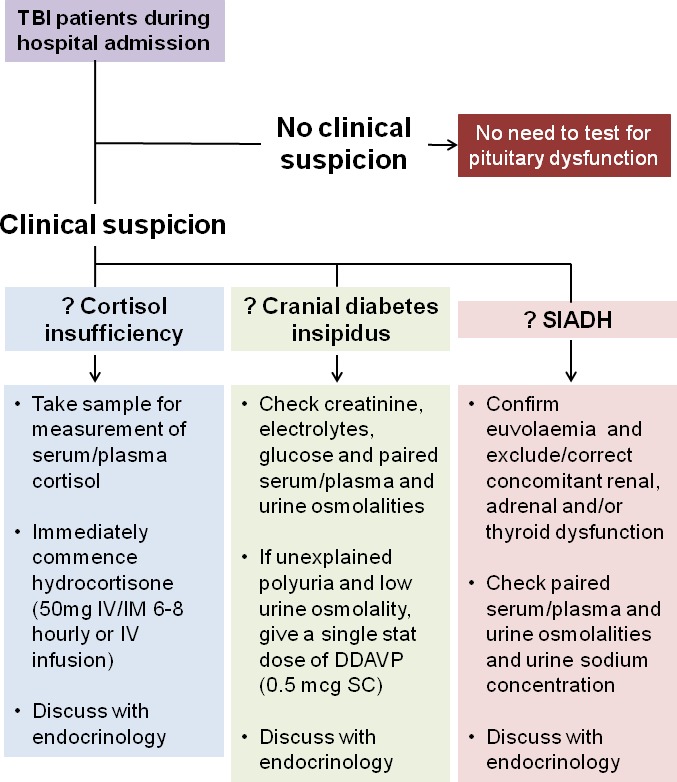
- The guidance recommends no routine acute-phase pituitary function testing or plasma/serum cortisol measurement; if cortisol insufficiency is suspected, give empirical hydrocortisone 50 mg 6–8 hourly intravenously/intramuscularly, or 50–100 mg as an initial intravenous bolus followed by 4–8 mg/hour, after taking a random cortisol sample, and discuss with endocrinology.
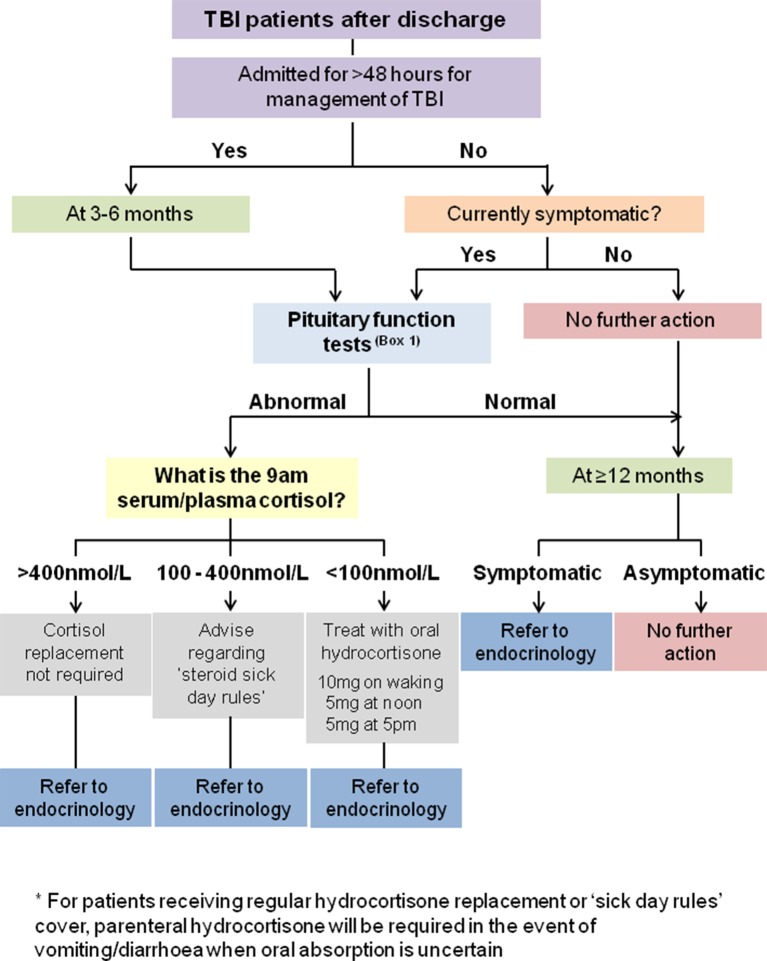
- Patients admitted for >48 hours after TBI should be screened at 3–6 months; advised 09:00 cortisol action limits are <100 nmol/L (start oral hydrocortisone 10 mg on waking, 5 mg at noon, 5 mg at 17:00 and refer urgently), 100–400 nmol/L (refer and advise steroid sick day rules), and >400 nmol/L (no routine endocrinology referral).
Methods
- A guidance development group of expert clinicians involved in TBI care—including neurosurgeons, neurologists, neurointensivists, and endocrinologists—was convened; an initial meeting was held in October 2014 at Robinson College, Cambridge, UK, with drafts revised by email to consensus and final approval by all members.
- Evidence types and recommendation grades followed the Agency for Healthcare Policy and Research framework; the document summarizes current literature on post-traumatic hypopituitarism and sets out consensus recommendations, mostly graded IV,C or III,B.
- No formal systematic review, search strategy, or primary data collection is described; this is a consensus guidance document rather than an original study.
Limitations
- The paper states that there is currently no national consensus for screening, incidence studies have highly variable findings, risk factors and pathophysiology are not fully understood, and no definitive recommendations can yet be made; it calls for a multicentre study powered to determine true incidence, predictors, and optimal methods/timing of endocrine investigation.
- The paper states that symptoms overlap considerably between TBI itself and pituitary dysfunction and have poor specificity, and that static blood tests have recognized limitations, with definitive investigation frequently requiring dynamic hormone testing interpreted by an experienced endocrinologist.
- Evident from the text: most recommendations rely on expert opinion/level IV evidence and are graded C, with few higher-grade recommendations, and the guidance does not describe a formal systematic literature search or meta-analytic method.
Model-written summary. Check it against the paper before relying on it.
Integrity signals
Registry
Cites
Statistics
Figures
Verification
Claims the paper makes
1 Valid · 1 Not valid · 8 Not checked · 6 Own results and interpretations
The cited sources support only part of this claim — read each source’s verdict below.
In the paper
“Two recent studies have suggested high rates (52%–78%) of hypothalamic–pituitary–adrenal axis dysfunction within the first 10 days after injury”
§ The screening and management of pituitary dysfunction following traumatic brain injury in adults: British Neurotrauma Group guidance > Introduction > Hypopituitarism
What the sources say
- Partly supportedcites [48] Olivecrona Z, Dahlqvist P, Koskinen LO Acute neuro-endocrine profile and prediction of outcome after severe brain injury. Scand J Trauma Resusc Emerg Med 2013; 21: 33 10.1186/1757-7241-21-33 23601250 PMC3637196 sourceExperimental — accuracy not yet measured
The Results (Hypothalamic-pituitary-adrenal axis; page unavailable) report low cortisol in 52.3% of patients on day 1 and up to 70.5% on day 4 after severe traumatic brain injury, supporting a high rate of possible adrenal insufficiency early after injury. The paper does not report a 78% rate or identify two studies yielding the stated 52%–78% range; its Discussion also cautions that strict diagnostic criteria for cortisol insufficiency are lacking. (LLM, conf=0.85)
- Not checked — no full text of the sourcecites [50] Hannon MJ, Crowley RK, Behan LA, et al Acute glucocorticoid deficiency and diabetes insipidus are common after acute traumatic brain injury and predict mortality. J Clin Endocrinol Metab 2013; 98: 3229– 37. 10.1210/jc.2013-1555 23690314 source
hedged- Asserted: passes — The authors put it forward as true.
- Checkable: passes — It can be checked against evidence.
- Load-bearing: unclear — It is unclear whether the paper’s conclusions depend on it.
- Based: passes — The paper gives a reason why it holds.
- Partly supported
A result the paper states — it cites no source for it, so there is none to check. The quote shows it is in the paper.
In the paper
“The reported prevalence of post-traumatic hypopituitarism (PTHP) differs significantly between studies.”
§ The screening and management of pituitary dysfunction following traumatic brain injury in adults: British Neurotrauma Group guidance > Introduction
plain- Asserted: passes — The authors put it forward as true.
- Checkable: passes — It can be checked against evidence.
- Load-bearing: passes — The paper’s conclusions depend on it.
- Based: passes — The paper gives a reason why it holds.
The paper states this without a source or data behind it here, so there is nothing to check it against. The quote shows it is in the paper.
In the paper
“although some data suggest that severe TBI is a particular risk factor for PTHP, even in this subgroup it is not clear which patients are at greatest risk and should be prioritised for investigation and treatment.”
§ The screening and management of pituitary dysfunction following traumatic brain injury in adults: British Neurotrauma Group guidance > Conclusion
hedgedstates a possible cause- Asserted: passes — The authors put it forward as true.
- Checkable: passes — It can be checked against evidence.
- Load-bearing: unclear — It is unclear whether the paper’s conclusions depend on it.
- Based: unclear — It is unclear why the paper says it holds.
In the paper
“A meta-analysis of 14 studies reported the pooled prevalence of PTHP to be 27.5%.11”
§ The screening and management of pituitary dysfunction following traumatic brain injury in adults: British Neurotrauma Group guidance > Introduction
What the sources say
- Not checked — no full text of the sourcecites [11] Schneider HJ, Kreitschmann-Andermahr I, Ghigo E, et al Hypothalamopituitary dysfunction following traumatic brain injury and aneurysmal subarachnoid hemorrhage: a systematic review. JAMA 2007; 298: 1429– 38. 10.1001/jama.298.12.1429 17895459 source
plain- Asserted: passes — The authors put it forward as true.
- Checkable: passes — It can be checked against evidence.
- Load-bearing: unclear — It is unclear whether the paper’s conclusions depend on it.
- Based: passes — The paper gives a reason why it holds.
A claim is checked only against the cited paper’s full text, never its abstract, and none is available for its sources.
In the paper
“Due to the potential confounding effects of non-thyroidal illness (sick euthyroid syndrome) and the long half-life of thyroxine, it has been suggested that screening for hypothalamic–pituitary–thyroid dysfunction can reasonably be deferred for several (>4–6) weeks after TBI (assuming there is no suspicion of prior thyroid dysfunction).50 62”
§ The screening and management of pituitary dysfunction following traumatic brain injury in adults: British Neurotrauma Group guidance > Guidance > Screening for pituitary dysfunction following discharge from hospital
What the sources say
- Not checked — no full text of the sourcecites [50] Hannon MJ, Crowley RK, Behan LA, et al Acute glucocorticoid deficiency and diabetes insipidus are common after acute traumatic brain injury and predict mortality. J Clin Endocrinol Metab 2013; 98: 3229– 37. 10.1210/jc.2013-1555 23690314 source
- Not checked — no full text of the sourcecites [62] Tritos NA, Yuen KC, Kelly DF, et al American association of clinical endocrinologists and American college of endocrinology disease state clinical review: a neuroendocrine approach to patients with traumatic brain injury. Endocr Pract 2015; 21: 823– 31. 10.4158/EP14567.DSCR 26172127 source
plain- Asserted: passes — The authors put it forward as true.
- Checkable: passes — It can be checked against evidence.
- Load-bearing: passes — The paper’s conclusions depend on it.
- Based: passes — The paper gives a reason why it holds.
5 more claims
Create a free account to see all 16 claims and every source verdict.
- It may state two separate claims as one. 6
- Probably not a substantial claim. 1
Claims other papers make about this one
Each is checked against this paper’s own text: does it say what the citing paper says it does?
The source backs part of the claim, not all of it — or backs it for a different population, condition or comparison.
In the citing paper
“provocative testing (such as the cosyntropin stimulation test, the gold standard in the chronic period) is not reliable in the first 6 weeks after an injury”
From Neuroendocrine Disruptions Following Head Injury (2023) · cites this paper as [6]
Experimental — accuracy not yet measuredThe source backs part of the claim, not all of it — or backs it for a different population, condition or comparison.
In the citing paper
“and up to 42% of children and adolescents [6-9].”
From Neuroendocrine Disruptions Following Head Injury (2023) · cites this paper as [6]
Experimental — accuracy not yet measuredIn the citing paper
“An acknowledged hypothesis suggests that suppression of the secretion of anabolic hormones (including GH) results in decreased energy consumption and the preservation of metabolic resources essential for sustaining vital organs (Tan et al., 2017; Preiser et al., 2014).”
From Acute neuroendocrine changes after traumatic brain injury (2024) · cites this paper as Tan et al., 2017
In the citing paper
“Since IGF-1 and IGFBP-3 are not reliable screening tools, some of the patients with GH deficiency were probably missed in these studies [59,61,62].”
From An Approach to Traumatic Brain Injury-Related Hypopituitarism: Overcoming the Pediatric Challenges (2023) · cites this paper as [61]
Self-check
Percentages, sums and reported differences re-computed from the paper’s own numbers.
Each contradiction between two passages listed here was confirmed by an independent check.
Rated minor: it would not touch a result — a value no result rests on, a p-value that stays on the same side of the significance level, or a conflict that is clerical, resolved elsewhere in the paper, or outside its own findings.
In the paper
§ The screening and management of pituitary dysfunction following traumatic brain injury in adults: British Neurotrauma Group guidance > Introduction > Hypopituitarism
“One group who followed their patients at 1 year, 3 years and 5 years post-TBI demonstrated a progressively decreasing trend for pituitary deficits from the first year to the fifth.46”
§ The screening and management of pituitary dysfunction following traumatic brain injury in adults: British Neurotrauma Group guidance > Introduction > Hypopituitarism
“| | | | 3 years | 23.5 | 23 | 0 | 0 | 0 | 0 | | | | | 5 years | 32 | 28 | 4 | 1 | 0 | 1 |”
Rated minor: it would not touch a result — a value no result rests on, a p-value that stays on the same side of the significance level, or a conflict that is clerical, resolved elsewhere in the paper, or outside its own findings.
In the paper
§ The screening and management of pituitary dysfunction following traumatic brain injury in adults: British Neurotrauma Group guidance > Introduction > Hypopituitarism
“ranging from 2.6% to 51% (table 3)”
§ The screening and management of pituitary dysfunction following traumatic brain injury in adults: British Neurotrauma Group guidance > Introduction > Hypopituitarism
“| Boughey et al 54 | – | – | Mean 1.5 days | 2.9 |”
Rated minor: it would not touch a result — a value no result rests on, a p-value that stays on the same side of the significance level, or a conflict that is clerical, resolved elsewhere in the paper, or outside its own findings.
In the paper
§ The screening and management of pituitary dysfunction following traumatic brain injury in adults: British Neurotrauma Group guidance > Introduction > Hypopituitarism
“| Aimaretti et al 24 | 100 | 3–15 | 3 months | 35 | 37 | 17 | 8 | 5 | – |”
§ The screening and management of pituitary dysfunction following traumatic brain injury in adults: British Neurotrauma Group guidance > Introduction > Hypopituitarism
“Anterior hypopituitarism (axis affected) Total (%) | Anterior hypopituitarism (axis affected) GH (%)”
Citations
Cites
National Center for Injury Prevention and Control (U.S.). Division of Injury Response., Faul, M., Wald, M. M., Wu, L., & Coronado, V. G. (2010) · doi:10.15620/cdc.5571 · Cited by 3,494
A systematic review of brain injury epidemiology in Europe
Tagliaferri, F., Compagnone, C., Korsic, M., Servadei, F., & Kraus, J. (2006) · Acta Neurochirurgica · doi:10.1007/s00701-005-0651-y · Cited by 1,223
Clinical practice guideline on diagnosis and treatment of hyponatraemia
Spasovski, G., Vanholder, R., Allolio, B., Annane, D., Ball, S., Bichet, D., Decaux, G., Fenske, W., Hoorn, E., Ichai, C., et al. (2014) · Intensive Care Medicine · doi:10.1007/s00134-014-3210-2 · Cited by 1,020
Clinical practice guideline on diagnosis and treatment of hyponatraemia
Spasovski, G., Vanholder, R., Allolio, B., Annane, D., Ball, S., Bichet, D., Decaux, G., Fenske, W., Hoorn, E. J., Ichai, C., et al. (2014) · European Journal of Endocrinology · doi:10.1530/eje-13-1020 · Cited by 855
The Mayo Classification System for Traumatic Brain Injury Severity
Malec, J. F., Brown, A. W., Leibson, C. L., Flaada, J. T., Mandrekar, J. N., Diehl, N. N., & Perkins, P. K. (2007) · Journal of Neurotrauma · doi:10.1089/neu.2006.0245 · Cited by 669
Schneider, H. J., Kreitschmann-Andermahr, I., Ghigo, E., Stalla, G. K., & Agha, A. (2007) · JAMA · doi:10.1001/jama.298.12.1429 · Cited by 549
Acute Pain Management: Operative or Medical Procedures and Trauma
Follin, S. L., & Charland, S. L. (1997) · Annals of Pharmacotherapy · doi:10.1177/106002809703100917 · Cited by 489
Kelly, D. F., Gaw Gonzalo, I. T., Cohan, P., Berman, N., Swerdloff, R., & Wang, C. (2000) · Journal of Neurosurgery · doi:10.3171/jns.2000.93.5.0743 · Cited by 455 · cited 3×
“Kelly et al reported that certain imaging findings, such as diffuse brain swelling, on initial CT head scan predicted PTHP, 16 while Schneider et al found an association between PTHP and diffuse axonal injury or basal skull fracture.”
BackgroundInfluentialHypopituitarism Secondary to Head Trauma
Benvenga, S. (2000) · Journal of Clinical Endocrinology & Metabolism · doi:10.1210/jc.85.4.1353 · Cited by 423
Anterior Pituitary Dysfunction in Survivors of Traumatic Brain Injury
Agha, A., Rogers, B., Sherlock, M., O’Kelly, P., Tormey, W., Phillips, J., & Thompson, C. J. (2004) · The Journal of Clinical Endocrinology & Metabolism · doi:10.1210/jc.2004-0511 · Cited by 390
Residual pituitary function after brain injury-induced hypopituitarism: a prospective 12-month study
Aimaretti, G., Ambrosio, M. R., Di Somma, C., Gasperi, M., Cannavò, S., Scaroni, C., Fusco, A., Del Monte, P., De Menis, E., Faustini-Fustini, M., et al. (2005) · The Journal of Clinical Endocrinology & Metabolism · doi:10.1210/jc.2005-0504 · Cited by 370
Aimaretti, G., Ambrosio, M. R., Di Somma, C., Fusco, A., Cannavò, S., Gasperi, M., Scaroni, C., De Marinis, L., Benvenga, S., Uberti, E. C. D., et al. (2004) · Clinical Endocrinology · doi:10.1111/j.1365-2265.2004.02094.x · Cited by 339
Tanriverdi, F., Senyurek, H., Unluhizarci, K., Selcuklu, A., Casanueva, F. F., & Kelestimur, F. (2006) · The Journal of Clinical Endocrinology & Metabolism · doi:10.1210/jc.2005-2476 · Cited by 336
Acute pain management: operative or medical procedures and trauma.
Ka, P. (1993) · PubMed · Cited by 325
Occurrence of pituitary dysfunction following traumatic brain injury
Bondanelli, M., De Marinis, L., Ambrosio, M. R., Monesi, M., Valle, D., Zatelli, M. C., Fusco, A., Bianchi, A., Farneti, M., & Degli, E. C. I. (2004) · Journal of Neurotrauma · doi:10.1089/0897715041269713 · Cited by 322
Neuroendocrine dysfunction in the acute phase of traumatic brain injury
Agha, A., Rogers, B., Mylotte, D., Taleb, F., Tormey, W., Phillips, J., & Thompson, C. J. (2004) · Clinical Endocrinology · doi:10.1111/j.1365-2265.2004.02023.x · Cited by 313
Posterior pituitary dysfunction after traumatic brain injury
Agha, A., Thornton, E., O’Kelly, P., Tormey, W., Phillips, J., & Thompson, C. J. (2004) · The Journal of Clinical Endocrinology & Metabolism · doi:10.1210/jc.2004-1058 · Cited by 269
Consensus guidelines on screening for hypopituitarism following traumatic brain injury
Ghigo, E., Masel, B., Aimaretti, G., Léon-Carrión, J., Casanueva, F. F., Dominguez-Morales, M. R., Elovic, E., Perrone, K., Stalla, G., Thompson, C., et al. (2005) · Brain Injury · doi:10.1080/02699050400025315 · Cited by 261
Prevalence of Neuroendocrine Dysfunction in Patients Recovering from Traumatic Brain Injury
Lieberman, S. A. (2001) · Journal of Clinical Endocrinology & Metabolism · doi:10.1210/jc.86.6.2752 · Cited by 261
Hypothalamic lesions following closed head injury
CROMPTON, M. R. (1971) · Brain · doi:10.1093/brain/94.1.165 · Cited by 243
Prevalence of anterior pituitary insufficiency 3 and 12 months after traumatic brain injury
Schneider, H. J., Schneider, M., Saller, B., Petersenn, S., Uhr, M., Husemann, B., von Rosen, F., & Stalla, G. K. (2006) · European Journal of Endocrinology · doi:10.1530/eje.1.02071 · Cited by 224
Leal‐Cerro, A., Flores, J. M., Rincon, M., Murillo, F., Pujol, M., Garcia‐Pesquera, F., Dieguez, C., & Casanueva, F. F. (2005) · Clinical Endocrinology · doi:10.1111/j.1365-2265.2005.02250.x · Cited by 199
Popovic, V., Pekic, S., Pavlovic, D., Maric, N., Jasovic-Gasic, M., Djurovic, B., Medic-Stojanoska, M., Zivkovic, V., Stojanovic, M., Doknic, M., et al. (2004) · Journal of Endocrinological Investigation · doi:10.1007/bf03345308 · Cited by 195
Macias, E. (1975) · The Lancet · doi:10.1016/s0140-6736(75)92165-0 · Cited by 194
Hannon, M. J., Crowley, R. K., Behan, L. A., O'Sullivan, E. P., O'Brien, M. M. C., Sherlock, M., Rawluk, D., O'Dwyer, R., Tormey, W., & Thompson, C. J. (2013) · The Journal of Clinical Endocrinology & Metabolism · doi:10.1210/jc.2013-1555 · Cited by 184 · cited 2×
“50 Therefore, early recognition of cranial DI in patients with TBI displaying hypernatraemia and hypotonic polyuria is important.”
BackgroundResultThe natural history of post-traumatic neurohypophysial dysfunction
Agha, A., Sherlock, M., Phillips, J., Tormey, W., & Thompson, C. J. (2005) · European Journal of Endocrinology · doi:10.1530/eje.1.01861 · Cited by 178 · cited 1×
“…of patients developing cranial diabetes insipidus (DI) again varies markedly between studies, ranging from 2.6% to 51% (table 3), 21 50 54–57 and perhaps reflecting the inherent difficulties in establishing a firm diagnosis in the presence of confounding factors (eg, vigorous fluid…”
BackgroundInfluentialPrevalence and predictive factors of post-traumatic hypopituitarism
Klose, M., Juul, A., Poulsgaard, L., Kosteljanetz, M., Brennum, J., & Feldt‐Rasmussen, U. (2007) · Clinical Endocrinology · doi:10.1111/j.1365-2265.2007.02860.x · Cited by 176
The natural history of post-traumatic hypopituitarism: implications for assessment and treatment
Agha, A., Phillips, J., O’Kelly, P., Tormey, W., & Thompson, C. J. (2005) · The American Journal of Medicine · doi:10.1016/j.amjmed.2005.02.042 · Cited by 173 · cited 2×
“52 Furthermore, 7 of the 34 subjects who had pituitary dysfunction at 6 months had recovered by 12 months.”
BackgroundTraumatic infarction of the anterior lobe of the pituitary gland
Daniel, P. M., Prichard, M. M. L., & Treip, C. S. (1959) · The Lancet · doi:10.1016/s0140-6736(59)91583-1 · Cited by 168 · cited 2×
“35 39 These, in association with the hypotension, hypoxia and brain swelling that frequently accompany TBI, lead to pituitary ischaemia and infarction.”
Background(1986) · PubMed · Cited by 166
Kelly, D. F., McArthur, D. L., Levin, H., Swimmer, S., Dusick, J. R., Cohan, P., Wang, C., & Swerdloff, R. (2006) · Journal of Neurotrauma · doi:10.1089/neu.2006.23.928 · Cited by 158
(1969) · PubMed · Cited by 157
Tanriverdi, F., De Bellis, A., Bizzarro, A., Sinisi, A. A., Bellastella, G., Pane, E., Bellastella, A., Unluhizarci, K., Selcuklu, A., Casanueva, F. F., et al. (2008) · European Journal of Endocrinology · doi:10.1530/eje-08-0050 · Cited by 153
Post-Traumatic Hypopituitarism: SIX CASES AND A REVIEW OF THE LITERATURE
EDWARDS, O. M., & CLARK, J. D. A. (1986) · Medicine · doi:10.1097/00005792-198609000-00001 · Cited by 146
Klose, M., Juul, A., Struck, J., Morgenthaler, N. G., Kosteljanetz, M., & Feldt‐Rasmussen, U. (2007) · Clinical Endocrinology · doi:10.1111/j.1365-2265.2007.02931.x · Cited by 142
Tanriverdi, F., De Bellis, A., Ulutabanca, H., Bizzarro, A., Sinisi, A. A., Bellastella, G., Amoresano Paglionico, V., Dalla Mora, L., Selcuklu, A., Unluhizarci, K., et al. (2013) · Journal of Neurotrauma · doi:10.1089/neu.2012.2752 · Cited by 129
Kokshoorn, N. E., Wassenaar, M. J. E., Biermasz, N. R., Roelfsema, F., Smit, J. W. A., Romijn, J. A., & Pereira, A. M. (2010) · European Journal of Endocrinology · doi:10.1530/eje-09-0601 · Cited by 129
CHRONIC HYPOPITUITARISM AFTER TRAUMATIC BRAIN INJURY: RISK ASSESSMENT AND RELATIONSHIP TO OUTCOME
Bavisetty, S., McArthur, D. L., Dusick, J. R., Wang, C., Cohan, P., Boscardin, W. J., Swerdloff, R., Levin, H., Chang, D. J., Muizelaar, J. P., et al. (2008) · Neurosurgery · doi:10.1227/01.neu.0000325870.60129.6a · Cited by 126
(1966) · PubMed · Cited by 123
Chapter 1: pathophysiology of hypopituitarism in the setting of brain injury
Dusick, J. R., Wang, C., Cohan, P., Swerdloff, R., & Kelly, D. F. (2012) · Pituitary · doi:10.1007/s11102-008-0130-6 · Cited by 121
Chronic Hypopituitarism after Traumatic Brain Injury: Risk Assessment and Relationship to Outcome
(2008) · Neurosurgery · doi:10.1227/01.neu.0000339459.86462.45 · Cited by 118
Tanriverdi, F., Ulutabanca, H., Unluhizarci, K., Selcuklu, A., Casanueva, F. F., & Kelestimur, F. (2008) · Clinical Endocrinology · doi:10.1111/j.1365-2265.2007.03070.x · Cited by 117
Krahulik, D., Zapletalova, J., Frysak, Z., & Vaverka, M. (2010) · Journal of Neurosurgery · doi:10.3171/2009.10.jns09930 · Cited by 108
Tanriverdi, F., De Bellis, A., Battaglia, M., Bellastella, G., Bizzarro, A., Sinisi, A. A., Bellastella, A., Unluhizarci, K., Selcuklu, A., Casanueva, F. F., et al. (2010) · European Journal of Endocrinology · doi:10.1530/eje-09-1024 · Cited by 108
Predictors of anterior pituitary insufficiency after traumatic brain injury
Schneider, M., Schneider, H. J., Yassouridis, A., Saller, B., Von Rosen, F., & Stalla, G. K. (2008) · Clinical Endocrinology · doi:10.1111/j.1365-2265.2007.03020.x · Cited by 107
Bondanelli, M., Ambrosio, M. R., Cavazzini, L., Bertocchi, A., Zatelli, M. C., Carli, A., Valle, D., Basaglia, N., & Uberti, E. C. D. (2007) · Journal of Neurotrauma · doi:10.1089/neu.2007.0343 · Cited by 104
Tanriverdi, F., Unluhizarci, K., & Kelestimur, F. (2010) · Pituitary · doi:10.1007/s11102-009-0215-x · Cited by 103
Hypopituitarism following severe traumatic brain injury
Herrmann, B., Rehder, J., Kahlke, S., Wiedemayer, H., Doerfler, A., Ischebeck, W., Laumer, R., Forsting, M., Stolke, D., & Mann, K. (2006) · Experimental and Clinical Endocrinology & Diabetes · doi:10.1055/s-2006-924254 · Cited by 101
Histologic study of the human pituitary gland in acute traumatic brain injury
Salehi, F., Kovacs, K., Scheithauer, B. W., Pfeifer, E. A., & Cusimano, M. (2007) · Brain Injury · doi:10.1080/02699050701426956 · Cited by 96
Acute neuro-endocrine profile and prediction of outcome after severe brain injury
Olivecrona, Z., Dahlqvist, P., & Koskinen, L.-O. D. (2013) · Scandinavian Journal of Trauma Resuscitation and Emergency Medicine · doi:10.1186/1757-7241-21-33 · Cited by 93
Schneider, H. J., Schneider, M., Kreitschmann-Andermahr, I., Tuschy, U., Wallaschofski, H., Fleck, S., Faust, M., Renner, C. I. E., Kopczak, A., Saller, B., et al. (2011) · Journal of Neurotrauma · doi:10.1089/neu.2011.1887 · Cited by 92
Magnetic resonance imaging changes in the pituitary gland following acute traumatic brain injury
Maiya, B., Newcombe, V., Nortje, J., Bradley, P., Bernard, F., Chatfield, D., Outtrim, J., Hutchinson, P., Matta, B., Antoun, N., et al. (2008) · Intensive Care Medicine · doi:10.1007/s00134-007-0902-x · Cited by 91 · cited 2×
“35 39 These, in association with the hypotension, hypoxia and brain swelling that frequently accompany TBI, lead to pituitary ischaemia and infarction.”
BackgroundSelf-citationAcute Diabetes Insipidus in Severe Head Injury: A Prospective Study
Hadjizacharia, P., Beale, E. O., Inaba, K., Chan, L. S., & Demetriades, D. (2008) · Journal of the American College of Surgeons · doi:10.1016/j.jamcollsurg.2008.04.017 · Cited by 90 · cited 1×
“…the proportion of patients developing cranial diabetes insipidus (DI) again varies markedly between studies, ranging from 2.6% to 51% (table 3), 21 50 54–57 and perhaps reflecting the inherent difficulties in establishing a firm diagnosis in the presence of confounding factors (eg, vigorous…”
BackgroundInfluentialKlose, M., Watt, T., Brennum, J., & Feldt-Rasmussen, U. (2007) · The Journal of Clinical Endocrinology & Metabolism · doi:10.1210/jc.2007-0901 · Cited by 87 · cited 1×
“28 In contrast, possession of apolipoprotein E3/E3 genotype has been linked to a reduced risk of hypopituitarism following TBI.”
BackgroundPituitary dysfunction after blast traumatic brain injury: The UK BIOSAP study
Baxter, D., Sharp, D. J., Feeney, C., Papadopoulou, D., Ham, T. E., Jilka, S., Hellyer, P. J., Patel, M. C., Bennett, A. N., Mistlin, A., et al. (2013) · Annals of Neurology · doi:10.1002/ana.23958 · Cited by 81
Self-citationSchneider, H. J., Sämann, P. G., Schneider, M., Croce, C. G., Corneli, G., Sievers, C., Ghigo, E., Stalla, G. K., & Aimaretti, G. (2007) · Journal of Endocrinological Investigation · doi:10.1007/bf03346291 · Cited by 79
Tanriverdi, F., Taheri, S., Ulutabanca, H., Caglayan, A. O., Ozkul, Y., Dundar, M., Selcuklu, A., Unluhizarci, K., Casanueva, F. F., & Kelestimur, F. (2008) · Journal of Neurotrauma · doi:10.1089/neu.2007.0456 · Cited by 77
Kleindienst, A., Brabant, G., Bock, C., Maser-Gluth, C., & Buchfelder, M. (2009) · Journal of Neurotrauma · doi:10.1089/neu.2008.0601 · Cited by 76
Diabetes insipidus in the head-injured patient
Boughey, J. C., Yost, M. J., & Bynoe, R. P. (2004) · The American Surgeon · doi:10.1177/000313480407000607 · Cited by 76 · cited 1×
“…proportion of patients developing cranial diabetes insipidus (DI) again varies markedly between studies, ranging from 2.6% to 51% (table 3), 21 50 54–57 and perhaps reflecting the inherent difficulties in establishing a firm diagnosis in the presence of confounding factors (eg, vigorous fluid…”
BackgroundInfluentialHyponatremia in patients with traumatic brain injury: etiology, incidence, and severity correlation
Lohani, S., & Devkota, U. P. (2011) · World Neurosurgery · doi:10.1016/j.wneu.2011.03.042 · Cited by 76
Klose, M., Stochholm, K., Janukonyté, J., Lehman Christensen, L., Frystyk, J., Andersen, M., Laurberg, P., Christiansen, J. S., & Feldt-Rasmussen, U. (2014) · The Journal of Clinical Endocrinology & Metabolism · doi:10.1210/jc.2013-2397 · Cited by 73 · cited 2×
“29 Specifically, the prevalence of GHD was lower when using local, compared with guideline-defined cut-offs, while insulin tolerance testing yielded a lower prevalence of GHD compared with the pyridostigmine-growth hormone-releasing hormone (PD-GHRH) or GHRH-arginine test.”
MethodGH deficiency as the most common pituitary defect after TBI: clinical implications
Popovic, V. (2005) · Pituitary · doi:10.1007/s11102-006-6047-z · Cited by 68
Low prevalence of hypopituitarism after traumatic brain injury: a multicenter study
Kokshoorn, N. E., Smit, J. W. A., Nieuwlaat, W. A., Tiemensma, J., Bisschop, P. H., Groote Veldman, R., Roelfsema, F., Franken, A. A. M., Wassenaar, M. J. E., Biermasz, N. R., et al. (2011) · European Journal of Endocrinology · doi:10.1530/eje-11-0365 · Cited by 65
Pituitary insufficiency after traumatic brain injury
Wachter, D., Gündling, K., Oertel, M. F., Stracke, H., & Böker, D.-K. (2009) · Journal of Clinical Neuroscience · doi:10.1016/j.jocn.2008.01.009 · Cited by 62
Lasting pituitary hormone deficiency after traumatic brain injury
Moreau, O. K., Yollin, E., Merlen, E., Daveluy, W., & Rousseaux, M. (2012) · Journal of Neurotrauma · doi:10.1089/neu.2011.2048 · Cited by 59
Berg, C., Oeffner, A., Schumm-Draeger, P.-M., Badorrek, F., Brabant, G., Gerbert, B., Bornstein, S., Zimmermann, A., Weber, M., Broecker-Preuss, M., et al. (2009) · Experimental and Clinical Endocrinology & Diabetes · doi:10.1055/s-0029-1225611 · Cited by 54
Tritos, N. A., Yuen, K. C. J., & Kelly, D. F. (2015) · Endocrine Practice · doi:10.4158/ep14567.dscr · Cited by 51
Screening for Hypopituitarism in 509 Patients with Traumatic Brain Injury or Subarachnoid Hemorrhage
Kopczak, A., Kilimann, I., von Rosen, F., Krewer, C., Schneider, H. J., Stalla, G. K., & Schneider, M. (2014) · Journal of Neurotrauma · doi:10.1089/neu.2013.3002 · Cited by 50
Which patient requires neuroendocrine assessment following traumatic brain injury, when and how?
Glynn, N., & Agha, A. (2013) · Clinical Endocrinology · doi:10.1111/cen.12010 · Cited by 47
Hypopituitarism following traumatic brain injury: determining factors for diagnosis
Fernandez-Rodriguez, E. (2011) · Frontiers in Endocrinology · doi:10.3389/fendo.2011.00025 · Cited by 37
Alavi, S. A., Tan, C. L., Menon, D. K., Simpson, H. L., & Hutchinson, P. J. (2016) · British Journal of Neurosurgery · doi:10.3109/02688697.2015.1109060 · Cited by 35
Self-citationUlfarsson, T., Arnar Gudnason, G., Rosén, T., Blomstrand, C., Stibrant Sunnerhagen, K., Lundgren-Nilsson, Å., & Nilsson, M. (2013) · Journal of Neurotrauma · doi:10.1089/neu.2012.2494 · Cited by 32
Cuesta, M., Hannon, M. J., Crowley, R. K., Behan, L. A., Tormey, W., Rawluk, D., Delargy, M., Agha, A., & Thompson, C. J. (2016) · Clinical Endocrinology · doi:10.1111/cen.12874 · Cited by 29 · cited 1×
“53 As already highlighted, much of the variation in prevalence rates can likely be attributed to differences in patient selection, investigations employed and thresholds applied to diagnose endocrine insufficiency.”
BackgroundBrain injury and hypopituitarism: the historical background
Benvenga, S. (2005) · Pituitary · doi:10.1007/s11102-006-6040-6 · Cited by 24
Recent advances in neural development
Kiecker, C. M., & Lumsden, A. (2009) · F1000 Biology Reports · doi:10.3410/b1-1 · Cited by 22
Should every patient with traumatic brain injury be referred to an endocrinologist?
Aimaretti, G., & Ghigo, E. (2007) · Nature Clinical Practice Endocrinology & Metabolism · doi:10.1038/ncpendmet0460 · Cited by 17
Sesmilo, G., Halperin, I., & Puig-Domingo, M. (2007) · HORMONES · doi:10.14310/horm.2002.1111013 · Cited by 14
Pituitary function impairment after moderate traumatic brain injury.
Abadi, M. R. H., Ghodsi, M., Merazin, M., & Roozbeh, H. (2011) · PubMed · Cited by 11
Hypopituitarism and brain injury: recent advances in screening and management
Pickel, J., Schneider, H. J., & Stalla, G. K. (2009) · F1000 Medicine Reports · doi:10.3410/m1-63 · Cited by 3
Research works printed but not linked: 4
- US Department of Health and Human Services; Public Health Service; Agency for Health Care and Policy Research. Acute lower back problems in adults. Clinical Practice Guideline 14. Rockville, MD: Agency for Health Care and Policy Research Publications, 1994.
- NICE. Head injury: assessment and early management [CG176]. NICE, Published Online First: January 2014.
- Ghigo E, Masel B, Aimaretti G, et al Consensus guidelines on screening for hypopituitarism following traumatic brain injury. Brain Inj 2005; 19: 711– 24. 10.1080/02699050400025315 16195185 · DOI · Paper page
- Sesmilo G, Halperin I, Puig-Domingo M Endocrine evaluation of patients after brain injury: what else is needed to define specific clinical recommendations? Hormones 2007; 6: 132– 7. 10.14310/horm.2002.1111013 17704044 · DOI · Paper page
Cited by
Molaie, A. M., & Maguire, J. (2018) · Frontiers in Endocrinology · doi:10.3389/fendo.2018.00176 · Cited by 60
“(44), which summarize studies done to date on the prevalence of chronic PHTH, discuss the frequency of various deficiencies, and comment on the methods used in experiments.”
BackgroundWong, K. R., Mychasiuk, R., O'Brien, T. J., Shultz, S. R., McDonald, S. J., & Brady, R. D. (2020) · Bone Research · doi:10.1038/s41413-020-00119-9 · Cited by 74
Emelifeonwu, J. A., Flower, H., Loan, J. J., McGivern, K., & Andrews, P. J. D. (2020) · Journal of Neurotrauma · doi:10.1089/neu.2018.6349 · Cited by 55
Insights into non-classic and emerging causes of hypopituitarism
Prodam, F., Caputo, M., Mele, C., Marzullo, P., & Aimaretti, G. (2020) · Nature Reviews Endocrinology · doi:10.1038/s41574-020-00437-2 · Cited by 71
Traumatic brain injuries induced pituitary dysfunction: a call for algorithms
Gilis-Januszewska, A., Kluczyński, Ł., & Hubalewska-Dydejczyk, A. (2020) · Endocrine Connections · doi:10.1530/ec-20-0117 · Cited by 50
“The prevalence of PTHP among patients with a history of TBI is estimated to be 15-68% [10, 11, 12].”
Background
Metadata
- Authors
- Tan, C. L., Alavi, S. A., Baldeweg, S. E., Belli, A., Carson, A., Feeney, C., Goldstone, A. P., Greenwood, R., Menon, D. K., Simpson, H. L., Toogood, A. A., Gurnell, M., & Hutchinson, P. J.
- Affiliations
- University of Cambridge (GB)
- Queen's Medical Centre (GB)
- University College Hospital (GB)
- Queen Elizabeth Hospital Birmingham (GB)
- University of Edinburgh (GB)
- Imperial College Healthcare NHS Trust (GB)
- UCL Queen Square Institute of Neurology (GB)
- Corresponding author
- Gurnell, Mark
- ORCID
- Venue
- Journal of Neurology, Neurosurgery & Psychiatry
- Publisher
- BMJ
- Published
- 2017-08-31
- Volume
- 88
- Issue
- 11
- Pages
- 971-981
- ISSN
- 0022-3050 (ISSN-L)
- 1468-330X
- PMC
- PMC5740545
- OpenAlex
- W2752710898
- Semantic Scholar
- 88ba3278610c13535d453f34e06b61aacf43c76a
- Cited by
- 111
- References
- 83
- Citations by year
- 2026: 11 · 2025: 16 · 2024: 17 · 2023: 10 · 2022: 12 · 2021: 8 · 2020: 14 · 2019: 16 · 2018: 7
- FWCI
- 1.48
- Type
- journal article
- Language
- en
- Open access
- hybrid
- doi.org
- Licence
- cc-by
- Locations
- Journal of Neurology Neurosurgery & Psychiatry (publishedVersion, cc-by)
- Europe PMC (PubMed Central) (publishedVersion, cc-by)
- PubMed Central (publishedVersion, cc-by)
- PubMed (publishedVersion)
- UCL Discovery (University College London) (submittedVersion)
- HighWire Press Open Archive (submittedVersion)
- University of Birmingham Research Portal (University of Birmingham) (submittedVersion, cc-by)
- Spiral (Imperial College London) (submittedVersion, other-oa)
- Apollo (University of Cambridge) (submittedVersion, cc-by)
- Apollo (cc-by)
- Funders
- National Institute for Health and Care Research (NIHR-RP-R3-12-013)
- Surgical Reconstruction and Microbiology Research Centre
- Medical Research Council
- NIHR Cambridge Biomedical Research Centre
- Topics
- Health Sciences › Medicine › Endocrinology, Diabetes and Metabolism › Pituitary Gland Disorders and Treatments
- Health Sciences › Medicine › Clinical Neurology › Traumatic Brain Injury and Neurovascular Disturbances
- Health Sciences › Medicine › Clinical Neurology › Traumatic Brain Injury Research
- Keywords
- post-traumatic hypopituitarism, pituitary dysfunction, traumatic brain injury, adult patients, quality of life, depression, rehabilitation outcomes, risk factors, pathophysiology
- MeSH terms
- Brain Injuries, Traumatic, Adrenal Insufficiency, Adult, Female, Follow-Up Studies, United Kingdom, Humans, Hypopituitarism, Inappropriate ADH Syndrome, Male, Mass Screening, Patient Admission, Pituitary Function Tests, Pituitary Gland, Anterior, Early Diagnosis, Early Medical Intervention
About these checks
Registry, retraction, Cites and statistics results are computed, not judged, with one exception: a printed reference that no index lists is read once by a model before it counts as a citation error. Claims are extracted by a model and kept only when their quote appears verbatim in the text; each cited source is then checked, with a model’s help, for whether it says what the claim relies on. Those verdicts can be wrong — read the claim’s quote and the cited source before relying on one.
The claim verdicts this report counts are experimental: their accuracy is not yet measured.
A language model drew the claims from the paper on 2026-10-10, under version 3 of the claim definition (model deepseek-v4.1-flash, prompt extract-v3).
A second model labelled each claim on 2026-10-10 (model jev-1.13-20260917, definition revision gold-guideline-v0.2).
Cited sources are checked with a language model’s help (gpt-6-sol).
Statistics and arithmetic are recomputed, not judged.
Confidence bands are shown only for fields calibrated on our annotated test set. None is calibrated yet, so no band is shown.
What counts as a claim ›How we measure confidence ›How we check this ›
Are you an author, or do you see a problem with this page? Request a review
Data sources
Bibliographic data: Semantic Scholar, OpenAlex, Crossref.
Contains information from the Semantic Scholar Academic Graph Datasets, made available under the ODC Attribution License (ODC-BY 1.0).
Semantic Scholar’s data is described in: Kinney, R., et al. (2023). The Semantic Scholar Open Data Platform. arXiv:2301.10140.
