

Self-management intervention to reduce pulmonary exacerbations by supporting treatment adherence in adults with cystic fibrosis: a randomised controlled trial
Open accessThe DOI matches its Crossref record; 47 of the 47 references it cites were found in a registry or an index.
Abstract
Introduction: Recurrent pulmonary exacerbations lead to progressive lung damage in cystic fibrosis (CF). Inhaled medications (mucoactive agents and antibiotics) help prevent exacerbations, but objectively measured adherence is low. We investigated whether a multi-component (complex) self-management intervention to support adherence would reduce exacerbation rates over 12 months. Methods: Between October 2017 and May 2018, adults with CF (aged ≥16 years; 19 UK centres) were randomised to the intervention (data-logging nebulisers, a digital platform and behavioural change sessions with trained clinical interventionists) or usual care (data-logging nebulisers). Outcomes included pulmonary exacerbations (primary outcome), objectively measured adherence, body mass index (BMI), lung function (FEV 1) and Cystic Fibrosis Questionnaire-Revised (CFQ-R). Analyses were by intent to treat over 12 months. Results: Among intervention (n=304) and usual care (n=303) participants (51% female, median age 31 years), 88% completed 12-month follow-up. Mean exacerbation rate was 1.63/year with intervention and 1.77/year with usual care (adjusted ratio 0.96; 95% CI 0.83 to 1.12; p=0.64). Adjusted mean differences (95% CI) were in favour of the intervention versus usual care for objectively measured adherence (9.5% (8.6% to 10.4%)) and BMI (0.3 (0.1 to 0.6) kg/m 2), with no difference for %FEV 1(1.4 (−0.2 to 3.0)). Seven CFQ-R subscales showed no between-group difference, but treatment burden reduced for the intervention (3.9 (1.2 to 6.7) points). No intervention-related serious adverse events occurred. Conclusions: While pulmonary exacerbations and FEV 1 did not show statistically significant differences, the intervention achieved higher objectively measured adherence versus usual care. The adherence difference might be inadequate to influence exacerbations, though higher BMI and lower perceived CF treatment burden were observed.
Overview
The claims and statistics of this paper haven’t been checked yet.
Free: it reads the open-access text and checks the first 5 claims that cite a source we can check. Create a free account to check every claim.
Integrity signals
Registry
Cites
Statistics
Figures
Verification
Claims the paper makes
The claims and statistics of this paper haven’t been checked yet.
Free: it reads the open-access text and checks the first 5 claims that cite a source we can check. Create a free account to check every claim.
Claims other papers make about this one
Each is checked against this paper’s own text: does it say what the citing paper says it does?
The source backs part of the claim, not all of it — or backs it for a different population, condition or comparison.
In the citing paper
“the adjusted data from the Wildman 2022 trial demonstrated a difference in favour of the CFHealthHub intervention on treatment burden at 12 months compared with usual care (MD 3.90, 95% CI 1.20 to 6.60; Analysis 1.21).”
From Psychological interventions for improving adherence to inhaled therapies in people with cystic fibrosis (2023) · cites this paper as Wildman 2022
Experimental — accuracy not yet measuredThe source backs part of the claim, not all of it — or backs it for a different population, condition or comparison.
In the citing paper
“When measured objectively, using data-logging nebulisers, results from one large, 19-centre trial (607 participants) showed that a digital intervention (CFHealthHub) combined with behaviour change sessions with trained interventionists, can increase adherence to inhaled therapies in adults with CF by 18% (9.5% increase from baseline) at 12 months, compared with usual care (Wildman 2022).”
From Psychological interventions for improving adherence to inhaled therapies in people with cystic fibrosis (2023) · cites this paper as Wildman 2022
Experimental — accuracy not yet measuredThe source backs part of the claim, not all of it — or backs it for a different population, condition or comparison.
In the citing paper
“Results did, however, show 18% more medication taken in the intervention group than the control group at the 'over six months and up to 12 months' time point (MD 18.00, 95% CI 12.90 to 23.10; Analysis 1.1) (Wildman 2022).”
From Psychological interventions for improving adherence to inhaled therapies in people with cystic fibrosis (2023) · cites this paper as Wildman 2022
Experimental — accuracy not yet measuredThe source backs part of the claim, not all of it — or backs it for a different population, condition or comparison.
In the citing paper
“The adjusted mean treatment burden score was 3.90 higher in the intervention group compared to usual care. MD 3.90 (1.20 to 6.60) 539 participants (1 study) low b,d”
From Psychological interventions for improving adherence to inhaled therapies in people with cystic fibrosis (2023) · cites this paper as Wildman 2022
Experimental — accuracy not yet measuredThe source backs part of the claim, not all of it — or backs it for a different population, condition or comparison.
In the citing paper
“Only one trial found a difference between groups in one domain of the CFQ-R (treatment burden) at this time point, SMD 0.26 (95% CI 0.09 to 0.43; Analysis 1.20) (Wildman 2022).”
From Psychological interventions for improving adherence to inhaled therapies in people with cystic fibrosis (2023) · cites this paper as Wildman 2022
Experimental — accuracy not yet measured
40 more claims about this paper
Create a free account to see every claim other papers make about this one.
Self-check
Percentages, sums and reported differences re-computed from the paper’s own numbers.
The self-check needs the paper’s full text.
Citations
Cites
Michie, S., van Stralen, M. M., & West, R. (2011) · Implementation Science · doi:10.1186/1748-5908-6-42 · Cited by 13,697 · cited 1×
“16 Reflective motivation is largely dependent on perceived necessity of adherence and treatment concerns 17 and can be increased through education, persuasion and confidence building.”
Adherence to Long-Term Therapies: Evidence for Action
De Geest, S., & Sabaté, E. (2003) · European Journal of Cardiovascular Nursing · doi:10.1016/s1474-5151(03)00091-4 · Cited by 6,272
Update on Key Emerging Challenges in Cystic Fibrosis
Jennings, M. T., Riekert, K. A., & Boyle, M. P. (2014) · Medical Principles and Practice · doi:10.1159/000357646 · Cited by 3,648
Horne, R., Weinman, J., & Hankins, M. (1999) · Psychology & Health · doi:10.1080/08870449908407311 · Cited by 2,372 · cited 2×
“16 Reflective motivation is largely dependent on perceived necessity of adherence and treatment concerns 17 and can be increased through education, persuasion and confidence building.”
Horne, R., & Weinman, J. (1999) · Journal of Psychosomatic Research · doi:10.1016/s0022-3999(99)00057-4 · Cited by 2,201 · cited 2×
“Developing strategies to increase adherence is another CF research priority(12) and could improve health outcomes by reducing exacerbation rates.(6) Insufficient evidence exists to promote any particular adherence strategy.”
BackgroundDevelopment and Testing of a Short Form of the Patient Activation Measure
Hibbard, J. H., Mahoney, E. R., Stockard, J., & Tusler, M. (2005) · Health Services Research · doi:10.1111/j.1475-6773.2005.00438.x · Cited by 1,935 · cited 6×
“Robust adherence data allowed us to demonstrate a sustained adherence difference for 12 months, which is the first for inhaled medications in any LTC. Sustained objectively measured adherence benefits for behavioural interventions in other LTCs are limited to two studies, both for oral medications among older adults i…”
InfluentialGardner, B. (2015) · Health Psychology Review · doi:10.1080/17437199.2013.876238 · Cited by 1,016 · cited 2×
“18 19 Literature in LTCs emphasises that sustained adherence is generally more strongly associated with habit than reflective motivation, which is more effortful.”
ECFS best practice guidelines: the 2018 revision
Castellani, C., Duff, A. J. A., Bell, S. C., Heijerman, H. G. M., Munck, A., Ratjen, F., Sermet-Gaudelus, I., Southern, K. W., Barben, J., Flume, P. A., et al. (2018) · Journal of Cystic Fibrosis · doi:10.1016/j.jcf.2018.02.006 · Cited by 765
Contamination in trials: is cluster randomisation the answer?
Torgerson, D. J. (2001) · BMJ · doi:10.1136/bmj.322.7282.355 · Cited by 508
High treatment burden in adults with cystic fibrosis: challenges to disease self-management
Sawicki, G. S., Sellers, D. E., & Robinson, W. M. (2009) · Journal of Cystic Fibrosis · doi:10.1016/j.jcf.2008.09.007 · Cited by 498
Quittner, A. L., Modi, A. C., Wainwright, C., Otto, K., Kirihara, J., & Montgomery, A. B. (2009) · Chest · doi:10.1378/chest.08-1190 · Cited by 400 · cited 1×
“The intervention achieved clinically important improvements in perceived treatment burden, 34 which was identified as the number one research priority by the CF community.”
Medication adherence outcomes of 771 intervention trials: Systematic review and meta-analysis
Conn, V. S., & Ruppar, T. M. (2017) · Preventive Medicine · doi:10.1016/j.ypmed.2017.03.008 · Cited by 367 · cited 1×
“35 In considering the effective components of the intervention, data feedback is an obvious candidate.”
Experiences of habit formation: A qualitative study
Lally, P., Wardle, J., & Gardner, B. (2011) · Psychology, Health & Medicine · doi:10.1080/13548506.2011.555774 · Cited by 276
Rowbotham, N. J., Smith, S., Leighton, P. A., Rayner, O. C., Gathercole, K., Elliott, Z. C., Nash, E. F., Daniels, T., Duff, A. J. A., Collins, S., et al. (2018) · Thorax · doi:10.1136/thoraxjnl-2017-210473 · Cited by 252
Pulmonary medication adherence and health-care use in cystic fibrosis
Quittner, A. L., Zhang, J., Marynchenko, M., Chopra, P. A., Signorovitch, J., Yushkina, Y., & Riekert, K. A. (2014) · Chest · doi:10.1378/chest.13-1926 · Cited by 250
Longitudinal association between medication adherence and lung health in people with cystic fibrosis
Eakin, M. N., Bilderback, A., Boyle, M. P., Mogayzel, P. J., & Riekert, K. A. (2011) · Journal of Cystic Fibrosis · doi:10.1016/j.jcf.2011.03.005 · Cited by 246 · cited 1×
“6 Insufficient evidence exists to promote any particular adherence strategy.”
Accurate Assessment of Adherence
Daniels, T., Goodacre, L., Sutton, C., Pollard, K., Conway, S., & Peckham, D. (2011) · Chest · doi:10.1378/chest.09-3074 · Cited by 210 · cited 3×
“8 Problem-solving techniques can be used to overcome individual capability and opportunity barriers.”
Dornase alfa for cystic fibrosis
Yang, C., Chilvers, M., Montgomery, M., & Nolan, S. J. (2016) · Cochrane Database of Systematic Reviews · doi:10.1002/14651858.cd001127.pub3 · Cited by 159
Lin, E. H. B., Von Korff, M., Ciechanowski, P., Peterson, D., Ludman, E. J., Rutter, C. M., Oliver, M., Young, B. A., Gensichen, J., McGregor, M., et al. (2012) · The Annals of Family Medicine · doi:10.1370/afm.1343 · Cited by 150
Podsadecki, T. J., Vrijens, B. C., Tousset, E. P., Rode, R. A., & Hanna, G. J. (2008) · HIV Clinical Trials · doi:10.1310/hct0904-238 · Cited by 144 · cited 1×
“31 Since people with low adherence may find adherence data threatening, 32 it is important to note that the differential adherence in the intervention arm was achieved without increasing anxiety.”
Shin, G., Feng, Y., Jarrahi, M. H., & Gafinowitz, N. (2019) · JAMIA Open · doi:10.1093/jamiaopen/ooy048 · Cited by 143
Márquez Contreras, E., Márquez Rivero, S., Rodríguez García, E., López-García-Ramos, L., Carlos Pastoriza Vilas, J., Baldonedo Suárez, A., Gracia Diez, C., Gil Guillén, V., Martell Claros, N., & Compliance Group of Spanish Society of Hypertension (SEH-LELHA) (2019) · Current Medical Research and Opinion · doi:10.1080/03007995.2018.1549026 · Cited by 137 · cited 1×
“37 38 CFHealthHub as a multi-component self-management intervention has now been established as a digital learning health system (ISRCTN14464661) in >50% of UK adult CF centres.”
BackgroundApplying COM-B to medication adherence: A suggested framework for research and interventions
Jackson, C., Eliasson, L., Barber, N., & Weinman, J. A. (2014) · European Health Psychologist · Cited by 133
Efficacy of a medication adherence enhancing intervention in transplantation: The MAESTRO-Tx trial
Dobbels, F., Bleser, L. D., Berben, L., Kristanto, P., Dupont, L., Nevens, F., Vanhaecke, J., Verleden, G. M., & Geest, S. D. (2017) · The Journal of Heart and Lung Transplantation · doi:10.1016/j.healun.2017.01.007 · Cited by 130 · cited 1×
“37 38 CFHealthHub as a multi-component self-management intervention has now been established as a digital learning health system (ISRCTN14464661) in >50% of UK adult CF centres.”
Lechtzin, N., Mayer-Hamblett, N., West, N. E., Allgood, S., Wilhelm, E., Khan, U., Aitken, M. L., Ramsey, B. W., Boyle, M. P., Mogayzel, P. J., et al. (2017) · American Journal of Respiratory and Critical Care Medicine · doi:10.1164/rccm.201610-2172oc · Cited by 127
Long term effects of denufosol tetrasodium in patients with cystic fibrosis
Ratjen, F. A., Durham, T. A., Navrátil, T., Schaberg, A. E., Accurso, F. J., Wainwright, C. E., Barnes, M., & Moss, R. B. (2012) · Journal of Cystic Fibrosis · doi:10.1016/j.jcf.2012.05.003 · Cited by 118
Dornase alfa for cystic fibrosis
Yang, C., & Montgomery, M. (2018) · Cochrane Database of Systematic Reviews · doi:10.1002/14651858.cd001127.pub4 · Cited by 101
Inhaled anti-pseudomonal antibiotics for long-term therapy in cystic fibrosis
Smith, S., Rowbotham, N. J., & Regan, K. H. (2018) · Cochrane Database of Systematic Reviews · doi:10.1002/14651858.cd001021.pub3 · Cited by 92
Self-management education for cystic fibrosis
Savage, E., Beirne, P. V., Ni Chroinin, M., Duff, A., Fitzgerald, T., & Farrell, D. (2011) · Cochrane Database of Systematic Reviews · doi:10.1002/14651858.cd007641.pub2 · Cited by 61 · cited 1×
“13 Large randomised controlled trials evaluating adherence interventions in CF continue to present negative findings, 14 possibly because interventions are generally under-theorised and insufficiently tailored to individual needs.”
Ball, R., Southern, K. W., McCormack, P., Duff, A. J. A., Brownlee, K. G., & McNamara, P. S. (2013) · Journal of Cystic Fibrosis · doi:10.1016/j.jcf.2012.12.012 · Cited by 53
Antibiotic treatment of signs and symptoms of pulmonary exacerbations: A comparison by care site
Schechter, M. S., Regelmann, W. E., Sawicki, G. S., Rasouliyan, L., VanDevanter, D. R., Rosenfeld, M., Pasta, D. J., Morgan, W. J., & Konstan, M. W. (2014) · Pediatric Pulmonology · doi:10.1002/ppul.23147 · Cited by 49 · cited 1×
“26 Increasing a person’s adherence to treatment may improve their acceptance of intravenous antibiotics, 27 and more intense monitoring can detect more exacerbations.”
Clinical Trial Participants Compared with Nonparticipants in Cystic Fibrosis
Goss, C. H., Rubenfeld, G. D., Ramsey, B. W., & Aitken, M. L. (2006) · American Journal of Respiratory and Critical Care Medicine · doi:10.1164/rccm.200502-273oc · Cited by 45 · cited 1×
“39 This may mean that the positive behavioural findings observed in this study are particularly noteworthy.”
BackgroundArden, M. A., Hutchings, M., Whelan, P., Drabble, S. J., Beever, D., Bradley, J. M., Hind, D., Ainsworth, J., Maguire, C., Cantrill, H., et al. (2021) · Pilot and Feasibility Studies · doi:10.1186/s40814-020-00739-2 · Cited by 44
Self-citationArden, M. A., Drabble, S., O'Cathain, A., Hutchings, M., & Wildman, M. (2019) · British Journal of Health Psychology · doi:10.1111/bjhp.12357 · Cited by 42 · cited 1×
“31 Since people with low adherence may find adherence data threatening, 32 it is important to note that the differential adherence in the intervention arm was achieved without increasing anxiety.”
Self-citationRole of habit in treatment adherence among adults with cystic fibrosis
Hoo, Z. H., Gardner, B., Arden, M. A., Waterhouse, S., Walters, S. J., Campbell, M. J., Hind, D., Maguire, C., Dewar, J., & Wildman, M. J. (2019) · Thorax · doi:10.1136/thoraxjnl-2017-211453 · Cited by 40
Self-citationSupporting medication adherence for adults with cystic fibrosis: a randomised feasibility study
Hind, D., Drabble, S. J., Arden, M. A., Mandefield, L., Waterhouse, S., Maguire, C., Cantrill, H., Robinson, L., Beever, D., Scott, A. J., et al. (2019) · BMC Pulmonary Medicine · doi:10.1186/s12890-019-0834-6 · Cited by 40 · cited 1×
“19 We developed a multi-component (complex) self-management intervention to support sustained treat-ment adherence, 20 incorporating objective adherence measurement, underpinned by behavioural science theory and designed to address gaps in CF care, with extensive input from people with CF.”
Self-citationSelf-management education for cystic fibrosis
Savage, E., Beirne, P. V., Ni Chroinin, M., Duff, A., Fitzgerald, T., & Farrell, D. (2014) · Cochrane Database of Systematic Reviews · doi:10.1002/14651858.cd007641.pub3 · Cited by 38
VanDevanter, D. R., Yegin, A., Morgan, W. J., Millar, S. J., Pasta, D. J., & Konstan, M. W. (2011) · Journal of Cystic Fibrosis · doi:10.1016/j.jcf.2011.07.003 · Cited by 34 · cited 2×
“21 Therefore, the objective of this 12-month randomised controlled trial was to investigate the effectiveness of this multi-component self-management intervention compared with usual care in adults with CF using pulmonary exacerbation incidence rate as the primary outcome.”
Hoo, Z. H., Curley, R., Campbell, M. J., Walters, S. J., Hind, D., & Wildman, M. J. (2016) · Patient Preference and Adherence · doi:10.2147/ppa.s105530 · Cited by 27
Self-citationQuittner, A. L., Eakin, M. N., Alpern, A. N., Ridge, A. K., McLean, K. A., Bilderback, A., Criado, K. K., Chung, S.-E., & Riekert, K. A. (2019) · Journal of Cystic Fibrosis · doi:10.1016/j.jcf.2019.05.004 · Cited by 27
Drabble, S. J., O'Cathain, A., Scott, A. J., Arden, M. A., Keating, S., Hutchings, M., Maguire, C., & Wildman, M. (2020) · Journal of Medical Internet Research · doi:10.2196/16782 · Cited by 23 · cited 1×
“36 It is unlikely that unsupported feedback alone is sufficient to explain the reduced treatment burden, the improved necessity and concerns for treatment or the increased habit strength.”
Self-citationReal-World Adherence Among Adults With Cystic Fibrosis Is Low
Hoo, Z. H., Totton, N., Waterhouse, S., Lewis, J., Girling, C., Bradburn, M. J., Arden, M. A., Whelan, P., Ainsworth, J. D., Dawson, S., et al. (2021) · CHEST Journal · doi:10.1016/j.chest.2021.06.039 · Cited by 21 · cited 1×
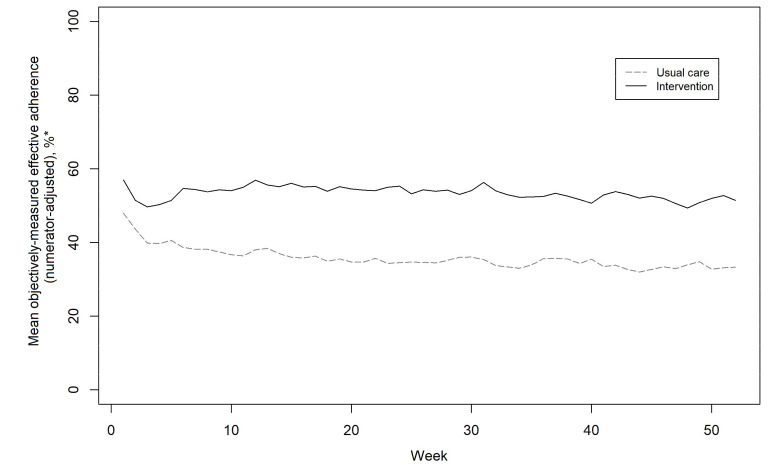
“8 9 In the intervention group, the initial rate of decline was similar to usual care until the behavioural change intervention started from week 3 onwards and adherence subsequently improved.”
Self-citationVanDevanter, D. R., Mayer-Hamblett, N., Simon, N., McIntosh, J., & Konstan, M. W. (2020) · Journal of Cystic Fibrosis · doi:10.1016/j.jcf.2020.07.008 · Cited by 19
Hoo, Z. H., Wildman, M. J., Curley, R., Walters, S. J., & Campbell, M. J. (2017) · Respirology · doi:10.1111/resp.13174 · Cited by 10
Self-citationAdherence pattern to study drugs in clinical trials by patients with cystic fibrosis
Pugatsch, T., Shoseyov, D., Cohen‐Cymberknoh, M., Hayut, B., Armoni, S., Griese, M., & Kerem, E. (2015) · Pediatric Pulmonology · doi:10.1002/ppul.23344 · Cited by 9
Hoo, Z. H., Bramley, N. R., Curley, R., Edenborough, F. P., Walters, S. J., Campbell, M. J., & Wildman, M. J. (2019) · Respiratory Medicine · doi:10.1016/j.rmed.2019.06.017 · Cited by 6 · cited 1×
“26 Increasing a person’s adherence to treatment may improve their acceptance of intravenous antibiotics, 27 and more intense monitoring can detect more exacerbations.”
Self-citationRobinson, L., Maguire, C., Hoo, Z. H., & Wildman, M. J. (2020) · F1000Research · doi:10.12688/f1000research.21033.2 · Cited by 6
Self-citation
Research works printed but not linked: 1
- 33. Wildman MJ, et al. Thorax 2021;0:1-10. doi:10.1136/thoraxjnl-2021-217594 on November 15, 2021 by guest. Protected by copyright. http://thorax.bmj.com/ Thorax: first published as 10.1136/thoraxjnl-2021-217594 on 23 September 2021. Downloaded from
Cited by
Standards for the care of people with cystic fibrosis; establishing and maintaining health
Southern, K. W., Addy, C., Bell, S. C., Bevan, A., Borawska-Kowalczyk, U., Brown, C., Burgel, P., Button, B., Castellani, C., Chansard, A., et al. (2023) · Journal of Cystic Fibrosis · doi:10.1016/j.jcf.2023.12.002 · Cited by 125
“Remote monitoring can supplement face to face care at CF centres to assist early detection of clinical decline [151] and to support adherence [152].”
InfluentialDeveloping learning health systems in the UK: Priorities for action
Hardie, T., Horton, T., Thornton-Lee, N., Home, J., & Pereira, P. (2022) · doi:10.37829/hf-2022-i06 · Cited by 49
An integrated early care pathway for autism
Green, J., Leadbitter, K., Ainsworth, J. D., & Bucci, S. (2022) · The Lancet Child & Adolescent Health · doi:10.1016/s2352-4642(22)00037-2 · Cited by 50
Self-citationRobinson, L., Arden, M. A., Dawson, S., Walters, S. J., Wildman, M. J., & Stevenson, M. (2022) · Health Psychology Review · doi:10.1080/17437199.2022.2034516 · Cited by 34
“Findings from all six of these interventions showed positive e ff ects on adherence (100%, 95%CI = [61 – 100%], p = 0.03), but e ff ect sizes ranged from small (RR = 1.03, Tang et al., 2014) to very large (adjusted d = 1.71, Wildman et al., 2021; see Table 2).”
BackgroundMethodResultInfluentialSelf-citationMedication adherence to CFTR modulators in patients with cystic fibrosis: a systematic review
Hansen, C. M. E., Breukelman, A. J., van den Bemt, P. M. L. A., Zwitserloot, A. M., van Dijk, L., & van Boven, J. F. M. (2024) · European Respiratory Review · doi:10.1183/16000617.0060-2024 · Cited by 31
“Furthermore, when adherence can be objectively measured, the next step is to develop interventions to improve adherence, possibly also supported by digital adherence technologies [43].”
Metadata
- Authors
- Wildman, M. J., O’Cathain, A., Maguire, C., Arden, M. A., Hutchings, M., Bradley, J., Walters, S. J., Whelan, P., Ainsworth, J., Buchan, I., Mandefield, L., Sutton, L., Tappenden, P., Elliott, R. A., Hoo, Z. H., Drabble, S. J., & Beever, D.
- Affiliations
- Sheffield Teaching Hospitals NHS Foundation Trust (GB)
- University of Sheffield (GB)
- Sheffield Hallam University (GB)
- Queen's University Belfast (GB)
- University of Manchester (GB)
- University of Liverpool (GB)
- Corresponding author
- Wildman, Martin J
- ORCID
- Venue
- Thorax
- Publisher
- BMJ
- Published
- 2021-09-23
- Volume
- 77
- Issue
- 5
- Pages
- 461-469
- ISSN
- 0040-6376 (ISSN-L)
- 1468-3296
- PMC
- PMC9016257
- OpenAlex
- W3198550711
- Cited by
- 54
- References
- 46
- Citations by year
- 2026: 5 · 2025: 7 · 2024: 10 · 2023: 13 · 2022: 15 · 2021: 4
- FWCI
- 6.82
- Type
- journal article
- Language
- en
- Open access
- hybrid
- doi.org
- Locations
- Thorax (publishedVersion, cc-by)
- PubMed Central (publishedVersion, cc-by)
- PubMed (publishedVersion)
- White Rose Research Online (University of Leeds, The University of Sheffield, University of York) (acceptedVersion)
- Research Explorer (The University of Manchester) (acceptedVersion, cc-by)
- SHURA (Sheffield Hallam University Research Archive) (Sheffield Hallam University) (acceptedVersion)
- Repository@Nottingham (University of Nottingham) (submittedVersion, cc-by)
- PEARL (University of Plymouth) (submittedVersion)
- Research Portal (Queen's University Belfast) (submittedVersion, cc-by)
- Science and Technology Facilities Council (submittedVersion, cc-by)
- Funders
- Programme Grants for Applied Research (RP-PG-1212-20015)
- NHS England Commissioning for Quality and Innovation (IM2 Cystic Fibrosis Patient Adherence)
- Topics
- Health Sciences › Medicine › Pulmonary and Respiratory Medicine › Cystic Fibrosis Research Advances
- Health Sciences › Medicine › Family Practice › Medication Adherence and Compliance
- Health Sciences › Medicine › Pulmonary and Respiratory Medicine › Chronic Obstructive Pulmonary Disease (COPD) Research
- Keywords
- cystic fibrosis, pulmonary exacerbations, medication adherence, self-management interventions, digital health platforms, behaviour change interventions, mucoactive agents, antibiotics, body mass index, lung function, treatment burden
- MeSH terms
- Self-Management, Treatment Adherence and Compliance, Adult, Cystic Fibrosis, Female, Humans, Lung, Male, Quality of Life, Respiratory Function Tests
About these checks
Registry, retraction, Cites and statistics results are computed, not judged, with one exception: a printed reference that no index lists is read once by a model before it counts as a citation error. Claims are extracted by a model and kept only when their quote appears verbatim in the text; each cited source is then checked, with a model’s help, for whether it says what the claim relies on. Those verdicts can be wrong — read the claim’s quote and the cited source before relying on one.
Statistics and arithmetic are recomputed, not judged.
Confidence bands are shown only for fields calibrated on our annotated test set. None is calibrated yet, so no band is shown.
What counts as a claim ›How we measure confidence ›How we check this ›
Are you an author, or do you see a problem with this page? Request a review
Data sources
Bibliographic data: Semantic Scholar, OpenAlex, Crossref.
Contains information from the Semantic Scholar Academic Graph Datasets, made available under the ODC Attribution License (ODC-BY 1.0).
Semantic Scholar’s data is described in: Kinney, R., et al. (2023). The Semantic Scholar Open Data Platform. arXiv:2301.10140.
