

The DOI matches its Crossref record; 52 of the 52 references it cites were found in a registry or an index.
Therapeutic effect of increased openness: Investigating mechanism of action in MDMA-assisted psychotherapy
Open accessAbstract
A growing body of research suggests that traumatic events lead to persisting personality change characterized by increased neuroticism. Relevantly, enduring improvements in Post-Traumatic Stress Disorder (PTSD) symptoms have been found in response to 3,4-methylenedioxymethamphetamine (MDMA)-assisted psychotherapy. There is evidence that lasting changes in the personality feature of "openness" occur in response to hallucinogens, and that this may potentially act as a therapeutic mechanism of change. The present study investigated whether heightened Openness and decreased Neuroticism served as a mechanism of change within a randomized trial of MDMA-assisted psychotherapy for chronic, treatment-resistant PTSD. The Clinician-Administered PTSD Scale (CAPS) Global Scores and NEO PI-R Personality Inventory (NEO) Openness and Neuroticism Scales served as outcome measures. Results indicated that changes in Openness but not Neuroticism played a moderating role in the relationship between reduced PTSD symptoms and MDMA treatment. Following MDMA-assisted psychotherapy, increased Openness and decreased Neuroticism when comparing baseline personality traits with long-term follow-up traits also were found. These preliminary findings suggest that the effect of MDMA-assisted psychotherapy extends beyond specific PTSD symptomatology and fundamentally alters personality structure, resulting in long-term persisting personality change. Results are discussed in terms of possible mechanisms of psychotherapeutic change.
Overview
The claims and statistics of this paper haven’t been checked yet.
Run the check — free, no account needed. It reads the open-access text and checks the sources it cites.
Integrity signals
Registry
Cites
Statistics
Figures
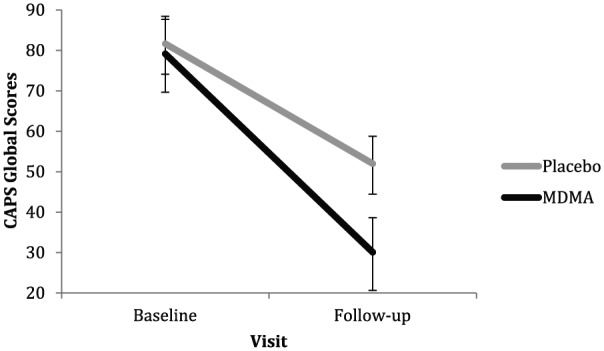
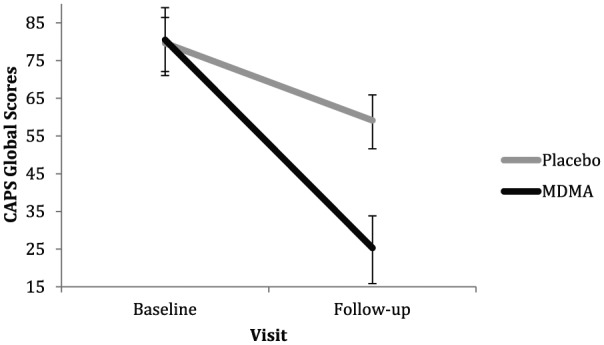
Verification
Claims the paper makes
The claims and statistics of this paper haven’t been checked yet.
Run the check — free, no account needed. It reads the open-access text and checks the sources it cites.
Claims other papers make about this one
Each is checked against this paper’s own text: does it say what the citing paper says it does?
The source backs part of the claim, not all of it — or backs it for a different population, condition or comparison.
In the citing paper
“Previous studies using MDMA with individual psychotherapy have yielded significant improvements in PTSD symptoms, and other outcomes such as increased openness to experience, posttraumatic growth, and improvement in comorbid conditions (Gorman et al., 2020; Mithoefer et al., 2019, 2018; Wagner et al., 2017).”
From MDMA-facilitated cognitive-behavioural conjoint therapy for posttraumatic stress disorder: an uncontrolled trial (2020) · cites this paper as Wagner et al., 2017
Experimental — accuracy not yet measuredThe source backs part of the claim, not all of it — or backs it for a different population, condition or comparison.
In the citing paper
“MDMA has been shown to improve psychological flexibility, reduce fear of negative evaluation, and enhance self-reflection (89, 134–136).”
From Psychoanalytically informed MDMA-assisted therapy for pathological narcissism: a novel theoretical approach (2025) · cites this paper as [134]
Experimental — accuracy not yet measured
Self-check
Percentages, sums and reported differences re-computed from the paper’s own numbers.
The self-check needs the paper’s full text.
Citations
Cites
Diagnostic and Statistical Manual of Mental Disorders.
Widiger, T. A. (2000) · Oxford University Press eBooks · doi:10.1037/10518-009 · Cited by 19,766
(1992) · Cited by 5,228
Complex PTSD: A syndrome in survivors of prolonged and repeated trauma
Herman, J. L. (1992) · Journal of Traumatic Stress · doi:10.1002/jts.2490050305 · Cited by 2,609 · cited 3×
“psychological fragmentation, loss of a sense of safety, trust, and self-worth, loss of a coherent sense of self) (Herman, 1992).”
BackgroundClinician-administered PTSD scale: A review of the first ten years of research
Weathers, F. W., Keane, T. M., & Davidson, J. R. T. (2001) · Depression and Anxiety · doi:10.1002/da.1029 · Cited by 1,903
Griffiths, R. R., Richards, W. A., McCann, U., & Jesse, R. (2006) · Psychopharmacology · doi:10.1007/s00213-006-0457-5 · Cited by 1,684 · cited 1×
“In modern research, Griffiths and colleagues studied the effects of oral psilocybin on psilocybin-naive normal volunteers (Griffiths et al., 2006, 2008).”
The Revised NEO Personality Inventory (NEO-PI-R)
Costa, P. T., & McCrae, R. R. (2008) · SAGE Publications Ltd eBooks · doi:10.4135/9781849200479.n9 · Cited by 1,569
A clinician rating scale for assessing current and lifetime PTSD. The CAPS-1
Blake, D. D., Weathers, F. W., Nagy, L., Kaloupek, D. G., Klauminzer, G. W., Charney, D. S., & Keane, T. M. (1990) · Behavior Therapy · Cited by 1,123
Griffiths, R., Richards, W., Johnson, M., McCann, U., & Jesse, R. (2008) · Journal of Psychopharmacology · doi:10.1177/0269881108094300 · Cited by 905
MacLean, K. A., Johnson, M. W., & Griffiths, R. R. (2011) · Journal of Psychopharmacology · doi:10.1177/0269881111420188 · Cited by 895
Mithoefer, M. C., Wagner, M. T., Mithoefer, A. T., Jerome, L., & Doblin, R. (2011) · Journal of Psychopharmacology · doi:10.1177/0269881110378371 · Cited by 674
Self-citationFriedman, M. J., Resick, P. A., Bryant, R. A., & Brewin, C. R. (2011) · Depression and Anxiety · doi:10.1002/da.20767 · Cited by 629
Riemann, R., Angleitner, A., & Strelau, J. (1997) · Journal of Personality · doi:10.1111/j.1467-6494.1997.tb00324.x · Cited by 457
Vollenweider, F. X., Gamma, A., Liechti, M., & Huber, T. (1998) · Neuropsychopharmacology · doi:10.1016/s0893-133x(98)00013-x · Cited by 448
DNA methylation of BDNF as a biomarker of early-life adversity
Kundakovic, M., Gudsnuk, K., Herbstman, J. B., Tang, D., Perera, F. P., & Champagne, F. A. (2015) · Proceedings of the National Academy of Sciences · doi:10.1073/pnas.1408355111 · Cited by 426
Oehen, P., Traber, R., Widmer, V., & Schnyder, U. (2012) · Journal of Psychopharmacology · doi:10.1177/0269881112464827 · Cited by 424
Mithoefer, M. C., Wagner, M. T., Mithoefer, A. T., Jerome, L., Martin, S. F., Yazar‐Klosinski, B., Michel, Y., Brewerton, T. D., & Doblin, R. (2012) · Journal of Psychopharmacology · doi:10.1177/0269881112456611 · Cited by 399
Self-citationMeta-analysis of genome-wide association studies for personality
de Moor, M. H. M., Costa, P. T., Terracciano, A., Krueger, R. F., de Geus, E. J. C., Toshiko, T., Penninx, B. W. J. H., Esko, T., Madden, P. A. F., Derringer, J. L., et al. (2010) · Molecular Psychiatry · doi:10.1038/mp.2010.128 · Cited by 389
Personality Change During Depression Treatment: A Placebo-Controlled Trial
Tang, T. Z., DeRubeis, R. J., Hollon, S. D., Amsterdam, J., Shelton, R., & Schalet, B. (2009) · Archives of General Psychiatry · doi:10.1001/archgenpsychiatry.2009.166 · Cited by 384
MDMA enhances emotional empathy and prosocial behavior
Hysek, C. M., Schmid, Y., Simmler, L. D., Domes, G., Heinrichs, M., Eisenegger, C., Preller, K. H., Quednow, B. B., & Liechti, M. E. (2014) · Social Cognitive and Affective Neuroscience · doi:10.1093/scan/nst161 · Cited by 356
Saving PTSD from itself in DSM-V
Spitzer, R. L., First, M. B., & Wakefield, J. C. (2007) · Journal of Anxiety Disorders · doi:10.1016/j.janxdis.2006.09.006 · Cited by 353
Mueser, K. T., Rosenberg, S. D., Fox, L., Salyers, M. P., Ford, J. D., & Carty, P. (2001) · Psychological Assessment · doi:10.1037//1040-3590.13.1.110 · Cited by 282
Bergeman, C. S., Chlpuer, H. M., Plomin, R. J., Pedersen, N. L., McClearn, G. E., Nesselroade, J. R., Costa, P. T., & McCrae, R. R. (1993) · Journal of Personality · doi:10.1111/j.1467-6494.1993.tb01030.x · Cited by 257
Implications of LSD and experimental mysticism
Pahnke, W. N., & Richards, W. A. (1966) · Journal of Religion and Health · doi:10.1007/bf01532646 · Cited by 254
Bedi, G., Hyman, D., & de Wit, H. (2010) · Biological Psychiatry · doi:10.1016/j.biopsych.2010.08.003 · Cited by 247
Dumont, G. J. H., Sweep, F. C. G. J., van der Steen, R., Hermsen, R., Donders, A. R. T., Touw, D. J., van Gerven, J. M. A., Buitelaar, J. K., & Verkes, R. J. (2009) · Social Neuroscience · doi:10.1080/17470910802649470 · Cited by 238
Camí, J., Farré, M., Mas, M., Roset, P. N., Poudevida, S., Mas, A., San, L., & de la Torre, R. (2000) · Journal of Clinical Psychopharmacology · doi:10.1097/00004714-200008000-00010 · Cited by 234
Subjective and hormonal effects of 3,4-methylenedioxymethamphetamine (MDMA) in humans
Harris, D. S., Baggott, M., Mendelson, J. H., Mendelson, J. E., & Jones, R. T. (2002) · Psychopharmacology · doi:10.1007/s00213-002-1131-1 · Cited by 229
Personality self-reports are concurrently reliable and valid during acute depressive episodes
Costa, P. T., Bagby, R. M., Herbst, J. H., & McCrae, R. R. (2005) · Journal of Affective Disorders · doi:10.1016/j.jad.2005.06.010 · Cited by 218
Mueser, K. T., Rosenberg, S. D., Fox, L., et al. (2001) · Psychological Assessment · doi:10.1037/1040-3590.13.1.110 · Cited by 216
Effects of MDMA on sociability and neural response to social threat and social reward
Bedi, G., Phan, K. L., Angstadt, M., & de Wit, H. (2009) · Psychopharmacology · doi:10.1007/s00213-009-1635-z · Cited by 206
McCoubrie, R., & Davies, A. N. (2005) · Supportive Care in Cancer · doi:10.1007/s00520-005-0892-6 · Cited by 191
Kelly, J. F., Stout, R., Magill, M., Tonigan, J., & Pagano, M. E. (2010) · Alcoholism: Clinical and Experimental Research · doi:10.1111/j.1530-0277.2010.01362.x · Cited by 181
Childhood trauma and obsessive-compulsive symptoms
Mathews, C. A., Kaur, N., & Stein, M. B. (2007) · Depression and Anxiety · doi:10.1002/da.20316 · Cited by 168
Gamma, A. (2000) · Neuropsychopharmacology · doi:10.1016/s0893-133x(00)00130-5 · Cited by 162
Tancer, M., & Johanson, C.-E. (2003) · Drug and Alcohol Dependence · doi:10.1016/s0376-8716(03)00172-8 · Cited by 153
MDMA enhances “mind reading” of positive emotions and impairs “mind reading” of negative emotions
Hysek, C. M., Domes, G., & Liechti, M. E. (2012) · Psychopharmacology · doi:10.1007/s00213-012-2645-9 · Cited by 144
Cracking the Plaster Cast: Big Five Personality Change during Intensive Outpatient Counseling
Piedmont, R. L. (2001) · Journal of Research in Personality · doi:10.1006/jrpe.2001.2326 · Cited by 129
Multi-factor modeling in individual differences research: Some recommendations and suggestions
Gignac, G. E. (2006) · Personality and Individual Differences · doi:10.1016/j.paid.2006.06.019 · Cited by 125
Effects of Acute MDMA Intoxication on Mood and Impulsivity: Role of the 5-HT2 and 5-HT1 Receptors
van Wel, J. H. P., Kuypers, K. P. C., Theunissen, E. L., Bosker, W. M., Bakker, K., & Ramaekers, J. G. (2012) · PLoS ONE · doi:10.1371/journal.pone.0040187 · Cited by 122
McGlothlin, W. H. (1971) · Archives of General Psychiatry · doi:10.1001/archpsyc.1971.01750070037005 · Cited by 117
Carhart-Harris, R. L., Wall, M. B., Erritzoe, D., Kaelen, M., Ferguson, B., De Meer, I., Tanner, M., Bloomfield, M., Williams, T. M., Bolstridge, M., et al. (2014) · The International Journal of Neuropsychopharmacology · doi:10.1017/s1461145713001405 · Cited by 108
Acute intranasal oxytocin improves positive self-perceptions of personality
Cardoso, C., Ellenbogen, M. A., & Linnen, A.-M. (2012) · Psychopharmacology · doi:10.1007/s00213-011-2527-6 · Cited by 98
Hovens, J. E. J. M., van der Ploeg, H. M., Klaarenbeek, M. T. A., Bramsen, I., Schreuder, J. N., & Rivero, V. V. (1994) · Journal of Clinical Psychology · doi:10.1002/1097-4679(199405)50:3 · Cited by 96
MDMA decreases the effects of simulated social rejection
Frye, C. G., Wardle, M. C., Norman, G. J., & de Wit, H. (2014) · Pharmacology Biochemistry and Behavior · doi:10.1016/j.pbb.2013.11.030 · Cited by 85
Chung, M. C., Berger, Z. E., Jones, R. C. M., & Rudd, H. (2006) · International Journal of Geriatric Psychiatry · doi:10.1002/gps.1624 · Cited by 64
Beltran, R. O., & Silove, D. (1999) · Comprehensive Psychiatry · doi:10.1016/s0010-440x(99)90147-5 · Cited by 50
Ponté, L., Jerome, L., Hamilton, S., Mithoefer, M. C., Yazar‐Klosinski, B., Vermetten, E. H. G. J. M., & Feduccia, A. A. (2021) · Journal of Traumatic Stress · doi:10.1002/jts.22696 · Cited by 45
Self-citationPsychedelic medicine: new evidence for hallucinogenic substances as treatments
(2008) · Choice Reviews Online · doi:10.5860/choice.45-2642 · Cited by 44
Beltran, R. O., Llewellyn, G. M., & Silove, D. (2008) · Comprehensive Psychiatry · doi:10.1016/j.comppsych.2008.04.006 · Cited by 34
Characteristics of families of children who refuse post-divorce visits
Racusin, R. J., Copans, S. A., & Mills, P. D. (1994) · Journal of Clinical Psychology · doi:10.1002/1097-4679(199409)50:5 · Cited by 17
The relationship between spontaneity and inhibition
Kipper, D. A., Davelaar, P. M., & Herst, S. (2009) · The Arts in Psychotherapy · doi:10.1016/j.aip.2009.09.005 · Cited by 17
Mearns, J., & Lees‐Haley, P. R. (1993) · Journal of Clinical Psychology · doi:10.1002/1097-4679(199309)49:5 · Cited by 15
Research works printed but not linked: 6
- Blake DD, 1990, Behavior Therapy, 13, 187
- Costa PT, 1992, NEO PI-R Professional Manual
- First M, 1997, Structured Clinical Interview for DSM-IV Personality Disorders (SCID-II): Interview and Questionnaire
- First MB, 1997, Structured Clinical Interview for DSM-IV Axis I Disorders - Patient Edition (SCID-I/P, Version 2.0, 4/97 Revision)
- 10.1038/sj.npp.1395197 · DOI · Paper page
- World Health Organization, 1992, The ICD-10 Classification of Mental and Behavioural Disorders: Clinical Descriptions and Diagnostic Guidelines
Cited by
Sorted by citations
Griffiths, R. R., Johnson, M. W., Richards, W. A., Richards, B. D., Jesse, R., MacLean, K. A., Barrett, F. S., Cosimano, M. P., & Klinedinst, M. A. (2018) · Journal of Psychopharmacology · doi:10.1177/0269881117731279 · Cited by 520
Mithoefer, M. C., Mithoefer, A. T., Feduccia, A. A., Jerome, L., Wagner, M., Wymer, J., Holland, J., Hamilton, S., Yazar-Klosinski, B., Emerson, A., et al. (2018) · The Lancet Psychiatry · doi:10.1016/s2215-0366(18)30135-4 · Cited by 439
Self-citationReviewing the Potential of Psychedelics for the Treatment of PTSD
Krediet, E., Bostoen, T., Breeksema, J., van Schagen, A., Passie, T., & Vermetten, E. (2020) · International Journal of Neuropsychopharmacology · doi:10.1093/ijnp/pyaa018 · Cited by 260
Effects of psilocybin therapy on personality structure
Erritzoe, D., Roseman, L., Nour, M. M., MacLean, K., Kaelen, M., Nutt, D. J., & Carhart‐Harris, R. L. (2018) · Acta Psychiatrica Scandinavica · doi:10.1111/acps.12904 · Cited by 267
Breeksema, J. J., Niemeijer, A. R., Krediet, E., Vermetten, E., & Schoevers, R. A. (2020) · CNS Drugs · doi:10.1007/s40263-020-00748-y · Cited by 224
Metadata
- Authors
- Wagner, M. T., Mithoefer, M. C., Mithoefer, A. T., MacAulay, R. K., Jerome, L., Yazar-Klosinski, B., & Doblin, R.
- Affiliations
- Medical University of South Carolina (US)
- Private Practice, Mount Pleasant, USA
- University of Maine (US)
- MAPS Public Benefit Corp (MPBC), Santa Cruz, USA
- Multidisciplinary Association for Psychedelic Studies, Santa Cruz, USA
- Multidisciplinary Association for Psychedelic Studies (US)
- Corresponding author
- Wagner, Mark T
- Venue
- Journal of Psychopharmacology
- Publisher
- SAGE Publications
- Published
- 2017-06-21
- Volume
- 31
- Issue
- 8
- Pages
- 967-974
- ISSN
- 0269-8811 (ISSN-L)
- 1461-7285
- PMC
- PMC5544120
- OpenAlex
- W2716623847
- Cited by
- 160
- References
- 51
- Citations by year
- 2026: 9 · 2025: 14 · 2024: 21 · 2023: 14 · 2022: 18 · 2021: 11 · 2020: 49 · 2019: 10 · 2018: 10 · 2017: 4
- FWCI
- 24.76
- Type
- journal article
- Language
- en
- Open access
- hybrid
- doi.org
- Locations
- Journal of Psychopharmacology (publishedVersion, cc-by-nc)
- PubMed Central (publishedVersion, cc-by-nc)
- PubMed (publishedVersion)
- Topics
- Social Sciences › Psychology › Clinical Psychology › Psychedelics and Drug Studies
- Social Sciences › Psychology › Clinical Psychology › Posttraumatic Stress Disorder Research
- Social Sciences › Psychology › Clinical Psychology › Psychotherapy Techniques and Applications
- Keywords
- MDMA-assisted psychotherapy, MDMA, post-traumatic stress disorder, treatment-resistant PTSD, personality change, openness to experience, neuroticism, mechanisms of change, hallucinogens, personality traits
- MeSH terms
- Neuroticism, Adult, Combined Modality Therapy, Female, Hallucinogens, Humans, Male, Personality Inventory, Psychotherapy, Stress Disorders, Post-Traumatic, Treatment Outcome, N-Methyl-3,4-methylenedioxyamphetamine, Young Adult
About these checks
Registry, retraction, Cites and statistics results are computed, not judged, with one exception: a printed reference that no index lists is read once by a model before it counts as a citation error. Claims are extracted by a model and kept only when their quote appears verbatim in the text; each cited source is then checked, with a model’s help, for whether it says what the claim relies on. Those verdicts can be wrong — read the claim’s quote and the cited source before relying on one.
Statistics and arithmetic are recomputed, not judged.
Confidence bands are shown only for fields calibrated on our annotated test set. None is calibrated yet, so no band is shown.
What counts as a claim ›How we measure confidence ›How we check this ›
Are you an author, or do you see a problem with this page? Request a review
