

The DOI matches its Crossref record; 38 of the 41 references it cites were found in a registry or an index, and 3 are not checked yet.
Fighting COVID-19 Misinformation on Social Media: Experimental Evidence for a Scalable Accuracy-Nudge Intervention
Open accessAbstract
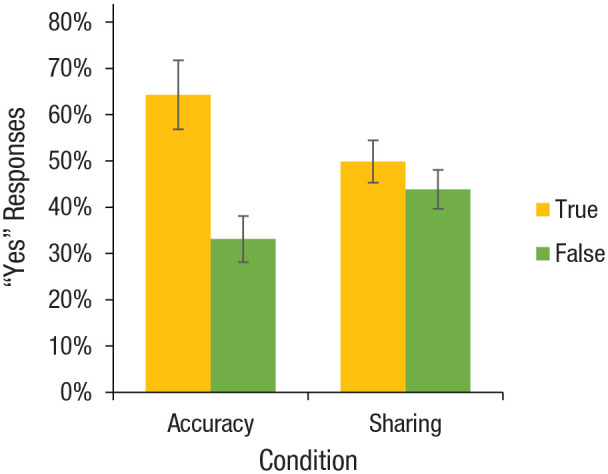
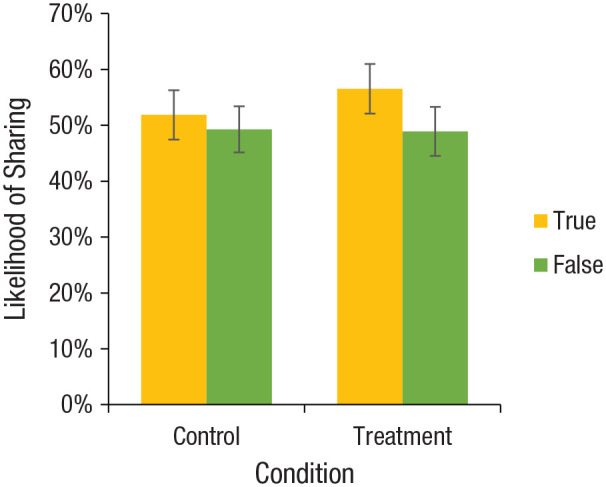
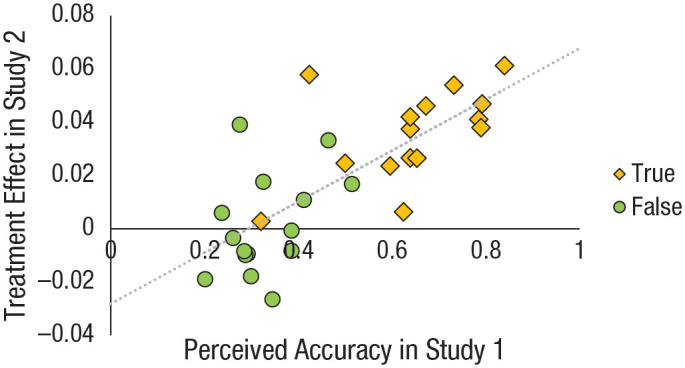
Across two studies with more than 1,700 U.S. adults recruited online, we present evidence that people share false claims about COVID-19 partly because they simply fail to think sufficiently about whether or not the content is accurate when deciding what to share. In Study 1, participants were far worse at discerning between true and false content when deciding what they would share on social media relative to when they were asked directly about accuracy. Furthermore, greater cognitive reflection and science knowledge were associated with stronger discernment. In Study 2, we found that a simple accuracy reminder at the beginning of the study (i.e., judging the accuracy of a non-COVID-19-related headline) nearly tripled the level of truth discernment in participants’ subsequent sharing intentions. Our results, which mirror those found previously for political fake news, suggest that nudging people to think about accuracy is a simple way to improve choices about what to share on social media.
Overview
The claims and statistics of this paper haven’t been checked yet.
Run the check — free, no account needed. It reads the open-access text and checks the sources it cites.
Integrity signals
Registry
Cites
Statistics
Figures
Verification
Claims the paper makes
The claims and statistics of this paper haven’t been checked yet.
Run the check — free, no account needed. It reads the open-access text and checks the sources it cites.
Claims other papers make about this one
Each is checked against this paper’s own text: does it say what the citing paper says it does?
The source backs part of the claim, not all of it — or backs it for a different population, condition or comparison.
In the citing paper
“Under these current plausible COVID-19 vaccine acceptance rates, possible levels of existing protective immunity-though it is unclear whether post-infection immunity confers long-term immunity 29 and the rapidly evolving nature of misinformation surrounding the pandemic 23,30 , it is unclear whether vaccination will reach the levels required for herd immunity.”
From Measuring the impact of COVID-19 vaccine misinformation on vaccination intent in the UK and USA (2021) · cites this paper as [23]
Experimental — accuracy not yet measuredThe cited source says what the claim attributes to it.
In the citing paper
“Experimental work indicates that directing users' attention to accuracy can improve sharing quality and reduce misinformation circulation (Pennycook et al., 2020(Pennycook et al., , 2021;;Roozenbeek et al., 2021).”
From Sensational Headlines, Engagement, and Credibility in Nepal’s Online News (2025) · cites this paper as Pennycook et al., 2020
The cited source says what the claim attributes to it.
In the citing paper
“Pennycook et al. (2020) and Roozenbeek et al. (2021) show that accuracy prompts can modestly improve users' sharing decisions, while Pennycook et al. (2021) argue that shifting attention toward accuracy can reduce misinformation sharing online.”
From Sensational Headlines, Engagement, and Credibility in Nepal’s Online News (2025) · cites this paper as Pennycook et al. (2020)
The check wasn’t confident either way, so it gives no verdict — never disputed.
In the citing paper
“Consistent with this view, a growing number of empirical studies have uncovered evidence that people update their political attitudes and beliefs in line with evidence (e.g., refs. 4,13,27–29) and arguments23,30,31 presented to them.”
From Factual knowledge can reduce attitude polarization (2025) · cites this paper as [28]
Experimental — accuracy not yet measured
Self-check
Percentages, sums and reported differences re-computed from the paper’s own numbers.
The self-check needs the paper’s full text.
Citations
Cites
The case for motivated reasoning.
Kunda, Z. (1990) · Psychological Bulletin · doi:10.1037/0033-2909.108.3.480 · Cited by 9,022 · cited 1×
“A great deal of evidence suggests that people are motivated to seek out, believe, and share politically congenial information (Kahan, Peters, Dawson, & Slovic, 2017; Kunda, 1990; Lee, Shin, & Hong, 2018; Mercier & Sperber, 2011; Shin & Thorson, 2017).”
BackgroundCognitive Reflection and Decision Making
Frederick, S. (2005) · Journal of Economic Perspectives · doi:10.1257/089533005775196732 · Cited by 5,256
Lazer, D. M. J., Baum, M. A., Benkler, Y., Berinsky, A. J., Greenhill, K. M., Menczer, F., Metzger, M. J., Nyhan, B., Pennycook, G., Rothschild, D., et al. (2018) · Science · doi:10.1126/science.aao2998 · Cited by 4,160
Self-citationWhy do humans reason? Arguments for an argumentative theory
Mercier, H., & Sperber, D. (2011) · Behavioral and Brain Sciences · doi:10.1017/s0140525x10000968 · Cited by 2,254
Pennycook, G., & Rand, D. G. (2019) · Cognition · doi:10.1016/j.cognition.2018.06.011 · Cited by 2,022
Self-citationShifting attention to accuracy can reduce misinformation online
Pennycook, G., Epstein, Z., Mosleh, M., Arechar, A. A., Eckles, D., & Rand, D. G. (2021) · Nature · doi:10.1038/s41586-021-03344-2 · Cited by 1,155
Self-citationThe Cognitive Reflection Test as a predictor of performance on heuristics-and-biases tasks
Toplak, M. E., West, R. F., & Stanovich, K. E. (2011) · Memory & Cognition · doi:10.3758/s13421-011-0104-1 · Cited by 1,047
Coppock, A., & McClellan, O. A. (2019) · Research & Politics · doi:10.1177/2053168018822174 · Cited by 987
Berinsky, A. J., Margolis, M. F., & Sances, M. W. (2014) · American Journal of Political Science · doi:10.1111/ajps.12081 · Cited by 951
Fighting misinformation on social media using crowdsourced judgments of news source quality
Pennycook, G., & Rand, D. G. (2019) · Proceedings of the National Academy of Sciences · doi:10.1073/pnas.1806781116 · Cited by 947 · cited 4×
“…2017; Van Bavel & Pereira, 2018), our data are more consistent with recent studies on political misinformation that provide both correlational (Pennycook & Rand, 2019b; including data from Twitter sharing, Mosleh, Pennycook, Arechar, & Rand, 2020) and experimental (Bago, Rand, & Pennycook,…”
BackgroundResultInfluentialSelf-citation
Research works printed but not linked: 2
- Adhanom Ghebreyesus T. (2020, February 15). Munich Security Conference. World Health Organization. Retrieved from https://www.who.int/dg/speeches/detail/munich-security-conference
- Ross R. M., 2019, PsyArXiv
Cited by
Sorted by citations
Items 901–1,000 of 1,004
Intervention Strategies for Misinformation Sharing on Social Media: A Bibliometric Analysis
Zainudin, J., Ali, N. M., Smeaton, A. F., & Ijab, M. T. (2024) · IEEE Access · doi:10.1109/access.2024.3469248 · Cited by 5
Effects of a News Literacy Video on News Literacy Perceptions and Misinformation Evaluation
Tang, R., Tully, M., Bode, L., & Vraga, E. K. (2024) · Media and Communication · doi:10.17645/mac.8983 · Cited by 5
Yan, D., Cao, J., Xie, W., Zhang, Y., & Zhong, H. (2022) · Expert Systems with Applications · doi:10.1016/j.eswa.2022.117381 · Cited by 5
Self-citationCOVID-19, Genetics, and Risk: Content Analysis of Facebook Posts Early in the Coronavirus Pandemic
Canary, H. E., Wellman, N., & Martinez, L. S. (2022) · Health Communication · doi:10.1080/10410236.2022.2027639 · Cited by 5
Under pressure: Locomotion and assessment in the COVID-19 pandemic
Jansen, E. J., Danckert, J. A., Seli, P., & Scholer, A. A. (2022) · Self and Identity · doi:10.1080/15298868.2022.2036635 · Cited by 6
Ünal, R., & Çiçeklioğlu, A. Ş. (2022) · Erciyes İletişim Dergisi · doi:10.17680/erciyesiletisim.1001922 · Cited by 5
Fahmi, A. B., & Utama, A. M. (2022) · Jurnal Ilmiah Psikologi Terapan · doi:10.22219/jipt.v10i2.20241 · Cited by 5
Structured reflection increases intentions to reduce other people’s health risks during COVID-19
Ramos, J., Grant, M. D., Dickert, S., Eom, K., Flores, A., Jiga‐Boy, G. M., Kogut, T., Mayorga, M. W., Pedersen, E. J., Pereira, B. D. C. S., et al. (2022) · PNAS Nexus · doi:10.1093/pnasnexus/pgac218 · Cited by 5
Gala, B., Islam, M. A., Gamage, R., & Agarwal, N. K. (2022) · Proceedings of the Association for Information Science and Technology · doi:10.1002/pra2.629 · Cited by 5
Belova, N., & Krause, M. (2022) · Chemistry Education Research and Practice · doi:10.1039/d2rp00191h · Cited by 7
Social stigma against individuals with COVID-19: scale development and validation
Wilandika, A., Gartika, N., & Salami, S. (2022) · Health Psychology and Behavioral Medicine · doi:10.1080/21642850.2022.2155166 · Cited by 6
Yamaguchi, S., & Tanihara, T. (2023) · Global Knowledge, Memory and Communication · doi:10.1108/gkmc-12-2022-0287 · Cited by 5
Hu, D., & Apuke, O. D. (2023) · International Journal of Human-Computer Interaction · doi:10.1080/10447318.2023.2209839 · Cited by 6
RetractedFast Naïve Bayes classifiers for COVID-19 news in social networks
Cahyono, H. D., Mahadewa, A., Wijayanto, A., Wardani, D. W., & Setiadi, H. (2024) · Indonesian Journal of Electrical Engineering and Computer Science · doi:10.11591/ijeecs.v34.i2.pp1033-1041 · Cited by 5
Pentney, K. (2024) · The European Convention on Human Rights Law Review · doi:10.1163/26663236-bja10093 · Cited by 5
Unbundling Digital Media Literacy Tips: Results from Two Experiments
Guess, A. M., McGregor, S. C., Pennycook, G., & Rand, D. G. (2026) · Political Behavior · doi:10.1007/s11109-026-10165-4 · Cited by 5
Self-citationOrosz, G., Faragó, L., Paskuj, B., Rakovics, Z., Sam-Mine, D., Audemard, G., Modeliar, M. S., & Krekó, P. (2024) · Scientific Reports · doi:10.1038/s41598-024-61232-x · Cited by 5
Interventions for combating COVID-19 misinformation: A systematic realist review
Dickinson, R., Makowski, D., van Marwijk, H., & Ford, E. M. (2025) · PLoS ONE · doi:10.1371/journal.pone.0321818 · Cited by 5
Marten, P. L., Aßmann, S., Baumgarten-Kelm, C., & Stadtler, M. (2025) · Learning and Individual Differences · doi:10.1016/j.lindif.2025.102685 · Cited by 5
Caroti, D., Adam-Troian, J., Theraud, M., & Bagneux, V. (2025) · Contemporary Educational Psychology · doi:10.1016/j.cedpsych.2025.102413 · Cited by 3
Schippers, M. C., & Jaarsveld, G. M. V. (2020) · Frontiers in Psychology · doi:10.2139/ssrn.3599939 · Cited by 5
Maaravi, Y., Hameiri, B., & Gur, T. (2020) · Frontiers in Psychology · doi:10.3389/fpsyg.2020.576450 · Cited by 5
Curșeu, P. L., Coman, A. D., Fodor, O. C., Ratiu, L. C. I., & Panchenko, A. (2021) · Healthcare · doi:10.3390/healthcare9020122 · Cited by 5
Media społecznościowe w czasie pandemii – przykład profili wrocławskich rad osiedla na Facebooku
Janc, K., & Jurkowski, W. (2020) · Rozwój Regionalny i Polityka Regionalna · doi:10.14746/rrpr.2020.51.03 · Cited by 5
Aruhomukama, D., & Bulafu, D. (2021) · F1000Research · doi:10.12688/f1000research.51240.1 · Cited by 5
Why Trusting Whom? Motivated Reasoning and Trust in the Process of Information Evaluation
Freiling, I., & Waldherr, A. (2021) · Springer eBooks · doi:10.1007/978-3-030-72945-5_4 · Cited by 6
Comparing Traditional and Neural Approaches for Detecting Health-Related Misinformation
Fernández-Pichel, M., Losada, D. E., Pichel, J. C., & Elsweiler, D. (2021) · Lecture notes in computer science · doi:10.1007/978-3-030-85251-1_7 · Cited by 4
Disparities in COVID-19 Information Sources and Knowledge in South Korea
Jang, S. H. (2022) · International Journal of Environmental Research and Public Health · doi:10.3390/ijerph19095198 · Cited by 5
Greer, J. M. H., Fitzgerald, K., & Vijaykumar, S. (2022) · BMC Research Notes · doi:10.1186/s13104-022-06134-9 · Cited by 5
Li, K., & Xiao, W. (2022) · Frontiers in Psychology · doi:10.3389/fpsyg.2022.919321 · Cited by 6
Nudge Policies in COVID-19 Context: A Necessary Action or Ethical Dilemma?
Correa, A., Ames, M., & Zappellini, M. (2022) · Revista de Administração Contemporânea · doi:10.1590/1982-7849rac2022210033.en · Cited by 6
Xie, L., Lee, E. W. J., Fong, V. W. I., Hui, K. H., Xin, M., & Mo, P. K. H. (2022) · International Journal of Environmental Research and Public Health · doi:10.3390/ijerph19148550 · Cited by 5
How Health-Related Misinformation Spreads Across the Internet: Evidence for the “Typhoon Eye” Effect
Zheng, L., Cai, J., Wang, F., Ruan, C., Xu, M., & Miao, M. (2022) · Cyberpsychology Behavior and Social Networking · doi:10.1089/cyber.2022.0047 · Cited by 5
Categories of Fake News from the Perspective of Social Harmfulness
Mamak, K. (2022) · Springer eBooks · doi:10.1007/978-3-030-99680-2_35 · Cited by 5
O’Hara, K. (2022) · Foundations and Trends® in Web Science · doi:10.1561/1800000031 · Cited by 8
Aftab, O., & Murphy, G. (2022) · HRB Open Research · doi:10.12688/hrbopenres.13640.1 · Cited by 5
Social media: Why sharing interferes with telling true from false
Reyna, V. F. (2023) · Science Advances · doi:10.1126/sciadv.adg8333 · Cited by 5
Yang, S. L., Liu, Z., Jiang, X., Sun, X., Lin, Y., Yuan, Y., Zhu, Y., Zhao, Q., Hu, Y., & Wang, T. (2023) · The Journal of Psychology · doi:10.1080/00223980.2023.2206605 · Cited by 5
Parents’ Trust in COVID-19 Messengers and Implications for Vaccination
Klein, L. M., Habib, D. R. S., Edwards, L. V., Hager, E. R., Berry, A. A., Connor, K. A., Calderon, G., Liu, Y., & Johnson, S. B. (2023) · American Journal of Health Promotion · doi:10.1177/08901171231204480 · Cited by 5
The coronavirus disease 2019 infodemic: a concept analysis
Choi, S. (2024) · Frontiers in Public Health · doi:10.3389/fpubh.2024.1362009 · Cited by 9
Family Matters? The Effects of Size and Proximity in the Digital Age
Barnett, M. L., Henriques, I., & Husted, B. W. (2020) · Academy of Management Perspectives · doi:10.5465/amp.2020.0138 · Cited by 5
Assessing Knowledge, Attitude and Practices (KAP) Towards COVID-19: A Cross-sectional Study in Kenya
Muriuki, W., Muriithi, B., & Kihika, G. W. (2021) · International and Public Affairs · doi:10.11648/j.ipa.20210501.15 · Cited by 5
Some Like It Hoax : Lessons In Regulating Fake News In Malaysia
Haron, H. H. (2021) · The European Proceedings of Social & Behavioural Sciences · doi:10.15405/epsbs.2021.06.02.24 · Cited by 5
THE PERCEPTION AND IMPACT OF COVID-19 NEWS ON THE SOCIETY
Hafidzi, A., Sahir, S. H., Eliya, I., Siregar, F. A., & Sudarmanto, B. A. (2021) · Profetik Jurnal Komunikasi · doi:10.14421/pjk.v14i1.2015 · Cited by 5
Predicting the U.S. Public’s Prosocial Responses during the COVID-19 Pandemic
Wong, J. C. S., & Yang, J. Z. (2021) · Journal of Health Communication · doi:10.1080/10810730.2021.1983671 · Cited by 5
Face masks on Instagram: an analysis of public health authorities’ guidance toward prevention
Pinto, P. A., Brasileiro, F. S., Antunes, M. J., & Almeida, A. M. P. (2022) · Procedia Computer Science · doi:10.1016/j.procs.2021.12.030 · Cited by 5
Linguistic fairness in the U.S.: The case of multilingual public health information about COVID-19Preprint
Blasi, D. E., Mishra, V., García, A. M., & Dexter, J. P. (2021) · medRxiv · doi:10.1101/2021.09.27.21264211 · Cited by 5
Medical Decision Style and COVID-19 BehaviorPreprint
Tinghög, G. (2022) · doi:10.17605/osf.io/mujdg · Cited by 5
Panizza, F., Ronzani, P., Mattavelli, S., Morisseau, T., Martini, C., & Motterlini, M. (2021) · Research Square · doi:10.21203/rs.3.rs-952649/v1 · Cited by 5
Truth and Bias: Robust findings?Preprint
von Hohenberg, B. C. (2020) · OSF Preprints (OSF Preprints) · doi:10.31219/osf.io/yj2rn · Cited by 5
Editorial: Dark and Bright Side of Social Media in Current Normal
Khan, A., Khan, N. A., Ali, A., & Islam, T. (2022) · Frontiers in Psychology · doi:10.3389/fpsyg.2022.926855 · Cited by 5
Mis- and Disinformation About Covid-19
Kessler, S. H., & Schmid, P. (2022) · European Journal of Health Communication · doi:10.47368/ejhc.2022.200 · Cited by 5
Orosz, G., Faragó, L., Paskuj, B., & Krekó, P. (2022) · Research Square · doi:10.21203/rs.3.rs-2159993/v1 · Cited by 5
A Bayesian decision-theoretic framework for studying motivated reasoningPreprint
Priniski, J. H., Solanki, P., & Horne, Z. (2022) · PsyArXiv (OSF Preprints) · doi:10.31234/osf.io/ngavz · Cited by 7
Berger, L. M., Kerkhof, A., Mindl, F., & Münster, J. (2023) · SSRN Electronic Journal · doi:10.2139/ssrn.4527552 · Cited by 5
Missed Risk and Crisis Communication Opportunities During the COVID‐19 Pandemic
Liu, B. F., & Baur, C. (2025) · doi:10.1002/9781394180844.ch13 · Cited by 5
Negri, O., Horesh, D., Gordon, I., & Hasson-Ohayon, I. (2022) · Journal of Nervous & Mental Disease · doi:10.1097/nmd.0000000000001518 · Cited by 3
Fake News and True News Assessment: The Persuasive Effect of Discursive Evidence in Judging Veracity
Baiyere, A., Bauer, J., Constantiou, I., & Hardt, D. (2025) · MIS Quarterly · doi:10.25300/misq/2024/17542 · Cited by 5
ChartChecker: A User-Centred Approach to Support the Understanding of Misleading Charts
Biselli, T., Hartwig, K., Kneissl, N., Pouliot, L., & Reuter, C. (2025) · Designing Interactive Systems Conference · doi:10.1145/3715336.3735784 · Cited by 4
Qalandar, S., Grinko, M., Randall, D. W., & Wulf, V. (2025) · Decennial Aarhus Conference · doi:10.1145/3744169.3744177 · Cited by 5
Carmona-Galindo, V. D., Ung, H., Zeng, M. D., Broussard, C., Taranenko, E., Daneshbod, Y., Chappell, D., & Lorenz, T. (2025) · Knowledge · doi:10.3390/knowledge5030018 · Cited by 6
Ma, H., Dennis, A. S., Dennis, A. R., & Huang, W. W. (2025) · Journal of Management Information Systems · doi:10.1080/07421222.2025.2561381 · Cited by 4
Wang, Y., Basellini, U., & Camarda, C. G. (2025) · Social Science & Medicine · doi:10.1016/j.socscimed.2025.118881 · Cited by 4
Older Adults’ Response Strategies to Misinformation on Social Media
Baines, A. F., Hargittai, E., & Palfrey, J. (2025) · Social Media + Society · doi:10.1177/20563051251386360 · Cited by 5
Доверие к манипулятивной информации: от восприятия к принятию решений
Monahhova, E., Городничева, Ю. М., Морозова, А. Н., Шестакова, А. Н., Моисеева, В. В., & Klucharev, V. A. (2024) · Monitoring obŝestvennogo mneniâ: èkonomičeskie i socialʹnye peremeny · doi:10.14515/monitoring.2024.3.2544 · Cited by 5
Yoo, J., Johnson, T. J., & Lacasa-Mas, I. (2024) · Mass Communication & Society · doi:10.1080/15205436.2024.2401842 · Cited by 7
Shudifat, R., Al-Samydai, A. M., Al‐Halaseh, L. K., Shnaikat, S. G., Aboud, T. A., Alzuhairi, A., Alsamydai, M. J., & Yousif, R. O. (2024) · Pharmacia · doi:10.3897/pharmacia.71.e136398 · Cited by 5
Brody, I., Saccardo, S., & Dai, H. (2024) · Cambridge University Press eBooks · doi:10.1017/9781009438438.011 · Cited by 4
Social Media Influence: Bridging Pro-Vaccination and Pro-Environmental Behaviors Among Youth
Orzan, O. A. (2025) · Sustainability · doi:10.3390/su17114814 · Cited by 9
Morosoli, S., & Humprecht, E. (2025) · Journal of Elections Public Opinion and Parties · doi:10.1080/17457289.2025.2514200 · Cited by 6
Hinsley, A., Ju, I., Park, T., & Ohs, J. (2022) · Open Information Science · doi:10.1515/opis-2022-0132 · Cited by 5
Huamán, K. Y. C., Reátegui, N. E. S., Tapia, P. D. S., & Sapallanay, R. B. (2022) · Horizontes Revista de Investigación en Ciencias de la Educación · doi:10.33996/revistahorizontes.v6i26.474 · Cited by 4
Kajimoto, M. (2022) · Springer eBooks · doi:10.1007/978-3-031-11976-7_9 · Cited by 4
Fake News Detection in the Medical Field Using Machine Learning Techniques
Murugesan, S., & Pachamuthu, K. (2022) · International Journal of Safety and Security Engineering · doi:10.18280/ijsse.120608 · Cited by 4
Accuracy-sensitisation promotes the sharing of pro- (but not anti-) vaccine information
Saling, L. L., Phillips, J. G., & Cohen, D. B. (2023) · Psychology and Health · doi:10.1080/08870446.2023.2179053 · Cited by 4
Nudging accurate scientific communication
Allard, A., & Clavien, C. (2023) · PLoS ONE · doi:10.1371/journal.pone.0290225 · Cited by 5
Zhang, Y., Zheng, X., Wu, C., Zhou, Y., & Fan, H. (2024) · Technology in Society · doi:10.1016/j.techsoc.2024.102547 · Cited by 5
Self-citationSomani, R. K., Muntaner, C., Velonis, A., Smith, P. M., & Hillan, E. M. (2024) · Asian Nursing Research · doi:10.1016/j.anr.2024.04.008 · Cited by 4
Orunta, C. P., Ndu, C. O., Ijioma, C. E., Ogedegbe, O. J., Ogundipe, F. A., & Eze-Njoku, C. (2024) · Cureus · doi:10.7759/cureus.64984 · Cited by 4
Partisan Media, Trust, and Media Literacy: Regression Analysis of Predictors of COVID-19 Knowledge
Roschke, K., Koskan, A. M., Sivanandam, S., & Irby, J. (2024) · JMIR Formative Research · doi:10.2196/53904 · Cited by 4
Midzi, N., Mutsaka‐Makuvaza, M. J., Charimari, L. S., Mangwiro, P., Manengureni, T., & Mugadza, G. (2024) · BMC Public Health · doi:10.1186/s12889-024-20053-3 · Cited by 8
Collaboration, crowdsourcing, and misinformation
Jia, C., Lee, A. Y., Moore, R. C., Decatur, C. H.-S., Liu, X., & Hancock, J. T. (2024) · PNAS Nexus · doi:10.1093/pnasnexus/pgae434 · Cited by 4
Miri, A., Karimi‐Shahanjarini, A., Afshari, M., Bashirian, S., & Tapak, L. (2024) · Health Education Research · doi:10.1093/her/cyae036 · Cited by 4
Yamaguchi, S., Oshima, H., Watanabe, T., Osaka, Y., Tanihara, T., Inoue, E., & Tanabe, S. (2025) · Global Knowledge, Memory and Communication · doi:10.1108/gkmc-07-2024-0419 · Cited by 4
Online Communication Shifts in the Midst of the Covid-19 Pandemic: A Case Study on Snapchat
Yang, Q., Wang, W., Pierce, L., Vaish, R., Shi, X., & Shah, N. (2021) · Proceedings of the International AAAI Conference on Web and Social Media · doi:10.1609/icwsm.v15i1.18107 · Cited by 4
Sentiment Analysis of Twitter Data Related to COVID-19
Saha, G., Roy, S., & Maji, P. (2021) · Algorithms for intelligent systems · doi:10.1007/978-981-16-2786-6_9 · Cited by 4
Dataset of Coronavirus Content From Instagram With an Exploratory Analysis
Zarei, K., Farahbakhsh, R., Crespi, N., & Gareth Tyson, A. (2021) · IEEE Access · doi:10.1109/access.2021.3126552 · Cited by 4
Soto, N. Y. T., Franco, G. L., Soto, N. A. T., Roa, A. A., Curiel, A. M., Torres, E. F. P., & Armadillo, M. D. L. R. (2022) · Acta Universitaria · doi:10.15174/au.2022.3189 · Cited by 4
Li, H. (2022) · Personality and Individual Differences · doi:10.1016/j.paid.2022.111799 · Cited by 4
Barteit, S., Hachaturyan, V., Beleites, F., Kuhn, T. E., Favaretti, C., Adam, M., & Bärnighausen, T. (2022) · Frontiers in Public Health · doi:10.3389/fpubh.2022.939227 · Cited by 5
Letramento em saúde de adolescentes na pandemia de COVID-19: revisão integrativa
Prata, R. A., Bicudo, T. B., da Silva, J. B., & de Ávila, M. A. G. (2022) · Revista Brasileira de Enfermagem · doi:10.1590/0034-7167-2021-0956pt · Cited by 4
Challenges for Intelligence Today: Combatting Misinformation and Fake News
Ceci, S. J., & Williams, W. M. (2022) · Springer eBooks · doi:10.1007/978-3-030-92798-1_14 · Cited by 4
Leicht, K. T., Yun, J. T., Houston, B., Auvil, L. S., & Bracht, E. (2022) · RSF The Russell Sage Foundation Journal of the Social Sciences · doi:10.7758/rsf.2022.8.8.03 · Cited by 4
A study on predicting crisis information dissemination in epidemic-level public health events
Zhang, L., Wang, X., Wang, J., Yang, P., Zhou, P., & Liao, G. (2023) · Journal of Safety Science and Resilience · doi:10.1016/j.jnlssr.2023.02.003 · Cited by 4
The Influence of News Consumption Habits and Dispositional Traits on Trust in Medical Scientists
Larsen, M. Z., Haupt, M. R., McMann, T., Cuomo, R. E., & Mackey, T. K. (2023) · International Journal of Environmental Research and Public Health · doi:10.3390/ijerph20105842 · Cited by 7
Bridging online and offline dynamics of the face mask infodemic
Uyheng, J., Robertson, D. C., & Carley, K. M. (2023) · BMC Digital Health · doi:10.1186/s44247-023-00026-z · Cited by 4
Koskan, A. M., Sivanandam, S., Roschke, K., Irby, J., Helitzer, D., & Doebbeling, B. N. (2023) · JMIR Infodemiology · doi:10.2196/47677 · Cited by 4
Reasoning in the Era of COVID-19 Pandemic
Irmak, M., Öztürk, N., YÜKSEL, B. T., Yıldırım, B. Ç., & Semız, G. K. (2023) · Science & Education · doi:10.1007/s11191-023-00467-y · Cited by 4
Liu, Y., Zhang, H., & Chen, D. Q. (2023) · Journal of Business Research · doi:10.1016/j.jbusres.2023.114354 · Cited by 4
The Technology Crisis in US-based Emergency Management: Toward a Well-Connected Future
Lalone, N., Dugas, P. T., & Semaan, B. (2023) · Hawaii International Conference on System Sciences (HICSS) · doi:10.24251/hicss.2023.226 · Cited by 4
Metadata
- Authors
- Pennycook, G., McPhetres, J., Zhang, Y., Lu, J. G., & Rand, D. G.
- Affiliations
- University of Regina (CA)
- Massachusetts Institute of Technology (US)
- Corresponding author
- Pennycook, Gordon
- Venue
- Psychological Science
- Publisher
- SAGE Publications
- Published
- 2020-06-30
- Volume
- 31
- Issue
- 7
- Pages
- 770-780
- ISSN
- 0956-7976 (ISSN-L)
- 1467-9280
- PMC
- PMC7366427
- OpenAlex
- W3013473577
- Cited by
- 1,715
- References
- 38
- Citations by year
- 2026: 111 · 2025: 188 · 2024: 238 · 2023: 299 · 2022: 329 · 2021: 416 · 2020: 132
- FWCI
- 393.97
- Type
- journal article
- Language
- en
- Open access
- hybrid
- doi.org
- Locations
- Psychological Science (publishedVersion, cc-by)
- PubMed Central (publishedVersion, cc-by)
- PubMed (publishedVersion)
- DSpace@MIT (Massachusetts Institute of Technology) (submittedVersion, cc-by-nc-sa)
- Funders
- miami foundation
- William and Flora Hewlett Foundation
- Omidyar Network
- John Templeton Foundation
- Canadian Institutes of Health Research
- Social Sciences and Humanities Research Council of Canada
- Topics
- Social Sciences › Sociology and Political Science › Misinformation and Its Impacts
- Social Sciences › Communication › Communication and COVID-19 Impact
- Social Sciences › Library and Information Sciences › Academic Publishing and Open Access
- Keywords
- COVID-19 misinformation, social media sharing, truth discernment, fake news, cognitive reflection, scientific knowledge, misinformation prevention, sharing intention
- MeSH terms
- Betacoronavirus, COVID-19, SARS-CoV-2, Adolescent, Adult, Aged, Aged, 80 and over, Communication, Decision Making, Female, Humans, Male, Middle Aged, Pneumonia, Viral, Coronavirus Infections, Information Dissemination, Young Adult, Pandemics, Social Media
About these checks
Registry, retraction, Cites and statistics results are computed, not judged, with one exception: a printed reference that no index lists is read once by a model before it counts as a citation error. Claims are extracted by a model and kept only when their quote appears verbatim in the text; each cited source is then checked, with a model’s help, for whether it says what the claim relies on. Those verdicts can be wrong — read the claim’s quote and the cited source before relying on one.
Statistics and arithmetic are recomputed, not judged.
Confidence bands are shown only for fields calibrated on our annotated test set. None is calibrated yet, so no band is shown.
What counts as a claim ›How we measure confidence ›How we check this ›
Are you an author, or do you see a problem with this page? Request a review
