

Making the future together: Shaping autism research through meaningful participation
Open accessThe DOI matches its Crossref record; 50 of the 50 references it cites were found in a registry or an index.
Abstract
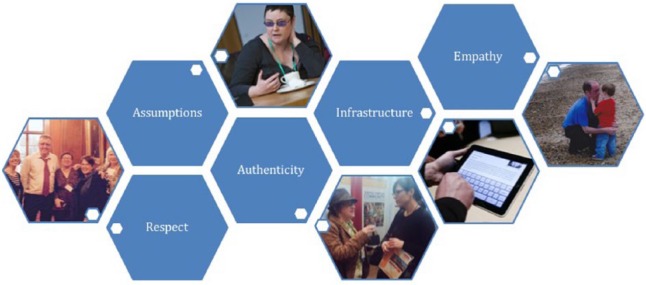
Participatory research methods connect researchers with relevant communities to achieve shared goals. These methods can deliver results that are relevant to people’s lives and thus likely to have a positive impact. In the context of a large and growing body of autism research, with continued poor implementation, and some evidence of community dissatisfaction, there is a powerful case for participatory autism research. In order to develop a framework for such collaborative working, a UK seminar series was organised and co-produced by autistic and non-autistic people with academic, practitioner and lived expertise. This article reports on the outcomes from the series, identifying five topics relevant to building a community of practice in participatory research: Respect, Authenticity, Assumptions, Infrastructure and Empathy. Each topic is connected to a specific example from within and beyond research, to inspire new practices in the field. We call for the development of participatory research skills among the autism research community and the facilitation of greater autistic leadership of, and partnership in, research. Such work, if delivered to a high standard, is likely to lead to better translation into practice and improved outcomes for autistic people and those who support them.
Overview
The claims and statistics of this paper haven’t been checked yet.
Free: it reads the open-access text and checks the first 5 claims that cite a source we can check. Create a free account to check every claim.
Integrity signals
Registry
Cites
Statistics
Figures
Verification
Claims the paper makes
The claims and statistics of this paper haven’t been checked yet.
Free: it reads the open-access text and checks the first 5 claims that cite a source we can check. Create a free account to check every claim.
Claims other papers make about this one
Each is checked against this paper’s own text: does it say what the citing paper says it does?
The source backs part of the claim, not all of it — or backs it for a different population, condition or comparison.
In the citing paper
“In the past decade, autism researchers worldwide have begun to engage with the autistic community, consulting with autistic people at all stages of the research process, exploring ways to work with autistic people as partners, and addressing research topics prioritised by the community (see Fletcher‐Watson et al., 2019; Nicolaidis et al., 2011; Pellicano et al., 2014a, 2014b; Pellicano & Stears, 2”
From Annual Research Review: Shifting from ‘normal science’ to neurodiversity in autism science (2022) · cites this paper as Fletcher‐Watson et al., 2019
Experimental — accuracy not yet measuredThe cited source says what the claim attributes to it.
In the citing paper
“The few studies that have reflected upon lessons learnt from such partnerships have suggested that effective partnerships depend on strong relationships – that is, those in which there is mutual trust between partners, respect for each other’s expertise and ways of being, and an openness to learning from one another (Fletcher-Watson et al., 2019; Jose et al., 2020; Le Cunff et al., 2023; Maye et a”
From ‘You feel part of something bigger’: Stakeholders’ experiences of a long-term community–academic participatory research partnership (2025) · cites this paper as Fletcher-Watson et al., 2019
The cited source says what the claim attributes to it.
In the citing paper
“Though participatory action research comes with its own set of challenges (Fletcher-Watson et al., 2019; Nicolaidis et al., 2011)”
From Neurodiversity and Autism Intervention: Reconciling Perspectives Through a Naturalistic Developmental Behavioral Intervention Framework (2022) · cites this paper as Fletcher-Watson et al., 2019
The cited source says what the claim attributes to it.
In the citing paper
“Such antipathy makes respectful debate framed by contemporary best practice approaches to autism research (Fletcher-Watson et al., 2019, 2021; den Houting et al., 2021; Keating, 2021) unlikely.”
From Perspective: Presuming Autistic Communication Competence and Reframing Facilitated Communication (2022) · cites this paper as Fletcher-Watson et al., 2019
Self-check
Percentages, sums and reported differences re-computed from the paper’s own numbers.
The self-check needs the paper’s full text.
Citations
Cites
A Ladder Of Citizen Participation
Arnstein, S. R. (1969) · Journal of the American Institute of Planners · doi:10.1080/01944366908977225 · Cited by 17,064
What is participatory research?
Cornwall, A., & Jewkes, R. (1995) · Social Science & Medicine · doi:10.1016/0277-9536(95)00127-s · Cited by 2,560 · cited 1×
“By participatory research , we mean incorporating the views of autistic people and their allies about what research gets done, how it is done and how it is implemented (Cornwall and Jewkes, 1995).”
The Third Wave of Science Studies: Studies of Expertise and Experience
Collins, H. M., & Evans, R. (2002) · Social Studies of Science · doi:10.1177/0306312702032002003 · Cited by 2,094 · cited 2×
“Seminar delegates reported that the lived experiences of autistic people – their ‘experiential expertise’ (Collins and Evans, 2002) – is rarely apparent in the context of autism research, though notable exceptions were identified (see Box 1).”
On the ontological status of autism: the ‘double empathy problem’
Milton, D. E. M. (2012) · Disability & Society · doi:10.1080/09687599.2012.710008 · Cited by 2,082 · cited 1×
“The double empathy problem (Milton, 2012) highlights the issue of ‘mutual incomprehension’ that exists between some autistic and non-autistic people, in all walks of life.”
Self-citationWhich terms should be used to describe autism? Perspectives from the UK autism community
Kenny, L., Hattersley, C., Molins, B., Buckley, C., Povey, C., & Pellicano, E. (2016) · Autism · doi:10.1177/1362361315588200 · Cited by 1,941 · cited 1×
“The number of autistic-led organisations, publications (e.g. Autonomy; Beardon, 2017; Lawson et al., 2017; Murray, 2005), online communities (e.g. wrongplanet.net) and events (e.g. Autistic Pride, Autreat and Autscape) is a testament to the energy and dedication of this community.”
Self-citationBrett, J., Staniszewska, S., Mockford, C., Herron‐Marx, S., Hughes, J., Tysall, C., & Suleman, R. (2014) · Health Expectations · doi:10.1111/j.1369-7625.2012.00795.x · Cited by 1,598 · cited 1×
“In so doing, we should draw on the experiences of pioneers within (Frauenberger et al., 2013; Gillespie-Lynch et al., 2017; Mason et al., submitted; McConachie et al., 2018; Nicolaidis et al., 2013; Parsons et al., 2013) and outside (Brett et al., 2014; Rose, 2003) autism research.”
What should autism research focus upon? Community views and priorities from the United Kingdom
Pellicano, E., Dinsmore, A., & Charman, T. (2014) · Autism · doi:10.1177/1362361314529627 · Cited by 800 · cited 1×
“Fortunately, there has been increasing recognition inter-nationally that this situation needs to change, with autistic advocates, academics and activists being some of the strongest voices to speak to these issues (Michael, 2016; Milton, 2014; Nicolaidis et al., 2011; Pellicano et al., 2011).”
Self-citationThe snakes and ladders of user involvement: Moving beyond Arnstein
Tritter, J. Q., & McCallum, A. (2006) · Health Policy · doi:10.1016/j.healthpol.2005.05.008 · Cited by 794 · cited 1×
“There are signs of a much-needed improvement, from openly discussing these issues (Wright et al., 2014), to communities of researchers and autistic people beginning to enact change (Stahmer et al., 2017).”
Israel, B. A., Parker, E. A., Rowe, Z., Salvatore, A., Minkler, M., López, J., Butz, A., Mosley, A., Coates, L., Lambert, G., et al. (2005) · Environmental Health Perspectives · doi:10.1289/ehp.7675 · Cited by 601
Neurotypical Peers are Less Willing to Interact with Those with Autism based on Thin Slice Judgments
Sasson, N. J., Faso, D. J., Nugent, J., Lovell, S., Kennedy, D. P., & Grossman, R. B. (2017) · Scientific Reports · doi:10.1038/srep40700 · Cited by 584 · cited 2×
“, 2016), or negatively judge them based on minimal evidence (Sasson et al., 2017).”
Research works printed but not linked: 14
- Arnold L (2012) Introduction to Autonomy: The Critical Journal of Interdisciplinary Autism Studies. Autonomy: The Critical Journal of Interdisciplinary Autism Studies 1(1): 1.
- Cusack J Sterry R (2016) Your Questions: Shaping Future Autism Research. London: Autistica.
- Gaudion K Hall A Myerson J et al (2014) Design and wellbeing: bridging the empathy gap between neurotypical designers and autistic adults. Design for Sustainable Wellbeing and Empowerment 2014: 61– 77.
- Lawson W Turner T Wilkinson A et al (2017) Love, Partnership, or Singleton on the Autism Spectrum. London: Jessica Kingsley Publishers.
- Long J Panese J Ferguson J et al (2017) Enabling voice and participation in autism services: using practitioner research to develop inclusive practice. Good Autism Practice 18(2): 6– 14.
- Martin N (2010) Minimising the stress of the PhD viva for students with Asperger syndrome. Good Autism Practice 11(1): 52– 57.
- Milton DE Bracher M (2013) Autistics speak but are they heard? Journal of the BSA Medsoc Group 7: 61– 69.
- Murray D (Ed.) (2005) Coming Out Asperger. London: Jessica Kingsley Publishers.
- Pellicano E (2018) Engaging ‘seldom heard’ individuals in participatory autism research. In: Milton D Martin N (eds) Autism and Learning Disability Annual, vol. 2 London: Pavilion Publishing, pp. 29– 34.
- Pellicano E Crane L Gaudion K et al (2017) Participatory Autism Research: A Starterpack. London: UCL Institute of Education.
- Ridout S (2014) More than picture-making: reflecting on collage as a narrative tool for opening discourse on the involvement of autistics in autism research. Autonomy: The Critical Journal of Interdisciplinary Autism Studies 1(3). Available at: http://www.larry-arnold.net/Autonomy/index.php/autonomy/article/view/AR14/html
- Ridout S (2018) Autism and Mental Well-being in Higher Education: A Practical Resource for Students, Mentors and Study Skills Support Workers. Hove: Pavilion Publishing and Media.
- Rose D (2003) Collaborative research between users and professionals: peaks and pitfalls. The Psychiatrist 27(11): 404– 406.
- Sinclair J (2013) Why I dislike ‘person first’ Language. Autonomy, The Critical Journal Of Interdisciplinary Autism Studies, 1(2). Retrieved from http://www.larry-arnold.net/Autonomy/index.php/autonomy/article/view/OP1
Cited by
Items 101–200 of 916
Autism: a new introduction to psychological theory and current debate
Woods, R. (2019) · Disability & Society · doi:10.1080/09687599.2019.1636564 · Cited by 47
#ActuallyAutistic: Using Twitter to Construct Individual and Collective Identity Narratives
Egner, J. E. (2022) · Studies in Social Justice · doi:10.26522/ssj.v16i2.2675 · Cited by 53
Newbutt, N. A., Glaser, N. J., Francois, M.-S., Schmidt, M., & Cobb, S. V. G. (2023) · Journal of Autism and Developmental Disorders · doi:10.1007/s10803-023-06130-3 · Cited by 48
“According to Parsons and Cobb (2013) and Fletcher-Watson et al. (2019), considering the views of autistic individuals and stakeholders throughout the design process can improve the quality of research methods and lead to better translation of research into practice, and improved outcomes for…”
BackgroundTowards autistic flow theory: A non‐pathologising conceptual approach
Heasman, B., Williams, G., Charura, D., Hamilton, L., Milton, D. E. M., & Murray, F. (2024) · Journal for the Theory of Social Behaviour · doi:10.1111/jtsb.12427 · Cited by 51
Self-citationMcDonnell, C. G., & DeLucia, E. A. (2021) · Autism in Adulthood · doi:10.1089/aut.2020.0046 · Cited by 47
“72,73 Each of these questionnaires was developed in an exploratory manner, which allowed for the exploration of a range of possibilities raised by autistic adults but limited comparison across studies.”
“It’s the fear of the unknown”: transition from higher education for young autistic adults
Vincent, J. (2019) · Autism · doi:10.1177/1362361318822498 · Cited by 44
“Obtaining participant approval before using the data in this way facilitates reciprocity between researchers and participants, which is an increasingly important priority in autism research (Chown et al., 2017; Fletcher-Watson et al., 2018).”
BackgroundDevelopment of stigma-related support for autistic adults: Insights from the autism community
Han, E. K. L., Scior, K., Heath, E., Umagami, K., & Crane, L. (2023) · Autism · doi:10.1177/13623613221143590 · Cited by 52
“It is well recognised that meaningful involvement of the autism community can improve the quality of autism research and contextualise findings in a real-world setting, thereby facilitating the translation of research into practice (Fletcher-Watson et al., 2019; Keating, 2021).”
BackgroundSelf-citationWilliams, G. (2021) · Journal of Pragmatics · doi:10.1016/j.pragma.2021.04.032 · Cited by 53
The Anxiety Caused by Secondary Schools for Autistic Adolescents: In Their Own Words
Costley, D., Emerson, A., Ropar, D., & Sheppard, E. (2021) · Education Sciences · doi:10.3390/educsci11110726 · Cited by 48
“There is increasing interest in participatory research and this project was planned with the aim of creating an opportunity for meaningful participation [28].”
BackgroundAutism and the ‘double empathy problem’
Milton, D. E. M., Waldock, K. E., & Keates, N. (2023) · Routledge eBooks · doi:10.4324/9781003189978-6 · Cited by 51
Self-citationVerhulst, I., MacLennan, K., Haffey, A., & Tavassoli, T. (2022) · Autism in Adulthood · doi:10.1089/aut.2022.0018 · Cited by 45
“44 Understanding how sensory reactivity differences are associated with anxiety, and perceptions of the causal relationship, has important implications for treatment approaches that are effective and suitable for autistic adults.”
Portrayals of autism in the British press: A corpus-based study
Karaminis, T. N., Gabrielatos, C., Maden-Weinberger, U., & Beattie, G. W. (2022) · Autism · doi:10.1177/13623613221131752 · Cited by 59
“Future studies should attempt to corroborate these analyses using participatory research frameworks (Fletcher-Watson et al., 2019; Pellicano et al., 2017).”
BackgroundDebate: Neurodiversity, autism and healthcare
Green, J. (2023) · Child and Adolescent Mental Health · doi:10.1111/camh.12663 · Cited by 46
Cunningham, M. (2020) · International Journal of Inclusive Education · doi:10.1080/13603116.2020.1789767 · Cited by 50
Lewis, K., Hamilton, L., & Vincent, J. (2023) · Infant and Child Development · doi:10.1002/icd.2467 · Cited by 48
High School Experiences and Support Recommendations of Autistic Youth
Bottema‐Beutel, K., Cuda, J., Kim, S. Y., Crowley, S., & Scanlon, D. J. (2019) · Journal of Autism and Developmental Disorders · doi:10.1007/s10803-019-04261-0 · Cited by 45
Keating, C. T., Hickman, L., Geelhand, P., Takahashi, T., Leung, J., Monk, R., Schuster, B. A., Rybicki, A. J., Girolamo, T. M., Clin, É., et al. (2024) · PLoS ONE · doi:10.1371/journal.pone.0299824 · Cited by 47
Moseley, R. L., Gregory, N. J., Smith, P. L., Allison, C. L., Cassidy, S., & Baron‐Cohen, S. (2022) · Molecular Autism · doi:10.1186/s13229-022-00495-5 · Cited by 42
“Although involvement of the autistic community had not been possible beyond informal conversations between the primary researcher and a handful of autistic associates, this is a standard to which all research should aspire [63] and, given the opportunity to give feedback on the study, many important and helpful sugges…”
Background“Unheard minds, again and again”: autistic insider perspectives and theory of mind
Holt, A. G., Bounekhla, K., Welch, C., & Polatajko, H. J. (2021) · Disability and Rehabilitation · doi:10.1080/09638288.2021.1949052 · Cited by 48
Bradley, S., Moore, F. R., Duffy, F., Clark, L., Suratwala, T., Knightsmith, P., & Gillespie‐Smith, K. (2024) · Autism · doi:10.1177/13623613241245749 · Cited by 42
Neurodiversity: A scoping review of empirical research
McLennan, H., Aberdein, R., Saggers, B. R., & Gillett‐Swan, J. K. (2025) · Neurodiversity · doi:10.1177/27546330251337874 · Cited by 45
Empowerment in decision-making for autistic people in research
Cascio, M. A., Weiss, J. A., & Racine, É. (2020) · Disability & Society · doi:10.1080/09687599.2020.1712189 · Cited by 41
Pellicano, E., Lawson, W. B., Hall, G., Mahony, J., Lilley, R., Davis, C., Arnold, S. R. C., Trollor, J. N., & Yudell, M. (2020) · BMJ Open · doi:10.1136/bmjopen-2020-037968 · Cited by 42
Self-citationAn Open-Source Social Robot Based on Compliant Soft Robotics for Therapy with Children with ASD
Casas, D., Gomez-Vargas, D., Pinto-Bernal, M. J., Maldonado-Mejía, J. C., Múnera, M., Villa-Moreno, A., Stoelen, M. F., Belpaeme, T., & Cifuentes, C. A. (2020) · Actuators · doi:10.3390/act9030091 · Cited by 47
“This process intends to achieve products or services reflecting the real needs, desires, and expectations of the users, designers, and stakeholders [22].”
BackgroundField, S. L., Fox, J. R. E., Jones, C. R. G., & Williams, M. O. (2023) · Journal of Eating Disorders · doi:10.1186/s40337-023-00740-z · Cited by 40
“There is a growing emphasis on increasing the participation of autistic people in research [29, 30], which also improves the relevancy and quality of findings [31].”
BackgroundThompson‐Hodgetts, S., Ryan, J., Coombs, E. C., Brown, H. M., Xavier, A., Devlin, C., Lee, A., Kedmy, A., & Borden, A. (2023) · Frontiers in Psychiatry · doi:10.3389/fpsyt.2023.1250391 · Cited by 44
“This study was embedded within a larger study that utilized participatory research methods to address our research objectives specific to Autistic adults who do and do not experience co-occurring intellectual disability (21, 22).”
BackgroundDewinter, J., van der Miesen, A. I. R., & Holmes, L. G. (2020) · Autism Research · doi:10.1002/aur.2340 · Cited by 38
Hume, R. (2022) · Autism in Adulthood · doi:10.1089/aut.2021.0065 · Cited by 29
Pellicano, E. (2020) · Journal of Child Psychology and Psychiatry · doi:10.1111/jcpp.13212 · Cited by 37
Self-citationDual perspectives in autism spectrum disorders and employment: toward a better fit in the workplace
Diener, M. L., Wright, C. A., Taylor, C., D’Astous, V., & Lasrich, L. (2020) · Work · doi:10.3233/wor-203268 · Cited by 37
“Participatory research has been identified as one of the most important ways to facilitate better translation into practice and improved outcomes for individuals with ASD and those who support them [48, 49, 51, 52].”
Moore, L., Larkin, F., & Foley, S. (2023) · Journal of Autism and Developmental Disorders · doi:10.1007/s10803-023-06006-6 · Cited by 41
Strengths-Based Practice to Enhance Mental Health for Autistic People: A Scoping Review
Murthi, K., Chen, Y., Shore, S., & Patten, K. K. (2023) · American Journal of Occupational Therapy · doi:10.5014/ajot.2023.050074 · Cited by 39
Davies, J., Romualdez, A. M., Malyan, D., Heasman, B., Livesey, A., Walker, A., Pellicano, E., & Remington, A. (2024) · Autism in Adulthood · doi:10.1089/aut.2022.0087 · Cited by 36
Self-citationLeifler, E., Borg, A., & Bölte, S. (2022) · Journal of Autism and Developmental Disorders · doi:10.1007/s10803-022-05643-7 · Cited by 41
Nimbley, E., Gillespie‐Smith, K., Duffy, F., Maloney, E., Ballantyne, C. J., & Sharpe, H. (2023) · Journal of Eating Disorders · doi:10.1186/s40337-023-00813-z · Cited by 39
“The study is also closely aligned with neurodiversity affirming frameworks and calls for more meaningful participatory research [39].”
BackgroundResultBowden, N., Milne, B. J., Audas, R. P., Clasby, B., Dacombe, J., Forster, W., Kokaua, J., Gibb, S., Hughes, N., MacCormick, C., et al. (2021) · Autism · doi:10.1177/13623613211065541 · Cited by 36
“It is important this progress continues in a way that draws on and is closely informed by the voices and lived experiences of autistic individuals in line with Critical Autism Studies approaches (Davidson & Orsini, 2013; Fletcher-Watson et al., 2019; O’Dell et al., 2016), and the UNCRPD.”
BackgroundHow autistic adults’ priorities for autism research differ by gender identity: A mixed-methods study
Putnam, O. C., Eddy, G., Goldblum, J., Swisher, M., & Harrop, C. (2023) · Women s Health · doi:10.1177/17455057231160342 · Cited by 39
Inclusion and Rigor in Qualitative Autism Research: A Response to Van Schalkwyk and Dewinter (2020)
Crane, L., Sesterka, A., & den Houting, J. (2020) · Journal of Autism and Developmental Disorders · doi:10.1007/s10803-020-04634-w · Cited by 39
Self-citationRapaport, H., Clapham, H., Adams, J., Lawson, W., Porayska-Pomsta, K., & Pellicano, E. (2024) · Autism · doi:10.1177/13623613231198916 · Cited by 35
Self-citationReporting community involvement in autism research: Findings from the journal Autism
Tan, D. W., Crane, L., Haar, T., Heyworth, M., Poulsen, R., & Pellicano, E. (2025) · Autism · doi:10.1177/13623613241275263 · Cited by 35
Self-citationHunt, A., & Procyshyn, T. L. (2024) · Autism Research · doi:10.1002/aur.3078 · Cited by 39
‘We have so much to offer’: Community members’ perspectives on autism research
Haar, T., Brownlow, C., Hall, G., Heyworth, M., Lawson, W. B., Poulsen, R. E., Reinisch, T., & Pellicano, E. (2024) · Autism · doi:10.1177/13623613241248713 · Cited by 39
Self-citationArnold, S. R. C., Huang, Y., Hwang, Y. I., Richdale, A. L., Trollor, J. N., & Lawson, L. P. (2020) · Autism in Adulthood · doi:10.1089/aut.2019.0059 · Cited by 37
“Thus, using autistic advisors ensures the tool has meaning 24 and applicability to the population it is intended to measure.”
Gillespie‐Lynch, K., Dwyer, P. S. R., Constantino, C. D., Kapp, S. K., Hotez, E., Riccio, A., DeNigris, D., Kofner, B., & Endlich, E. (2020) · Emerald Group Publishing Limited eBooks · doi:10.1108/s1479-354720200000012013 · Cited by 40
Virtual Group–Based Mindfulness Intervention for Autistic Adults: a Feasibility Study
Lunsky, Y., Redquest, B. K., Albaum, C. S., Hutton, S., Share, M., Share-Strom, D., & Weiss, J. A. (2022) · Mindfulness · doi:10.1007/s12671-022-01909-4 · Cited by 35
Assistive Technology for Adults on the Autism Spectrum: A Systematic Survey
Wang, M., & Jeon, M. (2023) · International Journal of Human-Computer Interaction · doi:10.1080/10447318.2022.2163568 · Cited by 39
Adults with Autism Prefer Person-First Language in Dutch: A Cross-Country Study
Laet, H. D., Nijhof, A. D., & Wiersema, J. R. (2023) · Journal of Autism and Developmental Disorders · doi:10.1007/s10803-023-06192-3 · Cited by 37
Lilley, R., Lawson, W. B., Hall, G., Mahony, J., Clapham, H., Heyworth, M., Arnold, S. R. C., Trollor, J. N., Yudell, M., & Pellicano, E. (2022) · Journal of Autism and Developmental Disorders · doi:10.1007/s10803-022-05667-z · Cited by 35
“The study involved three late-diagnosed autistic researchers and advocates (WL, GH & JM), who were actively involved as partners at every stage of the research process (Fletcher-Watson et al., 2019; Nicolaidis et al., 2011; Pellicano & Stears, 2011).”
Self-citationKaplan‐Kahn, E. A., & Caplan, R. (2023) · Frontiers in Psychiatry · doi:10.3389/fpsyt.2023.1248247 · Cited by 37
Williams, G., Ellis, R., Holloway, W., Caemawr, S., Craine, M., Williams, K., & Grant, A. (2024) · Autism · doi:10.1177/13623613241253014 · Cited by 34
English, M. C. W., Poulsen, R. E., Maybery, M. T., McAlpine, D., Sowman, P. F., & Pellicano, E. (2025) · Autism · doi:10.1177/13623613251347740 · Cited by 36
Self-citationA critical reflection on the development of the Participatory Autism Research Collective (PARC)
Milton, D. E. M., Ridout, S., Kourti, M., Loomes, G., & Martin, N. C. (2019) · Tizard Learning Disability Review · doi:10.1108/tldr-09-2018-0029 · Cited by 37
“There have been a number of similar initiatives to PARC in terms of promoting participatory research in the field of autism studies (Nicolaidis et al., 2011; Fletcher-Watson et al., 2018), although until recently they have tended to assume a separation between researcher and community and a period of mentoring into sp…”
BackgroundSelf-citationApplied Behaviour Analysis for Autism: Evidence, Issues, and Implementation Barriers
Anderson, A., & Carr, M. E. (2021) · Current Developmental Disorders Reports · doi:10.1007/s40474-021-00237-x · Cited by 35
Diversity in Autistic Play: Autistic Adults' Experiences
Pritchard-Rowe, E., de Lemos, C., Howard, K., & Gibson, J. L. (2024) · Autism in Adulthood · doi:10.1089/aut.2023.0008 · Cited by 35
“26 Another limitation is that our sample consists predominantly of autistic adults who are White, highly educated, and primarily communicate using speech.”
O’Connor, R., Doherty, M., Ryan-Enright, T., & Gaynor, K. (2023) · Autism · doi:10.1177/13623613231215026 · Cited by 34
Ryan, J., Brown, H. M., Borden, A., Devlin, C., Kedmy, A., Lee, A., Nicholas, D. B., Kingsley, B. C., & Thompson‐Hodgetts, S. (2024) · Autism · doi:10.1177/13623613241254432 · Cited by 34
Farkas, T. N., Mendy, J., & Kargas, N. (2020) · Advances in Developing Human Resources · doi:10.1177/1523422320946293 · Cited by 37
“Therefore, engaging the autistic community in the research processes to develop needs-led service interventions and practices in a manner that is mutually beneficial and meaningful is of great importance (Fletcher-Watson et al., 2019; Nicholas et al., 2015).”
BackgroundThe experience of participation: eliciting the views of children on the autism spectrum
Simpson, K., Imms, C., & Keen, D. (2021) · Disability and Rehabilitation · doi:10.1080/09638288.2021.1903100 · Cited by 35
“The ubiquitous lack of the individual’s voice in the autism research [13] may be primarily due to methodological issues [5,14].”
BackgroundBölte, S., Alehagen, L., Black, M. H., Hasslinger, J., Wessman, E., Remnélius, K. L., Marschik, P. B., D’Arcy, E., Crowson, S., Freeth, M., et al. (2024) · Autism · doi:10.1177/13623613241228896 · Cited by 35
Autistic Adult Perspectives on Occupational Therapy for Autistic Children and Youth
Sterman, J. J., Gustafson, E., Eisenmenger, L., Hamm, L., & Edwards, J. (2022) · OTJR Occupational Therapy Journal of Research · doi:10.1177/15394492221103850 · Cited by 37
“To identify which interventions and strategies best support Autistic children, future research must continue to synthesize Autistic adult views, needs, and desired occupational therapy outcomes as proxies for young, Autistic children who may not be able to communicate those concepts (Fletcher-Watson et al., 2019; Roch…”
BackgroundLearning how to read autistic behavior from interactions between autistic people
Heasman, B., & Gillespie, A. (2019) · Behavioral and Brain Sciences · doi:10.1017/s0140525x18002364 · Cited by 30
Mosquera, M. L., Mandy, W., Pavlopoulou, G., & Dimitriou, D. (2021) · Research in Developmental Disabilities · doi:10.1016/j.ridd.2021.104057 · Cited by 30
“This is also despite the autism research recommendations (Fletcher-Watson et al., 2019) and governmental initiatives to address the priorities of the autistic population (Canal-Bedia et al., 2020; Oakley et al., 2020; Oakley et al., 2020).”
Letting Tourette's be: The importance of understanding lived experience in research and the clinic
Bervoets, J., Beljaars, D., & Jaegher, H. D. (2023) · Developmental Medicine & Child Neurology · doi:10.1111/dmcn.15545 · Cited by 32
“In line with participatory research practice guidelines outlined by Fletcher-Watson et al., 59 the four interviewees were involved in cocreating the Tourette syndrome-related research questions with the first author.”
Coulter, H., Donnelly, M. P., Mallett, J., & Kernohan, G. W. (2022) · JMIR Formative Research · doi:10.2196/37994 · Cited by 33
“Providing interventions for symptoms such as anxiety that affect people with ASD has been emphasized as a vital area for research [51], and reviews have acknowledged the need to involve the ASD community directly in research [52,53].”
Background“A perfect storm”: Autistic experiences of menopause and midlife
Brady, M. J., Jenkins, C. A., Turner‐Cobb, J. M., Moseley, R. L., van Rensburg, M. J., & Matthews, R. J. (2024) · Autism · doi:10.1177/13623613241244548 · Cited by 32
Neuroimaging Markers of Risk and Pathways to Resilience in Autism Spectrum Disorder
Molnar-Szakacs, I., Kupis, L. B., & Uddin, L. Q. (2020) · Biological Psychiatry Cognitive Neuroscience and Neuroimaging · doi:10.1016/j.bpsc.2020.06.017 · Cited by 31
Hummerstone, H., & Parsons, S. (2022) · International Journal of Research & Method in Education · doi:10.1080/1743727x.2022.2071864 · Cited by 37
Peachey, M., & Crane, L. (2024) · Autism in Adulthood · doi:10.1089/aut.2023.0071 · Cited by 29
“47,48 Those who self-referred to participate but were not selected as participants ( n = 49) were invited to be in the consulting group ( n = 18 agreed).”
Self-citationThe process of co‐design for a new anxiety intervention for autistic children
Cullingham, T., Rennard, U., Creswell, C., Milton, D. E. M., Buckle, K. L., Godber, L., Gordon, K., Larkin, M., & Green, J. (2024) · JCPP Advances · doi:10.1002/jcv2.12255 · Cited by 30
“Within this general movement, autism research and practice has arguably been relatively slow in developing participatory work with service users and the autism community, including parents of autistic children (Fletcher ‐ Watson et al., 2019).”
Self-citationSmit, S., & Hopper, J. (2023) · Autism in Adulthood · doi:10.1089/aut.2021.0101 · Cited by 33
“74,75 Although the principal researcher is an autistic adult, time constraints and ethical considerations meant that this study was not able to use participatory research design meth-ods.”
Stogiannos, N., Pavlopoulou, G., Papadopoulos, C., Walsh, G., Potts, B., Moqbel, S., Gkaravella, A., McNulty, J. P., Simcock, C. M., Gaigg, S., et al. (2023) · BMC Health Services Research · doi:10.1186/s12913-023-10333-w · Cited by 29
“It is fundamental that these insights are integrated into healthcare delivery and service design to drive meaningful improvements [34].”
BackgroundFrom “since” to “if”: using blogs to explore an insider-informed framing of autism
Welch, C., Cameron, D., Fitch, M. I., & Polatajko, H. J. (2020) · Disability & Society · doi:10.1080/09687599.2020.1836479 · Cited by 32
Understanding Autistic Adults' Use of Social Media
van Driel, M., Vines, J., Pena, B. B., & Koteyko, N. (2023) · Proceedings of the ACM on Human-Computer Interaction · doi:10.1145/3610048 · Cited by 37
“We took a participatory approach [21] where the design of all material, including consent forms and interview structure, was reviewed by autistic adults.”
MethodAccess Points: Understanding Special Interests Through Autistic Narratives
Long, R.-E. M. (2024) · Autism in Adulthood · doi:10.1089/aut.2023.0157 · Cited by 29
Marocchini, E., & Baldin, I. (2024) · International Journal of Language & Communication Disorders · doi:10.1111/1460-6984.13095 · Cited by 30
Autistic sociality on Twitter: Enacted affordances and affiliation strategies
Koteyko, N., van Driel, M., & Vines, J. (2022) · Discourse & Communication · doi:10.1177/17504813211070655 · Cited by 33
Courcy, I., & Koniou, I. (2022) · Disability & Society · doi:10.1080/09687599.2022.2137391 · Cited by 31
Dark, J. (2024) · Frontiers in Psychology · doi:10.3389/fpsyg.2024.1326536 · Cited by 26
White, L., Ixqe, K. V., Goodall, K., & Gillespie‐Smith, K. (2024) · Autism in Adulthood · doi:10.1089/aut.2023.0151 · Cited by 26
Hallett, V., Mueller, J., Breese, L., Hollett, M., Beresford, B., Irvine, A. L., Pickles, A. R., Slonims, V., Scott, S., Charman, T., et al. (2020) · Journal of Autism and Developmental Disorders · doi:10.1007/s10803-020-04442-2 · Cited by 26
Self-citationRutherford, M., & Johnston, L. (2023) · IntechOpen eBooks · doi:10.5772/intechopen.108784 · Cited by 45
Keating, C. T., Ichijo, E., & Cook, J. L. (2023) · Scientific Reports · doi:10.1038/s41598-023-39070-0 · Cited by 27
Flygare, O., Andersson, E., Ringberg, H., Hellstadius, A.-C., Edbacken, J., Enander, J., Dahl, M., Aspvall, K., Windh, I., Russell, A., et al. (2020) · Autism · doi:10.1177/1362361319856974 · Cited by 25
Telehealth-delivered caregiver training for autism: Recent innovations
Pacione, L. R. (2022) · Frontiers in Psychiatry · doi:10.3389/fpsyt.2022.916532 · Cited by 30
Genovesi, E., Gaches, A., McKenzie, J., Hanlon, C., & Hoekstra, R. A. (2024) · Review of Educational Research · doi:10.3102/00346543241288247 · Cited by 32
Garau, V., Murray, A. L., Woods, R., Chown, N., Hallett, S., Murray, F., Wood, R., & Fletcher‐Watson, S. (2023) · OSF Preprints (OSF Preprints) · doi:10.31219/osf.io/ft73y · Cited by 30
Self-citationReporting participatory methods and author positionality in autism
Fletcher‐Watson, S. (2024) · Autism · doi:10.1177/13623613241266950 · Cited by 26
Self-citationFuadi, A., & Mirsal, I. (2023) · At-Tasyrih jurnal pendidikan dan hukum Islam · doi:10.55849/attasyrih.v7i2.129 · Cited by 24
Dewinter, J., Onaiwu, M. G., Massolo, M. L., Caplan, R., Beneden, E. V., Brörmann, N., Crehan, E. T., Croen, L., Faja, S., Gassner, D. L., et al. (2023) · Autism · doi:10.1177/13623613231188349 · Cited by 28
Differently different?: A commentary on the emerging social cognitive neuroscience of female autism
Rippon, G. (2024) · Biology of Sex Differences · doi:10.1186/s13293-024-00621-3 · Cited by 25
“Given that autism is a condition currently still identified by behavioural profiling, the quality of autism neuroscience research can be greatly enhanced by harnessing the insights offered by the autism community themselves [144].”
Billington, J., Loucas, T., & Knott, F. J. (2024) · Neurodiversity · doi:10.1177/27546330241310174 · Cited by 25
Pellicano, E., Cribb, S. J., & Kenny, L. (2019) · Research on Child and Adolescent Psychopathology · doi:10.1007/s10802-019-00602-w · Cited by 26
Self-citationMikulak, M., Ryan, S., Bebbington, P., Bennett, S., Carter, J., Davidson, L., Liddell, K., Vaid, A., & Albury, C. (2021) · British Journal of Learning Disabilities · doi:10.1111/bld.12424 · Cited by 25
Larkin, F., Ralston, B., Dinsdale, S. J., Kimura, S., & Hayiou‐Thomas, M. E. (2022) · Autism · doi:10.1177/13623613221109717 · Cited by 27
Toward a strengths-based model for designing virtual reality learning experiences for autistic users
Schmidt, M., Newbutt, N. A., Lee, M., Lu, J., Francois, M.-S., Antonenko, P., & Glaser, N. J. (2023) · Autism · doi:10.1177/13623613231208579 · Cited by 24
Foster, N. C., Bennett, S. J., Causer, J., Elliott, D., Bird, G., & Hayes, S. J. (2019) · Autism Research · doi:10.1002/aur.2214 · Cited by 26
Residential Care for Older Autistic Adults: Insights from Three Multiexpert Summits
Crompton, C. J., Michael, C., Dawson, M., & Fletcher‐Watson, S. (2020) · Autism in Adulthood · doi:10.1089/aut.2019.0080 · Cited by 28
“The involvement of autistic people, their allies, and other members of the autism community in research is becoming increasingly recognized as best practice in the field and exemplified by equal partnerships between academic and community representatives.(28,29) The research team comprised two psychologists and two au…”
Self-citationNeurodiversity 2.0 - Harnessing cross-disciplinary disability insights
Srinivasan, H. (2025) · Research in Autism · doi:10.1016/j.reia.2025.202652 · Cited by 27
Ethical issues in genomics research on neurodevelopmental disorders: a critical interpretive review
Mežinska, S., Gallagher, L., Verbrugge, M., & Bunnik, E. M. (2021) · Human Genomics · doi:10.1186/s40246-021-00317-4 · Cited by 24
“Based on this review, we second recent recommendations for researchers who are working in genomics research activities in relation to NDDs to engage patient communities in research design and communication of research results [90].”
BackgroundKinnaird, E., Oakley, M., Lawrence, V. C., Shergill, S. S., & Tchanturia, K. (2021) · Journal of Eating Disorders · doi:10.1186/s40337-021-00397-6 · Cited by 23
Metadata
- Authors
- Fletcher-Watson, S., Adams, J., Brook, K., Charman, T., Crane, L., Cusack, J., Leekam, S., Milton, D., Parr, J. R., & Pellicano, E.
- Affiliations
- The University of Edinburgh, UK
- Flow Observatorium, UK
- Autism Rights Group Highland, UK
- King's College London (GB)
- University College London (GB)
- Autistica (GB)
- Cardiff University (GB)
- University of Kent (GB)
- Newcastle University (GB)
- Macquarie University (AU)
- ORCID
- Venue
- Autism
- Publisher
- SAGE Publications
- Published
- 2018-08-10
- Volume
- 23
- Issue
- 4
- Pages
- 943-953
- ISSN
- 1362-3613 (ISSN-L)
- 1461-7005
- PMC
- PMC6512245
- OpenAlex
- W2807975560
- Cited by
- 776
- References
- 50
- Citations by year
- 2026: 142 · 2025: 137 · 2024: 119 · 2023: 100 · 2022: 83 · 2021: 91 · 2020: 63 · 2019: 37 · 2018: 3
- FWCI
- 74.07
- Type
- journal article
- Language
- en
- Open access
- hybrid
- doi.org
- Licence
- cc-by
- journals.sagepub.com/page/policies/text-and-data-mining-license (tdm)
- Locations
- Autism (publishedVersion, cc-by)
- PubMed Central (publishedVersion, cc-by)
- PubMed (publishedVersion)
- ORCA Online Research @Cardiff (Cardiff University) (acceptedVersion)
- Kent Academic Repository (University of Kent) (submittedVersion, other-oa)
- UCL Discovery (University College London) (submittedVersion)
- Research Portal (King's College London) (submittedVersion, cc-by)
- University of Birmingham Research Portal (University of Birmingham) (submittedVersion)
- Edinburgh Research Explorer (University of Edinburgh) (submittedVersion, cc-by)
- Newcastle University ePrints (Newcastle Univesity) (cc-by)
- Funders
- Economic and Social Research Council (ES/M00225X/1)
- Leverhulme Trust (Philip Leverhulme Prize)
- Topics
- Health Sciences › Health Professions › General Health Professions › Mental Health and Patient Involvement
- Social Sciences › Sociology and Political Science › Participatory Visual Research Methods
- Health Sciences › Medicine › Public Health, Environmental and Occupational Health › Community Health and Development
- Keywords
- participatory research, autism research, autistic people, communities of practice, research collaboration, lived expertise, research translation, co-production
- MeSH terms
- Stakeholder Participation, Respect, Autistic Disorder, Empathy, United Kingdom, Health Services, Humans, Social Work, Biomedical Research, Community-Based Participatory Research
About these checks
Registry, retraction, Cites and statistics results are computed, not judged, with one exception: a printed reference that no index lists is read once by a model before it counts as a citation error. Claims are extracted by a model and kept only when their quote appears verbatim in the text; each cited source is then checked, with a model’s help, for whether it says what the claim relies on. Those verdicts can be wrong — read the claim’s quote and the cited source before relying on one.
Statistics and arithmetic are recomputed, not judged.
Confidence bands are shown only for fields calibrated on our annotated test set. None is calibrated yet, so no band is shown.
What counts as a claim ›How we measure confidence ›How we check this ›
Are you an author, or do you see a problem with this page? Request a review
Data sources
Bibliographic data: Semantic Scholar, OpenAlex, Crossref.
Contains information from the Semantic Scholar Academic Graph Datasets, made available under the ODC Attribution License (ODC-BY 1.0).
Semantic Scholar’s data is described in: Kinney, R., et al. (2023). The Semantic Scholar Open Data Platform. arXiv:2301.10140.
