

Making the future together: Shaping autism research through meaningful participation
Open accessThe DOI matches its Crossref record; 50 of the 50 references it cites were found in a registry or an index.
Abstract
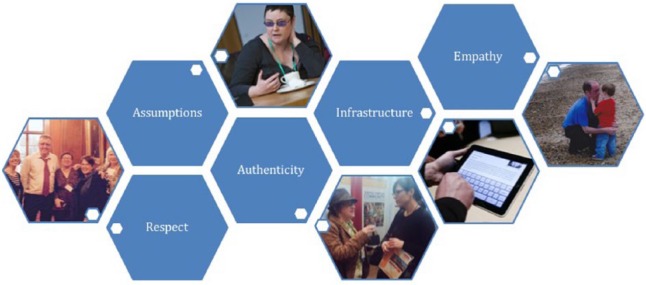
Participatory research methods connect researchers with relevant communities to achieve shared goals. These methods can deliver results that are relevant to people’s lives and thus likely to have a positive impact. In the context of a large and growing body of autism research, with continued poor implementation, and some evidence of community dissatisfaction, there is a powerful case for participatory autism research. In order to develop a framework for such collaborative working, a UK seminar series was organised and co-produced by autistic and non-autistic people with academic, practitioner and lived expertise. This article reports on the outcomes from the series, identifying five topics relevant to building a community of practice in participatory research: Respect, Authenticity, Assumptions, Infrastructure and Empathy. Each topic is connected to a specific example from within and beyond research, to inspire new practices in the field. We call for the development of participatory research skills among the autism research community and the facilitation of greater autistic leadership of, and partnership in, research. Such work, if delivered to a high standard, is likely to lead to better translation into practice and improved outcomes for autistic people and those who support them.
Overview
The claims and statistics of this paper haven’t been checked yet.
Free: it reads the open-access text and checks the first 5 claims that cite a source we can check. Create a free account to check every claim.
Integrity signals
Registry
Cites
Statistics
Figures
Verification
Claims the paper makes
The claims and statistics of this paper haven’t been checked yet.
Free: it reads the open-access text and checks the first 5 claims that cite a source we can check. Create a free account to check every claim.
Claims other papers make about this one
Each is checked against this paper’s own text: does it say what the citing paper says it does?
The source backs part of the claim, not all of it — or backs it for a different population, condition or comparison.
In the citing paper
“In the past decade, autism researchers worldwide have begun to engage with the autistic community, consulting with autistic people at all stages of the research process, exploring ways to work with autistic people as partners, and addressing research topics prioritised by the community (see Fletcher‐Watson et al., 2019; Nicolaidis et al., 2011; Pellicano et al., 2014a, 2014b; Pellicano & Stears, 2”
From Annual Research Review: Shifting from ‘normal science’ to neurodiversity in autism science (2022) · cites this paper as Fletcher‐Watson et al., 2019
Experimental — accuracy not yet measuredThe cited source says what the claim attributes to it.
In the citing paper
“The few studies that have reflected upon lessons learnt from such partnerships have suggested that effective partnerships depend on strong relationships – that is, those in which there is mutual trust between partners, respect for each other’s expertise and ways of being, and an openness to learning from one another (Fletcher-Watson et al., 2019; Jose et al., 2020; Le Cunff et al., 2023; Maye et a”
From ‘You feel part of something bigger’: Stakeholders’ experiences of a long-term community–academic participatory research partnership (2025) · cites this paper as Fletcher-Watson et al., 2019
The cited source says what the claim attributes to it.
In the citing paper
“Though participatory action research comes with its own set of challenges (Fletcher-Watson et al., 2019; Nicolaidis et al., 2011)”
From Neurodiversity and Autism Intervention: Reconciling Perspectives Through a Naturalistic Developmental Behavioral Intervention Framework (2022) · cites this paper as Fletcher-Watson et al., 2019
The cited source says what the claim attributes to it.
In the citing paper
“Such antipathy makes respectful debate framed by contemporary best practice approaches to autism research (Fletcher-Watson et al., 2019, 2021; den Houting et al., 2021; Keating, 2021) unlikely.”
From Perspective: Presuming Autistic Communication Competence and Reframing Facilitated Communication (2022) · cites this paper as Fletcher-Watson et al., 2019
Self-check
Percentages, sums and reported differences re-computed from the paper’s own numbers.
The self-check needs the paper’s full text.
Citations
Cites
A Ladder Of Citizen Participation
Arnstein, S. R. (1969) · Journal of the American Institute of Planners · doi:10.1080/01944366908977225 · Cited by 17,064
What is participatory research?
Cornwall, A., & Jewkes, R. (1995) · Social Science & Medicine · doi:10.1016/0277-9536(95)00127-s · Cited by 2,560 · cited 1×
“By participatory research , we mean incorporating the views of autistic people and their allies about what research gets done, how it is done and how it is implemented (Cornwall and Jewkes, 1995).”
The Third Wave of Science Studies: Studies of Expertise and Experience
Collins, H. M., & Evans, R. (2002) · Social Studies of Science · doi:10.1177/0306312702032002003 · Cited by 2,094 · cited 2×
“Seminar delegates reported that the lived experiences of autistic people – their ‘experiential expertise’ (Collins and Evans, 2002) – is rarely apparent in the context of autism research, though notable exceptions were identified (see Box 1).”
On the ontological status of autism: the ‘double empathy problem’
Milton, D. E. M. (2012) · Disability & Society · doi:10.1080/09687599.2012.710008 · Cited by 2,082 · cited 1×
“The double empathy problem (Milton, 2012) highlights the issue of ‘mutual incomprehension’ that exists between some autistic and non-autistic people, in all walks of life.”
Self-citationWhich terms should be used to describe autism? Perspectives from the UK autism community
Kenny, L., Hattersley, C., Molins, B., Buckley, C., Povey, C., & Pellicano, E. (2016) · Autism · doi:10.1177/1362361315588200 · Cited by 1,941 · cited 1×
“The number of autistic-led organisations, publications (e.g. Autonomy; Beardon, 2017; Lawson et al., 2017; Murray, 2005), online communities (e.g. wrongplanet.net) and events (e.g. Autistic Pride, Autreat and Autscape) is a testament to the energy and dedication of this community.”
Self-citationBrett, J., Staniszewska, S., Mockford, C., Herron‐Marx, S., Hughes, J., Tysall, C., & Suleman, R. (2014) · Health Expectations · doi:10.1111/j.1369-7625.2012.00795.x · Cited by 1,598 · cited 1×
“In so doing, we should draw on the experiences of pioneers within (Frauenberger et al., 2013; Gillespie-Lynch et al., 2017; Mason et al., submitted; McConachie et al., 2018; Nicolaidis et al., 2013; Parsons et al., 2013) and outside (Brett et al., 2014; Rose, 2003) autism research.”
What should autism research focus upon? Community views and priorities from the United Kingdom
Pellicano, E., Dinsmore, A., & Charman, T. (2014) · Autism · doi:10.1177/1362361314529627 · Cited by 800 · cited 1×
“Fortunately, there has been increasing recognition inter-nationally that this situation needs to change, with autistic advocates, academics and activists being some of the strongest voices to speak to these issues (Michael, 2016; Milton, 2014; Nicolaidis et al., 2011; Pellicano et al., 2011).”
Self-citationThe snakes and ladders of user involvement: Moving beyond Arnstein
Tritter, J. Q., & McCallum, A. (2006) · Health Policy · doi:10.1016/j.healthpol.2005.05.008 · Cited by 794 · cited 1×
“There are signs of a much-needed improvement, from openly discussing these issues (Wright et al., 2014), to communities of researchers and autistic people beginning to enact change (Stahmer et al., 2017).”
Israel, B. A., Parker, E. A., Rowe, Z., Salvatore, A., Minkler, M., López, J., Butz, A., Mosley, A., Coates, L., Lambert, G., et al. (2005) · Environmental Health Perspectives · doi:10.1289/ehp.7675 · Cited by 601
Neurotypical Peers are Less Willing to Interact with Those with Autism based on Thin Slice Judgments
Sasson, N. J., Faso, D. J., Nugent, J., Lovell, S., Kennedy, D. P., & Grossman, R. B. (2017) · Scientific Reports · doi:10.1038/srep40700 · Cited by 584 · cited 2×
“, 2016), or negatively judge them based on minimal evidence (Sasson et al., 2017).”
Research works printed but not linked: 14
- Arnold L (2012) Introduction to Autonomy: The Critical Journal of Interdisciplinary Autism Studies. Autonomy: The Critical Journal of Interdisciplinary Autism Studies 1(1): 1.
- Cusack J Sterry R (2016) Your Questions: Shaping Future Autism Research. London: Autistica.
- Gaudion K Hall A Myerson J et al (2014) Design and wellbeing: bridging the empathy gap between neurotypical designers and autistic adults. Design for Sustainable Wellbeing and Empowerment 2014: 61– 77.
- Lawson W Turner T Wilkinson A et al (2017) Love, Partnership, or Singleton on the Autism Spectrum. London: Jessica Kingsley Publishers.
- Long J Panese J Ferguson J et al (2017) Enabling voice and participation in autism services: using practitioner research to develop inclusive practice. Good Autism Practice 18(2): 6– 14.
- Martin N (2010) Minimising the stress of the PhD viva for students with Asperger syndrome. Good Autism Practice 11(1): 52– 57.
- Milton DE Bracher M (2013) Autistics speak but are they heard? Journal of the BSA Medsoc Group 7: 61– 69.
- Murray D (Ed.) (2005) Coming Out Asperger. London: Jessica Kingsley Publishers.
- Pellicano E (2018) Engaging ‘seldom heard’ individuals in participatory autism research. In: Milton D Martin N (eds) Autism and Learning Disability Annual, vol. 2 London: Pavilion Publishing, pp. 29– 34.
- Pellicano E Crane L Gaudion K et al (2017) Participatory Autism Research: A Starterpack. London: UCL Institute of Education.
- Ridout S (2014) More than picture-making: reflecting on collage as a narrative tool for opening discourse on the involvement of autistics in autism research. Autonomy: The Critical Journal of Interdisciplinary Autism Studies 1(3). Available at: http://www.larry-arnold.net/Autonomy/index.php/autonomy/article/view/AR14/html
- Ridout S (2018) Autism and Mental Well-being in Higher Education: A Practical Resource for Students, Mentors and Study Skills Support Workers. Hove: Pavilion Publishing and Media.
- Rose D (2003) Collaborative research between users and professionals: peaks and pitfalls. The Psychiatrist 27(11): 404– 406.
- Sinclair J (2013) Why I dislike ‘person first’ Language. Autonomy, The Critical Journal Of Interdisciplinary Autism Studies, 1(2). Retrieved from http://www.larry-arnold.net/Autonomy/index.php/autonomy/article/view/OP1
Cited by
Items 301–400 of 916
Camilleri, L. J., Maras, K., & Brosnan, M. (2024) · Frontiers in Digital Health · doi:10.3389/fdgth.2024.1355795 · Cited by 12
Cullen, S., Johnson, E. S., Wiśniewski, P., & Page, X. (2024) · CHI Conference on Human Factors in Computing Systems · doi:10.1145/3613904.3642567 · Cited by 13
“In contrast to prior disability work that relies solely on indirect reports from parents or caretakers, we actively involve the target population (autistic YAs) in the research process [15, 20, 28, 125].”
BackgroundThe experience of autism from the perspective of autistic adolescents
Trew, S. (2024) · Disability & Society · doi:10.1080/09687599.2024.2374484 · Cited by 12
Newbutt, N. A., & Bradley, R. (2024) · Journal of Responsible Technology · doi:10.1016/j.jrt.2024.100102 · Cited by 11
“Struggling for Years”: An international survey on Autistic experiences of menopause
Jenkins, C. A., Moseley, R. L., Matthews, R. J., van Rensburg, M. J., Turner‐Cobb, J. M., & Brady, M. J. (2024) · Neurodiversity · doi:10.1177/27546330241299366 · Cited by 13
Aidonopoulou‐Read, T. (2025) · Neurodiversity · doi:10.1177/27546330251336290 · Cited by 12
Pearson, A., Brennan-Devine, N., Clarke, C., Kakoulidou, M., Kelly, L., Moyse, R., & Pavlopoulou, G. (2025) · School Mental Health · doi:10.1007/s12310-025-09813-7 · Cited by 11
The Autism Intervention Research Network on Physical Health Autistic Researcher Review Board
Brown, H. M., Dwyer, P. S. R., Gassner, D. L., Onaiwu, M. G., Kapp, S. K., Ne'eman, A., Ryan, J. G., Waisman, T., & Williams, Z. J. (2022) · PEDIATRICS · doi:10.1542/peds.2020-049437f · Cited by 12
Brandsma, T., Visser, K., Volk, J. J. G., Rijn, A. B.-V., & Dekker, L. P. (2022) · Journal of Autism and Developmental Disorders · doi:10.1007/s10803-022-05832-4 · Cited by 14
Garcia, J. M., Shurack, R. H., Leahy, N. A., Brazendale, K., Lee, E., & Lawrence, S. A. (2023) · Journal of Nutrition Education and Behavior · doi:10.1016/j.jneb.2022.11.002 · Cited by 11
A portfolio analysis of autism research funding in Aotearoa New Zealand 2007–2021
Emerson, L., Pellicano, E., Monk, R., Lim, M. S., Heaton, J. L., & McLay, L. (2023) · Autism · doi:10.1177/13623613231155954 · Cited by 12
“In a subsequent funding portfolio analysis, Harris et al. (2021) reported that between 2017 and 2019, funding for autism research on biology and risk factors declined, but that a disproportionate amount of funding was still allocated towards these two areas (55% 2017; 43% 2018; 39% 2019).”
BackgroundSelf-citationSimpson, K., Adams, D., Malone, S. A., Tucker, M. N., Rapee, R. M., & Rodgers, J. (2023) · American Journal of Occupational Therapy · doi:10.5014/ajot.2023.050031 · Cited by 13
Wallbridge, C. D., McGregor, C., Drozdz, N., Hagen, E. V. D., & Jones, C. R. G. (2023) · International Journal of Social Robotics · doi:10.1007/s12369-023-01015-y · Cited by 12
“Identifying the applicability of different methods for different robots and participants In alignment with calls for more co-production of research [22], future investigation of the efficacy of these methods should include meaningful input from the autistic community.”
Language Matters in British Newspapers: A Participatory Analysis of the Autism UK Press Corpus
Karaminis, T. N., Botha, M., Longley, S., Waldock, K. E., Storey, S., Strachan, K., Ransom, N., & Pellicano, E. (2024) · Autism in Adulthood · doi:10.1089/aut.2023.0105 · Cited by 14
Self-citationExperiencing Independence: Perspectives from Autistic Adults
Bhattacharya, P., Matthews, R. J., Field, R., Heath, H., Woodcock, K. A., & Surtees, A. D. R. (2025) · Journal of Autism and Developmental Disorders · doi:10.1007/s10803-025-06812-0 · Cited by 14
Nimbley, E., Maloney, E., & Duffy, F. (2023) · International Journal of Eating Disorders · doi:10.1002/eat.23953 · Cited by 11
How much of my true self can i show? social adaptation in autistic women: a qualitative study
砂川, 芽. (2023) · BMC Psychology · doi:10.1186/s40359-023-01192-5 · Cited by 12
Searle, K. A., Ellis, L., Kourti, M., MacLeod, A., Lear, C., Duckworth, C., Irvine, D., Jones, H., King, M., Ling, J., et al. (2019) · Advances in Autism · doi:10.1108/aia-05-2018-0018 · Cited by 14
Schwartzman, J. M., Williams, Z. J., Paterson, A. V., Jacobs, A. X., & Corbett, B. A. (2023) · Autism · doi:10.1177/13623613221143587 · Cited by 10
“Though opportunities to develop more effective health and social care services in partnership with the autism community is a key area of interest among autistic people (Fletcher-Watson et al., 2019; Shaw et al., 2022), efforts to design clinical systems for and with autistic people have not advanced.”
BackgroundStrangers and Friends: Navigating Neurodiverse Research Collaboration
Pearson, A., Rosqvist, H. B., Kapp, S. K., Hultman, L., Watson, C., Williams, G., Wiklund, S. Ö., Stenner, P. H. D., Botha, M., & O’Dell, L. (2024) · Springer eBooks · doi:10.1007/978-3-031-66127-3_7 · Cited by 10
From Harm to Healing: Building the Future of ABA with Autistic Voices
Johnson, J. F. (2025) · Societies · doi:10.3390/soc15030072 · Cited by 11
“This research must go beyond anecdotal accounts and strive for methodological excellence to ensure that findings are not dismissed as unrepresentative by clinicians and policymakers who prioritize evidence-based practices [4,36].”
Harada, N., Pellicano, E., Kumagaya, S., Ayaya, S., Asada, K., & Senju, A. (2025) · Autism · doi:10.1177/13623613251355303 · Cited by 10
Self-citationGosling, C. J., Boisseleau, L., Solmi, M., Sandbank, M. P., Jurek, L., Nourredine, M., Porcu, G., Murgia, E., Raduà, J., Fusar‐Poli, P., et al. (2025) · Nature Human Behaviour · doi:10.1038/s41562-025-02256-9 · Cited by 10
“Moreover, the interactive platform developed addresses the needs from the autism community and the documented disparity between research production and knowledge translation identified by previous studies 12,23,24 .”
Autistic adolescents and their experiences of physical education at school
Waddington, E., Sadler, D., Jachyra, P., Armstrong, J., Riby, D. M., & Hanley, M. (2025) · Physical Education and Sport Pedagogy · doi:10.1080/17408989.2025.2553285 · Cited by 10
AI in autism education: a review of collaborative and longitudinal approaches
Adako, O. P., Adeusi, O. C., & Alaba, P. A. (2025) · Disability and Rehabilitation Assistive Technology · doi:10.1080/17483107.2025.2579825 · Cited by 11
“Recent scholarship emphasises that Ai for autism education must be developed through collaborative, co-design methodologies involving autistic individuals, caregivers, and educators [140].”
InfluentialScientific Perspectivism and psychiatric diagnoses: respecting history and constraining relativism
Fellowes, S. (2020) · European Journal for Philosophy of Science · doi:10.1007/s13194-020-00320-x · Cited by 11
“It has been argued that autistic individuals have valuable lived experience which means autistic individuals should play a central role in answering ethical and practical questions (Fletcher-Watson et al 2019, p.944).”
Homelessness in autistic women: Defining the research agenda
Estrin, G. L., Aseervatham, V., de Barros, C. M., Chapple, T., Churchard, A., Harper, M., Jones, E. J. H., Mandy, W., Milner, V. L., O’Brien, S., et al. (2022) · Women s Health · doi:10.1177/17455057221141291 · Cited by 12
“To achieve our aims, we adopted principles of participatory research 15 and designed two workshops around Freire’s 16 framework for generating open dialogue and creative listening to generate new ideas; a framework that been used to bring together methods in inclusive research.”
The Codesign and Initial Evaluation of a Peer Support Program for Autistic Young Adults
Davies, J., Redmayne, B., Allain, L., Portway, L., Mandy, W., Cooper, K., & Crane, L. (2024) · Autism in Adulthood · doi:10.1089/aut.2023.0153 · Cited by 10
Self-citationMethods of studying pathological demand avoidance in children and adolescents: a scoping review
Haire, L., Symonds, J. E., Senior, J., & D’Urso, G. (2024) · Frontiers in Education · doi:10.3389/feduc.2024.1230011 · Cited by 13
Fletcher, T. S., Wiskera, E., Wilbur, L. H., & Garcia, N. M. (2021) · World Federation of Occupational Therapists Bulletin · doi:10.1080/14473828.2021.1943868 · Cited by 10
“…‘If you could invent your own sensory-friendly event, what would it look like?’ have been sparse, it is anticipated that further developing methods of collecting responses from people with autism, including children, will enhance more programme planning (Fletcher-Watson et al., 2019; Milton, 2019).”
On Perspective Taking in Conversation and in Research: A Comment on Bambara et al. (2021)
Beechey, T. (2022) · Journal of Speech Language and Hearing Research · doi:10.1044/2021_jslhr-21-00606 · Cited by 11
The Lived Experience of Dyspraxia: Challenging Ableism and Embracing Neurodiversity
Elsherif, M. M. (2025) · Neurodiversity · doi:10.1177/27546330251346861 · Cited by 10
Improving autistic experiences in the workplace: key factors and actionable steps
Nishith, S., O’Brien, A. M., Li, C., Bungert, L., Oddis, K., Riddle, J., & Gabrieli, J. D. E. (2025) · Journal of Autism and Developmental Disorders · doi:10.1007/s10803-025-07036-y · Cited by 9
Friedman, S., Noble, R., Archer, S., Gibson, J. L., & Hughes, C. H. (2024) · Autism in Adulthood · doi:10.1089/aut.2023.0009 · Cited by 11
“The involvement of these three autistic community members can be considered participatory research in the form of consultation, as conceptualized by Fletcher-Watson et al., 49 with elements of partnership with autistic people.”
Camilleri, L. J., Maras, K., & Brosnan, M. (2025) · Autism in Adulthood · doi:10.1089/aut.2023.0063 · Cited by 11
“To recognize the personal expertise required for the participants’ role, and the associated level of responsibility in relation to project aims, 68 participants were provided the choices of a monetary contribution or an Amazon gift card by way of honorarium.”
‘Sea‐glass survivors’: Autistic testimonies about education experiences
Shepherd, J., Sutton, B., Smith, S., & Szlenkier, M. (2024) · British Journal of Special Education · doi:10.1111/1467-8578.12506 · Cited by 28
Liñares-de-Maarcos, J., Palomero-Sierra, B., Sánchez-Gómez, V., Fernández-Álvarez, C. J., & Canal‐Bedia, R. (2026) · Frontiers in Psychiatry · doi:10.3389/fpsyt.2025.1756323 · Cited by 11
We adapt as needed: Autism services at liberal arts college libraries
Anderson, A. M., & Robinson, B. (2023) · The Journal of Academic Librarianship · doi:10.1016/j.acalib.2023.102817 · Cited by 11
Szechy, K. A., & O’Donnell, L. A. (2024) · Frontiers in Organizational Psychology · doi:10.3389/forgp.2024.1328559 · Cited by 9
Unknowing as a Methodological Tool: Autism, Authenticity, and Epistemic Injustice
Jackson‐Perry, D. (2024) · Springer eBooks · doi:10.1007/978-3-031-66127-3_22 · Cited by 11
Nimbley, E., Maloney, E., Gillespie‐Smith, K., Sharpe, H., Buchan, K., Kettley, S., Bragg, J., Shepherd, A., Choat, B., Long, J., et al. (2024) · Eating Disorders · doi:10.1080/10640266.2024.2441540 · Cited by 9
Williams, G. (2020) · Research for All · doi:10.14324/rfa.04.2.13 · Cited by 14
Brief Report: Family Recreation for Individuals with Autism Spectrum Disorder
Milgramm, A., Wilkinson, E., & Christodulu, K. V. (2021) · International Journal of Disability Development and Education · doi:10.1080/1034912x.2021.1925879 · Cited by 10
Fidler, D. J., Riggs, N. R., Esbensen, A. J., Jackson‐Cook, C. K., Rosser, T. C., & Cohen, A. D. (2022) · International review of research in developmental disabilities · doi:10.1016/bs.irrdd.2022.09.006 · Cited by 10
Autistic Adult and Non-Autistic Parent Advocates: Bridging the Divide
Rottier, H., & Gernsbacher, M. A. (2020) · Disability Alliances and Allies · doi:10.1108/s1479-354720200000012011 · Cited by 8
Redmore, N. (2024) · Springer eBooks · doi:10.1007/978-3-031-66127-3_15 · Cited by 9
Horton, E., Goldschmied, A. Z., Knops, M. J. J., Brownhill, L. A., Bycroft, A., Lloyd, A., Tones, D., Wiltshire, B., Toro, C. T., & Jutley-Neilson, J. (2024) · Journal of Participatory Research Methods · doi:10.35844/001c.122455 · Cited by 8
Aiston, J., Koteyko, N., & van Driel, M. (2025) · Applied Linguistics · doi:10.1093/applin/amaf006 · Cited by 9
Koops, I., Duckett, P., & Gerace, A. (2025) · Autism in Adulthood · doi:10.1089/aut.2024.0078 · Cited by 10
“22,29,30 Enhancing well-being and quality of life is central to improving the health of populations worldwide.”
Billington, J., Knott, F. J., & Craythorne, S. (2025) · International Journal of Qualitative Methods · doi:10.1177/16094069251346839 · Cited by 21
Phan, J., Middleton, S. L., Azevedo, F., Iley, B. J., Grose-Hodge, M. S., Tyler, S. L., Kapp, S. K., Yeung, S. K., Shaw, J. J., Hartmann, H., et al. (2025) · Journal of Social Issues · doi:10.1111/josi.70035 · Cited by 11
Autistic Employees: Workplace Barriers and Solutions for Positive Employment Outcomes
Eisner, D. C. (2025) · The Journal of Healthcare Ethics & Administration · doi:10.22461/jhea.9.7171 · Cited by 8
Montiel‐Nava, C., Montenegro, M. C., Ramírez, A. C., Villareal, V., Chacko, L. M., Dixon, P. J., & Dababnah, S. (2025) · Autism · doi:10.1177/13623613251406399 · Cited by 8
Ribenfors, F., & Blood, L. (2022) · Ethics and Social Welfare · doi:10.1080/17496535.2022.2149831 · Cited by 8
Autism's heterogeneity in historical perspective: from challenge to opportunity
Vicedo, M. (2023) · Frontiers in Psychology · doi:10.3389/fpsyg.2023.1188053 · Cited by 10
“In recent years, thanks to autistic activists, the scientific community has acknowledged the importance of centering autistic people’s voices and valuing their lived experience (Grinker, 2007; Bascom, 2012; Davidson and Orsini, 2013; Gillespie-Lynch et al., 2017; Fletcher-Watson et al., 2019).”
BackgroundNeilson, C., & Bond, C. (2023) · Journal of Research in Special Educational Needs · doi:10.1111/1471-3802.12630 · Cited by 10
Schwartzman, B., Lanchak, E. R., Carter, E. W., Guest, L., McMillan, E. D., & Taylor, J. L. (2023) · Rehabilitation Counseling Bulletin · doi:10.1177/00343552231213996 · Cited by 8
Nijhof, D., Melville, C. A., Rydzewska, E., Pavlopoulou, G., Meehan, L., & Gardani, M. (2024) · Sleep Medicine · doi:10.1016/j.sleep.2024.08.011 · Cited by 8
Littlefair, D., McCloskey-Martinez, M., Graham, P., Nicholls, F., Hodges, A., & Cordier, R. (2024) · Research in Developmental Disabilities · doi:10.1016/j.ridd.2024.104857 · Cited by 10
Karaminis, T. N., Gabrielatos, C., Maden-Weinberger, U., & Beattie, G. W. (2024) · Autism · doi:10.1177/13623613241303547 · Cited by 10
Community-in-the-loop: Creating Artificial Process Intelligence for Co-production of City Service
Wang, Y., Nagireddy, S. R., Thota, C. T., Ho, D. H., & Lee, Y. (2022) · Proceedings of the ACM on Human-Computer Interaction · doi:10.1145/3555176 · Cited by 9
Ducarre, L. M. (2023) · Review Journal of Autism and Developmental Disorders · doi:10.1007/s40489-023-00375-5 · Cited by 8
How do primary care providers and autistic adults want to improve their primary care? A Delphi-study
Warreman, E. B., Ester, W. A., Geurts, H. M., Vermeiren, R. R. J. M., & Nooteboom, L. A. (2023) · Autism · doi:10.1177/13623613231172865 · Cited by 12
Gormley, L., Feeney, A., & McNally, S. (2023) · European Journal of Higher Education · doi:10.1080/21568235.2023.2231186 · Cited by 10
Exploring music in the everyday lives of autistic women: An Interpretative Phenomenological Analysis
Shalit, L., Elefant, C., & Roginsky, E. (2024) · Nordic Journal of Music Therapy · doi:10.1080/08098131.2024.2396105 · Cited by 11
“…in research directions, most scholarly research on music and autism still concentrates on music therapy options for autistic children, and has mainly dealt with the efficacy and outcomes of these therapeutic processes (Fletcher-Watson et al., 2018; Howlin et al., 2009; Pellicano et al., 2014).”
Storytelling methods on the move
Collective:, T. R. A. W., Shields, R., Easton, S., Gruson‐Wood, J., Gibson, M. F., Douglas, P., & Rice, C. M. (2022) · International Journal of Qualitative Studies in Education · doi:10.1080/09518398.2022.2061625 · Cited by 9
Neurodivergent participatory action research for Virtual Reality (VR)
Millington, E., Hayashibara, E., Arthur, T., Husselman, T.-A., Savickaite, S., & Taylor, R. (2022) · Journal of Enabling Technologies · doi:10.1108/jet-05-2022-0037 · Cited by 8
Petty, S., Lambarth, S., & Hamilton, L. (2023) · Counselling and Psychotherapy Research · doi:10.1002/capr.12729 · Cited by 10
Milton, D. E. M., Heasman, B., & Sheppard, E. (2021) · Springer eBooks · doi:10.1007/978-3-319-91280-6_102273 · Cited by 8
Self-citationWhat is autism? Identity in jeopardy and the collaborative way ahead
Alexandrovsky, M., Frayne, M., & Lai, M. (2025) · Autism · doi:10.1177/13623613251371485 · Cited by 8
Damme, S. V., Mumford, L., Johnson, A., & Chau, T. T. (2024) · Frontiers in Human Neuroscience · doi:10.3389/fnhum.2024.1434792 · Cited by 7
Timmerman, A., Totsika, V., Lye, V., Crane, L., Linden, A. H., & Pellicano, E. (2024) · Autism · doi:10.1177/13623613241287586 · Cited by 7
Self-citationTen questions concerning autism and auditory accessibility in buildings
Masiero, B. S., Caldas, F., Underwood, S. H., Rosas-Pérez, C., Algargoosh, A. S., Bettarello, F., Caniato, M., Davies, W. J., Manley, D., Remington, A., et al. (2025) · Building and Environment · doi:10.1016/j.buildenv.2025.113634 · Cited by 7
Keating, C. T., Sowden, S., O'Donoghue, H., & Cook, J. L. (2026) · Autism Research · doi:10.1002/aur.70157 · Cited by 7
Smith, J., Rabba, A. S., Datta, P., Dresens, E., Wang, R., Cong, L., Dang, N., Hall, G., Heyworth, M., Lawson, W. B., et al. (2023) · Autism & Developmental Language Impairments · doi:10.1177/23969415231210482 · Cited by 7
Self-citationPhan, J. (2025) · Autism in Adulthood · doi:10.1089/aut.2023.0182 · Cited by 8
Bottema‐Beutel, K. (2025) · Educational Psychologist · doi:10.1080/00461520.2025.2481862 · Cited by 7
Petty, S., & Clegg, V. (2025) · Review Journal of Autism and Developmental Disorders · doi:10.1007/s40489-025-00505-1 · Cited by 8
Stenner, P. H. D., Pearson, A., Kapp, S. K., Watson, C., Pressler, R., Williams, G., Rosqvist, H. B., Hultman, L., Semmens-Wheeler, R., & Botha, M. (2025) · Neurodiversity · doi:10.1177/27546330251329625 · Cited by 8
Postsecondary Education for Students with ASD: Essential Support Systems
Lowinger, S. (2019) · Autism and child psychopathology series · doi:10.1007/978-3-030-28833-4_6 · Cited by 7
Community-based participatory approaches to neurogenetic syndrome research
Riggs, N. R., Rigles, B., Schworer, E. K., & Fidler, D. J. (2020) · International review of research in developmental disabilities · doi:10.1016/bs.irrdd.2020.07.007 · Cited by 10
Moody, C. T., Schiltz, H. K., Ratto, A. B., Gulsrud, A. C., & Laugeson, E. A. (2022) · International review of research in developmental disabilities · doi:10.1016/bs.irrdd.2022.05.007 · Cited by 9
Bamsey, V., Gibson, S., Lee, Y. L., & Nijhu, T. J. (2023) · Education Sciences · doi:10.3390/educsci13060592 · Cited by 7
“We recognise that a criticism of this research is a potential lack of authenticity [41] without the voices of the children being included, but time pressures and the pandemic context made this challenging.”
BackgroundKaljusto, H. K., Wilson, E., & Fletcher‐Watson, S. (2025) · American Journal of Medical Genetics Part B Neuropsychiatric Genetics · doi:10.1002/ajmg.b.33030 · Cited by 7
Self-citationFoster, N. C., Bennett, S. J., Causer, J., Elliott, D., Bird, G., & Hayes, S. J. (2020) · Autism · doi:10.1177/1362361320908104 · Cited by 10
“In addition to the autistic volunteers who participated in the study, we also engaged with a group (n = 6; 1 female, 5 males) of autistic advocates who helped to develop the experimental methods through a participatory research process (Fletcher-Watson et al., 2019; Nicolaidis et al., 2011).”
MethodBellalou, L., Downes, N., & Cappe, É. (2020) · Autism · doi:10.1177/1362361320958209 · Cited by 7
“have more meaning for participants on the spectrum and their relatives (Fletcher-Watson et al., 2019).”
BackgroundGarcia, J. M., Cathey, B., Shurack, R. H., Brazendale, K., Leahy, N. A., Lee, E., & Lawrence, S. A. (2021) · Journal of Nutrition Education and Behavior · doi:10.1016/j.jneb.2021.06.003 · Cited by 7
Blagrave, A. J., & Kemper, T. (2022) · Advances in Neurodevelopmental Disorders · doi:10.1007/s41252-022-00295-1 · Cited by 9
Design your life: user-initiated design of technology to empower autistic young adults
Waardenburg, T., van Huizen, N., van Dijk, J., Dortmans, K., Magnée, M. J. C. M., Staal, W., Teunisse, J., & van der Voort, M. C. (2022) · Journal of Enabling Technologies · doi:10.1108/jet-11-2021-0064 · Cited by 7
Azunre, G. A., & Sowrirajan, T. M. (2020) · Education 3-13 · doi:10.1080/03004279.2020.1739727 · Cited by 7
Recognising and Protecting the Communication Rights of Autistic Children
Gréaux, M., Katsos, N., & Gibson, J. L. (2020) · Apollo (University of Cambridge) · doi:10.17863/cam.60323 · Cited by 10
Revising our understanding of emotional distress for autistic adults: call for research
Petty, S., Trickett, A., Thompson, K., Garbutt, R., & Saunders, M. (2023) · Current Psychology · doi:10.1007/s12144-022-03254-0 · Cited by 6
Enhanced creativity in autism is due to co-occurring attention-deficit/hyperactivity disorder.
Taylor, E. C., Gocłowska, M. A., Callan, M. J., & Livingston, L. A. (2025) · Journal of Psychopathology and Clinical Science · doi:10.1037/abn0000910 · Cited by 6
Neilson, S., O’Kelly, J., Doyle, J. K., Kenny, N., O’Neill, C., Butler, S., & McDonald, J. (2025) · Autism in Adulthood · doi:10.1177/25739581251362835 · Cited by 6
Friedman, S., McHaffie, S., Noble, R., & Stenning, A. C. (2025) · People and Nature · doi:10.1002/pan3.10779 · Cited by 6
Methodological challenges and opportunities when studying the course of autism
Bal, V. H., Szatmári, P., Georgiades, S., Gentles, S. J., Girault, J. B., Howlin, P., Lai, M., Leno, V. C., Lord, C., Madgett, K., et al. (2025) · Autism · doi:10.1177/13623613251341012 · Cited by 7
Potts, B., Skelton, E., Pavlopoulou, G., Karaminis, T. N., & Malamateniou, C. (2025) · Journal of medical imaging and radiation sciences · doi:10.1016/j.jmir.2025.102009 · Cited by 9
Maximizing the Quality and Reporting Standards of Autism Intervention Science
LaPoint, S., Klein, C. B., Sandbank, M. P., Bottema‐Beutel, K., Fletcher‐Watson, S., Divan, G., Dimitriou, D., Anagnostou, E. A., Andersen, M. E., Binns, A. V., et al. (2025) · Autism Research · doi:10.1002/aur.70126 · Cited by 6
Self-citationParsons, S., & Kovshoff, H. (2025) · International Journal of Qualitative Methods · doi:10.1177/16094069251355986 · Cited by 6
Lamash, L., Gal, E., & Bedell, G. M. (2023) · OTJR Occupational Therapy Journal of Research · doi:10.1177/15394492221146726 · Cited by 6
“A key priority for the autism community worldwide is intervention and research focused on developing skills to manage and participate in daily life (e.g., Bottema-Beutel et al., 2021; Fletcher-Watson et al., 2019).”
Background
Metadata
- Authors
- Fletcher-Watson, S., Adams, J., Brook, K., Charman, T., Crane, L., Cusack, J., Leekam, S., Milton, D., Parr, J. R., & Pellicano, E.
- Affiliations
- The University of Edinburgh, UK
- Flow Observatorium, UK
- Autism Rights Group Highland, UK
- King's College London (GB)
- University College London (GB)
- Autistica (GB)
- Cardiff University (GB)
- University of Kent (GB)
- Newcastle University (GB)
- Macquarie University (AU)
- ORCID
- Venue
- Autism
- Publisher
- SAGE Publications
- Published
- 2018-08-10
- Volume
- 23
- Issue
- 4
- Pages
- 943-953
- ISSN
- 1362-3613 (ISSN-L)
- 1461-7005
- PMC
- PMC6512245
- OpenAlex
- W2807975560
- Cited by
- 776
- References
- 50
- Citations by year
- 2026: 142 · 2025: 137 · 2024: 119 · 2023: 100 · 2022: 83 · 2021: 91 · 2020: 63 · 2019: 37 · 2018: 3
- FWCI
- 74.07
- Type
- journal article
- Language
- en
- Open access
- hybrid
- doi.org
- Licence
- cc-by
- journals.sagepub.com/page/policies/text-and-data-mining-license (tdm)
- Locations
- Autism (publishedVersion, cc-by)
- PubMed Central (publishedVersion, cc-by)
- PubMed (publishedVersion)
- ORCA Online Research @Cardiff (Cardiff University) (acceptedVersion)
- Kent Academic Repository (University of Kent) (submittedVersion, other-oa)
- UCL Discovery (University College London) (submittedVersion)
- Research Portal (King's College London) (submittedVersion, cc-by)
- University of Birmingham Research Portal (University of Birmingham) (submittedVersion)
- Edinburgh Research Explorer (University of Edinburgh) (submittedVersion, cc-by)
- Newcastle University ePrints (Newcastle Univesity) (cc-by)
- Funders
- Economic and Social Research Council (ES/M00225X/1)
- Leverhulme Trust (Philip Leverhulme Prize)
- Topics
- Health Sciences › Health Professions › General Health Professions › Mental Health and Patient Involvement
- Social Sciences › Sociology and Political Science › Participatory Visual Research Methods
- Health Sciences › Medicine › Public Health, Environmental and Occupational Health › Community Health and Development
- Keywords
- participatory research, autism research, autistic people, communities of practice, research collaboration, lived expertise, research translation, co-production
- MeSH terms
- Stakeholder Participation, Respect, Autistic Disorder, Empathy, United Kingdom, Health Services, Humans, Social Work, Biomedical Research, Community-Based Participatory Research
About these checks
Registry, retraction, Cites and statistics results are computed, not judged, with one exception: a printed reference that no index lists is read once by a model before it counts as a citation error. Claims are extracted by a model and kept only when their quote appears verbatim in the text; each cited source is then checked, with a model’s help, for whether it says what the claim relies on. Those verdicts can be wrong — read the claim’s quote and the cited source before relying on one.
Statistics and arithmetic are recomputed, not judged.
Confidence bands are shown only for fields calibrated on our annotated test set. None is calibrated yet, so no band is shown.
What counts as a claim ›How we measure confidence ›How we check this ›
Are you an author, or do you see a problem with this page? Request a review
Data sources
Bibliographic data: Semantic Scholar, OpenAlex, Crossref.
Contains information from the Semantic Scholar Academic Graph Datasets, made available under the ODC Attribution License (ODC-BY 1.0).
Semantic Scholar’s data is described in: Kinney, R., et al. (2023). The Semantic Scholar Open Data Platform. arXiv:2301.10140.
