

Making the future together: Shaping autism research through meaningful participation
Open accessThe DOI matches its Crossref record; 50 of the 50 references it cites were found in a registry or an index.
Abstract
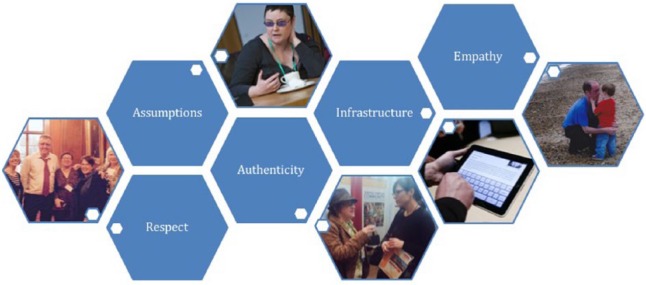
Participatory research methods connect researchers with relevant communities to achieve shared goals. These methods can deliver results that are relevant to people’s lives and thus likely to have a positive impact. In the context of a large and growing body of autism research, with continued poor implementation, and some evidence of community dissatisfaction, there is a powerful case for participatory autism research. In order to develop a framework for such collaborative working, a UK seminar series was organised and co-produced by autistic and non-autistic people with academic, practitioner and lived expertise. This article reports on the outcomes from the series, identifying five topics relevant to building a community of practice in participatory research: Respect, Authenticity, Assumptions, Infrastructure and Empathy. Each topic is connected to a specific example from within and beyond research, to inspire new practices in the field. We call for the development of participatory research skills among the autism research community and the facilitation of greater autistic leadership of, and partnership in, research. Such work, if delivered to a high standard, is likely to lead to better translation into practice and improved outcomes for autistic people and those who support them.
Overview
The claims and statistics of this paper haven’t been checked yet.
Free: it reads the open-access text and checks the first 5 claims that cite a source we can check. Create a free account to check every claim.
Integrity signals
Registry
Cites
Statistics
Figures
Verification
Claims the paper makes
The claims and statistics of this paper haven’t been checked yet.
Free: it reads the open-access text and checks the first 5 claims that cite a source we can check. Create a free account to check every claim.
Claims other papers make about this one
Each is checked against this paper’s own text: does it say what the citing paper says it does?
The source backs part of the claim, not all of it — or backs it for a different population, condition or comparison.
In the citing paper
“In the past decade, autism researchers worldwide have begun to engage with the autistic community, consulting with autistic people at all stages of the research process, exploring ways to work with autistic people as partners, and addressing research topics prioritised by the community (see Fletcher‐Watson et al., 2019; Nicolaidis et al., 2011; Pellicano et al., 2014a, 2014b; Pellicano & Stears, 2”
From Annual Research Review: Shifting from ‘normal science’ to neurodiversity in autism science (2022) · cites this paper as Fletcher‐Watson et al., 2019
Experimental — accuracy not yet measuredThe cited source says what the claim attributes to it.
In the citing paper
“The few studies that have reflected upon lessons learnt from such partnerships have suggested that effective partnerships depend on strong relationships – that is, those in which there is mutual trust between partners, respect for each other’s expertise and ways of being, and an openness to learning from one another (Fletcher-Watson et al., 2019; Jose et al., 2020; Le Cunff et al., 2023; Maye et a”
From ‘You feel part of something bigger’: Stakeholders’ experiences of a long-term community–academic participatory research partnership (2025) · cites this paper as Fletcher-Watson et al., 2019
The cited source says what the claim attributes to it.
In the citing paper
“Though participatory action research comes with its own set of challenges (Fletcher-Watson et al., 2019; Nicolaidis et al., 2011)”
From Neurodiversity and Autism Intervention: Reconciling Perspectives Through a Naturalistic Developmental Behavioral Intervention Framework (2022) · cites this paper as Fletcher-Watson et al., 2019
The cited source says what the claim attributes to it.
In the citing paper
“Such antipathy makes respectful debate framed by contemporary best practice approaches to autism research (Fletcher-Watson et al., 2019, 2021; den Houting et al., 2021; Keating, 2021) unlikely.”
From Perspective: Presuming Autistic Communication Competence and Reframing Facilitated Communication (2022) · cites this paper as Fletcher-Watson et al., 2019
Self-check
Percentages, sums and reported differences re-computed from the paper’s own numbers.
The self-check needs the paper’s full text.
Citations
Cites
A Ladder Of Citizen Participation
Arnstein, S. R. (1969) · Journal of the American Institute of Planners · doi:10.1080/01944366908977225 · Cited by 17,064
What is participatory research?
Cornwall, A., & Jewkes, R. (1995) · Social Science & Medicine · doi:10.1016/0277-9536(95)00127-s · Cited by 2,560 · cited 1×
“By participatory research , we mean incorporating the views of autistic people and their allies about what research gets done, how it is done and how it is implemented (Cornwall and Jewkes, 1995).”
The Third Wave of Science Studies: Studies of Expertise and Experience
Collins, H. M., & Evans, R. (2002) · Social Studies of Science · doi:10.1177/0306312702032002003 · Cited by 2,094 · cited 2×
“Seminar delegates reported that the lived experiences of autistic people – their ‘experiential expertise’ (Collins and Evans, 2002) – is rarely apparent in the context of autism research, though notable exceptions were identified (see Box 1).”
On the ontological status of autism: the ‘double empathy problem’
Milton, D. E. M. (2012) · Disability & Society · doi:10.1080/09687599.2012.710008 · Cited by 2,082 · cited 1×
“The double empathy problem (Milton, 2012) highlights the issue of ‘mutual incomprehension’ that exists between some autistic and non-autistic people, in all walks of life.”
Self-citationWhich terms should be used to describe autism? Perspectives from the UK autism community
Kenny, L., Hattersley, C., Molins, B., Buckley, C., Povey, C., & Pellicano, E. (2016) · Autism · doi:10.1177/1362361315588200 · Cited by 1,941 · cited 1×
“The number of autistic-led organisations, publications (e.g. Autonomy; Beardon, 2017; Lawson et al., 2017; Murray, 2005), online communities (e.g. wrongplanet.net) and events (e.g. Autistic Pride, Autreat and Autscape) is a testament to the energy and dedication of this community.”
Self-citationBrett, J., Staniszewska, S., Mockford, C., Herron‐Marx, S., Hughes, J., Tysall, C., & Suleman, R. (2014) · Health Expectations · doi:10.1111/j.1369-7625.2012.00795.x · Cited by 1,598 · cited 1×
“In so doing, we should draw on the experiences of pioneers within (Frauenberger et al., 2013; Gillespie-Lynch et al., 2017; Mason et al., submitted; McConachie et al., 2018; Nicolaidis et al., 2013; Parsons et al., 2013) and outside (Brett et al., 2014; Rose, 2003) autism research.”
What should autism research focus upon? Community views and priorities from the United Kingdom
Pellicano, E., Dinsmore, A., & Charman, T. (2014) · Autism · doi:10.1177/1362361314529627 · Cited by 800 · cited 1×
“Fortunately, there has been increasing recognition inter-nationally that this situation needs to change, with autistic advocates, academics and activists being some of the strongest voices to speak to these issues (Michael, 2016; Milton, 2014; Nicolaidis et al., 2011; Pellicano et al., 2011).”
Self-citationThe snakes and ladders of user involvement: Moving beyond Arnstein
Tritter, J. Q., & McCallum, A. (2006) · Health Policy · doi:10.1016/j.healthpol.2005.05.008 · Cited by 794 · cited 1×
“There are signs of a much-needed improvement, from openly discussing these issues (Wright et al., 2014), to communities of researchers and autistic people beginning to enact change (Stahmer et al., 2017).”
Israel, B. A., Parker, E. A., Rowe, Z., Salvatore, A., Minkler, M., López, J., Butz, A., Mosley, A., Coates, L., Lambert, G., et al. (2005) · Environmental Health Perspectives · doi:10.1289/ehp.7675 · Cited by 601
Neurotypical Peers are Less Willing to Interact with Those with Autism based on Thin Slice Judgments
Sasson, N. J., Faso, D. J., Nugent, J., Lovell, S., Kennedy, D. P., & Grossman, R. B. (2017) · Scientific Reports · doi:10.1038/srep40700 · Cited by 584 · cited 2×
“, 2016), or negatively judge them based on minimal evidence (Sasson et al., 2017).”
Research works printed but not linked: 14
- Arnold L (2012) Introduction to Autonomy: The Critical Journal of Interdisciplinary Autism Studies. Autonomy: The Critical Journal of Interdisciplinary Autism Studies 1(1): 1.
- Cusack J Sterry R (2016) Your Questions: Shaping Future Autism Research. London: Autistica.
- Gaudion K Hall A Myerson J et al (2014) Design and wellbeing: bridging the empathy gap between neurotypical designers and autistic adults. Design for Sustainable Wellbeing and Empowerment 2014: 61– 77.
- Lawson W Turner T Wilkinson A et al (2017) Love, Partnership, or Singleton on the Autism Spectrum. London: Jessica Kingsley Publishers.
- Long J Panese J Ferguson J et al (2017) Enabling voice and participation in autism services: using practitioner research to develop inclusive practice. Good Autism Practice 18(2): 6– 14.
- Martin N (2010) Minimising the stress of the PhD viva for students with Asperger syndrome. Good Autism Practice 11(1): 52– 57.
- Milton DE Bracher M (2013) Autistics speak but are they heard? Journal of the BSA Medsoc Group 7: 61– 69.
- Murray D (Ed.) (2005) Coming Out Asperger. London: Jessica Kingsley Publishers.
- Pellicano E (2018) Engaging ‘seldom heard’ individuals in participatory autism research. In: Milton D Martin N (eds) Autism and Learning Disability Annual, vol. 2 London: Pavilion Publishing, pp. 29– 34.
- Pellicano E Crane L Gaudion K et al (2017) Participatory Autism Research: A Starterpack. London: UCL Institute of Education.
- Ridout S (2014) More than picture-making: reflecting on collage as a narrative tool for opening discourse on the involvement of autistics in autism research. Autonomy: The Critical Journal of Interdisciplinary Autism Studies 1(3). Available at: http://www.larry-arnold.net/Autonomy/index.php/autonomy/article/view/AR14/html
- Ridout S (2018) Autism and Mental Well-being in Higher Education: A Practical Resource for Students, Mentors and Study Skills Support Workers. Hove: Pavilion Publishing and Media.
- Rose D (2003) Collaborative research between users and professionals: peaks and pitfalls. The Psychiatrist 27(11): 404– 406.
- Sinclair J (2013) Why I dislike ‘person first’ Language. Autonomy, The Critical Journal Of Interdisciplinary Autism Studies, 1(2). Retrieved from http://www.larry-arnold.net/Autonomy/index.php/autonomy/article/view/OP1
Cited by
Avoiding Ableist Language: Suggestions for Autism Researchers
Bottema-Beutel, K., Kapp, S. K., Lester, J. N., Sasson, N. J., & Hand, B. N. (2021) · Autism in Adulthood · doi:10.1089/aut.2020.0014 · Cited by 1,251
“(See Refs.(13,18,59,92,93) for descriptions and guidance on this approach).”
BackgroundAnnual Research Review: Shifting from ‘normal science’ to neurodiversity in autism science
Pellicano, E., & den Houting, J. (2022) · Journal of Child Psychology and Psychiatry · doi:10.1111/jcpp.13534 · Cited by 744
Self-citationNicolaidis, C., Raymaker, D., Kapp, S. K., Baggs, A., Ashkenazy, E., McDonald, K., Weiner, M., Maslak, J., Hunter, M., & Joyce, A. (2019) · Autism · doi:10.1177/1362361319830523 · Cited by 547
“In more recent years, interest in participatory approaches to autism research has blossomed (Crane, Adams, Harper, Welch, & Pellicano, 2018; Fletcher-Watson et al., 2018; Gillespie et al., 2017)) and new participatory research partnerships have emerged (e.”
Happé, F., & Frith, U. (2020) · Journal of Child Psychology and Psychiatry · doi:10.1111/jcpp.13176 · Cited by 438
“More recently, research charities such as Autistica have embraced the new era of stakeholder- and self-advocate-led research (Fletcher-Watson et al., 2018).”
BackgroundLeadbitter, K., Buckle, K. L., Ellis, C., & Dekker, M. (2021) · Frontiers in Psychology · doi:10.3389/fpsyg.2021.635690 · Cited by 417
Camm-Crosbie, L., Bradley, L., Shaw, R., Baron-Cohen, S., & Cassidy, S. (2019) · Autism · doi:10.1177/1362361318816053 · Cited by 415
“Autistic people feel their voices have been excluded from research (Milton and Bracher, 2013), so a participatory approach is advocated in research (Fletcher-Watson et al., 2018; Pellicano et al., 2014).”
“Autism is me”: an investigation of how autistic individuals make sense of autism and stigma
Botha, M., Dibb, B., & Frost, D. M. (2022) · Disability & Society · doi:10.1080/09687599.2020.1822782 · Cited by 412
Understanding Stigma in Autism: A Narrative Review and Theoretical Model
Turnock, A., Langley, K., & Jones, C. R. G. (2022) · Autism in Adulthood · doi:10.1089/aut.2021.0005 · Cited by 407
“205 It is imperative that future autism sigma research includes participation from those with lived experience, 29,199,206,207 not least because to leave the autistic community out of the research process perpetuates a ‘‘them’’ and ‘‘us’’ culture that rein-forces stigma.”
Leedham, A., Thompson, A. R., Smith, R., & Freeth, M. (2020) · Autism · doi:10.1177/1362361319853442 · Cited by 353
“We anticipate that a participatory approach (Fletcher-Watson et al., 2019) would be optimal in order that services can be tested on, and improved in relation to, the factors that are most important to autistic individuals.”
BackgroundUnderstanding Camouflaging as a Response to Autism-Related Stigma: A Social Identity Theory Approach
Perry, E., Mandy, W., Hull, L., & Cage, E. (2022) · Journal of Autism and Developmental Disorders · doi:10.1007/s10803-021-04987-w · Cited by 274
Botha, M. (2021) · Frontiers in Psychology · doi:10.3389/fpsyg.2021.727542 · Cited by 232
Keating, C. T., Hickman, L., Leung, J., Monk, R., Montgomery, A., Heath, H., & Sowden, S. (2023) · Autism Research · doi:10.1002/aur.2864 · Cited by 281
Botha, M., & Cage, E. (2022) · Frontiers in Psychology · doi:10.3389/fpsyg.2022.1050897 · Cited by 266
“There are some good examples of how this is done (Nicolaidis et al., 2015; Fletcher-Watson et al., 2019; Pellicano et al., 2021; Pickard et al., 2022), but perhaps one of the most powerful examples is AASPIRE (Academic Autism Spectrum Partnership in Research and Education).”
BackgroundLai, M.-C., Anagnostou, E., Wiznitzer, M., Allison, C., & Baron-Cohen, S. (2020) · The Lancet Neurology · doi:10.1016/s1474-4422(20)30034-x · Cited by 250
A capabilities approach to understanding and supporting autistic adulthood
Pellicano, E., Fatima, U., Hall, G., Heyworth, M., Lawson, W., Lilley, R., Mahony, J., & Stears, M. (2022) · Nature Reviews Psychology · doi:10.1038/s44159-022-00099-z · Cited by 237
Self-citationSchuck, R. K., Tagavi, D. M., Baiden, K. M. P., Dwyer, P., Williams, Z. J., Osuna, A., Ferguson, E. F., Jimenez Muñoz, M., Poyser, S. K., Johnson, J. F., et al. (2022) · Journal of Autism and Developmental Disorders · doi:10.1007/s10803-021-05316-x · Cited by 208
“Recalling hidden harms”: autistic experiences of childhood applied behavioural analysis (ABA)
McGill, O., & Robinson, A. (2021) · Advances in Autism · doi:10.1108/aia-04-2020-0025 · Cited by 189
Radulski, E. M. (2022) · Human Development · doi:10.1159/000524122 · Cited by 150
“My approach is markedly different from most Neurodiversity research, which is predominantly situated within Classical Disability Studies and the Social Model (see, for example, den Houten, 2019; Fletcher-Watson et al., 2019; Kras, 2009).”
MethodInfluentialAutism, epistemic injustice, and epistemic disablement: a relational account of epistemic agency
Catala, A., Faucher, L., & Poirier, P. (2021) · Synthese · doi:10.1007/s11229-021-03192-7 · Cited by 211
Music therapy for autistic people
Geretsegger, M., Fusar‐Poli, L., Elefant, C., Mössler, K. A., Vitale, G., & Gold, C. (2022) · Cochrane Database of Systematic Reviews · doi:10.1002/14651858.cd004381.pub4 · Cited by 205
“I’m not just a guinea pig”: academic and community perceptions of participatory autism research
den Houting, J., Higgins, J., Isaacs, K., Mahony, J., & Pellicano, E. (2021) · Autism · doi:10.1177/1362361320951696 · Cited by 168
“This outcome is consistent with previous findings regarding autism scientists’ perspectives on community engagement (Hollin & Pearce, 2019), and also with the state of autism research more broadly (Fletcher-Watson et al., 2018).”
ResultSelf-citationUsing interpretative phenomenological analysis in autism research
Howard, K., Katsos, N., & Gibson, J. (2019) · Autism · doi:10.1177/1362361318823902 · Cited by 116
“This will be best achieved when autism research is participatory and involves the autistic community at each stage, from shaping the research questions and designing the methods to the dissemination of results (Fletcher-Watson et al., 2018).”
MethodAdults with Autism: Changes in Understanding Since DSM-111
Howlin, P. (2021) · Journal of Autism and Developmental Disorders · doi:10.1007/s10803-020-04847-z · Cited by 102
Autistic Perspectives on the Future of Clinical Autism Research
Pukki, H., Bettin, J., Outlaw, A. G., Hennessy, J., Brook, K., Dekker, M., Doherty, M., Shaw, S. C. K., Bervoets, J., Rudolph, S., et al. (2022) · Autism in Adulthood · doi:10.1089/aut.2022.0017 · Cited by 130
Self-citationLetter to the Editor: A possible threat to data integrity for online qualitative autism research
Pellicano, E., Adams, D., Crane, L., Hollingue, C., Allen, C., Almendinger, K., Botha, M., Haar, T., Kapp, S. K., & Wheeley, E. (2024) · Autism · doi:10.1177/13623613231174543 · Cited by 128
Self-citationParticipatory autism research: Early career and established researchers’ views and experiences
Pickard, H., Pellicano, E., den Houting, J., & Crane, L. (2022) · Autism · doi:10.1177/13623613211019594 · Cited by 117
“…people to be ‘at the centre of the autism conversation’ (Ne’eman, 2011), participatory research has been proposed as one potential solution (Chown et al., 2017; Fletcher-Watson et al., 2018; Nicolaidis et al., 2011; Parsons et al., 2013; Pellicano & Stears, 2011; Raymaker & Nicolaidis, 2013).”
BackgroundMethodSelf-citationEthics Sheet for Automatic Emotion Recognition and Sentiment Analysis
Mohammad, S. M. (2022) · Computational Linguistics · doi:10.1162/coli_a_00433 · Cited by 107
“…different domains, including research pertaining to disability (Stone and Priestley 1996; Seale et al. 2015), indigenous communities (Hall 2014), autism spectrum (Fletcher-Watson et al. 2019; Bertilsdotter Rosqvist et al. 2019), and neurodiversity (Brosnan et al. 2017; Motti and Evmenova 2020).”
BackgroundPapoudi, D., Jørgensen, C. H. R., Guldberg, K., & Meadan, H. (2020) · Review Journal of Autism and Developmental Disorders · doi:10.1007/s40489-020-00210-1 · Cited by 149
“In terms of methodological design, studies including a participatory paradigm are overall lacking and future research should engage and include individuals with autism from CLD communities in the research process as co-creators of research and knowledge (Fletcher-Watson et al. 2019) so that their voices are heard and…”
BackgroundBoth sex- and gender-related factors should be considered in autism research and clinical practice
Strang, J. F., van der Miesen, A. I., Caplan, R., Hughes, C., daVanport, S., & Lai, M.-C. (2020) · Autism · doi:10.1177/1362361320913192 · Cited by 121
“In this editorial, written as a collaboration between clinician researchers and autistic advocates (Fletcher-Watson et al., 2019), we explore key topics in the field and offer recommendations for advancing this work through more diversified, sex- and gender-informed lenses, and with a focus on the…”
BackgroundAu-Yeung, S. K., Bradley, L., Robertson, A. E., Shaw, R., Baron-Cohen, S., & Cassidy, S. (2019) · Autism · doi:10.1177/1362361318818167 · Cited by 136
If you want to develop an effective autism training, ask autistic students to help you
Gillespie-Lynch, K., Bisson, J. B., Saade, S., Obeid, R., Kofner, B., Harrison, A. J., Daou, N., Tricarico, N., Delos Santos, J., Pinkava, W., et al. (2022) · Autism · doi:10.1177/13623613211041006 · Cited by 112
Parsons, S., Yuill, N., Good, J., & Brosnan, M. (2019) · Disability & Society · doi:10.1080/09687599.2019.1624152 · Cited by 130
“This is beginning to change in some areas (for example, Beck 2018; Chown et al. 2017; Fletcher-Watson et al. 2018) but such approaches represent the exception rather than the norm.”
Crane, L., Hearst, C., Ashworth, M., Davies, J., & Hill, E. L. (2021) · Journal of Autism and Developmental Disorders · doi:10.1007/s10803-020-04486-4 · Cited by 112
Self-citationBabb, C., Brede, J., Jones, C. R. G., Elliott, M., Zanker, C., Tchanturia, K., Serpell, L., Mandy, W., & Fox, J. R. E. (2021) · Autism · doi:10.1177/1362361321991257 · Cited by 99
“A participatory approach is advocated particularly in autism research to ensure relevance to the affected community, sensitive and ethical conduct of the research, and to enhance the quality of data collected, analysis and communication of findings (Fletcher-Watson et al., 2019).”
BackgroundMutual (Mis)understanding: Reframing Autistic Pragmatic “Impairments” Using Relevance Theory
Williams, G., Wharton, T., & Jagoe, C. (2021) · Frontiers in Psychology · doi:10.3389/fpsyg.2021.616664 · Cited by 139
“…in its own right, the research project could become a mutually beneficial endeavor to both us as researchers and to the participants: a cornerstone of participatory and communitybased research (Milton and Bracher, 2013; Chown et al., 2017; Elson et al., 2018; Fletcher-Watson et al., 2019).”
Background‘A way to be me’: Autobiographical reflections of autistic adults diagnosed in mid-to-late adulthood
Lilley, R., Lawson, W. B., Hall, G., Mahony, J., Clapham, H., Heyworth, M., Arnold, S. R. C., Trollor, J. N., Yudell, M., & Pellicano, E. (2021) · Autism · doi:10.1177/13623613211050694 · Cited by 125
Self-citationInclusive Practices for Neurodevelopmental Research
Fletcher-Watson, S., Brook, K., Hallett, S., Murray, F., & Crompton, C. J. (2021) · Current Developmental Disorders Reports · doi:10.1007/s40474-021-00227-z · Cited by 99
Self-citationTaylor, E., Livingston, L. A., Clutterbuck, R. A., Callan, M. J., & Shah, P. (2023) · Autism · doi:10.1177/13623613221146440 · Cited by 119
“Following participatory autism research guidelines (Fletcher-Watson et al., 2019), the study was co-developed with autistic adults of different backgrounds, ages, and genders.”
MethodPellicano, E., Brett, S., den Houting, J., Heyworth, M., Magiati, I., Steward, R., Urbanowicz, A., & Stears, M. (2022) · Autism · doi:10.1177/13623613211035936 · Cited by 113
“We need, as a result, a strategic research programme, designed in partnership with the autistic community (Fletcher-Watson et al., 2019; Nicolaidis et al., 2019) to ensure that autistic people’s social needs do not continue to be overlooked in these times of uncertainty or beyond.”
BackgroundSelf-citationGibson, J. L., Pritchard-Rowe, E., & de Lemos, C. (2021) · Autism & Developmental Language Impairments · doi:10.1177/23969415211015840 · Cited by 119
“Papers classed as ‘other’ or ‘indicative’ for these types of interventions often include discussion of the development process and stakeholder consultation, important features of inclusive research (Fletcher-Watson et al., 2018).”
BackgroundPellicano, E., Lawson, W., Hall, G., Mahony, J., Lilley, R., Heyworth, M., Clapham, H., & Yudell, M. (2022) · Autism in Adulthood · doi:10.1089/aut.2021.0039 · Cited by 91
Self-citationThe Scholarly Neglect of Black Autistic Adults in Autism Research
Malone, K. M., Pearson, J. N., Palazzo, K. N., Manns, L. D., Rivera, A. Q., & Mason Martin, D. L. (2022) · Autism in Adulthood · doi:10.1089/aut.2021.0086 · Cited by 95
“85 88 Without the inclusion of Black autistic adults’ voices, their knowledge, lived experiences, and recommendations for the field, we continue to perpetuate Euro-centric practices, policy, and research.”
The Foundations of Autistic Flourishing
Pellicano, E., & Heyworth, M. (2023) · Current Psychiatry Reports · doi:10.1007/s11920-023-01441-9 · Cited by 113
“There is a slow but growing movement toward collaborating with Autistic people and their allies as part of the research process, where Autistic researchers and community members are actively involved in making decisions about research [93, 94], as well as leading research [95 •• ].”
BackgroundSelf-citationPerspective: Presuming Autistic Communication Competence and Reframing Facilitated Communication
Heyworth, M., Chan, T., & Lawson, W. (2022) · Frontiers in Psychology · doi:10.3389/fpsyg.2022.864991 · Cited by 103
The hidden inequalities of COVID-19
Pellicano, E., & Stears, M. (2020) · Autism · doi:10.1177/1362361320927590 · Cited by 97
“The best way to do that, of course, is to conduct research shaped and conducted in direct partnership with autistic people themselves (Fletcher-Watson et al., 2019; Nicolaidis et al., 2019; Pellicano & Stears, 2011).”
BackgroundSelf-citationDoing it differently: emancipatory autism studies within a neurodiverse academic space
Bertilsdotter Rosqvist, H., Kourti, M., Jackson-Perry, D., Brownlow, C., Fletcher, K., Bendelman, D., & O'Dell, L. (2019) · Disability & Society · doi:10.1080/09687599.2019.1603102 · Cited by 76
“These are powerful works that work to unravel the hegemonies behind how disability as a concept is produced as a discourse that is often riddled with the echoes of Garland Thomson’s (1996) notion of the ‘freakshow.”
BackgroundInfluentialCascio, M. A., Weiss, J. A., & Racine, É. (2020) · Autism · doi:10.1177/1362361320918763 · Cited by 104
“Several research teams in many countries have engaged in participatory research with autistic people, and have published reports or guidelines for how to conduct such studies (Autism CRC, 2016; Fletcher-Watson et al., 2018; Nicolaidis et al., 2019), including ethical considerations.”
Background‘When my autism broke’: A qualitative study spotlighting autistic voices on menopause
Moseley, R. L., Druce, T., & Turner‐Cobb, J. M. (2020) · Autism · doi:10.1177/1362361319901184 · Cited by 102
“The lack of professional expertise identified in our analysis, and eagerness for autism dogma to be challenged, also corroborates the importance of refocusing towards autistic involvement in order to drive progress in this area (Fletcher-Watson et al., 2018).”
BackgroundInfluentialPryke-Hobbes, A., Davies, J., Heasman, B., Livesey, A., Walker, A., Pellicano, E., & Remington, A. (2023) · PLoS ONE · doi:10.1371/journal.pone.0290001 · Cited by 95
“Where possible, such training should also be co-produced with (autistic and non-autistic) neurodivergent individuals within the organisation, or with external neurodivergent collaborators, to ensure that they accurately represent the views and experiences of neurodivergent people and lead to meaningful change [62,63].”
BackgroundSelf-citationMoving from Disorder to Difference: A Systematic Review of Recent Language Use in Autism Research
Bottini, S. B., Morton, H. E., Buchanan, K. A., & Gould, K. (2024) · Autism in Adulthood · doi:10.1089/aut.2023.0030 · Cited by 103
“82,83 Thus, including autistic adult participants in published research may be more likely to use ANL.”
What are the views and experiences of autistic teachers? Findings from an online survey in the UK
Wood, R., & Happé, F. (2023) · Disability & Society · doi:10.1080/09687599.2021.1916888 · Cited by 73
Botha, M. (2021) · Journal of Community Psychology · doi:10.1002/jcop.22764 · Cited by 104
O’Keeffe, C., & McNally, S. (2021) · Review Journal of Autism and Developmental Disorders · doi:10.1007/s40489-021-00286-3 · Cited by 103
Elsherif, M. M., Middleton, S. L., Phan, J. M., Azevedo, F., Iley, B. J., Grose-Hodge, M., Tyler, S. L., Kapp, S. K., Gourdon-Kanhukamwe, A., Grafton-Clarke, D., et al. (2022) · doi:10.31222/osf.io/k7a9p · Cited by 91
Lei, J., Jones, L., & Brosnan, M. (2021) · Autism · doi:10.1177/1362361320987963 · Cited by 100
“Fletcher-Watson et al. (2019) discussed in their recent paper entitled ‘ Making the future together: Shaping autism research through meaningful participation ’ that participatory research should endorse partnership with autistic people, engagement with the autism community, and consultation with…”
BackgroundConsidering the Autistic advantage in qualitative research: the strengths of Autistic researchers
Grant, A., & Kara, H. (2021) · Contemporary Social Science · doi:10.1080/21582041.2021.1998589 · Cited by 66
Lam, G. Y. H., Holden, E., Fitzpatrick, M., Mendez, L. M. R., & Berkman, K. A. (2020) · Autism · doi:10.1177/1362361319898961 · Cited by 98
“While autism research can benefit from the use of participatory approaches in promoting meaningful engagement and collaboration with the autistic community (Fletcher-Watson et al., 2019; Pellicano et al., 2018), the quality of participation varies widely, largely depending on the goals and resources on the researchers…”
BackgroundInfluentialGuidelines for conducting research studies with the autism community.
Gowen, E., Taylor, R., Bleazard, T., Greenstein, A., Baimbridge, P., & Poole, D. (2019) · PubMed · Cited by 165
Participatory autism research: how consultation benefits everyone
Keating, C. T. (2021) · Frontiers in Psychology · doi:10.3389/fpsyg.2021.713982 · Cited by 85
“Community input can (a) improve the quality of research methods and place findings within a real-world context, thus facilitating the translation of findings into practice (Grinker et al., 2012; Parsons and Cobb, 2013; Carrington et al., 2016; Fletcher-Watson et al., 2019), (b) ensure that research yields relevant and…”
BackgroundInfluentialAutism Voices : A novel method to access first-person perspective of autistic youth
Courchesne, V., Tesfaye, R., Mirenda, P., Nicholas, D. B., Mitchell, W., Singh, I., Zwaigenbaum, L., & Elsabbagh, M. (2021) · Autism · doi:10.1177/13623613211042128 · Cited by 89
“Rather, we need to find better ways to respectfully inquire and engage (Fletcher-Watson et al., 2018).”
BackgroundAlcorn, A. M., Ainger, E., Charisi, V., Mantinioti, S., Petrović, S., Schadenberg, B. R., Tavassoli, T., & Pellicano, E. (2019) · Frontiers in Robotics and AI · doi:10.3389/frobt.2019.00107 · Cited by 74
“Such participatory processes are being championed across autism research (Nicolaidis et al., 2011; Pellicano and Stears, 2011; Fletcher-Watson et al., 2019), but especially within technology-related autism research (Frauenberger et al.”
BackgroundSelf-citationChanging the story: How diagnosticians can support a neurodiversity perspective from the start
Brown, H. M., Stahmer, A. C., Dwyer, P., & Rivera, S. (2021) · Autism · doi:10.1177/13623613211001012 · Cited by 82
“The recent push to authentically include autistic voices in all phases of the research process (e.g. Fletcher-Watson et al., 2019) along with the concurrent acknowledgement that self-determination is critical to building a positive quality of life for autistic people (e.g. Weiss & Burnham Riosa,…”
BackgroundWaisman, T., Williams, Z. J., Cage, E., Santhanam, S. P., Magiati, I., Dwyer, P. S. R., Stockwell, K. M., Kofner, B., Brown, H. M., Davidson, D. Z., et al. (2022) · Autism · doi:10.1177/13623613221097207 · Cited by 90
“The importance of ensuring that autistic voices guide autism research and practice is increasingly recognized (Fletcher-Watson et al., 2019; Pellicano et al., 2018).”
BackgroundThe Human Spectrum: A Phenomenological Enquiry within Neurodiversity
Murray, D., Milton, D. E. M., Green, J., & Bervoets, J. (2022) · Psychopathology · doi:10.1159/000526213 · Cited by 86
Self-citationMeaningful research for autistic people? Ask autistics!
Poulsen, R. E., Brownlow, C., Lawson, W. B., & Pellicano, E. (2022) · Autism · doi:10.1177/13623613211064421 · Cited by 77
“There is a deepening recognition that having rigorous methodological design that is participatory in nature improves the outcomes of research (den Houting et al., 2021; Fletcher-Watson et al., 2019; Gillespie-Lynch et al., 2017; Nicolaidis et al., 2019; Pellicano, 2020; Pellicano et al., 2021).”
BackgroundSelf-citationCoproduction with Autistic Adults: Reflections from the Authentistic Research Collective
Stark, E. A., Ali, D., Ayre, A., Schneider, N., Parveen, S., Marais, K., Holmes, N., & Pender, R. (2020) · Autism in Adulthood · doi:10.1089/aut.2020.0050 · Cited by 84
Zervogianni, V., Fletcher‐Watson, S., Herrera, G., Goodwin, M. S., Pérez-Fuster, P., Brosnan, M., & Grynszpan, O. (2020) · Autism · doi:10.1177/1362361319898331 · Cited by 79
“This is best achieved through participatory research approaches which critically reflect on the current status of support with the autistic and broader autism communities, in order to identify how the field can develop more inclusively (Fletcher-Watson et al., 2019; Parsons et al., 2019).”
BackgroundInfluentialSelf-citationAutism voices: Perspectives of the needs, challenges, and hopes for the future of autistic youth
Tesfaye, R., Courchesne, V., Mirenda, P., Mitchell, W., Nicholas, D. B., Singh, I., Zwaigenbaum, L., & Elsabbagh, M. (2022) · Autism · doi:10.1177/13623613221132108 · Cited by 79
“Similarly, the inclusion of autistic individuals in research is also related to their empowerment and community belonging (Andersen & Dolva, 2015), in addition to optimizing research and health policies (Fletcher-Watson et al., 2018; Perry-Hazan, 2016).”
BackgroundA Systematic Review of Interventions to Improve Healthcare Experiences and Access in Autism
Walsh, C., O'Connor, P. E., Walsh, E., & Lydon, S. (2021) · Review Journal of Autism and Developmental Disorders · doi:10.1007/s40489-021-00279-2 · Cited by 73
Kelly, C., Sharma, S., Jieman, A.-T., & Ramon, S. (2022) · Disability & Society · doi:10.1080/09687599.2022.2076582 · Cited by 71
Kourti, M. (2021) · Frontiers in Psychology · doi:10.3389/fpsyg.2021.713423 · Cited by 73
“The way autism research operates within current structures, however, may stand in the way of that, as not only do they not facilitate the two processes, but they also do not recognise their importance (Kapp et al., 2013; Milton and Bracher, 2013; Chown et al., 2017; Fletcher-Watson et al., 2019).”
BackgroundRiccio, A., Kapp, S. K., Jordan, A., Dorelien, A. M., & Gillespie-Lynch, K. (2021) · Autism · doi:10.1177/1362361320958214 · Cited by 50
“…defined as research which includes autistic people in conceptualizing, conducting, and disseminating research, is increasingly recognized as a key strategy for improving the social validity of autism research (e.g. Fletcher-Watson et al., 2018; Nicolaidis et al., 2019; Raymaker & Nicolaidis, 2013).”
BackgroundFinch, T. L., Mackintosh, J. E., Petrou, A., McConachie, H., Couteur, A. S. L., Garland, D., & Parr, J. R. (2022) · PLoS ONE · doi:10.1371/journal.pone.0264932 · Cited by 67
“In the context of these findings, it is not surprising that the autism community remain concerned about the lack of service provision and service development [44].”
BackgroundSelf-citationAccardo, A. L., Pontes, N. M. H., & Pontes, M. (2022) · Journal of Autism and Developmental Disorders · doi:10.1007/s10803-022-05803-9 · Cited by 66
Cohort profile: the Australian Longitudinal Study of Adults with Autism (ALSAA)
Arnold, S., Foley, K.-R., Hwang, Y. I. (., Richdale, A. L., Uljarevic, M., Lawson, L. P., Cai, R. Y., Falkmer, T., Falkmer, M., Lennox, N. G., et al. (2019) · BMJ Open · doi:10.1136/bmjopen-2019-030798 · Cited by 58
Hanrahan, R., Smith, E., Johnson, H., Constantin, A., & Brosnan, M. (2020) · Journal of Autism and Developmental Disorders · doi:10.1007/s10803-020-04490-8 · Cited by 69
Martin, W. B., Yu, J. W., Wei, X., Vidiksis, R., Patten, K. K., & Riccio, A. (2020) · Frontiers in Education · doi:10.3389/feduc.2020.00075 · Cited by 64
“In our own current iteration of the IDEAS project, we are involving autistic youth in the design and facilitation of a new high school version of the program (Fletcher-Watson et al., 2019; Nicolaidis et al., 2019).”
MethodSix ideas about how to address the autism mental health crisis
Mandy, W. (2022) · Autism · doi:10.1177/13623613211067928 · Cited by 60
Guldberg, K., Achtypi, A., D’Alonzo, L., Laskaridou, K., Milton, D. E. M., Molteni, P., & Wood, R. (2019) · International Journal of Research & Method in Education · doi:10.1080/1743727x.2019.1706466 · Cited by 62
“people in autism research is a concept that has developed significantly within the UK context over the last decade in particular (Pellicano, Dinsmore and Charman, 2013; Fletcher-Watson et al., 2018), and the project reflected this trend.”
BackgroundSelf-citationScher, B. D., Scott-Barrett, J., Hickman, M., & Chrisinger, B. W. (2023) · Journal of Participatory Research Methods · doi:10.35844/001c.74807 · Cited by 62
Pavlopoulou, G., & Dimitriou, D. (2019) · Research in Developmental Disabilities · doi:10.1016/j.ridd.2019.103556 · Cited by 61
Seeing and inviting participation in autistic interactions
De Jaegher, H. (2023) · Transcultural Psychiatry · doi:10.1177/13634615211009627 · Cited by 54
“Approaches like this stimulate rethinking ideas of empowerment, outcomes, and assistive technology (e.g., Frauenberger et al., 2019; van Dijk et al., 2019; see also Fletcher-Watson et al., 2018; Parsons et al., 2017, 2020).”
BackgroundA Critical Review of Academic Literature Constructing Well-Being in Autistic Adults
Lam, G. Y. H., Sabnis, S. V., Valcarlos, M. M., & Wolgemuth, J. R. (2021) · Autism in Adulthood · doi:10.1089/aut.2020.0053 · Cited by 61
“21,22 Therefore, we focused our current inquiry on analyzing how and to what extent input from autistic people guided well-being research.”
Rosqvist, B. (2019) · doi:10.1016/j.alter.2019.03.003 · Cited by 55
Holloway-George, C. A., Munro, N., Jackson, J., Phillips, S., & Ropar, D. (2019) · Research in Developmental Disabilities · doi:10.1016/j.ridd.2019.103545 · Cited by 61
“Working in partnership with autistic individuals to gain their views on how to enhance service provision (Robertson, 2010), and to ensure research is both meaningful and valuable to the autistic community (Fletcher-Watson et al., 2019) can lead to better translation of the research findings to real-world settings, imp…”
BackgroundMonahan, J. L., Freedman, B. H., Pini, K., & Lloyd, R. (2021) · Review Journal of Autism and Developmental Disorders · doi:10.1007/s40489-021-00280-9 · Cited by 61
Autistic People's Experience of Empathy and the Autistic Empathy Deficit Narrative
Kimber, L., Verrier, D. B., & Connolly, S. (2024) · Autism in Adulthood · doi:10.1089/aut.2023.0001 · Cited by 59
“11 In providing space for autistic people to express their own thoughts and experiences, there must be recognition that there will be a diversity of views, 50 as is reflected in these findings, and that these views are valid reflections of an individual’s experience.”
Cunff, A. L., Martis, B.-L., Glover, C., Ahmed, E., Ford, R. M., Giampietro, V., & Dommett, E. J. (2025) · Frontiers in Education · doi:10.3389/feduc.2024.1437673 · Cited by 63
Bisset, M., Brown, L. E., Bhide, S., Patel, P., Zendarski, N. J., Coghill, D., Payne, L., Bellgrove, M. A., Middeldorp, C. M., & Sciberras, E. (2023) · Journal of Child Psychology and Psychiatry · doi:10.1111/jcpp.13752 · Cited by 54
Gillespie‐Lynch, K., Hotez, E., Zajic, M. C., Riccio, A., DeNigris, D., Kofner, B., Bublitz, D., Gaggi, N. L., & Luca, K. (2020) · Autism · doi:10.1177/1362361320929453 · Cited by 75
“Participatory research involving autistic students remains very rare (Hotez et al., 2018; Searle et al., 2019; Vincent et al., 2017), despite increasing recognition that participatory approaches improve social validity (e.g. Fletcher-Watson et al., 2019; Nicolaidis et al., 2013).”
BackgroundSonuga-Barke, E. J. S., Chandler, S., Lukito, S., Kakoulidou, M., Moore, G., Cooper, N., Matejko, M., Jackson, I., Balwani, B., Boyens, T., et al. (2024) · The British Journal of Psychiatry · doi:10.1192/bjp.2023.151 · Cited by 58
“10 In terms of scope, their influence needs to be extended to more basic translational science studies aimed at understanding the mechanisms through which neurodevelopmental variation affects young people ’ s daily lives in ways that can be harnessed to improve intervention approaches.”
BackgroundThe mainstream school experiences of adolescent autistic girls
Tomlinson, C., Bond, C., & Hebron, J. (2021) · European Journal of Special Needs Education · doi:10.1080/08856257.2021.1878657 · Cited by 56
“Such research is essential in highlighting autistic girls’ priorities and effective educational interventions to improve their life outcomes (Fletcher-Watson et al. 2019).”
BackgroundBarbaro, J., & Yaari, M. (2020) · BMC Pediatrics · doi:10.1186/s12887-019-1888-6 · Cited by 51
Vivanti, G., & Messinger, D. S. (2021) · Journal of Autism and Developmental Disorders · doi:10.1007/s10803-021-04887-z · Cited by 78
Buckley, E., Pellicano, E., & Remington, A. (2021) · Journal of Autism and Developmental Disorders · doi:10.1007/s10803-020-04517-0 · Cited by 49
Self-citationRamírez-Duque, A. A., Aycardi, L. F., Villa, A., Múnera, M., Bastos-Filho, T., Belpaeme, T., Frizera, A., & Cifuentes, C. A. (2020) · International Journal of Social Robotics · doi:10.1007/s12369-020-00627-y · Cited by 49
An Expert Roundtable Discussion on Experiences of Autistic Autism Researchers
Dwyer, P. S. R., Acevedo, S. M., Brown, H. M., Grapel, J., Jones, S. C., Nachman, B. R., Raymaker, D., & Williams, Z. J. (2021) · Autism in Adulthood · doi:10.1089/aut.2021.29019.rtb · Cited by 54
STELA: a community-centred approach to norm elicitation for AI alignment
Bergman, S., Marchal, N., Mellor, J., Mohamed, S., Gabriel, I., & Isaac, W. (2024) · Scientific Reports · doi:10.1038/s41598-024-56648-4 · Cited by 48
den Houting, J., Higgins, J. M., Isaacs, K., Mahony, J., & Pellicano, E. (2022) · Frontiers in Psychology · doi:10.3389/fpsyg.2022.876990 · Cited by 49
Self-citationChapple, M., Davis, P. M., Billington, J., Myrick, J. A., Ruddock, C., & Corcoran, R. (2021) · Frontiers in Psychology · doi:10.3389/fpsyg.2021.708375 · Cited by 50
Metadata
- Authors
- Fletcher-Watson, S., Adams, J., Brook, K., Charman, T., Crane, L., Cusack, J., Leekam, S., Milton, D., Parr, J. R., & Pellicano, E.
- Affiliations
- The University of Edinburgh, UK
- Flow Observatorium, UK
- Autism Rights Group Highland, UK
- King's College London (GB)
- University College London (GB)
- Autistica (GB)
- Cardiff University (GB)
- University of Kent (GB)
- Newcastle University (GB)
- Macquarie University (AU)
- ORCID
- Venue
- Autism
- Publisher
- SAGE Publications
- Published
- 2018-08-10
- Volume
- 23
- Issue
- 4
- Pages
- 943-953
- ISSN
- 1362-3613 (ISSN-L)
- 1461-7005
- PMC
- PMC6512245
- OpenAlex
- W2807975560
- Cited by
- 776
- References
- 50
- Citations by year
- 2026: 142 · 2025: 137 · 2024: 119 · 2023: 100 · 2022: 83 · 2021: 91 · 2020: 63 · 2019: 37 · 2018: 3
- FWCI
- 74.07
- Type
- journal article
- Language
- en
- Open access
- hybrid
- doi.org
- Licence
- cc-by
- journals.sagepub.com/page/policies/text-and-data-mining-license (tdm)
- Locations
- Autism (publishedVersion, cc-by)
- PubMed Central (publishedVersion, cc-by)
- PubMed (publishedVersion)
- ORCA Online Research @Cardiff (Cardiff University) (acceptedVersion)
- Kent Academic Repository (University of Kent) (submittedVersion, other-oa)
- UCL Discovery (University College London) (submittedVersion)
- Research Portal (King's College London) (submittedVersion, cc-by)
- University of Birmingham Research Portal (University of Birmingham) (submittedVersion)
- Edinburgh Research Explorer (University of Edinburgh) (submittedVersion, cc-by)
- Newcastle University ePrints (Newcastle Univesity) (cc-by)
- Funders
- Economic and Social Research Council (ES/M00225X/1)
- Leverhulme Trust (Philip Leverhulme Prize)
- Topics
- Health Sciences › Health Professions › General Health Professions › Mental Health and Patient Involvement
- Social Sciences › Sociology and Political Science › Participatory Visual Research Methods
- Health Sciences › Medicine › Public Health, Environmental and Occupational Health › Community Health and Development
- Keywords
- participatory research, autism research, autistic people, communities of practice, research collaboration, lived expertise, research translation, co-production
- MeSH terms
- Stakeholder Participation, Respect, Autistic Disorder, Empathy, United Kingdom, Health Services, Humans, Social Work, Biomedical Research, Community-Based Participatory Research
About these checks
Registry, retraction, Cites and statistics results are computed, not judged, with one exception: a printed reference that no index lists is read once by a model before it counts as a citation error. Claims are extracted by a model and kept only when their quote appears verbatim in the text; each cited source is then checked, with a model’s help, for whether it says what the claim relies on. Those verdicts can be wrong — read the claim’s quote and the cited source before relying on one.
Statistics and arithmetic are recomputed, not judged.
Confidence bands are shown only for fields calibrated on our annotated test set. None is calibrated yet, so no band is shown.
What counts as a claim ›How we measure confidence ›How we check this ›
Are you an author, or do you see a problem with this page? Request a review
Data sources
Bibliographic data: Semantic Scholar, OpenAlex, Crossref.
Contains information from the Semantic Scholar Academic Graph Datasets, made available under the ODC Attribution License (ODC-BY 1.0).
Semantic Scholar’s data is described in: Kinney, R., et al. (2023). The Semantic Scholar Open Data Platform. arXiv:2301.10140.
