

Making the future together: Shaping autism research through meaningful participation
Open accessThe DOI matches its Crossref record; 50 of the 50 references it cites were found in a registry or an index.
Abstract
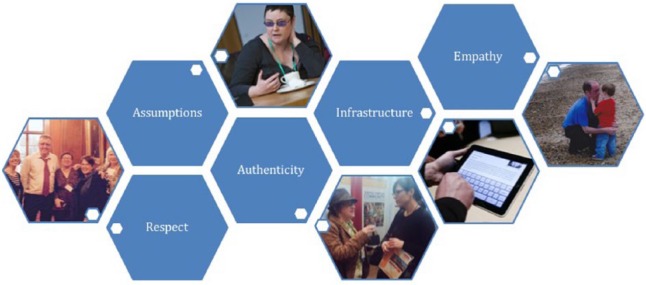
Participatory research methods connect researchers with relevant communities to achieve shared goals. These methods can deliver results that are relevant to people’s lives and thus likely to have a positive impact. In the context of a large and growing body of autism research, with continued poor implementation, and some evidence of community dissatisfaction, there is a powerful case for participatory autism research. In order to develop a framework for such collaborative working, a UK seminar series was organised and co-produced by autistic and non-autistic people with academic, practitioner and lived expertise. This article reports on the outcomes from the series, identifying five topics relevant to building a community of practice in participatory research: Respect, Authenticity, Assumptions, Infrastructure and Empathy. Each topic is connected to a specific example from within and beyond research, to inspire new practices in the field. We call for the development of participatory research skills among the autism research community and the facilitation of greater autistic leadership of, and partnership in, research. Such work, if delivered to a high standard, is likely to lead to better translation into practice and improved outcomes for autistic people and those who support them.
Overview
The claims and statistics of this paper haven’t been checked yet.
Free: it reads the open-access text and checks the first 5 claims that cite a source we can check. Create a free account to check every claim.
Integrity signals
Registry
Cites
Statistics
Figures
Verification
Claims the paper makes
The claims and statistics of this paper haven’t been checked yet.
Free: it reads the open-access text and checks the first 5 claims that cite a source we can check. Create a free account to check every claim.
Claims other papers make about this one
Each is checked against this paper’s own text: does it say what the citing paper says it does?
The source backs part of the claim, not all of it — or backs it for a different population, condition or comparison.
In the citing paper
“In the past decade, autism researchers worldwide have begun to engage with the autistic community, consulting with autistic people at all stages of the research process, exploring ways to work with autistic people as partners, and addressing research topics prioritised by the community (see Fletcher‐Watson et al., 2019; Nicolaidis et al., 2011; Pellicano et al., 2014a, 2014b; Pellicano & Stears, 2”
From Annual Research Review: Shifting from ‘normal science’ to neurodiversity in autism science (2022) · cites this paper as Fletcher‐Watson et al., 2019
Experimental — accuracy not yet measuredThe cited source says what the claim attributes to it.
In the citing paper
“The few studies that have reflected upon lessons learnt from such partnerships have suggested that effective partnerships depend on strong relationships – that is, those in which there is mutual trust between partners, respect for each other’s expertise and ways of being, and an openness to learning from one another (Fletcher-Watson et al., 2019; Jose et al., 2020; Le Cunff et al., 2023; Maye et a”
From ‘You feel part of something bigger’: Stakeholders’ experiences of a long-term community–academic participatory research partnership (2025) · cites this paper as Fletcher-Watson et al., 2019
The cited source says what the claim attributes to it.
In the citing paper
“Though participatory action research comes with its own set of challenges (Fletcher-Watson et al., 2019; Nicolaidis et al., 2011)”
From Neurodiversity and Autism Intervention: Reconciling Perspectives Through a Naturalistic Developmental Behavioral Intervention Framework (2022) · cites this paper as Fletcher-Watson et al., 2019
The cited source says what the claim attributes to it.
In the citing paper
“Such antipathy makes respectful debate framed by contemporary best practice approaches to autism research (Fletcher-Watson et al., 2019, 2021; den Houting et al., 2021; Keating, 2021) unlikely.”
From Perspective: Presuming Autistic Communication Competence and Reframing Facilitated Communication (2022) · cites this paper as Fletcher-Watson et al., 2019
Self-check
Percentages, sums and reported differences re-computed from the paper’s own numbers.
The self-check needs the paper’s full text.
Citations
Cites
A Ladder Of Citizen Participation
Arnstein, S. R. (1969) · Journal of the American Institute of Planners · doi:10.1080/01944366908977225 · Cited by 17,064
What is participatory research?
Cornwall, A., & Jewkes, R. (1995) · Social Science & Medicine · doi:10.1016/0277-9536(95)00127-s · Cited by 2,560 · cited 1×
“By participatory research , we mean incorporating the views of autistic people and their allies about what research gets done, how it is done and how it is implemented (Cornwall and Jewkes, 1995).”
The Third Wave of Science Studies: Studies of Expertise and Experience
Collins, H. M., & Evans, R. (2002) · Social Studies of Science · doi:10.1177/0306312702032002003 · Cited by 2,094 · cited 2×
“Seminar delegates reported that the lived experiences of autistic people – their ‘experiential expertise’ (Collins and Evans, 2002) – is rarely apparent in the context of autism research, though notable exceptions were identified (see Box 1).”
On the ontological status of autism: the ‘double empathy problem’
Milton, D. E. M. (2012) · Disability & Society · doi:10.1080/09687599.2012.710008 · Cited by 2,082 · cited 1×
“The double empathy problem (Milton, 2012) highlights the issue of ‘mutual incomprehension’ that exists between some autistic and non-autistic people, in all walks of life.”
Self-citationWhich terms should be used to describe autism? Perspectives from the UK autism community
Kenny, L., Hattersley, C., Molins, B., Buckley, C., Povey, C., & Pellicano, E. (2016) · Autism · doi:10.1177/1362361315588200 · Cited by 1,941 · cited 1×
“The number of autistic-led organisations, publications (e.g. Autonomy; Beardon, 2017; Lawson et al., 2017; Murray, 2005), online communities (e.g. wrongplanet.net) and events (e.g. Autistic Pride, Autreat and Autscape) is a testament to the energy and dedication of this community.”
Self-citationBrett, J., Staniszewska, S., Mockford, C., Herron‐Marx, S., Hughes, J., Tysall, C., & Suleman, R. (2014) · Health Expectations · doi:10.1111/j.1369-7625.2012.00795.x · Cited by 1,598 · cited 1×
“In so doing, we should draw on the experiences of pioneers within (Frauenberger et al., 2013; Gillespie-Lynch et al., 2017; Mason et al., submitted; McConachie et al., 2018; Nicolaidis et al., 2013; Parsons et al., 2013) and outside (Brett et al., 2014; Rose, 2003) autism research.”
What should autism research focus upon? Community views and priorities from the United Kingdom
Pellicano, E., Dinsmore, A., & Charman, T. (2014) · Autism · doi:10.1177/1362361314529627 · Cited by 800 · cited 1×
“Fortunately, there has been increasing recognition inter-nationally that this situation needs to change, with autistic advocates, academics and activists being some of the strongest voices to speak to these issues (Michael, 2016; Milton, 2014; Nicolaidis et al., 2011; Pellicano et al., 2011).”
Self-citationThe snakes and ladders of user involvement: Moving beyond Arnstein
Tritter, J. Q., & McCallum, A. (2006) · Health Policy · doi:10.1016/j.healthpol.2005.05.008 · Cited by 794 · cited 1×
“There are signs of a much-needed improvement, from openly discussing these issues (Wright et al., 2014), to communities of researchers and autistic people beginning to enact change (Stahmer et al., 2017).”
Israel, B. A., Parker, E. A., Rowe, Z., Salvatore, A., Minkler, M., López, J., Butz, A., Mosley, A., Coates, L., Lambert, G., et al. (2005) · Environmental Health Perspectives · doi:10.1289/ehp.7675 · Cited by 601
Neurotypical Peers are Less Willing to Interact with Those with Autism based on Thin Slice Judgments
Sasson, N. J., Faso, D. J., Nugent, J., Lovell, S., Kennedy, D. P., & Grossman, R. B. (2017) · Scientific Reports · doi:10.1038/srep40700 · Cited by 584 · cited 2×
“, 2016), or negatively judge them based on minimal evidence (Sasson et al., 2017).”
Research works printed but not linked: 14
- Arnold L (2012) Introduction to Autonomy: The Critical Journal of Interdisciplinary Autism Studies. Autonomy: The Critical Journal of Interdisciplinary Autism Studies 1(1): 1.
- Cusack J Sterry R (2016) Your Questions: Shaping Future Autism Research. London: Autistica.
- Gaudion K Hall A Myerson J et al (2014) Design and wellbeing: bridging the empathy gap between neurotypical designers and autistic adults. Design for Sustainable Wellbeing and Empowerment 2014: 61– 77.
- Lawson W Turner T Wilkinson A et al (2017) Love, Partnership, or Singleton on the Autism Spectrum. London: Jessica Kingsley Publishers.
- Long J Panese J Ferguson J et al (2017) Enabling voice and participation in autism services: using practitioner research to develop inclusive practice. Good Autism Practice 18(2): 6– 14.
- Martin N (2010) Minimising the stress of the PhD viva for students with Asperger syndrome. Good Autism Practice 11(1): 52– 57.
- Milton DE Bracher M (2013) Autistics speak but are they heard? Journal of the BSA Medsoc Group 7: 61– 69.
- Murray D (Ed.) (2005) Coming Out Asperger. London: Jessica Kingsley Publishers.
- Pellicano E (2018) Engaging ‘seldom heard’ individuals in participatory autism research. In: Milton D Martin N (eds) Autism and Learning Disability Annual, vol. 2 London: Pavilion Publishing, pp. 29– 34.
- Pellicano E Crane L Gaudion K et al (2017) Participatory Autism Research: A Starterpack. London: UCL Institute of Education.
- Ridout S (2014) More than picture-making: reflecting on collage as a narrative tool for opening discourse on the involvement of autistics in autism research. Autonomy: The Critical Journal of Interdisciplinary Autism Studies 1(3). Available at: http://www.larry-arnold.net/Autonomy/index.php/autonomy/article/view/AR14/html
- Ridout S (2018) Autism and Mental Well-being in Higher Education: A Practical Resource for Students, Mentors and Study Skills Support Workers. Hove: Pavilion Publishing and Media.
- Rose D (2003) Collaborative research between users and professionals: peaks and pitfalls. The Psychiatrist 27(11): 404– 406.
- Sinclair J (2013) Why I dislike ‘person first’ Language. Autonomy, The Critical Journal Of Interdisciplinary Autism Studies, 1(2). Retrieved from http://www.larry-arnold.net/Autonomy/index.php/autonomy/article/view/OP1
Cited by
Items 201–300 of 916
Roux, A. M., Shea, L., Steinberg, H., Rast, J. E., Anderson, K. A., Hotez, E., Rosenau, K. A., Kuo, A. A., Assing‐Murray, E., & Shattuck, P. T. (2023) · Autism Research · doi:10.1002/aur.2890 · Cited by 25
Gore, K., Hayward, S. M., Flower, R. L., Gilbert, M., & Barbaro, J. (2023) · Autism in Adulthood · doi:10.1089/aut.2022.0089 · Cited by 26
“57,58,94 Another strength was the use of a semi-structured interview approach led by an autistic researcher who is a working mother to autistic children, which ensured a level of structure with some freedom for participants to share what they felt was relevant from their experience in a safe space…”
Hidden geographies: design for neurodivergent ways of hearing and sensing
Toronyi, D. (2019) · Cities & Health · doi:10.1080/23748834.2019.1627059 · Cited by 27
Bruno, G., Lindblom, A., Masternes, J.-A., Tupou, J., Waisman, T., Toby, S., Vining, C. B., & Magiati, I. (2025) · Autism · doi:10.1177/13623613251318399 · Cited by 25
Lemaignan, S., Newbutt, N. A., Rice, L., daly, J., & Charisi, V. (2021) · UWE Research Repository (UWE Bristol) · doi:10.48550/arxiv.2108.12166 · Cited by 26
“evaluation of research about them [18].”
Jose, C., George-Zwicker, P., Tardif, L., Bouma, A., Pugsley, D., Pugsley, L., Bélanger, M., Gaudet, J., & Robichaud, M. (2020) · Research Involvement and Engagement · doi:10.1186/s40900-020-00233-2 · Cited by 22
“” [46] In other words, by using a POR-inspired approach, CONNECT provided one answer to the often-posed question: “What does good public involvement [in research] look like?” [47] As the number of research initiatives including autism community co-researchers increase, so too have the number of guidelines and framewor…”
Promoting Neurodiversity-Affirming Care for Autistic Children: A Scoping Review
Wagland, Z., Sterman, J. J., Scott-Cole, L., Spassiani, N. A., & Njelesani, J. E. (2025) · Neurodiversity · doi:10.1177/27546330251357479 · Cited by 29
Mikulak, M., Ryan, S., Russell, S., Caton, S., Keagan‐Bull, R., Spalding, R., Ribenfors, F., & Hatton, C. (2022) · British Journal of Learning Disabilities · doi:10.1111/bld.12495 · Cited by 23
“Within the field of learning disability research, there is an increasing, albeit still marginal, move towards more equal research practice that leads to more inclusive approaches for people with learning disabilities and other marginalised groups (Fletcher‐Watson et al., 2019; Mikulak et al., 2022; Nind, 2014; Warwick…”
BackgroundOnline safety experiences of autistic young people: An Interpretative Phenomenological Analysis
Macmillan, K., Berg, T., Just, M., & Stewart, M. E. (2022) · Research in Autism · doi:10.1016/j.rasd.2022.101995 · Cited by 22
Mahony, C., & O’Ryan, C. (2022) · Frontiers in Psychiatry · doi:10.3389/fpsyt.2022.985713 · Cited by 25
“With the increasing incorporation of inclusive participatory research practices, the field is progressing toward a more comprehensive integration of the biopsychosocial disability model (2, 3).”
BackgroundThe experiences and views of autistic children participating in multimodal view-seeking research
Scott-Barrett, J., Cebula, K. R., & Florian, L. (2022) · International Journal of Research & Method in Education · doi:10.1080/1743727x.2022.2149728 · Cited by 26
“Furthermore, with more time it would have been helpful to create opportunities for deeper participation in the co-creation of methods and research foci: Fletcher-Watson et al. (2019) argue: ‘Open dialogue about the focus and methods of research, with autistic people and their”
BackgroundUnderstanding Noise Sensitivity through Interactions in Two Online Autism Forums
Hicks, E., Johnson, J., Black, R. W., & Hayes, G. R. (2023) · International ACM SIGACCESS Conference on Computers and Accessibility (ASSETS) · doi:10.1145/3597638.3608413 · Cited by 24
“Overall, as researchers, we should consider how current research and structural practices may further perpetuate stigmas and stereo-typical perceptions of autism [5, 13] and work from a framework that centers the experiences, needs, and expertise of all disabled people [58].”
Fotheringham, F., Cebula, K. R., Fletcher‐Watson, S., Foley, S., & Crompton, C. J. (2023) · Neurodiversity · doi:10.1177/27546330231205770 · Cited by 25
Self-citationQuintana, D. S. (2021) · Psychoneuroendocrinology · doi:10.1016/j.psyneuen.2021.105642 · Cited by 24
Response to Commentaries on bilingual language development in autism
Prévost, P., & Tuller, L. (2021) · Linguistic Approaches to Bilingualism · doi:10.1075/lab.00034.pre · Cited by 21
A qualitative interview study on quality of life and ageing experiences of autistic adults
Viner, H. E., Yuill, N., Costa, A. P., Radford, H., & Kornadt, A. E. (2024) · Communications Psychology · doi:10.1038/s44271-024-00142-0 · Cited by 24
“More recently, thanks to the neurodiversity movement, autistic voices have played a greater role in this line of research 23 .”
Adapting Participatory Design Activities for Autistic Adults: A Review
Maun, R., Fabri, M., & Trevorrow, P. (2021) · Lecture notes in computer science · doi:10.1007/978-3-030-78224-5_21 · Cited by 26
Bradley, R. S., Staples, G. L., Quetsch, L. B., Aloia, L. S., Brown, C. E., & Kanne, S. M. (2023) · Journal of Autism and Developmental Disorders · doi:10.1007/s10803-022-05852-0 · Cited by 22
Stigma and knowledge about autism in Brazil: A psychometric and intervention study
Araújo, A. G. R., da Silva, M. A., Bandeira, P. F. R., Gillespie‐Lynch, K., & Zanon, R. B. (2023) · Autism · doi:10.1177/13623613231168917 · Cited by 25
Longhurst, P., Aspell, J. E., Todd, J., & Swami, V. (2023) · Body Image · doi:10.1016/j.bodyim.2023.101655 · Cited by 25
Bölte, S., Alehagen, L., Black, M. H., Hasslinger, J., Wessman, E., Remnélius, K. L., Marschik, P. B., D’Arcy, E., Seidel, A., Girdler, S. J., et al. (2024) · Developmental Medicine & Child Neurology · doi:10.1111/dmcn.15865 · Cited by 22
“7 However, the ICF has also been criticized for being laborious and unwieldy, failing to align with the demands of clinical practice in terms of feasibility and diagnostic fit, which hinders its implementation.”
Ferguson, E. F., Barnett, M. L., Goodwin, J. W., & Vernon, T. W. (2024) · Journal of Autism and Developmental Disorders · doi:10.1007/s10803-024-06451-x · Cited by 21
Trying to solve the ‘worst situation’ together: participatory autism research
Costley, D., Emerson, A., Ropar, D., Sheppard, E., McCubbing, A., Bass, S., Dent, S., Ellis, R., Limer, S., Phillips, S., et al. (2022) · Educational Action Research · doi:10.1080/09650792.2021.2019075 · Cited by 21
“This fits well with the principles outlined by Pellicano et al. (2011), that in order to make the scientific study of autism relevant to those in the autism community we should ensure that key voices get heard, that the direction of the research is shaped by agreement and not based purely on power differentials of the…”
BackgroundInfluentialMachalicek, W., Glugatch, L. B., Erturk, B., Brafford, T. L., Kunze, M. G., Drew, C. M., Douglas, A., Storie, S., Crowe, R., & Magaña, S. (2022) · Journal of Clinical Medicine · doi:10.3390/jcm11216468 · Cited by 26
Bal, V. H., Hendren, R. L., Charman, T., Abbeduto, L., Kasari, C. L., Klinger, L. G., Ence, W. A., Glavin, T., Lyons, G. L., & Rosenberg, E. (2018) · Autism Research · doi:10.1002/aur.2034 · Cited by 22
“uk/) and should continue to evolve as these partnerships grow [Fletcher-Watson et al., 2018].”
BackgroundSelf-citationPublishing standards for promoting excellence in autism research
Fletcher‐Watson, S., Bölte, S., Crompton, C. J., Jones, D. R., Lai, M., Mandy, W., Pellicano, E., Stahmer, A. C., Taylor, J. L., & Mandell, D. S. (2021) · Autism · doi:10.1177/13623613211019830 · Cited by 24
“How research is done may matter to people even more than the topic of that research (Fletcher-Watson et al., 2019).”
BackgroundSelf-citationCrane, L., Hearst, C., Ashworth, M., & Davies, J. (2023) · Autism & Developmental Language Impairments · doi:10.1177/23969415231189608 · Cited by 22
Self-citationRepresentation in AI Evaluations
Bergman, A. S., Hendricks, L. A., Rauh, M., Wú, B., Agnew, W. S., Kunesch, M., Duan, I., Gabriel, I., & Isaac, W. S. (2023) · ACM Conference on Fairness, Accountability, and Transparency (FAccT) · doi:10.1145/3593013.3594019 · Cited by 35
“…in order to ensure fair and just implementations, for example: models of auditing and evaluation that ensure true consent and sovereign ownership of data by data subjects, participation in design, and even fundamental inquiries as to whether the technology should exist [16, 31, 41, 49, 71, 137].”
BackgroundMilton, D. E. M., Heasman, B., & Sheppard, E. (2020) · Springer eBooks · doi:10.1007/978-1-4614-6435-8_102273-2 · Cited by 20
Self-citationOverview of Issues in Autism Intervention Research: Research Design and Reporting
Bottema-Beutel, K., Sandbank, M., & Woynaroski, T. (2023) · Perspectives of the ASHA Special Interest Groups · doi:10.1044/2023_persp-23-00104 · Cited by 19
Experiences of Loneliness and Connection for Autistic Young People: A Systematic Review
White, L. L., Tecwyn, E. C., & Petty, S. (2024) · Review Journal of Autism and Developmental Disorders · doi:10.1007/s40489-024-00487-6 · Cited by 19
Extended Reality Guidelines for Supporting Autism Interventions Based on Stakeholders’ Needs
Bauer, V., Bouchara, T., & Bourdot, P. (2022) · Journal of Autism and Developmental Disorders · doi:10.1007/s10803-022-05447-9 · Cited by 20
Afsharnejad, B., Black, M. H., Falkmer, M., Bölte, S., & Girdler, S. J. (2023) · Journal of Autism and Developmental Disorders · doi:10.1007/s10803-023-05893-z · Cited by 19
Challenges and opportunities for conceptualizing intuitive eating in autistic people
Longhurst, P., & Burnette, C. B. (2023) · International Journal of Eating Disorders · doi:10.1002/eat.24057 · Cited by 19
Gray, S. M., McMorris, C. A., Mudry, T., & McCrimmon, A. W. (2024) · Research in Autism · doi:10.1016/j.rasd.2024.102394 · Cited by 21
Toward Empathetic Autism Research: Developing an Autism-Specific Research Passport
Ashworth, M., Crane, L., Steward, R., Bovis, M. J., & Pellicano, E. (2021) · Autism in Adulthood · doi:10.1089/aut.2020.0026 · Cited by 20
Self-citationZaks, Z. (2025) · Neurodiversity · doi:10.1177/27546330241294138 · Cited by 19
Newbutt, N. A., & Bradley, R. (2022) · Journal of Enabling Technologies · doi:10.1108/jet-01-2022-0010 · Cited by 21
Roberts, R., Stacey, J., Jenner, S., & Maguire, E. (2022) · Review Journal of Autism and Developmental Disorders · doi:10.1007/s40489-022-00320-y · Cited by 18
“Increased meaningful involvement from autistic people within this field of research would help to ensure outputs are relevant and beneficial to the people for whom they are designed (Fletcher-Watson et al., 2019).”
BackgroundNewbutt, N. A., Rice, L., Lemaignan, S., Daly, J., Charisi, V., & Conley, I. (2022) · Interaction Studies Social Behaviour and Communication in Biological and Artificial Systems · doi:10.1075/is.21031.new · Cited by 21
Barriers and facilitators to ethical co-production with Autistic people with an eating disorder
Nimbley, E., Maloney, E., Buchan, K., Sader, M., Gillespie‐Smith, K., & Duffy, F. (2024) · Journal of Eating Disorders · doi:10.1186/s40337-024-01076-y · Cited by 20
“There has been a shift amongst researchers highlighting the importance of consulting and collaborating with the Autistic community, engaging with and empowering Autistic individuals in the research process [15, 44, 59], and ensuring that autism research is conducted with or by Autistic people [40].”
BackgroundRabba, A. S., Smith, J., Hall, G., Alexander, V., Batty, K., Datta, P., Goodall, E., Heyworth, M., Lamb, S., Lawson, W. B., et al. (2024) · Autism · doi:10.1177/13623613241297223 · Cited by 22
Self-citationKakoulidou, M., Pavlopoulou, G., Chandler, S., Lukito, S., Matejko, M., Jackson, I., Balwani, B., Boyens, T., Poulton, D., Harvey‐Nguyen, L., et al. (2024) · JCPP Advances · doi:10.1002/jcv2.12287 · Cited by 19
Parsons, S., Kovshoff, H., Yuill, N., Glass, D., Holt, S., Ward, A., Barron, C., & Ward, R. J. (2023) · International Journal of Qualitative Methods · doi:10.1177/16094069221145286 · Cited by 19
Autistic Co-Led Community Priorities for Future Autism Research in Aotearoa New Zealand
Emerson, L., Monk, R., van der Meer, L. A. J., Sutherland, D., & McLay, L. (2023) · Autism in Adulthood · doi:10.1089/aut.2022.0109 · Cited by 17
“2,9,23 Community inclusion in autism research should be considered fundamental to ethical autism research, in order promote the relevance of research outcomes to the lives of autistic people.”
Dental experiences of a group of autistic adults based in the United Kingdom
McMillion, A., Herwegen, J. V., Johnson, A., Monteiro, J., Cronin, A. J., & Remington, A. (2021) · Special Care in Dentistry · doi:10.1111/scd.12583 · Cited by 17
Betts, K., Creechan, L., Cawkwell, R., Finn‐Kelcey, I., Griffin, C. J., Hagopian, A., Hartley, D., Manalili, M. A. R., Murkumbi, I., O’Donoghue, S., et al. (2022) · Social Inclusion · doi:10.17645/si.v11i1.5737 · Cited by 22
Working Together: Ethnographic Observations on Participatory Design Involving Adults with Autism
Cascio, M. A., Grond, F., Motta‐Ochoa, R., Tembeck, T., Veen, D. T., & Blain‐Moraes, S. (2020) · Human Organization · doi:10.17730/0018-7259.79.1.1 · Cited by 18
Corcuff, M., Jribi, R., Rodrigue, G., Lamontagne, M., Raymond, É., Archambault, P. S., & Routhier, F. (2025) · Disability and Rehabilitation · doi:10.1080/09638288.2025.2536181 · Cited by 17
“…which require substantial time and resources. the competitiveness of research proposals may suffer if collaboration isn’t valued by funding bodies [46]. additionally, funders may hesitate to include PWDs in participatory research, particularly autistic individuals, fearing potential compromise…”
InfluentialFisher, E., MacLennan, K., Mullally, S. L., Rodgers, J., & Tzemou, E. (2025) · Neurodiversity · doi:10.1177/27546330251385325 · Cited by 17
Attitudes to Interpersonal Touch in the Workplace in Autistic and non-Autistic Groups
Penton, T., Bowling, N. C., Vafeiadou, A., Hammond, C., Bird, G., & Banissy, M. J. (2022) · Journal of Autism and Developmental Disorders · doi:10.1007/s10803-022-05710-z · Cited by 17
“Participatory research practices have potential to improve research quality, relevance, and translational impact (Fletcher-Watson et al., 2019; Long, Panese, Ferguson, Hamill and Miller, 2017).”
BackgroundPetty, S., Allen, S., Pickup, H., & Woodier, B. (2023) · Autism in Adulthood · doi:10.1089/aut.2022.0073 · Cited by 18
McGeown, S. P. (2023) · Psychology of Education Review · doi:10.53841/bpsper.2023.47.1.6 · Cited by 22
Stigma Management Strategies of Autistic Social Media Users
Koteyko, N., van Driel, M., Billan, S., Pena, B. B., & Vines, J. (2025) · Autism in Adulthood · doi:10.1089/aut.2023.0095 · Cited by 17
“27 A situated approach re-jects ‘‘a belief in the intrinsic (im)politeness valence of certain behaviors’’ 28(p28) and instead considers how participants themselves define behaviors against the norms of their spe-cific communities of practice.”
Cheng, Y., Dwyer, P. S. R., & Keating, C. T. (2024) · Autism · doi:10.1177/13623613241290565 · Cited by 21
Knowing autism: The place of experiential expertise
Pellicano, E., den Houting, J., du Plooy, L., & Lilley, R. (2019) · Behavioral and Brain Sciences · doi:10.1017/s0140525x18002376 · Cited by 17
Self-citationHodges, A., Cordier, R., Joosten, A. V., & Bourke‐Taylor, H. M. (2021) · Journal of Autism and Developmental Disorders · doi:10.1007/s10803-021-05362-5 · Cited by 18
“This would help to better understand students’ lived school experiences (Fletcher-Watson et al., 2018), the practicalities of how the intervention would be perceived by students and their peers and provide invaluable feedback on the intervention and its resources.”
BackgroundFenning, R. M., Butter, E. M., Norris, M. N., Chan, J. G. M., Macklin, E. A., McKinnon-Bermingham, K., Albright, C. M., Stephenson, K. G., Scherr, J., Moffitt, J., et al. (2022) · Journal of Autism and Developmental Disorders · doi:10.1007/s10803-022-05660-6 · Cited by 16
Autism and Social Interaction: A Discursive Psychological Study
Henderson, G. (2021) · Open Access Victoria University of Wellington | Te Herenga Waka (Figshare) · doi:10.26686/wgtn.15050349.v1 · Cited by 16
Involvement of Autistic Adults in the Participatory Design of Technology: A Scoping Review
Maye, L., & Hansen, N. B. (2025) · CHI Conference on Human Factors in Computing Systems · doi:10.1145/3706598.3713961 · Cited by 17
“Providing tailored approaches and methods is critical for encouraging the involvement of autistic people [30].”
InfluentialAn Inclusive Methodology for Research with Multiply Neurodivergent Participants
Hume, R. (2024) · Springer eBooks · doi:10.1007/978-3-031-66127-3_13 · Cited by 15
Wassell, E. (2025) · Disability & Society · doi:10.1080/09687599.2025.2498417 · Cited by 19
Riccio, A., Santos, J. D., Kapp, S. K., Jordan, A., DeNigris, D., & Gillespie‐Lynch, K. (2020) · Autism in Adulthood · doi:10.1089/aut.2019.0067 · Cited by 19
“…by prior participatory research and associated calls to prioritize autistic voices and intellect in autism research to increase its social validity, 36–38 our research team has committed to conducting research using participatory methods, which include autistic and nonautistic researchers and…”
Brief Report: Investigating the Motivations and Autistic Traits of Video Gamers
Millington, E., Simmons, D. R., & Woods, H. C. (2021) · Journal of Autism and Developmental Disorders · doi:10.1007/s10803-021-04994-x · Cited by 15
Autism through cinema: co-creation and the unmaking of knowledge
Eastwood, S., Evans, B., Gaigg, S., Harbord, J., & Milton, D. E. M. (2022) · International Journal of Qualitative Studies in Education · doi:10.1080/09518398.2022.2025492 · Cited by 16
Self-citationRudd, D., & Hwang, S. K. (2021) · Qualitative Social Work · doi:10.1177/14733250211040102 · Cited by 16
“Autistic people have called for a more participatory approach to autism research (see Chown et al., 2017; Crane et al., 2021; Fletcher-Watson et al., 2019; Stahmer et al., 2017) that aims to fully reflect autistic people’s research priorities, including research into services for autistic people (Pellicano et al.”
BackgroundInfluentialNewson, A., Quinn, S., & Nese, R. N. T. (2024) · Frontiers in Education · doi:10.3389/feduc.2023.1308664 · Cited by 17
Parents’ and professionals’ views on autistic motherhood using a participatory research design
Sutcliffe-Khan, F., Larkin, F., & Hamilton, L. (2024) · Current Psychology · doi:10.1007/s12144-024-05999-2 · Cited by 15
Heart rate variability biofeedback to reduce anxiety in autism spectrum disorder – a mini review
Coulter, H., Donnelly, M. P., Yakkundi, A., McAneney, H., Barr, O. G., & Kernohan, G. W. (2024) · Frontiers in Psychiatry · doi:10.3389/fpsyt.2024.1409173 · Cited by 17
Learning from the Experiences of Autistic Professionals Working in Health and Education
Curnow, E., Maciver, D., Johnston, L., Murray, M., Johnstone‐Cooke, V., Utley, I., Jenkins, N. D., Meff, T., Muggleton, J., & Rutherford, M. (2025) · Autism in Adulthood · doi:10.1089/aut.2024.0168 · Cited by 14
“16,17 Eighteen percent of autistic graduates work in the education sector making it the most frequent destination for autistic graduates.”
Chapman, H. K., Southall, A. E., & Grieshaber, S. (2025) · The Australian Educational Researcher · doi:10.1007/s13384-025-00838-0 · Cited by 16
Beyond Diagnosis: Setting Research Priorities with the Neurodivergent Community
Ostaszewska, A., Harper, G., Davis, R., & Joseph, H. S. S. L. (2025) · Neurodiversity · doi:10.1177/27546330251374236 · Cited by 14
Barbaro, J., & Freeman, N. C. (2021) · Research in Autism · doi:10.1016/j.rasd.2021.101745 · Cited by 17
Reflections on my experiences as a non-autistic autism researcher
Thompson‐Hodgetts, S. (2022) · Autism · doi:10.1177/13623613221121432 · Cited by 14
“This thought is not new, and there is a growing body of literature related to participatory autism research (e.g. Fletcher-Watson et al., 2019; Keating, 2021).”
BackgroundØverland, E., Hauge, Å. L., Orm, S., Pellicano, E., Øie, M. G., Skogli, E. W., & Andersen, P. N. (2022) · Frontiers in Psychiatry · doi:10.3389/fpsyt.2022.1058601 · Cited by 14
Self-citationLoth, E. (2023) · Frontiers in Psychiatry · doi:10.3389/fpsyt.2023.1085445 · Cited by 16
Do different robot appearances change emotion recognition in children with ASD?
Pinto-Bernal, M. J., M., S. D. S., Múnera, M., Casas, D., Villa-Moreno, A., Frizera, A., Stoelen, M. F., Belpaeme, T., & Cifuentes, C. A. (2023) · Frontiers in Neurorobotics · doi:10.3389/fnbot.2023.1044491 · Cited by 15
“Instead, they are considered partners with experience with different points of view, which can be a part of the solution (Fletcher-Watson et al., 2018).”
BackgroundFerguson, E. F., Drapalik, K. N., Liang, J. S., Hua, K., Feerst, H., Mallory, A. B., & Vernon, T. W. (2020) · Journal of Autism and Developmental Disorders · doi:10.1007/s10803-020-04659-1 · Cited by 15
Beyond ‘bad’ behaviors: A call for occupational scientists to rethink autism
Taylor, E. E. (2022) · Journal of Occupational Science · doi:10.1080/14427591.2022.2136231 · Cited by 14
“studies (Fletcher-Watson et al., 2019), my analyses are not intended to ‘represent’ the vast”
BackgroundWhat Does Inclusion Mean in Research and Scholarship on Autism in Adulthood?
Nicolaidis, C. (2019) · Autism in Adulthood · doi:10.1089/aut.2019.29001.cjn · Cited by 14
“9,10 Moreover, AASPIRE has recently conducted a 12-year institutional ethnography and used the findings to create practice-based guidelines for the inclusion of autistic adults in research, either as co-researchers or research participants.”
Realpe, A. X., Mills, N., Beasant, L., Douglas, S., Kenny, L., & Rai, D. (2023) · Autism in Adulthood · doi:10.1089/aut.2022.0027 · Cited by 13
“That means adapting the research environment, methodology, and dissemination routes to permit the widest and most accessible engagement.(37,48) The response to the pandemic provided an opportunity to accelerate innovation toward this aim by showing researchers ways to make research more accessible that takes into acco…”
BackgroundParicos, A., Sturrock, A., Twomey, K. E., & Leadbitter, K. (2024) · Research in Autism · doi:10.1016/j.rasd.2024.102338 · Cited by 16
Al-Nakeeb, A., Khatib, M. M. E., AlHarmoodi, S., Salami, M., Shehhi, H. A., Alnaqbi, A., Nuaimi, M. A., & Alzoubi, H. M. (2024) · Studies in big data · doi:10.1007/978-3-031-55221-2_3 · Cited by 13
Gibbs, V., Cai, R. Y., Love, A. M. A., Edwards, C., & Ansari, M. A. (2024) · Autism in Adulthood · doi:10.1089/aut.2024.0272 · Cited by 13
“This can enhance research methods and contextualize fi ndings, aiding in their practical application for autistic people 25,27 and facilitating relevant and meaningful bene fi ts. 28 Although autism research is increasingly incorporating some degree of community involvement, particularly in studies…”
Eliassen, A. H. (2024) · The Gerontologist · doi:10.1093/geront/gnae182 · Cited by 16
Anderson, A. M. (2021) · Library & Information Science Research · doi:10.1016/j.lisr.2021.101088 · Cited by 13
Lichtlé, J., Lamore, K., Pedoux, A., Downes, N., Mottron, L., & Cappe, É. (2021) · Journal of Autism and Developmental Disorders · doi:10.1007/s10803-021-05097-3 · Cited by 14
Roudbarani, F., Modica, P. T., Maddox, B. B., Bohr, Y. M., & Weiss, J. A. (2022) · Autism · doi:10.1177/13623613221106400 · Cited by 13
“, 2021) and can provide meaningful perspectives on the types of mental health support best needed for autistic children and youth (Fletcher-Watson et al., 2019).”
BackgroundShaughnessy, N. (2022) · Critical Studies in Teaching and Learning · doi:10.14426/cristal.v10isi.546 · Cited by 16
Smith, J., Rabba, A. S., Dang, N., Datta, P., Dresens, E., Nguyen, H. T. T., Nguyen, K.-V., Nguyen, P., Hall, G., Heyworth, M., et al. (2023) · Research in Autism · doi:10.1016/j.rasd.2023.102142 · Cited by 13
Self-citationTomas, V., Hsu, S., Kingsnorth, S., Anagnostou, E. A., Kirsh, B. H., & Lindsay, S. (2023) · JMIR Formative Research · doi:10.2196/44354 · Cited by 17
“Autism researchers and self-advocates have identified the need to prioritize the collaboration of autistic persons in research to ensure that research goals and outputs are impactful and meaningful [102].”
BackgroundPoulsen, R. E., Dwyer, P. S. R., Gassner, D. L., Heyworth, M., & Williams, Z. J. (2023) · Autism Research · doi:10.1002/aur.3027 · Cited by 15
“…et al., 2022; Stark, 2022), resulting in a shift of the direction of much research to focus on the priorities of autistic people and their allies (Fletcher-Watson et al., 2019; Keating, 2021; Poulsen et al., 2022); family members in particular can be important allies to include in many…”
BackgroundInfluentialBross, L. A., Huffman, J. M., Anderson, A., ALHİBS, M., Rousey, J. G., & Pinczynski, M. (2022) · Journal of Special Education Technology · doi:10.1177/01626434221142809 · Cited by 12
Exploring Different Stakeholder Perspectives on Bilingualism in Autism
Howard, K., Gibson, J. L., & Katsos, N. (2024) · Languages · doi:10.3390/languages9020066 · Cited by 13
Perspectives of autistic adults on the strategies that help or hinder successful conversations
Silver, K., & Parsons, S. (2022) · Autism & Developmental Language Impairments · doi:10.1177/23969415221101113 · Cited by 16
“…autistic participants had such knowledge of people and situations, possibly re fl ecting negative assumptions of the capabilities of autistic people (Fletcher-Watson et al., 2019) or lack of awareness of metacognition (knowing about knowing) as an area worth exploring to identify supportive…”
Bringing the autistic lifeworld to supportive technology design: an enactive approach
van Huizen, N., van Dijk, J., Staal, W., & van der Voort, M. C. (2023) · CoDesign · doi:10.1080/15710882.2023.2295952 · Cited by 14
“In retrospect, including an autistic stakeholder in the analytical team would have allowed neurodiverse interpretations of the data (Fletcher-Watson et al. 2019), validating the extent to which ALD resonates with their own lived reality and perhaps that of other autistic peers.”
BackgroundLong, K. A., Gordillo, M. L., & Orsmond, G. I. (2020) · Autism in Adulthood · doi:10.1089/aut.2019.0061 · Cited by 15
“The autistic self-advocacy and participatory research movements challenge historical trends in which researchers prioritized the perspectives of parents over those of individuals on the autism spectrum.(4,14) Whereas autistic self-advocates promote the importance of centering autistic perspectives, family-centered res…”
BackgroundBrosnan, M., Good, J., Parsons, S., & Yuill, N. (2019) · Research in Autism · doi:10.1016/j.rasd.2018.11.010 · Cited by 12
Milton, D. E. M., & Green, J. (2024) · Autism · doi:10.1177/13623613241235786 · Cited by 14
Self-citationAutistic-inclusive employment: a qualitative interpretive meta-synthesis
Morris, R., Southey, S., & Pilatzke, M. (2025) · The British Journal of Social Work · doi:10.1093/bjsw/bcaf024 · Cited by 11
Metadata
- Authors
- Fletcher-Watson, S., Adams, J., Brook, K., Charman, T., Crane, L., Cusack, J., Leekam, S., Milton, D., Parr, J. R., & Pellicano, E.
- Affiliations
- The University of Edinburgh, UK
- Flow Observatorium, UK
- Autism Rights Group Highland, UK
- King's College London (GB)
- University College London (GB)
- Autistica (GB)
- Cardiff University (GB)
- University of Kent (GB)
- Newcastle University (GB)
- Macquarie University (AU)
- ORCID
- Venue
- Autism
- Publisher
- SAGE Publications
- Published
- 2018-08-10
- Volume
- 23
- Issue
- 4
- Pages
- 943-953
- ISSN
- 1362-3613 (ISSN-L)
- 1461-7005
- PMC
- PMC6512245
- OpenAlex
- W2807975560
- Cited by
- 776
- References
- 50
- Citations by year
- 2026: 142 · 2025: 137 · 2024: 119 · 2023: 100 · 2022: 83 · 2021: 91 · 2020: 63 · 2019: 37 · 2018: 3
- FWCI
- 74.07
- Type
- journal article
- Language
- en
- Open access
- hybrid
- doi.org
- Licence
- cc-by
- journals.sagepub.com/page/policies/text-and-data-mining-license (tdm)
- Locations
- Autism (publishedVersion, cc-by)
- PubMed Central (publishedVersion, cc-by)
- PubMed (publishedVersion)
- ORCA Online Research @Cardiff (Cardiff University) (acceptedVersion)
- Kent Academic Repository (University of Kent) (submittedVersion, other-oa)
- UCL Discovery (University College London) (submittedVersion)
- Research Portal (King's College London) (submittedVersion, cc-by)
- University of Birmingham Research Portal (University of Birmingham) (submittedVersion)
- Edinburgh Research Explorer (University of Edinburgh) (submittedVersion, cc-by)
- Newcastle University ePrints (Newcastle Univesity) (cc-by)
- Funders
- Economic and Social Research Council (ES/M00225X/1)
- Leverhulme Trust (Philip Leverhulme Prize)
- Topics
- Health Sciences › Health Professions › General Health Professions › Mental Health and Patient Involvement
- Social Sciences › Sociology and Political Science › Participatory Visual Research Methods
- Health Sciences › Medicine › Public Health, Environmental and Occupational Health › Community Health and Development
- Keywords
- participatory research, autism research, autistic people, communities of practice, research collaboration, lived expertise, research translation, co-production
- MeSH terms
- Stakeholder Participation, Respect, Autistic Disorder, Empathy, United Kingdom, Health Services, Humans, Social Work, Biomedical Research, Community-Based Participatory Research
About these checks
Registry, retraction, Cites and statistics results are computed, not judged, with one exception: a printed reference that no index lists is read once by a model before it counts as a citation error. Claims are extracted by a model and kept only when their quote appears verbatim in the text; each cited source is then checked, with a model’s help, for whether it says what the claim relies on. Those verdicts can be wrong — read the claim’s quote and the cited source before relying on one.
Statistics and arithmetic are recomputed, not judged.
Confidence bands are shown only for fields calibrated on our annotated test set. None is calibrated yet, so no band is shown.
What counts as a claim ›How we measure confidence ›How we check this ›
Are you an author, or do you see a problem with this page? Request a review
Data sources
Bibliographic data: Semantic Scholar, OpenAlex, Crossref.
Contains information from the Semantic Scholar Academic Graph Datasets, made available under the ODC Attribution License (ODC-BY 1.0).
Semantic Scholar’s data is described in: Kinney, R., et al. (2023). The Semantic Scholar Open Data Platform. arXiv:2301.10140.
