

Mindfulness and Psychosocial Symptoms in People with Cancer: Testing Rumination and Experiential Avoidance as Mediators, and Sex as a Moderator.
Open accessThe DOI matches its Crossref record; 76 of the 78 references it cites were found in a registry or an index; 29 of the 73 sources its claims cite were checked for support.
Abstract
Objectives: While Mindfulness-Based Interventions (MBIs) are evidenced to reduce common psychosocial symptoms experienced by people with cancer (PWC), few studies have tested their mechanisms. Additionally, studies have yet to assess sex assigned at birth as a moderator of the relationship between mindfulness and psychosocial symptoms through specified mediators. This study (1) explored the mediating role of rumination and experiential avoidance (EA) in the relationship between mindfulness and a range of psychosocial symptoms and (2) tested sex as a moderator of the mediation models. Methods: This cross-sectional study assessed baseline data from 134 participants recruited for a mindfulness app clinical trial. Validated patient reported outcome measures of trait mindfulness, rumination, experiential avoidance, depression, anxiety, FCR, and fatigue were collected. Structural Equation Modelling was employed in R. Results: Rumination was a significant partial mediator between mindfulness, depression and anxiety and FCR, but not fatigue. EA acted as a weak mediator from mindfulness to FCR only. Subgroup analyses found that rumination may be more important for females than males in the relationship between mindfulness and depression and anxiety. Conclusions: Rumination may be a stronger mediator than EA for anxiety, depression and FCR, and this may be particularly important for females. Findings may help MBI researchers and developers target potentially relevant mediators to maximize robust study design and intervention efficacy.
Overview
CoChat Summary
## TL;DR
This cross-sectional study of 134 people with cancer found that rumination, more than experiential avoidance, mediated the relationship between trait mindfulness and depression, anxiety, and fear of cancer recurrence (FCR), but not fatigue. Sex was not a statistically significant moderator in the formal tests, although subgroup analyses suggested rumination may matter more for females.
## Key findings
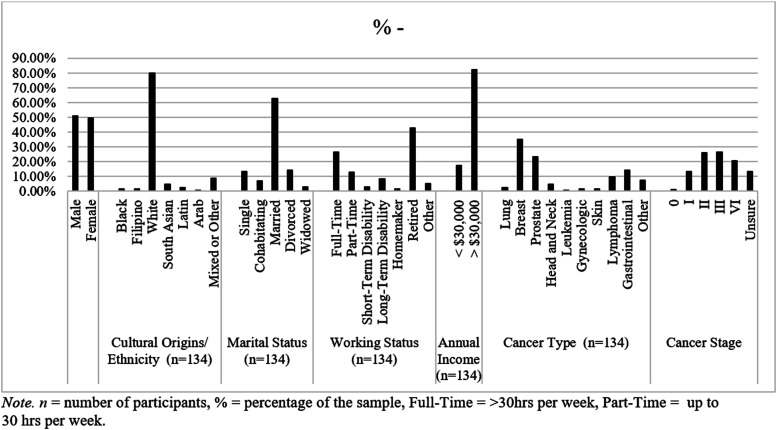
- Baseline data from 134 participants showed that 49.3% were female and 79.9% identified as white; almost half the sample had stage III or IV disease.
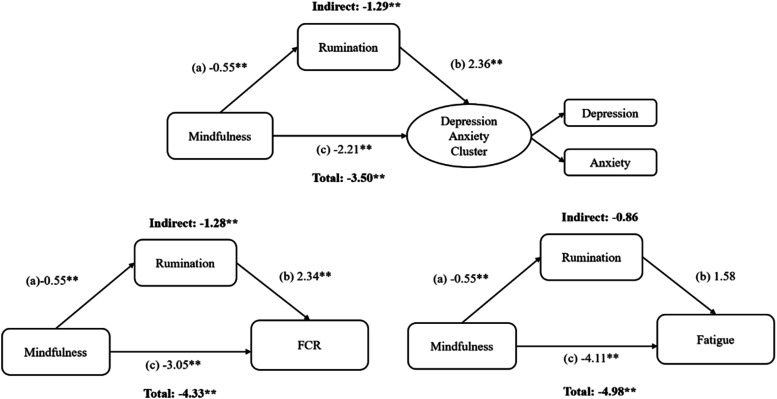
- In the rumination models, all paths were significant for depression/anxiety and FCR; the model accounted for 51% of the variance in the depression/anxiety cluster, 99% of anxiety, 62% of depression, 40% of FCR, and 34% of rumination.
- Rumination did not mediate fatigue: the path from rumination to fatigue was not significant, though the fatigue model still accounted for 36% of the variance.
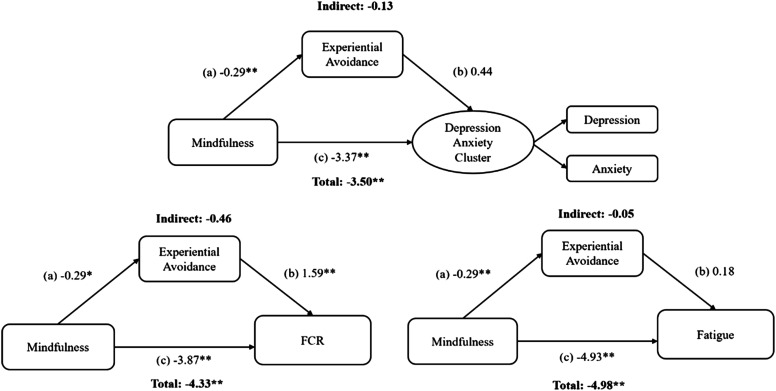
- Experiential avoidance (EA) was a weak mediator only for FCR; it was not a significant mediator for depression/anxiety or fatigue. The EA model for FCR accounted for 38% of FCR variance and only 8% of EA variance.
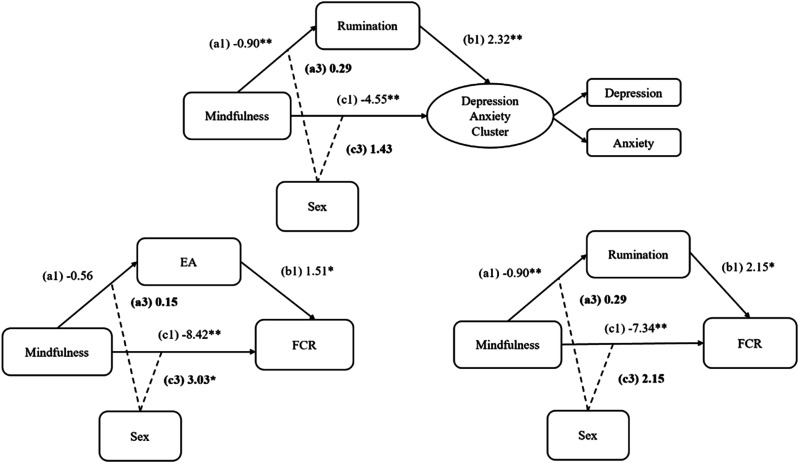
- Sex was not a significant moderator in formal tests, but subgroup analyses suggested rumination may be more important for females than males in the mindfulness–depression/anxiety relationship; the direct effect of mindfulness to depression/anxiety was significant for males but not females.
## Methods
- Design: Cross-sectional analysis of baseline data from a mindfulness app clinical trial / randomized waitlist-controlled clinical trial.
- Sample/data: 134 participants with cancer who had completed primary treatment at least 2 weeks earlier; people with untreated psychiatric disorders or recent regular mindfulness practice were excluded.
- Analysis: Validated self-report measures of trait mindfulness, rumination, EA, depression, anxiety, FCR, and fatigue were analyzed using structural equation modeling (SEM) in R with bootstrapped estimates; a Bonferroni correction of 0.003 was applied, and sex was tested as a moderator in models with significant effects.
## Limitations
- The paper states that the cross-sectional design limits causal conclusions and may miss the temporal ordering of change; it also notes that a single time-point may not capture complex, dynamic relationships among the variables.
- The paper states that the MAAS is unidimensional, limiting nuanced assessment of mindfulness facets, and that analyses did not control for disease characteristics or time since treatment.
- The paper states that the conservative alpha cutoff may increase type II error and that smaller sample size, especially for subgroup analyses, limits sensitivity.
- Evident from the text: the sample was mostly white (79.9%), so generalizability to more diverse populations may be limited; this is implied by the reported sample composition.
Model-written summary. Check it against the paper before relying on it.
Integrity signals
Registry
Cites
Statistics
Figures
Verification
Claims the paper makes
20 Valid · 1 Not valid · 19 Not checked · 103 Own results and interpretations
The cited sources support only part of this claim — read each source’s verdict below.
In the paper
“Accumulating evidence indicates that MBIs improve anxiety, depression, FCR, and fatigue in people with various chronic health conditions, including cancer,28-32”
§ Mindfulness and Psychosocial Symptoms in People with Cancer: Testing Rumination and Experiential Avoidance as Mediators, and Sex as a Moderator > Mindfulness-Based Interventions (MBIs)
What the sources say
- Partly supportedcites [28] Cillessen LJG Johannsen M Speckens AEM Zachariae R. Mindfulness-based interventions for psychological and physical health outcomes in cancer patients and survivors: a systematic review and meta-analysis of randomized controlled trials. Psychooncology. 2019; 28(12): 2257- 2269. doi: 10.1002/pon.5214 31464026 PMC6916350 sourceExperimental — accuracy not yet measured
The Discussion reports that MBIs reduced anxiety, depression, fear of cancer recurrence, and fatigue in cancer patients and survivors. The Methods limit the reviewed population to adults with cancer, so this source does not establish effects across various other chronic health conditions. (LLM, conf=0.88)
- Partly supportedcites [29] Mathew A Doorenbos AZ Jang MK Hershberger PE. Acceptance and commitment therapy in adult cancer survivors: a systematic review and conceptual model. J Cancer Surviv. 2021; 15(3): 427- 451. doi: 10.1007/s11764-020-00938-z 32949353 PMC10960234 sourceExperimental — accuracy not yet measured
The Results and Conclusions report reductions in anxiety, depression, and fear of cancer recurrence after acceptance and commitment therapy (ACT) in adult cancer survivors. The paper describes mindfulness as one component of ACT, not evidence for mindfulness-based interventions generally or for people with various chronic conditions. Its Conclusions say that ACT’s efficacy for fatigue requires further investigation. Page numbers were not available in our copy. (LLM, conf=0.88)
- Partly supportedcites [30] Pedro J Monteiro‐Reis S Carvalho‐Maia C Henrique R Jerónimo C Silva ER. Evidence of psychological and biological effects of structured mindfulness‐based interventions for cancer patients and survivors: a meta‐review. Psychooncology. 2021; 30(11): 1836- 1848. doi: 10.1002/pon.5771 34288218 PMC9290489 sourceExperimental — accuracy not yet measured
The Discussion reports reduced anxiety and depression and a beneficial effect on fear of cancer recurrence in cancer patients and survivors; the Introduction also cites evidence for reduced cancer-related fatigue. The Introduction mentions benefits in other health conditions, but this meta-review does not establish that all four outcomes improve across various chronic conditions. Its review population was adults with cancer. (LLM, conf=0.88)
- Not checked — no full text of the sourcecites [31] Zhang Q Zhao H Zheng Y. Effectiveness of mindfulness-based stress reduction (MBSR) on symptom variables and health-related quality of life in breast cancer Patients—a systematic review and meta-analysis. Support Care Cancer. 2019; 27(3): 771- 781. doi: 10.1007/s00520-018-4570-x 30488223 source
- Not checked — no full text of the sourcecites [32] Zhao C Lai L Zhang L, et al. The effects of acceptance and commitment therapy on the psychological and physical outcomes among cancer patients: a meta-analysis with trial sequential analysis. J Psychosom Res. 2021; 140: 110304. doi: 10.1016/j.jpsychores.2020.110304 33248396 source
hedgedstates a cause- Asserted: passes — The authors put it forward as true.
- Checkable: passes — It can be checked against evidence.
- Load-bearing: unclear — It is unclear whether the paper’s conclusions depend on it.
- Based: passes — The paper gives a reason why it holds.
- Partly supported
The cited sources support only part of this claim — read each source’s verdict below.
In the paper
“Depression and anxiety are more common in female PWC.3,8-11”
§ Mindfulness and Psychosocial Symptoms in People with Cancer: Testing Rumination and Experiential Avoidance as Mediators, and Sex as a Moderator > Introduction
What the sources say
- Not checked — no full text of the sourcecites [3] Götze H Friedrich M Taubenheim S Dietz A Lordick F Mehnert A. Depression and anxiety in long-term survivors 5 and 10 years after cancer diagnosis. Support Care Cancer. 2020; 28(1): 211- 220. doi: 10.1007/s00520-019-04805-1 31001695 source
- Partly supportedcites [8] Walker ZJ Xue S Jones MP Ravindran AV. Depression, anxiety, and other mental disorders in patients with cancer in low- and lower-middle–Income countries: a systematic review and meta-analysis. JCO Glob Oncol. 2021; 7(7): 1233- 1250. doi: 10.1200/GO.21.00056 34343029 PMC8457869 sourceExperimental — accuracy not yet measured
The Results section (page not specified) reports that being female correlated with a higher likelihood of depression among patients with cancer. It explicitly says findings for anxiety were mixed, so the claim that both conditions are more common in female patients is not fully supported. (LLM, conf=0.90)
- Not checked yetcites [9] Arch JJ Genung SR Ferris MC, et al. Presence and predictors of anxiety disorder onset following cancer diagnosis among anxious cancer survivors. Support Care Cancer. 2020; 28(9): 4425- 4433. doi: 10.1007/s00520-020-05297-0 31925530 PMC7347435 source
Checked before — its earlier verdict is held back until a new check runs.
- Not checked — no full text of the sourcecites [10] Duijts SFA van Egmond MP Spelten E van Muijen P Anema JR van der Beek AJ. Physical and psychosocial problems in cancer survivors beyond return to work: a systematic review: physical and psychosocial problems in cancer survivors beyond RTW. Psychooncology. 2014; 23(5): 481- 492. doi: 10.1002/pon.3467 24375630 source
- Partly supportedcites [11] Rosgen BK Moss SJ Fiest KM, et al. Psychiatric disorder incidence among adolescents and young adults aged 15-39 with cancer: population-based cohort. JNCI Cancer Spectr. 2022; 6(6): pkac077. doi: 10.1093/jncics/pkac077 36321955 PMC9733973 sourceExperimental — accuracy not yet measured
The Results (Psychiatric Disorders) report significantly higher incidences of anxiety and depressive disorders in female than male cancer survivors. The study concerns five-year survivors diagnosed at ages 15–39, so it does not establish the same pattern for all people with cancer. (LLM, conf=0.85)
plainstates an association- Asserted: passes — The authors put it forward as true.
- Checkable: passes — It can be checked against evidence.
- Load-bearing: unclear — It is unclear whether the paper’s conclusions depend on it.
- Based: passes — The paper gives a reason why it holds.
The sources with a verdict support this claim; the rest weren’t checked yet, have no full text we could read, or their verdicts aren’t rated yet.
In the paper
“fatigue clusters with pain and sleep more commonly than with anxiety and depression.26,27”
§ Mindfulness and Psychosocial Symptoms in People with Cancer: Testing Rumination and Experiential Avoidance as Mediators, and Sex as a Moderator > Discussion > Rumination as Mediator
What the sources say
- Not checked — no full text of the sourcecites [26] Chen ML Tseng HC. Symptom clusters in cancer patients. Support Care Cancer. 2006; 14(8): 825- 830. doi: 10.1007/s00520-006-0019-8 16491377 source
- Supportedcites [27] Thomas BC Waller A Malhi RL, et al. A longitudinal analysis of symptom clusters in cancer patients and their sociodemographic predictors. J Pain Symptom Manag. 2014; 47(3): 566- 578. doi: 10.1016/j.jpainsymman.2013.04.007 24035068 source
In Objective 1: Identifying the Presence of SCs Across Time, fatigue, pain, and sleep problems load on the somatic cluster, while anxiety and depression load on a separate psychological cluster. The SCs Across Time discussion says these clusters were relatively stable longitudinally. (LLM, conf=0.88)
plainstates an association- Asserted: passes — The authors put it forward as true.
- Checkable: passes — It can be checked against evidence.
- Load-bearing: passes — The paper’s conclusions depend on it.
- Based: passes — The paper gives a reason why it holds.
Every source the paper cites for this claim was checked and supports it.
In the paper
“reduced rumination predicts lower distress, 67”
§ Mindfulness and Psychosocial Symptoms in People with Cancer: Testing Rumination and Experiential Avoidance as Mediators, and Sex as a Moderator > Discussion > Rumination as Mediator
What the sources say
- Supportedcites [67] Cillessen L Schellekens MP Van de Ven MO, et al. Consolidation and prediction of long-term treatment effect of group and online mindfulness-based cognitive therapy for distressed cancer patients. Acta Oncol. 2018; 57(10): 1293- 1302. doi: 10.1080/0284186X.2018.1479071 29932784 source
The Results in the Abstract report that changes in rumination during mindfulness-based cognitive therapy predicted less psychological distress at follow-up. The finding concerns distressed cancer patients receiving group or online therapy. (LLM, conf=0.88)
plainstates a cause- Asserted: passes — The authors put it forward as true.
- Checkable: passes — It can be checked against evidence.
- Load-bearing: passes — The paper’s conclusions depend on it.
- Based: passes — The paper gives a reason why it holds.
- Supported
The cited sources support only part of this claim — read each source’s verdict below.
In the paper
“fatigue is closely associated cross-sectionally with rumination and constructs mediated by rumination such as anxiety and depression.1,17,22,25,44”
§ Mindfulness and Psychosocial Symptoms in People with Cancer: Testing Rumination and Experiential Avoidance as Mediators, and Sex as a Moderator > Discussion > Rumination as Mediator
What the sources say
- Partly supportedcites [1] Carlson LE. Psychosocial and integrative oncology: interventions across the disease trajectory. Annu Rev Psychol. 2023; 74(1): 457- 487. doi: 10.1146/annurev-psych-032620-031757 36104001 sourceExperimental — accuracy not yet measured
The Fatigue section (page unavailable) says cancer-related fatigue and depression commonly cluster and may affect one another. The paper also discusses worry and anxiety exacerbating symptoms in the Fear of Cancer Recurrence section, but it does not establish a cross-sectional association between fatigue and rumination or say that rumination mediates anxiety or depression. (LLM, conf=0.84)
- Not checked — no full text of the sourcecites [17] Ma Y He B Jiang M, et al. Prevalence and risk factors of cancer-related fatigue: a systematic review and meta-analysis. Int J Nurs Stud. 2020; 111: 103707. doi: 10.1016/j.ijnurstu.2020.103707 32920423 source
- Partly supportedcites [22] Poort H Kaal SEJ Knoop H, et al. Prevalence and impact of severe fatigue in adolescent and young adult cancer patients in comparison with population-based controls. Support Care Cancer. 2017; 25(9): 2911- 2918. doi: 10.1007/s00520-017-3746-0 28528350 PMC5527068 sourceExperimental — accuracy not yet measured
The Results section reports a strong cross-sectional correlation between fatigue severity and psychological distress in adolescents and young adults with cancer (R = .55); the Measures section says distress was assessed with the Hospital Anxiety and Depression Scale. The paper does not report an association with rumination or show that rumination mediates anxiety or depression. No page numbers were available in our copy. (LLM, conf=0.87)
plainstates an association- Asserted: passes — The authors put it forward as true.
- Checkable: passes — It can be checked against evidence.
- Load-bearing: unclear — It is unclear whether the paper’s conclusions depend on it.
- Based: passes — The paper gives a reason why it holds.
- Partly supported
80 more claims · 1 with their cited sources checked
Create a free account to see all 143 claims and to verify the 1 reference still open.
- Probably not a substantial claim. 34
- It may state two separate claims as one. 32
Citations
Cites
Principles and Practice of Structural Equation Modeling
Tabri, N., & Elliott, C. M. (2012) · Canadian Graduate Journal of Sociology and Criminology · doi:10.15353/cgjsc-rcessc.v1i1.25 · Cited by 38,891
The benefits of being present: Mindfulness and its role in psychological well-being
Brown, K. W., & Ryan, R. M. (2003) · Journal of Personality and Social Psychology · doi:10.1037/0022-3514.84.4.822 · Cited by 13,448
A test of missing completely at random for multivariate data with missing values
Little, R. J. A. (1988) · Journal of the American Statistical Association · doi:10.1080/01621459.1988.10478722 · Cited by 8,963 · cited 1×
“62,63 To account for normality violations, bootstrapped estimates of the structural models were obtained.”
Emotion-regulation strategies across psychopathology: A meta-analytic review
Aldao, A., Nolen-Hoeksema, S., & Schweizer, S. (2010) · Clinical Psychology Review · doi:10.1016/j.cpr.2009.11.004 · Cited by 6,686
Acceptance and commitment therapy: model, processes and outcomes
Hayes, S. C., Luoma, J. B., Bond, F. W., Masuda, A., & Lillis, J. (2006) · Behaviour Research and Therapy · doi:10.1016/j.brat.2005.06.006 · Cited by 6,587
Emotion regulation: current status and future prospects
Gross, J. J. (2015) · Psychological Inquiry · doi:10.1080/1047840x.2014.940781 · Cited by 5,229
Cella, D., Riley, W., Stone, A., Rothrock, N., Reeve, B., Yount, S., Amtmann, D., Bode, R., Buysse, D., Choi, S., et al. (2010) · Journal of Clinical Epidemiology · doi:10.1016/j.jclinepi.2010.04.011 · Cited by 5,128 · cited 1×
“61”
Shapiro, S. L., Carlson, L. E., Astin, J. A., & Freedman, B. (2006) · Journal of Clinical Psychology · doi:10.1002/jclp.20237 · Cited by 4,002 · cited 6×
“33 Gathering relevant contextual information and adequately identifying goals are integral to effective ER.”
InfluentialSelf-citationBond, F. W., Hayes, S. C., Baer, R. A., Carpenter, K. M., Guenole, N., Orcutt, H. K., Waltz, T., & Zettle, R. D. (2011) · Behavior Therapy · doi:10.1016/j.beth.2011.03.007 · Cited by 3,950
Hayes, S. C., Wilson, K. G., Gifford, E. V., Follette, V. M., & Strosahl, K. (1996) · Journal of Consulting and Clinical Psychology · doi:10.1037//0022-006x.64.6.1152 · Cited by 3,595
Bias in cross-sectional analyses of longitudinal mediation
Maxwell, S. E., & Cole, D. A. (2007) · Psychological Methods · doi:10.1037/1082-989x.12.1.23 · Cited by 3,401 · cited 1×
“77 It is also important to acknowledge that the constructs tested in this study are highly correlated and may be overlapping, which further supports the importance of leveraging causal and longitudinal research designs to better understand the temporal ordering or relations among similar constructs.”
Mitchell, A. J., Chan, M., Bhatti, H., Halton, M., Grassi, L., Johansen, C., & Meader, N. (2011) · The Lancet Oncology · doi:10.1016/s1470-2045(11)70002-x · Cited by 2,449
Gu, J., Strauss, C., Bond, R., & Cavanagh, K. (2015) · Clinical Psychology Review · doi:10.1016/j.cpr.2015.01.006 · Cited by 1,712 · cited 1×
“73 The clustering of anxiety and depression together and the sequence of change in mindfulness, rumination, and EA may explain why EA is a weaker predictor of outcomes than rumination or mindfulness in the current study and in studies of intervention effects.”
Trapnell, P. D., & Campbell, J. D. (1999) · Journal of Personality and Social Psychology · doi:10.1037/0022-3514.76.2.284 · Cited by 1,646
Fear of cancer recurrence in adult cancer survivors: a systematic review of quantitative studies
Simard, S., Thewes, B., Humphris, G., Dixon, M., Hayden, C., Mireskandari, S., & Ozakinci, G. (2013) · Journal of Cancer Survivorship · doi:10.1007/s11764-013-0272-z · Cited by 1,217
Mood disorders in the medically ill: scientific review and recommendations
Evans, D. L., Charney, D. S., Lewis, L., Golden, R. N., Gorman, J. M., Krishnan, K. R. R., Nemeroff, C. B., Bremner, J. D., Carney, R. M., Coyne, J. C., et al. (2005) · Biological Psychiatry · doi:10.1016/j.biopsych.2005.05.001 · Cited by 1,071
Rumination as a transdiagnostic factor in depression and anxiety
McLaughlin, K. A., & Nolen-Hoeksema, S. (2011) · Behaviour Research and Therapy · doi:10.1016/j.brat.2010.12.006 · Cited by 842
Nolen-Hoeksema, S., & Aldao, A. (2011) · Personality and Individual Differences · doi:10.1016/j.paid.2011.06.012 · Cited by 772
Mitchell, A. J., Ferguson, D. W., Gill, J., Paul, J., & Symonds, P. (2013) · The Lancet Oncology · doi:10.1016/s1470-2045(13)70244-4 · Cited by 749
Gender differences in rumination: A meta-analysis
Johnson, D. P., & Whisman, M. A. (2013) · Personality and Individual Differences · doi:10.1016/j.paid.2013.03.019 · Cited by 712
Validation of the Mindful Attention Awareness Scale in a cancer population
Carlson, L. E., & Brown, K. W. (2005) · Journal of Psychosomatic Research · doi:10.1016/j.jpsychores.2004.04.366 · Cited by 583 · cited 1×
“The construct and criterion validity has been validated in cancer populations and thoroughly tested in general adult and student populations (Brown & Ryan, 2003; Carlson & Brown, 2005).”
Self-citationDispositional Mindfulness and Psychological Health: a Systematic Review
Tomlinson, E. R., Yousaf, O., Vittersø, A. D., & Jones, L. (2018) · Mindfulness · doi:10.1007/s12671-017-0762-6 · Cited by 560
Teper, R., Segal, Z. V., & Inzlicht, M. (2013) · Current Directions in Psychological Science · doi:10.1177/0963721413495869 · Cited by 554
Comparison of performance of data imputation methods for numeric dataset
Jadhav, A., Pramod, D., & Ramanathan, K. (2019) · Applied Artificial Intelligence · doi:10.1080/08839514.2019.1637138 · Cited by 471 · cited 1×
“62,63 To account for normality violations, bootstrapped estimates of the structural models were obtained.”
Cancer-Related Fatigue: Causes and Current Treatment Options
Thong, M. S. Y., van Noorden, C. J. F., Steindorf, K., & Arndt, V. (2020) · Current Treatment Options in Oncology · doi:10.1007/s11864-020-0707-5 · Cited by 438 · cited 1×
“1,70 Therefore, the relationship between mindfulness and fatigue may be better mediated through another pathway, such as sleep.”
Mindfulness and emotion regulation
Roemer, L., Williston, S. K., & Rollins, L. G. (2015) · Current Opinion in Psychology · doi:10.1016/j.copsyc.2015.02.006 · Cited by 411 · cited 3×
“35 Mindfulness also requires applying an attitude of acceptance and non-judgment to the present moment, which allows for clearer information gathering about one ’ s context, including better goal identi fi cation.”
Duijts, S. F. A., van Egmond, M. P., Spelten, E., van Muijen, P., Anema, J. R., & van der Beek, A. J. (2014) · Psycho-Oncology · doi:10.1002/pon.3467 · Cited by 356
Luigjes‐Huizer, Y. L., Tauber, N. M., Humphris, G., Kasparian, N. A., Lam, W. W. T., Lebel, S., Simard, S., Smith, A. B., Zachariae, R., Afiyanti, Y., et al. (2022) · Psycho-Oncology · doi:10.1002/pon.5921 · Cited by 332 · cited 12×
“Our results suggest that EA may act as a weak mediator between mindfulness and FCR, and that the direct effect of mindfulness on FCR is predominant over the indirect effect through EA.”
InfluentialCillessen, L., Johannsen, M., Speckens, A. E. M., & Zachariae, R. (2019) · Psycho-Oncology · doi:10.1002/pon.5214 · Cited by 326 · cited 2×
“28 However, these results are surprising given the sex differences observed in levels of mindfulness, psycho-social outcomes, rumination and EA were in the expected directions.”
Prevalence and risk factors of cancer-related fatigue: A systematic review and meta-analysis
Ma, Y., He, B., Jiang, M., Yang, Y., Wang, C., Huang, C., & Han, L. (2020) · International Journal of Nursing Studies · doi:10.1016/j.ijnurstu.2020.103707 · Cited by 326 · cited 2×
“17 Prolonged high levels of depression, anxiety, FCR, and fatigue can reduce quality of life and treatment adherence in PWC. 6 Therefore, understanding potentially treatment-responsive correlates of lower psychosocial symptoms may inform intervention content and delivery, and thereby improve…”
Cognitive Training for Improving Executive Function in Chemotherapy-Treated Breast Cancer Survivors
Kesler, S., Hadi Hosseini, S. M., Heckler, C., Janelsins, M., Palesh, O., Mustian, K., & Morrow, G. (2013) · Clinical Breast Cancer · doi:10.1016/j.clbc.2013.02.004 · Cited by 300 · cited 1×
“Treatment type is known to impact executive functioning, 79 an important mechanism in ER processes.”
Depression and anxiety in long-term survivors 5 and 10 years after cancer diagnosis
Götze, H., Friedrich, M., Taubenheim, S., Dietz, A., Lordick, F., & Mehnert, A. (2020) · Supportive Care in Cancer · doi:10.1007/s00520-019-04805-1 · Cited by 281
Xunlin, N., Lau, Y., & Klainin-Yobas, P. (2020) · Supportive Care in Cancer · doi:10.1007/s00520-019-05219-9 · Cited by 243 · cited 9×
“Taken together, results on sex differences are mixed, which is also true within the literature on MBIs for PWC. 76 Rumination and EA might be particularly important mechanisms of mindfulness for females.”
InfluentialPrevalence of psychosocial distress in cancer patients across 55 North American cancer centers
Carlson, L. E., Zelinski, E. L., Toivonen, K. I., Sundstrom, L., Jobin, C. T., Damaskos, P., & Zebrack, B. (2019) · Journal of Psychosocial Oncology · doi:10.1080/07347332.2018.1521490 · Cited by 237
Self-citationCoping and experiential avoidance: Unique or overlapping constructs?
Karekla, M., & Panayiotou, G. (2011) · Journal of Behavior Therapy and Experimental Psychiatry · doi:10.1016/j.jbtep.2010.10.002 · Cited by 196 · cited 1×
“45-47 An example of behavioral EA is staying home from an important social event out of fear of feeling uncomfortable and embarrassed.”
Zhang, Q., Zhao, H., & Zheng, Y. (2019) · Supportive Care in Cancer · doi:10.1007/s00520-018-4570-x · Cited by 174 · cited 1×
“…Additionally, systematic reviews and meta-analyses demonstrate that MBIs reduce fatigue, depression and anxiety, and rumination in PWC. 1,6,31,70 Furthermore, previous intervention and cross-sectional studies report that rumination mediates the relationship from factors related to…”
Carlson, L. E., Waller, A., Groff, S. L., Giese‐Davis, J., & Bultz, B. D. (2013) · Psycho-Oncology · doi:10.1002/pon.2068 · Cited by 161 · cited 1×
“Time since treatment is evidenced to impact psychosocial symptom prevalence, 78 and symptom prevalence is related to type and stage of disease.”
Self-citationSymptom clusters in cancer patients
Chen, M.-L., & Tseng, H.-C. (2006) · Supportive Care in Cancer · doi:10.1007/s00520-006-0019-8 · Cited by 159 · cited 2×
“…intervention content and delivery, and thereby improve treatment outcomes in PWC. 17-25 For example, anxiety and depression present as a symptom cluster, 26,27 suggesting that testing them together might help to better understand what mechanisms account for changes in both symptoms simultaneously.”
Brandenbarg, D., Maass, S. W. M. C., Geerse, O. P., Stegmann, M. E., Handberg, C., Schroevers, M. J., & Duijts, S. F. A. (2019) · European Journal of Cancer Care · doi:10.1111/ecc.13086 · Cited by 148
Almeida, S. N., Elliott, R., Silva, E. R., & Sales, C. M. D. (2019) · Clinical Psychology Review · doi:10.1016/j.cpr.2018.12.001 · Cited by 116 · cited 11×
“66,71 While associations between mindfulness, rumination, and fatigue exist, research in this area lacks strength and consistency compared to the evidence supporting rumination as a mediator between mindfulness and anxiety, depression, and FCR.”
InfluentialZhao, C., Lai, L., Zhang, L., Cai, Z., Ren, Z., Shi, C., Luo, W., & Yan, Y. (2021) · Journal of Psychosomatic Research · doi:10.1016/j.jpsychores.2020.110304 · Cited by 104
Walker, Z. J., Xue, S., Jones, M. P., & Ravindran, A. V. (2021) · JCO Global Oncology · doi:10.1200/go.21.00056 · Cited by 103
Labelle, L. E., Campbell, T. S., & Carlson, L. E. (2010) · Mindfulness · doi:10.1007/s12671-010-0005-6 · Cited by 102 · cited 1×
“This is consistent with evidence from experimental studies in cancer-populations showing MBIs reduce rumination, 66 and that reduced rumination predicts lower distress, 67 and mediates the effects of an MBI on depression 52 and anxiety.”
Self-citationCancer, mental disorders, suicidal ideation and attempts in a large community sample
Rasic, D. T., Belik, S., Bolton, J. M., Chochinov, H. M., & Sareen, J. (2008) · Psycho-Oncology · doi:10.1002/pon.1292 · Cited by 95
Lin, P.-J., Kleckner, I. R., Loh, K. P., Inglis, J. E., Peppone, L. J., Janelsins, M. C., Kamen, C. S., Heckler, C. E., Culakova, E., Pigeon, W. R., et al. (2019) · Integrative Cancer Therapies · doi:10.1177/1534735419855134 · Cited by 92 · cited 1×
“72 Furthermore, fatigue clusters with pain and sleep more commonly than with anxiety and depression.”
Mathew, A., Doorenbos, A. Z., Jang, M. K., & Hershberger, P. E. (2021) · Journal of Cancer Survivorship · doi:10.1007/s11764-020-00938-z · Cited by 91
Labelle, L. E., Campbell, T. S., Faris, P., & Carlson, L. E. (2015) · Journal of Clinical Psychology · doi:10.1002/jclp.22117 · Cited by 90 · cited 11×
“Speci fi c facets of mindfulness may be more or less important for reducing rumination vs EA, 34 and researchers and clinicians may use this information to develop, test, and implement targeted MBIs that focus on the particular facets responsible for reducing rumination.”
InfluentialSelf-citationFactors Correlated With Fear of Cancer Recurrence in Cancer Survivors: A Meta-analysis
Zhang, X., Sun, D., Qin, N., Liu, M., Jiang, N., & Li, X. (2022) · Cancer Nursing · doi:10.1097/ncc.0000000000001020 · Cited by 90
Towards the validation of a new, blended theoretical model of fear of cancer recurrence
Lebel, S., Maheu, C., Tomei, C., Bernstein, L. J., Courbasson, C., Ferguson, S., Harris, C., Jolicoeur, L., Lefebvre, M., Muraca, L., et al. (2018) · Psycho-Oncology · doi:10.1002/pon.4880 · Cited by 82
Shapiro, S. L., & Carlson, L. E. (2017) · doi:10.1037/0000022-000 · Cited by 74
Self-citationSchmidt, M. E., Hermann, S., Arndt, V., & Steindorf, K. (2020) · Cancer Medicine · doi:10.1002/cam4.3413 · Cited by 72 · cited 1×
“15,16 The incidence and severity of fatigue is also higher in females.”
Inhibition of negative content—a shared process in rumination and reappraisal
Cohen, N., Daches, S., Mor, N., & Henik, A. (2014) · Frontiers in Psychology · doi:10.3389/fpsyg.2014.00622 · Cited by 71
Cillessen, L., Schellekens, M. P. J., Van de Ven, M. O. M., Donders, A. R. T., Compen, F. R., Bisseling, E. M., Van der Lee, M. L., & Speckens, A. E. M. (2018) · Acta Oncologica · doi:10.1080/0284186x.2018.1479071 · Cited by 66 · cited 2×
“This is consistent with fi ndings from other studies showing that mindfulness reduces rumination for both male and female PWC. 66,67 Interestingly, our results indicate ru-mination may act as a full mediator to depression and anxiety in females, which is supported by previous research.”
A Longitudinal Analysis of Symptom Clusters in Cancer Patients and Their Sociodemographic Predictors
Thomas, B. C., Waller, A., Malhi, R. L., Fung, T., Carlson, L. E., Groff, S. L., & Bultz, B. D. (2014) · Journal of Pain and Symptom Management · doi:10.1016/j.jpainsymman.2013.04.007 · Cited by 62 · cited 2×
“…intervention content and delivery, and thereby improve treatment outcomes in PWC. 17-25 For example, anxiety and depression present as a symptom cluster, 26,27 suggesting that testing them together might help to better understand what mechanisms account for changes in both symptoms simultaneously.”
Self-citationPedro, J., Monteiro‐Reis, S., Carvalho‐Maia, C., Henrique, R., Jerónimo, C., & Silva, E. R. (2021) · Psycho-Oncology · doi:10.1002/pon.5771 · Cited by 58
Coping trajectories in later life: A 20-year predictive study
Brennan, P. L., Holland, J. M., Schutte, K. K., & Moos, R. H. (2012) · Aging & Mental Health · doi:10.1080/13607863.2011.628975 · Cited by 57
Psychosocial and Integrative Oncology: Interventions Across the Disease Trajectory.
Carlson, L. E. (2023) · Annual Review of Psychology · doi:10.1146/annurev-psych-032620-031757 · Cited by 56
Self-citationA Practical Approach to Fatigue Management in Colorectal Cancer
Aapro, M., Scotte, F., Bouillet, T., Currow, D., & Vigano, A. (2017) · Clinical Colorectal Cancer · doi:10.1016/j.clcc.2016.04.010 · Cited by 54 · cited 1×
“15,16 The incidence and severity of fatigue is also higher in females.”
Poort, H., Kaal, S. E. J., Knoop, H., Jansen, R., Prins, J. B., Manten-Horst, E., Servaes, P., Husson, O., & van der Graaf, W. T. A. (2017) · Supportive Care in Cancer · doi:10.1007/s00520-017-3746-0 · Cited by 53 · cited 1×
“1,17,22,25,44 Additionally, systematic reviews and meta-analyses demonstrate that MBIs reduce fatigue, depression and anxiety, and rumination in PWC. 1,6,31,70 Furthermore, previous intervention and cross-sectional studies report that rumination mediates the relationship from factors related to…”
Is emotion regulation associated with cancer-related psychological symptoms?
Guimond, A.-J., Ivers, H., & Savard, J. (2019) · Psychology & Health · doi:10.1080/08870446.2018.1514462 · Cited by 51 · cited 1×
“34 The null indirect effects of EA to fatigue were also unexpected given studies showing EA and fatigue are associated with one another, 39 and studies demonstrating interventions that incorporate mindfulness, such as Acceptance and Commitment Therapy (ACT), reduce both EA and fatigue.”
A study of chronic fatigue in Norwegian cervical cancer survivors
Steen, R., Dahl, A. A., Hess, S. L., & Kiserud, C. E. (2017) · Gynecologic Oncology · doi:10.1016/j.ygyno.2017.05.028 · Cited by 50 · cited 11×
“Taken together, results on sex differences are mixed, which is also true within the literature on MBIs for PWC. 76 Rumination and EA might be particularly important mechanisms of mindfulness for females.”
InfluentialPrevalence of Depression and Cancer – A systematic review
Riedl, D., & Schuessler, G. (2022) · Zeitschrift für Psychosomatische Medizin und Psychotherapie · doi:10.13109/zptm.2021.67.oa11 · Cited by 44
How mindfulness shapes the situational use of emotion regulation strategies in daily life.
Wenzel, M., Rowland, Z., & Kubiak, T. (2020) · Cognition and Emotion · doi:10.1080/02699931.2020.1758632 · Cited by 42
Worry and rumination in breast cancer patients: perseveration worsens self-rated health
Renna, M. E., Rosie Shrout, M., Madison, A. A., Lustberg, M., Povoski, S. P., Agnese, D. M., Reinbolt, R. E., Wesolowski, R., Williams, N. O., Ramaswamy, B., et al. (2021) · Journal of Behavioral Medicine · doi:10.1007/s10865-020-00192-9 · Cited by 41 · cited 2×
“1,17,22,25,44 Additionally, systematic reviews and meta-analyses demonstrate that MBIs reduce fatigue, depression and anxiety, and rumination in PWC. 1,6,31,70 Furthermore, previous intervention and cross-sectional studies report that rumination mediates the relationship from factors related to…”
Lengacher, C. A., Gruss, L. F., Kip, K. E., Reich, R. R., Chauca, K. G., Moscoso, M. S., Joshi, A., Tinsley, S., Shani, B., Cousin, L., et al. (2021) · Journal of Behavioral Medicine · doi:10.1007/s10865-021-00214-0 · Cited by 40 · cited 1×
“68,69 These results emphasize the importance of targeting rumination speci fi cally in MBIs as a mechanism by which to improve anxiety, depression and FCR.”
Subnis, U. B., Farb, N. A., Piedalue, K.-A. L., Speca, M., Lupichuk, S., Tang, P. A., Faris, P., Thoburn, M., Saab, B. J., & Carlson, L. E. (2020) · JMIR Research Protocols · doi:10.2196/15178 · Cited by 37 · cited 3×
“26,27 Taken together, future studies can improve this area of research by assessing other potential mediators in the relationship between mindfulness and fatigue to better understand how mindfulness works to reduce fatigue and inform the development of interventions tailored to address fatigue in PWC, as rumination ma…”
InfluentialSelf-citationA Systematic Review of Fear of Cancer Recurrence Among Indigenous and Minority Peoples
Anderson, K., Smith, A. ‘., Diaz, A., Shaw, J., Butow, P., Sharpe, L., Girgis, A., Lebel, S., Dhillon, H., Burhansstipanov, L., et al. (2021) · Frontiers in Psychology · doi:10.3389/fpsyg.2021.621850 · Cited by 37 · cited 1×
“…that 64.3% of PWC experience high to clinical levels of FCR, 12 and like depression and anxiety, female PWC tend to experience heightened FCR. 13,14 Fatigue is another highly prevalent symptom, present in up to 99% of PWC during treatment, and is maintained for months or years after treatment…”
InfluentialBrockmeyer, T., Holtforth, M. G., Krieger, T., Altenstein, D., Doerig, N., Zimmermann, J., Backenstrass, M., Friederich, H., & Bents, H. (2015) · Clinical Psychology & Psychotherapy · doi:10.1002/cpp.1885 · Cited by 35 · cited 1×
“Rumination may serve an avoidant function, 75 and may serve as a form of cognitive avoidance which better captures the key mechanism that leads to changes in the broader construct of EA and, subsequently, psychosocial outcomes.”
Kingery, J. N., Bodenlos, J. S., & Lathrop, J. A. (2020) · Journal of American College Health · doi:10.1080/07448481.2019.1574801 · Cited by 34 · cited 1×
“51 Given that sex is associated with differing levels of mindfulness, delineating the potential moderating role of sex in the relationship between mindfulness and psychosocial symptoms will help in understanding who may bene fi t most from mindfulness practice, since it is not a “ one size fi ts all…”
(2021) · doi:10.1093/med/9780190097653.001.0001 · Cited by 29
Rosgen, B. K., Moss, S. J., Fiest, K. M., McKillop, S., Diaz, R. L., Barr, R. D., Patten, S. B., Deleemans, J., & Fidler-Benaoudia, M. M. (2022) · JNCI Cancer Spectrum · doi:10.1093/jncics/pkac077 · Cited by 27
Uptake of mindfulness‐based interventions: A phenomenon of wealthy white western women?
Carlson, L. E. (2018) · Clinical Psychology: Science and Practice · doi:10.1111/cpsp.12258 · Cited by 26 · cited 1×
“1,65 Results suggest that rumination may be more important than EA in accounting for the relationship between mindfulness and depression, anxiety, and FCR, especially for females.”
Self-citationArch, J. J., Genung, S. R., Ferris, M. C., Kirk, A., Slivjak, E. T., Fishbein, J. N., Schneider, R. L., & Stanton, A. L. (2020) · Supportive Care in Cancer · doi:10.1007/s00520-020-05297-0 · Cited by 22
Haun, M. W., Simon, L., Sklenarova, H., Zimmermann‐Schlegel, V., Friederich, H., & Hartmann, M. (2021) · Cancer Medicine · doi:10.1002/cam4.4048 · Cited by 15
Tungtong, P., Ranchor, A. V., & Schroevers, M. J. (2023) · Psycho-Oncology · doi:10.1002/pon.6201 · Cited by 11 · cited 3×
“Fatigue items (54) measure symptoms of fatigue such as feeling “ run-down ” or “ physically drained ” .”
Öcalan, S., & Üzar‐Özçetin, Y. S. (2021) · Journal of Advanced Nursing · doi:10.1111/jan.14916 · Cited by 10
Research works printed but not linked: 3
- Romano EM. Exploring the Mechanisms of Mindfulness: Experiential Avoidance and Health Outcomes Among Cancer Survivors. ProQuest Dissertations Publishing; 2013. https://search.proquest.com/docview/1433075624?pq-origsite=primo. Accessed 8 July 2023.
- Kline RB. Principles and Practice of Structural Equation Modeling. Guilford Publications; 2023.
- Zahra ST Riaz S. Mediating role of mindfulness in stress-resilience relationship among university students. Pakistan J Psychol. 2017; 48(2): 21.
Cited by
Zhang, L., Li, F. F., Wu, Y., Zhang, Y., Xu, C., & Zhu, W. (2026) · Cancer Management and Research · doi:10.2147/cmar.s570129
Metadata
- Authors
- Conradi, H. S. W., Nguyen, T., Lawal, O. A., & Carlson, L. E.
- Affiliations
- University of Calgary (CA)
- Corresponding author
- Carlson, Linda E.
- Venue
- Global Advances in Integrative Medicine and Health
- Publisher
- SAGE Publications
- Published
- 2025-08
- Volume
- 14
- Pages
- 27536130251367051-27536130251367051
- ISSN
- 2753-6130 (ISSN-L)
- PMC
- PMC12334834
- OpenAlex
- W4413101147
- Semantic Scholar
- c364e8f57549b463c108b756670064e99e0f5b23
- Cited by
- 1
- References
- 78
- Citations by year
- 2026: 1
- FWCI
- 1.18
- Type
- journal article
- Language
- en
- Open access
- hybrid
- doi.org
- Licence
- cc-by
- creativecommons.org/licenses/by/4.0/ (vor)
- journals.sagepub.com/page/policies/text-and-data-mining-license (tdm)
- Locations
- Global Advances in Integrative Medicine and Health (publishedVersion, cc-by)
- PubMed Central (publishedVersion, cc-by)
- PubMed (publishedVersion)
- Funders
- Enbridge Research Chair in Psychosocial Oncology
- Canadian Institutes of Health Research, Strategy for Patient Orientated Research Mentorship Chair in Innovative Clinical Trials
- Topics
- Social Sciences › Psychology › Clinical Psychology › Mindfulness and Compassion Interventions
- Health Sciences › Medicine › Oncology › Cancer survivorship and care
- Social Sciences › Health › Religion, Spirituality, and Psychology
- Keywords
- mindfulness, psychosocial symptoms, cancer patients, rumination, experiential avoidance, depression, anxiety, fatigue, fear-avoidance beliefs, sex differences, mediation, mindfulness-based interventions, mindfulness apps
About these checks
Registry, retraction, Cites and statistics results are computed, not judged, with one exception: a printed reference that no index lists is read once by a model before it counts as a citation error. Claims are extracted by a model and kept only when their quote appears verbatim in the text; each cited source is then checked, with a model’s help, for whether it says what the claim relies on. Those verdicts can be wrong — read the claim’s quote and the cited source before relying on one.
The claim verdicts this report counts are experimental: their accuracy is not yet measured.
A language model drew the claims from the paper on 2026-10-11, under version 3 of the claim definition (model deepseek-v4.1-flash, prompt extract-v3).
A second model labelled each claim on 2026-10-11 (model jev-1.13-20260917, definition revision gold-guideline-v0.2).
Cited sources are checked with a language model’s help (gpt-6-sol).
Statistics and arithmetic are recomputed, not judged.
Confidence bands are shown only for fields calibrated on our annotated test set. None is calibrated yet, so no band is shown.
What counts as a claim ›How we measure confidence ›How we check this ›
Are you an author, or do you see a problem with this page? Request a review
Data sources
Bibliographic data: Semantic Scholar, OpenAlex, Crossref.
Contains information from the Semantic Scholar Academic Graph Datasets, made available under the ODC Attribution License (ODC-BY 1.0).
Semantic Scholar’s data is described in: Kinney, R., et al. (2023). The Semantic Scholar Open Data Platform. arXiv:2301.10140.
