

LEA (Late Embryogenesis Abundant) proteins and their encoding genes in Arabidopsis thaliana
Open accessThe DOI matches its Crossref record; 135 of the 136 references it cites were found in a registry or an index.
Abstract
BACKGROUND: LEA (late embryogenesis abundant) proteins have first been described about 25 years ago as accumulating late in plant seed development. They were later found in vegetative plant tissues following environmental stress and also in desiccation tolerant bacteria and invertebrates. Although they are widely assumed to play crucial roles in cellular dehydration tolerance, their physiological and biochemical functions are largely unknown. RESULTS: We present a genome-wide analysis of LEA proteins and their encoding genes in Arabidopsis thaliana. We identified 51 LEA protein encoding genes in the Arabidopsis genome that could be classified into nine distinct groups. Expression studies were performed on all genes at different developmental stages, in different plant organs and under different stress and hormone treatments using quantitative RT-PCR. We found evidence of expression for all 51 genes. There was only little overlap between genes expressed in vegetative tissues and in seeds and expression levels were generally higher in seeds. Most genes encoding LEA proteins had abscisic acid response (ABRE) and/or low temperature response (LTRE) elements in their promoters and many genes containing the respective promoter elements were induced by abscisic acid, cold or drought. We also found that 33% of all Arabidopsis LEA protein encoding genes are arranged in tandem repeats and that 43% are part of homeologous pairs. The majority of LEA proteins were predicted to be highly hydrophilic and natively unstructured, but some were predicted to be folded. CONCLUSION: The analyses indicate a wide range of sequence diversity, intracellular localizations, and expression patterns. The high fraction of retained duplicate genes and the inferred functional diversification indicate that they confer an evolutionary advantage for an organism under varying stressful environmental conditions. This comprehensive analysis will be an important starting point for future efforts to elucidate the functional role of these enigmatic proteins.
Overview
The claims and statistics of this paper haven’t been checked yet.
Free: it reads the open-access text and checks the first 5 claims that cite a source we can check. Create a free account to check every claim.
Integrity signals
Registry
Cites
Statistics
Figures
Verification
Claims the paper makes
The claims and statistics of this paper haven’t been checked yet.
Free: it reads the open-access text and checks the first 5 claims that cite a source we can check. Create a free account to check every claim.
Claims other papers make about this one
Each is checked against this paper’s own text: does it say what the citing paper says it does?
The source backs part of the claim, not all of it — or backs it for a different population, condition or comparison.
In the citing paper
“The high number of CDK genes in G. hirsutum was more likely caused by gene duplication and the conservation of the CDK genes during the polyploidization process”
From Whole Genome Analysis of Cyclin Dependent Kinase (CDK) Gene Family in Cotton and Functional Evaluation of the Role of CDKF4 Gene in Drought and Salt Stress Tolerance in Plants (2018) · cites this paper as [41]
Experimental — accuracy not yet measuredIn the citing paper
“Similar findings, with the predominance of ABRE cis-element, have been reported for CDK genes in tomato [40], Arabidopsis [41], and Chinese plum [42].”
Self-check
Percentages, sums and reported differences re-computed from the paper’s own numbers.
The self-check needs the paper’s full text.
Citations
Cites
Thompson, J. D., Higgins, D. G., & Gibson, T. J. (1994) · Nucleic Acids Research · doi:10.1093/nar/22.22.4673 · Cited by 64,617 · cited 5×
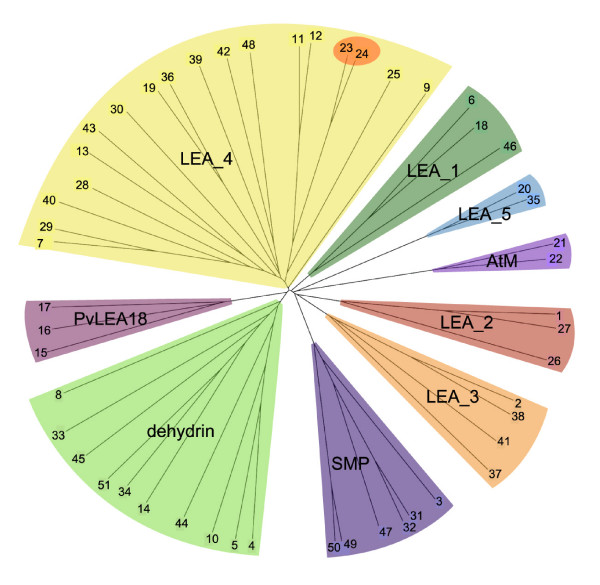
“We performed a ClustalW alignment of all 51 LEA proteins in Arabidopsis and the resulting unrooted dendrogram shows that the identified LEA groups are quite distinct from each other (Fig.”
MethodInfluentialProtein Identification and Analysis Tools on the ExPASy Server
Gasteiger, E., Hoogland, C., Gattiker, A., Duvaud, S., Wilkins, M. R., Appel, R. D., & Bairoch, A. (2005) · The Proteomics Protocols Handbook · doi:10.1385/1-59259-890-0:571 · Cited by 8,681
Protein Identification and Analysis Tools in the ExPASy Server
Wilkins, M. R., Gasteiger, E., Bairoch, A., Sanchez, J.-C., Williams, K. L., Appel, R. D., & Hochstrasser, D. F. (2003) · 2-D Proteome Analysis Protocols · doi:10.1385/1-59259-584-7:531 · Cited by 6,155 · cited 1×
“To get more information about the nature of the gene products, the GRAVY (grand average of hydropathy), the molecular weight and the pI were predicted by the PROTPARAM [ 132 ,133] tool.”
MethodPredicting Subcellular Localization of Proteins Based on their N-terminal Amino Acid Sequence
Emanuelsson, O., Nielsen, H., Brunak, S., & von Heijne, G. (2000) · Journal of Molecular Biology · doi:10.1006/jmbi.2000.3903 · Cited by 4,263
The Universal Protein Resource (UniProt)
Bairoch, A. (2004) · Nucleic Acids Research · doi:10.1093/nar/gki070 · Cited by 3,774 · cited 1×
“The PATTINPROT [128,129] tool was used to verify the stringency of the retrieved patterns by querying the UniProt [ 130 ,131] database.”
MethodAssumption-free analysis of quantitative real-time polymerase chain reaction (PCR) data
Ramakers, C., Ruijter, J. M., Deprez, R. H. L., & Moorman, A. F. M. (2003) · Neuroscience Letters · doi:10.1016/s0304-3940(02)01423-4 · Cited by 3,709 · cited 1×
“The mean PCR efficiency (E) for every primer pair was calculated using the linregPCR software [ 119 ].”
MethodPLANT COLD ACCLIMATION: Freezing Tolerance Genes and Regulatory Mechanisms
Thomashow, M. F. (1999) · Annual Review of Plant Physiology and Plant Molecular Biology · doi:10.1146/annurev.arplant.50.1.571 · Cited by 3,551
The Proteomics Protocols Handbook
(2005) · Humana Press eBooks · doi:10.1385/1592598900 · Cited by 3,538
Plant cis-acting regulatory DNA elements (PLACE) database: 1999
Higo, K., Ugawa, Y., Iwamoto, M., & Korenaga, T. (1999) · Nucleic Acids Research · doi:10.1093/nar/27.1.297 · Cited by 3,381
Czechowski, T., Stitt, M., Altmann, T., Udvardi, M. K., & Scheible, W.-R. (2005) · Plant Physiology · doi:10.1104/pp.105.063743 · Cited by 3,203 · cited 1×
“Data were normalized to the mean CT of three reference genes (At4g27960, At5g46630, and At4g34270) that were found to be stably expressed across various tissues and conditions [ 118 ].”
Method
Cited by
Items 901–1,000 of 1,001
Erastenkova, M. V., Tikhonova, N. G., & Ukhatova, Y. V. (2024) · PLANT BIOTECHNOLOGY AND BREEDING · doi:10.30901/2658-6266-2023-4-o7 · Cited by 2
Unêda‐Trevisoli, S. H., Dirk, L. M. A., Pereira, F. É. C. B., Chakrabarti, M., Hao, G., Campbell, J. M., Nayakwadi, S. D. B., Morrison, A., Joshi, S., Perry, S. E., et al. (2024) · Molecular & Cellular Proteomics · doi:10.1016/j.mcpro.2024.100867 · Cited by 1
Zhang, Y. L., Song, L., & Xia, Y. (2024) · International Journal of Molecular Sciences · doi:10.3390/ijms252211860 · Cited by 1
Macherel, D., Jaspard, E., Candat, A., Hunault, G., Poupart, P., Rolland, A., Benamar, A., & Avelange‐Macherel, M. (2013) · HAL · doi:10.20585/cryobolcryotechnol.59.1_35 · Cited by 1
Sun, Z., Zhou, M., Xiao, X.-G., Tang, Y., & Wu, Y. (2015) · Springer eBooks · doi:10.1007/978-3-319-08714-6_6 · Cited by 1
Molecular Identification and Characterization of LEA Proteins in Jujube Genome
Ceylan, K. B., Ceylan, Y., Ustaoglu, B., Baloğlu, M. C., & Altunoğlu, Y. Ç. (2019) · Kastamonu University Journal of Engineering and Sciences · Cited by 5
Structural insights into ABA perception and signalling: structure of ABA receptor PYR1
Cuellar, J. (2011) · RiuNet (Universitat Politècnica de València) · doi:10.4995/thesis/10251/13260 · Cited by 2
Sun, H. (2011) · Työväentutkimus Vuosikirja · Cited by 1
The PM19 protein : a functional analysis in Arabidopsis thaliana
Alsaif, O. (2014) · Cited by 1
Desiccation sensitive seeds: understanding their evolution, genetics and physiology
Marques, A. C. S. S. (2018) · doi:10.18174/446523 · Cited by 1
van den Dries, N. (2010) · bonndoc (University of Bonn) · Cited by 1
Ataei, S. (2014) · bonndoc (University of Bonn) · Cited by 1
An evolutionary perspective of plant adaptations to dry environmentsPreprint
Artur, M. A. S., & Kajala, K. (2020) · doi:10.22541/au.160029725.55542993 · Cited by 1
Palomino-Navarrete, L., Pérez-Villanueva, D., MOSES, D. C., Gollub, E., Nguyen, K. Q., Martinez, S. S., Yu, F., Martinez, K., Boothby, T., Sukenik, S., et al. (2025) · bioRxiv (Cold Spring Harbor Laboratory) · doi:10.1101/2025.08.26.672499 · Cited by 1
“The Arabidopsis genome encodes 51 LEA proteins from six different groups, which include both hydrophobic (atypical) and hydrophilic (typical) proteins (Hundertmark & Hincha, 2008).”
Maghraby, A., & Alzalaty, M. (2025) · Research Square · doi:10.21203/rs.3.rs-7348463/v1 · Cited by 1
Clabaut, A. (2009) · theses.fr (ABES) · doi:10.70675/374436f0z02f5z473dz8a27zf5eec7a82754 · Cited by 3
Mainson, D. (2013) · theses.fr (ABES) · doi:10.70675/38db8e5czc3f0z4ac8zba91z60877448ef0e · Cited by 4
“Le gène AtRD29a a été décrit dans plusieurs études comme étant induit lors d’un stress hydrique, salin ou osmotique (Hundertmark and Hincha 2008 ; Msanne et al. 2011 ; Xiong et al. 2006).”
BackgroundAdams, T. C. (2010) · ThinkTech (Texas Tech University)
Embryogenesis in Arabidopsis : Signaling, Genes, and the Control of Identity
Fonseka, D. L. C. K., Yang, X., Mudge, A. J., Topping, J. F., & Lindsey, K. (2013) · Wiley eBooks · doi:10.1002/9781118525524.ch2 · Cited by 1
Molecular Cloning and Computational Analysis of Rice OsEm Gene
Fan, J., Huang, M. Y., Zhang, X. Y., Liang, Z., & Xu, C. H. (2014) · Applied Mechanics and Materials · doi:10.4028/www.scientific.net/amm.522-524.1109
Cloning and bioinformatics analysis of an atypical hydrophobic late embryogenesis abundant protein
Hu, T., Tan, L., & He, S. (2011) · International Conference on Biomedical Engineering and Informatics (BMEI) · doi:10.1109/bmei.2011.6098562
Sziderics, A. H. (2010) · University of Vienna · doi:10.25365/thesis.10178
Cao, P. B. (2015) · TAP CHI SINH HOC · doi:10.15625/0866-7160/v37n2.6419
Protein Domains of Vitis CBF1 and Translational Regulation of Cold-Induced Genes via Codon Usage
Faultless, J. T. (2016) · The Atrium (University of Guelph)
Un algoritmo de Consenso para la Búsqueda Aproximada de Patrones en Cadenas de Proteínas
Alba, A., Rubio-Rincon, M. E., Rodríguez‐Kessler, M., Arce-Santana, E., & Méndez, M. O. (2012) · Revista Mexicana de Ingeniería Biomédica
Estudo da tolerância à dessecação e longevidade em sementes de soja (Glycine max (L.) MERR.)
Panoff, B. (2016) · Americanae (AECID Library)
Die WHIRLY-Proteine von Arabidopsis thaliana
Isemer, R. (2013) · Multimedialen Archiv und Publikationsserver der Christian-Albrechts-Universität zu Kiel (Christian-Albrechts-Universität zu Kiel) · Cited by 2
Acondicionamiento térmico: optimización de la tecnología de conservación de melocotón
Navarro‐Neila, S. (2016) · LA Referencia (Red Federada de Repositorios Institucionales de Publicaciones Científicas)
Boswell, L. C. (2013) · Louisiana State University · doi:10.31390/gradschool_dissertations.1527
Pérez, B. B. (2017) · RECERCAT (Consorci de Serveis Universitaris de Catalunya)
Cai, Q. (2018) · International Journal of Agriculture and Biology · doi:10.17957/ijab/15.0494
Rasouli, H., Kahrizi, D., Farshadfar, E., Yari, K., & Moradi, M. T. (2014) · Plant Breeding and Seed Science · doi:10.1515/plass-2015-0010
Synteny-based phylogenomic networks for comparative genomics
Zhao, T. (2018) · doi:10.18174/456296 · Cited by 1
Regulation of desiccation tolerance in Xerophyta seedlings and leaves
Lyall, R. (2016) · Open University of Cape Town (University of Cape Town) · Cited by 3
Characterisation of two desiccation-linked dehydrins from Xerophyta humilis
Fan, C. (2016) · Open University of Cape Town (University of Cape Town) · Cited by 1
Sowemimo, O. (2019) · Digital Commons - University of South Florida (University of South Florida)
Meira, F. S. (2019) · RIUnB Institutional Repository (University of Brasília) · doi:10.26512/2019.04.t.35982
The characterisation of WHIRLY1 functions in chloroplast development
Razak, N. (2019) · White Rose eTheses Online (University of Leeds, The University of Sheffield, University of York)
LeBlanc, B. M. (2020) · Louisiana State University · doi:10.31390/gradschool_dissertations.5269
Choobineh, D., Mahdinezhad, N., Niazi, A., Fakheri, B., & Emamjomeh, A. (2021) · DOAJ (DOAJ: Directory of Open Access Journals) · doi:10.22080/jgr.2021.20336.1229
The role of the C. elegans daf-2(e1370) metabolic shift in longevity and stress resistance
Zečić, A. (2021) · Ghent University Academic Bibliography (Ghent University)
Villegas-Camas, J., Aranda, K. V., Reyna, J. L., & Martínez-Hernández, A. (2021) · Botanical Sciences · doi:10.17129/botsci.2861
Effects of high light intensity and desiccation stress on moss species.
Mbatha, S. (2021) · ResearchSpace (University of KwaZulu-Natal)
Plant responses toward climatic stressors individually and in combination with soil heavy metals
Pandey, V. C., Gajić, G., Sharma, P., & Roy, M. (2022) · Elsevier eBooks · doi:10.1016/b978-0-12-823831-8.00003-7
He, C., Liu, X., da Silva, J. A. T., Wang, H., Peng, T., Zhang, M., Si, C., Yu, Z., Tan, J., Zhang, J., et al. (2019) · Research Square · doi:10.21203/rs.2.12901/v1
Ma, H. (2020) · Faculty Opinions – Post-Publication Peer Review of the Biomedical Literature · doi:10.3410/f.737547668.793576776
Hou, X., Wang, G., Xu, X., Gao, Z., Liu, T., & Li, Y. (2022) · SSRN Electronic Journal · doi:10.2139/ssrn.4021816
Janis, B. R. (2021) · ThinkIR: The University of Louisville's Institutional Repository (University of Louisville) · doi:10.18297/etd/3787 · Cited by 1
Mustafa, N. F., Nazar, S. N. E. M., Rahim, Z. A., & Samsulrizal, N. H. (2022) · Matrix Science Pharma · doi:10.4103/mtsp.mtsp_6_22
ĐÁNH GIÁ SỰ DUY TRÌ VÀ BIỂU HIỆN GEN ZmLEA14A Ở CÂY NGÔ CHUYỂN GEN
Huệ, H. T. T., Linh, N. T., & Sơn, Đ. T. S. Đ. T. (2022) · TNU Journal of Science and Technology · doi:10.34238/tnu-jst.6225
Maghraby, A., & Alzalaty, M. (2023) · Research Square · doi:10.21203/rs.3.rs-3237348/v1
Smýkalová, I., Šedivá, J., Greplová, M., Vaculná, L., Horáček, J., Ludvíková, M., Dostálová, R., Bečvářová, P. H., & Ondřej, V. (2023) · SSRN Electronic Journal · doi:10.2139/ssrn.4659292
LEA Proteins in Plant Cellular Stress Tolerance: Insights and Implications
Subramanian, R., Subashree, S., Likhith, R. K., Pandi, N. U., Karunamurthy, D., & Veluchamy, R. S. (2024) · BENTHAM SCIENCE PUBLISHERS eBooks · doi:10.2174/9789815179699124010008 · Cited by 1
Honjoh, K., Okano, H., Sasaki, M., Kurokawa, M., Kimura, T., Shibata, K., Masuda, Y., & Miyamoto, T. (2024) · Journal of the Faculty of Agriculture Kyushu University · doi:10.5109/7169359
Li, F., Mei, F., Zhang, Y., Li, S., Kang, Z., & Mao, H. (2020) · Figshare · doi:10.6084/m9.figshare.13364348
Julca, I., Marcet‐Houben, M., Cruz, F., Gómez‐Garrido, J., Gaut, B. S., Díez, C. M., Gut, I. G., Alioto, T., Vargas, P., & Gabaldón, T. (2020) · Figshare · doi:10.6084/m9.figshare.13141615
Wang, Y., Li, H.-L., Zhou, Y.-K., Guo, D., Zhu, J.-H., & Peng, S.-Q. (2021) · Figshare · doi:10.6084/m9.figshare.14211323
Wang, Y., Li, H.-L., Zhou, Y.-K., Guo, D., Zhu, J.-H., & Peng, S.-Q. (2021) · Figshare · doi:10.6084/m9.figshare.14211329
Additional file 2 of Adaptive evolution driving the young duplications in six Rosaceae species
Zhong, Y., Zhang, X., Shi, Q., & Cheng, Z. (2021) · Figshare · doi:10.6084/m9.figshare.13843718
Additional file 4 of Adaptive evolution driving the young duplications in six Rosaceae species
Zhong, Y., Zhang, X., Shi, Q., & Cheng, Z.-M. (2021) · Figshare · doi:10.6084/m9.figshare.13843724
Wang, Y., Li, H.-L., Zhou, Y.-K., Guo, D., Zhu, J.-H., & Peng, S.-Q. (2021) · Figshare · doi:10.6084/m9.figshare.14211326
Li, F., Mei, F., Zhang, Y., Li, S., Kang, Z., & Mao, H. (2020) · Figshare · doi:10.6084/m9.figshare.13364324
Li, Z., Chi, H., Liu, C., Zhang, T., Han, L., Li, L., Pei, X., & Long, Y. (2021) · Figshare · doi:10.6084/m9.figshare.14462740
Additional file 1 of Adaptive evolution driving the young duplications in six Rosaceae species
Zhong, Y., Zhang, X., Shi, Q., & Cheng, Z. (2021) · Figshare · doi:10.6084/m9.figshare.13843712
Additional file 3 of Adaptive evolution driving the young duplications in six Rosaceae species
Zhong, Y., Zhang, X., Shi, Q., & Cheng, Z. (2021) · Figshare · doi:10.6084/m9.figshare.13843721
Huang, R.-L., Xiao, D., Wang, X., Zhan, J., Wang, A., & He, L. (2022) · Figshare · doi:10.6084/m9.figshare.19470395
Santos, C. S., de Siqueira, C. G., & Meiado, M. V. (2024) · Acta Physiologiae Plantarum · doi:10.1007/s11738-024-03676-2 · Cited by 1
“At the end of the LEA proteins and non-reducing sugars accumulated; including sucrose, stachyose, and raffinose (Hundertmark and Hincha 2010).”
Sequestration of mRNAs: Role of Stress Granules and Processing Bodies in Plant Salt Tolerance
McMulkin, N. (2024) · CABI eBooks · doi:10.1079/9781800623033.0006
Zoclanclounon, Y. A. B., Thamilarasan, S. K., Mo, Y., Ahn, B.-O., Kim, J.-G., & Lee, K. (2024) · Research Square · doi:10.21203/rs.3.rs-4887813/v1
Shraddha, K. C., Nguyen, K., Nicholson, V. M., Walgren, A., Trent, T., Gollub, E., Romero, S., Holehouse, A. S., Sukenik, S., & Boothby, T. C. (2024) · eLife · doi:10.7554/elife.97231.2
Deciphering Late Embryogenesis Abundant (Lea) Genes In Phaseolus vulgaris L. Through Bioinformatics
Aksoy, D. F., Akbulut, S. E., & Büyük, İ. (2024) · Communications Faculty of Science University of Ankara Series C Biology Geological Engineering and Geophysical Engineering · doi:10.53447/communc.1440742
Pantelić, A., Tatiana, I., Milić, D., Gradišar, H., Radosavljević, J., & Vidović, M. (2025) · bioRxiv (Cold Spring Harbor Laboratory) · doi:10.1101/2025.02.19.639015
“Subsequent research has shown that they play a broader role in protecting vegetative tissue under environmental stress conditions such as drought, salinity and low temperatures (Battaglia et al. 2008; Hundertmark et al. 2008).”
Hsu, W.-Y., Wu, Y.-Z., Lin, Y.-M., Zheng, M.-J., Chen, L., & Yeh, C. (2025) · Plant Cell Reports · doi:10.1007/s00299-025-03486-x
“Similarly, LEA7 , LEA28 , LEA12 , LEA18 , LEA36 , and LEA1 are linked to salt stress (Kreps et al. 2002; Cao et al. 2006; Hundertmark and Hincha 2008; Su et al. 2016; Zhang et al. 2017; Huang et al. 2018), while LEA21 , LEA51 , LEA33 , and LEA1 are associated with cold stress (Lång and Palva 1992;…”
Ito, T., Ota, K., Hishinuma, H., & Shimizu, H. (2025) · bioRxiv (Cold Spring Harbor Laboratory) · doi:10.1101/2025.06.10.658754
Zhang, Y., Zhu, X., Zhao, S., Ge, M., Wang, P., Pervaiz, T., & You, W. (2025) · Horticulture Environment and Biotechnology · doi:10.1007/s13580-025-00738-3
“The reported protein sequences of the DHN gene family members of Arabidopsis thaliana , and Malus domestica were utilized as query sequences (Hundertmark and Hincha 2008; Kumar et al. 2014; Liang et al. 2012) and the Tbtool software (Chen et al. 2023) to compare the protein database of loquat…”
Malagueño y exquisito: hablamos de Abies pinsapo Boiss
Rodríguez, V. C., Reyes, I. V. B., & Ramos, F. C. (2025) · Encuentros en la Biología · doi:10.24310/enbio.17.191.2025.17801
Sharma, A., Mukherjee, S., Verma, A., Aryan, A., & Chandran, D. (2025) · Molecular Plant Pathology · doi:10.1111/mpp.70158
Fàbregas, N., Martínez-Rivas, F. J., Hernández-Sánchez, I. E., Lozano‐Elena, F., Aarabi, F., Sokołowska, E., Skirycz, A., & Fernie, A. R. (2025) · bioRxiv (Cold Spring Harbor Laboratory) · doi:10.1101/2025.10.27.684818
“In contrast, other dehydrin proteins family members, such as LEA44 and LEA51, showed a lack of response to salt stress although they were accumulated upon ABA treatment (Supplementary Figure 4), in agreement with previously reported mRNA levels (Supplementary Figure 3).”
InfluentialYu, Y., Wang, Y., Wang, D., Rizwan, A., Yu, H., Wang, C., Chen, L., Fang, H., & Cheng, X. (2025) · BMC Genomics · doi:10.1186/s12864-025-12287-1 · Cited by 1
“In barley, LEA proteins have been shown to protect yeast cells against high salt concentrations and freezing [58].”
Prevalence of porcine toxoplasmosis using ERP-iELISA in Hubei Province
Wu, L., He, M., Wang, Y., Ruan, X., Luo, L., Shen, B., Fang, R., Zhao, J., & Zhou, Y. (2025) · Parasitology Research · doi:10.1007/s00436-025-08601-1
“These proteins have been found to help plant seeds resist abiotic stresses from the environment such as high salt and drought, and they are also found in nutritional tissues (Hundertmark and Hincha 2008 ).”
Additional file 13 of Adaptive evolution driving the young duplications in six Rosaceae species
Zhong, Y., Zhang, X., Shi, Q., & ZongMing, C. (2021) · Figshare · doi:10.6084/m9.figshare.13843706
Additional file 7 of Adaptive evolution driving the young duplications in six Rosaceae species
Zhong, Y., Zhang, X., Shi, Q., & ZongMing, C. (2021) · Figshare · doi:10.6084/m9.figshare.13843736
Sun, M., Dong, Z., Yang, J., Wu, W., Zhang, C., Zhang, J., Zhao, J., xiong, Y., Jia, S., & Ma, X. (2021) · Figshare · doi:10.6084/m9.figshare.14746647
Wang, W., Liu, W., & Wang, B. (2024) · Figshare · doi:10.6084/m9.figshare.26610905
Li, F., Mei, F., Zhang, Y., Li, S., Kang, Z., & Mao, H. (2020) · Figshare · doi:10.6084/m9.figshare.13364345
Additional file 6 of Adaptive evolution driving the young duplications in six Rosaceae species
Zhong, Y., Zhang, X., Shi, Q., & ZongMing, C. (2021) · Figshare · doi:10.6084/m9.figshare.13843733
Sun, M., Dong, Z., Yang, J., Wu, W., Zhang, C., Zhang, J., Zhao, J., Xiong, Y., Jia, S., & Ma, X. (2021) · Figshare · doi:10.6084/m9.figshare.14746629
Li, F., Mei, F., Zhang, Y., Li, S., Kang, Z., & Mao, H. (2020) · Figshare · doi:10.6084/m9.figshare.13364321
Wang, W., Liu, W., & Wang, B. (2024) · Figshare · doi:10.6084/m9.figshare.26610896
Metadata
- Authors
- Hundertmark, M., & Hincha, D. K.
- Affiliations
- Max Planck Institute of Molecular Plant Physiology (DE)
- Corresponding author
- Hincha, Dirk K
- ORCID
- Hincha, Dirk K
- Venue
- BMC Genomics
- Published
- 2008
- Volume
- 9
- Issue
- 1
- Pages
- 118
- ISSN
- 1471-2164 (ISSN-L)
- PMC
- PMC2292704
- OpenAlex
- W2081744992
- Cited by
- 1,044
- References
- 133
- Citations by year
- 2026: 44 · 2025: 68 · 2024: 74 · 2023: 44 · 2022: 72 · 2021: 98 · 2020: 73 · 2019: 63 · 2018: 57 · 2017: 59 · 2016: 52 · 2015: 53 · 2014: 59 · 2013: 55 · 2012: 51
- FWCI
- 48.80
- Type
- journal article
- Language
- en
- Open access
- gold
- doi.org
- Licence
- cc-by
- Locations
- BMC Genomics (publishedVersion, cc-by)
- PubMed Central (publishedVersion, cc-by)
- PubMed (publishedVersion)
- DOAJ (DOAJ: Directory of Open Access Journals) (submittedVersion)
- Max Planck Institute for Plasma Physics (submittedVersion)
- MPG.PuRe (Max Planck Society) (submittedVersion, other-oa)
- Funders
- Universität Potsdam
- Topics
- Life Sciences › Agricultural and Biological Sciences › Plant Science › Plant Stress Responses and Tolerance
- Life Sciences › Agricultural and Biological Sciences › Plant Science › Seed Germination and Physiology
- Life Sciences › Agricultural and Biological Sciences › Plant Science › Plant Molecular Biology Research
- Keywords
- late embryogenesis abundant proteins, LEA genes, Arabidopsis thaliana, desiccation tolerance, dehydration tolerance, seed development, abscisic acid response element, gene expression patterns, tandem repeats, homeologous genes, gene duplication, protein structure prediction
- MeSH terms
- Abscisic Acid, Amino Acid Sequence, Molecular Sequence Data, Plant Proteins, Promoter Regions, Genetic, Sequence Alignment, Genes, Plant, Arabidopsis, Gene Expression Regulation, Plant, Genome, Plant, Evolution, Molecular, Arabidopsis Proteins, Embryonic Development, Regulatory Elements, Transcriptional
About these checks
Registry, retraction, Cites and statistics results are computed, not judged, with one exception: a printed reference that no index lists is read once by a model before it counts as a citation error. Claims are extracted by a model and kept only when their quote appears verbatim in the text; each cited source is then checked, with a model’s help, for whether it says what the claim relies on. Those verdicts can be wrong — read the claim’s quote and the cited source before relying on one.
Statistics and arithmetic are recomputed, not judged.
Confidence bands are shown only for fields calibrated on our annotated test set. None is calibrated yet, so no band is shown.
What counts as a claim ›How we measure confidence ›How we check this ›
Are you an author, or do you see a problem with this page? Request a review
Data sources
Bibliographic data: Semantic Scholar, OpenAlex, Crossref.
Contains information from the Semantic Scholar Academic Graph Datasets, made available under the ODC Attribution License (ODC-BY 1.0).
Semantic Scholar’s data is described in: Kinney, R., et al. (2023). The Semantic Scholar Open Data Platform. arXiv:2301.10140.
