

Gastrointestinal flora and gastrointestinal status in children with autism – comparisons to typical children and correlation with autism severity
Open accessThe DOI matches its Crossref record; 40 of the 40 references it cites were found in a registry or an index.
Abstract
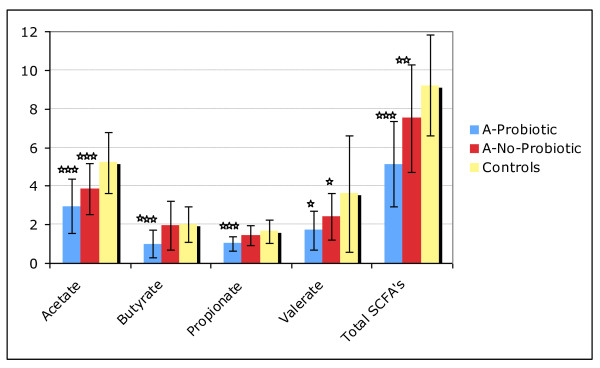
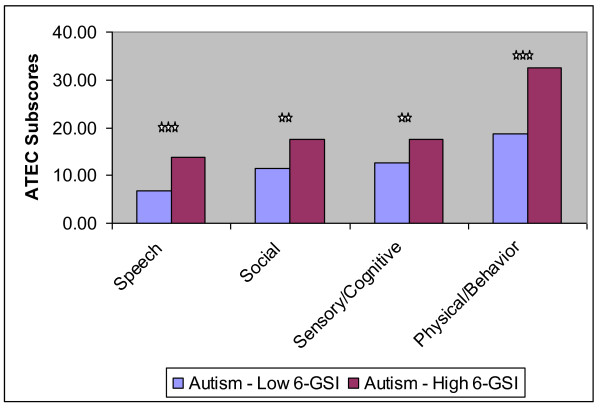
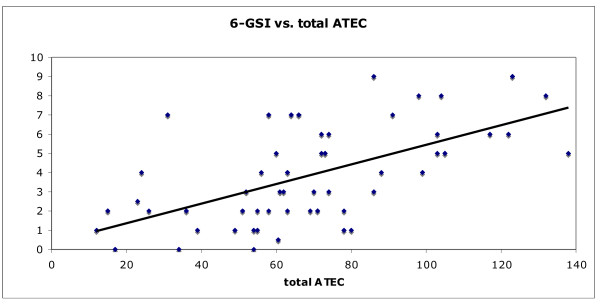
BACKGROUND: Children with autism have often been reported to have gastrointestinal problems that are more frequent and more severe than in children from the general population. METHODS: Gastrointestinal flora and gastrointestinal status were assessed from stool samples of 58 children with Autism Spectrum Disorders (ASD) and 39 healthy typical children of similar ages. Stool testing included bacterial and yeast culture tests, lysozyme, lactoferrin, secretory IgA, elastase, digestion markers, short chain fatty acids (SCFA's), pH, and blood presence. Gastrointestinal symptoms were assessed with a modified six-item GI Severity Index (6-GSI) questionnaire, and autistic symptoms were assessed with the Autism Treatment Evaluation Checklist (ATEC). RESULTS: Gastrointestinal symptoms (assessed by the 6-GSI) were strongly correlated with the severity of autism (assessed by the ATEC), (r = 0.59, p < 0.001). Children with 6-GSI scores above 3 had much higher ATEC Total scores than those with 6-GSI-scores of 3 or lower (81.5 +/- 28 vs. 49.0 +/- 21, p = 0.00002).Children with autism had much lower levels of total short chain fatty acids (-27%, p = 0.00002), including lower levels of acetate, proprionate, and valerate; this difference was greater in the children with autism taking probiotics, but also significant in those not taking probiotics. Children with autism had lower levels of species of Bifidobacter (-43%, p = 0.002) and higher levels of species of Lactobacillus (+100%, p = 0.00002), but similar levels of other bacteria and yeast using standard culture growth-based techniques. Lysozyme was somewhat lower in children with autism (-27%, p = 0.04), possibly associated with probiotic usage. Other markers of digestive function were similar in both groups. CONCLUSIONS: The strong correlation of gastrointestinal symptoms with autism severity indicates that children with more severe autism are likely to have more severe gastrointestinal symptoms and vice versa. It is possible that autism symptoms are exacerbated or even partially due to the underlying gastrointestinal problems. The low level of SCFA's was partly associated with increased probiotic use, and probably partly due to either lower production (less sacchrolytic fermentation by beneficial bacteria and/or lower intake of soluble fiber) and/or greater absorption into the body (due to longer transit time and/or increased gut permeability).
Overview
The claims and statistics of this paper haven’t been checked yet.
Free: it reads the open-access text and checks the first 5 claims that cite a source we can check. Create a free account to check every claim.
Integrity signals
Registry
Cites
Statistics
Figures
Verification
Claims the paper makes
The claims and statistics of this paper haven’t been checked yet.
Free: it reads the open-access text and checks the first 5 claims that cite a source we can check. Create a free account to check every claim.
Claims other papers make about this one
Each is checked against this paper’s own text: does it say what the citing paper says it does?
The cited source doesn’t support the claim as written.
In the citing paper
“Several studies found lower levels of fecal SCFA, including butyrate in feces of ASD children [53, 64], while a 2012 study found increased ammonia and SCFA including acetic, butyric, isobutyric, valeric, and isovaleric acids in ASD [61].”
From The Gut Microbiota and Dysbiosis in Autism Spectrum Disorders (2018) · cites this paper as [53]
Checked by a reasoning model — may be wrong.
Experimental — accuracy not yet measuredThe source backs part of the claim, not all of it — or backs it for a different population, condition or comparison.
In the citing paper
“In the order Lactobacillales and family Streptococcaceae, Streptococcus results (not S. thermophilus) corroborated an overall decrease in counts and percentage in ASD cases when statistical significance was reached [30, 31, 33, 37, 41].”
From Gut microbiota changes in children with autism spectrum disorder: a systematic review (2020) · cites this paper as [30]
Experimental — accuracy not yet measuredThe source backs part of the claim, not all of it — or backs it for a different population, condition or comparison.
In the citing paper
“however, upon a closer look at Bifidobacterium, consistently lower counts and proportions were found in children with ASD versus their siblings [31, 52] or controls [30, 38, 47].”
From Gut microbiota changes in children with autism spectrum disorder: a systematic review (2020) · cites this paper as [30]
Experimental — accuracy not yet measuredThe source backs part of the claim, not all of it — or backs it for a different population, condition or comparison.
In the citing paper
“Moreover, ASD patients seem to be characterized by both elevated levels of SCFA concentrations in stool and serum, and increased level of SCFA-producing bacteria (e.g., Clostridia, Desulfovibrio, and Bacteroides) [29,36,180].”
From Autism, Gastrointestinal Symptoms and Modulation of Gut Microbiota by Nutritional Interventions (2019) · cites this paper as [29]
Experimental — accuracy not yet measuredThe cited source says what the claim attributes to it.
In the citing paper
“Moreover, has been reported that the severity of gastrointestinal disorders in children with ASD may be closely linked to the intensity of neuropsychiatric symptoms, with more severe GI issues observed in individuals with more pronounced neuropsychiatric symptoms, and vice versa [33,34].”
From The Prevalence and Clinical Significance of Toe Walking in Autism Spectrum Disorder: A Cross-Sectional Study in an Italian Pediatric Sample (2025) · cites this paper as [33]
17 more claims about this paper
Create a free account to see every claim other papers make about this one.
Self-check
Percentages, sums and reported differences re-computed from the paper’s own numbers.
The self-check needs the paper’s full text.
Citations
Cites
Topping, D. L., & Clifton, P. M. (2001) · Physiological Reviews · doi:10.1152/physrev.2001.81.3.1031 · Cited by 3,091 · cited 2×
“Decreased levels may reflect insufficient normal colonic flora, a diet low in soluble fiber, or prolonged intestinal transit time [ 39 ].”
BackgroundPyrosequencing study of fecal microflora of autistic and control children
Finegold, S. M., Dowd, S. E., Gontcharova, V., Liu, C., Henley, K. E., Wolcott, R. D., Youn, E., Summanen, P. H., Granpeesheh, D., Dixon, D., et al. (2010) · Anaerobe · doi:10.1016/j.anaerobe.2010.06.008 · Cited by 977 · cited 4×
“Feingold’s pyrosequencing study [14] estimated that typical children normally have about 500-600 species of bacteria in their gut and estimated that children with autism have about twice that, so it is important to remember that we are only able to culture a small fraction of the species present.”
BackgroundMethodResultInfluentialNutritional and physiologic significance of human milk proteins
Lönnerdal, B. (2003) · The American Journal of Clinical Nutrition · doi:10.1093/ajcn/77.6.1537s · Cited by 878 · cited 1×
“Infants fed formula without lysozyme have three times the rate of diarrheal disease [43].”
BackgroundParracho, H. M., Bingham, M. O., Gibson, G. R., & McCartney, A. L. (2005) · Journal of Medical Microbiology · doi:10.1099/jmm.0.46101-0 · Cited by 784 · cited 2×
“Parracho et al. 2005 [13] used another culture-independent technique, fluorescence in situ hybridization (FISH) targeting Clostridium groups, and reported differences in the gut microflora of children with ASD compared to healthy children.”
BackgroundMethodGastrointestinal Microflora Studies in Late‐Onset Autism
Finegold, S. M., Molitoris, D., Song, Y., Liu, C., Vaisanen, M., Bolte, E., McTeague, M., Sandler, R., Wexler, H., Marlowe, E. M., et al. (2002) · Clinical Infectious Diseases · doi:10.1086/341914 · Cited by 742 · cited 2×
“Finegold et al. 2002 [11] studied fecal samples from 13 children with late-onset autism and 8 controls.”
BackgroundShort-Term Benefit From Oral Vancomycin Treatment of Regressive-Onset Autism
Sandler, R. H., Finegold, S. M., Bolte, E. R., Buchanan, C. P., Maxwell, A. P., Väisänen, M.-L., Nelson, M. N., & Wexler, H. M. (2000) · Journal of Child Neurology · doi:10.1177/088307380001500701 · Cited by 614 · cited 2×
“Additionally Desulfovibrio species and Bacteroides vulgatus were present in higher numbers in autistic than controls Treatment studies using a minimally absorbed oral antibiotic (vancomycin) to treat abnormal gut flora showed significant temporary improvements in behavior for children with late-onset autism [15], but…”
BackgroundReal-Time PCR Quantitation of Clostridia in Feces of Autistic Children
Song, Y., Liu, C., & Finegold, S. M. (2004) · Applied and Environmental Microbiology · doi:10.1128/aem.70.11.6459-6465.2004 · Cited by 556
de Magistris, L., Familiari, V., Pascotto, A., Sapone, A., Frolli, A., Iardino, P., Carteni, M., De Rosa, M., Francavilla, R., Riegler, G., et al. (2010) · Journal of Pediatric Gastroenterology and Nutrition · doi:10.1097/mpg.0b013e3181dcc4a5 · Cited by 546
MACFABE, D., CAIN, D., RODRIGUEZCAPOTE, K., FRANKLIN, A., HOFFMAN, J., BOON, F., TAYLOR, A., KAVALIERS, M., & OSSENKOPP, K. (2007) · Behavioural Brain Research · doi:10.1016/j.bbr.2006.07.025 · Cited by 497 · cited 3×
“2007 [17], which demonstrates that SCFA’s can induce autistic-like symptoms when injected into rats.”
BackgroundVolatile organic compounds from feces and their potential for diagnosis of gastrointestinal disease
Garner, C. E., Smith, S., de Lacy Costello, B., White, P., Spencer, R., Probert, C. S. J., & Ratcliffem, N. M. (2007) · The FASEB Journal · doi:10.1096/fj.06-6927com · Cited by 439
Research works printed but not linked: 4
- Rimland B Edelson S Autism Treatment Evaluation Checklist: Statistical Analyses 2000 Autism Research Institute, San Diego, CA
- Dugad L Performance Verification of Lysozyme ELISA Test Kit Verification 105 2007 Doctor's Data, Inc. Saint Charles, Illinois
- Dugad L Wu Z PerformanceVerification of Lactoferrin ELISA Test Kit of Fecal Verification 104 2007 Doctor's Data Inc, Saint Charles, Illinois
- Edelson S Parent Ratings of Behavioral Effects of Biomedical Interventions 2010 Autism Research Institute, Publication 34, San Diego, CA
Cited by
Items 901–1,000 of 1,000
Evrensel, A., & Ceylan, M. E. (2015) · Cited by 2
New probiotics: Dairy propionibacteria and the modulation of gut microbiota and physiology
Deutsch, S., & Jan, G. (2014) · HAL · Cited by 2
Reynolds, J. (2015) · ProQuest LLC eBooks · Cited by 2
Holbrook, S. (2013) · Scholarship@Western (Western University) · Cited by 2
HUBUNGAN FREKUENSI KONSUMSI GLUTEN, KASEIN, DAN ASUPAN SERAT DENGAN POLA DEFEKASI ANAK AUTIS
Hertanti, A. L., & Wirawanni, Y. (2014) · Journal of Nutrition College · doi:10.14710/jnc.v3i4.6880 · Cited by 2
Furland, N. E., & Sindelar, M. T. (2016) · International Journal of Neurology Research · doi:10.17554/j.issn.2313-5611.2016.02.63 · Cited by 2
Bramati-castellarin, I., Patel, V. B., & Drysdale, I. P. (2017) · WestminsterResearch (University of Westminster) · Cited by 2
Kusuma, A. S. W., Abdulah, R., Barliana, M. I., Milanda, T., Saputri, F. A., Febriyanti, R. M., Alfian, S. D., Insani, W. N., Arditta, D., Devinna, et al. (2018) · Journal of Pharmacy and Nutrition Sciences · doi:10.6000/1927-5951.2018.08.02.1 · Cited by 2
“id role of the microbiota in maintaining gastrointestinal system homeostasis is evident [7-9].”
BackgroundGisevius, B., Haghikia, A., & Hirschberg, S. (2019) · e-Neuroforum · doi:10.1515/nf-2018-0013 · Cited by 3
Doenyas, C., & Mutluer, T. (2020) · Çocuk ve Gençlik Ruh Sağlığı Dergisi / Turkish Journal of Child and Adolescent Mental Health · doi:10.4274/tjcamh.galenos.2020.96158 · Cited by 2
Role of Probiotics in Autism Spectrum Disorders
Sundararaman, A., Sethi, K., & Halami, P. M. (2022) · Springer eBooks · doi:10.1007/978-981-16-1626-6_17 · Cited by 2
CRISPR-Cas Systems in Gut Microbiome of Children with Autism Spectrum Disorders
Zakharevich, N. V., Nikitin, M. S., Kovtun, A. S., Malov, V. O., Averina, O. V., Даниленко, В. Н., & Artamonova, I. I. (2022) · Life · doi:10.3390/life12030367 · Cited by 2
“For example, there is evidence that the composition of ASD patients’ microbiome differed significantly in comparison with the healthy ones, showing lower abundances of Bifidobacterium species and higher abundances of Lactobacillus species [29], or lower abundances of the genera Prevotella, Coprococcus, and unclassifie…”
ResultNeurological manifestations of gluten sensitivity
Hadjivassiliou, M., & Croall, I. D. (2021) · Elsevier eBooks · doi:10.1016/b978-0-12-821594-4.00001-3 · Cited by 2
Nutrigenomics and Neurodevelopmental Disorders
Moustafa, S. A., Deif, R., & El‐Fawal, H. A. N. (2022) · Nutritional neurosciences · doi:10.1007/978-981-16-9205-5_6 · Cited by 2
Киселева, М. А., Киселева, Т. Л., & Хлебников, Е. В. (2024) · Традиционная медицина · doi:10.54296/18186173_2024_3_17 · Cited by 2
Gut-brain axis and the risk of autism spectrum disorders
Wierzchanowska, W. M., Iwanicki, T., Nowak, T., Jarosz, A., Boryczka, G., & Waluga, M. (2022) · Pomeranian Journal of Life Sciences · doi:10.21164/pomjlifesci.852 · Cited by 2
Evaluating the effect of a prebiotic B-GOS in Autism Spectrum Disorders (ASDs)
Grimaldi, R. (2017) · CentAUR (University of Reading) · Cited by 2
THE EXPERIENCES OF MATERNAL CAREGIVERS OF CHILDREN WITH AUTISM
Wong, K. K. (2018) · ScholarSpace (University of Hawaii at Manoa) · Cited by 1
Gut microbiome and brain: scope and perspectives
Rincón‐Orozco, B. (2022) · International journal of psychological research · doi:10.21500/20112084.6096 · Cited by 2
“In this regard, the high prevalence of gastrointestinal symptoms, ranging from 70 to 90% of patients, suggests the presence of intestinal dysfunction (Adams et al., 2011; Gorrindo et al., 2012).”
BackgroundOccurrence of campylobacter in wild bird, and chickens and ducks in selected Malaysian farms
Mohamed, M. Y. I. (2014) · Universiti Putra Malaysia Institutional Repository (Universiti Putra Malaysia) · Cited by 2
Paesani, C. (2019) · Americanae (AECID Library) · Cited by 2
Carminatti, Y. M. (2024) · LA Referencia (Red Federada de Repositorios Institucionales de Publicaciones Científicas) · Cited by 2
Jaglin, M. (2013) · theses.fr (ABES) · doi:10.70675/f9ff9f06z39e6z426azaebfz8bfd83d7b6f9 · Cited by 2
Roussin, L. (2023) · theses.fr (ABES) · doi:10.70675/998d3bd1z4618z400dz998cz89e524b35aef · Cited by 2
Microbiome-Gut-Brain Interactions in Neurodevelopmental Disorders: Focus on Autism and Schizophrenia
Sandhu, K. V., Sherwin, E., Dinan, T. G., & Cryan, J. F. (2021) · Cambridge University Press eBooks · doi:10.1017/9781108539623.014 · Cited by 1
Karley, D., Nayak, K. K., & Kolla, V. (2024) · CRC Press eBooks · doi:10.1201/9781003160663-17 · Cited by 1
A Comprehensive Review of Medicinal Herbs Improving Gut-Brain Health
Ramanathan, A., Rani, K. R. V., Bhupathyraaj, M., Sridhar, S. B., Shareef, J., & Thomas, S. (2024) · Springer eBooks · doi:10.1007/978-981-19-3949-5_36-1 · Cited by 1
Gut Microbiota Modulation Strategies
Hazra, R., Mallick, A., Chattopadhyay, S., Gayen, S., & Roy, S. (2025) · BENTHAM SCIENCE PUBLISHERS eBooks · doi:10.2174/9789815324549125010011 · Cited by 1
McNealis, M., Kent, J., Paskov, K. M., Dunlap, K., Lane, J., Phillips, B., Armstrong‐Brine, M., Kralovic, S., Dimitropoulos, A., Abbeduto, L., et al. (2025) · BMC Psychology · doi:10.1186/s40359-025-02739-4 · Cited by 1
“Both sleep disturbances and gastrointestinal problems have been shown to correlate with severity of autism symptoms [8, 16], and common genetic variants link the gut-brain axis to both prematurity and autism [33].”
Robas, R., Tripathi, U., Rike, W. A., Sharma, O., & Stern, S. (2025) · International Journal of Molecular Sciences · doi:10.3390/ijms26199580 · Cited by 1
“Changes in microbial metabolites, such as SCFAs and ammonia, correlate with ASD and its severity [185,186].”
Lacalamita, A., Monaco, A., Serino, G., Marinazzo, D., Amoroso, N., Bellantuono, L., Rocca, M. L., Maggipinto, T., Pantaleo, E., Piccinno, E., et al. (2025) · PLoS ONE · doi:10.1371/journal.pone.0336379 · Cited by 1
Convergent gut microbiome signatures of Autism Spectrum Disorder across independent pediatric cohort
Li, Y. (2025) · Journal of Food Science Nutrition and Health · doi:10.54254/3029-0821/2025.29698 · Cited by 1
Infuence of prebiotics on childhood autism: Evidences and implications
Chiano, M. D., & Calò, E. (2025) · Global Pediatrics · doi:10.1016/j.gpeds.2025.100295 · Cited by 1
Ferreira, F. R., Rouvier, G. A., Hassib, L., Morraye, R. D. A., da Silva, Y. S. P., da Gama, L. F. S., Pereira, I. S., Gomes, A. D. O., Rosa, M. J. G., de Morais-Scussel, A. C., et al. (2025) · Microorganisms · doi:10.3390/microorganisms14010060 · Cited by 1
“Evidence indicates that autistic children have a higher proportion of the Bacteroidetes phylum compared to the Firmicutes phylum, now referred to as Bacillota [34,106,107].”
Towards treatments targeting the gut to improve behavioural outcomes in autism spectrum disorder
Munira, M. S., Stevens, J. E., Shahin, W., Wang, K., Franks, A. E., Perez, A. R. J., Scott, J. W., & Hill‐Yardin, E. L. (2026) · Journal of Neural Transmission · doi:10.1007/s00702-025-03061-4 · Cited by 1
Host genetic variation and gut microbiome in pediatric diseases
Meng, Y., Wang, H., Mu, D., Zeng, S., & Wang, S. (2026) · Chinese Medical Journal · doi:10.1097/cm9.0000000000003959 · Cited by 1
“[42] In a study involving 146 Chinese children (72 with ASD and 74 typically developing children), significant alterations were observed in the gut microbiome of children with ASD.”
InfluentialWei, M., Zhang, Q., Zhao, Z., Chen, L., & Tan, R. (2026) · Journal of Ethnopharmacology · doi:10.1016/j.jep.2026.121299 · Cited by 1
Complementary and Alternative Treatments for Autism Spectrum Disorder: A Comprehensive Review
Demir, M. H. B. (2026) · Psikiyatride Guncel Yaklasimlar - Current Approaches in Psychiatry · doi:10.18863/pgy.1616996 · Cited by 1
Kamiya, S., & Sasaki, T. (2024) · Institutional Repositories DataBase (IRDB) · Cited by 1
Guiducci, L., Laghi, L., Dellarosa, N., Mastromarino, P., Prosperi, M., Muratori, F., & Calderoni, S. (2026) · Metabolites · doi:10.3390/metabo16040262 · Cited by 1
“Indeed, both lower [8], elevated [45], or no statistically significant differences [46,47] between individuals with ASD and typically developing peers were detected in fecal levels of SCFA.”
Osredkar, J., Finderle, P., Godnov, U., Vrhovšek, M. J., Vidová, V., Elliott, J. P., Fabjan, T., Avguštin, G., Osredkar, D., & Kumer, K. (2026) · Frontiers in Psychiatry · doi:10.3389/fpsyt.2026.1792801 · Cited by 1
“Contrastingly, other studies have observed no differences in fecal IgA (25).”
Osredkar, J., Fabjan, T., Godnov, U., Vrhovšek, M. J., Osredkar, D., Finderle, P., Kumer, K., Zorec, M., Fanedl, L., & Avguštin, G. (2026) · International Journal of Molecular Sciences · doi:10.3390/ijms27093988 · Cited by 2
“This does not negate the possibility that specific ASD subtypes, younger developmental windows, or individuals with pronounced GI symptoms could exhibit more marked SCFA alterations, as some prior work indicates [26,41,82,83].”
Gürgör, E. V., Köseler, E., & Bayram, S. (2026) · Journal of Autism and Developmental Disorders · doi:10.1007/s10803-026-07364-7 · Cited by 1
Microbial shifts in early life: the pediatric gut microbiome and its role in health and disease
Waghmode, S., Viswanathan, R., Koligudde, V., Umare, P., & Lavania, M. (2026) · Gut Microbes · doi:10.1080/19490976.2026.2681763 · Cited by 1
Singh, K., Samanta, S., Kalita, R. C., Kumar, S., & Sharma, S. (2025) · Neuroscience Research and Clinical Practice · doi:10.64229/84x8kg24 · Cited by 1
“Increased gut permeability and immune dysregulation leading to systemic and neuroinflammation [78]”
Zeng, Y., Wang, F., Li, S., Liu, Q., Liu, L., & Song, B. (2026) · Frontiers in Neuroscience · doi:10.3389/fnins.2026.1873864 · Cited by 1
Self-Adjusting Biofeedback with a Dynamic Feedback Signal Set (DyFSS)
Sugarman, L. I., Garrison, B., Hope, A. E., Jacobs, S. V., Glade, A. J., Wezalis, M. R., & Williford, K. L. (2014) · RIT Scholar Works (Rochester Institute of Technology) · Cited by 1
Heitzer, A. M., Job, M. A., Pandit, N. K., & Valdovinos, M. G. (2014) · The Journal of Clinical Pharmacology · doi:10.1002/jcph.324 · Cited by 1
“In order to determine GI symptom status, instruments such as the 6-GI Severity Index, which assesses GI symptoms (namely constipation, diarrhea, stool consistency and smell, flatulence, abdominal pain) could be used.(39) A review of data collected via a national registry places the percentage of children with ASD pres…”
BackgroundPersico, A. M., & Napolioni, V. (2013) · Springer eBooks · doi:10.1007/978-1-4614-4788-7_73 · Cited by 1
New Probiotics: Dairy Propionibacteria and the Modulation of Gut Microbiota and Physiology
(2014) · CRC Press eBooks · doi:10.1201/b16439-8 · Cited by 1
The effect of intestinal microbiome on autism spectrum disorder
Γώγου, Μ., & Gogou, C. (2016) · Journal of Pediatric Sciences · doi:10.17334/jps.96721 · Cited by 1
“In general, studies conducted during the last 15 years in fecal samples of autistic children have demonstrated that a large amount of species under the Clostridium genus, as well as an imbalance of Bacteroidetes and Firmicutes phyla, with an increased presence of Bacteroidetes and other gut commensal such as Bifidobac…”
BackgroundGreydanus, D. E., Gregoire-Bottex, M., & Merrick, J. (2016) · International Journal of Adolescent Medicine and Health · doi:10.1515/ijamh-2016-0127 · Cited by 1
Cobalamin, Microbiota and Epigenetics
Jory, J. (2019) · Springer eBooks · doi:10.1007/978-3-319-55530-0_47 · Cited by 1
Oberlander, T. F., & Zeltzer, L. K. (2013) · Springer eBooks · doi:10.1007/978-2-8178-0307-4_13 · Cited by 1
The Gluten-Free Diet: An Effective Treatment for Autistic Spectrum Disorders?
Zammit, S. (2013) · Cited by 1
Strasser, L. (2016) · Western Undergraduate Psychology Journal · Cited by 1
Poornachandra Rao, K., & Sreenivasa, M. Y. (2017) · Current Nutrition & Food Science · doi:10.2174/1573401313666161118162040 · Cited by 1
The Situation of Zinc Deficiency: Early Assessment and Intervention Are Essential
Yasuda, H. (2017) · Biomedical research on trace elements · doi:10.11299/brte.27.125 · Cited by 2
Nuevos aportes desde la microbiología para entender el autismo
Gutiérrez, M. P., Lancha, M. R. P., & Machín, G. M. (2018) · Revista Archivo Médico de Camagüey · Cited by 1
Metabolic phenotyping and metagenomic analysis of developing infants
Jackson, F. (2016) · doi:10.25560/58184 · Cited by 1
On The Effectiveness of Probiotic as Treatment Strategy of Autism
El-Ansary, A. K. (2018) · Novel Techniques in Nutrition & Food Science · doi:10.31031/ntnf.2018.01.000520 · Cited by 1
The relationship between fermented foods and depression: A systematic review.
Hanssens, M. B., Patterson, S., & Wagner, C. (2019) · SOPHIA (St. Catherine University) · Cited by 1
MICROBIOMA INTESTINAL: SEU POTENCIAL COMO UM NOVO ALVO TERAPÊUTICO
Magalhães, M. D. C., Roque, A. T., & Taketani, N. F. (2019) · Ensaios USF · doi:10.24933/eusf.v2i2.120 · Cited by 1
Probiotics Effect on Psychiatric Illnesses and Autism
Koç, S. T. (2020) · Journal of Experimental and Basic Medical Sciences · doi:10.5606/jebms.2020.75615 · Cited by 1
“Clinical studies of individuals with ASD have revealed that disorders of the brain are usually accompanied by infections or composition alterations in the gut microbiota, caused by exposure or chronic antibiotic use.[53,59]”
BackgroundHuman Gut Microbiome Metabolism and Autism Spectrum Disorder
Noguera, M. (2020) · Journal of Agriculture & Life Sciences · doi:10.30845/jals.v7n2a3 · Cited by 1
Moreno, X., de Armas, A., Panizo, M. M., & Garcés, M. F. (2020) · Revista de la Sociedad Venezolana de Microbiología · Cited by 1
Emerging Role of Microbiota in Precision Nutrition Approaches
Zec, M. M. (2021) · Elsevier eBooks · doi:10.1016/b978-0-12-819265-8.00046-2 · Cited by 1
Malygina, D., Alexander, V., Olga, Z., Vorobyova, O., Dmitry, P., Daria, Z., & Anna, B. (2022) · Journal of Applied Pharmaceutical Science · doi:10.7324/japs.2021.120201 · Cited by 1
Cobalamin, Microbiota and Epigenetics
Jory, J. (2017) · Springer eBooks · doi:10.1007/978-3-319-31143-2_47-1 · Cited by 1
Wang, X., Ling, Z., Luo, T., Zhou, Q., Zhao, G., Li, B., Xia, K., & Li, J. (2022) · Journal of Autism and Developmental Disorders · doi:10.1007/s10803-022-05824-4 · Cited by 1
“…(Schneider et al., 2011)], child comorbidities associated with ASD symptoms [e.g., (Travers, Powell, Klinger, & Klinger, 2013), immunological diseases (Masi et al., 2017), gastrointestinal disease (Adams et al., 2011), seizure (Matson et al., 2010) and sleep problem (Bangerter et al., 2020)].”
Symbiosis in the microbiome of people with asd and its effects on the brain-intestine linkage
Vermehren, C. A. A., & Suarez, T. O. F. (2022) · Research Society and Development · doi:10.33448/rsd-v11i17.36735 · Cited by 1
“Therefore, to provide intestinal homeostasis, the consumption of probiotics is necessary to improve health and not cause side effects to the host (Adams et al., 2011).”
BackgroundInfluentialQuantitative Stool Culture of Candida in Egyptian Children with Autism Spectrum Disorder
Halim, R. M. A. E., Amer, M. Z., Salem, G. E., Abdelhamid, D. H., & Elhossiny, R. M. (2023) · The Egyptian Journal of Hospital Medicine · doi:10.21608/ejhm.2023.283668 · Cited by 1
Al-Joburi, L. N. S., Hasan, A. M. A. H., & Al-Aaraji, A. J. (2023) · International Journal of Membrane Science and Technology · doi:10.15379/ijmst.v10i2.1396 · Cited by 1
El-Ansary, A. K., & AL-Ayadhi, L. Y. (2023) · Nutrients · doi:10.3390/nu15214564 · Cited by 1
“In humans with ASD, there is evidence of dysbiosis of the gut microbial population and notably changed levels of Bifidobacterium, Lactobacillus, and Clostridium species [101,102].”
BackgroundNeubauer, J. C., Kaiser, A., & Hohmann, S. (2023) · Zeitschrift für Kinder- und Jugendpsychiatrie und Psychotherapie · doi:10.1024/1422-4917/a000962 · Cited by 1
Özcan, Ö. Ö., Şahbaz, İ., Taşdöndüren, E., & Karahan, M. (2024) · İstanbul Gelişim Üniversitesi Sağlık Bilimleri Dergisi · doi:10.38079/igusabder.1378810 · Cited by 1
Probiotics and Other Supplements for Autism Spectrum Disorder (ASD): A Comprehensive Review
Saeed, A., AlShafea, A., Saeed, A. B., Albraik, M. A., & Alnasser, A. (2024) · South Eastern European Journal of Public Health · doi:10.70135/seejph.vi.1817 · Cited by 1
“These improvements may be attributed to the modulation of the gut-brain axis and the correction of dysbiosis [3].”
BackgroundResearch advances in gut microbes and autism spectrum disorders
Lico, R. (2024) · doi:10.32948/ajsep.2024.11.25 · Cited by 1
Garcés, M. F., Guzmán, J., Moreno, X., Márquez, A. C., López, K., & Bustamante, Y. (2025) · Revista GEN · doi:10.61155/gen.v79i1.729 · Cited by 1
Akıl ve Beden: Nöropsikolojik Temeller ve Organlar Arası Etkileşimler
Gerçek, E., & Özen, Y. (2025) · Türkiye Bütüncül Psikoterapi Dergisi · doi:10.56955/bpd.1504044 · Cited by 1
Chen, Y., He, W., Deng, Q., Peng, Z., Tai, Z., Ma, Y., Wang, T., Wang, Y., Yan, W., & Zhou, H. (2025) · BMC Pediatrics · doi:10.1186/s12887-025-06216-0 · Cited by 1
“The Six Gastrointestinal Severity Index (6-GSI) 6-GSI is used to assess the severity of gastrointestinal symptoms, including constipation, diarrhea, whether the stool is formed, abnormal stool odor, abdominal distension and abdominal pain [40].”
Relación de niveles de Zinc y Cobre con disbiosis intestinal en niños con trastorno autista
Moreno, X., Garcés, M. F., Patiño, Y., Rodríguez, B., Hernández, C., Márquez, A., Núñez, M. L., & López, K. (2022) · Archivos Venezolanos de Puericultura y Pediatría · Cited by 1
Impact of Commensal Intestinal Microbiota on Nervous System Development and Function
Neufeld, K. M. (2012) · MacSphere (McMaster University) · doi:10.71548/13434 · Cited by 1
Spark, C. R. (2013) · University Library - University of Saskatchewan (University of Saskatchewan) · Cited by 1
Toh, M. C. W. (2015) · The Atrium (University of Guelph) · Cited by 1
Brown, C. L. (2016) · Enlighten: Theses (The University of Glasgow) · Cited by 2
Evidence-based Probiotic Intervention for Behavioral and Social Deficits in Autism Spectrum Disorder
To, A. (2019) · Scholarship @ Claremont (The Claremont Colleges) · Cited by 1
Garcia, R. A. (2014) · TigerPrints (Clemson University) · Cited by 1
Scheepers, I. M. (2019) · Boloka Institutional Repository (North-west University) · Cited by 1
Lin, C.-H., Zeng, T., Lin, J., Xiao, F., Li, B.-M., Chen, S., & Deng, Y. (2020) · Research Square · doi:10.21203/rs.3.rs-76080/v1 · Cited by 1
“Based on current research, children with ASD are often presented with gastrointestinal symptoms [12,14,15].”
BackgroundPalmer, J. K. (2022) · Queensland University of Technology · doi:10.5204/thesis.eprints.228686 · Cited by 1
Wang, D., Zhu, W., Pan, Y., Wang, T., Jiang, Y., Liang, L., Fan, S., Yan, H., Costa, C. D., Zhang, X., et al. (2022) · Research Square · doi:10.21203/rs.3.rs-1505710/v1 · Cited by 1
Diet-associated epigenetic modulation of phenotypes relevant to autism spectrum disorders
Allan, N. P. (2024) · ScholarSpace (University of Hawaii at Manoa) · Cited by 1
Valoración Antropometrica y nutricional en niños con trastorno del Especto Autista
Marí-Bauset, S. (2015) · Repository of Digital Objects for Teaching Research and Culture (University of Valencia) · Cited by 1
Prenatal and early childhood antibiotic exposure and the risk of neurodevelopmental disorders
Hamad, A. (2019) · Mspace (University of Manitoba) · Cited by 1
Simmons, S. D. (2024) · UCL Discovery (University College London) · Cited by 1
Caractérisation et analyse des effets probiotiques de souches de Lactobacillus et de Bifidobacterium
Laval, L. (2013) · theses.fr (ABES) · doi:10.70675/c2209420z8089z465fzbf45z8a55402cb6dc · Cited by 1
Gonzales, J. A. (2020) · theses.fr (ABES) · doi:10.70675/4ccdfaa5z70caz46aez8413zac3224b64e9b · Cited by 1
Effects of the probiotic formulation SLAB51 in in vivo and in vitro Parkinson’s disease models
Castelli, V. (2020) · Archivio Istituzionale della Ricerca - Università degli Studi dell Aquila · Cited by 1
Metadata
- Authors
- Adams, J. B., Johansen, L. J., Powell, L. D., Quig, D., & Rubin, R. A.
- Affiliations
- Arizona State University (US)
- Whittier College (US)
- Corresponding author
- Adams, James B
- ORCID
- Adams, James B
- Venue
- BMC Gastroenterology
- Published
- 2011-03-16
- Volume
- 11
- Issue
- 1
- Pages
- 22-22
- ISSN
- 1471-230X (ISSN-L)
- PMC
- PMC3072352
- OpenAlex
- W1996441448
- Cited by
- 1,076
- References
- 40
- Citations by year
- 2026: 42 · 2025: 76 · 2024: 92 · 2023: 85 · 2022: 100 · 2021: 101 · 2020: 104 · 2019: 99 · 2018: 81 · 2017: 58 · 2016: 59 · 2015: 60 · 2014: 43 · 2013: 38 · 2012: 25
- FWCI
- 15.05
- Type
- journal article
- Language
- en
- Open access
- gold
- doi.org
- Licence
- cc-by
- creativecommons.org/licenses/by/2.0 (tdm)
- Locations
- BMC Gastroenterology (publishedVersion, cc-by)
- Europe PMC (PubMed Central) (publishedVersion, cc-by)
- PubMed Central (publishedVersion, cc-by)
- PubMed (publishedVersion)
- Arizona State University Library Digital Repository (Arizona State University) (submittedVersion, cc-by)
- DOAJ (DOAJ: Directory of Open Access Journals) (submittedVersion, cc-by-sa)
- Funders
- Autism Research Institute
- Topics
- Life Sciences › Biochemistry, Genetics and Molecular Biology › Molecular Biology › Gut microbiota and health
- Life Sciences › Neuroscience › Cognitive Neuroscience › Autism Spectrum Disorder Research
- Health Sciences › Medicine › Gastroenterology › Gastrointestinal motility and disorders
- Keywords
- autism spectrum disorder, gastrointestinal symptoms, gut microbiota, short-chain fatty acids, probiotics, Lactobacillus, lysozyme, lactoferrin, secretory IgA, autism severity, children, dysbiosis, dietary fiber, yeast overgrowth, Autism Treatment Evaluation Checklist, stool examination
- MeSH terms
- Autistic Disorder, Bifidobacterium, Child, Child, Preschool, Digestion, Fatty Acids, Volatile, Female, Gastrointestinal Diseases, Humans, Lactobacillus, Male, Severity of Illness Index, Case-Control Studies, Probiotics, Gastrointestinal Tract
About these checks
Registry, retraction, Cites and statistics results are computed, not judged, with one exception: a printed reference that no index lists is read once by a model before it counts as a citation error. Claims are extracted by a model and kept only when their quote appears verbatim in the text; each cited source is then checked, with a model’s help, for whether it says what the claim relies on. Those verdicts can be wrong — read the claim’s quote and the cited source before relying on one.
Statistics and arithmetic are recomputed, not judged.
Confidence bands are shown only for fields calibrated on our annotated test set. None is calibrated yet, so no band is shown.
What counts as a claim ›How we measure confidence ›How we check this ›
Are you an author, or do you see a problem with this page? Request a review
Data sources
Bibliographic data: Semantic Scholar, OpenAlex, Crossref.
Contains information from the Semantic Scholar Academic Graph Datasets, made available under the ODC Attribution License (ODC-BY 1.0).
Semantic Scholar’s data is described in: Kinney, R., et al. (2023). The Semantic Scholar Open Data Platform. arXiv:2301.10140.
