

What factors are associated with recent intimate partner violence? findings from the WHO multi-country study on women's health and domestic violence
Open accessThe DOI matches its Crossref record; 41 of the 42 references it cites were found in a registry or an index, and 1 are not checked yet; 5 of the 24 sources its claims cite were checked for support.
Abstract
BACKGROUND: Intimate partner violence (IPV) against women is a global public health and human rights concern. Despite a growing body of research into risk factors for IPV, methodological differences limit the extent to which comparisons can be made between studies. We used data from ten countries included in the WHO Multi-country Study on Women's Health and Domestic Violence to identify factors that are consistently associated with abuse across sites, in order to inform the design of IPV prevention programs. METHODS: Standardised population-based household surveys were done between 2000 and 2003. One woman aged 15-49 years was randomly selected from each sampled household. Those who had ever had a male partner were asked about their experiences of physically and sexually violent acts. We performed multivariate logistic regression to identify predictors of physical and/or sexual partner violence within the past 12 months. RESULTS: Despite wide variations in the prevalence of IPV, many factors affected IPV risk similarly across sites. Secondary education, high SES, and formal marriage offered protection, while alcohol abuse, cohabitation, young age, attitudes supportive of wife beating, having outside sexual partners, experiencing childhood abuse, growing up with domestic violence, and experiencing or perpetrating other forms of violence in adulthood, increased the risk of IPV. The strength of the association was greatest when both the woman and her partner had the risk factor. CONCLUSIONS: IPV prevention programs should increase focus on transforming gender norms and attitudes, addressing childhood abuse, and reducing harmful drinking. Development initiatives to improve access to education for girls and boys may also have an important role in violence prevention.
Verified 2026-11-25 · 1 reference not checked yet
Overview
CoChat Summary
TL;DR
This WHO multi-country study used standardized household survey data from 10 countries and 15 sites to identify factors consistently associated with past-year physical and/or sexual intimate partner violence (IPV) among ever-partnered women. It found secondary education, high socioeconomic status, and formal marriage were protective, while alcohol abuse, cohabitation, young age, attitudes supportive of wife beating, outside sexual partners, childhood abuse, growing up with domestic violence, and other violence in adulthood increased risk, often most strongly when both partners had the factor.
Key findings
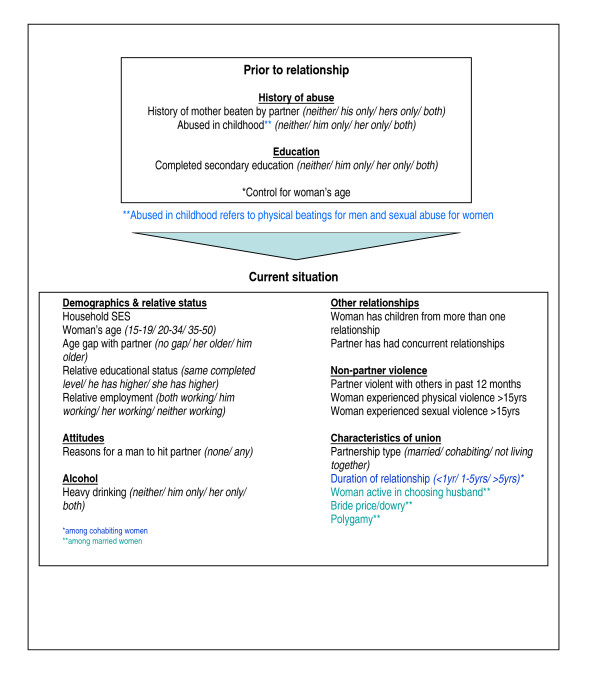
- Secondary education (or primary in Bangladesh, Ethiopia, and Tanzania) completed by both partners was protective in 12/14 sites (10 significant), and high SES was protective in 14 sites (8 significant comparing highest to lowest status).
- Alcohol problems in either or both partners were associated with higher IPV: him 14/14 sites (12 significant), her 10/11 (5 significant), both 11/11 (7 significant); attitudes supportive of wife beating were associated with increased IPV in 13/15 sites (8 significant).
- Prior abuse was consistently associated with IPV: reported abuse of the woman’s mother, partner’s mother, or both increased risk in all sites (10 significant for women, 10 for partners, 12 for both); childhood sexual abuse of the woman, childhood beatings of her partner, or both increased risk (15/15 for partners, all significant; 13/15 for women and both, 10 significant).
- Cohabitation without formal marriage increased IPV in 10/12 sites (3 significant); younger women aged 15–19 and 20–35 had increased risk in all sites (significant in 12); polygamy increased risk in all 6 sites where practiced (3 significant).
Methods
- Standardized population-based household surveys were conducted between 2000 and 2003 in Bangladesh, Brazil, Ethiopia, Japan, Namibia, Peru, Republic of Tanzania, Samoa, Serbia and Montenegro, and Thailand; one woman aged 15–49 was randomly selected per household, with 24,097 women interviewed and 19,517 ever-partnered women asked about partner violence.
- The outcome compared women reporting any physical and/or sexual partner violence in the past 12 months with women reporting no partner violence; women with lifetime but not past-year violence were excluded. Analyses included 15,207 women for “prior to relationship” models and 15,058 for “current situation” models.
- Multivariate logistic regression was run separately by site, with prior-to-relationship and current-situation variables modeled separately; ORs of 0.95–1.05 were considered no association, ≥1.05 risk factors, and ≤0.95 protective factors, with significance at 5%.
Limitations
- The paper states that the cross-sectional design limits conclusions about temporality or causality, although separating early-life and current characteristics clarifies temporality for some factors.
- The paper states that only women were interviewed, so partner characteristics rely on women’s reports and refer to the current or most recent partner, who may not be the perpetrator; any resulting misclassification would bias results toward the null.
- The text makes evident that small numbers in extreme exposure categories produced wide confidence intervals for some abuse-related ORs, and many site-specific associations were non-significant or varied in direction, so consistency is based on patterns across sites rather than uniform statistical significance.
Model-written summary. Check it against the paper before relying on it.
Integrity signals
Registry
Cites
Statistics
Figures
Verification
Claims the paper makes
3 Valid · 0 Not valid · 13 Not checked · 62 Own results and interpretations
Every source the paper cites for this claim was checked and supports it.
In the paper
“Higher socioeconomic status is generally associated with lower levels of physical and/or sexual partner violence.”
§ What factors are associated with recent intimate partner violence? findings from the WHO multi-country study on women's health and domestic violence > Discussion
What the sources say
- Supportedcites [27] Vyas S Watts C How does economic empowerment affect women's risk of intimate partner violence in low and middle income country settings?: A systematic review of published evidence J Int Dev 2009 21 577 602 10.1002/jid.1500 source
Section 4 (Discussion) says higher household socioeconomic status, measured by assets, is predominantly protective against intimate partner violence. Section 3.1 reports lower physical and/or sexual violence in several higher-wealth groups, while also noting null and contrary findings; the claim's word “generally” accommodates that variation. Page numbers are not provided for these passages. (LLM, conf=0.88)
plainstates an association- Asserted: passes — The authors put it forward as true.
- Checkable: passes — It can be checked against evidence.
- Load-bearing: passes — The paper’s conclusions depend on it.
- Based: passes — The paper gives a reason why it holds.
- Supported
A result the paper reports from its own data — it cites no other source for it, so there is none to check. The quote shows it is in the paper.
In the paper
“There was no consistent pattern of association between IPV and relative employment status.”
§ What factors are associated with recent intimate partner violence? findings from the WHO multi-country study on women's health and domestic violence > Results > Current situation model
plain- Asserted: passes — The authors put it forward as true.
- Checkable: passes — It can be checked against evidence.
- Load-bearing: unclear — It is unclear whether the paper’s conclusions depend on it.
- Based: passes — The paper gives a reason why it holds.
A result the paper reports from its own data — it cites no other source for it, so there is none to check. The quote shows it is in the paper.
In the paper
“Secondary education, high SES, and formal marriage offered protection, while alcohol abuse, cohabitation, young age, attitudes supportive of wife beating, having outside sexual partners, experiencing childhood abuse, growing up with domestic violence, and experiencing or perpetrating other forms of violence in adulthood, increased the risk of IPV.”
§ What factors are associated with recent intimate partner violence? findings from the WHO multi-country study on women's health and domestic violence > Abstract > Results
plainstates a cause- Asserted: passes — The authors put it forward as true.
- Checkable: passes — It can be checked against evidence.
- Load-bearing: passes — The paper’s conclusions depend on it.
- Based: passes — The paper gives a reason why it holds.
A result the paper reports from its own data — it cites no other source for it, so there is none to check. The quote shows it is in the paper.
In the paper
“In all sites odds of IPV were higher in relationships where one or both partners had problems with alcohol, compared to relationships where neither of them did (him 14/14, 12 significant; her 10/11, 5 significant; both 11/11, 7 significant).”
§ What factors are associated with recent intimate partner violence? findings from the WHO multi-country study on women's health and domestic violence > Results > Current situation model
plainstates an association- Asserted: passes — The authors put it forward as true.
- Checkable: passes — It can be checked against evidence.
- Load-bearing: passes — The paper’s conclusions depend on it.
- Based: passes — The paper gives a reason why it holds.
56 more claims
Create a free account to see all 78 claims and to verify the 3 references still open.
- It may state two separate claims as one. 8
- Probably not a substantial claim. 9
Self-check
Percentages, sums and reported differences re-computed from the paper’s own numbers.
Each contradiction between two passages listed here was confirmed by an independent check.
Rated minor: it would not touch a result — a value no result rests on, a p-value that stays on the same side of the significance level, or a conflict that is clerical, resolved elsewhere in the paper, or outside its own findings.
In the paper
§ What factors are associated with recent intimate partner violence? findings from the WHO multi-country study on women's health and domestic violence > Results > Prior to relationship
“15/15 sites for partners, all significant”
§ What factors are associated with recent intimate partner violence? findings from the WHO multi-country study on women's health and domestic violence > Results
“| 7 | 2.5 (1.4 - 4.3) | 5 | 1.6 (0.89 - 2.8) |”
Rated minor: it would not touch a result — a value no result rests on, a p-value that stays on the same side of the significance level, or a conflict that is clerical, resolved elsewhere in the paper, or outside its own findings.
In the paper
§ What factors are associated with recent intimate partner violence? findings from the WHO multi-country study on women's health and domestic violence > Results > Prior to relationship
“reports of abuse of the woman's mother, her partners' mother, or both (compared to no known reported abuse of either mother) being associated with increased risk of IPV in all sites”
§ What factors are associated with recent intimate partner violence? findings from the WHO multi-country study on women's health and domestic violence > Results
“| 4 | 2.5 (1.1 - 5.5) | 2 | 0.47 (0.06 - 4.0) | 2 | 2.2 (0.93 - 5.3) |”
Citations
Cites
The world report on violence and health
Krug, E. G., Mercy, J. A., Dahlberg, L. L., & Zwi, A. B. (2002) · The Lancet · doi:10.1016/s0140-6736(02)11133-0 · Cited by 9,110 · cited 1×
“The consistent association between IPV and other forms of violence against women also point to the need for integrated responses to violence across sectors and programmes [30,31].”
BackgroundMultilevel analysis techniques and applications
Hox, J. J., Moerbeek, M., & van de Schoot, R. (2002) · Cited by 6,886
Garcia-Moreno, C., Jansen, H. A., Ellsberg, M., Heise, L., & Watts, C. H. (2006) · The Lancet · doi:10.1016/s0140-6736(06)69523-8 · Cited by 3,176
Self-citationBehind Closed Doors: Violence in the American Family.
Boudouris, J., Straus, M. A., Gelles, R. J., & Steinmetz, S. K. (1982) · Contemporary Sociology · doi:10.2307/2068814 · Cited by 3,088
Hox, J., Moerbeek, M., & van de Schoot, R. (2002) · doi:10.4324/9781410604118 · Cited by 2,419
Violence Against Women: An Integrated, Ecological Framework
HEISE, L. L. (1998) · Violence Against Women · doi:10.1177/1077801298004003002 · Cited by 2,042
Self-citationIntimate partner violence: causes and prevention
Jewkes, R. (2002) · The Lancet · doi:10.1016/s0140-6736(02)08357-5 · Cited by 1,993
Ellsberg, M., Jansen, H. A., Heise, L., Watts, C. H., & Garcia-Moreno, C. (2008) · The Lancet · doi:10.1016/s0140-6736(08)60522-x · Cited by 1,820 · cited 1×
“In addition to being a concern in its own right, IPV is associated with a range of adverse physical, mental, sexual and reproductive health outcomes [2-8].”
BackgroundSelf-citationDunkle, K. L., Jewkes, R. K., Brown, H. C., Gray, G. E., McIntryre, J. A., & Harlow, S. D. (2004) · The Lancet · doi:10.1016/s0140-6736(04)16098-4 · Cited by 1,323 · cited 1×
“In addition to being a concern in its own right, IPV is associated with a range of adverse physical, mental, sexual and reproductive health outcomes [2-8].”
BackgroundIntimate partner physical abuse perpetration and victimization risk factors: A meta-analytic review
Stith, S. M., Smith, D. B., Penn, C. E., Ward, D. B., & Tritt, D. (2004) · Aggression and Violent Behavior · doi:10.1016/j.avb.2003.09.001 · Cited by 1,082 · cited 1×
“Studies in various countries have identified a range of factors that influence IPV risk [9-13], but in some cases, protective factors in one setting may be ineffective or actually increase risk in another [14].”
Background
Research works printed but not linked: 4
- Kishor S Johnson K Profiling domestic violence: A multicountry study 2004 Calverton, Maryland, USA: ORC Macro
- DoH South Africa Demographic and Health Survey 1998: final report 2002 Pretoria: Department of Health
- Harvey A Garcia Moreno C Butchart A Primary prevention of intimate partner violence and sexual violence: Background paper for WHO expert meeting May 2-3, 2007 2007 Geneva: World Health Organization, Department of Violence and Injuy Prevention and Disability
- Counts D Brown J Campbell J Sanctions and Sanctuary 1992 Boulder: Westview Press
Cited by
Items 401–500 of 1,413
An Affront to Her Mana : Young Māori Mothers’ Experiences of Intimate Partner Violence
Dhunna, S., LAWTON, B. A., & Cram, F. (2018) · Journal of Interpersonal Violence · doi:10.1177/0886260518815712 · Cited by 44
“Previous studies on the factors that are linked to women being at risk of IPV have been widely explored, with certain factors and experiences being identified within both the victim and the perpetrator (Abramsky et al., 2011; Jewkes, 2002).”
BackgroundBerk, R. A., & Sorenson, S. B. (2019) · Criminology & Public Policy · doi:10.1111/1745-9133.12476 · Cited by 30
Gender Dimensions of Forced Displacement: A Brief Review and Introduction to the Special Issue
Brück, T., Hanmer, L. C., Klugman, J., & Arango, D. J. (2024) · The Journal of Development Studies · doi:10.1080/00220388.2024.2376145 · Cited by 37
“…inequality, pervasive unequal gender norms, economic insecurity, weak legal systems, lower levels of educational attainment, and substance abuse (Abramsky et al., 2011 ; Capaldi, Knoble, Shortt, & Kim, 2012; Ellsberg et al., 2015; Garcia-Moreno et al., 2005; Jewkes, 2002; Reed, Silverman, Raj,…”
Weiss, N. H., Duke, A. A., & Sullivan, T. P. (2014) · Anxiety, Stress, & Coping · doi:10.1080/10615806.2014.899586 · Cited by 24
Inter-relações da violência no sistema familiar: estudo domiciliar em um bairro de baixa renda
Bhona, F. M. D. C., Gebara, C. F. D. P., Noto, A. R., Vieira, M. D. T., & Lourenço, L. M. (2014) · Psicologia Reflexão e Crítica · doi:10.1590/1678-7153.201427321 · Cited by 34
Intimate partner violence and women’s labour force participation in Sub Saharan Africa
Tandrayen‐Ragoobur, V. (2018) · Community Work & Family · doi:10.1080/13668803.2018.1540400 · Cited by 34
“Further, partner abuse is more prevalent in polygamous unions essentially with the presence of two or more wives (similar results are found by Abramsky et al., 2011).”
BackgroundResultInfluentialKwaramba, T., Ye, J. J., Elahi, C., et al. (2019) · PLoS ONE · doi:10.1371/journal.pone.0224204 · Cited by 24
“These findings contrast previous studies that have shown lower levels of education and per capita income as risk factors for IPVAW [19,20,38,43,44].”
ResultAbdi, F., Mahmoodi, Z., Afsahi, F., Shaterian, N., & Rahnemaei, F. A. (2021) · Obstetrics & Gynecology Science · doi:10.5468/ogs.20211 · Cited by 38
“Other studies have confirmed findings consistent with the results of the current study, and it seems that this factor, as a situational variable, exacerbates conflicts between couples [57,58].”
ResultCognitive and Affective Mediators of Alcohol-Facilitated Intimate-Partner Aggression
Eckhardt, C. I., Parrott, D. J., Swartout, K. M., Leone, R. M., Purvis, D. M., Massa, A. A., & Sprunger, J. G. (2021) · Clinical Psychological Science · doi:10.1177/2167702620966293 · Cited by 27
“…reveal a positive association between IPA perpetration and alcohol-related problems (Caetano, Ramisetty-Mikler, & Field, 2005), alcohol consumption (Abramsky et al., 2011; Graham, Bernards, Wilsnack, & Gmel, 2011; Okuda et al., 2015; Renzetti, Lynch, & DeWall, 2018), and alcohol use disorders…”
Kaggwa, M. M., Namatanzi, B., Kule, M., Nkola, R., Najjuka, S. M., Al‐Mamun, F., Hosen, I., Mamun, M. A., & Ashaba, S. (2021) · International Journal of Women s Health · doi:10.2147/ijwh.s323636 · Cited by 31
Evans, D. K., Hares, S., Holland, P. A., & Acosta, A. M. (2023) · The Journal of Development Studies · doi:10.1080/00220388.2023.2172333 · Cited by 35
“Research further suggests that those who justify intimate partner violence are more likely to have experienced violence themselves (Ravi & Ahluwalia, 2017), and boys who have completed secondary education are less likely to be perpetrators of violence (Abramsky et al., 2011).”
BackgroundMehra, D., Srivastava, S., Chandra, M., Srivastava, N., Laaksonen, M., Saarinen, H. E., & Mehra, S. (2023) · BMC Public Health · doi:10.1186/s12889-023-15421-4 · Cited by 33
“This approach is being used widely, as another, systematic review published in the lancet, adopted GTA among children, adolescents and adults, with a focus on sexual and reproductive health, HIV, and violence which showed that many of these approaches are effective in them [42].”
BackgroundMethodSubjectively Evaluated Effects of Domestic Violence on Well-Being in Clinical Populations
Poutiainen, M., & Holma, J. M. (2013) · ISRN Nursing · doi:10.1155/2013/347235 · Cited by 28
Schröttle, M., & Glammeier, S. (2012) · DOAJ (DOAJ: Directory of Open Access Journals) · doi:10.4119/unibi/ijcv.312 · Cited by 24
“Research on violence against women has described the destructive influence of childhood abuse on the victimization of women in their adult lives (Abramsky et al. 2011; Schröttle et al. 2006; Stith et al. 2004).”
BackgroundWilson, K. S., Wanje, G., Yuhas, K., Simoni, J. M., Masese, L. N., Stoep, A. V., Jaoko, W. G., Hughes, J. P., Richardson, B. A., & McClelland, R. S. (2016) · AIDS and Behavior · doi:10.1007/s10461-016-1420-z · Cited by 27
“We also evaluated IPV severity level (severe, moderate, or no IPV) [57].”
MethodDomestic Violence Against Women in Urban Slums of Bangladesh: A Cross-Sectional Survey
Chowdhury, M. A. K., Rahman, A. E., Morium, S., Hasan, M. M., Bhuiyan, A., & Arifeen, S. E. (2018) · Journal of Interpersonal Violence · doi:10.1177/0886260518791235 · Cited by 31
“The socioeconomic status is also regarded as a correlate with DVAW in a number of studies (Abramsky et al., 2011; Khatun & Rahman, 2012; Lim et al., 2013; Naved & Persson, 2005).”
BackgroundResultSocioeconomic Factors and Intimate Partner Violence: A Household Survey
Bhona, F. M. D. C., Gebara, C. F. D. P., Noto, A. R., Vieira, M. D. T., & Lourenço, L. M. (2019) · Temas em Psicologia · doi:10.9788/tp2019.1-15 · Cited by 27
“A national and multicultural study indicated this association between education and violence between partners, with higher risks associated with lower educational levels (Abramsky et al., 2011; Reichencheim et al., 2006).”
BackgroundInfluentialMagnitude of domestic violence and its socio-demographic correlates among pregnant women in Delhi
Garg, S., Singh, M. M., Rustagi, R., et al. (2019) · Journal of Family Medicine and Primary Care · doi:10.4103/jfmpc.jfmpc_597_19 · Cited by 24
“The association was much more when the factors were reported in both the women and partner.[13] Studies conducted in other countries like Bangladesh, Egypt have reported similar determinants for domestic violence viz.”
ResultAbdullah, S., Qureshi, H. A., & Quayes, S. (2015) · The Journal of Developing Areas · doi:10.1353/jda.2015.0148 · Cited by 33
Gracia, E., García-Senlle, M. L., Martín-Fernández, M., & Lila, M. (2023) · Journal of Interpersonal Violence · doi:10.1177/08862605231172479 · Cited by 31
“On the other hand, some scholars point to the importance of assessing gender equality and IPVAW measures as they may be having the opposite effect to that which is expected (Abramsky et al., 2011; Heise, 2011).”
BackgroundSousa, M., Andrade, J., Rodrigues, A. D. C., Caridade, S., & Cunha, O. S. (2024) · Trauma Violence & Abuse · doi:10.1177/15248380241270063 · Cited by 37
“Moreover, interventions must address the key risk factors of IPV, which include substance abuse, poor mental health (MH), inequitable gender attitudes, and childhood exposure to violence (e.g., Abramsky et al., 2011; Ramsoomar et al., 2021, 2023).”
BackgroundJiwatram-Negrón, T., Michalopoulos, L., & El‐Bassel, N. (2018) · Global Social Welfare · doi:10.1007/s40609-018-0112-1 · Cited by 25
“HIV-risk behaviors, such as sexual concurrency and substance use, than women who do not report violence, driving their HIV risk (Abramsky et al. 2011; Decker et al. 2009; Foran and O’Leary 2008; Raj et al. 2004).”
BackgroundBarnett, W., Halligan, S. L., Heron, J. E., Fraser, A., Koen, N., Zar, H. J., Donald, K. A., & Stein, D. J. (2018) · Child Abuse & Neglect · doi:10.1016/j.chiabu.2018.08.020 · Cited by 26
Leung, L., Miedema, S. S., Warner, X., Homan, S., & Fulu, E. (2019) · Gender & Development · doi:10.1080/13552074.2019.1668142 · Cited by 41
“While prevalence rates and forms of VAWG vary, the vast body of evidence that has been collected over the past three decades has uncovered strong evidence that VAWG is driven by gender inequality and patriarchal social norms (Abramsky et al. 2011; Fulu et al. 2013; Heise and Kotsadam 2015; Yodanis 2004).”
BackgroundDostanic, N., Djikanović, B., Jovanović, M., Stamenković, Ž., & Đeric, A. (2021) · Journal of Family Violence · doi:10.1007/s10896-020-00238-1 · Cited by 34
“In comparison to the other addictions, such as pathological gambling, the incidence of IPVAW is much higher (Roberts et al. 2020).”
BackgroundResultInfluentialKin Group Affiliation and Marital Violence Against Women in Ghana
Sedziafa, A. P., & Tenkorang, E. (2016) · Violence and Victims · doi:10.1891/0886-6708.vv-d-15-00031 · Cited by 19
“For example, power could be conferred through access to socio-economic resources (Abramsky et al., 2011; Garcia-Moreno, Jansen, Ellsberg, Heise, & Watts, 2005), in addition to domestic rights (WHO & Pan American Health Organization, 2012; see also Archampong & Sampson, 2010). This assertion by power theorists is consi…”
BackgroundResultSangha, C. A. T. M., Blanchard, A. K., Nair, S. G., Bruce, S. G., Ramanaik, S., Thalinja, R., Murthy, S., Javalkar, P., Pillai, P., Collumbien, M., et al. (2018) · BMC Women s Health · doi:10.1186/s12905-018-0554-8 · Cited by 29
Self-citationPatriarchy's Link to Intimate Partner Violence: Applications to Survivors’ Asylum Claims
Saunders, D. G., Jiwatram-Negrón, T., Nanasi, N., & Cardenas, I. (2022) · Violence Against Women · doi:10.1177/10778012221132299 · Cited by 34
“Abramsky et al. (2011) surveyed women at 14 sites in 10 countries.”
Working With Couples and Substance Abuse: Recommendations for Clinical Practice
Cox, R. B., Ketner, J. S., & Blow, A. J. (2013) · American Journal of Family Therapy · doi:10.1080/01926187.2012.670608 · Cited by 29
Intimate Partner Violence Against Women in Northwestern Botswana: The Maun Women’s Study
Barchi, F., Winter, S. C., Dougherty, D., & Ramaphane, P. (2018) · Violence Against Women · doi:10.1177/1077801218755976 · Cited by 29
“Over the past several decades, researchers have identified an extensive catalog of the potential risk and protective factors associated with IPV (Abramsky et al., 2011; Stöckl, Devries, & Watts, 1Rutgers University, New Brunswick, NJ, USA 2Michigan State University, Flint, MI, USA 3Women Against…”
BackgroundMamun, M. A., Parvin, K., Yu, M., Wan, J., Willan, S., Gibbs, A., Jewkes, R., & Naved, R. (2018) · BMC Public Health · doi:10.1186/s12889-018-5442-5 · Cited by 21
“The literature on factors associated with IPV shows that in some patriarchal contexts, working women may be more vulnerable to IPV [3, 6, 8, 17].”
BackgroundA cash plus program reduces youth exposure to physical violence in Zimbabwe
Chakrabarti, A., Handa, S., Ángeles, G., & Seidenfeld, D. (2020) · World Development · doi:10.1016/j.worlddev.2020.105037 · Cited by 23
“, 2001; Ogando Portela & Pells, 2015); and increase the likelihood of being a victim to and/or perpetrator of violence in the future (Paolucci et al., 2001; Gershoff, 2002; Abramsky et al., 2011).”
BackgroundSimpson, L. E., Raudales, A. M., Reyes, M. E., Sullivan, T. P., & Weiss, N. H. (2021) · Journal of Interpersonal Violence · doi:10.1177/08862605211006371 · Cited by 32
“As different relationship types may result in different IPV patterns or outcomes (Abramsky et al., 2011; Machado et al., 2014; Sorenson”
BackgroundAboagye, R. G., Okyere, J., Seidu, A., Hagan, J. E., & Ahinkorah, B. O. (2021) · Healthcare · doi:10.3390/healthcare9050563 · Cited by 25
Wamser‐Nanney, R. A. (2021) · Psychology of Violence · doi:10.1037/vio0000392 · Cited by 29
Intimate Partner Violence and Femicide in Ecuador
Boira, S., Tomas-Aragones, L., & Rivera, N. (2017) · Qualitative Sociology Review · doi:10.18778/1733-8077.13.3.03 · Cited by 22
Shariati, A., & Guerette, R. T. (2022) · Journal of Family Violence · doi:10.1007/s10896-022-00380-y · Cited by 26
Koris, A., Steven, S., Akika, V., Puls, C., Okoro, C., Bitrus, D., Seff, I., Deitch, J., & Stark, L. (2022) · Conflict and Health · doi:10.1186/s13031-022-00458-w · Cited by 33
Safeguarding Children Subjected to Violence in the Family: Child-Centered Risk Assessments
Eriksson, M., Broberg, A. G., Hultmann, O., Chawinga, E., & Axberg, U. (2022) · International Journal of Environmental Research and Public Health · doi:10.3390/ijerph192113779 · Cited by 37
“The assessment needs to consider the vulnerability of the adult victim, such as a lack of social stability, financial dependence on the perpetrator, social isolation, resistance against receiving help, a high level of fear, mental health problems, or ongoing addiction, as all of these factors may undermine the victim’…”
BackgroundKarriker‐Jaffe, K. J., Blackburn, N., Graham, K., Walker, M. J., Room, R., Wilson, I. M., Waleewong, O., Gilchrist, G., Ramsoomar, L., & Laslett, A. (2023) · International Journal of Drug Policy · doi:10.1016/j.drugpo.2023.104148 · Cited by 38
Shakya, H. B., Fleming, P. J., Saggurti, N., Donta, B., Silverman, J. G., & Raj, A. (2017) · Social Science & Medicine · doi:10.1016/j.socscimed.2017.02.032 · Cited by 23
“Importantly women who believe that IPV is acceptable are more likely to report experiencing IPV (Abramsky et al., 2011; M. Hindin et al., 2008; Khawaja et al., 2008; Sambisa, Angeles, Lance, Naved, & Thornton, 2011).”
BackgroundInformation Communication Technologies and Intimate Partner Violence in China
Xue, J., Lin, K., Sun, I. Y., & Liu, J. (2018) · International Journal of Offender Therapy and Comparative Criminology · doi:10.1177/0306624x18801500 · Cited by 25
“…socioeconomic status (SES), including higher educational attainment and employment, tended to lower women’s risks of experiencing all kinds of IPV (Abramsky et al., 2011; Capaldi et al., 2012; Chan, 2014; Chan, Brownridge, Tiwari, Fong, & Leung, 2008; Coker et al., 2002; Jewkes, 2002; Xu et al.,…”
BackgroundSemahegn, A., Torpey, K., Manu, A., Assefa, N., & Ankomah, A. (2019) · International Journal of Women s Health · doi:10.2147/ijwh.s181385 · Cited by 25
Segura, A. M. G., & Carcedo, R. J. (2020) · Frontiers in Psychology · doi:10.3389/fpsyg.2019.03012 · Cited by 35
Violência doméstica na gravidez
Okada, M. M., Hoga, L. A. K., Borges, A. L. V., de Albuquerque, R. S., & Belli, M. A. D. J. (2015) · Acta Paulista de Enfermagem · doi:10.1590/1982-0194201500045 · Cited by 23
de Oliveira, H. N., Machado, C. J., & Guimarães, M. D. C. (2011) · Social Psychiatry and Psychiatric Epidemiology · doi:10.1007/s00127-011-0463-8 · Cited by 23
“However, formal marriage and higher socioeconomic status offered protection, while alcohol abuse and cohabitation increased the risk of violence, among other factors [53].”
BackgroundOwoo, N. S., Agadjanian, V., & Chama‐Chiliba, C. M. (2021) · Journal of Marriage and the Family · doi:10.1111/jomf.12777 · Cited by 23
Ellsberg, M. C., Arango, D. J., Morton, M., Gennari, F., Kiplesund, S., Contreras, M. A., & Watts, C. H. (2014) · Cited by 22
Self-citationDevries, K. M., Parkes, J., Knight, L., Allen, E., Namy, S., Datzberger, S., Nalukenge, W., Atuhaire, L., Kyegombe, N., Walakira, E., et al. (2020) · BMC Public Health · doi:10.1186/s12889-019-7654-8 · Cited by 24
“hood and adolescence are established risk factors for experience of intimate partner and sexual violence in adult women [3], and perpetration of intimate partner and”
BackgroundSelf-citationGibson, M. A., Gurmu, E. D., Cobo, B., Rueda, M. D. M., & Scott, I. M. (2020) · Journal of Interpersonal Violence · doi:10.1177/0886260520914546 · Cited by 26
“Acceptance of violence toward intimate partners strongly predicts the incidence of violence (Abramsky et al., 2011; Heise & Kotsadam, 2015) and victims’ responses to the violent act, for example, help-seeking behavior (Goodson & Hayes, 2021).”
BackgroundTun, T., & Östergren, P. (2020) · Global Health Action · doi:10.1080/16549716.2020.1844975 · Cited by 21
“This finding is in line with the results of the WHO’s multi-country study [41], and a similar Chinese study [42].”
ResultBhowmik, J., & Biswas, R. K. (2022) · International Journal of Environmental Research and Public Health · doi:10.3390/ijerph19063447 · Cited by 26
“IPV against women is one of the most common forms of violence, which is a global human right and public health concern [3,4].”
BackgroundDo electronic and economic empowerment protect women from intimate partner violence (IPV) in India?
Dalal, K., Yasmin, M., Dahlqvist, H. Z., & Klein, G. O. (2022) · BMC Women s Health · doi:10.1186/s12905-022-02110-4 · Cited by 31
“It has several long-term consequences on the physical, sexual-reproductive and mental health of the victims [1, 6].”
BackgroundResultIntimate Partner Violence in the Eastern Part of Iran: A Path Analysis of Risk Factors
MoghaddamHosseini, V., Asadi, Z. S., Akaberi, A., & Hashemian, M. (2013) · Issues in Mental Health Nursing · doi:10.3109/01612840.2013.785616 · Cited by 21
Applying the Social Ecological Model to Violence against Women with Disabilities
Terry, M. S. (2014) · Journal of Women s Health Care · doi:10.4172/2167-0420.1000193 · Cited by 22
“Addressing the second UN mandate, Abramsky and colleagues found three protective factors from interpersonal violence: secondary education, high socioeconomic status, and formal marriage and several risk factors [33].”
BackgroundCorrelates of Domestic Violence Victimization Among North Korean Refugee Women in South Korea
Um, M. Y., Kim, H. J., & Palinkas, L. A. (2016) · Journal of Interpersonal Violence · doi:10.1177/0886260515622297 · Cited by 25
“Fourth, several risk and protective factors that previous studies found to be associated with DV victimization (Abramsky et al., 2011) could not be controlled for in this study because of the small sample size, large numbers of missing responses, or absence in the data.”
BackgroundMethodFagbamigbe, A. F., Akintayo, A. D., Oshodi, O. C., Makinde, F. T., Babalola, M., Araoye, E. D., Enabor, O. C., & Dairo, M. D. (2020) · Public Health · doi:10.1016/j.puhe.2019.12.003 · Cited by 23
Kelmendi, K., & Baumgartner, F. (2017) · Journal of Interpersonal Violence · doi:10.1177/0886260517692336 · Cited by 28
“Research evidence shows that all these circumstances increase the risk for IPV (Abramsky et al., 2011).”
BackgroundIntimate partner violence risk assessment
Kropp, P. R. (2018) · Routledge eBooks · doi:10.4324/9781315310411-3 · Cited by 21
Manna, S., Singh, D., Barik, M., Rehman, T., Ghosal, S., Kanungo, S., & Pati, S. (2024) · BMC Women s Health · doi:10.1186/s12905-024-03204-x · Cited by 31
“Other studies illustrated little consistency between women empowerment and violence across varying cultures, where educational attainment, income, decision-making, and contextual factors all play vital roles individually [17–19].”
BackgroundWadji, D. L., Wanda, G. J. M. K., Wicky, C., Morina, N., & Martin-Söelch, C. (2020) · Journal of Interpersonal Violence · doi:10.1177/0886260520948148 · Cited by 24
“Our findings support studies suggesting that unemployment and lower levels of education increase the risk of IPV (Almiş et al., 2018; Capaldi et al., 2012), or that secondary education and high socioeconomic status offer protection (Abramsky et al., 2011), as was the case in our control group.”
BackgroundResultBatur, S. C., Sakallı-Uğurlu, N., & Gunaratne, S. (2021) · Current Psychology · doi:10.1007/s12144-021-02276-4 · Cited by 33
Donenberg, G. R., Fitts, J., Ingabire, C., Nsanzimana, S., Fabri, M. R., Emerson, E. M., Remera, E., Manzi, O., Bray, B. C., & Cohen, M. H. (2022) · JAIDS Journal of Acquired Immune Deficiency Syndromes · doi:10.1097/qai.0000000000002911 · Cited by 21
Coll, C. V. N., Wendt, A. T., Santos, T. M., Bhatia, A., & Barros, A. J. D. (2023) · International Journal of Environmental Research and Public Health · doi:10.3390/ijerph20043218 · Cited by 19
“First, large power imbalances within relationships and limited women’s agency and autonomy, linked to patriarchal systems and structures, have been found to increase the risk of IPV [13].”
BackgroundEkhtiari, Y. S., Shojaeizadeh, D., Foroushani, A. R., Ghofranipour, F. F., & Ahmadi, B. (2013) · Iranian Red Crescent Medical Journal · doi:10.5812/ircmj.3517 · Cited by 31
“In 2005, results of a study on women's health and violence against women, which was done in 10 countries, showed that the lifetime prevalence of physical and/or sexual violence by an intimate partner varied from 15% in Japan to 71% in Ethiopia (3).”
BackgroundGebara, C. F. D. P., Ferri, C. P., Lourenço, L. M., Vieira, M. D. T., Bhona, F. M. D. C., & Noto, A. R. (2015) · BMC Women s Health · doi:10.1186/s12905-015-0236-8 · Cited by 25
Vu, L., Nieto-Andrade, B. F., DiVincenzo, A., Rivas, J., Firestone, R., Wheeler, J., & Lungo, S. (2014) · AIDS and Behavior · doi:10.1007/s10461-014-0910-0 · Cited by 21
“Previous research has shown that women often have difficulty negotiating condom use or asking for a condom due to power imbalances, fear of violence, and gender inequality [29, 30], therefore increasing their susceptibility for HIV and STIs.”
BackgroundNeves, S., Cameira, M., Machado, M., Duarte, V., & Machado, F. (2016) · Journal of Child & Adolescent Trauma · doi:10.1007/s40653-016-0099-7 · Cited by 22
Previous experience of family violence and intimate partner violence in pregnancy
Ludermir, A. B., de Araújo, T. V. B., Valongueiro, S. A., Muniz, M. L. C., & Silva, E. P. (2017) · Revista de Saúde Pública · doi:10.11606/s1518-8787.2017051006700 · Cited by 27
Quintanilla, B. P. A., Pollock, W., McDonald, S., & Taft, A. (2019) · Birth · doi:10.1111/birt.12461 · Cited by 21
Falconer, N. S., Casale, M., Kuo, C., Nyberg, B. J., Hillis, S. D., & Cluver, L. D. (2020) · Journal of Interpersonal Violence · doi:10.1177/0886260519898425 · Cited by 18
“Prevention is crucial, both to protect children from harm and to reduce the potential of ongoing perpetration from children who grow up experiencing the damaging cycle of abuse (Abramsky et al., 2011; Jennings et al., 2015).”
BackgroundGilbert, L. K., Annor, F., & Kress, H. C. (2020) · Journal of Interpersonal Violence · doi:10.1177/0886260520978196 · Cited by 26
“Inequitable gender norms are thought to be a driver of IPV (Abramsky et al., 2011; Heise & Kotsadam, 2015; Malamuth et al., 1991; Murnen et al., 2002).”
BackgroundResultIntimate Partner Violence Among Mothers of Sick Newborns in Ghana
Spangenberg, K., Wobil, P., Betts, C. L., Wiesner, T. F., & Gold, K. J. (2015) · Health Care For Women International · doi:10.1080/07399332.2015.1037444 · Cited by 20
“…health disorders including depression, anxiety, post-traumatic stress disorder, and psychosis; and physical health problems including chronic pain, infections, and headaches among other disorders (Abramsky et al., 2011; American College of Obstetricians and Gynecologists, 2012; Heise et al., 1999).”
BackgroundInfluentialHipolito, E., Samuels-Dennis, J. A., Shanmuganandapala, B., Maddoux, J. A., Paulson, R. M., Saugh, D., & Carnahan, B. (2014) · Journal of Spirituality in Mental Health · doi:10.1080/19349637.2014.925368 · Cited by 24
“…issues of masculinity, femininity and gender norms that foster gender-based violence; (d) parent education to prevent child maltreatment and IPV; and (e) making use of spiritual and empowering participatory approaches for addressing gender inequality (Abramsky et al., 2011; WHO, 2002a, 2002b).”
BackgroundReed, E., Saggurti, N., Donta, B., et al. (2015) · International Journal of Gynecology & Obstetrics · doi:10.1016/j.ijgo.2015.10.007 · Cited by 20
Wagers, S. M., Piquero, A. R., Narvey, C. S., Reid, J. A., & Loughran, T. A. (2020) · Journal of Family Violence · doi:10.1007/s10896-020-00170-4 · Cited by 24
Profiles of Intimate Partner Violence Victimization: A Systematic Review
Hall, M., Hill, E., Moreland, G., Hales, G. K., Boduszek, D., & Debowska, A. (2022) · Trauma Violence & Abuse · doi:10.1177/15248380221126183 · Cited by 28
“…of psychological, physical, and sexual IPV incidents in a population of female undergraduate university students in Australia and New Zealand, given that being young and in a relationship but unmarried constitute risk factors for IPV victimization (Abramsky et al., 2011; Taşkale & Soygüt, 2017).”
BackgroundCork, C., White, R. G., Noël, P., & Bergin, N. (2018) · Trauma Violence & Abuse · doi:10.1177/1524838018784585 · Cited by 23
Kelly, J. T. D., Colantuoni, E., Robinson, C., & Decker, M. R. (2019) · Global Public Health · doi:10.1080/17441692.2019.1650949 · Cited by 25
“At the individual level, established correlates of interpersonal violence globally include: age, education level, wealth, experience with – or witnessing of – violence previously, a history of mental health problems, and alcohol or substance abuse (Abramsky et al., 2011; Hindin, Kishor, & Ansara, 2008; Jewkes, 2013; L…”
BackgroundOmidakhsh, N., & Heymann, J. S. (2020) · Journal of Global Health · doi:10.7189/jogh.10.010707 · Cited by 23
van Bergen, D. D., Eylem, Ö., & Montesinos, A. H. (2021) · PLoS ONE · doi:10.1371/journal.pone.0253274 · Cited by 20
“Impaired autonomy, economic dependence and poverty render women particularly vulnerable to distress, which is a tremendous setback to mental health equity [30, 67].”
BackgroundSingh, V., & Babbar, K. (2022) · Social Science & Medicine · doi:10.1016/j.socscimed.2022.114766 · Cited by 25
Lankarani, K. B., Hemyari, C., Honarvar, B., Khaksar, E., Shaygani, F., Haghighi, M. R. R., & Shaygani, M. R. (2022) · BMC Public Health · doi:10.1186/s12889-022-12536-y · Cited by 15
“On the other hand, higher education, formal marriage and high socio-economic status offered protection against DV [5, 6].”
BackgroundEmerson, E., & Llewellyn, G. M. (2022) · Journal of Interpersonal Violence · doi:10.1177/08862605221141868 · Cited by 21
“…Journal of Interpersonal Violence 38(11-12) impact on violence levels; and (2) at an individual level, women who agree that IPV involving hitting or beating in any circumstance justified are more likely to be victims of IPV (Abramsky et al., 2011; Cools & Kotsadam, 2017; Heise & Fulu, 2014).”
BackgroundInfluentialAlemie, A. S., Yeshita, H. Y., Zeleke, E. G., & Mekonnen, B. D. (2023) · BMC Women s Health · doi:10.1186/s12905-023-02193-7 · Cited by 25
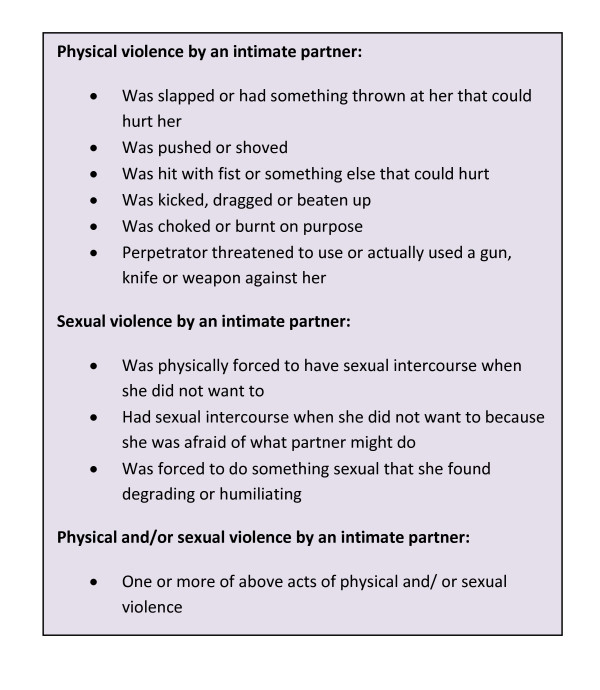
“Physical violence by an intimate partner was defined as if women say “Yes” to one or more of aggression or physical force such as pushed or shoved, slapped or had something thrown at her that could hurt her, kicked, dragged or beaten up, hit with fist or something else that could hurt, choked or burnt on purpose, perp…”
BackgroundViolence against Women during the COVID-19 Pandemic in Mexico
Rivera, L. R., Séris-Martínez, M., Reynales-Shigematsu, L. M., García, J. A. G., Austria‐Corrales, F., Toledano‐Toledano, F., Tapia, A. J., Orozco, D. I. T., & Astudillo‐García, C. I. (2023) · Healthcare · doi:10.3390/healthcare11030419 · Cited by 26
Bekele, T., & Deressa, W. A. (2014) · Science Journal of Public Health · doi:10.11648/j.sjph.20140206.16 · Cited by 21
Harling, G., Tanser, F. C., Mutevedzi, T., & Bärnighausen, T. (2015) · BMJ Open · doi:10.1136/bmjopen-2014-005638 · Cited by 20
Salud mental en mujeres maltratadas por su pareja. Un estudio con muestras de México y España
García, M. J., Facultad de Psicología, U. V., Matud, M. P., & Departamento de Personalidad, E. Y. T. P. (2015) · Salud Mental · doi:10.17711/sm.0185-3325.2015.044 · Cited by 52
Gibbs, A. (2016) · African Journal of AIDS Research · doi:10.2989/16085906.2016.1204331 · Cited by 20
“In the WHO multi-country study on women’s health and domestic violence, lower socio-economic status status was associated with a greater odds of experiencing recent IPV (Abramsky et al., 2011).”
BackgroundMittal, M. J., Resch, K., Nichols‐Hadeed, C., Stone, J. T., Thevenet-Morrison, K. N., Faurot, C., & Cerulli, C. (2018) · Violence and Victims · doi:10.1891/0886-6708.33.6.1072 · Cited by 23
“This finding suggests that in our sample, the relationship between experiencing IPV and depression was not significantly impacted by education and higher economic status—factors that some studies have suggested are protective (Abramsky et al., 2011; Carlson et al., 2002).”
Knight, L., Ranganathan, M., Abramsky, T., Ngwato, T. P., Muvhango, L., Molebatsi, M., Stöckl, H., Lees, S. S., & Watts, C. H. (2019) · Prevention Science · doi:10.1007/s11121-019-01070-w · Cited by 19
“To differentiate risk factors for past-year IPV from those associated with IPV experienced before the last year, we removed those who had experienced IPV prior to the past year only from the denominator (Abramsky et al. 2011; Durevall and Lindskog 2015).”
ResultSelf-citationChae, S., Haberland, N. A., McCarthy, K. J., Weber, A. M., Darmstadt, G. L., & Ngo, T. D. (2019) · Journal of Adolescent Health · doi:10.1016/j.jadohealth.2019.08.031 · Cited by 19
Impact of gender-based violence on psychological distress and happiness in León (Nicaragua)
Bonilla‐Algovia, E., Rivas‐Rivero, E., & Vázquez, J. J. (2020) · Health Care For Women International · doi:10.1080/07399332.2020.1764564 · Cited by 26
Welton‐Mitchell, C., Bujang, N., Hussin, H., Husein, S., Santoadi, F., & James, L. E. (2019) · Intervention · doi:10.4103/intv.intv_18_19 · Cited by 26
“…with stressors typically associated with displacement, such as loss of livelihood opportunities, may play a role in men becoming abusive with their partners (Abramsky et al., 2011; El-Masri, Harvey, & Garwood, 2013; Umberson, Anderson, Williams, Chen, & Campbell, 2003; Akhter & Kusakabe, 2014).”
BackgroundExamining determinants of gender attitudes: evidence among Tanzanian adolescents
Palermo, T., Chzhen, Y., Balvin, N., Kajula, L. J., Tanzania Adolescent Cash Plus Evaluation Team, Palermo, T., Groppo, V., de Hoop, J., Kajula, L. J., Prencipe, L., et al. (2020) · BMC Women s Health · doi:10.1186/s12905-020-01057-8 · Cited by 25
Seid, A. K., Hesse, M., Houborg, E., & Thylstrup, B. (2021) · Journal of Interpersonal Violence · doi:10.1177/0886260521997456 · Cited by 22
“, 2017; Kuhns & Clodfelter, 2009; Teasdale, 2009), conviction and victimization (Abramsky et al., 2011; de Vries et al., 2019; Spencer et al., 2019), psychiatric symptom and mental illness (Choe et al.”
BackgroundSeidu, A., Aboagye, R. G., Ahinkorah, B. O., Adu, C., & Yaya, S. (2021) · SSM - Population Health · doi:10.1016/j.ssmph.2021.100877 · Cited by 22
Abramsky, T., Harvey, S. E., Mosha, N. R., Mtolela, G. J., Gibbs, A., Mshana, G. H., Lees, S. S., Kapiga, S., & Stöckl, H. (2022) · BMC Women s Health · doi:10.1186/s12905-022-01697-y · Cited by 22
“Financial hardship (and other indicators of socio-economic status) are strong risk factors for IPV[52, 53].”
BackgroundSelf-citationGaffoor, Z., Wand, H. C., Daniels, B. B., & Ramjee, G. (2013) · BMC Research Notes · doi:10.1186/1756-0500-6-532 · Cited by 21
“A noted difference is the association between older women and an increased likelihood of experiencing FS in our sample, compared to that reported by Abramsky [8], where younger women were more at risk of GBV in twelve of fifteen sites around the world.”
BackgroundMethodResultInfluential
Metadata
- Authors
- Abramsky, T., Watts, C. H., Garcia-Moreno, C., Devries, K., Kiss, L., Ellsberg, M., Jansen, H. A., & Heise, L.
- Affiliations
- London School of Hygiene & Tropical Medicine (GB)
- International Center for Research on Women (US)
- Corresponding author
- Abramsky, Tanya
- Venue
- BMC Public Health
- Published
- 2011-02-16
- Volume
- 11
- Issue
- 1
- Pages
- 109-109
- ISSN
- 1471-2458 (ISSN-L)
- PMC
- PMC3049145
- OpenAlex
- W2146316233
- Semantic Scholar
- 124d14c4c5378026a820318c409f305314e161d1
- Cited by
- 1,413
- References
- 42
- Citations by year
- 2026: 66 · 2025: 85 · 2024: 102 · 2023: 96 · 2022: 108 · 2021: 133 · 2020: 137 · 2019: 105 · 2018: 103 · 2017: 106 · 2016: 95 · 2015: 89 · 2014: 75 · 2013: 69 · 2012: 28
- FWCI
- 60.57
- Type
- journal article
- Language
- en
- Open access
- gold
- doi.org
- Licence
- Locations
- BMC Public Health (publishedVersion, cc-by)
- PubMed Central (publishedVersion, cc-by)
- PubMed (publishedVersion)
- LSHTM Research Online (London School of Hygiene and Tropical Medicine) (acceptedVersion)
- DOAJ (DOAJ: Directory of Open Access Journals) (submittedVersion)
- Funders
- Rockefeller Foundation
- Styrelsen för Internationellt Utvecklingssamarbete
- United Nations Fund for Population Activities
- Mahidol University
- Umeå Universitet
- Universidade de São Paulo
- Uppsala Universitet
- Addis Ababa University
- Universidade Federal de Pernambuco
- Universidade de Pernambuco
- International Centre for Diarrhoeal Disease Research, Bangladesh
- Topics
- Social Sciences › Health › Intimate Partner and Family Violence
- Health Sciences › Medicine › Geriatrics and Gerontology › Elder Abuse and Neglect
- Social Sciences › Gender Studies › Sexual Assault and Victimization Studies
- Keywords
- intimate partner violence, domestic violence against women, risk factors, physical violence, sexual violence, alcohol abuse, childhood abuse, gender norms, IPV prevention, secondary education, socioeconomic status, cohabitation
- MeSH terms
- Adolescent, Adult, Data Collection, Female, Humans, Middle Aged, Risk Factors, Rural Population, Sexual Partners, Urban Population, World Health Organization, Logistic Models, Domestic Violence, Battered Women, Internationality, Young Adult
About these checks
Registry, retraction, Cites and statistics results are computed, not judged, with one exception: a printed reference that no index lists is read once by a model before it counts as a citation error. Claims are extracted by a model and kept only when their quote appears verbatim in the text; each cited source is then checked, with a model’s help, for whether it says what the claim relies on. Those verdicts can be wrong — read the claim’s quote and the cited source before relying on one.
The claim verdicts this report counts are experimental: their accuracy is not yet measured.
A language model drew the claims from the paper on 2026-10-10, under version 3 of the claim definition (model deepseek-v4.1-flash, prompt extract-v3).
A second model labelled each claim on 2026-10-10 (model jev-1.13-20260917, definition revision gold-guideline-v0.2).
Cited sources are checked with a language model’s help (gpt-6-sol).
Statistics and arithmetic are recomputed, not judged.
Confidence bands are shown only for fields calibrated on our annotated test set. None is calibrated yet, so no band is shown.
What counts as a claim ›How we measure confidence ›How we check this ›
Are you an author, or do you see a problem with this page? Request a review
Data sources
Bibliographic data: Semantic Scholar, OpenAlex, Crossref.
Contains information from the Semantic Scholar Academic Graph Datasets, made available under the ODC Attribution License (ODC-BY 1.0).
Semantic Scholar’s data is described in: Kinney, R., et al. (2023). The Semantic Scholar Open Data Platform. arXiv:2301.10140.
