

What factors are associated with recent intimate partner violence? findings from the WHO multi-country study on women's health and domestic violence
Open accessThe DOI matches its Crossref record; 41 of the 42 references it cites were found in a registry or an index, and 1 are not checked yet; 5 of the 24 sources its claims cite were checked for support.
Abstract
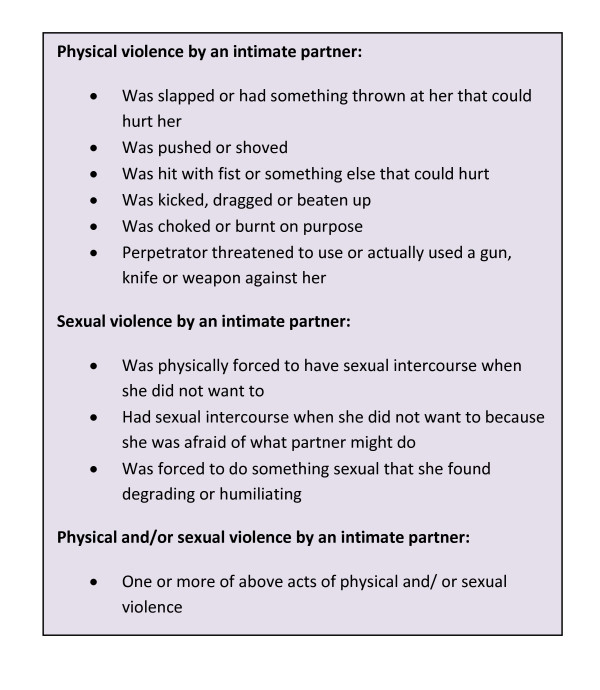
BACKGROUND: Intimate partner violence (IPV) against women is a global public health and human rights concern. Despite a growing body of research into risk factors for IPV, methodological differences limit the extent to which comparisons can be made between studies. We used data from ten countries included in the WHO Multi-country Study on Women's Health and Domestic Violence to identify factors that are consistently associated with abuse across sites, in order to inform the design of IPV prevention programs. METHODS: Standardised population-based household surveys were done between 2000 and 2003. One woman aged 15-49 years was randomly selected from each sampled household. Those who had ever had a male partner were asked about their experiences of physically and sexually violent acts. We performed multivariate logistic regression to identify predictors of physical and/or sexual partner violence within the past 12 months. RESULTS: Despite wide variations in the prevalence of IPV, many factors affected IPV risk similarly across sites. Secondary education, high SES, and formal marriage offered protection, while alcohol abuse, cohabitation, young age, attitudes supportive of wife beating, having outside sexual partners, experiencing childhood abuse, growing up with domestic violence, and experiencing or perpetrating other forms of violence in adulthood, increased the risk of IPV. The strength of the association was greatest when both the woman and her partner had the risk factor. CONCLUSIONS: IPV prevention programs should increase focus on transforming gender norms and attitudes, addressing childhood abuse, and reducing harmful drinking. Development initiatives to improve access to education for girls and boys may also have an important role in violence prevention.
Verified 2026-11-25 · 1 reference not checked yet
Overview
CoChat Summary
TL;DR
This WHO multi-country study used standardized household survey data from 10 countries and 15 sites to identify factors consistently associated with past-year physical and/or sexual intimate partner violence (IPV) among ever-partnered women. It found secondary education, high socioeconomic status, and formal marriage were protective, while alcohol abuse, cohabitation, young age, attitudes supportive of wife beating, outside sexual partners, childhood abuse, growing up with domestic violence, and other violence in adulthood increased risk, often most strongly when both partners had the factor.
Key findings
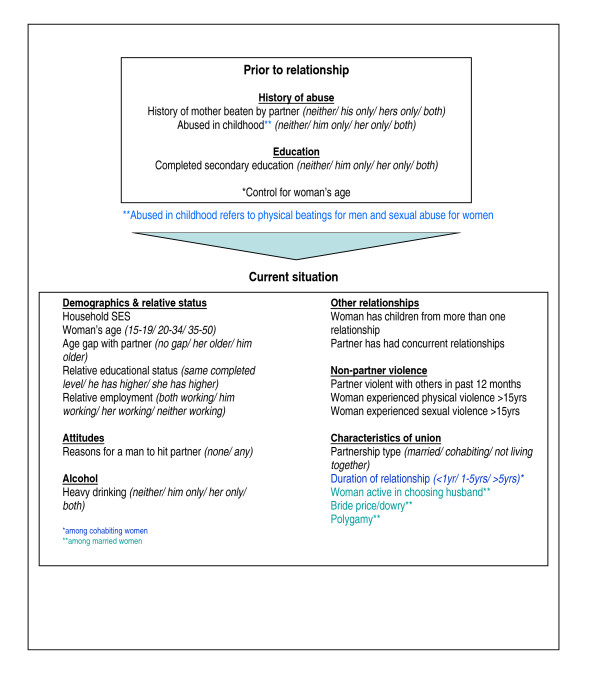
- Secondary education (or primary in Bangladesh, Ethiopia, and Tanzania) completed by both partners was protective in 12/14 sites (10 significant), and high SES was protective in 14 sites (8 significant comparing highest to lowest status).
- Alcohol problems in either or both partners were associated with higher IPV: him 14/14 sites (12 significant), her 10/11 (5 significant), both 11/11 (7 significant); attitudes supportive of wife beating were associated with increased IPV in 13/15 sites (8 significant).
- Prior abuse was consistently associated with IPV: reported abuse of the woman’s mother, partner’s mother, or both increased risk in all sites (10 significant for women, 10 for partners, 12 for both); childhood sexual abuse of the woman, childhood beatings of her partner, or both increased risk (15/15 for partners, all significant; 13/15 for women and both, 10 significant).
- Cohabitation without formal marriage increased IPV in 10/12 sites (3 significant); younger women aged 15–19 and 20–35 had increased risk in all sites (significant in 12); polygamy increased risk in all 6 sites where practiced (3 significant).
Methods
- Standardized population-based household surveys were conducted between 2000 and 2003 in Bangladesh, Brazil, Ethiopia, Japan, Namibia, Peru, Republic of Tanzania, Samoa, Serbia and Montenegro, and Thailand; one woman aged 15–49 was randomly selected per household, with 24,097 women interviewed and 19,517 ever-partnered women asked about partner violence.
- The outcome compared women reporting any physical and/or sexual partner violence in the past 12 months with women reporting no partner violence; women with lifetime but not past-year violence were excluded. Analyses included 15,207 women for “prior to relationship” models and 15,058 for “current situation” models.
- Multivariate logistic regression was run separately by site, with prior-to-relationship and current-situation variables modeled separately; ORs of 0.95–1.05 were considered no association, ≥1.05 risk factors, and ≤0.95 protective factors, with significance at 5%.
Limitations
- The paper states that the cross-sectional design limits conclusions about temporality or causality, although separating early-life and current characteristics clarifies temporality for some factors.
- The paper states that only women were interviewed, so partner characteristics rely on women’s reports and refer to the current or most recent partner, who may not be the perpetrator; any resulting misclassification would bias results toward the null.
- The text makes evident that small numbers in extreme exposure categories produced wide confidence intervals for some abuse-related ORs, and many site-specific associations were non-significant or varied in direction, so consistency is based on patterns across sites rather than uniform statistical significance.
Model-written summary. Check it against the paper before relying on it.
Integrity signals
Registry
Cites
Statistics
Figures
Verification
Claims the paper makes
3 Valid · 0 Not valid · 13 Not checked · 62 Own results and interpretations
Every source the paper cites for this claim was checked and supports it.
In the paper
“Higher socioeconomic status is generally associated with lower levels of physical and/or sexual partner violence.”
§ What factors are associated with recent intimate partner violence? findings from the WHO multi-country study on women's health and domestic violence > Discussion
What the sources say
- Supportedcites [27] Vyas S Watts C How does economic empowerment affect women's risk of intimate partner violence in low and middle income country settings?: A systematic review of published evidence J Int Dev 2009 21 577 602 10.1002/jid.1500 source
Section 4 (Discussion) says higher household socioeconomic status, measured by assets, is predominantly protective against intimate partner violence. Section 3.1 reports lower physical and/or sexual violence in several higher-wealth groups, while also noting null and contrary findings; the claim's word “generally” accommodates that variation. Page numbers are not provided for these passages. (LLM, conf=0.88)
plainstates an association- Asserted: passes — The authors put it forward as true.
- Checkable: passes — It can be checked against evidence.
- Load-bearing: passes — The paper’s conclusions depend on it.
- Based: passes — The paper gives a reason why it holds.
- Supported
A result the paper reports from its own data — it cites no other source for it, so there is none to check. The quote shows it is in the paper.
In the paper
“There was no consistent pattern of association between IPV and relative employment status.”
§ What factors are associated with recent intimate partner violence? findings from the WHO multi-country study on women's health and domestic violence > Results > Current situation model
plain- Asserted: passes — The authors put it forward as true.
- Checkable: passes — It can be checked against evidence.
- Load-bearing: unclear — It is unclear whether the paper’s conclusions depend on it.
- Based: passes — The paper gives a reason why it holds.
A result the paper reports from its own data — it cites no other source for it, so there is none to check. The quote shows it is in the paper.
In the paper
“Secondary education, high SES, and formal marriage offered protection, while alcohol abuse, cohabitation, young age, attitudes supportive of wife beating, having outside sexual partners, experiencing childhood abuse, growing up with domestic violence, and experiencing or perpetrating other forms of violence in adulthood, increased the risk of IPV.”
§ What factors are associated with recent intimate partner violence? findings from the WHO multi-country study on women's health and domestic violence > Abstract > Results
plainstates a cause- Asserted: passes — The authors put it forward as true.
- Checkable: passes — It can be checked against evidence.
- Load-bearing: passes — The paper’s conclusions depend on it.
- Based: passes — The paper gives a reason why it holds.
A result the paper reports from its own data — it cites no other source for it, so there is none to check. The quote shows it is in the paper.
In the paper
“In all sites odds of IPV were higher in relationships where one or both partners had problems with alcohol, compared to relationships where neither of them did (him 14/14, 12 significant; her 10/11, 5 significant; both 11/11, 7 significant).”
§ What factors are associated with recent intimate partner violence? findings from the WHO multi-country study on women's health and domestic violence > Results > Current situation model
plainstates an association- Asserted: passes — The authors put it forward as true.
- Checkable: passes — It can be checked against evidence.
- Load-bearing: passes — The paper’s conclusions depend on it.
- Based: passes — The paper gives a reason why it holds.
56 more claims
Create a free account to see all 78 claims and to verify the 3 references still open.
- It may state two separate claims as one. 8
- Probably not a substantial claim. 9
Self-check
Percentages, sums and reported differences re-computed from the paper’s own numbers.
Each contradiction between two passages listed here was confirmed by an independent check.
Rated minor: it would not touch a result — a value no result rests on, a p-value that stays on the same side of the significance level, or a conflict that is clerical, resolved elsewhere in the paper, or outside its own findings.
In the paper
§ What factors are associated with recent intimate partner violence? findings from the WHO multi-country study on women's health and domestic violence > Results > Prior to relationship
“15/15 sites for partners, all significant”
§ What factors are associated with recent intimate partner violence? findings from the WHO multi-country study on women's health and domestic violence > Results
“| 7 | 2.5 (1.4 - 4.3) | 5 | 1.6 (0.89 - 2.8) |”
Rated minor: it would not touch a result — a value no result rests on, a p-value that stays on the same side of the significance level, or a conflict that is clerical, resolved elsewhere in the paper, or outside its own findings.
In the paper
§ What factors are associated with recent intimate partner violence? findings from the WHO multi-country study on women's health and domestic violence > Results > Prior to relationship
“reports of abuse of the woman's mother, her partners' mother, or both (compared to no known reported abuse of either mother) being associated with increased risk of IPV in all sites”
§ What factors are associated with recent intimate partner violence? findings from the WHO multi-country study on women's health and domestic violence > Results
“| 4 | 2.5 (1.1 - 5.5) | 2 | 0.47 (0.06 - 4.0) | 2 | 2.2 (0.93 - 5.3) |”
Citations
Cites
The world report on violence and health
Krug, E. G., Mercy, J. A., Dahlberg, L. L., & Zwi, A. B. (2002) · The Lancet · doi:10.1016/s0140-6736(02)11133-0 · Cited by 9,110 · cited 1×
“The consistent association between IPV and other forms of violence against women also point to the need for integrated responses to violence across sectors and programmes [30,31].”
BackgroundMultilevel analysis techniques and applications
Hox, J. J., Moerbeek, M., & van de Schoot, R. (2002) · Cited by 6,886
Garcia-Moreno, C., Jansen, H. A., Ellsberg, M., Heise, L., & Watts, C. H. (2006) · The Lancet · doi:10.1016/s0140-6736(06)69523-8 · Cited by 3,176
Self-citationBehind Closed Doors: Violence in the American Family.
Boudouris, J., Straus, M. A., Gelles, R. J., & Steinmetz, S. K. (1982) · Contemporary Sociology · doi:10.2307/2068814 · Cited by 3,088
Hox, J., Moerbeek, M., & van de Schoot, R. (2002) · doi:10.4324/9781410604118 · Cited by 2,419
Violence Against Women: An Integrated, Ecological Framework
HEISE, L. L. (1998) · Violence Against Women · doi:10.1177/1077801298004003002 · Cited by 2,042
Self-citationIntimate partner violence: causes and prevention
Jewkes, R. (2002) · The Lancet · doi:10.1016/s0140-6736(02)08357-5 · Cited by 1,993
Ellsberg, M., Jansen, H. A., Heise, L., Watts, C. H., & Garcia-Moreno, C. (2008) · The Lancet · doi:10.1016/s0140-6736(08)60522-x · Cited by 1,820 · cited 1×
“In addition to being a concern in its own right, IPV is associated with a range of adverse physical, mental, sexual and reproductive health outcomes [2-8].”
BackgroundSelf-citationDunkle, K. L., Jewkes, R. K., Brown, H. C., Gray, G. E., McIntryre, J. A., & Harlow, S. D. (2004) · The Lancet · doi:10.1016/s0140-6736(04)16098-4 · Cited by 1,323 · cited 1×
“In addition to being a concern in its own right, IPV is associated with a range of adverse physical, mental, sexual and reproductive health outcomes [2-8].”
BackgroundIntimate partner physical abuse perpetration and victimization risk factors: A meta-analytic review
Stith, S. M., Smith, D. B., Penn, C. E., Ward, D. B., & Tritt, D. (2004) · Aggression and Violent Behavior · doi:10.1016/j.avb.2003.09.001 · Cited by 1,082 · cited 1×
“Studies in various countries have identified a range of factors that influence IPV risk [9-13], but in some cases, protective factors in one setting may be ineffective or actually increase risk in another [14].”
Background
Research works printed but not linked: 4
- Kishor S Johnson K Profiling domestic violence: A multicountry study 2004 Calverton, Maryland, USA: ORC Macro
- DoH South Africa Demographic and Health Survey 1998: final report 2002 Pretoria: Department of Health
- Harvey A Garcia Moreno C Butchart A Primary prevention of intimate partner violence and sexual violence: Background paper for WHO expert meeting May 2-3, 2007 2007 Geneva: World Health Organization, Department of Violence and Injuy Prevention and Disability
- Counts D Brown J Campbell J Sanctions and Sanctuary 1992 Boulder: Westview Press
Cited by
Items 201–300 of 1,413
Njie-Carr, V. P. S., Sabri, B., Messing, J. T., Suárez, C., Ward-Lasher, A., Wachter, K., Marea, C. X., & Campbell, J. C. (2020) · Journal of Aggression Maltreatment & Trauma · doi:10.1080/10926771.2020.1796870 · Cited by 66
Intimate Partner Violence-Related Brain Injury: Unmasking and Addressing the Gaps
Esopenko, C., Jain, D., Adhikari, S. P., Dams-O’Connor, K., Ellis, M. J., Haag, H. L., Hovenden, E. S., Keleher, F., Koerte, I. K., Lindsey, H. M., et al. (2024) · Journal of Neurotrauma · doi:10.1089/neu.2023.0543 · Cited by 60
Intimate Partner Violence in Southwestern Nigeria: Are There Rural-Urban Differences?
Balogun, M. O., Owoaje, E., & Fawole, O. I. (2012) · Women & Health · doi:10.1080/03630242.2012.707171 · Cited by 65
“Therefore, more comprehensive information on the magnitude, nature, and types of IPV experienced by women is needed, which could guide public health programs aimed at preventing VAW in both rural and urban settings (Abramsky et al., 2011).”
BackgroundViolence Against Women in Selected Areas of the United States
Montgomery, B. E. E., Rompalo, A., Hughes, J. P., Wang, J., Haley, D. F., Soto-Torres, L. E., Chege, W., Justman, J. E., Kuo, I. C., Golin, C. E., et al. (2015) · American Journal of Public Health · doi:10.2105/ajph.2014.302430 · Cited by 52
Early Sex Work Initiation and Violence against Female Sex Workers in Mombasa, Kenya
Parcesepe, A. M., L’Engle, K. L., Martin, S. L., Green, S. L., Suchindran, C., & Mwarogo, P. (2016) · Journal of Urban Health · doi:10.1007/s11524-016-0073-6 · Cited by 49
Prevalence of Violence Against Women in Ethiopia: A Meta-Analysis
Kassa, G. M., & Abajobir, A. A. (2018) · Trauma Violence & Abuse · doi:10.1177/1524838018782205 · Cited by 58
“Sociodemographic factors such as age (Abeya et al., 2011; Abramsky et al., 2011; Erulkar, 2013), early age at marriage (Erulkar, 2013), ethnicity (Shanko et al., 2013), religion, occupation (Semahegn & Mengistie, 2015), level of education (Abramsky et al., 2011; Semahegn et al., 2013; Semahegn &…”
BackgroundInfluentialPrevalence of Emotional and Physical Intimate Partner Violence Among Married Women in Pakistan
Iqbal, M., & Fatmi, Z. (2018) · Journal of Interpersonal Violence · doi:10.1177/0886260518796523 · Cited by 60
“Our finding was supported by data from 10 countries included in the WHO multicountry study on women’s health and domestic violence that reported alcohol abuse and low socioeconomic and educational status as potential risk factors for IPV (Abramsky et al., 2011).”
MethodFamily, Belonging and Meaning in Life Among Semi-rural Kenyans
Goodman, M. L., Gibson, D. C., Keiser, P. H., Gitari, S., & Raimer-Goodman, L. A. (2018) · Journal of Happiness Studies · doi:10.1007/s10902-018-0017-9 · Cited by 58
Murphy, M., Jones, N., Yadete, W., & Baird, S. (2020) · Global Public Health · doi:10.1080/17441692.2020.1801788 · Cited by 52
“Girls who experience childhood violence are at greater risk of experiencing gender-based violence later in life, while male perpetrators have often experienced violence during their own childhood (Abramsky et al., 2011; Fulu et al., 2017).”
BackgroundYuan, N. P., Belcourt-Dittloff, A., Schultz, K., Packard, G., & Duran, B. (2014) · Psychology of Violence · doi:10.1037/a0038507 · Cited by 53
Influence of Individual- and National-Level Factors on Attitudes toward Intimate Partner Violence
Hayes, B. E., & Boyd, K. A. (2016) · Sociological Perspectives · doi:10.1177/0731121416662028 · Cited by 59
“Despite this, prior research has found an association between patriarchal and pro-violence attitudes and IPV perpetration and victimization (Abramsky et al. 2011; Faramarzi et al. 2005; Stith et al. 2004).”
BackgroundResultFone, D. L., Morgan, J. S., Fry, R. J., Rodgers, S., Orford, S., Farewell, D. M., Dunstan, F., White, J., Sivarajasingam, V., Trefán, L., et al. (2016) · Public Health Research · doi:10.3310/phr04030 · Cited by 55
Madruga, C. S., Viana, M. C., Abdalla, R. R., Caetano, R., & Laranjeira, R. (2017) · Drug and Alcohol Review · doi:10.1111/dar.12514 · Cited by 60
Wheeler, J., Anfinson, K., Valvert, D., & Lungo, S. (2014) · Global Health Action · doi:10.3402/gha.v7.24814 · Cited by 47
“In many contexts, studies among women show associations between alcohol abuse and experiencing intimate partner violence (52).”
BackgroundGelaye, B., Kajeepeta, S., Zhong, Q., Borba, C. P. C., Rondón, M. B., Sánchez, S. E., Henderson, D. C., & Williams, M. A. (2015) · Sleep Medicine · doi:10.1016/j.sleep.2015.07.004 · Cited by 52
Intimate partner violence against female sex workers in Mombasa, Kenya
Pack, A. P., L’Engle, K., Mwarogo, P., & Kingola, N. (2014) · Culture, Health & Sexuality · doi:10.1080/13691058.2013.857046 · Cited by 44
“Known risk factors for IPV in other settings include alcohol abuse, experiencing childhood abuse, witnessing parental abuse, supportive attitudes towards wife beating and having multiple sexual partners (Abramsky et al. 2011).”
BackgroundShakya, H. B., Hughes, D. A., Stafford, D., Christakis, N. A., Fowler, J. H., & Silverman, J. G. (2016) · BMC Public Health · doi:10.1186/s12889-016-2893-4 · Cited by 53
“Across many contexts, men who believe that IPV is acceptable are more likely to perpetrate IPV, and importantly, women who believe that IPV is acceptable are more likely to report experiencing IPV [11, 13, 14].”
BackgroundStark, L., Asghar, K., Seff, I., Yu, G., Gessesse, T. T., Ward, L., Baysa, A. A., Neiman, A., & Falb, K. (2018) · BMJ Global Health · doi:10.1136/bmjgh-2018-000825 · Cited by 63
“Child marriage, last 12 months 141 (35) 150 (35) 93 126 (32) 138 (37) 150”
Copp, J. E., Kuhl, D. C., Giordano, P. C., Longmore, M. A., & Manning, W. D. (2015) · Social Science Research · doi:10.1016/j.ssresearch.2015.05.001 · Cited by 53
Afiaz, A., Biswas, R. K., Shamma, R., & Ananna, N. (2020) · PLoS ONE · doi:10.1371/journal.pone.0236670 · Cited by 47
“This could be explained by the fact that women in urban areas are significantly less compliant to domestic violence due to their increased education, decision making autonomy, and partner’s higher education, as justification of spousal violence were found significantly linked to these factors [39, 41].”
BackgroundPolygyny and Intimate Partner Violence in Mozambique
Jansen, N., & Agadjanian, V. (2019) · Journal of Family Issues · doi:10.1177/0192513x19876075 · Cited by 50
Challenges in Risk Assessment with Rural Domestic Violence Victims: Implications for Practice
Youngson, N., Saxton, M. D., Jaffe, P. G., Chiodo, D., Dawson, M., & Straatman, A. (2021) · Journal of Family Violence · doi:10.1007/s10896-021-00248-7 · Cited by 59
“With these variables in mind, there are wide variations of DV (Abramsky et al., 2011).”
BackgroundInfluentialAboagye, R. G., Ahinkorah, B. O., Tengan, C. L., Salifu, I., Acheampong, H. Y., & Seidu, A. (2022) · PLoS ONE · doi:10.1371/journal.pone.0278196 · Cited by 56
Prevalence of Domestic Violence Among Trauma Patients
Joseph, B. A., Khalil, M., Zangbar, B., Kulvatunyou, N., Jokar, T. O., Pandit, V., O’Keeffe, T., Tang, A. L., Gries, L. M., Friese, R. S., et al. (2015) · JAMA Surgery · doi:10.1001/jamasurg.2015.2386 · Cited by 46
“Heart rate, mean (SD), beats/min 91 (23) 120 (37) 137 (35) 95 (21) 89 (22)”
Detecting Domestic Violence: Italian Validation of Revised Conflict Tactics Scale (CTS-2)
Signorelli, M. S., Arcidiacono, E., Musumeci, G., Nuovo, S. D., & Aguglia, E. (2014) · Journal of Family Violence · doi:10.1007/s10896-014-9594-5 · Cited by 47
“The strength of the association of this risk factor and domestic violence was greatest when both the woman and her partner had some risk factors (Abramsky et al. 2011).”
BackgroundYoung, C. R., Kaida, A., Kabakyenga, J. K., Muyindike, W. R., Musinguzi, N., Martin, J. N., Hunt, P. W., Bangsberg, D. R., Haberer, J. E., & Matthews, L. T. (2018) · PLoS ONE · doi:10.1371/journal.pone.0202992 · Cited by 47
“Secondary education, high socioeconomic status, and formal marriage were protective [10].”
BackgroundCarlson, C., Namy, S., Pala, A. N., Wainberg, M. L., Michau, L., Nakuti, J., Knight, L., Allen, E., Ikenberg, C., Naker, D., et al. (2020) · BMC Public Health · doi:10.1186/s12889-019-8115-0 · Cited by 59
Self-citationRees, S. J., Tol, W., Mohammad, M., Tay, A. K., Tam, N., dos Reis, N., da Costa, E., Soares, C., & Silove, D. M. (2016) · Translational Psychiatry · doi:10.1038/tp.2015.212 · Cited by 43
Magnitude and factors associated with intimate partner violence in mainland Tanzania
Kazaura, M. R., Ezekiel, M. J., & Chitama, D. (2016) · BMC Public Health · doi:10.1186/s12889-016-3161-3 · Cited by 49
“found young age, secondary education and formal marriage to be strongly associated with risk of experiencing IPV suggesting the need for targeted interventions to couples most at risk [15].”
BackgroundMootz, J. J., Muhanguzi, F. K., Panko, P., Mangen, P. O., Wainberg, M. L., Pinsky, I., & Khoshnood, K. (2018) · Conflict and Health · doi:10.1186/s13031-018-0173-x · Cited by 52
Young Men Who Have Sex With Men’s Experiences With Intimate Partner Violence
Kubicek, K., McNeeley, M., & Collins, S. (2015) · Journal of Adolescent Research · doi:10.1177/0743558415584011 · Cited by 51
“The relationship between IPV and alcohol is well documented but continues to be an issue (Abramsky et al., 2011; Kelly, Izienicki, Bimbi, & Parsons, 2011; Smith, Homish, Leonard, & Cornelius, 2012; Tran et al., 2014).”
BackgroundJansen, H. A. F. M., Nguyen, T. V. N., & Anh, H. T. (2016) · International Journal of Public Health · doi:10.1007/s00038-016-0879-8 · Cited by 45
“The ten reviewed studies, even though they had the same variables available, showed considerable variations in terms of which factors were included in the analysis, which women were considered as having experienced violence or not, and the approach of the statistical modelling (Abramsky et al. 2011; Djikanovic et al.…”
BackgroundMethodResultSelf-citationBehrman, J. A., Peterman, A., & Palermo, T. (2016) · Journal of Adolescent Health · doi:10.1016/j.jadohealth.2016.09.010 · Cited by 49
“Better-educated women have partners that are also better educated and closer in age [15], and partner’s increased education and educational parity between partners are both associatedwith decreased risk of intimate partner violence [16].”
Kettunen, P. A., & Hintikka, J. J. (2017) · Nordic Journal of Psychiatry · doi:10.1080/08039488.2017.1300324 · Cited by 51
“Conversely, good support and high SES may be protective factors against post-partum depression (15,18,26,29).”
BackgroundVelloza, J., Hosek, S., Donnell, D. J., Anderson, P. L., Chirenje, M. Z., Mgodi, N. M., Bekker, L., Delany‐Moretlwe, S., Celum, C., & HPTN 082 study group (2021) · Journal of the International AIDS Society · doi:10.1002/jia2.25731 · Cited by 44
“IPV was assessed with four items (Table S3), developed from the World Health Organization’s operational IPV definitions [45].”
MethodGo, V. F., Srikrishnan, A. K., Parker, C. B., Salter, M., Green, A. M., Sivaram, S., Johnson, S. C., Latkin, C., Davis, W., Solomon, S., et al. (2011) · AIDS and Behavior · doi:10.1007/s10461-010-9758-0 · Cited by 41
Jennings, W. G., Richards, T. N., Tomsich, E. A., & Gover, A. R. (2015) · Journal of Child Sexual Abuse · doi:10.1080/10538712.2015.1057665 · Cited by 45
“…links CSA to heightened risk for adult relationship problems (Dennerstein, Guthrie, & Alford, 2004; Dube et al., 2005; Whiffen, Thompson, & Aube, 2000) and involvement in physically violent intimate relationships (Abramsky et al., 2011; Barnes, Noll, Putnam, & Trickett, 2009; Fang & Corso, 2007).”
BackgroundNaved, R. T., Mamun, M. A., Parvin, K., Willan, S., Gibbs, A., Yu, M., & Jewkes, R. K. (2018) · PLoS ONE · doi:10.1371/journal.pone.0204725 · Cited by 50
Curtis, A., Vandenberg, B., Mayshak, R., Coomber, K., Hyder, S., Walker, A., Liknaitzky, P., & Miller, P. G. (2019) · Drug and Alcohol Review · doi:10.1111/dar.12925 · Cited by 40
Shamu, S., Shamu, P., & Machisa, M. (2018) · Global Health Action · doi:10.1080/16549716.2019.1625594 · Cited by 44
“characteristics among abused women or their abusers is useful in designing programmes and interventions to stop or reduce IPV [13].”
BackgroundRecognizing Connections Between Intimate Partner Sexual Violence and Pornography
Tarzia, L., & Tyler, M. (2020) · Violence Against Women · doi:10.1177/1077801220971352 · Cited by 53
“Although there are important bodies of work exploring causal factors for men’s use of sexual violence more broadly (Malamuth et al., 2000; Peter & Valkenburg, 2016), as well as for IPV (Abramsky et al., 2011), IPSV is neither “just” sexual violence nor “just” a form of IPV.”
BackgroundInfluentialOwoaje, E., & OlaOlorun, F. M. (2012) · African Journal of Reproductive Health · Cited by 58
Reports of violence against women in different life cycles
Leite, M. T. D. S., Figueiredo, M. F. S., Dias, O. V., et al. (2014) · Revista Latino-Americana de Enfermagem · doi:10.1590/0104-1169.3186.2388 · Cited by 39
Psychosocial factors affecting various types of intimate partner violence against women
Öyekçin, D. G., Yetim, D., & Şahin, E. M. (2012) · Turkish Journal of Psychiatry · doi:10.5080/u6639 · Cited by 58
Alsaker, K., Moen, B. E., Baste, V., & Morken, T. (2016) · Journal of Family Violence · doi:10.1007/s10896-016-9806-2 · Cited by 50
The relationship between intimate partner violence and HIV: A model-based evaluation
Rigby, S. W., & Johnson, L. F. (2017) · Infectious Disease Modelling · doi:10.1016/j.idm.2017.02.002 · Cited by 46
Zietz, S., & Das, M. (2017) · Global Public Health · doi:10.1080/17441692.2017.1335337 · Cited by 46
“The experience of GBV during childhood and/or adolescence is a risk factor for both GBV victimisation and perpetration in adulthood (Abramsky et al., 2011; Fulu et al., 2013; World Health Organization, 2005).”
BackgroundDomestic Violence Against Women Working in Four Educational Hospitals in Iran
Sheikhbardsiri, H., Raeisi, A., & Khademipour, G. (2017) · Journal of Interpersonal Violence · doi:10.1177/0886260517719539 · Cited by 44
“sibility of agreement and compatibility among them will be lower because of the lower mutual understanding (Abramsky et al., 2011).”
BackgroundWomen’s empowerment and short- and long-acting contraceptive method use in Egypt
Samari, G. (2017) · Culture Health & Sexuality · doi:10.1080/13691058.2017.1356938 · Cited by 44
“Acceptance of intimate partner violence is associated with the occurrence of intimate partner violence (Abramsky et al. 2011).”
BackgroundKabwama, S. N., Bukenya, J. N., Matovu, J. K. B., Gwokyalya, V., Makumbi, F. E., Beyeza‐Kashesya, J., Mugerwa, S., Bwanika, J. B., & Wanyenze, R. K. (2019) · BMC Women s Health · doi:10.1186/s12905-019-0831-1 · Cited by 44
Amusa, L. B., Bengesai, A. V., & Khan, H. T. A. (2020) · Journal of Interpersonal Violence · doi:10.1177/0886260520960110 · Cited by 46
“IPV has many contributing factors, and globally, there are several studies which have investigated the effect of these on determining one’s vulnerability to IPV (Abramsky et al., 2011; Chikhungu et al., 20 1; Eriksson & Mazerolle, 2015; Jewkes, 2002).”
BackgroundInfluentialMeinhart, M., Seff, I., Troy, K., McNelly, S., Vahedi, L., Poulton, C., & Stark, L. (2021) · International Journal of Environmental Research and Public Health · doi:10.3390/ijerph18136963 · Cited by 45
Delkhosh, M., Merghati Khoei, E., Ardalan, A., Rahimi Foroushani, A., & Gharavi, M. B. (2019) · Health Care for Women International · doi:10.1080/07399332.2018.1529766 · Cited by 39
“Due to the prevalence of refugees crisis in most part of the world, high level of IPV against refugee women (Green, Blattman, Jamison, & Annan, 2015), and IPV-related adverse reproductive health outcomes (Abramsky et al., 2011; Ellsberg, Jansen, Heise, Watts, & Garcia-Moreno, 2008; Garc ıaMoreno et al., 2005; Hindin,…”
BackgroundResultExamining Intimate Partner Violence and Health Factors Among Rural Appalachian Pregnant Women
Shannon, L. M., Nash, S. T., & Jackson, A. (2016) · Journal of Interpersonal Violence · doi:10.1177/0886260515579508 · Cited by 43
“Marriage and high socio-economic status are associated with reduced risk of IPV (Abramsky et al., 2011).”
BackgroundEmpowering adolescent girls: developing egalitarian gender norms and relations to end violence
Amin, A., & Chandra‐Mouli, V. (2014) · Reproductive Health · doi:10.1186/1742-4755-11-75 · Cited by 49
“factor for their experience of intimate partner violence [3].”
BackgroundGolchin, N. A. H., Hamzehgardeshi, Z., Hamzehgardeshi, L., et al. (2014) · Iranian Red Crescent Medical Journal · doi:10.5812/ircmj.11989 · Cited by 38
“The findings of the current study indicated a significant relationship between unwanted pregnancy and verbal or physical abuse, which was consistent with previous studies (11, 14).”
BackgroundResultInfluentialShrestha, M., Shrestha, S., & Shrestha, B. (2016) · BMC Pregnancy and Childbirth · doi:10.1186/s12884-016-1166-7 · Cited by 37
Mahenge, B., Stöckl, H., Likindikoki, S. L., Kaaya, S., & Mbwambo, J. (2015) · International Journal of Gynecology & Obstetrics · doi:10.1016/j.ijgo.2015.04.032 · Cited by 39
“Although the present analysis did not includemeasures of intimate partner violence, it is likely that an association exists, because it is known from studies worldwide and in Tanzania that intimate partner violence is linked to women’s age, women’s educational level, and employment status [22–24].”
Dowgwillo, E. A., Ménard, K. S., Krueger, R. F., & Pincus, A. L. (2016) · Violence and Victims · doi:10.1891/0886-6708.vv-d-14-00109 · Cited by 54
“Other studies suggest that assault is more prevalent and more severe in cohabitating relationships than in both marital and dating relationships even after controlling for age, education, and occupational status (Abramsky et al., 2011; Sabri et al., 2014; Stets & Straus, 1989; Yllö & Straus, 1981).”
BackgroundViolence against educated women by intimate partners in Urban Karnataka, India
Shetty, S., Kundapur, R., Kempaller, V. J., Kumar, A., & Anurupa, M. (2017) · Indian Journal of Community Medicine · doi:10.4103/ijcm.ijcm_41_16 · Cited by 43
“study[9] where younger women reported more violence as compared to older women.”
InfluentialThe effectiveness and effects of alcohol regulation: evidence from India
Luca, D. L., Owens, E. G., & Sharma, G. (2019) · IZA Journal of Development and Migration · doi:10.1186/s40176-018-0139-1 · Cited by 36
Problem gambling and family violence: Findings from a population-representative study
Dowling, N. A., Ewin, C. A., Youssef, G. J., Merkouris, S., Suomi, A., Thomas, S. A., & Jackson, A. C. (2018) · Journal of Behavioral Addictions · doi:10.1556/2006.7.2018.74 · Cited by 46
Dekel, R., Shaked, O. Z., Ben‐Porat, A., & Itzhaky, H. (2019) · Violence Against Women · doi:10.1177/1077801219832916 · Cited by 43
“IPV is a universal social health problem that occurs worldwide, across societies (Abramsky et al., 2011).”
BackgroundPatel, S. K., Santhya, K. G., & Haberland, N. A. (2021) · PLoS ONE · doi:10.1371/journal.pone.0248766 · Cited by 48
McGill, T. M., Self-Brown, S. R., Lai, B. S., Cowart-Osborne, M., Tiwari, A., LeBlanc, M. M., & Kelley, M. L. (2014) · Frontiers in Public Health · doi:10.3389/fpubh.2014.00008 · Cited by 47
Intimate Partner Violence in the Occupied Palestinian Territory: Prevalence and Risk Factors
Haj‐Yahia, M. M., & Clark, C. J. (2013) · Journal of Family Violence · doi:10.1007/s10896-013-9549-2 · Cited by 47
“This finding is in accord with prior research in the OPT (Haj-Yahia 2000), region (Department of Statistics [Jordan] and Macro International Inc. 2008; El-Zanaty and Way 2006), and elsewhere (Abramsky et al. 2011).”
BackgroundResultPrevalence and risk factor for injury in sub-Saharan Africa: a multicountry study
Diamond, M. B., Dalal, S., Adebamowo, C., Guwatudde, D. Y., Laurence, C., Ajayi, I. O., Bajunirwe, F., Njelekela, M. A., Chiwanga, F. S., Adami, H., et al. (2017) · Injury Prevention · doi:10.1136/injuryprev-2016-042254 · Cited by 42
The association between uneven sex ratios and violence: Evidence from 6 Asian countries
Diamond‐Smith, N., & Rudolph, K. E. (2018) · PLoS ONE · doi:10.1371/journal.pone.0197516 · Cited by 47
Barbosa, K. G. N., Walker, B. B., Schuurman, N., d’Ávila, S., Ferreira, E. F. E., & Ferreira, R. C. (2019) · PLoS ONE · doi:10.1371/journal.pone.0208304 · Cited by 47
Serrano-Montilla, C., Fernández, L. M. L., Bender, M., & Padilla, J. (2020) · BMJ Open · doi:10.1136/bmjopen-2020-037993 · Cited by 45
Government Antipoverty Programming and Intimate Partner Violence in Ghana
Peterman, A., Valli, E., & Palermo, T. (2021) · Economic Development and Cultural Change · doi:10.1086/713767 · Cited by 39
“…of a mother’s or caregiver’s IPV has detrimental effects on children’s health and well-being, including risk of poor nutrition andmortality (Åsling-Monemi et al. 2003; Yount, DiGirolamo, and Ramakrishnan 2011; Chai et al. 2016) and perpetuation of a cycle of violence (Abramsky et al. 2011).”
BackgroundRahman, M. M. (2015) · Reproductive Health · doi:10.1186/s12978-015-0095-7 · Cited by 42
McFARLANE, J. M., Fredland, N., Symes, L., Zhou, W., Jouriles, E. N., Dutton, M. A., & Greeley, C. S. (2017) · Journal of Family Violence · doi:10.1007/s10896-017-9913-8 · Cited by 42
Interventions to Prevent Intimate Partner Violence: A Systematic Review and Meta-Analysis
Alsina, E., Browne, J. L., Gielkens, D., Noorman, M. A. J., & de Wit, J. B. F. (2023) · Violence Against Women · doi:10.1177/10778012231183660 · Cited by 56
“…and cultural norma-tivity of IPV have been found to increase IPV risk, while women with higher socio-economic status, higher education and in formal marriage are less likely to experience IPV (Abramsky et al., 2011; World Health Organization/London School of Hygiene and Tropical Medicine, 2010).”
BackgroundInfluentialEckschmidt, F., de Andrade, A. G., & de Oliveira, L. G. (2013) · Jornal Brasileiro de Psiquiatria · doi:10.1590/s0047-20852013000300004 · Cited by 116
“ÁLCOOL 92,0 (87,7-95,0) 87,3 (85,2-89,0) 89,3 (88,0-90,0) 83,2 (79,4-86,9) 72,6 (68,2-77,1) 78,6 (74,6 - 82,7) 87,8 (85,8 - 89,5) 89,4 (87,8 - 90,8) 88,6 (87,4 - 89,8)”
Rural Crime and Community Safety
Ceccato, V. A. (2015) · Routledge eBooks · doi:10.1016/j.jrurstud.2015.04.001 · Cited by 111
Factor associated with alcohol use among Lahu and Akha hill tribe youths, northern Thailand
Singkorn, O., Apidechkul, T., Putsa, B., Detpetukyon, S., Sunsern, R., Thutsanti, P., Tamornpark, R., Upala, P., & Inta, C. (2019) · Substance Abuse Treatment Prevention and Policy · doi:10.1186/s13011-019-0193-6 · Cited by 42
Fiorentino, M., Sagaon‐Teyssier, L., Ndiaye, K., Suzan, M., Mengue, M., Vidal, L., Kuaban, C., March, L., Laurent, C., Spire, B., et al. (2019) · Women s Health · doi:10.1177/1745506519848546 · Cited by 46
Prevalence, pattern and factors of intimate partner violence against Saudi women
Abolfotouh, M. A., & Almuneef, M. A. (2019) · Journal of Public Health · doi:10.1093/pubmed/fdz092 · Cited by 45
Valdebenito, S., Murray, A. L., Hughes, C. H., Băban, A., Fernando, A. D., Madrid, B. J., Ward, C. L., Osafo, J., Dunne, M. P., Sikander, S., et al. (2020) · BMJ Open · doi:10.1136/bmjopen-2019-034986 · Cited by 34
Brown, L. J., Lowe, H., Gibbs, A., Smith, C. J., & Mannell, J. (2022) · Journal of Interpersonal Violence · doi:10.1177/08862605221086642 · Cited by 52
“This is perhaps surprising given that HIV status, disability status, refugee status, age, substance use and mental health have been shown to be important risk factors for IPV experience and/or perpetration (Abramsky et al., 2011; Campbell et al., 2008; Capaldi et al., 2012; Greene et al., 2021; Gupta et al., 2018; Iud…”
BackgroundInfluentialAn examination of domestic partner violence and its justification in the Republic of Georgia
Waltermaurer, E., Butsashvili, M., Avaliani, N., Samuels, S. J., & McNutt, L. (2013) · BMC Women s Health · doi:10.1186/1472-6874-13-44 · Cited by 35
“Included demographic measures are those factors identified as typically associated with intimate partner violence risk through a World Health Organization (WHO) multicountry study [25].”
BackgroundGregory, A. C., Ramsay, J., Agnew-Davies, R., Baird, K. M., Devine, A., Dunne, D., Eldridge, S. M., Howell, A., Johnson, M., Rutterford, C. M., et al. (2010) · BMC Public Health · doi:10.1186/1471-2458-10-54 · Cited by 50
Lin, K., Sun, I. Y., Liu, J., & Chen, X. (2016) · Violence Against Women · doi:10.1177/1077801216671221 · Cited by 41
“Although patriarchal ideology has been one of the primary culprits of violence against women globally (Abramsky et al., 2011; Ali et al., 2011; Allen & Devitt, 2012; Fanslow et al., 2010; Fulu et al., 2013; Nabors & Jasinski, 2009; Nagae & Dancy, 2010; Shen et al., 2012; Xu et al., 2005; Yick, 2000), the connections b…”
BackgroundInfluentialViolência contra mulheres em diferentes estágios do ciclo de vida no Brasil: um estudo exploratório
Bernardino, Í. D. M., Barbosa, K. G. N., da Nóbrega, L. M., Cavalcante, G. M. S., Ferreira, E. F. E., & d’Ávila, S. (2016) · Revista Brasileira de Epidemiologia · doi:10.1590/1980-5497201600040005 · Cited by 60
Gibbs, A., Carpenter, B., Crankshaw, T. L., Hanass‐Hancock, J., Smit, J. A., Tomlinson, M., & Butler, L. (2017) · PLoS ONE · doi:10.1371/journal.pone.0181236 · Cited by 45
“Studies also demonstrate that women who experience controlling behaviours from their partner are significantly more likely to experience IPV than those who do not [15].”
BackgroundMartín‐Lanas, R., Osorio, A., Anaya-Hamue, E., Prous, A. C., & de Irala, J. (2019) · Journal of Interpersonal Violence · doi:10.1177/0886260519884681 · Cited by 39
“These findings are consentient with previous studies analyzing IPV and infidelity (Abramsky et al., 2011; Alangea et al., 2018).”
ResultSule, F. A., Uthman, O. A., Olamijuwon, E. O., Ichegbo, N. K., Mgbachi, I. C., Okusanya, B., & Makinde, O. A. (2022) · BMJ Global Health · doi:10.1136/bmjgh-2021-007426 · Cited by 34
Risk and Protective Factors for IPV in Low- and Middle-Income Countries: A Systematic Review
Ghoshal, R., Douard, A.-C., Sikder, S., Roy, N., & Saulnier, D. D. (2022) · Journal of Aggression Maltreatment & Trauma · doi:10.1080/10926771.2022.2154185 · Cited by 38
“Individuals who have witnessed abuse in childhood, such as the abuse of their mother, have a higher likelihood of perpetrating or suffering IPV as an adult (Abramsky et al., 2011; Islam et al., 2015; Lünnemann et al., 2019; Monnat & Chandler, 2015).”
BackgroundExploring Intimate Partner Violence Before, During, and After Pregnancy in Bangladesh
Islam, M. J., Broidy, L. M., Mazerolle, P., Baird, K. M., & Mazumder, N. (2018) · Journal of Interpersonal Violence · doi:10.1177/0886260518775753 · Cited by 43
“Women’s experiences are multidimensional worldwide, as is their exposure to patriarchal norms and values, and other psycho-socio-cultural factors (Abramsky et al., 2011; Islam, Mazerolle, et al., 2021; James et al., 2013; Taillieu & Brownridge, 2010).”
BackgroundVulnerability to domestic physical violence among married women in Indonesia
Putra, I. G. N. E., Pradnyani, P. E., & Parwangsa, N. W. P. L. (2019) · Journal of Health Research · doi:10.1108/jhr-06-2018-0018 · Cited by 33
Zapata‐Calvente, A. L., Megías, J. L., Moya, M., & Schoebi, D. (2019) · Psychology of Women Quarterly · doi:10.1177/0361684319839367 · Cited by 52
Attitudes Toward Intimate Partner Violence in Dyadic Perspective: Evidence From Sub-Saharan Africa
Behrman, J. A., & Frye, M. (2021) · Demography · doi:10.1215/00703370-9115955 · Cited by 41
Pei, J., Pei, Y.-X., Ma, T., Du, Y.-H., Wang, X., Zhong, J., Xie, Q., Zhang, L., Yan, L.-X., & Dou, X. (2021) · Journal of Affective Disorders · doi:10.1016/j.jad.2021.05.064 · Cited by 41
Buffarini, R., Hammerton, G., Coll, C. V. N., da Cruz, S. H., da Silveira, M. F., & Murray, J. (2021) · Preventive Medicine · doi:10.1016/j.ypmed.2021.106928 · Cited by 39
“One main theory for the intergenerational transmission of violence is that social learning processes involved in the experience of childhood abuse and the witnessing of domestic violence transmit across the life-course to affect involvement with antisocial partners and exposure to their violence (Abramsky et al., 2011…”
Gulliver, P. J., & Fanslow, J. (2015) · Journal of Child Custody · doi:10.1080/15379418.2015.1037051 · Cited by 42
Uriyo, J. G., Abubakar, A. A., Swai, M. E., Msuya, S. E., & Stray‐Pedersen, B. (2013) · PLoS ONE · doi:10.1371/journal.pone.0069088 · Cited by 37
Mapping and exploring health systems’ response to intimate partner violence in Spain
Goicolea, I., Briones‐Vozmediano, E., Öhman, A., Edin, K. E., Minvielle, F., & Vives‐Cases, C. (2013) · BMC Public Health · doi:10.1186/1471-2458-13-1162 · Cited by 38
“On the one hand, since the majority of factors associated with IPV belong to the social sphere, it is difficult to determine the health sector role and what lies beyond its responsibilities [57].”
Mont, J. D., & Forte, T. (2012) · BMJ Open · doi:10.1136/bmjopen-2012-001728 · Cited by 48
Redfern, R. C. (2015) · International Journal of Osteoarchaeology · doi:10.1002/oa.2461 · Cited by 47
“For example, one study only included women between the ages of 15 and 49years (Abramsky et al., 2011).”
BackgroundMethod
Metadata
- Authors
- Abramsky, T., Watts, C. H., Garcia-Moreno, C., Devries, K., Kiss, L., Ellsberg, M., Jansen, H. A., & Heise, L.
- Affiliations
- London School of Hygiene & Tropical Medicine (GB)
- International Center for Research on Women (US)
- Corresponding author
- Abramsky, Tanya
- Venue
- BMC Public Health
- Published
- 2011-02-16
- Volume
- 11
- Issue
- 1
- Pages
- 109-109
- ISSN
- 1471-2458 (ISSN-L)
- PMC
- PMC3049145
- OpenAlex
- W2146316233
- Semantic Scholar
- 124d14c4c5378026a820318c409f305314e161d1
- Cited by
- 1,413
- References
- 42
- Citations by year
- 2026: 66 · 2025: 85 · 2024: 102 · 2023: 96 · 2022: 108 · 2021: 133 · 2020: 137 · 2019: 105 · 2018: 103 · 2017: 106 · 2016: 95 · 2015: 89 · 2014: 75 · 2013: 69 · 2012: 28
- FWCI
- 60.57
- Type
- journal article
- Language
- en
- Open access
- gold
- doi.org
- Licence
- Locations
- BMC Public Health (publishedVersion, cc-by)
- PubMed Central (publishedVersion, cc-by)
- PubMed (publishedVersion)
- LSHTM Research Online (London School of Hygiene and Tropical Medicine) (acceptedVersion)
- DOAJ (DOAJ: Directory of Open Access Journals) (submittedVersion)
- Funders
- Rockefeller Foundation
- Styrelsen för Internationellt Utvecklingssamarbete
- United Nations Fund for Population Activities
- Mahidol University
- Umeå Universitet
- Universidade de São Paulo
- Uppsala Universitet
- Addis Ababa University
- Universidade Federal de Pernambuco
- Universidade de Pernambuco
- International Centre for Diarrhoeal Disease Research, Bangladesh
- Topics
- Social Sciences › Health › Intimate Partner and Family Violence
- Health Sciences › Medicine › Geriatrics and Gerontology › Elder Abuse and Neglect
- Social Sciences › Gender Studies › Sexual Assault and Victimization Studies
- Keywords
- intimate partner violence, domestic violence against women, risk factors, physical violence, sexual violence, alcohol abuse, childhood abuse, gender norms, IPV prevention, secondary education, socioeconomic status, cohabitation
- MeSH terms
- Adolescent, Adult, Data Collection, Female, Humans, Middle Aged, Risk Factors, Rural Population, Sexual Partners, Urban Population, World Health Organization, Logistic Models, Domestic Violence, Battered Women, Internationality, Young Adult
About these checks
Registry, retraction, Cites and statistics results are computed, not judged, with one exception: a printed reference that no index lists is read once by a model before it counts as a citation error. Claims are extracted by a model and kept only when their quote appears verbatim in the text; each cited source is then checked, with a model’s help, for whether it says what the claim relies on. Those verdicts can be wrong — read the claim’s quote and the cited source before relying on one.
The claim verdicts this report counts are experimental: their accuracy is not yet measured.
A language model drew the claims from the paper on 2026-10-10, under version 3 of the claim definition (model deepseek-v4.1-flash, prompt extract-v3).
A second model labelled each claim on 2026-10-10 (model jev-1.13-20260917, definition revision gold-guideline-v0.2).
Cited sources are checked with a language model’s help (gpt-6-sol).
Statistics and arithmetic are recomputed, not judged.
Confidence bands are shown only for fields calibrated on our annotated test set. None is calibrated yet, so no band is shown.
What counts as a claim ›How we measure confidence ›How we check this ›
Are you an author, or do you see a problem with this page? Request a review
Data sources
Bibliographic data: Semantic Scholar, OpenAlex, Crossref.
Contains information from the Semantic Scholar Academic Graph Datasets, made available under the ODC Attribution License (ODC-BY 1.0).
Semantic Scholar’s data is described in: Kinney, R., et al. (2023). The Semantic Scholar Open Data Platform. arXiv:2301.10140.
