

What factors are associated with recent intimate partner violence? findings from the WHO multi-country study on women's health and domestic violence
Open accessThe DOI matches its Crossref record; 41 of the 42 references it cites were found in a registry or an index, and 1 are not checked yet; 5 of the 24 sources its claims cite were checked for support.
Abstract
BACKGROUND: Intimate partner violence (IPV) against women is a global public health and human rights concern. Despite a growing body of research into risk factors for IPV, methodological differences limit the extent to which comparisons can be made between studies. We used data from ten countries included in the WHO Multi-country Study on Women's Health and Domestic Violence to identify factors that are consistently associated with abuse across sites, in order to inform the design of IPV prevention programs. METHODS: Standardised population-based household surveys were done between 2000 and 2003. One woman aged 15-49 years was randomly selected from each sampled household. Those who had ever had a male partner were asked about their experiences of physically and sexually violent acts. We performed multivariate logistic regression to identify predictors of physical and/or sexual partner violence within the past 12 months. RESULTS: Despite wide variations in the prevalence of IPV, many factors affected IPV risk similarly across sites. Secondary education, high SES, and formal marriage offered protection, while alcohol abuse, cohabitation, young age, attitudes supportive of wife beating, having outside sexual partners, experiencing childhood abuse, growing up with domestic violence, and experiencing or perpetrating other forms of violence in adulthood, increased the risk of IPV. The strength of the association was greatest when both the woman and her partner had the risk factor. CONCLUSIONS: IPV prevention programs should increase focus on transforming gender norms and attitudes, addressing childhood abuse, and reducing harmful drinking. Development initiatives to improve access to education for girls and boys may also have an important role in violence prevention.
Verified 2026-11-25 · 1 reference not checked yet
Overview
CoChat Summary
TL;DR
This WHO multi-country study used standardized household survey data from 10 countries and 15 sites to identify factors consistently associated with past-year physical and/or sexual intimate partner violence (IPV) among ever-partnered women. It found secondary education, high socioeconomic status, and formal marriage were protective, while alcohol abuse, cohabitation, young age, attitudes supportive of wife beating, outside sexual partners, childhood abuse, growing up with domestic violence, and other violence in adulthood increased risk, often most strongly when both partners had the factor.
Key findings
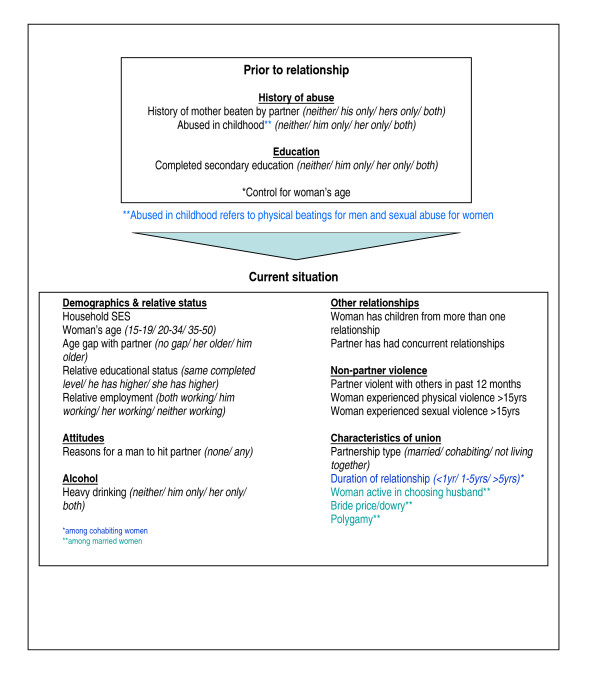
- Secondary education (or primary in Bangladesh, Ethiopia, and Tanzania) completed by both partners was protective in 12/14 sites (10 significant), and high SES was protective in 14 sites (8 significant comparing highest to lowest status).
- Alcohol problems in either or both partners were associated with higher IPV: him 14/14 sites (12 significant), her 10/11 (5 significant), both 11/11 (7 significant); attitudes supportive of wife beating were associated with increased IPV in 13/15 sites (8 significant).
- Prior abuse was consistently associated with IPV: reported abuse of the woman’s mother, partner’s mother, or both increased risk in all sites (10 significant for women, 10 for partners, 12 for both); childhood sexual abuse of the woman, childhood beatings of her partner, or both increased risk (15/15 for partners, all significant; 13/15 for women and both, 10 significant).
- Cohabitation without formal marriage increased IPV in 10/12 sites (3 significant); younger women aged 15–19 and 20–35 had increased risk in all sites (significant in 12); polygamy increased risk in all 6 sites where practiced (3 significant).
Methods
- Standardized population-based household surveys were conducted between 2000 and 2003 in Bangladesh, Brazil, Ethiopia, Japan, Namibia, Peru, Republic of Tanzania, Samoa, Serbia and Montenegro, and Thailand; one woman aged 15–49 was randomly selected per household, with 24,097 women interviewed and 19,517 ever-partnered women asked about partner violence.
- The outcome compared women reporting any physical and/or sexual partner violence in the past 12 months with women reporting no partner violence; women with lifetime but not past-year violence were excluded. Analyses included 15,207 women for “prior to relationship” models and 15,058 for “current situation” models.
- Multivariate logistic regression was run separately by site, with prior-to-relationship and current-situation variables modeled separately; ORs of 0.95–1.05 were considered no association, ≥1.05 risk factors, and ≤0.95 protective factors, with significance at 5%.
Limitations
- The paper states that the cross-sectional design limits conclusions about temporality or causality, although separating early-life and current characteristics clarifies temporality for some factors.
- The paper states that only women were interviewed, so partner characteristics rely on women’s reports and refer to the current or most recent partner, who may not be the perpetrator; any resulting misclassification would bias results toward the null.
- The text makes evident that small numbers in extreme exposure categories produced wide confidence intervals for some abuse-related ORs, and many site-specific associations were non-significant or varied in direction, so consistency is based on patterns across sites rather than uniform statistical significance.
Model-written summary. Check it against the paper before relying on it.
Integrity signals
Registry
Cites
Statistics
Figures
Verification
Claims the paper makes
3 Valid · 0 Not valid · 13 Not checked · 62 Own results and interpretations
Every source the paper cites for this claim was checked and supports it.
In the paper
“Higher socioeconomic status is generally associated with lower levels of physical and/or sexual partner violence.”
§ What factors are associated with recent intimate partner violence? findings from the WHO multi-country study on women's health and domestic violence > Discussion
What the sources say
- Supportedcites [27] Vyas S Watts C How does economic empowerment affect women's risk of intimate partner violence in low and middle income country settings?: A systematic review of published evidence J Int Dev 2009 21 577 602 10.1002/jid.1500 source
Section 4 (Discussion) says higher household socioeconomic status, measured by assets, is predominantly protective against intimate partner violence. Section 3.1 reports lower physical and/or sexual violence in several higher-wealth groups, while also noting null and contrary findings; the claim's word “generally” accommodates that variation. Page numbers are not provided for these passages. (LLM, conf=0.88)
plainstates an association- Asserted: passes — The authors put it forward as true.
- Checkable: passes — It can be checked against evidence.
- Load-bearing: passes — The paper’s conclusions depend on it.
- Based: passes — The paper gives a reason why it holds.
- Supported
A result the paper reports from its own data — it cites no other source for it, so there is none to check. The quote shows it is in the paper.
In the paper
“There was no consistent pattern of association between IPV and relative employment status.”
§ What factors are associated with recent intimate partner violence? findings from the WHO multi-country study on women's health and domestic violence > Results > Current situation model
plain- Asserted: passes — The authors put it forward as true.
- Checkable: passes — It can be checked against evidence.
- Load-bearing: unclear — It is unclear whether the paper’s conclusions depend on it.
- Based: passes — The paper gives a reason why it holds.
A result the paper reports from its own data — it cites no other source for it, so there is none to check. The quote shows it is in the paper.
In the paper
“Secondary education, high SES, and formal marriage offered protection, while alcohol abuse, cohabitation, young age, attitudes supportive of wife beating, having outside sexual partners, experiencing childhood abuse, growing up with domestic violence, and experiencing or perpetrating other forms of violence in adulthood, increased the risk of IPV.”
§ What factors are associated with recent intimate partner violence? findings from the WHO multi-country study on women's health and domestic violence > Abstract > Results
plainstates a cause- Asserted: passes — The authors put it forward as true.
- Checkable: passes — It can be checked against evidence.
- Load-bearing: passes — The paper’s conclusions depend on it.
- Based: passes — The paper gives a reason why it holds.
A result the paper reports from its own data — it cites no other source for it, so there is none to check. The quote shows it is in the paper.
In the paper
“In all sites odds of IPV were higher in relationships where one or both partners had problems with alcohol, compared to relationships where neither of them did (him 14/14, 12 significant; her 10/11, 5 significant; both 11/11, 7 significant).”
§ What factors are associated with recent intimate partner violence? findings from the WHO multi-country study on women's health and domestic violence > Results > Current situation model
plainstates an association- Asserted: passes — The authors put it forward as true.
- Checkable: passes — It can be checked against evidence.
- Load-bearing: passes — The paper’s conclusions depend on it.
- Based: passes — The paper gives a reason why it holds.
56 more claims
Create a free account to see all 78 claims and to verify the 3 references still open.
- It may state two separate claims as one. 8
- Probably not a substantial claim. 9
Self-check
Percentages, sums and reported differences re-computed from the paper’s own numbers.
Each contradiction between two passages listed here was confirmed by an independent check.
Rated minor: it would not touch a result — a value no result rests on, a p-value that stays on the same side of the significance level, or a conflict that is clerical, resolved elsewhere in the paper, or outside its own findings.
In the paper
§ What factors are associated with recent intimate partner violence? findings from the WHO multi-country study on women's health and domestic violence > Results > Prior to relationship
“15/15 sites for partners, all significant”
§ What factors are associated with recent intimate partner violence? findings from the WHO multi-country study on women's health and domestic violence > Results
“| 7 | 2.5 (1.4 - 4.3) | 5 | 1.6 (0.89 - 2.8) |”
Rated minor: it would not touch a result — a value no result rests on, a p-value that stays on the same side of the significance level, or a conflict that is clerical, resolved elsewhere in the paper, or outside its own findings.
In the paper
§ What factors are associated with recent intimate partner violence? findings from the WHO multi-country study on women's health and domestic violence > Results > Prior to relationship
“reports of abuse of the woman's mother, her partners' mother, or both (compared to no known reported abuse of either mother) being associated with increased risk of IPV in all sites”
§ What factors are associated with recent intimate partner violence? findings from the WHO multi-country study on women's health and domestic violence > Results
“| 4 | 2.5 (1.1 - 5.5) | 2 | 0.47 (0.06 - 4.0) | 2 | 2.2 (0.93 - 5.3) |”
Citations
Cites
The world report on violence and health
Krug, E. G., Mercy, J. A., Dahlberg, L. L., & Zwi, A. B. (2002) · The Lancet · doi:10.1016/s0140-6736(02)11133-0 · Cited by 9,110 · cited 1×
“The consistent association between IPV and other forms of violence against women also point to the need for integrated responses to violence across sectors and programmes [30,31].”
BackgroundMultilevel analysis techniques and applications
Hox, J. J., Moerbeek, M., & van de Schoot, R. (2002) · Cited by 6,886
Garcia-Moreno, C., Jansen, H. A., Ellsberg, M., Heise, L., & Watts, C. H. (2006) · The Lancet · doi:10.1016/s0140-6736(06)69523-8 · Cited by 3,176
Self-citationBehind Closed Doors: Violence in the American Family.
Boudouris, J., Straus, M. A., Gelles, R. J., & Steinmetz, S. K. (1982) · Contemporary Sociology · doi:10.2307/2068814 · Cited by 3,088
Hox, J., Moerbeek, M., & van de Schoot, R. (2002) · doi:10.4324/9781410604118 · Cited by 2,419
Violence Against Women: An Integrated, Ecological Framework
HEISE, L. L. (1998) · Violence Against Women · doi:10.1177/1077801298004003002 · Cited by 2,042
Self-citationIntimate partner violence: causes and prevention
Jewkes, R. (2002) · The Lancet · doi:10.1016/s0140-6736(02)08357-5 · Cited by 1,993
Ellsberg, M., Jansen, H. A., Heise, L., Watts, C. H., & Garcia-Moreno, C. (2008) · The Lancet · doi:10.1016/s0140-6736(08)60522-x · Cited by 1,820 · cited 1×
“In addition to being a concern in its own right, IPV is associated with a range of adverse physical, mental, sexual and reproductive health outcomes [2-8].”
BackgroundSelf-citationDunkle, K. L., Jewkes, R. K., Brown, H. C., Gray, G. E., McIntryre, J. A., & Harlow, S. D. (2004) · The Lancet · doi:10.1016/s0140-6736(04)16098-4 · Cited by 1,323 · cited 1×
“In addition to being a concern in its own right, IPV is associated with a range of adverse physical, mental, sexual and reproductive health outcomes [2-8].”
BackgroundIntimate partner physical abuse perpetration and victimization risk factors: A meta-analytic review
Stith, S. M., Smith, D. B., Penn, C. E., Ward, D. B., & Tritt, D. (2004) · Aggression and Violent Behavior · doi:10.1016/j.avb.2003.09.001 · Cited by 1,082 · cited 1×
“Studies in various countries have identified a range of factors that influence IPV risk [9-13], but in some cases, protective factors in one setting may be ineffective or actually increase risk in another [14].”
Background
Research works printed but not linked: 4
- Kishor S Johnson K Profiling domestic violence: A multicountry study 2004 Calverton, Maryland, USA: ORC Macro
- DoH South Africa Demographic and Health Survey 1998: final report 2002 Pretoria: Department of Health
- Harvey A Garcia Moreno C Butchart A Primary prevention of intimate partner violence and sexual violence: Background paper for WHO expert meeting May 2-3, 2007 2007 Geneva: World Health Organization, Department of Violence and Injuy Prevention and Disability
- Counts D Brown J Campbell J Sanctions and Sanctuary 1992 Boulder: Westview Press
Cited by
Items 101–200 of 1,413
Hegarty, K. L., Gunn, J. M., O'Doherty, L. J., Taft, A., Chondros, P., Feder, G., Astbury, J., & Brown, S. (2010) · BMC Public Health · doi:10.1186/1471-2458-10-2 · Cited by 81
Association between gap in spousal education and domestic violence in India and Bangladesh
Rapp, D., Zoch-Lesniak, B., Khan, M. M. H., Pollmann, T., & Krämer, A. (2012) · BMC Public Health · doi:10.1186/1471-2458-12-467 · Cited by 101
“Those factors may be alcohol or drug abuse [18,21,22,25], poor life satisfaction and well-being [21], psychiatric and psychological dysfunctions [21] as well as possible genetic dispositions.”
BackgroundRibeiro, M. R. C., da Sílva, A. A. M., Alves, M. T. S. S. D. B. E., Batista, R. F. L., Ribeiro, C. C. C., Schraiber, L. B., Bettiol, H., & Barbieri, M. A. (2017) · PLoS ONE · doi:10.1371/journal.pone.0170469 · Cited by 80
Attitudes Toward Physical Intimate Partner Violence Against Women in Nigeria
Okenwa-Emegwa, L., Lawoko, S., & Jansson, B. (2016) · SAGE Open · doi:10.1177/2158244016667993 · Cited by 94
“Substantial evidence suggesting associations between IPV justification and exposure (Abramsky et al., 2011) imply a need for understanding attitudes in especially middle and low-income countries.”
BackgroundResultAhmad, J., Khan, N., & Mozumdar, A. (2019) · Journal of Interpersonal Violence · doi:10.1177/0886260519881530 · Cited by 108
“State gender inequality, socioeconomic status and intimate partner violence (IPV) in India: A multilevel analysis.”
BackgroundInfluentialRisk Factors of Violence against Women in Peru
Salinas, R. J. C., Cernades, L. P. C., & Rivera, R. (2017) · Journal of Family Violence · doi:10.1007/s10896-017-9929-0 · Cited by 110
“increases the domestic violence risk (Johnson and Das 2009; Chan 2009; Abramsky et al. 2011; Bardales 2012).”
BackgroundResultInfluentialFarrer, T. J., Frost, R. B., & Hedges, D. W. (2012) · Trauma, Violence, & Abuse · doi:10.1177/1524838012440338 · Cited by 77
“For example, alcohol use is associated with violence and aggression, and IPV is more common if both or either partner has an alcohol-abuse disorder compared to couples with no alcohol abuse (Abramsky et al., 2011).”
BackgroundResultInfluentialWere, E., Curran, K., Delany-Moretlwe, S., Nakku-Joloba, E., Mugo, N. R., Kiarie, J., Bukusi, E. A., Celum, C., & Baeten, J. M. (2011) · AIDS · doi:10.1097/qad.0b013e32834b005d · Cited by 76
Conroy, A. A., McGrath, N. M., van Rooyen, H., Hosegood, V., Johnson, M. O., Fritz, K., Marr, A., Ngubane, T., & Darbes, L. A. (2016) · Social Science & Medicine · doi:10.1016/j.socscimed.2016.01.035 · Cited by 90
Wekwete, N. N., Sanhokwe, H., Murenjekwa, W., Takavarasha, F. R., & Madzingira, N. (2014) · African Population Studies · doi:10.11564/28-3-640 · Cited by 77
“According to Castro (2004), sociological models link violence to gender inequality.”
BackgroundDhungel, S., Dhungel, P., Dhital, S. R., & Stock, C. (2017) · BMC Women s Health · doi:10.1186/s12905-017-0441-8 · Cited by 91
Determinants of intimate partner violence against women in Ethiopia: A multi-level analysis
Tiruye, T. Y., Harris, M. L., Chojenta, C., Holliday, E. G., & Loxton, D. J. (2020) · PLoS ONE · doi:10.1371/journal.pone.0232217 · Cited by 87
“However, other researchers have found that the risk of experiencing IPV increased with younger age [1, 31, 40].”
BackgroundAbeid, M. S., Muganyizi, P. S., Massawe, S. N., Mpembeni, R. N. M., Darj, E., & Axemo, P. (2015) · BMC Public Health · doi:10.1186/s12889-015-1757-7 · Cited by 89
Mannell, J., Lowe, H., Brown, L. J., Mukerji, R., Devakumar, D., Gram, L., Jansen, H. A. F. M., Minckas, N., Osrin, D., Prost, A., et al. (2022) · BMJ Global Health · doi:10.1136/bmjgh-2021-007704 · Cited by 109
Self-citationCunha, O., & Gonçalves, R. A. (2013) · The European Journal of Psychology Applied to Legal Context · doi:10.5093/ejpalc2013a2 · Cited by 74
“…& Camp, 2010), criminal records (Rodríguez et al., 2011; Khosravipour et al., 2011), child physical abuse victimisation and inter parental violence (Abramsky et al., 2011; Roberts, McLaughlin, Conron, & Koenen, 2011; Wareham, Boots, & Chavez, 2009), and drug abuse (Shorey et al., 2012; Jennings,…”
BackgroundSapkota, D., Bhattarai, S., Baral, D., & Pokharel, P. K. (2016) · BMC Research Notes · doi:10.1186/s13104-016-1986-6 · Cited by 87
Mulrenan, C., Colombini, M., Howard, N., Kikuvi, J., & Mayhew, S. H. (2015) · BMJ Open · doi:10.1136/bmjopen-2014-006907 · Cited by 72
"They Told Me To Leave": How Health Care Providers Address Intimate Partner Violence
Morse, D. S., Lafleur, R., Fogarty, C. T., Mittal, M., & Cerulli, C. (2012) · The Journal of the American Board of Family Medicine · doi:10.3122/jabfm.2012.03.110193 · Cited by 88
“41,42 Not inquiring of all patients ensures that IPV will be underdetected and therefore un-dertreated.”
BackgroundWagman, J. A., Donta, B., Ritter, J., Naik, D. D., Nair, S., Saggurti, N., Raj, A., & Silverman, J. G. (2016) · Journal of Interpersonal Violence · doi:10.1177/0886260515624235 · Cited by 85
“We also assessed whether the participant was living with her husband at the time of interview as cohabitation has been found to increase risk for IPV in multiple international settings (Abramsky et al., 2011).”
BackgroundAgrawal, A., Ickovics, J. R., Lewis, J. B., Magriples, U., & Kershaw, T. (2014) · Maternal and Child Health Journal · doi:10.1007/s10995-014-1444-9 · Cited by 78
“A World Health Organization study in twelve countries observed younger age was associated with increased risk of IPV during the past year [2].”
BackgroundKabir, Z. N., Nasreen, H. E., & Edhborg, M. (2014) · Global Health Action · doi:10.3402/gha.v7.24725 · Cited by 81
“Inequality in educational level between partners is suggested to increase the risk of women experiencing IPV (24).”
BackgroundThe Spousal Assault Risk Assessment Guide (SARA)
Kropp, P. R., & Gibas, A. L. (2020) · Routledge eBooks · doi:10.4324/9781315518374-20 · Cited by 72
Gilchrist, G., Radcliffe, P., Noto, A. R., & d'Oliveira, A. F. P. L. (2017) · Drug and Alcohol Review · doi:10.1111/dar.12436 · Cited by 71
Wilson, I. M., Graham, K., & Taft, A. (2016) · Drug and Alcohol Review · doi:10.1111/dar.12405 · Cited by 79
Nybergh, L., Taft, C., & Krantz, G. (2013) · BMJ Open · doi:10.1136/bmjopen-2012-002053 · Cited by 80
Nesset, M. B., Lara‐Cabrera, M. L., Dalsbø, T. K., Pedersen, S. A., Bjørngaard, J. H., & Palmstierna, T. (2019) · BMC Psychiatry · doi:10.1186/s12888-019-2010-1 · Cited by 93
Pitpitan, E. V., Kalichman, S. C., Eaton, L. A., Sikkema, K. J., Watt, M. H., & Skinner, D. (2012) · Social Science & Medicine · doi:10.1016/j.socscimed.2012.06.020 · Cited by 66
“The WHO’s multi-country study on women’s health and domestic violence showed that across countries alcohol use was a robust correlate with experiences of violence (Abramsky et al., 2011).”
BackgroundMemiah, P. T. N., Mu, T. A., Prevot, K., Cook, C., Mwangi, M. M., Mwangi, E., Owuor, K. O., & Biadgilign, S. (2018) · Journal of Interpersonal Violence · doi:10.1177/0886260518804177 · Cited by 76
“In India, factors related to severe physical IPV and associated injuries include domestic violence in childhood, perpetration of IPV, and adherence to social norms that accept a husband’s violence (Abramsky et al., 2011; Sabri et al., 2014).”
BackgroundTsavoussis, A., Stawicki, S. P., Stoicea, N., & Papadimos, T. J. (2014) · Frontiers in Public Health · doi:10.3389/fpubh.2014.00178 · Cited by 89
“In the older group, PTSD encompasses the following: (1) exposure to actual or threatened death, serious injury, or sexual violence, (2) the presence of intrusion symptoms associated with the traumatic event(s) (repetitive play themes, distressing dreams, flashbacks, physiological reactions, marked psychological distre…”
BackgroundIncome, Gender, and Forms of Intimate Partner Violence
Ahmadabadi, Z., Najman, J. M., Williams, G. M., & Clavarino, A. M. (2017) · Journal of Interpersonal Violence · doi:10.1177/0886260517719541 · Cited by 104
Levine, S., Varcoe, C., & Browne, A. J. (2020) · Journal of Interprofessional Care · doi:10.1080/13561820.2019.1708871 · Cited by 75
Women’s Status and Intimate Partner Violence in the Democratic Republic of Congo
Tlapek, S. M. (2015) · Journal of Interpersonal Violence · doi:10.1177/0886260514553118 · Cited by 65
“…as young age and attitudes supportive of wife-beating have been identified as consistently significant risk factors for IPV in multiple settings (Abramsky et al., 2011), and several characteristics of male partners have been consistently significantly associated with IPV against women, such as…”
BackgroundResultInfluentialEarly Marriage and Intimate Partner Violence Among Adolescents and Young Adults in Viet Nam
Le, M. T. H., Tran, T. D., Nguyen, H. T., & Fisher, J. (2013) · Journal of Interpersonal Violence · doi:10.1177/0886260513505710 · Cited by 66
“Family background, in which children witness IPV between parents, or are affected by their parents’ traditional gender-role stereotypes, may magnify the belief among adolescent brides that IPV is part of marriage in Viet Nam (Abramsky et al., 2011; Santhya et al., 2010).”
BackgroundMartín-Fernández, M., Gracia, E., Marco, M., Vargas, V., Santirso, F. A., & Lila, M. (2018) · The European Journal of Psychology Applied to Legal Context · doi:10.5093/ejpalc2018a3 · Cited by 96
“Discussion Attitudes of acceptability of IPVAW are an important risk factor of actual IPVAW (Abramsky et al., 2011; Archer & Graham-Kevan, 2003; Copp et al., 2016; Gracia et al., 2015; WHO, 2002).”
BackgroundKane, J. C., Skavenski Van Wyk, S., Murray, S. M., Bolton, P., Melendez, F., Danielson, C. K., Chimponda, P., Munthali, S., & Murray, L. K. (2017) · Global Mental Health · doi:10.1017/gmh.2017.10 · Cited by 63
“Further, research shows thatwitnessing or experiencing violence within the home predicts victimization and perpetration of violence in later life (Abramsky et al. 2011; Fulu et al. 2013; Fonseka et al. 2015).”
BackgroundPrevalence of sexual, physical and emotional abuse in the Norwegian mother and child cohort study
Sørbø, M. F., Grimstad, H., Bjørngaard, J. H., Schei, B., & Lukasse, M. (2013) · BMC Public Health · doi:10.1186/1471-2458-13-186 · Cited by 74
“A low level of education is reported to be a risk factor for exposure to abuse in the populationsbased WHO study on recent abuse [34], while a Swedish study from three clinical populations and one randomly selected population reported that educational level had a positive association with physical abuse but not with s…”
BackgroundResultDomestic violence and early childhood mortality in rural India: evidence from prospective data
Koenig, M., Stephenson, R. B., Acharya, R., Barrick, L., Ahmed, S., & Hindin, M. J. (2010) · International Journal of Epidemiology · doi:10.1093/ije/dyq066 · Cited by 69
‘Real men don't hit women’: Constructing masculinity in the prevention of violence against women
Salter, M. (2015) · Australian & New Zealand Journal of Criminology · doi:10.1177/0004865815587031 · Cited by 82
Murshid, N. S., & Critelli, F. M. (2017) · Journal of Interpersonal Violence · doi:10.1177/0886260517690873 · Cited by 79
“Further supporting this contention, a WHO multicountry study also found that women with attitudes supportive of wife beating had increased odds of experiencing IPV (Abramsky et al., 2011).”
MethodAlquaiz, A. M., Almuneef, M. A., Kazi, A., & Almeneessier, A. S. (2017) · Journal of Interpersonal Violence · doi:10.1177/0886260517746128 · Cited by 66
“Young women in regional and global studies have repeatedly been shown to have higher rates of victimization compared with older ones (Abramsky et al., 2011; Kposowa & Aly Ezzat, 2019).”
BackgroundResultInfluentialUnequal power relations and partner violence against women in Tanzania: a cross-sectional analysis
Vyas, S., & Jansen, H. A. F. M. (2018) · BMC Women s Health · doi:10.1186/s12905-018-0675-0 · Cited by 86
Self-citationBlack, E., Worth, H., Clarke, S., Obol, J. H., Akera, P., Awor, A., Sevenska, M. S., Fry, H., & RICHMOND, R. L. (2019) · Conflict and Health · doi:10.1186/s13031-019-0219-8 · Cited by 61
“Other recognised risk factors for IPV observed globally include younger age of the woman, cohabitation, having outside sexual partners, alcohol abuse by either partner, controlling behaviours exhibited by the male partner, and attitudes that justify IPV [3, 4, 7, 8, 16].”
BackgroundResultInfluentialViolence against Women by Their Intimate Partners in Shahroud in Northeastern Region of Iran
Hajian, S., Vakilian, K., Najmabadi, K. M., Hajian, P., & Jalalian, M. (2014) · Global Journal of Health Science · doi:10.5539/gjhs.v6n3p117 · Cited by 68
“Low socioeconomic status was associated with greater risk of physical and mental violence in our study as it has been at other sites across the world (Abramsky et al., 2011).”
BackgroundFamily and community driven response to intimate partner violence in post-conflict settings
Kohli, A., Perrin, N., Remy, M. M., Banywesize, L., Mirindi, A. B., Banywesize, J. H., Mitima, C. M., Binkurhorhwa, A. K., Bufole, N. M., & Glass, N. E. (2015) · Social Science & Medicine · doi:10.1016/j.socscimed.2015.10.011 · Cited by 75
“, research objective one) in this and other studies include husband’s alcohol consumption, male fear of female partner infidelity, male infidelity/fear of male infidelity, economic instability in the household, male desire to maintain his position as head of the family, perceived disrespect of wife by husband, and wif…”
BackgroundInfluentialRelationships of Reproductive Coercion and Intimate Partner Violence to Unintended Pregnancy
Samankasikorn, W., Alhusen, J. L., Yan, G., Schminkey, D. L., & Bullock, L. (2018) · Journal of Obstetric, Gynecologic & Neonatal Nursing · doi:10.1016/j.jogn.2018.09.009 · Cited by 64
Antai, D., Antai, J., & Anthony, D. S. (2014) · Global Public Health · doi:10.1080/17441692.2014.917195 · Cited by 59
“…indicative of the protective effects of a woman’s education and employment against forms of economic abuse corroborate those of some previous studies (Abramsky et al., 2011; Ackerson et al., 2008; Antai, 2011a; Koenig, Stephenson, Ahmed, Jejeebhoy, & Campbell, 2006; Verma & Collumbien, 2003).”
ResultContinuum of sexual and gender-based violence risks among Syrian refugee women and girls in Lebanon
Roupetz, S., Garbern, S. C., Michael, S., Bergquist, H., Glaesmer, H., & Bartels, S. A. (2020) · BMC Women s Health · doi:10.1186/s12905-020-01009-2 · Cited by 88
Ekhator-Mobayode, U. E., Hanmer, L. C., Matulevich, E. C. R., & Arango, D. J. (2022) · World Development · doi:10.1016/j.worlddev.2021.105780 · Cited by 82
Pitpitan, E. V., Kalichman, S. C., Eaton, L. A., Cain, D., Sikkema, K. J., Watt, M. H., Skinner, D., & Pieterse, D. (2013) · Annals of Behavioral Medicine · doi:10.1007/s12160-012-9420-3 · Cited by 58
“In addition, consistent with previous research, experiencing childhood abuse was associated with a greater likelihood of also experiencing relationship abuse [42], and both childhood abuse and posttraumatic stress disorder were positively associated with being diagnosed with a sexually transmitted infection and/ 0 10…”
Yeung, H., Chowdhury, N., Malpass, A., & Feder, G. S. (2012) · International Journal of Family Medicine · doi:10.1155/2012/960523 · Cited by 75
Esie, P., Osypuk, T. L., Schuler, S. R., & Bates, L. M. (2019) · SSM - Population Health · doi:10.1016/j.ssmph.2019.100368 · Cited by 82
“Variables theorized to be related to IPV were included in the analysis (Abramsky et al., 2011; Islam, Mazerolle, Broidy, & Baird, 2017b).”
MethodKiss, L., Schraiber, L. B., Hossain, M., Watts, C. H., & Zimmerman, C. (2015) · Prevention Science · doi:10.1007/s11121-015-0567-6 · Cited by 75
“These factors include growing up in a violent home, harmful use of alcohol, gendered motivations to aggressive behavior, and social norms condoning violence (Abramsky et al. 2011; Anderson and Bushman 2002; Fagan and Wexler 1987; Jewkes 2002; Krug et al. 2002).”
Self-citationUmubyeyi, A., Mogren, I., Ntaganira, J., & Krantz, G. (2014) · BMC Psychiatry · doi:10.1186/s12888-014-0315-7 · Cited by 57
“To measure physical, sexual and psychological violence exposure, we used the items from the Women’s Health and Life experiences questionnaire, developed by WHO [23] and used in several countries all over the world [24].”
MethodPels, T., van Rooij, F. B., & Distelbrink, M. J. (2015) · Journal of Family Violence · doi:10.1007/s10896-015-9746-2 · Cited by 71
Stark, L., Seff, I., Asghar, K., Roth, D., Bakamore, T., MacRae, M., d’Andon, C. F., & Falb, K. (2018) · BMJ Global Health · doi:10.1136/bmjgh-2018-000824 · Cited by 67
Burgos-Soto, J., Orne‐Gliemann, J., Encrenaz, G., Patassi, A., Woronowski, A., Kariyiare, B., Lawson‐Evi, A., Leroy, V., Dabis, F., Ekouévi, D. K., et al. (2014) · Global Health Action · doi:10.3402/gha.v7.23456 · Cited by 69
Schulkind, J., Mbonye, M., Watts, C., & Seeley, J. (2016) · Culture, Health & Sexuality · doi:10.1080/13691058.2015.1124456 · Cited by 56
“The high prevalence of non-physical abuse and neglect among participants reinforces a growing recognition of the importance of emotional abuse within relationships, which has received less attention due to challenges in measuring and defining non-physical abuse (Abramsky et al. 2011).”
InfluentialSelf-citationIsmayilova, L., Karimli, L., Gaveras, E., Tô-Camier, A., Sanson, J., Chaffin, J., & Nanema, R. (2017) · Psychology of Violence · doi:10.1037/vio0000136 · Cited by 69
“While the causes of domestic violence are complex and can vary at the global (Abramsky et al., 2011; Jewkes, 2002), national (Sambisa, Angeles, Lance, Naved, & Thornton, 2011), and city/ village level (Uthman, Moradi, & Lawoko, 2009), poverty and women’s economic disempowerment are often cited…”
Social ecological factors and intimate partner violence in pregnancy
Gashaw, B. T., Schei, B., & Magnus, J. H. (2018) · PLoS ONE · doi:10.1371/journal.pone.0194681 · Cited by 74
Gautam, S., & Jeong, H.-S. (2019) · International Journal of Environmental Research and Public Health · doi:10.3390/ijerph16050709 · Cited by 69
“Odds ratios for IPV was highest where women reported that their mothers had experienced abuse [42].”
BackgroundMethodResultInfluentialMakleff, S., Garduño, J., Zavala, R. I., Barindelli, F., Valades, J., Billowitz, M., Márquez, V. I. S., & Marston, C. (2019) · Sexuality Research and Social Policy · doi:10.1007/s13178-019-00389-x · Cited by 77
Rural Crime and Community Safety (Edition 1)
Ceccato, V. A. (2015) · BiblioBoard Library Catalog (Open Research Library) · doi:10.4324/9780203725689 · Cited by 80
Lomazzi, V. (2023) · Social Sciences · doi:10.3390/socsci12030117 · Cited by 112
Predictors of Intimate Partner Homicide in a Sample of Portuguese Male Domestic Offenders
Cunha, O., & Gonçalves, R. (2019) · Journal of Interpersonal Violence · doi:10.1177/0886260516662304 · Cited by 50
Yount, K. M., James‐Hawkins, L., Cheong, Y. F., & Naved, R. T. (2018) · Psychology of Men & Masculinity · doi:10.1037/men0000069 · Cited by 65
“In South Asia, the Pacific, and other poor settings, men’s exposure to violence in childhood has been linked to a higher risk of perpetrating IPV (Abramsky et al., 2011; Fulu, Jewkes, Roselli, Garcia-Moreno, & the UN Multi-country Cross-sectional Study on Men and Violence research team, 2013;…”
InfluentialAgbaje, O. S., Anyanwu, J. I., Umoke, P. I. C., Iwuagwu, T. E., Iweama, C. N., Ozoemena, E. L., & Nnaji, I. R. (2019) · Archives of Public Health · doi:10.1186/s13690-018-0329-6 · Cited by 67
Smith Fawzi, M. C., Andrews, K. G., Fink, G., Danaei, G., McCoy, D. C., Sudfeld, C. R., Peet, E. D., Cho, J., Liu, Y., Finlay, J. E., et al. (2019) · BMJ Global Health · doi:10.1136/bmjgh-2018-001144 · Cited by 55
“Although IPV may precede depression, treatment of maternal depression can also potentially reduce the recurrence of IPV.”
BackgroundInfluentialGender inequality and violence against women in Spain, 2006-2014: towards a civilized society
Redding, E. M., Ruiz‐Cantero, M. T., Fernández‐Sáez, J., & Guijarro-Garví, M. (2016) · Gaceta Sanitaria · doi:10.1016/j.gaceta.2016.07.025 · Cited by 57
Chirwa, E. D., Sikweyiya, Y. M., Addo-Lartey, A. A., Alangea, D. O., Coker-Appiah, D., Adanu, R., & Jewkes, R. K. (2018) · PLoS ONE · doi:10.1371/journal.pone.0191663 · Cited by 67
Scorgie, F., Baron, D., Stadler, J., Venables, E. C., Brahmbhatt, H., Mmari, K., & Delany‐Moretlwe, S. (2017) · BMC Public Health · doi:10.1186/s12889-017-4349-x · Cited by 78
Signorelli, M. C., Taft, A., & Pereira, P. P. G. (2017) · Ciência & Saúde Coletiva · doi:10.1590/1413-81232018231.16562015 · Cited by 74
Solanke, B. L. (2018) · BMC International Health and Human Rights · doi:10.1186/s12914-018-0143-9 · Cited by 67
“Findings from the study further confirmed that both individual/relationship and community characteristics are important for explaining the occurrence and prevalence of partner violence in line with previous studies [25, 27, 29, 30, 36, 50].”
ResultBermudez, L. G., Stark, L., Bennouna, C., Jensen, C., Potts, A., Kaloga, I. F., Tilus, R., Buteau, J. E., Marsh, M., Hoover, A., et al. (2019) · Child Abuse & Neglect · doi:10.1016/j.chiabu.2019.01.003 · Cited by 54
“Next, complementing the global literature on violence perpetration (Abramsky et al., 2011; Gass, Stein, Williams, & Seedat, 2011; Schumacher et al., 2010), we found education to mitigate drivers of violence.”
BackgroundChoudhary, N., Brewis, A., Wutich, A., & Udas, P. B. (2020) · Journal of Water and Health · doi:10.2166/wh.2020.024 · Cited by 64
Risk Factors for Spousal Physical Violence Against Women in Saudi Arabia
Eldoseri, H. M., & Sharps, P. W. (2017) · Journal of Interpersonal Violence · doi:10.1177/0886260517696861 · Cited by 62
“a woman, supportive attitudes of a wife beating, relationship satisfaction, partner’s alcohol abuse, partner’s involvement in physical fights with other men, woman’s experience of sexual abuse before the age of 15 years, polygyny and less access of women to property rights (Abramsky et al., 2011; Heise & Kotsadam, 201…”
BackgroundDomestic violence among married women of reproductive age in Zimbabwe: a cross sectional study
Lasong, J., Zhang, Y., Muyayalo, K. P., Njiri, O. A., Gebremedhin, S. A., Abaidoo, C. S., Liu, C. Y., Zhang, H., & Zhao, K. (2020) · BMC Public Health · doi:10.1186/s12889-020-8447-9 · Cited by 65
Zark, L., & Satyen, L. (2021) · Trauma Violence & Abuse · doi:10.1177/1524838020985565 · Cited by 66
“, 2004) and IPV victimization among women (Abramsky et al., 2011), with similar findings among college students specifically (e.”
ResultInfluentialSuglia, S. F., Saelee, R., Guzman, I. A., Elsenburg, L. K., Clark, C. J., Link, B. G., & Koenen, K. C. (2022) · SSM - Population Health · doi:10.1016/j.ssmph.2022.101094 · Cited by 59
“(Abramsky et al., 2011; Halfon et al., 2017; Shaefer et al., 2018) For example, utilizing data from the National Survey of Children’s Health in the US, Halfon and colleagues noted a steep economic gradient in that the number of CAs increase as household income decreases (Halfon et al.”
MethodShi, C.-F., Kouyoumdjian, F. G., & Dushoff, J. G. (2013) · BMC Public Health · doi:10.1186/1471-2458-13-512 · Cited by 61
Linos, N., Slopen, N. B., Berkman, L. F., Subramanian, S. V., & Kawachi, I. I. (2013) · Journal of Epidemiology & Community Health · doi:10.1136/jech-2012-202187 · Cited by 61
Mulawa, M. I., Yamanis, T. J., Hill, L. M., Balvanz, P., Kajula, L. J., & Maman, S. (2016) · Social Science & Medicine · doi:10.1016/j.socscimed.2016.02.002 · Cited by 54
Nankinga, O., Misinde, C., & Kwagala, B. (2016) · BMC Public Health · doi:10.1186/s12889-016-3103-0 · Cited by 59
“Sexual behaviours are closely associated with a partner’s controlling behaviours, alcohol consumption, and control over resources and household decision-making (Antai 2011; Garcia-Moreno et al. 2006; Dalal 2011; Abramsky et al. 2011; Tumwesigye et al. 2012; Kwagala et al. 2013).”
BackgroundGender and Disaster: The Impact of Natural Disasters on Violence Against Women in Nepal
Bradley, T., Martin, Z., Upreti, B. R., Subedu, B., & Shrestha, S. (2021) · Journal of Asian and African Studies · doi:10.1177/00219096211062474 · Cited by 58
“In addition, men are more likely to abuse alcohol or other substances at times of stress and this can lead to violent gendered behaviour (Abramsky et al., 2011; Delaney and Shrader, 2000; IAI, 1990; Wiest et al., 1994).”
BackgroundVyas, S., Jansen, H. A. F. M., Heise, L., & Mbwambo, J. K. K. (2015) · Social Science & Medicine · doi:10.1016/j.socscimed.2015.10.016 · Cited by 60
Self-citationGoicolea, I., Öhman, A., Torres, M. S., Morrás, I., & Edin, K. E. (2012) · Global Health Action · doi:10.3402/gha.v5i0.18049 · Cited by 62
“settings with higher gender inequality (6, 7).”
BackgroundBacchus, L., Colombini, M., Urbina, M. C., Howarth, E., Gardner, F. E. M., Annan, J. R., Ashburn, K., Madrid, B. J., Levtov, R., & Watts, C. H. (2017) · Psychology Health & Medicine · doi:10.1080/13548506.2016.1274410 · Cited by 58
“Furthermore, the risk of adult victimisation and/or perpetration of IPV is greater amongst children who have been abused, highlighting the intergenerational transmission of violence (Abramsky et al., 2011; Fry, McCoy, & Swales, 2012; Spatz Widom, Czaja, & Dutton, 2014).”
BackgroundSelf-citationRamsoomar, L., Gibbs, A., Chirwa, E. D., Dunkle, K., & Jewkes, R. (2021) · BMJ Open · doi:10.1136/bmjopen-2021-049282 · Cited by 49
Yoshikawa, K., Shakya, T. M., Poudel, K. C., & Jimba, M. (2014) · PLoS ONE · doi:10.1371/journal.pone.0095829 · Cited by 67
“Husbands who consume alcohol also have significantly higher risk of perpetrating IPV towards wives [2,5,7,9,11].”
Incidence and risk factors for intimate partner violence during the postpartum period
Silva, E. P., Alves, S. V., de Araújo, T. V. B., & Ludermir, A. B. (2015) · Revista de Saúde Pública · doi:10.1590/s0034-8910.2015049005432 · Cited by 50
Amir‐ud‐Din, R., Fatima, S., & Aziz, S. (2018) · Journal of Interpersonal Violence · doi:10.1177/0886260518787809 · Cited by 72
“The impact of women’s education on reducing domestic violence is consistent with previous studies (Abramsky et al., 2011; Koenig et al., 2003; Sokoloff & Dupont, 2005).”
BackgroundResultInfluentialMore than mothers: aligning indicators with women's lives
Psaki, S. R., & OlaOlorun, F. M. (2011) · The Lancet · doi:10.1016/s0140-6736(11)60757-5 · Cited by 49
Bengesai, A. V., & Khan, H. T. A. (2020) · Culture Health & Sexuality · doi:10.1080/13691058.2020.1743880 · Cited by 53
CONTRACEPTION USE AND ASSOCIATIONS WITH INTIMATE PARTNER VIOLENCE AMONG WOMEN IN BANGLADESH
Dalal, K., Andrews, J., & Dawad, S. (2011) · Journal of Biosocial Science · doi:10.1017/s0021932011000307 · Cited by 54
“Recently data from the WHO multi-country Study on Women’s Health and Domestic Violence (Abramsky et al., 2011) showed higher education and higher socioeconomic stautus to have a protective effect on IPV.”
MethodIs Women’s Empowerment Associated With Help-Seeking for Spousal Violence in India?
Rowan, K., Mumford, E. A., & Clark, C. J. (2015) · Journal of Interpersonal Violence · doi:10.1177/0886260515618945 · Cited by 54
“aspects of empowerment are associated with violence (Abramsky et al., 2011; Hindin, Kishor, & Ansara, 2008; VanderEnde, Yount, Dynes, & Sibley, 2012).”
MethodResultInfluentialIntimate Partner Violence and Mental Health
Ellsberg, M. C., & Emmelin, M. (2014) · Global Health Action · doi:10.3402/gha.v7.25658 · Cited by 67
“This is a concern, not only because of the immediate risk of harm to the child but also because there is evidence that exposure to IPV in children leads to increased risk of perpetration of IPV among boys, and of IPV victimization among girls, through what is commonly referred to as the ‘intergenerational transmission…”
BackgroundSelf-citationExamining the Intersections between Child Maltreatment and Intimate Partner Violence
Guedes, A. C., & Mikton, C. (2013) · Western Journal of Emergency Medicine · doi:10.5811/westjem.2013.2.16249 · Cited by 57
Change in alcohol outlet density and alcohol-related harm to population health (CHALICE)
Fone, D. L., Dunstan, F., White, J., Webster, C. J., Rodgers, S., Lee, S., Shiode, N., Orford, S., Weightman, A. L., Brennan, I. R., et al. (2012) · BMC Public Health · doi:10.1186/1471-2458-12-428 · Cited by 53
“ing homicide [6], suicide [7], road traffic accidents [8], domestic violence [9], and attendance at Emergency”
BackgroundVanderEnde, K. E., Sibley, L., Cheong, Y. F., Naved, R. T., & Yount, K. M. (2015) · Violence Against Women · doi:10.1177/1077801215576938 · Cited by 53
“Similarly, results from a multi-country study of the correlates of IPV against women in 15 sites in 10 countries demonstrated a statistically significant association between higher household socioeconomic status (SES) and a lower risk of IPV (physical and/or sexual) against women in 8 of 15 sites (Abramsky et al., 201…”
ResultCrombach, A., & Bambonyé, M. (2015) · European Journal of Psychotraumatology · doi:10.3402/ejpt.v6.26995 · Cited by 48
“…(1) experiencing maltreatment during childhood has been identified as a major risk factor for perpetrating violence against the intimate partner (e.g., Abramsky et al., 2011; Ehrensaft et al., 2003; Roberts, McLaughlin, Conron, & Koenen, 2011) and the own offspring (Pears & Capaldi, 2001).”
Background
Metadata
- Authors
- Abramsky, T., Watts, C. H., Garcia-Moreno, C., Devries, K., Kiss, L., Ellsberg, M., Jansen, H. A., & Heise, L.
- Affiliations
- London School of Hygiene & Tropical Medicine (GB)
- International Center for Research on Women (US)
- Corresponding author
- Abramsky, Tanya
- Venue
- BMC Public Health
- Published
- 2011-02-16
- Volume
- 11
- Issue
- 1
- Pages
- 109-109
- ISSN
- 1471-2458 (ISSN-L)
- PMC
- PMC3049145
- OpenAlex
- W2146316233
- Semantic Scholar
- 124d14c4c5378026a820318c409f305314e161d1
- Cited by
- 1,413
- References
- 42
- Citations by year
- 2026: 66 · 2025: 85 · 2024: 102 · 2023: 96 · 2022: 108 · 2021: 133 · 2020: 137 · 2019: 105 · 2018: 103 · 2017: 106 · 2016: 95 · 2015: 89 · 2014: 75 · 2013: 69 · 2012: 28
- FWCI
- 60.57
- Type
- journal article
- Language
- en
- Open access
- gold
- doi.org
- Licence
- Locations
- BMC Public Health (publishedVersion, cc-by)
- PubMed Central (publishedVersion, cc-by)
- PubMed (publishedVersion)
- LSHTM Research Online (London School of Hygiene and Tropical Medicine) (acceptedVersion)
- DOAJ (DOAJ: Directory of Open Access Journals) (submittedVersion)
- Funders
- Rockefeller Foundation
- Styrelsen för Internationellt Utvecklingssamarbete
- United Nations Fund for Population Activities
- Mahidol University
- Umeå Universitet
- Universidade de São Paulo
- Uppsala Universitet
- Addis Ababa University
- Universidade Federal de Pernambuco
- Universidade de Pernambuco
- International Centre for Diarrhoeal Disease Research, Bangladesh
- Topics
- Social Sciences › Health › Intimate Partner and Family Violence
- Health Sciences › Medicine › Geriatrics and Gerontology › Elder Abuse and Neglect
- Social Sciences › Gender Studies › Sexual Assault and Victimization Studies
- Keywords
- intimate partner violence, domestic violence against women, risk factors, physical violence, sexual violence, alcohol abuse, childhood abuse, gender norms, IPV prevention, secondary education, socioeconomic status, cohabitation
- MeSH terms
- Adolescent, Adult, Data Collection, Female, Humans, Middle Aged, Risk Factors, Rural Population, Sexual Partners, Urban Population, World Health Organization, Logistic Models, Domestic Violence, Battered Women, Internationality, Young Adult
About these checks
Registry, retraction, Cites and statistics results are computed, not judged, with one exception: a printed reference that no index lists is read once by a model before it counts as a citation error. Claims are extracted by a model and kept only when their quote appears verbatim in the text; each cited source is then checked, with a model’s help, for whether it says what the claim relies on. Those verdicts can be wrong — read the claim’s quote and the cited source before relying on one.
The claim verdicts this report counts are experimental: their accuracy is not yet measured.
A language model drew the claims from the paper on 2026-10-10, under version 3 of the claim definition (model deepseek-v4.1-flash, prompt extract-v3).
A second model labelled each claim on 2026-10-10 (model jev-1.13-20260917, definition revision gold-guideline-v0.2).
Cited sources are checked with a language model’s help (gpt-6-sol).
Statistics and arithmetic are recomputed, not judged.
Confidence bands are shown only for fields calibrated on our annotated test set. None is calibrated yet, so no band is shown.
What counts as a claim ›How we measure confidence ›How we check this ›
Are you an author, or do you see a problem with this page? Request a review
Data sources
Bibliographic data: Semantic Scholar, OpenAlex, Crossref.
Contains information from the Semantic Scholar Academic Graph Datasets, made available under the ODC Attribution License (ODC-BY 1.0).
Semantic Scholar’s data is described in: Kinney, R., et al. (2023). The Semantic Scholar Open Data Platform. arXiv:2301.10140.
