

What factors are associated with recent intimate partner violence? findings from the WHO multi-country study on women's health and domestic violence
Open accessThe DOI matches its Crossref record; 41 of the 42 references it cites were found in a registry or an index, and 1 are not checked yet; 5 of the 24 sources its claims cite were checked for support.
Abstract
BACKGROUND: Intimate partner violence (IPV) against women is a global public health and human rights concern. Despite a growing body of research into risk factors for IPV, methodological differences limit the extent to which comparisons can be made between studies. We used data from ten countries included in the WHO Multi-country Study on Women's Health and Domestic Violence to identify factors that are consistently associated with abuse across sites, in order to inform the design of IPV prevention programs. METHODS: Standardised population-based household surveys were done between 2000 and 2003. One woman aged 15-49 years was randomly selected from each sampled household. Those who had ever had a male partner were asked about their experiences of physically and sexually violent acts. We performed multivariate logistic regression to identify predictors of physical and/or sexual partner violence within the past 12 months. RESULTS: Despite wide variations in the prevalence of IPV, many factors affected IPV risk similarly across sites. Secondary education, high SES, and formal marriage offered protection, while alcohol abuse, cohabitation, young age, attitudes supportive of wife beating, having outside sexual partners, experiencing childhood abuse, growing up with domestic violence, and experiencing or perpetrating other forms of violence in adulthood, increased the risk of IPV. The strength of the association was greatest when both the woman and her partner had the risk factor. CONCLUSIONS: IPV prevention programs should increase focus on transforming gender norms and attitudes, addressing childhood abuse, and reducing harmful drinking. Development initiatives to improve access to education for girls and boys may also have an important role in violence prevention.
Verified 2026-11-25 · 1 reference not checked yet
Overview
CoChat Summary
TL;DR
This WHO multi-country study used standardized household survey data from 10 countries and 15 sites to identify factors consistently associated with past-year physical and/or sexual intimate partner violence (IPV) among ever-partnered women. It found secondary education, high socioeconomic status, and formal marriage were protective, while alcohol abuse, cohabitation, young age, attitudes supportive of wife beating, outside sexual partners, childhood abuse, growing up with domestic violence, and other violence in adulthood increased risk, often most strongly when both partners had the factor.
Key findings
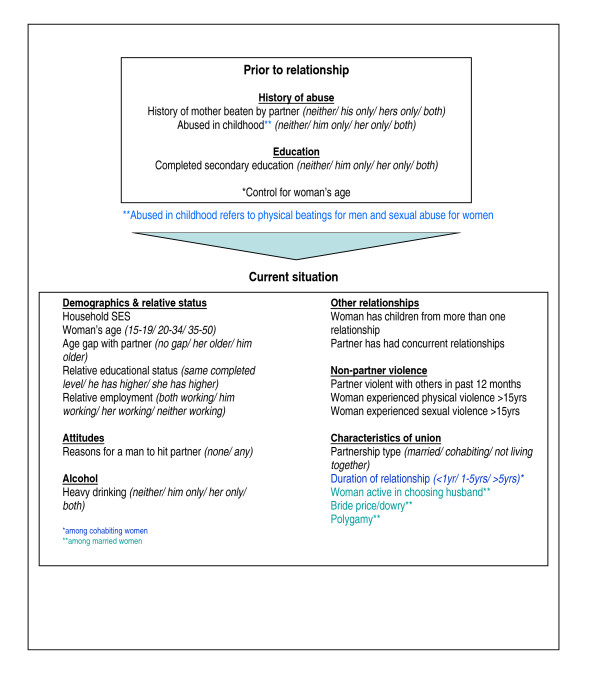
- Secondary education (or primary in Bangladesh, Ethiopia, and Tanzania) completed by both partners was protective in 12/14 sites (10 significant), and high SES was protective in 14 sites (8 significant comparing highest to lowest status).
- Alcohol problems in either or both partners were associated with higher IPV: him 14/14 sites (12 significant), her 10/11 (5 significant), both 11/11 (7 significant); attitudes supportive of wife beating were associated with increased IPV in 13/15 sites (8 significant).
- Prior abuse was consistently associated with IPV: reported abuse of the woman’s mother, partner’s mother, or both increased risk in all sites (10 significant for women, 10 for partners, 12 for both); childhood sexual abuse of the woman, childhood beatings of her partner, or both increased risk (15/15 for partners, all significant; 13/15 for women and both, 10 significant).
- Cohabitation without formal marriage increased IPV in 10/12 sites (3 significant); younger women aged 15–19 and 20–35 had increased risk in all sites (significant in 12); polygamy increased risk in all 6 sites where practiced (3 significant).
Methods
- Standardized population-based household surveys were conducted between 2000 and 2003 in Bangladesh, Brazil, Ethiopia, Japan, Namibia, Peru, Republic of Tanzania, Samoa, Serbia and Montenegro, and Thailand; one woman aged 15–49 was randomly selected per household, with 24,097 women interviewed and 19,517 ever-partnered women asked about partner violence.
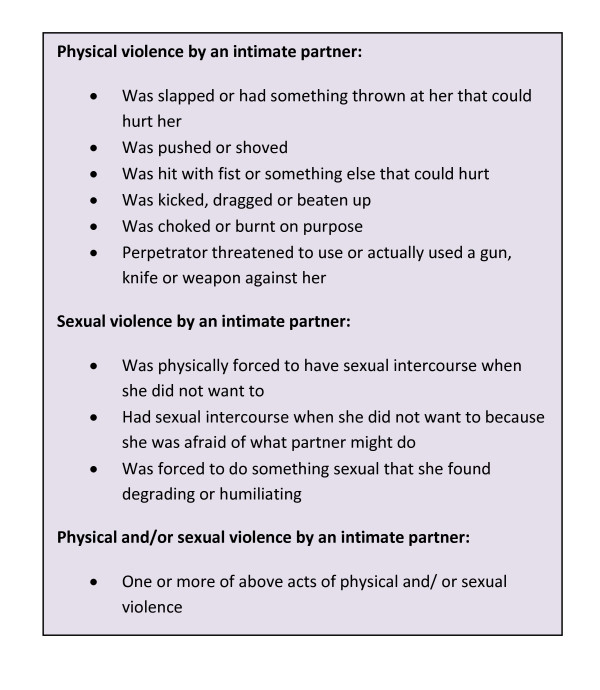
- The outcome compared women reporting any physical and/or sexual partner violence in the past 12 months with women reporting no partner violence; women with lifetime but not past-year violence were excluded. Analyses included 15,207 women for “prior to relationship” models and 15,058 for “current situation” models.
- Multivariate logistic regression was run separately by site, with prior-to-relationship and current-situation variables modeled separately; ORs of 0.95–1.05 were considered no association, ≥1.05 risk factors, and ≤0.95 protective factors, with significance at 5%.
Limitations
- The paper states that the cross-sectional design limits conclusions about temporality or causality, although separating early-life and current characteristics clarifies temporality for some factors.
- The paper states that only women were interviewed, so partner characteristics rely on women’s reports and refer to the current or most recent partner, who may not be the perpetrator; any resulting misclassification would bias results toward the null.
- The text makes evident that small numbers in extreme exposure categories produced wide confidence intervals for some abuse-related ORs, and many site-specific associations were non-significant or varied in direction, so consistency is based on patterns across sites rather than uniform statistical significance.
Model-written summary. Check it against the paper before relying on it.
Integrity signals
Registry
Cites
Statistics
Figures
Verification
Claims the paper makes
3 Valid · 0 Not valid · 13 Not checked · 62 Own results and interpretations
Every source the paper cites for this claim was checked and supports it.
In the paper
“Higher socioeconomic status is generally associated with lower levels of physical and/or sexual partner violence.”
§ What factors are associated with recent intimate partner violence? findings from the WHO multi-country study on women's health and domestic violence > Discussion
What the sources say
- Supportedcites [27] Vyas S Watts C How does economic empowerment affect women's risk of intimate partner violence in low and middle income country settings?: A systematic review of published evidence J Int Dev 2009 21 577 602 10.1002/jid.1500 source
Section 4 (Discussion) says higher household socioeconomic status, measured by assets, is predominantly protective against intimate partner violence. Section 3.1 reports lower physical and/or sexual violence in several higher-wealth groups, while also noting null and contrary findings; the claim's word “generally” accommodates that variation. Page numbers are not provided for these passages. (LLM, conf=0.88)
plainstates an association- Asserted: passes — The authors put it forward as true.
- Checkable: passes — It can be checked against evidence.
- Load-bearing: passes — The paper’s conclusions depend on it.
- Based: passes — The paper gives a reason why it holds.
- Supported
A result the paper reports from its own data — it cites no other source for it, so there is none to check. The quote shows it is in the paper.
In the paper
“There was no consistent pattern of association between IPV and relative employment status.”
§ What factors are associated with recent intimate partner violence? findings from the WHO multi-country study on women's health and domestic violence > Results > Current situation model
plain- Asserted: passes — The authors put it forward as true.
- Checkable: passes — It can be checked against evidence.
- Load-bearing: unclear — It is unclear whether the paper’s conclusions depend on it.
- Based: passes — The paper gives a reason why it holds.
A result the paper reports from its own data — it cites no other source for it, so there is none to check. The quote shows it is in the paper.
In the paper
“Secondary education, high SES, and formal marriage offered protection, while alcohol abuse, cohabitation, young age, attitudes supportive of wife beating, having outside sexual partners, experiencing childhood abuse, growing up with domestic violence, and experiencing or perpetrating other forms of violence in adulthood, increased the risk of IPV.”
§ What factors are associated with recent intimate partner violence? findings from the WHO multi-country study on women's health and domestic violence > Abstract > Results
plainstates a cause- Asserted: passes — The authors put it forward as true.
- Checkable: passes — It can be checked against evidence.
- Load-bearing: passes — The paper’s conclusions depend on it.
- Based: passes — The paper gives a reason why it holds.
A result the paper reports from its own data — it cites no other source for it, so there is none to check. The quote shows it is in the paper.
In the paper
“In all sites odds of IPV were higher in relationships where one or both partners had problems with alcohol, compared to relationships where neither of them did (him 14/14, 12 significant; her 10/11, 5 significant; both 11/11, 7 significant).”
§ What factors are associated with recent intimate partner violence? findings from the WHO multi-country study on women's health and domestic violence > Results > Current situation model
plainstates an association- Asserted: passes — The authors put it forward as true.
- Checkable: passes — It can be checked against evidence.
- Load-bearing: passes — The paper’s conclusions depend on it.
- Based: passes — The paper gives a reason why it holds.
56 more claims
Create a free account to see all 78 claims and to verify the 3 references still open.
- It may state two separate claims as one. 8
- Probably not a substantial claim. 9
Self-check
Percentages, sums and reported differences re-computed from the paper’s own numbers.
Each contradiction between two passages listed here was confirmed by an independent check.
Rated minor: it would not touch a result — a value no result rests on, a p-value that stays on the same side of the significance level, or a conflict that is clerical, resolved elsewhere in the paper, or outside its own findings.
In the paper
§ What factors are associated with recent intimate partner violence? findings from the WHO multi-country study on women's health and domestic violence > Results > Prior to relationship
“15/15 sites for partners, all significant”
§ What factors are associated with recent intimate partner violence? findings from the WHO multi-country study on women's health and domestic violence > Results
“| 7 | 2.5 (1.4 - 4.3) | 5 | 1.6 (0.89 - 2.8) |”
Rated minor: it would not touch a result — a value no result rests on, a p-value that stays on the same side of the significance level, or a conflict that is clerical, resolved elsewhere in the paper, or outside its own findings.
In the paper
§ What factors are associated with recent intimate partner violence? findings from the WHO multi-country study on women's health and domestic violence > Results > Prior to relationship
“reports of abuse of the woman's mother, her partners' mother, or both (compared to no known reported abuse of either mother) being associated with increased risk of IPV in all sites”
§ What factors are associated with recent intimate partner violence? findings from the WHO multi-country study on women's health and domestic violence > Results
“| 4 | 2.5 (1.1 - 5.5) | 2 | 0.47 (0.06 - 4.0) | 2 | 2.2 (0.93 - 5.3) |”
Citations
Cites
The world report on violence and health
Krug, E. G., Mercy, J. A., Dahlberg, L. L., & Zwi, A. B. (2002) · The Lancet · doi:10.1016/s0140-6736(02)11133-0 · Cited by 9,110 · cited 1×
“The consistent association between IPV and other forms of violence against women also point to the need for integrated responses to violence across sectors and programmes [30,31].”
BackgroundMultilevel analysis techniques and applications
Hox, J. J., Moerbeek, M., & van de Schoot, R. (2002) · Cited by 6,886
Garcia-Moreno, C., Jansen, H. A., Ellsberg, M., Heise, L., & Watts, C. H. (2006) · The Lancet · doi:10.1016/s0140-6736(06)69523-8 · Cited by 3,176
Self-citationBehind Closed Doors: Violence in the American Family.
Boudouris, J., Straus, M. A., Gelles, R. J., & Steinmetz, S. K. (1982) · Contemporary Sociology · doi:10.2307/2068814 · Cited by 3,088
Hox, J., Moerbeek, M., & van de Schoot, R. (2002) · doi:10.4324/9781410604118 · Cited by 2,419
Violence Against Women: An Integrated, Ecological Framework
HEISE, L. L. (1998) · Violence Against Women · doi:10.1177/1077801298004003002 · Cited by 2,042
Self-citationIntimate partner violence: causes and prevention
Jewkes, R. (2002) · The Lancet · doi:10.1016/s0140-6736(02)08357-5 · Cited by 1,993
Ellsberg, M., Jansen, H. A., Heise, L., Watts, C. H., & Garcia-Moreno, C. (2008) · The Lancet · doi:10.1016/s0140-6736(08)60522-x · Cited by 1,820 · cited 1×
“In addition to being a concern in its own right, IPV is associated with a range of adverse physical, mental, sexual and reproductive health outcomes [2-8].”
BackgroundSelf-citationDunkle, K. L., Jewkes, R. K., Brown, H. C., Gray, G. E., McIntryre, J. A., & Harlow, S. D. (2004) · The Lancet · doi:10.1016/s0140-6736(04)16098-4 · Cited by 1,323 · cited 1×
“In addition to being a concern in its own right, IPV is associated with a range of adverse physical, mental, sexual and reproductive health outcomes [2-8].”
BackgroundIntimate partner physical abuse perpetration and victimization risk factors: A meta-analytic review
Stith, S. M., Smith, D. B., Penn, C. E., Ward, D. B., & Tritt, D. (2004) · Aggression and Violent Behavior · doi:10.1016/j.avb.2003.09.001 · Cited by 1,082 · cited 1×
“Studies in various countries have identified a range of factors that influence IPV risk [9-13], but in some cases, protective factors in one setting may be ineffective or actually increase risk in another [14].”
Background
Research works printed but not linked: 4
- Kishor S Johnson K Profiling domestic violence: A multicountry study 2004 Calverton, Maryland, USA: ORC Macro
- DoH South Africa Demographic and Health Survey 1998: final report 2002 Pretoria: Department of Health
- Harvey A Garcia Moreno C Butchart A Primary prevention of intimate partner violence and sexual violence: Background paper for WHO expert meeting May 2-3, 2007 2007 Geneva: World Health Organization, Department of Violence and Injuy Prevention and Disability
- Counts D Brown J Campbell J Sanctions and Sanctuary 1992 Boulder: Westview Press
Cited by
Items 301–400 of 1,413
Berger, B. O., Grosso, A., Adams, D. A., Ketende, S. C., Sithole, B., Mabuza, X., Mavimbela, M., & Baral, S. (2016) · Journal of Interpersonal Violence · doi:10.1177/0886260516629385 · Cited by 37
“PSV is strongly linked to physical and mental health morbidities and mortality through both direct and indirect pathways (Abramsky et al., 2011; Argento et al., 2014; Deering et al., 2014; WHO & Global Coalition on Women and AIDS, 2005).”
BackgroundCosta, D., Hatzidimitriadou, E., Ioannidi-Kapolou, E., Lindert, J., Soares, J. J. F., Sundin, Ö., Tóth, O., & Barros, H. (2016) · Public Health · doi:10.1016/j.puhe.2016.05.001 · Cited by 49
“The results we obtained among women are in line with the evidence linking lowe r educational levels with female physical assault victimization.(10) Although clarity on which mechanisms explain the relation is still needed, higher levels of schooling seem to improve individual’s ability to obtain and effectively use in…”
Chiang, L. F., Howard, A. L., Gleckel, J., Ogoti, C., Karlsson, J., Hynes, M. E., & Mwangi, M. (2018) · Child Abuse & Neglect · doi:10.1016/j.chiabu.2018.07.010 · Cited by 43
Javalkar, P., Platt, L., Prakash, R., Beattie, T., Bhattacharjee, P., Thalinja, R., L., K. D., Sangha, C. A. T. M., Ramanaik, S., Collumbien, M., et al. (2019) · BMC Public Health · doi:10.1186/s12889-019-6673-9 · Cited by 40
“Alcohol use by both partners in a relationship has been linked to intimate partner violence among all women again irrespective of sex work [6, 14, 22, 23, 40].”
BackgroundSelf-citationSedziafa, A. P., Tenkorang, E. Y., & Owusu, A. Y. (2016) · Culture Health & Sexuality · doi:10.1080/13691058.2016.1187291 · Cited by 38
“Exposure to intimate partner violence in early childhood is a strong predictor of perpetrating and experiencing intimate partner violence in the life course (Abramsky et al. 2011; Kishor and Johnson 2004).”
BackgroundIntimate partner violence among HIV positive pregnant women in South Africa
Matseke, G., Rodriguez, V. J., Peltzer, K., & Jones, D. L. (2016) · Journal of Psychology in Africa · doi:10.1080/14330237.2016.1185912 · Cited by 36
“In previous studies, both low socio-economic status and single marital status were related to increased risk of IPV (Shannon et al., 2015), while marriage and high socioeconomic status have been associated with reduced risk of IPV (Abramsky et al., 2011, in Shannon et al., 2015).”
BackgroundMixed methods assessment of women’s risk of intimate partner violence in Nepal
Clark, C. J., Ferguson, G., Shrestha, B., Shrestha, P. N., Batayeh, B., Bergenfeld, I., Chang, S., & McGhee, S. (2019) · BMC Women s Health · doi:10.1186/s12905-019-0715-4 · Cited by 43
Ebrahim, N. B., & Atteraya, M. S. (2017) · Journal of Immigrant and Minority Health · doi:10.1007/s10903-017-0592-6 · Cited by 36
Patel, R., Gupte, S. S., Srivastava, S., Kumar, P. P., Chauhan, S., Govindu, M. D., & Dhillon, P. (2021) · PLoS ONE · doi:10.1371/journal.pone.0248396 · Cited by 41
Health sector responses to intiate partner violence: A literature review
Rees, K., Zweigenthal, V., & Joyner, K. (2014) · African Journal of Primary Health Care & Family Medicine · doi:10.4102/phcfm.v6i1.712 · Cited by 40
Gelaye, B., Do, N., Avila, S., Vélez, J. C., Zhong, Q., Sánchez, S. E., Peterlin, B. L., & Williams, M. A. (2016) · Headache The Journal of Head and Face Pain · doi:10.1111/head.12855 · Cited by 39
Messersmith, L. J., Halim, N., Mzilangwe, E. S., Reich, N., Badi, L., Holmes, N. B., Servidone, M., Simmons, E., & Kawemama, P. (2017) · Journal of Interpersonal Violence · doi:10.1177/0886260517731313 · Cited by 34
“Research has also shown that witnessing IPV between parents is a risk factor for men’s perpetration and women’s acceptance and later experience of violence in intimate relationships (Abramsky et al., 2011; Capaldi, Knoble, Shortt, & Kim, 2012; Hindin et al., 2008; Peterman et al., 2015).”
BackgroundIntimate partner violence during pregnancy: victim or perpetrator? Does it make a difference?
Shneyderman, Y., & Kiely, M. (2013) · BJOG An International Journal of Obstetrics & Gynaecology · doi:10.1111/1471-0528.12357 · Cited by 31
le Roux, K., Christodoulou, J., Katzen, L. S., Dippenaar, E., Laurenzi, C. A., le Roux, I. M., Tomlinson, M., & Rotheram‐Borus, M. J. (2019) · BMC Pregnancy and Childbirth · doi:10.1186/s12884-018-2164-8 · Cited by 41
Financial inclusion and intimate partner violence: What does the evidence suggest?
McDougal, L., Klugman, J., Dehingia, N., Trivedi, A., & Raj, A. (2019) · PLoS ONE · doi:10.1371/journal.pone.0223721 · Cited by 43
Wilson, I. M., Graham, K., Laslett, A., & Taft, A. (2020) · Social Science & Medicine · doi:10.1016/j.socscimed.2020.113307 · Cited by 35
Mont, J. D., & Forte, T. (2014) · BMC Public Health · doi:10.1186/1471-2458-14-51 · Cited by 39
Prediction of domestic violence against married women in southwestern Turkey
Izmirli, G. O., Sönmez, Y., & Sezik, M. (2014) · International Journal of Gynecology & Obstetrics · doi:10.1016/j.ijgo.2014.06.011 · Cited by 35
“An association betweenproblemalcohol use or gambling in themale partner and exposure of the female partner to domestic violence has been shown previously [12,21,23,24,27].”
BackgroundInfluentialSexual health and socioeconomic-related factors in Spain
Ruiz-Muñoz, D., Wellings, K., Castellanos‐Torres, E., Álvarez‐Dardet, C., Casals-Cases, M., & Pérez, G. (2013) · Annals of Epidemiology · doi:10.1016/j.annepidem.2013.07.005 · Cited by 44
“Consistent with results from other studies [29,30], the prevalence of sexual abuse was greater among women of disadvantaged socioeconomic position.”
ResultFredland, N., Symes, L., Gilroy, H., Paulson, R. M., Nava, A., McFARLANE, J. M., & Pennings, J. S. (2015) · Journal of Family Violence · doi:10.1007/s10896-015-9702-1 · Cited by 33
“2 across study sites, compared to women who did not report a history of child abuse (Abramsky et al., 2011).”
InfluentialRishal, P., Pun, K. D., Darj, E., Joshi, S. K., Bjørngaard, J. H., Swahnberg, K., Schei, B., Lukasse, M., on behalf of the ADVANCE Study Group, Schei, B., et al. (2017) · Scandinavian Journal of Public Health · doi:10.1177/1403494817723195 · Cited by 34
“found that employed women with an unemployed partner were at higher risk of intimate partner violence [26].”
BackgroundPublic Health Social Work as a Unifying Framework for Social Work’s Grand Challenges
Cederbaum, J. A., Ross, A. M., Ruth, B. J., & Keefe, R. H. (2018) · Social Work · doi:10.1093/sw/swy045 · Cited by 38
Do ethnicity and polygyny contribute to justification of men beating women in Ghana?
Amo‐Adjei, J., & Tuoyire, D. A. (2015) · Women & Health · doi:10.1080/03630242.2015.1074638 · Cited by 38
“Women in polygynous relationships have higher exposure to perpetration and justification of IPV than those in monogamous marriages/unions (Abramsky et al. 2011; McCloskey, Williams, and Larsen 2005; Ilika, Okonkwo, and Adogu 2002; Lawoko, Dalal, Jiayou, and Jansson 2007; Rani, Bonu, and Diop-Sidibe…”
BackgroundEckschmidt, F., de Andrade, A. G., dos Santos, B., & de Oliveira, L. G. (2013) · Traffic Injury Prevention · doi:10.1080/15389588.2012.755261 · Cited by 34
“Severe social problems have also been correlated with alcohol use, including violence, child negligence and/or abuse, absenteeism from work (WHO 2011b), intimate partner violence (Abramsky et al. 2011), and traffic accidents (Zhao et al. 2010), among others.”
BackgroundReese, B. M., Chen, M. S., Nekkanti, M., & Mulawa, M. I. (2017) · Journal of Interpersonal Violence · doi:10.1177/0886260517738775 · Cited by 40
“…& Smith, 1990), which has been previously validated (MacQuarrie, Winter, & Kishor, 2013) and used to explore IPV in Tanzania and several other low-resource, high-prevalence settings (e.g., Abramsky et al., 2011; Kishor & Bradley, 2012; MacQuarrie et al., 2013; Palermo, Bleck, & Peterman, 2014).”
Safranoff, A. (2017) · Salud Colectiva · doi:10.18294/sc.2017.1145 · Cited by 140
“Al mismo tiempo, hay quienes estudian la influencia de otro tipo de recursos como, por ejemplo, la edad(33,34,35) y/o el estado civil(35,36,37,38), entre otros.”
BackgroundInfluentialChoi, A. W., Lo, B. C. Y., Lo, R. T.-F., To, P. Y. L., & Wong, J. Y. H. (2019) · Journal of Interpersonal Violence · doi:10.1177/0886260519888532 · Cited by 45
“First, previous studies revealed associations between female IPV victimization and lower levels of educational attainment and income (e.g., Abramsky et al., 2011; Capaldi et al., 2012; Conger et al., 2010), but it is unclear whether those associations can be found in young mothers.”
BackgroundDomestic violence reporting during the COVID-19 pandemic: evidence from Latin America
Perez-Vincent, S. M., & Carreras, E. (2022) · Review of Economics of the Household · doi:10.1007/s11150-022-09607-9 · Cited by 48
“, 2020); substance abuse (Abramsky et al., 2011; Angelucci, 2008; Devries et al., 2014); pollution (Herrnstadt & Muehlegger, 2015); and other environmental factors (Henke & Hsu, 2020; Sanz-Barbero et al.”
Fischer, N. L., Lamis, D. A., Petersen-Coleman, M. N., Moore, C. S., Zhang, H., & Kaslow, N. J. (2015) · Journal of Family Violence · doi:10.1007/s10896-015-9771-1 · Cited by 33
“Violence against women andmore specifically, intimate partner violence (IPV) is a national and international public health concern that affects women of all racial, ethnic, and socioeconomic backgrounds (Abramsky et al. 2011).”
BackgroundWomen's and men's experience of spousal violence in two African countries: Does gender matter?
Kishor, S., & Bradley, S. (2012) · Cited by 48
Shange, S., & Ross, E. (2022) · Journal of Cross-Cultural Psychology · doi:10.1177/00220221221077361 · Cited by 53
“In terms of psycho-social factors and in line with the theme on abuse, Abramsky et al. (2011) maintain that mental health consequences of intimate partner violence can be very severe to the extent that they may cause posttraumatic stress disorder (PTSD), depression, panic and anxiety attacks, and eating disorders. In…”
BackgroundInfluentialDomestic violence: A cross‐sectional study among pregnant and postpartum women
Sánchez, O. D. R., Tanaka, É. Z., Dantas‐Silva, A., Bonás, M. K., Grieger, I., Machado, H. D. C., & Surita, F. G. (2022) · Journal of Advanced Nursing · doi:10.1111/jan.15375 · Cited by 36
Roberts, Y. H., Campbell, C. A., Ferguson, M., & Crusto, C. A. (2013) · Journal of Traumatic Stress · doi:10.1002/jts.21842 · Cited by 38
Childhood Abuse and Current Intimate Partner Violence: A Population Study in Hong Kong
Yan, E., & Karatzias, T. (2016) · Journal of Interpersonal Violence · doi:10.1177/0886260516682521 · Cited by 32
“The WHO data revealed that either the women or her partner achieving secondary education was associated with decreased IPV (Abramsky et al., 2011).”
MethodCorrelates of Intimate Partner Violence in Ghana
Issahaku, P. A. (2017) · SAGE Open · doi:10.1177/2158244017709861 · Cited by 33
The Prevalence and Consequences of Intimate Partner Violence Intrusion in the Workplace
Blodgett, C., & Lanigan, J. D. (2017) · Journal of Aggression Maltreatment & Trauma · doi:10.1080/10926771.2017.1330297 · Cited by 35
“Studies have found an inverse correlation between being an IPV victim and both educational attainment (Abramsky et al., 2011; Caetano, Vaeth, & Ramisetty-Mikler, 2008) and income (Reeves & O’Leary-Kelly, 2007), with income level contributing more to the probability of IPV than level of educational…”
BackgroundMethodInfluentialViolence With Femicide Risk: Its Effects on Women and Their Children
Hernández, W. (2018) · Journal of Interpersonal Violence · doi:10.1177/0886260518815133 · Cited by 53
“” Several studies—including multicountry studies (Abramsky et al., 2011) and meta-analysis (Stith, Smith, Penn, Ward, & Tritt, 2004)—have found that victims are more likely to explicitly accept wife beating (Gage, 2005) or opt for silence as a coping strategy (Tankink & Richters, 2007).”
BackgroundCallinan, S., Rankin, G., Room, R., Stanesby, O., Rao, G. N., Waleewong, O., Greenfield, T. K., Hope, A., & Laslett, A. (2018) · The American Journal of Drug and Alcohol Abuse · doi:10.1080/00952990.2018.1540632 · Cited by 46
“Alcohol consumption is present in over a third of events involving IPV (8), and is thought to also increase the severity of IPV (9,10).”
BackgroundDevelopment of the Intimate Partner Violence During Pregnancy Instrument (IPVPI)
Doi, S. K., Fujiwara, T., & Isumi, A. (2019) · Frontiers in Public Health · doi:10.3389/fpubh.2019.00043 · Cited by 31
“The main risk factors for IPV regardless of pregnancy have been identified as young maternal and young partner age (19–21), unemployment among women and their partners (21– 23), low household income (19, 21), relationship problems with their partner (23), and partner’s alcohol abuse (20–24).”
BackgroundPolygynous Unions and Intimate Partner Violence in Nigeria: An Examination of the Role of Selection
Behrman, J. A. (2019) · Journal of Marriage and the Family · doi:10.1111/jomf.12570 · Cited by 32
Chilanga, E., Collin‐Vézina, D., Khan, M. N., & Riley, L. (2020) · BMC Public Health · doi:10.1186/s12889-020-09910-z · Cited by 44
El-Moslemany, R., Mellon, L., Tully, L., & McConkey, S. J. (2020) · Trauma Violence & Abuse · doi:10.1177/1524838020977147 · Cited by 39
“Women who had attitudes supportive of wife beating had increased odds of experiencing IPV victimization in 13 of 15 sites (eight of which were significant; Abramsky et al., 2011).”
BackgroundLaslett, A., Graham, K., Wilson, I. M., Kuntsche, S., Fulu, E., Jewkes, R. K., & Taft, A. (2021) · Addiction · doi:10.1111/add.15485 · Cited by 31
Capasso, A., Skipalska, H., Guttmacher, S. J., Tikhonovsky, N. G., Navario, P., & Castillo, T. P. (2021) · BMC Public Health · doi:10.1186/s12889-021-10830-9 · Cited by 40
“Evidence from population-based studies, regardless of the humanitarian context, suggests that unemployment, financial strain and household economic instability are associated with increased risk of GBV [32, 34, 35].”
BackgroundAli, N. S., Ali, F. N., Khuwaja, A. K., & Nanji, K. (2014) · Hong Kong Medical Journal · doi:10.12809/hkmj134074 · Cited by 29
Yount, K. M., Pham, H., Minh, T., Krause, K. H., Schuler, S. R., Anh, H. T., VanderEnde, K. E., & Kramer, M. R. (2014) · Annals of Epidemiology · doi:10.1016/j.annepidem.2014.02.004 · Cited by 29
“Early normalization of IPV against women may then increase the risk of perpetration [21–23].”
BackgroundMont, J. D., Hyman, I., O'Brien, K., White, M. E., Odette, F., & Tyyskä, V. (2012) · Annals of Epidemiology · doi:10.1016/j.annepidem.2012.09.001 · Cited by 36
The macro-level drivers of intimate partner violence: New evidence from a multilevel dataset
Kovacs, R. (2017) · Global Public Health · doi:10.1080/17441692.2017.1317010 · Cited by 32
“The vast majority of quantitative studies that analyse the drivers of IPV have focused exclusively on individual-level risk factors (see, for example, Abramsky et al., 2011; Stoeckl et al., 2014).”
BackgroundViolence Against Women and Household Ownership of Radios, Computers, and Phones in 20 Countries
Cardoso, L., & Sorenson, S. B. (2017) · American Journal of Public Health · doi:10.2105/ajph.2017.303808 · Cited by 29
Bjørnholt, M. (2019) · Nordic Journal of Criminology · doi:10.1080/14043858.2019.1568103 · Cited by 59
“Exposure to violence and abuse in childhood or adolescence is a well-known risk factor for revictimization and perpetration (Abramsky et al., 2011; Campbell, Alhusen, Draughon, Kub, & Walton-Moss, 2011; O’Leary, Tintle, & Bromet, 2014, Gilbert et al., 2015), and such experiences have been found to…”
BackgroundEves, R. (2019) · Culture Health & Sexuality · doi:10.1080/13691058.2018.1564937 · Cited by 34
“In cases of brideprice exchange, this was associated with decreased IPV at four (two significant) and increased violence at two sites (neither significant) (Abramsky et al. 2011).”
BackgroundInfluentialAmegbor, P. M., & Rosenberg, M. W. (2019) · Applied Geography · doi:10.1016/j.apgeog.2019.03.009 · Cited by 32
Domestic violence and self-poisoning in Sri Lanka
Bandara, P., Page, A., Senarathna, L., Kidger, J., Feder, G. S., Gunnell, D., Rajapakse, T. N., & Knipe, D. W. (2020) · Psychological Medicine · doi:10.1017/s0033291720002986 · Cited by 37
Hill, S. E., & Friel, S. (2020) · International Journal of Environmental Research and Public Health · doi:10.3390/ijerph17217902 · Cited by 38
“Initiatives such as these serve to create a ‘responsible’ public profile for alcohol companies while simultaneously promoting their reputation and brands [78] and distracting from the role of alcohol in violence against women [79].”
BackgroundParekh, A., Tagat, A., Kapoor, H., & Nadkarni, A. (2021) · Journal of Interpersonal Violence · doi:10.1177/0886260521991304 · Cited by 35
“Despite this, the overall response that frequent alcohol consumption is a significant precipitating factor for physical, emotional, and sexual violence is consistent with many other studies on domestic violence (Abramsky et al., 2011; Devries et al., 2010; Jejeebhoy, 1998a, 1998b; Kimuna & Djamba, 2008; Koenig et al.,…”
BackgroundResultInfluentialDomestic Violence against Infertile Women: A systematic review and meta-analysis
Sharifi, F., Jamali, J., Larki, M., & Roudsari, R. L. (2022) · Sultan Qaboos University medical journal · doi:10.18295/squmj.5.2021.075 · Cited by 36
Marital Experiences and Depression in an Arranged Marriage Setting
Zhang, Y., & Axinn, W. G. (2021) · American Journal of Sociology · doi:10.1086/714272 · Cited by 38
“This is unlike other settings, in which dating and premarital cohabitation are a common part of the courtship process, so individuals are exposed to the risk of IPV before they marry (Anderson 2010; Abramsky et al. 2011; Miller et al. 2011).”
BackgroundChang, T., Hu, Y., Taylor, D., & Quigley, B. M. (2021) · Health & Place · doi:10.1016/j.healthplace.2021.102736 · Cited by 31
“The link between alcohol and DV has been established across countries (Abramsky et al., 2011), in general population surveys (Quigley et al.”
BackgroundInfluentialAli, T. S., Krantz, G., & Mogren, I. (2012) · International Journal of Women s Health · doi:10.2147/ijwh.s33325 · Cited by 31
“To address such violations, a multisector response in terms of policy and action are needed.(34) Not least is the political will needed to acknowledge this obvious gender inequality situation coupled with a readiness to transform gender norms and to improve the general educational level among girls and boys, and women…”
Matteoli, M., Piacentino, D., Kotzalidis, G. D., Serata, D., Rapinesi, C., Angeletti, G., Rossi, M., David, V., & Dominicis, C. D. (2016) · Violence and Victims · doi:10.1891/0886-6708.vv-d-14-00107 · Cited by 33
“, urban or rural), with the latter reporting less IPV than the former (Abramsky et al., 2011).”
BackgroundShamu, S., Shamu, P., Zarowsky, C., Temmerman, M., Shefer, T., & Abrahams, N. (2019) · PLoS ONE · doi:10.1371/journal.pone.0198866 · Cited by 33
Ekhator-Mobayode, U. E., Hanmer, L. C., Matulevich, E. C. R., & Arango, D. J. (2020) · World Bank, Washington, DC eBooks · doi:10.1596/1813-9450-9168 · Cited by 33
“…preceding the survey.19 Because we exploit the timing and location of IPV in the BH affected area, our analysis focuses on women’s experiences of physical or sexual IPV in the year preceding the survey – commonly taken to mean that women are currently experiencing violence (Abramsky et al. 2011).”
BackgroundMethodVameghi, R., Akbari, S. A. A., Majd, H. A., Sajedi, F., & Sajjadi, H. (2017) · Journal of Injury and Violence Research · doi:10.5249/jivr.v10i1.983 · Cited by 42
Fine, S. L., Kane, J. C., Murray, S. M., Skavenski, S. V. W., Munthali, S., Mwenge, M., Paul, R., Mayeya, J., & Murray, L. K. (2019) · Journal of Interpersonal Violence · doi:10.1177/0886260519876722 · Cited by 35
“A robust body of literature focused on men’s use of violence in heterosexual contexts has established that across settings, men who believe that IPV is acceptable are more likely to perpetrate violence, and women who believe that IPV is acceptable are more likely to experience violence (Abramsky et al., 2011; Capaldi…”
BackgroundInfluentialMukherjee, R., & Joshi, R. K. (2019) · Journal of Interpersonal Violence · doi:10.1177/0886260519876720 · Cited by 27
“…strata of society, previous studies have found certain socioeconomic factors like urban residence, older age, lower educational status, and lower family income in women to be consistently associated with higher risk of domestic violence (Abramsky et al., 2011; Babu & Kar, 2009; Donta et al., 2016).”
BackgroundMorris, M., Okoth, V., Prigmore, H. L., Ressler, D. J., Mbeya, J., Rogers, A., Moon, T. D., & Audet, C. M. (2022) · Journal of Interpersonal Violence · doi:10.1177/0886260520935484 · Cited by 27
“This is consistent with literature that suggests girls who observe violent relationships in childhood are more likely to be involved in violent partnerships later in life (Abramsky et al., 2011; Kouyoumdjian, Calzavara, et al., 2013).”
ResultPalermo, T., Prencipe, L., Kajula, L., & for the Tanzania Cash Plus Evaluation Team (2021) · American Journal of Public Health · doi:10.2105/ajph.2021.306509 · Cited by 34
Cao, J., Silva, S. G., Rodriguez, M. Q., Li, Q., Stafford, A. M., Cervantes, R. C., & Gonzalez-Guarda, R. M. (2022) · Journal of Interpersonal Violence · doi:10.1177/08862605221109905 · Cited by 37
Intimate partner violence against women in Spain: A medico-legal and criminological study.
Regueira-Diéguez, A., Rivas, N. P., Muñoz-Barús, J. I., Vázquez-Portomeñe, F., & Rodríguez-Calvo, M. S. (2015) · Journal of Forensic and Legal Medicine · doi:10.1016/j.jflm.2015.05.012 · Cited by 31
Understanding Domestic Violence Against Muslim Women in China
Niu, X., & Laidler, K. A. J. (2014) · Feminist Criminology · doi:10.1177/1557085114536766 · Cited by 26
“Research from around the world has identified a number of risk factors of domestic violence including alcohol and substance use, poverty, education, age, and prior witnessing or experience of family violence (Abramsky et al., 2011; Jewkes, 2002).”
BackgroundWomen with HIV: gender violence and suicidal ideation
Ceccon, R. F., Meneghel, S. N., & Hirakata, V. N. (2014) · Revista de Saúde Pública · doi:10.1590/s0034-8910.2014048005228 · Cited by 32
Meinck, F., Fry, D. A., Ginindza, C., Wazny, K., Elizalde, A., Spreckelsen, T. F., Maternowska, M. C., & Dunne, M. P. (2017) · Journal of Global Health · doi:10.7189/jogh.07.010410 · Cited by 36
Ellsberg, M. C., Ugarte, W. J., Ovince, J., Blackwell, A., & Quintanilla, M. (2020) · BMJ Global Health · doi:10.1136/bmjgh-2020-002339 · Cited by 33
Self-citationUden, L., Liberona, D., & Welzer, T. (2015) · Communications in computer and information science · doi:10.1007/978-3-319-22629-3 · Cited by 26
Onanubi, K. A., Olumide, A. O., & Owoaje, E. (2017) · SAGE Open · doi:10.1177/2158244017715673 · Cited by 28
“A number of studies have also documented that young age is associated with being a victim of IPV (Abramsky et al., 2011; Heise & Garcia-Moreno, 2002; Mapayi et al., 2011).”
BackgroundMethodCénat, J. M., Smith, K., Morse, C., & Dérivois, D. (2019) · Psychological Medicine · doi:10.1017/s0033291719002757 · Cited by 27
“According to previous studies conducted in other low- and middle-income countries, educated women are particularly at risk because of the prevailing machismo, coercive attitudes, and male control (Koenig et al., 2006; Abramsky et al., 2011).”
ResultA global priority: addressing violence against children
Shawar, Y. R., & Shiffman, J. (2021) · Bulletin of the World Health Organization · doi:10.2471/blt.19.247874 · Cited by 30
Wyatt, G. E., Hamilton, A. B., Myers, H. F., Ullman, J. B., Chin, D., Sumner, L. A., Loeb, T. B., Carmona, J. V., Zhang, M., & Liu, H. (2011) · Women s Health Issues · doi:10.1016/j.whi.2011.07.007 · Cited by 28
“Identification of those most vulnerable to gender-based violence and associated deleterious health risk behaviors is a high priority and is critical to prevention efforts on international, national, state, community, and neighborhood levels (Abramsky et al., 2011).”
BackgroundGender-specific differences in risk for intimate partner violence in South Korea
Lee, M., Stefani, K. M., & Park, E. (2014) · BMC Public Health · doi:10.1186/1471-2458-14-415 · Cited by 32
“In South Korea, the special law to Prevent Family Violence and Protect the Victim mandates that Korean nationals be surveyed triennially.”
BackgroundInfluentialPrevention of alcohol-related injuries in the Americas: from evidence to policy action
CHERPITEL, C. J. S., Borges, G. L. G., Giesbrecht, N., Monteiro, M. G., & Stockwell, T. R. (2013) · Revista Panamericana De Salud Publica-pan American Journal of Public Health · Cited by 37
Meekers, D., Pallin, S. C., & Hutchinson, P. (2013) · Global Public Health · doi:10.1080/17441692.2013.776093 · Cited by 27
“Young men and women who have low education or low socio-economic status tend to be at higher risk of physical and/or sexual violence by their partner (Abramsky et al., 2011; Dalal & Lindqvist, 2010; Hindin et al., 2008; Kishor & Johnson, 2004).”
BackgroundWomen’s Autonomy and Its Correlates in Western Nepal: A Demographic Study
Bhandari, T. R., Kutty, V. R., & Ravindran, T. K. S. (2016) · PLoS ONE · doi:10.1371/journal.pone.0147473 · Cited by 31
Maman, S., Groves, A. K., Reyes, H. L. M., & Moodley, D. (2016) · JAIDS Journal of Acquired Immune Deficiency Syndromes · doi:10.1097/qai.0000000000001012 · Cited by 29
Afe, T. O., Emedoh, T. C., Ogunsemi, O. O., & Adegbohun, A. A. (2016) · BMC Psychiatry · doi:10.1186/s12888-016-0898-2 · Cited by 33
Krause, K. H., Haardörfer, R., & Yount, K. M. (2016) · Journal of Epidemiology & Community Health · doi:10.1136/jech-2015-206693 · Cited by 28
Hayes, B. E., & van Baak, C. (2016) · Violence Against Women · doi:10.1177/1077801216658979 · Cited by 28
“, 2004), other studies revealed a strong link between the use of alcohol and IPV (Abramsky et al., 2011; Coker et al., 2000; Fals-Stewart, 2003).”
BackgroundThe Impact of Intimate Male Partner Violence on Women’s Sexual Function: A Study in Iran
Jamali, S., & Javadpour, S. (2016) · JOURNAL OF CLINICAL AND DIAGNOSTIC RESEARCH · doi:10.7860/jcdr/2016/20455.9119 · Cited by 30
Qual o efeito da violência contra a mulher brasileira na autopercepção da saúde?
da Cruz, M. S., & Irffi, G. D. (2019) · Ciência & Saúde Coletiva · doi:10.1590/1413-81232018247.23162017 · Cited by 28
Social Norms and Gender Disparities with a Focus on Female Labor Force Participation in South Asia
Bussolo, M., Ezebuihe, J. A., Boudet, A. M. M., Poupakis, S., Rahman, T., & Sarma, N. (2023) · The World Bank Research Observer · doi:10.1093/wbro/lkad010 · Cited by 56
Effects of Intimate Partner Violence, Mental Health, and Relational Resilience on Perinatal Health
Scrafford, K. E., Grein, K., & Miller‐Graff, L. E. (2019) · Journal of Traumatic Stress · doi:10.1002/jts.22414 · Cited by 30
Pro, G. C., Camplain, R. L., de Heer, B. A., Chief, C., & Teufel‐Shone, N. I. (2020) · Journal of Racial and Ethnic Health Disparities · doi:10.1007/s40615-019-00696-4 · Cited by 30
“Protective factors have been studied sporadically in relation to experiencing IPV [44, 45].”
BackgroundChaurasia, H., Debnath, P., Srivastava, S., & Purkayastha, N. (2021) · Global Social Welfare · doi:10.1007/s40609-021-00215-6 · Cited by 31
“There has been studies in the past to provide a greater understanding of IPV and the factors associated with IPV perpetration and victimization, suggesting that IPV cannot be understood in isolation, various economic, social, and environmental factors are associated with it (Beyer et al., 2015; Capaldi et al., 2012; A…”
BackgroundKanougiya, S., Sivakami, M., & Rai, S. (2021) · BMC Public Health · doi:10.1186/s12889-021-12232-3 · Cited by 39
“Studies from India have measured a range of socioeconomic characteristics as predictors of IPV [13, 41, 42], however, only a few studies have investigated the association between coercive control and IPV in India and rarely studies have focused on examining the role of various socioeconomic predictors of coercive cont…”
BackgroundOluwagbemiga, A., Johnson, A., & Olaniyi, M. (2022) · Journal of Interpersonal Violence · doi:10.1177/08862605221109896 · Cited by 34
“This study also identified individual factors that influence IPV in line with previous studies (Abramsky et al., 2011; Jewkes & Levin, 2002; Wusu, 2015).”
ResultPrevalence of depression in junior and senior adolescents
Zhang, J., Liu, D., Ding, L., & Du, G. (2023) · Frontiers in Psychiatry · doi:10.3389/fpsyt.2023.1182024 · Cited by 40
Customary and contemporary resources for women's empowerment in Bangladesh
Head, S. K., Yount, K. M., Hennink, M. M., & Sterk, C. E. (2015) · Development in Practice · doi:10.1080/09614524.2015.1019338 · Cited by 25
Sprague, C., Woollett, N., Parpart, J. L., Hatcher, A. M., Sommers, T., Brown, S. M., & Black, V. (2015) · Global Public Health · doi:10.1080/17441692.2015.1027248 · Cited by 35
“This echoes other research findings that education and employment are fundamental factors for enhancing women’s agency and reducing IPV (Abramsky et al., 2011).”
MethodBoyce, S. C., Zeledón, P. I. Z., Tellez, E., & Barrington, C. (2016) · American Journal of Public Health · doi:10.2105/ajph.2015.303016 · Cited by 31
Psychosocial factors associated with mother–child violence: a household survey
Gebara, C. F. D. P., Ferri, C. P., Bhona, F. M. D. C., Vieira, M. D. T., Lourenço, L. M., & Noto, A. R. (2016) · Social Psychiatry and Psychiatric Epidemiology · doi:10.1007/s00127-016-1298-0 · Cited by 30
“In line with these findings, some studies have shown that poor socioeconomic conditions are a risk factor for domestic violence, albeit in a nonlinear or moderate manner [13, 29, 30].”
BackgroundResultInfluentialCrimes Against Women: From Violence to Homicide
Abrunhosa, C., Rodrigues, A. D. C., Cruz, A. R., Gonçalves, R. A., & Cunha, O. S. (2020) · Journal of Interpersonal Violence · doi:10.1177/0886260520905547 · Cited by 40
“Literature reports that a lower SES is usually related to highest levels of physical and/or sexual partner violence (Abramsky et al., 2011; Vyas & Watts, 2009).”
BackgroundInfluential
Metadata
- Authors
- Abramsky, T., Watts, C. H., Garcia-Moreno, C., Devries, K., Kiss, L., Ellsberg, M., Jansen, H. A., & Heise, L.
- Affiliations
- London School of Hygiene & Tropical Medicine (GB)
- International Center for Research on Women (US)
- Corresponding author
- Abramsky, Tanya
- Venue
- BMC Public Health
- Published
- 2011-02-16
- Volume
- 11
- Issue
- 1
- Pages
- 109-109
- ISSN
- 1471-2458 (ISSN-L)
- PMC
- PMC3049145
- OpenAlex
- W2146316233
- Semantic Scholar
- 124d14c4c5378026a820318c409f305314e161d1
- Cited by
- 1,413
- References
- 42
- Citations by year
- 2026: 66 · 2025: 85 · 2024: 102 · 2023: 96 · 2022: 108 · 2021: 133 · 2020: 137 · 2019: 105 · 2018: 103 · 2017: 106 · 2016: 95 · 2015: 89 · 2014: 75 · 2013: 69 · 2012: 28
- FWCI
- 60.57
- Type
- journal article
- Language
- en
- Open access
- gold
- doi.org
- Licence
- Locations
- BMC Public Health (publishedVersion, cc-by)
- PubMed Central (publishedVersion, cc-by)
- PubMed (publishedVersion)
- LSHTM Research Online (London School of Hygiene and Tropical Medicine) (acceptedVersion)
- DOAJ (DOAJ: Directory of Open Access Journals) (submittedVersion)
- Funders
- Rockefeller Foundation
- Styrelsen för Internationellt Utvecklingssamarbete
- United Nations Fund for Population Activities
- Mahidol University
- Umeå Universitet
- Universidade de São Paulo
- Uppsala Universitet
- Addis Ababa University
- Universidade Federal de Pernambuco
- Universidade de Pernambuco
- International Centre for Diarrhoeal Disease Research, Bangladesh
- Topics
- Social Sciences › Health › Intimate Partner and Family Violence
- Health Sciences › Medicine › Geriatrics and Gerontology › Elder Abuse and Neglect
- Social Sciences › Gender Studies › Sexual Assault and Victimization Studies
- Keywords
- intimate partner violence, domestic violence against women, risk factors, physical violence, sexual violence, alcohol abuse, childhood abuse, gender norms, IPV prevention, secondary education, socioeconomic status, cohabitation
- MeSH terms
- Adolescent, Adult, Data Collection, Female, Humans, Middle Aged, Risk Factors, Rural Population, Sexual Partners, Urban Population, World Health Organization, Logistic Models, Domestic Violence, Battered Women, Internationality, Young Adult
About these checks
Registry, retraction, Cites and statistics results are computed, not judged, with one exception: a printed reference that no index lists is read once by a model before it counts as a citation error. Claims are extracted by a model and kept only when their quote appears verbatim in the text; each cited source is then checked, with a model’s help, for whether it says what the claim relies on. Those verdicts can be wrong — read the claim’s quote and the cited source before relying on one.
The claim verdicts this report counts are experimental: their accuracy is not yet measured.
A language model drew the claims from the paper on 2026-10-10, under version 3 of the claim definition (model deepseek-v4.1-flash, prompt extract-v3).
A second model labelled each claim on 2026-10-10 (model jev-1.13-20260917, definition revision gold-guideline-v0.2).
Cited sources are checked with a language model’s help (gpt-6-sol).
Statistics and arithmetic are recomputed, not judged.
Confidence bands are shown only for fields calibrated on our annotated test set. None is calibrated yet, so no band is shown.
What counts as a claim ›How we measure confidence ›How we check this ›
Are you an author, or do you see a problem with this page? Request a review
Data sources
Bibliographic data: Semantic Scholar, OpenAlex, Crossref.
Contains information from the Semantic Scholar Academic Graph Datasets, made available under the ODC Attribution License (ODC-BY 1.0).
Semantic Scholar’s data is described in: Kinney, R., et al. (2023). The Semantic Scholar Open Data Platform. arXiv:2301.10140.
