

The DOI matches its Crossref record; 66 of the 66 references it cites were found in a registry or an index.
Non-specific psychological distress, smoking status and smoking cessation: United States National Health Interview Survey 2005
Open accessAbstract
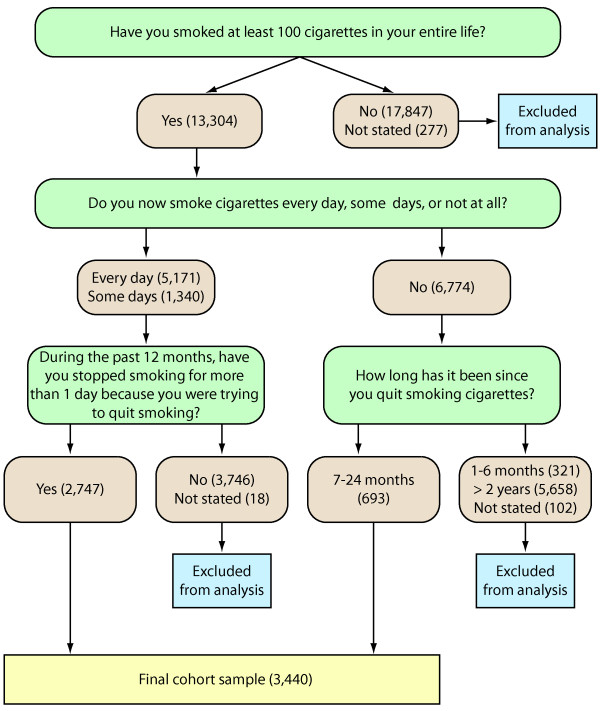
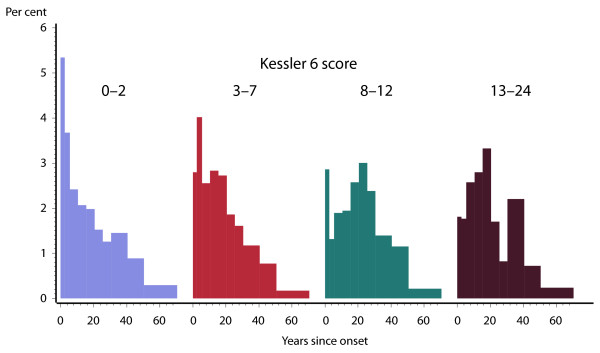
BACKGROUND: It is well established that smoking rates in people with common mental disorders such as anxiety or depressive disorders are much higher than in people without mental disorders. It is less clear whether people with these mental disorders want to quit smoking, attempt to quit smoking or successfully quit smoking at the same rate as people without such disorders. METHODS: We used data from the 2005 Cancer Control Supplement to the United States National Health Interview Survey to explore the relationship between psychological distress as measured using the K6 scale and smoking cessation, by comparing current smokers who had tried unsuccessfully to quit in the previous 12 months to people able to quit for at least 7 to 24 months prior to the survey. We also used data from the 2007 Australian National Survey of Mental Health and Wellbeing to examine the relationship between psychological distress (K6) scores and duration of mental illness. RESULTS: The majority of people with high K6 psychological distress scores also meet diagnostic criteria for mental disorders, and over 90% of these people had first onset of mental disorder more than 2 years prior to the survey. We found that people with high levels of non-specific psychological distress were more likely to be current smokers. They were as likely as people with low levels of psychological distress to report wanting to quit smoking, trying to quit smoking, and to have used smoking cessation aids. However, they were significantly less likely to have quit smoking. CONCLUSIONS: The strong association between K6 psychological distress scores and mental disorders of long duration suggests that the K6 measure is a useful proxy for ongoing mental health problems. As people with anxiety and depressive disorders make up a large proportion of adult smokers in the US, attention to the role of these disorders in smoking behaviours may be a useful area of further investigation for tobacco control.
Overview
The claims and statistics of this paper haven’t been checked yet.
Run the check — free, no account needed. It reads the open-access text and checks the sources it cites.
Integrity signals
Registry
Cites
Statistics
Figures
Verification
Claims the paper makes
The claims and statistics of this paper haven’t been checked yet.
Run the check — free, no account needed. It reads the open-access text and checks the sources it cites.
Claims other papers make about this one
Each is checked against this paper’s own text: does it say what the citing paper says it does?
The source backs part of the claim, not all of it — or backs it for a different population, condition or comparison.
In the citing paper
“Although people with mental health disorders share a similar desire to quit smoking compared to people without such disorders, their success rate is 25% lower [6, 7].”
From Can an Acceptance and Commitment Therapy-Based Smartphone App Help Individuals with Mental Health Disorders Quit Smoking? (2024) · cites this paper as [7]
Experimental — accuracy not yet measured
Self-check
Percentages, sums and reported differences re-computed from the paper’s own numbers.
The self-check needs the paper’s full text.
Citations
Cites
KESSLER, R. C., ANDREWS, G., COLPE, L. J., HIRIPI, E., MROCZEK, D. K., NORMAND, S.-L. T., WALTERS, E. E., & ZASLAVSKY, A. M. (2002) · Psychological Medicine · doi:10.1017/s0033291702006074 · Cited by 10,327
Kessler, R. C., & Üstün, T. B. (2004) · International Journal of Methods in Psychiatric Research · doi:10.1002/mpr.168 · Cited by 4,771
The Self-Medication Hypothesis of Substance Use Disorders: A Reconsideration and Recent Applications
Khantzian, E. J. (1997) · Harvard Review of Psychiatry · doi:10.3109/10673229709030550 · Cited by 3,242 · cited 1×
“These factors have lead to the self-medication or mood maintenance hypothesis - that smokers with mental illness choose to smoke because it is the easiest, most readily accessible way to control symptoms of mental illness, especially for those who are not receiving any prescribed form of treatment for their mental hea…”
BackgroundSmoking and Mental Illness: A Population-Based Prevalence Study
Lasser, K., Boyd, J. W., Woolhandler, S., Himmelstein, D. U., McCormick, D., & Bor, D. H. (2000) · JAMA · doi:10.1001/jama.284.20.2606 · Cited by 2,508
The Health Consequences of Smoking: A Report of the Surgeon General
Office on Smoking (2004) · Cited by 2,414
FURUKAWA, T. A., KESSLER, R. C., SLADE, T., & ANDREWS, G. (2003) · Psychological Medicine · doi:10.1017/s0033291702006700 · Cited by 1,570
Kessler, R. C., Green, J. G., Gruber, M. J., Sampson, N. A., Bromet, E., Cuitan, M., Furukawa, T. A., Gureje, O., Hinkov, H., Hu, C., et al. (2010) · International Journal of Methods in Psychiatric Research · doi:10.1002/mpr.310 · Cited by 1,434
Tanoue, L. T. (2007) · Yearbook of Medicine · doi:10.1016/s0084-3873(08)70176-7 · Cited by 1,413
Introduction to Variance Estimation.
King, B. F., & Wolter, K. M. (1987) · Journal of the American Statistical Association · doi:10.2307/2289497 · Cited by 1,377
de Leon, J., & Diaz, F. J. (2005) · Schizophrenia Research · doi:10.1016/j.schres.2005.02.010 · Cited by 1,276
Grant, B. F., Hasin, D. S., Chou, S. P., Stinson, F. S., & Dawson, D. A. (2004) · Archives of General Psychiatry · doi:10.1001/archpsyc.61.11.1107 · Cited by 1,262
Rao, J. N. K., & Scott, A. J. (1981) · Journal of the American Statistical Association · doi:10.1080/01621459.1981.10477633 · Cited by 1,009
Revised Prevalence Estimates of Mental Disorders in the United States
Narrow, W. E., Rae, D. S., Robins, L. N., & Regier, D. A. (2002) · Archives of General Psychiatry · doi:10.1001/archpsyc.59.2.115 · Cited by 807
The WHO World Mental Health Surveys: Global Perspectives on the Epidemiology of Mental Disorders
Kessler, R. C., & Üstün, T. B. (2008) · Cited by 747
Tobacco use and cessation in psychiatric disorders: National Institute of Mental Health report
Ziedonis, D., Hitsman, B., Beckham, J. C., Zvolensky, M., Adler, L. E., Audrain-McGovern, J., Breslau, N., Brown, R. A., George, T. P., Williams, J., et al. (2008) · Nicotine & Tobacco Research · doi:10.1080/14622200802443569 · Cited by 735
Predictors of smoking cessation in a cohort of adult smokers followed for five years
Hymowitz, N., Cummings, K., Hyland, A., Lynn, W., Pechacek, T., & Hartwell, T. (1997) · Tobacco Control · doi:10.1136/tc.6.suppl_2.s57 · Cited by 593
Limitations of Diagnostic Criteria and Assessment Instruments for Mental Disorders
Regier, D. A., Kaelber, C. T., Rae, D. S., Farmer, M. E., Knaüper, B., Kessler, R. C., & NORQUIST, G. S. (1998) · Archives of General Psychiatry · doi:10.1001/archpsyc.55.2.109 · Cited by 554
National Survey of Mental Health and Wellbeing: Summary of Results
(2008) · PsycEXTRA Dataset · doi:10.1037/e681292012-001 · Cited by 525
Smoking and mental illness: results from population surveys in Australia and the United States
Lawrence, D., Mitrou, F., & Zubrick, S. R. (2009) · BMC Public Health · doi:10.1186/1471-2458-9-285 · Cited by 517
Self-citationEffect of nicotine and nicotinic receptors on anxiety and depression
Picciotto, M. R., Brunzell, D. H., & Caldarone, B. J. (2002) · Neuroreport · doi:10.1097/00001756-200207020-00006 · Cited by 483
Nicotine Dependence and Major Depression: New Evidence From a Prospective Investigation
Breslau, N. (1993) · Archives of General Psychiatry · doi:10.1001/archpsyc.1993.01820130033006 · Cited by 443
Smoking and the Five‐Factor Model of personality
Terracciano, A., & Costa, P. T. (2004) · Addiction · doi:10.1111/j.1360-0443.2004.00687.x · Cited by 422 · cited 1×
“It has also been suggested that the strong association between anxiety, depression and smoking could be conceptualised in terms of neuroticism - the general personality trait that encompasses long-term and persistent susceptibility to anxiety and depressive symptoms [62,63].”
BackgroundPomerlau (1984) · doi:10.1016/0149-7634(84)90007-1 · Cited by 378
Addressing tobacco among individuals with a mental illness or an addiction
Williams, J. M., & Ziedonis, D. M. (2004) · Addictive Behaviors · doi:10.1016/j.addbeh.2004.03.009 · Cited by 356
McClave, A. K., McKnight-Eily, L. R., Davis, S. P., & Dube, S. R. (2010) · American Journal of Public Health · doi:10.2105/ajph.2009.188136 · Cited by 339
Factors Associated With Successful Smoking Cessation in the United States, 2000
Lee, C.-W., & Kahende, J. W. (2007) · American Journal of Public Health · doi:10.2105/ajph.2005.083527 · Cited by 313
Smoking cessation and smoking patterns in the general population: a 1‐year follow‐up
West, R., McEwen, A., Bolling, K., & Owen, L. (2001) · Addiction · doi:10.1046/j.1360-0443.2001.96689110.x · Cited by 304
Leonard, S. S., Adler, L. E., Benhammou, K., Berger, R., Breese, C. R., Drebing, C. J., Gault, J., Lee, M. J., Logel, J., D, A. O. M., et al. (2001) · Pharmacology Biochemistry and Behavior · doi:10.1016/s0091-3057(01)00677-3 · Cited by 298
Early smoking initiation and nicotine dependence in a cohort of young adults
Breslau, N., Fenn, N., & Peterson, E. L. (1993) · Drug and Alcohol Dependence · doi:10.1016/0376-8716(93)90054-t · Cited by 285
Age of smoking initiation: implications for quitting.
Chen, J., & Millar, W. J. (1998) · PubMed · Cited by 273
Marketing to America's youth: evidence from corporate documents
Cummings, K. M., Morley, C. P., Horan, J. K., Steger, C., & LEAVELL, N.-R. (2002) · Tobacco Control · doi:10.1136/tc.11.suppl_1.i5 · Cited by 261
Smoking cessation in severe mental illness: what works?
Banham, L., & Gilbody, S. (2010) · Addiction · doi:10.1111/j.1360-0443.2010.02946.x · Cited by 243
Hardening and the hard-core smoker: concepts, evidence, and implications
Warner, K. E., & Burns, D. (2003) · Nicotine & Tobacco Research · doi:10.1080/1462220021000060428 · Cited by 221
Smoking cessation factors among African Americans and whites. COMMIT Research Group.
Royce, J., Hymowitz, N., Corbett, K., Hartwell, T., & Orlandi, M. (1993) · American Journal of Public Health · doi:10.2105/ajph.83.2.220 · Cited by 213
Lawlor, D. A., Frankel, S., Shaw, M., Ebrahim, S. B. J., & Smith, G. D. (2003) · American Journal of Public Health · doi:10.2105/ajph.93.2.266 · Cited by 181
Hardening and the hard-core smoker: concepts, evidence, and implications
Warner, K. E., & Warner, K. E. (2003) · Nicotine & Tobacco Research · doi:10.1080/14622200307269 · Cited by 179
Pomerleau, O. F. (1995) · Behavior Genetics · doi:10.1007/bf02196925 · Cited by 177
Rao, J. N. K., & Scott, A. J. (1981) · Journal of the American Statistical Association · doi:10.2307/2287815 · Cited by 150
Introduction to Variance Estimation
Wolter, K. M. (2007) · Springer eBooks · doi:10.1007/978-0-387-35099-8 · Cited by 146
Marketing to the marginalised: tobacco industry targeting of the homeless and mentally ill
Apollonio, D. E., & Malone, R. E. (2005) · Tobacco Control · doi:10.1136/tc.2005.011890 · Cited by 142
Using Tobacco-Industry Marketing Research to Design More Effective Tobacco-Control Campaigns
Ling, P. M. (2002) · JAMA · doi:10.1001/jama.287.22.2983 · Cited by 141
Baseline factors associated with smoking cessation and relapse
Hymowitz, N., Sexton, M. J., Ockene, J. K., & Grandits, G. A. (1991) · Preventive Medicine · doi:10.1016/0091-7435(91)90057-b · Cited by 140
Emotions for sale: cigarette advertising and women’s psychosocial needs
Anderson, S. J., Glantz, S., & Ling, P. (2005) · Tobacco Control · doi:10.1136/tc.2004.009076 · Cited by 138
Interaction between the serotonin transporter gene and neuroticism in cigarette smoking behavior
Hu, S., Brody, C., Fisher, C., Gunzerath, L., Nelson, M. L., Sabol, S. Z., Sirota, L. A., Marcus, S. E., Greenberg, B. D., Murphy, D. L., et al. (2000) · Molecular Psychiatry · doi:10.1038/sj.mp.4000690 · Cited by 137
Tobacco Smoking and Bipolar Disorder
González-Pinto, A. M., Gutiérrez, M., Ezcurra, J., Aizpuru, F., Mosquera, F., López‐Mahía, P., & de León, J. (1998) · The Journal of Clinical Psychiatry · doi:10.4088/jcp.v59n0503 · Cited by 133
Smoking and mental health: results from a community survey
Jorm, A. F., Rodgers, B., Jacomb, P. A., Christensen, H. M., Henderson, S., & Korten, A. E. (1999) · The Medical Journal of Australia · doi:10.5694/j.1326-5377.1999.tb126887.x · Cited by 124
Who will relapse? Symptoms of nicotine dependence predict long-term relapse after smoking cessation.
Killen, J. D., Fortmann, S. P., KRAEMER, H. C., Varady, A. N., & al, E. (1992) · Journal of Consulting and Clinical Psychology · doi:10.1037//0022-006x.60.5.797 · Cited by 123
Hagman, B. T., Delnevo, C. D., Hrywna, M., & Williams, J. M. (2008) · Addictive Behaviors · doi:10.1016/j.addbeh.2007.11.007 · Cited by 121
Nicotine as a psychoactive drug: anxiety and pain reduction.
Pomerleau, O. F. (1986) · PubMed · Cited by 116
Tobacco control policy in developed countries: Yesterday, today, and tomorrow
Warner, K. E., & Méndez, D. (2010) · Nicotine & Tobacco Research · doi:10.1093/ntr/ntq125 · Cited by 98
Cook, B. L., Wayne, G. F., Keithly, L., & Connolly, G. N. (2003) · Addiction · doi:10.1046/j.1360-0443.2003.00563.x · Cited by 88
Who will relapse? Symptoms of nicotine dependence predict long-term relapse after smoking cessation.
Killen, J. D., Fortmann, S. P., Kraemer, H. C., et al. (1992) · Journal of Consulting and Clinical Psychology · doi:10.1037/0022-006x.60.5.797 · Cited by 88
Cigarette Smoking and Panic: The Role of Neuroticism
Goodwin, R. D., & Hamilton, S. P. (2002) · American Journal of Psychiatry · doi:10.1176/appi.ajp.159.7.1208 · Cited by 85
Citation Bias in Reported Smoking Prevalence in People with Schizophrenia
Chapman, S., Ragg, M., & McGeechan, K. (2009) · Australian & New Zealand Journal of Psychiatry · doi:10.1080/00048670802653372 · Cited by 83
Lawrence, D. M., Considine, J., Mitrou, F., & Zubrick, S. R. (2010) · PubMed · doi:10.3109/00048670903571580 · Cited by 68
Self-citationCharacteristics of Smokers Who Attempt to Quit and of Those Who Recently Succeeded
Derby, C. A., Lasater, T. M., Vass, K., Gonzalez, S., & Carleton, R. A. (1994) · American Journal of Preventive Medicine · doi:10.1016/s0749-3797(18)30560-9 · Cited by 61
Dube, S. R., Caraballo, R. S., Dhingra, S. S., Pearson, W. S., Regan, A. K., Strine, T. W., Berry, J. T., & Mokdad, A. H. (2009) · International Journal of Public Health · doi:10.1007/s00038-009-0009-y · Cited by 51
Lawrence, D. M., Mitrou, F., Sawyer, M. G., & Zubrick, S. R. (2010) · Australian & New Zealand Journal of Psychiatry · doi:10.3109/00048674.2010.482921 · Cited by 45
Self-citationFalling prevalence of smoking: how low can we go?: Table 1
Chapman, S. (2007) · Tobacco Control · doi:10.1136/tc.2007.021220 · Cited by 37
(2013) · PsycEXTRA Dataset · doi:10.1037/e566382009-001 · Cited by 31
Smoking behaviour and socio-economic status: a cohort analysis, 1974-1998
Evandrou, M., & Falkingham, J. (2002) · ePrints Soton (University of Southampton) · Cited by 30
Adolescent mental health predicts quitting smoking in adulthood: a longitudinal analysis
Hemmingsson, T., Kriebel, D., Tynelius, P., Rasmussen, F. E., & Lundberg, I. E. (2007) · European Journal of Public Health · doi:10.1093/eurpub/ckm079 · Cited by 18
Smoking and psychiatric disorders: Have subthreshold disorders been overlooked?
Landolt, K., Ajdacic‐Gross, V., Angst, J., Merikangas, K. R., Gamma, A., Gutzwiller, F., & Wulf Rössler, A. (2010) · Nicotine & Tobacco Research · doi:10.1093/ntr/ntq023 · Cited by 11
Chapman, S. (2009) · Australian & New Zealand Journal of Psychiatry · doi:10.1080/00048670902873748 · Cited by 6
Common Mental Disorders: Missed Opportunity for Smoking Prevention and Cessation
Lawrence, D., & Mitrou, F. (2010) · Australian & New Zealand Journal of Psychiatry · doi:10.3109/00048670903393712 · Cited by 3
Self-citation
Research works printed but not linked: 4
- National Preventative Health Taskforce: Technical Report No. 2. Tobacco control in Australia: making smoking history. 2008, Canberra, Commonwealth of Australia
- Australian Bureau of Statistics: National Survey of Mental Health and Wellbeing: Users' Guide. 2009, ABS Cat 4327.0. Canberra: Australian Bureau of Statistics
- SAS Institute Inc: SAS 9.2 Help and Documentation. 2002, Cary, NC: SAS Institute Inc
- New Freedom Commission on Mental Health: Achieving the promise: Transforming mental health care in America. Final report. 2003, Rockville, MD: Department of Health and Human Services. DHHS Pub. No. SMA-03-3832
Cited by
Sorted by citations
Cook, B. L., Wayne, G. F., Kafali, E. N., Liu, Z., Shu, C., & Flores, M. (2014) · JAMA · doi:10.1001/jama.2013.284985 · Cited by 519
Kotz, D., Brown, J., & West, R. (2014) · Addiction · doi:10.1111/add.12429 · Cited by 283
Bellis, M. A., Hardcastle, K., Ford, K., Hughes, K. E., Ashton, K., Quigg, Z., & Butler, N. (2017) · BMC Psychiatry · doi:10.1186/s12888-017-1260-z · Cited by 225
Stress is a principal factor that promotes tobacco use in females
Torres, O. V., & O'Dell, L. E. (2016) · Progress in Neuro-Psychopharmacology and Biological Psychiatry · doi:10.1016/j.pnpbp.2015.04.005 · Cited by 164
Smoking and the Reduced Life Expectancy of Individuals With Serious Mental Illness
Tam, J., Warner, K. E., & Meza, R. (2016) · American Journal of Preventive Medicine · doi:10.1016/j.amepre.2016.06.007 · Cited by 156
Metadata
- Authors
- Lawrence, D., Mitrou, F., & Zubrick, S. R.
- Affiliations
- The Kids Research Institute Australia (AU)
- Corresponding author
- Lawrence, David
- Venue
- BMC Public Health
- Published
- 2011-04-22
- Volume
- 11
- Issue
- 1
- Pages
- 256-256
- ISSN
- 1471-2458 (ISSN-L)
- PMC
- PMC3107796
- OpenAlex
- W2110603196
- Cited by
- 122
- References
- 63
- Citations by year
- 2026: 4 · 2025: 4 · 2024: 4 · 2023: 2 · 2022: 8 · 2021: 9 · 2020: 8 · 2019: 4 · 2018: 10 · 2017: 7 · 2016: 15 · 2015: 10 · 2014: 14 · 2013: 12 · 2012: 6
- FWCI
- 8.07
- Type
- journal article
- Language
- en
- Open access
- gold
- doi.org
- Licence
- Locations
- BMC Public Health (publishedVersion, cc-by)
- PubMed Central (publishedVersion, cc-by)
- UWA Profiles and Research Repository (UWA) (publishedVersion, other-oa)
- PubMed (publishedVersion)
- DOAJ (DOAJ: Directory of Open Access Journals) (submittedVersion)
- eSpace (Curtin University) (submittedVersion)
- Funders
- Australian Government
- Centers for Disease Control and Prevention
- Topics
- Health Sciences › Medicine › Public Health, Environmental and Occupational Health › Smoking Behavior and Cessation
- Health Sciences › Medicine › Psychiatry and Mental health › Mental Health Treatment and Access
- Health Sciences › Medicine › Epidemiology › Substance Abuse Treatment and Outcomes
- Keywords
- psychological distress, smoking cessation, smoking status, mental illness, anxiety disorders, depressive disorders, tobacco control, smoking cessation aids
- MeSH terms
- Adolescent, Adult, Aged, Female, Health Surveys, Humans, Male, Middle Aged, Smoking, Stress, Psychological, United States, Smoking Cessation, Young Adult
About these checks
Registry, retraction, Cites and statistics results are computed, not judged, with one exception: a printed reference that no index lists is read once by a model before it counts as a citation error. Claims are extracted by a model and kept only when their quote appears verbatim in the text; each cited source is then checked, with a model’s help, for whether it says what the claim relies on. Those verdicts can be wrong — read the claim’s quote and the cited source before relying on one.
Statistics and arithmetic are recomputed, not judged.
Confidence bands are shown only for fields calibrated on our annotated test set. None is calibrated yet, so no band is shown.
What counts as a claim ›How we measure confidence ›How we check this ›
Are you an author, or do you see a problem with this page? Request a review
