

Positive psychology interventions: a meta-analysis of randomized controlled studies
Open accessThe DOI matches its Crossref record; 109 of the 115 references it cites were found in a registry or an index; 10 of the 22 sources its claims cite were checked for support.
Abstract
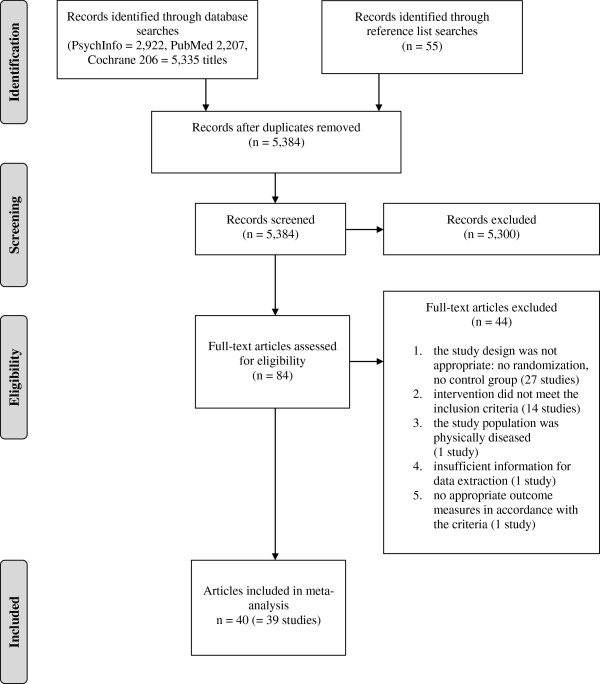
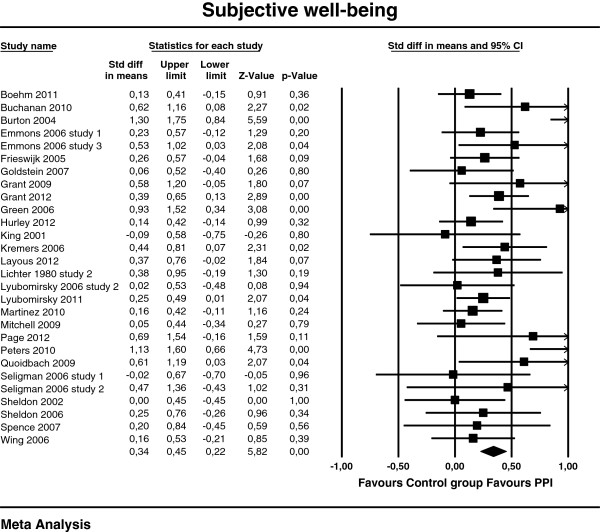
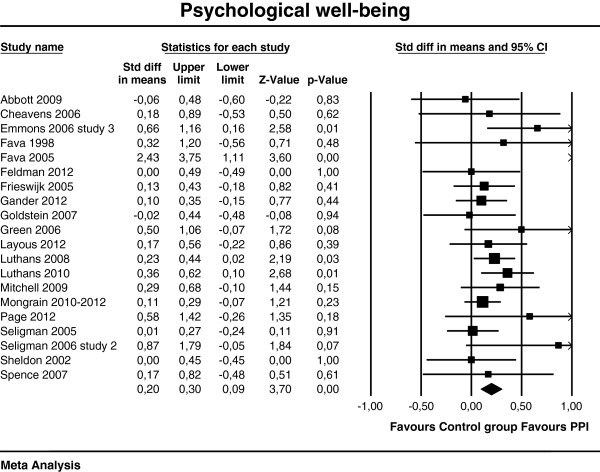
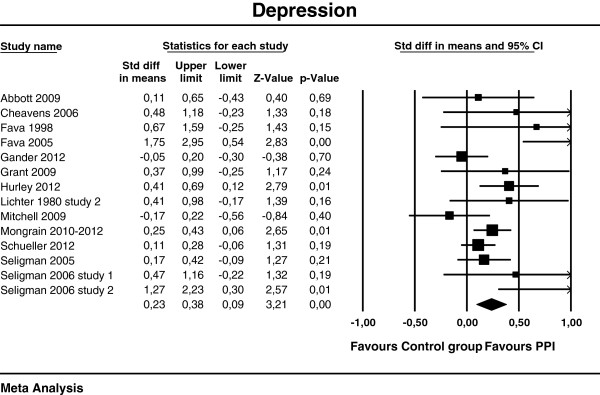
BACKGROUND: The use of positive psychological interventions may be considered as a complementary strategy in mental health promotion and treatment. The present article constitutes a meta-analytical study of the effectiveness of positive psychology interventions for the general public and for individuals with specific psychosocial problems. METHODS: We conducted a systematic literature search using PubMed, PsychInfo, the Cochrane register, and manual searches. Forty articles, describing 39 studies, totaling 6,139 participants, met the criteria for inclusion. The outcome measures used were subjective well-being, psychological well-being and depression. Positive psychology interventions included self-help interventions, group training and individual therapy. RESULTS: The standardized mean difference was 0.34 for subjective well-being, 0.20 for psychological well-being and 0.23 for depression indicating small effects for positive psychology interventions. At follow-up from three to six months, effect sizes are small, but still significant for subjective well-being and psychological well-being, indicating that effects are fairly sustainable. Heterogeneity was rather high, due to the wide diversity of the studies included. Several variables moderated the impact on depression: Interventions were more effective if they were of longer duration, if recruitment was conducted via referral or hospital, if interventions were delivered to people with certain psychosocial problems and on an individual basis, and if the study design was of low quality. Moreover, indications for publication bias were found, and the quality of the studies varied considerably. CONCLUSIONS: The results of this meta-analysis show that positive psychology interventions can be effective in the enhancement of subjective well-being and psychological well-being, as well as in helping to reduce depressive symptoms. Additional high-quality peer-reviewed studies in diverse (clinical) populations are needed to strengthen the evidence-base for positive psychology interventions.
Overview
CoChat Summary
## TL;DR
This meta-analysis of 39 randomized studies (40 articles; 6,139 participants) found that positive psychology interventions had small but significant benefits for subjective well-being, psychological well-being, and depressive symptoms. Effects were somewhat sustained at 3–6 months for well-being outcomes, but study heterogeneity and publication bias were notable.
## Key findings
- Across all included studies, the pooled standardized mean differences were 0.34 for subjective well-being, 0.20 for psychological well-being, and 0.23 for depression, which the authors describe as small effects.
- At follow-up of 3–6 months (10 studies), effects remained significant for subjective well-being (d = 0.22, 95% CI [0.05, 0.38], p<.01) and psychological well-being (d = 0.16, 95% CI [0.02, 0.30], p=.03), but not for depression (d = 0.17, 95% CI [-0.06, 0.39], p=.15).
- Heterogeneity was moderate for subjective well-being (I² = 49.5%) and depression (I² = 47.0%), and low for psychological well-being (I² = 29.0%); effect sizes ranged from below 0 to as high as 2.4.
- For depression, larger effects were associated with longer duration, individual delivery, referral/hospital recruitment, inclusion of people with specific psychosocial problems, and lower study quality.
## Methods
- Systematic review and meta-analysis of randomized controlled studies of positive psychology interventions, using PubMed, PsychInfo, the Cochrane Central Register of Controlled Trials, manual searches, and reference checking, covering 1998 to November 2012.
- Included 40 articles describing 39 studies with 6,139 participants; intervention formats included self-help, group training, and individual therapy.
- Main analysis used Cohen’s d under a random-effects model for three outcomes: subjective well-being, psychological well-being, and depression, with subgroup analyses and checks for heterogeneity and publication bias.
## Limitations
- The paper states that study quality was not high: no study met all quality criteria, randomization was often unclear, intention-to-treat analysis was rare (3/39 studies), and none reported an adequate power analysis.
- The authors note that heterogeneity was rather high because the included studies were diverse, and that the follow-up findings should be treated with caution because of the small number of studies and high attrition rates at follow-up.
- The text makes evident that publication bias is a limitation: funnel plots were asymmetric, fail-safe numbers were below the required thresholds, and Egger’s test suggested bias for psychological well-being and depression.
Model-written summary. Check it against the paper before relying on it.
Integrity signals
Registry
Cites
Statistics
Figures
Verification
Claims the paper makes
8 Valid · 2 Not valid · 9 Not checked · 90 Own results and interpretations
The cited sources that could be checked couldn’t confirm or dispute this claim.
In the paper
“First, the meta-analysis included both randomized studies and quasi-experimental studies.”
§ Positive psychology interventions: a meta-analysis of randomized controlled studies > Background
What the sources say
- Could not verifycites Sin and Lyubomirsky (2009) matched to “Enhancing well-being and alleviating depressive symptoms with positive psychology interventions: a practice-friendly meta-analysis” (2009) sourceExperimental — accuracy not yet measured
The Literature Search section requires included studies to have a comparison group, and Data Recorded distinguishes self-selected from non-self-selected participants. Neither passage establishes whether the meta-analysis included both randomized and quasi-experimental studies; searches for those design terms and for random assignment found no decisive passage. Page numbers were unavailable in our copy. (LLM, conf=0.72)
plain- Asserted: passes — The authors put it forward as true.
- Checkable: passes — It can be checked against evidence.
- Load-bearing: unclear — It is unclear whether the paper’s conclusions depend on it.
- Based: passes — The paper gives a reason why it holds.
- Could not verify
The cited sources support only part of this claim — read each source’s verdict below.
In the paper
“Their results show that PPIs can indeed be effective in enhancing well-being (r = 0.29, standardized mean difference Cohen’s d = 0.61) and help to reduce depressive symptom levels in clinical populations (r = 0.31, Cohen’s d = 0.65).”
§ Positive psychology interventions: a meta-analysis of randomized controlled studies > Background
What the sources say
- Partly supportedcites Sin and Lyubomirsky (2009) matched to “Enhancing well-being and alleviating depressive symptoms with positive psychology interventions: a practice-friendly meta-analysis” (2009) sourceExperimental — accuracy not yet measured
The Depression section reports that PPIs reduced depressive symptoms across 25 studies, with a mean effect of r = .31. The Participant Moderators section distinguishes depressed from nondepressed participants, so .31 is not an estimate specifically for clinical populations. The paper reports the effect as r, not as Cohen’s d = .65. (LLM, conf=0.87)
plainstates a cause- Asserted: passes — The authors put it forward as true.
- Checkable: passes — It can be checked against evidence.
- Load-bearing: unclear — It is unclear whether the paper’s conclusions depend on it.
- Based: passes — The paper gives a reason why it holds.
- Partly supported
Every source the paper cites for this claim was checked and supports it.
In the paper
“Their results show that PPIs can indeed be effective in enhancing well-being (r = 0.29, standardized mean difference Cohen’s d = 0.61) and help to reduce depressive symptom levels in clinical populations (r = 0.31, Cohen’s d = 0.65).”
§ Positive psychology interventions: a meta-analysis of randomized controlled studies > Background
What the sources say
- Supportedcites Sin and Lyubomirsky (2009) matched to “Enhancing well-being and alleviating depressive symptoms with positive psychology interventions: a practice-friendly meta-analysis” (2009) source
The Well-Being section reports that PPIs significantly improved well-being across 49 studies, with a mean r of .29. The paper reports r rather than Cohen’s d; converting .29 to d gives approximately .61, so the cited figures are consistent. (LLM, conf=0.90)
plainstates a cause- Asserted: passes — The authors put it forward as true.
- Checkable: passes — It can be checked against evidence.
- Load-bearing: passes — The paper’s conclusions depend on it.
- Based: passes — The paper gives a reason why it holds.
- Supported
Every source the paper cites for this claim was checked and supports it.
In the paper
“Second, study quality was not addressed as a potential effect moderator.”
§ Positive psychology interventions: a meta-analysis of randomized controlled studies > Background
What the sources say
- Supportedcites Sin and Lyubomirsky (2009) matched to “Enhancing well-being and alleviating depressive symptoms with positive psychology interventions: a practice-friendly meta-analysis” (2009) source
The Data Recorded section lists the variables coded for moderator analysis: participant characteristics, intervention format and duration, and comparison-group type. It does not include study quality, and the Methodological Moderators section discusses those methodological variables rather than study quality. Page numbers are unavailable in our copy. (LLM, conf=0.88)
plain- Asserted: passes — The authors put it forward as true.
- Checkable: passes — It can be checked against evidence.
- Load-bearing: unclear — It is unclear whether the paper’s conclusions depend on it.
- Based: passes — The paper gives a reason why it holds.
- Supported
Every source the paper cites for this claim was checked and supports it.
In the paper
“Remarkably, effect sizes in the current meta-analysis are around 0.3 points lower than the effect sizes in the meta-analysis by Sin and Lyubomirsky (2009) [37].”
§ Positive psychology interventions: a meta-analysis of randomized controlled studies > Discussion > Main findings
What the sources say
- Supportedcites Sin and Lyubomirsky (2009) [37] matched to “Enhancing well-being and alleviating depressive symptoms with positive psychology interventions: a practice-friendly meta-analysis” (2009) source
The Well-Being and Depression results report mean effect sizes of r = .29 and r = .31, respectively, establishing the values attributed to Sin and Lyubomirsky’s meta-analysis. The difference from the current meta-analysis is the citing authors’ comparison, not a finding this source could report. (LLM, conf=0.88)
plain- Asserted: passes — The authors put it forward as true.
- Checkable: passes — It can be checked against evidence.
- Load-bearing: passes — The paper’s conclusions depend on it.
- Based: passes — The paper gives a reason why it holds.
- Supported
70 more claims · 1 with their cited sources checked
Create a free account to see all 109 claims and to verify the 1 reference still open.
- Probably not a substantial claim. 14
- It may state two separate claims as one. 23
Claims other papers make about this one
Each is checked against this paper’s own text: does it say what the citing paper says it does?
The source backs part of the claim, not all of it — or backs it for a different population, condition or comparison.
In the citing paper
“In contrast to complex multicomponent health behavior or psychology interventions, PP exercises are simple, can be delivered remotely (e.g., by phone), and require minimal training of providers [34, 41, 42].”
From Positive Psychological Interventions for Patients with Type 2 Diabetes: Rationale, Theoretical Model, and Intervention Development (2015) · cites this paper as [41]
Experimental — accuracy not yet measuredThe source backs part of the claim, not all of it — or backs it for a different population, condition or comparison.
In the citing paper
“Studies supporting the efficacy of positive activity interventions (PAIs) have been primarily conducted in unselected (non-clinical) community samples and examined single positive activities in isolation (for a meta-analysis, see66, 67).”
From Upregulating the positive affect system in anxiety and depression: Outcomes of a positive activity intervention: Taylor et al. (2017) · cites this paper as [67]
Experimental — accuracy not yet measuredThe source backs part of the claim, not all of it — or backs it for a different population, condition or comparison.
In the citing paper
“Two meta-analyses of PPIs for depression and well-being found that these interventions have small to moderate effects in enhancing well-being and decreasing depressive symptoms and that effects are stronger for individual vs. group formats [30, 31].”
From Skills to Enhance Positivity in adolescents at risk for suicide: Protocol for a randomized controlled trial (2023) · cites this paper as [31]
Experimental — accuracy not yet measuredThe source backs part of the claim, not all of it — or backs it for a different population, condition or comparison.
In the citing paper
“Bolier and Abello (Bolier et al., 2013) reviewed digital PPIs and found that the majority of the included studies showed improvement in well-being or reduction of distress in the intervention group, compared to the control group.”
From Strength Back – A qualitative study on the co-creation of a positive psychology digital health intervention for spinal surgery patients (2023) · cites this paper as Bolier et al., 2013
Experimental — accuracy not yet measuredThe source backs part of the claim, not all of it — or backs it for a different population, condition or comparison.
In the citing paper
“PPIs may support patients to notice and savour positive experiences (Bolier et al., 2013). This may strengthen their commitment to value-based action.”
From Strength Back – A qualitative study on the co-creation of a positive psychology digital health intervention for spinal surgery patients (2023) · cites this paper as Bolier et al., 2013
Experimental — accuracy not yet measured
24 more claims about this paper
Create a free account to see every claim other papers make about this one.
Statistics recomputed
Every reported test result, recomputed from its test statistic and degrees of freedom. A result shows as not adding up only once an independent check has confirmed it.
- Consistentz = 6.43reported p < .01 · recomputed p < .001
“Z=6.43, p < .01”
- Consistentz = 4.18reported p < .01 · recomputed p < .001
“Z=4.18, p < .01”
- Consistentz = 3.33reported p < .01 · recomputed p < .001
“Z=3.33, p < .01”
Self-check
Percentages, sums and reported differences re-computed from the paper’s own numbers.
Self-check results appear here once an independent check has confirmed them.
Citations
Cites
Preferred Reporting Items for Systematic Reviews and Meta-Analyses: the PRISMA statement
Moher, D., Liberati, A., Tetzlaff, J., Altman, D. G., & for the PRISMA Group (2009) · BMJ · doi:10.1136/bmj.b2535 · Cited by 83,823
Preferred Reporting Items for Systematic Reviews and Meta-Analyses: The PRISMA Statement
Moher, D., Liberati, A., Tetzlaff, J., Altman, D. G., & The PRISMA Group (2009) · PLoS Medicine · doi:10.1371/journal.pmed.1000097 · Cited by 64,042 · cited 1×
“For the reporting of the results of this meta-analysis, we applied Preferred Reporting Items for Systematic Reviews and Meta-Analyses (PRISMA) guidelines [50].”
Measuring inconsistency in meta-analyses
Higgins, J. P. T., Thompson, S. G., Deeks, J. J., & Altman, D. G. (2003) · BMJ · doi:10.1136/bmj.327.7414.557 · Cited by 63,139 · cited 1×
“A value of 0% indicates an absence of dispersion, and larger values show increasing levels of heterogeneity where 25% can be considered as low, 50% as moderate and 75% as a high level of heterogeneity [46].”
Preferred reporting items for systematic reviews and meta-analyses: the PRISMA Statement.
(2009) · PubMed Central · Cited by 44,859
Cochrane Handbook for Systematic Reviews of Interventions: Cochrane Book Series
(2008) · doi:10.1002/9780470712184 · Cited by 25,048
Preferred Reporting Items for Systematic Reviews and Meta-Analyses: The PRISMA Statement
Moher, D., Liberati, A., Tetzlaff, J., & Altman, D. G. (2009) · Journal of Clinical Epidemiology · doi:10.1016/j.jclinepi.2009.06.005 · Cited by 19,575
Happiness is everything, or is it? Explorations on the meaning of psychological well-being.
Ryff, C. D. (1989) · Journal of Personality and Social Psychology · doi:10.1037/0022-3514.57.6.1069 · Cited by 14,847 · cited 1×
“Psychological well-being focuses on the optimal functioning of the individual and includes concepts such as mastery, hope and purpose in life [13,14].”
Borenstein, M., Hedges, L. V., Higgins, J. P. T., & Rothstein, H. R. (2009) · doi:10.1002/9780470743386 · Cited by 14,225
Duval, S., & Tweedie, R. (2000) · Biometrics · doi:10.1111/j.0006-341x.2000.00455.x · Cited by 14,099 · cited 1×
“If asymmetry is found in the funnel plot, the Trim and Fill method adjusts the pooled effect size for the outcomes of missing studies [49].”
Subjective well-being: Three decades of progress.
Diener, E., Suh, E. M., Lucas, R. E., & Smith, H. L. (1999) · Psychological Bulletin · doi:10.1037/0033-2909.125.2.276 · Cited by 12,910 · cited 2×
“Although the basic concepts of well-being, happiness and human flourishing have been studied for some decades [12,25-27], there was a lack of evidence-based interventions [24].”
Research works printed but not linked: 3
- Rupke SJ Blecke D Renfrow M Cognitive Therapy for Depression Am Fam Physician 2006 73 83 86 16417069
- Veenhoven R Gezond geluk: Effecten van geluk op gezondheid en wat dat kan betekenen voor de preventieve gezondheidszorg (Healthy happiness: effect of happiness on health and what this could mean for preventive public health) 2006 Rotterdam: Erasmus Universiteit
- Lamers S Bolier L Westerhof GJ Smit F Bohlmeijer E The impact of emotional well-being on long-term recovery and survival in physical illness: a meta-analysis J Behav Med 2012 5 538 547 21918889 PMC3439612 · DOI · Paper page
Cited by
Items 401–500 of 2,037
The Hummingbird Project: A Positive Psychology Intervention for Secondary School Students
Platt, I. A., Kannangara, C. S., Tytherleigh, M. Y., & Carson, J. F. (2020) · Frontiers in Psychology · doi:10.3389/fpsyg.2020.02012 · Cited by 49
Hoeppner, B. B., Schick, M. R., Carlon, H. A., & Hoeppner, S. S. (2019) · Journal of Substance Abuse Treatment · doi:10.1016/j.jsat.2019.01.006 · Cited by 33
Rooney, R. M., Morrison, D., Hassan, S., Kane, R., Roberts, C., & Mancini, V. (2013) · Frontiers in Psychology · doi:10.3389/fpsyg.2013.00988 · Cited by 34
Mediterranean Lifestyle to Promote Physical, Mental, and Environmental Health: The Case of Chile
Echeverría, G., Tiboni-Oschilewski, O., Berkowitz, L., Pinto, V., Samith, B., von Schultzendorff, A., Nuria Pedrals, G., Marcela Bitran, C., Ruini, C., Ryff, C. D., et al. (2020) · International Journal of Environmental Research and Public Health · doi:10.3390/ijerph17228482 · Cited by 39
Donaldson, S. I., Lee, J. Y., & Donaldson, S. I. (2019) · Springer eBooks · doi:10.1007/978-3-030-20583-6_6 · Cited by 44
“…now exists a robust body of literature, including primary intervention studies, review papers, along with a recent meta-analysis (Avey et al., 2011; Bolier et al., 2013; Donaldson et al., (under review); Gilbert, Foulk, & Bono, 2018;Knight, Patterson,&Dawson, 2017;Rudolph,Katz, Lavingne,&Zacher,…”
BackgroundThe Effects of Positive Psychological Interventions on Medical Patients’ Anxiety: A Meta-analysis
Brown, L., Ospina, J. P., Celano, C. M., & Huffman, J. C. (2019) · Psychosomatic Medicine · doi:10.1097/psy.0000000000000722 · Cited by 38
“Search terms included “positive psychol*,” “happiness,” “happy,” and “optimism,” because these terms were used in a similar meta-analysis of positive psychology interventions for depression and well-being outcomes (16).”
BackgroundCelano, C. M., Freedman, M. E., Harnedy, L. E., Park, E. R., Januzzi, J. L., Healy, B. C., & Huffman, J. C. (2020) · Journal of Psychosomatic Research · doi:10.1016/j.jpsychores.2020.110285 · Cited by 39
“Positive psychology (PP) interventions, which involve the cultivation of positive psychological constructs through systematic exercises [15], consistently improve well-being [16,17], and PP-based interventions increase physical activity and medication adherence in medical populations [18,19].”
BackgroundSmith, M., Thompson, A., Hall, L. J., Allen, S. F., & Wetherell, M. A. (2018) · British Journal of Health Psychology · doi:10.1111/bjhp.12320 · Cited by 40
“The feasibility and efficacy of these types of interventions have been reliably demonstrated, with extant evidence suggesting that positive psychology interventions can enhance well-being and attenuate depression symptoms (Bolier et al., 2013; Sin & Lyubomirsky, 2009).”
BackgroundTagalidou, N., Distlberger, E., Loderer, V., & Laireiter, A. (2019) · BMC Psychiatry · doi:10.1186/s12888-019-2075-x · Cited by 44
“In addition to the already established interventions [7, 9], a new and promising way to promote positive emotions is humor.”
Backgroundvan Agteren, J., Iasiello, M., Ali, K., Fassnacht, D. B., Furber, G., Woodyatt, L., Howard, A., & Kyrios, M. (2021) · Frontiers in Psychology · doi:10.3389/fpsyg.2021.648678 · Cited by 33
Resilience as Moderator Between Workplace Humour and Well-Being, a Positive Psychology Perspective
Oosthuizen, R. M. (2021) · Springer eBooks · doi:10.1007/978-3-030-78280-1_14 · Cited by 44
Happy thoughts: Enhancing well-being in the classroom with a positive events diary
Carter, P. J., Hore, B., McGarrigle, L., Edwards, M., Doeg, G., Oakes, R., Campion, A., Carey, G., Vickers, K., & Parkinson, J. A. (2016) · The Journal of Positive Psychology · doi:10.1080/17439760.2016.1245770 · Cited by 49
“For example, two recent meta-analyses examining the effects of PPIs in adults report reliable significant effects, with increases in happiness ranging from small to moderate effect size, and decreases in depression from small to large (Bolier et al., 2013; Sin & Lyubomirsky, 2009).”
BackgroundAssociation Between Character Strengths and Caregiver Burden: Hope as a Mediator
García-Castro, F. J., Alba, A. R. O., & Blanca, M. J. (2019) · Journal of Happiness Studies · doi:10.1007/s10902-019-00138-2 · Cited by 41
Benefits of Well‐Being Training in Healthy Older Adults
Cantarella, A., Borella, E., Marigo, C., & Beni, R. D. (2017) · Applied Psychology Health and Well-Being · doi:10.1111/aphw.12091 · Cited by 37
“Interventions with the aim to improve these aspects—also known as “Positive Psychological Interventions” (PPIs; Sin & Lyubomirsky, 2009)—have shown encouraging results in both clinical and educational settings (Bolier et al., 2013).”
BackgroundDennis, A., Ogden, J., & Hepper, E. G. (2020) · The Journal of Positive Psychology · doi:10.1080/17439760.2020.1858335 · Cited by 37
“Additionally, positive psychology interventions have larger effects when run over a longer period of time (Bolier et al., 2013) therefore the effec-”
BackgroundStolpner, I., Heil, J., Riedel, F., Wallwiener, M., Schäfgen, B., Feißt, M., Golatta, M., & Hennigs, A. (2021) · Annals of Surgical Oncology · doi:10.1245/s10434-021-10377-4 · Cited by 43
Zhang, X., Zhang, B.-S., & Wang, M. (2020) · BMC Medical Education · doi:10.1186/s12909-020-02232-z · Cited by 38
Chaar, D., Shin, J. Y., Mazzoli, A., Vue, R., Kedroske, J., Chappell, G., Hanauer, D. A., Barton, D. L., Hassett, A. L., & Choi, S. W. (2019) · JMIR mhealth and uhealth · doi:10.2196/15775 · Cited by 36
“Studies have shown that positive psychology interventions enhance subjective and psychological well-being and help reduce depressive symptoms in a cost-effective and targeted manner, particularly when combined with other evidence-based interventions [29].”
Bennett, J. B., Weaver, J., Senft, M., & Neeper, M. A. (2017) · Wiley eBooks · doi:10.1002/9781118993811.ch35 · Cited by 51
Tönis, K. J. M., Kraiss, J. T., Linssen, G. C. M., & Bohlmeijer, E. T. (2023) · Journal of Psychosomatic Research · doi:10.1016/j.jpsychores.2023.111328 · Cited by 39
Self-citationVerhiel, S. H. W. L., Greenberg, J., Zale, E. L., Chen, N. C., Ring, D., & Vranceanu, A. (2019) · Clinical Orthopaedics and Related Research · doi:10.1097/corr.0000000000000694 · Cited by 36
“Positive-psychology constructs such as satisfaction with life (one’s level of individual subjective well-being [9]), gratitude (one’s tendency to recognize and respond with grateful emotion to general life events [23]), coping through humor (seeing mirth within stressful experiences [22]), resilience (the ability to b…”
BackgroundRenfrew, M. E., Morton, D. P., Morton, J. K., & Przybylko, G. (2021) · Frontiers in Psychology · doi:10.3389/fpsyg.2021.716106 · Cited by 42
“…al., 2017; Cuijpers et al., 2019; Karyotaki et al., 2021), positive psychology (e.g., practicing gratitude, writing positive experiences, kindness) (Bolier et al., 2013; Drozd et al., 2014; Galante et al., 2014; Dickens, 2017; Hendriks et al., 2020; Koydemir et al., 2020), lifestyle medicine…”
Backgroundvan Hees, S., Carlier, B. E., Vossen, E., Blonk, R. W. B., & Oomens, S. P. C. J. (2021) · Scandinavian Journal of Work Environment & Health · doi:10.5271/sjweh.4005 · Cited by 40
“Interestingly, we observed in the review process that the current research agenda is still focused on absenteeism and return to work concerning employees with CMHP rather than SAW, despite the growing evidence base on prevention and positive psychology in the general working population (88).”
BackgroundSergeant, S., & Mongrain, M. (2015) · Canadian Psychology/Psychologie canadienne · doi:10.1037/cap0000034 · Cited by 40
Zhang, J., Duan, X., Yan, Y., Tan, Y., Wu, T., Xie, Y., Yang, B. X., Luo, D., & Liu, L. (2024) · Behavioral Sciences · doi:10.3390/bs14080664 · Cited by 59
“Resilience is one of the hottest topics in the field of positive psychology [23].”
BackgroundHealth Behavior Change Support Systems as a research discipline; A viewpoint
Kelders, S. M., Oinas-Kukkonen, H., Oörni, A., & van Gemert-Pijnen, J. E. W. C. (2016) · International Journal of Medical Informatics · doi:10.1016/j.ijmedinf.2016.06.022 · Cited by 32
Well-Being and Cognitive Resilience to Dementia-Related Neuropathology
Willroth, E. C., James, B. D., Graham, E. K., Kapasi, A., Bennett, D. A., & Mroczek, D. K. (2022) · Psychological Science · doi:10.1177/09567976221119828 · Cited by 40
Will Happiness-Trainings Make Us Happier? A Research Synthesis Using an Online Findings-Archive
Bergsma, A., Buijt, I., & Veenhoven, R. (2020) · Frontiers in Psychology · doi:10.3389/fpsyg.2020.01953 · Cited by 43
Personalizing a positive psychology intervention improves well‐being
Heintzelman, S. J., Kushlev, K., & Diener, E. (2023) · Applied Psychology Health and Well-Being · doi:10.1111/aphw.12436 · Cited by 47
Rozwadowski, M., Dittakavi, M., Mazzoli, A., Hassett, A. L., Braun, T., Barton, D. L., Carlozzi, N. E., Sen, S., Tewari, M., Hanauer, D. A., et al. (2020) · JMIR Research Protocols · doi:10.2196/19288 · Cited by 31
“We postulated that simple and intentional pleasant activities that could be developed into routine practices, such as expressing gratitude or scheduling activities that promote positive thoughts, emotions, or behaviors [35-37], may be effective and scalable in the HSCT caregiver population.”
Resilience in Patients With Recent Diagnosis of a Schizophrenia Spectrum Disorder
Bozikas, V. P., Parlapani, E., Holeva, V., Skemperi, E., Bargiota, S. I., Kirla, D., Rera, E., & Garyfallos, G. (2016) · Journal of Nervous & Mental Disease · doi:10.1097/nmd.0000000000000541 · Cited by 32
“Meta-analyses reported their effectiveness in reducing depressive symptoms and enhancing well-being (Bolier et al., 2013; Sin and 582 www.jonmd.com Copyright © 2016 Wolters Kluwer H Lyubomirsky, 2009).”
BackgroundFear of happiness through the prism of the dual continua model of mental health
Blasco‐Belled, A., Rogoza, R., Alsinet, C., & Nadal, C. T. (2021) · Journal of Clinical Psychology · doi:10.1002/jclp.23165 · Cited by 40
“A growing body of research is adding evidence about the effectiveness of happiness‐ boosting interventions in clinical practice (e.g., Bolier et al., 2013; Johnson & Wood, 2017).”
BackgroundAppiah, R., Fadiji, A. W., Schutte, L., & Wissing, M. P. (2020) · Applied Psychology Health and Well-Being · doi:10.1111/aphw.12212 · Cited by 39
Factorial validity of the Twi versions of five measures of mental health and well-being in Ghana
Appiah, R., Schutte, L., Fadiji, A. W., Wissing, M. P., & Cromhout, A. (2020) · PLoS ONE · doi:10.1371/journal.pone.0236707 · Cited by 33
“There is a growing global interest in strengths-based research that focuses on the promotion of positive human functioning [1, 2].”
BackgroundGeschwind, N., Bosgraaf, E., Bannink, F. P., & Peeters, F. P. M. L. (2020) · Psychotherapy · doi:10.1037/pst0000288 · Cited by 39
“Research on positive psychotherapy in the treatment of depression suggests that positive psychology interventions are effective in promoting well-being and reducing depressive symptoms (Bolier et al., 2013; Seligman, Rashid, & Parks, 2006; Sin & Lyubomirsky, 2009; Vazquez et al., 2018).”
BackgroundKosenkranius, M., Rink, F. A., de Bloom, J., & van den Heuvel, M. (2020) · BMC Public Health · doi:10.1186/s12889-020-8224-9 · Cited by 45
Fassnacht, D. B., Ali, K., van Agteren, J. E., Iasiello, M. P., Mavrangelos, T., Furber, G., & Kyrios, M. (2022) · JMIR Mental Health · doi:10.2196/37292 · Cited by 38
“For decades, researchers working within these streams have built a considerable evidence base for psychological interventions for improving mental well-being [27-29].”
The Use of Mobile Assessments for Monitoring Mental Health in Youth: Umbrella Review
Marciano, L., Vocaj, E., Bekalu, M. A., Tona, A. L., Rocchi, G., & Viswanath, K. (2023) · Journal of Medical Internet Research · doi:10.2196/45540 · Cited by 47
“Mobile interventions based on positive psychology are still fairly nascent; however, conclusions from offline trials are promising [93-95].”
Martz, E., Livneh, H., Southwick, S. M., & Pietrzak, R. H. (2018) · Journal of Psychosomatic Research · doi:10.1016/j.jpsychores.2018.03.004 · Cited by 40
“' [8] meta-analysis of interventions based on positive psychology indicated that small but significant effects on subjective well-being, psychological well-being, and depression, with the first two effects were sustained over a 3–6-month follow-up period.”
Psychological Well-Being and Type 2 Diabetes
Huffman, J. C. (2017) · Current Research in Diabetes & Obesity Journal · doi:10.19080/crdoj.2017.04.555641 · Cited by 40
“PP also differs from somewhat-related mindfulness-based stress reduction and self-efficacy interventions [31–33] in that it: (a) specifically targets constructspositive affect and optimism-linked to superior adherence and outcomes in T2D [3], (b) utilizes validated PP exercises found to be effective across dozens of s…”
BackgroundFeingold, J. H., Murray, H. B., & Keefer, L. (2019) · Journal of Clinical Gastroenterology · doi:10.1097/mcg.0000000000001234 · Cited by 34
A case for the advancement of the design and study of online positive psychological interventions
Parks, A. C. (2014) · The Journal of Positive Psychology · doi:10.1080/17439760.2014.936969 · Cited by 31
Understanding Factors Affecting Positive Education in Practice: an Australian Case Study
Halliday, A. J., Kern, M. L., Garrett, D. K., & Turnbull, D. A. (2020) · Contemporary School Psychology · doi:10.1007/s40688-019-00229-0 · Cited by 30
Ambriz, M. G. J., Izal, M., & Montorio, I. (2016) · Suma Psicológica · doi:10.1016/j.sumpsi.2016.03.001 · Cited by 58
Trudel‐Fitzgerald, C., Kubzansky, L. D., & VanderWeele, T. J. (2021) · Oxford University Press eBooks · doi:10.1093/oso/9780197512531.003.0006 · Cited by 50
López‐Gómez, I., Lorenzo‐Luaces, L., Chaves, C., Hervás, G., DeRubeis, R. J., & Vázquez, C. (2019) · General Hospital Psychiatry · doi:10.1016/j.genhosppsych.2019.07.004 · Cited by 35
Positive mental health : measurement, relevance and implications
Lamers, S. M. A. (2012) · doi:10.3990/1.9789036533706 · Cited by 53
Costantini, A., & Sartori, R. (2018) · The Open Psychology Journal · doi:10.2174/1874350101811010210 · Cited by 44
Zhang, Y., Tang, R., Bi, L., Wang, D., Li, X., Gu, F., Han, J., & Shi, M. (2023) · Supportive Care in Cancer · doi:10.1007/s00520-023-08053-2 · Cited by 48
“Positive psychological interventions have few negative side effects and require fewer resources than traditional psychological interventions [16, 17] and have been widely used in psycho-oncology demonstrating positive outcomes for cancer patients, including improved quality of life, well-being,…”
BackgroundEnrique, Á., Bretón-López, J. M., Molinari, G., Baños, R., & Botella, C. (2017) · Applied Research in Quality of Life · doi:10.1007/s11482-017-9552-5 · Cited by 38
Skills to enhance positivity in suicidal adolescents: results from an open development trial
Yen, S., Ranney, M. L., Tezanos, K. M., Chuong, A., Kahler, C. W., Solomon, J. B., & Spirito, A. (2019) · Behavior Modification · doi:10.1177/0145445517748559 · Cited by 30
Self-compassion: Implications for work-family conflict and balance
Nicklin, J. M., Shockley, K. M., & Dodd, H. (2022) · Journal of Vocational Behavior · doi:10.1016/j.jvb.2022.103785 · Cited by 35
Stosic, M. D., Blanch‐Hartigan, D., Aleksanyan, T., Duenas, J., & Ruben, M. A. (2021) · The Journal of Social Psychology · doi:10.1080/00224545.2021.1991259 · Cited by 38
“…modestly improve self-reported well-being and depression in various experimental studies done with clinical populations or in therapeutic contexts (Bolier et al., 2013; Sin & Lyubomirsky, 2009), increase well-being and reduce stress in organizational settings (Meyers et al., 2013), and improve…”
BackgroundLee, C., Chiang, Y., Li, A., Li, X., Wu, Y.-T., Lin, Y.-J., Zhao, Y., & Zhang, X. (2020) · BMC Psychiatry · doi:10.1186/s12888-020-02814-7 · Cited by 37
“Research has confirmed that PPI effectively improves subjective and psychological wellbeing and reduces depressive symptoms [62].”
BackgroundTeaching well-being at scale: An intervention study
Yaden, D. B., Claydon, J., Bathgate, M., Platt, B., & Santos, L. R. (2021) · PLoS ONE · doi:10.1371/journal.pone.0249193 · Cited by 45
Sweeney, L., Moss-Morris, R., Czuber-Dochan, W., Belotti, L., Kabeli, Z., & Norton, C. (2019) · British Journal of Pain · doi:10.1177/2049463719844539 · Cited by 29
Vázquez, C., Duque, A., Blanco, I., Pascual, T., Poyato, N., López‐Gómez, I., & Chaves, C. (2018) · Depression and Anxiety · doi:10.1002/da.22786 · Cited by 36
Enrique Roig, A., Mooney, O., Salamanca-Sanabria, A., Lee, C. T., Farrell, S., & Richards, D. (2020) · JMIR Formative Research · doi:10.2196/20167 · Cited by 29
“However, findings from 2 meta-analyses on resilience and positive psychology interventions demonstrated small effect sizes for resilience and psychological well-being, respectively [12,14].”
Grant, A. M. (2016) · International journal of evidence based coaching and mentoring · doi:10.1177/174183051601400106 · Cited by 57
“Examples here could include empirical studies of the role of self-concordance in goal striving and well-being (Sheldon & Elliot, 1999), review articles on the relationship between goals and performance (Locke, 1996), reports on the impact of positive psychology interventions (Bolier et al., 2013) or explorations of se…”
BackgroundKushlev, K., Heintzelman, S. J., Lutes, L. D., Wirtz, D., Oishi, S., & Diener, E. (2016) · Contemporary Clinical Trials · doi:10.1016/j.cct.2016.11.003 · Cited by 40
Web-Based Positive Psychology Interventions: A Reexamination of Effectiveness
Woodworth, R. J., O’Brien-Malone, A., Diamond, M. R., & Schüz, B. (2016) · Journal of Clinical Psychology · doi:10.1002/jclp.22328 · Cited by 36
Kip, R. M. V. E. T., & Hutschemaekers, G. J. M. (2018) · Journal of Clinical Psychology · doi:10.1002/jclp.22621 · Cited by 35
Transfer Learning Based Models for Food Detection Using ResNet-50
Senapati, B., Talburt, J. R., Naeem, A. B., & Batthula, V. J. R. (2023) · IEEE International Conference on Electro Information Technology · doi:10.1109/eit57321.2023.10187288 · Cited by 39
Montiel, C., Radziszewski, S., Prilleltensky, I., & Houle, J. (2021) · Frontiers in Psychology · doi:10.3389/fpsyg.2021.720793 · Cited by 35
“They have also reported positive impact of such interventions on the reduction of depressive symptomatology (Bolier et al., 2013).”
BackgroundThe structure of everyday happiness is best captured by a latent subjective well-being factor
Busseri, M. A., & Quoidbach, J. (2021) · Journal of Research in Personality · doi:10.1016/j.jrp.2021.104177 · Cited by 34
Internal resources among informal caregivers: trajectories and associations with well-being
Litzelman, K., Tesauro, G., & Ferrer, R. A. (2017) · Quality of Life Research · doi:10.1007/s11136-017-1647-9 · Cited by 34
“Importantly, targeting internal resources may be an effective way to improve well-being [42, 43].”
LaFreniere, L. S., & Newman, M. G. (2022) · Journal of Anxiety Disorders · doi:10.1016/j.janxdis.2022.102659 · Cited by 28
Datu, J. A. D., Lee, A., Fung, W. K., Cheung, R. Y. M., & Chung, K. K. H. (2022) · Journal of School Psychology · doi:10.1016/j.jsp.2022.08.003 · Cited by 32
“The current intervention materials were developed based on the PROSPER framework (Noble & McGrath, 2015), previous positive psychology interventions (Bolier et al., 2013; Koydemir et al., 2020; Sin & Lyubomirsky, 2009), and a pilot study conducted by”
Kocjan, G. Z., Avsec, A., & Kavčič, T. (2023) · Social Science & Medicine · doi:10.1016/j.socscimed.2023.116546 · Cited by 41
Marrero, R. J., Abella, M. C., Martín, S., Mejías, M., & Hernandez-Cabrera, J. A. (2016) · Anales de Psicología · doi:10.6018/analesps.32.3.261661 · Cited by 44
“…of certain positive activities has been highlighted, particularly when they are used together with strategies such as focusing on positive affect, personal control and meaningful goals, expressing gratitude and forgiveness, or promoting optimism (Bolier et al., 2013; Sin & Lyubomirsky, 2009).”
BackgroundXu, Y., Feng, Z., Xie, Y., Zhang, J., Peng, S.-H., Yu, Y., & Li, M. (2018) · Frontiers in Psychiatry · doi:10.3389/fpsyt.2018.00432 · Cited by 32
Radfar, M., Saeed, Y., Mahmonir, H., & Gharaaghaji, R. (2022) · BMC Psychiatry · doi:10.1186/s12888-022-03918-y · Cited by 54
“(2013) [54] reported that there was a less but still significant increase in the mean score of optimism at two follow-up time points of three and six months after the intervention.”
BackgroundValidation of an Emotion Regulation Training Program on Mental Well-Being
LeBlanc, S., Uzun, B., Aydemir, A., & Mohiyeddini, C. (2019) · Psychological Reports · doi:10.1177/0033294119878399 · Cited by 35
“Two meta-analyses, in support (Bolier et al., 2013; Sin & Lyubomirsky, 2009), have demonstrated the efficacy of interventions of positive psychology, determining they enhance subjective and psychological well-being while reducing depressive symptomology with relatively sustainable effects at the short-term follow-up.”
BackgroundInfluentialTejada‐Gallardo, C., Blasco‐Belled, A., & Alsinet, C. (2022) · Applied Psychology Health and Well-Being · doi:10.1111/aphw.12363 · Cited by 29
“According to previous meta-analysis of MPPIs, the more sessions included in these programs (at least six sessions), the more efficacious they are (Bolier et al., 2013; Tejada-Gallardo et al., 2020).”
MethodBuilding Positive Organizations: A Typology of Positive Psychology Interventions
van Woerkom, M. (2021) · Frontiers in Psychology · doi:10.3389/fpsyg.2021.769782 · Cited by 42
Positive affect and cognitive decline: a 12‐year follow‐up of the Maastricht Aging Study
Berk, L., van Boxtel, M. P. J., Köhler, S., & van Os, J. (2016) · International Journal of Geriatric Psychiatry · doi:10.1002/gps.4611 · Cited by 29
“Recently, there has been a growing interest in positive psychology, and research has started to focus on the potential benefits of positive psychological states (Bolier et al., 2013).”
BackgroundSubjective well-being as a dynamic construct
Luhmann, M., Krasko, J., & Terwiel, S. (2021) · Elsevier eBooks · doi:10.1016/b978-0-12-813995-0.00048-0 · Cited by 45
Cognitive and Physiological Measures in Well-Being Science: Limitations and Lessons
Yetton, B. D., Revord, J., Margolis, S., Lyubomirsky, S., & Seitz, A. R. (2019) · Frontiers in Psychology · doi:10.3389/fpsyg.2019.01630 · Cited by 34
The Impact of Psychological Resources on Body Mass Index in Obesity Surgery Candidates
Robitzsch, A., Schweda, A., Hetkamp, M., Niedergethmann, M., Dörrie, N., Herpertz, S., Hasenberg, T., Tagay, S., Teufel, M., & Skoda, E. (2020) · Frontiers in Psychiatry · doi:10.3389/fpsyt.2020.00649 · Cited by 31
Lau, N., Bradford, M. C., Steineck, A., Scott, S., Bona, K. O., Yi‐Frazier, J. P., McCauley, E., & Rosenberg, A. R. (2019) · Palliative Medicine · doi:10.1177/0269216319886215 · Cited by 31
Character strengths and clinical presentation
Hall-Simmonds, A., & McGrath, R. E. (2017) · The Journal of Positive Psychology · doi:10.1080/17439760.2017.1365160 · Cited by 35
“Recent meta-analyses have reviewed the effectiveness of positive interventions and concluded that these interventions can significantly enhance well-being and reduce symptoms (Bolier et al., 2013; Sin & Lyubomirsky, 2009).”
BackgroundOltean, H., Hyland, P., Vallières, F., & David, D. O. (2019) · International Journal of Psychology · doi:10.1002/ijop.12492 · Cited by 27
“A recent meta-analysis (Bolier et al., 2013) investigated the efficacy of positive psychology interventions.”
BackgroundPositive Motivational Interviewing: Activating Clients’ Strengths and Intrinsic Motivation to Change
Csillik, A. S. (2014) · Journal of Contemporary Psychotherapy · doi:10.1007/s10879-014-9288-6 · Cited by 33
“In another metaanalysis on the effects of the PPIs (Bolier et al. 2013), the effect sizes varied a lot between studies, ranging from below 0–2.4, with high attrition rates at follow-up.”
BackgroundMethodInfluentialFrance, N. F., Byrne, E., Nyamwanza, O., Munatsi, V., Willis, N., Conroy, R., Vumbunu, S., Chinembiri, M., Maedziso, S., Katsande, M. A., et al. (2023) · Frontiers in Public Health · doi:10.3389/fpubh.2023.1235150 · Cited by 38
Mitsea, E., Drigas, A. S., & Skianis, C. (2022) · Technium Social Sciences Journal · doi:10.47577/tssj.v35i1.7275 · Cited by 47
Huffman, J. C., Golden, J., Massey, C. N., Feig, E. H., Chung, W.-J., Millstein, R. A., Brown, L., Gianangelo, T., Healy, B. C., Wexler, D. J., et al. (2021) · General Hospital Psychiatry · doi:10.1016/j.genhosppsych.2020.12.001 · Cited by 26
Kennes, A., Lataster, J., Janssens, M., Simons, M., Reijnders, J. S. A. M., Jacobs, N., & Peeters, S. C. T. (2023) · Journal of Happiness Studies · doi:10.1007/s10902-022-00611-5 · Cited by 36
Mohammadi, N., Aghayousefi, A., Nikrahan, G. R., King, F., Alipour, A., Sadeghi, M., Roohafza, H., Celano, C. M., Romero, P. M., & Huffman, J. C. (2020) · Psychosomatic Medicine · doi:10.1097/psy.0000000000000834 · Cited by 28
“PP interventions consistently promote well-being and reduce depression (47), and both positive and negative psychological constructs have been associated with biological measures associated with inflammation and cardiac health (20–22,48–50).”
BackgroundBunjak, A., Hafenbrack, A., Černe, M., & Arendt, J. F. W. (2022) · Journal of Occupational and Organizational Psychology · doi:10.1111/joop.12389 · Cited by 35
García, P. Á. C., & Ruiz, S. S. (2021) · Frontiers in Psychology · doi:10.3389/fpsyg.2021.746154 · Cited by 36
van Agteren, J. E., Bartholomaeus, J. D., Steains, E., Lo, L., & Gerace, A. (2021) · Journal of Happiness Studies · doi:10.1007/s10902-021-00383-4 · Cited by 31
“This is particularly promising in light of the typically documented intensity effect, where wellbeing interventions that last longer than a month have a higher impact than those that are shorter in duration (Bolier et al., 2013).”
BackgroundTorniainen‐Holm, M., Pankakoski, M., Lehto, T., Saarelma, O., Mustonen, P., Joutsenniemi, K., & Suvisaari, J. (2016) · BMC Psychology · doi:10.1186/s40359-016-0125-4 · Cited by 32
“media platforms to motivated individuals in a wide agerange [45, 46].”
BackgroundLau, N., Bradford, M. C., Steineck, A., Junkins, C. C., Yi‐Frazier, J. P., McCauley, E., & Rosenberg, A. R. (2019) · Psycho-Oncology · doi:10.1002/pon.5098 · Cited by 30
The Effects of an Online Positive Psychology Course on Happiness, Health, and Well-Being
Smith, B. W., deCruz-Dixon, N., Erickson, K. S., Guzman, A., Phan, A., & Schodt, K. B. (2023) · Journal of Happiness Studies · doi:10.1007/s10902-022-00577-4 · Cited by 36
Wellbeing Matters in Kuwait: The Alnowair’s Bareec Education Initiative
Lambert, L., Passmore, H., Scull, N. C., Sabah, I. A., & Hussain, R. (2018) · Social Indicators Research · doi:10.1007/s11205-018-1987-z · Cited by 35
“Yet, the research literature on wellbeing and its benefits remains skewed towards, and reflective of, Western initiatives (Bolier et al. 2013; Lambert et al. 2015), despite growing interest across the Middle East (Rao et al.”
BackgroundInfluentialCelano, C. M., Beale, E. E., Freedman, M. E., Mastromauro, C. A., Feig, E. H., Park, E. R., & Huffman, J. C. (2020) · Nursing and Health Sciences · doi:10.1111/nhs.12704 · Cited by 34
“…constructs and health behavior adherence in HF is particularly relevant, as interventions to boost positive constructs (e.g. positive psychology) are effective at improving well-being (Bolier et al., 2013) and could be incorporated into health behavior interventions for this population.”
BackgroundInfluentialSkills to enhance positivity in suicidal adolescents: results from a pilot randomized clinical trial
Yen, S., Ranney, M. L., Krek, M., Peters, J. R., Mereish, E., Tezanos, K. M., Kahler, C. W., Solomon, J., Beard, C., & Spirito, A. (2020) · The Journal of Positive Psychology · doi:10.1080/17439760.2019.1615105 · Cited by 25
“Two meta-analyses of positive psychology interventions found that these interventions have small to moderate effects in enhancing well-being and decreasing depressive symptoms (Bolier et al., 2013; Sin & Lyubomirsky, 2009).”
BackgroundOchoa, C., Casellas‐Grau, A., de Frutos, M. L., Medina, J. C., & Vives, J. (2020) · The Journal of Positive Psychology · doi:10.1080/17439760.2020.1765005 · Cited by 30
Urrutia, J., Anderson, B. T., Belouin, S. J., Berger, A. M., Griffiths, R. R., Grob, C. S., Henningfield, J. E., Labate, B. C., Maier, L. J., Maternowska, M. C., et al. (2023) · Journal of Psychoactive Drugs · doi:10.1080/02791072.2023.2258367 · Cited by 31
“…mental training for self-awareness, self-regulation, and self-transcendence and have been shown to improve well-being and psychosocial outcomes (Bolier et al. 2013; Cramer et al. 2013; Dahl, Lutz, and Davidson 2015; Innes, Bourguignon, and Gill Taylor 2005; Lukasz et al. 2019; Vago and David…”
BackgroundAsghar, M., Minichiello, A., & Iqbal, A. (2022) · International Journal of Environmental Research and Public Health · doi:10.3390/ijerph192316284 · Cited by 36
“The focus of psychological counseling services, however, is usually on curing mental health issues once they occur, with less care for preventive measures [11].”
Background
Metadata
- Authors
- Bolier, L., Haverman, M., Westerhof, G. J., Riper, H., Smit, F., & Bohlmeijer, E.
- Affiliations
- Trimbos Institute (NL)
- University of Twente (NL)
- Leuphana University of Lüneburg (DE)
- Corresponding author
- Bolier, Linda
- Venue
- BMC Public Health
- Published
- 2013-02-08
- Volume
- 13
- Issue
- 1
- Pages
- 119-119
- ISSN
- 1471-2458 (ISSN-L)
- PMC
- PMC3599475
- OpenAlex
- W2120582212
- Semantic Scholar
- 45fd44e9cff6334f80a54b3d327ced46d9b2d444
- Cited by
- 1,996
- References
- 115
- Citations by year
- 2026: 97 · 2025: 134 · 2024: 155 · 2023: 197 · 2022: 190 · 2021: 208 · 2020: 231 · 2019: 201 · 2018: 182 · 2017: 153 · 2016: 117 · 2015: 76 · 2014: 40 · 2013: 12
- FWCI
- 10.79
- Type
- journal article
- Language
- en
- Open access
- gold
- doi.org
- Licence
- Locations
- BMC Public Health (publishedVersion, cc-by)
- Europe PMC (PubMed Central) (publishedVersion, cc-by)
- PubMed Central (publishedVersion, cc-by)
- PubMed (publishedVersion)
- Pure Amsterdam UMC (publishedVersion, other-oa)
- Amsterdam UMC (VU Amsterdam) - Institutional Repository (publishedVersion, other-oa)
- Multilingual Matters (Channel View Publications) (acceptedVersion, cc-by)
- University of Twente Research Information (acceptedVersion, cc-by)
- Data Archiving and Networked Services (DANS) (submittedVersion, other-oa)
- Digital Academic REpository of VU University Amsterdam (Vrije Universiteit Amsterdam) (submittedVersion)
- VU Research Portal (submittedVersion, other-oa)
- University of Twente Research Information (submittedVersion, cc-by)
- Topics
- Social Sciences › Psychology › Social Psychology › Psychological Well-being and Life Satisfaction
- Social Sciences › Psychology › Clinical Psychology › Mindfulness and Compassion Interventions
- Social Sciences › Psychology › Applied Psychology › Optimism, Hope, and Well-being
- Keywords
- positive psychology interventions, subjective well-being, psychological well-being, depression, self-help intervention, group training, individual psychotherapy, mental health promotion, intervention effectiveness, publication bias, study quality
- MeSH terms
- Depression, Health Promotion, Humans, Psychotherapy, Randomized Controlled Trials as Topic, Treatment Outcome
About these checks
Registry, retraction, Cites and statistics results are computed, not judged, with one exception: a printed reference that no index lists is read once by a model before it counts as a citation error. Claims are extracted by a model and kept only when their quote appears verbatim in the text; each cited source is then checked, with a model’s help, for whether it says what the claim relies on. Those verdicts can be wrong — read the claim’s quote and the cited source before relying on one.
The claim verdicts this report counts are experimental: their accuracy is not yet measured.
A language model drew the claims from the paper on 2026-10-10, under version 3 of the claim definition (model deepseek-v4.1-flash, prompt extract-v3).
A second model labelled each claim on 2026-10-10 (model jev-1.13-20260917, definition revision gold-guideline-v0.2).
Cited sources are checked with a language model’s help (gpt-6-sol).
Statistics and arithmetic are recomputed, not judged.
Confidence bands are shown only for fields calibrated on our annotated test set. None is calibrated yet, so no band is shown.
What counts as a claim ›How we measure confidence ›How we check this ›
Are you an author, or do you see a problem with this page? Request a review
Data sources
Bibliographic data: Semantic Scholar, OpenAlex, Crossref.
Contains information from the Semantic Scholar Academic Graph Datasets, made available under the ODC Attribution License (ODC-BY 1.0).
Semantic Scholar’s data is described in: Kinney, R., et al. (2023). The Semantic Scholar Open Data Platform. arXiv:2301.10140.
