

Positive psychology interventions: a meta-analysis of randomized controlled studies
Open accessThe DOI matches its Crossref record; 109 of the 115 references it cites were found in a registry or an index; 10 of the 22 sources its claims cite were checked for support.
Abstract
BACKGROUND: The use of positive psychological interventions may be considered as a complementary strategy in mental health promotion and treatment. The present article constitutes a meta-analytical study of the effectiveness of positive psychology interventions for the general public and for individuals with specific psychosocial problems. METHODS: We conducted a systematic literature search using PubMed, PsychInfo, the Cochrane register, and manual searches. Forty articles, describing 39 studies, totaling 6,139 participants, met the criteria for inclusion. The outcome measures used were subjective well-being, psychological well-being and depression. Positive psychology interventions included self-help interventions, group training and individual therapy. RESULTS: The standardized mean difference was 0.34 for subjective well-being, 0.20 for psychological well-being and 0.23 for depression indicating small effects for positive psychology interventions. At follow-up from three to six months, effect sizes are small, but still significant for subjective well-being and psychological well-being, indicating that effects are fairly sustainable. Heterogeneity was rather high, due to the wide diversity of the studies included. Several variables moderated the impact on depression: Interventions were more effective if they were of longer duration, if recruitment was conducted via referral or hospital, if interventions were delivered to people with certain psychosocial problems and on an individual basis, and if the study design was of low quality. Moreover, indications for publication bias were found, and the quality of the studies varied considerably. CONCLUSIONS: The results of this meta-analysis show that positive psychology interventions can be effective in the enhancement of subjective well-being and psychological well-being, as well as in helping to reduce depressive symptoms. Additional high-quality peer-reviewed studies in diverse (clinical) populations are needed to strengthen the evidence-base for positive psychology interventions.
Overview
CoChat Summary
## TL;DR
This meta-analysis of 39 randomized studies (40 articles; 6,139 participants) found that positive psychology interventions had small but significant benefits for subjective well-being, psychological well-being, and depressive symptoms. Effects were somewhat sustained at 3–6 months for well-being outcomes, but study heterogeneity and publication bias were notable.
## Key findings
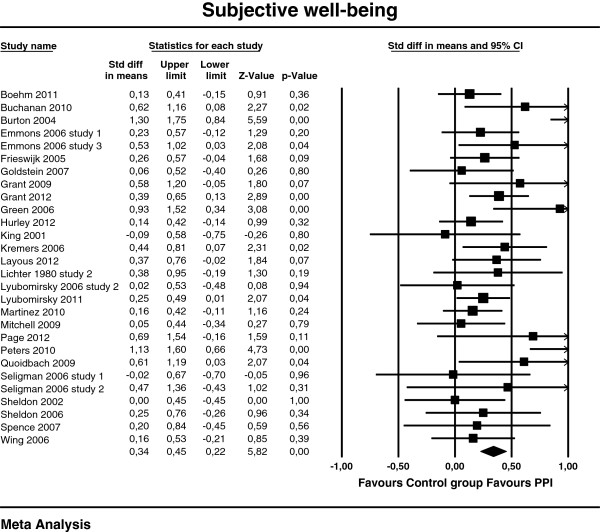
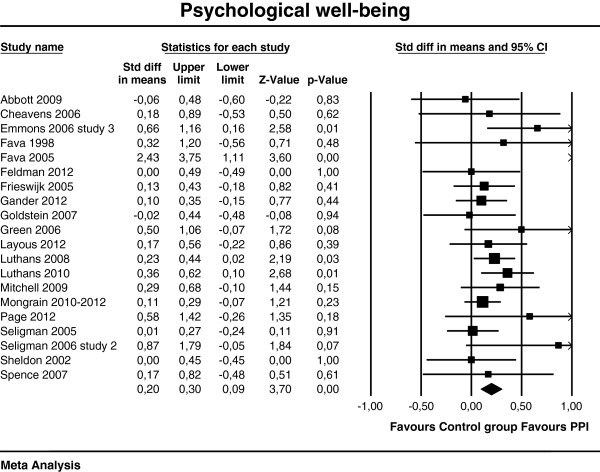
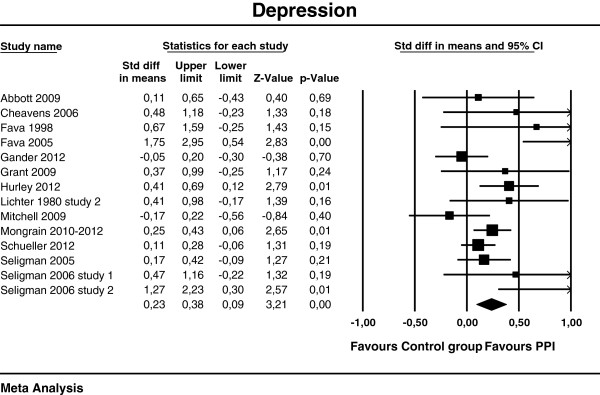
- Across all included studies, the pooled standardized mean differences were 0.34 for subjective well-being, 0.20 for psychological well-being, and 0.23 for depression, which the authors describe as small effects.
- At follow-up of 3–6 months (10 studies), effects remained significant for subjective well-being (d = 0.22, 95% CI [0.05, 0.38], p<.01) and psychological well-being (d = 0.16, 95% CI [0.02, 0.30], p=.03), but not for depression (d = 0.17, 95% CI [-0.06, 0.39], p=.15).
- Heterogeneity was moderate for subjective well-being (I² = 49.5%) and depression (I² = 47.0%), and low for psychological well-being (I² = 29.0%); effect sizes ranged from below 0 to as high as 2.4.
- For depression, larger effects were associated with longer duration, individual delivery, referral/hospital recruitment, inclusion of people with specific psychosocial problems, and lower study quality.
## Methods
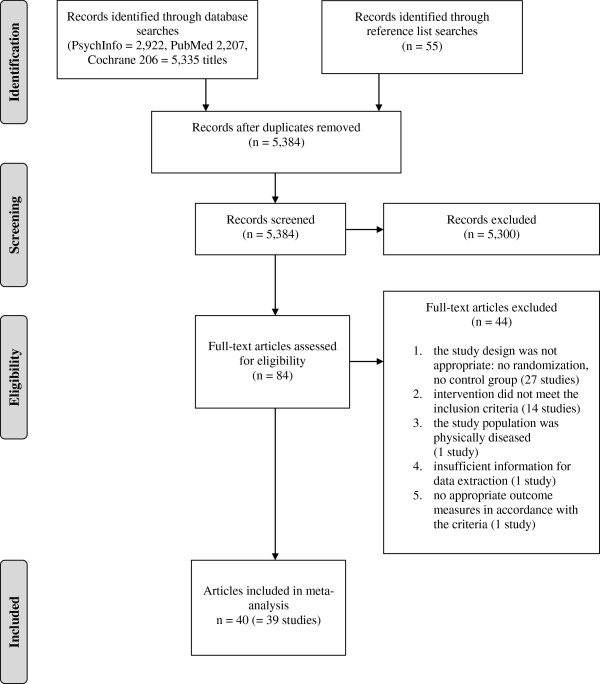
- Systematic review and meta-analysis of randomized controlled studies of positive psychology interventions, using PubMed, PsychInfo, the Cochrane Central Register of Controlled Trials, manual searches, and reference checking, covering 1998 to November 2012.
- Included 40 articles describing 39 studies with 6,139 participants; intervention formats included self-help, group training, and individual therapy.
- Main analysis used Cohen’s d under a random-effects model for three outcomes: subjective well-being, psychological well-being, and depression, with subgroup analyses and checks for heterogeneity and publication bias.
## Limitations
- The paper states that study quality was not high: no study met all quality criteria, randomization was often unclear, intention-to-treat analysis was rare (3/39 studies), and none reported an adequate power analysis.
- The authors note that heterogeneity was rather high because the included studies were diverse, and that the follow-up findings should be treated with caution because of the small number of studies and high attrition rates at follow-up.
- The text makes evident that publication bias is a limitation: funnel plots were asymmetric, fail-safe numbers were below the required thresholds, and Egger’s test suggested bias for psychological well-being and depression.
Model-written summary. Check it against the paper before relying on it.
Integrity signals
Registry
Cites
Statistics
Figures
Verification
Claims the paper makes
8 Valid · 2 Not valid · 9 Not checked · 90 Own results and interpretations
The cited sources that could be checked couldn’t confirm or dispute this claim.
In the paper
“First, the meta-analysis included both randomized studies and quasi-experimental studies.”
§ Positive psychology interventions: a meta-analysis of randomized controlled studies > Background
What the sources say
- Could not verifycites Sin and Lyubomirsky (2009) matched to “Enhancing well-being and alleviating depressive symptoms with positive psychology interventions: a practice-friendly meta-analysis” (2009) sourceExperimental — accuracy not yet measured
The Literature Search section requires included studies to have a comparison group, and Data Recorded distinguishes self-selected from non-self-selected participants. Neither passage establishes whether the meta-analysis included both randomized and quasi-experimental studies; searches for those design terms and for random assignment found no decisive passage. Page numbers were unavailable in our copy. (LLM, conf=0.72)
plain- Asserted: passes — The authors put it forward as true.
- Checkable: passes — It can be checked against evidence.
- Load-bearing: unclear — It is unclear whether the paper’s conclusions depend on it.
- Based: passes — The paper gives a reason why it holds.
- Could not verify
The cited sources support only part of this claim — read each source’s verdict below.
In the paper
“Their results show that PPIs can indeed be effective in enhancing well-being (r = 0.29, standardized mean difference Cohen’s d = 0.61) and help to reduce depressive symptom levels in clinical populations (r = 0.31, Cohen’s d = 0.65).”
§ Positive psychology interventions: a meta-analysis of randomized controlled studies > Background
What the sources say
- Partly supportedcites Sin and Lyubomirsky (2009) matched to “Enhancing well-being and alleviating depressive symptoms with positive psychology interventions: a practice-friendly meta-analysis” (2009) sourceExperimental — accuracy not yet measured
The Depression section reports that PPIs reduced depressive symptoms across 25 studies, with a mean effect of r = .31. The Participant Moderators section distinguishes depressed from nondepressed participants, so .31 is not an estimate specifically for clinical populations. The paper reports the effect as r, not as Cohen’s d = .65. (LLM, conf=0.87)
plainstates a cause- Asserted: passes — The authors put it forward as true.
- Checkable: passes — It can be checked against evidence.
- Load-bearing: unclear — It is unclear whether the paper’s conclusions depend on it.
- Based: passes — The paper gives a reason why it holds.
- Partly supported
Every source the paper cites for this claim was checked and supports it.
In the paper
“Their results show that PPIs can indeed be effective in enhancing well-being (r = 0.29, standardized mean difference Cohen’s d = 0.61) and help to reduce depressive symptom levels in clinical populations (r = 0.31, Cohen’s d = 0.65).”
§ Positive psychology interventions: a meta-analysis of randomized controlled studies > Background
What the sources say
- Supportedcites Sin and Lyubomirsky (2009) matched to “Enhancing well-being and alleviating depressive symptoms with positive psychology interventions: a practice-friendly meta-analysis” (2009) source
The Well-Being section reports that PPIs significantly improved well-being across 49 studies, with a mean r of .29. The paper reports r rather than Cohen’s d; converting .29 to d gives approximately .61, so the cited figures are consistent. (LLM, conf=0.90)
plainstates a cause- Asserted: passes — The authors put it forward as true.
- Checkable: passes — It can be checked against evidence.
- Load-bearing: passes — The paper’s conclusions depend on it.
- Based: passes — The paper gives a reason why it holds.
- Supported
Every source the paper cites for this claim was checked and supports it.
In the paper
“Second, study quality was not addressed as a potential effect moderator.”
§ Positive psychology interventions: a meta-analysis of randomized controlled studies > Background
What the sources say
- Supportedcites Sin and Lyubomirsky (2009) matched to “Enhancing well-being and alleviating depressive symptoms with positive psychology interventions: a practice-friendly meta-analysis” (2009) source
The Data Recorded section lists the variables coded for moderator analysis: participant characteristics, intervention format and duration, and comparison-group type. It does not include study quality, and the Methodological Moderators section discusses those methodological variables rather than study quality. Page numbers are unavailable in our copy. (LLM, conf=0.88)
plain- Asserted: passes — The authors put it forward as true.
- Checkable: passes — It can be checked against evidence.
- Load-bearing: unclear — It is unclear whether the paper’s conclusions depend on it.
- Based: passes — The paper gives a reason why it holds.
- Supported
Every source the paper cites for this claim was checked and supports it.
In the paper
“Remarkably, effect sizes in the current meta-analysis are around 0.3 points lower than the effect sizes in the meta-analysis by Sin and Lyubomirsky (2009) [37].”
§ Positive psychology interventions: a meta-analysis of randomized controlled studies > Discussion > Main findings
What the sources say
- Supportedcites Sin and Lyubomirsky (2009) [37] matched to “Enhancing well-being and alleviating depressive symptoms with positive psychology interventions: a practice-friendly meta-analysis” (2009) source
The Well-Being and Depression results report mean effect sizes of r = .29 and r = .31, respectively, establishing the values attributed to Sin and Lyubomirsky’s meta-analysis. The difference from the current meta-analysis is the citing authors’ comparison, not a finding this source could report. (LLM, conf=0.88)
plain- Asserted: passes — The authors put it forward as true.
- Checkable: passes — It can be checked against evidence.
- Load-bearing: passes — The paper’s conclusions depend on it.
- Based: passes — The paper gives a reason why it holds.
- Supported
70 more claims · 1 with their cited sources checked
Create a free account to see all 109 claims and to verify the 1 reference still open.
- Probably not a substantial claim. 14
- It may state two separate claims as one. 23
Claims other papers make about this one
Each is checked against this paper’s own text: does it say what the citing paper says it does?
The source backs part of the claim, not all of it — or backs it for a different population, condition or comparison.
In the citing paper
“In contrast to complex multicomponent health behavior or psychology interventions, PP exercises are simple, can be delivered remotely (e.g., by phone), and require minimal training of providers [34, 41, 42].”
From Positive Psychological Interventions for Patients with Type 2 Diabetes: Rationale, Theoretical Model, and Intervention Development (2015) · cites this paper as [41]
Experimental — accuracy not yet measuredThe source backs part of the claim, not all of it — or backs it for a different population, condition or comparison.
In the citing paper
“Studies supporting the efficacy of positive activity interventions (PAIs) have been primarily conducted in unselected (non-clinical) community samples and examined single positive activities in isolation (for a meta-analysis, see66, 67).”
From Upregulating the positive affect system in anxiety and depression: Outcomes of a positive activity intervention: Taylor et al. (2017) · cites this paper as [67]
Experimental — accuracy not yet measuredThe source backs part of the claim, not all of it — or backs it for a different population, condition or comparison.
In the citing paper
“Two meta-analyses of PPIs for depression and well-being found that these interventions have small to moderate effects in enhancing well-being and decreasing depressive symptoms and that effects are stronger for individual vs. group formats [30, 31].”
From Skills to Enhance Positivity in adolescents at risk for suicide: Protocol for a randomized controlled trial (2023) · cites this paper as [31]
Experimental — accuracy not yet measuredThe source backs part of the claim, not all of it — or backs it for a different population, condition or comparison.
In the citing paper
“Bolier and Abello (Bolier et al., 2013) reviewed digital PPIs and found that the majority of the included studies showed improvement in well-being or reduction of distress in the intervention group, compared to the control group.”
From Strength Back – A qualitative study on the co-creation of a positive psychology digital health intervention for spinal surgery patients (2023) · cites this paper as Bolier et al., 2013
Experimental — accuracy not yet measuredThe source backs part of the claim, not all of it — or backs it for a different population, condition or comparison.
In the citing paper
“PPIs may support patients to notice and savour positive experiences (Bolier et al., 2013). This may strengthen their commitment to value-based action.”
From Strength Back – A qualitative study on the co-creation of a positive psychology digital health intervention for spinal surgery patients (2023) · cites this paper as Bolier et al., 2013
Experimental — accuracy not yet measured
24 more claims about this paper
Create a free account to see every claim other papers make about this one.
Statistics recomputed
Every reported test result, recomputed from its test statistic and degrees of freedom. A result shows as not adding up only once an independent check has confirmed it.
- Consistentz = 6.43reported p < .01 · recomputed p < .001
“Z=6.43, p < .01”
- Consistentz = 4.18reported p < .01 · recomputed p < .001
“Z=4.18, p < .01”
- Consistentz = 3.33reported p < .01 · recomputed p < .001
“Z=3.33, p < .01”
Self-check
Percentages, sums and reported differences re-computed from the paper’s own numbers.
Self-check results appear here once an independent check has confirmed them.
Citations
Cites
Preferred Reporting Items for Systematic Reviews and Meta-Analyses: the PRISMA statement
Moher, D., Liberati, A., Tetzlaff, J., Altman, D. G., & for the PRISMA Group (2009) · BMJ · doi:10.1136/bmj.b2535 · Cited by 83,823
Preferred Reporting Items for Systematic Reviews and Meta-Analyses: The PRISMA Statement
Moher, D., Liberati, A., Tetzlaff, J., Altman, D. G., & The PRISMA Group (2009) · PLoS Medicine · doi:10.1371/journal.pmed.1000097 · Cited by 64,042 · cited 1×
“For the reporting of the results of this meta-analysis, we applied Preferred Reporting Items for Systematic Reviews and Meta-Analyses (PRISMA) guidelines [50].”
Measuring inconsistency in meta-analyses
Higgins, J. P. T., Thompson, S. G., Deeks, J. J., & Altman, D. G. (2003) · BMJ · doi:10.1136/bmj.327.7414.557 · Cited by 63,139 · cited 1×
“A value of 0% indicates an absence of dispersion, and larger values show increasing levels of heterogeneity where 25% can be considered as low, 50% as moderate and 75% as a high level of heterogeneity [46].”
Preferred reporting items for systematic reviews and meta-analyses: the PRISMA Statement.
(2009) · PubMed Central · Cited by 44,859
Cochrane Handbook for Systematic Reviews of Interventions: Cochrane Book Series
(2008) · doi:10.1002/9780470712184 · Cited by 25,048
Preferred Reporting Items for Systematic Reviews and Meta-Analyses: The PRISMA Statement
Moher, D., Liberati, A., Tetzlaff, J., & Altman, D. G. (2009) · Journal of Clinical Epidemiology · doi:10.1016/j.jclinepi.2009.06.005 · Cited by 19,575
Happiness is everything, or is it? Explorations on the meaning of psychological well-being.
Ryff, C. D. (1989) · Journal of Personality and Social Psychology · doi:10.1037/0022-3514.57.6.1069 · Cited by 14,847 · cited 1×
“Psychological well-being focuses on the optimal functioning of the individual and includes concepts such as mastery, hope and purpose in life [13,14].”
Borenstein, M., Hedges, L. V., Higgins, J. P. T., & Rothstein, H. R. (2009) · doi:10.1002/9780470743386 · Cited by 14,225
Duval, S., & Tweedie, R. (2000) · Biometrics · doi:10.1111/j.0006-341x.2000.00455.x · Cited by 14,099 · cited 1×
“If asymmetry is found in the funnel plot, the Trim and Fill method adjusts the pooled effect size for the outcomes of missing studies [49].”
Subjective well-being: Three decades of progress.
Diener, E., Suh, E. M., Lucas, R. E., & Smith, H. L. (1999) · Psychological Bulletin · doi:10.1037/0033-2909.125.2.276 · Cited by 12,910 · cited 2×
“Although the basic concepts of well-being, happiness and human flourishing have been studied for some decades [12,25-27], there was a lack of evidence-based interventions [24].”
Research works printed but not linked: 3
- Rupke SJ Blecke D Renfrow M Cognitive Therapy for Depression Am Fam Physician 2006 73 83 86 16417069
- Veenhoven R Gezond geluk: Effecten van geluk op gezondheid en wat dat kan betekenen voor de preventieve gezondheidszorg (Healthy happiness: effect of happiness on health and what this could mean for preventive public health) 2006 Rotterdam: Erasmus Universiteit
- Lamers S Bolier L Westerhof GJ Smit F Bohlmeijer E The impact of emotional well-being on long-term recovery and survival in physical illness: a meta-analysis J Behav Med 2012 5 538 547 21918889 PMC3439612 · DOI · Paper page
Cited by
PERMA and the building blocks of well-being
Seligman, M. (2018) · The Journal of Positive Psychology · doi:10.1080/17439760.2018.1437466 · Cited by 1,251
“On the other hand, if I understand that PERMA is a theory of the building blocks of well-being, we can work together on gratitude visits, or three blessings, or active-constructive responding or any of the other validated positive interventions that build these elements (e.g. Bolier et al., 2013).”
BackgroundAdvances and Open Questions in the Science of Subjective Well-Being
Diener, E., Lucas, R. E., & Oishi, S. (2018) · Collabra: Psychology · doi:10.1525/collabra.115 · Cited by 1,062
The welfare effects of social media
Allcott, H., Braghieri, L., Eichmeyer, S., & Gentzkow, M. (2020) · American Economic Review · doi:10.1257/aer.20190658 · Cited by 857
If, Why, and When Subjective Well‐Being Influences Health, and Future Needed Research
Diener, E., Pressman, S. D., Hunter, J., & Delgadillo‐Chase, D. (2017) · Applied Psychology: Health and Well-Being · doi:10.1111/aphw.12090 · Cited by 679
Findings all psychologists should know from the new science on subjective well-being.
Diener, E., Heintzelman, S. J., Kushlev, K., Tay, L., Wirtz, D., Lutes, L. D., & Oishi, S. (2017) · Canadian Psychology / Psychologie canadienne · doi:10.1037/cap0000063 · Cited by 664
“Meta-analytic results suggest that SWB interventions of a longer duration were increasingly more effective (Bolier et al., 2013; Sin & Lyubomirsky, 2009).”
BackgroundEffectiveness of positive psychology interventions: a systematic review and meta-analysis
Carr, A., Cullen, K., Keeney, C., Canning, C., Mooney, O., Chinseallaigh, E., & O’Dowd, A. (2021) · The Journal of Positive Psychology · doi:10.1080/17439760.2020.1818807 · Cited by 645
“ducted with predominantly non-clinical samples (Bolier et al., 2013; Sin & Lyubomirsky, 2009) and clinical samples (e.”
BackgroundMethodResultInfluentialThe Lancet Psychiatry Commission on youth mental health
McGorry, P. D., Mei, C., Dalal, N., Alvarez-Jimenez, M., Blakemore, S.-J., Browne, V., Dooley, B., Hickie, I. B., Jones, P. B., McDaid, D., et al. (2024) · The Lancet Psychiatry · doi:10.1016/s2215-0366(24)00163-9 · Cited by 663
Positive interventions: An emotion regulation perspective.
Quoidbach, J., Mikolajczak, M., & Gross, J. J. (2015) · Psychological Bulletin · doi:10.1037/a0038648 · Cited by 546
“…Bulletin © 2015 American Psychological Association 2015, Vol. 141, No. 2, 000 0033-2909/15/$12.00 http://dx.doi.org/10.1037/a0038648 1 depressive symptoms with a level of effectiveness similar to traditional psychotherapy (see Bolier et al., 2013; Sin & Lyubomirsky, 2009, for meta-analyses).”
BackgroundInfluentialCurry, O. S., Rowland, L. A., Van Lissa, C. J., Zlotowitz, S., McAlaney, J., & Whitehouse, H. (2018) · Journal of Experimental Social Psychology · doi:10.1016/j.jesp.2018.02.014 · Cited by 528
“The e ff ect of kindness is small-to-medium – comparable to other positive psychology interventions (such as ‘ mindfulness ’ , ‘ positive thinking ’ and ‘ counting your blessings ’ ; d=0.34, Bolier et al., 2013; d=0.31, Sin & Lyubomirsky, 2009; d=0.44, Weiss, Westerhof, & Bohlmeijer, 2016).”
InfluentialA systematic review and meta-analysis of psychological interventions to improve mental wellbeing
van Agteren, J., Iasiello, M., Lo, L., Bartholomaeus, J., Kopsaftis, Z., Carey, M., & Kyrios, M. (2021) · Nature Human Behaviour · doi:10.1038/s41562-021-01093-w · Cited by 510
Steptoe, A. (2019) · Annual Review of Public Health · doi:10.1146/annurev-publhealth-040218-044150 · Cited by 474
“A meta-analysis in 2013 of 39 trials in which subjective well-being was monitored up to 6 months following intervention showed small but significant mean differences between individuals randomized to PPI and comparison conditions (18).”
BackgroundMethodPositive Affect and Health: What Do We Know and Where Next Should We Go?
Pressman, S. D., Jenkins, B. N., & Moskowitz, J. T. (2019) · Annual Review of Psychology · doi:10.1146/annurev-psych-010418-102955 · Cited by 452
Positive Psychology: A Personal History
Seligman, M. E. P. (2019) · Annual Review of Clinical Psychology · doi:10.1146/annurev-clinpsy-050718-095653 · Cited by 449
Positive Psychological Well-Being and Cardiovascular Disease
Kubzansky, L. D., Huffman, J. C., Boehm, J. K., Hernandez, R., Kim, E. S., Koga, H. K., Feig, E. H., Lloyd-Jones, D. M., Seligman, M. E. P., & Labarthe, D. R. (2018) · Journal of the American College of Cardiology · doi:10.1016/j.jacc.2018.07.042 · Cited by 429
“In healthy individuals, such activities have been found to improve indicators of psychological well-being such as optimism (99,100) in the short term, with some suggestion of sustained effect.”
BackgroundHowells, A., Ivtzan, I., & Eiroa-Orosa, F. J. (2016) · Journal of Happiness Studies · doi:10.1007/s10902-014-9589-1 · Cited by 407
“Moderate and small effect sizes were captured, making outcomes from a smartphone-based intervention comparable to other forms of intervention (Bolier et al. 2013; Sin and Lyubomirsky 2009).”
BackgroundWeiss, L. A., Westerhof, G. J., & Bohlmeijer, E. T. (2016) · PLOS ONE · doi:10.1371/journal.pone.0158092 · Cited by 405
“The latest meta-analysis has also included psychological well-being, but measured it in a very broad way with many different instruments [12].”
BackgroundInfluentialSelf-citationLy, K. H., Ly, A.-M., & Andersson, G. (2017) · Internet Interventions · doi:10.1016/j.invent.2017.10.002 · Cited by 368
Reducing distress in mothers of children with autism and other disabilities: a randomized trial
Dykens, E. M., Fisher, M. H., Taylor, J. L., Lambert, W., & Miodrag, N. (2014) · Pediatrics · doi:10.1542/peds.2013-3164 · Cited by 355
Nelson, S. K., Layous, K., Cole, S. W., & Lyubomirsky, S. (2016) · Emotion · doi:10.1037/emo0000178 · Cited by 356
Positive psychotherapy: A strength-based approach
Rashid, T. (2015) · The Journal of Positive Psychology · doi:10.1080/17439760.2014.920411 · Cited by 354
Chakhssi, F., Kraiss, J. T., Sommers-Spijkerman, M., & Bohlmeijer, E. T. (2018) · BMC Psychiatry · doi:10.1186/s12888-018-1739-2 · Cited by 352
“Although PPIs have been mostly examined in non-clinical samples [16], some preliminary evidence exist for their efficacy in clinical samples [16, 17].”
BackgroundMethodResultInfluentialSelf-citationHendriks, T., Schotanus-Dijkstra, M., Hassankhan, A., de Jong, J., & Bohlmeijer, E. (2020) · Journal of Happiness Studies · doi:10.1007/s10902-019-00082-1 · Cited by 317
Self-citationGhai, S., Ghai, I., & Effenberg, A. O. (2017) · Clinical Interventions in Aging · doi:10.2147/cia.s125201 · Cited by 310
“96 However, among the pooled group of studies the authors observed unexplained heterogeneity, suggesting incorporation of a random-effect meta-analysis under such conditions.”
BackgroundEffect of rhythmic auditory cueing on parkinsonian gait: A systematic review and meta-analysis
Ghai, S., Ghai, I., Schmitz, G., & Effenberg, A. O. (2018) · Scientific Reports · doi:10.1038/s41598-017-16232-5 · Cited by 304
Hendriks, T., Warren, M. A., Schotanus-Dijkstra, M., Hassankhan, A., Graafsma, T., Bohlmeijer, E., & de Jong, J. (2019) · The Journal of Positive Psychology · doi:10.1080/17439760.2018.1484941 · Cited by 280
“Finally, reference lists of four recent meta-analyses (Bolier et al., 2013; Chakhssi, Kraiss, SommersSpijkerman, & Bohlmeijer, 2018; Dickens, 2017; Sin & Lyubomirsky, 2009) and seven recent review articles on PPIs (Casellas-Grau, Font, & Vives, 2014; Ghosh & Deb, 2016; Macaskill, 2016; Rashid,…”
Self-citationTrudel-Fitzgerald, C., Millstein, R. A., von Hippel, C., Howe, C. J., Tomasso, L. P., Wagner, G. R., & VanderWeele, T. J. (2019) · BMC Public Health · doi:10.1186/s12889-019-8029-x · Cited by 269
Dickens, L. R. (2017) · Basic and Applied Social Psychology · doi:10.1080/01973533.2017.1323638 · Cited by 258
“Similarly, the meta-analysis by Bolier et al. (2013) investigated outcomes for any positive intervention, as well as for numerous types of expressive therapies (such as hope therapy and well-being therapy), including those done as individual practices and those conducted as group therapy.”
BackgroundMethodSteffens, N. K., LaRue, C. J., Haslam, C., Walter, Z. C., Cruwys, T., Munt, K. A., Haslam, S. A., Jetten, J., & Tarrant, M. (2021) · Health Psychology Review · doi:10.1080/17437199.2019.1669481 · Cited by 259
“…interventions have been found to have a standardised mean effect size of between 0.20 and 0.34 on (decreased) depression and (increased) well-being (Bolier et al., 2013), and exercise interventions have been found to have a standardised mean effect size of 0.61 in reducing depression (Silveira et…”
BackgroundInfluentialReimagining Health—Flourishing
VanderWeele, T. J., McNeely, E., & Koh, H. K. (2019) · JAMA · doi:10.1001/jama.2019.3035 · Cited by 248
Life Satisfaction and Subsequent Physical, Behavioral, and Psychosocial Health in Older Adults
KIM, E. S., DELANEY, S. W., TAY, L., CHEN, Y., DIENER, E., & VANDERWEELE, T. J. (2021) · The Milbank Quarterly · doi:10.1111/1468-0009.12497 · Cited by 245
Positive Psychiatry: Its Time Has Come
Jeste, D. V., Palmer, B. W., Rettew, D. C., & Boardman, S. (2015) · The Journal of Clinical Psychiatry · doi:10.4088/jcp.14nr09599 · Cited by 239
Taylor, C. T., Lyubomirsky, S., & Stein, M. B. (2017) · Depression and Anxiety · doi:10.1002/da.22593 · Cited by 233
“Studies supporting the efficacy of positive activity interventions (PAIs) have been primarily conducted in unselected (nonclinical) community samples and examined single positive activities in isolation (for a meta-analysis, see (Bolier et al., 2013; Sin & Lyubomirsky, 2009)).”
BackgroundLindsay, E. K., Chin, B., Greco, C. M., Young, S., Brown, K. W., Wright, A. G. C., Smyth, J. M., Burkett, D., & Creswell, J. D. (2018) · Journal of Personality and Social Psychology · doi:10.1037/pspa0000134 · Cited by 218
“At the same time, although not all psychological interventions designed to increase positive affect have been successful (see Parks & Biswas-Diener, 2013), there are several evidence-based interventions for improving happiness (for reviews, see Bolier et al., 2013; Sin & Lyubomirsky, 2009).”
Can Gratitude and Kindness Interventions Enhance Well-Being in a Clinical Sample?
Kerr, S. L., O’Donovan, A., & Pepping, C. A. (2015) · Journal of Happiness Studies · doi:10.1007/s10902-013-9492-1 · Cited by 224
“Growing evidence attests to the positive effects of gratitude interventions on psychological health (Bolier et al. 2013; Wood et al. 2010).”
BackgroundEvaluating Positive Psychology Interventions at Work: a Systematic Review and Meta-Analysis
Donaldson, S. I., Lee, J. Y., & Donaldson, S. I. (2019) · International Journal of Applied Positive Psychology · doi:10.1007/s41042-019-00021-8 · Cited by 222
“Other meta-analytic reviews have also been conducted on positive psychology interventions outside the work setting (cf. Bolier et al. 2013; Sin and Lyubomirsky 2009, for meta-analytic reviews in the clinical context).”
BackgroundProyer, R. T., Gander, F., Wellenzohn, S., & Ruch, W. (2015) · Frontiers in Psychology · doi:10.3389/fpsyg.2015.00456 · Cited by 220
“…psychology interventions: a randomized placebo-controlled online trial on long-term effects for a signature strengths- vs. a lesser strengths-intervention René T. Proyer*, Fabian Gander, Sara Wellenzohn and Willibald Ruch Personality and Assessment, Department of Psychology, University of Zurich,…”
BackgroundRandomized controlled trial of a positive affect intervention for people newly diagnosed with HIV.
Moskowitz, J. T., Carrico, A. W., Duncan, L. G., Cohn, M. A., Cheung, E. O., Batchelder, A., Martinez, L., Segawa, E., Acree, M., & Folkman, S. (2017) · Journal of Consulting and Clinical Psychology · doi:10.1037/ccp0000188 · Cited by 220
“Meta analyses indicate that these interventions are effective for increasing positive affective states and reducing negative states, with small to medium effect sizes that are sustained over time (Bolier et al., 2013; Sin & Lyubomirsky, 2009).”
BackgroundRosenberg, A. R., Bradford, M. C., McCauley, E., Curtis, J. R., Wolfe, J., Baker, K. S., & Yi‐Frazier, J. P. (2018) · Cancer · doi:10.1002/cncr.31666 · Cited by 215
“3916 Cancer October 1, 2018 meta-analyses suggest that even small effect sizes of positive psychology interventions are associated with meaningful patient-centered outcomes.(46) Although future research is needed to examine the duration of PRISM’s efficacy, its active ingredients, and strategies for its dissemination…”
BackgroundFeasibility and utility of positive psychology exercises for suicidal inpatients
Huffman, J. C., DuBois, C. M., Healy, B. C., Boehm, J. K., Kashdan, T. B., Celano, C. M., Denninger, J. W., & Lyubomirsky, S. (2014) · General Hospital Psychiatry · doi:10.1016/j.genhosppsych.2013.10.006 · Cited by 209
“Overall, PP exercises have been successfully used by more than 4000 participants in over 50 clinical trials [20,21], though typically in nonclinical populations.”
BackgroundMatthews, R. A., Wayne, J. H., & Ford, M. T. (2014) · Journal of Applied Psychology · doi:10.1037/a0036674 · Cited by 205
Cregg, D. R., & Cheavens, J. S. (2021) · Journal of Happiness Studies · doi:10.1007/s10902-020-00236-6 · Cited by 203
White, C. A., Uttl, B., & Holder, M. D. (2019) · PLOS ONE · doi:10.1371/journal.pone.0216588 · Cited by 200
Proyer, R. T., Gander, F., Wellenzohn, S., & Ruch, W. (2014) · Aging & Mental Health · doi:10.1080/13607863.2014.899978 · Cited by 197
“Two recent meta-analyses (Bolier et al., 2013; Sin & Lyubomirsky, 2009) lend support to the notion that these types of intentional activities are effective to increase levels of (subjective) well-being and ameliorating depression.”
BackgroundBuilding employee resilience through wellbeing in organizations
Tonkin, K., Malinen, S., Näswall, K., & Kuntz, J. C. (2018) · Human Resource Development Quarterly · doi:10.1002/hrdq.21306 · Cited by 196
Chaves, C., Lopez-Gomez, I., Hervas, G., & Vazquez, C. (2017) · Cognitive Therapy and Research · doi:10.1007/s10608-016-9778-9 · Cited by 196
“Thirdly, the study has followed conservative criteria to analyze the results (i.e., intention to treat analyses) and used multiple outcome measures that have shown to be sensitive in similar psychotherapy studies (e.g., Bolier et al. 2013; Cuijpers et al. 2011a; Sin and Lyubomirsky 2009).”
BackgroundMethodInfluentialFisher, C. (2019) · Oxford Research Encyclopedia of Business and Management · doi:10.1093/acrefore/9780190224851.013.160 · Cited by 192
Tejada-Gallardo, C., Blasco-Belled, A., Torrelles-Nadal, C., & Alsinet, C. (2020) · Journal of Youth and Adolescence · doi:10.1007/s10964-020-01289-9 · Cited by 195
“…the long-term effects found for psychological well-being and depression symptoms: on the one hand, the effects on these outcomes increased from the short to the long term, which contrasts with previous meta-analyses about positive interventions in adults (Bolier et al. 2013; Chakhssi et al. 2018).”
BackgroundResultInfluentialIncreasing Psychological Capital: A Pre‐Registered Meta‐Analysis of Controlled Interventions
Lupșa, D., Vîrga, D., Maricuțoiu, L. P., & Rusu, A. (2020) · Applied Psychology · doi:10.1111/apps.12219 · Cited by 193
VanderWeele, T. J., Chen, Y., Long, K., Kim, E. S., Trudel-Fitzgerald, C., & Kubzansky, L. D. (2020) · Epidemiology · doi:10.1097/ede.0000000000001147 · Cited by 181
“38), with associations persisting at 3- or 6-month follow-up.(30) Failing to consider positive health assets—either positive psychological states or positive relational and communal factors—can impoverish our understanding of population health and trends in population health.”
BackgroundKoydemir, S., Sökmez, A. B., & Schütz, A. (2021) · Applied Research in Quality of Life · doi:10.1007/s11482-019-09788-z · Cited by 190
Noticing nature: Individual and social benefits of a two-week intervention
Passmore, H.-A., & Holder, M. D. (2017) · The Journal of Positive Psychology · doi:10.1080/17439760.2016.1221126 · Cited by 178
“Effect sizes (ds from 0.29 to 0.49) were at the high end of, or larger than, the average effect size of positive psychology interventions (ds from 0.20 to 0.34, Bolier et al., 2013).”
BackgroundResultInfluentialGander, F., Proyer, R. T., & Ruch, W. (2016) · Frontiers in Psychology · doi:10.3389/fpsyg.2016.00686 · Cited by 179
“7:686. doi: 10.3389/fpsyg.2016.00686 Positive Psychology Interventions Addressing Pleasure, Engagement, Meaning, Positive Relationships, and Accomplishment Increase Well-Being and Ameliorate Depressive Symptoms: A Randomized, Placebo-Controlled Online Study Fabian Gander 1*, René T. Proyer 2 and Willibald Ruch 1 1Depa…”
BackgroundInfluentialMüller, R., Gertz, K. J., Molton, I. R., Terrill, A. L., Bombardier, C. H., Ehde, D. M., & Jensen, M. P. (2016) · The Clinical Journal of Pain · doi:10.1097/ajp.0000000000000225 · Cited by 179
“78) (24-81) Missing 0 2 2 Sex Male 17 (33.”
Towards a science and practice of resilience in the face of pain
Goubert, L., & Trompetter, H. (2017) · European Journal of Pain · doi:10.1002/ejp.1062 · Cited by 172
Maintaining Healthy Behavior: a Prospective Study of Psychological Well-Being and Physical Activity
Kim, E. S., Kubzansky, L. D., Soo, J., & Boehm, J. K. (2017) · Annals of Behavioral Medicine · doi:10.1007/s12160-016-9856-y · Cited by 171
“Further, randomized controlled trials have shown that psychological well-being can be altered [49–51].”
BackgroundHendriks, T., de Jong, J., & Cramer, H. (2017) · The Journal of Alternative and Complementary Medicine · doi:10.1089/acm.2016.0334 · Cited by 166
Resilience in chronic diseases: A systematic review
Cal, S. F., Sá, L. R. D., Glustak, M. E., & Santiago, M. B. (2015) · Cogent Psychology · doi:10.1080/23311908.2015.1024928 · Cited by 163
“There are evidences that behavior and risk factors in health may be changed by means of interventions that could improve the outcomes in health (Bolier et al., 2013; Smith et al., 2004).”
BackgroundA systematic review of gratitude interventions: Effects on physical health and health behaviors
Boggiss, A. L., Consedine, N. S., Brenton-Peters, J. M., Hofman, P. L., & Serlachius, A. S. (2020) · Journal of Psychosomatic Research · doi:10.1016/j.jpsychores.2020.110165 · Cited by 160
“Research surrounding the practice of gratitude – appreciating the things one has in life [1] – has thrived in the last decade, part of the growing evidence that positive psychology interventions may improve psychological well-being [2–4].”
Moskowitz, J. T., Cheung, E. O., Snowberg, K. E., Verstaen, A., Merrilees, J., Salsman, J. M., & Dowling, G. A. (2019) · Health Psychology · doi:10.1037/hea0000680 · Cited by 161
“Many of the studies thus far suffer from methodological weaknesses including small sample sizes, lack of randomized trials, failure to report intentto-treat analyses (Bolier et al., 2013), and imprecise measurement of outcomes (Moskowitz et al., 2017).”
Schrank, B., Brownell, T., Jakaite, Z., Larkin, C., Pesola, F., Riches, S., Tylee, A., & Slade, M. (2016) · Epidemiology and Psychiatric Sciences · doi:10.1017/s2045796015000141 · Cited by 160
“Meta-analytic evidence supports the effectiveness of positively oriented approaches for these variables, but also for the secondary improvement of symptoms (Sin & Lyubomirsky, 2009; Bolier et al. 2013).”
BackgroundSteiner‐Hofbauer, V., & Holzinger, A. (2020) · Academic Psychiatry · doi:10.1007/s40596-020-01193-1 · Cited by 193
Layous, K., Nelson, S. K., Kurtz, J. L., & Lyubomirsky, S. (2016) · The Journal of Positive Psychology · doi:10.1080/17439760.2016.1198924 · Cited by 190
Vos, L. M. W., Habibović, M., Nyklíček, I., Smeets, T., & Mertens, G. (2021) · Psychiatry Research · doi:10.1016/j.psychres.2021.113927 · Cited by 152
Resounding Meaning: A PERMA Wellbeing Profile of Classical Musicians
Ascenso, S., Perkins, R., & Williamon, A. (2018) · Frontiers in Psychology · doi:10.3389/fpsyg.2018.01895 · Cited by 186
Lighten UP! A community-based group intervention to promote psychological well-being in older adults
Friedman, E. M., Ruini, C., Foy, R., Jaros, L., Sampson, H., & Ryff, C. D. (2017) · Aging & Mental Health · doi:10.1080/13607863.2015.1093605 · Cited by 149
“Although most positive psychology interventions have shown benefits, such effects have tended to fade in the subsequent follow-up periods (Bolier et al., 2013; Seligman, Steen, Park, & Petersen, 2005).”
Emotion Regulation in Adolescent Well-Being and Positive Education
Morrish, L., Rickard, N. S., Chin, T., & Vella‐Brodrick, D. (2017) · Journal of Happiness Studies · doi:10.1007/s10902-017-9881-y · Cited by 223
Kim, E. S., Tkatch, R., Martin, D., MacLeod, S., Sandy, L. G., & Yeh, C. S. (2021) · Gerontology and Geriatric Medicine · doi:10.1177/23337214211002951 · Cited by 206
“Several recent meta-analyses of randomized controlled trials suggest that certain interventions can improve psychological well-being (Bolier et al., 2013; Malouff & Schutte, 2016; Weiss et al., 2016).”
A brief social-belonging intervention in college improves adult outcomes for black Americans
Brady, S. T., Cohen, G. L., Jarvis, S. N., & Walton, G. M. (2020) · Science Advances · doi:10.1126/sciadv.aay3689 · Cited by 145
“The magnitude of the effects on well-being is particularly noteworthy, given the past findings that many kinds of interventions, including therapy ( 26 ), and major life events such as marriage, divorce, and unemployment ( 27 ), have quite modest effects on well-being.”
BackgroundSmyth, J. M., Johnson, J. A., Auer, B. J., Lehman, E. B., Talamo, G., & Sciamanna, C. (2018) · JMIR Mental Health · doi:10.2196/11290 · Cited by 175
“However, other studies have demonstrated that longer-lasting positive psychology interventions are effective at improving subjective and psychological well-being among cancer patients [73], and the short-term improvements in cancer patients’ mental well-being observed in this study may translate into longer-term healt…”
BackgroundPeters (2017) · doi:10.1097/ajp.0000000000000494 · Cited by 144
“Sick leave (n [%]) 14 (28) 21 (18) 12 (11) Disability pension (n [%]) 8 (16) 26 (23) 26 (23)”
Schrank, B., Ebert‐Vogel, A., Amering, M., Masel, E. K., Neubauer, M., Watzke, H., Zehetmayer, S., & Schur, S. (2016) · Psycho-Oncology · doi:10.1002/pon.4005 · Cited by 143
Kirrane, M., Lennon, M., O’Connor, C., & Fu, N. (2016) · Journal of Change Management · doi:10.1080/14697017.2016.1214615 · Cited by 220
“As a state-level individual difference variable, PsyCap is malleable by definition, and research has indeed established that PsyCap can be developed and enhanced through training (Bolier et al., 2013; Luthans et al., 2010; Peterson et al., 2011; Zhang et al., 2014).”
BackgroundInfluentialLambert, L., Passmore, H., & Joshanloo, M. (2018) · Journal of Happiness Studies · doi:10.1007/s10902-018-9993-z · Cited by 184
Franken, K., Lamers, S. M. A., Ten Klooster, P. M., Bohlmeijer, E. T., & Westerhof, G. J. (2018) · Journal of Clinical Psychology · doi:10.1002/jclp.22659 · Cited by 131
“Well-being seems to be an important dimension of mental health and recovery, and the dual continua model implies that the absence of psychopathology does not guarantee the presence of well-being (Bolier et al., 2013; Slade, 2010; Trompetter et al., 2016; Trompetter et al., 2017; Trompetter, Bohlmeijer, Veehof, & Schre…”
InfluentialSelf-citationEnjoyment of life and declining physical function at older ages: a longitudinal cohort study
Steptoe, A., de Oliveira, C., Demakakos, P., & Zaninotto, P. (2014) · Canadian Medical Association Journal · doi:10.1503/cmaj.131155 · Cited by 133
“Efforts to enhance wellbeing at older ages may have benefits to society and health care systems.(25)”
BackgroundSchotanus-Dijkstra, M., ten Have, M., Lamers, S. M. A., de Graaf, R., & Bohlmeijer, E. T. (2016) · The European Journal of Public Health · doi:10.1093/eurpub/ckw202 · Cited by 132
Self-citationA Test of Two Positive Psychology Interventions to Increase Employee Well-Being
Kaplan, S. A., Bradley‐Geist, J. C., Ahmad, A. S., Anderson, A. J., Hargrove, A. K., & Lindsey, A. (2013) · Journal of Business and Psychology · doi:10.1007/s10869-013-9319-4 · Cited by 178
“depression (Bolier et al. 2013).”
Johnson, J., & Wood, A. M. (2015) · Cognitive Therapy and Research · doi:10.1007/s10608-015-9728-y · Cited by 159
“more effective in clinical groups than the general population (Bolier et al. 2013).”
BackgroundMethodInfluentialBig smile, small self: Awe walks promote prosocial positive emotions in older adults.
Sturm, V. E., Datta, S., Roy, A. R. K., Sible, I. J., Kosik, E. L., Veziris, C. R., Chow, T. E., Morris, N., Neuhaus, J. M., Kramer, J. H., et al. (2022) · Emotion · doi:10.1037/emo0000876 · Cited by 183
“These studies have shown that even simple experimental manipulations can elevate positive feelings and enhance well-being and mood, among other advantageous outcomes (Bolier et al., 2013).”
BackgroundMethodPositive mental health as a predictor of recovery from mental illness
Iasiello, M., van Agteren, J., Keyes, C. L. M., & Cochrane, E. M. (2019) · Journal of Affective Disorders · doi:10.1016/j.jad.2019.03.065 · Cited by 129
“Interventions to improve positive mental health have been designed and tested in a range of modalities, including one-on-one, group-based, and in online format, but predominantly for healthy populations (Bolier et al., 2013).”
BackgroundKelly, C. M., Strauss, K., Arnold, J., & Stride, C. (2019) · Journal of Vocational Behavior · doi:10.1016/j.jvb.2019.103340 · Cited by 161
The Happy Mind: Cognitive Contributions to Well-Being
Schuz, N., & Schüz, B. (2017) · Springer eBooks · doi:10.1007/978-3-319-58763-9 · Cited by 172
“34 in Boiler et al., 2013; r = .29 in Sin & Lyubomirsky, 2009), suggesting that individuals who choose to engage in these activities may experience noticeable increases in happiness. However, our intention is not to advocate a one-size-fits-all approach when it comes to preventing hedonic adaptation, as a number of fa…”
BackgroundTrompetter, H. R., Lamers, S. M. A., Westerhof, G. J., Fledderus, M., & Bohlmeijer, E. T. (2017) · Behaviour Research and Therapy · doi:10.1016/j.brat.2017.01.008 · Cited by 126
Self-citationHuffman, J. C., DuBois, C. M., Millstein, R. A., Celano, C. M., & Wexler, D. (2015) · Journal of Diabetes Research · doi:10.1155/2015/428349 · Cited by 127
“PP interventions have been used in over 4000 mostly healthy subjects and have been found to increase well-being and decrease depression [41, 43], with effect sizes comparable to other psychological interventions [44, 45].”
BackgroundInfluentialSin, N. L. (2016) · Current Cardiology Reports · doi:10.1007/s11886-016-0792-z · Cited by 125
Effects of the Best Possible Self intervention: A systematic review and meta-analysis
Carrillo, A., Rubio‐Aparicio, M., Molinari, G., Enrique, Á., Sánchez‐Meca, J., & Baños, R. (2019) · PLoS ONE · doi:10.1371/journal.pone.0222386 · Cited by 164
“These results are slightly lower than those presented in the last meta-analysis of PPIs [3] (d = .”
BackgroundResultInfluentialSchotanus-Dijkstra, M., Drossaert, C. H. C., Pieterse, M. E., Boon, B., Walburg, J. A., & Bohlmeijer, E. T. (2017) · Internet Interventions · doi:10.1016/j.invent.2017.04.002 · Cited by 126
“…from methodological limitations such as a relatively small sample size in group therapies (Page and VellaBrodrick, 2012; Rashid, 2014; Ruini et al., 2014) or a low adherence rate in (web-based) self-help interventions (Bolier et al., 2013b; Mitchell et al., 2010; Schueller and Parks, 2012).”
BackgroundMethodResultSelf-citationPositive Psychotherapy for Smoking Cessation: A Pilot Randomized Controlled Trial
Kahler, C. W., Spillane, N. S., Day, A. M., Cioe, P. A., Parks, A., Leventhal, A. M., & Brown, R. A. (2015) · Nicotine & Tobacco Research · doi:10.1093/ntr/ntv011 · Cited by 125
Positive maternal mental health, parenting, and child development
Phua, D. Y., Kee, M. Z. L., & Meaney, M. J. (2020) · Biological Psychiatry · doi:10.1016/j.biopsych.2019.09.028 · Cited by 124
Schueller, S. M., & Parks, A. C. (2014) · European Psychologist · doi:10.1027/1016-9040/a000181 · Cited by 120
Enhancing social relationships through positive psychology activities: a randomised controlled trial
O’Connell, B. H., O’Shea, D., & Gallagher, S. (2016) · The Journal of Positive Psychology · doi:10.1080/17439760.2015.1037860 · Cited by 121
“and educational practice to aid positive mental health, such research has come under methodological critique due to an over reliance on cross-sectional research and poor experimental trial quality and reporting (Bolier et al., 2013).”
Gratitude predicts hope and happiness: A two-study assessment of traits and states
Witvliet, C. V., Richie, F. J., Root Luna, L. M., & Van Tongeren, D. R. (2019) · The Journal of Positive Psychology · doi:10.1080/17439760.2018.1424924 · Cited by 118
Uliaszek, A. A., Rashid, T., Williams, G. E., & Gulamani, T. (2016) · Behaviour Research and Therapy · doi:10.1016/j.brat.2015.12.003 · Cited by 113
Bolier, L., Haverman, M., Kramer, J., Westerhof, G. J., Riper, H., Walburg, J. A., Boon, B., & Bohlmeijer, E. (2013) · Journal of Medical Internet Research · doi:10.2196/jmir.2603 · Cited by 116
“Evidence of the effectiveness of positive psychological interventions was reviewed in 2 meta-analyses showing that these interventions enhance well-being and reduce depressive symptoms [18,19].”
InfluentialSelf-citationThe student voice in well-being: a case study of participatory action research in positive education
Halliday, A. J., Kern, M. L., Garrett, D. K., & Turnbull, D. A. (2019) · Educational Action Research · doi:10.1080/09650792.2018.1436079 · Cited by 115
“The positive psychology interventions (PPIs) used in positive education have a strong evidence base (e.g. Bolier et al. 2013; Sin and Lyubomirsky 2009), but less is known about their efficacy within complex school environments.”
BackgroundMoritz, S., Jahns, A. K., Schröder, J., Berger, T., Lincoln, T. M., Klein, J. P., & Göritz, A. S. (2016) · Journal of Affective Disorders · doi:10.1016/j.jad.2015.11.027 · Cited by 115
The role of resilience in the clinical management of chronic pain
Hassett, A. L., & Finan, P. H. (2016) · Current Pain and Headache Reports · doi:10.1007/s11916-016-0567-7 · Cited by 107
Tourism as a dementia treatment based on positive psychology
Wen, J., Zheng, D., Hou, H., Phau, I., & Wang, W. (2022) · Tourism Management · doi:10.1016/j.tourman.2022.104556 · Cited by 134
Hendriks, T., Schotanus-Dijkstra, M., Hassankhan, A., Graafsma, T., Bohlmeijer, E., & de Jong, J. (2018) · International Journal of Wellbeing · doi:10.5502/ijw.v8i1.711 · Cited by 111
“Our findings are in line with other meta-analyses on the efficacy of wellbeing interventions (Bolier et al., 2013; Chakhssi et al., 2018; Weiss, Westerhof, & Bohlmeijer, 2016), which consistently report more bias towards the publication of positive outcomes.”
BackgroundMethodResultInfluentialSelf-citationHope and benefit finding: Results from the PRISM randomized controlled trial
Rosenberg, A. R., Bradford, M. C., Barton, K. S., Etsekson, N., McCauley, E., Curtis, J. R., Wolfe, J., Baker, K. S., & Yi‐Frazier, J. P. (2019) · Pediatric Blood & Cancer · doi:10.1002/pbc.27485 · Cited by 110
Metadata
- Authors
- Bolier, L., Haverman, M., Westerhof, G. J., Riper, H., Smit, F., & Bohlmeijer, E.
- Affiliations
- Trimbos Institute (NL)
- University of Twente (NL)
- Leuphana University of Lüneburg (DE)
- Corresponding author
- Bolier, Linda
- Venue
- BMC Public Health
- Published
- 2013-02-08
- Volume
- 13
- Issue
- 1
- Pages
- 119-119
- ISSN
- 1471-2458 (ISSN-L)
- PMC
- PMC3599475
- OpenAlex
- W2120582212
- Semantic Scholar
- 45fd44e9cff6334f80a54b3d327ced46d9b2d444
- Cited by
- 1,996
- References
- 115
- Citations by year
- 2026: 97 · 2025: 134 · 2024: 155 · 2023: 197 · 2022: 190 · 2021: 208 · 2020: 231 · 2019: 201 · 2018: 182 · 2017: 153 · 2016: 117 · 2015: 76 · 2014: 40 · 2013: 12
- FWCI
- 10.79
- Type
- journal article
- Language
- en
- Open access
- gold
- doi.org
- Licence
- Locations
- BMC Public Health (publishedVersion, cc-by)
- Europe PMC (PubMed Central) (publishedVersion, cc-by)
- PubMed Central (publishedVersion, cc-by)
- PubMed (publishedVersion)
- Pure Amsterdam UMC (publishedVersion, other-oa)
- Amsterdam UMC (VU Amsterdam) - Institutional Repository (publishedVersion, other-oa)
- Multilingual Matters (Channel View Publications) (acceptedVersion, cc-by)
- University of Twente Research Information (acceptedVersion, cc-by)
- Data Archiving and Networked Services (DANS) (submittedVersion, other-oa)
- Digital Academic REpository of VU University Amsterdam (Vrije Universiteit Amsterdam) (submittedVersion)
- VU Research Portal (submittedVersion, other-oa)
- University of Twente Research Information (submittedVersion, cc-by)
- Topics
- Social Sciences › Psychology › Social Psychology › Psychological Well-being and Life Satisfaction
- Social Sciences › Psychology › Clinical Psychology › Mindfulness and Compassion Interventions
- Social Sciences › Psychology › Applied Psychology › Optimism, Hope, and Well-being
- Keywords
- positive psychology interventions, subjective well-being, psychological well-being, depression, self-help intervention, group training, individual psychotherapy, mental health promotion, intervention effectiveness, publication bias, study quality
- MeSH terms
- Depression, Health Promotion, Humans, Psychotherapy, Randomized Controlled Trials as Topic, Treatment Outcome
About these checks
Registry, retraction, Cites and statistics results are computed, not judged, with one exception: a printed reference that no index lists is read once by a model before it counts as a citation error. Claims are extracted by a model and kept only when their quote appears verbatim in the text; each cited source is then checked, with a model’s help, for whether it says what the claim relies on. Those verdicts can be wrong — read the claim’s quote and the cited source before relying on one.
The claim verdicts this report counts are experimental: their accuracy is not yet measured.
A language model drew the claims from the paper on 2026-10-10, under version 3 of the claim definition (model deepseek-v4.1-flash, prompt extract-v3).
A second model labelled each claim on 2026-10-10 (model jev-1.13-20260917, definition revision gold-guideline-v0.2).
Cited sources are checked with a language model’s help (gpt-6-sol).
Statistics and arithmetic are recomputed, not judged.
Confidence bands are shown only for fields calibrated on our annotated test set. None is calibrated yet, so no band is shown.
What counts as a claim ›How we measure confidence ›How we check this ›
Are you an author, or do you see a problem with this page? Request a review
Data sources
Bibliographic data: Semantic Scholar, OpenAlex, Crossref.
Contains information from the Semantic Scholar Academic Graph Datasets, made available under the ODC Attribution License (ODC-BY 1.0).
Semantic Scholar’s data is described in: Kinney, R., et al. (2023). The Semantic Scholar Open Data Platform. arXiv:2301.10140.
