

Positive psychology interventions: a meta-analysis of randomized controlled studies
Open accessThe DOI matches its Crossref record; 109 of the 115 references it cites were found in a registry or an index; 10 of the 22 sources its claims cite were checked for support.
Abstract
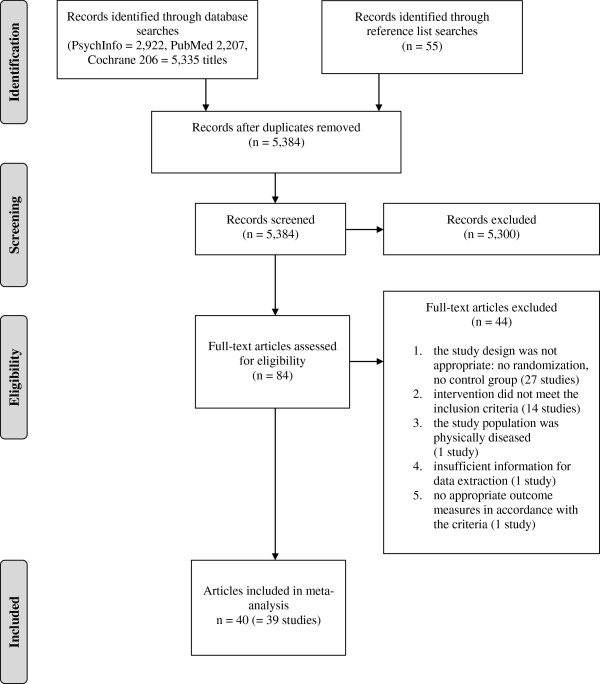
BACKGROUND: The use of positive psychological interventions may be considered as a complementary strategy in mental health promotion and treatment. The present article constitutes a meta-analytical study of the effectiveness of positive psychology interventions for the general public and for individuals with specific psychosocial problems. METHODS: We conducted a systematic literature search using PubMed, PsychInfo, the Cochrane register, and manual searches. Forty articles, describing 39 studies, totaling 6,139 participants, met the criteria for inclusion. The outcome measures used were subjective well-being, psychological well-being and depression. Positive psychology interventions included self-help interventions, group training and individual therapy. RESULTS: The standardized mean difference was 0.34 for subjective well-being, 0.20 for psychological well-being and 0.23 for depression indicating small effects for positive psychology interventions. At follow-up from three to six months, effect sizes are small, but still significant for subjective well-being and psychological well-being, indicating that effects are fairly sustainable. Heterogeneity was rather high, due to the wide diversity of the studies included. Several variables moderated the impact on depression: Interventions were more effective if they were of longer duration, if recruitment was conducted via referral or hospital, if interventions were delivered to people with certain psychosocial problems and on an individual basis, and if the study design was of low quality. Moreover, indications for publication bias were found, and the quality of the studies varied considerably. CONCLUSIONS: The results of this meta-analysis show that positive psychology interventions can be effective in the enhancement of subjective well-being and psychological well-being, as well as in helping to reduce depressive symptoms. Additional high-quality peer-reviewed studies in diverse (clinical) populations are needed to strengthen the evidence-base for positive psychology interventions.
Overview
CoChat Summary
## TL;DR
This meta-analysis of 39 randomized studies (40 articles; 6,139 participants) found that positive psychology interventions had small but significant benefits for subjective well-being, psychological well-being, and depressive symptoms. Effects were somewhat sustained at 3–6 months for well-being outcomes, but study heterogeneity and publication bias were notable.
## Key findings
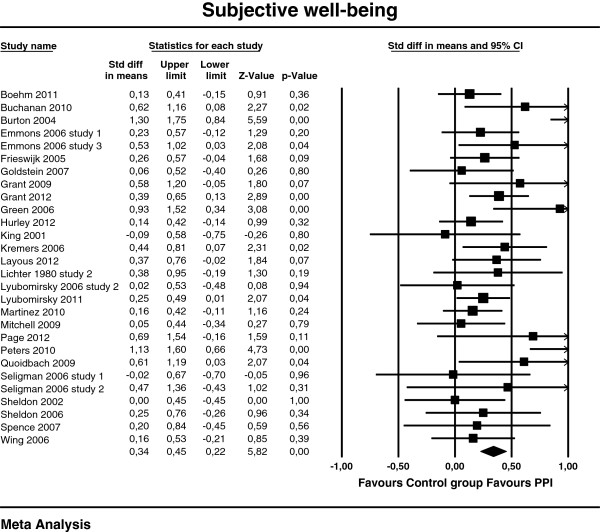
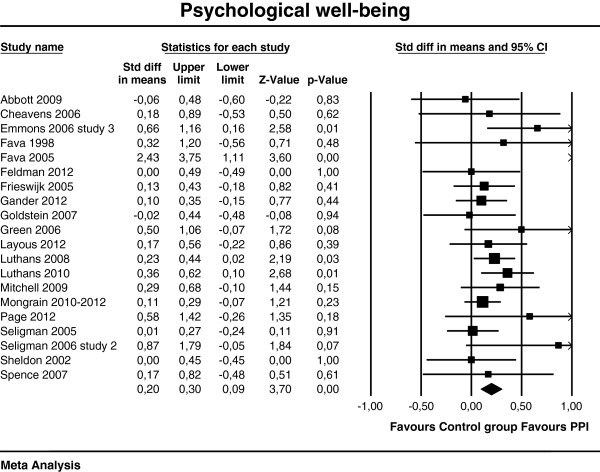
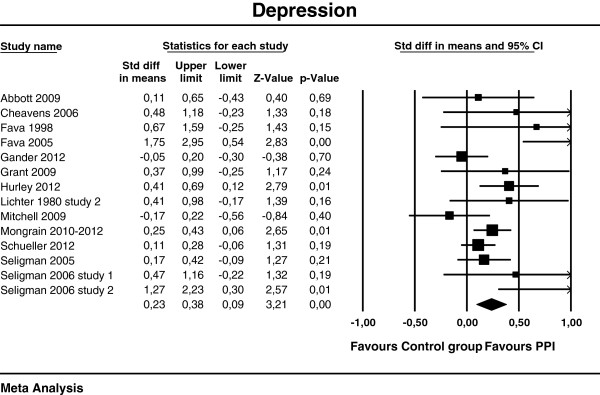
- Across all included studies, the pooled standardized mean differences were 0.34 for subjective well-being, 0.20 for psychological well-being, and 0.23 for depression, which the authors describe as small effects.
- At follow-up of 3–6 months (10 studies), effects remained significant for subjective well-being (d = 0.22, 95% CI [0.05, 0.38], p<.01) and psychological well-being (d = 0.16, 95% CI [0.02, 0.30], p=.03), but not for depression (d = 0.17, 95% CI [-0.06, 0.39], p=.15).
- Heterogeneity was moderate for subjective well-being (I² = 49.5%) and depression (I² = 47.0%), and low for psychological well-being (I² = 29.0%); effect sizes ranged from below 0 to as high as 2.4.
- For depression, larger effects were associated with longer duration, individual delivery, referral/hospital recruitment, inclusion of people with specific psychosocial problems, and lower study quality.
## Methods
- Systematic review and meta-analysis of randomized controlled studies of positive psychology interventions, using PubMed, PsychInfo, the Cochrane Central Register of Controlled Trials, manual searches, and reference checking, covering 1998 to November 2012.
- Included 40 articles describing 39 studies with 6,139 participants; intervention formats included self-help, group training, and individual therapy.
- Main analysis used Cohen’s d under a random-effects model for three outcomes: subjective well-being, psychological well-being, and depression, with subgroup analyses and checks for heterogeneity and publication bias.
## Limitations
- The paper states that study quality was not high: no study met all quality criteria, randomization was often unclear, intention-to-treat analysis was rare (3/39 studies), and none reported an adequate power analysis.
- The authors note that heterogeneity was rather high because the included studies were diverse, and that the follow-up findings should be treated with caution because of the small number of studies and high attrition rates at follow-up.
- The text makes evident that publication bias is a limitation: funnel plots were asymmetric, fail-safe numbers were below the required thresholds, and Egger’s test suggested bias for psychological well-being and depression.
Model-written summary. Check it against the paper before relying on it.
Integrity signals
Registry
Cites
Statistics
Figures
Verification
Claims the paper makes
8 Valid · 2 Not valid · 9 Not checked · 90 Own results and interpretations
The cited sources that could be checked couldn’t confirm or dispute this claim.
In the paper
“First, the meta-analysis included both randomized studies and quasi-experimental studies.”
§ Positive psychology interventions: a meta-analysis of randomized controlled studies > Background
What the sources say
- Could not verifycites Sin and Lyubomirsky (2009) matched to “Enhancing well-being and alleviating depressive symptoms with positive psychology interventions: a practice-friendly meta-analysis” (2009) sourceExperimental — accuracy not yet measured
The Literature Search section requires included studies to have a comparison group, and Data Recorded distinguishes self-selected from non-self-selected participants. Neither passage establishes whether the meta-analysis included both randomized and quasi-experimental studies; searches for those design terms and for random assignment found no decisive passage. Page numbers were unavailable in our copy. (LLM, conf=0.72)
plain- Asserted: passes — The authors put it forward as true.
- Checkable: passes — It can be checked against evidence.
- Load-bearing: unclear — It is unclear whether the paper’s conclusions depend on it.
- Based: passes — The paper gives a reason why it holds.
- Could not verify
The cited sources support only part of this claim — read each source’s verdict below.
In the paper
“Their results show that PPIs can indeed be effective in enhancing well-being (r = 0.29, standardized mean difference Cohen’s d = 0.61) and help to reduce depressive symptom levels in clinical populations (r = 0.31, Cohen’s d = 0.65).”
§ Positive psychology interventions: a meta-analysis of randomized controlled studies > Background
What the sources say
- Partly supportedcites Sin and Lyubomirsky (2009) matched to “Enhancing well-being and alleviating depressive symptoms with positive psychology interventions: a practice-friendly meta-analysis” (2009) sourceExperimental — accuracy not yet measured
The Depression section reports that PPIs reduced depressive symptoms across 25 studies, with a mean effect of r = .31. The Participant Moderators section distinguishes depressed from nondepressed participants, so .31 is not an estimate specifically for clinical populations. The paper reports the effect as r, not as Cohen’s d = .65. (LLM, conf=0.87)
plainstates a cause- Asserted: passes — The authors put it forward as true.
- Checkable: passes — It can be checked against evidence.
- Load-bearing: unclear — It is unclear whether the paper’s conclusions depend on it.
- Based: passes — The paper gives a reason why it holds.
- Partly supported
Every source the paper cites for this claim was checked and supports it.
In the paper
“Their results show that PPIs can indeed be effective in enhancing well-being (r = 0.29, standardized mean difference Cohen’s d = 0.61) and help to reduce depressive symptom levels in clinical populations (r = 0.31, Cohen’s d = 0.65).”
§ Positive psychology interventions: a meta-analysis of randomized controlled studies > Background
What the sources say
- Supportedcites Sin and Lyubomirsky (2009) matched to “Enhancing well-being and alleviating depressive symptoms with positive psychology interventions: a practice-friendly meta-analysis” (2009) source
The Well-Being section reports that PPIs significantly improved well-being across 49 studies, with a mean r of .29. The paper reports r rather than Cohen’s d; converting .29 to d gives approximately .61, so the cited figures are consistent. (LLM, conf=0.90)
plainstates a cause- Asserted: passes — The authors put it forward as true.
- Checkable: passes — It can be checked against evidence.
- Load-bearing: passes — The paper’s conclusions depend on it.
- Based: passes — The paper gives a reason why it holds.
- Supported
Every source the paper cites for this claim was checked and supports it.
In the paper
“Second, study quality was not addressed as a potential effect moderator.”
§ Positive psychology interventions: a meta-analysis of randomized controlled studies > Background
What the sources say
- Supportedcites Sin and Lyubomirsky (2009) matched to “Enhancing well-being and alleviating depressive symptoms with positive psychology interventions: a practice-friendly meta-analysis” (2009) source
The Data Recorded section lists the variables coded for moderator analysis: participant characteristics, intervention format and duration, and comparison-group type. It does not include study quality, and the Methodological Moderators section discusses those methodological variables rather than study quality. Page numbers are unavailable in our copy. (LLM, conf=0.88)
plain- Asserted: passes — The authors put it forward as true.
- Checkable: passes — It can be checked against evidence.
- Load-bearing: unclear — It is unclear whether the paper’s conclusions depend on it.
- Based: passes — The paper gives a reason why it holds.
- Supported
Every source the paper cites for this claim was checked and supports it.
In the paper
“Remarkably, effect sizes in the current meta-analysis are around 0.3 points lower than the effect sizes in the meta-analysis by Sin and Lyubomirsky (2009) [37].”
§ Positive psychology interventions: a meta-analysis of randomized controlled studies > Discussion > Main findings
What the sources say
- Supportedcites Sin and Lyubomirsky (2009) [37] matched to “Enhancing well-being and alleviating depressive symptoms with positive psychology interventions: a practice-friendly meta-analysis” (2009) source
The Well-Being and Depression results report mean effect sizes of r = .29 and r = .31, respectively, establishing the values attributed to Sin and Lyubomirsky’s meta-analysis. The difference from the current meta-analysis is the citing authors’ comparison, not a finding this source could report. (LLM, conf=0.88)
plain- Asserted: passes — The authors put it forward as true.
- Checkable: passes — It can be checked against evidence.
- Load-bearing: passes — The paper’s conclusions depend on it.
- Based: passes — The paper gives a reason why it holds.
- Supported
70 more claims · 1 with their cited sources checked
Create a free account to see all 109 claims and to verify the 1 reference still open.
- Probably not a substantial claim. 14
- It may state two separate claims as one. 23
Claims other papers make about this one
Each is checked against this paper’s own text: does it say what the citing paper says it does?
The source backs part of the claim, not all of it — or backs it for a different population, condition or comparison.
In the citing paper
“In contrast to complex multicomponent health behavior or psychology interventions, PP exercises are simple, can be delivered remotely (e.g., by phone), and require minimal training of providers [34, 41, 42].”
From Positive Psychological Interventions for Patients with Type 2 Diabetes: Rationale, Theoretical Model, and Intervention Development (2015) · cites this paper as [41]
Experimental — accuracy not yet measuredThe source backs part of the claim, not all of it — or backs it for a different population, condition or comparison.
In the citing paper
“Studies supporting the efficacy of positive activity interventions (PAIs) have been primarily conducted in unselected (non-clinical) community samples and examined single positive activities in isolation (for a meta-analysis, see66, 67).”
From Upregulating the positive affect system in anxiety and depression: Outcomes of a positive activity intervention: Taylor et al. (2017) · cites this paper as [67]
Experimental — accuracy not yet measuredThe source backs part of the claim, not all of it — or backs it for a different population, condition or comparison.
In the citing paper
“Two meta-analyses of PPIs for depression and well-being found that these interventions have small to moderate effects in enhancing well-being and decreasing depressive symptoms and that effects are stronger for individual vs. group formats [30, 31].”
From Skills to Enhance Positivity in adolescents at risk for suicide: Protocol for a randomized controlled trial (2023) · cites this paper as [31]
Experimental — accuracy not yet measuredThe source backs part of the claim, not all of it — or backs it for a different population, condition or comparison.
In the citing paper
“Bolier and Abello (Bolier et al., 2013) reviewed digital PPIs and found that the majority of the included studies showed improvement in well-being or reduction of distress in the intervention group, compared to the control group.”
From Strength Back – A qualitative study on the co-creation of a positive psychology digital health intervention for spinal surgery patients (2023) · cites this paper as Bolier et al., 2013
Experimental — accuracy not yet measuredThe source backs part of the claim, not all of it — or backs it for a different population, condition or comparison.
In the citing paper
“PPIs may support patients to notice and savour positive experiences (Bolier et al., 2013). This may strengthen their commitment to value-based action.”
From Strength Back – A qualitative study on the co-creation of a positive psychology digital health intervention for spinal surgery patients (2023) · cites this paper as Bolier et al., 2013
Experimental — accuracy not yet measured
24 more claims about this paper
Create a free account to see every claim other papers make about this one.
Statistics recomputed
Every reported test result, recomputed from its test statistic and degrees of freedom. A result shows as not adding up only once an independent check has confirmed it.
- Consistentz = 6.43reported p < .01 · recomputed p < .001
“Z=6.43, p < .01”
- Consistentz = 4.18reported p < .01 · recomputed p < .001
“Z=4.18, p < .01”
- Consistentz = 3.33reported p < .01 · recomputed p < .001
“Z=3.33, p < .01”
Self-check
Percentages, sums and reported differences re-computed from the paper’s own numbers.
Self-check results appear here once an independent check has confirmed them.
Citations
Cites
Preferred Reporting Items for Systematic Reviews and Meta-Analyses: the PRISMA statement
Moher, D., Liberati, A., Tetzlaff, J., Altman, D. G., & for the PRISMA Group (2009) · BMJ · doi:10.1136/bmj.b2535 · Cited by 83,823
Preferred Reporting Items for Systematic Reviews and Meta-Analyses: The PRISMA Statement
Moher, D., Liberati, A., Tetzlaff, J., Altman, D. G., & The PRISMA Group (2009) · PLoS Medicine · doi:10.1371/journal.pmed.1000097 · Cited by 64,042 · cited 1×
“For the reporting of the results of this meta-analysis, we applied Preferred Reporting Items for Systematic Reviews and Meta-Analyses (PRISMA) guidelines [50].”
Measuring inconsistency in meta-analyses
Higgins, J. P. T., Thompson, S. G., Deeks, J. J., & Altman, D. G. (2003) · BMJ · doi:10.1136/bmj.327.7414.557 · Cited by 63,139 · cited 1×
“A value of 0% indicates an absence of dispersion, and larger values show increasing levels of heterogeneity where 25% can be considered as low, 50% as moderate and 75% as a high level of heterogeneity [46].”
Preferred reporting items for systematic reviews and meta-analyses: the PRISMA Statement.
(2009) · PubMed Central · Cited by 44,859
Cochrane Handbook for Systematic Reviews of Interventions: Cochrane Book Series
(2008) · doi:10.1002/9780470712184 · Cited by 25,048
Preferred Reporting Items for Systematic Reviews and Meta-Analyses: The PRISMA Statement
Moher, D., Liberati, A., Tetzlaff, J., & Altman, D. G. (2009) · Journal of Clinical Epidemiology · doi:10.1016/j.jclinepi.2009.06.005 · Cited by 19,575
Happiness is everything, or is it? Explorations on the meaning of psychological well-being.
Ryff, C. D. (1989) · Journal of Personality and Social Psychology · doi:10.1037/0022-3514.57.6.1069 · Cited by 14,847 · cited 1×
“Psychological well-being focuses on the optimal functioning of the individual and includes concepts such as mastery, hope and purpose in life [13,14].”
Borenstein, M., Hedges, L. V., Higgins, J. P. T., & Rothstein, H. R. (2009) · doi:10.1002/9780470743386 · Cited by 14,225
Duval, S., & Tweedie, R. (2000) · Biometrics · doi:10.1111/j.0006-341x.2000.00455.x · Cited by 14,099 · cited 1×
“If asymmetry is found in the funnel plot, the Trim and Fill method adjusts the pooled effect size for the outcomes of missing studies [49].”
Subjective well-being: Three decades of progress.
Diener, E., Suh, E. M., Lucas, R. E., & Smith, H. L. (1999) · Psychological Bulletin · doi:10.1037/0033-2909.125.2.276 · Cited by 12,910 · cited 2×
“Although the basic concepts of well-being, happiness and human flourishing have been studied for some decades [12,25-27], there was a lack of evidence-based interventions [24].”
Research works printed but not linked: 3
- Rupke SJ Blecke D Renfrow M Cognitive Therapy for Depression Am Fam Physician 2006 73 83 86 16417069
- Veenhoven R Gezond geluk: Effecten van geluk op gezondheid en wat dat kan betekenen voor de preventieve gezondheidszorg (Healthy happiness: effect of happiness on health and what this could mean for preventive public health) 2006 Rotterdam: Erasmus Universiteit
- Lamers S Bolier L Westerhof GJ Smit F Bohlmeijer E The impact of emotional well-being on long-term recovery and survival in physical illness: a meta-analysis J Behav Med 2012 5 538 547 21918889 PMC3439612 · DOI · Paper page
Cited by
Items 101–200 of 2,037
Kaczmarek, L. D., Kashdan, T. B., Drążkowski, D., Enko, J., Kosakowski, M., Szäefer, A., & Bujacz, A. (2014) · Personality and Individual Differences · doi:10.1016/j.paid.2014.11.004 · Cited by 132
“Our motivationfocused approach complements a growing literature concerned with the variety, efficacy, and effectiveness of positive psychological interventions (Bolier et al., 2013).”
BackgroundBuilding social resilience in soldiers: A double dissociative randomized controlled study.
Cacioppo, J. T., Adler, A. B., Lester, P. B., McGurk, D., Thomas, J. L., Chen, H.-Y., & Cacioppo, S. (2015) · Journal of Personality and Social Psychology · doi:10.1037/pspi0000022 · Cited by 110
Rosenberg, A. R., Syrjala, K. L., Martin, P. J., Flowers, M. E., Carpenter, P. A., Salit, R. B., Baker, K. S., & Lee, S. J. (2015) · Cancer · doi:10.1002/cncr.29651 · Cited by 109
“Likewise, interventions directed at promoting positive psychology, including posttraumatic growth, have high potential.(9,44) Future research must prospectively test such interventions while also deconstructing the interrelated constructs of selfperceived resilience, psychological growth, quality of life, and other ou…”
BackgroundExperimental manipulation of extraverted and introverted behavior and its effects on well-being.
Margolis, S., & Lyubomirsky, S. (2020) · Journal of Experimental Psychology General · doi:10.1037/xge0000668 · Cited by 131
A pilot digital intervention targeting loneliness in young people with psychosis
Lim, M. H., Gleeson, J. F. M., Rodebaugh, T. L., Eres, R., Long, K. M., Casey, K., Abbott, J.-A. M., Thomas, N., & Penn, D. L. (2020) · Social Psychiatry and Psychiatric Epidemiology · doi:10.1007/s00127-019-01681-2 · Cited by 108
Shao, K., Nicholson, L. J., Kutuk, G., & Lei, F. (2020) · Frontiers in Psychology · doi:10.3389/fpsyg.2020.02142 · Cited by 174
“…49 and 39 studies, respectively, supported the effectiveness of PP interventions for improving well-being and lowering depression, and the positive effects of these interventions on psychological well-being remained significant after 6 months (Sin and Lyubomirsky, 2009; Bolier et al., 2013).”
ResultDong, X., Li, G., Liu, C., Kong, L., Fang, Y., Kang, X., & Li, P. (2017) · European Journal of Oncology Nursing · doi:10.1016/j.ejon.2017.04.007 · Cited by 128
“Indeed, resilience is a factor that can be addressed (Bolier et al., 2013; Rosenberg et al., 2015b) (e.”
BackgroundDevelopment of Subjective Well-Being in Adolescence
Steinmayr, R., Wirthwein, L., Modler, L., & Barry, M. M. (2019) · International Journal of Environmental Research and Public Health · doi:10.3390/ijerph16193690 · Cited by 153
“Countless studies on Subjective Well-Being (SWB) have demonstrated the importance of SWB for several important outcomes in adulthood such as, mental health [1], survival [2], disease progression and recovery [3], cardiovascular functioning [4], health behavior [5,6] and vocational success [7,8].”
BackgroundAlvarez-Jimenez, M., Rice, S., D'Alfonso, S., Leicester, S., Bendall, S., Pryor, I., Russon, P., McEnery, C., Santesteban-Echarri, O., Da Costa, G., et al. (2020) · Journal of Medical Internet Research · doi:10.2196/17155 · Cited by 106
“The comics were informed by evidence-based psychological therapies including CBT [76-78], mindfulness [79,80], self-compassion [81], and positive psychology interventions [82].”
MethodGenetics, personality and wellbeing. A twin study of traits, facets and life satisfaction
Røysamb, E., Nes, R. B., Czajkowski, N. O., & Vassend, O. M. (2018) · Scientific Reports · doi:10.1038/s41598-018-29881-x · Cited by 154
Hone, L. C., Jarden, A., & Schofield, G. M. (2015) · The Journal of Positive Psychology · doi:10.1080/17439760.2014.965267 · Cited by 105
“To date, two meta-analytical reviews of selected randomized controlled trials have documented the efficacy of PPIs (Bolier et al., 2013; Sin & Lyubomirsky, 2009).”
BackgroundMethodResultInfluentialAn affective neuroscience model of boosting resilience in adults
Tabibnia, G. (2020) · Neuroscience & Biobehavioral Reviews · doi:10.1016/j.neubiorev.2020.05.005 · Cited by 104
van Dierendonck, D., & Lam, H. (2022) · Applied Psychology Health and Well-Being · doi:10.1111/aphw.12398 · Cited by 203
Huffman, J. C., Millstein, R. A., Mastromauro, C. A., Moore, S. V., Celano, C. M., Bedoya, C. A., Suarez, L., Boehm, J. K., & Januzzi, J. L. (2016) · Journal of Happiness Studies · doi:10.1007/s10902-015-9681-1 · Cited by 102
“A meta-analysis of 39 trials in over 6000 participants found that PP programs consistently led to increased happiness, less depression, and improvements in overall wellbeing (Bolier et al. 2013), and such benefits can last months post-intervention (Sin and Lyubomirsky 2009; Seligman et al. 2005).”
InfluentialCosts and benefits of acting extraverted: A randomized controlled trial.
Jacques-Hamilton, R., Sun, J., & Smillie, L. D. (2019) · Journal of Experimental Psychology General · doi:10.1037/xge0000516 · Cited by 122
Proyer, R. T., Wellenzohn, S., Gander, F., & Ruch, W. (2015) · Applied Psychology: Health and Well-Being · doi:10.1111/aphw.12039 · Cited by 101
“, in the meta-analysis by Bolier et al. [2013] only 10 out of 39 studies conducted a follow-up after 3 months or more), even longer periods of time seem relevant when thinking of sustainable changes.”
BackgroundInfluentialHerrero, R., Mira, A., Cormo, G., Etchemendy, E., Baños, R., García-Palacios, A., Ebert, D. D., Franke, M., Berger, T., Schaub, M. P., et al. (2019) · Internet Interventions · doi:10.1016/j.invent.2018.03.005 · Cited by 101
“42 for the reduction of symptoms of anxiety (e.g., van Straten et al., 2008; Lintvedt et al., 2013; Bolier et al., 2013).”
BackgroundPositive technology for elderly well-being: A review
Grossi, G., Lanzarotti, R., Napoletano, P., Noceti, N., & Odone, F. (2020) · Pattern Recognition Letters · doi:10.1016/j.patrec.2019.03.016 · Cited by 101
Wellenzohn, S., Proyer, R. T., & Ruch, W. (2016) · The Journal of Positive Psychology · doi:10.1080/17439760.2015.1137624 · Cited by 100
“Two recent meta-analyses (Bolier et al., 2013; Sin & Lyubomirsky, 2009) showed that positive psychology interventions (PPIs; ‘[.”
BackgroundChau, M., Li, T. M. H., Wong, P. W. C., Xu, J., Yip, P. S. F., & Chen, H. (2020) · MIS Quarterly · doi:10.25300/misq/2020/14110 · Cited by 132
“Giving thankful and encouraging words to others, which is shown to improve people’s well-being and alleviate depression, also demonstrates a positive attitude in the writer (Bolier et al. 2013; Lyubomirsky and Layous 2013).”
BackgroundEffect of Rhythmic Auditory Cueing on Aging Gait: A Systematic Review and Meta-Analysis
Ghai, S., Ghai, I., & Effenberg, A. O. (2018) · Aging and Disease · doi:10.14336/ad.2017.1031 · Cited by 115
“The evaluation of research studies via meta-analysis requires strict inclusion criteria to efficiently limit the heterogeneity [98].”
MethodWell-being interventions for individuals with diabetes: A systematic review
Massey, C. N., Feig, E. H., Duque-Serrano, L., Wexler, D., Moskowitz, J. T., & Huffman, J. C. (2019) · Diabetes Research and Clinical Practice · doi:10.1016/j.diabres.2018.11.014 · Cited by 96
“A recent meta-analysis in over 5000 healthy participants revealed these interventions increase well-being and decrease depression [25].”
BackgroundReducing university students’ stress through a drop-in canine-therapy program
Binfet, J.-T., Passmore, H.-A., Cebry, A., Struik, K., & McKay, C. (2018) · Journal of Mental Health · doi:10.1080/09638237.2017.1417551 · Cited by 97
“It is important to note that this effect size is substantially larger than the average effect size of standard interventions aimed at increasing well-being (d¼ 0.20–0.34; Bolier et al., 2013).”
BackgroundInfluentialSchueller, S. M., Kashdan, T. B., & Parks, A. C. (2014) · International Journal of Wellbeing · doi:10.5502/ijw.v4i1.5 · Cited by 94
“This difference was even more pronounced for depressive symptoms (d = .23 for Bolier et al., 2013; r = .31 for Sin & Lyubomirsky, 2009, which corresponds to d = .65).”
BackgroundInfluential(2019) · doi:10.2196/preprints.14269 · Cited by 95
Nature Involvement Increases Hedonic and Eudaimonic Well-Being: A Two-Week Experimental Study
Passmore, H.-A., & Howell, A. J. (2014) · Ecopsychology · doi:10.1089/eco.2014.0023 · Cited by 93
“Moreover, compared to the average effect size of positive psychology interventions on well-being ( d s from .20 to .34; Bolier et al., 2013), the effect sizes of ongoing nature involvement in this study are larger, with d s from .37 to .63.”
Coelhoso, C. C., Tobo, P. R., Lacerda, S. S., Lima, A. H., Barrichello, C. R. C., Amaro Jr, E., & Kozasa, E. H. (2019) · Journal of Medical Internet Research · doi:10.2196/14269 · Cited by 95
“A recent meta-analysis revealed that 67% of positive psychology interventions are delivered in a self-help format, sometimes in conjunction with face-to-face instruction and support [34].”
Sin, N. L., Moskowitz, J. T., & Whooley, M. A. (2015) · Psychosomatic Medicine · doi:10.1097/psy.0000000000000238 · Cited by 94
“Interventions that aim to improve psychological well-being, rather than solely addressing maladaptive thoughts or behaviors, are effective for enhancing positive states and alleviating depressive symptoms (51,52); such interventions have been adapted for patients experiencing healthrelated stress (53).”
Baños, R. M., Etchemendy, E., Mira, A., Riva, G., Gaggioli, A., & Botella, C. (2017) · Frontiers in Psychiatry · doi:10.3389/fpsyt.2017.00010 · Cited by 93
“Whereas there is a range of Internet-based well-being programs based on PP available to the general public (28, 51), there are not many Internet interventions specifically designed to promote well-being and resilience in adolescents and youth.”
BackgroundResultInfluentialA qualitative analysis of the Three Good Things intervention in healthcare workers
Rippstein-Leuenberger, K., Mauthner, O., Bryan Sexton, J., & Schwendimann, R. (2017) · BMJ Open · doi:10.1136/bmjopen-2017-015826 · Cited by 93
“positive emotions and self-care fulfil important resilience-building functions.(18) 25 Interventions are needed”
BackgroundCelano, C. M., Beale, E. E., Mastromauro, C. A., Stewart, J. G., Millstein, R. A., Auerbach, R. P., Bedoya, C. A., & Huffman, J. C. (2017) · Psychological Medicine · doi:10.1017/s0033291716002798 · Cited by 89
“Furthermore, positive psychology (PP) interventions, which promote psychological well-being by targeting optimism, gratitude, use of personal strengths and altruism, have been shown to reduce depressive symptoms and enhance well-being in psychiatrically healthy persons (Seligman et al. 2005, 2006; Sin & Lyubomirsky, 2…”
BackgroundResultInfluentialHappiness intervention decreases pain and depression, boosts happiness among primary care patients
Lambert, L., Moliver, N., & Thompson, D. (2014) · Primary Health Care Research & Development · doi:10.1017/s146342361300056x · Cited by 102
“A more recent meta-analysis of positive interventions conducted by Bolier et al. (2013) had stricter inclusion guidelines ( n = 39 studies with over 6139 participants) and showed the effect sizes to be smaller but nonetheless signi fi cant and sustainable over time.”
InfluentialThe evidence-base for positive psychology interventions: a mega-analysis of meta-analyses
Carr, A., Finneran, L., Boyd, C., Shirey, C., Canning, C. J., Stafford, O., Lyons, J., Cullen, K., Prendergast, C., Corbett, C., et al. (2023) · The Journal of Positive Psychology · doi:10.1080/17439760.2023.2168564 · Cited by 136
“These results were largely consistent with those of previous meta-analyses of PPIs (Bolier et al., 2013; Chakhssi et al., 2018; Hendriks et al., 2020, 2018; Sin & Lyubomirsky, 2009; Weiss et al., 2016).”
BackgroundMethodResultInfluentialLi, Y. I., Starr, L. R., & Hershenberg, R. (2017) · Journal of Psychopathology and Behavioral Assessment · doi:10.1007/s10862-017-9593-y · Cited by 114
Strengths in older adults: differential effect of savoring, gratitude and optimism on well-being
Salces-Cubero, I. M., Fernández, E. R., & Martínez, A. R. O. (2018) · Aging & Mental Health · doi:10.1080/13607863.2018.1471585 · Cited by 105
“Several studies have shown that well-being can be improved by actively engaging people in positive activities (Bolier et al., 2013; Lyubomirsky, Sheldon, & Schkade, 2005; Sheldon & Lyubomirsky, 2006; Walsh, 2011).”
BackgroundTeaching Happiness to Teachers - Development and Evaluation of a Training in Subjective Well-Being
Rahm, T., & Heise, E. (2019) · Frontiers in Psychology · doi:10.3389/fpsyg.2019.02703 · Cited by 88
“Several meta-analyses (Sin and Lyubomirsky, 2009; Bolier et al., 2013) support the finding that SWB (or components thereof) can be sustainably increased by PPIs.”
BackgroundWammerl, M., Jaunig, J., Mairunteregger, T., & Streit, P. (2019) · Journal of Well-Being Assessment · doi:10.1007/s41543-019-00021-0 · Cited by 119
Parks, A. C., Williams, A. L., Tugade, M. M., Hokes, K. E., Honomichl, R. D., & Zilca, R. D. (2018) · International Journal of Wellbeing · doi:10.5502/ijw.v8i2.745 · Cited by 87
“About half of online wellbeing intervention studies use waitlist control conditions, where users do not receive any aspects of the intervention being tested (Bolier et al., 2013a; Bolier et al., 2013b; Schueller & Parks, 2012).”
BackgroundHappiness Research: A Review of Critiques
Frawley, A. (2015) · Sociology Compass · doi:10.1111/soc4.12236 · Cited by 85
Promoting well-being through group drumming with mental health service users and their carers
Ascenso, S., Perkins, R., Atkins, L., Fancourt, D. E., & Williamon, A. (2018) · International Journal of Qualitative Studies on Health and Well-Being · doi:10.1080/17482631.2018.1484219 · Cited by 111
“Such interventions have been shown to be justifiable in their own right, as well as useful supplements to mainstream psychopathology treatment (Bolier et al., 2013; Duckworth, 2005).”
BackgroundBinfet, J.-T., & Passmore, H.-A. (2016) · Anthrozoös · doi:10.1080/08927936.2016.1181364 · Cited by 86
“These effect sizes are also, for the most part, larger than the average effect size of positive psychology interventions on wellbeing (ds from 0.20 to 0.34; Bolier et al. 2013).”
InfluentialMeasuring Positive Emotion Outcomes in Positive Psychology Interventions: A Literature Review
Moskowitz, J. T., Cheung, E. O., Freedman, M. E., Fernando, C., Zhang, M. W., Huffman, J. C., & Addington, E. L. (2020) · Emotion Review · doi:10.1177/1754073920950811 · Cited by 99
“Although a number of meta-analyses have demonstrated that PPIs have broadly beneficial effects, most do not differentiate positive emotion specifically or tease apart effects on positive emotion from those on other theorized pathways (Bolier et al., 2013; Chakhssi et al., 2018; Curry et al., 2018; Sin & Lyubomirsky, 2…”
BackgroundMethodInfluentialZhang, Y., & Chen, M. (2018) · Frontiers in Psychology · doi:10.3389/fpsyg.2018.01040 · Cited by 106
“correlated with various domains of well-being (Seligman et al., 2005; Mitchell et al., 2009; Sin and Lyubomirsky, 2009; Quinlan et al., 2012; Bolier et al., 2013; Proyer et al., 2015; Harzer and Ruch, 2016; Meyers and van Woerkom, 2017).”
Nikrahan, G. R., Laferton, J. A. C., Asgari, K., Kalantari, M., Abedi, M. R., Etesampour, A., Rezaei, A., Suarez, L., & Huffman, J. C. (2016) · Psychosomatics · doi:10.1016/j.psym.2016.02.007 · Cited by 84
Loveday, P. M., Lovell, G. P., & Jones, C. M. (2016) · Journal of Happiness Studies · doi:10.1007/s10902-016-9824-z · Cited by 115
Howell, A. J., & Passmore, H.-A. (2019) · Journal of Happiness Studies · doi:10.1007/s10902-018-0027-7 · Cited by 83
How positive affect buffers stress responses
van Steenbergen, H., de Bruijn, E. R. A., van Duijvenvoorde, A. C. K., & van Harmelen, A. (2021) · Current Opinion in Behavioral Sciences · doi:10.1016/j.cobeha.2021.03.014 · Cited by 102
“There is also increasing evidence that positive interventions such as engaging in mindfulness, enjoying positive events or doing physical exercise can increase positive affect and reduce stress [17 ,18 ,68].”
BackgroundMarshall, J. M., Dunstan, D. A., & Bartik, W. (2020) · Australian & New Zealand Journal of Psychiatry · doi:10.1177/0004867419876700 · Cited by 83
“There are ‘talking’ and behavioural therapies such as cognitive behavioural therapy (CBT; Butler et al., 2006), interpersonal therapy (Barth et al., 2013), acceptance and commitment therapy (Ruiz, 2012), positive psychology interventions (Bolier et al., 2013) and others.”
BackgroundZhang, M. X., Wang, X., Yu, S. M., & Wu, A. M. S. (2019) · Addictive Behaviors · doi:10.1016/j.addbeh.2019.106070 · Cited by 82
Can positive affect attenuate (persistent) pain? State of the art and clinical implications
Hanssen, M. M., Peters, M. L., Boselie, J. J. L. M., & Meulders, A. (2017) · Current Rheumatology Reports · doi:10.1007/s11926-017-0703-3 · Cited by 96
Taylor, C. T., Pearlstein, S. L., Kakaria, S., Lyubomirsky, S., & Stein, M. B. (2020) · Cognitive Therapy and Research · doi:10.1007/s10608-020-10102-7 · Cited by 81
Carter, J. W., & Youssef‐Morgan, C. M. (2022) · Education and Information Technologies · doi:10.1007/s10639-021-10824-5 · Cited by 106
“Evidence is emerging for the efficacy of positive interventions in general (Bolier et al., 2013), and particularly online (Baños et al.”
BackgroundThe Welfare Effects of Social Media
Allcott, H., Braghieri, L., Eichmeyer, S., & Gentzkow, M. (2019) · doi:10.3386/w25514 · Cited by 81
Fernandes, L., Peixoto, F., Gouveia, M. J., Silva, J. C., & Wosnitza, M. (2019) · The Australian Educational Researcher · doi:10.1007/s13384-019-00344-0 · Cited by 80
Carrico, A. W., Neilands, T. B., Dilworth, S. E., Evans, J. L., Gόmez, W., Jain, J. P., Gandhi, M., Shoptaw, S., Horvath, K. J., Coffin, L., et al. (2019) · Journal of the International AIDS Society · doi:10.1002/jia2.25436 · Cited by 79
O'Connell, B. H., O'Shea, D., & Gallagher, S. (2017) · Journal of Clinical Psychology · doi:10.1002/jclp.22469 · Cited by 79
“Due to the high rates of attrition in PPI studies (Bolier et al., 2013) and in the present study (52.6% at final follow-up), analyses of complete-cases only, using general linear model repeated measures for changes between conditions across time, were conducted separately for each time point…”
BackgroundMethodInfluentialGeschwind, N., Arntz, A., Bannink, F., & Peeters, F. (2019) · Behaviour Research and Therapy · doi:10.1016/j.brat.2019.03.005 · Cited by 79
“Earlier meta-analyses (Bolier et al., 2013; Sin & Lyubomirsky, 2009), based on studies in predominantly non-clinical populations, showed small significant effect sizes of positive psychology interventions on well-being (r = 0.”
BackgroundCelano, C. M., Albanese, A. M., Millstein, R. A., Mastromauro, C. A., Chung, W.-J., Campbell, K. A., Legler, S. R., Park, E. R., Healy, B. C., Collins, L. M., et al. (2018) · Psychosomatic Medicine · doi:10.1097/psy.0000000000000584 · Cited by 78
Positive emotional well-being, health Behaviors, and inflammation measured by C-Reactive protein
Ironson, G., Banerjee, N., Fitch, C., & Krause, N. (2018) · Social Science & Medicine · doi:10.1016/j.socscimed.2017.06.020 · Cited by 78
Smith, B. W., Ford, C. G., Erickson, K. S., & Guzman, A. (2020) · Journal of Happiness Studies · doi:10.1007/s10902-020-00233-9 · Cited by 113
From Mental Health to Mental Wealth in Athletes: Looking Back and Moving Forward
Uphill, M., Sly, D., & Swain, J. (2016) · Frontiers in Psychology · doi:10.3389/fpsyg.2016.00935 · Cited by 78
“Despite much conceptual overlap between assets-based, and strengths-based approaches, the former is arguably broader in its focus (embracing both individual and community strengths), whereas the latter has tended to focus more on individual-level strengths and interventions (Boiler et al., 2013).”
BackgroundDatu, J. A. D., Valdez, J. P. M., McInerney, D. M., & Cayubit, R. F. (2022) · Applied Psychology: Health and Well-Being · doi:10.1111/aphw.12306 · Cited by 78
Psychological Capital in the Quick Service Restaurant Industry: A Study of Unit-Level Performance
Mathe, K., Scott‐Halsell, S., Kim, S., & Krawczyk, M. (2014) · Journal of Hospitality & Tourism Research · doi:10.1177/1096348014550923 · Cited by 98
“Positive psychological interventions for public health purposes are effective in enhancing overall individual wellbeing and reducing depression symptoms (Bolier et al., 2013). These interventions include PsyCap and others that focus on positive elements such as hope therapy (Cheavens, Feldman, Gum, Michael, & Snyder,…”
Backgrounddel Castillo, D. V., & López‐Zafra, E. (2021) · European Management Review · doi:10.1111/emre.12460 · Cited by 125
Morgan, B. E., & Simmons, L. K. (2021) · Frontiers in Education · doi:10.3389/feduc.2021.642632 · Cited by 108
Jensen, M. P., Ehde, D. M., & Day, M. A. (2016) · The Journal of Pain · doi:10.1016/j.jpain.2016.02.001 · Cited by 77
Effect of rhythmic auditory cueing on gait in cerebral palsy: a systematic review and meta-analysis
Ghai, S., Ghai, I., & Effenberg, A. O. (2017) · Neuropsychiatric Disease and Treatment · doi:10.2147/ndt.s148053 · Cited by 89
“Meta-analyses The evaluation of research studies via meta-analysis requires strict inclusion criteria to limit heterogeneity efficiently.(71) However, among the pooled group of studies after strict inclusion criteria, some unexplained heterogeneity was still observed.”
MethodA Fourth Wave of Psychotherapies: Moving Beyond Recovery Toward Well-Being
Peteet, J. R. (2018) · Harvard Review of Psychiatry · doi:10.1097/hrp.0000000000000155 · Cited by 81
“”(17) Representative positive psychology interventions, which understand well-being and positive functioning to be core elements of mental health, include hope therapy, positive writing, well-being therapy, life coaching, and best-possible-selves exercises.(16)”
BackgroundComparing the effects of performing and recalling acts of kindness
Ko, K., Margolis, S., Revord, J., & Lyubomirsky, S. (2019) · The Journal of Positive Psychology · doi:10.1080/17439760.2019.1663252 · Cited by 86
“Recently, acts of kindness have been used in ‘positive activity interventions’ – that is, activities aimed at increasing well-being, which are tested in randomized controlled trials (Bolier et al., 2013; Lyubomirsky & Layous, 2013; Sin & Lyubomirsky, 2009).”
Boehm, J. K., Soo, J., Zevon, E. S., Chen, Y., Kim, E. S., & Kubzansky, L. D. (2018) · Health Psychology · doi:10.1037/hea0000643 · Cited by 76
“If it does, then interventions that successfully increase psychological well-being (Bolier et al., 2013; Weiss, Westerhof, & Bohlmeijer, 2016) may also translate into improved health behaviors.”
BackgroundSchotanus-Dijkstra, M., Drossaert, C. H., Pieterse, M. E., Walburg, J. A., & Bohlmeijer, E. T. (2015) · JMIR Research Protocols · doi:10.2196/resprot.4162 · Cited by 76
“Taken together, our results will contribute to a new field of multicomponent PPIs for enhancing well-being and flourishing in the general population and highlight a new target population for mental health promotion.”
BackgroundMethodInfluentialSelf-citationGabana, N. T., Steinfeldt, J., Wong, Y. J., Chung, Y. B., & Svetina, D. (2019) · Journal of Applied Sport Psychology · doi:10.1080/10413200.2018.1498956 · Cited by 74
“In addition to cultivating positive emotions, the purpose of PPIs is to promote positive behavior, cognitions, and/or meaning in life (Bolier et al., 2013; Seligman, Steen, Park, & Peterson, 2005; Wong, 2006).”
BackgroundSelf-Criticism and Depressive Symptoms: Mediating Role of Self-Compassion
Zhang, H., Watson-Singleton, N. N., Pollard, S. E., Pittman, D. M., Lamis, D. A., Fischer, N. L., Patterson, B., & Kaslow, N. J. (2019) · OMEGA - Journal of Death and Dying · doi:10.1177/0030222817729609 · Cited by 74
“Mediating or moderating constructs worthy of attention in this regard include self-efficacy and proactive coping (Greenglass & Fiksenbaum, 2009) and outcomes deserving consideration include happiness (as opposed to depression), hope, mastery, quality of life, and life purpose (Bolier et al., 2013).”
BackgroundPositive psychological interventions for neurological disorders: A systematic review
Lai, S.-T., Lim, K. S., Low, W. Y., & Tang, V. Y. H. (2018) · The Clinical Neuropsychologist · doi:10.1080/13854046.2018.1489562 · Cited by 82
“Sixteen titles were identified from the reference list of PPI literature (Barak & Achiron, 2009; Bolier et al., 2013; Casellas-Grau et al., 2014; Lawrence et al., 2013; Sin & Lyubomirsky, 2009).”
BackgroundMethodA Pilot Evaluation of a Strengths-Based CBT Intervention Module with College Students
Victor, P. P., Teismann, T., & Willutzki, U. (2017) · Behavioural and Cognitive Psychotherapy · doi:10.1017/s1352465816000552 · Cited by 76
“…British Association for Behavioural and Cognitive Psychotherapies 2017 of positive interventions are generally small for depressive symptoms, psychological and subjective well-being, but respectable considering the short duration of most interventions (Bolier et al., 2013).”
BackgroundMethodInfluentialde Vos, J. D., Radstaak, M., Bohlmeijer, E., & Westerhof, G. (2018) · Frontiers in Psychology · doi:10.3389/fpsyg.2018.02145 · Cited by 71
Self-citationBuilding personal resources through interventions: An integrative review
Gilbert, E. K., Foulk, T. A., & Bono, J. E. (2017) · Journal of Organizational Behavior · doi:10.1002/job.2198 · Cited by 99
Benoit, V., & Gabola, P. (2021) · International Journal of Environmental Research and Public Health · doi:10.3390/ijerph182212065 · Cited by 130
“[40], longer interventions appear to be more effective, as has been shown for adult samples [31,35], for other school-based mental health interventions [12] or for intervention programs to improve well-being in the family context [89].”
BackgroundInfluentialThe relativity of ‘placebos’: defending a modified version of Grünbaum’s definition
Howick, J. (2016) · Synthese · doi:10.1007/s11229-015-1001-0 · Cited by 86
Positive PsychoTherapy in ABI Rehab (PoPsTAR): A pilot randomised controlled trial
Cullen, B., Pownall, J., Cummings, J., Baylan, S., Broomfield, N., Haig, C., Kersel, D., Murray, H., & Evans, J. J. (2018) · Neuropsychological Rehabilitation · doi:10.1080/09602011.2015.1131722 · Cited by 73
“A recent metaanalysis of various types of positive psychology interventions (Bolier et al., 2013) showed overall modest effects of interventions on measures of depression and wellbeing (standardised mean difference 0.20–0.34).”
BackgroundInfluentialHeckendorf, H., Lehr, D., Ebert, D. D., & Freund, H. (2019) · Behaviour Research and Therapy · doi:10.1016/j.brat.2019.103415 · Cited by 73
Reducing burnout and anxiety among doctors: Randomized controlled trial
Medisauskaite, A., & Kamau, C. (2019) · Psychiatry Research · doi:10.1016/j.psychres.2019.02.075 · Cited by 73
The influence of fear on risk taking: a meta-analysis
Wake, S., Wormwood, J. B., & Satpute, A. B. (2020) · Cognition & Emotion · doi:10.1080/02699931.2020.1731428 · Cited by 95
“…& Pollet, 2016), 13 from 3,292 (Dowling et al., 2017), 6 from 634 (Piet & Hougaard, 2011), 101 from 10,894 (Mayo-Wilson et al., 2014), 40 from 5,384 (Bolier et al., 2013), etc. Coding A coding scheme was devised by surveying the literature and identifying features that varied across the studies.”
MethodWasil, A. R., Franzen, R. E., Gillespie, S., Steinberg, J., Malhotra, T., & Derubeis, R. (2020) · Frontiers in Psychology · doi:10.3389/fpsyg.2021.598557 · Cited by 60
“Finally, we reviewed literature on single-component “wise” interventions (Walton, 2014) and positive psychology interventions (Seligman et al., 2005; Bolier et al., 2013).”
MethodStrengthening workplace well‐being: perceptions of intensive care nurses
Jarden, R., Sandham, M. H., Siegert, R. J., & Koziol‐McLain, J. (2018) · Nursing in Critical Care · doi:10.1111/nicc.12386 · Cited by 102
Bos, E. H., Snippe, E., de Jonge, P., & Jeronimus, B. F. (2016) · PLOS ONE · doi:10.1371/journal.pone.0150867 · Cited by 72
Jans-Beken, L., Lataster, J., Peels, D. A., Lechner, L., & Jacobs, N. (2017) · Journal of Happiness Studies · doi:10.1007/s10902-017-9893-7 · Cited by 97
“…on well-being to range from moderate (Cohen’s d = .31) to weak (Cohen’s d = .14) in size, depending on control conditions, in line with a previous meta-analysis by Bolier et al. (2013), showing on average small effects of positive psychology interventions on wellbeing (Cohen’s d = .20).”
ResultBendtsen, M., Müssener, U., Linderoth, C., & Thomas, K. (2020) · JMIR mhealth and uhealth · doi:10.2196/17208 · Cited by 71
“However, the literature suggests that single-component interventions have smaller effect sizes compared to multicomponent interventions [5,29], indicating that it would be more effective to invest in the latter to increase well-being among the general population.”
BackgroundInfluentialHeekerens, J. B., & Eid, M. (2020) · The Journal of Positive Psychology · doi:10.1080/17439760.2020.1716052 · Cited by 90
“34 for a combined effect size of positive interventions for posttest differences in subjective well-being (based on 28 studies; Bolier et al., 2013).”
BackgroundResultInfluentialMantelou, A., & Karakasidou, E. (2017) · Psychology · doi:10.4236/psych.2017.84038 · Cited by 70
“Generally, recent meta-analytic studies have determined the importance and contribution of psychological interventions in the field of positive psychology (Bolier et al., 2013; Giannopoulos & Vella-Brodrick, 2011; Seligman, Steen, Park, & Peterson, 2005).”
BackgroundWellenzohn, S., Proyer, R. T., & Ruch, W. (2018) · Frontiers in Psychology · doi:10.3389/fpsyg.2018.00821 · Cited by 70
Young, T., MacInnes, S., Jarden, A., & Colla, R. H. (2020) · Studies in Higher Education · doi:10.1080/03075079.2020.1793932 · Cited by 101
Binfet, J.-T. (2017) · Anthrozoös · doi:10.1080/08927936.2017.1335097 · Cited by 69
“Further, the pre- to post-test changes found for the intervention employed in this study are in alignment with findings for standard interventions aimed at increasing wellbeing (d = 0.20 to 0.34; Bolier et al., 2013).”
InfluentialSpiekermann, S., Krasnova, H., Hinz, O., Baumann, A., Benlian, A., Gimpel, H., Heimbach, I., Köster, A., Maedche, A., Niehaves, B., et al. (2022) · Business & Information Systems Engineering · doi:10.1007/s12599-021-00734-8 · Cited by 69
“On this basis, positive psychology interventions that have proved themselves able to positively influence well-being (Bolier et al. 2013) can be realized in the form of digital interventions.”
BackgroundPositive Psychological Characteristics in Diabetes: A Review
Celano, C. M., Beale, E. E., Moore, S. V., Wexler, D. J., & Huffman, J. C. (2013) · Current Diabetes Reports · doi:10.1007/s11892-013-0430-8 · Cited by 69
Pellerin, N., Raufaste, E., Corman, M., Teissedre, F., & Dambrun, M. (2022) · Scientific Reports · doi:10.1038/s41598-022-14572-5 · Cited by 69
Positive Cardiovascular Health
Labarthe, D. R., Kubzansky, L. D., Boehm, J. K., Lloyd‐Jones, D. M., Berry, J. D., & Seligman, M. E. P. (2016) · Journal of the American College of Cardiology · doi:10.1016/j.jacc.2016.03.608 · Cited by 80
“(53) found that, overall, such interventions could be effective in improving psychological well-being and, perhaps, in reducing depression.”
BackgroundPsychological Distress After Sudden Cardiac Arrest and Its Impact on Recovery
Agarwal, S., Birk, J. L., Abukhadra, S. L., Rojas, D. A., Cornelius, T. M., Bergman, M., Chang, B., Edmondson, D. E., & Kronish, I. M. (2022) · Current Cardiology Reports · doi:10.1007/s11886-022-01747-9 · Cited by 80
Ran, H., Cai, L., He, X., Jiang, L., Wang, T., Yang, R., Xu, X., Lü, J., & Xiao, Y. (2020) · Journal of Affective Disorders · doi:10.1016/j.jad.2020.07.136 · Cited by 85
Interventions fostering well-being of schoolteachers: a review of research
Dreer, B., & Gouasé, N. (2022) · Oxford Review of Education · doi:10.1080/03054985.2021.2002290 · Cited by 68
“Today, a rapidly growing body of research shows that PPIs contribute to the well-being of individuals in everyday life (Bolier & Abello, 2014; Bolier et al., 2013) as well as in working contexts (Donaldson et al., 2019).”
Background
Metadata
- Authors
- Bolier, L., Haverman, M., Westerhof, G. J., Riper, H., Smit, F., & Bohlmeijer, E.
- Affiliations
- Trimbos Institute (NL)
- University of Twente (NL)
- Leuphana University of Lüneburg (DE)
- Corresponding author
- Bolier, Linda
- Venue
- BMC Public Health
- Published
- 2013-02-08
- Volume
- 13
- Issue
- 1
- Pages
- 119-119
- ISSN
- 1471-2458 (ISSN-L)
- PMC
- PMC3599475
- OpenAlex
- W2120582212
- Semantic Scholar
- 45fd44e9cff6334f80a54b3d327ced46d9b2d444
- Cited by
- 1,996
- References
- 115
- Citations by year
- 2026: 97 · 2025: 134 · 2024: 155 · 2023: 197 · 2022: 190 · 2021: 208 · 2020: 231 · 2019: 201 · 2018: 182 · 2017: 153 · 2016: 117 · 2015: 76 · 2014: 40 · 2013: 12
- FWCI
- 10.79
- Type
- journal article
- Language
- en
- Open access
- gold
- doi.org
- Licence
- Locations
- BMC Public Health (publishedVersion, cc-by)
- Europe PMC (PubMed Central) (publishedVersion, cc-by)
- PubMed Central (publishedVersion, cc-by)
- PubMed (publishedVersion)
- Pure Amsterdam UMC (publishedVersion, other-oa)
- Amsterdam UMC (VU Amsterdam) - Institutional Repository (publishedVersion, other-oa)
- Multilingual Matters (Channel View Publications) (acceptedVersion, cc-by)
- University of Twente Research Information (acceptedVersion, cc-by)
- Data Archiving and Networked Services (DANS) (submittedVersion, other-oa)
- Digital Academic REpository of VU University Amsterdam (Vrije Universiteit Amsterdam) (submittedVersion)
- VU Research Portal (submittedVersion, other-oa)
- University of Twente Research Information (submittedVersion, cc-by)
- Topics
- Social Sciences › Psychology › Social Psychology › Psychological Well-being and Life Satisfaction
- Social Sciences › Psychology › Clinical Psychology › Mindfulness and Compassion Interventions
- Social Sciences › Psychology › Applied Psychology › Optimism, Hope, and Well-being
- Keywords
- positive psychology interventions, subjective well-being, psychological well-being, depression, self-help intervention, group training, individual psychotherapy, mental health promotion, intervention effectiveness, publication bias, study quality
- MeSH terms
- Depression, Health Promotion, Humans, Psychotherapy, Randomized Controlled Trials as Topic, Treatment Outcome
About these checks
Registry, retraction, Cites and statistics results are computed, not judged, with one exception: a printed reference that no index lists is read once by a model before it counts as a citation error. Claims are extracted by a model and kept only when their quote appears verbatim in the text; each cited source is then checked, with a model’s help, for whether it says what the claim relies on. Those verdicts can be wrong — read the claim’s quote and the cited source before relying on one.
The claim verdicts this report counts are experimental: their accuracy is not yet measured.
A language model drew the claims from the paper on 2026-10-10, under version 3 of the claim definition (model deepseek-v4.1-flash, prompt extract-v3).
A second model labelled each claim on 2026-10-10 (model jev-1.13-20260917, definition revision gold-guideline-v0.2).
Cited sources are checked with a language model’s help (gpt-6-sol).
Statistics and arithmetic are recomputed, not judged.
Confidence bands are shown only for fields calibrated on our annotated test set. None is calibrated yet, so no band is shown.
What counts as a claim ›How we measure confidence ›How we check this ›
Are you an author, or do you see a problem with this page? Request a review
Data sources
Bibliographic data: Semantic Scholar, OpenAlex, Crossref.
Contains information from the Semantic Scholar Academic Graph Datasets, made available under the ODC Attribution License (ODC-BY 1.0).
Semantic Scholar’s data is described in: Kinney, R., et al. (2023). The Semantic Scholar Open Data Platform. arXiv:2301.10140.
