

Positive psychology interventions: a meta-analysis of randomized controlled studies
Open accessThe DOI matches its Crossref record; 109 of the 115 references it cites were found in a registry or an index; 10 of the 22 sources its claims cite were checked for support.
Abstract
BACKGROUND: The use of positive psychological interventions may be considered as a complementary strategy in mental health promotion and treatment. The present article constitutes a meta-analytical study of the effectiveness of positive psychology interventions for the general public and for individuals with specific psychosocial problems. METHODS: We conducted a systematic literature search using PubMed, PsychInfo, the Cochrane register, and manual searches. Forty articles, describing 39 studies, totaling 6,139 participants, met the criteria for inclusion. The outcome measures used were subjective well-being, psychological well-being and depression. Positive psychology interventions included self-help interventions, group training and individual therapy. RESULTS: The standardized mean difference was 0.34 for subjective well-being, 0.20 for psychological well-being and 0.23 for depression indicating small effects for positive psychology interventions. At follow-up from three to six months, effect sizes are small, but still significant for subjective well-being and psychological well-being, indicating that effects are fairly sustainable. Heterogeneity was rather high, due to the wide diversity of the studies included. Several variables moderated the impact on depression: Interventions were more effective if they were of longer duration, if recruitment was conducted via referral or hospital, if interventions were delivered to people with certain psychosocial problems and on an individual basis, and if the study design was of low quality. Moreover, indications for publication bias were found, and the quality of the studies varied considerably. CONCLUSIONS: The results of this meta-analysis show that positive psychology interventions can be effective in the enhancement of subjective well-being and psychological well-being, as well as in helping to reduce depressive symptoms. Additional high-quality peer-reviewed studies in diverse (clinical) populations are needed to strengthen the evidence-base for positive psychology interventions.
Overview
CoChat Summary
## TL;DR
This meta-analysis of 39 randomized studies (40 articles; 6,139 participants) found that positive psychology interventions had small but significant benefits for subjective well-being, psychological well-being, and depressive symptoms. Effects were somewhat sustained at 3–6 months for well-being outcomes, but study heterogeneity and publication bias were notable.
## Key findings
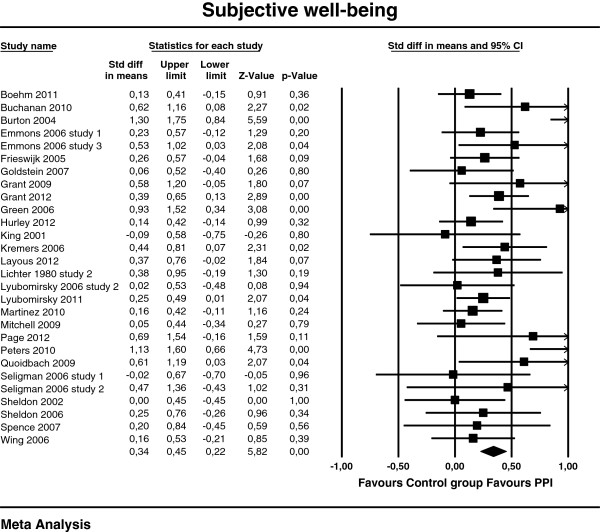
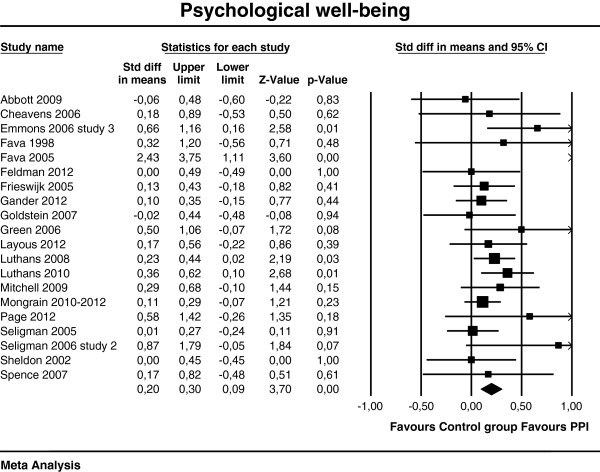
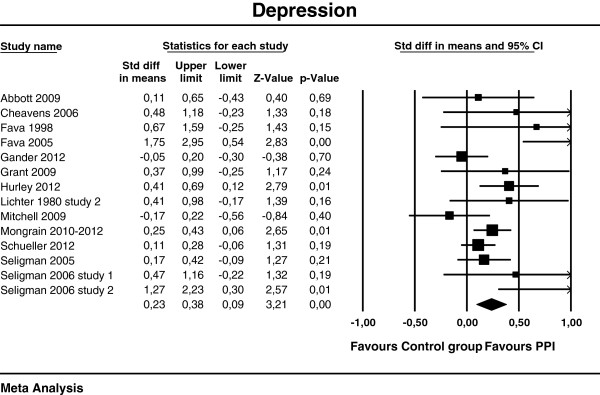
- Across all included studies, the pooled standardized mean differences were 0.34 for subjective well-being, 0.20 for psychological well-being, and 0.23 for depression, which the authors describe as small effects.
- At follow-up of 3–6 months (10 studies), effects remained significant for subjective well-being (d = 0.22, 95% CI [0.05, 0.38], p<.01) and psychological well-being (d = 0.16, 95% CI [0.02, 0.30], p=.03), but not for depression (d = 0.17, 95% CI [-0.06, 0.39], p=.15).
- Heterogeneity was moderate for subjective well-being (I² = 49.5%) and depression (I² = 47.0%), and low for psychological well-being (I² = 29.0%); effect sizes ranged from below 0 to as high as 2.4.
- For depression, larger effects were associated with longer duration, individual delivery, referral/hospital recruitment, inclusion of people with specific psychosocial problems, and lower study quality.
## Methods
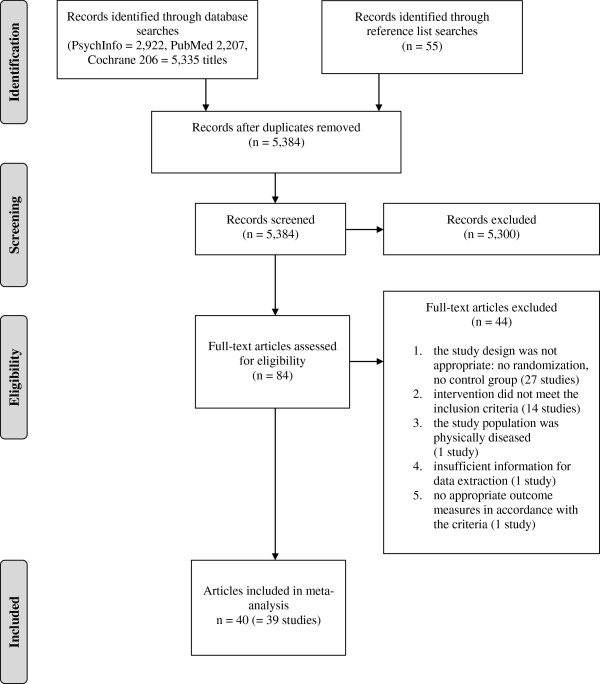
- Systematic review and meta-analysis of randomized controlled studies of positive psychology interventions, using PubMed, PsychInfo, the Cochrane Central Register of Controlled Trials, manual searches, and reference checking, covering 1998 to November 2012.
- Included 40 articles describing 39 studies with 6,139 participants; intervention formats included self-help, group training, and individual therapy.
- Main analysis used Cohen’s d under a random-effects model for three outcomes: subjective well-being, psychological well-being, and depression, with subgroup analyses and checks for heterogeneity and publication bias.
## Limitations
- The paper states that study quality was not high: no study met all quality criteria, randomization was often unclear, intention-to-treat analysis was rare (3/39 studies), and none reported an adequate power analysis.
- The authors note that heterogeneity was rather high because the included studies were diverse, and that the follow-up findings should be treated with caution because of the small number of studies and high attrition rates at follow-up.
- The text makes evident that publication bias is a limitation: funnel plots were asymmetric, fail-safe numbers were below the required thresholds, and Egger’s test suggested bias for psychological well-being and depression.
Model-written summary. Check it against the paper before relying on it.
Integrity signals
Registry
Cites
Statistics
Figures
Verification
Claims the paper makes
8 Valid · 2 Not valid · 9 Not checked · 90 Own results and interpretations
The cited sources that could be checked couldn’t confirm or dispute this claim.
In the paper
“First, the meta-analysis included both randomized studies and quasi-experimental studies.”
§ Positive psychology interventions: a meta-analysis of randomized controlled studies > Background
What the sources say
- Could not verifycites Sin and Lyubomirsky (2009) matched to “Enhancing well-being and alleviating depressive symptoms with positive psychology interventions: a practice-friendly meta-analysis” (2009) sourceExperimental — accuracy not yet measured
The Literature Search section requires included studies to have a comparison group, and Data Recorded distinguishes self-selected from non-self-selected participants. Neither passage establishes whether the meta-analysis included both randomized and quasi-experimental studies; searches for those design terms and for random assignment found no decisive passage. Page numbers were unavailable in our copy. (LLM, conf=0.72)
plain- Asserted: passes — The authors put it forward as true.
- Checkable: passes — It can be checked against evidence.
- Load-bearing: unclear — It is unclear whether the paper’s conclusions depend on it.
- Based: passes — The paper gives a reason why it holds.
- Could not verify
The cited sources support only part of this claim — read each source’s verdict below.
In the paper
“Their results show that PPIs can indeed be effective in enhancing well-being (r = 0.29, standardized mean difference Cohen’s d = 0.61) and help to reduce depressive symptom levels in clinical populations (r = 0.31, Cohen’s d = 0.65).”
§ Positive psychology interventions: a meta-analysis of randomized controlled studies > Background
What the sources say
- Partly supportedcites Sin and Lyubomirsky (2009) matched to “Enhancing well-being and alleviating depressive symptoms with positive psychology interventions: a practice-friendly meta-analysis” (2009) sourceExperimental — accuracy not yet measured
The Depression section reports that PPIs reduced depressive symptoms across 25 studies, with a mean effect of r = .31. The Participant Moderators section distinguishes depressed from nondepressed participants, so .31 is not an estimate specifically for clinical populations. The paper reports the effect as r, not as Cohen’s d = .65. (LLM, conf=0.87)
plainstates a cause- Asserted: passes — The authors put it forward as true.
- Checkable: passes — It can be checked against evidence.
- Load-bearing: unclear — It is unclear whether the paper’s conclusions depend on it.
- Based: passes — The paper gives a reason why it holds.
- Partly supported
Every source the paper cites for this claim was checked and supports it.
In the paper
“Their results show that PPIs can indeed be effective in enhancing well-being (r = 0.29, standardized mean difference Cohen’s d = 0.61) and help to reduce depressive symptom levels in clinical populations (r = 0.31, Cohen’s d = 0.65).”
§ Positive psychology interventions: a meta-analysis of randomized controlled studies > Background
What the sources say
- Supportedcites Sin and Lyubomirsky (2009) matched to “Enhancing well-being and alleviating depressive symptoms with positive psychology interventions: a practice-friendly meta-analysis” (2009) source
The Well-Being section reports that PPIs significantly improved well-being across 49 studies, with a mean r of .29. The paper reports r rather than Cohen’s d; converting .29 to d gives approximately .61, so the cited figures are consistent. (LLM, conf=0.90)
plainstates a cause- Asserted: passes — The authors put it forward as true.
- Checkable: passes — It can be checked against evidence.
- Load-bearing: passes — The paper’s conclusions depend on it.
- Based: passes — The paper gives a reason why it holds.
- Supported
Every source the paper cites for this claim was checked and supports it.
In the paper
“Second, study quality was not addressed as a potential effect moderator.”
§ Positive psychology interventions: a meta-analysis of randomized controlled studies > Background
What the sources say
- Supportedcites Sin and Lyubomirsky (2009) matched to “Enhancing well-being and alleviating depressive symptoms with positive psychology interventions: a practice-friendly meta-analysis” (2009) source
The Data Recorded section lists the variables coded for moderator analysis: participant characteristics, intervention format and duration, and comparison-group type. It does not include study quality, and the Methodological Moderators section discusses those methodological variables rather than study quality. Page numbers are unavailable in our copy. (LLM, conf=0.88)
plain- Asserted: passes — The authors put it forward as true.
- Checkable: passes — It can be checked against evidence.
- Load-bearing: unclear — It is unclear whether the paper’s conclusions depend on it.
- Based: passes — The paper gives a reason why it holds.
- Supported
Every source the paper cites for this claim was checked and supports it.
In the paper
“Remarkably, effect sizes in the current meta-analysis are around 0.3 points lower than the effect sizes in the meta-analysis by Sin and Lyubomirsky (2009) [37].”
§ Positive psychology interventions: a meta-analysis of randomized controlled studies > Discussion > Main findings
What the sources say
- Supportedcites Sin and Lyubomirsky (2009) [37] matched to “Enhancing well-being and alleviating depressive symptoms with positive psychology interventions: a practice-friendly meta-analysis” (2009) source
The Well-Being and Depression results report mean effect sizes of r = .29 and r = .31, respectively, establishing the values attributed to Sin and Lyubomirsky’s meta-analysis. The difference from the current meta-analysis is the citing authors’ comparison, not a finding this source could report. (LLM, conf=0.88)
plain- Asserted: passes — The authors put it forward as true.
- Checkable: passes — It can be checked against evidence.
- Load-bearing: passes — The paper’s conclusions depend on it.
- Based: passes — The paper gives a reason why it holds.
- Supported
70 more claims · 1 with their cited sources checked
Create a free account to see all 109 claims and to verify the 1 reference still open.
- Probably not a substantial claim. 14
- It may state two separate claims as one. 23
Claims other papers make about this one
Each is checked against this paper’s own text: does it say what the citing paper says it does?
The source backs part of the claim, not all of it — or backs it for a different population, condition or comparison.
In the citing paper
“In contrast to complex multicomponent health behavior or psychology interventions, PP exercises are simple, can be delivered remotely (e.g., by phone), and require minimal training of providers [34, 41, 42].”
From Positive Psychological Interventions for Patients with Type 2 Diabetes: Rationale, Theoretical Model, and Intervention Development (2015) · cites this paper as [41]
Experimental — accuracy not yet measuredThe source backs part of the claim, not all of it — or backs it for a different population, condition or comparison.
In the citing paper
“Studies supporting the efficacy of positive activity interventions (PAIs) have been primarily conducted in unselected (non-clinical) community samples and examined single positive activities in isolation (for a meta-analysis, see66, 67).”
From Upregulating the positive affect system in anxiety and depression: Outcomes of a positive activity intervention: Taylor et al. (2017) · cites this paper as [67]
Experimental — accuracy not yet measuredThe source backs part of the claim, not all of it — or backs it for a different population, condition or comparison.
In the citing paper
“Two meta-analyses of PPIs for depression and well-being found that these interventions have small to moderate effects in enhancing well-being and decreasing depressive symptoms and that effects are stronger for individual vs. group formats [30, 31].”
From Skills to Enhance Positivity in adolescents at risk for suicide: Protocol for a randomized controlled trial (2023) · cites this paper as [31]
Experimental — accuracy not yet measuredThe source backs part of the claim, not all of it — or backs it for a different population, condition or comparison.
In the citing paper
“Bolier and Abello (Bolier et al., 2013) reviewed digital PPIs and found that the majority of the included studies showed improvement in well-being or reduction of distress in the intervention group, compared to the control group.”
From Strength Back – A qualitative study on the co-creation of a positive psychology digital health intervention for spinal surgery patients (2023) · cites this paper as Bolier et al., 2013
Experimental — accuracy not yet measuredThe source backs part of the claim, not all of it — or backs it for a different population, condition or comparison.
In the citing paper
“PPIs may support patients to notice and savour positive experiences (Bolier et al., 2013). This may strengthen their commitment to value-based action.”
From Strength Back – A qualitative study on the co-creation of a positive psychology digital health intervention for spinal surgery patients (2023) · cites this paper as Bolier et al., 2013
Experimental — accuracy not yet measured
24 more claims about this paper
Create a free account to see every claim other papers make about this one.
Statistics recomputed
Every reported test result, recomputed from its test statistic and degrees of freedom. A result shows as not adding up only once an independent check has confirmed it.
- Consistentz = 6.43reported p < .01 · recomputed p < .001
“Z=6.43, p < .01”
- Consistentz = 4.18reported p < .01 · recomputed p < .001
“Z=4.18, p < .01”
- Consistentz = 3.33reported p < .01 · recomputed p < .001
“Z=3.33, p < .01”
Self-check
Percentages, sums and reported differences re-computed from the paper’s own numbers.
Self-check results appear here once an independent check has confirmed them.
Citations
Cites
Preferred Reporting Items for Systematic Reviews and Meta-Analyses: the PRISMA statement
Moher, D., Liberati, A., Tetzlaff, J., Altman, D. G., & for the PRISMA Group (2009) · BMJ · doi:10.1136/bmj.b2535 · Cited by 83,823
Preferred Reporting Items for Systematic Reviews and Meta-Analyses: The PRISMA Statement
Moher, D., Liberati, A., Tetzlaff, J., Altman, D. G., & The PRISMA Group (2009) · PLoS Medicine · doi:10.1371/journal.pmed.1000097 · Cited by 64,042 · cited 1×
“For the reporting of the results of this meta-analysis, we applied Preferred Reporting Items for Systematic Reviews and Meta-Analyses (PRISMA) guidelines [50].”
Measuring inconsistency in meta-analyses
Higgins, J. P. T., Thompson, S. G., Deeks, J. J., & Altman, D. G. (2003) · BMJ · doi:10.1136/bmj.327.7414.557 · Cited by 63,139 · cited 1×
“A value of 0% indicates an absence of dispersion, and larger values show increasing levels of heterogeneity where 25% can be considered as low, 50% as moderate and 75% as a high level of heterogeneity [46].”
Preferred reporting items for systematic reviews and meta-analyses: the PRISMA Statement.
(2009) · PubMed Central · Cited by 44,859
Cochrane Handbook for Systematic Reviews of Interventions: Cochrane Book Series
(2008) · doi:10.1002/9780470712184 · Cited by 25,048
Preferred Reporting Items for Systematic Reviews and Meta-Analyses: The PRISMA Statement
Moher, D., Liberati, A., Tetzlaff, J., & Altman, D. G. (2009) · Journal of Clinical Epidemiology · doi:10.1016/j.jclinepi.2009.06.005 · Cited by 19,575
Happiness is everything, or is it? Explorations on the meaning of psychological well-being.
Ryff, C. D. (1989) · Journal of Personality and Social Psychology · doi:10.1037/0022-3514.57.6.1069 · Cited by 14,847 · cited 1×
“Psychological well-being focuses on the optimal functioning of the individual and includes concepts such as mastery, hope and purpose in life [13,14].”
Borenstein, M., Hedges, L. V., Higgins, J. P. T., & Rothstein, H. R. (2009) · doi:10.1002/9780470743386 · Cited by 14,225
Duval, S., & Tweedie, R. (2000) · Biometrics · doi:10.1111/j.0006-341x.2000.00455.x · Cited by 14,099 · cited 1×
“If asymmetry is found in the funnel plot, the Trim and Fill method adjusts the pooled effect size for the outcomes of missing studies [49].”
Subjective well-being: Three decades of progress.
Diener, E., Suh, E. M., Lucas, R. E., & Smith, H. L. (1999) · Psychological Bulletin · doi:10.1037/0033-2909.125.2.276 · Cited by 12,910 · cited 2×
“Although the basic concepts of well-being, happiness and human flourishing have been studied for some decades [12,25-27], there was a lack of evidence-based interventions [24].”
Research works printed but not linked: 3
- Rupke SJ Blecke D Renfrow M Cognitive Therapy for Depression Am Fam Physician 2006 73 83 86 16417069
- Veenhoven R Gezond geluk: Effecten van geluk op gezondheid en wat dat kan betekenen voor de preventieve gezondheidszorg (Healthy happiness: effect of happiness on health and what this could mean for preventive public health) 2006 Rotterdam: Erasmus Universiteit
- Lamers S Bolier L Westerhof GJ Smit F Bohlmeijer E The impact of emotional well-being on long-term recovery and survival in physical illness: a meta-analysis J Behav Med 2012 5 538 547 21918889 PMC3439612 · DOI · Paper page
Cited by
Items 701–800 of 2,037
Appiah, R. (2022) · Culture & Psychology · doi:10.1177/1354067x221118916 · Cited by 25
“Presently, seven meta-analyses and systematic reviews have evaluated the effectiveness of a wide range of PPIs (Bolier et al., 2013; Carr et al., 2020; Chakhssi et al., 2018; Hendriks et al., 2020; Sin & Lyubomirsky, 2009; van Agteren et al., 2021; Weiss et al., 2016) and concluded that PPIs, largely, can promote subj…”
BackgroundYap, A. U., & Marpaung, C. (2023) · Oral Diseases · doi:10.1111/odi.14343 · Cited by 15
Yang, X., Wang, M., Wang, J., Zhang, S., Yang, X., & Zhao, L. (2024) · Frontiers in Public Health · doi:10.3389/fpubh.2024.1348743 · Cited by 28
Intimate Relationships and Stroke: Piloting a Dyadic Intervention to Improve Depression
Terrill, A. L., Reblin, M., MacKenzie, J. J., Baucom, B., Einerson, J., Cardell, B., Richards, L. G., & Majersik, J. J. (2022) · International Journal of Environmental Research and Public Health · doi:10.3390/ijerph19031804 · Cited by 17
“Specific activities in the ReStoreD intervention were selected based on empirically supported evidence for efficacy in improving depressive symptoms and/or increasing well-being [21,22].”
MethodKounenou, K., Kalamatianos, A., Garipi, A., & Kourmousi, N. (2022) · Frontiers in Psychology · doi:10.3389/fpsyg.2022.965945 · Cited by 25
“As PPIs have shown small to moderate effect sizes in a methodologically sound meta-analysis (Bolier et al., 2013), more effort should be put into the study of theoretically based moderating variables.”
BackgroundZuccarella‐Hackl, C., Princip, M., Auschra, B., Meister‐Langraf, R. E., Barth, J., & von Känel, R. (2023) · Neuroscience & Biobehavioral Reviews · doi:10.1016/j.neubiorev.2023.105186 · Cited by 17
Effectiveness of Hope Therapy Protocol on Depression and Hope in Amphetamine Users
Sadeghi, H., Ebrahimi, L., & Vatandoust, L. (2015) · international journal high risk behaviors & addiction · doi:10.5812/ijhrba.21905 · Cited by 18
“They also believe that their depression will continue and never be treated (9).”
BackgroundPositive Psychiatry Interventions in Geriatric Mental Health
Lam, J. A., Aftab, A., Lee, E., & Jeste, D. V. (2020) · Current Treatment Options in Psychiatry · doi:10.1007/s40501-020-00228-6 · Cited by 19
Is veterinary work more than satisfying? A critical review of the literature
Clise, M. H., Kirby, N. H., & McArthur, M. L. (2021) · Veterinary Record · doi:10.1002/vetr.77 · Cited by 17
Intervenciones clínicas positivas: ¿Por qué son importantes y cómo funcionan?
Bohlmeijer, E. T., Bolier, L., Lamers, S. M. A., & Westerhof, G. J. (2017) · Papeles del Psicólogo - Psychologist Papers · doi:10.23923/pap.psicol2017.2819 · Cited by 26
Self-citationCosta, M., Tagliabue, S., Matos, P. M., & Mota, C. P. (2020) · Children and Youth Services Review · doi:10.1016/j.childyouth.2020.105567 · Cited by 20
Torkhani, E., Dematte, E., SLAWINSKI, J. S., Csillik, A. S., Gay, M., Bensmaïl, D., Heinzlef, O., & de Marco, G. (2021) · Frontiers in Psychology · doi:10.3389/fpsyg.2021.767784 · Cited by 14
“The PPIs have shown their effectiveness in increasing well-being, both in the general population and clinical samples (Sin and Lyubomirsky, 2009; Bolier et al., 2013).”
BackgroundYan, W., Wang, Y., Jiang, Z., Peng, K., & Cohen, G. L. (2023) · Applied Psychology Health and Well-Being · doi:10.1111/aphw.12516 · Cited by 17
The Effects of Zentangle ® on Affective Well-Being Among Adults: A Pilot Randomized Controlled Trial
Chung, S.-K., Ho, F. Y., & Chan, H. C.-Y. (2022) · American Journal of Occupational Therapy · doi:10.5014/ajot.2022.049113 · Cited by 21
“In addition, a previous meta-analysis on positive psychological interventions indicated that positive psychological interventions might have been more effective with depression if the duration of the Zentangle intervention was longer (Bolier et al., 2013).”
The Effect of Gratitude on Well-being: Should We Prioritize Positivity or Meaning?
Atad, O. I., & Russo‐Netzer, P. (2021) · Journal of Happiness Studies · doi:10.1007/s10902-021-00448-4 · Cited by 27
“61; Sin & Lyubomirsky, 2009) and medium (r = 0.17, d = 0.34; Bolier et al., 2013) effects on well-being, a recent meta-analysis reported substantial flaws in previous meta-analysis methodology (White et al.”
ResultInfluentialLambert, L., Joshanloo, M., Marquez, J., Cody, B. L., Arora, T., Warren, M. A., Aguilar, L., Samways, M., & Teasel, S. (2022) · International Journal of Applied Positive Psychology · doi:10.1007/s41042-022-00066-2 · Cited by 16
Kukucska, D., Whitehall, J. M., Shorter, G. W., Howlett, N., Wyld, K., & Chater, A. (2023) · Journal of Police and Criminal Psychology · doi:10.1007/s11896-023-09579-1 · Cited by 19
Stone, B. M., Lindt, J. D., Rabinovich, N. E., & Gilbert, D. G. (2021) · Journal of Happiness Studies · doi:10.1007/s10902-021-00377-2 · Cited by 21
Positive Psychological Interventions and Information and Communication Technologies
Baños, R., Etchemendy, E., Carrillo, A., & Botella, C. (2016) · Advances in psychology, mental health, and behavioral studies (APMHBS) book series · doi:10.4018/978-1-4666-9986-1.ch002 · Cited by 14
“In the latter, the authors concluded that most of the analysed PPIs had a self-applied format, sometimes with face-to-face support, but most were delivered online (Bolier et al., 2013).”
BackgroundWang, J., Wang, X., Li, P., Zhang, M., Wu, H.-Y., Li, D.-L., Fang, M., & Chi, X. (2022) · Current Psychology · doi:10.1007/s12144-022-03783-8 · Cited by 14
“Positive psycholog - ical interventions are effective in increasing subjective well-being and helping to reduce depressive symptoms (Bolier et al., 2013; Wang et al., 2016).”
BackgroundHuffman, J. C., Feig, E. H., Zambrano, J., & Celano, C. M. (2022) · Affective Science · doi:10.1007/s42761-022-00137-2 · Cited by 24
Appiah, R., Fadiji, A. W., Wissing, M. P., & Schutte, L. (2021) · Journal of Community Psychology · doi:10.1002/jcop.22566 · Cited by 18
Development and Evaluation of Smartphone Detox Program for University Students
Buctot, D. B., Kim, N., & Park, K. E. (2018) · International Journal of Contents · doi:10.5392/ijoc.2018.14.4.001 · Cited by 19
A cluster randomized controlled trial of a positive physical activity intervention.
Ho, H. C. Y., Mui, M. W.-K., Wan, A., Yew, C. W.-S., & Lam, T. (2020) · Health Psychology · doi:10.1037/hea0000885 · Cited by 14
Mindfulness and Compassion as Foundations for Well-Being
Huppert, F. A. (2017) · Springer eBooks · doi:10.1007/978-3-319-56889-8_39 · Cited by 20
Roll, L. C., van Zyl, L. E., & Griep, Y. (2019) · Springer eBooks · doi:10.1007/978-3-030-20583-6_24 · Cited by 16
Ferrandez, S., Soubelet, A., & Vankenhove, L. (2021) · Stress and Health · doi:10.1002/smi.3096 · Cited by 18
Santini, Z. I., Nielsen, L., Hinrichsen, C., Nelausen, M. K., Meilstrup, C., Koyanagi, A., McDaid, D., Lyubomirsky, S., VanderWeele, T. J., & Koushede, V. (2021) · Mental Health & Prevention · doi:10.1016/j.mhp.2021.200222 · Cited by 24
“Individual activities can also make important contributions, such as keeping active in various ways, connecting with others, and engaging in meaningful causes or challenges (Santini et al., 2018; VanderWeele, 2020; Lyubomirsky & Layous, 2013; Sin & Lyubomirsky, 2009; Bolier et al., 2013).”
BackgroundPositive Psychological Interventions Aimed at Enhancing Psychological Ownership
van Zyl, L. E., van der Vaart, L., & Stemmet, L. (2017) · Springer eBooks · doi:10.1007/978-3-319-70247-6_7 · Cited by 16
Vereenooghe, L., & Westermann, K. (2019) · International Journal of Developmental Disabilities · doi:10.1080/20473869.2019.1599606 · Cited by 14
“Furthermore, it is expected that interventions which are delivered on an individual basis and focus on specific patient characteristics could potentially be more effective than population wide interventions (Bolier et al. 2013).”
BackgroundHaydon, M. D., Walsh, L. C., Fritz, M. M., Rahal, D., Lyubomirsky, S., & Bower, J. E. (2022) · The Journal of Positive Psychology · doi:10.1080/17439760.2022.2093786 · Cited by 19
“oped to harness positive psychological processes and promote well-being (Bolier et al., 2013; Sin & Lyubomirsky, 2009).”
BackgroundPositive Massage: An Intervention for Couples’ Wellbeing in a Touch-Deprived Era
Naruse, S. M., & Moss, M. C. (2021) · European Journal of Investigation in Health Psychology and Education · doi:10.3390/ejihpe11020033 · Cited by 16
“Positive psychology has advanced the scientific understanding of human wellbeing, especially how and what makes people happy, promoting numerous interventions with a general target of the individual [41,42].”
BackgroundEffects of two online positive psychology and meditation programs on persistent self-transcendence.
Martin, J. A., Ericson, M., Berwaldt, A., Stephens, E. D., & Briner, L. (2023) · Psychology of Consciousness Theory Research and Practice · doi:10.1037/cns0000286 · Cited by 21
Jin, Y., Wang, Y., Ma, H., Tian, X., & Wang, H. (2022) · Supportive Care in Cancer · doi:10.1007/s00520-022-06951-5 · Cited by 21
Telef, B. B. (2020) · TED EĞİTİM VE BİLİM · doi:10.15390/eb.2020.5587 · Cited by 22
da Costa, S., Martínez‐Moreno, E., Gorriti, V. D., Hermosilla, D., Amutio, A., Padoan, S., Méndez, D., Etchebehere, G., Torres, A., Telletxea, S., et al. (2020) · Frontiers in Psychology · doi:10.3389/fpsyg.2020.604412 · Cited by 26
Design for Sustained Wellbeing through Positive Activities—A Multi-Stage Framework
Wiese, L., Pohlmeyer, A. E., & Hekkert, P. (2020) · Multimodal Technologies and Interaction · doi:10.3390/mti4040071 · Cited by 20
“, [5,20]), in which people who are not exceptionally happy deliberately engage in certain activities known to increase wellbeing.”
BackgroundGarcía-Álvarez, D., Soler, M. J., Cobo‐Rendón, R., & Hernández-Lalinde, J. (2022) · Sustainability · doi:10.3390/su141811728 · Cited by 25
Schläpfer, S., Schneider, F., Santhanam, P., Eicher, M., Kowatsch, T., Witt, C. M., & Barth, J. (2024) · JMIR Cancer · doi:10.2196/52386 · Cited by 14
“…to increase the effectiveness of behavior change interventions and improve mHealth studies, it is critical to better understand what makes people stay engaged with mHealth apps [2,20-22] and especially with fully automated mHealth apps as the latter are more likely to be disseminated widely [23].”
BackgroundHilliard, M. E., Eshtehardi, S. S., Minard, C. G., Saber, R., Thompson, D. I., Karaviti, L. P., Rojas, Y., & Anderson, B. J. (2018) · JMIR Research Protocols · doi:10.2196/resprot.9147 · Cited by 13
“This is higher than reported effect sizes in other behavioral mHealth and eHealth research with youths with chronic health conditions ( d range=0.13-0.35 for change in health behaviors or disease control outcomes [56,57]) or positive psychology interventions ( d range=0.20-0.34 [58]).”
InfluentialGracias por todo: Una revisión sobre la gratitud desde la neurobiología a la clínica
Tala, Á. (2019) · Revista médica de Chile · doi:10.4067/s0034-98872019000600755 · Cited by 43
A PRISMA review of collective flow experiences in music contexts
Tay, K., Tan, L., & Goh, W. (2019) · Psychology of Music · doi:10.1177/0305735619873389 · Cited by 22
How Design Can (Not) Support Human Flourishing
Pohlmeyer, A. E. (2017) · Springer eBooks · doi:10.1007/978-3-319-51787-2_14 · Cited by 16
Stamatis, A., Morgan, G. B., Boolani, A., & Papadakis, Z. (2024) · Psych · doi:10.3390/psych6010014 · Cited by 18
“MT and grit are regarded as Positive Psychology [9] constructs as they both are considered to contribute to individual optimal functioning [2,10].”
BackgroundPast, present, and future life satisfaction: The role of age, positive and negative mood
Carrillo, A., Etchemendy, E., & Baños, R. (2018) · Current Psychology · doi:10.1007/s12144-018-9981-9 · Cited by 18
Liao, Y.-H., Lee, M.-F., Sung, Y., & Chen, H. (2023) · Journal of Happiness Studies · doi:10.1007/s10902-023-00654-2 · Cited by 19
“Various positive psychology-based interventions and strategies focused on increasing positive emotions have been found to be effective (Bolier et al., 2013; Chodkiewicz & Boyle, 2017; Waters, 2011).”
BackgroundEstinfort, W., Huang, J., Au, H., Lin, C.-L., Chen, Y., Chao, H. J., Chien, L., Lo, Y., & Chen, Y.-H. (2022) · European Psychiatry · doi:10.1192/j.eurpsy.2022.2338 · Cited by 21
“SWBhas long been considered critical to positively affect several health outcomes including decreased mortality, decreased cardiovascular disease risks, fewer chronic illnesses and functional impairments, and improved health behavior [3, 4].”
BackgroundLos límites de las intervenciones positivas
Hervás, G., & de Madrid, U. C. (2017) · Papeles del Psicólogo - Psychologist Papers · doi:10.23923/pap.psicol2017.2820 · Cited by 16
“En los últimos años la investigación sobre intervenciones positivas ha aumentado considerablemente, y los resultados se podría decir que han sido mejores de lo esperado (ver revisión en Bolier et al., 2013).”
BackgroundHistoria, investigación y discurso de la Psicología Positiva: Un abordaje crítico
Ríos, L. F., & Vázquez, M. V. (2018) · Terapia psicológica · doi:10.4067/s0718-48082018000200123 · Cited by 27
“Así pues, en unos meta-análisis se incluye el concepto de mindfulnees (Sin & Lyubomirsky, 2009), mientras en otros es excluido (Bolier et al., 2013).”
Mills, A., & Kreutzer, J. (2016) · Journal of occupational rehabilitation · doi:10.1007/s10926-015-9608-z · Cited by 16
“[41] concluded that use of PPIs resulted in improved psychological wellbeing and decreased depressive symptoms.”
BackgroundJayaraj, G., Cao, X., Horwitz, A. G., Rozwadowski, M., Shea, S., Hanauer, S. N., Hanauer, D. A., Tewari, M., Shedden, K., & Choi, S. W. (2025) · Journal of Medical Internet Research · doi:10.2196/67627 · Cited by 22
“Simple strategies aimed at enhancing positive thoughts, emotions, and behaviors have been shown to be effective and highly scalable [36-39].”
Łakuta, P. (2021) · Psychological Medicine · doi:10.1017/s0033291721004499 · Cited by 16
“The observed effects, however, compare (more) favorably to the results of three meta-analyses on the effects of positive psychology interventions (PPIs; see Bolier et al., 2013; Sin & Lyubomirsky, 2009; White, Uttl, & Holder, 2019).”
BackgroundResultInfluentialGao, J., Roslan, S. B., Soh, K. G., & Zaremohzzabieh, Z. (2024) · Frontiers in Psychology · doi:10.3389/fpsyg.2024.1446260 · Cited by 34
An Introduction to Positive Evolutionary Psychology
Geher, G., Fritche, M., Goodwine, A., Lombard, J., Longo, K. D., & Montana, D. (2023) · Cambridge University Press eBooks · doi:10.1017/9781009286817 · Cited by 15
Mascaro, J. S., Wallace, A., Hyman, B., Haack, C. I., Hill, C. C., Moore, M. A., Lund, M. B., Nehl, E. J., Bergquist, S. H., & Cole, S. W. (2022) · International Journal of Environmental Research and Public Health · doi:10.3390/ijerph19042255 · Cited by 18
“A growing body of research is focused on identifying evidence-based approaches to improving psycho-social flourishing [94].”
BackgroundSun, Y., Wang, M. P., Ho, S. Y., Chan, C. S., Man, P. K. W., Kwok, T. T.-O., Wan, A., & Lam, T. H. (2022) · Games for Health Journal · doi:10.1089/g4h.2021.0215 · Cited by 12
Protective positive psychology factors and emotional distress after cardiac arrest
Presciutti, A., Flickinger, K. L., Coppler, P. J., Ratay, C. R., Doshi, A. A., Perman, S. M., Vranceanu, A., & Elmer, J. (2023) · Resuscitation · doi:10.1016/j.resuscitation.2023.109846 · Cited by 15
A Brief Scale to Measure Caring for Bliss: Conceptualization, Initial Development, and Validation
Rudaz, M., Ledermann, T., May, R. W., & Fincham, F. D. (2019) · Mindfulness · doi:10.1007/s12671-019-01267-8 · Cited by 13
Hausmann, L. R. M., Ibrahim, S. A., Kwoh, C. K., Youk, A. O., Obrosky, D. S., Weiner, D. K., Vina, E. R., Gallagher, R. M., Mauro, G. T., & Parks, A. C. (2017) · Contemporary Clinical Trials · doi:10.1016/j.cct.2017.09.001 · Cited by 12
“Strong evidence supporting this model indicates that positive psychological activities yield lasting improvements in overall wellbeing.(30,34,37) Research on the effects of positive activities on pain, however, is in its infancy.”
My Best Self in the Past, Present or Future: Results of Two Randomized Controlled Trials
Carrillo, A., Etchemendy, E., & Baños, R. (2020) · Journal of Happiness Studies · doi:10.1007/s10902-020-00259-z · Cited by 17
Gorbeña, S., Marroquín, I. G., Govillard, L., Sarrionandia, S., Macía, P., Penas, P., & Castillo, I. I. (2021) · Psychology and Health · doi:10.1080/08870446.2021.1936520 · Cited by 14
“Several meta-analyses and systematic reviews provide evidence about the effectiveness of these interventions (Bolier et al., 2013; Chakhssi et al., 2018; Hendriks et al., 2019; Koydemir et al., 2020; Sin & Lyubomirsky, 2009; Weiss et al., 2016).”
BackgroundHaque, O. S., Lenfest, Y., & Peteet, J. R. (2019) · Disability and Rehabilitation · doi:10.1080/09638288.2019.1602674 · Cited by 15
“A number of interventions derive from this approach including hope therapy, positive writing, individual, group and self-help modalities, life coaching, and exercises that ask people to imagine their best-possible-selves [15].”
BackgroundLee, A., Datu, J. A. D., Chan, D. K. C., Lau, E. Y. H., Fung, W. K., Cheng, R. W., Cheung, R. Y. M., & Chung, K. K. H. (2023) · Educational Psychology · doi:10.1080/01443410.2023.2189649 · Cited by 15
“…a review of the effect sizes in this investigation indicates that this intervention yielded small effects on most of the well-being outcomes, which corroborates prior evidence on the average effect sizes between positive psychological interventions and well-being outcomes (Bolier et al., 2013).”
BackgroundMethodResultInfluentialLas fortalezas en personas mayores como factor que aumenta el bienestar
Fernández, E. R., Martínez, A. R. O., & Martos, R. (2015) · European Journal of Investigation in Health Psychology and Education · doi:10.30552/ejihpe.v5i2.111 · Cited by 11
“…de desarrollar nuestras fortalezas psicológicas puede producir aumentos en el bienestar individual tal y como muestra el meta-análisis realizado por Bolier et al. (2013), cuyos resultados indican que las intervenciones basadas en psicología positiva mejoran significativamente el bienestar…”
BackgroundMeaning and importance of weeping
Bellieni, C. V. (2017) · New Ideas in Psychology · doi:10.1016/j.newideapsych.2017.06.003 · Cited by 19
Raymond, I. J., Iasiello, M. P., Kelly, D., & Jarden, A. (2019) · International Journal of Applied Positive Psychology · doi:10.1007/s41042-019-00014-7 · Cited by 16
DuPont, C. M., Pressman, S. D., Reed, R. G., Manuck, S. B., Marsland, A. L., & Gianaros, P. J. (2023) · Affective Science · doi:10.1007/s42761-022-00148-z · Cited by 13
Carrillo, A., Martínez-Sanchis, M., Etchemendy, E., & Baños, R. (2019) · PLoS ONE · doi:10.1371/journal.pone.0216896 · Cited by 16
“There is evidence about PPIs being efficacious resources to improve wellbeing over different populations, but the research about the mechanisms that produce those benefits is still in its infancy [5,12,13].”
BackgroundVerstaen, A., Moskowitz, J. T., Snowberg, K. E., Merrilees, J. J., & Dowling, G. A. (2018) · Open Access Journal of Clinical Trials · doi:10.2147/oajct.s150597 · Cited by 14
“Intervention studies that seek to boost the experience of positive affect have demonstrated success at enhancing well-being and reducing depressive symptoms.(46,102) A recent study of the positive affect intervention delivered in person to people newly diagnosed with HIV demonstrated that individuals in the interventi…”
Joubert, J., & Guse, T. (2021) · Journal of Contemporary Psychotherapy · doi:10.1007/s10879-021-09511-w · Cited by 23
Joubert, J., & Guse, T. (2021) · Counselling and Psychotherapy Research · doi:10.1002/capr.12416 · Cited by 16
Happiness-Enhancing Strategies Among Indians
Midha, S., & Singh, K. K. (2023) · Springer eBooks · doi:10.1007/978-981-99-2397-7_15 · Cited by 14
Krekel, C., Neve, J.-E. D., Fancourt, D. E., & Layard, R. (2021) · Journal of Economic Behavior & Organization · doi:10.1016/j.jebo.2021.05.021 · Cited by 28
Hanson, K. (2018) · Behavioural and Cognitive Psychotherapy · doi:10.1017/s1352465818000218 · Cited by 19
“Research supports the use of positive psychology interventions for the reduction of depression symptoms (Bolier et al., 2013) and as such self-help books from this perspective should be empirically tested.”
BackgroundMethodInfluentialTemple, J., Salmon, P., Smith, C. T., Huntley, C. D., & Fisher, P. (2018) · Journal of Psychosomatic Research · doi:10.1016/j.jpsychores.2018.02.013 · Cited by 14
“It is widely recognised that poor quality trials often overestimate treatment effects((18-23)).”
BackgroundGallagher, S. M., O’Sullivan, L., Hughes, Z., & O’Connell, B. H. (2020) · Applied Psychology Health and Well-Being · doi:10.1111/aphw.12195 · Cited by 19
“Although this is a weakness in the current trial, high attrition rates and dropouts from Internet-based trials are regularly substantial (Wantland, Portillo, Holzemer, Slaughter, & McGhee, 2004) and are a common feature in similar intervention studies (Bolier et al., 2013).”
BackgroundPositive Technologies for Understanding and Promoting Positive Emotions
Baños, R., Carrillo, A., Etchemendy, E., & Botella, C. (2017) · The Spanish Journal of Psychology · doi:10.1017/sjp.2017.42 · Cited by 14
“It is not within the scope of this work to summarize all the ways ICTs can train and modify positive emotions (for a review, see Baños et al., 2016; Baños et al., 2017; Bolier et al., 2013; Bolier & Abello, 2014).”
BackgroundDuan, W., & Bu, H. (2018) · Advances in Psychological Science · doi:10.3724/sp.j.1042.2018.01831 · Cited by 16
Well‐Being and Cardiovascular Health: Insights From the UK Biobank Study
Zhong, J., Zhang, P., Dong, Y., Xu, Y., Huang, H., Ye, R., Liu, X., & Sun, W. (2024) · Journal of the American Heart Association · doi:10.1161/jaha.124.035225 · Cited by 15
A mixed-methods longitudinal evaluation of a one-day mental health wellness intervention
Doyle, L., de Vries, J., Higgins, A., Keogh, B., McBennett, P., & O’Shea, M. T. (2016) · Health Education Journal · doi:10.1177/0017896916662075 · Cited by 17
German Translation of the Satisfaction With Life Scale for Children and Adolescents
Lang, J., & Schmitz, B. (2019) · Journal of Psychoeducational Assessment · doi:10.1177/0734282919849361 · Cited by 13
“…is a substantial advocacy for establishing interventions of well-being in the scholastic context (i.e., Seligman, Ernst, Gillham, Reivich, & Linkins, 2009), the meta-analysis conducted by Bolier et al. (2013) was not able to include school-based intervention studies due to methodological criteria.”
BackgroundTaghvaienia, A., & Zonobitabar, A. (2020) · Child and Adolescent Psychiatry and Mental Health · doi:10.1186/s13034-020-00331-9 · Cited by 16
Humor in Psychiatry: Lessons From Neuroscience, Psychopathology, and Treatment Research
Berger, P., Bitsch, F., & Falkenberg, I. (2021) · Frontiers in Psychiatry · doi:10.3389/fpsyt.2021.681903 · Cited by 18
Enhancing Resilience in Family Caregivers Using an mHealth App
Smeallie, E., Rosenthal, L., Johnson, A. K., Roslin, C., Hassett, A. L., & Choi, S. W. (2022) · Applied Clinical Informatics · doi:10.1055/a-1967-8721 · Cited by 13
“25 This platform also collects digital signals through wearable sensors and self-report outcomes.”
BackgroundSchotanus-Dijkstra, M., Drossaert, C. H. C., Pieterse, M. E., Walburg, J. A., Bohlmeijer, E. T., & Smit, F. (2018) · BMC Psychiatry · doi:10.1186/s12888-018-1825-5 · Cited by 18
“mental well-being (a continuous measure) [16, 17].”
Self-citationSchnitker, S. A., Ratchford, J. L., & Lorona, R. T. (2019) · The Journal of Positive Psychology · doi:10.1080/17439760.2019.1685572 · Cited by 14
“…construct, it must be distinguished from happiness, general positive emotionality, and well-being, which are extensively studied in psychology (e.g. Bartels, 2015; Bolier et al., 2013; DeNeve & Cooper, 1998; Luhmann, Hofmann, Eid, & Lucas, 2012; Lyubomirsky et al., 2005; Sin & Lyubomirsky, 2009).”
BackgroundKalisch, L., Boniwell, I., Osin, E., & Baeza-Velasco, C. (2022) · Journal of Contemporary Psychotherapy · doi:10.1007/s10879-021-09521-8 · Cited by 12
A Systematic Review and Lived-Experience Panel Analysis of Hopefulness in Youth Depression Treatment
Berry, C., Hodgekins, J., Michelson, D., Chapman, L. A., Chelidoni, O., Crowter, L., Sacadura, C., & Fowler, D. G. (2021) · Adolescent Research Review · doi:10.1007/s40894-021-00167-0 · Cited by 16
Rolland, J. S. (2019) · doi:10.1002/9781119420743.ch15 · Cited by 12
Kennes, A., Lataster, J., Janssens, M., Simons, M., Reijnders, J. S. A. M., Jacobs, N., & Peeters, S. C. T. (2024) · International Journal of Applied Positive Psychology · doi:10.1007/s41042-024-00148-3 · Cited by 19
“Further, SPPIs that revealed a significant effect on positive emotions, were mainly SPPIs focusing on self-compassion, i.e., being warm and understanding toward ourselves when we suffer or feel inadequate, an aspect that was not given attention in THBH (Bluth et al., 2016; Kang et al., 2018).”
InfluentialPositive Psychological Interventions and Information and Communication Technologies
Baños, R., Etchemendy, E., Carrillo, A., & Botella, C. (2020) · IGI Global eBooks · doi:10.4018/978-1-7998-3432-8.ch083 · Cited by 13
Yotsidi, V., Nikolatou, E. K., Κουρκούτας, Η., & Kougioumtzis, G. Α. (2023) · Frontiers in Psychology · doi:10.3389/fpsyg.2023.1171225 · Cited by 20
Wutzl, B., Leibnitz, K., Kominami, D., Ohsita, Y., Kaihotsu, M., & Murata, M. (2023) · Sensors · doi:10.3390/s23157006 · Cited by 14
Recommendations for positive psychology interventions in school settings
Mangan, S. A., Baumsteiger, R., & Bronk, K. C. (2020) · The Journal of Positive Psychology · doi:10.1080/17439760.2020.1789709 · Cited by 13
Hower, H. M., Reilly, E. E., Wierenga, C. E., & Kaye, W. H. (2021) · Eating Disorders · doi:10.1080/10640266.2021.1883882 · Cited by 15
“Meta-analyses on positive psychology interventions suggest small but durable longitudinal effects on these domains (Bolier et al., 2013).”
Agarwal, S., Wagner, M. K., & Mion, M. (2024) · Neurotherapeutics · doi:10.1016/j.neurot.2024.e00509 · Cited by 15
“These positive factors show evidence of being modi fi able [82,83].”
Population levels of wellbeing and the association with social capital
Taylor, A. W., Kelly, G., Grande, E. D., Kelly, D., Marin, T. S., Hey, N. A., Burke, K. J., & Licinio, J. (2017) · BMC Psychology · doi:10.1186/s40359-017-0193-0 · Cited by 13
“While previous interventions based on social capital have shown positive effects on wellbeing in selected groups [2, 26, 27], positive psychology research has not yet fully incorporated social capital as an important influence in understanding how individuals and communities cope in times of stress with social capital…”
BackgroundActivating values intervention: an integrative pathway to well-being
Russo‐Netzer, P., & Atad, O. I. (2024) · Frontiers in Psychology · doi:10.3389/fpsyg.2024.1375237 · Cited by 18
Positive Psychological Interventions in African Contexts: A Scoping Review
Guse, T. (2022) · Cross-cultural advancements in positive psychology · doi:10.1007/978-3-030-85924-4_16 · Cited by 17
Transforming stress to happiness: Positive couple therapy with distressed couples
Genç, E. (2021) · Journal of Happiness and Health · Cited by 19
Metadata
- Authors
- Bolier, L., Haverman, M., Westerhof, G. J., Riper, H., Smit, F., & Bohlmeijer, E.
- Affiliations
- Trimbos Institute (NL)
- University of Twente (NL)
- Leuphana University of Lüneburg (DE)
- Corresponding author
- Bolier, Linda
- Venue
- BMC Public Health
- Published
- 2013-02-08
- Volume
- 13
- Issue
- 1
- Pages
- 119-119
- ISSN
- 1471-2458 (ISSN-L)
- PMC
- PMC3599475
- OpenAlex
- W2120582212
- Semantic Scholar
- 45fd44e9cff6334f80a54b3d327ced46d9b2d444
- Cited by
- 1,996
- References
- 115
- Citations by year
- 2026: 97 · 2025: 134 · 2024: 155 · 2023: 197 · 2022: 190 · 2021: 208 · 2020: 231 · 2019: 201 · 2018: 182 · 2017: 153 · 2016: 117 · 2015: 76 · 2014: 40 · 2013: 12
- FWCI
- 10.79
- Type
- journal article
- Language
- en
- Open access
- gold
- doi.org
- Licence
- Locations
- BMC Public Health (publishedVersion, cc-by)
- Europe PMC (PubMed Central) (publishedVersion, cc-by)
- PubMed Central (publishedVersion, cc-by)
- PubMed (publishedVersion)
- Pure Amsterdam UMC (publishedVersion, other-oa)
- Amsterdam UMC (VU Amsterdam) - Institutional Repository (publishedVersion, other-oa)
- Multilingual Matters (Channel View Publications) (acceptedVersion, cc-by)
- University of Twente Research Information (acceptedVersion, cc-by)
- Data Archiving and Networked Services (DANS) (submittedVersion, other-oa)
- Digital Academic REpository of VU University Amsterdam (Vrije Universiteit Amsterdam) (submittedVersion)
- VU Research Portal (submittedVersion, other-oa)
- University of Twente Research Information (submittedVersion, cc-by)
- Topics
- Social Sciences › Psychology › Social Psychology › Psychological Well-being and Life Satisfaction
- Social Sciences › Psychology › Clinical Psychology › Mindfulness and Compassion Interventions
- Social Sciences › Psychology › Applied Psychology › Optimism, Hope, and Well-being
- Keywords
- positive psychology interventions, subjective well-being, psychological well-being, depression, self-help intervention, group training, individual psychotherapy, mental health promotion, intervention effectiveness, publication bias, study quality
- MeSH terms
- Depression, Health Promotion, Humans, Psychotherapy, Randomized Controlled Trials as Topic, Treatment Outcome
About these checks
Registry, retraction, Cites and statistics results are computed, not judged, with one exception: a printed reference that no index lists is read once by a model before it counts as a citation error. Claims are extracted by a model and kept only when their quote appears verbatim in the text; each cited source is then checked, with a model’s help, for whether it says what the claim relies on. Those verdicts can be wrong — read the claim’s quote and the cited source before relying on one.
The claim verdicts this report counts are experimental: their accuracy is not yet measured.
A language model drew the claims from the paper on 2026-10-10, under version 3 of the claim definition (model deepseek-v4.1-flash, prompt extract-v3).
A second model labelled each claim on 2026-10-10 (model jev-1.13-20260917, definition revision gold-guideline-v0.2).
Cited sources are checked with a language model’s help (gpt-6-sol).
Statistics and arithmetic are recomputed, not judged.
Confidence bands are shown only for fields calibrated on our annotated test set. None is calibrated yet, so no band is shown.
What counts as a claim ›How we measure confidence ›How we check this ›
Are you an author, or do you see a problem with this page? Request a review
Data sources
Bibliographic data: Semantic Scholar, OpenAlex, Crossref.
Contains information from the Semantic Scholar Academic Graph Datasets, made available under the ODC Attribution License (ODC-BY 1.0).
Semantic Scholar’s data is described in: Kinney, R., et al. (2023). The Semantic Scholar Open Data Platform. arXiv:2301.10140.
