

Positive psychology interventions: a meta-analysis of randomized controlled studies
Open accessThe DOI matches its Crossref record; 109 of the 115 references it cites were found in a registry or an index; 10 of the 22 sources its claims cite were checked for support.
Abstract
BACKGROUND: The use of positive psychological interventions may be considered as a complementary strategy in mental health promotion and treatment. The present article constitutes a meta-analytical study of the effectiveness of positive psychology interventions for the general public and for individuals with specific psychosocial problems. METHODS: We conducted a systematic literature search using PubMed, PsychInfo, the Cochrane register, and manual searches. Forty articles, describing 39 studies, totaling 6,139 participants, met the criteria for inclusion. The outcome measures used were subjective well-being, psychological well-being and depression. Positive psychology interventions included self-help interventions, group training and individual therapy. RESULTS: The standardized mean difference was 0.34 for subjective well-being, 0.20 for psychological well-being and 0.23 for depression indicating small effects for positive psychology interventions. At follow-up from three to six months, effect sizes are small, but still significant for subjective well-being and psychological well-being, indicating that effects are fairly sustainable. Heterogeneity was rather high, due to the wide diversity of the studies included. Several variables moderated the impact on depression: Interventions were more effective if they were of longer duration, if recruitment was conducted via referral or hospital, if interventions were delivered to people with certain psychosocial problems and on an individual basis, and if the study design was of low quality. Moreover, indications for publication bias were found, and the quality of the studies varied considerably. CONCLUSIONS: The results of this meta-analysis show that positive psychology interventions can be effective in the enhancement of subjective well-being and psychological well-being, as well as in helping to reduce depressive symptoms. Additional high-quality peer-reviewed studies in diverse (clinical) populations are needed to strengthen the evidence-base for positive psychology interventions.
Overview
CoChat Summary
## TL;DR
This meta-analysis of 39 randomized studies (40 articles; 6,139 participants) found that positive psychology interventions had small but significant benefits for subjective well-being, psychological well-being, and depressive symptoms. Effects were somewhat sustained at 3–6 months for well-being outcomes, but study heterogeneity and publication bias were notable.
## Key findings
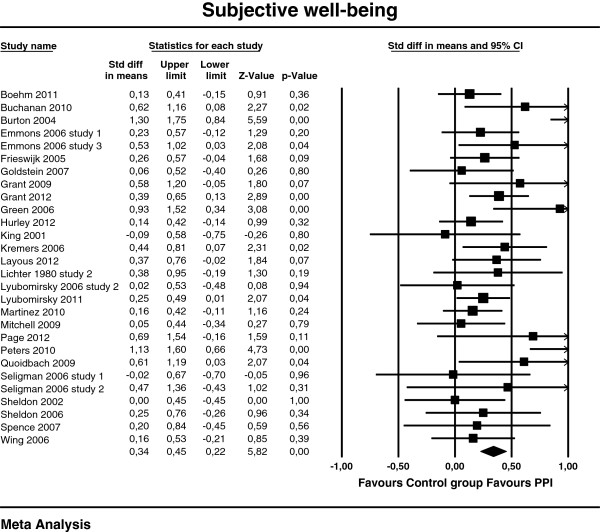
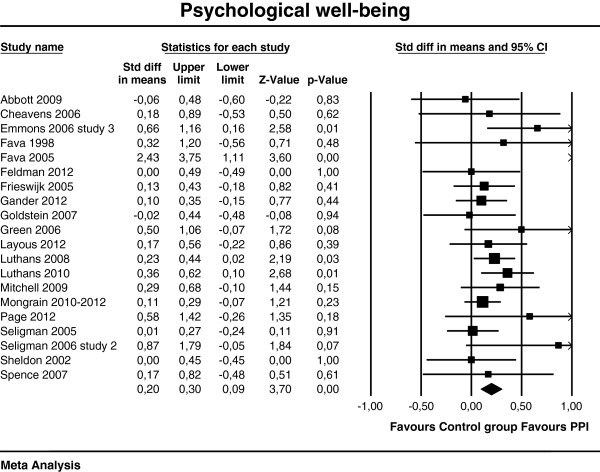
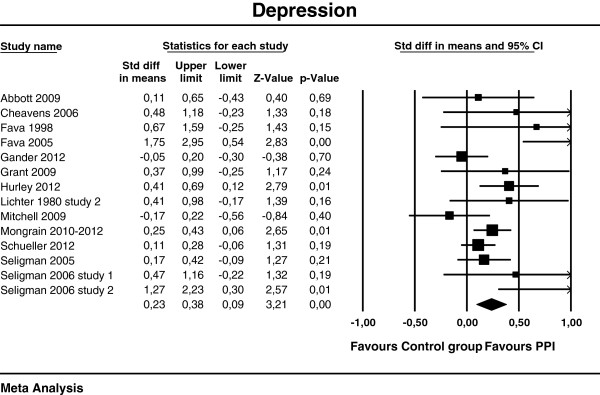
- Across all included studies, the pooled standardized mean differences were 0.34 for subjective well-being, 0.20 for psychological well-being, and 0.23 for depression, which the authors describe as small effects.
- At follow-up of 3–6 months (10 studies), effects remained significant for subjective well-being (d = 0.22, 95% CI [0.05, 0.38], p<.01) and psychological well-being (d = 0.16, 95% CI [0.02, 0.30], p=.03), but not for depression (d = 0.17, 95% CI [-0.06, 0.39], p=.15).
- Heterogeneity was moderate for subjective well-being (I² = 49.5%) and depression (I² = 47.0%), and low for psychological well-being (I² = 29.0%); effect sizes ranged from below 0 to as high as 2.4.
- For depression, larger effects were associated with longer duration, individual delivery, referral/hospital recruitment, inclusion of people with specific psychosocial problems, and lower study quality.
## Methods
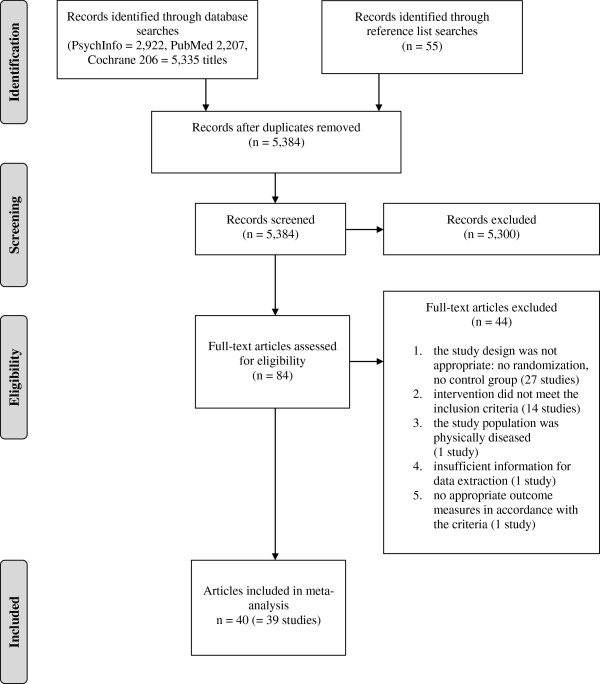
- Systematic review and meta-analysis of randomized controlled studies of positive psychology interventions, using PubMed, PsychInfo, the Cochrane Central Register of Controlled Trials, manual searches, and reference checking, covering 1998 to November 2012.
- Included 40 articles describing 39 studies with 6,139 participants; intervention formats included self-help, group training, and individual therapy.
- Main analysis used Cohen’s d under a random-effects model for three outcomes: subjective well-being, psychological well-being, and depression, with subgroup analyses and checks for heterogeneity and publication bias.
## Limitations
- The paper states that study quality was not high: no study met all quality criteria, randomization was often unclear, intention-to-treat analysis was rare (3/39 studies), and none reported an adequate power analysis.
- The authors note that heterogeneity was rather high because the included studies were diverse, and that the follow-up findings should be treated with caution because of the small number of studies and high attrition rates at follow-up.
- The text makes evident that publication bias is a limitation: funnel plots were asymmetric, fail-safe numbers were below the required thresholds, and Egger’s test suggested bias for psychological well-being and depression.
Model-written summary. Check it against the paper before relying on it.
Integrity signals
Registry
Cites
Statistics
Figures
Verification
Claims the paper makes
8 Valid · 2 Not valid · 9 Not checked · 90 Own results and interpretations
The cited sources that could be checked couldn’t confirm or dispute this claim.
In the paper
“First, the meta-analysis included both randomized studies and quasi-experimental studies.”
§ Positive psychology interventions: a meta-analysis of randomized controlled studies > Background
What the sources say
- Could not verifycites Sin and Lyubomirsky (2009) matched to “Enhancing well-being and alleviating depressive symptoms with positive psychology interventions: a practice-friendly meta-analysis” (2009) sourceExperimental — accuracy not yet measured
The Literature Search section requires included studies to have a comparison group, and Data Recorded distinguishes self-selected from non-self-selected participants. Neither passage establishes whether the meta-analysis included both randomized and quasi-experimental studies; searches for those design terms and for random assignment found no decisive passage. Page numbers were unavailable in our copy. (LLM, conf=0.72)
plain- Asserted: passes — The authors put it forward as true.
- Checkable: passes — It can be checked against evidence.
- Load-bearing: unclear — It is unclear whether the paper’s conclusions depend on it.
- Based: passes — The paper gives a reason why it holds.
- Could not verify
The cited sources support only part of this claim — read each source’s verdict below.
In the paper
“Their results show that PPIs can indeed be effective in enhancing well-being (r = 0.29, standardized mean difference Cohen’s d = 0.61) and help to reduce depressive symptom levels in clinical populations (r = 0.31, Cohen’s d = 0.65).”
§ Positive psychology interventions: a meta-analysis of randomized controlled studies > Background
What the sources say
- Partly supportedcites Sin and Lyubomirsky (2009) matched to “Enhancing well-being and alleviating depressive symptoms with positive psychology interventions: a practice-friendly meta-analysis” (2009) sourceExperimental — accuracy not yet measured
The Depression section reports that PPIs reduced depressive symptoms across 25 studies, with a mean effect of r = .31. The Participant Moderators section distinguishes depressed from nondepressed participants, so .31 is not an estimate specifically for clinical populations. The paper reports the effect as r, not as Cohen’s d = .65. (LLM, conf=0.87)
plainstates a cause- Asserted: passes — The authors put it forward as true.
- Checkable: passes — It can be checked against evidence.
- Load-bearing: unclear — It is unclear whether the paper’s conclusions depend on it.
- Based: passes — The paper gives a reason why it holds.
- Partly supported
Every source the paper cites for this claim was checked and supports it.
In the paper
“Their results show that PPIs can indeed be effective in enhancing well-being (r = 0.29, standardized mean difference Cohen’s d = 0.61) and help to reduce depressive symptom levels in clinical populations (r = 0.31, Cohen’s d = 0.65).”
§ Positive psychology interventions: a meta-analysis of randomized controlled studies > Background
What the sources say
- Supportedcites Sin and Lyubomirsky (2009) matched to “Enhancing well-being and alleviating depressive symptoms with positive psychology interventions: a practice-friendly meta-analysis” (2009) source
The Well-Being section reports that PPIs significantly improved well-being across 49 studies, with a mean r of .29. The paper reports r rather than Cohen’s d; converting .29 to d gives approximately .61, so the cited figures are consistent. (LLM, conf=0.90)
plainstates a cause- Asserted: passes — The authors put it forward as true.
- Checkable: passes — It can be checked against evidence.
- Load-bearing: passes — The paper’s conclusions depend on it.
- Based: passes — The paper gives a reason why it holds.
- Supported
Every source the paper cites for this claim was checked and supports it.
In the paper
“Second, study quality was not addressed as a potential effect moderator.”
§ Positive psychology interventions: a meta-analysis of randomized controlled studies > Background
What the sources say
- Supportedcites Sin and Lyubomirsky (2009) matched to “Enhancing well-being and alleviating depressive symptoms with positive psychology interventions: a practice-friendly meta-analysis” (2009) source
The Data Recorded section lists the variables coded for moderator analysis: participant characteristics, intervention format and duration, and comparison-group type. It does not include study quality, and the Methodological Moderators section discusses those methodological variables rather than study quality. Page numbers are unavailable in our copy. (LLM, conf=0.88)
plain- Asserted: passes — The authors put it forward as true.
- Checkable: passes — It can be checked against evidence.
- Load-bearing: unclear — It is unclear whether the paper’s conclusions depend on it.
- Based: passes — The paper gives a reason why it holds.
- Supported
Every source the paper cites for this claim was checked and supports it.
In the paper
“Remarkably, effect sizes in the current meta-analysis are around 0.3 points lower than the effect sizes in the meta-analysis by Sin and Lyubomirsky (2009) [37].”
§ Positive psychology interventions: a meta-analysis of randomized controlled studies > Discussion > Main findings
What the sources say
- Supportedcites Sin and Lyubomirsky (2009) [37] matched to “Enhancing well-being and alleviating depressive symptoms with positive psychology interventions: a practice-friendly meta-analysis” (2009) source
The Well-Being and Depression results report mean effect sizes of r = .29 and r = .31, respectively, establishing the values attributed to Sin and Lyubomirsky’s meta-analysis. The difference from the current meta-analysis is the citing authors’ comparison, not a finding this source could report. (LLM, conf=0.88)
plain- Asserted: passes — The authors put it forward as true.
- Checkable: passes — It can be checked against evidence.
- Load-bearing: passes — The paper’s conclusions depend on it.
- Based: passes — The paper gives a reason why it holds.
- Supported
70 more claims · 1 with their cited sources checked
Create a free account to see all 109 claims and to verify the 1 reference still open.
- Probably not a substantial claim. 14
- It may state two separate claims as one. 23
Claims other papers make about this one
Each is checked against this paper’s own text: does it say what the citing paper says it does?
The source backs part of the claim, not all of it — or backs it for a different population, condition or comparison.
In the citing paper
“In contrast to complex multicomponent health behavior or psychology interventions, PP exercises are simple, can be delivered remotely (e.g., by phone), and require minimal training of providers [34, 41, 42].”
From Positive Psychological Interventions for Patients with Type 2 Diabetes: Rationale, Theoretical Model, and Intervention Development (2015) · cites this paper as [41]
Experimental — accuracy not yet measuredThe source backs part of the claim, not all of it — or backs it for a different population, condition or comparison.
In the citing paper
“Studies supporting the efficacy of positive activity interventions (PAIs) have been primarily conducted in unselected (non-clinical) community samples and examined single positive activities in isolation (for a meta-analysis, see66, 67).”
From Upregulating the positive affect system in anxiety and depression: Outcomes of a positive activity intervention: Taylor et al. (2017) · cites this paper as [67]
Experimental — accuracy not yet measuredThe source backs part of the claim, not all of it — or backs it for a different population, condition or comparison.
In the citing paper
“Two meta-analyses of PPIs for depression and well-being found that these interventions have small to moderate effects in enhancing well-being and decreasing depressive symptoms and that effects are stronger for individual vs. group formats [30, 31].”
From Skills to Enhance Positivity in adolescents at risk for suicide: Protocol for a randomized controlled trial (2023) · cites this paper as [31]
Experimental — accuracy not yet measuredThe source backs part of the claim, not all of it — or backs it for a different population, condition or comparison.
In the citing paper
“Bolier and Abello (Bolier et al., 2013) reviewed digital PPIs and found that the majority of the included studies showed improvement in well-being or reduction of distress in the intervention group, compared to the control group.”
From Strength Back – A qualitative study on the co-creation of a positive psychology digital health intervention for spinal surgery patients (2023) · cites this paper as Bolier et al., 2013
Experimental — accuracy not yet measuredThe source backs part of the claim, not all of it — or backs it for a different population, condition or comparison.
In the citing paper
“PPIs may support patients to notice and savour positive experiences (Bolier et al., 2013). This may strengthen their commitment to value-based action.”
From Strength Back – A qualitative study on the co-creation of a positive psychology digital health intervention for spinal surgery patients (2023) · cites this paper as Bolier et al., 2013
Experimental — accuracy not yet measured
24 more claims about this paper
Create a free account to see every claim other papers make about this one.
Statistics recomputed
Every reported test result, recomputed from its test statistic and degrees of freedom. A result shows as not adding up only once an independent check has confirmed it.
- Consistentz = 6.43reported p < .01 · recomputed p < .001
“Z=6.43, p < .01”
- Consistentz = 4.18reported p < .01 · recomputed p < .001
“Z=4.18, p < .01”
- Consistentz = 3.33reported p < .01 · recomputed p < .001
“Z=3.33, p < .01”
Self-check
Percentages, sums and reported differences re-computed from the paper’s own numbers.
Self-check results appear here once an independent check has confirmed them.
Citations
Cites
Preferred Reporting Items for Systematic Reviews and Meta-Analyses: the PRISMA statement
Moher, D., Liberati, A., Tetzlaff, J., Altman, D. G., & for the PRISMA Group (2009) · BMJ · doi:10.1136/bmj.b2535 · Cited by 83,823
Preferred Reporting Items for Systematic Reviews and Meta-Analyses: The PRISMA Statement
Moher, D., Liberati, A., Tetzlaff, J., Altman, D. G., & The PRISMA Group (2009) · PLoS Medicine · doi:10.1371/journal.pmed.1000097 · Cited by 64,042 · cited 1×
“For the reporting of the results of this meta-analysis, we applied Preferred Reporting Items for Systematic Reviews and Meta-Analyses (PRISMA) guidelines [50].”
Measuring inconsistency in meta-analyses
Higgins, J. P. T., Thompson, S. G., Deeks, J. J., & Altman, D. G. (2003) · BMJ · doi:10.1136/bmj.327.7414.557 · Cited by 63,139 · cited 1×
“A value of 0% indicates an absence of dispersion, and larger values show increasing levels of heterogeneity where 25% can be considered as low, 50% as moderate and 75% as a high level of heterogeneity [46].”
Preferred reporting items for systematic reviews and meta-analyses: the PRISMA Statement.
(2009) · PubMed Central · Cited by 44,859
Cochrane Handbook for Systematic Reviews of Interventions: Cochrane Book Series
(2008) · doi:10.1002/9780470712184 · Cited by 25,048
Preferred Reporting Items for Systematic Reviews and Meta-Analyses: The PRISMA Statement
Moher, D., Liberati, A., Tetzlaff, J., & Altman, D. G. (2009) · Journal of Clinical Epidemiology · doi:10.1016/j.jclinepi.2009.06.005 · Cited by 19,575
Happiness is everything, or is it? Explorations on the meaning of psychological well-being.
Ryff, C. D. (1989) · Journal of Personality and Social Psychology · doi:10.1037/0022-3514.57.6.1069 · Cited by 14,847 · cited 1×
“Psychological well-being focuses on the optimal functioning of the individual and includes concepts such as mastery, hope and purpose in life [13,14].”
Borenstein, M., Hedges, L. V., Higgins, J. P. T., & Rothstein, H. R. (2009) · doi:10.1002/9780470743386 · Cited by 14,225
Duval, S., & Tweedie, R. (2000) · Biometrics · doi:10.1111/j.0006-341x.2000.00455.x · Cited by 14,099 · cited 1×
“If asymmetry is found in the funnel plot, the Trim and Fill method adjusts the pooled effect size for the outcomes of missing studies [49].”
Subjective well-being: Three decades of progress.
Diener, E., Suh, E. M., Lucas, R. E., & Smith, H. L. (1999) · Psychological Bulletin · doi:10.1037/0033-2909.125.2.276 · Cited by 12,910 · cited 2×
“Although the basic concepts of well-being, happiness and human flourishing have been studied for some decades [12,25-27], there was a lack of evidence-based interventions [24].”
On Happiness and Human Potentials: A Review of Research on Hedonic and Eudaimonic Well-Being
Ryan, R. M., & Deci, E. L. (2001) · Annual Review of Psychology · doi:10.1146/annurev.psych.52.1.141 · Cited by 11,567 · cited 1×
“Although the basic concepts of well-being, happiness and human flourishing have been studied for some decades [12,25-27], there was a lack of evidence-based interventions [24].”
Positive psychology: An introduction.
Seligman, M. E. P., & Csikszentmihalyi, M. (2000) · American Psychologist · doi:10.1037/0003-066x.55.1.5 · Cited by 11,351 · cited 2×
“They argued that a negative bias prevailed in psychology research, where the main focus was on negative emotions and treating mental health problems and disorders [24].”
Borenstein, M., Hedges, L. V., Higgins, J. P. T., & Rothstein, H. R. (2021) · doi:10.1002/9781119558378 · Cited by 9,799
Cochrane Handbook for Systematic Reviews of Interventions Version 5.0.1. The Cochrane Collaboration
Higgins, J. P. T., Green, S. R., & Higgins, J. P. T. (2008) · Cited by 7,247
Maslow, A. (1962) · D Van Nostrand eBooks · doi:10.1037/10793-000 · Cited by 7,192
Positive Psychology Progress: Empirical Validation of Interventions.
Seligman, M. E. P., Steen, T. A., Park, N., & Peterson, C. (2005) · American Psychologist · doi:10.1037/0003-066x.60.5.410 · Cited by 5,947 · cited 7×
“Many of these studies demonstrated the efficacy of positive psychology interventions such as counting your blessings [29,30], practicing kindness [31], setting personal goals [32,33], expressing gratitude [30,34] and using personal strengths [30] to enhance well-being, and, in some cases, to alleviate depressive sympt…”
InfluentialCochrane Handbook for Systematic Reviews of Interventions
Higgins, J. P. T., Green, S., & Ben Van Den, A. (2020) · International Coaching Psychology Review · doi:10.53841/bpsicpr.2020.15.2.123 · Cited by 5,670
POSITIVE PSYCHOLOGICAL CAPITAL: MEASUREMENT AND RELATIONSHIP WITH PERFORMANCE AND SATISFACTION
LUTHANS, F., AVOLIO, B. J., AVEY, J. B., & NORMAN, S. M. (2007) · Personnel Psychology · doi:10.1111/j.1744-6570.2007.00083.x · Cited by 4,809 · cited 1×
“Psychological well-being focuses on the optimal functioning of the individual and includes concepts such as mastery, hope and purpose in life [13,14].”
Mindfulness-based stress reduction and health benefits
Grossman, P., Niemann, L., Schmidt, S., & Walach, H. (2004) · Journal of Psychosomatic Research · doi:10.1016/s0022-3999(03)00573-7 · Cited by 3,958
Emmons, R. A., & McCullough, M. E. (2003) · Journal of Personality and Social Psychology · doi:10.1037//0022-3514.84.2.377 · Cited by 3,826 · cited 9×
“Half of the studies, 19 in total, recruited the subjects (not necessarily students) through university [29,32,34,51,56,5861,64-68,70,72,75,80,85].”
InfluentialSin, N. L., & Lyubomirsky, S. (2009) · Journal of Clinical Psychology · doi:10.1002/jclp.20593 · Cited by 2,955 · cited 10×
“This study will add to the existing literature and the above meta-analytical review [37] by 1) only including randomized controlled studies, 2) taking the methodological quality of the primary studies into account, 3) including the most recent studies (2009 – 2012), 4) analyzing not only post-test effects but also lon…”
InfluentialKeyes, C. L. M. (2007) · American Psychologist · doi:10.1037/0003-066x.62.2.95 · Cited by 2,268 · cited 1×
“It underscores that people can be free of mental illness and at the same time be unhappy and exhibit a high level of dysfunction in daily life [10].”
Happy People Live Longer: Subjective Well‐Being Contributes to Health and Longevity
Diener, E., & Chan, M. Y. (2011) · Applied Psychology: Health and Well-Being · doi:10.1111/j.1758-0854.2010.01045.x · Cited by 2,260
Does positive affect influence health?
Pressman, S. D., & Cohen, S. (2005) · Psychological Bulletin · doi:10.1037/0033-2909.131.6.925 · Cited by 2,087 · cited 1×
“It is possible that this association is mediated by a healthy lifestyle and a healthier immune system, which buffers the adverse influence of stress [20].”
A Fail-Safe N for Effect Size in Meta-Analysis
Orwin, R. G. (1983) · Journal of Educational Statistics · doi:10.2307/1164923 · Cited by 2,064 · cited 1×
“The Orwin’s fail-safe number indicates the number of nonsignificant unpublished studies needed to reduce the overall significant effect to non-significance (according to a self-stated criterium) [48].”
Lipsey, M. W., & Wilson, D. B. (1993) · American Psychologist · doi:10.1037/0003-066x.48.12.1181 · Cited by 2,033
The Hazards of Scoring the Quality of Clinical Trials for Meta-analysis
Jüni, P. (1999) · JAMA · doi:10.1001/jama.282.11.1054 · Cited by 1,981
Thalberg, I., & Maslow, A. H. (1964) · Philosophy and Phenomenological Research · doi:10.2307/2105414 · Cited by 1,915 · cited 1×
“Although the basic concepts of well-being, happiness and human flourishing have been studied for some decades [12,25-27], there was a lack of evidence-based interventions [24].”
Seligman, M. E. P., Rashid, T., & Parks, A. C. (2006) · American Psychologist · doi:10.1037/0003-066x.61.8.774 · Cited by 1,560
Mindfulness-based stress reduction and health benefits: A meta-analysis
Grossman, P., Niemann, L., Schmidt, S., & Walach, H. (2003) · Focus on Alternative and Complementary Therapies · doi:10.1111/j.2042-7166.2003.tb04008.x · Cited by 1,394 · cited 3×
“Practitioners can tailor their treatment strategy to the needs and preferences of a client and can use positive psychology exercises in combination with other evidence-based interventions that have a positive approach and aim to enhance well-being, such as mindfulness interventions [40], Acceptance and Commitment Ther…”
The development and resulting performance impact of positive psychological capital
Luthans, F., Avey, J. B., Avolio, B. J., & Peterson, S. J. (2010) · Human Resource Development Quarterly · doi:10.1002/hrdq.20034 · Cited by 1,145 · cited 11×
“Half of the studies, 19 in total, recruited the subjects (not necessarily students) through university [29,32,34,51,56,5861,64-68,70,72,75,80,85].”
InfluentialAdherence in Internet Interventions for Anxiety and Depression
Christensen, H., Griffiths, K. M., & Farrer, L. (2009) · Journal of Medical Internet Research · doi:10.2196/jmir.1194 · Cited by 1,133 · cited 1×
“Adherence tends to be quite low in self-help interventions [90,91] and therefore, enhancing adherence could be a major factor in improving effectiveness.”
Sheldon, K. M., & Lyubomirsky, S. (2006) · The Journal of Positive Psychology · doi:10.1080/17439760500510676 · Cited by 925 · cited 7×
“Half of the studies, 19 in total, recruited the subjects (not necessarily students) through university [29,32,34,51,56,5861,64-68,70,72,75,80,85].”
InfluentialExperimental analysis of a web-based training intervention to develop positive psychological capital
Luthans, F., Avey, J. B., & Patera, J. L. (2008) · Academy of Management Learning & Education · doi:10.5465/amle.2008.32712618 · Cited by 900 · cited 7×
“Half of the studies, 19 in total, recruited the subjects (not necessarily students) through university [29,32,34,51,56,5861,64-68,70,72,75,80,85].”
InfluentialCuijpers, P., Donker, T., van Straten, A., Li, J., & Andersson, G. (2010) · Psychological Medicine · doi:10.1017/s0033291710000772 · Cited by 832 · cited 1×
“Personalization and tailoring self-help interventions to individual needs [92] as well interactive support [93] might contribute to increased adherence and likewise improved effectiveness of (internet) self-help interventions.”
A meta-analysis of the efficacy of cognitive therapy for depression.
Dobson, K. S. (1989) · Journal of Consulting and Clinical Psychology · doi:10.1037/0022-006x.57.3.414 · Cited by 823 · cited 1×
“Effectiveness has been established for cognitive behavioral therapy [1,2], problem-solving therapy [3] and interpersonal therapy [4].”
Bohlmeijer, E., Prenger, R., Taal, E., & Cuijpers, P. (2010) · Journal of Psychosomatic Research · doi:10.1016/j.jpsychores.2009.10.005 · Cited by 822 · cited 1×
“In recent meta-analyses, it has been shown that the treatment effects of psychotherapy have been overestimated in lower quality studies [35,36].”
Self-citationThe Health Benefits of Writing about Life Goals
King, L. A. (2001) · Personality and Social Psychology Bulletin · doi:10.1177/0146167201277003 · Cited by 795 · cited 6×
“Half of the studies, 19 in total, recruited the subjects (not necessarily students) through university [29,32,34,51,56,5861,64-68,70,72,75,80,85].”
InfluentialVeehof, M. M., Oskam, M.-J., Schreurs, K. M. G., & Bohlmeijer, E. T. (2011) · PAIN · doi:10.1016/j.pain.2010.11.002 · Cited by 792
Self-citationChange in Level of Positive Mental Health as a Predictor of Future Risk of Mental Illness
Keyes, C. L. M., Dhingra, S. S., & Simoes, E. J. (2010) · American Journal of Public Health · doi:10.2105/ajph.2010.192245 · Cited by 778 · cited 1×
“In addition, the available evidence suggests that well-being reduces the risk of developing mental symptoms and disorders [21,22] and helps reduce mortality risks in people with physical disease [23].”
BackgroundPromoting Mental Health: Concepts, Emerging Evidence, Practice - Summary Report
Herrman, H., Saxena, S., & Moodie, A. (2004) · Cited by 755
Lyubomirsky, S., Dickerhoof, R., Boehm, J. K., & Sheldon, K. M. (2011) · Emotion · doi:10.1037/a0022575 · Cited by 720 · cited 7×
“Subjective well-being 6 Ne=329 Nc=298 [51,57,62,67,69,77] 0.”
InfluentialHealth benefits: Meta-analytically determining the impact of well-being on objective health outcomes
Howell, R. T., Kern, M. L., & Lyubomirsky, S. (2007) · Health Psychology Review · doi:10.1080/17437190701492486 · Cited by 627 · cited 1×
“Wellbeing is also positively associated with better physical health [17-19].”
Wood, A. M., & Joseph, S. (2010) · Journal of Affective Disorders · doi:10.1016/j.jad.2009.06.032 · Cited by 624 · cited 1×
“In addition, the available evidence suggests that well-being reduces the risk of developing mental symptoms and disorders [21,22] and helps reduce mortality risks in people with physical disease [23].”
Better reporting of randomised controlled trials: the CONSORT statement
Altman, D. G. (1996) · BMJ · doi:10.1136/bmj.313.7057.570 · Cited by 609
Happy People Become Happier through Kindness: A Counting Kindnesses Intervention
Otake, K., Shimai, S., Tanaka-Matsumi, J., Otsui, K., & Fredrickson, B. L. (2006) · Journal of Happiness Studies · doi:10.1007/s10902-005-3650-z · Cited by 545 · cited 1×
“Many of these studies demonstrated the efficacy of positive psychology interventions such as counting your blessings [29,30], practicing kindness [31], setting personal goals [32,33], expressing gratitude [30,34] and using personal strengths [30] to enhance well-being, and, in some cases, to alleviate depressive sympt…”
Cuijpers, P., van Straten, A., Bohlmeijer, E., Hollon, S. D., & Andersson, G. (2010) · Psychological Medicine · doi:10.1017/s0033291709006114 · Cited by 533 · cited 3×
“Effectiveness research in psychotherapy shows that effect sizes are relatively small in high-quality studies compared with low-quality studies [35] and this might also be true for positive psychology interventions.”
BackgroundResultSelf-citationInterpersonal Psychotherapy for Depression: A Meta-Analysis
Cuijpers, P., Geraedts, A. S., van Oppen, P., Andersson, G., Markowitz, J. C., & van Straten, A. (2011) · American Journal of Psychiatry · doi:10.1176/appi.ajp.2010.10101411 · Cited by 511 · cited 1×
“Effectiveness has been established for cognitive behavioral therapy [1,2], problem-solving therapy [3] and interpersonal therapy [4].”
The costs and benefits of writing, talking, and thinking about life's triumphs and defeats.
Lyubomirsky, S., Sousa, L., & Dickerhoof, R. (2006) · Journal of Personality and Social Psychology · doi:10.1037/0022-3514.90.4.692 · Cited by 472 · cited 6×
“Lyubomirsky 2006 study 2 [58] Thinking about positive life experiences 3, 3d 19.”
InfluentialGander, F., Proyer, R. T., Ruch, W., & Wyss, T. (2013) · Journal of Happiness Studies · doi:10.1007/s10902-012-9380-0 · Cited by 444 · cited 10×
“Psychological well-being 20 Ne=2511 Nc=977 [29,30,32,33,5155,60,62,65,69,74-77,81-84] 0.”
BackgroundResultInfluentialHope therapy in a community sample: a pilot investigation
Cheavens, J. S., Feldman, D. B., Gum, A., Michael, S. T., & Snyder, C. R. (2006) · Social Indicators Research · doi:10.1007/s11205-005-5553-0 · Cited by 439 · cited 12×
“Cheavens 2006 [76] Hope therapy 8, 8w 49 (32–64) Group Community Selfselected Inclusion criteria unclear Waiting list Ne=17 Nc=15 12% 22% T: 18% PWB: SHS DEP: CESD -”
InfluentialWell-being therapy. A novel psychotherapeutic approach for residual symptoms of affective disorders
FAVA, G. A., RAFANELLI, C., CAZZARO, M., CONTI, S., & GRANDI, S. (1998) · Psychological Medicine · doi:10.1017/s0033291797006363 · Cited by 427 · cited 13×
“Intensity varied considerably across studies, ranging from a short one-day exercise [70] and a two-week self-help intervention [65] to intensive therapy [51,82,83] and coaching [33,81].”
InfluentialThe health benefits of writing about intensely positive experiences
Burton, C. M., & King, L. A. (2004) · Journal of Research in Personality · doi:10.1016/s0092-6566(03)00058-8 · Cited by 411 · cited 7×
“Half of the studies, 19 in total, recruited the subjects (not necessarily students) through university [29,32,34,51,56,5861,64-68,70,72,75,80,85].”
InfluentialGrant, A. M., Curtayne, L., & Burton, G. (2009) · The Journal of Positive Psychology · doi:10.1080/17439760902992456 · Cited by 399 · cited 11×
“[29,51,82,83], in three studies in an organization [62,78,79] and six studies recruited through the internet [30,5255,63,69,74,84].”
InfluentialThe effects of reminiscence on psychological well-being in older adults: A meta-analysis
Bohlmeijer, E., Roemer, M., Cuijpers, P., & Smit, F. (2007) · Aging & Mental Health · doi:10.1080/13607860600963547 · Cited by 390 · cited 3×
“Practitioners can tailor their treatment strategy to the needs and preferences of a client and can use positive psychology exercises in combination with other evidence-based interventions that have a positive approach and aim to enhance well-being, such as mindfulness interventions [40], Acceptance and Commitment Ther…”
Self-citationFeldman, D. B., & Dreher, D. E. (2012) · Journal of Happiness Studies · doi:10.1007/s10902-011-9292-4 · Cited by 390
The benefits of self-compassion and optimism exercises for individuals vulnerable to depression
Shapira, L. B., & Mongrain, M. (2010) · The Journal of Positive Psychology · doi:10.1080/17439760.2010.516763 · Cited by 381 · cited 8×
“Shapira 2010 [55]; Mongrain 2011 [53]; Sergeant 2011 [54]; Mongrain 2012 [52] Three good things, signature strengths, self-compassion, optimism, compassionate action, gratitude intervention 7, 1w 34 (11.”
InfluentialWell-Being Therapy of Generalized Anxiety Disorder
Fava, G. A., Ruini, C., Rafanelli, C., Finos, L., Salmaso, L., Mangelli, L., & Sirigatti, S. (2005) · Psychotherapy and Psychosomatics · doi:10.1159/000082023 · Cited by 344 · cited 4×
“Effect sizes ranged from − 0.09 [66] to 1.30 [64] for subjective well-being, -0.06 [78] to 2.4 [83] for psychological well-being and − 0.17 [69] to 1.75 [83] for depression.”
InfluentialDo Positive Psychology Exercises Work? A Replication of Seligman et al. ()
Mongrain, M., & Anselmo-Matthews, T. (2012) · Journal of Clinical Psychology · doi:10.1002/jclp.21839 · Cited by 344
Meyers, M. C., van Woerkom, M., & Bakker, A. B. (2013) · European Journal of Work and Organizational Psychology · doi:10.1080/1359432x.2012.694689 · Cited by 340 · cited 2×
“We also cross-checked the references from the studies retrieved, the earlier metaanalysis of Sin & Lyubomirsky (2009) and two other reviews of positive psychological interventions [38,39].”
MethodCuijpers, P., Muñoz, R. F., Clarke, G. N., & Lewinsohn, P. M. (2009) · Clinical Psychology Review · doi:10.1016/j.cpr.2009.04.005 · Cited by 336
Veenhoven, R. (1988) · Social Indicators Research · doi:10.1007/bf00302332 · Cited by 322 · cited 1×
“Although the basic concepts of well-being, happiness and human flourishing have been studied for some decades [12,25-27], there was a lack of evidence-based interventions [24].”
Behavioral activation interventions for well-being: A meta-analysis
Mazzucchelli, T. G., Kane, R. T., & Rees, C. S. (2010) · The Journal of Positive Psychology · doi:10.1080/17439760903569154 · Cited by 319 · cited 1×
“Practitioners can tailor their treatment strategy to the needs and preferences of a client and can use positive psychology exercises in combination with other evidence-based interventions that have a positive approach and aim to enhance well-being, such as mindfulness interventions [40], Acceptance and Commitment Ther…”
Boehm, J. K., Lyubomirsky, S., & Sheldon, K. M. (2011) · Cognition and Emotion · doi:10.1080/02699931.2010.541227 · Cited by 318 · cited 5×
“Boehm 2011 [73] Optimism and gratitude exercise 6, 6w 35.”
InfluentialLamers, S. M. A., Bolier, L., Westerhof, G. J., Smit, F., & Bohlmeijer, E. T. (2012) · Journal of Behavioral Medicine · doi:10.1007/s10865-011-9379-8 · Cited by 306 · cited 1×
“In addition, the available evidence suggests that well-being reduces the risk of developing mental symptoms and disorders [21,22] and helps reduce mortality risks in people with physical disease [23].”
Self-citationPeters, M. L., Flink, I. K., Boersma, K., & Linton, S. J. (2010) · The Journal of Positive Psychology · doi:10.1080/17439761003790963 · Cited by 297 · cited 8×
“Half of the studies, 19 in total, recruited the subjects (not necessarily students) through university [29,32,34,51,56,5861,64-68,70,72,75,80,85].”
InfluentialCognitive-behavioral, solution-focused life coaching: Enhancing goal striving, well-being, and hope
Green, L. S., Oades, L. G., & Grant, A. M. (2006) · The Journal of Positive Psychology · doi:10.1080/17439760600619849 · Cited by 296 · cited 14×
“Intensity varied considerably across studies, ranging from a short one-day exercise [70] and a two-week self-help intervention [65] to intensive therapy [51,82,83] and coaching [33,81].”
InfluentialSheldon, K. M., Kasser, T., Smith, K., & Share, T. (2002) · Journal of Personality · doi:10.1111/1467-6494.00176 · Cited by 295 · cited 13×
“Half of the studies, 19 in total, recruited the subjects (not necessarily students) through university [29,32,34,51,56,5861,64-68,70,72,75,80,85].”
InfluentialSchool intervention for promoting psychological well-being in adolescence
Ruini, C., Ottolini, F., Tomba, E., Belaise, C., Albieri, E., Visani, D., Offidani, E., Caffo, E., & Fava, G. A. (2009) · Journal of Behavior Therapy and Experimental Psychiatry · doi:10.1016/j.jbtep.2009.07.002 · Cited by 276 · cited 1×
“Sixth, the study of positive education is an emerging field in positive psychology [94-98] but school-based interventions were excluded from our metaanalysis due to the strict application of the inclusion criteria (only studies with randomization at individual level were included).”
Problem solving therapies for depression: A meta-analysis
Cuijpers, P., van Straten, A., & Warmerdam, L. (2007) · European Psychiatry · doi:10.1016/j.eurpsy.2006.11.001 · Cited by 261 · cited 1×
“Effectiveness has been established for cognitive behavioral therapy [1,2], problem-solving therapy [3] and interpersonal therapy [4].”
Layous, K., Katherine Nelson, S., & Lyubomirsky, S. (2013) · Journal of Happiness Studies · doi:10.1007/s10902-012-9346-2 · Cited by 247 · cited 6×
“Half of the studies, 19 in total, recruited the subjects (not necessarily students) through university [29,32,34,51,56,5861,64-68,70,72,75,80,85].”
InfluentialDisseminating Self-Help: Positive Psychology Exercises in an Online Trial
Schueller, S. M., & Parks, A. C. (2012) · Journal of Medical Internet Research · doi:10.2196/jmir.1850 · Cited by 246
Bohlmeijer, E. T., Fledderus, M., Rokx, T. A. J. J., & Pieterse, M. E. (2011) · Behaviour Research and Therapy · doi:10.1016/j.brat.2010.10.003 · Cited by 232 · cited 1×
“; licensee BioMed Central L Commons Attribution License (http://creativec reproduction in any medium, provided the or [7,8] are also available.”
Self-citationA randomised controlled trial of a self-guided internet intervention promoting well-being
Mitchell, J., Stanimirovic, R., Klein, B., & Vella-Brodrick, D. (2009) · Computers in Human Behavior · doi:10.1016/j.chb.2009.02.003 · Cited by 226 · cited 10×
“Psychological well-being 20 Ne=2511 Nc=977 [29,30,32,33,5155,60,62,65,69,74-77,81-84] 0.”
BackgroundResultInfluentialWhy is self-help neglected in the treatment of emotional disorders? A meta-analysis
DEN BOER, P. C. A. M., WIERSMA, D., & VAN DEN BOSCH, R. J. (2004) · Psychological Medicine · doi:10.1017/s003329170300179x · Cited by 220 · cited 1×
“From a public health perspective, self-help interventions can serve as cost-effective mental health promotion tools to reach large target groups which may not otherwise be reached [86-88].”
Spence, G. B., & Grant, A. M. (2007) · The Journal of Positive Psychology · doi:10.1080/17439760701228896 · Cited by 219 · cited 13×
“Intensity varied considerably across studies, ranging from a short one-day exercise [70] and a two-week self-help intervention [65] to intensive therapy [51,82,83] and coaching [33,81].”
InfluentialHealth as a Complete State: The Added Value in Work Performance and Healthcare Costs
Keyes, C. L. M., & Grzywacz, J. G. (2005) · Journal of Occupational and Environmental Medicine · doi:10.1097/01.jom.0000161737.21198.3a · Cited by 215 · cited 1×
“The benefits of well-being are recorded both in cross-sectional and longitudinal research and include improved productivity at work, having more meaningful relationships and less health care uptake [15,16].”
Well-Being Therapy in School Settings: A Pilot Study
Ruini, C., Belaise, C., Brombin, C., Caffo, E., & Fava, G. A. (2006) · Psychotherapy and Psychosomatics · doi:10.1159/000095438 · Cited by 206
Fledderus, M., Bohlmeijer, E. T., Smit, F., & Westerhof, G. J. (2010) · American Journal of Public Health · doi:10.2105/ajph.2010.196196 · Cited by 197 · cited 2×
“Practitioners can tailor their treatment strategy to the needs and preferences of a client and can use positive psychology exercises in combination with other evidence-based interventions that have a positive approach and aim to enhance well-being, such as mindfulness interventions [40], Acceptance and Commitment Ther…”
Self-citationHurley, D. B., & Kwon, P. H. (2011) · Journal of Happiness Studies · doi:10.1007/s10902-011-9280-8 · Cited by 194 · cited 5×
“In most studies (26) the PPI was delivered in the form of self-help [29,30,34,52-56,58,59,61,63-71,7375,77,78,80,84,85].”
InfluentialPreferences for positive psychology exercises
Schueller, S. M. (2010) · The Journal of Positive Psychology · doi:10.1080/17439761003790948 · Cited by 182 · cited 1×
“Adherence tends to be quite low in self-help interventions [90,91] and therefore, enhancing adherence could be a major factor in improving effectiveness.”
Practicing Compassion Increases Happiness and Self-Esteem
Mongrain, M., Chin, J. M., & Shapira, L. B. (2011) · Journal of Happiness Studies · doi:10.1007/s10902-010-9239-1 · Cited by 179 · cited 8×
“Shapira 2010 [55]; Mongrain 2011 [53]; Sergeant 2011 [54]; Mongrain 2012 [52] Three good things, signature strengths, self-compassion, optimism, compassionate action, gratitude intervention 7, 1w 34 (11.”
InfluentialCultivating Optimism in Childhood and Adolescence
Gillham, J., & Reivich, K. (2004) · The ANNALS of the American Academy of Political and Social Science · doi:10.1177/0002716203260095 · Cited by 172 · cited 1×
“Sixth, the study of positive education is an emerging field in positive psychology [94-98] but school-based interventions were excluded from our metaanalysis due to the strict application of the inclusion criteria (only studies with randomization at individual level were included).”
Korte, J., Bohlmeijer, E. T., Cappeliez, P., Smit, F., & Westerhof, G. J. (2012) · Psychological Medicine · doi:10.1017/s0033291711002042 · Cited by 168 · cited 1×
“Practitioners can tailor their treatment strategy to the needs and preferences of a client and can use positive psychology exercises in combination with other evidence-based interventions that have a positive approach and aim to enhance well-being, such as mindfulness interventions [40], Acceptance and Commitment Ther…”
Self-citationActs of Kindness and Acts of Novelty Affect Life Satisfaction
Buchanan, K. E., & Bardi, A. (2010) · The Journal of Social Psychology · doi:10.1080/00224540903365554 · Cited by 159 · cited 6×
“Half of the studies, 19 in total, recruited the subjects (not necessarily students) through university [29,32,34,51,56,5861,64-68,70,72,75,80,85].”
InfluentialApplied positive psychology: Improving everyday life, health, schools, work, and society
Casad, S. (2012) · Performance Improvement · doi:10.1002/pfi.21240 · Cited by 157
The Working for Wellness Program: RCT of an Employee Well-Being Intervention
Page, K. M., & Vella‐Brodrick, D. (2012) · Journal of Happiness Studies · doi:10.1007/s10902-012-9366-y · Cited by 156 · cited 14×
“Subjective well-being 6 Ne=329 Nc=298 [51,57,62,67,69,77] 0.”
Influential(2011) · Routledge eBooks · doi:10.4324/9780203818909 · Cited by 133
Grant, A. M. (2012) · Journal of Systemic Therapies · doi:10.1521/jsyt.2012.31.2.21 · Cited by 128 · cited 6×
“Half of the studies, 19 in total, recruited the subjects (not necessarily students) through university [29,32,34,51,56,5861,64-68,70,72,75,80,85].”
InfluentialA new approach to reducing disorder and improving well-being
Huppert, F. A. (2009) · Perspectives on Psychological Science · doi:10.1111/j.1745-6924.2009.01100.x · Cited by 126 · cited 1×
“Even interventions presenting small effect sizes can in theory have a major impact on populations’ well-being when many people are reached [89].”
BackgroundPositive Psychology and the Internet: A Mental Health Opportunity
Mitchell, J., Vella-Brodrick, D., & Klein, B. (2010) · E-Journal of Applied Psychology · doi:10.7790/ejap.v6i2.230 · Cited by 125 · cited 2×
“We also cross-checked the references from the studies retrieved, the earlier metaanalysis of Sin & Lyubomirsky (2009) and two other reviews of positive psychological interventions [38,39].”
Quoidbach, J., Wood, A. M., & Hansenne, M. (2009) · The Journal of Positive Psychology · doi:10.1080/17439760902992365 · Cited by 122 · cited 5×
“In most studies (26) the PPI was delivered in the form of self-help [29,30,34,52-56,58,59,61,63-71,7375,77,78,80,84,85].”
InfluentialThe impact of online resilience training for sales managers on wellbeing and performance
Abbott, J.-A., Klein, B., Hamilton, C., & Rosenthal, A. J. (2009) · E-Journal of Applied Psychology · doi:10.7790/ejap.v5i1.145 · Cited by 119 · cited 6×
“Ten studies compared a PPI with a no-intervention control group [29,51,56-63], 17 studies compared a PPI with a placebo intervention [29,30,32,34,52-55,64-75], seven studies with a waiting list control group [33,76-81] and five studies with another active intervention (care as usual) [51,82-85].”
BackgroundResultInfluentialFrieswijk, N., Steverink, N., Buunk, B. P., & Slaets, J. P. J. (2005) · Patient Education and Counseling · doi:10.1016/j.pec.2005.03.011 · Cited by 114
The effect of positive writing on emotional intelligence and life satisfaction
Wing, J. F., Schutte, N. S., & Byrne, B. (2006) · Journal of Clinical Psychology · doi:10.1002/jclp.20292 · Cited by 112 · cited 6×
“Wing 2006 [71] Positive writing 3, 3d 40.”
InfluentialBergsma, A. (2008) · Journal of Happiness Studies · doi:10.1007/s10902-006-9041-2 · Cited by 107
Process-Based Forgiveness Interventions: A Meta-Analytic Review
Lundahl, B. W., Taylor, M. J., Stevenson, R., & Roberts, K. D. (2008) · Research on Social Work Practice · doi:10.1177/1049731507313979 · Cited by 98 · cited 2×
“Practitioners can tailor their treatment strategy to the needs and preferences of a client and can use positive psychology exercises in combination with other evidence-based interventions that have a positive approach and aim to enhance well-being, such as mindfulness interventions [40], Acceptance and Commitment Ther…”
Martínez-Martí, M. L., Avia, M. D., & Hernández-Lloreda, M. J. (2010) · The Spanish journal of psychology · doi:10.1017/s1138741600002535 · Cited by 96 · cited 5×
“Half of the studies, 19 in total, recruited the subjects (not necessarily students) through university [29,32,34,51,56,58-61,64-68,70,72,75,80,85].”
BackgroundMethodResultInfluentialAre positive psychology exercises helpful for people with depressive personality styles?
Sergeant, S., & Mongrain, M. (2011) · The Journal of Positive Psychology · doi:10.1080/17439760.2011.577089 · Cited by 95 · cited 8×
“Shapira 2010 [55]; Mongrain 2011 [53]; Sergeant 2011 [54]; Mongrain 2012 [52] Three good things, signature strengths, self-compassion, optimism, compassionate action, gratitude intervention 7, 1w 34 (11.”
InfluentialStepped care for depression in primary care: what should be offered and how?
Van Straten, A., Seekles, W., Van ‘t Veer‐Tazelaar, N. J., Beekman, A. T. F., & Cuijpers, P. (2010) · Medical Journal of Australia · doi:10.5694/j.1326-5377.2010.tb03691.x · Cited by 95
Improved self-management ability and well-being in older women after a short group intervention
Kremers, I. P., Steverink, N., Albersnagel, F. A., & Slaets, J. P. J. (2006) · Aging & Mental Health · doi:10.1080/13607860600841206 · Cited by 86 · cited 8×
“Table 3 Main effects Outcome measures n N Studies Cohen’s d (95% CI) Heterogeneity Test for overall effect Post-test Subjective well-being 28 Ne=1449 Nc=1265 [29,32-34,51,56-59,61,62,64,6671,73,75,77,79-81,84,85] 0.”
BackgroundMethodResultInfluentialSacred moments: Implications on well‐being and stress
Goldstein, E. D. (2007) · Journal of Clinical Psychology · doi:10.1002/jclp.20402 · Cited by 80 · cited 7×
“In most studies (26) the PPI was delivered in the form of self-help [29,30,34,52-56,58,59,61,63-71,7375,77,78,80,84,85].”
InfluentialCognitive therapy for depression: (528002004-001)
(1999) · PsycEXTRA Dataset · doi:10.1037/e528002004-001 · Cited by 74
To each his own well-being boosting intervention: using preference to guide selection
Schueller, S. M. (2011) · The Journal of Positive Psychology · doi:10.1080/17439760.2011.577092 · Cited by 54 · cited 1×
“Personalization and tailoring self-help interventions to individual needs [92] as well interactive support [93] might contribute to increased adherence and likewise improved effectiveness of (internet) self-help interventions.”
Most people with mental disorders are happy: A 3-year follow-up in the Dutch general population
Bergsma, A., ten Have, M., Veenhoven, R., & de Graaf, R. (2011) · The Journal of Positive Psychology · doi:10.1080/17439760.2011.577086 · Cited by 50
Early intervention in panic: Pragmatic randomised controlled trial
Meulenbeek, P., Willemse, G., Smit, F., van Balkom, A., Spinhoven, P., & Cuijpers, P. (2010) · British Journal of Psychiatry · doi:10.1192/bjp.bp.109.072504 · Cited by 41 · cited 1×
“Preventive and early interventions, such as the Coping with Depression course [5], the Don’t Panic course [6] and Living Life to the Full”
Self-citationIncreasing happiness through cognitive retraining.
Lichter, S., Haye, K., & Kammann, R. (1980) · Cited by 40
Wong, M. C. S., Lee, A., Sun, J., Stewart, D., Cheng, F. F. K., Kan, W. S., & Ho, M. M. (2009) · Health Promotion International · doi:10.1093/heapro/dap010 · Cited by 24 · cited 1×
“Sixth, the study of positive education is an emerging field in positive psychology [94-98] but school-based interventions were excluded from our metaanalysis due to the strict application of the inclusion criteria (only studies with randomization at individual level were included).”
Increasing Happiness in the General Population: Empirically Supported Self-help?
Parks, A. C., Schueller, S. M., & Tasimi, A. (2013) · Oxford Handbooks Online · doi:10.1093/oxfordhb/9780199557257.013.0072 · Cited by 23 · cited 1×
“From a public health perspective, self-help interventions can serve as cost-effective mental health promotion tools to reach large target groups which may not otherwise be reached [86-88].”
Research works printed but not linked: 3
- Rupke SJ Blecke D Renfrow M Cognitive Therapy for Depression Am Fam Physician 2006 73 83 86 16417069
- Veenhoven R Gezond geluk: Effecten van geluk op gezondheid en wat dat kan betekenen voor de preventieve gezondheidszorg (Healthy happiness: effect of happiness on health and what this could mean for preventive public health) 2006 Rotterdam: Erasmus Universiteit
- Lamers S Bolier L Westerhof GJ Smit F Bohlmeijer E The impact of emotional well-being on long-term recovery and survival in physical illness: a meta-analysis J Behav Med 2012 5 538 547 21918889 PMC3439612 · DOI · Paper page
Cited by
PERMA and the building blocks of well-being
Seligman, M. (2018) · The Journal of Positive Psychology · doi:10.1080/17439760.2018.1437466 · Cited by 1,251
“On the other hand, if I understand that PERMA is a theory of the building blocks of well-being, we can work together on gratitude visits, or three blessings, or active-constructive responding or any of the other validated positive interventions that build these elements (e.g. Bolier et al., 2013).”
BackgroundAdvances and Open Questions in the Science of Subjective Well-Being
Diener, E., Lucas, R. E., & Oishi, S. (2018) · Collabra: Psychology · doi:10.1525/collabra.115 · Cited by 1,062
The welfare effects of social media
Allcott, H., Braghieri, L., Eichmeyer, S., & Gentzkow, M. (2020) · American Economic Review · doi:10.1257/aer.20190658 · Cited by 857
If, Why, and When Subjective Well‐Being Influences Health, and Future Needed Research
Diener, E., Pressman, S. D., Hunter, J., & Delgadillo‐Chase, D. (2017) · Applied Psychology: Health and Well-Being · doi:10.1111/aphw.12090 · Cited by 679
Findings all psychologists should know from the new science on subjective well-being.
Diener, E., Heintzelman, S. J., Kushlev, K., Tay, L., Wirtz, D., Lutes, L. D., & Oishi, S. (2017) · Canadian Psychology / Psychologie canadienne · doi:10.1037/cap0000063 · Cited by 664
“Meta-analytic results suggest that SWB interventions of a longer duration were increasingly more effective (Bolier et al., 2013; Sin & Lyubomirsky, 2009).”
Background
Metadata
- Authors
- Bolier, L., Haverman, M., Westerhof, G. J., Riper, H., Smit, F., & Bohlmeijer, E.
- Affiliations
- Trimbos Institute (NL)
- University of Twente (NL)
- Leuphana University of Lüneburg (DE)
- Corresponding author
- Bolier, Linda
- Venue
- BMC Public Health
- Published
- 2013-02-08
- Volume
- 13
- Issue
- 1
- Pages
- 119-119
- ISSN
- 1471-2458 (ISSN-L)
- PMC
- PMC3599475
- OpenAlex
- W2120582212
- Cited by
- 1,996
- References
- 115
- Citations by year
- 2026: 97 · 2025: 134 · 2024: 155 · 2023: 197 · 2022: 190 · 2021: 208 · 2020: 231 · 2019: 201 · 2018: 182 · 2017: 153 · 2016: 117 · 2015: 76 · 2014: 40 · 2013: 12
- FWCI
- 10.79
- Type
- journal article
- Language
- en
- Open access
- gold
- doi.org
- Licence
- Locations
- BMC Public Health (publishedVersion, cc-by)
- Europe PMC (PubMed Central) (publishedVersion, cc-by)
- PubMed Central (publishedVersion, cc-by)
- PubMed (publishedVersion)
- Pure Amsterdam UMC (publishedVersion, other-oa)
- Amsterdam UMC (VU Amsterdam) - Institutional Repository (publishedVersion, other-oa)
- Multilingual Matters (Channel View Publications) (acceptedVersion, cc-by)
- University of Twente Research Information (acceptedVersion, cc-by)
- Data Archiving and Networked Services (DANS) (submittedVersion, other-oa)
- Digital Academic REpository of VU University Amsterdam (Vrije Universiteit Amsterdam) (submittedVersion)
- VU Research Portal (submittedVersion, other-oa)
- University of Twente Research Information (submittedVersion, cc-by)
- Topics
- Social Sciences › Psychology › Social Psychology › Psychological Well-being and Life Satisfaction
- Social Sciences › Psychology › Clinical Psychology › Mindfulness and Compassion Interventions
- Social Sciences › Psychology › Applied Psychology › Optimism, Hope, and Well-being
- Keywords
- positive psychology interventions, subjective well-being, psychological well-being, depression, self-help intervention, group training, individual psychotherapy, mental health promotion, intervention effectiveness, publication bias, study quality
- MeSH terms
- Depression, Health Promotion, Humans, Psychotherapy, Randomized Controlled Trials as Topic, Treatment Outcome
About these checks
Registry, retraction, Cites and statistics results are computed, not judged, with one exception: a printed reference that no index lists is read once by a model before it counts as a citation error. Claims are extracted by a model and kept only when their quote appears verbatim in the text; each cited source is then checked, with a model’s help, for whether it says what the claim relies on. Those verdicts can be wrong — read the claim’s quote and the cited source before relying on one.
The claim verdicts this report counts are experimental: their accuracy is not yet measured.
A language model drew the claims from the paper on 2026-10-10, under version 3 of the claim definition (model deepseek-v4.1-flash, prompt extract-v3).
A second model labelled each claim on 2026-10-10 (model jev-1.13-20260917, definition revision gold-guideline-v0.2).
Cited sources are checked with a language model’s help (gpt-6-sol).
Statistics and arithmetic are recomputed, not judged.
Confidence bands are shown only for fields calibrated on our annotated test set. None is calibrated yet, so no band is shown.
What counts as a claim ›How we measure confidence ›How we check this ›
Are you an author, or do you see a problem with this page? Request a review
Data sources
Bibliographic data: Semantic Scholar, OpenAlex, Crossref.
Contains information from the Semantic Scholar Academic Graph Datasets, made available under the ODC Attribution License (ODC-BY 1.0).
Semantic Scholar’s data is described in: Kinney, R., et al. (2023). The Semantic Scholar Open Data Platform. arXiv:2301.10140.
