

Positive psychology interventions: a meta-analysis of randomized controlled studies
Open accessThe DOI matches its Crossref record; 109 of the 115 references it cites were found in a registry or an index; 10 of the 22 sources its claims cite were checked for support.
Abstract
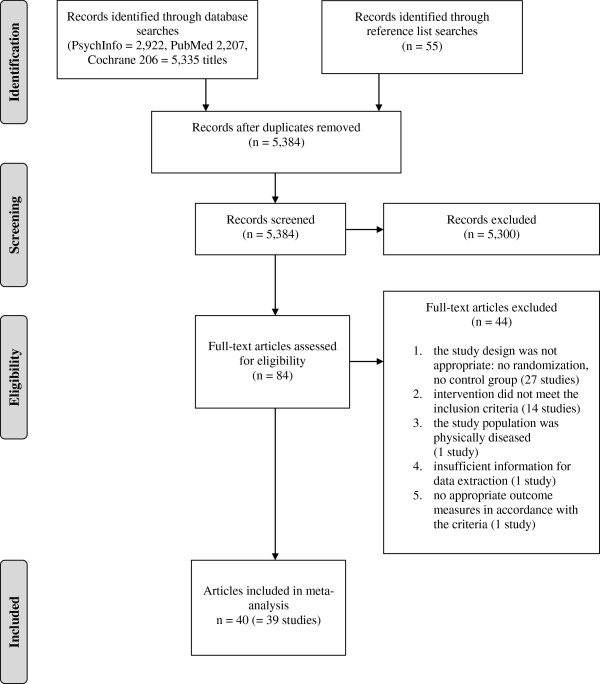
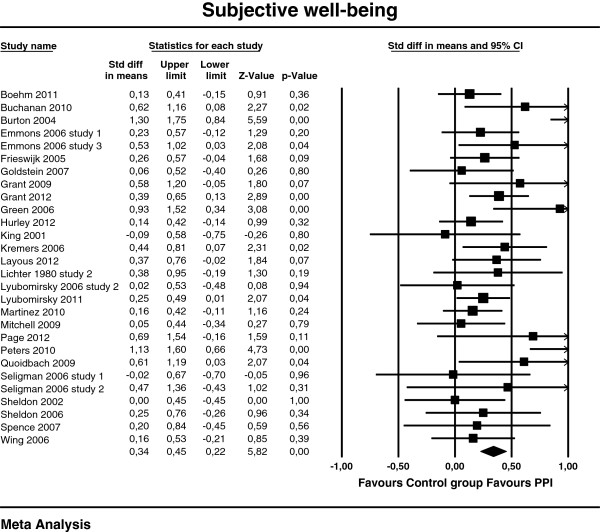
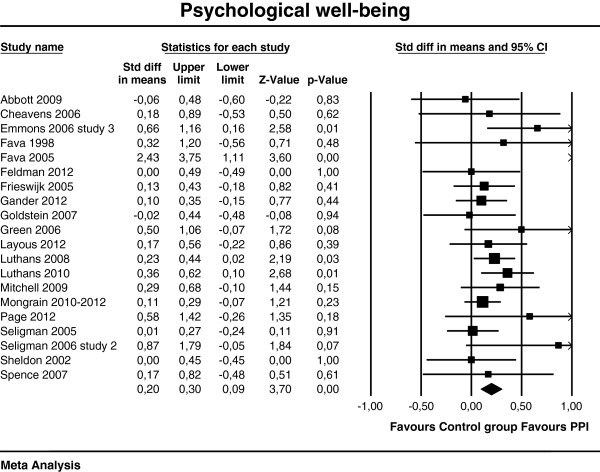
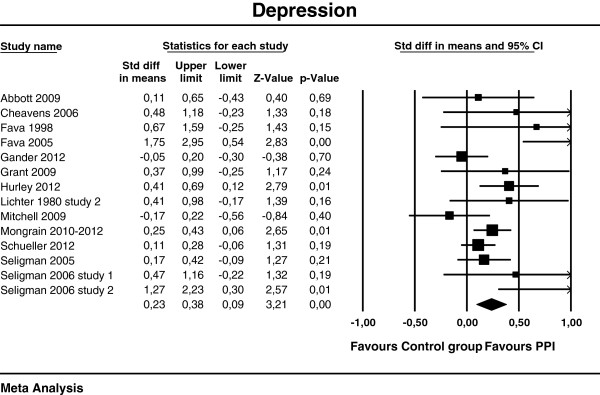
BACKGROUND: The use of positive psychological interventions may be considered as a complementary strategy in mental health promotion and treatment. The present article constitutes a meta-analytical study of the effectiveness of positive psychology interventions for the general public and for individuals with specific psychosocial problems. METHODS: We conducted a systematic literature search using PubMed, PsychInfo, the Cochrane register, and manual searches. Forty articles, describing 39 studies, totaling 6,139 participants, met the criteria for inclusion. The outcome measures used were subjective well-being, psychological well-being and depression. Positive psychology interventions included self-help interventions, group training and individual therapy. RESULTS: The standardized mean difference was 0.34 for subjective well-being, 0.20 for psychological well-being and 0.23 for depression indicating small effects for positive psychology interventions. At follow-up from three to six months, effect sizes are small, but still significant for subjective well-being and psychological well-being, indicating that effects are fairly sustainable. Heterogeneity was rather high, due to the wide diversity of the studies included. Several variables moderated the impact on depression: Interventions were more effective if they were of longer duration, if recruitment was conducted via referral or hospital, if interventions were delivered to people with certain psychosocial problems and on an individual basis, and if the study design was of low quality. Moreover, indications for publication bias were found, and the quality of the studies varied considerably. CONCLUSIONS: The results of this meta-analysis show that positive psychology interventions can be effective in the enhancement of subjective well-being and psychological well-being, as well as in helping to reduce depressive symptoms. Additional high-quality peer-reviewed studies in diverse (clinical) populations are needed to strengthen the evidence-base for positive psychology interventions.
Overview
CoChat Summary
## TL;DR
This meta-analysis of 39 randomized studies (40 articles; 6,139 participants) found that positive psychology interventions had small but significant benefits for subjective well-being, psychological well-being, and depressive symptoms. Effects were somewhat sustained at 3–6 months for well-being outcomes, but study heterogeneity and publication bias were notable.
## Key findings
- Across all included studies, the pooled standardized mean differences were 0.34 for subjective well-being, 0.20 for psychological well-being, and 0.23 for depression, which the authors describe as small effects.
- At follow-up of 3–6 months (10 studies), effects remained significant for subjective well-being (d = 0.22, 95% CI [0.05, 0.38], p<.01) and psychological well-being (d = 0.16, 95% CI [0.02, 0.30], p=.03), but not for depression (d = 0.17, 95% CI [-0.06, 0.39], p=.15).
- Heterogeneity was moderate for subjective well-being (I² = 49.5%) and depression (I² = 47.0%), and low for psychological well-being (I² = 29.0%); effect sizes ranged from below 0 to as high as 2.4.
- For depression, larger effects were associated with longer duration, individual delivery, referral/hospital recruitment, inclusion of people with specific psychosocial problems, and lower study quality.
## Methods
- Systematic review and meta-analysis of randomized controlled studies of positive psychology interventions, using PubMed, PsychInfo, the Cochrane Central Register of Controlled Trials, manual searches, and reference checking, covering 1998 to November 2012.
- Included 40 articles describing 39 studies with 6,139 participants; intervention formats included self-help, group training, and individual therapy.
- Main analysis used Cohen’s d under a random-effects model for three outcomes: subjective well-being, psychological well-being, and depression, with subgroup analyses and checks for heterogeneity and publication bias.
## Limitations
- The paper states that study quality was not high: no study met all quality criteria, randomization was often unclear, intention-to-treat analysis was rare (3/39 studies), and none reported an adequate power analysis.
- The authors note that heterogeneity was rather high because the included studies were diverse, and that the follow-up findings should be treated with caution because of the small number of studies and high attrition rates at follow-up.
- The text makes evident that publication bias is a limitation: funnel plots were asymmetric, fail-safe numbers were below the required thresholds, and Egger’s test suggested bias for psychological well-being and depression.
Model-written summary. Check it against the paper before relying on it.
Integrity signals
Registry
Cites
Statistics
Figures
Verification
Claims the paper makes
8 Valid · 2 Not valid · 9 Not checked · 90 Own results and interpretations
The cited sources that could be checked couldn’t confirm or dispute this claim.
In the paper
“First, the meta-analysis included both randomized studies and quasi-experimental studies.”
§ Positive psychology interventions: a meta-analysis of randomized controlled studies > Background
What the sources say
- Could not verifycites Sin and Lyubomirsky (2009) matched to “Enhancing well-being and alleviating depressive symptoms with positive psychology interventions: a practice-friendly meta-analysis” (2009) sourceExperimental — accuracy not yet measured
The Literature Search section requires included studies to have a comparison group, and Data Recorded distinguishes self-selected from non-self-selected participants. Neither passage establishes whether the meta-analysis included both randomized and quasi-experimental studies; searches for those design terms and for random assignment found no decisive passage. Page numbers were unavailable in our copy. (LLM, conf=0.72)
plain- Asserted: passes — The authors put it forward as true.
- Checkable: passes — It can be checked against evidence.
- Load-bearing: unclear — It is unclear whether the paper’s conclusions depend on it.
- Based: passes — The paper gives a reason why it holds.
- Could not verify
The cited sources support only part of this claim — read each source’s verdict below.
In the paper
“Their results show that PPIs can indeed be effective in enhancing well-being (r = 0.29, standardized mean difference Cohen’s d = 0.61) and help to reduce depressive symptom levels in clinical populations (r = 0.31, Cohen’s d = 0.65).”
§ Positive psychology interventions: a meta-analysis of randomized controlled studies > Background
What the sources say
- Partly supportedcites Sin and Lyubomirsky (2009) matched to “Enhancing well-being and alleviating depressive symptoms with positive psychology interventions: a practice-friendly meta-analysis” (2009) sourceExperimental — accuracy not yet measured
The Depression section reports that PPIs reduced depressive symptoms across 25 studies, with a mean effect of r = .31. The Participant Moderators section distinguishes depressed from nondepressed participants, so .31 is not an estimate specifically for clinical populations. The paper reports the effect as r, not as Cohen’s d = .65. (LLM, conf=0.87)
plainstates a cause- Asserted: passes — The authors put it forward as true.
- Checkable: passes — It can be checked against evidence.
- Load-bearing: unclear — It is unclear whether the paper’s conclusions depend on it.
- Based: passes — The paper gives a reason why it holds.
- Partly supported
Every source the paper cites for this claim was checked and supports it.
In the paper
“Their results show that PPIs can indeed be effective in enhancing well-being (r = 0.29, standardized mean difference Cohen’s d = 0.61) and help to reduce depressive symptom levels in clinical populations (r = 0.31, Cohen’s d = 0.65).”
§ Positive psychology interventions: a meta-analysis of randomized controlled studies > Background
What the sources say
- Supportedcites Sin and Lyubomirsky (2009) matched to “Enhancing well-being and alleviating depressive symptoms with positive psychology interventions: a practice-friendly meta-analysis” (2009) source
The Well-Being section reports that PPIs significantly improved well-being across 49 studies, with a mean r of .29. The paper reports r rather than Cohen’s d; converting .29 to d gives approximately .61, so the cited figures are consistent. (LLM, conf=0.90)
plainstates a cause- Asserted: passes — The authors put it forward as true.
- Checkable: passes — It can be checked against evidence.
- Load-bearing: passes — The paper’s conclusions depend on it.
- Based: passes — The paper gives a reason why it holds.
- Supported
Every source the paper cites for this claim was checked and supports it.
In the paper
“Second, study quality was not addressed as a potential effect moderator.”
§ Positive psychology interventions: a meta-analysis of randomized controlled studies > Background
What the sources say
- Supportedcites Sin and Lyubomirsky (2009) matched to “Enhancing well-being and alleviating depressive symptoms with positive psychology interventions: a practice-friendly meta-analysis” (2009) source
The Data Recorded section lists the variables coded for moderator analysis: participant characteristics, intervention format and duration, and comparison-group type. It does not include study quality, and the Methodological Moderators section discusses those methodological variables rather than study quality. Page numbers are unavailable in our copy. (LLM, conf=0.88)
plain- Asserted: passes — The authors put it forward as true.
- Checkable: passes — It can be checked against evidence.
- Load-bearing: unclear — It is unclear whether the paper’s conclusions depend on it.
- Based: passes — The paper gives a reason why it holds.
- Supported
Every source the paper cites for this claim was checked and supports it.
In the paper
“Remarkably, effect sizes in the current meta-analysis are around 0.3 points lower than the effect sizes in the meta-analysis by Sin and Lyubomirsky (2009) [37].”
§ Positive psychology interventions: a meta-analysis of randomized controlled studies > Discussion > Main findings
What the sources say
- Supportedcites Sin and Lyubomirsky (2009) [37] matched to “Enhancing well-being and alleviating depressive symptoms with positive psychology interventions: a practice-friendly meta-analysis” (2009) source
The Well-Being and Depression results report mean effect sizes of r = .29 and r = .31, respectively, establishing the values attributed to Sin and Lyubomirsky’s meta-analysis. The difference from the current meta-analysis is the citing authors’ comparison, not a finding this source could report. (LLM, conf=0.88)
plain- Asserted: passes — The authors put it forward as true.
- Checkable: passes — It can be checked against evidence.
- Load-bearing: passes — The paper’s conclusions depend on it.
- Based: passes — The paper gives a reason why it holds.
- Supported
70 more claims · 1 with their cited sources checked
Create a free account to see all 109 claims and to verify the 1 reference still open.
- Probably not a substantial claim. 14
- It may state two separate claims as one. 23
Claims other papers make about this one
Each is checked against this paper’s own text: does it say what the citing paper says it does?
The source backs part of the claim, not all of it — or backs it for a different population, condition or comparison.
In the citing paper
“In contrast to complex multicomponent health behavior or psychology interventions, PP exercises are simple, can be delivered remotely (e.g., by phone), and require minimal training of providers [34, 41, 42].”
From Positive Psychological Interventions for Patients with Type 2 Diabetes: Rationale, Theoretical Model, and Intervention Development (2015) · cites this paper as [41]
Experimental — accuracy not yet measuredThe source backs part of the claim, not all of it — or backs it for a different population, condition or comparison.
In the citing paper
“Studies supporting the efficacy of positive activity interventions (PAIs) have been primarily conducted in unselected (non-clinical) community samples and examined single positive activities in isolation (for a meta-analysis, see66, 67).”
From Upregulating the positive affect system in anxiety and depression: Outcomes of a positive activity intervention: Taylor et al. (2017) · cites this paper as [67]
Experimental — accuracy not yet measuredThe source backs part of the claim, not all of it — or backs it for a different population, condition or comparison.
In the citing paper
“Two meta-analyses of PPIs for depression and well-being found that these interventions have small to moderate effects in enhancing well-being and decreasing depressive symptoms and that effects are stronger for individual vs. group formats [30, 31].”
From Skills to Enhance Positivity in adolescents at risk for suicide: Protocol for a randomized controlled trial (2023) · cites this paper as [31]
Experimental — accuracy not yet measuredThe source backs part of the claim, not all of it — or backs it for a different population, condition or comparison.
In the citing paper
“Bolier and Abello (Bolier et al., 2013) reviewed digital PPIs and found that the majority of the included studies showed improvement in well-being or reduction of distress in the intervention group, compared to the control group.”
From Strength Back – A qualitative study on the co-creation of a positive psychology digital health intervention for spinal surgery patients (2023) · cites this paper as Bolier et al., 2013
Experimental — accuracy not yet measuredThe source backs part of the claim, not all of it — or backs it for a different population, condition or comparison.
In the citing paper
“PPIs may support patients to notice and savour positive experiences (Bolier et al., 2013). This may strengthen their commitment to value-based action.”
From Strength Back – A qualitative study on the co-creation of a positive psychology digital health intervention for spinal surgery patients (2023) · cites this paper as Bolier et al., 2013
Experimental — accuracy not yet measured
24 more claims about this paper
Create a free account to see every claim other papers make about this one.
Statistics recomputed
Every reported test result, recomputed from its test statistic and degrees of freedom. A result shows as not adding up only once an independent check has confirmed it.
- Consistentz = 6.43reported p < .01 · recomputed p < .001
“Z=6.43, p < .01”
- Consistentz = 4.18reported p < .01 · recomputed p < .001
“Z=4.18, p < .01”
- Consistentz = 3.33reported p < .01 · recomputed p < .001
“Z=3.33, p < .01”
Self-check
Percentages, sums and reported differences re-computed from the paper’s own numbers.
Self-check results appear here once an independent check has confirmed them.
Citations
Cites
Preferred Reporting Items for Systematic Reviews and Meta-Analyses: the PRISMA statement
Moher, D., Liberati, A., Tetzlaff, J., Altman, D. G., & for the PRISMA Group (2009) · BMJ · doi:10.1136/bmj.b2535 · Cited by 83,823
Preferred Reporting Items for Systematic Reviews and Meta-Analyses: The PRISMA Statement
Moher, D., Liberati, A., Tetzlaff, J., Altman, D. G., & The PRISMA Group (2009) · PLoS Medicine · doi:10.1371/journal.pmed.1000097 · Cited by 64,042 · cited 1×
“For the reporting of the results of this meta-analysis, we applied Preferred Reporting Items for Systematic Reviews and Meta-Analyses (PRISMA) guidelines [50].”
Measuring inconsistency in meta-analyses
Higgins, J. P. T., Thompson, S. G., Deeks, J. J., & Altman, D. G. (2003) · BMJ · doi:10.1136/bmj.327.7414.557 · Cited by 63,139 · cited 1×
“A value of 0% indicates an absence of dispersion, and larger values show increasing levels of heterogeneity where 25% can be considered as low, 50% as moderate and 75% as a high level of heterogeneity [46].”
Preferred reporting items for systematic reviews and meta-analyses: the PRISMA Statement.
(2009) · PubMed Central · Cited by 44,859
Cochrane Handbook for Systematic Reviews of Interventions: Cochrane Book Series
(2008) · doi:10.1002/9780470712184 · Cited by 25,048
Preferred Reporting Items for Systematic Reviews and Meta-Analyses: The PRISMA Statement
Moher, D., Liberati, A., Tetzlaff, J., & Altman, D. G. (2009) · Journal of Clinical Epidemiology · doi:10.1016/j.jclinepi.2009.06.005 · Cited by 19,575
Happiness is everything, or is it? Explorations on the meaning of psychological well-being.
Ryff, C. D. (1989) · Journal of Personality and Social Psychology · doi:10.1037/0022-3514.57.6.1069 · Cited by 14,847 · cited 1×
“Psychological well-being focuses on the optimal functioning of the individual and includes concepts such as mastery, hope and purpose in life [13,14].”
Borenstein, M., Hedges, L. V., Higgins, J. P. T., & Rothstein, H. R. (2009) · doi:10.1002/9780470743386 · Cited by 14,225
Duval, S., & Tweedie, R. (2000) · Biometrics · doi:10.1111/j.0006-341x.2000.00455.x · Cited by 14,099 · cited 1×
“If asymmetry is found in the funnel plot, the Trim and Fill method adjusts the pooled effect size for the outcomes of missing studies [49].”
Subjective well-being: Three decades of progress.
Diener, E., Suh, E. M., Lucas, R. E., & Smith, H. L. (1999) · Psychological Bulletin · doi:10.1037/0033-2909.125.2.276 · Cited by 12,910 · cited 2×
“Although the basic concepts of well-being, happiness and human flourishing have been studied for some decades [12,25-27], there was a lack of evidence-based interventions [24].”
Research works printed but not linked: 3
- Rupke SJ Blecke D Renfrow M Cognitive Therapy for Depression Am Fam Physician 2006 73 83 86 16417069
- Veenhoven R Gezond geluk: Effecten van geluk op gezondheid en wat dat kan betekenen voor de preventieve gezondheidszorg (Healthy happiness: effect of happiness on health and what this could mean for preventive public health) 2006 Rotterdam: Erasmus Universiteit
- Lamers S Bolier L Westerhof GJ Smit F Bohlmeijer E The impact of emotional well-being on long-term recovery and survival in physical illness: a meta-analysis J Behav Med 2012 5 538 547 21918889 PMC3439612 · DOI · Paper page
Cited by
Items 901–1,000 of 2,037
Evaluation of the Happiness Through Goal-Setting Training
Ehrlich, C. (2022) · Psychological Reports · doi:10.1177/00332941211071007 · Cited by 10
“This fits with research indicating that specific subgroups benefit less from specific positive psychology interventions (Sheldon & Lyoburmisksy, 2019) which due to the negative publication bias towards non-significant findings (Bolier et al., 2013) still results in significant gaps in our understanding of how individu…”
BackgroundResultInfluentialLindsay, E. K., Chin, B., Greco, C. M., Young, S., Brown, K. W., Wright, A. G. C., Smyth, J. M., Burkett, D., & Creswell, J. D. (2018) · doi:10.31231/osf.io/hk5gp · Cited by 219
Online interventions to support family caregivers: The value of community-engaged research practices
Utz, R., Terrill, A. L., & Thompson, A. D. (2021) · Journal of Prevention & Intervention in the Community · doi:10.1080/10852352.2021.1930817 · Cited by 9
“The positive psychology-based activities were completed first as individuals and then as a couple, and included common exercises associated with improved well-being, such as expressing gratitude, practicing acts of kindness, fostering relationships, savoring, and finding meaning (Bolier et al., 2013).”
BackgroundSchlechter, A. D., McDonald, M., Lerner, D., Yaden, D. B., Clifton, J. D. W., Moerdler-Green, M., & Horwitz, S. M. (2023) · Journal of American College Health · doi:10.1080/07448481.2023.2227719 · Cited by 15
“16 The study of positive psychology and its interventions are now taught at many colleges but it is unclear to what extent such classes benefit students or how these classes fit into the overall effort to improve undergraduate mental health.”
Valiente, C., Espinosa, R., Contreras, A., Trucharte, A., Caballero, R., & Peinado, V. (2021) · The Journal of Positive Psychology · doi:10.1080/17439760.2021.1871940 · Cited by 10
“In relation to the efficacy of PPI, two meta-analyses in predominantly non-clinical samples have shown significant effects on well-being and depression (Bolier et al., 2013; Sin & Lyubomirsky, 2009).”
BackgroundWould you be happier if you moved more? Physical activity focusing illusion
Kaczmarek, L. D., Behnke, M., Enko, J., Hoffman, A., Kiciński, M., Paruszewski, J., Szabat, M., & Dombrowski, S. U. (2019) · Current Psychology · doi:10.1007/s12144-019-00315-9 · Cited by 11
“Individuals who prioritize increases in well-being might pursue more effective happiness-boosting cognitive activities (Bolier et al. 2013).”
BackgroundCho, H., & Lee, H. (2024) · Journal of Affective Disorders · doi:10.1016/j.jad.2024.05.162 · Cited by 9
Yap, A. U., & Marpaung, C. D. (2023) · Acta Odontologica Scandinavica · doi:10.1080/00016357.2023.2172076 · Cited by 13
“In addition to mindfulness meditation and cognitive-behavioural therapy, PPIs also incorporate the use of acceptance and other functional coping strategies and were shown to be effective in enhancing psychological well-being and quality of life whilst reducing depression and pain symptoms [46,47].”
BackgroundEffects of positive psychology interventions in Arab countries: a protocol for a systematic review
Basurrah, A. A., Lambert, L., Setti, A., Murphy, M. F., Warren, M. A., Shrestha, T., & Blasi, Z. D. (2021) · BMJ Open · doi:10.1136/bmjopen-2021-052477 · Cited by 16
Sigmundsson, H., Hauge, H., Leversen, J. S. R., & Haga, M. (2024) · Frontiers in Education · doi:10.3389/feduc.2024.1438280 · Cited by 14
Designing Positive Organizational Psychology Interventions
Donaldson, S. I., & Chen, C. L. (2021) · Wiley eBooks · doi:10.1002/9781118977415.ch1 · Cited by 11
Donaldson, S. I., Donaldson, S. I., Chan, L. B., & Kang, K. W. (2021) · International Journal of Applied Positive Psychology · doi:10.1007/s41042-021-00060-0 · Cited by 13
Felicidade como Produto: Um Olhar Crítico sobre a Ciência da Psicologia Positiva
Reppold, C. T., Zanini, D. S., Campos, D. C., de Faria, M. R. G. V., & Tocchetto, B. S. (2019) · Revista Avaliação Psicológica · doi:10.15689/ap.2019.1804.18777.01 · Cited by 38
Baranov, V. (2019) · AEA Randomized Controlled Trials · doi:10.1257/rct.4687 · Cited by 21
“Meta-analyses of CBT indicate that it is often at least as effective as pharmacotherapy (Bolier et al., 2013; Tolin, 2010; Cuijpers et al., 2008a).”
Negative affectivity and emotions in youths with temporomandibular disorders across cultures
Yap, A. U., Lee, D. Z. R., & Marpaung, C. D. (2022) · CRANIO® · doi:10.1080/08869634.2022.2107146 · Cited by 10
“Considering the relationship between TMDs and emotional distress in this and other studies, integrative approaches to anxiety, stress, and resilience through positive psychological interventions (PPIs) could plausibly reduce the incidence of TMDs in youths [55].”
Positive Psychology in Rehabilitation Psychology Research and Practice
Peter, C., Geyh, S., Ehde, D. M., Müller, R., & Jensen, M. P. (2015) · Wiley eBooks · doi:10.1002/9781118996874.ch27 · Cited by 9
Pilot Test of an Appreciative Inquiry Intervention in Hypertension Self-management
Olayinka, O., Moore, S. M., & Stange, K. C. (2020) · Western Journal of Nursing Research · doi:10.1177/0193945919897077 · Cited by 11
“In a meta-analysis of over 6,000 participants, positive psychology programs have consistently shown increased happiness, less depression, and improved overall well-being (Bolier et al., 2013) with lasting benefits post-intervention (Seligman et al, 2005; Sin & Lyubomirsky, 2009).”
BackgroundAmonoo, H. L., Daskalakis, E. P., Deary, E. C., Celano, C. M., Ghanimé, P. M., Healy, B. C., Cutler, C. S., Pirl, W. F., Park, E. R., Gudenkauf, L. M., et al. (2023) · Contemporary Clinical Trials · doi:10.1016/j.cct.2023.107272 · Cited by 10
Norsworthy, C., Dimmock, J. A., Nicholas, J., Krause, A. E., & Jackson, B. (2023) · International Journal of Applied Positive Psychology · doi:10.1007/s41042-023-00098-2 · Cited by 19
“Positive psychology interventions have been increasingly used to affect performance (Swann et al., 2012) and psychological well-being (Bolier et al., 2013).”
Uliaszek, A. A., Rashid, T., & Zarowsky, Z. (2021) · Journal of Contemporary Psychotherapy · doi:10.1007/s10879-021-09523-6 · Cited by 10
“In addition, a number of systematic reviews and meta-analyses have documented the effectiveness of strength-based interventions (Bolier et al., 2013; Chakhssi et al., 2018; Ghielen et al., 2018; Quinlan et al., 2015; Yan et al., 2020).”
BackgroundModification of Affective Trajectory in a Positive Psychology Intervention
Congard, A., Andreotti, E., Dauvier, B., Vigouroux, S. L., & Antoine, P. (2020) · Applied Psychology Health and Well-Being · doi:10.1111/aphw.12206 · Cited by 14
Rastad, Z., Golmohammadian, M., Jalali, A., Kaboudi, B., & Kaboudi, M. (2021) · Heliyon · doi:10.1016/j.heliyon.2021.e07789 · Cited by 13
Comment on “Morality in everyday life”
Voelkle, M. C. (2015) · Science · doi:10.1126/science.aaa2409 · Cited by 7
Martins, E. L. M., Salamene, L. C., Lucchetti, A. L. G., & Lucchetti, G. (2022) · Journal of Psychosomatic Research · doi:10.1016/j.jpsychores.2022.110721 · Cited by 15
Qian, X., & Zhang, J. (2024) · Actas Españolas de Psiquiatría · doi:10.62641/aep.v52i4.1559 · Cited by 10
Lam, J. A., & Kahler, C. W. (2017) · The Journal of Positive Psychology · doi:10.1080/17439760.2017.1315649 · Cited by 8
“Recent meta-analyses have demonstrated that self-guided interventions have smaller effect sizes than therapist or group-based interventions (Bolier et al., 2013; Sin & Lyubomirsky, 2009).”
BackgroundResultInfluentialAssessing Change in Intervention Research: The Benefits of Composite OutcomesPreprint
Moreau, D., & Wiebels, K. (2020) · PsyArXiv (OSF Preprints) · doi:10.31234/osf.io/t9hw3 · Cited by 7
Kaya, R., & Tanrıverdi, D. (2023) · Current Psychology · doi:10.1007/s12144-023-04244-6 · Cited by 17
“In addition, the results of studies in the literature presented that it would be good if the researchers offered positive psychology interventions as individual (versus group) therapy and for relatively longer durations (Sin & Lyubomirsky, 2009; Bolier et al., 2013a; Pan et al., 2022).”
InfluentialListiawan, M. Y., Prakoeswa, C. R. S., Alinda, M. D., Kusumaputra, B. H., Hartanto, F., Nasir, A., & Yusuf, A. (2022) · Journal of Multidisciplinary Healthcare · doi:10.2147/jmdh.s382723 · Cited by 11
Ruiz-Aranda, D., Mateo‐Rodríguez, C., Olmedo, I. S., García, C. G., Enríquez, A. J., & Martínez‐Brocca, M. A. (2020) · Sustainability · doi:10.3390/su12208512 · Cited by 9
“The hypothesis that resilience has an influence on anxiety and depression has been explored in different studies [26], but research has yet to clarify why people with high resilience report better quality of life than others when confronted with the difficulties arising from living with diabetes and its complications…”
BackgroundGagnon, N., & Dubeau, A. (2023) · Vocations and Learning · doi:10.1007/s12186-023-09326-x · Cited by 27
“…depressive symptoms—has been empirically demonstrated in a variety of settings (e.g., work, school, psychological counselling clinics) and for various types of individuals (e.g., teachers, students, patients, caregivers; see, e.g., meta-analyses by Bolier et al., 2013, and Sin & Lyubomirsky, 2009).”
BackgroundEfectos de un programa de conducta prosocial en estudiantes universitarios
Pablo, U. C. S., & Gallegos, W. L. A. (2021) · Educación · doi:10.33539/educacion.2021.v27n2.2430 · Cited by 15
Yap, A. U., & Lee, D. Z. R. (2023) · Journal of Oral Rehabilitation · doi:10.1111/joor.13522 · Cited by 10
Jeong, S. (2017) · DSpace@MIT (Massachusetts Institute of Technology) · Cited by 13
Thomas, K., & Bendtsen, M. (2019) · JMIR Research Protocols · doi:10.2196/12396 · Cited by 7
“Meta-analyses show that PPIs have a small effect on positive mental health in healthy volunteers and clinical populations [9,19].”
Psicología clínica positiva y tecnologías positivas
Guillén, V., Universitat Jaume I (Castellón, S., Botella, C., Universitat Jaume I (Castellón, S. C. F. O. Y. N. (. I. S. C. I. M., Baños, R., & Universidad de Valencia (Valencia, S. (2017) · Papeles del Psicólogo - Psychologist Papers · doi:10.23923/pap.psicol2017.2817 · Cited by 16
Freidle, M., Nilsson, J., Lebedev, A. V., & Lövdén, M. (2019) · Neuropsychologia · doi:10.1016/j.neuropsychologia.2019.107325 · Cited by 9
Meral, B. F., Wehmeyer, M. L., Cinisli, N. A., & Yılmaz, E. (2021) · Journal of Intellectual Disability Research · doi:10.1111/jir.12839 · Cited by 10
Teaching positive psychology lessons in an intensive English program
Rogers, C., McMurry, B. L., & Dewey, D. P. (2023) · ELT Journal · doi:10.1093/elt/ccad052 · Cited by 12
Demırcı, İ. (2021) · Abant İzzet Baysal Üniversitesi Eğitim Fakültesi Dergisi · doi:10.17240/aibuefd.2021.21.62826-656748 · Cited by 8
Measurement Properties and Optimal Cutoff Point of the WHO-5 Among Chinese Healthcare Students
Yang, N., Ma, H., Huang, M., Lau, E. Y. Y., Fong, D., Wang, M., Wang, P., Xu, S., Xu, J., Jiang, C., et al. (2023) · Psychology Research and Behavior Management · doi:10.2147/prbm.s437219 · Cited by 12
“2 3–5 As such, positive SWB has been regarded as a conducive health asset given its explicit associations with salutary outcomes of mental health, 6 behaviors, 7 and disease progression and rehabilitation.”
BackgroundLiautaud, M. M., Leventhal, A. M., & Pang, R. D. (2017) · Nicotine & Tobacco Research · doi:10.1093/ntr/ntx216 · Cited by 8
Uribe, F. A. R., Favacho, M. F. M., Moura, P. M. N., Cortés‐Patiño, D. M., & Pedroso, J. D. S. (2023) · Frontiers in Psychology · doi:10.3389/fpsyg.2023.1200960 · Cited by 11
“Research suggests that interventions to promote well-being that are focused on happiness, pleasure, and optimal psychological functioning are the most effective (Boiler et al., 2013; Weiss et al., 2016; Hendriks et al., 2020).”
BackgroundTrajectories of Well-Being in Later Life
Steverink, N. (2019) · Oxford University Press eBooks · doi:10.1093/acrefore/9780190236557.013.424 · Cited by 13
Antebi‐Gruszka, N., Friedman, A. A., & Schrimshaw, E. W. (2020) · Sexual and Gender Diversity in Social Services · doi:10.1080/10538720.2020.1859424 · Cited by 12
Laakso, M., Fagerlund, Å., Westerlund-Cook, S., & Eriksson, J. G. (2023) · Journal of Child and Family Studies · doi:10.1007/s10826-023-02618-9 · Cited by 12
“Meta-analyses of randomized and quasiexperimental PPI studies have reported that, it is generally possible to enhance well-being (Bolier et al., 2013; Carr et al., 2020; Hendriks et al., 2020; Sin & Lyubomirsky, 2009; White et al., 2019), positive emotions (Moskowitz et al., 2021), quality of life…”
BackgroundHamby, S. L., Roberts, L. T., Taylor, E. J., Hagler, M., & Kaczkowski, W. (2016) · Child maltreatment solutions network · doi:10.1007/978-3-319-40920-7_1 · Cited by 8
“forgiveness or gratitude (some of the programs developed so far to target these attributes are fairly simple and short term and may not produce long-term change) (Bolier et al., 2013).”
BackgroundTarrats-Pons, E., Mussons-Torras, M., & Jiménez-Pérez, Y. (2025) · Behavioral Sciences · doi:10.3390/bs15050571 · Cited by 21
“…a meta-analysis of positive psychology interventions concluded that these interventions significantly increase well-being and alleviate depressive symptoms in both clinical and non-clinical samples (Bolier et al., 2013; Chakhssi et al., 2018; Sin & Lyubomirsky, 2009; Siriaraya et al., 2024).”
InfluentialDaset, L. R., & Cracco, C. (2013) · Ciencias Psicológicas · doi:10.22235/cp.v7i1.53 · Cited by 8
Kaubisch, S., Kloek, M., Primbs, R., Iglhaut, L., Piechaczek, C., Keim, P., Feldmann, L., Schulte‐Körne, G., & Greimel, E. (2023) · Kindheit und Entwicklung · doi:10.1026/0942-5403/a000426 · Cited by 9
Kahler, C. W., Surace, A., Gordon, R. E. F., Cioe, P. A., Spillane, N. S., Parks, A. C., Bock, B. C., & Brown, R. A. (2018) · Contemporary Clinical Trials · doi:10.1016/j.cct.2018.06.013 · Cited by 12
“Positive psychology interventions (PPIs), which focus on cultivating positive affect (PA), cognition, and behavior, have been shown to enhance well-being and decrease depressive symptoms in clinical and non-clinical populations [16, 17], and can be readily integrated into smoking cessation counseling.”
BackgroundGabana, N. T. (2019) · Springer eBooks · doi:10.1007/978-3-030-20583-6_15 · Cited by 14
Molinari, G., Enrique, Á., Herrero, R., Fernández-Llanio Comella, N., Botella, C., & Díaz-García, A. (2018) · REVISTA ARGENTINA DE CLINICA PSICOLOGICA · doi:10.24205/03276716.2017.1031 · Cited by 9
The Promise of Fostering Greater Happiness
Boehm, J. K., Ruberton, P. M., & Lyubomirsky, S. (2017) · Oxford University Press eBooks · doi:10.1093/oxfordhb/9780199396511.013.55 · Cited by 8
“…gratitude, visualizing ideal futures, and processing happy life experiences—although numerous others have been described and tested (for reviews, see Bolier et al., 2013; Sin & Lyubomirsky, 2009), including some Web-based activities (e.g., applying personal strengths; Drozd, Mork, Nielsen,…”
Arafa, A., Kashima, R., & Kokubo, Y. (2023) · Environmental Health and Preventive Medicine · doi:10.1265/ehpm.23-00125 · Cited by 8
“Despite being shaped by several health and social factors, life satisfaction is mod-i fi able through national policies promoting health determinants and individual interventions endorsing physical activity and other healthy practices [5, 6].”
BackgroundMental health among people with psoriasis undergoing patient education in climate therapy
Langeland, E., Robinson, H. S., Moum, T., Larsen, M. H., & Wahl, A. K. (2013) · Scandinavian Journal of Psychology · doi:10.1111/sjop.12073 · Cited by 10
Millstein, R. A., Thorndike, A. N., Kim, S. S.-E., Park, E. R., & Huffman, J. C. (2020) · Contemporary Clinical Trials Communications · doi:10.1016/j.conctc.2020.100626 · Cited by 9
Response to TMS treatment for depression associated with higher levels of psychological well-being
Toth, C., Johnson, M. L. K., Heinzerling, A., & Trapp, N. T. (2022) · Journal of Psychiatric Research · doi:10.1016/j.jpsychires.2022.03.030 · Cited by 11
Is wellbeing at work related to professional recognition: a pilot intervention
Angelopoulou, P., & Panagopoulou, E. P. (2019) · Psychology Health & Medicine · doi:10.1080/13548506.2019.1707239 · Cited by 14
Contemplative Science and Secular Ethics
Silva, B. O.-D. (2016) · Religions · doi:10.3390/rel7080098 · Cited by 11
“[62] were strikingly broad: all studies on positive psychology interventions since 1998 that had been published in a peer-reviewed journal, involved randomization of subjects, included statistics to enable calculation of effect sizes, and involved measuring either well-being, depression, or both.”
BackgroundInfluentialWeiss, N. H., Schick, M. R., Contractor, A. A., Goncharenko, S., Raudales, A. M., & Forkus, S. R. (2022) · Psychological Trauma Theory Research Practice and Policy · doi:10.1037/tra0001048 · Cited by 13
Positive psychology in dual diagnosis: a preliminary investigation
Gomez, K. U., Carson, J. F., & Holland, M. (2016) · Advances in Dual Diagnosis · doi:10.1108/add-01-2016-0001 · Cited by 13
Resilience Predicts Social Functioning in Clinically Stable Patients With Bipolar Disorder
Bozikas, V. P., Parlapani, E., Ntouros, E., Bargiota, S. I., Floros, G. D., Nazlidou, E.-I., & Garyfallos, G. (2018) · The Journal of Nervous and Mental Disease · doi:10.1097/nmd.0000000000000843 · Cited by 9
Changes in flourishing from adolescence to young adulthood: An 8‐year follow‐up
Palmer, A. N., Patel, M., Narendorf, S. C., Sledge, S. L., & Sanchez, K. (2022) · Child & Family Social Work · doi:10.1111/cfs.12953 · Cited by 12
Niemann, L., von Gruner, C., Zhang, X. C., Margraf, J., & Totzeck, C. (2023) · BMC Public Health · doi:10.1186/s12889-023-16424-x · Cited by 12
Privada, C. D. S. J. D. D.-F., Hurtado‐Pardos, B., Lluch‐Canut, T., Casas, I., Sequeira, C., Puig-Llobet, M., & Roldán-Merino, J. F. (2017) · Revista de Enfermería y Salud Mental · doi:10.5538/2385-703x.2018.9.5 · Cited by 8
Meat consumption & positive mental health: A scoping review
Dobersek, U., Bender, M., Etienne, A., Gil, G. E. F., & Hostetter, C. (2023) · Preventive Medicine Reports · doi:10.1016/j.pmedr.2023.102556 · Cited by 13
“…with their position in life) (Organization, 1996) (Boehm et al., 2018; Boehm et al., 2011; Boyle et al., 2010; Chida and Steptoe, 2008; Ronaldson et al., 2015; Rozanski et al., 2019; Bolier et al., 2013; Goodmon et al., 2016; Santos et al., 2013; Schotanus-Dijkstra et al., 2017; Woo et al., 2010).”
Aguerre, C. (2017) · Revue québécoise de psychologie · doi:10.7202/1040071ar · Cited by 9
Lee, J.-Y., Lee, J. E., Moskowitz, J. T., Feaster, D. J., Neilands, T. B., Dilworth, S. E., Rodriguez, A. E., & Carrico, A. W. (2021) · Drug and Alcohol Dependence · doi:10.1016/j.drugalcdep.2021.108752 · Cited by 7
Enhancing positivity in cognitive behavioural therapy.
Mothersill, K. J. (2016) · Canadian Psychology/Psychologie canadienne · doi:10.1037/cap0000045 · Cited by 9
Hong, J.-E., & Lee, J.-S. (2014) · Journal of Korean Academy of Psychiatric and Mental Health Nursing · doi:10.12934/jkpmhn.2014.23.4.299 · Cited by 9
“국외 연구에서도 아동의 안녕감 증진, 부정적 감정의 감소와 더불어 학업경험에 대한 부정적 인 인지적 평가를 막고 낮은 학업성취 및 결석과 같은 잠재된 부정적 결과를 완화시켜줄 수 있음이 제안되었다[7,8].”
InfluentialKambara, K., Matsumoto, M., Hako, S., Shigematsu, J., Yokoyama, S., & Ogata, A. (2023) · Journal of Behavior Therapy and Experimental Psychiatry · doi:10.1016/j.jbtep.2023.101857 · Cited by 10
Schick, M. R., Trinh, C. D., Todi, A. A., & Spillane, N. S. (2023) · International Journal of Applied Positive Psychology · doi:10.1007/s41042-023-00103-8 · Cited by 12
“Meta-analytic reviews examining the efficacy of PPIs have found strong support for their use to reduce depressive symptoms and that these effects last over time (Bolier et al., 2013 ; Sin & Lyubomirsky, 2009 ).”
Hu, Y., Jiang, X., Mao, F.-Y., Zhang, J., Liu, L., Gu, J., Wu, Q., & Li, C. (2022) · Trials · doi:10.1186/s13063-022-06964-9 · Cited by 8
Bendig, E., Meißner, E., Erb, B., Weger, L., Küchler, A., Bauereiß, N., Ebert, D. D., & Baumeister, H. (2021) · BMJ Open · doi:10.1136/bmjopen-2020-041573 · Cited by 7
Ruini, C., Vescovelli, F., Cesarano, V. P., Angelis, G. D., Marco, E. D., Marco, E. L. D., Galeazzi, G. M., Pira, G. L., Pingani, L., & Limone, P. (2024) · Frontiers in Psychology · doi:10.3389/fpsyg.2024.1397870 · Cited by 16
Appiah, R., Wissing, M. P., Fadiji, A. W., & Schutte, L. (2022) · Cross-cultural advancements in positive psychology · doi:10.1007/978-3-030-85924-4_4 · Cited by 9
Μήτσιου, Ε., Kyriakou, A. E., Parlapani, E., Trigoni, A., Trakatelli, M. G., Apalla, Z., Sotiriadis, D., Lazaridou, E., & Patsatsi, A. (2024) · Dermatology Practical & Conceptual · doi:10.5826/dpc.1402a104 · Cited by 8
“Positive psychology interventions strive towards consolidating psychological resources and nourishing positive cognitions and feelings [67] .”
BackgroundTeixeira, A. S., & Freire, T. (2017) · Current Psychology · doi:10.1007/s12144-017-9748-8 · Cited by 10
Schwerdtfeger, A. R., Rominger, C., Weber, B., & Aluani, I. (2020) · Psychophysiology · doi:10.1111/psyp.13709 · Cited by 9
“As mentioned previously, there is increasing awareness about detrimental effects of positive psychological interventions (Fritz & Lyobomirsky, 2018), and given the novelty of the field and evidence for publication bias (Bolier et al., 2013; White et al., 2019), this issue definitely warrants further research.”
BackgroundDeveloping a logic model to support creative education and wellbeing in higher education
Havsteen-Franklin, D., Cooper, J., & Anas, S. (2023) · Cogent Education · doi:10.1080/2331186x.2023.2214877 · Cited by 22
“…changes to attitudes and behaviours can be achieved through the integration of evidence informed interventions, for example, creative approaches to wellbeing such as mindfulness, reimagining socio-ecological resources, creatively engaging with learning strengths and selfcare (Bolier et al., 2013).”
BackgroundVara, M. D., Mira, A., Miragall, M., García-Palacios, A., Botella, C., Gili, M., Riera-Serra, P., García-Campayo, J., Mayoral-Cleries, F., & Baños, R. M. (2020) · International Journal of Environmental Research and Public Health · doi:10.3390/ijerph17218094 · Cited by 7
“These results emphasize the benefits of including PP exercises and techniques in conventional treatments to promote positive emotions and positive functioning measures [19,20].”
BackgroundA Web-Based Positive Psychology App for Patients With Bipolar Disorder: Development Study
Geerling, B., Kelders, S. M., Stevens, A. W. M. M., Kupka, R., & Bohlmeijer, E. T. (2022) · JMIR Formative Research · doi:10.2196/39476 · Cited by 7
“Meta-analyses have found that PPIs have small to moderately significant effects on well-being and distress in general populations [28,46-48] and clinical populations [49,50].”
BackgroundSelf-citationLópez‐Gómez, I., Chaves, C., Hervás, G., & Vázquez, C. (2017) · The Spanish Journal of Psychology · doi:10.1017/sjp.2017.44 · Cited by 9
“The Integrative Positive Psychological Intervention for Depression (IPPI-D) is a manualized protocol composed of empirically-validated positive psychology interventions for depression (Bolier et al., 2013; Sin & Lyubomirsky, 2009).”
Wilson, T. E., Massiah, C., Radigan, R., DeHovitz, J. A., Govindarajulu, U. S., Holman, S., Melendez, M., Yusuff, J., & Taylor, T. (2020) · Health Psychology · doi:10.1037/hea0000880 · Cited by 7
“…of positive affect production can increase psychological wellbeing, may reduce symptoms of depression, are acceptable to diverse populations, and are relatively low cost to implement (Bolier et al., 2013; Quoidbach, Mikolajczak, & Gross, 2015; Weiss et al., 2016; White, Uttl, & Holder, 2019).”
BackgroundGarcía-Álvarez, D., Soler, M. J., & Cobo‐Rendón, R. (2018) · Búsqueda · doi:10.21892/01239813.390 · Cited by 17
Happiness in the Lab: What Can Be Learned About Subjective Well-Being from Experiments?
Ifcher, J., Zarghamee, H., & Goff, S. (2021) · Springer eBooks · doi:10.1007/978-3-319-57365-6_187-1 · Cited by 10
Achievement Goals in Music Contexts: A Review of Literature
Tan, L., & Sin, H. X. (2019) · Update Applications of Research in Music Education · doi:10.1177/8755123319878482 · Cited by 12
“These procedures have been widely used in various disciplines, including medical sciences and psychology (Bolier et al., 2013).”
BackgroundIntegral Organizational Wellness™: An evidence‐based model of socially inspired well‐being
Bennett, J. B. (2018) · Journal of Applied Biobehavioral Research · doi:10.1111/jabr.12136 · Cited by 15
Wang, X., Chen, L., Xu, Z., Zhu, C.-X., Tang, Y., Sun, J., & Zhu, L. (2025) · European Journal of Oncology Nursing · doi:10.1016/j.ejon.2025.102923 · Cited by 10
Caballero, R., Valiente, C., & Espinosa, R. (2021) · The Journal of Positive Psychology · doi:10.1080/17439760.2021.1871943 · Cited by 8
“Moreover, the lower levels of SWB call for specific intervention to target positive outcomes such as positive psychology interventions that have shown not only a significant improvement in wellbeing but also a secondary improvement in symptoms (Bolier et al., 2013).”
BackgroundDevelopment of the positive coping behavioural inventory : a positive psychological approach
Marx, A. A. (2017) · Unisa Institutional Repository (University of South Africa) · Cited by 10
Chojak, A. (2023) · Journal of Contextual Behavioral Science · doi:10.1016/j.jcbs.2023.03.007 · Cited by 7
Brais, K. B., & Balaguer, I. (2019) · Revista Costarricense de Psicología · doi:10.22544/rcps.v38i02.03 · Cited by 12
Rosen, F. N., & LaFreniere, L. S. (2023) · Journal of Anxiety Disorders · doi:10.1016/j.janxdis.2023.102724 · Cited by 10
Long-term outcome of a mental health promotion program in Germany
Lyssenko, L., Müller, G., Kleindienst, N., Schmahl, C. G., Berger, T., Eifert, G. H., Kölle, A., Nesch, S., Ommer-Hohl, J., Wenner, M., et al. (2018) · Health Promotion International · doi:10.1093/heapro/day008 · Cited by 8
Engelhardt, C. L., Meier, M., Keller, S., & Laireiter, A. (2024) · PLoS ONE · doi:10.1371/journal.pone.0299803 · Cited by 11
Lau, W. Y. T., Stoner, C. R., Wong, G. H. Y., & Spector, A. E. (2021) · Age and Ageing · doi:10.1093/ageing/afab097 · Cited by 11
Che, Y., Fang, D., Cai, L., Ran, H., Chen, L., Wang, S., Peng, J., Sun, H., Liang, X., & Xiao, Y. (2022) · Frontiers in Psychology · doi:10.3389/fpsyg.2022.898318 · Cited by 8
“Resilience is a hot topic in the field of positive psychology (Bolier et al., 2013).”
BackgroundHu, Y., Pei, M., Wang, D., Wu, X. C., & Wang, D. (2025) · Journal of Behavioral Addictions · doi:10.1556/2006.2025.00016 · Cited by 11
“…positive psychological interventions (PPIs) have been proposed to target strengthening individual positive resources and promoting positive emotions (Bolier et al., 2013; Hendriks, Schotanus-Dijkstra, Hassankhan, de Jong, & Bohlmeijer, 2020; Parks & Biswas-Diener, 2013; Sin & Lyubomirsky, 2009).”
Metadata
- Authors
- Bolier, L., Haverman, M., Westerhof, G. J., Riper, H., Smit, F., & Bohlmeijer, E.
- Affiliations
- Trimbos Institute (NL)
- University of Twente (NL)
- Leuphana University of Lüneburg (DE)
- Corresponding author
- Bolier, Linda
- Venue
- BMC Public Health
- Published
- 2013-02-08
- Volume
- 13
- Issue
- 1
- Pages
- 119-119
- ISSN
- 1471-2458 (ISSN-L)
- PMC
- PMC3599475
- OpenAlex
- W2120582212
- Semantic Scholar
- 45fd44e9cff6334f80a54b3d327ced46d9b2d444
- Cited by
- 1,996
- References
- 115
- Citations by year
- 2026: 97 · 2025: 134 · 2024: 155 · 2023: 197 · 2022: 190 · 2021: 208 · 2020: 231 · 2019: 201 · 2018: 182 · 2017: 153 · 2016: 117 · 2015: 76 · 2014: 40 · 2013: 12
- FWCI
- 10.79
- Type
- journal article
- Language
- en
- Open access
- gold
- doi.org
- Licence
- Locations
- BMC Public Health (publishedVersion, cc-by)
- Europe PMC (PubMed Central) (publishedVersion, cc-by)
- PubMed Central (publishedVersion, cc-by)
- PubMed (publishedVersion)
- Pure Amsterdam UMC (publishedVersion, other-oa)
- Amsterdam UMC (VU Amsterdam) - Institutional Repository (publishedVersion, other-oa)
- Multilingual Matters (Channel View Publications) (acceptedVersion, cc-by)
- University of Twente Research Information (acceptedVersion, cc-by)
- Data Archiving and Networked Services (DANS) (submittedVersion, other-oa)
- Digital Academic REpository of VU University Amsterdam (Vrije Universiteit Amsterdam) (submittedVersion)
- VU Research Portal (submittedVersion, other-oa)
- University of Twente Research Information (submittedVersion, cc-by)
- Topics
- Social Sciences › Psychology › Social Psychology › Psychological Well-being and Life Satisfaction
- Social Sciences › Psychology › Clinical Psychology › Mindfulness and Compassion Interventions
- Social Sciences › Psychology › Applied Psychology › Optimism, Hope, and Well-being
- Keywords
- positive psychology interventions, subjective well-being, psychological well-being, depression, self-help intervention, group training, individual psychotherapy, mental health promotion, intervention effectiveness, publication bias, study quality
- MeSH terms
- Depression, Health Promotion, Humans, Psychotherapy, Randomized Controlled Trials as Topic, Treatment Outcome
About these checks
Registry, retraction, Cites and statistics results are computed, not judged, with one exception: a printed reference that no index lists is read once by a model before it counts as a citation error. Claims are extracted by a model and kept only when their quote appears verbatim in the text; each cited source is then checked, with a model’s help, for whether it says what the claim relies on. Those verdicts can be wrong — read the claim’s quote and the cited source before relying on one.
The claim verdicts this report counts are experimental: their accuracy is not yet measured.
A language model drew the claims from the paper on 2026-10-10, under version 3 of the claim definition (model deepseek-v4.1-flash, prompt extract-v3).
A second model labelled each claim on 2026-10-10 (model jev-1.13-20260917, definition revision gold-guideline-v0.2).
Cited sources are checked with a language model’s help (gpt-6-sol).
Statistics and arithmetic are recomputed, not judged.
Confidence bands are shown only for fields calibrated on our annotated test set. None is calibrated yet, so no band is shown.
What counts as a claim ›How we measure confidence ›How we check this ›
Are you an author, or do you see a problem with this page? Request a review
Data sources
Bibliographic data: Semantic Scholar, OpenAlex, Crossref.
Contains information from the Semantic Scholar Academic Graph Datasets, made available under the ODC Attribution License (ODC-BY 1.0).
Semantic Scholar’s data is described in: Kinney, R., et al. (2023). The Semantic Scholar Open Data Platform. arXiv:2301.10140.
