

Does physical activity prevent cognitive decline and dementia?: A systematic review and meta-analysis of longitudinal studies
Open accessThe DOI matches its Crossref record; 85 of the 86 references it cites were found in a registry or an index, and 1 are not checked yet.
Abstract
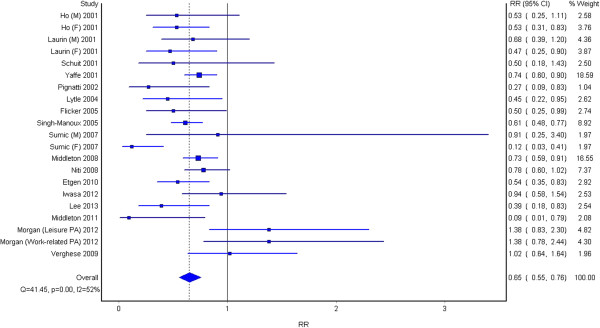
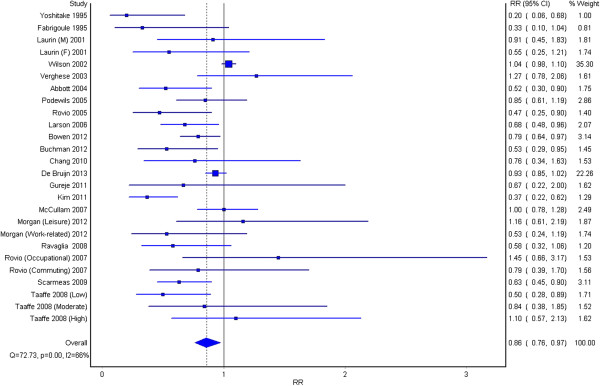
BACKGROUND: By 2050, it has been estimated that approximately one-fifth of the population will be made up of older adults (aged ≥60 years). Old age often comes with cognitive decline and dementia. Physical activity may prevent cognitive decline and dementia. METHODS: We reviewed and synthesised prospective studies into physical activity and cognitive decline, and physical activity and dementia, published until January 2014. Forty-seven cohorts, derived from two previous systematic reviews and an updated database search, were used in the meta-analyses. Included participants were aged ≥40 years, in good health and/or randomly selected from the community. Studies were assessed for methodological quality. RESULTS: Twenty-one cohorts on physical activity and cognitive decline and twenty-six cohorts on physical activity and dementia were included. Meta-analysis, using the quality-effects model, suggests that participants with higher levels of physical activity, when compared to those with lower levels, are at reduced risk of cognitive decline, RR 0.65, 95% CI 0.55-0.76, and dementia, RR 0.86, 95% CI 0.76-0.97. Sensitivity analyses revealed a more conservative estimate of the impact of physical activity on cognitive decline and dementia for high quality studies, studies reporting effect sizes as ORs, greater number of adjustments (≥10), and longer follow-up time (≥10 years). When one heavily weighted study was excluded, physical activity was associated with an 18% reduction in the risk of dementia (RR 0.82; 0.73-0.91). CONCLUSIONS: Longitudinal observational studies show an association between higher levels of physical activity and a reduced risk of cognitive decline and dementia. A case can be made for a causal interpretation. Future research should use objective measures of physical activity, adjust for the full range of confounders and have adequate follow-up length. Ideally, randomised controlled trials will be conducted. Regardless of any effect on cognition, physical activity should be encouraged, as it has been shown to be beneficial on numerous levels.
Overview
The claims and statistics of this paper haven’t been checked yet.
Free: it reads the open-access text and checks the first 5 claims that cite a source we can check. Create a free account to check every claim.
Integrity signals
Registry
Cites
Statistics
Figures
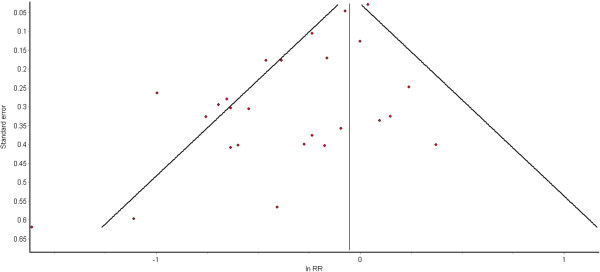
Verification
Claims the paper makes
The claims and statistics of this paper haven’t been checked yet.
Free: it reads the open-access text and checks the first 5 claims that cite a source we can check. Create a free account to check every claim.
Claims other papers make about this one
Each is checked against this paper’s own text: does it say what the citing paper says it does?
The source backs part of the claim, not all of it — or backs it for a different population, condition or comparison.
In the citing paper
“A meta-analysis of these studies concluded that physically active adults had a 35% lower risk of cognitive decline (relative risk, 0.65; 95% confidence interval, 0.55–0.76) compared with those who were physically inactive.93”
From Defining Optimal Brain Health in Adults: A Presidential Advisory From the American Heart Association/American Stroke Association (2017) · cites this paper as [93]
Experimental — accuracy not yet measuredThe cited source says what the claim attributes to it.
In the citing paper
“In contrast, physical activity appears to decrease risk. [119][120]0][121][122][123][124][125][126][127][128]”
From 2023 Alzheimer's disease facts and figures (2023) · cites this paper as [124]
Experimental — accuracy not yet measuredThe cited source says what the claim attributes to it.
In the citing paper
“Prospective observational studies have generally found a positive association between physical activity and cognitive health outcomes.”
From Defining Optimal Brain Health in Adults: A Presidential Advisory From the American Heart Association/American Stroke Association (2017) · cites this paper as [93]
Self-check
Percentages, sums and reported differences re-computed from the paper’s own numbers.
The self-check needs the paper’s full text.
Citations
Cites
Preferred Reporting Items for Systematic Reviews and Meta-Analyses: the PRISMA statement
Moher, D., Liberati, A., Tetzlaff, J., Altman, D. G., & for the PRISMA Group (2009) · BMJ · doi:10.1136/bmj.b2535 · Cited by 83,823
Preferred reporting items for systematic reviews and meta-analyses: the PRISMA Statement.
(2009) · PubMed Central · Cited by 44,859
Preferred reporting items for systematic reviews and meta-analyses: The PRISMA statement
Moher, D., Liberati, A., Tetzlaff, J., Altman, D. G., & the PRISMA Group* (2009) · Annals of Internal Medicine · doi:10.7326/0003-4819-151-4-200908180-00135 · Cited by 37,554
Preferred Reporting Items for Systematic Reviews and Meta-Analyses: The PRISMA Statement
Moher, D., Liberati, A., Tetzlaff, J., & Altman, D. G. (2009) · Journal of Clinical Epidemiology · doi:10.1016/j.jclinepi.2009.06.005 · Cited by 19,575
Lippa, N. C., & Sanderson, S. C. (2013) · Human Heredity · doi:10.1159/000353712 · Cited by 6,078
Diagnostic and Statistical Manual of Mental Disorders ( DSM ‐ IV ‐ TR )
Segal, D. L. (2010) · The Corsini Encyclopedia of Psychology · doi:10.1002/9780470479216.corpsy0271 · Cited by 4,666
Pate, R. R. (1995) · JAMA · doi:10.1001/jama.1995.03520290054029 · Cited by 4,606 · cited 1×
“A curvilinear relationship, with diminishing returns, seems the most likely association [72]; however, more research in this area is needed.”
BackgroundMACMAHON, S. (1990) · The Lancet · doi:10.1016/0140-6736(90)90878-9 · Cited by 4,253 · cited 1×
“Inaccuracies in measurement of physical activity, as outlined above, may lead to regression dilution bias, whereby imprecise measurement of the exposure variable may bias a result toward null [70].”
BackgroundInternational Encyclopedia of the Social Sciences.
Duncan, O. D., & Sills, D. L. (1968) · American Sociological Review · doi:10.2307/2092889 · Cited by 3,486
An active and socially integrated lifestyle in late life might protect against dementia
Fratiglioni, L., Paillard-Borg, S., & Winblad, B. (2004) · The Lancet Neurology · doi:10.1016/s1474-4422(04)00767-7 · Cited by 2,135 · cited 3×
“In the meantime, given that physical activity has been shown to be beneficial across multiple health domains, genders and ages, physical activity should be encouraged regardless of its relationship with cognitive decline and dementia [73].”
BackgroundInfluential
Research works printed but not linked: 1
- Rothman KJ Greenland S Lash TL Modern Epidemiology 2008 Philadelphia, PA: Lippincott Williams & Wilkins
Cited by
Items 301–400 of 1,000
Zlatar, Z. Z., Campbell, L. M., Tang, B., Gabin, S., Heaton, A., Higgins, M., Swendsen, J. D., Moore, D. J., & Moore, R. C. (2022) · JMIR mhealth and uhealth · doi:10.2196/33747 · Cited by 25
“For example, a meta-analysis of longitudinal observational studies with middle-aged and older adults found that higher levels of PA were associated with a 14% lower risk of dementia when compared to those with lower levels of PA [5].”
BackgroundPucci, V., Guerra, C., Barsi, A., Nucci, M., & Mondini, S. (2023) · Journal of the International Neuropsychological Society · doi:10.1017/s135561772300022x · Cited by 26
“…also investigated in individuals with Mild Cognitive Impairment (MCI, Baker et al., 2010; Lautenschlager et al., 2010) and dementia (Angevaren et al., 2008; Barnes, 2015; Blondell et al., 2014; Sofi et al., 2011) demonstrating the effectiveness of PA intervention also in these clinical populations.”
BackgroundSá, C. A. D., Saretto, C. B., Cardoso, A. M., Remor, A. P., Breda, C. O., & Corralo, V. D. S. (2023) · Molecular and Cellular Biochemistry · doi:10.1007/s11010-023-04733-z · Cited by 23
The effects of exercise at different temperatures on cognitive function: A systematic review
Donnan, K. J., Williams, E. L., Morris, J. L., & Stanger, N. (2021) · Psychology of sport and exercise · doi:10.1016/j.psychsport.2021.101908 · Cited by 27
Childhood deprivations predict late-life cognitive impairment among older adults in India
Muhammad, T., Debnath, P., Srivastava, S., & Sekher, T. V. (2022) · Scientific Reports · doi:10.1038/s41598-022-16652-y · Cited by 26
Han, H., Zhang, J., Zhang, F., Li, F., & Wu, Z. (2025) · Frontiers in Aging Neuroscience · doi:10.3389/fnagi.2025.1510773 · Cited by 21
McMichael, A., Zafeiridi, E., Passmore, P., Cunningham, E. L., & McGuinness, B. (2020) · Journal of Alzheimer s Disease · doi:10.3233/jad-190751 · Cited by 22
“The spouse may also ensure the PwD is more socially, physically, and mentally active after a dementia diagnosis; factors that have been proven to be of benefit [30, 31], Additionally, spouses may be more than likely to play an active role in medication management [32].”
BackgroundTalamonti, D., Gagnon, C., Vincent, T. L., Nigam, A., Lesage, F., Bherer, L., & Fraser, S. (2022) · BMC Geriatrics · doi:10.1186/s12877-022-03306-x · Cited by 21
Xu, B., Sun, A., He, Y., Qian, F., Liu, L., Chen, Y., & Luo, H. (2017) · Neurobiology of Aging · doi:10.1016/j.neurobiolaging.2017.01.002 · Cited by 22
Barreto, P. D. S., Andrieu, S., Rolland, Y., & Vellas, B. J. (2017) · Journal of science and medicine in sport · doi:10.1016/j.jsams.2017.07.019 · Cited by 25
Increased Physical Fitness Is Associated with Higher Executive Functioning in People with Dementia
Hollamby, A., Davelaar, E. J., & Cadar, D. (2017) · Frontiers in Public Health · doi:10.3389/fpubh.2017.00346 · Cited by 27
“97) compared with those inactive (19), see also Ref.”
BackgroundWu, J., & Jackson, L. E. (2021) · Earth · doi:10.3390/earth2010009 · Cited by 24
“Physical activity has been negatively associated with dementia and is generally regarded as protective [37].”
BackgroundMild Cognitive Impairment and modifiable risk factors among Lebanese older adults in primary care
Assaf, G., Khoury, J. E., Jawhar, S., & Rahme, D. V. (2021) · Asian Journal of Psychiatry · doi:10.1016/j.ajp.2021.102828 · Cited by 23
Mattli, R., Farcher, R., Syleouni, M., Wieser, S., Probst-Hensch, N. M., Schmidt‐Trucksäss, A., & Schwenkglenks, M. M. (2019) · Sports Medicine · doi:10.1007/s40279-019-01233-3 · Cited by 25
Andrews, M., Cheema, B. S., & Siette, J. (2024) · Archives of Gerontology and Geriatrics · doi:10.1016/j.archger.2024.105535 · Cited by 20
Tay, J., Zajac, I. T., Thompson, C. H., Luscombe‐Marsh, N. D., Danthiir, V., Noakes, M., Buckley, J. D., Wittert, G., & Brinkworth, G. D. (2016) · British Journal Of Nutrition · doi:10.1017/s0007114516004001 · Cited by 21
“Previous studies have shown that exercise and particularly resistance training improves cognitive outcomes including information-processing speed, attention, memory formation and other forms of executive function (28 – 30) .”
Lin, J., Wang, K., Chen, Z., Xiang, F., Shen, L., Wang, Y., Yang, Y., & Huang, T. (2017) · Perceptual and Motor Skills · doi:10.1177/0031512517745438 · Cited by 22
Félez-Nóbrega, M., Haro, J. M., Erickson, K. I., & Koyanagi, A. (2020) · Journal of the American Medical Directors Association · doi:10.1016/j.jamda.2020.02.014 · Cited by 23
Nemoto, Y., Sakurai, R., Ogawa, S., Maruo, K., & Fujiwara, Y. (2021) · Journal of Exercise Science & Fitness · doi:10.1016/j.jesf.2021.06.002 · Cited by 21
Memel, M., Buchman, A. S., Bennett, D. A., & Casaletto, K. B. (2021) · Alzheimer s & Dementia Diagnosis Assessment & Disease Monitoring · doi:10.1002/dad2.12245 · Cited by 24
Translating the WHO 25×25 goals into a UK context: the PROMISE modelling study
Cobiac, L. J., & Scarborough, P. (2017) · BMJ Open · doi:10.1136/bmjopen-2016-012805 · Cited by 24
Nemoto, Y., Sato, S., Kitabatake, Y., Takeda, N., Maruo, K., & Arao, T. (2022) · Journal of Epidemiology · doi:10.2188/jea.je20210419 · Cited by 19
Shi, X., He, X., Pan, D., Qiao, H., & Li, J. (2022) · PeerJ · doi:10.7717/peerj.13673 · Cited by 22
Poblete-Valderrama, F., Flores-Rivera, C., Petermann-Rocha, F. E., Leiva, A. M., Martínez-Sangüinetti, M. A., Troncoso-Pantoja, C., Mardones, L., Villagrán, M., Nazar, G., Ulloa, N., et al. (2019) · Revista médica de Chile · doi:10.4067/s0034-98872019001001247 · Cited by 26
“Zona geográfica (%) Rural Urbana 14,6 (11,9; 17,7) 85,4 (82,2; 88,0) 29,2 (16,1; 46,8) 70,8 (53,1; 83,8)”
InfluentialPetersen, J. D., Larsen, E. L., la Cour, K., von Bülow, C., Skouboe, M., Christensen, J. R., & Waldorff, F. B. (2020) · JMIR Mental Health · doi:10.2196/19495 · Cited by 20
“Therefore, strengthening body capacity levels through exercise among people with dementia may not only reduce these risks but also has the potential to improve physical and cognitive function as well as overall well-being [19-22], although some benefits of exercise are still debated [23].”
BackgroundGrasset, L., Proust‐Lima, C., Mangin, J., Habert, M., Dubois, B., Paquet, C., Hanon, O., Gabelle, A., Ceccaldi, M. P., Annweiler, C., et al. (2022) · Alzheimer s Research & Therapy · doi:10.1186/s13195-022-01013-8 · Cited by 21
Cognitive Change Before Old Age (11 to 70) Predicts Cognitive Change During Old Age (70 to 82)
Conte, F. P., Okely, J. A., Hamilton, O. K., Corley, J., Page, D., Redmond, P. H., Taylor, A. M., Russ, T. C., Deary, I. J., & Cox, S. R. (2022) · Psychological Science · doi:10.1177/09567976221100264 · Cited by 21
“childhood IQ, education) exhibit weaker effects (Blondell et al., 2014; Plassman et al., 2010; Ritchie et al., 2017; Schaie & Willis, 2010; Tucker-Drob, 2019; Zaninotto et al., 2018).”
BackgroundThe relationship between objective physical activity and change in cognitive function
Sewell, K. R., Rainey‐Smith, S. R., Peiffer, J. J., Sohrabi, H. R., Taddei, K., Ames, D. J., Maruff, P. T., Masters, C. L., Rowe, C. C., Martins, R. N., et al. (2023) · Alzheimer s & Dementia · doi:10.1002/alz.12950 · Cited by 24
Garber, A., Csizmadi, I., Friedenreich, C. M., Sajobi, T. T., Longman, R. S., Tyndall, A. V., Drogos, L. L., Davenport, M. H., & Poulin, M. J. (2017) · Clinical Nutrition · doi:10.1016/j.clnu.2017.07.011 · Cited by 19
Thøgersen‐Ntoumani, C., Papathomas, A., Foster, J. K., Quested, E., & Ntoumanis, N. (2017) · Journal of Aging and Physical Activity · doi:10.1123/japa.2017-0203 · Cited by 21
Exercise Types and the Risk of Developing Cognitive Decline in Older Women: A Prospective Study
Osuka, Y., Kojima, N., Sasai, H., Ohara, Y., Watanabe, Y., Hirano, H., & Kim, H. (2020) · Journal of Alzheimer s Disease · doi:10.3233/jad-200867 · Cited by 21
Physical Frailty Phenotype Criteria and Their Synergistic Association on Cognitive Functioning
Chu, N. M., Bandeen‐Roche, K., Xue, Q., Carlson, M. C., Sharrett, A. R., & Gross, A. L. (2020) · The Journals of Gerontology Series A · doi:10.1093/gerona/glaa267 · Cited by 19
Pan, G., King, A. E., Wu, F., Simpson, S., Woodhouse, A., Phipps, A., & Vickers, J. C. (2021) · Ageing Research Reviews · doi:10.1016/j.arr.2021.101402 · Cited by 20
Danso, S., Terrera, G. M., Luz, S. F., & Ritchie, C. W. (2019) · Journal of Global Health · doi:10.7189/jogh.09.020322 · Cited by 19
Bidirectional Within- and Between-Person Relations Between Physical Activity and Cognitive Function
Stenling, A., Sörman, D. E., Lindwall, M., & Machado, L. (2021) · The Journals of Gerontology Series B · doi:10.1093/geronb/gbab234 · Cited by 17
“Reviews and meta-analyses show a consistent pattern suggesting that engaging in more physical activity is related to reduced risk of cognitive decline (Blondell et al., 2014; Northey et al., 2018).”
BackgroundSiqueira, J. D. A., Lopes, A. A. D. S., Godtsfriedt, C. E. S., Justina, M. D. D., de Paiva, K. M., d’Orsi, E., & Rech, C. R. (2022) · Frontiers in Aging · doi:10.3389/fragi.2022.915292 · Cited by 21
Ioannou, E., Chen, H. L., Bromley, V., Fosker, S., Ali, K., Fernando, A. M., Mensah, E., & Fowler‐Davis, S. (2023) · BMC Geriatrics · doi:10.1186/s12877-023-04005-x · Cited by 18
Feter, N., Leite, J. S., da Silva, L. S., Cassuriaga, J., de Paula, D., Lopes, G. W., Hallal, P. R. C., Lee, I.-M. M., & Rombaldi, A. J. (2023) · Alzheimer s & Dementia · doi:10.1002/alz.13417 · Cited by 18
Taniguchi, Y., Seino, S., Ikeuchi, T., Hata, T., Shinkai, S., Kitamura, A., & Fujiwara, Y. (2023) · Preventive Medicine Reports · doi:10.1016/j.pmedr.2023.102465 · Cited by 19
“Physical activity, including having an exercise habit, is protectively linked to reduced incident cognitive decline and dementia (Blondell et al., 2014; Ihira et al., 2022; Larson et al., 2006; Laurin et al., 2001).”
BackgroundUnderstanding people’s interactions with urban greenspace: Case studies in Eastern Europe
Elbakidze, M., Dawson, L., van Ermel, L. E. K., Mikusiński, G., Hedblom, M., Korohoda, N., Kruhlov, I., Smaliychuk, А., Kurdadze, T., Ugrekhelidze, K., et al. (2023) · Urban forestry & urban greening · doi:10.1016/j.ufug.2023.128117 · Cited by 19
Slee, M. G., Rainey‐Smith, S. R., Villemagne, V. L., Doecke, J. D., Sohrabi, H. R., Taddei, K., Ames, D. J., Doré, V., Maruff, P. T., Laws, S. M., et al. (2023) · Alzheimer s & Dementia · doi:10.1002/alz.13556 · Cited by 18
Forte, R., Pesce, C., Baldassarre, A. D., Shea, J. B., Voelcker‐Rehage, C., Capranica, L., & Condello, G. (2019) · International Journal of Environmental Research and Public Health · doi:10.3390/ijerph16101835 · Cited by 17
“Cross-sectional and longitudinal evidence supports the notion that physical activity levels predict both gait and cognitive performance at old age [33,34], and that walking habits are associated with better motor–cognitive DT mobility of older individuals [35].”
BackgroundNakamura, M., Imaoka, M., Nakao, H., Hida, M., Imai, R., Tazaki, F., & Takeda, M. (2021) · Psychogeriatrics · doi:10.1111/psyg.12750 · Cited by 24
Do Physical Activity, BMI, and Wellbeing Affect Logical Thinking?
Skurvydas, A., Lisinskienė, A., Majauskienė, D., Valančienė, D., Dadelienė, R., Fatkulina, N., & Šarkauskienė, A. (2022) · International Journal of Environmental Research and Public Health · doi:10.3390/ijerph19116631 · Cited by 17
“A meta-analysis showed that higher levels of PA reduce the risk of cognitive decline and dementia [35].”
BackgroundTomata, Y., Zhang, S., Sugiyama, K., Kaiho, Y., Sugawara, Y., & Tsuji, I. (2017) · Age and Ageing · doi:10.1093/ageing/afx078 · Cited by 19
The Association Between Cognitive Impairment and Patterns of Activity Engagement Among Older Adults
Amano, T., Park, S., & Morrow-Howell, N. L. (2017) · Research on Aging · doi:10.1177/0164027517728553 · Cited by 18
“This finding was consistent with extant literature, which has suggested that cognitive impairment is associated with less active engagement (e.g., Bauman et al., 2012; Blondell et al., 2014; Krueger et al., 2009).”
ResultThe Benefits of Physical Activity for Older People
Koster, A., Stenholm, S., & Schrack, J. A. (2018) · Springer eBooks · doi:10.1007/978-3-319-71291-8_3 · Cited by 18
Ageing and physical function in East African foragers and pastoralists
Sayre, M. K., Pontzer, H., Alexander, G. E., Wood, B. M., Pike, I. L., Mabulla, A. Z. P., & Raichlen, D. A. (2020) · Philosophical Transactions of the Royal Society B Biological Sciences · doi:10.1098/rstb.2019.0608 · Cited by 19
Matsuda, K., Ikeda, S., Mitsutake, T., NAKAHARA, M., NAGAI, Y., Ikeda, T., & Horikawa, E. (2017) · Journal of Physical Therapy Science · doi:10.1589/jpts.29.470 · Cited by 19
Martín-Rodríguez, A., Dalamitros, A. A., Madrigal-Cerezo, R., Sánchez-Conde, P., Clemente‐Suárez, V. J., & Tornero-Aguilera, J. F. (2025) · Geriatrics · doi:10.3390/geriatrics10060143 · Cited by 21
“Recognizing these definitions is relevant for the present review, as they provide a clearer framework for interpreting the diverse findings across studies on aging, cognition, and brain health [6,7].”
Demnitz, N., Stathi, A., Withall, J., Stainer, C., Seager, P., Koning, J. D., Esser, P., Wassenaar, T. M., Dawes, H., Brooks, J., et al. (2021) · NeuroImage Clinical · doi:10.1016/j.nicl.2021.102762 · Cited by 17
Bloomberg, M., Brocklebank, L. A., Doherty, A., Hamer, M., & Steptoe, A. (2024) · International Journal of Behavioral Nutrition and Physical Activity · doi:10.1186/s12966-024-01683-7 · Cited by 17
Cheng, I.-F., Kuo, L., Tsai, Y.-J., & Su, F. (2021) · International Journal of Environmental Research and Public Health · doi:10.3390/ijerph18073561 · Cited by 19
Exercise interventions for maintaining cognitive function in cognitively healthy people in late life
Forbes, S. C., Forbes, D. A., Forbes, S. C., Blake, C. M., Chong, L. Y., Thiessen, E., Rutjes, A. W., & Little, J. P. (2015) · Cochrane Database of Systematic Reviews · doi:10.1002/14651858.cd011704 · Cited by 18
Coutinho, L. A., Leão, L. L., Cassilhas, R. C., de Paula, A. M. B., Deslandes, A. C., & Monteiro-Júnior, R. S. (2022) · Experimental Gerontology · doi:10.1016/j.exger.2022.111948 · Cited by 16
Eymundsdóttir, H., Ramel, A., Geirsdóttir, Ó. G., Skúladóttir, S. S., Gudmundsson, L. S., Jónsson, P. V., Gudnason, V. G., Launer, L. J., Jónsdóttir, M. K., & Chang, M. (2021) · Alzheimer s & Dementia Diagnosis Assessment & Disease Monitoring · doi:10.1002/dad2.12163 · Cited by 21
“20 Leisure time physical activity (PA) was assessed by a self-reported questionnaire and categorized into (1) none, (2) ≤3 hours per week, or (3) > 3 hours per week.”
MethodPostoperative cerebral dysfunction in the elderly: Diagnosis and prophylaxis
Benhamou, D., & Brouquet, A. (2016) · Journal of Visceral Surgery · doi:10.1016/j.jviscsurg.2016.09.015 · Cited by 17
Cardiovascular prevention in elderly patients.
Bonanad, C., Fernández-Olmo, R., García‐Blas, S., Alarcon, J. A., Díez‐Villanueva, P., Mansilla, C. R., García‐Pardo, H., Toledo, P., Ayesta, A., Pereira, E., et al. (2022) · PubMed Central · doi:10.11909/j.issn.1671-5411.2022.05.004 · Cited by 22
“It may be a priority to focus on strength and balance exercises that help them to carry out daily life activities.([101]) But beyond underlying heart disease or simple physical capacity, counselling within CR programs needs to cover specific aspects of the older population as addressed in Table 10.”
BackgroundThe long-term relation between physical activity and executive function in the Rotterdam Study
Galle, S. A., Liu, J., Bonnechère, B., Amin, N., Milders, M. M., Deijen, J. B., Scherder, E., Drent, M. L., Voortman, T., Ikram, M. A., et al. (2022) · European Journal of Epidemiology · doi:10.1007/s10654-022-00902-4 · Cited by 16
Physical activity trajectories and cognitive function: A national cohort study
Hu, M., Liu, S., Shen, Y., Cao, Z., Gao, Y., Feng, H., Xiao, L. D., & Deng, H. (2022) · Mental health and physical activity · doi:10.1016/j.mhpa.2022.100482 · Cited by 16
Physical Activity Is Associated with Slower Cognitive Decline in Older Adults with Type 2 Diabetes
Rabinowitz, Y., Ravona‐Springer, R., Heymann, A. D., Moshier, E. L., Berman, Y., Schwartz, J., Sano, M. C., Aisenberg-Shafran, D., & Beeri, M. S. (2023) · The Journal of Prevention of Alzheimer s Disease · doi:10.14283/jpad.2023.26 · Cited by 17
An inclusive study of recent advancements in Alzheimer's disease: A comprehensive review
Singh, S., Mahajan, M., Kumar, D., Singh, K., Chowdhary, M., & Amit (2023) · Neuropeptides · doi:10.1016/j.npep.2023.102369 · Cited by 17
Htun, H. L., Teshale, A. B., Owen, A. J., Ryan, J. L., Woods, R. L., Orchard, S. G., Hajek, A., Lysen, T. S., Shah, R. C., Chong, T. T. ‐., et al. (2024) · The Journals of Gerontology Series B · doi:10.1093/geronb/gbae050 · Cited by 17
“Depending on the care level, caregiving may include physical activities, which have been shown to lower dementia risk (Blondell et al., 2014; Fredman et al., 2006).”
BackgroundHerold, F., Theobald, P., Gronwald, T., Kaushal, N., Zou, L., de Bruin, E. D., Bherer, L., & Müller, N. G. (2024) · JMIR Aging · doi:10.2196/56433 · Cited by 17
“…can be an important factor to preserve cognitive functions [36-44] and to prevent or at least delay the onset of dementia in older adults [6,9,45,46] although future high-quality randomized controlled trials (RCTs) are required to further substantiate the evidence in this direction [47,48].”
BackgroundKrug, R. D. R., Ono, L. M., Figueiró, T. H., Xavier, A. J., & d’Orsi, E. (2019) · Psicologia Teoria e Pesquisa · doi:10.1590/0102.3772e3536 · Cited by 14
Gui, W., Qiu, C., Shao, Q., & Li, J. (2021) · Frontiers in Psychiatry · doi:10.3389/fpsyt.2021.617773 · Cited by 17
“The associations of individual vascular risk factors (VRFs) and their aggregation with poor cognitive function have been well-established in western countries (3, 4).”
BackgroundTrevenen, M., Heyworth, J. S., Almeida, O. P., Yeap, B. B., Hankey, G. J., Golledge, J., Etherton‐Beer, C., Robinson, S., Nieuwenhuijsen, M. J., & Flicker, L. A. (2022) · Environmental Research · doi:10.1016/j.envres.2022.114349 · Cited by 19
de Oliveira, J. J., Ribeiro, A. G. S. V., Silva, J. A. D. O., Barbosa, C. G. R., Silva, A. D. S. E., dos Santos, G. M., Verlengia, R., & Pertille, A. (2023) · Aging & Mental Health · doi:10.1080/13607863.2023.2248477 · Cited by 16
“Furthermore, a meta-analysis of longitudinal studies shows that an increase in physical activity levels is associated with a 14% reduction in the risk of future dementia in older adults (Blondell et al. 2014).”
Forbes, S. C., Forbes, D. A., Forbes, S. C., Blake, C. M., Chong, L. Y., Thiessen, E., Little, J. P., & Rutjes, A. W. (2015) · Cochrane Database of Systematic Reviews · doi:10.1002/14651858.cd011706 · Cited by 17
RetractedThibeau, S., McFall, G. P., Camicioli, R. M., & Dixon, R. A. (2017) · Journal of Alzheimer s Disease · doi:10.3233/jad-170130 · Cited by 17
Physical Activity for the Prevention of Cardiometabolic Disease
Bull, F., Goenka, S., Lambert, E. V., & Pratt, M. (2017) · doi:10.1596/978-1-4648-0518-9/ch5 · Cited by 22
Zotcheva, E., Selbæk, G., Bjertness, E., Ernstsen, L., & Strand, B. H. (2018) · Frontiers in Aging Neuroscience · doi:10.3389/fnagi.2018.00151 · Cited by 15
“Furthermore, a large body of research indicates that participating in regular PA may reduce the risk of cognitive decline (Blondell et al., 2014) and dementia (Rosness et al.”
BackgroundGallucci, M., Pallucca, C., Battista, M. E. D., Fougère, B., & Grossi, E. (2019) · Journal of Alzheimer s Disease · doi:10.3233/jad-190609 · Cited by 19
Physical Fitness and Serum Vitamin D and Cognition in Elderly Koreans.
Ahn, J.-D., & Kang, H. (2015) · Europe PMC (PubMed Central) · Cited by 17
Salama, I. I., Sami, S. M., Salama, S. I., Elshaarawy, G. A., Aboulghate, A., Raslan, H. M., Mohsen, A., Rasmy, H., Ibrahim, M. H., Ganem, M. M. F., et al. (2023) · Future Science OA · doi:10.2144/fsoa-2022-0060 · Cited by 19
Hamm, J. M., Parker, K. R. B., Lachman, M. E., Mogle, J. A., Duggan, K. A., & McGrath, R. P. (2024) · Journal of Behavioral Medicine · doi:10.1007/s10865-024-00478-2 · Cited by 17
“…evidence shows that physical activity is a critical health behavior linked to reduced risk of age-related chronic disease, functional impairment, and cognitive decline or impairment (Blondell et al., 2014; Fanning et al., 2017; Hoffmann et al., 2021; Miller et al., 2000; Warburton et al., 2010).”
BackgroundWei, J., Lohman, M. C., Brown, M. J., Hardin, J. W., Xu, H., Yang, C., Merchant, A. T., Miller, M. C., & Friedman, D. B. (2024) · Journal of the American Geriatrics Society · doi:10.1111/jgs.19109 · Cited by 20
“3 8 While observational studies generally support the associations between physical activity and a lower risk of dementia, the limited number of randomized controlled trials (RCTs) of physical activity, considered to provide superior levels of causal evidence, have yielded conflicting results.”
Sanders, C. L., Rattinger, G. B., DeBerard, M. S., Hammond, A. G., Wengreen, H. J., Kauwe, J. S. K., Buhusi, M. C., & Tschanz, J. T. (2019) · The Journals of Gerontology Series A · doi:10.1093/gerona/glz200 · Cited by 16
“Additionally, study results were consistent with other studies on physical activity (6,9) and robust such that moderate to vigorous levels of physical activity were associated with lower rates of cognitive decline, indicating the importance and strength of effects.”
The Impact of Physical Activity in Elderly
Larasati, A. N., & Boy, E. (2020) · MAGNA MEDICA Berkala Ilmiah Kedokteran dan Kesehatan · doi:10.26714/magnamed.6.2.2019.113-121 · Cited by 19
“Salah satu tindakan pencegahan yang dapat dilakukan lansia adalah dengan memperbanyak aktivitas fisik.(22)”
Backgroundvan Santen, J., Meiland, F. J. M., Dröes, R., van Straten, A., & Bosmans, J. E. (2021) · Health & Social Care in the Community · doi:10.1111/hsc.13608 · Cited by 15
“The three- level version of the EuroQol questionnaire (EQ- 5D- 3L) was used to measure QoL of the participant with dementia him- /herself, of the participant with dementia through his/her informal caregiver (proxy), and of the informal caregiver him- /herself at T0, T1 and T2 (Brooks & Group, 1996).”
BackgroundInfluentialSwitching it up: Activity diversity and cognitive functioning in later life.
Brown, C. J., Jeon, S., Ng, Y. T., Lee, S., Fingerman, K. L., & Charles, S. T. (2023) · Psychology and Aging · doi:10.1037/pag0000770 · Cited by 15
Sallis, J. F., Bull, F., Guthold, R., Heath, G. W., Inoue, S., Kelly, P., Oyeyemi, A. L., Perez, L. G., & Richards, J. A. (2016) · Cited by 31
García‐Hermoso, A., Ramírez‐Vélez, R., Ramírez‐Campillo, R., & Izquierdo, M. (2018) · Rejuvenation Research · doi:10.1089/rej.2017.1984 · Cited by 18
“35 Regarding physical activity (the parameter most strongly related to cognition function), several studies 36,37 have shown that physical activity might prevent cognitive decline and neuro-degenerative diseases in older adults, even when accounting for potential confounders such as age, sex,…”
Fougère, B., Morley, J. E., Little, M. O., Barreto, P. D. S., Cesari, M., & Vellas, B. J. (2017) · The journal of nutrition health & aging · doi:10.1007/s12603-017-0987-z · Cited by 14
“Physical activity also appears to preserve, and may even improve, cognitive function in people without dementia (53, 57), reducing cognitive decline by around one third (58).”
RetractedAssociation of physical activity with dementia and cognitive decline in UK Biobank
Huang, X., Tan, C. S., Kandiah, N., & Hilal, S. (2023) · Alzheimer s & Dementia Diagnosis Assessment & Disease Monitoring · doi:10.1002/dad2.12476 · Cited by 19
Khan, M. B., Jaiswal, A., & Wandile, B. V. (2023) · Cureus · doi:10.7759/cureus.48430 · Cited by 23
“Understanding the relationship between physical inactivity and dementia is vital for public health efforts to preserve cognitive health [21].”
BackgroundJanssen, İ., Powell, L. H., Dugan, S. A., Derby, C. A., & Kravitz, H. M. (2024) · Journal of the American Heart Association · doi:10.1161/jaha.123.031619 · Cited by 13
Lambertus, M., Geiseler, S. J., & Morland, C. (2024) · The Journal of Physiology · doi:10.1113/jp287328 · Cited by 15
Liu, H., Shi, Y., Yu, M., Guo, X., Ruan, Y., Qin, F., Zhou, R., Feng, J., Hu, Z., Wu, F., et al. (2024) · Alzheimer s & Dementia · doi:10.1002/alz.14212 · Cited by 17
Fassier, P., Kang, J. H., Lee, I.-M. M., Grodstein, F., & Vercambre, M. (2021) · The Journals of Gerontology Series A · doi:10.1093/gerona/glab169 · Cited by 18
Pet Caretaking and Risk of Mild Cognitive Impairment and Dementia in Older US Adults
Branson, S., & Cron, S. G. (2021) · Anthrozoös · doi:10.1080/08927936.2021.1986259 · Cited by 14
“Lifestyle risk factors (tractable factors) related to cardiovascular risk and cognitive impairment include smoking (Anstey et al., 2007; Plassman et al., 2010) and physical inactivity (Beydoun et al., 2014; Blondell et al., 2014).”
BackgroundEl deterioro cognitivo como una complicación de la Diabetes Mellitus Tipo 2
Matar-Khalil, S., & Rubio-Sandoval, F. C. (2021) · Nova · doi:10.22490/24629448.5473 · Cited by 17
Shimada, H., Lee, S., Harada, K., Bae, S., Makino, K., Chiba, I., Katayama, O., & Arai, H. (2022) · The Journal of Prevention of Alzheimer s Disease · doi:10.14283/jpad.2022.12 · Cited by 16
Koblinsky, N. D., Anderson, N. D., Ajwani, F., Parrott, M. D., DAWSON, D. R., Marzolini, S., OH, P. I., MacIntosh, B. J., Middleton, L. E., Ferland, G., et al. (2022) · Pilot and Feasibility Studies · doi:10.1186/s40814-022-00977-6 · Cited by 15
Rondão, C., Mota, M. P., & Esteves, D. (2022) · International Journal of Environmental Research and Public Health · doi:10.3390/ijerph191610221 · Cited by 16
Takramah, W. K., & Asem, L. (2022) · Health Science Reports · doi:10.1002/hsr2.913 · Cited by 13
“This study used the PRISMA to ensure accuracy and comprehensiveness.(11,12) We searched electronic databases including MEDLINE, Embase, Google Scholar, JSTOR, MODEM, and The Cochrane Database.”
MethodCohn‐Schwartz, E., & Khalaila, R. (2022) · Healthcare · doi:10.3390/healthcare10112279 · Cited by 14
Grasset, L., Planche, V., Bouteloup, V., Azouani, C., Dubois, B., Blanc, F., Paquet, C., David, R., Belin, C., Jonveaux, T., et al. (2023) · Alzheimer s & Dementia · doi:10.1002/alz.13360 · Cited by 13
“5,39 These results also add knowledge on the impact of physical activity on the conversion from MCIto dementia.”
BackgroundZhang, H., Chen, Y., Ni, R., Cao, Y., Fang, W., Hu, W., & Pan, G. (2023) · Ecotoxicology and Environmental Safety · doi:10.1016/j.ecoenv.2023.115349 · Cited by 13
Metadata
- Authors
- Blondell, S. J., Hammersley-Mather, R., & Veerman, J. L.
- Affiliations
- The University of Queensland (AU)
- ORCID
- Blondell, Sarah J
- Venue
- BMC Public Health
- Published
- 2014-05-27
- Volume
- 14
- Issue
- 1
- Pages
- 510-510
- ISSN
- 1471-2458 (ISSN-L)
- PMC
- PMC4064273
- OpenAlex
- W2105024128
- Semantic Scholar
- c6c3c6f306e2fb74a87a7a2cfc60ccd4ce9c5bc3
- Cited by
- 928
- References
- 86
- Citations by year
- 2026: 64 · 2025: 81 · 2024: 91 · 2023: 89 · 2022: 111 · 2021: 91 · 2020: 116 · 2019: 80 · 2018: 58 · 2017: 66 · 2016: 51 · 2015: 24 · 2014: 5
- FWCI
- 6.70
- Type
- journal article
- Language
- en
- Open access
- gold
- doi.org
- Licence
- Locations
- BMC Public Health (publishedVersion, cc-by)
- Europe PMC (PubMed Central) (publishedVersion, cc-by)
- PubMed Central (publishedVersion, cc-by)
- PubMed (publishedVersion)
- University of Southern Queensland ePrints (University of Southern Queensland) (acceptedVersion)
- Griffith Research Online (submittedVersion, cc-by)
- Topics
- Health Sciences › Medicine › Psychiatry and Mental health › Dementia and Cognitive Impairment Research
- Health Sciences › Medicine › Public Health, Environmental and Occupational Health › Physical Activity and Health
- Health Sciences › Medicine › Critical Care and Intensive Care Medicine › Intensive Care Unit Cognitive Disorders
- Keywords
- physical activity, cognitive decline, dementia, older adults, dementia prevention, cognitive aging, prospective cohort
- MeSH terms
- Aged, Aged, 80 and over, Dementia, Female, Humans, Longitudinal Studies, Male, Middle Aged, Motor Activity, Cohort Studies
About these checks
Registry, retraction, Cites and statistics results are computed, not judged, with one exception: a printed reference that no index lists is read once by a model before it counts as a citation error. Claims are extracted by a model and kept only when their quote appears verbatim in the text; each cited source is then checked, with a model’s help, for whether it says what the claim relies on. Those verdicts can be wrong — read the claim’s quote and the cited source before relying on one.
Statistics and arithmetic are recomputed, not judged.
Confidence bands are shown only for fields calibrated on our annotated test set. None is calibrated yet, so no band is shown.
What counts as a claim ›How we measure confidence ›How we check this ›
Are you an author, or do you see a problem with this page? Request a review
Data sources
Bibliographic data: Semantic Scholar, OpenAlex, Crossref.
Contains information from the Semantic Scholar Academic Graph Datasets, made available under the ODC Attribution License (ODC-BY 1.0).
Semantic Scholar’s data is described in: Kinney, R., et al. (2023). The Semantic Scholar Open Data Platform. arXiv:2301.10140.
