

Evaluating the effectiveness of psychosocial resilience training for heart health, and the added value of promoting physical activity: a cluster randomized trial of the READY program.
Open accessThe DOI matches its Crossref record; 42 of the 43 references it cites were found in a registry or an index, and 1 are not checked yet; 6 of the 46 sources its claims cite were checked for support.
Abstract
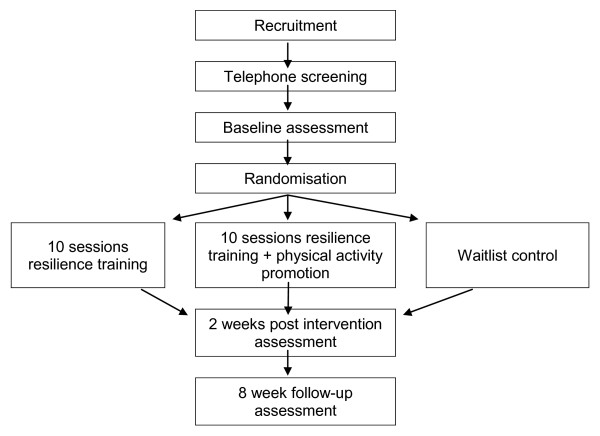
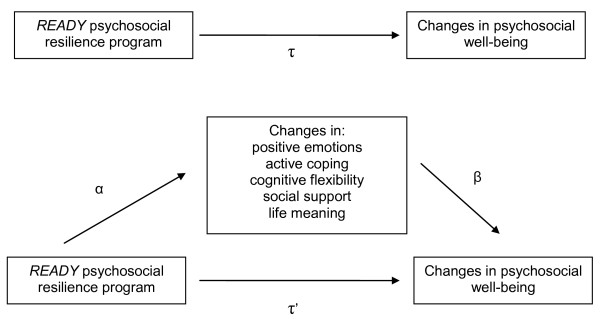
Background: Depression and poor social support are significant risk factors for coronary heart disease (CHD), and stress and anxiety can trigger coronary events. People experiencing such psychosocial difficulties are more likely to be physically inactive, which is also an independent risk factor for CHD. Resilience training can target these risk factors, but there is little research evaluating the effectiveness of such programs. This paper describes the design and measures of a study to evaluate a resilience training program (READY) to promote psychosocial well-being for heart health, and the added value of integrating physical activity promotion.Methods/design: In a cluster randomized trial, 95 participants will be allocated to either a waitlist or one of two intervention conditions. Both intervention conditions will receive a 10 x 2.5 hour group resilience training program (READY) over 13 weeks. The program targets five protective factors identified from empirical evidence and analyzed as mediating variables: positive emotions, cognitive flexibility, social support, life meaning, and active coping. Resilience enhancement strategies reflect the six core Acceptance and Commitment Therapy processes (values, mindfulness, defusion, acceptance, self-as-context, committed action) and Cognitive Behavior Therapy strategies such as relaxation training and social support building skills. Sessions include psychoeducation, discussions, experiential exercises, and home assignments. One intervention condition will include an additional session and ongoing content promoting physical activity. Measurement will occur at baseline, two weeks post intervention, and at eight weeks follow-up, and will include questionnaires, pedometer step logs, and physical and hematological measures. Primary outcome measures will include self-reported indicators of psychosocial well-being and depression. Secondary outcome measures will include self-reported indicators of stress, anxiety and physical activity, and objective indicators of CHD risk (blood glucose, cholesterol [mmol.L-1], triglycerides, blood pressure). Process measures of attendance, engagement and fidelity will also be conducted. Linear analyses will be used to examine group differences in the outcome measures, and the product of coefficients method will be used to examine mediated effects.Discussion: If successful, this program will provide an innovative means by which to promote psychosocial well-being for heart health in the general population. The program could also be adapted to promote well-being in other at risk population subgroups.Trial Registration: ACTRN12608000017325.
Verified 2026-11-22 · 1 reference not checked yet
Overview
CoChat Summary
## TL;DR
This paper describes the protocol for the READY cluster randomized trial, which tests whether a 10-session resilience program improves psychosocial well-being and heart health in adults, and whether adding physical activity promotion adds benefit. The study will compare two intervention arms with a wait-list control and assess outcomes using questionnaires, pedometer logs, physical measures, and blood biomarkers.
## Key findings
- Not stated in the paper.
- The trial plans to allocate 95 participants to either a wait-list or one of two intervention conditions.
- Both intervention conditions will receive a 10 × 2.5 hour group resilience training program over 13 weeks; one condition adds an extra session and ongoing physical activity promotion.
- Outcomes will be measured at baseline, 2 weeks post-intervention, and 8 weeks follow-up, including psychosocial measures, pedometer step counts, and physical/haematological indicators of CHD risk.
## Methods
- Design: Cluster randomized trial with two intervention conditions and a wait-list group; participants clustered by occupation and geographical location before random allocation.
- Sample/data: Volunteers recruited from staff in the Townsville district of the State Government Department of Education and Training in Townsville, Australia; target sample size was 28 per group for power, with 30–35 per condition aimed for to allow attrition.
- Analysis: Intention-to-treat analysis using random effects mixed modeling for group differences over time, plus linear mediation analyses using the product of coefficients method and confidence intervals.
## Limitations
- The paper states that recruiting staff from a regional district of a government department may not be representative of the general population.
- It states there may be contamination between intervention conditions because participants are recruited from within one organization, although clustering may reduce this.
- Evident from the text: this is a protocol/design paper, so it reports planned methods and expected outcomes rather than trial results.
Model-written summary. Check it against the paper before relying on it.
Integrity signals
Registry
Cites
Statistics
Figures
Verification
Claims the paper makes
6 Valid · 0 Not valid · 26 Not checked · 10 Own results and interpretations
The sources with a verdict support this claim; the rest weren’t checked yet, have no full text we could read, or their verdicts aren’t rated yet.
In the paper
“There are numerous studies indicating a positive association between physical activity and psychosocial well-being [18-20].”
§ Evaluating the effectiveness of psychosocial resilience training for heart health, and the added value of promoting physical activity: a cluster randomized trial of the READY program > Background > Integrating Physical Activity Promotion with Psychosocial Resilience Training for Heart Health
What the sources say
- Supportedcites [18] Scully D Kremer J Meade M Graham RC Dudgeon K Physical exercise and psychological well being: a critical review British Journal of Sports Medicine 1998 32 2 111 120 10.1136/bjsm.32.2.111 9631216 PMC1756084 source
The “Physical activity and psychological well being” section describes growing numbers of controlled studies reporting positive effects and calls the evidence for a positive relation between physical activity and psychological variables compelling. The review cautions that the direction of causality remains uncertain, but the citing sentence claims an association, not causation. (LLM, conf=0.92)
- Not checked — no full text of the sourcecites [19] Penedo FJ Dahn JR Exercise and well-being: a review of mental and physical health benefits associated with physical activity Current Opinions in Psychiatry 2005 18 2 189 193 10.1097/00001504-200503000-00013 16639173 source
- Not checked — no full text of the sourcecites [20] Stathopoulou G Powers M Berry A Smits J Otto M Exercise interventions for mental health: A quantitative and qualitative review Clinical Psychology - Science and Practice 2006 13 2 179 193 10.1111/j.1468-2850.2006.00021.x source
hedgedstates an association- Asserted: passes — The authors put it forward as true.
- Checkable: passes — It can be checked against evidence.
- Load-bearing: passes — The paper’s conclusions depend on it.
- Based: passes — The paper gives a reason why it holds.
- Supported
The cited sources support only part of this claim — read each source’s verdict below.
In the paper
“People experiencing psychosocial difficulties, such as depression, social isolation and life stress, are also likely to be physically inactive [11,12]”
§ Evaluating the effectiveness of psychosocial resilience training for heart health, and the added value of promoting physical activity: a cluster randomized trial of the READY program > Background > Integrating Physical Activity Promotion with Psychosocial Resilience Training for Heart Health
What the sources say
- Partly supportedcites [11] Fox K The influence of physical activity on mental well being Public Health Nutrition 1999 2 3a 411 418 10.1017/S1368980099000567 10610081 sourceExperimental — accuracy not yet measured
The Depression section (p. 2) reports an association between low physical activity and clinical depression, while cautioning that the relationship could run in either direction. The Psychosocial mechanisms section (p. 5) discusses social interaction as a possible benefit of activity, and Anxiety and stress reactivity (p. 3) discusses exercise’s effects on stress responses. Neither establishes that people experiencing social isolation or life stress are likely to be physically inactive. (LLM, conf=0.84)
- Not checked — no full text of the sourcecites [12] Paluska SA Schwenk TL Physical activity and mental health: current concepts Sports Medicine 2000 29 3 167 180 10.2165/00007256-200029030-00003 10739267 source
hedgedstates an association- Asserted: passes — The authors put it forward as true.
- Checkable: passes — It can be checked against evidence.
- Load-bearing: passes — The paper’s conclusions depend on it.
- Based: passes — The paper gives a reason why it holds.
- Partly supported
The sources with a verdict support this claim; the rest weren’t checked yet, have no full text we could read, or their verdicts aren’t rated yet.
In the paper
“Reviews of ACT randomized control trials show an overall advantage of ACT compared with control conditions [29-31].”
§ Evaluating the effectiveness of psychosocial resilience training for heart health, and the added value of promoting physical activity: a cluster randomized trial of the READY program > Methods/Design > Intervention
What the sources say
- Supportedcites [29] Hayes S Luoma JB Bond FW Masuda A Lillis J Acceptance and commitment therapy: Model, processes and outcomes Behaviour Research and Therapy 2006 44 1 25 10.1016/j.brat.2005.06.006 16300724 source
The ‘Quantitative characterization of the relative strength of ACT outcomes’ section (p. 15) reviews between-condition outcomes and reports an overall effect size of 0.66 in ACT’s favor at both post-treatment and follow-up. It also reports positive average effects against active treatments and against wait-list, treatment-as-usual, or placebo conditions. The authors caution that the evidence was preliminary, particularly for comparisons with other active treatments. (LLM, conf=0.89)
- Not checked — no full text of the sourcecites [30] Öst L Efficacy of the third wave of behavioral therapies: a systematic review and meta-analysis Behavior Research & Therapy 2008 46 296 321 10.1016/j.brat.2007.12.005 18258216 source
- Not checked — no full text of the sourcecites [31] Powers M Zum Vorde Sive Vording M Emmelkamp P Acceptance and commitment therapy: A meta-analytic review Psychotherapy and Psychosomatics 2009 78 73 80 10.1159/000190790 19142046 source
plainstates a cause- Asserted: passes — The authors put it forward as true.
- Checkable: passes — It can be checked against evidence.
- Load-bearing: passes — The paper’s conclusions depend on it.
- Based: passes — The paper gives a reason why it holds.
- Supported
In the paper
“Physical activity can also reduce cardiovascular risk factors such as hypertension, hyperlipidaemia, and obesity [15].”
§ Evaluating the effectiveness of psychosocial resilience training for heart health, and the added value of promoting physical activity: a cluster randomized trial of the READY program > Background > Integrating Physical Activity Promotion with Psychosocial Resilience Training for Heart Health
What the sources say
- Not checked — no full text of the sourcecites [15] Bauman AE Updating the evidence that physical activity is good for health: an epidemiological review 2000-2003 Journal of Science and Medicine in Sport 2004 7 1 6 19 10.1016/S1440-2440(04)80273-1 15214597 source
plainstates a cause- Asserted: passes — The authors put it forward as true.
- Checkable: passes — It can be checked against evidence.
- Load-bearing: passes — The paper’s conclusions depend on it.
- Based: passes — The paper gives a reason why it holds.
A claim is checked only against the cited paper’s full text, never its abstract, and none is available for its sources.
In the paper
“Poor psychosocial functioning may impact on cardiovascular health via biological mechanisms such as cortisol hypersecretion and disturbed hypothalamic-pituitary-adrenal axis functioning, hypertension and blood pressure reactivity to stress”
§ Evaluating the effectiveness of psychosocial resilience training for heart health, and the added value of promoting physical activity: a cluster randomized trial of the READY program > Background > Psychosocial Risks for Coronary Heart Disease
What the sources say
- Not checked — no full text of the sourcecites [2] Rozanski A Blumenthal J Kaplan J Impact of psychosocial factors on the pathogenesis of cardiovascular disease and implications for therapy Circulation 1999 99 2192 2217 10217662 source
- Not checked — no full text of the sourcecites [4] Strike P Steptoe A Psychosocial factors in the development of coronary artery disease Progress in Cardiovascular Diseases 2004 46 4 337 347 10.1016/j.pcad.2003.09.001 14961456 source
hedgedstates a possible cause- Asserted: passes — The authors put it forward as true.
- Checkable: passes — It can be checked against evidence.
- Load-bearing: passes — The paper’s conclusions depend on it.
- Based: passes — The paper gives a reason why it holds.
12 more claims
Create a free account to see all 42 claims and to verify the 1 reference still open.
- Probably not a substantial claim. 21
- It may state two separate claims as one. 11
Citations
Cites
The CES-D Scale: A Self-Report Depression Scale for Research in the General Population
Radloff, L. S. (1977) · Applied Psychological Measurement · doi:10.1177/014662167700100306 · Cited by 53,267
Happiness is everything, or is it? Explorations on the meaning of psychological well-being.
Ryff, C. D. (1989) · Journal of Personality and Social Psychology · doi:10.1037/0022-3514.57.6.1069 · Cited by 14,847
The benefits of being present: Mindfulness and its role in psychological well-being
Brown, K. W., & Ryan, R. M. (2003) · Journal of Personality and Social Psychology · doi:10.1037/0022-3514.84.4.822 · Cited by 13,448
Hao (2015) · doi:10.1002/14651858 · Cited by 11,321
You want to measure coping but your protocol’ too long: Consider the brief cope
Carver, C. S. (1997) · International Journal of Behavioral Medicine · doi:10.1207/s15327558ijbm0401_6 · Cited by 7,361
(1995) · Cited by 6,909
Acceptance and commitment therapy: model, processes and outcomes
Hayes, S. C., Luoma, J. B., Bond, F. W., Masuda, A., & Lillis, J. (2006) · Behaviour Research and Therapy · doi:10.1016/j.brat.2005.06.006 · Cited by 6,587
The cochrane database of systematic reviews
Geddes, J. (1996) · Journal of Psychosomatic Research · doi:10.1016/s0022-3999(96)90063-x · Cited by 5,989
The PANAS-X: Manual for the Positive and Negative Affect Schedule - Expanded Form
Watson, D., & Clark, L. A. (1994) · University of Iowa · doi:10.17077/48vt-m4t2 · Cited by 3,700
Penedo, F. J., & Dahn, J. R. (2005) · Current Opinion in Psychiatry · doi:10.1097/00001504-200503000-00013 · Cited by 2,851
Rozanski, A., Blumenthal, J. A., & Kaplan, J. (1999) · Circulation · doi:10.1161/01.cir.99.16.2192 · Cited by 2,846
Depression Anxiety Stress Scales
Lovibond, S. H., & Lovibond, P. F. (2011) · PsycTESTS Dataset · doi:10.1037/t01004-000 · Cited by 2,416
Physical Activity and Mental Health: Current Concepts
Paluska, S. A., & Schwenk, T. L. (2000) · Sports Medicine · doi:10.2165/00007256-200029030-00003 · Cited by 1,722
The influence of physical activity on mental well-being
Fox, K. R. (1999) · Public Health Nutrition · doi:10.1017/s1368980099000567 · Cited by 1,415
Effects of physical exercise on anxiety, depression, and sensitivity to stress
Salmon, P. (2001) · Clinical Psychology Review · doi:10.1016/s0272-7358(99)00032-x · Cited by 1,363
Flourishing: Positive psychology and the life well-lived.
(2003) · American Psychological Association eBooks · doi:10.1037/10594-000 · Cited by 1,298
The Psychobiology of Depression and Resilience to Stress: Implications for Prevention and Treatment
Southwick, S. M., Vythilingam, M., & Charney, D. S. (2005) · Annual Review of Clinical Psychology · doi:10.1146/annurev.clinpsy.1.102803.143948 · Cited by 1,160
Physical Activity Reduces the Risk of Subsequent Depression for Older Adults
Strawbridge, W. J. (2002) · American Journal of Epidemiology · doi:10.1093/aje/kwf047 · Cited by 818
Physical exercise and psychological well being: a critical review.
Scully, D., Kremer, J., Meade, M. M., Graham, R., & Dudgeon, K. (1998) · British Journal of Sports Medicine · doi:10.1136/bjsm.32.2.111 · Cited by 771
Updating the evidence that physical activity is good for health: an epidemiological review 2000–2003
Bauman, A. E. (2004) · Journal of Science and Medicine in Sport · doi:10.1016/s1440-2440(04)80273-1 · Cited by 768
Efficacy of the third wave of behavioral therapies: A systematic review and meta- analysis
Öst, L.-G. (2008) · Behaviour Research and Therapy · doi:10.1016/j.brat.2007.12.005 · Cited by 727
Exercise Interventions for Mental Health: A Quantitative and Qualitative Review.
Stathopoulou, G., Powers, M. B., Berry, A. C., Smits, J. A. J., & Otto, M. W. (2006) · Clinical Psychology: Science and Practice · doi:10.1111/j.1468-2850.2006.00021.x · Cited by 663
Acceptance and commitment therapy: A meta-analytic review
Powers, M. B., Zum Vörde Sive Vörding, M. B., & Emmelkamp, P. M. G. (2009) · Psychotherapy and Psychosomatics · doi:10.1159/000190790 · Cited by 619
Psychological interventions for coronary heart disease.
Richards, S. H., Anderson, L., Jenkinson, C. E., Whalley, B., Rees, K., Davies, P., Bennett, P., Liu, Z., West, R., Thompson, D. R., et al. (2017) · Cochrane Database of Systematic Reviews · doi:10.1002/14651858.cd002902.pub4 · Cited by 571
“Stress” and coronary heart disease: psychosocial risk factors
Bunker, S. J., Colquhoun, D. M., Esler, M. D., Hickie, I. B., Hunt, D., Jelinek, V. M., Oldenburg, B. F., Peach, H. G., Ruth, D., Tennant, C. C., et al. (2003) · Medical Journal of Australia · doi:10.5694/j.1326-5377.2003.tb05193.x · Cited by 560
The Antidepressive Effects of Exercise: A Meta-Analysis of Randomized Trials
Rethorst, C. D., Wipfli, B. M., & Landers, D. M. (2009) · Sports Medicine · doi:10.2165/00007256-200939060-00004 · Cited by 541
Prevention of Recurrent Depression With Cognitive Behavioral Therapy: Preliminary Findings
Fava, G. A., Rafanelli, C., Grandi, S., Conti, S., & Belluardo, P. (1998) · Archives of General Psychiatry · doi:10.1001/archpsyc.55.9.816 · Cited by 491
Healthy Hearts—and the Universal Benefits of Being Physically Active: Physical Activity and Health
Blair, S. N., & Morris, J. N. (2009) · Annals of Epidemiology · doi:10.1016/j.annepidem.2009.01.019 · Cited by 457
Going to the heart of the matter
Kubzansky, L. D., & Kawachi, I. (2000) · Journal of Psychosomatic Research · doi:10.1016/s0022-3999(99)00091-4 · Cited by 442
Flourishing under fire: Resilience as a prototype of challenged thriving.
Ryff, C. D., & Singer, B. (2003) · Flourishing: Positive psychology and the life well-lived. · doi:10.1037/10594-001 · Cited by 408
Anthropometrica : a textbook of body measurement for sports and health courses
Norton, K. I., & Olds, T. (1996) · Medical Entomology and Zoology · Cited by 371
Psychosocial factors in the development of coronary artery disease
Strike, P. C., & Steptoe, A. (2004) · Progress in Cardiovascular Diseases · doi:10.1016/j.pcad.2003.09.001 · Cited by 316
Prospective Study of Physical Activity and Depressive Symptoms in Middle-Aged Women
BROWN, W., FORD, J., BURTON, N., MARSHALL, A., & DOBSON, A. (2005) · American Journal of Preventive Medicine · doi:10.1016/j.amepre.2005.06.009 · Cited by 269
Self-citationCerin, E., & MacKinnon, D. P. (2009) · Public Health Nutrition · doi:10.1017/s1368980008003649 · Cited by 210
Psychological interventions for coronary heart disease
Rees, K., Bennett, P., West, R., Davey Smith, G., & Ebrahim, S. (2004) · Cochrane Database of Systematic Reviews · doi:10.1002/14651858.cd002902.pub2 · Cited by 160
(2004) · PubMed · Cited by 151
van Gool, C. H., Kempen, G. I. J. M., Bosma, H., van Boxtel, M. P. J., Jolles, J., & van Eijk, J. T. M. (2007) · American Journal of Public Health · doi:10.2105/ajph.2004.053199 · Cited by 135
Determining the Efficacy of a Resiliency Training Approach in Adults With Type 2 Diabetes
Bradshaw, B. G., Richardson, G. E., Kumpfer, K., Carlson, J., Stanchfield, J., Overall, J., Brooks, A. M., & Kulkarni, K. (2007) · The Diabetes Educator · doi:10.1177/0145721707303809 · Cited by 112
Prevention and Health Promotion: Decades of Progress, New Challenges, and an Emerging Agenda.
Smith, T. W., Orleans, C. T., & Jenkins, C. D. (2004) · Health Psychology · doi:10.1037/0278-6133.23.2.126 · Cited by 86
Physical Activity and Cardiovascular Disease
Wannamethee, S. G., & Shaper, A. G. (2002) · Seminars in Vascular Medicine · doi:10.1055/s-2002-35400 · Cited by 70
Wilson, K. G., Sandoz, E. K., Kitchens, J., & Roberts, M. (2010) · PsycTESTS Dataset · doi:10.1037/t65855-000 · Cited by 45
Steensma, H., Heijer, M. D., & Stallen, V. (2007) · International Quarterly of Community Health Education · doi:10.2190/iq.27.2.e · Cited by 39
Guide to management of hypertension 2008 - Assessing and managing raised blood pressure in adults
Duggan, K. A., Anderson, C. S., Arnolda, L., Boyden, A. N., Cowley, D., Dart, A. B., Hankey, G. J., Huang, N., Mangoni, A. A., Nelson, et al. (2008) · UTAS Research Repository · Cited by 36
Research works printed but not linked: 3
- Stephenson J Bauman A Armstrong T Smith B Bellew B The costs of illness attributable to physical inactivity in Australia: a preliminary study 2000 Canberra: The Commonwealth Department of Health and Aged Care and the Australian Sports Commission
- Townsville City Council Townsville, a Demographic Profile. May 2009 2009
- Armstrong T Bauman A Davies J Physical activity patterns of Australian adults. Results of the 1999 National Physical Activity Survey 2000 Canberra: Australian Institute of Health and Welfare
Cited by
Cooney, G. M., Dwan, K., Greig, C. A., Lawlor, D. A., Rimer, J., Waugh, F. R., McMurdo, M., & Mead, G. E. (2013) · Cochrane Database of Systematic Reviews · doi:10.1002/14651858.cd004366.pub6 · Cited by 1,834
Boehm, J. K., & Kubzansky, L. D. (2012) · Psychological Bulletin · doi:10.1037/a0027448 · Cited by 909
Leppin, A. L., Bora, P. R., Tilburt, J. C., Gionfriddo, M. R., Zeballos-Palacios, C., Dulohery, M. M., Sood, A., Erwin, P. J., Brito, J. P., Boehmer, K. R., et al. (2014) · PLoS ONE · doi:10.1371/journal.pone.0111420 · Cited by 405
Rimer, J., Dwan, K., Lawlor, D. A., Greig, C. A., McMurdo, M., Morley, W., & Mead, G. E. (2012) · Cochrane Database of Systematic Reviews · doi:10.1002/14651858.cd004366.pub5 · Cited by 330
Resilience of patients with chronic diseases: A systematic review
Kim, G. M., Lim, J. Y., Kim, E. J., & Park, S. (2019) · Health & Social Care in the Community · doi:10.1111/hsc.12620 · Cited by 219
Metadata
- Authors
- Burton, N. W., Pakenham, K. I., & Brown, W. J.
- Affiliations
- The University of Queensland (AU)
- Corresponding author
- Burton, Nicola W
- Venue
- BMC Public Health
- Published
- 2009-11-23
- Volume
- 9
- Issue
- 1
- Pages
- 427-427
- ISSN
- 1471-2458 (ISSN-L)
- PMC
- PMC2784777
- OpenAlex
- W2059858413
- Cited by
- 76
- References
- 43
- Citations by year
- 2026: 3 · 2025: 2 · 2024: 1 · 2023: 4 · 2022: 5 · 2021: 4 · 2020: 3 · 2019: 5 · 2018: 4 · 2017: 8 · 2016: 11 · 2015: 2 · 2014: 4 · 2013: 8 · 2012: 7
- FWCI
- 2.59
- Type
- journal article
- Language
- en
- Open access
- gold
- doi.org
- Licence
- cc-by
- creativecommons.org/licenses/by/2.0 (tdm)
- Locations
- BMC Public Health (publishedVersion, cc-by)
- PubMed Central (publishedVersion, cc-by)
- PubMed (publishedVersion)
- DOAJ (DOAJ: Directory of Open Access Journals) (submittedVersion)
- Funders
- Queensland Government
- Department of Education and Training
- Medical Research Council
- National Health and Medical Research Council (301200)
- Topics
- Health Sciences › Medicine › Cardiology and Cardiovascular Medicine › Cardiac Health and Mental Health
- Social Sciences › Psychology › Clinical Psychology › Resilience and Mental Health
- Social Sciences › Psychology › Clinical Psychology › Mindfulness and Compassion Interventions
- Keywords
- coronary heart disease risk, physical activity promotion, acceptance and commitment therapy, cognitive behavioral therapy, depression, stress, anxiety, social support, meaning of life, active coping, cognitive flexibility, positive emotions, mediation analysis, cardiovascular risk factors, pedometer step counts
- MeSH terms
- Adult, Cardiovascular Diseases, Female, Humans, Male, Patient Education as Topic, Risk Factors, Exercise, Intention to Treat Analysis
About these checks
Registry, retraction, Cites and statistics results are computed, not judged, with one exception: a printed reference that no index lists is read once by a model before it counts as a citation error. Claims are extracted by a model and kept only when their quote appears verbatim in the text; each cited source is then checked, with a model’s help, for whether it says what the claim relies on. Those verdicts can be wrong — read the claim’s quote and the cited source before relying on one.
The claim verdicts this report counts are experimental: their accuracy is not yet measured.
A language model drew the claims from the paper on 2026-10-11, under version 3 of the claim definition (model deepseek-v4.1-flash, prompt extract-v3).
A second model labelled each claim on 2026-10-11 (model jev-1.13-20260917, definition revision gold-guideline-v0.2).
Cited sources are checked with a language model’s help (gpt-6-sol).
Statistics and arithmetic are recomputed, not judged.
Confidence bands are shown only for fields calibrated on our annotated test set. None is calibrated yet, so no band is shown.
What counts as a claim ›How we measure confidence ›How we check this ›
Are you an author, or do you see a problem with this page? Request a review
Data sources
Bibliographic data: Semantic Scholar, OpenAlex, Crossref.
Contains information from the Semantic Scholar Academic Graph Datasets, made available under the ODC Attribution License (ODC-BY 1.0).
Semantic Scholar’s data is described in: Kinney, R., et al. (2023). The Semantic Scholar Open Data Platform. arXiv:2301.10140.
