

Patient engagement in research: a systematic review
Open accessThe DOI matches its Crossref record; 44 of the 50 references it cites were found in a registry or an index.
Abstract
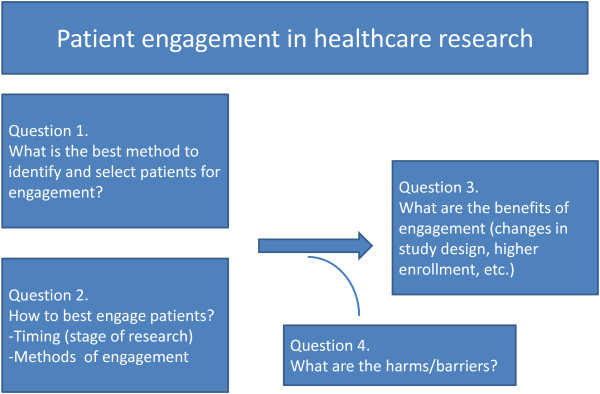
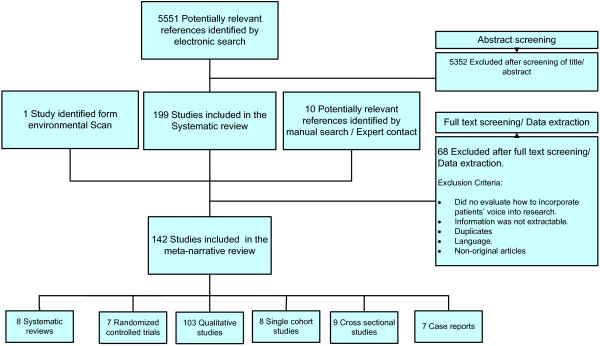
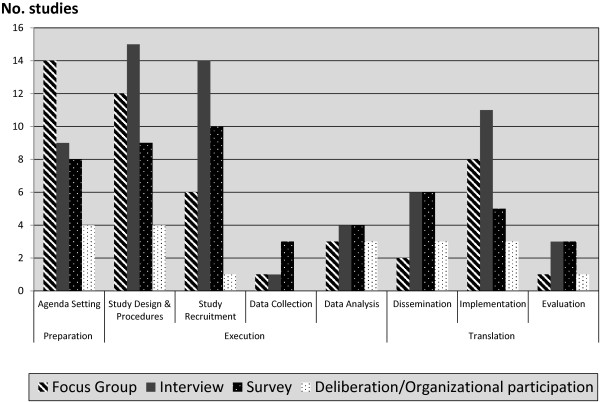
BACKGROUND: A compelling ethical rationale supports patient engagement in healthcare research. It is also assumed that patient engagement will lead to research findings that are more pertinent to patients' concerns and dilemmas. However; it is unclear how to best conduct this process. In this systematic review we aimed to answer 4 key questions: what are the best ways to identify patient representatives? How to engage them in designing and conducting research? What are the observed benefits of patient engagement? What are the harms and barriers of patient engagement? METHODS: We searched MEDLINE, EMBASE, PsycInfo, Cochrane, EBSCO, CINAHL, SCOPUS, Web of Science, Business Search Premier, Academic Search Premier and Google Scholar. Included studies were published in English, of any size or design that described engaging patients or their surrogates in research design. We conducted an environmental scan of the grey literature and consulted with experts and patients. Data were analyzed using a non-quantitative, meta-narrative approach. RESULTS: We included 142 studies that described a spectrum of engagement. In general, engagement was feasible in most settings and most commonly done in the beginning of research (agenda setting and protocol development) and less commonly during the execution and translation of research. We found no comparative analytic studies to recommend a particular method. Patient engagement increased study enrollment rates and aided researchers in securing funding, designing study protocols and choosing relevant outcomes. The most commonly cited challenges were related to logistics (extra time and funding needed for engagement) and to an overarching worry of a tokenistic engagement. CONCLUSIONS: Patient engagement in healthcare research is likely feasible in many settings. However, this engagement comes at a cost and can become tokenistic. Research dedicated to identifying the best methods to achieve engagement is lacking and clearly needed.
Overview
The claims and statistics of this paper haven’t been checked yet.
Free: it reads the open-access text and checks the first 5 claims that cite a source we can check. Create a free account to check every claim.
Integrity signals
Registry
Cites
Statistics
Figures
Verification
Claims the paper makes
The claims and statistics of this paper haven’t been checked yet.
Free: it reads the open-access text and checks the first 5 claims that cite a source we can check. Create a free account to check every claim.
Claims other papers make about this one
Each is checked against this paper’s own text: does it say what the citing paper says it does?
The source backs part of the claim, not all of it — or backs it for a different population, condition or comparison.
In the citing paper
“The present study confirms that, with regard to the conduct of research trials in primary dental care, research dedicated to identifying the best methods to achieve engagement with patients as potential participants is lacking and clearly needed [50].”
From Parental attitudes to randomised controlled trials in primary dental care: A qualitative study (2026) · cites this paper as [50]
Experimental — accuracy not yet measuredThe source backs part of the claim, not all of it — or backs it for a different population, condition or comparison.
In the citing paper
“Engaging patients in the process of designing the review protocol and in reviewing the findings increase the applicability and relevance of the findings of this study.”
From Systematic review of mind‐body interventions to treat myalgic encephalomyelitis/chronic fatigue syndrome (2021) · cites this paper as [36]
Experimental — accuracy not yet measuredThe source backs part of the claim, not all of it — or backs it for a different population, condition or comparison.
In the citing paper
“Previous studies indicated that engaging the target group increases study enrollment and may enhance the uptake and the acceptance of interventions [67, 68].”
From A blended psychosocial support program for partners of patients with amyotrophic lateral sclerosis and progressive muscular atrophy: Protocol of a randomized controlled trial (2018) · cites this paper as [67]
Experimental — accuracy not yet measuredThe check wasn’t confident either way, so it gives no verdict — never disputed.
In the citing paper
“This is consistent with review findings of empirical studies in PPI whereby short‐term, individual‐level outcomes were more represented in the literature. 43 , 91 , 92”
From A systematic review of theories, models and frameworks used for youth engagement in health research (2024) · cites this paper as [91]
Experimental — accuracy not yet measured
Self-check
Percentages, sums and reported differences re-computed from the paper’s own numbers.
The self-check needs the paper’s full text.
Citations
Cites
Preferred Reporting Items for Systematic Reviews and Meta-Analyses: the PRISMA statement
Moher, D., Liberati, A., Tetzlaff, J., Altman, D. G., & for the PRISMA Group (2009) · BMJ · doi:10.1136/bmj.b2535 · Cited by 83,823
Preferred reporting items for systematic reviews and meta-analyses: the PRISMA Statement.
(2009) · PubMed Central · Cited by 44,859
Preferred reporting items for systematic reviews and meta-analyses: The PRISMA statement
Moher, D., Liberati, A., Tetzlaff, J., Altman, D. G., & the PRISMA Group* (2009) · Annals of Internal Medicine · doi:10.7326/0003-4819-151-4-200908180-00135 · Cited by 37,554
Preferred Reporting Items for Systematic Reviews and Meta-Analyses: The PRISMA Statement
Moher, D., Liberati, A., Tetzlaff, J., & Altman, D. G. (2009) · Journal of Clinical Epidemiology · doi:10.1016/j.jclinepi.2009.06.005 · Cited by 19,575
(2005) · PubMed · Cited by 7,011
Enhancing transparency in reporting the synthesis of qualitative research: ENTREQ
Tong, A., Flemming, K., McInnes, E., Oliver, S., & Craig, J. (2012) · BMC Medical Research Methodology · doi:10.1186/1471-2288-12-181 · Cited by 3,569 · cited 1×
“Differences in studies settings and characteristics can be used to explain differences in results (heterogeneity) [16].”
BackgroundCommunity-based participatory research: assessing the evidence.
Viswanathan, M., Ammerman, A., Eng, E. M., Garlehner, G., Lohr, K. N., Griffith, D. M., Rhodes, S. D., Samuel‐Hodge, C. D., Maty, S. C., Lux, L. J., et al. (2004) · PubMed Central · Cited by 1,053
Campbell, R., Pound, P., Pope, C., Britten, N., Pill, R., Morgan, M., & Donovan, J. (2003) · Social Science & Medicine · doi:10.1016/s0277-9536(02)00064-3 · Cited by 921 · cited 3×
“[http://www.casp-uk.net/wp-content/uploads/ 2011/11/CASP-Qualitative-Research-Checklist-31.05.13.pdf] 19.”
MethodInfluentialStorylines of research in diffusion of innovation: a meta-narrative approach to systematic review
Greenhalgh, T., Robert, G., Macfarlane, F., Bate, P., Kyriakidou, O., & Peacock, R. (2005) · Social Science & Medicine · doi:10.1016/j.socscimed.2004.12.001 · Cited by 913 · cited 1×
“Instead, data extracted from the included studies were analyzed using a meta-narrative approach [14].”
MethodPatient and service user engagement in research: a systematic review and synthesized framework
Shippee, N. D., Domecq Garces, J. P., Prutsky Lopez, G. J., Wang, Z., Elraiyah, T. A., Nabhan, M., Brito, J. P., Boehmer, K., Hasan, R., Firwana, B., et al. (2015) · Health Expectations · doi:10.1111/hex.12090 · Cited by 628 · cited 2×
“We also categorized the research engagement from each study into three different research phases proposed for patient engagement [17]:”
BackgroundMethodSelf-citation
Cited by
Items 901–1,000 of 1,002
Recabarren, J., Wu, R. L., Scholes-Robertson, N. J., Hughes, A., van Zwieten, A., Wong, G., Sluiter, A., Viecelli, A. K., Craig, J. C., McDonald, S. P., et al. (2025) · Journal of Clinical Epidemiology · doi:10.1016/j.jclinepi.2025.111784 · Cited by 6
“The medical and health research agenda remains largely driven by the interests of health professionals, academia, and industry [1 e 3].”
InfluentialDal‐Ré, R., & García-Méndez, E. (2025) · Medicina Clínica (English Edition) · doi:10.1016/j.medcli.2025.106964 · Cited by 5
Shared decision making in preventive care in Switzerland: From theory to action
Selby, K. J., Auer, R., & Cornuz, J. (2017) · Zeitschrift für Evidenz Fortbildung und Qualität im Gesundheitswesen · doi:10.1016/j.zefq.2017.05.008 · Cited by 6
Paul, J., Davidson, R., Johnstone, C., Loong, M., Matecsa, J., Guttmann, A., & Schull, M. J. (2020) · International Journal for Population Data Science · doi:10.23889/ijpds.v5i3.1364 · Cited by 6
“Public involvement and engagement are gaining recognition as an important practice to improve the design, conduct, dissemination and impact of health research [1, 2].”
BackgroundHealey, A., van Beinum, A., Hornby, L., Wilson, L. C., Bédard, S., Berrigan, H., Brodrecht, D., Gillrie, C., Shing, T., Towers, J., et al. (2020) · Canadian Journal of Anesthesia/Journal canadien d anesthésie · doi:10.1007/s12630-020-01808-z · Cited by 6
“process and training, transportation, frequency of meetings, time constraints, and a lack of specific funding for engagement purposes.(18) We overcame these challenges during planning and facilitation of the consensus-building”
BackgroundChang, K., Markle‐Reid, M., Valaitis, R. K., McAiney, C. A., & Carter, N. (2020) · Journal of Applied Gerontology · doi:10.1177/0733464820970811 · Cited by 6
Joyce, R. A., Dwyer, C. P., & Hynes, S. M. (2021) · HRB Open Research · doi:10.12688/hrbopenres.13205.2 · Cited by 5
Gilles, I., Lesage, S., Barbieux, C., Alessandrini, M., Jackson‐Perry, D., Vittoz, L., Peytremann‐Bridevaux, I., & Calmy, A. (2021) · JAIDS Journal of Acquired Immune Deficiency Syndromes · doi:10.1097/qai.0000000000002693 · Cited by 7
Implementation Science in Pediatric Rheumatology: A Path to Health Equity
Smitherman, E. A., Goh, Y. I., Pooni, R., Vora, S. S., Yildirim‐Toruner, C., & von Scheven, E. (2021) · Rheumatic Disease Clinics of North America · doi:10.1016/j.rdc.2021.08.006 · Cited by 6
Sunderji, N., Ion, A., Tang, V., Rayner, J., Mulder, C., Ivers, N. M., & Alyass, A. (2021) · CMAJ Open · doi:10.9778/cmajo.20200152 · Cited by 7
Patients as Partners in Rare Disease Diagnosis and Research.
McCray, A. T., & LeBlanc, K. (2021) · PubMed Central · Cited by 17
Nugent, S. M., Cottrell, E., Knight, S. J., & Helfand, M. (2022) · Journal of General Internal Medicine · doi:10.1007/s11606-021-07306-2 · Cited by 6
User Involvement in Myasthenia Gravis Research
Gilhus, N. E., & Hovland, S. I. B. (2022) · Frontiers in Neurology · doi:10.3389/fneur.2022.839769 · Cited by 6
Bechard, L., McGilton, K. S., Middleton, L. E., Chertkow, H. M., Sivananthan, S., & Bethell, J. (2022) · Canadian Geriatrics Journal · doi:10.5770/cgj.25.583 · Cited by 6
Consumer Engagement in Perioperative Clinical Trials
Wallace, S. K. A., Bucknall, T. K., & Myles, P. S. (2022) · Anesthesia & Analgesia · doi:10.1213/ane.0000000000006209 · Cited by 6
Anderson, N. N., Baker, G. R., Moody, L., Scane, K., Urquhart, R., Wodchis, W. P., & Gagliardi, A. R. (2022) · BMJ Open · doi:10.1136/bmjopen-2022-061271 · Cited by 8
Adams, C., Albert, P. S., Benson, T., Cordingley, A., Daniels, B., Fynn, N., Gurgone, M., Jeffery, C., White, A. L., & Strobel, N. (2022) · Research Involvement and Engagement · doi:10.1186/s40900-022-00389-z · Cited by 7
“Patient and public engagement in health services research has been recognised as important to improving researchers understanding of community needs, improving trust and confidence in the research findings, building relationships with communities and improving translation of research outcomes [14, 15].”
Wardill, H. R., Cheung, Y. T., Boltong, A. G., Charalambous, A., Koczwara, B., Lustberg, M. B., Tomlins, E., & Britto, J. M. (2022) · Supportive Care in Cancer · doi:10.1007/s00520-022-07366-y · Cited by 6
“However, the continual challenge remains to embed engagement strategies into health service and research practice [13].”
BackgroundA human-centered designed outreach strategy for a youth contraception navigator program
Wilkinson, T. A., Hawryluk, B. A., Moore, C. M., Peipert, J. F., Carroll, A. E., Wiehe, S. E., & Fortenberry, J. D. (2022) · PEC Innovation · doi:10.1016/j.pecinn.2022.100093 · Cited by 9
Eaton, A., Dyson, M. P., Gokiert, R., Rajani, H., O’Neill, M. G., Ladha, T., Zhang, M., Birken, C. S., Maguire, J. L., & Ball, G. D. C. (2023) · Paediatrics & Child Health · doi:10.1093/pch/pxac106 · Cited by 6
Lignou, S., Sheehan, M., & Singh, I. (2024) · Research Ethics · doi:10.1177/17470161231224060 · Cited by 9
“Likewise, the input from seldom-heard or underrepresented groups is needed to help researchers identify and address otherwise unidentified issues faced by less-heard patient communities (Ashcroft et al., 2016; Brett et al., 2014; Crowe et al., 2015; Domecq et al., 2014).”
BackgroundDevelopment of Podcasts in a Hospital Setting: A User-Centered Approach
Frølund, J. C., Løkke, A., Jensen, H. I., & Farver-Vestergaard, I. (2024) · Journal of Health Communication · doi:10.1080/10810730.2024.2321385 · Cited by 7
“The interviews and focus groups followed an interview guide (see supplementary material) that was based on previous work on user-centered approaches (Borge et al., 2022; Domecq et al., 2014) and empathy mapping (Ferreira, Silva, Oliveira, & Conte, 2015).”
BackgroundMethodCaldas, B. D. N., Portela, M. C., Stelson, E., Singer, S. J., Amaral, T. L. M., Amaral, C. D. A., Escosteguy, C. C., Martins, M. S., de Andrade, C. L. T., Soares, L., et al. (2024) · Journal of Clinical Epidemiology · doi:10.1016/j.jclinepi.2024.111423 · Cited by 7
Josephson, C. B., Aronica, E., Beniczky, S., Boyce, D. M., Cavalleri, G. L., Denaxas, S., French, J. A., Jehi, L. E., Koh, H. Y., Kwan, P., et al. (2024) · Epileptic Disorders · doi:10.1002/epd2.20288 · Cited by 5
“66 They provide the lived experience perspective, which can help highlight research priorities and identify person-centered outcomes.”
Self-citationMadrid, S., Tuzzio, L., Stults, C. D., Wright, L., Napolitano, G., Dillon, E. C., Tabano, H., & Greene, S. M. (2016) · Journal of patient-centered research and reviews · doi:10.17294/2330-0698.1272 · Cited by 6
The Role of Comparative Effectiveness Research
Selby, J. V., Whitlock, E. P., Sherman, K. S., & Slutsky, J. R. (2017) · Elsevier eBooks · doi:10.1016/b978-0-12-849905-4.00019-8 · Cited by 6
Engaging patients in health care epidemiology research: A case example
Brys, N. A., Keating, J. A., Knobloch, M. J., & Safdar, N. (2018) · American Journal of Infection Control · doi:10.1016/j.ajic.2018.08.013 · Cited by 9
Patient engagement in a trial testing a new strategy of care for acute heart failure
Lee, D. S., Armstrong, R., & Mohamed, S. (2018) · Canadian Medical Association Journal · doi:10.1503/cmaj.180462 · Cited by 6
Patient-Centered Model for Protein-Energy Wasting: Stakeholder Deliberative Panels
Byham-Gray, L. D., Peters, E. N., & Rothpletz‐Puglia, P. (2019) · Journal of Renal Nutrition · doi:10.1053/j.jrn.2019.06.001 · Cited by 7
Daniels, N., Gillen, P. A., & Casson, K. (2020) · Research and theory for nursing practice · doi:10.1891/rtnp-d-18-00125 · Cited by 7
Adult Cancer Survivors' Engagement and Interest in Patient-Centered Research
Lubas, M. M., Lu, Y., Gehr, A. W., Ghabach, B., Tanna, B., Narra, K., Brinkman, T. M., & Ojha, R. P. (2019) · Cancer Epidemiology Biomarkers & Prevention · doi:10.1158/1055-9965.epi-19-0689 · Cited by 6
“Nevertheless, best practices have not been established for recruiting patients to engage in the research process (41).”
BackgroundPatient and family engagement in Alberta’s Strategic Clinical Networks
Mork, M., Laxdal, G., & Wilkinson, G. (2019) · Canadian Medical Association Journal · doi:10.1503/cmaj.190596 · Cited by 6
Thompson, A. P., MacDonald, S. E., Wine, E., & Scott, S. D. (2020) · JMIR Research Protocols · doi:10.2196/19108 · Cited by 7
“Similarly, evaluation of the processes and outcomes of patient engagement in research has lagged, resulting in a meager evidence base for patient-oriented research [2,4,7-10].”
Luchtenberg, M. L., Maeckelberghe, E. L. M., & Verhagen, E. A. A. (2020) · BMJ Open · doi:10.1136/bmjopen-2019-034433 · Cited by 9
Identifying and managing psoriasis-associated comorbidities: the IMPACT research programme
Cordingley, L., Nelson, P. A., Davies, L. M., Ashcroft, D. M., Bundy, C., Chew-Graham, C. A., Chisholm, A., Elvidge, J., Hamilton, M., Hilton, R., et al. (2022) · Programme Grants for Applied Research · doi:10.3310/lvuq5853 · Cited by 9
Racine, E., Hurley, C., Cheung, A., Sinnott, C., Matvienko‐Sikar, K., Baumgartner, C., Rodondi, N., Smithson, W. H., & Kearney, P. M. (2018) · HRB Open Research · doi:10.12688/hrbopenres.12817.1 · Cited by 6
LeMaster, J. W., Lutgen, C. B., Matharoo, J., & MacFarlane, A. E. (2023) · Health Expectations · doi:10.1111/hex.13764 · Cited by 7
“More standard methods (interviews, focus groups) dominate the field.(59) The use of PWC and PLA was strongly endorsed by the project participants,(36) which is in line with findings from previous primary care participatory studies with refugees and migrants in the 1602 | LEMASTER ET AL.”
ResultPatient and Public Involvement in Inflammatory Bowel Disease Research—A Scoping Review
Elsolh, K., Li, A., Hu, M., Seleq, S., Neary, E., Gimpaya, N., Scaffidi, M. A., Kishibe, T., Khan, R., & Grover, S. C. (2023) · Journal of the Canadian Association of Gastroenterology · doi:10.1093/jcag/gwad054 · Cited by 8
“Specifically, we reviewed the Discussion section of each article for methods, benefits, challenges, and best practices of PPIn as identified from prior literature, 7,14 and extracted any additional themes reported by the authors.”
BackgroundMethodInfluentialGross, O., Garabédian, N., Richard, C., Citrini, M., Sannié, T., & Gagnayre, R. (2020) · Research Involvement and Engagement · doi:10.1186/s40900-020-00226-1 · Cited by 6
Engaging Patients in Healthcare Improvement and Innovation
Elwyn, G. J., & Price, A. I. (2020) · Wiley eBooks · doi:10.1002/9781119488620.ch14 · Cited by 6
Patient-oriented pharmacy practice research: Why should we care?
Hamarneh, Y. N. A., Rosenberg-Yunger, Z. R. S., Saxena, A., Waite, N. M., Dolovich, L. R., & Tsuyuki, R. T. (2020) · Canadian Pharmacists Journal / Revue des Pharmaciens du Canada · doi:10.1177/1715163520909122 · Cited by 6
Rraku, E., Kerstjens‐Frederikse, W. S., Swertz, M. A., Dijkhuizen, T., van Ravenswaaij‐Arts, C. M. A., & Engwerda, A. (2022) · medRxiv · doi:10.1101/2022.11.08.22282033 · Cited by 6
Measuring healthcare efficiency in Kazakhstan: an application of data envelopment analysis
Omir, A., Satybaldin, A. A., Рузанов, Р. М., & Khajiyeva, G. U. (2024) · Journal of Eastern European and Central Asian Research (JEECAR) · doi:10.15549/jeecar.v11i1.1428 · Cited by 5
“Medicine, 1993; Domecq et al., 2014) that in the healthcare industry, traditional market regulation mechanisms need to be revised, unlike other sectors of the economy.”
BackgroundMouchaers, I., Buma, L. E., Verbeek, H., Zwakhalen, S. M. G., van Haastregt, J. C. M., Vlaeyen, E., Goderis, G., & Metzelthin, S. (2024) · Scientific Reports · doi:10.1038/s41598-024-62047-6 · Cited by 6
“The revised version highlights the importance of including the end-users’ perspective which ensures care meets their needs, enhancing person-centered and effective healthcare 62 .”
BackgroundIvcovici, A., Bamber, G. J., Bartram, T., Stanton, P., Borg, J., & Pariona‐Cabrera, P. D. (2025) · Journal of Health Organization and Management · doi:10.1108/jhom-02-2024-0058 · Cited by 6
Hawke, L. D., Hou, J., Munro, C., Sendanyoye, C., Hauer, S., van Kesteren, M. R., Upham, K., Halsall, T., & Lunsky, Y. (2025) · Health Expectations · doi:10.1111/hex.70393 · Cited by 7
Wagman, H., Iseyas, N., Mohmand, Z., Watson, M., Mahant, S., & Do, V. (2025) · Research Involvement and Engagement · doi:10.1186/s40900-025-00783-3 · Cited by 10
“The extent to which CBPR studies that are focused on other populations involve community partners across all phases is not clear, but other reviews focused on patient engagement in research have noted limitations of the extent of patient involvement [17, 18].”
Quandaries in patient and community engagement in research
Westfall, J. M., & ZITTLEMAN, L. K. (2017) · Family Practice · doi:10.1093/fampra/cmx047 · Cited by 5
“The study, led by Kwan and colleagues (26), used the Boot Camp Translation (3) process to explore diabetes self-management support.”
Tremblay, M., Brais, B., Asselin, V., Buffet, M., Girard, A., Girard, D., Berbiche, D., & Gagnon, C. (2023) · The Cerebellum · doi:10.1007/s12311-023-01565-x · Cited by 6
“Furthermore, their contributions improved content validity and enhanced the quality of the results and knowledge transfer [43–45].”
Cultural health capital and patient partner recruitment into healthcare improvement work
Woolf, B., & Vinson, A. H. (2023) · Social Science & Medicine · doi:10.1016/j.socscimed.2023.116500 · Cited by 5
The League: A person‐centred approach to the development of social robotics for paediatric anxiety
Dosso, J. A., Kailley, J. N., & Robillard, J. M. (2024) · Health Expectations · doi:10.1111/hex.13981 · Cited by 6
“28 However, pathways to involve patients and persons with lived experience in healthcare technology research from the early stages of innovation are limited, 29 and this challenge is even greater when it comes to children and youth.”
BackgroundWhat motivates public collaborators to become and stay involved in health research?
Røssvoll, T. B., Liabo, K., Hanssen, T. A., Rosenvinge, J. H., Sundkvist, E., & Pettersen, G. (2024) · Research Involvement and Engagement · doi:10.1186/s40900-024-00555-5 · Cited by 8
Working Toward Recommended Terminology in the Canadian Preschool Speech-Language Pathology Context
Csercsics, A. L., Archibald, L. M. D., & Cunningham, B. J. (2024) · American Journal of Speech-Language Pathology · doi:10.1044/2024_ajslp-23-00414 · Cited by 5
Bruce, M., Yogaratnam, K., Suryaprakash, N., Barker, K. L., & Marshall, D. A. (2024) · Research Involvement and Engagement · doi:10.1186/s40900-024-00590-2 · Cited by 5
“Including patients in health research can help to ensure that research activities, and the research findings and recommendations that are generated, are better aligned with the needs of the patient community [1].”
BackgroundCheng, Y.-S., Lin, C., Chen, L. A., Hwang, W.-R., Lin, Y.-C., & Chen, Y. (2024) · Journal of Medical Internet Research · doi:10.2196/53509 · Cited by 12
“Available applications include those offering physiological monitoring, recordkeeping for self-management at home, health consultation guidance, location and access to emergency services, and communication through social media [8,9].”
Siriwardena, A. N., Patel, G., Botan, V., Smith, M. D., Phung, V., Pattinson, J., Trueman, I., Ridyard, C. H., Hosseini, S. M. P., Asghar, Z. B., et al. (2024) · Health and Social Care Delivery Research · doi:10.3310/jyrt8674 · Cited by 14
Data sharing in cancer research: A qualitative study exploring community members' preferences
Johnston, E. A., Bourdaniotis, X. E., Ayre, S. K., Zajdlewicz, L., Beesley, V. L., & Goodwin, B. C. (2024) · Cancer Medicine · doi:10.1002/cam4.70084 · Cited by 5
Vervoort, J. P. M., Konijn, W. S., Jansen, D. E. M. C., Boersma, C., de Zeeuw, J., Ho-dac-Pannekeet, M. M., Gansevoort, R. T., Messchendorp, A. L., Sanders, J., & de Wildt-Liesveld, R. (2024) · Research Involvement and Engagement · doi:10.1186/s40900-024-00622-x · Cited by 5
“Although the importance of patient engagement in health research is increasingly acknowledged and accepted, its actual implementation is still limited [2, 9–11].”
BackgroundAdeyemo, M. A., Trinh, J., Perez, D., Bozeman, E., Ntekume, E., Gardner, J., Thames, G., Luong, T. Q., Carson, S. L., Vassar, S. D., et al. (2024) · Nutrients · doi:10.3390/nu16213592 · Cited by 6
Schoemaker, C., Schalkers, I., de Jong, B. A., Wissink, W., le Loux, S., Buijsen, R. A. M., Russcher, K., van der Steeg, F. A. M., Blom, J., & Vroonland, E. (2024) · Research Involvement and Engagement · doi:10.1186/s40900-024-00646-3 · Cited by 4
“In reality, however, engagement is most common during the first stages of a research project, e.g., evidence prioritization and evidence generation, and is infrequent or rare in the latter stages, e.g., synthesis, integration, dissemination and evaluation [7, 8].”
BackgroundUnlocking Engagement: Enhancing Participation in Research With Vulnerable Populations
Rojas‐Rozo, L., Arsenault‐Lapierre, G., Dumaresq, D., Trépanier, T., Lea, P., Barnett, K. M., O’Connor, D., Loughlin, R. F., Miskucza, K., Wighton, M. B., et al. (2024) · International Journal of Public Health · doi:10.3389/ijph.2024.1606705 · Cited by 9
Involvement of family caregivers in dementia care research: a scoping review protocol
Jagoda, F. A., Hirt, J., Mueller, C., & Halek, M. (2024) · Systematic Reviews · doi:10.1186/s13643-024-02696-w · Cited by 8
Zhang, L., Li, K. T., Wang, T., Luo, D., Tan, R. K. J., Marley, G., Tang, W., Ramaswamy, R., Tucker, J. D., & Wu, D. (2024) · Sexual Health · doi:10.1071/sh23149 · Cited by 9
Santos, S., Thomson, D., Diaz, S., Soscia, J., Adams, S. L., Amin, R., Bernstein, S., Blais, B., Bruno, N., Colapinto, K., et al. (2024) · BMJ Open · doi:10.1136/bmjopen-2024-086088 · Cited by 6
Patient Engagement in Integrated Care: What Matters and Why?
Bird, M., Zonneveld, N., Buchanan, F., & Kuluski, K. (2025) · Health Expectations · doi:10.1111/hex.70146 · Cited by 5
Application of Generative AI in Patient Engagement
ZareiNejad, M., & Tavana, P. (2025) · Springer eBooks · doi:10.1007/978-3-031-82963-5_5 · Cited by 4
Hilverda, F., Tielens, K., & Petit‐Steeghs, V. (2025) · Research Involvement and Engagement · doi:10.1186/s40900-025-00700-8 · Cited by 5
“Over the last two decades a gradual shift has occurred towards a more participatory health research system [12, 38].”
Thurston, C., Johansson, S., von Koch, L., English, C., & Conradsson, D. M. (2025) · BMC Digital Health · doi:10.1186/s44247-025-00168-2 · Cited by 5
“Secondly, in line with previous studies [48], we used purposive sampling to recruit end-users to Phase 3 work-shops, aiming to include a diverse range of factors such as sex, age, disease severity, urban or rural residence, and preferences for mHealth services [49].”
Verbesserung der Arzneimitteltherapiesicherheit mit und für den Patienten
Seidling, H. M., & Woltersdorf, R. (2018) · Bundesgesundheitsblatt - Gesundheitsforschung - Gesundheitsschutz · doi:10.1007/s00103-018-2797-9 · Cited by 5
Volunteer engagement to inform research on cardiovascular health awareness, Canada
Lussier, M., Kaczorowski, J. A., Girard, M., & Arpin, E. (2020) · Health Promotion International · doi:10.1093/heapro/daaa015 · Cited by 8
Brand, S., Bramley, L., Dring, E., & Musgrove, A. (2020) · British Journal of Nursing · doi:10.12968/bjon.2020.29.11.612 · Cited by 8
Patient and public involvement in research design and oversight
Fletcher, J. M., Swift, A., Hewison, M., & Cooper, S. C. (2021) · Nurse Researcher · doi:10.7748/nr.2021.e1786 · Cited by 7
Rosenthal, M., Arnold, A. D., Salkar, M., Patelb, S., Harrell, E., Aldridge, H., & Mancuso, B. (2021) · Current Diabetes Reviews · doi:10.2174/1573399818666211117113026 · Cited by 5
Benninger, I., Lampart, P., Mueller, G., Augutis, M., Hoogland, I. E., Grunt, S., Kelly, E. H., Padden, B., Scherer, C., Shavit, S., et al. (2022) · Children · doi:10.3390/children9030318 · Cited by 5
“Nevertheless, many of the mentioned aspects—for example, the presence of muscle spasms in participants with SCI/D, pain, and bowel and bladder management issues— were already part of the most important research topics and research plans for adults and could be specifically addressed in younger people [1].”
BackgroundInfluentialPauly, B., Sullivan, G., Inglis, D., Cameron, F., Phillips, J., Rosen, C., Bullock, B., Cartwright, J., Hainstock, T., Trytten, C., et al. (2022) · Research Involvement and Engagement · doi:10.1186/s40900-022-00351-z · Cited by 9
Zheng, Z., Bird, S. R., Layton, J., Hyde, A. J., Moreland, A., Wan, D. W. L., & Stupans, I. (2022) · Disability and Rehabilitation · doi:10.1080/09638288.2022.2153935 · Cited by 7
“Therefore, in order to translate evidence and replicate clinical trial results in clinical practice, there must be consideration in the trial design of the patient’s individual needs, their capability to adapt the intervention, and strategies to sustain the practice in their real lives [30,31].”
BackgroundMalm, C., Jönson, H., Andersson, S. K., & Hanson, E. J. (2022) · Health Research Policy and Systems · doi:10.1186/s12961-022-00946-8 · Cited by 6
“Research on involvement most often reports on research impact in terms of its contribution to research outcomes [10, 14], as well as the impact on the involved members of the public [3].”
BackgroundLes professionnels de santé s’appuient sur les patients partenaires
Huteau, M.-È., Cardoso-Fortes, C., Berkesse, A., Jackson, M., Pomey, M., & Stœbner-Delbarre, A. (2023) · Soins Cadres · doi:10.1016/j.scad.2023.01.014 · Cited by 5
de Groot, L., Noordende, A. T. V. ‘., Duck, M., Oraga, J., Rai, S. S., Peters, R. M. H., & Veldhuijzen, N. J. (2023) · Tropical Medicine and Infectious Disease · doi:10.3390/tropicalmed8010052 · Cited by 5
“This is in line with findings from a systematic review conducted by Domecq et al. (2014), emphasizing that engagement throughout the research cycle seems to be feasible even in populations with high prevalence of social inequities, such as poverty and illiteracy [28].”
Rraku, E., Kerstjens‐Frederikse, W. S., Swertz, M. A., Dijkhuizen, T., van Ravenswaaij‐Arts, C. M. A., & Engwerda, A. (2023) · Orphanet Journal of Rare Diseases · doi:10.1186/s13023-023-02670-0 · Cited by 5
Genuis, S. K., Luth, W., Magnussen, C., Velde, C. V., Taylor, D., CAPTURE ALS Participant Partner Advisory Council, & Johnston, W. S. (2024) · Amyotrophic Lateral Sclerosis and Frontotemporal Degeneration · doi:10.1080/21678421.2024.2328599 · Cited by 6
“Despite increasing calls for PEIR, formidable barriers include time, cost, and tokenism (10, 22, 24, 25).”
InfluentialEthical framework for FACILITATE: a foundation for the return of clinical trial data to participants
Staunton, C., Blom, J. M. C., & Mascalzoni, D. (2024) · Frontiers in Medicine · doi:10.3389/fmed.2024.1408600 · Cited by 7
Ayre, S. K., Johnston, E. A., Bourdaniotis, X. E., Zajdlewicz, L., Beesley, V. L., Pole, J. D., Hansen, A. R., Gasper, H. M., Cossio, D., Lock, G., et al. (2024) · PLoS ONE · doi:10.1371/journal.pone.0309361 · Cited by 6
“Consumer involvement in research can contribute to better study outcomes, including higher enrolment and retention rates [16].”
BackgroundGabay, G., & Ornoy, H. (2024) · Frontiers in Public Health · doi:10.3389/fpubh.2024.1420919 · Cited by 8
Community members co-designing a trial of medication access
Persaud, N., Davidson, M. A., & Charter, D. (2018) · Canadian Medical Association Journal · doi:10.1503/cmaj.180415 · Cited by 5
Mayer, V., Siscovick, D. S., Goytia, C. N., Brown, D., Hanlen, E., Flory, J., McKee, M. D., & Horowitz, C. R. (2020) · Medical Care · doi:10.1097/mlr.0000000000001296 · Cited by 5
Patient and Family Member Experiences in Critical Care Research and Quality Improvement Projects
Bench, S. D., O’Shea, A., & Boaz, A. (2020) · Nursing Research · doi:10.1097/nnr.0000000000000443 · Cited by 7
Feasibility of a minimal dataset for adults with acquired brain injury in Dutch healthcare practice
Domensino, A.-F., van Haastregt, J. C. M., Winkens, I., van Bennekom, C. A. M., & Heugten, C. M. V. (2020) · PLoS ONE · doi:10.1371/journal.pone.0235085 · Cited by 5
Whole Person, Whole Journey: Developing a Person-Centred Regional Dementia Strategy
Stolee, P., Ashbourne, J., Elliott, J. B., Main, S. H., Holland, N., Edick, C., Ropp, C., Tong, C., & Bodemer, S. (2020) · Canadian Journal on Aging / La Revue canadienne du vieillissement · doi:10.1017/s071498082000015x · Cited by 6
“Our work is grounded in the perspectives and opinions of personswith dementia, and as such, our approach to this study was also guided by the growing body of literature on patient engagement (Domecq et al., 2014) and patient-oriented research (Canadian Institutes of Health Research, 2016a).”
Mitchell, L. L., & Gaugler, J. E. (2021) · Elsevier eBooks · doi:10.1016/b978-0-12-813898-4.00005-1 · Cited by 6
Boutin, D., Mastine, S. C., Beaubien, L., Berthiaume, M., Boilard, D., Borja, J., Botton, É., Boulianne-Gref, J., Breton, S., Castellano, C., et al. (2021) · Research Involvement and Engagement · doi:10.1186/s40900-021-00258-1 · Cited by 8
Schilling, I., Bleidorn, J., Ehrmann, U., Müller-Fries, E., Rathjen, K. I., & Saedler, K. (2021) · Zeitschrift für Evidenz Fortbildung und Qualität im Gesundheitswesen · doi:10.1016/j.zefq.2021.03.003 · Cited by 5
Colombo, C., Mayrhofer, M. T., Kubiak, C., Battaglia, S., Matei, M., Lavitrano, M., Casati, S., Chico, V., Schlünder, I., Carapina, T., et al. (2021) · BMC Medical Ethics · doi:10.1186/s12910-021-00639-x · Cited by 5
Mahamadu, A., Okeke, U., Prabhakaran, A., Booth, C. A., & Olomolaiye, P. O. (2021) · Springer eBooks · doi:10.1007/978-3-030-79450-7_29 · Cited by 5
Rasiah, J., Freedman, S. B., Macdonald, L., Prisnie, K., Eltorki, M., Finkelstein, Y., Hopkin, G., Santana, M., Thull‐Freedman, J. D., Stang, A. S., et al. (2022) · BMJ Open · doi:10.1136/bmjopen-2021-059689 · Cited by 7
Wilkinson, T. A., Jenkins, K., Hawryluk, B. A., Moore, C. M., Wiehe, S. E., & Kottke, M. (2022) · Journal of Pediatric and Adolescent Gynecology · doi:10.1016/j.jpag.2022.08.009 · Cited by 5
Sipari, S., Vänskä, N., Lehtonen, K., Helenius, S., Harra, T., Kinnunen, A., Väisänen, S., & Jeglinsky, I. (2023) · Disabilities · doi:10.3390/disabilities3030027 · Cited by 5
Kennedy, A. B., Mitcham, A., Parris, K., Albertson, F., Ferrer, L. S., O'Boyle, C., Patel, M. K., Gartner, T., Broomer, A. M., Katzman, E., et al. (2024) · Learning Health Systems · doi:10.1002/lrh2.10410 · Cited by 6
Cassels, A. (2016) · International Journal of Health Governance · doi:10.1108/ijhg-02-2016-0014 · Cited by 5
Guide to enable health charities to increase recruitment to clinical trials on dementia
Chambers, L. W., Harris, M., Lusk, E., & Benczkowski, D. (2017) · Alzheimer s & Dementia Translational Research & Clinical Interventions · doi:10.1016/j.trci.2017.08.008 · Cited by 5
“A systematic review on the “science” of “patient engagement” in research found that this is feasible in many settings [9].”
Background
Metadata
- Authors
- Domecq, J. P., Prutsky, G., Elraiyah, T., Wang, Z., Nabhan, M., Shippee, N., Brito, J. P., Boehmer, K., Hasan, R., Firwana, B., Erwin, P., Eton, D., Sloan, J., Montori, V., Asi, N., Abu Dabrh, A. M., & Murad, M. H.
- Affiliations
- Mayo Clinic (US)
- Corresponding author
- Murad, Mohammad Hassan
- ORCID
- Venue
- BMC Health Services Research
- Published
- 2014-02-26
- Volume
- 14
- Issue
- 1
- Pages
- 89-89
- ISSN
- 1472-6963 (ISSN-L)
- PMC
- PMC3938901
- OpenAlex
- W2100905299
- Cited by
- 1,773
- References
- 50
- Citations by year
- 2026: 122 · 2025: 147 · 2024: 219 · 2023: 198 · 2022: 200 · 2021: 202 · 2020: 202 · 2019: 144 · 2018: 138 · 2017: 101 · 2016: 53 · 2015: 39 · 2014: 8
- FWCI
- 11.40
- Type
- journal article
- Language
- en
- Open access
- gold
- doi.org
- Licence
- Locations
- BMC Health Services Research (publishedVersion, cc-by)
- Europe PMC (PubMed Central) (publishedVersion, cc-by)
- PubMed Central (publishedVersion, cc-by)
- PubMed (publishedVersion)
- NORA - Norwegian Open Research Archives (submittedVersion, cc-by)
- Funders
- Patient-Centered Outcomes Research Institute
- National Institutes of Health
- Topics
- Health Sciences › Health Professions › General Health Professions › Mental Health and Patient Involvement
- Health Sciences › Medicine › Public Health, Environmental and Occupational Health › Ethics in Clinical Research
- Health Sciences › Medicine › Public Health, Environmental and Occupational Health › Community Health and Development
- Keywords
- patient engagement, patient and public involvement, research ethics, patient representatives, research design, barriers to engagement, study enrollment, research funding
- MeSH terms
- Humans, Patient Participation, Randomized Controlled Trials as Topic, Advisory Committees, Research Subjects, Biomedical Research
About these checks
Registry, retraction, Cites and statistics results are computed, not judged, with one exception: a printed reference that no index lists is read once by a model before it counts as a citation error. Claims are extracted by a model and kept only when their quote appears verbatim in the text; each cited source is then checked, with a model’s help, for whether it says what the claim relies on. Those verdicts can be wrong — read the claim’s quote and the cited source before relying on one.
Statistics and arithmetic are recomputed, not judged.
Confidence bands are shown only for fields calibrated on our annotated test set. None is calibrated yet, so no band is shown.
What counts as a claim ›How we measure confidence ›How we check this ›
Are you an author, or do you see a problem with this page? Request a review
Data sources
Bibliographic data: Semantic Scholar, OpenAlex, Crossref.
Contains information from the Semantic Scholar Academic Graph Datasets, made available under the ODC Attribution License (ODC-BY 1.0).
Semantic Scholar’s data is described in: Kinney, R., et al. (2023). The Semantic Scholar Open Data Platform. arXiv:2301.10140.
