

Patient engagement in research: a systematic review
Open accessThe DOI matches its Crossref record; 44 of the 50 references it cites were found in a registry or an index.
Abstract
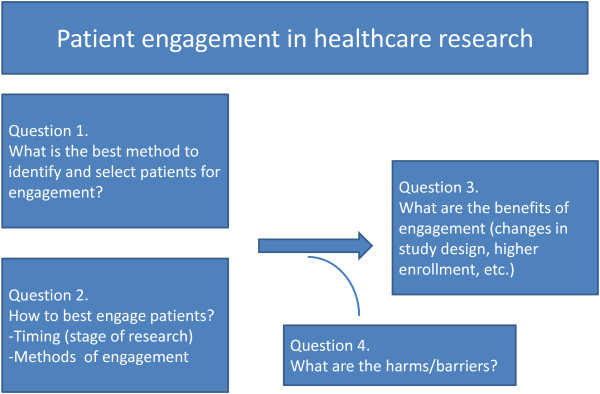
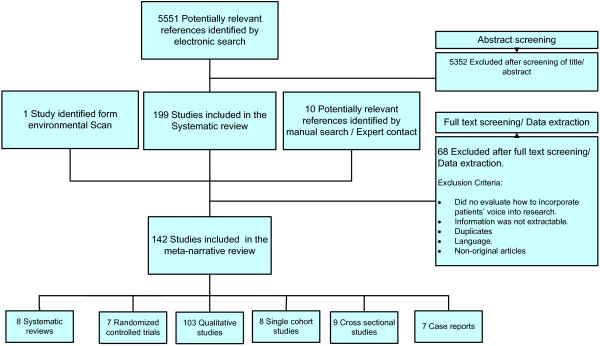
BACKGROUND: A compelling ethical rationale supports patient engagement in healthcare research. It is also assumed that patient engagement will lead to research findings that are more pertinent to patients' concerns and dilemmas. However; it is unclear how to best conduct this process. In this systematic review we aimed to answer 4 key questions: what are the best ways to identify patient representatives? How to engage them in designing and conducting research? What are the observed benefits of patient engagement? What are the harms and barriers of patient engagement? METHODS: We searched MEDLINE, EMBASE, PsycInfo, Cochrane, EBSCO, CINAHL, SCOPUS, Web of Science, Business Search Premier, Academic Search Premier and Google Scholar. Included studies were published in English, of any size or design that described engaging patients or their surrogates in research design. We conducted an environmental scan of the grey literature and consulted with experts and patients. Data were analyzed using a non-quantitative, meta-narrative approach. RESULTS: We included 142 studies that described a spectrum of engagement. In general, engagement was feasible in most settings and most commonly done in the beginning of research (agenda setting and protocol development) and less commonly during the execution and translation of research. We found no comparative analytic studies to recommend a particular method. Patient engagement increased study enrollment rates and aided researchers in securing funding, designing study protocols and choosing relevant outcomes. The most commonly cited challenges were related to logistics (extra time and funding needed for engagement) and to an overarching worry of a tokenistic engagement. CONCLUSIONS: Patient engagement in healthcare research is likely feasible in many settings. However, this engagement comes at a cost and can become tokenistic. Research dedicated to identifying the best methods to achieve engagement is lacking and clearly needed.
Overview
The claims and statistics of this paper haven’t been checked yet.
Free: it reads the open-access text and checks the first 5 claims that cite a source we can check. Create a free account to check every claim.
Integrity signals
Registry
Cites
Statistics
Figures
Verification
Claims the paper makes
The claims and statistics of this paper haven’t been checked yet.
Free: it reads the open-access text and checks the first 5 claims that cite a source we can check. Create a free account to check every claim.
Claims other papers make about this one
Each is checked against this paper’s own text: does it say what the citing paper says it does?
The source backs part of the claim, not all of it — or backs it for a different population, condition or comparison.
In the citing paper
“The present study confirms that, with regard to the conduct of research trials in primary dental care, research dedicated to identifying the best methods to achieve engagement with patients as potential participants is lacking and clearly needed [50].”
From Parental attitudes to randomised controlled trials in primary dental care: A qualitative study (2026) · cites this paper as [50]
Experimental — accuracy not yet measuredThe source backs part of the claim, not all of it — or backs it for a different population, condition or comparison.
In the citing paper
“Engaging patients in the process of designing the review protocol and in reviewing the findings increase the applicability and relevance of the findings of this study.”
From Systematic review of mind‐body interventions to treat myalgic encephalomyelitis/chronic fatigue syndrome (2021) · cites this paper as [36]
Experimental — accuracy not yet measuredThe source backs part of the claim, not all of it — or backs it for a different population, condition or comparison.
In the citing paper
“Previous studies indicated that engaging the target group increases study enrollment and may enhance the uptake and the acceptance of interventions [67, 68].”
From A blended psychosocial support program for partners of patients with amyotrophic lateral sclerosis and progressive muscular atrophy: Protocol of a randomized controlled trial (2018) · cites this paper as [67]
Experimental — accuracy not yet measuredThe check wasn’t confident either way, so it gives no verdict — never disputed.
In the citing paper
“This is consistent with review findings of empirical studies in PPI whereby short‐term, individual‐level outcomes were more represented in the literature. 43 , 91 , 92”
From A systematic review of theories, models and frameworks used for youth engagement in health research (2024) · cites this paper as [91]
Experimental — accuracy not yet measured
Self-check
Percentages, sums and reported differences re-computed from the paper’s own numbers.
The self-check needs the paper’s full text.
Citations
Cites
Preferred Reporting Items for Systematic Reviews and Meta-Analyses: the PRISMA statement
Moher, D., Liberati, A., Tetzlaff, J., Altman, D. G., & for the PRISMA Group (2009) · BMJ · doi:10.1136/bmj.b2535 · Cited by 83,823
Preferred reporting items for systematic reviews and meta-analyses: the PRISMA Statement.
(2009) · PubMed Central · Cited by 44,859
Preferred reporting items for systematic reviews and meta-analyses: The PRISMA statement
Moher, D., Liberati, A., Tetzlaff, J., Altman, D. G., & the PRISMA Group* (2009) · Annals of Internal Medicine · doi:10.7326/0003-4819-151-4-200908180-00135 · Cited by 37,554
Preferred Reporting Items for Systematic Reviews and Meta-Analyses: The PRISMA Statement
Moher, D., Liberati, A., Tetzlaff, J., & Altman, D. G. (2009) · Journal of Clinical Epidemiology · doi:10.1016/j.jclinepi.2009.06.005 · Cited by 19,575
(2005) · PubMed · Cited by 7,011
Enhancing transparency in reporting the synthesis of qualitative research: ENTREQ
Tong, A., Flemming, K., McInnes, E., Oliver, S., & Craig, J. (2012) · BMC Medical Research Methodology · doi:10.1186/1471-2288-12-181 · Cited by 3,569 · cited 1×
“Differences in studies settings and characteristics can be used to explain differences in results (heterogeneity) [16].”
BackgroundCommunity-based participatory research: assessing the evidence.
Viswanathan, M., Ammerman, A., Eng, E. M., Garlehner, G., Lohr, K. N., Griffith, D. M., Rhodes, S. D., Samuel‐Hodge, C. D., Maty, S. C., Lux, L. J., et al. (2004) · PubMed Central · Cited by 1,053
Campbell, R., Pound, P., Pope, C., Britten, N., Pill, R., Morgan, M., & Donovan, J. (2003) · Social Science & Medicine · doi:10.1016/s0277-9536(02)00064-3 · Cited by 921 · cited 3×
“[http://www.casp-uk.net/wp-content/uploads/ 2011/11/CASP-Qualitative-Research-Checklist-31.05.13.pdf] 19.”
MethodInfluentialStorylines of research in diffusion of innovation: a meta-narrative approach to systematic review
Greenhalgh, T., Robert, G., Macfarlane, F., Bate, P., Kyriakidou, O., & Peacock, R. (2005) · Social Science & Medicine · doi:10.1016/j.socscimed.2004.12.001 · Cited by 913 · cited 1×
“Instead, data extracted from the included studies were analyzed using a meta-narrative approach [14].”
MethodPatient and service user engagement in research: a systematic review and synthesized framework
Shippee, N. D., Domecq Garces, J. P., Prutsky Lopez, G. J., Wang, Z., Elraiyah, T. A., Nabhan, M., Brito, J. P., Boehmer, K., Hasan, R., Firwana, B., et al. (2015) · Health Expectations · doi:10.1111/hex.12090 · Cited by 628 · cited 2×
“We also categorized the research engagement from each study into three different research phases proposed for patient engagement [17]:”
BackgroundMethodSelf-citation
Cited by
Items 101–200 of 1,002
Lang, I., King, A., Jenkins, G., Boddy, K., Khan, Z., & Liabo, K. (2022) · BMJ Open · doi:10.1136/bmjopen-2022-063356 · Cited by 98
Patient and public involvement in designing and conducting doctoral research: the whys and the hows
Tomlinson, J., Medlinskiene, K., Cheong, V., Khan, S., & Fylan, B. (2019) · Research Involvement and Engagement · doi:10.1186/s40900-019-0155-1 · Cited by 111
Locock, L., Kirkpatrick, S., Brading, L., Sturmey, G., Cornwell, J., Churchill, N., & Robert, G. (2019) · Research Involvement and Engagement · doi:10.1186/s40900-018-0133-z · Cited by 89
Sypes, E. E., de Grood, C., Whalen-Browne, L., Clement, F. M., Leigh, J. P., Niven, D. J., & Stelfox, H. T. (2020) · BMC Medicine · doi:10.1186/s12916-020-01567-0 · Cited by 103
“Acknowledging the potential benefits of patient engagement in reducing low-value care, patient engagement in clinical decision-making is often viewed as challenging, time-consuming, and potentially costly [50, 51].”
BackgroundSnow, M. E., Tweedie, K., & Pederson, A. (2018) · BMC Health Services Research · doi:10.1186/s12913-018-2969-1 · Cited by 96
“In addition, there is a growing interest in engaging patients in planning and conducting health research [37, 38] and the importance of inclusiveness in this endeavor has been raised [39].”
BackgroundDeane, K. H., Delbecque, L., Gorbenko, O., Hamoir, A.-M., Hoos, A., Nafría, B., Pakarinen, C., Sargeant, I., Richards, D. P., Skovlund, S. E., et al. (2019) · BMJ Innovations · doi:10.1136/bmjinnov-2018-000317 · Cited by 121
Building new roles and relationships in research: a model of patient engagement research
Marlett, N. J., Shklarov, S., Marshall, D. A., Santana, M., & Wasylak, T. (2014) · Quality of Life Research · doi:10.1007/s11136-014-0845-y · Cited by 112
“As evident in the Domecq study [4], data analysis and interpretation and knowledge translation have been absent in most patient engagement projects.”
BackgroundInfluentialUnderstanding and using patient experiences as evidence in healthcare priority setting
Rand, L. Z., Dunn, M., Slade, I., Upadhyaya, S., & Sheehan, M. (2019) · Cost Effectiveness and Resource Allocation · doi:10.1186/s12962-019-0188-1 · Cited by 116
Patient engagement in preclinical laboratory research: A scoping review
Fox, G., Fergusson, D. A., Daham, Z., Youssef, M., Foster, M., Poole, E., Sharif, A., Richards, D. P., Hendrick, K., Mendelson, A. A., et al. (2021) · EBioMedicine · doi:10.1016/j.ebiom.2021.103484 · Cited by 91
“Many stakeholders and policymakers suggest that underlying ethical, moral, and political arguments justify such engagement activities, since patients are the ultimate end-users of medical research and therefore should be involved in its production [3,5].”
BackgroundRecruitment of Black Adults into Cardiovascular Disease Trials
Prasanna, A., Miller, H., Wu, Y., Peeler, A., Ogungbe, O., Plante, T. B., & Juraschek, S. P. (2021) · Journal of the American Heart Association · doi:10.1161/jaha.121.021108 · Cited by 89
From tokenism to meaningful engagement: best practices in patient involvement in an EU project
on behalf of the U-BIOPRED PIP group, Supple, D., Roberts, A., Hudson, V., Masefield, S., Fitch, N., Rahmen, M., Flood, B., de Boer, W., Powell, P., et al. (2015) · Research Involvement and Engagement · doi:10.1186/s40900-015-0004-9 · Cited by 85
“The available evidence on its use and impact is slowly growing, primarily in the UK [3–6], but also internationally [7, 8].”
BackgroundPatient, Family, and Community Advisory Councils in Health Care and Research: a Systematic Review
Oldfield, B. J., Harrison, M. A., Genao, I., Greene, A. T., Pappas, M. E., Glover, J. G., & Rosenthal, M. S. (2018) · Journal of General Internal Medicine · doi:10.1007/s11606-018-4565-9 · Cited by 92
Co-producing digital mental health interventions: A systematic review
Brotherdale, R., Berry, K., Branitsky, A., & Bucci, S. (2024) · DIGITAL HEALTH · doi:10.1177/20552076241239172 · Cited by 80
“24,68 According to Sanders et al., 16 active participation is a well-known challenge to successful co-production.”
Backgroundde Wit, M. P. T., Kvien, T. K., & Gossec, L. (2015) · RMD Open · doi:10.1136/rmdopen-2015-000129 · Cited by 86
“7 10 Furthermore, practical examples of patient involvement in outcome research are rare.(6) In the field of rheumatology, one best practice has been published where different patient roles and contributions were described in detail in the process of developing a PRO for fatigue in people with rheumatoid arthritis.”
Dodd, S., Gorst, S. L., Young, A., Lucas, S. W., & Williamson, P. R. (2023) · Journal of Clinical Epidemiology · doi:10.1016/j.jclinepi.2023.03.022 · Cited by 81
Rowland, P., McMillan, S. E., McGillicuddy, P., & Richards, J. (2016) · Health An Interdisciplinary Journal for the Social Study of Health Illness and Medicine · doi:10.1177/1363459316644494 · Cited by 102
“, 2015), health services research (Domecq et al., 2014; Shippee et al., 2013), and in the reform of large health services such as the United Kingdom’s National Health Service (Crawford et al.”
BackgroundPublic Involvement in Global Genomics Research: A Scoping Review
Nunn, J., Tiller, J. M., Fransquet, P., & Lacaze, P. A. (2019) · Frontiers in Public Health · doi:10.3389/fpubh.2019.00079 · Cited by 81
The importance of measuring the impact of patient-oriented research
Aubin, D., Hebert, M., & Eurich, D. T. (2019) · Canadian Medical Association Journal · doi:10.1503/cmaj.190237 · Cited by 97
Muller, I., Santer, M., Morrison, L., Morton, K., Roberts, A., Rice, C., Williams, M., & Yardley, L. (2019) · Research Involvement and Engagement · doi:10.1186/s40900-019-0169-8 · Cited by 80
The impact of involvement on researchers: a learning experience
Staley, K., Abbey-Vital, I., & Nolan, C. (2017) · Research Involvement and Engagement · doi:10.1186/s40900-017-0071-1 · Cited by 82
Akl, E. A., Welch, V., Pottie, K., Eslava-Schmalbach, J., Darzi, A., Sola, I., Katikireddi, S. V., Singh, J., Murad, M. H., Meerpohl, J., et al. (2017) · Journal of Clinical Epidemiology · doi:10.1016/j.jclinepi.2017.01.017 · Cited by 79
“Indeed, investigations on patients’ engagement in research found that they might be quiet, nonparticipatory or intimidated by experts and researchers [41].”
BackgroundSelf-citationWitteman, H. O., Chipenda Dansokho, S., Colquhoun, H., Fagerlin, A., Giguere, A. M. C., Glouberman, S., Haslett, L., Hoffman, A., Ivers, N. M., Légaré, F., et al. (2018) · Journal of General Internal Medicine · doi:10.1007/s11606-017-4269-6 · Cited by 79
Self-citationJones, J., Cowe, M., Marks, S. A., McAllister, T., Mendoza, A., Ponniah, C., Wythe, H., & Mathie, E. (2021) · Research Involvement and Engagement · doi:10.1186/s40900-021-00295-w · Cited by 89
“The reporting of PPI has been observed to range from a brief comment, to a detailed discussion of how PPI contributors were actively involved in the research [5, 15, 16].”
Synnot, A., Bragge, P., Lowe, D. B., Nunn, J., O’Sullivan, M., Horvat, L., Tong, A., Kay, D., Ghersi, D., McDonald, S. J., et al. (2018) · BMJ Open · doi:10.1136/bmjopen-2017-019481 · Cited by 79
Patients as Research Partners; How to Value their Perceptions, Contribution and Labor?
Smith, E. M. R., Bélisle‐Pipon, J., & Resnik, D. B. (2019) · Citizen Science Theory and Practice · doi:10.5334/cstp.184 · Cited by 91
“But despite the many challenges, issues, and limitations, studies report the beneficial impacts of PER much more often than the negative aspects (Brett et al. 2014; Domecq et al. 2014).”
How to design high quality acupuncture trials—a consensus informed by evidence
Zhang, Y., Jiao, R., Witt, C. M., Lao, L., Liu, J., Thabane, L., Sherman, K. J., Cummings, M., Richards, D. P., Kim, E.-K. A., et al. (2022) · BMJ · doi:10.1136/bmj-2021-067476 · Cited by 94
Birnie, K. A., Dib, K., Ouellette, C., Dib, M. A., Nelson, K., Pahtayken, D., Baerg, K., Chorney, J. M. L., Forgeron, P. A., Lamontagne, C., et al. (2019) · CMAJ Open · doi:10.9778/cmajo.20190060 · Cited by 90
Engaging older adults in healthcare research and planning: a realist synthesis
McNeil, H., Elliott, J., Huson, K., Ashbourne, J., Heckman, G., Walker, J., & Stolee, P. (2016) · Research Involvement and Engagement · doi:10.1186/s40900-016-0022-2 · Cited by 76
“A recent review by Domecq and colleagues [11] studied patient engagement in research in the general population”
BackgroundMann, C., Chilcott, S., PLUMB, K. H. M., Brooks, E., & Man, M. (2018) · Research Involvement and Engagement · doi:10.1186/s40900-018-0098-y · Cited by 84
“It is usually not feasible to achieve representativeness in PPI recruitment which relies on people volunteering [4].”
BackgroundArmstrong, M. J., Mullins, C. D., Gronseth, G., & Gagliardi, A. R. (2017) · PLoS ONE · doi:10.1371/journal.pone.0174329 · Cited by 88
Clavel, N., Paquette, J., Dumez, V., Grande, C. D., Ghadiri, D. P., Pomey, M., & Normandin, L. (2021) · Health Expectations · doi:10.1111/hex.13344 · Cited by 105
“There is a consensus that patients should be more actively involved in research to ensure that studies focus on issues that are relevant to them.(39,40) It seems particularly important to co‐construct tools with patients when the tools are designed for them.”
BackgroundCampbell, K. J., Louie, P. K., Bohl, D. D., Edmiston, T. A., Mikhail, C., Li, J., Khorsand, D. A., Levine, B. R., & Gerlinger, T. L. (2019) · Journal of Bone and Joint Surgery · doi:10.2106/jbjs.17.01505 · Cited by 81
Recruitment of caregivers into health services research: lessons from a user-centred design study
Leslie, M., Khayatzadeh‐Mahani, A., & MacKean, G. (2019) · Research Involvement and Engagement · doi:10.1186/s40900-019-0150-6 · Cited by 89
Envisioning Women-Centered HIV Care: Perspectives from Women Living with HIV in Canada
O’Brien, N., Greene, S., Carter, A., Lewis, J. M., Nicholson, V., Kwaramba, G., Ménard, B., Kaufman, E., Ennabil, N., Andersson, N., et al. (2017) · Women s Health Issues · doi:10.1016/j.whi.2017.08.001 · Cited by 98
“Our study contributes to the continued call for research and care priorities to be dictated by those most affected (Boivin, Lehoux, Lacombe, Burgers, & Grol, 2014; Domecq et al., 2014; UNAIDS, 2007).”
BackgroundRecruiting patients as partners in health research: a qualitative descriptive study
Vat, L. E., Ryan, D., & Etchegary, H. (2017) · Research Involvement and Engagement · doi:10.1186/s40900-017-0067-x · Cited by 71
“The few studies that engaged patients and described their recruitment strategies [23–25], as well as recent systematic reviews [4, 26] reported similar strategies to those recounted in our interviews, most of which were forms of convenience sampling.”
InfluentialLauzon-Schnittka, J., Audette-Chapdelaine, S., Boutin, D., Wilhelmy, C., Auger, A.-M., & Brodeur, M. (2022) · Research Involvement and Engagement · doi:10.1186/s40900-022-00388-0 · Cited by 90
Gill, M., Bagshaw, S. M., McKenzie, E., Oxland, P. R., Oswell, D., Boulton, D., Niven, D. J., Potestio, M. L., Shklarov, S., Marlett, N. J., et al. (2016) · PLoS ONE · doi:10.1371/journal.pone.0160947 · Cited by 92
“Patient engagement has been introduced at different stages of health research and with various levels of participation, but efforts to date are framed and initiated from a provider perspective, may not fully engage patients and families and result in lost opportunities.[8] A recent systematic review[9] found potential…”
BackgroundBenefits of Participation in Clinical Trials: An Umbrella Review
Bouzalmate-Hajjaj, A., Massó Guijarro, P., Khan, K. S., Bueno‐Cavanillas, A., & Ibáñez, N. C. (2022) · International Journal of Environmental Research and Public Health · doi:10.3390/ijerph192215368 · Cited by 77
“Patient engagement in healthcare research is likely to be feasible in many settings, although it entails challenges such as the need for increased time and funding [39,40].”
BackgroundBeighton, C., Victor, C. R., Carey, I. M., Hosking, F. J., DeWilde, S., Cook, D. G., Manners, P. J., & Harris, T. J. (2017) · Journal of Intellectual Disabilities · doi:10.1177/1744629517723485 · Cited by 79
“Other studies have reported barriers to PPI which includes capacity to consent by the people with intellectual disabilities, patients/service users having a different emphasis to those chosen by clinical academic researchers or logistics such as the extra time required (Domecq et al., 2014).”
BackgroundPatient and Researcher Engagement in Health Research: A Parent’s Perspective
Amirav, I., Vandall-Walker, V., Rasiah, J., & Saunders, L. (2017) · Pediatrics · doi:10.1542/peds.2016-4127 · Cited by 68
Carlton, J., Peasgood, T., Khan, S., Barber, R., Bostock, J., & Keetharuth, A. D. (2020) · Journal of Patient-Reported Outcomes · doi:10.1186/s41687-019-0172-8 · Cited by 83
Martineau, J. T., Minyaoui, A., & Boivin, A. (2020) · BMC Medical Ethics · doi:10.1186/s12910-020-0460-0 · Cited by 86
Engaging consumers in health research: a narrative review
Anderst, J., Conroy, K. M., Fairbrother, G., Hallam, L., McPhail, A., & Taylor, V. (2020) · Australian Health Review · doi:10.1071/ah19202 · Cited by 73
Scoping review of models and frameworks of patient engagement in health services research
Chudyk, A. M., Horrill, T. C., Waldman, C., Demczuk, L., Shimmin, C., Stoddard, R., Hickes, S., & Schultz, A. S. H. (2022) · BMJ Open · doi:10.1136/bmjopen-2022-063507 · Cited by 86
Qualitative health research in the fields of developmental medicine and child neurology
Jack, S. M., & Phoenix, M. P. (2022) · Developmental Medicine & Child Neurology · doi:10.1111/dmcn.15182 · Cited by 87
“Patient- oriented research can be applied in both qualitative and quantitative research to improve the research, such as making the questions relevant to the community, improving recruitment, contextualizing the findings, or improving dissemination of the results.(29) Furthermore, positive outcomes may be reported by…”
BackgroundMcConnell, T., Best, P., Davidson, G., McEneaney, T., Cantrell, C., & Tully, M. A. (2018) · Research Involvement and Engagement · doi:10.1186/s40900-018-0116-0 · Cited by 74
Person‐centred care in primary care: What works for whom, how and in what circumstances?
Ahmed, A., van den Muijsenbergh, M. E. T. C., & Vrijhoef, H. J. (2022) · Health & Social Care in the Community · doi:10.1111/hsc.13913 · Cited by 116
The Untapped Potential of Patient and Family Engagement in the Organization of Critical Care
Haines, K. J., Kelly, P., Fitzgerald, P., Skinner, E. H., & Iwashyna, T. J. (2017) · Critical Care Medicine · doi:10.1097/ccm.0000000000002282 · Cited by 71
Chevance, A., Tran, V.-T., & Ravaud, P. (2020) · Journal of Clinical Epidemiology · doi:10.1016/j.jclinepi.2020.01.004 · Cited by 71
Caregiver Needs Assessment in Primary Care: Views of Clinicians, Staff, Patients, and Caregivers
Riffin, C. A., Wolff, J. L., Estill, M., Prabhu, S., & Pillemer, K. A. (2020) · Journal of the American Geriatrics Society · doi:10.1111/jgs.16401 · Cited by 79
“Engaging potential end users early in intervention development processes has important benefits.(28,29) For this reason, the present study elicits participantsʼ reactions to and recommendations for the systematization of caregiver assessment.”
BackgroundMelhem, S. J., Nabhani‐Gebara, S., & Kayyali, R. (2023) · International Journal of Environmental Research and Public Health · doi:10.3390/ijerph20021472 · Cited by 83
“As a result, all stakeholders, including vulnerable groups, health policymakers, healthcare providers and other stakeholders need to be involved in a meaningful way to establish an agenda to promote digital health literacy, devise ways to maximise digital inclusion, and develop digital health interventions that are mo…”
BackgroundLeese, J., Macdonald, G., Kerr, S., Gulka, L., Hoens, A. M., Lum, W., Tran, B. C., Townsend, A. F., & LI, L. C. (2018) · BMJ Open · doi:10.1136/bmjopen-2018-022154 · Cited by 69
Lay involvement in the analysis of qualitative data in health services research: a descriptive study
Garfield, S., Jheeta, S., Husson, F., Jacklin, A., Bischler, A., Norton, C. S., & Franklin, B. D. (2016) · Research Involvement and Engagement · doi:10.1186/s40900-016-0041-z · Cited by 64
“However, there is also concern that current patient and public involvement is often tokenistic rather than placing a true value on patient input and involvement [1, 2].”
BackgroundInfluentialBailey, K., Allemang, B. A., Vandermorris, A., Munce, S., Cleverley, K., Chisholm, C., Cohen, E., Davidson, C., Galad, A. E., Leibovich, D., et al. (2024) · Research Involvement and Engagement · doi:10.1186/s40900-024-00607-w · Cited by 82
Georas, S. N., Wright, R. J., Ivanova, A., Israel, E., LaVange, L. M., Akuthota, P., Carr, T. F., Denlinger, L. C., Fajt, M. L., Kumar, R., et al. (2021) · Journal of Allergy and Clinical Immunology · doi:10.1016/j.jaci.2021.10.035 · Cited by 69
“A recent systematic review indicated that patient engagement can increase study enrollment rates and aid researchers in designing study protocols to increase retention.(16) Incorporating PAC feedback to improve the research experience and enhance recruitment and retention efforts is a challenge in multisite clinical t…”
BackgroundKelly, J. T., Warner, M. M., Conley, M. M., Reidlinger, D. P., Hoffmann, T., Craig, J. C., Tong, A., Reeves, M. M., Johnson, D. W., Palmer, S. C., et al. (2019) · BMJ Open · doi:10.1136/bmjopen-2018-024551 · Cited by 66
“The ENTICE-CKD programme was developed from the key results in this focus group study which assured a patient-centred approach.(43) Previous thematic synthesis has shown that people with CKD experience many challenges in relation to achieving their dietary and fluid recommendations.”
Friesen, P., Lignou, S., Sheehan, M., & Singh, I. (2019) · Health Expectations · doi:10.1111/hex.12988 · Cited by 74
de Brún, T., Brún, M. O.-D., van Weel-Baumgarten, E. M., Burns, N., Dowrick, C. F., Lionis, C. D., O’Donnell, C. A., Mair, F. S., Papadakaki, M., Saridaki, A., et al. (2017) · Research Involvement and Engagement · doi:10.1186/s40900-017-0077-8 · Cited by 80
“[28] reviewed 142 studies that described a spectrum of engagement and concluded that, while engagement seems feasible in most cases, both service-users and researchers had overarching concerns about tokenism.”
Hemphill, R. C., Forsythe, L. P., Heckert, A., Amolegbe, A., Maurer, M. E., Carman, K. L., Mangrum, R., Stewart, L., Fearon, N., & Esmail, L. C. (2019) · Health Expectations · doi:10.1111/hex.12979 · Cited by 67
Patient and public involvement in cancer research: A scoping review
Colomer‐Lahiguera, S., Steimer, M., Ellis, U. M., Eicher, M., Tompson, M., Corbière, T., & Haase, K. R. (2023) · Cancer Medicine · doi:10.1002/cam4.6200 · Cited by 70
Facilitating non-tokenistic user involvement in research
Romsland, G. I., Milosavljevic, K. L., & Andreassen, T. A. (2019) · Research Involvement and Engagement · doi:10.1186/s40900-019-0153-3 · Cited by 74
“Tokenism can be understood as a false appearance of inclusiveness, indicating a gap between policy aims and actual practice [1, 11].”
BackgroundMoodley, K., & Beyer, C. (2019) · Biopreservation and Biobanking · doi:10.1089/bio.2018.0136 · Cited by 64
“While CE is an overwhelmingly positive component of research and is closely intertwined with a robust consent process, it is often seen in isolation and can be considered mere ritual, rubberstamping, window-dressing, or tokenism, riddled with power and technical imbalances, placation, dishonesty, poor representation,…”
BackgroundReporting lived experience work
Davis, S., Pinfold, V., Catchpole, J., Lovelock, C., Senthi, B., & Kenny, A. (2023) · The Lancet Psychiatry · doi:10.1016/s2215-0366(23)00402-9 · Cited by 59
Meaningful and effective patient engagement: What matters most to stakeholders
Bellows, M., Burns, K. K., Jackson, K. A., Surgeoner, B., & Gallivan, J. (2015) · Patient Experience Journal · doi:10.35680/2372-0247.1069 · Cited by 59
McKeen, D. M., Banfield, J. C., McIsaac, D. I., McVicar, J. A., McGavin, C., Earle, M. A., Ward, C., Burns, K. K., Penner, D., Blaise, G. A., et al. (2020) · Canadian Journal of Anesthesia/Journal canadien d anesthésie · doi:10.1007/s12630-020-01607-6 · Cited by 58
Dember, L. M., Lacson, E., Brunelli, S. M., Hsu, J. Y., Cheung, A. K., Daugirdas, J. T., Greene, T., Kovesdy, C. P., Miskulin, D. C., Thadhani, R., et al. (2019) · Journal of the American Society of Nephrology · doi:10.1681/asn.2018090945 · Cited by 62
Brún, M. O.-D., de Brún, T., O’Donnell, C. A., Papadakaki, M., Saridaki, A., Lionis, C. D., Burns, N., Dowrick, C. F., Gravenhorst, K. C., Spiegel, W., et al. (2017) · Health Expectations · doi:10.1111/hex.12598 · Cited by 74
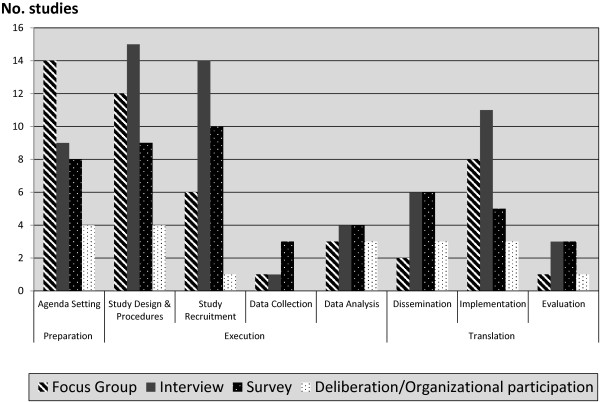
“13-15 Domecq et al. 11 found that the most common methods in use were focus groups, interviews and surveys.”
Jacob, C., Bourke, S., & Heuss, S. (2022) · JMIR Human Factors · doi:10.2196/41481 · Cited by 60
“Given its intricacies, research has shown that patient engagement is most commonly done at the beginning of research or to test readily available prototypes and less commonly done in other phases such as the execution phases [6].”
Kearney, A., Williamson, P. R., Young, B., Bagley, H., Gamble, C. L., Denegri, S., Muir, D., Simon, N. A., Thomas, S., Elliot, J., et al. (2017) · Health Expectations · doi:10.1111/hex.12583 · Cited by 69
González, M., Phoenix, M. P., Saxena, S., Cardoso, R., Canac‐Marquis, M., Hales, L., Putterman, C., & Shikako‐Thomas, K. (2020) · Disability and Rehabilitation · doi:10.1080/09638288.2020.1717649 · Cited by 66
“We included published studies that: [1] used a qualitative, quantitative, or mixed methods research approach, [2] were written in English, French, or Spanish to be more comprehensive in our search for articles given team members’ knowledge of languages other than English, [3] were published between January 2008 and Ju…”
BackgroundMethodInfluentialLotfi, T., Stevens, A., Akl, E. A., Falavigna, M., Kredo, T., Mathew, J. L., & Schünemann, H. J. (2021) · Journal of Clinical Epidemiology · doi:10.1016/j.jclinepi.2021.03.034 · Cited by 60
“The engagement of stakeholders is crucial for the uptake, maintenance and sustainability of our map, similarly to their engagement in health research [32 , 33] .”
Embedding lived experience into mental health academic research organizations: Critical reflections
Hawke, L. D., Sheikhan, N. Y., Jones, N., Slade, M., Soklaridis, S., Wells, S. L., & Castle, D. J. (2022) · Health Expectations · doi:10.1111/hex.13586 · Cited by 62
“towards POR approaches through truly lived experience research leadership.(1,2) However, given criticisms, controversies and conflicting opinions,(17,20) there are many factors to consider when planning to develop and implement a lived experience academic researcher”
BackgroundMethodResultInfluentialSheikhan, N. Y., Kuluski, K., Mckee, S., Hiebert, M., & Hawke, L. D. (2023) · Health Expectations · doi:10.1111/hex.13779 · Cited by 66
“engaging people with lived experience (PWLE) in health research as collaborators, rather than as study participants.(1) Often referred to as patient engagement, consumer engagement, patient and public involvement, or co‐production, engagement in research involves authentic and ongoing collaboration with PWLE across th…”
BackgroundCollier, A., & Wyer, M. (2015) · Qualitative Health Research · doi:10.1177/1049732315618937 · Cited by 69
“…still continue around the feasibility, acceptability, impact, and effectiveness, as well as definitions and constructions of phases and frameworks for patient inclusion (Domecq et al., 2014; Ives, Damery, & Redwod, 2013; Oliver, Liabo, Stewart, & Rees, 2015; Shippee et al., 2013; Staley 2013).”
BackgroundInfluentialDavies, M. R., Monssen, D., Sharpe, H., Allen, K. L., Simms, B., Goldsmith, K., Byford, S., Lawrence, V. C., & Schmidt, U. H. (2023) · International Journal of Eating Disorders · doi:10.1002/eat.24085 · Cited by 71
A New Framework for Patient Engagement in Cancer Clinical Trials Cooperative Group Studies
Deverka, P. A., Bangs, R., Kreizenbeck, K. L., Delaney, D. M., Hershman, D. L., Blanke, C. D., & Ramsey, S. D. (2018) · JNCI Journal of the National Cancer Institute · doi:10.1093/jnci/djy064 · Cited by 54
National Standards for Public Involvement in Research: missing the forest for the trees
McCoy, M. S., Jongsma, K. R., Friesen, P., Dunn, M., Neuhaus, C. P., Rand, L. Z., & Sheehan, M. (2018) · Journal of Medical Ethics · doi:10.1136/medethics-2018-105088 · Cited by 60
Schilling, I., Behrens, H., Hugenschmidt, C., Liedtke, J., Schmiemann, G., & Gerhardus, A. (2019) · Research Involvement and Engagement · doi:10.1186/s40900-019-0145-3 · Cited by 59
Kirk, J. W., Bandholm, T., Andersen, O., Husted, R. S., Tjørnhøj‐Thomsen, T., Nilsén, P., & Pedersen, M. M. (2021) · Journal of Health Organization and Management · doi:10.1108/jhom-02-2020-0049 · Cited by 60
Client-identified outcomes of individual psychotherapy: a qualitative meta-analysis
Ladmanová, M., Řiháček, T., Timulák, L., Jonášová, K., Kubantová, B., Mikoška, P., Polakovská, L., & Elliott, R. (2024) · The Lancet Psychiatry · doi:10.1016/s2215-0366(24)00356-0 · Cited by 65
Ellis, L. E., & KASS, N. E. (2016) · AJOB Empirical Bioethics · doi:10.1080/23294515.2016.1206045 · Cited by 57
“Some have hypothesized that patient engagement may provide practical benefits to the research process including enhanced relevance of research to patients, higher quality research, and improved uptake of research findings (Sox and Greenfield 2009; Selby, Beal, and Frank 2012; Roehr 2010; Caron-Flinterman, Broerse, and…”
BackgroundPatient Centricity and Pharmaceutical Companies: Is It Feasible?
du Plessis, D., Sake, J., Halling, K., Morgan, J., Георгиева, A., & Bertelsen, N. (2017) · Therapeutic Innovation & Regulatory Science · doi:10.1177/2168479017696268 · Cited by 52
“There is emerging evidence supporting the value associated with patient engagement in the drug development and discovery process.(33,34) Considerable progress has already been made in this direction, led by the Clinical Trials Transformation Initiative(35) and a number of concrete examples of engagement between pharma…”
BackgroundHarrison, J. D., Anderson, W. G., Fagan, M. B., Robinson, E. J., Schnipper, J. L., Symczak, G., Hanson, C., Carnie, M. B., Banta, J., Chen, S., et al. (2018) · Patient · doi:10.1007/s40271-018-0298-4 · Cited by 54
“The benefits of patient–researcher partnerships are numerous and include greater relevance of research questions and outcome measures, more patient-centered and culturally appropriate methods, increased recruitment and retention, and increased translation, dissemination, and uptake of results [12, 14].”
BackgroundLow, J. K., & Manias, E. (2019) · JMIR mhealth and uhealth · doi:10.2196/12042 · Cited by 59
“With the growing consensus about the crucial role that patients play in improving the value of health care research, there is a clear need to identify the best methods to achieve engagement, which is currently lacking [61].”
Pollock, A., Campbell, P., Struthers, C., Synnot, A., Nunn, J., Hill, S., Goodare, H., Watts, C., & Morley, R. (2017) · Research Involvement and Engagement · doi:10.1186/s40900-017-0060-4 · Cited by 50
“Thus there remains a lack of evidence about the best ways to actively involve stakeholders in systematic reviews [15], and the impact of involvement on research activity and uptake of evidence [2].”
BackgroundNygaard, A., Halvorsrud, L., Grov, E. K., & Bergland, A. (2020) · BMC Geriatrics · doi:10.1186/s12877-020-01612-w · Cited by 72
Cadel, L., Marcinow, M. L., Sandercock, J., Dowedoff, P., Guilcher, S. J. T., Maybee, A., Law, S., & Kuluski, K. (2021) · PLoS ONE · doi:10.1371/journal.pone.0257880 · Cited by 54
“The challenges related to virtual care engagement (language, health literacy, socio-economic status) parallel the kinds of barriers noted in patient engagement activities generally [72, 73].”
BackgroundParticipatory research in health promotion: a critical review and illustration of rationales
Harting, J., Kruithof, K., Ruijter, L., & Stronks, K. (2022) · Health Promotion International · doi:10.1093/heapro/daac016 · Cited by 70
“It also increased study enrollment rates and aided researchers in securing funding, designing their studies and choosing relevant outcomes (Domecq et al., 2014; Blackburn et al., 2018; Crocker et al., 2018).”
InfluentialDugas, M., Trottier, M.-È., Dansokho, S. C., Vaisson, G., Provencher, T., Colquhoun, H. L., Dogba, M. J., Dupéré, S., Fagerlin, A., Giguere, A. M. C., et al. (2017) · BMC Medical Informatics and Decision Making · doi:10.1186/s12911-016-0399-8 · Cited by 60
“issues to those identified in our study, including more time and funding required [23, 24] and the importance”
Finderup, J., Jensen, J. D., & Lomborg, K. E. (2019) · BMJ Open · doi:10.1136/bmjopen-2019-029090 · Cited by 61
Zibrowski, E. M., Carr, T., McDonald, S., Thiessen, H., van Dusen, R., Goodridge, D. M., Haver, C., Marciniuk, D. D., Stobart, C., Verrall, T., et al. (2021) · Research Involvement and Engagement · doi:10.1186/s40900-021-00299-6 · Cited by 61
Birch, R. J., Simons, G., Wähämaa, H., McGrath, C. M., Johansson, E. C., Skingle, D., Bayliss, K., Starling, B., Gerlag, D. M., Buckley, C. D., et al. (2020) · Research Involvement and Engagement · doi:10.1186/s40900-020-0178-7 · Cited by 47
Community Engagement in Vaccination Promotion: Systematic Review and Meta-Analysis
Xie, Y. J., Liao, X., Lin, M., Yang, L., Cheung, K., Zhang, Q., Li, Y., Hao, C., Wang, H., Gao, Y., et al. (2024) · JMIR Public Health and Surveillance · doi:10.2196/49695 · Cited by 68
de Wit, M. P. T., Aouad, K., Elhaï, M., Benavent, D., Bertheussen, H., Blackburn, S. J., Böhm, P., Duarte, C. C. M., Falahee, M., Karlfeldt, S., et al. (2024) · Annals of the Rheumatic Diseases · doi:10.1136/ard-2024-225566 · Cited by 61
“30 The term equality refers to the call to researchers to involve PRPs in a process of shared decision-making; active collaboration refers to the concept of meaningful involvement which includes genuine dialogues and efforts to avoid tokenism.”
BackgroundA review protocol on research partnerships: a Coordinated Multicenter Team approach
Hoekstra, F., Mrklas, K., Sibley, K. M., Nguyen, T., Vis‐Dunbar, M., Neilson, C. J., Crockett, L. K., Gainforth, H. L., & Graham, I. D. (2018) · Systematic Reviews · doi:10.1186/s13643-018-0879-2 · Cited by 54
Huls, S. P. I., Whichello, C. L., van Exel, J. N. A., Groot, C. A. U., & de Bekker-Grob, E. W. (2019) · Value in Health · doi:10.1016/j.jval.2019.04.1930 · Cited by 53
Langlois, É. V., Mancuso, A., Elias, V. M., & Revéiz, L. (2019) · Health Research Policy and Systems · doi:10.1186/s12961-019-0484-4 · Cited by 64
Santiago, M. G., Valenza, M. C., López‐López, L., Román, E. P., Rodríguez‐Torres, J., & Martos, I. C. (2019) · Patient Education and Counseling · doi:10.1016/j.pec.2019.12.004 · Cited by 67
Westerink, H. J., Oirbans, T., Garvelink, M. M., van Uden‐Kraan, C. F., Zouitni, O., Bart, H. A. J., van der Wees, P. J., & van der Nat, P. B. (2023) · Health Policy · doi:10.1016/j.healthpol.2023.104946 · Cited by 63
Jiang, S., Wu, Z., Zhang, X., Ji, Y., Xu, J., Liu, P., Liu, Y., Zheng, J., Zhao, L., & Chen, J. (2024) · Patient Education and Counseling · doi:10.1016/j.pec.2024.108161 · Cited by 61
Metadata
- Authors
- Domecq, J. P., Prutsky, G., Elraiyah, T., Wang, Z., Nabhan, M., Shippee, N., Brito, J. P., Boehmer, K., Hasan, R., Firwana, B., Erwin, P., Eton, D., Sloan, J., Montori, V., Asi, N., Abu Dabrh, A. M., & Murad, M. H.
- Affiliations
- Mayo Clinic (US)
- Corresponding author
- Murad, Mohammad Hassan
- ORCID
- Venue
- BMC Health Services Research
- Published
- 2014-02-26
- Volume
- 14
- Issue
- 1
- Pages
- 89-89
- ISSN
- 1472-6963 (ISSN-L)
- PMC
- PMC3938901
- OpenAlex
- W2100905299
- Cited by
- 1,773
- References
- 50
- Citations by year
- 2026: 122 · 2025: 147 · 2024: 219 · 2023: 198 · 2022: 200 · 2021: 202 · 2020: 202 · 2019: 144 · 2018: 138 · 2017: 101 · 2016: 53 · 2015: 39 · 2014: 8
- FWCI
- 11.40
- Type
- journal article
- Language
- en
- Open access
- gold
- doi.org
- Licence
- Locations
- BMC Health Services Research (publishedVersion, cc-by)
- Europe PMC (PubMed Central) (publishedVersion, cc-by)
- PubMed Central (publishedVersion, cc-by)
- PubMed (publishedVersion)
- NORA - Norwegian Open Research Archives (submittedVersion, cc-by)
- Funders
- Patient-Centered Outcomes Research Institute
- National Institutes of Health
- Topics
- Health Sciences › Health Professions › General Health Professions › Mental Health and Patient Involvement
- Health Sciences › Medicine › Public Health, Environmental and Occupational Health › Ethics in Clinical Research
- Health Sciences › Medicine › Public Health, Environmental and Occupational Health › Community Health and Development
- Keywords
- patient engagement, patient and public involvement, research ethics, patient representatives, research design, barriers to engagement, study enrollment, research funding
- MeSH terms
- Humans, Patient Participation, Randomized Controlled Trials as Topic, Advisory Committees, Research Subjects, Biomedical Research
About these checks
Registry, retraction, Cites and statistics results are computed, not judged, with one exception: a printed reference that no index lists is read once by a model before it counts as a citation error. Claims are extracted by a model and kept only when their quote appears verbatim in the text; each cited source is then checked, with a model’s help, for whether it says what the claim relies on. Those verdicts can be wrong — read the claim’s quote and the cited source before relying on one.
Statistics and arithmetic are recomputed, not judged.
Confidence bands are shown only for fields calibrated on our annotated test set. None is calibrated yet, so no band is shown.
What counts as a claim ›How we measure confidence ›How we check this ›
Are you an author, or do you see a problem with this page? Request a review
Data sources
Bibliographic data: Semantic Scholar, OpenAlex, Crossref.
Contains information from the Semantic Scholar Academic Graph Datasets, made available under the ODC Attribution License (ODC-BY 1.0).
Semantic Scholar’s data is described in: Kinney, R., et al. (2023). The Semantic Scholar Open Data Platform. arXiv:2301.10140.
