

Patient engagement in research: a systematic review
Open accessThe DOI matches its Crossref record; 44 of the 50 references it cites were found in a registry or an index.
Abstract
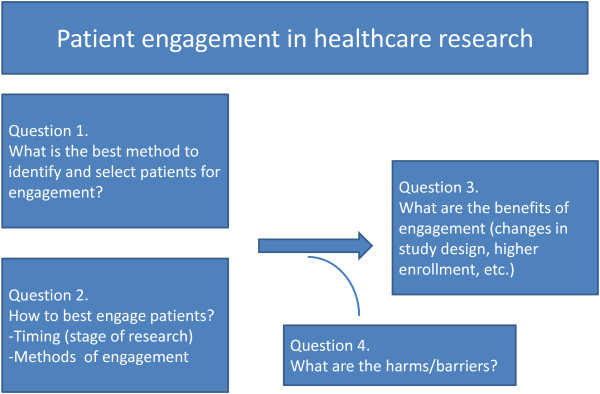
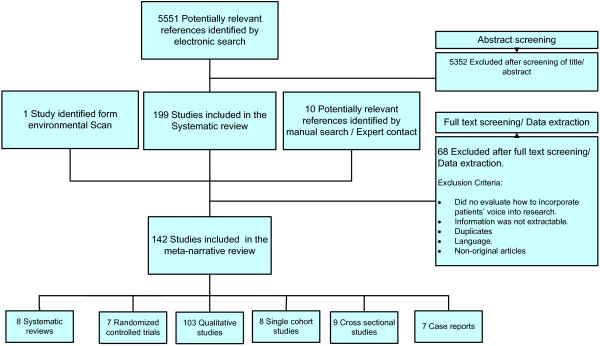
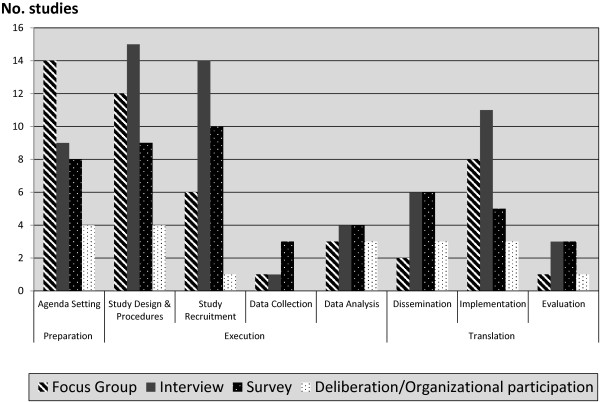
BACKGROUND: A compelling ethical rationale supports patient engagement in healthcare research. It is also assumed that patient engagement will lead to research findings that are more pertinent to patients' concerns and dilemmas. However; it is unclear how to best conduct this process. In this systematic review we aimed to answer 4 key questions: what are the best ways to identify patient representatives? How to engage them in designing and conducting research? What are the observed benefits of patient engagement? What are the harms and barriers of patient engagement? METHODS: We searched MEDLINE, EMBASE, PsycInfo, Cochrane, EBSCO, CINAHL, SCOPUS, Web of Science, Business Search Premier, Academic Search Premier and Google Scholar. Included studies were published in English, of any size or design that described engaging patients or their surrogates in research design. We conducted an environmental scan of the grey literature and consulted with experts and patients. Data were analyzed using a non-quantitative, meta-narrative approach. RESULTS: We included 142 studies that described a spectrum of engagement. In general, engagement was feasible in most settings and most commonly done in the beginning of research (agenda setting and protocol development) and less commonly during the execution and translation of research. We found no comparative analytic studies to recommend a particular method. Patient engagement increased study enrollment rates and aided researchers in securing funding, designing study protocols and choosing relevant outcomes. The most commonly cited challenges were related to logistics (extra time and funding needed for engagement) and to an overarching worry of a tokenistic engagement. CONCLUSIONS: Patient engagement in healthcare research is likely feasible in many settings. However, this engagement comes at a cost and can become tokenistic. Research dedicated to identifying the best methods to achieve engagement is lacking and clearly needed.
Overview
The claims and statistics of this paper haven’t been checked yet.
Free: it reads the open-access text and checks the first 5 claims that cite a source we can check. Create a free account to check every claim.
Integrity signals
Registry
Cites
Statistics
Figures
Verification
Claims the paper makes
The claims and statistics of this paper haven’t been checked yet.
Free: it reads the open-access text and checks the first 5 claims that cite a source we can check. Create a free account to check every claim.
Claims other papers make about this one
Each is checked against this paper’s own text: does it say what the citing paper says it does?
The source backs part of the claim, not all of it — or backs it for a different population, condition or comparison.
In the citing paper
“The present study confirms that, with regard to the conduct of research trials in primary dental care, research dedicated to identifying the best methods to achieve engagement with patients as potential participants is lacking and clearly needed [50].”
From Parental attitudes to randomised controlled trials in primary dental care: A qualitative study (2026) · cites this paper as [50]
Experimental — accuracy not yet measuredThe source backs part of the claim, not all of it — or backs it for a different population, condition or comparison.
In the citing paper
“Engaging patients in the process of designing the review protocol and in reviewing the findings increase the applicability and relevance of the findings of this study.”
From Systematic review of mind‐body interventions to treat myalgic encephalomyelitis/chronic fatigue syndrome (2021) · cites this paper as [36]
Experimental — accuracy not yet measuredThe source backs part of the claim, not all of it — or backs it for a different population, condition or comparison.
In the citing paper
“Previous studies indicated that engaging the target group increases study enrollment and may enhance the uptake and the acceptance of interventions [67, 68].”
From A blended psychosocial support program for partners of patients with amyotrophic lateral sclerosis and progressive muscular atrophy: Protocol of a randomized controlled trial (2018) · cites this paper as [67]
Experimental — accuracy not yet measuredThe check wasn’t confident either way, so it gives no verdict — never disputed.
In the citing paper
“This is consistent with review findings of empirical studies in PPI whereby short‐term, individual‐level outcomes were more represented in the literature. 43 , 91 , 92”
From A systematic review of theories, models and frameworks used for youth engagement in health research (2024) · cites this paper as [91]
Experimental — accuracy not yet measured
Self-check
Percentages, sums and reported differences re-computed from the paper’s own numbers.
The self-check needs the paper’s full text.
Citations
Cites
Preferred Reporting Items for Systematic Reviews and Meta-Analyses: the PRISMA statement
Moher, D., Liberati, A., Tetzlaff, J., Altman, D. G., & for the PRISMA Group (2009) · BMJ · doi:10.1136/bmj.b2535 · Cited by 83,823
Preferred reporting items for systematic reviews and meta-analyses: the PRISMA Statement.
(2009) · PubMed Central · Cited by 44,859
Preferred reporting items for systematic reviews and meta-analyses: The PRISMA statement
Moher, D., Liberati, A., Tetzlaff, J., Altman, D. G., & the PRISMA Group* (2009) · Annals of Internal Medicine · doi:10.7326/0003-4819-151-4-200908180-00135 · Cited by 37,554
Preferred Reporting Items for Systematic Reviews and Meta-Analyses: The PRISMA Statement
Moher, D., Liberati, A., Tetzlaff, J., & Altman, D. G. (2009) · Journal of Clinical Epidemiology · doi:10.1016/j.jclinepi.2009.06.005 · Cited by 19,575
(2005) · PubMed · Cited by 7,011
Enhancing transparency in reporting the synthesis of qualitative research: ENTREQ
Tong, A., Flemming, K., McInnes, E., Oliver, S., & Craig, J. (2012) · BMC Medical Research Methodology · doi:10.1186/1471-2288-12-181 · Cited by 3,569 · cited 1×
“Differences in studies settings and characteristics can be used to explain differences in results (heterogeneity) [16].”
BackgroundCommunity-based participatory research: assessing the evidence.
Viswanathan, M., Ammerman, A., Eng, E. M., Garlehner, G., Lohr, K. N., Griffith, D. M., Rhodes, S. D., Samuel‐Hodge, C. D., Maty, S. C., Lux, L. J., et al. (2004) · PubMed Central · Cited by 1,053
Campbell, R., Pound, P., Pope, C., Britten, N., Pill, R., Morgan, M., & Donovan, J. (2003) · Social Science & Medicine · doi:10.1016/s0277-9536(02)00064-3 · Cited by 921 · cited 3×
“[http://www.casp-uk.net/wp-content/uploads/ 2011/11/CASP-Qualitative-Research-Checklist-31.05.13.pdf] 19.”
MethodInfluentialStorylines of research in diffusion of innovation: a meta-narrative approach to systematic review
Greenhalgh, T., Robert, G., Macfarlane, F., Bate, P., Kyriakidou, O., & Peacock, R. (2005) · Social Science & Medicine · doi:10.1016/j.socscimed.2004.12.001 · Cited by 913 · cited 1×
“Instead, data extracted from the included studies were analyzed using a meta-narrative approach [14].”
MethodPatient and service user engagement in research: a systematic review and synthesized framework
Shippee, N. D., Domecq Garces, J. P., Prutsky Lopez, G. J., Wang, Z., Elraiyah, T. A., Nabhan, M., Brito, J. P., Boehmer, K., Hasan, R., Firwana, B., et al. (2015) · Health Expectations · doi:10.1111/hex.12090 · Cited by 628 · cited 2×
“We also categorized the research engagement from each study into three different research phases proposed for patient engagement [17]:”
BackgroundMethodSelf-citation
Cited by
Items 701–800 of 1,002
Gágyor, I., Greser, A., Heuschmann, P. U., Rücker, V., Maun, A., Bleidorn, J., Heintze, C., Jede, F., Eckmanns, T., Klingeberg, A., et al. (2021) · BMC Infectious Diseases · doi:10.1186/s12879-021-06660-0 · Cited by 11
“In a previous RCT, a close collaboration with a patient board was established to increase patient participation at different study levels [26].”
BackgroundPursuing Public Health Benefit Within National Genomic Initiatives: Learning From Different Policies
Onstwedder, S. M., Jansen, M. E., Alves, T. L., Cornel, M. C., & Rigter, T. (2022) · Frontiers in Genetics · doi:10.3389/fgene.2022.865799 · Cited by 11
Husson, O., Drabbe, C., Schuster, K., van Kampen, P., Koops, C., Weidema, M. E., Davidson, R., Wartenberg, M., Artzner, E., Gonzato, O., et al. (2022) · ESMO Open · doi:10.1016/j.esmoop.2022.100509 · Cited by 12
Likumahuwa-Ackman, S., Angier, H. E., Sumic, A., Harding, R. L., Cottrell, E., Cohen, D. J., Nelson, C. A., Burdick, T. E., Wallace, L. S., Gallia, C. A., et al. (2015) · Journal of Comparative Effectiveness Research · doi:10.2217/cer.15.24 · Cited by 11
Lewis, K. B., Birnie, D. H., Carroll, S. L., Clark, L., Kelly, F., Gibson, P. J., Rockburn, L., Rockburn, L., & Stacey, D. (2018) · The Journal of Cardiovascular Nursing · doi:10.1097/jcn.0000000000000477 · Cited by 15
IRB Oversight of Patient-Centered Outcomes Research: A National Survey of IRB Chairpersons
Weissman, J. S., Campbell, E. G., Cohen, I. G., Lynch, H. F., Largent, E. A., Gupta, A., Rozenblum, R., Abraham, M. E., Spikes, K., Fagan, M. B., et al. (2018) · Journal of Empirical Research on Human Research Ethics · doi:10.1177/1556264618779785 · Cited by 15
“Engaging patients in research is proffered to have notable benefits, including exploration of previously unexplored research questions, enhanced recruitment and retention, consideration of previously neglected perspectives, and greater overall relevance to patients’ medical decision-making (Domecq et al., 2014; L. E.…”
BackgroundOpportunities and Challenges for Genetic Studies of End-Stage Renal Disease in Canada
Kalatharan, V., Lemaire, M. J., & Lanktree, M. B. (2018) · Canadian Journal of Kidney Health and Disease · doi:10.1177/2054358118789368 · Cited by 13
“Studies show that patient engagement leads to higher enrollment and retention rates and dissemination of findings in a more meaningful and understandable way.(51) The Canadians Seeking Solutions and Innovation to Overcome CKD (Can-SOLVE CKD) network’s experience also emphasizes the value of patient engagement.”
BackgroundFeemster, L. C., Saft, H. L., Bartlett, S. J., Parthasarathy, S., Barnes, T. R., CALVERLEY, P. M. A., Curtis, J. R., Hickam, D. H., Mularski, R. A., Au, D. H., et al. (2018) · Annals of the American Thoracic Society · doi:10.1513/annalsats.201806-406ws · Cited by 12
Weitzman, E. R., Magane, K. M., & Wisk, L. E. (2018) · Journal of Medical Internet Research · doi:10.2196/10647 · Cited by 12
“By investigating effects of sharing ARRs on interest in research participation and planned actions stemming from this experience, findings extend the understanding of benefits of patient engagement in health care research [32].”
Oakman, J., Cahill, L. S., Clune, S., Neilson, C., Shields, N., Tse, T., O’Keefe, S., Frederico, M., Graco, M., Holland, A. E., et al. (2020) · International Journal for Quality in Health Care · doi:10.1093/intqhc/mzaa164 · Cited by 12
Dahan‐Oliel, N., Cachecho, S., Fąfara, A., Lacombe, F., Samargian, A., & Bussières, A. (2022) · Research Involvement and Engagement · doi:10.1186/s40900-022-00336-y · Cited by 18
“the application of the results, to create partnerships and ensure client- and family-centeredness [24, 25].”
BackgroundGaber, J., Datta, J., Clark, R. E., Lamarche, L., Parascandalo, F., Pelino, S. D., Forsyth, P., Oliver, D., Mangin, D. A., & Price, D. J. (2022) · BMC Health Services Research · doi:10.1186/s12913-022-07615-0 · Cited by 12
“Feedback and input from clients help ensure new programs are applicable and beneficial to the target population and feasible overall although literature specifically focused on patient experience in complex health interventions is relatively limited [17, 18].”
BackgroundIncluding the voice of paediatric patients: Cocreation of an engagement game
Teela, L., Verhagen, L. E., Gruppen, M. P., Santana, M., Grootenhuis, M. A., & Haverman, L. (2022) · Health Expectations · doi:10.1111/hex.13530 · Cited by 14
“In whatever shape, patient engagement benefits both patients and organizations: It not only improves the quality of care but also improves patient experience and self‐ confidence, resulting in better health outcomes and higher inclusion rates in research.(2,3,7,13) Although the benefits of patient engagement are beyon…”
Wiehe, S. E., Moore, C. M., Lynch, D., Claxton, G., Bauer, N. S., & Sanematsu, H. Y. (2022) · Journal of Clinical and Translational Science · doi:10.1017/cts.2022.498 · Cited by 11
Continuous patient engagement in cardiovascular disease clinical comparative effectiveness research
Vandigo, J. E., Oloyede, E., Aly, A., Laird, A., Cooke, C. E., & Mullins, C. D. (2016) · Expert Review of Pharmacoeconomics & Outcomes Research · doi:10.1586/14737167.2016.1163222 · Cited by 11
“Stakeholder engagement can take many different forms [9].”
BackgroundEngler, K., Lessard, D., Toupin, I., Lènàrt, A., & Lebouché, B. (2016) · Health Policy and Technology · doi:10.1016/j.hlpt.2016.11.002 · Cited by 16
Minogue, V., & Wells, B. (2018) · International Journal of Health Governance · doi:10.1108/ijhg-08-2017-0043 · Cited by 12
Bashir, N. Y., Moore, J. E., Buckland, D., Rodrigues, M., Tonelli, M. A., Thombs, B. D., Bell, N. R., Isaranuwatchai, W., Peng, T., Shilman, D. M., et al. (2019) · Current Oncology · doi:10.3747/co.26.4621 · Cited by 12
Merker, V. L., Lessing, A. J., Moss, I., Hussey, M., Oberlander, B., Rose, T., Thalheimer, R. D., Wirtanen, T., Wolters, P. L., Gross, A. M., et al. (2021) · Neurology · doi:10.1212/wnl.0000000000012430 · Cited by 14
“These findings add to a growing body of literature suggesting that patient engagement leads to more relevant and actionable research findings.(18-20)”
BackgroundProtocol for a scoping review to map patient engagement in scoping reviews
Oravec, N., Monnin, C., Gregora, A., Bjorklund, B., Dave, M. G., Schultz, A. S. H., & Chudyk, A. M. (2022) · Research Involvement and Engagement · doi:10.1186/s40900-022-00361-x · Cited by 14
“This is in keeping with other patient engagement research, which has shown that patients are often treated as consultants at key study points rather than partners or co-producers of the research product [23].”
ResultWeston, S., Adhikari, B., & Thriemer, K. (2023) · PLOS Global Public Health · doi:10.1371/journal.pgph.0002062 · Cited by 13
Baba, A., Richards, D. P., Smith, M. A., Pallone, N., Vanderhout, S. M., Prebeg, M., Elsman, E. B. M., Potter, B. K., Offringa, M., & Butcher, N. J. (2023) · Research Involvement and Engagement · doi:10.1186/s40900-023-00499-2 · Cited by 12
“We implemented an integrated knowledge translation approach [18–20] where various knowledge users (e.g., patient partner, family partner, youth advisors, and family advisors) were actively involved in the project from beginning to end.”
MethodImproving Patient Experience through Meaningful Engagement: The Oral Health Patient’s Journey
Chakaipa, S., Prior, S. J., Pearson, S., & van Dam, P. (2023) · Oral · doi:10.3390/oral3040041 · Cited by 12
Lewis, K. B., Smith, M., Stacey, D., Carley, M. E., Graham, I. D., Volk, R. J., Douglas, E. E., Pacheco‐Brousseau, L., Finderup, J., Gunderson, J., et al. (2024) · Research Involvement and Engagement · doi:10.1186/s40900-024-00550-w · Cited by 17
“…shared, “ I experienced a lot of engagement and working together in the many emails that also explained who performed which tasks ” and commented on the frequency, stating “ the number of emails along the way, which have been neither too few nor too many ” (Clinician-researcher 1).”
BackgroundInfluentialResearch status and hotspots of patient engagement: A bibliometric analysis
Man, C., Liu, T., Yan, S., Xie, Q., & Liu, H. (2024) · Patient Education and Counseling · doi:10.1016/j.pec.2024.108306 · Cited by 14
Ali, A. Z., Wright, B. J., Curran, J., Fawcett-Arsenault, J., & Newton, A. S. (2024) · Research Involvement and Engagement · doi:10.1186/s40900-024-00594-y · Cited by 11
Patient-important outcomes in decision-making: a point of no return
Hernandez, H. P., & Alonso‐Coello, P. (2017) · Journal of Clinical Epidemiology · doi:10.1016/j.jclinepi.2017.05.014 · Cited by 10
McDonnell, T. C. R., Wincup, C., Rahman, A., & Giles, I. (2018) · Rheumatology Advances in Practice · doi:10.1093/rap/rky003 · Cited by 12
Salm, S., Mollenhauer, J., Hornbach, C., Cecon, N., Dresen, A., Houwaart, S., Arning, A., Göttel, A., Schwickerath, K., Pfaff, H., et al. (2021) · International Journal of Environmental Research and Public Health · doi:10.3390/ijerph18168773 · Cited by 12
“However, patients often experience that they are hardly involved beyond the participation level of consultation [9,41,42].”
BackgroundNaidu, S. C., Persaud, M., Sheikhan, N. Y., Sem, G., O’Driscoll, V., Diamond, L., Pitch, N., Dhingra, N. K., Nowak, D. A., & Kuluski, K. (2021) · Health Promotion International · doi:10.1093/heapro/daab118 · Cited by 14
“Engagement There is a growing body of research emphasizing the importance of patient engagement in the development of community-based healthcare interventions (Domecq et al., 2014).”
BackgroundEvans, B. A., Carson‐Stevens, A., Cooper, A., Davies, F., Edwards, M., Harrington, B., Hepburn, J., Hughes, T., Price, D., Siriwardena, A. N., et al. (2022) · Health Expectations · doi:10.1111/hex.13566 · Cited by 10
“This”
Lampa, E., Sarkadi, A., Osman, F., Kihlbom, U., & Warner, G. (2022) · International Journal of Qualitative Studies on Health and Well-Being · doi:10.1080/17482631.2022.2103137 · Cited by 12
“Patient and public involvement (PPI), the practice of involving patients or representatives of the public in research concerning their experiences, is increasingly recognized as contributing with essential perspectives in health research (Domecq et al., 2014).”
BackgroundTian, J. M. L. H., Watson, J. R., Deyman, M., Tran, B. K., Kerber, P., Nanami, K., Norris, D., Samson, K., Cioppa, L., Murphy, M. F., et al. (2022) · Research Involvement and Engagement · doi:10.1186/s40900-022-00390-6 · Cited by 11
“Peer researchers are often left out of the data analysis and interpretation stages of a research study despite their eagerness to be involved and the impact that could have on the dissemination of research findings [5, 6, 33].”
BackgroundInvolving patients as research partners in research in rheumatology: a literature review in 2023
Elhaï, M., Benavent, D., Aouad, K., Studenic, P., Bertheussen, H., Primdahl, J., Zăbălan, C., de Wit, M. P. T., & Gossec, L. (2023) · RMD Open · doi:10.1136/rmdopen-2023-003566 · Cited by 10
“17 18 In addition, the participation of PRPs improves the recruitment of participants in clinical trials 17–19 especially if it includes people with lived experience of the health condition under study.”
BackgroundEmbedded Conversational AI, Chatbots, and NLP to Improve Healthcare Administration and Practices
Singh, A., Joshi, S., & Domb, M. (2023) · International Conference on Automation, Computing and Renewable Systems (ICACRS) · doi:10.1109/icacrs58579.2023.10404985 · Cited by 14
Carlsson, T., Marttala, U. M., Wadensten, B., Bergman, G., & Mattsson, E. (2016) · Research Involvement and Engagement · doi:10.1186/s40900-016-0048-5 · Cited by 11
“Thus, PPI has the potential to help define relevant questions and outcomes in the initial stages of research [22, 25, 26].”
BackgroundHandberg, C., Beedholm, K., Bregnballe, V., Nellemann, A. N., & Seibæk, L. (2017) · Nursing Inquiry · doi:10.1111/nin.12210 · Cited by 12
“However, to make sure that patient involvement in research is not tokenistic, it is recommended to involve the patients at as early a stage as possible and to strive for researcher–patient relationships based on the principles of autonomy (Domecq et al., 2014; Sacristan et al., 2016).”
InfluentialHandberg, C., Mygind, O., & Johansen, J. S. (2018) · Disability and Rehabilitation · doi:10.1080/09638288.2018.1490461 · Cited by 14
“Reviews on involvement in health care have examined how to best involve patients, but research within the area is still limited and it has proved challenging to conduct practice or research that actually involves all parties at all the relevant stages [13,14].”
BackgroundLee, J. Y., Crooks, R., Pham, T., Korngut, L. W., Patten, S. B., Jetté, N., Smith, E., & Roach, P. (2019) · Dementia · doi:10.1177/1471301219827709 · Cited by 10
Cartabellotta, A., & Tilson, J. K. (2019) · Journal of Clinical Epidemiology · doi:10.1016/j.jclinepi.2019.01.008 · Cited by 17
Spreij, L. A., Sluiter, D., Gosselt, I. K., Visser‐Meily, J. M. A., & Nijboer, T. C. W. (2019) · Neuropsychological Rehabilitation · doi:10.1080/09602011.2019.1691017 · Cited by 12
Patient and Patient Group Engagement in Cancer Clinical Trials: A Stakeholder Charter
Michaud, S., Needham, J., Sundquist, S., Johnson, D., Hanna, S., Hosseinzadeh, S., Bartekian, V., Steele, P., Benchimol, S., Ross, N., et al. (2021) · Current Oncology · doi:10.3390/curroncol28020137 · Cited by 11
Kowe, A., Köhler, S., & Teipel, S. J. (2021) · Health Expectations · doi:10.1111/hex.13298 · Cited by 15
“Safety (8) Relief/Respite (10) Quality of life (9)”
BackgroundA framework for involving coproduction partners in research about young people with type 1 diabetes
Desborough, J., Parkinson, A., Lewis, F., Ebbeck, H., Banfield, M., & Phillips, C. B. (2021) · Health Expectations · doi:10.1111/hex.13403 · Cited by 11
Nicholls, S. G., Fox, G., Monfaredi, Z., Poole, E., Garritty, C., Maybee, A., Presseau, J., Shea, B., & Fergusson, D. A. (2022) · Research Involvement and Engagement · doi:10.1186/s40900-022-00381-7 · Cited by 13
Barg, C. J., Miller, F. A., Hayeems, R. Z., Bombard, Y., Cressman, C., & Painter-Main, M. A. (2017) · Healthcare policy · doi:10.12927/hcpol.2017.25323 · Cited by 12
“…of work explores engagement in the context of health research, including in setting priorities for the allocation of research funds, conducting research, and analyzing and disseminating its findings (Boote et al. 2002, 2010; Domecq et al. 2014; Elberse et al. 2011; O’Donnell and Entwistle 2004).”
Price, A. I., Vasanthan, L., Clarke, M. J., Liew, S. M., Brice, A., & Burls, A. (2018) · Journal of Clinical Epidemiology · doi:10.1016/j.jclinepi.2018.08.017 · Cited by 16
Mescouto, K. A., & Setchell, J. (2020) · Journal of Orthopaedic and Sports Physical Therapy · doi:10.2519/jospt.2020.0105 · Cited by 13
Headrick, K., Thornton, M., Hogan, A., Denver, B. D., Drake, G., & Wallen, M. A. (2022) · Disability and Rehabilitation · doi:10.1080/09638288.2022.2034992 · Cited by 10
del Rio, M. G., Bertran‐Noguer, C., Ramió‐Torrentà, L., & Zabaleta‐del‐Olmo, E. (2022) · Journal of Clinical Epidemiology · doi:10.1016/j.jclinepi.2022.05.020 · Cited by 9
Dell, C. A., Williamson, L. E., McKenzie, H. A., Mela, M., Akca, D., Cruz, M., Ramsum, T., Sultana, S., Soto, J. N. C., & Kamal, A. H. M. (2023) · International Journal of Forensic Mental Health · doi:10.1080/14999013.2022.2080305 · Cited by 11
Deering, K., Brimblecombe, N., Matonhodze, J., Nolan, F., Collins, D. A., & Renwick, L. (2023) · Health Research Policy and Systems · doi:10.1186/s12961-023-01003-8 · Cited by 16
“In general, greater opportunities for participation existed for those from professional backgrounds, raising philosophical questions in what constitutes expert knowledge with some priority setting projects [54].”
BackgroundHuman-centered designed communication tools for obesity prevention in early life
Cheng, E. R., Moore, C. M., Parks, L., Taveras, E. M., Wiehe, S. E., & Carroll, A. E. (2023) · Preventive Medicine Reports · doi:10.1016/j.pmedr.2023.102333 · Cited by 11
Cazzolli, R., Sluiter, A., Guha, C., Huuskes, B. M., Wong, G., Craig, J. C., Jauré, A., & Scholes-Robertson, N. J. (2023) · Clinical Kidney Journal · doi:10.1093/ckj/sfad063 · Cited by 10
“Incorporating the perspectives of people with lived experience of CKD allows the generation of new insights informing the design of interventions, study methodology and data analysis, broadening the scope of knowledge on which evidence is based and thereby maximising its utility [16, 17, 19– 21].”
BackgroundLawless, M., Archibald, M. M., Ambagtsheer, R. C., de Plaza, M. A. P., & Kitson, A. A. (2023) · Health Expectations · doi:10.1111/hex.13890 · Cited by 9
“40 43 In this study, EBCD was used to translate the available evidence and facilitate the development of a person ‐ centred tool to support goal setting and communication for older adults with chronic conditions and multimorbidity in primary care.”
MethodPfeiffer, B., Hallock, T. M., Tomczuk, L. D., & Kramer, J. M. (2024) · Social Sciences · doi:10.3390/socsci13010047 · Cited by 15
Corôa, R. D. C., Charif, A. B., Robitaille, V., Mochcovitch, D. G. V., Samri, M. A., Akpo, T. G., Gogovor, A., Blanchette, V., Souza, L. G., Kastner, K., et al. (2024) · Health Expectations · doi:10.1111/hex.14086 · Cited by 10
“Also, PPI requires time and funding 74 that is often not anticipated, involving planning, infrastructure, training, resources, and other contextual factors.”
BackgroundSnowball, E., Aiken, C., Norman, M., Hykaway, W., Dempster, Z., Itzhak, I., McLellan, E., McGilton, K. S., & Bethell, J. (2024) · Frontiers in Dementia · doi:10.3389/frdem.2024.1421737 · Cited by 14
“It has also been suggested to lead to better quality research with greater impact (Domecq et al., 2014; Wilson et al., 2015; Chudyk et al., 2022; Marshall et al., 2023).”
BackgroundTolppa, T., Hussaini, A., Ahmed, N., Dondorp, A. M., Farooq, S., Khan, M., Masood, A., Murthy, S., Saleem, S., Shuja, Z., et al. (2024) · Research Involvement and Engagement · doi:10.1186/s40900-024-00635-6 · Cited by 11
“Aside from ethical and moral imperatives, studies to date have shown the benefits of patient involvement to trial quality and efficiency as it leads to the selection of more relevant outcome measures and improves enrollment rates [5–8].”
BackgroundInfluentialEngagement as a mechanism of action in collaborative learning health systems
Seid, M., Gamel, B., Woolf, B., Hartley, D., Dunn, M., & Vinson, A. H. (2024) · Learning Health Systems · doi:10.1002/lrh2.10459 · Cited by 9
Hou, S., Henry, B., Drummond, R., Forbes, C., Mendonça, K., Wright, H., Rahamatullah, I., Tutelman, P. R., Zwicker, H., Stokoe, M., et al. (2025) · JMIR Cancer · doi:10.2196/57834 · Cited by 12
“…include restrictions to single-site pretest-posttest designs, a failure to consider an iterative process to intervention development, and a lack of engagement with patients as partners in the co-design of these programs, and intervention components must be guided by survivors’priorities [21].”
InfluentialArnahoutova, K., Geest, S. D., Mielke, J., Boaz, A., Schoemans, H. M., & Valenta, S. (2025) · Evaluation & the Health Professions · doi:10.1177/01632787251352837 · Cited by 17
Turning the Titanic: physicians as both leaders and managers in healthcare reform
Grady, C. M., & Hinings, C. R. (2018) · Leadership in health services · doi:10.1108/lhs-09-2017-0058 · Cited by 9
A qualitative study of patients’ and caregivers’ perspectives on educating healthcare providers
Adam, H. L., Giroux, C. M., Eady, K., & Moreau, K. A. (2021) · Canadian Medical Education Journal · doi:10.36834/cmej.71541 · Cited by 11
England, A. E., Ritchie, C. S., Mickler, A. K., Perissinotto, C. M., Garrigues, S. K., Leff, B. A., Sheehan, O. C., & Harrison, K. L. (2020) · The Gerontologist · doi:10.1093/geront/gnaa189 · Cited by 11
Lessons from an Experiential Approach to Patient Community Engagement in Rare Disease
Smith, J. B., Damm, K., Hover, G., & Chien, J. (2020) · Clinical Therapeutics · doi:10.1016/j.clinthera.2020.12.002 · Cited by 12
Audigé, L., Brorson, S., Durchholz, H., Lambert, S. M., Moro, F. D., & Joeris, A. (2021) · BMC Musculoskeletal Disorders · doi:10.1186/s12891-021-04887-1 · Cited by 9
“While involving patients in this project would have limited the risk of overlooking patient-outcome relevant events, a Delphi exercise is difficult to implement when mixing clinicians (experts) and patients (nonexperts); in the context of this type of enquiry it is reasonable not to include patients’ input [21].”
BackgroundBarriers adult refugees face to community health and patient engagement: a systematic review
Selvan, K., Leekha, A., Abdelmeguid, H., & Malvankar‐Mehta, M. S. (2022) · Global Public Health · doi:10.1080/17441692.2022.2121846 · Cited by 11
“Cultural Norms; Pre-Departure History; Education; Language Proficiency; Stigma; Racism; Multi-Factorial Barriers Filippi et al. (2014) This is a qualitative study focused on identifying the health priorities of Somali refugees and migrants in Kansas City using community-based participatory research (CBPR) methods.”
BackgroundMethodInfluentialMorgan, D., Kosteniuk, J. G., O’Connell, M. E., Stewart, N. J., Kirk, A., Cammer, A. L., Bello-Haas, V. P. M. D., Minish, D. P., Elliot, V., Bayly, M., et al. (2022) · PLoS ONE · doi:10.1371/journal.pone.0274769 · Cited by 11
“…researchers’ perspectives of the Summit as an engagement strategy are consistent with other studies examining benefits of engagement, including receiving stakeholder direction into research topics, questions, and methods [1, 2, 4], which has improved the quality and relevance of RaDAR research.”
Etchegary, H., Linklater, S., Duquette, D., Wilkinson, G., Francis, V., Gionet, E., Patey, A. M., & Grimshaw, J. (2023) · Research Involvement and Engagement · doi:10.1186/s40900-023-00483-w · Cited by 11
“All patient partners agreed they had the information and support they needed to engage in the project, in line with best practice recommendations for patient engagement [2, 6, 8].”
BackgroundResultBlackburn, S. J., Hine, R., Fairbanks, S., Parkes, P., Murinas, D., Meakin, A., Taylor, R., Parton, L., Jones, M., Tunmore, J., et al. (2023) · Research Involvement and Engagement · doi:10.1186/s40900-023-00508-4 · Cited by 9
Lessons learned in measuring patient engagement in a Canada-wide childhood disability network
Ogourtsova, T., González, M., Zerbo, A., Gavin, F., Shikako‐Thomas, K., Weiss, J. A., & Majnemer, A. (2024) · Research Involvement and Engagement · doi:10.1186/s40900-024-00551-9 · Cited by 10
“…guiding the study design and procedures; selecting and adjusting outcome measures and intervention materials; developing parts of the intervention methodologies; advising on optimal recruitment strategies; and guiding as well as actively participating in knowledge mobilization activities [4, 5].”
BackgroundResultNot the last word: dissemination strategies for patient-centred research in nursing
Thomas, T. H., Schmidt, K., Ackison, G. R., Murphy, M., & Jones, J. R. (2017) · Journal of research in nursing · doi:10.1177/1744987117709516 · Cited by 9
“If robustly designed, such dissemination events can succeed at both improving patient engagement and making research more relevant to all stakeholders (Domecq et al., 2014).”
BackgroundEthics and Science in the Participatory Era: A Vignette-Based Delphi Study
Bromley, E., Mikesell, L., & Khodyakov, D. (2017) · Journal of Empirical Research on Human Research Ethics · doi:10.1177/1556264617717828 · Cited by 11
“Consensus-building activities (Domecq et al., 2014; Principles of Community Engagement, 2011), substantive participant involvement in governance, and timely feedback of results to participants are key features of participatory research approaches and now have been adopted as critical priorities for the NIH Precision M…”
BackgroundErber, A. C., Arana, B. A., Bennis, I., Salah, A. B., Boukthir, A., Castro, M. D. M., Cissé, M., Cota, G., Handjani, F., Kebede, M. G., et al. (2018) · BMJ Open · doi:10.1136/bmjopen-2017-021372 · Cited by 11
“Despite the lack of patient’s views informing the development of CL research to date, there is more widely an increasing consensus that patients should be involved in health research.(11) Involving patients actively in research has a number of documented benefits: it can lead to higher rates of enrolment and retention…”
Tambor, E. S., Shalowitz, M. U., Harrington, J. M., Hull, K., Watson, N., Sital, S., Naber, J. A., & Miller, D. C. (2019) · Learning Health Systems · doi:10.1002/lrh2.10079 · Cited by 9
Tao, L., Fedoruk, C., Turner, K. A., Cumin, J., Carrier, M., Carboni-Jiménez, A., Pépin, M., Kwakkenbos, L., Thombs, B. D., & SPIN Patient Advisory Board (2019) · Journal of Scleroderma and Related Disorders · doi:10.1177/2397198319842969 · Cited by 8
Leadership in practice-based research: The National Dental PBRN
Gordan, V. V., Makhija, S. K., Rindal, D. B., Meyerowitz, C., Fellows, J. L., Ziegenfuss, J. Y., Cochran, D. L., Hudak, S. A., & Gilbert, G. H. (2019) · Journal of Dentistry · doi:10.1016/j.jdent.2019.05.009 · Cited by 9
L’innovation avec le patient : un renouvellement par le design organisationnel
Kletz, F., & Marcellin, O. (2019) · Innovations · doi:10.3917/inno.pr2.0069 · Cited by 15
The role of patient and public involvement in oral health and HIV/AIDS research, practice and policy
Mahendra, V. S., Ranauta, A., Yuvraj, A., Santella, A. J., Taslim, A., & Doughty, J. (2020) · Oral Diseases · doi:10.1111/odi.13584 · Cited by 10
Coulter, R. W. S., Mitchell, S. R., Prangley, K., Smallwood, S., Bonanno, L., Foster, E. N., Wilson, A., Miller, E. P., & Chugani, C. D. (2021) · JMIR Research Protocols · doi:10.2196/26554 · Cited by 10
“Finally, conventional methods (eg, focus groups or expert panels) for bringing stakeholders to translate research findings into intervention concepts are often challenging and time-intensive [37-41].”
BackgroundPatient engagement study to identify and improve surgical experience
Kennedy, E. D., McKenzie, M., Schmocker, S., Jeffs, L. P., Cusimano, M. D., Pooni, A., Nenshi, R., Scheer, A. S., Forbes, T. L., & McLeod, R. S. (2021) · British journal of surgery · doi:10.1093/bjs/znaa087 · Cited by 10
Grob, R., Gleason, K. A., McLean, P., McGraw, S. A., Solomon, M. Z., & Joffe, S. (2021) · Learning Health Systems · doi:10.1002/lrh2.10269 · Cited by 9
de Forcrand, C., Flannery, M., Cho, J., Pidatala, N. R., Batra, R., Booker‐Vaughns, J., Chan, G. K., Dunn, P. J., Galvin, R., Hopkins, E., et al. (2021) · Medical Care · doi:10.1097/mlr.0000000000001583 · Cited by 10
Evolving partnerships: engagement methods in an established health services research team
Chamberlain, S. A., Gruneir, A., Keefe, J. M., Berendonk, C., Corbett, K., Bishop, R., Bond, G., Forbes, F., Kieloch, B., Mann, J., et al. (2021) · Research Involvement and Engagement · doi:10.1186/s40900-021-00314-w · Cited by 9
“Engagement is thought to lead to better, more relevant research questions, increased recruitment, broader and more direct dissemination, and better alignment of research and end-user needs [2, 11, 12].”
BackgroundVader, K., Tutelman, P. R., Linkiewich, D., Paré, C., Wagenaar-Tison, A., Birnie, K. A., Chambers, C. T., Eubanks, K., Ghasemlou, N., Gunderson, J., et al. (2022) · Canadian Journal of Pain · doi:10.1080/24740527.2022.2115879 · Cited by 10
Engler, J., Brosse, F., Dinh, T. S., Klein, A.-A., Brueckle, M.-S., Petermann, J., Muth, C., Mergenthal, K., van den Akker, M., & Voigt, K. (2022) · Research Involvement and Engagement · doi:10.1186/s40900-022-00387-1 · Cited by 12
“for digital PPI As stressed by systematic reviews on PPI activities in general [23, 24], communicating with participants and building a personal relationship in advance proved crucial for effective PPI within our digital workshops as well.”
BackgroundWilliamson, R., Atkin, H., Wood, O., Thomson, L., & Whitehead, P. J. (2023) · British Journal of Occupational Therapy · doi:10.1177/03080226231165374 · Cited by 12
“Authors have reported benefits such as improved study design, more pertinent and user-relevant aims, greater participant retention, improved implementation of findings (Brett et al., 2012; Domecq et al., 2014; Faulkner, 2013) and a unique opportunity for academics and lived experience experts to learn from one another…”
BackgroundManagement of cutaneous melanoma in Australia: a narrative review
Bhave, P., Wong, J., McInerney-Leo, A. M., Cust, A. E., Lawn, C., Janda, M., & Mar, V. (2023) · The Medical Journal of Australia · doi:10.5694/mja2.51910 · Cited by 10
[Patient and Public Involvement in Family Medicine Research].
Engler, J., Kuschick, D., Tillmann, J., Kretzschmann, C., Wallacher, S., & Kersting, C. (2022) · PubMed Central · doi:10.53180/zfa.2022.0178-0183 · Cited by 15
“Es mangelt jedoch bislang an Evidenz dazu, welche Beteiligungsformen in welcher Phase eines Forschungsprojekts unter welchen Rahmenbedingungen gelingen und positive Auswirkungen haben [1, 19, 20].”
BackgroundNew Zealand needs a Practice Based Research Network
Leitch, S. V. (2016) · Journal of Primary Health Care · doi:10.1071/hc15045 · Cited by 9
Patient engagement in pharmacy practice research
Olufemi-Yusuf, D., & Guirguis, L. M. (2017) · Canadian Pharmacists Journal / Revue des Pharmaciens du Canada · doi:10.1177/1715163517690539 · Cited by 11
Shé, É. N., McCarthy, M. A., O’Donnell, D., Collins, O., Hughes, G., Salter, N., Cogan, L., O'Donoghue, C., McGrath, E. E., O'Donovan, J., et al. (2018) · HRB Open Research · doi:10.12688/hrbopenres.12804.1 · Cited by 11
Partnerships for Blood Pressure Control in Washington State, December 2016–July 2017
Vogel, M. T., Petrescu-Prahova, M. G., Steinman, L. E., Clegg-Thorp, C., Farmer, C., Sarliker, S. E., & Baldwin, L. (2019) · Health Promotion Practice · doi:10.1177/1524839919853819 · Cited by 10
Bradshaw, E., Whale, K., Burston, A., Wylde, V., & Gooberman‐Hill, R. (2021) · PLoS ONE · doi:10.1371/journal.pone.0260617 · Cited by 13
Valle, N., Brishke, J. K., Ritzhaupt, A. D., Evans, C., Nelson, D. R., & Shenkman, E. A. (2018) · Journal of Formative Design in Learning · doi:10.1007/s41686-018-0018-4 · Cited by 11
“Although CSs have had an important role in fields such as archeology, astronomy, and natural history (Silvertown 2009), such an approach is still relatively new in the domain of clinical research (Domecq et al. 2014).”
BackgroundFein, E., Agbangnin, G., Murillo, J., Parsons, M., Sakai-Bismark, R., Martinez-Hollingsworth, A., Gomez, P. F., Chung, B., Chung, P. J., Dudovitz, R., et al. (2022) · Health Promotion Practice · doi:10.1177/15248399221098349 · Cited by 9
“, 2011); increasing engagement in research (Domecq et al., 2014); and improving translational impact (Khodyakov et al.”
BackgroundMicsinszki, S. K., Tanel, N. L., Kowal, J., King, G. A., Menna‐Dack, D., Chu, A., Parker, K., & Phoenix, M. P. (2023) · Research Involvement and Engagement · doi:10.1186/s40900-023-00468-9 · Cited by 9
“A few strategies have been identified to optimize engagement and ensure successful partnership [10], including: (1) educating and training for both patient partners and researchers/ investigators; and (2) building an environment that supports trust, respect, reciprocity, and co-learning [2].”
BackgroundLauck, S., Saarijärvi, M., Sousa, I. D., Straiton, N., Borregaard, B., & Lewis, K. B. (2023) · European Journal of Cardiovascular Nursing · doi:10.1093/eurjcn/zvad077 · Cited by 9
“37 Second, the diverse expertise, interests, and motivations represented by various stakeholders may give rise to moments of discomfort and disagreement.”
Sides, T. L., Jensen, A., Argust, M. M., Amundson, E. C., Thomas, G. R., Keller, R., Mahaffey, M., & Krebs, E. E. (2024) · Learning Health Systems · doi:10.1002/lrh2.10421 · Cited by 8
“Between These observations are consistent with others' findings in the context of research studies, 12,45-47 local research centers, 10,23 and research networks.”
MethodResult
Metadata
- Authors
- Domecq, J. P., Prutsky, G., Elraiyah, T., Wang, Z., Nabhan, M., Shippee, N., Brito, J. P., Boehmer, K., Hasan, R., Firwana, B., Erwin, P., Eton, D., Sloan, J., Montori, V., Asi, N., Abu Dabrh, A. M., & Murad, M. H.
- Affiliations
- Mayo Clinic (US)
- Corresponding author
- Murad, Mohammad Hassan
- ORCID
- Venue
- BMC Health Services Research
- Published
- 2014-02-26
- Volume
- 14
- Issue
- 1
- Pages
- 89-89
- ISSN
- 1472-6963 (ISSN-L)
- PMC
- PMC3938901
- OpenAlex
- W2100905299
- Cited by
- 1,773
- References
- 50
- Citations by year
- 2026: 122 · 2025: 147 · 2024: 219 · 2023: 198 · 2022: 200 · 2021: 202 · 2020: 202 · 2019: 144 · 2018: 138 · 2017: 101 · 2016: 53 · 2015: 39 · 2014: 8
- FWCI
- 11.40
- Type
- journal article
- Language
- en
- Open access
- gold
- doi.org
- Licence
- Locations
- BMC Health Services Research (publishedVersion, cc-by)
- Europe PMC (PubMed Central) (publishedVersion, cc-by)
- PubMed Central (publishedVersion, cc-by)
- PubMed (publishedVersion)
- NORA - Norwegian Open Research Archives (submittedVersion, cc-by)
- Funders
- Patient-Centered Outcomes Research Institute
- National Institutes of Health
- Topics
- Health Sciences › Health Professions › General Health Professions › Mental Health and Patient Involvement
- Health Sciences › Medicine › Public Health, Environmental and Occupational Health › Ethics in Clinical Research
- Health Sciences › Medicine › Public Health, Environmental and Occupational Health › Community Health and Development
- Keywords
- patient engagement, patient and public involvement, research ethics, patient representatives, research design, barriers to engagement, study enrollment, research funding
- MeSH terms
- Humans, Patient Participation, Randomized Controlled Trials as Topic, Advisory Committees, Research Subjects, Biomedical Research
About these checks
Registry, retraction, Cites and statistics results are computed, not judged, with one exception: a printed reference that no index lists is read once by a model before it counts as a citation error. Claims are extracted by a model and kept only when their quote appears verbatim in the text; each cited source is then checked, with a model’s help, for whether it says what the claim relies on. Those verdicts can be wrong — read the claim’s quote and the cited source before relying on one.
Statistics and arithmetic are recomputed, not judged.
Confidence bands are shown only for fields calibrated on our annotated test set. None is calibrated yet, so no band is shown.
What counts as a claim ›How we measure confidence ›How we check this ›
Are you an author, or do you see a problem with this page? Request a review
Data sources
Bibliographic data: Semantic Scholar, OpenAlex, Crossref.
Contains information from the Semantic Scholar Academic Graph Datasets, made available under the ODC Attribution License (ODC-BY 1.0).
Semantic Scholar’s data is described in: Kinney, R., et al. (2023). The Semantic Scholar Open Data Platform. arXiv:2301.10140.
