

Patient engagement in research: a systematic review
Open accessThe DOI matches its Crossref record; 44 of the 50 references it cites were found in a registry or an index.
Abstract
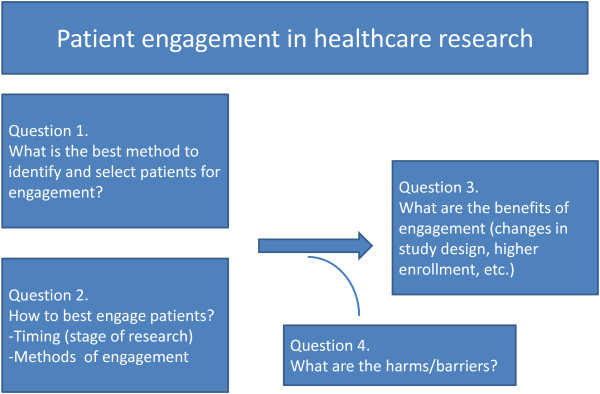
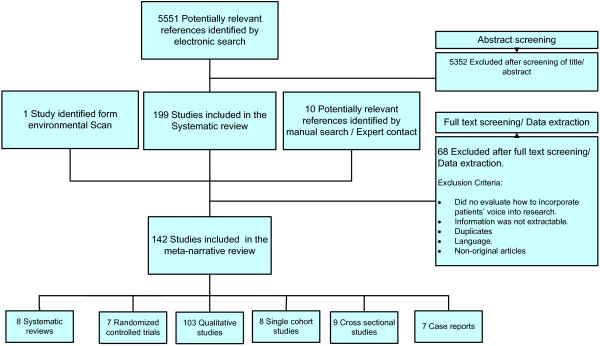
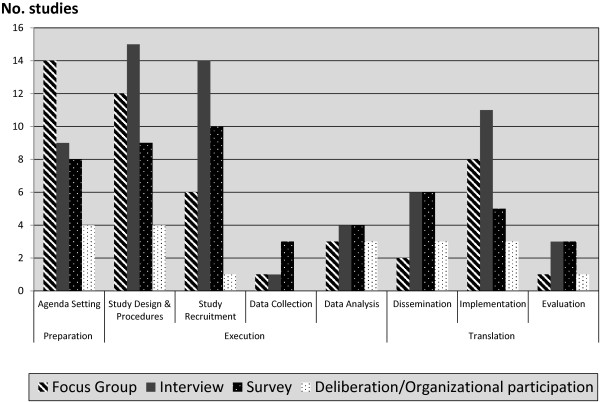
BACKGROUND: A compelling ethical rationale supports patient engagement in healthcare research. It is also assumed that patient engagement will lead to research findings that are more pertinent to patients' concerns and dilemmas. However; it is unclear how to best conduct this process. In this systematic review we aimed to answer 4 key questions: what are the best ways to identify patient representatives? How to engage them in designing and conducting research? What are the observed benefits of patient engagement? What are the harms and barriers of patient engagement? METHODS: We searched MEDLINE, EMBASE, PsycInfo, Cochrane, EBSCO, CINAHL, SCOPUS, Web of Science, Business Search Premier, Academic Search Premier and Google Scholar. Included studies were published in English, of any size or design that described engaging patients or their surrogates in research design. We conducted an environmental scan of the grey literature and consulted with experts and patients. Data were analyzed using a non-quantitative, meta-narrative approach. RESULTS: We included 142 studies that described a spectrum of engagement. In general, engagement was feasible in most settings and most commonly done in the beginning of research (agenda setting and protocol development) and less commonly during the execution and translation of research. We found no comparative analytic studies to recommend a particular method. Patient engagement increased study enrollment rates and aided researchers in securing funding, designing study protocols and choosing relevant outcomes. The most commonly cited challenges were related to logistics (extra time and funding needed for engagement) and to an overarching worry of a tokenistic engagement. CONCLUSIONS: Patient engagement in healthcare research is likely feasible in many settings. However, this engagement comes at a cost and can become tokenistic. Research dedicated to identifying the best methods to achieve engagement is lacking and clearly needed.
Overview
The claims and statistics of this paper haven’t been checked yet.
Free: it reads the open-access text and checks the first 5 claims that cite a source we can check. Create a free account to check every claim.
Integrity signals
Registry
Cites
Statistics
Figures
Verification
Claims the paper makes
The claims and statistics of this paper haven’t been checked yet.
Free: it reads the open-access text and checks the first 5 claims that cite a source we can check. Create a free account to check every claim.
Claims other papers make about this one
Each is checked against this paper’s own text: does it say what the citing paper says it does?
The source backs part of the claim, not all of it — or backs it for a different population, condition or comparison.
In the citing paper
“The present study confirms that, with regard to the conduct of research trials in primary dental care, research dedicated to identifying the best methods to achieve engagement with patients as potential participants is lacking and clearly needed [50].”
From Parental attitudes to randomised controlled trials in primary dental care: A qualitative study (2026) · cites this paper as [50]
Experimental — accuracy not yet measuredThe source backs part of the claim, not all of it — or backs it for a different population, condition or comparison.
In the citing paper
“Engaging patients in the process of designing the review protocol and in reviewing the findings increase the applicability and relevance of the findings of this study.”
From Systematic review of mind‐body interventions to treat myalgic encephalomyelitis/chronic fatigue syndrome (2021) · cites this paper as [36]
Experimental — accuracy not yet measuredThe source backs part of the claim, not all of it — or backs it for a different population, condition or comparison.
In the citing paper
“Previous studies indicated that engaging the target group increases study enrollment and may enhance the uptake and the acceptance of interventions [67, 68].”
From A blended psychosocial support program for partners of patients with amyotrophic lateral sclerosis and progressive muscular atrophy: Protocol of a randomized controlled trial (2018) · cites this paper as [67]
Experimental — accuracy not yet measuredThe check wasn’t confident either way, so it gives no verdict — never disputed.
In the citing paper
“This is consistent with review findings of empirical studies in PPI whereby short‐term, individual‐level outcomes were more represented in the literature. 43 , 91 , 92”
From A systematic review of theories, models and frameworks used for youth engagement in health research (2024) · cites this paper as [91]
Experimental — accuracy not yet measured
Self-check
Percentages, sums and reported differences re-computed from the paper’s own numbers.
The self-check needs the paper’s full text.
Citations
Cites
Preferred Reporting Items for Systematic Reviews and Meta-Analyses: the PRISMA statement
Moher, D., Liberati, A., Tetzlaff, J., Altman, D. G., & for the PRISMA Group (2009) · BMJ · doi:10.1136/bmj.b2535 · Cited by 83,823
Preferred reporting items for systematic reviews and meta-analyses: the PRISMA Statement.
(2009) · PubMed Central · Cited by 44,859
Preferred reporting items for systematic reviews and meta-analyses: The PRISMA statement
Moher, D., Liberati, A., Tetzlaff, J., Altman, D. G., & the PRISMA Group* (2009) · Annals of Internal Medicine · doi:10.7326/0003-4819-151-4-200908180-00135 · Cited by 37,554
Preferred Reporting Items for Systematic Reviews and Meta-Analyses: The PRISMA Statement
Moher, D., Liberati, A., Tetzlaff, J., & Altman, D. G. (2009) · Journal of Clinical Epidemiology · doi:10.1016/j.jclinepi.2009.06.005 · Cited by 19,575
(2005) · PubMed · Cited by 7,011
Enhancing transparency in reporting the synthesis of qualitative research: ENTREQ
Tong, A., Flemming, K., McInnes, E., Oliver, S., & Craig, J. (2012) · BMC Medical Research Methodology · doi:10.1186/1471-2288-12-181 · Cited by 3,569 · cited 1×
“Differences in studies settings and characteristics can be used to explain differences in results (heterogeneity) [16].”
BackgroundCommunity-based participatory research: assessing the evidence.
Viswanathan, M., Ammerman, A., Eng, E. M., Garlehner, G., Lohr, K. N., Griffith, D. M., Rhodes, S. D., Samuel‐Hodge, C. D., Maty, S. C., Lux, L. J., et al. (2004) · PubMed Central · Cited by 1,053
Campbell, R., Pound, P., Pope, C., Britten, N., Pill, R., Morgan, M., & Donovan, J. (2003) · Social Science & Medicine · doi:10.1016/s0277-9536(02)00064-3 · Cited by 921 · cited 3×
“[http://www.casp-uk.net/wp-content/uploads/ 2011/11/CASP-Qualitative-Research-Checklist-31.05.13.pdf] 19.”
MethodInfluentialStorylines of research in diffusion of innovation: a meta-narrative approach to systematic review
Greenhalgh, T., Robert, G., Macfarlane, F., Bate, P., Kyriakidou, O., & Peacock, R. (2005) · Social Science & Medicine · doi:10.1016/j.socscimed.2004.12.001 · Cited by 913 · cited 1×
“Instead, data extracted from the included studies were analyzed using a meta-narrative approach [14].”
MethodPatient and service user engagement in research: a systematic review and synthesized framework
Shippee, N. D., Domecq Garces, J. P., Prutsky Lopez, G. J., Wang, Z., Elraiyah, T. A., Nabhan, M., Brito, J. P., Boehmer, K., Hasan, R., Firwana, B., et al. (2015) · Health Expectations · doi:10.1111/hex.12090 · Cited by 628 · cited 2×
“We also categorized the research engagement from each study into three different research phases proposed for patient engagement [17]:”
BackgroundMethodSelf-citation
Cited by
Items 801–900 of 1,002
Tower, M., Muir, R., Zimmerman, P.-A. P., Carter, A. G., Maude, R., Hollaway, K., Geia, L. K., Massey, D. L., & Elder, E. G. (2024) · Nurse Education Today · doi:10.1016/j.nedt.2024.106352 · Cited by 13
Aldridge, G., Wu, L., Seguin, J. P., Robinson, J., Battaglia, E., Olivier, P. L., & Yap, M. B. H. (2024) · JMIR Formative Research · doi:10.2196/55639 · Cited by 12
Fortin, J., Rudd, É., Trudel‐Fitzgerald, C., Cordova, M. J., Marin, M., & Brunet, A. (2024) · Psychology Health & Medicine · doi:10.1080/13548506.2024.2430796 · Cited by 12
“This feedback informed revisions aimed at enhancing the tool’s potential usability and integration into clinical practice (Domecq et al., 2014).”
Faissner, M., Braun, E., Efkemann, S. A., Gaillard, A.-S., Haferkemper, I., Hempeler, C., Heuer, I., Lux, U., Potthoff, S., Scholten, M., et al. (2025) · Frontiers in Psychiatry · doi:10.3389/fpsyt.2025.1516996 · Cited by 8
“According to a systematic review on patient engagement in healthcare, tokenism (i.e., the instrumentalizing involvement of marginalized groups) was identi fi ed as an overarching worry in various participatory projects (21).”
Involving peers in research: the UNSW community reference panel
Walker, M., Beadman, K., Griffin, S., Beadman, M., & Treloar, C. (2019) · Harm Reduction Journal · doi:10.1186/s12954-019-0325-3 · Cited by 10
Chatterjee, A., Shahaab, A., Gerdes, M. W., Martínez, S., & Khatiwada, P. (2021) · Elsevier eBooks · doi:10.1016/b978-0-12-822844-9.00044-x · Cited by 11
Madsen, K., Wibe, T., Bye, A., Debesay, J., & Bergland, A. (2021) · Tidsskrift for omsorgsforskning · doi:10.18261/issn.2387-5984-2021-02-05 · Cited by 8
What Matters to Whom: Patient and Public Involvement in Research
Gibbins, K. J., & Lo, J. O.-T. (2022) · Clinical Obstetrics & Gynecology · doi:10.1097/grf.0000000000000694 · Cited by 11
Gong, L., Jiang, H., Wu, X., Kong, Y., Gao, Y., Liu, H., Guo, Y., & Hu, D. (2022) · International Journal of Environmental Research and Public Health · doi:10.3390/ijerph191811783 · Cited by 8
“User engagement enables them to create empowering and well-informed decisions about health care [46].”
BackgroundA Systematic Review of Patient Engagement Experiences in Brain Disorders
Bertorello, D., Brichetto, G., Folkvord, F., Theben, A., & Zaratin, P. (2022) · Patient Related Outcome Measures · doi:10.2147/prom.s256396 · Cited by 8
“20 As Domecq et al 71 have clearly shown in their systematic review assessing patient engagement in research, there is a lack of research dedicated to identifying the best methods to achieve patient engagement although it is strictly needed.”
Anand, E., Devi, J., Antoniou, A., Joshi, S., Stoker, J., Lung, P. F. C., Hart, A. L., Tozer, P. J., Ballard, D. H., & Deepak, P. (2025) · Crohn s & Colitis 360 · doi:10.1093/crocol/otaf015 · Cited by 11
“18,19 By engaging patients in discussions about their radiological results, healthcare providers can help mitigate anxiety and foster a stronger sense of partnership in the treatment process.”
The Bluebirds: World War I Soldiers’ Experiences of Occupational Therapy
Pettigrew, J., Robinson, K., & Moloney, S. (2016) · American Journal of Occupational Therapy · doi:10.5014/ajot.2017.023812 · Cited by 12
Ballantyne, A., & Moore, A. (2018) · AJOB Empirical Bioethics · doi:10.1080/23294515.2018.1518938 · Cited by 8
Music therapy in neonatal care: a framework for German speaking countries and Switzerland
Haslbeck, F. B., Nöcker-Ribaupierre, M., Zimmer, M.-L., Schrage-Leitner, L., & Lodde, V. (2018) · Music and Medicine · doi:10.47513/mmd.v10i4.603 · Cited by 8
Soobiah, C., Manley, G., Marr, S., Moore, A. E., PausJenssen, E., Teare, S., Hamid, J. S., Tricco, A. C., & Straus, S. E. (2019) · Journal of Clinical Epidemiology · doi:10.1016/j.jclinepi.2019.02.005 · Cited by 9
Reventlow, S. D., Jønsson, A. B. R., Møller, M. C. R., Davidsen, A. S., & Olsen, L. R. (2019) · Springer eBooks · doi:10.1007/978-3-030-10940-0_10 · Cited by 8
Brett, L., Siette, J., Nguyen, A., Jorgensen, M. L., Miao, M., Westbrook, J. I., Lee, W., Gow, E., Hourihan, F., & Georgiou, A. (2019) · BMJ Open · doi:10.1136/bmjopen-2018-028754 · Cited by 9
Mapping Stakeholder Perspectives on Engagement in Concussion Research to Theory
Hunt, C., de Saint-Rome, M., Salle, C. D., Michalak, A., Wilcock, R., & BAKER, A. J. (2020) · Canadian Journal of Neurological Sciences / Journal Canadien des Sciences Neurologiques · doi:10.1017/cjn.2019.324 · Cited by 8
“In contrast, other authors referred to cultural barriers as a “power imbalance” between researchers and participants with SER sometimes viewed as acts of tokenism.(2,9,15,31) Similar to other reports, respondents claimed constraints from patient symptoms of fatigue and anxiety could deter SER.”
ResultHolmen, H., Riiser, K., Løyland, B., Sandbekken, I. H., Almendingen, K., Andenæs, R., Bjørnnes, A. K., Fagerlund, B. H., Früh, E. A., Helseth, S., et al. (2021) · BMJ Open · doi:10.1136/bmjopen-2020-043697 · Cited by 9
Dobra, R., Boeri, M., Elborn, J. S., Kee, F., Madge, S. L., & Davies, J. C. (2021) · BMJ Open · doi:10.1136/bmjopen-2020-045803 · Cited by 10
Guiding the rational design of patient-centred drug trials in Cystic Fibrosis: A Delphi study
Dobra, R., Elborn, J. S., Madge, S. L., Allen, L., Boeri, M., Kee, F., Goundry, S., Purcell, T., Saunders, C. J., & Davies, J. C. (2021) · Journal of Cystic Fibrosis · doi:10.1016/j.jcf.2021.03.021 · Cited by 8
Patient Engagement in Melanoma Research: From Bench to Bedside
Tivey, A., Huddar, P., Shotton, R., Cheese, I., Daniels, S., Lorigan, P. C., & Lee, R. J. (2021) · Future Oncology · doi:10.2217/fon-2020-1165 · Cited by 8
Sims‐Gould, J., Elliott, J. B., Tong, C., Giguere, A. M. C., Mallinson, S., & Stolee, P. (2021) · BMC Geriatrics · doi:10.1186/s12877-021-02395-4 · Cited by 8
“The general philosophy of how and where patients should be included in health services work and research has shifted [40, 41], and our inclusion of patients and their caregivers at the center of our framework reflects this evolution.”
Charlot, M., Carolan, K., Gawuga, C., Freeman, E., & Martinez, L. S. S. (2021) · Research Involvement and Engagement · doi:10.1186/s40900-021-00317-7 · Cited by 8
“PACs have been shown to be successful in improving participant recruitment and retention in clinical research [20], but a key challenge is engaging diverse members reflective of a health system’s population [24–26].”
BackgroundKhodyakov, D., Park, S., Hutcheon, J. A., Parisi, S. M., & Bodnar, L. M. (2022) · Health Expectations · doi:10.1111/hex.13420 · Cited by 6
“Patients, caregivers, clinicians, researchers, payers, purchasers and policy‐makers are key stakeholders(2) whose engagement can positively impact all stages of the research process.(3,4) Nonetheless, multistakeholder engagement is challenging due to logistical difficulties, power imbalances and stakeholders' capacity…”
BackgroundPloeg, J., Markle‐Reid, M., Valaitis, R. K., Fisher, K., Ganann, R., Blais, J., Chambers, T., Connors, R., Gruneir, A., Légaré, F., et al. (2022) · BMC Geriatrics · doi:10.1186/s12877-021-02651-7 · Cited by 9
“Research on older adults with MCC also suggests that programs need to be person-centred, multifaceted, tailored to individual needs, and engage clients and caregivers in co-designing, implementing, and evaluating programs [14, 15].”
BackgroundEnhancing pharmacy practice doctoral research with patient and public involvement
Youssef, E., Mellor, D., Walkerly, S., & Wright, D. J. (2022) · International Journal of Pharmacy Practice · doi:10.1093/ijpp/riac014 · Cited by 8
Youth and family engagement in childhood disability evidence syntheses: A scoping review
Wang, L., Micsinszki, S. K., Goulet‐Barteaux, M., Gilman, C., & Phoenix, M. P. (2022) · Child Care Health and Development · doi:10.1111/cch.13022 · Cited by 10
Going the Extra Mile: Why Clinical Research in Cystic Fibrosis Must Include Children
Dobra, R., Bentley, S., Edmondson, C. L., Ovens, M., Saunders, C. J., Short, C., Wilson, G., Davies, J. C., & Bush, A. (2022) · Children · doi:10.3390/children9071080 · Cited by 9
Zhou, J., Arriaga, R. I., Liu, H., & Huang, M. S. (2022) · IEEE International Conference on Healthcare Informatics (ICHI) · doi:10.1109/ichi54592.2022.00059 · Cited by 10
Daraz, L., & Morshed, K. G. (2023) · BMJ Open · doi:10.1136/bmjopen-2022-068946 · Cited by 10
Stigma and Its Impact on Glucose Control Among Youth With Diabetes: Protocol for a Canada-Wide Study
Brazeau, A., Nakhla, M. M., Wright, M., Panagiotopoulos, C., Pacaud, D., Henderson, M., Rahme, E., Costa, D. D., & Dasgupta, K. (2016) · JMIR Research Protocols · doi:10.2196/resprot.6629 · Cited by 11
“There is an increasing recognition of the importance of patient representatives in health care research, due to their insights into defining research questions, adapting tools, interpreting results, and participating in knowledge translation efforts [34].”
BackgroundRacine, E., Hurley, C., Cheung, A., Sinnott, C., Matvienko‐Sikar, K., Baumgartner, C., Rodondi, N., Smithson, W. H., & Kearney, P. M. (2019) · HRB Open Research · doi:10.12688/hrbopenres.12817.2 · Cited by 9
Chao, Y., Scutari, M., Chen, T.-S., Wu, C.-J., Durand, M., Boivin, A., Wu, H., & Chen, W. (2018) · PLoS ONE · doi:10.1371/journal.pone.0201355 · Cited by 8
Meet the researchers: an alternative method of engaging patients with research in mesothelioma
Hill, K. M., Portman, M., & Tabi, Z. (2018) · Research Involvement and Engagement · doi:10.1186/s40900-018-0119-x · Cited by 7
Examining the use of consent forms to promote dissemination of research results to participants
Curran, D., Kekewich, M., & Foreman, T. (2018) · Research Ethics · doi:10.1177/1747016118798877 · Cited by 14
Whom to Engage in Patient‐Engaged Research? Reflection on Selection
Morain, S. R. (2018) · The Hastings Center Report · doi:10.1002/hast.899 · Cited by 8
Stuber, K. J., Kawchuk, G. N., & Bussières, A. (2017) · PubMed Central · Cited by 8
Engagement of patients with scleroderma to revise an internet self-management program
Poole, J. L., Newbill, S. L., Serrano, J., Rosson, D., Battyany, J., Dyas, L., Evnin, L. B., Raisch, D. W., Maxwell, C. V., Alore, M., et al. (2019) · Patient Experience Journal · doi:10.35680/2372-0247.1375 · Cited by 10
Real World Survey of Patient Engagement Status in Clinical Research: The First Input from Japan
Tanemura, N., Sasaki, T. G., Sato, J., & Urushihara, H. (2020) · Patient · doi:10.1007/s40271-020-00436-5 · Cited by 8
“Further data are needed to thoroughly understand this concept and its components [28].”
BackgroundPoureslami, I. M., Pakhale, S. S., Lavoie, K., Gupta, S., Bacon, S., Aaron, S. D., To, T. M., Boulet, L., & FitzGerald, J. M. (2018) · Canadian Journal of Respiratory Critical Care and Sleep Medicine · doi:10.1080/24745332.2018.1443294 · Cited by 11
Izquierdo, A., Ong, M. K., Jones, F., Jones, L., Ganz, D. A., & Rubenstein, L. V. (2018) · Ethnicity & Disease · doi:10.18865/ed.28.s2.475 · Cited by 9
Markle‐Reid, M., & Ploeg, J. (2016) · Canadian Journal of Nursing Research · doi:10.1177/0844562116665958 · Cited by 9
A patient perspective on applying intermittent fasting in gynecologic cancer
Redding, A., Santarossa, S., Murphy, D., Udumula, M. P., Munkarah, A. R., Hijaz, M., & Rattan, R. (2023) · BMC Research Notes · doi:10.1186/s13104-023-06453-5 · Cited by 9
“Patients are responsible for many developments of interest, such as identifying research priorities [3], and helping recruit and retain participants [4–6].”
BackgroundGfeller, K. E., & Mallalieu, R. (2023) · Frontiers in Human Neuroscience · doi:10.3389/fnhum.2023.1308712 · Cited by 9
“Principles of patient-engaged research encourage patient and stakeholder involvement at every stage in research planning, facilitation, and dissemination (Domecq et al., 2014).”
Tutelman, P. R., MacKenzie, N. E., Chambers, C. T., Coffman, S., Cornelissen, L., Cormier, B., Higgins, K. S., Phinney, J., Blankenburg, M. R., & Walker, S. M. (2024) · PAIN Reports · doi:10.1097/pr9.0000000000001151 · Cited by 7
“14,19 The QST field would benefit from targeted efforts to solicit feedback from patients and families on testing experiences.”
BackgroundMacNeil, M., Benoit, B., Disher, T. C., Newman, A. J., & Campbell-Yeo, M. L. (2024) · Journal of Intellectual Disabilities · doi:10.1177/17446295241255178 · Cited by 13
“…as collaborators and advisors on the research team to help with approaching families, designing study materials, and communicating with families throughout the project (Curran et al., 2018; Domecq et al., 2014; Flynn et al., 2019; Hartling et al., 2021; Kim et al., 2023; Vanstone et al., 2023).”
Markowitz, B., de Sequeira, S., Najam, A., Pritlove, C., Greenberg, D. T., Greenberg, M., Chan, C.-M., Lakhanpal, G., Jagadeesh, S., Mukerji, G., et al. (2024) · JMIR Diabetes · doi:10.2196/60190 · Cited by 7
Systematic Review of Patient and Caregiver Involvement in CKD Research
Gutman, T., Coghlan, D., Craig, J. C., Guha, C., Jauré, A., Jesudason, S., Levin, A., White, D. M., Silva, J. R., van Zwieten, A., et al. (2025) · Kidney International Reports · doi:10.1016/j.ekir.2025.03.018 · Cited by 8
Partnering with Patients for Change and Improvement: An Australian Perspective
Braithwaite, J., Churruca, K., Wells, L., Rapport, F., Lawson, T., Arro, P., & Watson, J. (2019) · Organizational behaviour in health care · doi:10.1007/978-3-030-14101-1_7 · Cited by 8
Gharaibeh, L. F., Sartawi, H., Alzoubi, K. H., Juma, T., Ayyad, D., & Sartawi, S. (2020) · International Journal of Clinical Pharmacy · doi:10.1007/s11096-019-00959-4 · Cited by 8
Micsinszki, S. K., Ballantyne, M., Cleverley, K., Green, P., Brennenstuhl, S., & Stremler, R. (2022) · Disability and Rehabilitation · doi:10.1080/09638288.2022.2103594 · Cited by 8
Walsh, C. M., Jones, N. L., McCreath, G. A., Connan, V., Pires, L., Chen, A. Q. H., Karoly, A., & Macarthur, C. (2022) · Frontiers in Pediatrics · doi:10.3389/fped.2022.849959 · Cited by 7
Doepfmer, S., Akdenizli, K., Dashti, H., Heintze, C., Kaden, F., Kümpel, L., Kuschick, D., Medrow, N., Neidhardt-Akdenizli, A., Otto-Gogoll, S., et al. (2023) · PLoS ONE · doi:10.1371/journal.pone.0279413 · Cited by 11
“Serving on a study board or advisory council and attending regular meetings with researchers is one of the most active form of engagement is [50].”
Bütün Parçaların Toplamından Daha Fazladır: Eğitim Bilimlerinde Sistematik Derleme Nasıl Yazılır?
Dibek, M. İ., & TOPTAŞ, B. (2023) · Erzincan Üniversitesi Eğitim Fakültesi Dergisi · doi:10.17556/erziefd.1176257 · Cited by 10
Anthropological and Sociological Perspectives on Food Allergy
Cook, E. E. (2023) · Clinical & Experimental Allergy · doi:10.1111/cea.14387 · Cited by 7
Co-Design with Patients for Improving Patient Safety: Strategies, Barriers and pitfalls
Xiao, Y., Miller, K., Werner, N. E., Smith, K. M., Hendrix, N., & Hemmelgarn, C. (2023) · Proceedings of the Human Factors and Ergonomics Society Annual Meeting · doi:10.1177/21695067231192416 · Cited by 10
“Failure in this commitment can lead to tokenism (Domecq et al, 2014).”
BackgroundTranslation and cross-cultural adaptation of the PEDI-CAT: Dutch version
Bos, N., Engel, M. F., van Rijswijk, N. J., Verheijden, J. M. A., Coster, W. J., Moed, R., & Ketelaar, M. (2019) · Journal of Pediatric Rehabilitation Medicine · doi:10.3233/prm-180544 · Cited by 7
“Overall there is growing consensus about the crucial role of end-user involvement (including patients, relatives and professionals) in research; initiatives and publications on this topic are rapidly increasing [15].”
Gerido, L. H., Tang, X. D., Ernst, B. A., Langford, A. T., & He, Z. (2019) · Journal of Medical Internet Research · doi:10.2196/15035 · Cited by 8
A proposed framework for patient engagement throughout the broader research enterprise
Strassle, C., & Pearson, S. D. (2020) · Journal of Comparative Effectiveness Research · doi:10.2217/cer-2019-0175 · Cited by 7
Happell, B., Gordon, S., Roper, C., Ellis, P., Waks, S., Warner, T., Scholz, B., & Platania‐Phung, C. (2020) · Perspectives In Psychiatric Care · doi:10.1111/ppc.12520 · Cited by 7
Schöpf-Lazzarino, A. C., Böhm, P., Garske, U., Schlöffel, M., Stoye, A., Lamprecht, J., Mau, W., & Farin, E. (2020) · Zeitschrift für Rheumatologie · doi:10.1007/s00393-020-00839-7 · Cited by 7
“So far, patient participation has beenparticularly reported in agendasettingandstudydesign[9].”
BackgroundThomas, J., Dahm, M. R., Li, J., & Georgiou, A. (2020) · Health Expectations · doi:10.1111/hex.13150 · Cited by 8
Enhancing patient research partner engagement: Research in psoriatic arthritis
Goel, N. (2021) · Best Practice & Research Clinical Rheumatology · doi:10.1016/j.berh.2021.101685 · Cited by 7
O’Doherty, L., Phelan, S. H., Wood, N., O'Brien, S., Sui, J., Mangan, C., Howley, F., O’Regan, S., Razif, N. A. M., Conlan, C., et al. (2022) · HRB Open Research · doi:10.12688/hrbopenres.13498.1 · Cited by 8
Jensen, A., Amundson, E. C., Brown, C., Cochrane, J., Daly, D., Glenn, R., Hope, K., Hawkins, J., Oakley, J. W., Sacra, E., et al. (2022) · Journal of General Internal Medicine · doi:10.1007/s11606-021-06985-1 · Cited by 7
“Soliciting volunteer engagement partners is common, however individual volunteers may have personal agendas.(2) To address this issue, during the interview potential partners were asked to share motivation for participating, collaboration and military experience, services received at VA, and potential barriers to part…”
BackgroundPresti, L. L., Testa, M., Maggiore, G., & Marino, V. (2022) · BMC Health Services Research · doi:10.1186/s12913-022-07828-3 · Cited by 6
“This empirical research confirms what the literature has already highlighted about the crucial role of engagement in medical telemonitoring platforms [5, 27, 65, 72], and how it positively impacts on self-health satisfaction [73, 74].”
BackgroundConducting Patient-Oriented Research in Low-Income and Middle-Income Countries: A Scoping Review
Ibitoye, B. M., Garrett, B., Ranger, M., & Stinson, J. (2022) · Patient · doi:10.1007/s40271-022-00592-w · Cited by 8
“It is also sometimes referred to as patient engagement, patient involvement or service user research [2, 3].”
BackgroundPatients as biomedical researchers
Liskey, D., Cynkin, L., & Wolfram, J. (2022) · Trends in Molecular Medicine · doi:10.1016/j.molmed.2022.09.002 · Cited by 7
Pu, D., Palmer, V. J., Greenstock, L., Pigott, C., Peeters, A., Sanci, L. A., Callisaya, M. L., Browning, C. J., Chapman, W. W., & Haines, T. P. (2023) · International Journal of Environmental Research and Public Health · doi:10.3390/ijerph20054015 · Cited by 9
“Community engagement in health research synergistically combines the diverse experiences of those involved to improve the relevance and adoption of research [7,8], as well as stakeholder trust in research [7].”
BackgroundWolters, P. L., Ghriwati, N. A., Baker, M., Martin, S. C., Berg, D., Erickson, G., Franklin, B., Merker, V. L., Oberlander, B., Reeve, S., et al. (2023) · Clinical Trials · doi:10.1177/17407745231209224 · Cited by 7
“40 Some studies have used focus groups and interviews of patients with NF to gather perceptions about their symptoms and concerns to guide the development of NF-specific psychosocial 31,41,42 and cognitive 43 interventions and assessment measures.”
BackgroundRyf, C., Hofstetter, L., Clack, L., & Hincapié, C. A. (2024) · Research Involvement and Engagement · doi:10.1186/s40900-023-00536-0 · Cited by 7
“…from project development that is more relevant to end-users, the conceptualization of research project proposals that are more compelling and likely to secure funding [10, 11], better participant enrolment rates [10, 12], and increased trust and advocacy within the study population community [13].”
BackgroundThomas, S. P., Novak, I., Ritterband‐Rosenbaum, A., Lind, K., Webb, A., Gross, P. H., & McNamara, M. (2024) · Journal of Pediatric Rehabilitation Medicine · doi:10.3233/prm-240014 · Cited by 7
Leese, J., Kerr, S., McKinnon, A., Carruthers, E. C., Backman, C. L., LI, L. C., & Townsend, A. F. (2017) · Journal of Participatory Medicine · doi:10.2196/jopm.8756 · Cited by 7
“Yet, despite the strong rationale for patient engagement in research [11], the process of patient-researcher collaboration is little understood [14,15].”
BackgroundYoung, A., Menon, D., Street, J., Al‐Hertani, W., & Stafinski, T. (2018) · Patient · doi:10.1007/s40271-017-0293-1 · Cited by 7
“However, stakeholder engagement approaches in general have been criticised as being merely tokenistic [3-5] and, due to significant weaknesses in reporting, this review could not distinguish meaningful opportunities from tokenism [2].”
BackgroundResearch as an event: a novel approach to promote patient-focused drug development
Tsai, J.-H., Janssen, E. M., & Bridges, J. F. P. (2018) · Patient Preference and Adherence · doi:10.2147/ppa.s153875 · Cited by 7
“Benefits and challenges of current approaches Patient engagement in research has been acknowledged as critical and beneficial to health-related research.(9,23) Researchers have employed methods such as surveys, interviews, and focus groups.”
BackgroundInfluentialWazny, K., Ravenscroft, J., Chan, K. Y., Bassani, D. G., Anderson, N., & Rudan, I. (2019) · Journal of Global Health · doi:10.7189/jogh.09.010702 · Cited by 7
Mixed methods study exploring parent engagement in child health research in British Columbia
Smith, J. L., Pike, I., BRUSSONI, M. J., Tucker, L., Mâsse, L. C., Mah, J. W. T., Boudreau, A. M., Mount, D., Bonaguro, R. J., Glegg, S., et al. (2019) · BMJ Open · doi:10.1136/bmjopen-2018-025404 · Cited by 7
Fahim, C., Hylton, D. A., Simunovic, M. R. I., Agzarian, J., Finley, C., Hanna, W. C., & Shargall, Y. (2019) · Trials · doi:10.1186/s13063-019-3536-8 · Cited by 9
Bedlack, R., Bulat, A., Shefner, J. M., Cudkowicz, M., & Heiman-Patterson, T. (2019) · Amyotrophic Lateral Sclerosis and Frontotemporal Degeneration · doi:10.1080/21678421.2019.1690519 · Cited by 8
“Patient engagement can facilitate the design of research questions (9) and outcomes (10) that are of greater interest to patients, trial designs that are more patient-centric (11), consent forms and study summaries that are more understandable to the target population (12), improved enrollment (12,13) and retention ra…”
BackgroundBourque, C. J., Bonanno, M., Dumont, É., Gaucher, N. O., Lacoste-Julien, A., Gomez-Tyo, M., Langlet, M.-F., & Sultan, S. (2020) · Patient Education and Counseling · doi:10.1016/j.pec.2020.04.011 · Cited by 10
Han, G., Mayer, M., Canner, J. K., Lindsley, K. B., Datar, R. S., Lê, J. T., Bar‐Cohen, A., Bowie, J. V., & Dickersin, K. (2020) · BMC Health Services Research · doi:10.1186/s12913-020-05759-5 · Cited by 7
“, lodging), which is already in short supply for consumers [8, 22].”
BackgroundStreet, C., Twells, L., Leamon, T., Taylor, L., & Etchegary, H. (2021) · Methods in molecular biology · doi:10.1007/978-1-0716-1138-8_29 · Cited by 7
Cranley, L. A., Sivakumaran, G., Helfenbaum, S., Galessiere, D., Meyer, R. M., Duggleby, W., Hall, L. M., & McGilton, K. S. (2021) · International Journal of Older People Nursing · doi:10.1111/opn.12429 · Cited by 9
Morassaei, S., Campbell, M., & Prospero, L. D. (2021) · Journal of Continuing Education in the Health Professions · doi:10.1097/ceh.0000000000000405 · Cited by 8
Advancing Innovation in Skilled Nursing Facilities through Academic Collaborations.
Gustavson, A. M., Boxer, R. S., Nordon‐Craft, A., Marcus, R. L., Daddato, A. E., & Stevens‐Lapsley, J. E. (2018) · PubMed · Cited by 8
Oravec, N., Schultz, A. S. H., Bjorklund, B., Gregora, A., Monnin, C., Dave, M. G., Duhamel, T. A., Arora, R. C., & Chudyk, A. M. (2022) · International Journal of Qualitative Methods · doi:10.1177/16094069221124402 · Cited by 8
“, focus groups, qualitative surveys) (Domecq et al., 2014; Phoenix et al., 2018).”
BackgroundKogetsu, A., Isono, M., Aikyo, T., Furuta, J., Goto, D., Hamakawa, N., Hide, M., Hori, R., Ikeda, N., Inoi, K., et al. (2023) · Research Involvement and Engagement · doi:10.1186/s40900-023-00515-5 · Cited by 6
“In recent years, the roles of patients and their families have changed dramatically in medical practice, medical research, drug discovery, and medical device development [1–3].”
BackgroundNicholson, E., Mimmo, L., Christophers, L., Costa, M. E., & Mackeogh, T. (2024) · Research Involvement and Engagement · doi:10.1186/s40900-024-00626-7 · Cited by 7
“Some reported benefits of patient engagement within health research include improved enrolment and retention in services [3] while also strengthening their capacity to make good health decisions [4].”
BackgroundInclusion in neurological research: empowering people living with neurological diseases
Ferretti, M. T., Uccheddu, M. B., Flanagan, R., Leroi, I., & Moro, E. (2025) · Nature Reviews Neurology · doi:10.1038/s41582-024-01047-6 · Cited by 8
“Such developments have prompted a reconsideration of patienthood 13 and the emergence of bona fide participatory models of research that promote structured and active engagement of patients in regulatory bodies, research groups and the scientific community (reviewed elsewhere 14,15 ).”
Maharjan, P., Murdock, D., Tielemans, N., Goodall, N., Temple, B., Askin, N., & Wittmeier, K. D. M. (2021) · Children · doi:10.3390/children8020130 · Cited by 6
Ryf, C., Hofstetter, L., Clack, L., Puhan, M. A., & Hincapié, C. A. (2022) · BMJ Open · doi:10.1136/bmjopen-2021-057881 · Cited by 6
Etherington, C., Lê, M., Proulx, L., & Boet, S. (2022) · Research Involvement and Engagement · doi:10.1186/s40900-022-00367-5 · Cited by 10
Gfeller, K. E., Veltman, J., Mandara, R., Napoli, M. B., Smith, S. C., Choi, Y., McCormick, G., McKenzie, T., & Nastase, A. (2022) · Trends in Hearing · doi:10.1177/23312165221122605 · Cited by 6
“A growing trend in medical research, patient-engaged research acknowledges that patients possess extensive knowledge and insights about healthcare through lived experiences (Clancy & Collins, 2010; Domecq et al., 2014; Forsythe et al., 2017; Frank et al., 2014; Sheridan et al., 2017).”
BackgroundKim, L., Costello, C., Golding, M. A., van Rensburg, C. J., Protudjer, J. L. P., & Wittmeier, K. D. M. (2023) · Research Involvement and Engagement · doi:10.1186/s40900-023-00470-1 · Cited by 9
Beaudoin, A. J., Gagnon, M., Roy, M., Clapperton, I., Lambert, A., Jasmin, E., Ducreux, E., Desrosiers, A., & Martin, C. (2023) · International Journal of Integrated Care · doi:10.5334/ijic.7529 · Cited by 10
Hyde, E. K., Schultz, A. S. H., Ducas, R., Soni, R. N., Bekkering, H. J., Barker, D., Klippenstein, A. W., Dave, M. G., Frechette, C., Goddard-Frechette, J. S., et al. (2023) · CJC Pediatric and Congenital Heart Disease · doi:10.1016/j.cjcpc.2023.08.001 · Cited by 7
Tutelman, P. R., Thurston, C., Rader, T., Henry, B., Ranger, T., Abdelaal, M., Blue, M., Buckland, T. W., Gobbo, S. D., Dobson, L. S., et al. (2024) · Current Oncology · doi:10.3390/curroncol31050219 · Cited by 7
“Mounting evidence suggests that research that is co-created by patients is more relevant, of higher quality, and associated with better incorporation into clinical practice [14,15].”
BackgroundRyan, L., Hattingh, L., Carlini, J., Weir, K. A., Shapiro, M., Baglot, N., Cardona, M., Tobiano, G., Muir, R., Roberts, S., et al. (2024) · Australian Health Review · doi:10.1071/ah24186 · Cited by 8
Ogata, A. F., & Kramer, J. (2025) · ACS Sensors · doi:10.1021/acssensors.4c03292 · Cited by 6
Metadata
- Authors
- Domecq, J. P., Prutsky, G., Elraiyah, T., Wang, Z., Nabhan, M., Shippee, N., Brito, J. P., Boehmer, K., Hasan, R., Firwana, B., Erwin, P., Eton, D., Sloan, J., Montori, V., Asi, N., Abu Dabrh, A. M., & Murad, M. H.
- Affiliations
- Mayo Clinic (US)
- Corresponding author
- Murad, Mohammad Hassan
- ORCID
- Venue
- BMC Health Services Research
- Published
- 2014-02-26
- Volume
- 14
- Issue
- 1
- Pages
- 89-89
- ISSN
- 1472-6963 (ISSN-L)
- PMC
- PMC3938901
- OpenAlex
- W2100905299
- Cited by
- 1,773
- References
- 50
- Citations by year
- 2026: 122 · 2025: 147 · 2024: 219 · 2023: 198 · 2022: 200 · 2021: 202 · 2020: 202 · 2019: 144 · 2018: 138 · 2017: 101 · 2016: 53 · 2015: 39 · 2014: 8
- FWCI
- 11.40
- Type
- journal article
- Language
- en
- Open access
- gold
- doi.org
- Licence
- Locations
- BMC Health Services Research (publishedVersion, cc-by)
- Europe PMC (PubMed Central) (publishedVersion, cc-by)
- PubMed Central (publishedVersion, cc-by)
- PubMed (publishedVersion)
- NORA - Norwegian Open Research Archives (submittedVersion, cc-by)
- Funders
- Patient-Centered Outcomes Research Institute
- National Institutes of Health
- Topics
- Health Sciences › Health Professions › General Health Professions › Mental Health and Patient Involvement
- Health Sciences › Medicine › Public Health, Environmental and Occupational Health › Ethics in Clinical Research
- Health Sciences › Medicine › Public Health, Environmental and Occupational Health › Community Health and Development
- Keywords
- patient engagement, patient and public involvement, research ethics, patient representatives, research design, barriers to engagement, study enrollment, research funding
- MeSH terms
- Humans, Patient Participation, Randomized Controlled Trials as Topic, Advisory Committees, Research Subjects, Biomedical Research
About these checks
Registry, retraction, Cites and statistics results are computed, not judged, with one exception: a printed reference that no index lists is read once by a model before it counts as a citation error. Claims are extracted by a model and kept only when their quote appears verbatim in the text; each cited source is then checked, with a model’s help, for whether it says what the claim relies on. Those verdicts can be wrong — read the claim’s quote and the cited source before relying on one.
Statistics and arithmetic are recomputed, not judged.
Confidence bands are shown only for fields calibrated on our annotated test set. None is calibrated yet, so no band is shown.
What counts as a claim ›How we measure confidence ›How we check this ›
Are you an author, or do you see a problem with this page? Request a review
Data sources
Bibliographic data: Semantic Scholar, OpenAlex, Crossref.
Contains information from the Semantic Scholar Academic Graph Datasets, made available under the ODC Attribution License (ODC-BY 1.0).
Semantic Scholar’s data is described in: Kinney, R., et al. (2023). The Semantic Scholar Open Data Platform. arXiv:2301.10140.
