

Patient engagement in research: a systematic review
Open accessThe DOI matches its Crossref record; 44 of the 50 references it cites were found in a registry or an index.
Abstract
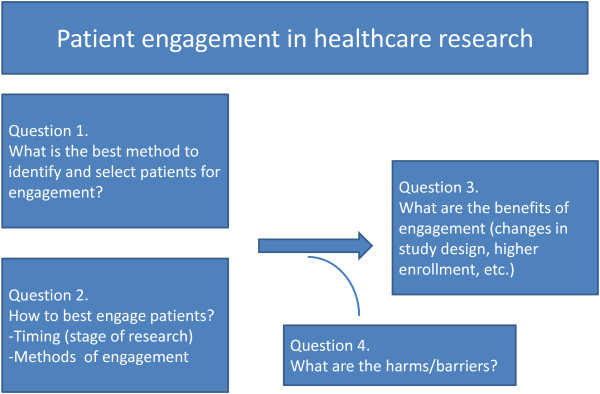
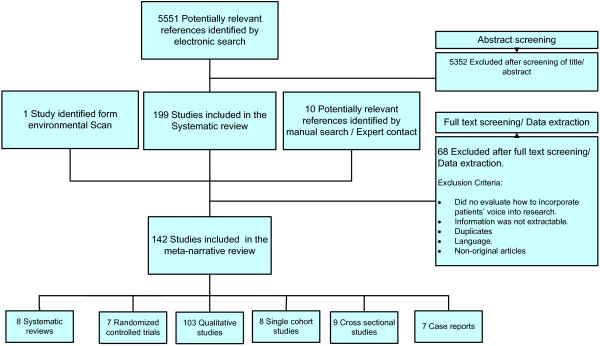
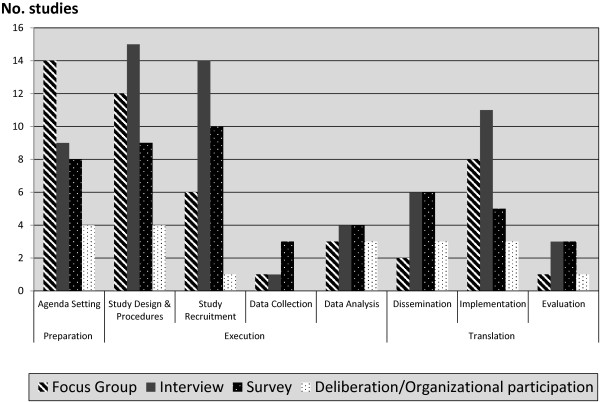
BACKGROUND: A compelling ethical rationale supports patient engagement in healthcare research. It is also assumed that patient engagement will lead to research findings that are more pertinent to patients' concerns and dilemmas. However; it is unclear how to best conduct this process. In this systematic review we aimed to answer 4 key questions: what are the best ways to identify patient representatives? How to engage them in designing and conducting research? What are the observed benefits of patient engagement? What are the harms and barriers of patient engagement? METHODS: We searched MEDLINE, EMBASE, PsycInfo, Cochrane, EBSCO, CINAHL, SCOPUS, Web of Science, Business Search Premier, Academic Search Premier and Google Scholar. Included studies were published in English, of any size or design that described engaging patients or their surrogates in research design. We conducted an environmental scan of the grey literature and consulted with experts and patients. Data were analyzed using a non-quantitative, meta-narrative approach. RESULTS: We included 142 studies that described a spectrum of engagement. In general, engagement was feasible in most settings and most commonly done in the beginning of research (agenda setting and protocol development) and less commonly during the execution and translation of research. We found no comparative analytic studies to recommend a particular method. Patient engagement increased study enrollment rates and aided researchers in securing funding, designing study protocols and choosing relevant outcomes. The most commonly cited challenges were related to logistics (extra time and funding needed for engagement) and to an overarching worry of a tokenistic engagement. CONCLUSIONS: Patient engagement in healthcare research is likely feasible in many settings. However, this engagement comes at a cost and can become tokenistic. Research dedicated to identifying the best methods to achieve engagement is lacking and clearly needed.
Overview
The claims and statistics of this paper haven’t been checked yet.
Free: it reads the open-access text and checks the first 5 claims that cite a source we can check. Create a free account to check every claim.
Integrity signals
Registry
Cites
Statistics
Figures
Verification
Claims the paper makes
The claims and statistics of this paper haven’t been checked yet.
Free: it reads the open-access text and checks the first 5 claims that cite a source we can check. Create a free account to check every claim.
Claims other papers make about this one
Each is checked against this paper’s own text: does it say what the citing paper says it does?
The source backs part of the claim, not all of it — or backs it for a different population, condition or comparison.
In the citing paper
“The present study confirms that, with regard to the conduct of research trials in primary dental care, research dedicated to identifying the best methods to achieve engagement with patients as potential participants is lacking and clearly needed [50].”
From Parental attitudes to randomised controlled trials in primary dental care: A qualitative study (2026) · cites this paper as [50]
Experimental — accuracy not yet measuredThe source backs part of the claim, not all of it — or backs it for a different population, condition or comparison.
In the citing paper
“Engaging patients in the process of designing the review protocol and in reviewing the findings increase the applicability and relevance of the findings of this study.”
From Systematic review of mind‐body interventions to treat myalgic encephalomyelitis/chronic fatigue syndrome (2021) · cites this paper as [36]
Experimental — accuracy not yet measuredThe source backs part of the claim, not all of it — or backs it for a different population, condition or comparison.
In the citing paper
“Previous studies indicated that engaging the target group increases study enrollment and may enhance the uptake and the acceptance of interventions [67, 68].”
From A blended psychosocial support program for partners of patients with amyotrophic lateral sclerosis and progressive muscular atrophy: Protocol of a randomized controlled trial (2018) · cites this paper as [67]
Experimental — accuracy not yet measuredThe check wasn’t confident either way, so it gives no verdict — never disputed.
In the citing paper
“This is consistent with review findings of empirical studies in PPI whereby short‐term, individual‐level outcomes were more represented in the literature. 43 , 91 , 92”
From A systematic review of theories, models and frameworks used for youth engagement in health research (2024) · cites this paper as [91]
Experimental — accuracy not yet measured
Self-check
Percentages, sums and reported differences re-computed from the paper’s own numbers.
The self-check needs the paper’s full text.
Citations
Cites
Preferred Reporting Items for Systematic Reviews and Meta-Analyses: the PRISMA statement
Moher, D., Liberati, A., Tetzlaff, J., Altman, D. G., & for the PRISMA Group (2009) · BMJ · doi:10.1136/bmj.b2535 · Cited by 83,823
Preferred reporting items for systematic reviews and meta-analyses: the PRISMA Statement.
(2009) · PubMed Central · Cited by 44,859
Preferred reporting items for systematic reviews and meta-analyses: The PRISMA statement
Moher, D., Liberati, A., Tetzlaff, J., Altman, D. G., & the PRISMA Group* (2009) · Annals of Internal Medicine · doi:10.7326/0003-4819-151-4-200908180-00135 · Cited by 37,554
Preferred Reporting Items for Systematic Reviews and Meta-Analyses: The PRISMA Statement
Moher, D., Liberati, A., Tetzlaff, J., & Altman, D. G. (2009) · Journal of Clinical Epidemiology · doi:10.1016/j.jclinepi.2009.06.005 · Cited by 19,575
(2005) · PubMed · Cited by 7,011
Enhancing transparency in reporting the synthesis of qualitative research: ENTREQ
Tong, A., Flemming, K., McInnes, E., Oliver, S., & Craig, J. (2012) · BMC Medical Research Methodology · doi:10.1186/1471-2288-12-181 · Cited by 3,569 · cited 1×
“Differences in studies settings and characteristics can be used to explain differences in results (heterogeneity) [16].”
BackgroundCommunity-based participatory research: assessing the evidence.
Viswanathan, M., Ammerman, A., Eng, E. M., Garlehner, G., Lohr, K. N., Griffith, D. M., Rhodes, S. D., Samuel‐Hodge, C. D., Maty, S. C., Lux, L. J., et al. (2004) · PubMed Central · Cited by 1,053
Campbell, R., Pound, P., Pope, C., Britten, N., Pill, R., Morgan, M., & Donovan, J. (2003) · Social Science & Medicine · doi:10.1016/s0277-9536(02)00064-3 · Cited by 921 · cited 3×
“[http://www.casp-uk.net/wp-content/uploads/ 2011/11/CASP-Qualitative-Research-Checklist-31.05.13.pdf] 19.”
MethodInfluentialStorylines of research in diffusion of innovation: a meta-narrative approach to systematic review
Greenhalgh, T., Robert, G., Macfarlane, F., Bate, P., Kyriakidou, O., & Peacock, R. (2005) · Social Science & Medicine · doi:10.1016/j.socscimed.2004.12.001 · Cited by 913 · cited 1×
“Instead, data extracted from the included studies were analyzed using a meta-narrative approach [14].”
MethodPatient and service user engagement in research: a systematic review and synthesized framework
Shippee, N. D., Domecq Garces, J. P., Prutsky Lopez, G. J., Wang, Z., Elraiyah, T. A., Nabhan, M., Brito, J. P., Boehmer, K., Hasan, R., Firwana, B., et al. (2015) · Health Expectations · doi:10.1111/hex.12090 · Cited by 628 · cited 2×
“We also categorized the research engagement from each study into three different research phases proposed for patient engagement [17]:”
BackgroundMethodSelf-citation
Cited by
Items 601–700 of 1,002
Dogba, M. J., Dahan‐Oliel, N., Snider, L., Glorieux, F. H., Durigova, M., Palomo, T., Cordey, M., Bédard, M.-H., Bedos, C. P., & Rauch, F. (2016) · PLoS ONE · doi:10.1371/journal.pone.0147654 · Cited by 16
“We acknowledge that this level of involvement for patients and caregivers is sub-optimal and does not represent patient-led research, which is the gold standard in patient involvement in research [23, 22].”
BackgroundHuddy, J., Weldon, S. M., Ralhan, S., Painter, T., Hanna, G. B., Kneebone, R. L., & Bello, F. (2016) · BMJ Open · doi:10.1136/bmjopen-2016-011043 · Cited by 18
“However, PPE can be expensive and, if not rigorously undertaken with appropriate methodologies, there is a risk of reducing it to a mechanistic ‘paper exercise’ that restricts the quality of information generated from the process.(4) Ocloo et al(9) in their recent narrative review Strengths and limitations of this stu…”
BackgroundRadaelli, G., Lettieri, E., Frattini, F., Luzzini, D., & Boaretto, A. (2017) · Technological Forecasting and Social Change · doi:10.1016/j.techfore.2016.12.015 · Cited by 15
“…time constraints of patients and researchers, and incremental funding needed for patient engagement; overarching worry [that] patient engagement may become tokenistic (a false appearance of inclusiveness), resulting in a devaluated patients’' input; [and] scope creep” (Domecq et al., 2014; p. 6).”
BackgroundDouglas, A., Ward, H. J. T., Bhopal, R. S., Kirkpatrick, T., Sayed-Rafiq, A., Gruer, L. D., & researchers, T. S. (2017) · Journal of Public Health · doi:10.1093/pubmed/fdx060 · Cited by 14
Involving the public in health research in Latin America: making the case for mental health
Troya, M. I., Bartlam, B., & Chew-Graham, C. A. (2018) · Revista Panamericana de Salud Pública · doi:10.26633/rpsp.2018.45 · Cited by 17
“Perhaps one of the biggest concerns is the risk of falling into tokenistic involvement in health research (31, 32).”
BackgroundMayo-Wilson, E., Golozar, A., Cowley, T., Fusco, N., Gresham, G., Haythornthwaite, J., Tolbert, E., Payne, J. L., Rosman, L., Hutfless, S., et al. (2018) · Pilot and Feasibility Studies · doi:10.1186/s40814-018-0284-6 · Cited by 14
McCaffrey, S. A., Chiauzzi, E. J., Chan, C., & Hoole, M. (2018) · Patient · doi:10.1007/s40271-018-0320-x · Cited by 20
“, one or two patients on an advisory board) [10, 11].”
BackgroundIwata, A. J., Olden, H. A., Kippen, K. E., Swegal, W. C., Johnson, C. C., & Chang, S. S. (2019) · Head & Neck · doi:10.1002/hed.25584 · Cited by 15
“requires meaningful patient engagement in all stages of clinical and translational research.(22,23) In recognition of this, patient-centered research has become”
BackgroundPoger, J. M., Yeh, H., Bryce, C. L., Carroll, J. K., Kong, L., Francis, E. B., & Kraschnewski, J. L. (2019) · Healthcare · doi:10.1016/j.hjdsi.2019.05.001 · Cited by 14
Jibb, L., Stacey, D., Carley, M. E., Davis, A. L., Graham, I. D., Green, E., Jolicoeur, L. J. A., Kuziemsky, C. E., Ludwig, C., & Truant, T. L. O. (2019) · Current Oncology · doi:10.3747/co.26.4247 · Cited by 13
Liu, H., Topping, A. E., & Guo, P. (2024) · Frontiers in Public Health · doi:10.3389/fpubh.2024.1422134 · Cited by 15
“In this case involving older people resident in long term care, their caregivers, the children/young people who may be participants in the delivery of an IE program, their teachers and parents, might improve program efficacy and cost-effectiveness (79–81).”
BackgroundEvaluation Tools for Patient and Public Involvement (PPI) in Health Research: A Scoping Review
Nissen, S., Karlsson, A. W., & Nørgaard, B. (2025) · Patient · doi:10.1007/s40271-025-00765-3 · Cited by 13
Involving service users to identify research priorities in a UK forensic mental health service
Aboaja, A. M., Forsyth, B., Bates, H., & Wood, R. (2020) · BJPsych Bulletin · doi:10.1192/bjb.2020.131 · Cited by 13
Nichols, V. P., Pearce, G., Ellard, D. R., Evans, S., Haywood, K. L., Norman, C., Potter, R., Sandhu, H. K., Stewart, K., Underwood, M. R., et al. (2021) · Primary Health Care Research & Development · doi:10.1017/s1463423621000670 · Cited by 14
Ford, M. K., Roberts, S. D., Andrade, B. F., Desrocher, M. E., Wade, S. L., Kohut, S. A., & Williams, T. S. (2022) · Journal of Clinical Psychology in Medical Settings · doi:10.1007/s10880-022-09875-8 · Cited by 14
Cope, E. L., McTigue, K. M., Forrest, C. B., Carton, T. W., Fair, A. M., Goytia, C. N., Harrington, J. M., Lowe, S., Merritt, J. G., Shenkman, E. A., et al. (2022) · Learning Health Systems · doi:10.1002/lrh2.10313 · Cited by 16
“First, time and funding for engagement are two of the most cited barriers impeding researchers in the conduct of engaged PCOR.39,40,43 Our scan shows that CRN infrastructure to help connect researchers to and foster relationships with patient/stakeholder communities is broadly available.”
BackgroundGenuis, S. K., Luth, W., Weber, G., Bubela, T. M., & Johnston, W. S. W. (2023) · BMC Medical Research Methodology · doi:10.1186/s12874-023-02051-y · Cited by 18
“Further, despite increasing ethical [73, 74] and practical [64, 75, 76] reasons for including patient voices in health research, garnering meaningful patient engagement prior to research funding is challenging.”
BackgroundMarshall, D. A., Suryaprakash, N., Bryan, S., Barker, K. L., MacKean, G., Zelinsky, S., McCarron, T. L., Santana, M., Moayyedi, P., & Lavallee, D. C. (2023) · Journal of the Canadian Association of Gastroenterology · doi:10.1093/jcag/gwad045 · Cited by 16
Skovlund, P. C., Finderup, J., Aabo, S., Jensen, F., Søndergaard, H., & Rodkjær, L. Ø. (2024) · Research Involvement and Engagement · doi:10.1186/s40900-023-00533-3 · Cited by 16
“These studies have identified e.g., how PPI can increase recruitment to clinical trials [6, 7], make research more relevant and appropriate for users, help to formulate research questions and develop study design, and provide insights to inform the conduct of analysis [13–15].”
BackgroundEvaluating patient participation in value‐based healthcare: Current state and lessons learned
Westerink, H. J., Garvelink, M. M., van Uden‐Kraan, C. F., Zouitni, O., Bart, H. A. J., van der Wees, P. J., van der Nat, P. B., & the Santeon Patient Participation Study Group (2024) · Health Expectations · doi:10.1111/hex.13945 · Cited by 19
“17 These barriers and lack of best practices for collective patient participation often result in tokenistic patient participation, 18 which occurs when patients participate but have little to no influence.”
BackgroundPapoulias, C., & Brady, L. (2024) · Health Research Policy and Systems · doi:10.1186/s12961-024-01197-5 · Cited by 19
Adams, C., Nassar, E., Nordlund, J., Hu, S., Rice, D. B., Cook, V., Boruff, J. T., & Thombs, B. D. (2024) · Research Involvement and Engagement · doi:10.1186/s40900-024-00651-6 · Cited by 16
“Engaging people with lived experience improves research relevance, quality, and translation, and increases accountability [5, 6].”
BackgroundActive Patient Engagement: Long Overdue in Rehabilitation Research
Harrison, S. L., & Brooks, D. (2015) · Physiotherapy Canada · doi:10.3138/ptc.67.4.gee · Cited by 15
Torensma, M., Onwuteaka-Philipsen, B. D., Strackee, K. L., Oosterveld‐Vlug, M., de Voogd, X., Willems, D. L., & Suurmond, J. (2019) · BMC Palliative Care · doi:10.1186/s12904-019-0470-1 · Cited by 14
Realist evaluation of public engagement and involvement in data-intensive health research
Hobbs, G., & Tully, M. P. (2020) · Research Involvement and Engagement · doi:10.1186/s40900-020-00215-4 · Cited by 13
Solvang, P. K., Sveen, U., & Søberg, H. L. (2021) · Health Expectations · doi:10.1111/hex.13281 · Cited by 12
Maurer, M. A., Shiyanbola, O. O., Mott, M., & Means, J. (2022) · Pharmacy · doi:10.3390/pharmacy10020037 · Cited by 15
“Engaging patients and community members as stakeholders in research heightens the importance of the study for the target population and strengthens the quality of the research [1].”
BackgroundValle, N., Brishke, J. K., Shenkman, E. A., & Ritzhaupt, A. D. (2022) · TechTrends · doi:10.1007/s11528-022-00737-6 · Cited by 16
Szymanski, K. M., Carroll, A. E., Misseri, R., Moore, C. M., Hawryluk, B. A., & Wiehe, S. E. (2022) · Journal of Pediatric Urology · doi:10.1016/j.jpurol.2022.10.027 · Cited by 13
Cook, D. J., Swinton, M. E., Krewulak, K. D., Fiest, K. M., Dionne, J. C., Debigaré, S., Guyatt, G. H., Taneja, S., Alhazzani, W. A., Burns, K. E. A., et al. (2023) · BMJ Open · doi:10.1136/bmjopen-2022-070966 · Cited by 16
Younus, M. M., Alkhakany, M., Bahri, P., Caro-Rojas, A., Rostom, H., Ndagije, H. B., & Elhawary, M. A. (2023) · Drug Safety · doi:10.1007/s40264-023-01313-4 · Cited by 16
“In addition, patients’ panels and organizations are the most valuable contributors for developing and disseminating information, decision aids, and educational materials for an effective and safe use of medicines [4].”
BackgroundMaier, M., Takano, T., & Sapir‐Pichhadze, R. (2017) · Canadian Journal of Kidney Health and Disease · doi:10.1177/2054358116688227 · Cited by 14
Lauckner, H. M., Litwiller, F., Gallant, K. A., White, C. M., & Taylor, K. (2018) · Scandinavian Journal of Occupational Therapy · doi:10.1080/11038128.2018.1502347 · Cited by 14
Dahm, M. R., Georgiou, A., HERKES, R. G., Brown, A. S., Li, J., Lindeman, R., Horvath, A. R., Jones, G. R. D., Legg, M., Li, L., et al. (2018) · Diagnosis · doi:10.1515/dx-2018-0083 · Cited by 15
Miah, J., Dawes, P., Leroi, I., Parsons, S., & Starling, B. (2018) · Research Involvement and Engagement · doi:10.1186/s40900-018-0128-9 · Cited by 15
Engaging family partners in deceased organ donation research—a reflection on one team’s experience
van Beinum, A., Talbot, H., Hornby, L., Fortin, M., & Dhanani, S. (2019) · Canadian Journal of Anesthesia/Journal canadien d anesthésie · doi:10.1007/s12630-018-01287-3 · Cited by 13
“Two major steps in the methodology of patient and family engagement are identification and recruitment of a suitable family partner, and their integration into research activities.(12) The study team was assisted significantly in the implementation of both of steps by the Canadian National Transplant Research Program…”
BackgroundInvolving patients and families in a social robot study
Hung, L., Berndt, A., Wallsworth, C., Horne, N., Gregorio, M., Mann, J., Liu, C. H., Woldum, E., Au-Yeung, A., & Chaudhury, H. (2019) · Patient Experience Journal · doi:10.35680/2372-0247.1362 · Cited by 13
Hansen, M. B., Nørgaard, L. S., & Hallgreen, C. E. (2019) · Therapeutic Innovation & Regulatory Science · doi:10.1177/2168479019864294 · Cited by 16
Using REDCap to track stakeholder engagement: A time-saving tool for PCORI-funded studies
Gesell, S. B., Halladay, J. R., Mettam, L. H., Sissine, M. E., Staplefoote, B. L., & Duncan, P. W. (2019) · Journal of Clinical and Translational Science · doi:10.1017/cts.2019.444 · Cited by 13
“The literature reports a drop-in engagement in later parts of trials, such as in the analyses, interpretation, and dissemination phases [3, 5, 12].”
BackgroundSavarese, L., Freda, M. F., Picione, R. D. L., Dolce, P., Falco, R. D., Alessio, M., Cancian, M., Franzese, A., Guarino, M. D., Perricone, R., et al. (2020) · Health Psychology Open · doi:10.1177/2055102920971496 · Cited by 13
“New paradigms of research and intervention are required, aiming at fostering patients’ lay competencies and engagement and their active involvement in their caring needs (Borghi et al., 2016; Busch et al., 2019; Domecq et al., 2014; Forsythe et al., 2016; Freda et al., 2019; Grande et al., 2014; Graffigna and Vegni, 2…”
BackgroundPartnering With Parents to Create a Research Advisory Board in a Pediatric Research Network
Fiks, A. G., Cutler, M., Massey, J., & Bell, L. M. (2018) · PEDIATRICS · doi:10.1542/peds.2018-0822 · Cited by 13
The Challenge of Demandingness in Citizen Science and Participatory Research
Jongsma, K. R., & Friesen, P. (2019) · The American Journal of Bioethics · doi:10.1080/15265161.2019.1619867 · Cited by 15
de Wit, J., Beelen, A., Drossaert, C. H. C., Kolijn, R., van den Berg, L. H., Visser-Meily, J. M. A., & Schröder, C. D. (2018) · BMC Psychology · doi:10.1186/s40359-018-0232-5 · Cited by 12
“studies indicated that engaging the target group increases study enrollment and may enhance the uptake and the acceptance of interventions [67, 68].”
BackgroundLiljehult, J., Mølsted, S., Møller, T., Overgaard, D., Adamsen, L., Jarden, M., & Christensen, T. (2020) · Pilot and Feasibility Studies · doi:10.1186/s40814-020-00583-4 · Cited by 16
Bergmeier, H. J., Vandall‐Walker, V., Skrybant, M., Teede, H. J., Bailey, C., Baxter, J. B., Borges, A. L. V., Boyle, J. A., Everitt, A., Harrison, C. L., et al. (2020) · Research Involvement and Engagement · doi:10.1186/s40900-020-00218-1 · Cited by 13
Aktive Beteiligung von Patient*innen an klinischer Forschung – Eine Einführung
Schilling, I., Herbon, C., Jilani, H. S., Rathjen, K. I., & Gerhardus, A. (2020) · Zeitschrift für Evidenz Fortbildung und Qualität im Gesundheitswesen · doi:10.1016/j.zefq.2020.06.007 · Cited by 15
Danila, M. I., Allison, J. J., Goins, K. V., Chiriboga, G., Fischer, M., Puliafico, M., Mudano, A. S., Rahn, E. J., Merchant, J. S., Lawrence, C. E., et al. (2021) · Journal of Clinical and Translational Science · doi:10.1017/cts.2021.797 · Cited by 13
Zabell, T., Long, K. M., Scott, D. A., Hope, J., McLoughlin, I. P., & Enticott, J. (2021) · Frontiers in Health Services · doi:10.3389/frhs.2021.644831 · Cited by 14
Listiowati, E., Sjaaf, A. C., Achadi, A., Bachtiar, A., Arini, M., Rosa, E. M., & Pramayanti, Y. (2023) · Heliyon · doi:10.1016/j.heliyon.2023.e13447 · Cited by 35
Lumpkins, C. Y., Nelson, R., Twizele, Z., Ramírez, M., Kimminau, K. S., Philp, A. R., Mustafa, R. A., & Godwin, A. K. (2023) · Journal of Community Genetics · doi:10.1007/s12687-022-00629-5 · Cited by 18
“Mounting evidence demonstrates added value aspects of conducting research in partnership with non-research–trained stakeholders (Domecq et al. 2014), and much of the literature points to the importance of establishing trustworthy, bi-directional communications to achieve outcomes (Roche et al.”
BackgroundTalking Ethics Early in Health Data Public Private Partnerships
Landers, C., Ormond, K. E., Blasimme, A., Brall, C., & Vayena, E. (2023) · Journal of Business Ethics · doi:10.1007/s10551-023-05425-w · Cited by 22
“…knowledge typically exclude them from more active roles in PPPs. Recent research, however, has shown the benefits of actively engaging patients, stakeholders, and data subjects in co-creation in health research and provision (Domecq et al., 2014; Osei-Frimpong et al., 2018; Vay-ena et al., 2016).”
BackgroundPatient and public involvement in emergency care research: a scoping review of the literature
Muir, R., Carlini, J., Crilly, J. L., & Ranse, J. (2023) · Emergency Medicine Journal · doi:10.1136/emermed-2022-212514 · Cited by 12
Gordon, B., Griend, K. M. V. D., Scharp, V. L., Ellis, H., & Nies, M. A. (2023) · Evaluation & the Health Professions · doi:10.1177/01632787231203346 · Cited by 13
“In a similar vein, Domecq et al. (2014) highlighted the need for comparative analytic studies to build a body of evidence for the various methods of engagement.”
BackgroundInfluentialDews, S.-A., Daley, R., Bansal, A., Preston, J., & Böhm, N. (2024) · Current Medical Research and Opinion · doi:10.1080/03007995.2023.2295984 · Cited by 18
“These tend to focus on the value of patient involvement 4 , how to ensure that the language used is simple and concise while still being scientifically accurate and compliant 106,107 , and how to use language in a way that encourages meaningful involvement 35,63 .”
BackgroundLammers, R. J. M., Tsachouridis, G., Andersson, M., Dormeus, S., Ekerhult, T. O., Frankiewicz, M., Gunn, C. J., Matuszewski, M., de Mooij, K. L., Schroeder, R. P. J., et al. (2024) · Neurourology and Urodynamics · doi:10.1002/nau.25305 · Cited by 13
“This strategy to engage patients in research is the most common one according to several reviews, 18,20,21 even in children.”
BackgroundIt’s personal: navigating research questions that stem from our lived experiences
Mehrabadi, A., Austin, N., Keyes, K. M., & Vera, M. A. D. (2024) · International Journal of Epidemiology · doi:10.1093/ije/dyae132 · Cited by 20
“33,34 Some cancer researcher colleagues have suggested giving specific grants to trainees with cancers who wish to study some aspect of their own illness.”
BackgroundMackie, T. I., Sheldrick, R. C., de Ferranti, S. D., Saunders, T. S., Rojas, E. G., & Leslie, L. K. (2016) · Medical Care · doi:10.1097/mlr.0000000000000593 · Cited by 15
“Given the variation in preferences between group memberships, future studies might aggregate across stakeholder panels to facilitate analyses specific to subpopulations that may have unique perspectives, preferences, and values.(16) Our study respondents also noted the challenge for a stakeholder panel to represent th…”
BackgroundMethodPublic involvement and health research system governance: a qualitative study
Miller, F. A., Patton, S. J., Dobrow, M., Marshall, D. A., & Berta, W. B. (2018) · Health Research Policy and Systems · doi:10.1186/s12961-018-0361-6 · Cited by 15
“This involved, first, an intent to move beyond the initial and simple aim that publics just ‘be involved’ , to more purposeful practice, perhaps reflecting broad concern with issues of ‘tokenism’ [7, 10, 42].”
Macdonald, G., Koehn, C. L., Attara, G., Stordy, A., Allerdings, M., Leese, J., LI, L. C., & Backman, C. L. (2018) · Journal of Participatory Medicine · doi:10.2196/10815 · Cited by 11
“The benefits of patient engagement across the research process include identifying research questions of greater relevance to patients’concerns, improved participant enrollment and retention rates, and knowledge translation strategies that are more readily understood or adopted by community members [1].”
BackgroundPoitras, M.-È., Godbout, I., Vaillancourt, V. T., Débarges, B., Poirier, A., Prévost, K., & Spence, C. (2020) · Science of Nursing and Health Practices · doi:10.31770/2561-7516.1068 · Cited by 14
“However, reported data are limited and no validated tool is available (Domecq et al., 2014).”
BackgroundPatient engagement in fertility research: bench research, ethics, and social justice
Fleming, P. R., Swygert, M., Hasenkamp, C., Sterling, J., Cartee, G., Russ‐Sellers, R., Cozad, M. J., Chosed, R. J., Roudebush, W. E., & Kennedy, A. B. (2021) · Research Involvement and Engagement · doi:10.1186/s40900-021-00278-x · Cited by 12
Yamaguchi, S., Abe, M., Kawaguchi, T., Igarashi, M., Shiozawa, T., Ogawa, M., Yasuma, N., Sato, S., Miyamoto, Y., & Fujii, C. (2022) · Health Expectations · doi:10.1111/hex.13529 · Cited by 15
Scarfe, B., Adams, C., Gringart, E., McAullay, D. R., Sim, M., & Strobel, N. (2022) · Australian Journal of Psychology · doi:10.1080/00049530.2022.2141584 · Cited by 14
Moss, N., Bueno‐Cavanillas, A., Ibáñez, N. C., & Khan, K. S. (2022) · Medicina de Familia SEMERGEN · doi:10.1016/j.semerg.2022.101877 · Cited by 13
Engaging patients in anesthesiology research: a rewarding frontier
Verret, M., Fergusson, D. A., Nicholls, S. G., Graham, M., Zivkovic, F., Lê, M., Geist, A., Lam, N. H., Graham, I. D., Turgeon, A. F., et al. (2023) · Canadian Journal of Anesthesia/Journal canadien d anesthésie · doi:10.1007/s12630-023-02432-3 · Cited by 12
Laird, Y., Marks, L., Smith, B. J., Walker, P., Garvey, K., Jose, K., O’Rourke, S., Pontifex, K., Wardle, K., & Rowbotham, S. J. (2023) · Health Promotion International · doi:10.1093/heapro/daad101 · Cited by 19
“There are a myriad of approaches to engaging the public in health promotion, such as co-production and community consultations, although there is limited information to guide policy and practice stakeholders in determining which approach to use, for what purpose and the relative benefits and challenges of different ap…”
BackgroundInfluentialNguyen, L., Pozniak, K., Strohm, S., Havens, J., Dawe-McCord, C., Thomson, D., Putterman, C., Arafeh, D., Galuppi, B., Ley, A. V.-D., et al. (2024) · Research Involvement and Engagement · doi:10.1186/s40900-024-00543-9 · Cited by 13
“Increasing expectations for researchers to include partners in research, without proper preparedness for engagement, can lead to tokenism or a false sense of inclusion [2, 18, 19].”
BackgroundApproaching patient engagement in research: what do patients with cardiovascular disease think?
Rutten, L. J. F., Morris, M. A., Schrader, L., Manemann, S. M., Pathak, J., Dimler, R., & Roger, V. L. (2015) · Patient Preference and Adherence · doi:10.2147/ppa.s84980 · Cited by 14
Strategies to engage stakeholders in research to improve acute care delivery
Sauers‐Ford, H. S., Simmons, J. M., Shah, S. S., & on behalf of the H2O Study Team (2015) · Journal of Hospital Medicine · doi:10.1002/jhm.2492 · Cited by 12
“Engagement of families of children with serious acute illnesses is infrequent, and no studies have documented the feasibility or acceptability of different methods of family engagement.(3) Furthermore, stakeholders, such as nurses, may participate in study execution but rarely receive opportunities to inform the resea…”
BackgroundPuts, M. T. E., Sattar, S., Fossat, T., Fitch, M. I., Macdonald, G. J., Hsu, T., Szumacher, E., Stephens, D., Robinson, J., Macdonald, D., et al. (2017) · Journal of the National Comprehensive Cancer Network · doi:10.6004/jnccn.2017.0159 · Cited by 12
Engaging patients as partners in health research: Lessons from BC, Canada
Holmes, B. J., Bryan, S., Ho, K., & McGavin, C. (2018) · Healthcare Management Forum · doi:10.1177/0840470417741712 · Cited by 13
Pons‐Vigués, M., Ribera, E. P., Berenguera, A., Violán, C., & Mahtani‐Chugani, V. (2018) · Gaceta Sanitaria · doi:10.1016/j.gaceta.2018.05.011 · Cited by 43
If patients are the true north, patient-centeredness should guide research
Schanberg, L. E., & Mullins, C. D. (2018) · Nature Reviews Rheumatology · doi:10.1038/s41584-018-0129-y · Cited by 12
Bougrab, N., Li, D., Trachtman, H., Sherman, S. E., Thornton, R. L. J., & Langford, A. T. (2019) · Journal of Clinical and Translational Science · doi:10.1017/cts.2019.433 · Cited by 13
“Commonmethods for identifying patients to serve on clinical care and research-related PFACs include nomination or referral, leveraging established community partnerships, word-of-mouth, and promotional flyers in clinics and waiting rooms [3,10,13].”
BackgroundMoses, C., Flegg, K., & Dimaras, H. (2020) · Health Expectations · doi:10.1111/hex.13043 · Cited by 13
Engagement design in studies on pregnancy and infant health using social media: Systematic review
Shieh, C., Khan, I., & Umoren, R. A. (2020) · Preventive Medicine Reports · doi:10.1016/j.pmedr.2020.101113 · Cited by 18
Meaningful Engagement of Patient Advisors in Research: Towards Mutually Beneficial Relationships
Young, H. M., Miyamoto, S., Henderson, S., Dharmar, M., Hitchcock, M. E., Fazio, S., & Tang-Feldman, Y. J. (2020) · Western Journal of Nursing Research · doi:10.1177/0193945920983332 · Cited by 15
“designs include the most meaningful outcomes for patients living with the disease (Domecq et al., 2014; Haynes & Kim, 2016; Kirwan et al., 2017).”
BackgroundHow to improve diversity in patient and public involvement
Golenya, R., Chloros, G. D., Panteli, M., Giannoudis, P. V., & Howard, A. (2021) · British Journal of Hospital Medicine · doi:10.12968/hmed.2021.0176 · Cited by 13
Arora, A. K., Lessard, D., Dubé, K., & Lebouché, B. (2022) · JAIDS Journal of Acquired Immune Deficiency Syndromes · doi:10.1097/qai.0000000000003051 · Cited by 13
Grande, S. W., Castaldo, M. G., Carpenter-Song, E. A., Griesemer, I., & Elwyn, G. J. (2016) · Health Expectations · doi:10.1111/hex.12492 · Cited by 15
Daraz, L., Webb, S., Kunkle, R., Murad, M. H., & Lang, E. (2019) · BMJ Evidence-Based Medicine · doi:10.1136/bmjebm-2019-111186 · Cited by 13
“Patients may also have difficulty in understanding medical and statistical jargon and subsequently limit their contributions.(7) 8 Guideline panels composed mainly of experts may be intimidating to patient representatives, inhibiting their participation.”
Self-citationAn informed public's views on reducing antibiotic overuse
Richmond, J., Mangrum, R., Wang, G., Maurer, M. E., Sofaer, S., Yang, M., & Carman, K. L. (2019) · Health Services Research · doi:10.1111/1475-6773.13175 · Cited by 13
Engaging parents to research childhood interventions aimed at preventing common health problems
Kim, T. H. M., Tavares, E. S., & Birken, C. S. (2018) · Canadian Medical Association Journal · doi:10.1503/cmaj.180323 · Cited by 11
Hruslinski, J., Menio, D. A., Hymes, R. A., Jaffe, J. D., Langlois, C., Ramsey, L., Gaskins, L. J., Neuman, M. D., Looke, T., Bent, S., et al. (2020) · British Journal of Anaesthesia · doi:10.1016/j.bja.2020.09.052 · Cited by 11
McKenna, V. B., Sixsmith, J., & Byrne, N. (2023) · Health Expectations · doi:10.1111/hex.13736 · Cited by 13
“More recently the value of patient and public involvement (PPI) in health and social care research services is increasingly recognised.(25,26) PPI in research is defined as ‘research being carried out ‘with’ or ‘by’ members of the public, rather than ‘to’, ‘about’ or ‘for’ them’.”
BackgroundTranslational Research and Communities
Doerr, M. J., & Yu, J. (2023) · Ethics & Human Research · doi:10.1002/eahr.500181 · Cited by 11
Ferra, F. G., Drewelow, E., Klein, O. A., Daum, M., Walde, P., Gerullis, K., Kilimann, I., Tomlin, J., Teipel, S. J., & Vӧllm, B. (2023) · Research Involvement and Engagement · doi:10.1186/s40900-023-00522-6 · Cited by 13
“…rates of participants and assists researchers in obtaining funding, developing study protocols, and selecting appropriate outcome measures [14], while others have suggested that the exclusion of people affected by the topics under investigation in research reduces the democratic…”
BackgroundParry, M. J. E., Owadally, T., O’Hara, A., Nickerson, N., & Hart, D. (2023) · CJC Open · doi:10.1016/j.cjco.2023.12.016 · Cited by 13
Oveisi, N., Cheng, V., Taylor, D., Bechthold, H., Barnes, M., Jansen, N., McTaggart-Cowan, H. M., Brotto, L. A., Peacock, S. J., Hanley, G. E., et al. (2024) · Current Oncology · doi:10.3390/curroncol31040128 · Cited by 12
“Developing study materials: With respect to the development of study materials, co-creation with PRPs has been shown to increase enrolment in studies/reduce attrition, improve data collection tools, and increase knowledge translation (KT) penetration/ efficacy [16,29–31].”
MethodAssessing the Disruption Impact on Healthcare Delivery
Fatani, M., Shamayleh, A., & Alshraideh, H. A. (2024) · Journal of Primary Care & Community Health · doi:10.1177/21501319241260351 · Cited by 22
“17 Sharing valuable data and information across the system allows for sufficient flexibility to confront shifting pandemic conditions with proper planning of hospital capacity.”
BackgroundDevelopment of A structured integrated post-Pulmonary Embolism care model: The Attend-PE model
Højen, A. A., Lindegaard, S. F., Grove, E. L., Hansen, A. L., Larsen, T. B., Kümler, T., Johnsen, S. P., & Rolving, N. (2024) · Journal of Thrombosis and Haemostasis · doi:10.1016/j.jtha.2024.06.027 · Cited by 11
van Leersum, C. M., Jaschinski, C., Bults, M., & van der Zwart, J. (2024) · Health Research Policy and Systems · doi:10.1186/s12961-024-01152-4 · Cited by 18
“Authors of both reviews argue that further research is needed to determine which valuable collaborative methods can achieve more active involvement of patients and define ideas and strategies for citizen science in health research [29, 30].”
BackgroundResultNatafgi, N., Parris, K., Walker, E., Gartner, T., Coffin, J., Mitcham, A., Ferrer, L. S., Patel, M. K., Wymbs, H., & Kennedy, A. B. (2024) · Health Expectations · doi:10.1111/hex.70094 · Cited by 11
Haberfield, M. J., Crossley, K. M., Patterson, B., & Bruder, A. M. (2025) · Journal of Orthopaedic and Sports Physical Therapy · doi:10.2519/jospt.2025.12869 · Cited by 12
Research Note: Patient and public involvement in research
LI, L. C., Richards, D. P., & Primeau, C. A. (2025) · Journal of physiotherapy · doi:10.1016/j.jphys.2025.03.001 · Cited by 14
Engaging Stakeholders and Patient Partners
Hacker, K. E., & Smith, A. B. (2018) · Surgical Oncology Clinics of North America · doi:10.1016/j.soc.2018.05.007 · Cited by 11
Mattsson, T. O., Lipczak, H., & Pottegård, A. (2019) · Quality Management in Health Care · doi:10.1097/qmh.0000000000000199 · Cited by 11
Crowdsourcing for Research: Perspectives From a Delphi Panel
Bassi, H., Misener, L., & Johnson, A. M. (2020) · SAGE Open · doi:10.1177/2158244020980751 · Cited by 15
“Public and patient engagement, alongside activities such as knowledge translation and mobilization, are becoming standard requirements for health sciences and services research funding (Domecq et al., 2014; Frank et al., 2015; Tetroe et al., 2008).”
BackgroundThe ethical challenges and opportunities of implementing engagement strategies in health research
Salerno, J., Coleman, K. J., Jones, F., & Peters, E. S. (2021) · Annals of Epidemiology · doi:10.1016/j.annepidem.2021.04.009 · Cited by 14
Levasseur, M., Routhier, S., Demers, K., Lacerte, J., Clapperton, I., Doré, C., & Gallagher, F. (2021) · Australian Occupational Therapy Journal · doi:10.1111/1440-1630.12761 · Cited by 13
“The empowering effect resulting from engaging participants from different organisations in a collaborative process (Domecq et al., 2014) seemed even more important in the present study to sustain the initiatives.”
Background
Metadata
- Authors
- Domecq, J. P., Prutsky, G., Elraiyah, T., Wang, Z., Nabhan, M., Shippee, N., Brito, J. P., Boehmer, K., Hasan, R., Firwana, B., Erwin, P., Eton, D., Sloan, J., Montori, V., Asi, N., Abu Dabrh, A. M., & Murad, M. H.
- Affiliations
- Mayo Clinic (US)
- Corresponding author
- Murad, Mohammad Hassan
- ORCID
- Venue
- BMC Health Services Research
- Published
- 2014-02-26
- Volume
- 14
- Issue
- 1
- Pages
- 89-89
- ISSN
- 1472-6963 (ISSN-L)
- PMC
- PMC3938901
- OpenAlex
- W2100905299
- Cited by
- 1,773
- References
- 50
- Citations by year
- 2026: 122 · 2025: 147 · 2024: 219 · 2023: 198 · 2022: 200 · 2021: 202 · 2020: 202 · 2019: 144 · 2018: 138 · 2017: 101 · 2016: 53 · 2015: 39 · 2014: 8
- FWCI
- 11.40
- Type
- journal article
- Language
- en
- Open access
- gold
- doi.org
- Licence
- Locations
- BMC Health Services Research (publishedVersion, cc-by)
- Europe PMC (PubMed Central) (publishedVersion, cc-by)
- PubMed Central (publishedVersion, cc-by)
- PubMed (publishedVersion)
- NORA - Norwegian Open Research Archives (submittedVersion, cc-by)
- Funders
- Patient-Centered Outcomes Research Institute
- National Institutes of Health
- Topics
- Health Sciences › Health Professions › General Health Professions › Mental Health and Patient Involvement
- Health Sciences › Medicine › Public Health, Environmental and Occupational Health › Ethics in Clinical Research
- Health Sciences › Medicine › Public Health, Environmental and Occupational Health › Community Health and Development
- Keywords
- patient engagement, patient and public involvement, research ethics, patient representatives, research design, barriers to engagement, study enrollment, research funding
- MeSH terms
- Humans, Patient Participation, Randomized Controlled Trials as Topic, Advisory Committees, Research Subjects, Biomedical Research
About these checks
Registry, retraction, Cites and statistics results are computed, not judged, with one exception: a printed reference that no index lists is read once by a model before it counts as a citation error. Claims are extracted by a model and kept only when their quote appears verbatim in the text; each cited source is then checked, with a model’s help, for whether it says what the claim relies on. Those verdicts can be wrong — read the claim’s quote and the cited source before relying on one.
Statistics and arithmetic are recomputed, not judged.
Confidence bands are shown only for fields calibrated on our annotated test set. None is calibrated yet, so no band is shown.
What counts as a claim ›How we measure confidence ›How we check this ›
Are you an author, or do you see a problem with this page? Request a review
Data sources
Bibliographic data: Semantic Scholar, OpenAlex, Crossref.
Contains information from the Semantic Scholar Academic Graph Datasets, made available under the ODC Attribution License (ODC-BY 1.0).
Semantic Scholar’s data is described in: Kinney, R., et al. (2023). The Semantic Scholar Open Data Platform. arXiv:2301.10140.
