

Patient engagement in research: a systematic review
Open accessThe DOI matches its Crossref record; 44 of the 50 references it cites were found in a registry or an index.
Abstract
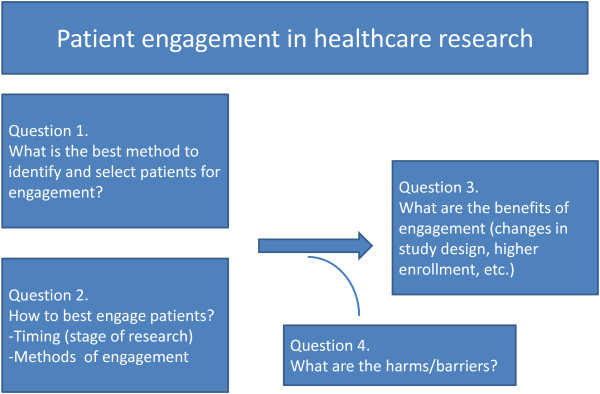
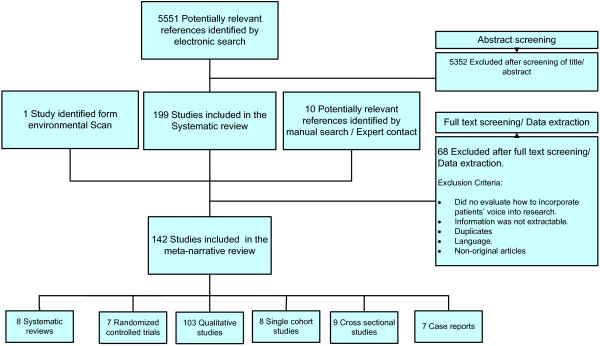
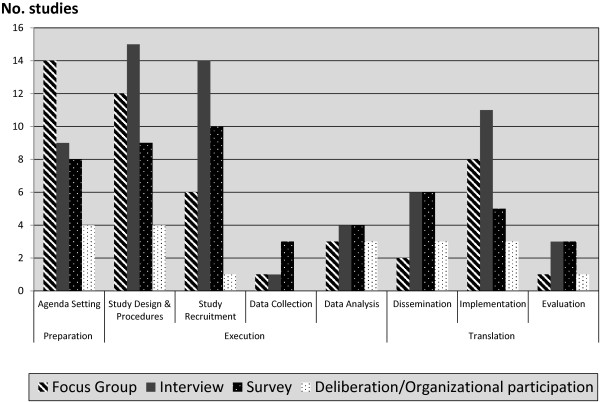
BACKGROUND: A compelling ethical rationale supports patient engagement in healthcare research. It is also assumed that patient engagement will lead to research findings that are more pertinent to patients' concerns and dilemmas. However; it is unclear how to best conduct this process. In this systematic review we aimed to answer 4 key questions: what are the best ways to identify patient representatives? How to engage them in designing and conducting research? What are the observed benefits of patient engagement? What are the harms and barriers of patient engagement? METHODS: We searched MEDLINE, EMBASE, PsycInfo, Cochrane, EBSCO, CINAHL, SCOPUS, Web of Science, Business Search Premier, Academic Search Premier and Google Scholar. Included studies were published in English, of any size or design that described engaging patients or their surrogates in research design. We conducted an environmental scan of the grey literature and consulted with experts and patients. Data were analyzed using a non-quantitative, meta-narrative approach. RESULTS: We included 142 studies that described a spectrum of engagement. In general, engagement was feasible in most settings and most commonly done in the beginning of research (agenda setting and protocol development) and less commonly during the execution and translation of research. We found no comparative analytic studies to recommend a particular method. Patient engagement increased study enrollment rates and aided researchers in securing funding, designing study protocols and choosing relevant outcomes. The most commonly cited challenges were related to logistics (extra time and funding needed for engagement) and to an overarching worry of a tokenistic engagement. CONCLUSIONS: Patient engagement in healthcare research is likely feasible in many settings. However, this engagement comes at a cost and can become tokenistic. Research dedicated to identifying the best methods to achieve engagement is lacking and clearly needed.
Overview
The claims and statistics of this paper haven’t been checked yet.
Free: it reads the open-access text and checks the first 5 claims that cite a source we can check. Create a free account to check every claim.
Integrity signals
Registry
Cites
Statistics
Figures
Verification
Claims the paper makes
The claims and statistics of this paper haven’t been checked yet.
Free: it reads the open-access text and checks the first 5 claims that cite a source we can check. Create a free account to check every claim.
Claims other papers make about this one
Each is checked against this paper’s own text: does it say what the citing paper says it does?
The source backs part of the claim, not all of it — or backs it for a different population, condition or comparison.
In the citing paper
“The present study confirms that, with regard to the conduct of research trials in primary dental care, research dedicated to identifying the best methods to achieve engagement with patients as potential participants is lacking and clearly needed [50].”
From Parental attitudes to randomised controlled trials in primary dental care: A qualitative study (2026) · cites this paper as [50]
Experimental — accuracy not yet measuredThe source backs part of the claim, not all of it — or backs it for a different population, condition or comparison.
In the citing paper
“Engaging patients in the process of designing the review protocol and in reviewing the findings increase the applicability and relevance of the findings of this study.”
From Systematic review of mind‐body interventions to treat myalgic encephalomyelitis/chronic fatigue syndrome (2021) · cites this paper as [36]
Experimental — accuracy not yet measuredThe source backs part of the claim, not all of it — or backs it for a different population, condition or comparison.
In the citing paper
“Previous studies indicated that engaging the target group increases study enrollment and may enhance the uptake and the acceptance of interventions [67, 68].”
From A blended psychosocial support program for partners of patients with amyotrophic lateral sclerosis and progressive muscular atrophy: Protocol of a randomized controlled trial (2018) · cites this paper as [67]
Experimental — accuracy not yet measuredThe check wasn’t confident either way, so it gives no verdict — never disputed.
In the citing paper
“This is consistent with review findings of empirical studies in PPI whereby short‐term, individual‐level outcomes were more represented in the literature. 43 , 91 , 92”
From A systematic review of theories, models and frameworks used for youth engagement in health research (2024) · cites this paper as [91]
Experimental — accuracy not yet measured
Self-check
Percentages, sums and reported differences re-computed from the paper’s own numbers.
The self-check needs the paper’s full text.
Citations
Cites
Preferred Reporting Items for Systematic Reviews and Meta-Analyses: the PRISMA statement
Moher, D., Liberati, A., Tetzlaff, J., Altman, D. G., & for the PRISMA Group (2009) · BMJ · doi:10.1136/bmj.b2535 · Cited by 83,823
Preferred reporting items for systematic reviews and meta-analyses: the PRISMA Statement.
(2009) · PubMed Central · Cited by 44,859
Preferred reporting items for systematic reviews and meta-analyses: The PRISMA statement
Moher, D., Liberati, A., Tetzlaff, J., Altman, D. G., & the PRISMA Group* (2009) · Annals of Internal Medicine · doi:10.7326/0003-4819-151-4-200908180-00135 · Cited by 37,554
Preferred Reporting Items for Systematic Reviews and Meta-Analyses: The PRISMA Statement
Moher, D., Liberati, A., Tetzlaff, J., & Altman, D. G. (2009) · Journal of Clinical Epidemiology · doi:10.1016/j.jclinepi.2009.06.005 · Cited by 19,575
(2005) · PubMed · Cited by 7,011
Enhancing transparency in reporting the synthesis of qualitative research: ENTREQ
Tong, A., Flemming, K., McInnes, E., Oliver, S., & Craig, J. (2012) · BMC Medical Research Methodology · doi:10.1186/1471-2288-12-181 · Cited by 3,569 · cited 1×
“Differences in studies settings and characteristics can be used to explain differences in results (heterogeneity) [16].”
BackgroundCommunity-based participatory research: assessing the evidence.
Viswanathan, M., Ammerman, A., Eng, E. M., Garlehner, G., Lohr, K. N., Griffith, D. M., Rhodes, S. D., Samuel‐Hodge, C. D., Maty, S. C., Lux, L. J., et al. (2004) · PubMed Central · Cited by 1,053
Campbell, R., Pound, P., Pope, C., Britten, N., Pill, R., Morgan, M., & Donovan, J. (2003) · Social Science & Medicine · doi:10.1016/s0277-9536(02)00064-3 · Cited by 921 · cited 3×
“[http://www.casp-uk.net/wp-content/uploads/ 2011/11/CASP-Qualitative-Research-Checklist-31.05.13.pdf] 19.”
MethodInfluentialStorylines of research in diffusion of innovation: a meta-narrative approach to systematic review
Greenhalgh, T., Robert, G., Macfarlane, F., Bate, P., Kyriakidou, O., & Peacock, R. (2005) · Social Science & Medicine · doi:10.1016/j.socscimed.2004.12.001 · Cited by 913 · cited 1×
“Instead, data extracted from the included studies were analyzed using a meta-narrative approach [14].”
MethodPatient and service user engagement in research: a systematic review and synthesized framework
Shippee, N. D., Domecq Garces, J. P., Prutsky Lopez, G. J., Wang, Z., Elraiyah, T. A., Nabhan, M., Brito, J. P., Boehmer, K., Hasan, R., Firwana, B., et al. (2015) · Health Expectations · doi:10.1111/hex.12090 · Cited by 628 · cited 2×
“We also categorized the research engagement from each study into three different research phases proposed for patient engagement [17]:”
BackgroundMethodSelf-citation
Cited by
Items 401–500 of 1,002
Veteran Engagement in Health Services Research: a Conceptual Model
Knight, S. J., Haibach, J. P., Hamilton, A. B., Whittle, J., Ono, S. S., Butler, J. M., Flower, M., Ray, C. D., Pugh, M. J., & Zickmund, S. L. (2022) · Journal of General Internal Medicine · doi:10.1007/s11606-021-07309-z · Cited by 28
Mannell, J., Washington, L., Khaula, S., Khoza, Z., Mkhwanazi, S., Burgess, R. A., Brown, L. J., Jewkes, R. K., Shai, N., Willan, S., et al. (2023) · BMJ Global Health · doi:10.1136/bmjgh-2022-011463 · Cited by 27
Hearld, K. R., Hearld, L. R., & Hall, A. G. (2017) · SAGE Open Medicine · doi:10.1177/2050312116686709 · Cited by 25
“Health-related characteristics were assessed with six variables: (1) insurance status, (2) access to a regular source of care, (3) self-assessed health status, (4) confidence in their ability to take good care of their own health needs, (5) confidence in healthcare providers, and (6) perceptions of health behavior eff…”
BackgroundMyron, R., French, C. E., Sullivan, P., Sathyamoorthy, G., Barlow, J., & Pomeroy, L. (2017) · Journal of Interprofessional Care · doi:10.1080/13561820.2017.1392935 · Cited by 29
“shared decision-making) is growing (Domecq et al., 2014; Gibson, Britten, & Lynch, 2012; NIHR, 2015; Prey et al., 2014).”
Mental Health Researchers’ Views About Service User Research: A Literature Review
Happell, B., Gordon, S., Bocking, J., Ellis, P., Roper, C., Liggins, J., Platania‐Phung, C., & Scholz, B. (2018) · Issues in Mental Health Nursing · doi:10.1080/01612840.2018.1475524 · Cited by 28
Edwards, L., Monro, M., Butterfield, Y., Johl, R., Loftsgard, K. C., Pelletier, H., McGavin, C., & Lavergne, M. R. (2019) · BMJ Open · doi:10.1136/bmjopen-2018-025954 · Cited by 28
Mobile-based oral chemotherapy adherence-enhancing interventions: scoping review
Skrabal Ross, X., Gunn, K. M., Patterson, P., & Olver, I. (2018) · JMIR mhealth and uhealth · doi:10.2196/11724 · Cited by 24
“The relevance of patients’ involvement in the design, implementation, and evaluation of health research has been widely recognized [34].”
BackgroundCoyle, J., Rogers, A., Copland, R. R., Paoli, G. D., MacDonald, T. M., & Mackenzie, I. S. (2022) · Trials · doi:10.1186/s13063-022-06521-4 · Cited by 24
“Indeed, a systematic review reported that this kind of activity, referred to as “patient engagement”, improves study enrolment [11].”
BackgroundEvans, D., Bird, E. L., Gibson, A., Grier, S., Chin, T. L., Stoddart, M., MacGowan, A. P., & Panel, T. N. B. M. P. (2017) · Health Expectations · doi:10.1111/hex.12587 · Cited by 28
Patient participation in ERS guidelines and research projects: the EMBARC experience
Chalmers, J. D., Timothy, A., Polverino, E., Almagro, M., Ruddy, T., Powell, P., & Boyd, J. (2017) · Breathe · doi:10.1183/20734735.009517 · Cited by 28
ISPOR Code of Ethics 2017 (4th Edition)
Santos, J. C. P., Palumbo, F. B., Molsen-David, E., Willke, R. J., Binder, L., Drummond, M., Ho, A., Marder, W. D., Parmenter, L., Sandhu, G., et al. (2017) · Value in Health · doi:10.1016/j.jval.2017.10.018 · Cited by 32
“[48] Domecq JP, Prutsky G, Elraiyah T, et al.”
BackgroundO’Brien, N., Hong, Q. N., Law, S., Massoud, S., Carter, A., Kaida, A., Loutfy, M. R., Cox, J., Andersson, N., & de Pokomandy, A. (2018) · AIDS Patient Care and STDs · doi:10.1089/apc.2017.0305 · Cited by 34
Pang, P. C., Chang, S., Verspoor, K. M., & Clavisi, O. (2018) · Journal of Medical Internet Research · doi:10.2196/12094 · Cited by 29
“In fact, it has been reported that there is a need to discover more clear and effective approaches for improving participant’s engagement in health research [18,19].”
BackgroundColombo, C., Roberto, A., Krleža-Jerić, K., Parmelli, E., & Banzi, R. (2019) · BMJ Open · doi:10.1136/bmjopen-2018-024863 · Cited by 28
“The best strategies to promote their engagement still need to be identified and evaluated.(42) Clear, specific information on the risks and advantages of data sharing have to be stated as a prerequisite to engage the public, citizens and patients, fostering a public dialogue on data sharing.”
Beneciuk, J. M., Verstandig, D., Taylor, C., Scott, D., Levin, J., Osborne, R., Bialosky, J. E., Lentz, T. A., Buck, T., Davis, A. L., et al. (2020) · Research Involvement and Engagement · doi:10.1186/s40900-020-00192-8 · Cited by 27
Devan, H., Perry, M., Yaghoubi, M., & Hale, L. A. (2021) · Research Involvement and Engagement · doi:10.1186/s40900-021-00275-0 · Cited by 31
“(2014) identified that co-design approaches in health research was feasible, the included studies (n = 142) however, did not clearly report the best practice of co-design approaches [10].”
BackgroundInfluentialVanderhout, S. M., Nevins, P., Nicholls, S. G., Macarthur, C., Brehaut, J. C., Potter, B. K., Gillies, K., Goulão, B., Smith, M., Hilderley, A. J., et al. (2023) · CMAJ Open · doi:10.9778/cmajo.20220198 · Cited by 24
Rocque, G. B., Halilova, K. I., Varley, A. L., Williams, C., Taylor, R. A., Masom, D., Wright, W. J., Partridge, E. E., & Kvale, E. A. (2017) · Journal of Pain and Symptom Management · doi:10.1016/j.jpainsymman.2016.12.345 · Cited by 26
“(27-29) The best approach to identify patients for self-management supportive care services remains unknown.”
BackgroundThe ultimate power play in research - partnering with patients, partnering with power
Richards, D. P., Bowden, J., Gee, P. O., Haagaard, A., Kothari, A. R., McKinnon, A., Primeau, C. A., Tricco, A. C., Wang, E., Woolley, K. L., et al. (2025) · Research Involvement and Engagement · doi:10.1186/s40900-025-00745-9 · Cited by 31
Dyson, M. P., Shave, K., Fernandes, R. M., Scott, S. D., & Hartling, L. (2017) · Journal of Medical Internet Research · doi:10.2196/jmir.6655 · Cited by 24
“Moreover, a number of studies have found that engaging patients in research improves rates of study enrollment and decreases losses to follow-up [9].”
Oczkowski, S. J. W., Au, S. S., Ordons, A. R. D., Gill, M., Potestio, M. L., Smith, O. M., Sinuff, T., Stelfox, H. T., & Fox‐Robichaud, A. (2017) · Journal of Critical Care · doi:10.1016/j.jcrc.2017.08.008 · Cited by 26
“Maintaining patient and family engagement during lengthy research projects has been identified as a commonchallenge in research in general, also described in the James Lind Alliance project described earlier [21,31].”
BackgroundAbayneh, S., Lempp, H. K., Manthorpe, J., & Hanlon, C. (2018) · International Journal of Mental Health Systems · doi:10.1186/s13033-018-0220-4 · Cited by 27
“For this proposed study, realist syntheses can offer methodological tools to build on the evidence from conventional reviews, other observational studies, input from stakeholders, and the experience of the review team to capture the complexity of SU/CG involvement and explore the “missing links” [39] or limitations of…”
BackgroundKendall, C., Fitzgerald, M., Kang, R. S., Wong, S. T., Katz, A., Fortin, M., Dionne, É., Kuluski, K., O’Brien, M. A., Ploeg, J., et al. (2018) · Research Involvement and Engagement · doi:10.1186/s40900-018-0132-0 · Cited by 28
Natafgi, N., Tafari, A. T., Chauhan, C., Bekelman, J. E., & Mullins, C. D. (2019) · Journal of Comparative Effectiveness Research · doi:10.2217/cer-2018-0129 · Cited by 23
International perspectives on patient involvement in clinical trials in nephrology
Banerjee, D., Lowe‐Jones, R., Damster, S., Thomas, N., Scholes-Robertson, N. J., Tong, A., & Levin, A. (2020) · Kidney International · doi:10.1016/j.kint.2020.06.023 · Cited by 22
Stocker, R., Brittain, K., Spilsbury, K., & Hanratty, B. (2021) · Health Expectations · doi:10.1111/hex.13269 · Cited by 29
Co-design of Guidance for Patient and Public Involvement in Psychedelic Research
Close, J. B., Bornemann, J., Piggin, M., Jayacodi, S., Luan, L. X., Carhart-Harris, R. L., & Spriggs, M. J. (2021) · Frontiers in Psychiatry · doi:10.3389/fpsyt.2021.727496 · Cited by 27
“Besides a moral and ethical imperative for involving patients and the public in research, a growing evidence base indicates how PPI can strengthen research by improving priority setting (12), recruitment and retention (13, 14), diversity among participants (15, 16), and impact and dissemination of findings (17, 18).”
BackgroundKylén, M., Slaug, B., Jönsson, O., Iwarsson, S., & Schmidt, S. (2022) · Health Research Policy and Systems · doi:10.1186/s12961-022-00894-3 · Cited by 26
“predefined tasks at one or few occasions) [3] and might reflect the ongoing discussion towards research conducted in partnership with greater depth, and empowerment of those involved [4].”
BackgroundNielssen, I., Santana, M., Pokharel, S., Strain, K., Kiryanova, V., Zelinsky, S., Khawaja, Z., Khanna, P., Rychtera, A., & Ambasta, A. (2023) · Health Expectations · doi:10.1111/hex.13909 · Cited by 26
“8 This can be further enhanced if patient research partners bring multiple social, cultural and economic perspectives, as well as differing lived experiences and insights about the health conditions and experiences that impact them.”
BackgroundCoon, J. T., Gwernan‐Jones, R., Moore, D. A., Richardson, M. A., Shotton, C., Pritchard, W., Morris, C., Stein, K., & Ford, T. J. (2015) · Health Expectations · doi:10.1111/hex.12400 · Cited by 29
Patient perspectives on engagement in shared decision-making for asthma care
Tapp, H., Derkowski, D. M., Calvert, M., Welch, M., & Spencer, S. (2016) · Family Practice · doi:10.1093/fampra/cmw122 · Cited by 23
Ethical Challenges Related to Patient Involvement in Health Technology Assessment
Vanstone, M. G., Abelson, J., Bidonde, J., Bond, K., Burgess, R., Canfield, C., Schwartz, L. J., & Tripp, L. (2019) · International Journal of Technology Assessment in Health Care · doi:10.1017/s0266462319000382 · Cited by 27
“Barriers to patient participation in policy decision-making activities have been well-documented (9;10).”
BackgroundSage, L., Russo, M. L., Byers, P. H., Demasi, J., Morris, S. A., Puryear, L., Fulton, D. S., & Shalhub, S. (2020) · Journal of Vascular Surgery · doi:10.1016/j.jvs.2019.12.043 · Cited by 23
Lloyd, G. R., Hoffman, S. A., Welch, W. A., Blanch‐Hartigan, D., Gavin, K. L., Cottrell, A., Cadmus‐Bertram, L., Spring, B. J., Penedo, F. J., Courneya, K. S., et al. (2018) · Translational Behavioral Medicine · doi:10.1093/tbm/iby112 · Cited by 27
“Given the significant resources required to program and develop remotely delivered social support features, additional research is needed prior to implementation to better understand breast cancer survivors’ preferences, prevent unintended consequences, and maximize intervention effectiveness [30].”
BackgroundShiyanbola, O. O., Kaiser, B. L., Thomas, G. R., & Tarfa, A. (2021) · Research Involvement and Engagement · doi:10.1186/s40900-020-00245-y · Cited by 24
“interventions, and can enhance the dissemination of study results to the community [5, 6].”
BackgroundYouth engagement in child maltreatment research: Gaps, barriers, and approaches
Racine, N. M., Greer, K., Dimitropoulos, G., Collin‐Vézina, D., Henderson, J. L., & Madigan, S. L. (2023) · Child Abuse & Neglect · doi:10.1016/j.chiabu.2023.106127 · Cited by 23
Puerta, L. L., Bartlam, B., & Smith, H. E. (2019) · Health Expectations · doi:10.1111/hex.12915 · Cited by 23
Public priorities for osteoporosis and fracture research: results from a focus group study
Hawarden, A., Jinks, C., Mahmood, W., Bullock, L., Blackburn, S. J., Gwilym, S. E., & Paskins, Z. (2020) · Archives of Osteoporosis · doi:10.1007/s11657-020-00766-9 · Cited by 26
Lewis, K. L., Turbitt, E., Chan, P. A., Epps, S., Biesecker, B. B., Erby, L. H., Fasaye, G., & Biesecker, L. G. (2021) · The American Journal of Human Genetics · doi:10.1016/j.ajhg.2021.04.002 · Cited by 25
“There is no evidence that focus groups produce better data than other methodologies.(39) Interviews, deliberative”
Development of the patient-oriented research curriculum in child health (PORCCH)
Macarthur, C., Walsh, C. M., Buchanan, F., Karoly, A., Pires, L., McCreath, G. A., & Jones, N. L. (2021) · Research Involvement and Engagement · doi:10.1186/s40900-021-00276-z · Cited by 25
“Patient-oriented research, given its focus on patientidentified priorities, perspectives, and outcomes, is hypothesized to improve the relevance, quality, and uptake of health research [3].”
BackgroundBirnie, K. A., Pavlova, M., Neville, A., Noel, M. E., Jordán, I., Jordan, E., Marianayagam, J., Stinson, J., Lorenzetti, D., Faulkner, V., et al. (2021) · Pain · doi:10.1097/j.pain.0000000000002339 · Cited by 24
“Inclusion of patients and families in health research ensures greater relevance and more immediate impact of findings.(16,47,48) Previous work by our group has revealed a sizeable absence of existing treatments for pediatric chronic pain, which addresses identified patient priorities.”
BackgroundCodsi, M., Karazivan, P., Rouly, G., Leclaire, M., & Boivin, A. (2021) · BMJ Open · doi:10.1136/bmjopen-2020-045520 · Cited by 26
Patients' Experiences of Nurse‐Led Screening for Cardiovascular Risk in Rheumatoid Arthritis
Frølund, J. C., & Primdahl, J. (2015) · Musculoskeletal Care · doi:10.1002/msc.1104 · Cited by 24
Oliveira-Maia, A. J., Mendonça, C., Pessoa, M. J., Camacho, M., & Gago, J. (2016) · Frontiers in Psychology · doi:10.3389/fpsyg.2016.01679 · Cited by 22
Opportunities for Engaging Patients in Kidney Research
Demian, M. N., Lam, N. N., Mac‐Way, F., Sapir‐Pichhadze, R., & Fernández, N. (2017) · Canadian Journal of Kidney Health and Disease · doi:10.1177/2054358117703070 · Cited by 23
Grönqvist, H., Olsson, E. M. G., Johansson, B., Held, C., Sjöström, J., Norberg, A. L., Hovén, E., Sanderman, R., van Achterberg, T., & von Essén, L. (2017) · Journal of Medical Internet Research · doi:10.2196/jmir.7310 · Cited by 23
“Involving patients in research activities was a novel approach to most researchers in U-CARE, and this work has led to an awareness of the complexity and costs of patient involvement as well as the benefits [18].”
MethodInvolving consumers in health research: what do consumers say?
Todd, A. L., & Nutbeam, D. (2018) · Public Health Research & Practice · doi:10.17061/phrp2821813 · Cited by 22
Skilton, A., Boswell, E. J., Prince, K., Francome-Wood, P., & Moosajee, M. (2018) · Research Involvement and Engagement · doi:10.1186/s40900-018-0124-0 · Cited by 26
Family‐provider consensus outcomes for children with medical complexity
Fayed, N., Guttmann, A., Chiu, A., Gardecki, M., Orkin, J., Hamid, J. S., Major, N., Lim, A., & Cohen, E. (2018) · Developmental Medicine & Child Neurology · doi:10.1111/dmcn.14110 · Cited by 25
Gutman, T., Tong, A., Howell, M., Dansie, K. B., Hawley, C. M., Craig, J. C., Jesudason, S., Chapman, J. R., Johnson, D. W., Murphy, L., et al. (2019) · Nephrology Dialysis Transplantation · doi:10.1093/ndt/gfz076 · Cited by 24
Visscher, B. B., Steunenberg, B., Heerdink, E. R., & Rademakers, J. J. D. J. M. (2020) · PLoS ONE · doi:10.1371/journal.pone.0232022 · Cited by 28
“The added value of patient engagement in the development of interventions is increasingly recognized and valued, but there is little literature on how to best involve people with low health literacy [30,31].”
Cox, R., Kendall, M. B., Molineux, M., Miller, E., & Tanner, B. (2020) · Australian Occupational Therapy Journal · doi:10.1111/1440-1630.12704 · Cited by 26
(2017) · doi:10.25302/67.2017.3 · Cited by 25
Jørgensen, C. H. R. (2019) · Social Sciences · doi:10.3390/socsci8050149 · Cited by 27
Laterza, V., Evans, D., Davies, R., Donald, C., & Rice, C. (2016) · Research Involvement and Engagement · doi:10.1186/s40900-016-0033-z · Cited by 25
“[10, 26, 34]), and several major reviews of the literature on PIR have been recently produced [5, 6, 12, 21, 43, 44].”
BackgroundPatients’ engagement in primary care research: a case study in a Canadian context
Bhati, D. K., Fitzgerald, M., Kendall, C., & Dahrouge, S. (2020) · Research Involvement and Engagement · doi:10.1186/s40900-020-00238-x · Cited by 23
Patel, V. A., Shelswell, J. D., Hillyard, N., Pavitt, S. H., & Barber, S. (2020) · Journal of Orthodontics · doi:10.1177/1465312520968574 · Cited by 20
“A number of concerns may be raised in response to these recommendations: certain types of studies, such as laboratory studies, are too conceptual for laypeople to understand; if publishers and funding bodies make PPI or PaPE a compulsory requirement, this may limit the research that can be undertaken by those who may…”
BackgroundHamakawa, N., Kogetsu, A., Isono, M., Yamasaki, C., Manabe, S., Takeda, T., Iwamoto, K., Kubota, T., Barrett, J., Gray, N., et al. (2021) · Research Involvement and Engagement · doi:10.1186/s40900-021-00253-6 · Cited by 21
O'Brien, J. T., Taylor, J., Thomas, A. J., Bamford, C., Vale, L. D., Hill, S., Allan, L. M., Finch, T. L., McNally, R., Hayes, L., et al. (2021) · Programme Grants for Applied Research · doi:10.3310/pgfar09070 · Cited by 24
Kirk, J. W., Nilsen, P., Andersen, O., Stefánsdóttir, N. T., Grønfeldt, B., Brødsgaard, R., Pedersen, B. S., Bandholm, T., Tjørnhøj-Thomsen, T., & Pedersen, M. M. (2021) · BMC Health Services Research · doi:10.1186/s12913-021-07142-4 · Cited by 21
Barn, P. K., Rideout, K., Lo, W., Josey, D., Vint, Z., Sha, C., Hamilton, C. B., Hoens, A. M., Shellington, E. M., Joshi, P. B., et al. (2021) · CHEST Journal · doi:10.1016/j.chest.2021.10.028 · Cited by 23
Etchegary, H., Pike, A. E., Patey, A. M., Gionet, E., Johnston, B., Goold, S. D., Francis, V., Grimshaw, J., & Hall, A. M. (2021) · Health Expectations · doi:10.1111/hex.13417 · Cited by 23
Kirk, J. W., Nilsén, P., Andersen, O., Powell, B. J., Tjørnhøj‐Thomsen, T., Bandholm, T., & Pedersen, M. M. (2022) · BMC Health Services Research · doi:10.1186/s12913-021-07395-z · Cited by 25
Rethinking Patient Engagement in Cancer Research
Schuster, A. L. R., Hampel, H., Paskett, E. D., & Bridges, J. F. P. (2022) · Patient · doi:10.1007/s40271-022-00604-9 · Cited by 22
Patients as research partners in preference studies: learnings from IMI-PREFER
Smith, M. Y., Janssens, R., Jimenez‐Moreno, C., Cleemput, I., Muller, M., Oliveri, S., Simons, G., Strammiello, V., Huys, I., & Falahee, M. (2023) · Research Involvement and Engagement · doi:10.1186/s40900-023-00430-9 · Cited by 23
“We supplemented this list of potential barriers and enablers with factors identified from the literature on patient involvement in health research [14, 21].”
Michalak, E. E., Cheung, I. W., Willis, E., Hole, R., Pomeroy, B., Morton, E. E., Kanani, S. S., & Barnes, S. J. (2023) · Research Involvement and Engagement · doi:10.1186/s40900-023-00455-0 · Cited by 26
“POR require development due to a lack of comparative analysis between various methods [6, 16].”
BackgroundMethodInfluentialEarly career researchers’ perspectives and roles in patient-oriented research
Rouleau, G., Bélisle‐Pipon, J., Birko, S., Karazivan, P., Fernández, N., Bilodeau, K., Chao, Y., de Pokomandy, A., Foley, V., Gagnon, B., et al. (2018) · Research Involvement and Engagement · doi:10.1186/s40900-018-0117-z · Cited by 23
“[16], where a higher number of studies documented patients’ contributions in agenda setting, study design, re-”
Diet and lupus: what do the patients think?
Robinson, G., McDonnell, T. C. R., Wincup, C., Martin‐Gutierrez, L., Wilton, J., Kalea, A. Z., Ciurtin, C., Pineda‐Torra, I., & Jury, E. C. (2019) · Lupus · doi:10.1177/0961203319845473 · Cited by 22
A mixed‐methods exploration of non‐attendance at diabetes appointments using peer researchers
Eades, C. E., & Alexander, H. (2019) · Health Expectations · doi:10.1111/hex.12959 · Cited by 25
Schilling, I., Behrens, H., Bleidorn, J., Gágyor, I., Hugenschmidt, C., Jilani, H. S., Schmiemann, G., & Gerhardus, A. (2019) · Research Involvement and Engagement · doi:10.1186/s40900-019-0172-0 · Cited by 23
Barry, E. V., Walsh, J. A., Weinrich, S. L., Beaupre, D. M., Blasi, E., Arenson, D., & Jacobs, I. A. (2021) · Pediatric Drugs · doi:10.1007/s40272-021-00455-1 · Cited by 24
“Further, patient engagement can also enhance clinical trial design and result in higher rates of enrollment and retention [37, 38].”
BackgroundParent engagement in co-design of clinical trials: the PARENT trial
Vanderloo, L. M., Vanderhout, S. M., Tavares, E. S., Maguire, J. L., Straus, S. E., & Birken, C. S. (2021) · Trials · doi:10.1186/s13063-021-05305-6 · Cited by 23
“Though efforts to conduct patientoriented clinical trials have increased [2], the degree of engagement in patient-oriented research is paradoxically poor [3] or may appear tokenistic.”
BackgroundMurphy, J., McSharry, J., Hynes, L., & Molloy, G. J. (2021) · JMIR Formative Research · doi:10.2196/28784 · Cited by 24
Partnering with patients in clinical trials of pain treatments: a narrative review
Holzer, K. J., Veasley, C., Kerns, R. D., Edwards, R. R., Gewandter, J. S., Langford, D. J., Yaeger, L., McNicol, E. D., Ferguson, M. C., Turk, D. C., et al. (2022) · Pain · doi:10.1097/j.pain.0000000000002600 · Cited by 21
Wiegmann, S., Ernst, M., Ihme, L., Wechsung, K., Kalender, U., Stöckigt, B., Richter-Unruh, A., Vögler, S., Hiort, O., Jürgensen, M., et al. (2022) · BMC Endocrine Disorders · doi:10.1186/s12902-022-01079-3 · Cited by 21
“Here, the involvement of the patient support groups in the development of the trainings was a very valuable process [53, 54].”
BackgroundManalili, K., Scott, C. M., Hemmelgarn, B. R., O’Beirne, M., Bailey, A. L., Haener, M. K., Banerjee, C., Peters, S. P., Chiodo, M., Aghajafari, F., et al. (2022) · Research Involvement and Engagement · doi:10.1186/s40900-022-00397-z · Cited by 26
Vergnas, O. L., Jouet, E., & Renet, S. (2018) · Politiques de communication · doi:10.3917/pdc.009.0117 · Cited by 20
Pilot Evaluation of a Functional Pain Assessment Scale
Halm, M. A., Bailey, C., Pierre, J. S., Boutin, N., Rojo, S., Shortt, M., Theobald, L., & Pettycrew, E. (2018) · Clinical Nurse Specialist · doi:10.1097/nur.0000000000000416 · Cited by 21
Rahimi, S. A., Zomahoun, H. T. V., & Légaré, F. (2019) · International Journal of Health Policy and Management · doi:10.15171/ijhpm.2019.16 · Cited by 26
Ploeg, J., Valaitis, R. K., Cleghorn, L., Yous, M., Gaber, J., Agarwal, G., Kastner, M., Mangin, D. A., Oliver, D., Parascandalo, F., et al. (2019) · BMJ Open · doi:10.1136/bmjopen-2018-026257 · Cited by 20
“Client engagement in programme planning and improvement ensures that programmes are directly applicable to clients and can maximise the transferability of innovations into clinical practice.(8) 9 There is a positive association between stronger primary care systems and better population health and longevity.”
BackgroundHarrison, J. D., Anderson, W. G., Fagan, M. B., Robinson, E. J., Schnipper, J. L., Symczak, G., Carnie, M. B., Hanson, C., Banta, J., Chen, S., et al. (2019) · JONA The Journal of Nursing Administration · doi:10.1097/nna.0000000000000790 · Cited by 23
Victor, G. A., Sightes, E., Watson, D. P., Ray, B. R., Bailey, K., Robision, L., Fears, G., Edwards, R. G., & Salyers, M. P. (2021) · Journal of Offender Rehabilitation · doi:10.1080/10509674.2020.1863301 · Cited by 22
“And critically, the benefits of including peer supports in the research design process has been endorsed by prior research – insofar as enhancing the intervention quality and resulting in a stronger overall impact on client lives (Amirav et al., 2017; Domecq et al., 2014; Gordon et al., 2018; Jagosh et al., 2012; Mars…”
BackgroundGalvin, H. K., Petersen, C. C., Subbian, V., & Solomonides, A. E. (2019) · Applied Clinical Informatics · doi:10.1055/s-0039-1700536 · Cited by 22
13. Forskning med nye aktører – forskningskvalitetog nytteverdi
Østensjø, S., & Askheim, O. P. (2019) · Universitetsforlaget eBooks · doi:10.18261/9788215031675-2019-14 · Cited by 20
Staley, K., Ashcroft, J., Doughty, L., & SZMUKLER, G. I. (2016) · Mental Health and Social Inclusion · doi:10.1108/mhsi-09-2015-0037 · Cited by 20
Health researcher views on comparative effectiveness research and research engagement
Forsythe, L. P., Frank, L. B., Workman, T. A., Borsky, A. E., Hilliard, T. S., Harwell, D., & Fayish, L. (2017) · Journal of Comparative Effectiveness Research · doi:10.2217/cer-2016-0063 · Cited by 19
Carr, E., Patel, J. N., Ortiz, M., Miller, J., Teare, S., Barber, C. E. H., & Marshall, D. A. (2019) · BMC Health Services Research · doi:10.1186/s12913-019-4196-9 · Cited by 22
Atkinson, M. K., & Singer, S. J. (2020) · Medical Care Research and Review · doi:10.1177/1077558720925993 · Cited by 22
Mullins, R. M., Kelly, B. E., Chiappalone, S., & Lewis, V. J. (2021) · Health Expectations · doi:10.1111/hex.13235 · Cited by 26
Patient and public involvement in oesophageal cancer survivorship research
Schandl, A. R., Mälberg, K., Haglund, L., Arnberg, L., & Lagergren, P. (2021) · Acta Oncologica · doi:10.1080/0284186x.2021.2016950 · Cited by 19
Engaging participants with research findings: A rights‐informed approach
George, M. S., Gaitonde, R., Davey, R., Mohanty, I., & Upton, P. (2023) · Health Expectations · doi:10.1111/hex.13701 · Cited by 38
“Decisions about sharing results are made jointly by the researchers and the participating community.(17) The ownership of data primarily rests with the participants from whom the data has been collected.”
BackgroundPromoting patient engagement in cancer genomics research programs: An environmental scan
Schuster, A. L. R., Crossnohere, N. L., Paskett, J., Thomas, N. A., Hampel, H., Ma, Q., Tiner, J. C., Paskett, E. D., & Bridges, J. F. P. (2023) · Frontiers in Genetics · doi:10.3389/fgene.2023.1053613 · Cited by 22
Priority setting in mental health research: a scoping review of participatory methods
Güell, E., Amat, C. B., & Molas‐Gallart, J. (2023) · Mental Health & Prevention · doi:10.1016/j.mhp.2023.200279 · Cited by 19
Ryan, L., Wenke, R., Carlini, J., Weir, K. A., Shapiro, M., Baglot, N., Tobiano, G., Sargeant, S. J. E., & Hattingh, L. (2024) · Research Involvement and Engagement · doi:10.1186/s40900-024-00604-z · Cited by 24
“What is evident is the existence of numerous obstacles that hinder the establishment of effective relationships [20, 35– 39].”
BackgroundPatient Engagement in Kidney Research: Opportunities and Challenges Ahead
Molnar, A. O., Barua, M., Konvalinka, A., & Schick‐Makaroff, K. (2017) · Canadian Journal of Kidney Health and Disease · doi:10.1177/2054358117740583 · Cited by 22
“The potential benefits of patient engagement in research are increased patient enrollment, decreased attrition, improved dissemination of findings, and research endeavors that are responsive to patients’ priorities.(23) There is also the consideration that Table 1.”
BackgroundRisk evaluation of the use of complementary and alternative medicines in cancer
Renet, S., de Chevigny, A., Hoacoglu, S., Belkarfa, A.-L., Jardin-Szucs, M., Bézie, Y., & Jouveshomme, S. (2020) · Annales Pharmaceutiques Françaises · doi:10.1016/j.pharma.2020.05.001 · Cited by 19
Patient involvement in surgical wound care research: A scoping review
Muir, R., Carlini, J., Harbeck, E., Gillespie, B. M., Tuffaha, H., Walker, R., McInnes, E., Latimer, S. L., Lin, F. F., Pearcy, J., et al. (2020) · International Wound Journal · doi:10.1111/iwj.13395 · Cited by 24
“” 7,15 This is also a challenge for surgical wound care researchers, particularly being able to identify representative and diverse patients and patients including “ hard to reach ” minority groups.”
BackgroundHappell, B., Gordon, S., Roper, C., Scholz, B., Ellis, P., Waks, S., Warner, T., & Platania‐Phung, C. (2020) · International Journal of Mental Health Nursing · doi:10.1111/inm.12757 · Cited by 19
Ekezue, B. F., Bushelle-Edghill, J. H., Dong, S., & Taylor, Y. J. (2021) · The Journal of Rural Health · doi:10.1111/jrh.12598 · Cited by 20
Patient engagement in type 2 diabetes mellitus research: what patients want
Simacek, K. F., Nelson, T., Miller-Baldi, M., & Bolge, S. C. (2018) · Patient Preference and Adherence · doi:10.2147/ppa.s159707 · Cited by 24
“In a systematic review of research that engaged patients in research design, common methods included focus groups, interviews, surveys, and serving on a study board, with no standout best practice among them.(9) An alternative that has been underutilized in patient engagement in research is an online patient research…”
Metadata
- Authors
- Domecq, J. P., Prutsky, G., Elraiyah, T., Wang, Z., Nabhan, M., Shippee, N., Brito, J. P., Boehmer, K., Hasan, R., Firwana, B., Erwin, P., Eton, D., Sloan, J., Montori, V., Asi, N., Abu Dabrh, A. M., & Murad, M. H.
- Affiliations
- Mayo Clinic (US)
- Corresponding author
- Murad, Mohammad Hassan
- ORCID
- Venue
- BMC Health Services Research
- Published
- 2014-02-26
- Volume
- 14
- Issue
- 1
- Pages
- 89-89
- ISSN
- 1472-6963 (ISSN-L)
- PMC
- PMC3938901
- OpenAlex
- W2100905299
- Cited by
- 1,773
- References
- 50
- Citations by year
- 2026: 122 · 2025: 147 · 2024: 219 · 2023: 198 · 2022: 200 · 2021: 202 · 2020: 202 · 2019: 144 · 2018: 138 · 2017: 101 · 2016: 53 · 2015: 39 · 2014: 8
- FWCI
- 11.40
- Type
- journal article
- Language
- en
- Open access
- gold
- doi.org
- Licence
- Locations
- BMC Health Services Research (publishedVersion, cc-by)
- Europe PMC (PubMed Central) (publishedVersion, cc-by)
- PubMed Central (publishedVersion, cc-by)
- PubMed (publishedVersion)
- NORA - Norwegian Open Research Archives (submittedVersion, cc-by)
- Funders
- Patient-Centered Outcomes Research Institute
- National Institutes of Health
- Topics
- Health Sciences › Health Professions › General Health Professions › Mental Health and Patient Involvement
- Health Sciences › Medicine › Public Health, Environmental and Occupational Health › Ethics in Clinical Research
- Health Sciences › Medicine › Public Health, Environmental and Occupational Health › Community Health and Development
- Keywords
- patient engagement, patient and public involvement, research ethics, patient representatives, research design, barriers to engagement, study enrollment, research funding
- MeSH terms
- Humans, Patient Participation, Randomized Controlled Trials as Topic, Advisory Committees, Research Subjects, Biomedical Research
About these checks
Registry, retraction, Cites and statistics results are computed, not judged, with one exception: a printed reference that no index lists is read once by a model before it counts as a citation error. Claims are extracted by a model and kept only when their quote appears verbatim in the text; each cited source is then checked, with a model’s help, for whether it says what the claim relies on. Those verdicts can be wrong — read the claim’s quote and the cited source before relying on one.
Statistics and arithmetic are recomputed, not judged.
Confidence bands are shown only for fields calibrated on our annotated test set. None is calibrated yet, so no band is shown.
What counts as a claim ›How we measure confidence ›How we check this ›
Are you an author, or do you see a problem with this page? Request a review
Data sources
Bibliographic data: Semantic Scholar, OpenAlex, Crossref.
Contains information from the Semantic Scholar Academic Graph Datasets, made available under the ODC Attribution License (ODC-BY 1.0).
Semantic Scholar’s data is described in: Kinney, R., et al. (2023). The Semantic Scholar Open Data Platform. arXiv:2301.10140.
