

Patient engagement in research: a systematic review
Open accessThe DOI matches its Crossref record; 44 of the 50 references it cites were found in a registry or an index.
Abstract
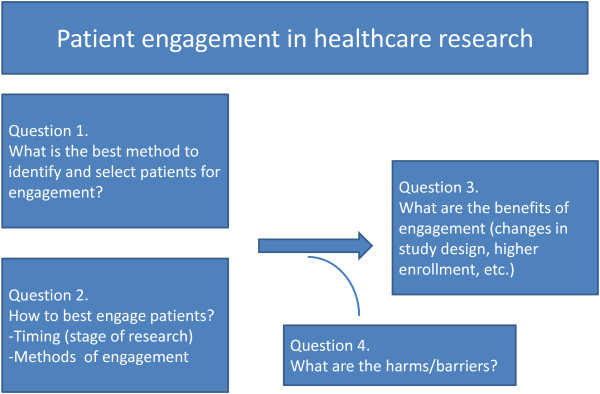
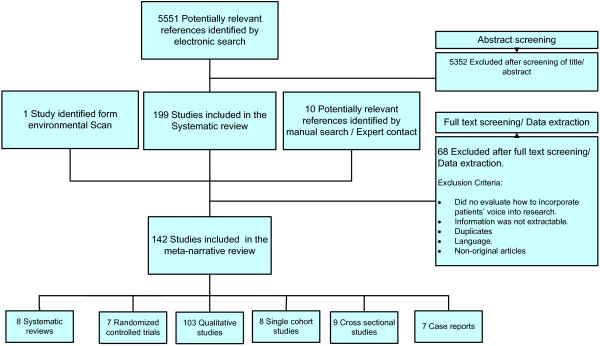
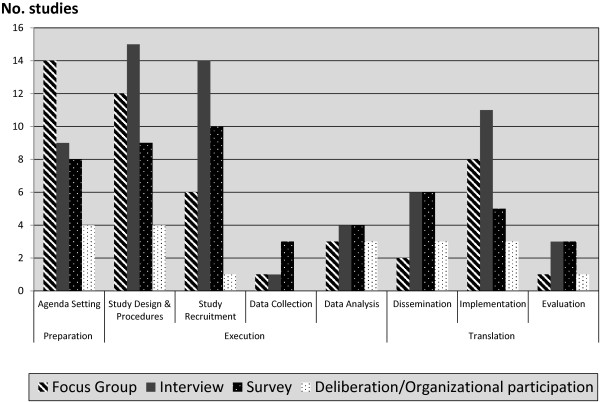
BACKGROUND: A compelling ethical rationale supports patient engagement in healthcare research. It is also assumed that patient engagement will lead to research findings that are more pertinent to patients' concerns and dilemmas. However; it is unclear how to best conduct this process. In this systematic review we aimed to answer 4 key questions: what are the best ways to identify patient representatives? How to engage them in designing and conducting research? What are the observed benefits of patient engagement? What are the harms and barriers of patient engagement? METHODS: We searched MEDLINE, EMBASE, PsycInfo, Cochrane, EBSCO, CINAHL, SCOPUS, Web of Science, Business Search Premier, Academic Search Premier and Google Scholar. Included studies were published in English, of any size or design that described engaging patients or their surrogates in research design. We conducted an environmental scan of the grey literature and consulted with experts and patients. Data were analyzed using a non-quantitative, meta-narrative approach. RESULTS: We included 142 studies that described a spectrum of engagement. In general, engagement was feasible in most settings and most commonly done in the beginning of research (agenda setting and protocol development) and less commonly during the execution and translation of research. We found no comparative analytic studies to recommend a particular method. Patient engagement increased study enrollment rates and aided researchers in securing funding, designing study protocols and choosing relevant outcomes. The most commonly cited challenges were related to logistics (extra time and funding needed for engagement) and to an overarching worry of a tokenistic engagement. CONCLUSIONS: Patient engagement in healthcare research is likely feasible in many settings. However, this engagement comes at a cost and can become tokenistic. Research dedicated to identifying the best methods to achieve engagement is lacking and clearly needed.
Overview
The claims and statistics of this paper haven’t been checked yet.
Free: it reads the open-access text and checks the first 5 claims that cite a source we can check. Create a free account to check every claim.
Integrity signals
Registry
Cites
Statistics
Figures
Verification
Claims the paper makes
The claims and statistics of this paper haven’t been checked yet.
Free: it reads the open-access text and checks the first 5 claims that cite a source we can check. Create a free account to check every claim.
Claims other papers make about this one
Each is checked against this paper’s own text: does it say what the citing paper says it does?
The source backs part of the claim, not all of it — or backs it for a different population, condition or comparison.
In the citing paper
“The present study confirms that, with regard to the conduct of research trials in primary dental care, research dedicated to identifying the best methods to achieve engagement with patients as potential participants is lacking and clearly needed [50].”
From Parental attitudes to randomised controlled trials in primary dental care: A qualitative study (2026) · cites this paper as [50]
Experimental — accuracy not yet measuredThe source backs part of the claim, not all of it — or backs it for a different population, condition or comparison.
In the citing paper
“Engaging patients in the process of designing the review protocol and in reviewing the findings increase the applicability and relevance of the findings of this study.”
From Systematic review of mind‐body interventions to treat myalgic encephalomyelitis/chronic fatigue syndrome (2021) · cites this paper as [36]
Experimental — accuracy not yet measuredThe source backs part of the claim, not all of it — or backs it for a different population, condition or comparison.
In the citing paper
“Previous studies indicated that engaging the target group increases study enrollment and may enhance the uptake and the acceptance of interventions [67, 68].”
From A blended psychosocial support program for partners of patients with amyotrophic lateral sclerosis and progressive muscular atrophy: Protocol of a randomized controlled trial (2018) · cites this paper as [67]
Experimental — accuracy not yet measuredThe check wasn’t confident either way, so it gives no verdict — never disputed.
In the citing paper
“This is consistent with review findings of empirical studies in PPI whereby short‐term, individual‐level outcomes were more represented in the literature. 43 , 91 , 92”
From A systematic review of theories, models and frameworks used for youth engagement in health research (2024) · cites this paper as [91]
Experimental — accuracy not yet measured
Self-check
Percentages, sums and reported differences re-computed from the paper’s own numbers.
The self-check needs the paper’s full text.
Citations
Cites
Preferred Reporting Items for Systematic Reviews and Meta-Analyses: the PRISMA statement
Moher, D., Liberati, A., Tetzlaff, J., Altman, D. G., & for the PRISMA Group (2009) · BMJ · doi:10.1136/bmj.b2535 · Cited by 83,823
Preferred reporting items for systematic reviews and meta-analyses: the PRISMA Statement.
(2009) · PubMed Central · Cited by 44,859
Preferred reporting items for systematic reviews and meta-analyses: The PRISMA statement
Moher, D., Liberati, A., Tetzlaff, J., Altman, D. G., & the PRISMA Group* (2009) · Annals of Internal Medicine · doi:10.7326/0003-4819-151-4-200908180-00135 · Cited by 37,554
Preferred Reporting Items for Systematic Reviews and Meta-Analyses: The PRISMA Statement
Moher, D., Liberati, A., Tetzlaff, J., & Altman, D. G. (2009) · Journal of Clinical Epidemiology · doi:10.1016/j.jclinepi.2009.06.005 · Cited by 19,575
(2005) · PubMed · Cited by 7,011
Enhancing transparency in reporting the synthesis of qualitative research: ENTREQ
Tong, A., Flemming, K., McInnes, E., Oliver, S., & Craig, J. (2012) · BMC Medical Research Methodology · doi:10.1186/1471-2288-12-181 · Cited by 3,569 · cited 1×
“Differences in studies settings and characteristics can be used to explain differences in results (heterogeneity) [16].”
BackgroundCommunity-based participatory research: assessing the evidence.
Viswanathan, M., Ammerman, A., Eng, E. M., Garlehner, G., Lohr, K. N., Griffith, D. M., Rhodes, S. D., Samuel‐Hodge, C. D., Maty, S. C., Lux, L. J., et al. (2004) · PubMed Central · Cited by 1,053
Campbell, R., Pound, P., Pope, C., Britten, N., Pill, R., Morgan, M., & Donovan, J. (2003) · Social Science & Medicine · doi:10.1016/s0277-9536(02)00064-3 · Cited by 921 · cited 3×
“[http://www.casp-uk.net/wp-content/uploads/ 2011/11/CASP-Qualitative-Research-Checklist-31.05.13.pdf] 19.”
MethodInfluentialStorylines of research in diffusion of innovation: a meta-narrative approach to systematic review
Greenhalgh, T., Robert, G., Macfarlane, F., Bate, P., Kyriakidou, O., & Peacock, R. (2005) · Social Science & Medicine · doi:10.1016/j.socscimed.2004.12.001 · Cited by 913 · cited 1×
“Instead, data extracted from the included studies were analyzed using a meta-narrative approach [14].”
MethodPatient and service user engagement in research: a systematic review and synthesized framework
Shippee, N. D., Domecq Garces, J. P., Prutsky Lopez, G. J., Wang, Z., Elraiyah, T. A., Nabhan, M., Brito, J. P., Boehmer, K., Hasan, R., Firwana, B., et al. (2015) · Health Expectations · doi:10.1111/hex.12090 · Cited by 628 · cited 2×
“We also categorized the research engagement from each study into three different research phases proposed for patient engagement [17]:”
BackgroundMethodSelf-citation
Cited by
Items 501–600 of 1,002
Patient Engagement in Research and Innovation: A New Framework
Ruco, A., & Nichol, K. A. (2016) · Journal of medical imaging and radiation sciences · doi:10.1016/j.jmir.2016.10.008 · Cited by 19
Ketcher, D., Bidelman, A., Le, L. Q., Otto, A. K., Lester, D. K., Amtmann-Beuttner, K. K., Gonzalez, B. D., Wright, K. L., Vadaparampil, S. T., Reblin, M., et al. (2020) · Translational research · doi:10.1016/j.trsl.2020.07.013 · Cited by 19
“Research informed by patient and family perspectives is often better accepted by participants, leading to increased study enrollment rates, [2] and can lead to improved quality of treatment and research [1].”
BackgroundFinley, N. L., Swartz, T. H., Cao, K. T., & Tucker, J. D. (2020) · PLoS Medicine · doi:10.1371/journal.pmed.1003246 · Cited by 20
“A systematic review found that patient engagement was feasible in many medical research settings [8].”
InfluentialCavens, C., Imms, C., Drake, G., Garrity, N., & Wallen, M. A. (2021) · Disability and Rehabilitation · doi:10.1080/09638288.2021.1900927 · Cited by 20
“They identified specific communication needs congruent with those outlined previously, including clear communication of expectations, roles and responsibilities [6,17,36,39].”
BackgroundHansen, T. K., Jensen, A. L., Damsgaard, E. M. S., Rubak, T., Jensen, M. E. J., & Gregersen, M. (2021) · Research Involvement and Engagement · doi:10.1186/s40900-021-00288-9 · Cited by 17
Blair, C., Best, P., Burns, P., Campbell, A., Davidson, G., Duffy, J., Johnston, A., Kelly, B., Killick, C., Dermott, D. M., et al. (2022) · Research Involvement and Engagement · doi:10.1186/s40900-022-00353-x · Cited by 23
“Involved in Research’? It is evident that the provision of appropriate training to equip those with lived experience with the necessary knowledge and skills is an essential requisite for involvement in any aspect of the research process [19, 25, 26, 50, 51] and is increasingly recommended by key organisations [11–18].”
BackgroundPinho‐Gomes, A., Stone, J., Shaw, T., Heath, A., Cowl, J., Norburn, L., Thomas, V., & Scott, S. (2022) · International Journal of Technology Assessment in Health Care · doi:10.1017/s0266462322000289 · Cited by 21
“These commonalities suggest agencies involved in HTA and guideline development may borrow shared values, principles, frameworks, and strategies from research, where PPI is better established and documented (33).”
BackgroundEndpoints and Outcomes After Immunotherapy for Food Allergy: What Is Meaningful for Patients?
Lloyd, M., Patel, N., Munblit, D., & Tang, M. L. K. (2023) · The Journal of Allergy and Clinical Immunology In Practice · doi:10.1016/j.jaip.2023.01.033 · Cited by 18
Rapid evaluation of service innovations in health and social care: key considerations
Smith, J., Ellins, J., Sherlaw‐Johnson, C., Vindrola‐Padros, C., Appleby, J., Morris, S., Sussex, J., & Fulop, N. (2023) · Health and Social Care Delivery Research · doi:10.3310/btnu5673 · Cited by 21
Bowen, S., & Graham, I. D. (2015) · International Journal of Health Policy and Management · doi:10.15171/ijhpm.2015.71 · Cited by 23
Stamuli, E., Torgerson, D. J., Northgraves, M. J., Ronaldson, S. J., & Cherry, L. S. (2017) · Journal of Foot and Ankle Research · doi:10.1186/s13047-017-0240-3 · Cited by 23
“For greater benefits, both in financial and clinical outcomes terms, the involvement of the patients is thought to be pertinent not only at the care level, but also at the research and design level [13].”
BackgroundAmann, J., Brach, M., & Rubinelli, S. (2018) · Patient Education and Counseling · doi:10.1016/j.pec.2018.03.011 · Cited by 21
What does patient engagement mean for Canadian National Transplant Research Program Researchers?
Allard, J., Ballesteros, F., Anthony, S. J., Dumez, V., Hartell, D. P., Knoll, G. A., Wright, L., & Fortin, M. (2018) · Research Involvement and Engagement · doi:10.1186/s40900-018-0096-0 · Cited by 18
“[18] Scope creep was not a concern mentioned by the participants of this study.”
Engaging “seldom heard” groups in research and intervention development: Offender mental health
Taylor, C., Gill, L., Gibson, A., Byng, R., & Quinn, C. (2018) · Health Expectations · doi:10.1111/hex.12807 · Cited by 19
Nissen, E. R., Bregnballe, V., Mehlsen, M. Y., Muldbjerg, A. K. Ø., O’Connor, M., & Lomborg, K. E. (2018) · Research Involvement and Engagement · doi:10.1186/s40900-018-0106-2 · Cited by 25
Kaur, N., & Pluye, P. (2019) · Journal of patient-centered research and reviews · doi:10.17294/2330-0698.1655 · Cited by 18
Zhao, G., Kennedy, C., Mabaya, G., Okrainec, K., & Kiran, T. (2019) · BMJ Open · doi:10.1136/bmjopen-2019-029693 · Cited by 21
“7 In the USA, patient engagement was mandated in health research processes once the Patient Centered Outcomes Research Institute was established in 2010.(5) 8 The Canadian Institutes of Health Research created the Strategy for Patient-Oriented Research patient engagement framework in 2014.”
MethodInvolving Patient Groups in Drug Research: A Systematic Review of Reasons
Rach, C., Lukáš, J., Müller, R., Sendler, M., Simon, P., & Salloch, S. (2020) · Patient Preference and Adherence · doi:10.2147/ppa.s232499 · Cited by 17
Profiling trial burden and patients’ attitudes to improve clinical research in epidermolysis bullosa
Prodinger, C. M., Diem, A., Ude-Schoder, K., Hofbauer, J. P., Kitzmueller, S., Bauer, J. W., & Laimer, M. (2020) · Orphanet Journal of Rare Diseases · doi:10.1186/s13023-020-01443-3 · Cited by 18
Aufegger, L., Bùi, K. H., Bicknell, C. D., & Darzi, A. W. (2020) · BMC Pediatrics · doi:10.1186/s12887-020-02361-w · Cited by 21
“intervention activities early on [38-40], aiding researchers in designing study protocols and choosing appropriate outcomes [41].”
BackgroundDainty, K. N., Seaton, M. B., Cowan, K., Laupacis, A., Dorian, P., Douma, M. J., Garner, J., Goldstein, J., Shire, D., Sinclair, D., et al. (2021) · Resuscitation Plus · doi:10.1016/j.resplu.2021.100148 · Cited by 21
“Active engagement of patients in research has many advantages, including the potential to improve the credibility of research results (through higher rates of enrollment and participant retention), and the direct applicability of research findings (when questions that are important to patients are answered).(2) Over t…”
BackgroundSmits, M., Ludden, G., Verbeek, P., & van Goor, H. (2022) · Interactive Journal of Medical Research · doi:10.2196/39323 · Cited by 21
“Typically, only a few users are involved, generating the appearance of diversity and inclusiveness, while many users are left out of the study’s scope or are out of reach [33].”
Involving the public in research
Needleman, I. G. (2014) · BDJ · doi:10.1038/sj.bdj.2014.906 · Cited by 18
Fagan, M. B., Morrison, C. R. C., Wong, C., Carnie, M. B., & Gabbai-Saldate, P. (2016) · Journal of Comparative Effectiveness Research · doi:10.2217/cer-2015-0023 · Cited by 18
‘They can't empower us’: The role of allies in the consumer movement
Juntanamalaga, P., Scholz, B., Roper, C., & Happell, B. (2019) · International Journal of Mental Health Nursing · doi:10.1111/inm.12585 · Cited by 18
How are patient partners involved in health service research? A scoping review of reviews
Tscherning, S. C., Jensen, A. L., Bekker, H., Vedelø, T. W., Finderup, J., Rasmussen, G. S., Østergaard, J. A., Jensen, F. O., & Rodkjær, L. Ø. (2025) · Research Involvement and Engagement · doi:10.1186/s40900-025-00755-7 · Cited by 21
“Table 4 illustrates the distribution of the included reviews across six of these families, which are: ‘traditional review family’ (12/124) [34, 35, 38–47], ‘sys-tematic review family’ (41/124) [5, 10, 12, 32, 37, 48–”
InfluentialAnderson, N. N., Baker, G. R., Moody, L., Scane, K., Urquhart, R., Wodchis, W. P., & Gagliardi, A. R. (2021) · International Journal for Quality in Health Care · doi:10.1093/intqhc/mzab147 · Cited by 17
Treacy, S., Martin, S., Samarutilake, N., & Bortel, T. V. V. (2021) · Health & Justice · doi:10.1186/s40352-021-00154-6 · Cited by 23
Evolution of a research team: the patient partner perspective
Madison, S., Colon-Moya, A. D., Morales-Cosme, W., Lorenzi, M., Diaz, A., HICKSON, B., Monteiro, K., Ruiz, A. M., Perez, A., Redondo, R., et al. (2022) · Research Involvement and Engagement · doi:10.1186/s40900-022-00377-3 · Cited by 17
Measurable outcomes of consumer engagement in health research: A scoping review
DeBortoli, E., Soyer, H. P., Milne, D., Dissanayaka, N. N., GARTNER, C. E., Holt, J., Rae, K. M., Robison, L. E., Wallingford, C. K., & McInerney-Leo, A. M. (2022) · Frontiers in Public Health · doi:10.3389/fpubh.2022.994547 · Cited by 23
Groothuijse, J. M., van Tol, L. S., Leeuwen, C. C. M. H.-V., van Delden, J. J. M., Caljouw, M. A. A., & Achterberg, W. P. (2024) · BMC Geriatrics · doi:10.1186/s12877-024-04877-7 · Cited by 25
“Involving patients in health research offers significant benefits [1, 2]: it enhances participant recruitment [2], refines research questions [2], aligns study results with the target population [1, 2], and promotes effective implementation of findings [1].”
Backgroundde Wit, M. P. T., Bloemkolk, D., Teunissen, T., & van Rensen, A. J. M. L. (2016) · TSG - Tijdschrift voor gezondheidswetenschappen · doi:10.1007/s12508-016-0039-9 · Cited by 20
Simpson, S., Cook, A., & Miles, K. (2018) · International Journal of Technology Assessment in Health Care · doi:10.1017/s0266462317004421 · Cited by 17
“The feasibility of patient engagement in many healthcare research settings requires extra time and funding needed for engagement and the concern over tokenism (6).”
BackgroundEngaging with patients on research to inform better care
Baker, G. R., McGillion, M. H., & Gavin, F. (2018) · Canadian Medical Association Journal · doi:10.1503/cmaj.180816 · Cited by 17
Santana, M., Zelinsky, S., Ahmed, S., Doktorchik, C. T. A., James, M. T., Wilton, S. B., Quan, H., Fernández, N., Anderson, T. J., & Butalia, S. (2020) · BMJ Open · doi:10.1136/bmjopen-2019-031187 · Cited by 22
Conducting research in psoriatic arthritis: the emerging role of patient research partners
Goel, N. (2020) · Rheumatology · doi:10.1093/rheumatology/kez338 · Cited by 17
INNOVATE Research: Impact of a workshop to develop researcher capacity to engage youth in research
Hawke, L. D., Darnay, K., Brown, M., Iyer, S. N., Ben‐David, S., Khaleghi‐Moghaddam, M., Relihan, J., Barbic, S. P., Lachance, L., Mathias, S., et al. (2020) · Health Expectations · doi:10.1111/hex.13123 · Cited by 18
Gregory, S., Bunnik, E. M., Callado, A. B., Carrié, I., de Boer, C., Duffus, J. H., Fauria, K., Forster, S., Gove, D., Knezevic, I., et al. (2020) · Research Involvement and Engagement · doi:10.1186/s40900-020-00236-z · Cited by 17
Jongsma, K. R., van Seventer, J., Verwoerd, A., & van Rensen, A. J. M. L. (2020) · Research Involvement and Engagement · doi:10.1186/s40900-020-00240-3 · Cited by 22
“Patient and public involvement (PPI) is increasingly fostered in health care research, clinical care and health care policy [1, 2].”
BackgroundDevelopment of A Blockchain Framework for Virtual Clinical Trials.
Zhuang, Y., Sheets, L., Gao, X., Shen, Y., Shae, Z., Tsai, J. J. P., & Shyu, C. (2020) · PubMed Central · Cited by 24
Patient‐centered drug development and the Learning Health System
Crawford, L., Matczak, G. J., Moore, E. M., Haydar, R. A., & Coderre, P. T. (2017) · Learning Health Systems · doi:10.1002/lrh2.10027 · Cited by 18
“Research dedicated to identifying the best methods to achieve engagement is lacking and clearly needed.(10)”
MethodRawson, T. M., Castro‐Sánchez, E., Charani, E., Husson, F., Moore, L. S. P., Holmes, A. H., & Ahmad, R. (2017) · Health Expectations · doi:10.1111/hex.12604 · Cited by 17
Patients’ Participation in Health Research: A Classification of Cooperation Schemes
Vergnas, O. L. (2017) · Journal of Participatory Medicine · doi:10.2196/jopm.8933 · Cited by 17
“As Domecq et al [2] have recommended that “bibliographic databases use indexing terms that identify active patient engagement in research to facilitate future research in this field,” it is obvious that progress requires methods and typologies to describe which role PEK plays in health research and how to reduce the r…”
InfluentialLessard, D., Engler, K., Toupin, I., I‐Score Consulting Team, Routy, J., & Lebouché, B. (2018) · Health Expectations · doi:10.1111/hex.12845 · Cited by 26
The Canadian retinoblastoma research advisory board: a framework for patient engagement
Gelkopf, M. J., Avramov, I., Baddeliyanage, R., Ristevski, I., Johnson, S. A., Flegg, K., & Dimaras, H. (2020) · Research Involvement and Engagement · doi:10.1186/s40900-020-0177-8 · Cited by 19
Defining Patient-Oriented Research for the Average Person (and Potential Research Partner)
Baumgardner, D. J. (2019) · Journal of patient-centered research and reviews · doi:10.17294/2330-0698.1697 · Cited by 17
Standardised Data on Initiatives - STARDIT: Alpha VersionPreprint
Nunn, J., Shafee, T. M. A., Chang, S., Stephens, R., Elliott, J., Oliver, S. R., John, D., Smith, M., & Orr, N. (2019) · OSF Preprints (OSF Preprints) · doi:10.31219/osf.io/5q47h · Cited by 21
Bartek, M. A., Truitt, A. R., Widmer-Rodriguez, S., Tuia, J. E., Bauer, Z., Comstock, B. A., Edwards, T. C., Lawrence, S. O., Monsell, S. E., Patrick, D. L., et al. (2017) · Journal of Medical Internet Research · doi:10.2196/jmir.8821 · Cited by 16
“These methods may be prohibitive due to resource constraints or potentially being nonrepresentative of a target population [25].”
MethodWildeboer, E. M., Chambers, C. T., Soltani, S., & Noel, M. E. (2023) · Clinical Journal of Pain · doi:10.1097/ajp.0000000000001108 · Cited by 18
de Wit, M. P. T., Campbell, W., Orbai, A., Tillett, W. L., FitzGerald, O., Gladman, D. D., Lindsay, C. A., McHugh, N. J., Mease, P. J., O’Sullivan, D., et al. (2015) · The Journal of Rheumatology · doi:10.3899/jrheum.150123 · Cited by 17
“Following nominal group technique, participants were asked to focus on ways to maximize patient involvement in 4 research areas: (1) revision of the core-domain set for PsA (2 groups); (2) development of a core-domain set for PsO (1 group); (3) design and conduct of clinical research (2 groups); (4) development of tre…”
Salmi, L., Lum, H. D., Hayden, A., Reblin, M., Otis‐Green, S., Venechuk, G. E., Morris, M. A., Griff, M., & Kwan, B. M. (2020) · Neuro-Oncology Practice · doi:10.1093/nop/npaa043 · Cited by 17
Involving older adults in technology research and development discussions through dialogue cafés
Lund, A. D., Holthe, T., Halvorsrud, L., Karterud, D., Johannessen, A. F., Lovett, H., Thorstensen, E., Casagrande, F. D., Zouganeli, E., Norvoll, R., et al. (2021) · Research Involvement and Engagement · doi:10.1186/s40900-021-00274-1 · Cited by 16
“However, though many studies have confirmed the advantages of citizen engagement in health research, there is also concern about how to ensure meaningful engagement and avoid that users have no influence [13, 23].”
BackgroundHenderson, J. L., Courey, L., Relihan, J., Darnay, K., Szatmári, P., Cleverley, K., Cheung, A., & Hawke, L. D. (2021) · Early Intervention in Psychiatry · doi:10.1111/eip.13232 · Cited by 19
“While there is a growing literature describing patient-led projects, youth-led projects, participatory-action research, and qualitative studies (Domecq et al., 2014; Iwasaki et al., 2014; Sarah et al., 2016), there is a paucity of literature on engagement in research designs such as randomized-controlled trials.”
BackgroundPatient Engagement in Neurological Clinical Trials Design: A Conference Summary
Cobb, E. M., Meurer, W. J., Harney, D. M., Silbergleit, R., Patrick‐Lake, B., Clark, C., Gipson, D. S., & Barsan, W. G. (2015) · Clinical and Translational Science · doi:10.1111/cts.12297 · Cited by 16
“Planning The conference objectives were (1) to educate patients and advocates about clinical trials; (2) to educate the clinical research community about patient perspectives on participating in clinical trial design; and (3) to identify strategies to increase public participation in designing clinical trials focusing…”
BackgroundA descriptive review on methods to prioritize outcomes in a health care context
Janssen, I. M., Gerhardus, A., Schröer-Günther, M., & Scheibler, F. (2014) · Health Expectations · doi:10.1111/hex.12256 · Cited by 18
Stolee, P., Elliott, J. B., McNeil, H., Boscart, V., Heckman, G. A., Hutchinson, R., Hedley, M. R., Glouberman, S., & Judd, M. (2015) · BMJ Open · doi:10.1136/bmjopen-2015-008190 · Cited by 18
Dixon, J., Elliott, S. J., & Clarke, A. E. (2016) · Research Involvement and Engagement · doi:10.1186/s40900-016-0043-x · Cited by 18
Janssen, I. M., Scheibler, F., & Gerhardus, A. (2016) · Patient Preference and Adherence · doi:10.2147/ppa.s122319 · Cited by 19
“3,6 One area of interest is the definition and rating of patient-relevant outcomes.”
Gaasterland, C. M. W., der Weide, M. C. J., Vroom, E., Leeson‐Beevers, K., Kaatee, M. M., Kaczmarek, R., Bartels, B., van der Pol, W. L., Roes, K. C. B., & van der Lee, J. H. (2018) · Health Policy · doi:10.1016/j.healthpol.2018.09.011 · Cited by 21
Why and how to use patient-oriented research to promote translational research.
Sunderji, N., Angl, E. N., Polaha, J., & Gao, C. (2019) · Families Systems & Health · doi:10.1037/fsh0000405 · Cited by 23
“Patient engagement in research may also improve study enrollment and attrition rates, selection of outcomes meaningful to patients, and dissemination through project outputs relevant and accessible to affected communities (Domecq et al., 2014; Kendall et al., 2018).”
BackgroundElliott, M. J., Goodarzi, Z., Sale, J. E. M., Wilhelm, L., Laupacis, A., Hemmelgarn, B. R., & Straus, S. E. (2018) · Canadian Journal of Kidney Health and Disease · doi:10.1177/2054358118807480 · Cited by 15
“Patients are increasingly engaging as partners in health research, with the aim of enhancing the relevance of research findings and evidence use in decision making.(1,2) The lived experience with a chronic illness, such as chronic kidney disease (CKD), uniquely positions patients, and those who care for them, to contr…”
BackgroundBoivin, A. (2018) · International Journal of Health Policy and Management · doi:10.15171/ijhpm.2018.108 · Cited by 17
Involving older people in co-designing an intervention to reverse frailty and build resilience
Travers, J., Romero‐Ortuño, R., Shé, É. N., & Cooney, M. T. (2021) · Family Practice · doi:10.1093/fampra/cmab084 · Cited by 18
“Few studies implementing PPI with older people in frailty research have been identified (7–10), despite benefits that can be achieved such as improved enrolment, relevance and dissemination (6).”
BackgroundPatient engagement in the SPOR Evidence Alliance: Reflection and learnings
LI, L. C., Hoens, A. M., Wilhelm, L., Bubber, V., PausJenssen, E., McKinnon, A., Leese, J., Otamendi, T., Hamilton, C. B., Zarin, W., et al. (2022) · FACETS · doi:10.1139/facets-2021-0133 · Cited by 15
Holetzek, T., & Holmberg, C. (2022) · Health Expectations · doi:10.1111/hex.13483 · Cited by 17
Courtney, D., Cheung, A., Henderson, J. L., BENNETT, K. J., Wang, W., Chen, S., Battaglia, M., Strauss, J., Mitchell, R. H. B., Wang, K., et al. (2022) · JCPP Advances · doi:10.1002/jcv2.12083 · Cited by 15
“The literature supports the concept of patient engagement in research to improve outcomes (Domecq et al., 2014; O’Mara ‐ Eves et al., 2015).”
The immaturity of patient engagement in value-based healthcare—A systematic review
van der Voorden, M., Sipma, W. S., de Jong, M. F. C., Franx, A., & Ahaus, K. (2023) · Frontiers in Public Health · doi:10.3389/fpubh.2023.1144027 · Cited by 27
Wu, C., Jiang, S., Zhou, Y., & Yuan, Q. (2023) · Aslib Journal of Information Management · doi:10.1108/ajim-10-2022-0443 · Cited by 24
Series: Public engagement with research. Part 1: The fundamentals of public engagement with research
Blackburn, S. J., Clinch, M., de Wit, M. P. T., Moser, A., Primdahl, J., van Vliet, E., Walker, C., & Stevenson, F. A. (2023) · European Journal of General Practice · doi:10.1080/13814788.2023.2232111 · Cited by 20
“It can support high-quality and relevant research to improve primary health services and benefit patients [1 – 3].”
BackgroundLu, W., Li, Y., Montayre, J., Li, M., Ho, K. Y., Li, J., & Yorke, J. (2025) · Healthcare · doi:10.3390/healthcare13030305 · Cited by 20
Crowdfunding: from startup businesses to startup science
Makris, G. C. (2015) · BMJ · doi:10.1136/bmj.h18 · Cited by 15
Development of a veteran engagement toolkit for researchers
Brys, N. A., Whittle, J., & Safdar, N. (2018) · Journal of Comparative Effectiveness Research · doi:10.2217/cer-2017-0101 · Cited by 15
Squires, J. E., Stacey, D., Coughlin, M., Greenough, M. J., Roberts, A., Dorrance, K., Clemons, M. J., Caudrelier, J.-M., Graham, I. D., Zhang, J., et al. (2019) · Current Oncology · doi:10.3747/co.26.4689 · Cited by 16
von Scheven, E., Nahal, B. K., Cohen, I. C., Kelekian, R., & Franck, L. S. (2020) · Pediatric Research · doi:10.1038/s41390-020-01207-6 · Cited by 17
Integrating Patient-Centred Research in the Canadian Cancer Trials Group
Needham, J., Taylor, J. F., & Nomikos, D. (2021) · Current Oncology · doi:10.3390/curroncol28010062 · Cited by 15
Ludwig, C., Graham, I. D., Lavoie, J. G., Gifford, W., & Stacey, D. (2021) · Research Involvement and Engagement · doi:10.1186/s40900-021-00254-5 · Cited by 17
“There is a propensity to speak to positive impacts rather than the negative impacts of partnering with patients in research [17, 54, 55].”
BackgroundTackling the challenge of treating obesity using design research methods: A scoping review
Elliott, A., Lang, S., Truby, H., Brennan, L. L., & Gibson, S. (2021) · Obesity Reviews · doi:10.1111/obr.13360 · Cited by 16
“Traditional approaches to intervention design do not always promote stakeholder engagement, with a 2014 systematic review identifying that while patient engagement frequently occurs in the initial phases of research planning, this engagement was less likely to persist.(49) Design research may therefore provide a frame…”
BackgroundNobahar, M. (2016) · Journal of Renal Care · doi:10.1111/jorc.12187 · Cited by 23
Hurtubise, K., Brousselle, A., Noel, M. E., & Camden, C. (2019) · Disability and Rehabilitation · doi:10.1080/09638288.2018.1532462 · Cited by 16
“Active dialog in a heterogeneous stakeholder group is critical in establishing a comfort level amongst lay persons and empowering them, fostering respect for all ways of knowing, developing partnerships, and promoting mutual learning across stakeholder groups [32,62,63].”
BackgroundEngaging stakeholders in pharmacoepidemiology research: Current state and recommendations
Castillo, W. C., Heath, N., Kim, J., Yang, K., Ritchey, M. E., dosReis, S., Santanello, N. C., & West, S. L. (2019) · Pharmacoepidemiology and Drug Safety · doi:10.1002/pds.4786 · Cited by 16
“Reports published in 2014 evaluating the extent and impact of stakeholder engagement for health and social research in the United States and the United Kingdom have highlighted the feasibility of engaging stakeholders in all research phases.(29,30) Evidence on the research impact of stakeholder engagement is limited,…”
BackgroundChegini, Z., Arab‐Zozani, M., & Janati, A. (2019) · Open Access Macedonian Journal of Medical Sciences · doi:10.3889/oamjms.2019.280 · Cited by 20
Nielsen, K. D., & Boenink, M. (2019) · Journal of Responsible Innovation · doi:10.1080/23299460.2019.1676687 · Cited by 18
Pelletier, C., Pousette, A., Fox, G., Keahey, R., Ward, K., Faulkner, G., Rasali, D. P., & Allison, S. (2019) · Research Involvement and Engagement · doi:10.1186/s40900-019-0167-x · Cited by 14
The Use of Arts‐Based Methods to Enhance Patient Engagement in Health Research
Phillips, E. K., Chudyk, A. M., Monnin, C., Schultz, A. S. H., Arora, R. C., Duhamel, T. A., & O’Keefe-McCarthy, S. (2024) · Health Expectations · doi:10.1111/hex.70127 · Cited by 17
Hess, C., Abdulla, Z., Finzel, L., Semkina, A., Harris, J., Boaz, A., & Manthorpe, J. (2025) · PLoS ONE · doi:10.1371/journal.pone.0321300 · Cited by 22
“Their involvement confirmed the appropriateness and relevance of the research findings and increased the authenticity of the findings [61].”
Gesell, S. B., Coleman, S. W., Mettam, L. H., Johnson, A. M., Sissine, M. E., & Duncan, P. W. (2020) · Journal of Clinical and Translational Science · doi:10.1017/cts.2020.552 · Cited by 16
Fruytier, S. E., Vat, L. E., Camp, R., Houÿez, F., Keyser, H. D., Dunne, D., Marchi, D., McKeaveney, L., Pitt, R. H., Pittens, C. A. C. M., et al. (2022) · Journal of patient-centered research and reviews · doi:10.17294/2330-0698.1859 · Cited by 15
Novel patient-centred outcome in cancer care, days at home: a scoping review protocol
Ribeiro, T., Mahar, A. L., Jerath, A., Bondzi‐Simpson, A., Barabash, V., Barr, A. A., Wright, F. C., Kosyachkova, E., Deleemans, J. M., Coburn, N. G., et al. (2023) · BMJ Open · doi:10.1136/bmjopen-2022-071201 · Cited by 15
Patient and Public Involvement in Research: Lessons for Inflammatory Bowel Disease
Honap, S., Buisson, A., Danese, S., Beaugerie, L., & Peyrin‐Biroulet, L. (2023) · Journal of Crohn s and Colitis · doi:10.1093/ecco-jcc/jjad090 · Cited by 18
“28 Second, as outlined in Table 2, researchers should work with patients to establish the level of patient input, based on feasibility, resources and context, and decide which stages of the research cycle patients should be involved.”
BackgroundPierce, M., Foley, L., Kiely, B. T., Croke, A., Larkin, J., Smith, S. M., Clyne, B., & Murphy, E. (2023) · Research Involvement and Engagement · doi:10.1186/s40900-023-00516-4 · Cited by 14
“There is evidence that PPI in health research can become tokenistic [10] and concern that inviting patients and the public to ‘tinker at the edges’ [11] undermines the broader aim of PPI to democratise research [12].”
BackgroundScholten, S., Schemer, L., Herzog, P., Haas, J. W., Heider, J., Winter, D., Reis, D., & Glombiewski, J. A. (2024) · Administration and Policy in Mental Health and Mental Health Services Research · doi:10.1007/s10488-024-01363-5 · Cited by 21
“…separate pre-regis-trations for detailed descriptions of the respective methods) such as the World Café Method (Brown & Isaacs, 2005; Schiele et al., 2022), stakeholder meetings (Doria et al., 2018), cognitive interviews (Beatty & Willis, 2007), and semi-structural interviews (Domecq et al., 2014).”
Perspectives of People At-Risk on Parkinson’s Prevention Research
Keavney, J. L., Mathur, S., Schroeder, K., Merrell, R., Castillo‐Torres, S. A., Gao, V., Crotty, G. F., Schwarzschild, M. A., & Poma, J. M. (2024) · Journal of Parkinson s Disease · doi:10.3233/jpd-230436 · Cited by 14
Hough, K., Grasmeder, M. L., Parsons, H., Jones, W., Smith, S. C., Satchwell, C., Hobday, I., Taylor, S., & Newman, T. A. (2024) · Research Involvement and Engagement · doi:10.1186/s40900-024-00567-1 · Cited by 14
“There is an underreporting of the costs related to PPI and evidence of any economic analysis of the costs in the literature [3, 4, 53, 54].”
BackgroundDevelopments in the Design, Conduct, and Reporting of Child Health Trials
Baba, A., Aregbesola, A., Caldwell, P. H. Y., Elliott, S. A., Elsman, E. B. M., Fernandes, R. M., Hartling, L., Heath, A., Kelly, L. E., Preston, J., et al. (2024) · PEDIATRICS · doi:10.1542/peds.2024-065799 · Cited by 16
Change Management in Quality Improvement: The Softer Skills
Hart, C. K., Dykes, C., Thienprayoon, R., & Schmit, J. M. (2015) · Current Treatment Options in Pediatrics · doi:10.1007/s40746-015-0028-2 · Cited by 18
Duru, O. K., Mangione, C. M., Rodríguez, H. P., Ross‐Degnan, D., Wharam, J. F., Black, B. S., Kho, A., Huguet, N., Angier, H. E., Mayer, V., et al. (2018) · Current Diabetes Reports · doi:10.1007/s11892-018-0977-5 · Cited by 14
Busch, M. D., Jean-Baptiste, E., Person, P., & Vaughn, L. M. (2019) · Gateways International Journal of Community Research and Engagement · doi:10.5130/ijcre.v12i2.6693 · Cited by 18
Khayatzadeh‐Mahani, A., Wittevrongel, K., Petermann, L., Graham, I. D., & Zwicker, J. D. (2020) · Health Research Policy and Systems · doi:10.1186/s12961-020-00548-2 · Cited by 17
“While there have been efforts to present some frameworks and models of stakeholder engagement in research [18, 25], there is limited evaluation of these frameworks [19, 25–27] due, in part, to limited theoretical development to underpin evaluation tools [19, 26, 28].”
Anderson, J. L., Reamey, R. A., Levitan, E. B., Asif, I. M., Aswani, M. S., Fletcher, F. E., Hall, A. G., Kennedy, K. C., Long, D. M., Redden, D. T., et al. (2021) · Learning Health Systems · doi:10.1002/lrh2.10292 · Cited by 17
“and diversity relative to the larger population of patients and caregivers in the health system.(25) Because of the prioritization of patient care and strain on the healthcare system, this committee largely represented a convenience sample of patients and stakeholders connected”
BackgroundClinical Comparative Effectiveness Research Through the Lens of Healthcare Decisionmakers.
Price‐Haywood, E. G. (2015) · PubMed Central · Cited by 15
Metadata
- Authors
- Domecq, J. P., Prutsky, G., Elraiyah, T., Wang, Z., Nabhan, M., Shippee, N., Brito, J. P., Boehmer, K., Hasan, R., Firwana, B., Erwin, P., Eton, D., Sloan, J., Montori, V., Asi, N., Abu Dabrh, A. M., & Murad, M. H.
- Affiliations
- Mayo Clinic (US)
- Corresponding author
- Murad, Mohammad Hassan
- ORCID
- Venue
- BMC Health Services Research
- Published
- 2014-02-26
- Volume
- 14
- Issue
- 1
- Pages
- 89-89
- ISSN
- 1472-6963 (ISSN-L)
- PMC
- PMC3938901
- OpenAlex
- W2100905299
- Cited by
- 1,773
- References
- 50
- Citations by year
- 2026: 122 · 2025: 147 · 2024: 219 · 2023: 198 · 2022: 200 · 2021: 202 · 2020: 202 · 2019: 144 · 2018: 138 · 2017: 101 · 2016: 53 · 2015: 39 · 2014: 8
- FWCI
- 11.40
- Type
- journal article
- Language
- en
- Open access
- gold
- doi.org
- Licence
- Locations
- BMC Health Services Research (publishedVersion, cc-by)
- Europe PMC (PubMed Central) (publishedVersion, cc-by)
- PubMed Central (publishedVersion, cc-by)
- PubMed (publishedVersion)
- NORA - Norwegian Open Research Archives (submittedVersion, cc-by)
- Funders
- Patient-Centered Outcomes Research Institute
- National Institutes of Health
- Topics
- Health Sciences › Health Professions › General Health Professions › Mental Health and Patient Involvement
- Health Sciences › Medicine › Public Health, Environmental and Occupational Health › Ethics in Clinical Research
- Health Sciences › Medicine › Public Health, Environmental and Occupational Health › Community Health and Development
- Keywords
- patient engagement, patient and public involvement, research ethics, patient representatives, research design, barriers to engagement, study enrollment, research funding
- MeSH terms
- Humans, Patient Participation, Randomized Controlled Trials as Topic, Advisory Committees, Research Subjects, Biomedical Research
About these checks
Registry, retraction, Cites and statistics results are computed, not judged, with one exception: a printed reference that no index lists is read once by a model before it counts as a citation error. Claims are extracted by a model and kept only when their quote appears verbatim in the text; each cited source is then checked, with a model’s help, for whether it says what the claim relies on. Those verdicts can be wrong — read the claim’s quote and the cited source before relying on one.
Statistics and arithmetic are recomputed, not judged.
Confidence bands are shown only for fields calibrated on our annotated test set. None is calibrated yet, so no band is shown.
What counts as a claim ›How we measure confidence ›How we check this ›
Are you an author, or do you see a problem with this page? Request a review
Data sources
Bibliographic data: Semantic Scholar, OpenAlex, Crossref.
Contains information from the Semantic Scholar Academic Graph Datasets, made available under the ODC Attribution License (ODC-BY 1.0).
Semantic Scholar’s data is described in: Kinney, R., et al. (2023). The Semantic Scholar Open Data Platform. arXiv:2301.10140.
