

Patient engagement in research: a systematic review
Open accessThe DOI matches its Crossref record; 44 of the 50 references it cites were found in a registry or an index.
Abstract
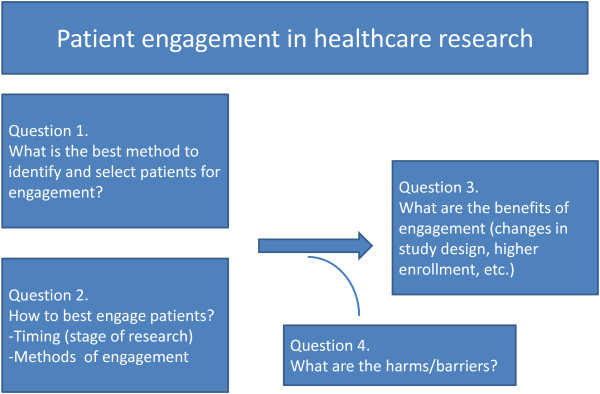
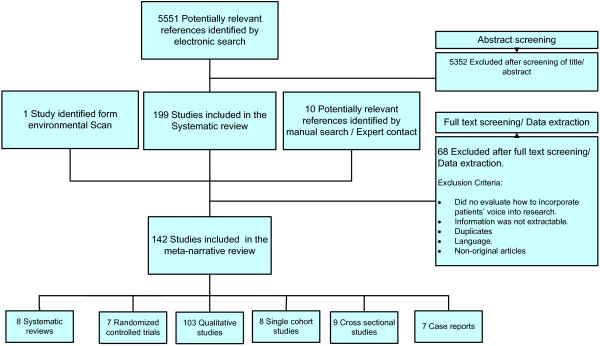
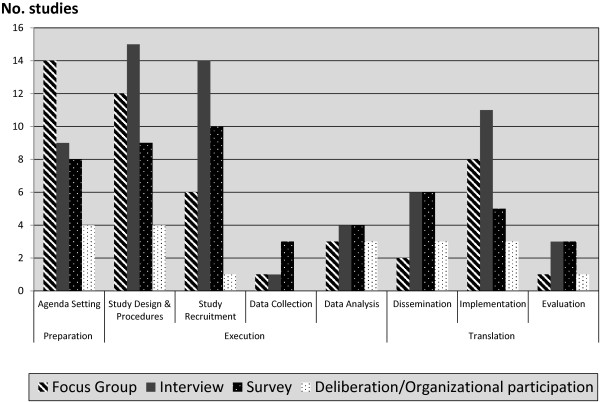
BACKGROUND: A compelling ethical rationale supports patient engagement in healthcare research. It is also assumed that patient engagement will lead to research findings that are more pertinent to patients' concerns and dilemmas. However; it is unclear how to best conduct this process. In this systematic review we aimed to answer 4 key questions: what are the best ways to identify patient representatives? How to engage them in designing and conducting research? What are the observed benefits of patient engagement? What are the harms and barriers of patient engagement? METHODS: We searched MEDLINE, EMBASE, PsycInfo, Cochrane, EBSCO, CINAHL, SCOPUS, Web of Science, Business Search Premier, Academic Search Premier and Google Scholar. Included studies were published in English, of any size or design that described engaging patients or their surrogates in research design. We conducted an environmental scan of the grey literature and consulted with experts and patients. Data were analyzed using a non-quantitative, meta-narrative approach. RESULTS: We included 142 studies that described a spectrum of engagement. In general, engagement was feasible in most settings and most commonly done in the beginning of research (agenda setting and protocol development) and less commonly during the execution and translation of research. We found no comparative analytic studies to recommend a particular method. Patient engagement increased study enrollment rates and aided researchers in securing funding, designing study protocols and choosing relevant outcomes. The most commonly cited challenges were related to logistics (extra time and funding needed for engagement) and to an overarching worry of a tokenistic engagement. CONCLUSIONS: Patient engagement in healthcare research is likely feasible in many settings. However, this engagement comes at a cost and can become tokenistic. Research dedicated to identifying the best methods to achieve engagement is lacking and clearly needed.
Overview
The claims and statistics of this paper haven’t been checked yet.
Free: it reads the open-access text and checks the first 5 claims that cite a source we can check. Create a free account to check every claim.
Integrity signals
Registry
Cites
Statistics
Figures
Verification
Claims the paper makes
The claims and statistics of this paper haven’t been checked yet.
Free: it reads the open-access text and checks the first 5 claims that cite a source we can check. Create a free account to check every claim.
Claims other papers make about this one
Each is checked against this paper’s own text: does it say what the citing paper says it does?
The source backs part of the claim, not all of it — or backs it for a different population, condition or comparison.
In the citing paper
“The present study confirms that, with regard to the conduct of research trials in primary dental care, research dedicated to identifying the best methods to achieve engagement with patients as potential participants is lacking and clearly needed [50].”
From Parental attitudes to randomised controlled trials in primary dental care: A qualitative study (2026) · cites this paper as [50]
Experimental — accuracy not yet measuredThe source backs part of the claim, not all of it — or backs it for a different population, condition or comparison.
In the citing paper
“Engaging patients in the process of designing the review protocol and in reviewing the findings increase the applicability and relevance of the findings of this study.”
From Systematic review of mind‐body interventions to treat myalgic encephalomyelitis/chronic fatigue syndrome (2021) · cites this paper as [36]
Experimental — accuracy not yet measuredThe source backs part of the claim, not all of it — or backs it for a different population, condition or comparison.
In the citing paper
“Previous studies indicated that engaging the target group increases study enrollment and may enhance the uptake and the acceptance of interventions [67, 68].”
From A blended psychosocial support program for partners of patients with amyotrophic lateral sclerosis and progressive muscular atrophy: Protocol of a randomized controlled trial (2018) · cites this paper as [67]
Experimental — accuracy not yet measuredThe check wasn’t confident either way, so it gives no verdict — never disputed.
In the citing paper
“This is consistent with review findings of empirical studies in PPI whereby short‐term, individual‐level outcomes were more represented in the literature. 43 , 91 , 92”
From A systematic review of theories, models and frameworks used for youth engagement in health research (2024) · cites this paper as [91]
Experimental — accuracy not yet measured
Self-check
Percentages, sums and reported differences re-computed from the paper’s own numbers.
The self-check needs the paper’s full text.
Citations
Cites
Preferred Reporting Items for Systematic Reviews and Meta-Analyses: the PRISMA statement
Moher, D., Liberati, A., Tetzlaff, J., Altman, D. G., & for the PRISMA Group (2009) · BMJ · doi:10.1136/bmj.b2535 · Cited by 83,823
Preferred reporting items for systematic reviews and meta-analyses: the PRISMA Statement.
(2009) · PubMed Central · Cited by 44,859
Preferred reporting items for systematic reviews and meta-analyses: The PRISMA statement
Moher, D., Liberati, A., Tetzlaff, J., Altman, D. G., & the PRISMA Group* (2009) · Annals of Internal Medicine · doi:10.7326/0003-4819-151-4-200908180-00135 · Cited by 37,554
Preferred Reporting Items for Systematic Reviews and Meta-Analyses: The PRISMA Statement
Moher, D., Liberati, A., Tetzlaff, J., & Altman, D. G. (2009) · Journal of Clinical Epidemiology · doi:10.1016/j.jclinepi.2009.06.005 · Cited by 19,575
(2005) · PubMed · Cited by 7,011
Enhancing transparency in reporting the synthesis of qualitative research: ENTREQ
Tong, A., Flemming, K., McInnes, E., Oliver, S., & Craig, J. (2012) · BMC Medical Research Methodology · doi:10.1186/1471-2288-12-181 · Cited by 3,569 · cited 1×
“Differences in studies settings and characteristics can be used to explain differences in results (heterogeneity) [16].”
BackgroundCommunity-based participatory research: assessing the evidence.
Viswanathan, M., Ammerman, A., Eng, E. M., Garlehner, G., Lohr, K. N., Griffith, D. M., Rhodes, S. D., Samuel‐Hodge, C. D., Maty, S. C., Lux, L. J., et al. (2004) · PubMed Central · Cited by 1,053
Campbell, R., Pound, P., Pope, C., Britten, N., Pill, R., Morgan, M., & Donovan, J. (2003) · Social Science & Medicine · doi:10.1016/s0277-9536(02)00064-3 · Cited by 921 · cited 3×
“[http://www.casp-uk.net/wp-content/uploads/ 2011/11/CASP-Qualitative-Research-Checklist-31.05.13.pdf] 19.”
MethodInfluentialStorylines of research in diffusion of innovation: a meta-narrative approach to systematic review
Greenhalgh, T., Robert, G., Macfarlane, F., Bate, P., Kyriakidou, O., & Peacock, R. (2005) · Social Science & Medicine · doi:10.1016/j.socscimed.2004.12.001 · Cited by 913 · cited 1×
“Instead, data extracted from the included studies were analyzed using a meta-narrative approach [14].”
MethodPatient and service user engagement in research: a systematic review and synthesized framework
Shippee, N. D., Domecq Garces, J. P., Prutsky Lopez, G. J., Wang, Z., Elraiyah, T. A., Nabhan, M., Brito, J. P., Boehmer, K., Hasan, R., Firwana, B., et al. (2015) · Health Expectations · doi:10.1111/hex.12090 · Cited by 628 · cited 2×
“We also categorized the research engagement from each study into three different research phases proposed for patient engagement [17]:”
BackgroundMethodSelf-citation
Cited by
Items 301–400 of 1,002
Javanparast, S., Robinson, S., Kitson, A. A., & Arciuli, J. (2022) · Research Involvement and Engagement · doi:10.1186/s40900-022-00392-4 · Cited by 37
Mathieson, A., Brunton, L., & Wilson, P. M. (2025) · Implementation Science Communications · doi:10.1186/s43058-025-00725-w · Cited by 41
“Furthermore, published reviews on the scope and impact of PPI on research have been limited to applied health research [9, 24–26], or PPI in the implementation of evidence-based practice for specific health conditions [27].”
Support for Living a Meaningful Life with Osteoarthritis: A Patient-to-Patient Research Study
Miller, J., Teare, S., Marlett, N. J., Shklarov, S., & Marshall, D. A. (2016) · Patient · doi:10.1007/s40271-016-0169-9 · Cited by 36
A taxonomy of impacts on clinical and translational research from community stakeholder engagement
Stallings, S., Boyer, A. P., Joosten, Y. A., Novak, L. L., Richmond, A., Vaughn, Y. C., & Wilkins, C. H. (2019) · Health Expectations · doi:10.1111/hex.12937 · Cited by 40
Lanar, S., Acquadro, C., Seaton, J., Savre, I., & Arnould, B. (2020) · Orphanet Journal of Rare Diseases · doi:10.1186/s13023-020-01400-0 · Cited by 43
Tremblay, M., Bradette-Laplante, M., Bérubé, D., Brière, É., Moisan, N., Niquay, D., Dogba, M.-J., Légaré, F., McComber, A. M., McGavock, J., et al. (2020) · Research Involvement and Engagement · doi:10.1186/s40900-020-00216-3 · Cited by 36
Haesebaert, J., Samson, I., Lee-Gosselin, H., Guay-Bélanger, S., Proteau, J.-F., Drouin, G., Guímont, C., Vigneault, L., Poirier, A., Sanon, P.-N., et al. (2020) · Research Involvement and Engagement · doi:10.1186/s40900-020-00232-3 · Cited by 39
Hunter, B., Biezen, R., Alexander, K., Lumsden, N. G., Hallinan, C. M., Wood, A., McMorrow, R., Jones, J., Nelson, C., & Manski-Nankervis, J.-A. E. (2020) · BMJ Open · doi:10.1136/bmjopen-2020-040228 · Cited by 36
Anderson, N. N., Baker, G. R., Moody, L., Scane, K., Urquhart, R., Wodchis, W. P., & Gagliardi, A. R. (2021) · Health Expectations · doi:10.1111/hex.13239 · Cited by 39
MacFarlane, A. E., Ogoro, M., de Freitas, C., Niranjan, V. R., Severoni, S., & Waagensen, E. (2021) · Tropical Medicine & International Health · doi:10.1111/tmi.13643 · Cited by 37
Public engagement with health data governance: the role of visuality
Sleigh, J., & Vayena, E. (2021) · Humanities and Social Sciences Communications · doi:10.1057/s41599-021-00826-6 · Cited by 36
Nørskov, K. H., Overgaard, D., Lomborg, K. E., Kjeldsen, L., & Jarden, M. (2019) · European Journal of Oncology Nursing · doi:10.1016/j.ejon.2019.05.005 · Cited by 39
Khanpour Ardestani, S., Karkhaneh, M., Stein, E., Punja, S., Junqueira, D. R., Kuzmyn, T., Pearson, M., Smith, L., Olson, K., & Vohra, S. (2021) · Medicina · doi:10.3390/medicina57070652 · Cited by 30
“Patient engagement in health research can improve the quality, relevance and impact of the research [36,37].”
BackgroundBioethics and the Moral Authority of Experience
Nelson, R. H., Moore, B., Lynch, H. F., Waggoner, M. R., & Blumenthal‐Barby, J. (2022) · The American Journal of Bioethics · doi:10.1080/15265161.2022.2127968 · Cited by 33
Vanneste, A., Wens, I., Sinnaeve, P., Louati, C., Huys, I., Ioannidis, J. P. A., & Adriaenssens, T. (2025) · BMJ · doi:10.1136/bmj-2024-082697 · Cited by 35
“20 25 26-28 The number of PPI activities/processes reported per randomised controlled trial has varied greatly.”
Khodyakov, D., Grant, S., Meeker, D., Booth, M. J., Pacheco-Santivanez, N., & Kim, K. K. (2016) · Journal of the American Medical Informatics Association · doi:10.1093/jamia/ocw157 · Cited by 31
Loignon, C., Dupéré, S., Fortin, M., Ramsden, V. R., & Truchon, K. (2018) · BMC Health Services Research · doi:10.1186/s12913-018-3315-3 · Cited by 34
Qualitative Exploration of Engaging Patients as Advisors in a Program of Evidence Synthesis
Gierisch, J. M., Hughes, J. M., Williams, J. W., Gordon, A. M., & Goldstein, K. M. (2019) · Medical Care · doi:10.1097/mlr.0000000000001174 · Cited by 31
Patients’ experiences of pharmacists in general practice: an exploratory qualitative study
Karampatakis, G. D., Patel, N., Stretch, G., & Ryan, K. (2021) · BMC Family Practice · doi:10.1186/s12875-021-01393-0 · Cited by 36
Edwards, H. A., Huang, J. C., Jansky, L. J., & Mullins, C. D. (2021) · Journal of Comparative Effectiveness Research · doi:10.2217/cer-2021-0043 · Cited by 31
Anemia-Induced Bleeding in Patients with Platelet Disorders
Thakar, S., Gabarin, N., Gupta, A., Radford, M., Warkentin, T. E., & Arnold, D. M. (2021) · Transfusion Medicine Reviews · doi:10.1016/j.tmrv.2021.06.001 · Cited by 30
Harmsen, S., Pittens, C. A. C. M., Vroonland, E., van Rensen, A. J. M. L., & Broerse, J. E. W. (2022) · Science and Public Policy · doi:10.1093/scipol/scac024 · Cited by 31
Nguyen, C. Q., Kariyawasam, D. S. T., Concepcion, K., Grattan, S., Hetherington, K., Wakefield, C. E., Woolfenden, S. R., Dale, R. C., Palmer, E. E., & Farrar, M. A. (2022) · Health Expectations · doi:10.1111/hex.13625 · Cited by 36
“This study reaffirms a positive trend in patient research involvement observed throughout Western countries since the turn of the 21st century.(45) While reinforcing previous literature on RDPO community and advocacy roles, it principally aligns with prior studies that have projected exponential growth in the influenc…”
ResultPatients and Families as Partners in Patient-Oriented Research: How Should They Be Compensated?
Novak‐Pavlic, M., Gorter, J. W., Phoenix, M. P., Micsinszki, S. K., Pozniak, K., Li, L. H., Nguyen, L., Soper, A. K., Kwok, E. Y. L., Bootsma, J. N., et al. (2023) · Journal of patient-centered research and reviews · doi:10.17294/2330-0698.1975 · Cited by 29
Patient engagement in health implementation research: A logic model
Bisson, M., Aubrey‐Bassler, K., Chouinard, M., Doucet, S. A., Ramsden, V. R., Dumont‐Samson, O., Howse, D., Lambert, M., Schwarz, C. M., Luke, A., et al. (2023) · Health Expectations · doi:10.1111/hex.13782 · Cited by 31
“PE can also increase study enrolment.(5) Academic researchers who involve patients in research recognize patients' experience as expertise.”
BackgroundInfluentialWorking together in health research: a mixed-methods patient engagement evaluation
Babatunde, S., Ahmed, S., Santana, M., Nielssen, I., Zelinsky, S., & Ambasta, A. (2023) · Research Involvement and Engagement · doi:10.1186/s40900-023-00475-w · Cited by 33
“This can ultimately lead to research with greater impact, validity, quality of results, and relevancy for all end-users [5, 6].”
BackgroundA survey of mobile technology usage and desires by caregivers of children with cancer
Mueller, E. L., Cochrane, A. R., Bennett, W. E., & Carroll, A. E. (2018) · Pediatric Blood & Cancer · doi:10.1002/pbc.27359 · Cited by 30
Sikstrom, L., Meyer, T., Katz, E., Choi, M.-M., Darragh, M., Cutler-Palma, A., Conforti, T., Kalocsai, C., & Soklaridis, S. (2020) · PLoS ONE · doi:10.1371/journal.pone.0238096 · Cited by 34
“[1] However, the failure to recruit, engage and PLOS ONE”
BackgroundSnowball, E., Loughlin, R. F., Eagleson, H., Barnett, K. M., McLellan, E., O’Connor, D., Kelly, C. M., Thelker, C., McGilton, K. S., & Bethell, J. (2022) · Research Involvement and Engagement · doi:10.1186/s40900-022-00359-5 · Cited by 34
Kaplan‐Kahn, E. A., & Caplan, R. (2023) · Frontiers in Psychiatry · doi:10.3389/fpsyt.2023.1248247 · Cited by 37
Participatory research with carers: A systematic review and narrative synthesis
Bowness, B., Henderson, C., Akhter‐Khan, S. C., Akiba, M., & Lawrence, V. C. (2023) · Health Expectations · doi:10.1111/hex.13940 · Cited by 35
Machine learning for healthcare that matters: Reorienting from technical novelty to equitable impact
Balagopalan, A., Baldini, I., Celi, L. A., Gichoya, J. W., McCoy, L. G., Naumann, T., Shalit, U., van der Schaar, M., & Wagstaff, K. L. (2024) · PLOS Digital Health · doi:10.1371/journal.pdig.0000474 · Cited by 44
“In this regard, the MLHC field should engage with and build upon existing “patient engagement” practices in clinical trials [46], which seek to ensure that research is aligned with patient needs [47–49].”
BackgroundSchilling, I., & Gerhardus, A. (2024) · BMC Medical Research Methodology · doi:10.1186/s12874-024-02323-1 · Cited by 34
“In doing so, it aims to democratize the research process, making it more accountable and transparent to the broader population [2–5 , While patient empowerment is a core objective of PPI [4], it is seldom explicitly defined within the context of PPI.”
BackgroundMah, H., Dobson, R., & Thomson, A. (2025) · Health Expectations · doi:10.1111/hex.70205 · Cited by 44
Boeckxstaens, P., Willems, S. J. T., Lanssens, M., Decuypere, C., Brusselle, G., Kühlein, T., Maeseneer, J. D., & Sutter, A. D. (2016) · Journal of Comorbidity · doi:10.15256/joc.2016.6.64 · Cited by 29
Richard, L., Piper, D. A., Weavell, W., Callander, R., Iedema, R. A. M., Furler, J., Pierce, D., Godbee, K., Gunn, J. M., & Palmer, V. J. (2017) · Trials · doi:10.1186/s13063-017-1878-7 · Cited by 35
“Here it is important to note that the methods of engagement in research are distinguished from patient engagement in direct care and treatment and are different from other community engagement and public participation and involvement (PP&I) methods such as deliberative democracy panels and citizen juries [9, 10].”
Backgroundthe D1 Now Type 1 Diabetes Young Adult Study Group, O’Hara, M. C., Cunningham, Á., Keighron, C. N., Allen, G., Caulfield, A., Duffy, C., Long, M., Mallon, M., Mullins, M., et al. (2017) · Research Involvement and Engagement · doi:10.1186/s40900-017-0068-9 · Cited by 35
Research with children and young people on sensitive topics – The case of poverty and delinquency
Martins, P. C., Oliveira, V. H. P., & Tendais, I. (2018) · Childhood · doi:10.1177/0907568218793931 · Cited by 38
“It improves enrolment rates and individual’s empowerment throughout all research phases – preparation, execution, and communication – even with populations considered difficult to reach (Domecq et al., 2014; Supple et al., 2015).”
BackgroundMeaningful Patient Engagement in Research: Lessons From Retinoblastoma
White, E., Baddeliyanage, R., Shaikh, F., & Dimaras, H. (2019) · PEDIATRICS · doi:10.1542/peds.2018-2166 · Cited by 29
“The oftencited benefits are the following: aligning research funding to patients’ priorities and daily experiences, identifying relevant outcome measures, improving recruitment and retention in studies, and disseminating results in patientcentric language such that it reaches beyond the confines of academia.(6,7,12) Y…”
BackgroundLeaders, T. M. S., Mixon, A. S., the MARQUIS2 Study Group, Smith, G. R., Mallouk, M., Nieva, H. R., Kripalani, S. B., Rennke, S., Chu, E. S., Sridharan, A., et al. (2019) · BMC Health Services Research · doi:10.1186/s12913-019-4491-5 · Cited by 32
Tsang, V. W. L., Fletcher, S., Thompson, C., & Smith, S. R. (2019) · International Journal of Adolescence and Youth · doi:10.1080/02673843.2020.1716817 · Cited by 35
Markle‐Reid, M., Ganann, R., Ploeg, J., Heald-Taylor, G., Kennedy, L., McAiney, C. A., & Valaitis, R. K. (2021) · Journal of Multimorbidity and Comorbidity · doi:10.1177/2633556521999508 · Cited by 32
“Holding face-to-face meetings, building-in time in the agenda for researchers and partners to socialize, and avoiding the use of jargon, acronyms and clinical or academic language were also important,(42,43) A commonly cited barrier to meaningful patient engagement is that a patient’s role in research may be merely sy…”
BackgroundInfluentialAnderson, N. N., & Gagliardi, A. R. (2021) · BMC Medical Education · doi:10.1186/s12909-021-02873-8 · Cited by 30
“Another parallel and fundamental approach to strengthening WH in the medical curriculum is to do so in collaboration with women, as patient engagement has become a standard practice in research, and in health system planning and improvement [50, 51].”
BackgroundVanderhout, S. M., Nicholls, S. G., Monfaredi, Z., Hampel, C., Ashdown, L., Bilodeau, M., Rich, S., Shea, B., & Fergusson, D. A. (2022) · Research Involvement and Engagement · doi:10.1186/s40900-022-00350-0 · Cited by 32
Gliklich, R. E., Dreyer, N. A., Leavy, M. B., & Christian, J. B. (2018) · doi:10.23970/ahrqregistriesebook · Cited by 34
Sibley, K. M., Hoekstra, F., Kothari, A. R., & Mrklas, K. (2022) · Wiley eBooks · doi:10.1002/9781119757269.ch4 · Cited by 35
Co-design for stroke intervention development: Results of a scoping review
Singh, H., Benn, N., Fung, A., Kokorelias, K. M., Martyniuk, J., Nelson, M. L. A., Colquhoun, H. L., Cameron, J. I., Munce, S., Saragosa, M., et al. (2024) · PLoS ONE · doi:10.1371/journal.pone.0297162 · Cited by 33
“…stages, co-design can create a better and cohesive fit between the intervention and the context where the interventions will be used, leading to enhanced acceptability, adoption, and sustainability of the intervention and, thus potentially, improved patient outcomes and quality of care [8, 11–13].”
Priority setting in paediatric preventive care research
Katz-Lavigne, M., Birken, C. S., Maguire, J. L., Straus, S. E., & Laupacis, A. (2017) · Archives of Disease in Childhood · doi:10.1136/archdischild-2016-312284 · Cited by 32
Kelly, G., Wang, S., Lucas, G. I., Fraenkel, L., & Gross, C. P. (2017) · Progress in community health partnerships · doi:10.1353/cpr.2017.0029 · Cited by 32
“(1) Department of Chronic Disease Epidemiology, Yale University School of Public Health; (2) Center for Social Science Research, University of Cape Town; (3) Cancer Outcomes, Public Policy, and Effectiveness Research (COPPER) Center, Yale Cancer Center and Yale University School of Medicine; (4) Robert Wood Johnson Fo…”
Synnot, A., Cherry, C. L., Summers, M. P., Stuckey, R., Milne, C. A., Lowe, D. B., & Hill, S. (2018) · Australian Journal of Primary Health · doi:10.1071/py17107 · Cited by 33
Goytia, C. N., Kastenbaum, I., Shelley, D., Horowitz, C. R., & Kaushal, R. (2018) · Medical Care · doi:10.1097/mlr.0000000000000786 · Cited by 28
Malloggi, L., Leclère, B., Glatin, C. L., & Moret, L. (2020) · BMC Health Services Research · doi:10.1186/s12913-020-05271-w · Cited by 35
“Our results show that there is potential for acculturation and tool sharing to provide concrete guidance for HCWs on how to successfully manage PRI in various domains, particularly in the research domain [18, 20, 21].”
BackgroundFeeney, M. P., Evers, C., Agpalo, D., Cone, L., Fleisher, J. E., & Schroeder, K. (2020) · Health Expectations · doi:10.1111/hex.13064 · Cited by 28
Loignon, C., Dupéré, S., Leblanc, C., Truchon, K., Bouchard, A., Arsenault, J., Carvalho, J. P., Boudreault‐Fournier, A., & Marcotte, S. A. (2021) · Research Involvement and Engagement · doi:10.1186/s40900-021-00313-x · Cited by 40
“Because of this, some researchers have raised cautions about the risk of incidental or symbolic (tokenistic) participation in projects involving disadvantaged or marginalized persons [15, 16].”
BackgroundBender, J. L., Puri, N., Salih, S., D’Agostino, N. M., Tsimicalis, A., Howard, A. F., Garland, S. N., Chalifour, K., Drake, E. K., Marrato, A., et al. (2022) · Current Oncology · doi:10.3390/curroncol29020099 · Cited by 35
“There are many benefits to engaging patients in health research, not limited to improvements in research relevance, patient enrollment and retention, as well as the translation of study findings into clinical practice [31,32].”
Velvin, G., Hartman, T., & Bathen, T. (2022) · Orphanet Journal of Rare Diseases · doi:10.1186/s13023-022-02357-y · Cited by 33
Co-designing an Integrated Health and Social Care Hub With and for Families Experiencing Adversity
Hall, T., Loveday, S., Pullen, S., Loftus, H., Constable, L. N., Paton, K., & Hiscock, H. (2023) · International Journal of Integrated Care · doi:10.5334/ijic.6975 · Cited by 28
Patient involvement in the development of a handbook for moderate rheumatoid arthritis
Prothero, L., Georgopoulou, S., de Souza, S., Bosworth, A., Bearne, L., & Lempp, H. K. (2016) · Health Expectations · doi:10.1111/hex.12457 · Cited by 31
Sofolahan-Oladeinde, Y., Newhouse, R. P., Lavallee, D. C., Huang, J. C., & Mullins, C. D. (2017) · Family Practice · doi:10.1093/fampra/cmx013 · Cited by 28
“Although engaging patients in the research process early on is recognized as critical to the success of the study, as shown in the fields of participatory research, specific guidance that offers practical realities of such engagement in PCOR across different contexts has not yet been sufficiently described (2,5).”
BackgroundResultInfluentialAmer, F., Hammoud, S., Onchonga, D., Alkaiyat, A. S., Nour, A. I., Boncz, I., & Endrei, D. (2022) · International Journal of Environmental Research and Public Health · doi:10.3390/ijerph19127149 · Cited by 29
“However, BSC reviews referred to the lack of patient and family member involvement in the evaluation process of BSC [12,19,21,27].”
BackgroundAli, A. Z., Wright, B. J., Curran, J., & Newton, A. S. (2022) · Child and Adolescent Mental Health · doi:10.1111/camh.12615 · Cited by 36
Murad, M. H., Liem, R. I., Lang, E., Akl, E. A., Meerpohl, J. J., DeBaun, M. R., Tisdale, J. F., Brandow, A. M., Lanzkron, S., Chou, S. T., et al. (2019) · Blood Advances · doi:10.1182/bloodadvances.2019000931 · Cited by 27
“Tokenistic engagement, that is, offering engagement as a gesture, is not unusual.(10) For the SCD guidelines, 2 patient representatives were recruited for each of the 5 guideline panels.”
BackgroundSelf-citationHahn‐Goldberg, S., Chaput, A., Rosenberg-Yunger, Z. R. S., Lunsky, Y., Okrainec, K., Guilcher, S. J. T., Ransom, M., & McCarthy, L. M. (2021) · Research in Social and Administrative Pharmacy · doi:10.1016/j.sapharm.2021.04.002 · Cited by 34
How to engage patient partners in health service research: a scoping review protocol
Tscherning, S. C., Bekker, H., Vedelø, T. W., Finderup, J., & Rodkjær, L. Ø. (2021) · Research Involvement and Engagement · doi:10.1186/s40900-021-00268-z · Cited by 31
“[12] add that it is unclear who to engage or when, and how to perform this task.”
BackgroundParkinson, A., Drew, J., Dykgraaf, S. H., Fanning, V., Chisholm, K., Elisha, M., Lueck, C. J., Phillips, C. B., & Desborough, J. (2021) · Health Expectations · doi:10.1111/hex.13284 · Cited by 29
Hoekstra, F., Pereira, F. T., Sibley, K. M., Graham, I. D., Kennefick, M., Mrklas, K., Nguyen, T., Vis‐Dunbar, M., Panel, S. I. G. P. C., & Gainforth, H. L. (2022) · Journal of Spinal Cord Medicine · doi:10.1080/10790268.2022.2033578 · Cited by 29
Patient Science: Citizen Science Involving Chronically Ill People as Co-Researchers
Heyen, N. B., Gardecki, J., Eidt‐Koch, D., Schlangen, M., Pauly, S., Eickmeier, O., Wagner, T. O. F., & Bratan, T. (2022) · Journal of Participatory Research Methods · doi:10.35844/001c.35634 · Cited by 37
“, 2018), or as patient engagement in research, especially by the prominent Patient-Centered Outcomes Research Institute (PCORI) in the United States (Domecq et al., 2014).”
BackgroundMicsinszki, S. K., Tanel, N. L., Kowal, J., King, G. A., Menna‐Dack, D., Chu, A., & Phoenix, M. P. (2022) · Research Involvement and Engagement · doi:10.1186/s40900-022-00398-y · Cited by 27
Youth engagement in research: exploring training needs of youth with neurodevelopmental disabilities
Dong, S. Y., Nguyen, L., Cross, A., Doherty-Kirby, A. L., Geboers, J., McCauley, D., Soper, A. K., Dennis, A. S., Steeves, D., Trehan, N., et al. (2023) · Research Involvement and Engagement · doi:10.1186/s40900-023-00452-3 · Cited by 27
“Studies have shown multiple benefits of patient-researcher partnerships for both researchers and patients themselves [4].”
BackgroundInfluentialPublic involvement in health research systems: a governance framework
Miller, F. A., Patton, S. J., Dobrow, M., & Berta, W. B. (2018) · Health Research Policy and Systems · doi:10.1186/s12961-018-0352-7 · Cited by 34
Breault, L. J., Rittenbach, K., Hartle, K. D., Babins‐Wagner, R., de Beaudrap, C., Jasaui, Y., Ardell, E., Purdon, S. E., Michael, A., Sullivan, G., et al. (2018) · Research Involvement and Engagement · doi:10.1186/s40900-018-0115-1 · Cited by 31
“Cost and resource constraints are a key challenge in balancing appropriate and quality patient engagement opportunities with feasibility, particularly in resource restricted environments [43, 61].”
BackgroundHaywood, C., Martinez, G., Pyatak, E. A., & Carandang, K. M. (2019) · American Journal of Occupational Therapy · doi:10.5014/ajot.2019.731001 · Cited by 30
“Emerging evidence from studies that engage patients in research has demonstrated positive effects of such collaborations (e.g., Brett et al., 2014; Domecq et al., 2014; Williamson et al., 2010).”
Stein, J., Luppa, M., König, H., & Riedel-Heller, S. G. (2015) · International Psychogeriatrics · doi:10.1017/s104161021500054x · Cited by 31
Engaging patients in health research: identifying research priorities through community town halls
Etchegary, H., Bishop, L. D., Street, C., Aubrey‐Bassler, K., Humphries, D., Vat, L. E., & Barrett, B. J. (2017) · BMC Health Services Research · doi:10.1186/s12913-017-2138-y · Cited by 29
“Common methods of engagement for exploring research priorities include meetings, workshops and focus groups [3, 16, 18].”
InfluentialPatient Empowerment and Involvement in Research
Perestelo‐Pérez, L., Rivero‐Santana, A., Sacks, A. A., Toledo‐Chávarri, A., Brito, N., Álvarez‐Pérez, Y., González, N., & Serrano‐Aguilar, P. (2017) · Advances in experimental medicine and biology · doi:10.1007/978-3-319-67144-4_15 · Cited by 35
Recommendations for patient engagement in patient-oriented emergency medicine research
Archambault, P. M., McGavin, C., Dainty, K. N., McLeod, S. L., Vaillancourt, C., Lee, J. S., Perry, J. J., Gauvin, F., & Boivin, A. (2018) · Canadian Journal of Emergency Medicine · doi:10.1017/cem.2018.370 · Cited by 28
“8,9,18,24 What can patients do?”
InfluentialHaesebaert, J., Samson, I., Lee-Gosselin, H., Guay-Bélanger, S., Proteau, J.-F., Drouin, G., Guímont, C., Vigneault, L., Poirier, A., Sanon, P.-N., et al. (2018) · Research Involvement and Engagement · doi:10.1186/s40900-018-0113-3 · Cited by 28
“Engaging knowledge users early on to sound out their expectations and priorities may improve project relevance and lead to results having a greater impact on clinical practices and patient health outcomes [14, 15].”
BackgroundEngaging older patients with cancer and their caregivers as partners in cancer research
Gilmore, N. J., Canin, B. E., Whitehead, M., Sedenquist, M., Griggs, L., Finch, L., Grossman, V. A., Targia, V., Wells, M., Kamen, C. S., et al. (2019) · Cancer · doi:10.1002/cncr.32402 · Cited by 26
“Researchers described having a greater understanding of patients' needs after engaging with patient partners, thereby bringing new insights into their research.(6,9) Actively engaging stakeholder partners in clinical research should be an essential component of research planning.”
Evans, J., & Papoulias, C. (2020) · Research Involvement and Engagement · doi:10.1186/s40900-020-00185-7 · Cited by 31
Poger, J. M., Mayer, V., Duru, O. K., Nauman, B., Holderness, H., Warren, N., Vasquez, C., Bibi, S., Rasmussen‐Torvik, L. J., Hosseinian, Z., et al. (2020) · Medical Care · doi:10.1097/mlr.0000000000001264 · Cited by 26
Co-creation and User Perspectives for Upper Limb Prosthetics
Jones, H., Dupan, S. S. G., Dyson, M., Krasoulis, A., Kenney, L. P. J., Donovan‐Hall, M., Memarzadeh, K., Day, S. J., Coutinho, M., & Nazarpour, K. (2021) · Frontiers in Neurorobotics · doi:10.3389/fnbot.2021.689717 · Cited by 32
“When face-to-face interaction is required, logistical and geographical barriers may occur (Brett et al., 2014; Domecq et al., 2014; Langley et al., 2018).”
BackgroundGreene, A., Elmer, M. E., Ludlam, S., Shay, K., Bentley, S., Trennery, C., Grimes, R., & Gater, A. (2020) · Therapeutic Innovation & Regulatory Science · doi:10.1007/s43441-020-00179-3 · Cited by 29
Ethics work for good participatory action research: Engaging in a commitment to epistemic justice
Abma, T. (2020) · Beleidsonderzoek Online · doi:10.5553/bo/221335502020000006001 · Cited by 40
Blanco‐Mavillard, I., Parra-García, G., Fernández‐Fernández, I., Rodríguez-Calero, M. Á., Personat-Labrador, C., & Castro‐Sánchez, E. (2020) · PLoS ONE · doi:10.1371/journal.pone.0240086 · Cited by 32
“adverse events[46,47].”
Ogourtsova, T., O’Donnell, M., Filliter, J., Wittmeier, K. D. M., BRIGHT Coaching Group, & Majnemer, A. (2021) · Developmental Medicine & Child Neurology · doi:10.1111/dmcn.14810 · Cited by 35
Ethical challenges for a new generation of early-phase pediatric gene therapy trials
Iyer, A. A., Saade, D. N., Bharucha-Goebel, D. X., Foley, A. R., Averion, G. V., Paredes, E., Gray, S. J., Bönnemann, C. G., Grady, C., Hendriks, S., et al. (2021) · Genetics in Medicine · doi:10.1038/s41436-021-01245-3 · Cited by 33
Pratte, M.-M., Audette-Chapdelaine, S., Auger, A.-M., Wilhelmy, C., & Brodeur, M. (2023) · Research Involvement and Engagement · doi:10.1186/s40900-023-00431-8 · Cited by 28
“It has also facilitated the implementation of innovations and the acceptability of scientific data [3, 6].”
BackgroundKhan, N. A., Bacon, S., Khan, S. A., Perlmutter, S., Gerlinsky, C., Dermer, M., Johnson, L., Alves, F., McLean, D., Laupacis, A., et al. (2017) · Journal of Clinical Hypertension · doi:10.1111/jch.13091 · Cited by 26
Partnering with parents to advance child health research
Curran, J., Bishop, A., Chorney, J. M. L., MacEachern, L., & Mackay, R. (2018) · Healthcare Management Forum · doi:10.1177/0840470417744568 · Cited by 31
“Current evidence indicates that patient participation in health services research contributes to the creation of more accessible and acceptable services and improved relevance and acceptance of research findings.(15,16) However, evidence to support similar partnerships in child-oriented research is less robust.”
Vanderhout, S. M., Fergusson, D. A., Cook, J. A., & Taljaard, M. (2022) · PLoS Medicine · doi:10.1371/journal.pmed.1003896 · Cited by 29
“Measuring patient-important outcomes is a key characteristic of pragmatic trials [2], and patient and public engagement in research can improve its relevance to end users [3].”
BackgroundPatient vs. Community Engagement: Emerging Issues
Kimminau, K. S., Jernigan, C., LeMaster, J. W., Aaronson, L. S., Christopher, M. J., Ahmed, S. M., Boivin, A., DeFino, M. C., Greenlee, R. T., Salvalaggio, G., et al. (2018) · Medical Care · doi:10.1097/mlr.0000000000000772 · Cited by 25
“The basis for including patient perspectives and input in research reflects the Patient-Centered Outcomes Institute’s (PCORI’s) proposition that the inclusion of patients (a term used here to include community members and patient stakeholders who have a strong personal connection with a disease) enables a richer, more…”
Patient and public involvement in data collection for health services research: a descriptive study
Garfield, S., Jheeta, S., Jacklin, A., Bischler, A., Norton, C. S., & Franklin, B. D. (2015) · Research Involvement and Engagement · doi:10.1186/s40900-015-0006-7 · Cited by 25
“However, there is also concern that current patient and public involvement is often tokenistic and aimed at ‘ticking boxes for funding applications’, rather than placing a true value on patient input and involvement [1, 2].”
BackgroundInfluentialWilson, H., Dashiell-Aje, E., Anatchkova, M., Coyne, K. S., Hareendran, A., Leidy, N. K., McHorney, C. A., & Wyrwich, K. (2017) · Quality of Life Research · doi:10.1007/s11136-017-1577-6 · Cited by 25
Toward the development of a comprehensive cancer experience measurement framework
Loiselle, C. G., Howell, D., Nicoll, I., & Fitch, M. I. (2018) · Supportive Care in Cancer · doi:10.1007/s00520-018-4529-y · Cited by 34
Erber, A. C., Arana, B. A., Salah, A. B., Bennis, I., Boukthir, A., Castro, M. D. M., Cissé, M., Cota, G., Handjani, F., López‐Carvajal, L., et al. (2020) · PLoS neglected tropical diseases · doi:10.1371/journal.pntd.0007996 · Cited by 30
“There is increasing consensus that patients’ involvement in health research can lead to higher rates of enrolment and retention, and improve its translation into clinical practice [12]; it meets also an ethical mandate towards ‘democratizing‘ the research process [13].”
BackgroundMagalhães, B. M. B. D. S., Fernandes, C. S., Martínez‐Galiano, J. M., & Santos, C. (2020) · International Journal of Medical Informatics · doi:10.1016/j.ijmedinf.2020.104293 · Cited by 32
Sheikhan, N. Y., Hawke, L. D., Cleverley, K., Darnay, K., Courey, L., Szatmári, P., Cheung, A., & Henderson, J. L. (2021) · Health Expectations · doi:10.1111/hex.13206 · Cited by 25
Mendelson, A. A., Lansdell, C., Fox‐Robichaud, A., Liaw, P. C., Arora, J., Cailhier, J., Cepinskas, G., Charbonney, E., dos Santos, C. C., Dwivedi, D. J., et al. (2021) · Intensive Care Medicine Experimental · doi:10.1186/s40635-020-00366-4 · Cited by 28
McMenamin, R., Griffin, M., Grzybowska, B., & Pound, C. (2021) · Aphasiology · doi:10.1080/02687038.2021.1923948 · Cited by 29
“Frequently, when people from this population group are included in research it is often tokenistic rather than collaborative (Domecq et al., 2014).”
Courvoisier, M., Baddeliyanage, R., Wilhelm, L., Bayliss, L., Straus, S. E., & Fahim, C. (2021) · Research Involvement and Engagement · doi:10.1186/s40900-021-00316-8 · Cited by 24
“Such involvement can ensure that public research dollars are meaningfully spent on patientidentified priorities, which may result in improved uptake of evidence-based recommendations, thereby reducing research waste [2, 3].”
Background
Metadata
- Authors
- Domecq, J. P., Prutsky, G., Elraiyah, T., Wang, Z., Nabhan, M., Shippee, N., Brito, J. P., Boehmer, K., Hasan, R., Firwana, B., Erwin, P., Eton, D., Sloan, J., Montori, V., Asi, N., Abu Dabrh, A. M., & Murad, M. H.
- Affiliations
- Mayo Clinic (US)
- Corresponding author
- Murad, Mohammad Hassan
- ORCID
- Venue
- BMC Health Services Research
- Published
- 2014-02-26
- Volume
- 14
- Issue
- 1
- Pages
- 89-89
- ISSN
- 1472-6963 (ISSN-L)
- PMC
- PMC3938901
- OpenAlex
- W2100905299
- Cited by
- 1,773
- References
- 50
- Citations by year
- 2026: 122 · 2025: 147 · 2024: 219 · 2023: 198 · 2022: 200 · 2021: 202 · 2020: 202 · 2019: 144 · 2018: 138 · 2017: 101 · 2016: 53 · 2015: 39 · 2014: 8
- FWCI
- 11.40
- Type
- journal article
- Language
- en
- Open access
- gold
- doi.org
- Licence
- Locations
- BMC Health Services Research (publishedVersion, cc-by)
- Europe PMC (PubMed Central) (publishedVersion, cc-by)
- PubMed Central (publishedVersion, cc-by)
- PubMed (publishedVersion)
- NORA - Norwegian Open Research Archives (submittedVersion, cc-by)
- Funders
- Patient-Centered Outcomes Research Institute
- National Institutes of Health
- Topics
- Health Sciences › Health Professions › General Health Professions › Mental Health and Patient Involvement
- Health Sciences › Medicine › Public Health, Environmental and Occupational Health › Ethics in Clinical Research
- Health Sciences › Medicine › Public Health, Environmental and Occupational Health › Community Health and Development
- Keywords
- patient engagement, patient and public involvement, research ethics, patient representatives, research design, barriers to engagement, study enrollment, research funding
- MeSH terms
- Humans, Patient Participation, Randomized Controlled Trials as Topic, Advisory Committees, Research Subjects, Biomedical Research
About these checks
Registry, retraction, Cites and statistics results are computed, not judged, with one exception: a printed reference that no index lists is read once by a model before it counts as a citation error. Claims are extracted by a model and kept only when their quote appears verbatim in the text; each cited source is then checked, with a model’s help, for whether it says what the claim relies on. Those verdicts can be wrong — read the claim’s quote and the cited source before relying on one.
Statistics and arithmetic are recomputed, not judged.
Confidence bands are shown only for fields calibrated on our annotated test set. None is calibrated yet, so no band is shown.
What counts as a claim ›How we measure confidence ›How we check this ›
Are you an author, or do you see a problem with this page? Request a review
Data sources
Bibliographic data: Semantic Scholar, OpenAlex, Crossref.
Contains information from the Semantic Scholar Academic Graph Datasets, made available under the ODC Attribution License (ODC-BY 1.0).
Semantic Scholar’s data is described in: Kinney, R., et al. (2023). The Semantic Scholar Open Data Platform. arXiv:2301.10140.
