

Depression and sickness behavior are Janus-faced responses to shared inflammatory pathways
Open accessThe DOI matches its Crossref record; 187 of the 189 references it cites were found in a registry or an index.
Abstract
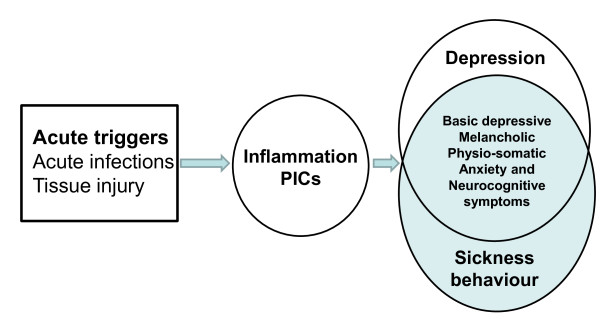
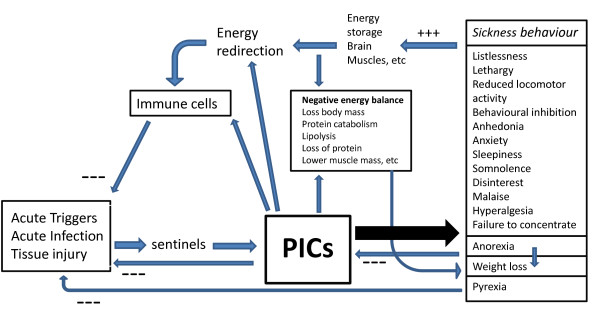
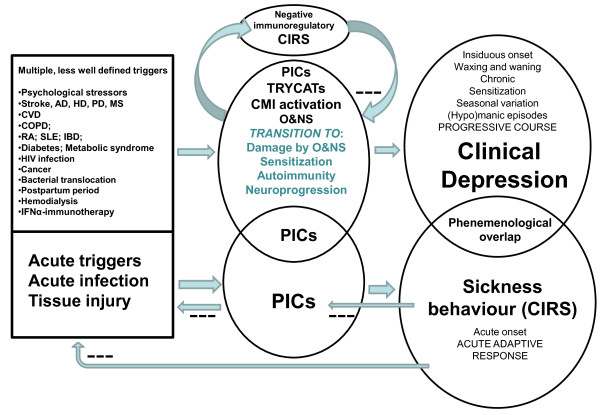
It is of considerable translational importance whether depression is a form or a consequence of sickness behavior. Sickness behavior is a behavioral complex induced by infections and immune trauma and mediated by pro-inflammatory cytokines. It is an adaptive response that enhances recovery by conserving energy to combat acute inflammation. There are considerable phenomenological similarities between sickness behavior and depression, for example, behavioral inhibition, anorexia and weight loss, and melancholic (anhedonia), physio-somatic (fatigue, hyperalgesia, malaise), anxiety and neurocognitive symptoms. In clinical depression, however, a transition occurs to sensitization of immuno-inflammatory pathways, progressive damage by oxidative and nitrosative stress to lipids, proteins, and DNA, and autoimmune responses directed against self-epitopes. The latter mechanisms are the substrate of a neuroprogressive process, whereby multiple depressive episodes cause neural tissue damage and consequent functional and cognitive sequelae. Thus, shared immuno-inflammatory pathways underpin the physiology of sickness behavior and the pathophysiology of clinical depression explaining their partially overlapping phenomenology. Inflammation may provoke a Janus-faced response with a good, acute side, generating protective inflammation through sickness behavior and a bad, chronic side, for example, clinical depression, a lifelong disorder with positive feedback loops between (neuro)inflammation and (neuro)degenerative processes following less well defined triggers.
Overview
The claims and statistics of this paper haven’t been checked yet.
Free: it reads the open-access text and checks the first 5 claims that cite a source we can check. Create a free account to check every claim.
Integrity signals
Registry
Cites
Statistics
Figures
Verification
Claims the paper makes
The claims and statistics of this paper haven’t been checked yet.
Free: it reads the open-access text and checks the first 5 claims that cite a source we can check. Create a free account to check every claim.
Claims other papers make about this one
Each is checked against this paper’s own text: does it say what the citing paper says it does?
The source backs part of the claim, not all of it — or backs it for a different population, condition or comparison.
In the citing paper
“A single systemic injection of LPS induces DLB characterized with behavioral changes similar to symptoms of acute systemic inflammation or infection triggering exacerbation of depression (49).”
From Melatonin Attenuates LPS-Induced Acute Depressive-Like Behaviors and Microglial NLRP3 Inflammasome Activation Through the SIRT1/Nrf2 Pathway (2019) · cites this paper as [49]
Experimental — accuracy not yet measuredThe cited source says what the claim attributes to it.
In the citing paper
“It has been suggested that a 'compensatory (anti)inflammatory reflex system' (CIRS) may operate in MDD [46].”
In the citing paper
“This system has been hypothesized to play a counter-regulatory (i.e.homeostatic) role in the context of peripheral inflammation.”
Self-check
Percentages, sums and reported differences re-computed from the paper’s own numbers.
The self-check needs the paper’s full text.
Citations
Cites
From inflammation to sickness and depression: when the immune system subjugates the brain
Dantzer, R., O'Connor, J. C., Freund, G. G., Johnson, R. W., & Kelley, K. W. (2008) · Nature Reviews Neuroscience · doi:10.1038/nrn2297 · Cited by 7,395 · cited 17×
“Women with a lifetime history of depression have increased inflammatory biomarkers, including IL-6 and sIL-1RA, in the early puerperium as compared to women who have never suffered from depression [115].”
BackgroundInfluentialA Meta-Analysis of Cytokines in Major Depression
Dowlati, Y., Herrmann, N., Swardfager, W., Liu, H., Sham, L., Reim, E. K., & Lanctôt, K. L. (2010) · Biological Psychiatry · doi:10.1016/j.biopsych.2009.09.033 · Cited by 4,729 · cited 2×
“In this context, there is abundant evidence that clinical depression is an immuno-inflammatory disorder characterized by among other things increased levels of PICs and acute phase proteins, including C-reactive protein and haptoglobin [11-20].”
BackgroundTracey, K. J. (2002) · Nature · doi:10.1038/nature01321 · Cited by 3,728 · cited 1×
“PIC-induced changes in neural pathways also participate in inhibiting acute inflammation, for example, enhanced production of glucocorticoids and catecholamines, and activation of cholinergic pathways [91].”
BackgroundAssociations of depression with C-reactive protein, IL-1, and IL-6: a meta-analysis.
Howren, M. B., Lamkin, D. M., & Suls, J. (2009) · Psychosomatic Medicine · doi:10.1097/psy.0b013e3181907c1b · Cited by 2,766 · cited 1×
“Recent meta-analyses and recent publications have confirmed increased levels of PICs in human depression particularly IL-6, TNFa, and IL-1, and CMI activation, evidenced by higher levels of neopterin and soluble IL-2 receptors (sIL-2Rs) [18-20,79,80].”
BackgroundPoints of control in inflammation
Nathan, C. (2002) · Nature · doi:10.1038/nature01320 · Cited by 2,738 · cited 1×
“Activation of the IRS is controlled at different levels whereby regulatory mechanisms specifically target selected control points, such as the production of pro-inflammatory mediators or the effects of mediators on the target tissues [21,89].”
BackgroundDrevets, W. C., Price, J. L., & Furey, M. L. (2008) · Brain Structure and Function · doi:10.1007/s00429-008-0189-x · Cited by 2,241 · cited 1×
“regions that process viscerosensory and regulation of emotion in humans [145-147] and rodents [148].”
BackgroundBiological basis of the behavior of sick animals
Hart, B. L. (1988) · Neuroscience & Biobehavioral Reviews · doi:10.1016/s0149-7634(88)80004-6 · Cited by 2,223 · cited 18×
“Women with a lifetime history of depression have increased inflammatory biomarkers, including IL-6 and sIL-1RA, in the early puerperium as compared to women who have never suffered from depression [115].”
BackgroundInfluentialSystemic LPS causes chronic neuroinflammation and progressive neurodegeneration
Qin, L., Wu, X., Block, M. L., Liu, Y., Breese, G. R., Hong, J., Knapp, D. J., & Crews, F. T. (2007) · Glia · doi:10.1002/glia.20467 · Cited by 2,144 · cited 16×
“Women with a lifetime history of depression have increased inflammatory biomarkers, including IL-6 and sIL-1RA, in the early puerperium as compared to women who have never suffered from depression [115].”
BackgroundInfluentialInflammation 2010: New Adventures of an Old Flame
Medzhitov, R. (2010) · Cell · doi:10.1016/j.cell.2010.03.006 · Cited by 1,834 · cited 5×
“When the resolution phase, however, is not induced, for example, when the IRS was unable to eradicate the pathogen, inflammation may persist despite the CIRS thus causing a chronic inflammatory state [21].”
BackgroundInfluentialHippocampal volume and depression: a meta-analysis of MRI studies
Videbech, P., & Ravnkilde, B. (2004) · American Journal of Psychiatry · doi:10.1176/appi.ajp.161.11.1957 · Cited by 1,590 · cited 1×
“Meta-analysis showed that in patients with chronic depression (> 2 years) or recurrent depression hippocampal volume is significantly decreased and that the latter is related to the number of episodes [140,141].”
Background
Research works printed but not linked: 1
- El-Radhi AS The role of fever in the past and present Med J Islamic World Acad Sci 2011 19 9 14
Cited by
Items 401–500 of 644
Schüler, J., Wolff, W., & Dettmers, C. (2019) · Neurology and Therapy · doi:10.1007/s40120-019-0136-1 · Cited by 13
Simkin, D. R., & Arnold, L. E. (2020) · OBM Integrative and Complementary Medicine · doi:10.21926/obm.icm.2004040 · Cited by 12
Rivi, V., Batabyal, A., Benatti, C., Sarti, P., Blom, J. M. C., Tascedda, F., & Lukowiak, K. D. (2024) · Journal of Experimental Biology · doi:10.1242/jeb.247325 · Cited by 11
Targeting inflammasome complexes as a novel therapeutic strategy for mood disorders
de Miranda, A. S., Toscano, E. C. D. B., O’Connor, J. C., & Teixeira, A. L. (2024) · Expert Opinion on Therapeutic Targets · doi:10.1080/14728222.2024.2366872 · Cited by 10
“It is complex to determine whether LPS induces a genuine acute depressive-like behavior or ‘sick-ness behavior’ due to the overlapping of the behavioral symptoms [23].”
BackgroundSystemic cytokines related to memory function 6–9 months and 12–15 months after SARS-CoV-2 infection
Nuber‐Champier, A., Bréville, G., Voruz, P., de Alcântara, I. J., Cionca, A., Allali, G., Lalive, P. H., Benzakour, L., Lövblad, K., Braillard, O., et al. (2024) · Scientific Reports · doi:10.1038/s41598-024-72421-z · Cited by 11
A review on citation amnesia in depression and inflammation research.
Maes, M. H. J. (2015) · PubMed · Cited by 13
Self-citationRengasamy, M. L., McClain, L. L., Gandhi, P., Segreti, A. M., Brent, D. A., Peters, D. G., & Pan, L. A. (2018) · Neurology Psychiatry and Brain Research · doi:10.1016/j.npbr.2018.05.001 · Cited by 10
Minkel, J. D., Krystal, A. D., & Benca, R. M. (2016) · Elsevier eBooks · doi:10.1016/b978-0-323-24288-2.00137-9 · Cited by 13
Comparing underlying mechanisms of depression in multiple sclerosis and rheumatoid arthritis
Wenger, A., & Calabrese, P. (2021) · Journal of Integrative Neuroscience · doi:10.31083/j.jin2003081 · Cited by 13
“symptoms of cytokine induced sickness behavior and depression such as behavioral inhibition, anorexia, weight loss, anhedonia, psychosomatic symptoms, anxiety and neurocognitive symptoms [57].”
BackgroundBishnoi, I. R., Kavaliers, M., & Ossenkopp, K. (2022) · Behavioural Brain Research · doi:10.1016/j.bbr.2022.114250 · Cited by 10
Henry, M., Harvey, R., Chen, L. M., Meaney, M. J., Nguyen, T. T. T., Kao, H.-T., Rosberger, Z., Frenkiel, S., Hier, M., Zeitouni, A. G., et al. (2023) · Journal of Affective Disorders · doi:10.1016/j.jad.2023.03.007 · Cited by 12
Wang, X., Xu, J., Sun, X., Chen, Y., Pang, C., & Zang, S. (2024) · Geriatric Nursing · doi:10.1016/j.gerinurse.2024.06.025 · Cited by 10
Lipopolysaccharide Effects on Neurotransmission: Understanding Implications for Depression
Batey, L., Baumberger, B., Khoshbouei, H., & Hashemi, P. (2024) · ACS Chemical Neuroscience · doi:10.1021/acschemneuro.4c00591 · Cited by 11
“3,4 Therefore, researchers are studying the underlying pathology of inflammation to better explain depression.”
Zhao, Z., Cheng, S., & Li, S. (2025) · International Journal of Surgery · doi:10.1097/js9.0000000000003909 · Cited by 17
Vastegani, S. M., Hajipour, S., Sarkaki, A., Farbood, Y., Ghaderi, S., Rashno, M., Jahangiri, H. M., & Khoshnam, S. E. (2022) · Learning and Motivation · doi:10.1016/j.lmot.2022.101811 · Cited by 9
Gonda, X., Serafini, G., & Döme, P. (2023) · Journal of Personalized Medicine · doi:10.3390/jpm13071078 · Cited by 9
“depression, characterized by anhedonia, behavioral inhibition, anxiety, loss of appetite and weight, and somatic symptoms such as fatigue, malaise and hyperalgesia [60,61].”
BackgroundUltrastructural features of psychological stress resilience in the brain: a microglial perspective
Ibáñez, F. G., VanderZwaag, J., Deslauriers, J., & Tremblay, M. (2024) · Open Biology · doi:10.1098/rsob.240079 · Cited by 12
“These findings support the idea that inflammation and MDD symptomology share common pathways and can interact together [53].”
Distinctive gene expression profile in women with history of postpartum depression
Landsman, A., Aidelman, R., Smith, Y., Boyko, M., & Greenberger, C. (2016) · Genomics · doi:10.1016/j.ygeno.2016.10.005 · Cited by 9
Yan, J., Bai, J., Gao, C., Liang, Y., Zhao, B., & Bian, Y. (2017) · Neuroscience Letters · doi:10.1016/j.neulet.2017.02.070 · Cited by 10
Supporting microglial niches for therapeutic benefit in psychiatric disorders
Churchward, M. A., Michaud, E., & Todd, K. G. (2019) · Progress in Neuro-Psychopharmacology and Biological Psychiatry · doi:10.1016/j.pnpbp.2019.109648 · Cited by 10
Multitarget botanical pharmacotherapy in major depression: a toxic brain hypothesis
Tang, S. W., Tang, W. H., & Leonard, B. E. (2017) · International Clinical Psychopharmacology · doi:10.1097/yic.0000000000000186 · Cited by 9
“These include inflammation, immunodysregulation, and oxidative stress (Gold and Irwin, 2006; Müller et al., 2009; Maes et al., 2011a, 2011b, 2012; Leonard and Maes, 2012; Leonard, 2014, 2015; Müller, 2014; Mossakowski et al., 2016).”
BackgroundSelf-citationEditorial: Fatigue in Multiple Sclerosis
Dettmers, C., & DeLuca, J. (2015) · Frontiers in Neurology · doi:10.3389/fneur.2015.00266 · Cited by 9
Maes, M., Vasupanrajit, A., Jirakran, K., Zhou, B., Tunvirachaisakul, C., & Almulla, A. F. (2023) · medRxiv · doi:10.1101/2023.12.14.23299942 · Cited by 11
Self-citationKhalil, M., Kalyoncu, A., & Bellon, A. (2025) · Genes · doi:10.3390/genes16040428 · Cited by 10
“These symptoms significantly overlap with those of depression [123].”
Strawbridge, R., Young, A. H., & Cleare, A. J. (2018) · Elsevier eBooks · doi:10.1016/b978-0-12-811073-7.00027-1 · Cited by 11
Chat, I. K.-Y., Giollabhui, N. M., Bart, C. P., Graham, A. A., Coe, C. L., Abramson, L. Y., Olino, T. M., & Alloy, L. B. (2023) · Brain Behavior and Immunity · doi:10.1016/j.bbi.2023.02.016 · Cited by 9
Vega, J. N., NEWHOUSE, P. A., Conley, A. C., Szymkowicz, S. M., Gong, X., Cote, S. E., Mayer, I. A., Taylor, W. D., & Morimoto, S. S. (2023) · Digital Health · doi:10.1177/20552076231192754 · Cited by 10
“There is also an extensive body of research showing that systemic inflammation and immune activation have also been implicated in depression.(58) There is an overlap between the type of cognitive impairment cancer survivors and people with late-life depression (LLD) experience, and we have demonstrated (preliminarily)…”
BackgroundUnteroberdörster, M., Herring, A., Bendix, I., Lückemann, L., Petschulat, J., Sure, U., Keyvani, K., Hetze, S., Schedlowski, M., & Hadamitzky, M. (2020) · Neuropharmacology · doi:10.1016/j.neuropharm.2020.108424 · Cited by 11
Plasma soluble suppression of tumorigenicity 2 and depression after acute ischemic stroke
Lu, Y., Qian, S., Chen, H., Yuan, P., Zhang, R., Wang, A., Zhang, J., Ju, Z., Zhang, Y., Xu, T., et al. (2020) · European Journal of Neurology · doi:10.1111/ene.14699 · Cited by 8
“The pathophysiological mechanism of PSD is presumably multifactorial, which refers to a combination of various ischemia-induced neurobiological dysfunctions and psychosocial distress[6], and inflammatory responses might also be involved in the etiology of PSD [4,7].”
BackgroundCognitive dysfunction of patients infected with SARS-CoV-2 omicron variant in Shanghai, China
Yuan, P., Bi, Y., Luo, Y., Tao, Q., Gong, S., Wang, Y., Xiong, L., Xia, X., & Zheng, J. (2023) · Translational Neurodegeneration · doi:10.1186/s40035-023-00357-x · Cited by 7
Salazar, J., Alvarado, F. A. Z., Weyand, I., Rosero-Montesuma, T. L., Tapia, B., Solís-Olive, C. D. C., Rosero-Angulo, K. E., Bermúdez, P. R. S., Gobbi, F. G., Bottieau, E., et al. (2024) · Tropical Medicine and Health · doi:10.1186/s41182-024-00625-0 · Cited by 9
Ganesan, K., Ghorbanpour, S. M., Kendall, W., Broome, S. T., Gladding, J. M., Dhungana, A., Abiero, A., Mahmoudi, M., Castorina, A., Kendig, M. D., et al. (2024) · Brain Behavior and Immunity · doi:10.1016/j.bbi.2024.11.011 · Cited by 8
Liu, M., Tang, J., Xu, G., Chen, X., Fang, K., He, F., & Zheng, Y. (2025) · Frontiers in Psychiatry · doi:10.3389/fpsyt.2025.1524015 · Cited by 15
Mechanistic Study on the Possible Role of Embelin in Treating Neurodegenerative Disorders
Anika, Arora, R., Virendra, S. A., & Chawla, P. A. (2023) · CNS & Neurological Disorders - Drug Targets · doi:10.2174/1871527322666230119100053 · Cited by 9
Gene expression of kynurenine pathway enzymes in depression and following electroconvulsive therapy
Ryan, K. M., Corrigan, M., Murphy, T. M., McLoughlin, D. M., & Harkin, A. (2024) · Acta Neuropsychiatrica · doi:10.1017/neu.2024.34 · Cited by 9
“However, increased IDO is also suggested to have a protective effect through a compensatory anti-inflammatory reflex system (CIRS), which acts to attenuate immunoinflammatory responses (Maes et al ., 2012).”
Zhou, X., Bai, Y., Zhang, F., & Gu, M. (2024) · Renal Failure · doi:10.1080/0886022x.2024.2436105 · Cited by 7
“Additionally, the physiological changes associated with CKD, such as inflammation, oxidative stress, and neuroendocrine dysfunction, may play a role in the pathogenesis of depression [9].”
Psychische Störungen bei somatischen Krankheiten
Kapfhammer, H. P. (2011) · Springer eBooks · doi:10.1007/978-3-642-03637-8_76 · Cited by 12
Vitamin D: An Anti-Inflammatory Treatment Option for Depression?
Antai-Otong, D. (2014) · Issues in Mental Health Nursing · doi:10.3109/01612840.2013.875086 · Cited by 8
An examination of plasma autoantibodies against voltage gated calcium channels in schizophrenia
McLean, R. T., Buist, E., Clair, D. S., & Wei, J. (2023) · Brain Behavior & Immunity - Health · doi:10.1016/j.bbih.2023.100603 · Cited by 7
“Disruption of voltage gated calcium channels has been found to be linked to a reduction in sleep spindles (Ghoshal et al., 2020), which is in turn correlated with measures of positive symptoms, sleep disturbances and cognitive dysfunction in schizophrenia (Manoach et al., 2014).”
BackgroundResultInfluentialKrause, D., Kirnich, V. B., Stapf, T. M., Hennings, A., Riemer, S., Riedel, M. J., Schmidmaier, R., Gil, F. P., Rief, W., & Schwarz, M. (2019) · Clinical Psychopharmacology and Neuroscience · doi:10.9758/cpn.2019.17.1.34 · Cited by 9
Getting under the skin: Does biology help predict chronicity of depression?
Verhoeven, J. E., Verduijn, J., van Oppen, P., van Schaik, A., Vinkers, C. H., & Penninx, B. W. J. H. (2020) · Journal of Affective Disorders · doi:10.1016/j.jad.2020.05.098 · Cited by 7
Maes, M., Jirakran, K., Vasupanrajit, A., Zhou, B., Tunvirachaisakul, C., Stoyanov, D., & Almulla, A. F. (2024) · medRxiv · doi:10.1101/2024.02.20.24302841 · Cited by 15
“These cytokines and their receptors are components of a broader compensatory immunoregulatory system (CIRS), which functions to dampen activated immune response system (IRS) activity thereby preventing hyperinflammation [10, 3].”
BackgroundSelf-citationHazeltine, D. B., Polokowski, A. R., & Reigada, L. C. (2022) · Frontiers in Psychiatry · doi:10.3389/fpsyt.2022.822466 · Cited by 6
“This distinction is relevant when considering the inflammation-depression link given that sickness behavior symptoms predominately overlap with somatic symptoms of depression, as opposed to cognitive symptoms of depression (33).”
BackgroundPathogenesis of HIV-associated depression: contributing factors and underlying mechanisms
Zaongo, S. D., Wu, W., & Chen, Y. (2025) · Frontiers in Psychiatry · doi:10.3389/fpsyt.2025.1557816 · Cited by 5
Sulaiman, N. N. Y., Nizam, N. B. M., Noor, N. A. M., Lim, S. M., Ramasamy, K., Alabsi, A. M., & Fareez, I. M. (2025) · Nutritional Neuroscience · doi:10.1080/1028415x.2025.2531357 · Cited by 8
Maes, M. H. J., Almulla, A. F., Stoyanov, D., & Zhang, Y. (2026) · Cellular and Molecular Immunology · doi:10.1038/s41423-026-01448-1 · Cited by 10
Self-citationPsychische Störungen bei somatischen Krankheiten
Kapfhammer, H. (2017) · Springer eBooks · doi:10.1007/978-3-662-49295-6_88 · Cited by 9
Gammoh, O., Akasheh, R. T., Qnais, E. Y., Altaber, S., Athamneh, R. Y., Hafiz, A. A., Alqudah, A. M., Aljabali, A. A. A., & Tambuwala, M. M. (2024) · Inflammopharmacology · doi:10.1007/s10787-023-01404-9 · Cited by 9
“Lipopolysaccharide (LPS), an endotoxin, is injected intra-peritoneally to induce neuroinflammation and depressive symptoms in rodents and is a widely used model to investigate depression and inflammation (Kinra et al. 2022; Maes et al. 2012).”
MethodNapora, P., Kobrzycka, A. T., Pierzchała, K., & Wieczorek, M. (2022) · Behavioural Brain Research · doi:10.1016/j.bbr.2022.114143 · Cited by 6
Szopa, A., Herbet, M., Poleszak, E., Serefko, A., Czylkowska, A., Piątkowska‐Chmiel, I., Kasperek, K., Wróbel, A., Prewencka, P., & Szewczyk, B. (2023) · International Journal of Molecular Sciences · doi:10.3390/ijms241814157 · Cited by 10
Stephenson, A. R., Chat, I. K.-Y., Bisgay, A., Coe, C. L., Abramson, L. Y., & Alloy, L. B. (2024) · Brain Behavior and Immunity · doi:10.1016/j.bbi.2024.08.035 · Cited by 6
Shin, J., Kim, D.-U., Bae, G., Han, J.-Y., Lim, D.-W., Lee, Y., Kim, E. J., Kwon, E., Han, D., & Kim, S. (2024) · Pharmaceuticals · doi:10.3390/ph17101409 · Cited by 7
“Studies have shown that administering LPS can lead to sickness behaviors in animal models, such as depression-like behavior, anhedonia, and increased anxiety [8,9].”
BackgroundThe Inflammatory Hypothesis of Depression: Implications for Diagnosis and Practice
Hall, S. B., Jones, L. K., Tyson, L., Woods, K., & Keltz, A. (2016) · Journal of Mental Health Counseling · doi:10.17744/mehc.38.2.04 · Cited by 7
“These data appear to suggest that, for some, the risk of developing depression may increase under chronic pro-inflammatory conditions (Maes et al., 2012).”
BackgroundThe relation of visfatin with nausea and vomiting in the pregnancy
Tahergorabi, Z., Jahani, F., Khazaei, Z., Moodi, M., Zarban, A., & Salmani, F. (2020) · Journal of Research in Medical Sciences · doi:10.4103/jrms.jrms_39_20 · Cited by 6
“Furthermore, age increasing is associated with enhanced brain inflammation and production of pro‐inflammatory cytokines and a decreased production of anti‐inflammatory cytokine that can be involved in the positive relation between age and INVR.[23]”
BackgroundInfluentialA New Animal Model of Depression Induced by Repeated Central Lipopolysaccharide Administration
Tang, M., Pan, Y., & Wenjuan, L. I. N. (2014) · Acta Psychologica Sinica · doi:10.3724/sp.j.1041.2014.00639 · Cited by 6
“…表明, 重复 LPS 注射对不动时间的影响从末次注射 后 24 h 持续到 72 h (p < 0.001, p < 0.05), 见图 3C。 3.2.3 自发运动和探索行为减少的时程效应 脑室 LPS 重复注射对大鼠在旷场中自发运动 的影响见图 3D。LPS 药物主效应显著:F (1,14) = 16.12, p < 0.01; 时间主效应显著:F (4,56) = 7.66, p < 0.001; 药物×时间交互效应显著:F (4,56) = 3.28, p < 0.05。事后检验表明 LPS 组大鼠末次注射后 24 h 和 72 h 行进距离显著低于对照组(p <…”
InfluentialGałecki, P., & Talarowska, M. E. (2017) · Neuropsychiatria i Neuropsychologia · doi:10.5114/nan.2017.68899 · Cited by 9
Self-citationPathways Driving Neuroprogression in Depression: The Role of Immune Activation
Oriolo, G., Grande, I., Martín‐Santos, R., Vieta, E., & Carvalho, A. F. (2018) · Elsevier eBooks · doi:10.1016/b978-0-12-811073-7.00010-6 · Cited by 6
Almulla, A. F., Algon, A. A. A., & Maes, M. (2023) · medRxiv · doi:10.1101/2023.06.19.23291597 · Cited by 6
Self-citationBidirectional mechanism of comorbidity of depression and insomnia based on synaptic plasticity.
Meng, F., & Wang, L. (2023) · PubMed Central · doi:10.11817/j.issn.1672-7347.2023.230082 · Cited by 10
Cheng, X., Cai, X., Ma, J., Feng, Y., Zou, Z., Wang, W., Chen, L., & Yao, B. (2025) · Clinical and Experimental Nephrology · doi:10.1007/s10157-025-02732-6 · Cited by 5
“…leading to the swift decline in kidney function among individuals with CKD [31], which encompass burdens of illness, absence of social support, detrimental health behaviors, comorbidities, inflammation, altered autonomic activity, and hormonal abnormalities behaviorally and biologically [32].”
Ren, Z., Gao, L., Hao, Z., Zhao, B., Li, J., Li, G., Cao, J., & Tang, X. (2026) · Frontiers in Nutrition · doi:10.3389/fnut.2025.1575351 · Cited by 5
Sex-dependent modulation of social distance by lipopolysaccharide-induced inflammation in mice
Yamamoto, M., Hayashi, K., Kanayama, M., Inoue, H., Matsushima, S., & Toda, K. (2026) · Translational Psychiatry · doi:10.1038/s41398-026-04026-1 · Cited by 7
Sadek, A.-S. M., & Mahmoud, R. H. (2026) · Journal of Neuroinflammation · doi:10.1186/s12974-026-03804-4 · Cited by 5
Giffin, K. A., Lovelock, D. F., & Besheer, J. (2022) · Behavioural Brain Research · doi:10.1016/j.bbr.2022.114200 · Cited by 5
“Additionally, sickness behavior in rodents is often accompanied by altered depressive-like behaviors, mirroring the well-established link between sickness behavior and mood disturbance in humans [1,12,87,88].”
Raj, R., Wani, Z. A., Dar, S. A., Dilawar, T., Altaf, S., Beigh, A., & Haq, I. (2024) · Journal of Neurosciences in Rural Practice · doi:10.25259/jnrp_143_2024 · Cited by 6
Azarfarin, M., Shahla, M. M., Mohaddes, G., & Dadkhah, M. (2025) · Acta Neuropsychiatrica · doi:10.1017/neu.2024.39 · Cited by 5
Depression and inflammation: Pathophysiology and therapeutic implications
Jangpangi, D. (2016) · CHRISMED Journal of Health and Research · doi:10.4103/2348-3334.183728 · Cited by 6
“These behavioral changes in a way aid in containment of infection and recovery.[15] Once the inflammatory response system have succeeded in containing the infection the overall response shifts to anti‐inflammatory signals which take over and bring about resolution of inflammation and normal homeostasis.”
Inflammation Genetics of Depression
Musker, M., Licinio, J., & Wong, M. (2018) · Elsevier eBooks · doi:10.1016/b978-0-12-811073-7.00023-4 · Cited by 8
Inflammation, Sickness Behaviour and Depression
Khandaker, G. M., Colasanti, A., & Harrison, N. A. (2021) · Cambridge University Press eBooks · doi:10.1017/9781108539623.008 · Cited by 5
Greater chronic morbidity is associated with greater fatigue in six countries
Schrock, J. M., Sugiyama, L. S., Naidoo, N., Kowal, P. R., & Snodgrass, J. J. (2022) · Evolution Medicine and Public Health · doi:10.1093/emph/eoac011 · Cited by 5
Docosahexaenoic Acid Ester of Phloridzin Reduces Inflammation and Insulin Resistance via AMPK
Chen, J., Wu, Z., Wang, J., Si, X., Zhang, R., Sun, T., Dong, Q., Wu, W., & Qiu, Y. (2022) · Current Pharmaceutical Design · doi:10.2174/1381612828666220518102440 · Cited by 5
González-García, M., Borràs, X., López, J. G., & McNeil, K. G. (2016) · Springer eBooks · doi:10.1007/978-3-319-29866-5_8 · Cited by 10
Inflammation and Depression in Patients With Autoimmune Disease, Diabetes, and Obesity
Gregory, J. M., Mak, M. S. B., & McIntyre, R. S. (2018) · Elsevier eBooks · doi:10.1016/b978-0-12-811073-7.00021-0 · Cited by 8
Hennessy, M. B., Sensenbaugh, J. D., Molina, A. L., Schiml, P. A., & Deak, T. (2020) · Developmental Psychobiology · doi:10.1002/dev.21962 · Cited by 5
“brain stem, limbic, and cortical regions appear to mediate sickness behaviors (Konat, 2016; Konsman, Luheshi, Bluthé, & Dantzer, 2000; Maes et al., 2012) whereas proinflammatory cytokine and prostaglandin signaling affecting the hypothalamus is critical for generating the fever response (Conti, Tabarean, Andrei, & Bar…”
BackgroundGriffith, T. A., Russell, J. S., Naghipour, S., Helman, T. J., Peart, J. N., Stapelberg, N. J. C., Headrick, J. P., & Toit, E. F. D. (2022) · Life Sciences · doi:10.1016/j.lfs.2022.121137 · Cited by 5
Anxiety and depression in patients infected with Borrelia burgdorferi
Makara‐Studzińska, M., Rolla-Szczepańska, R., Urbańska, A., Nowakowska‐Domagała, K., & Stecz, P. (2017) · The European Journal of Psychiatry · doi:10.1016/j.ejpsy.2017.09.003 · Cited by 5
Lin, L.-J., Zhou, H.-X., Ye, Z.-Y., Zhang, Q., & Chen, S. (2023) · World Journal of Psychiatry · doi:10.5498/wjp.v13.i10.763 · Cited by 4
Koloi, A., Siregar, N. P. R., Quax, R., Sakellarios, A. I., Lamers, F., Rydin, A. O., Dobretz, K., Papaloukas, C. L., Fotiadis, D. I., & Bosch, J. A. (2025) · Biological Psychiatry Global Open Science · doi:10.1016/j.bpsgos.2025.100528 · Cited by 7
“…mechanism between depression and CVDs. Initially based on experimental evidence, the cytokine theory of depression (12) proposes a causal role of in fl ammation through inducing sickness behavior (13), characterized by symptoms such as weight loss, fatigue, sleepiness, and failure to concentrate.”
The role of alcohol use and adiposity in serum levels of IL-1RA in depressed patients
Archer, M., Niemelä, O. J., Hämäläinen, M., Moilanen, E., Leinonen, E. V. J., & Kampman, O. (2022) · BMC Psychiatry · doi:10.1186/s12888-022-03784-8 · Cited by 4
“in response to the same stimuli as IL-1, as a compensatory mechanism to attenuate inflammatory reaction [10].”
BackgroundZhai, S.-Y., Gu, H.-W., Wang, C., Li, Y.-S., & Tang, H. (2024) · Biomedicine & Pharmacotherapy · doi:10.1016/j.biopha.2024.116361 · Cited by 5
Year-to-year volatility in medical admissions
Jones, R. (2012) · British Journal of Healthcare Management · doi:10.12968/bjhc.2012.18.8.448 · Cited by 4
Ludwig, B., Olbert, E., Trimmel, K., Seidel, S., Rommer, P. S., Müller, C., Struhal, W., & Berger, T. (2023) · Der Nervenarzt · doi:10.1007/s00115-023-01516-1 · Cited by 4
“Ebenso wäre es wichtig, die Erkenntnisse der Psychoneuroimmunologie [4] und des „sickness behavior“ [5] im Hinblick auf ME/CFS genauer zu erforschen.”
BackgroundCeftriaxone and Infection in First Episode Adolescent Psychosis
Tosyali, P. M. C., Patel, S., Varas, D. B. A., Alcera, E. C., & Coffey, D. B. J. (2013) · Journal of Child and Adolescent Psychopharmacology · doi:10.1089/cap.2013.23102 · Cited by 4
“…and aspirin, a COX-1 and COX-2 inhibitor (Debnath and Venkatasubramanian 2013; Kelly et al. 2011; Chaudry et al. 2012; Berk et al. 2013) Finally, sickness behavior, with some phenomenology similar to negative symptoms, may be related to inflammatory activity (Maes et al. 2012; Moon et al. 2011).”
Xu, Y., Yan, Z., & Liu, L. (2024) · Frontiers in Nutrition · doi:10.3389/fnut.2024.1406656 · Cited by 4
“Firstly, depression has been associated with inflammation in various reports (33, 34), where neutrophils serve as frontline innate immune defenders, crucially recruiting immune cells to inflammatory sites (35), while lymphocytes mainly mediate adaptive immunity, exerting regulatory or protective…”
BackgroundPsychological outcomes of dengue fever among individuals: A scoping review
Zeydi, M., Sabouri, M., Tol, A., Fooladvand, M., & Yousefy, A. (2025) · Journal of Education and Health Promotion · doi:10.4103/jehp.jehp_146_25 · Cited by 4
“[28] It is worth mentioning that different studies have used various tools for diagnosis.”
Barbe, M. F., Lambi, A. G., Harris, M. Y., Patel, P. R., Tamas, I. P., McGonagle, E. R., Bas, M. V. D., Kalicharan, B. A., Holt-Bright, L. T., Popoff, S. N., et al. (2025) · Frontiers in Physiology · doi:10.3389/fphys.2025.1500795 · Cited by 6
Ya, B., Yin, H., Yuan, L., Jing, A., Li, Y., Yan, F., Zhang, H., Xiong, H., & Zhao, M. (2025) · Antioxidants · doi:10.3390/antiox14111366 · Cited by 4
“Nevertheless, sickness behaviors induced by LPS administration are not consistently separable from depressive-like phenotypes [33].”
Cao, P., Li, Y., Zhang, S., Li, C., Sun, Y., & An, B. (2025) · Brain Behavior and Immunity · doi:10.1016/j.bbi.2025.106186 · Cited by 4
Excess deaths following a procedure in 2008
Jones, R. (2012) · British Journal of Healthcare Management · doi:10.12968/bjhc.2012.18.10.554 · Cited by 3
Depressive symptom clusters among the elderly: a longitudinal study of course and its correlates
Kroemeke, A., & Gruszczyńska, E. (2014) · Health Psychology Report · doi:10.5114/hpr.2014.46694 · Cited by 5
“…this area could be of two kinds: direct, by cognitive representation of one’s own illness, and direct, where the illnesses, especially with inflammatory components, may worsen the mood, bypassing psychological mechanisms (Abelaira, Réus, Petronilho, Barichello, & Quevedo 2014; Maes et al., 2012).”
BackgroundRajkumar, R. P. (2023) · Diseases · doi:10.3390/diseases11030116 · Cited by 4
Herpes simplex reactivation triggers symptom exacerbation in patients with major depressive disorder
Anis, E., Smart, L., Capan, C. D., Forton, C., Galvis, M. L. E., Sha, Q., Achtyes, E. D., & Brundin, L. (2024) · Journal of Affective Disorders Reports · doi:10.1016/j.jadr.2024.100838 · Cited by 3
Ito, N., Miki, R., Kawada, N., Yoshida, M., & Kobayashi, Y. (2024) · Neuroscience · doi:10.1016/j.neuroscience.2024.11.072 · Cited by 4
Animal Inflammation-Based Models of Neuropsychiatric Disorders
Demin, K. A., Zabegalov, K. A., Kolesnikova, T. O., Galstyan, D. S., Kositsyn, Y. M., Costa, F. V., de Abreu, M. S., & Kalueff, A. V. (2023) · Advances in experimental medicine and biology · doi:10.1007/978-981-19-7376-5_5 · Cited by 3
Research Progress on Tai Chi Intervention for Treating Depression Disorder Among the Elderly
Wang, S., Kuan, G., Kueh, Y. C., Zhou, K., Wang, Y., & Zhao, M. (2023) · Lecture notes in bioengineering · doi:10.1007/978-981-19-8159-3_32 · Cited by 3
Gou, M., Li, W., Tong, J., Zhou, Y., Xie, T., Yu, T. Y., Feng, W., Li, Y., Chen, S., Tian, B., et al. (2023) · Molecular Neurobiology · doi:10.1007/s12035-023-03694-0 · Cited by 3
“This novel concept was named compensatory immune-regulatory reflex system (CIRS) [16].”
de Miranda, A. S., Toscano, E. C. D. B., Venna, V. R., Graeff, F. G., & Teixeira, A. L. (2025) · Expert Opinion on Drug Discovery · doi:10.1080/17460441.2025.2460674 · Cited by 4
“…seems to be promising in TRD. ● Non-targeted high-throughput ‘omics’ techniques might be powerful tools for broaden our comprehension of molecular and genetic underpinnings of TRD. levels in the prefrontal cortex and hippocampus as well as alterations in monoamines in corticolimbic regions [32,33].”
Волчегорский, И. А., Правдин, Е. В., & Uzlova, T. V. (2014) · Bulletin of Experimental Biology and Medicine · doi:10.1007/s10517-014-2346-y · Cited by 3
Elsayed, M., & Connor, C. J. (2018) · EMJ Dermatology · doi:10.33590/emjdermatol/10312460 · Cited by 4
Major Depression: An Immune-Inflammatory Disorder
Noto, C. D. S., Rizzo, L. B., Mansur, R. B., Brietzke, E. M., & Maes, M. H. J. (2015) · Current topics in neurotoxicity · doi:10.1007/978-3-319-13602-8_8 · Cited by 4
Self-citation
Metadata
- Authors
- Maes, M., Berk, M., Goehler, L., Song, C., Anderson, G., Gałecki, P., & Leonard, B.
- Affiliations
- Piyavate Hospital (TH)
- The Royal Melbourne Hospital (AU)
- University of Virginia (US)
- Dalhousie University (CA)
- Medical University of Lodz (PL)
- Ollscoil na Gaillimhe – University of Galway (IE)
- Corresponding author
- Maes, Michael
- Venue
- BMC Medicine
- Published
- 2012-06-29
- Volume
- 10
- Issue
- 1
- Pages
- 66-66
- ISSN
- 1741-7015 (ISSN-L)
- PMC
- PMC3391987
- OpenAlex
- W2098731039
- Cited by
- 629
- References
- 189
- Citations by year
- 2026: 24 · 2025: 36 · 2024: 51 · 2023: 57 · 2022: 63 · 2021: 39 · 2020: 41 · 2019: 47 · 2018: 53 · 2017: 44 · 2016: 40 · 2015: 54 · 2014: 40 · 2013: 26 · 2012: 11
- FWCI
- 2.71
- Type
- journal article
- Language
- en
- Open access
- gold
- doi.org
- Licence
- Locations
- BMC Medicine (publishedVersion, cc-by)
- Europe PMC (PubMed Central) (publishedVersion, cc-by)
- PubMed Central (publishedVersion, cc-by)
- PubMed (publishedVersion)
- ENLIGHTEN (Jurnal Bimbingan dan Konseling Islam) (acceptedVersion)
- ARAN (University of Galway Research Repository) (Ollscoil na Gaillimhe – University of Galway) (acceptedVersion, cc-by-nc-nd)
- Minerva Access (University of Melbourne) (submittedVersion, cc-by)
- Arrow@dit (Dublin Institute of Technology) (submittedVersion)
- ARAN (University of Galway Research Repository) (Ollscoil na Gaillimhe – University of Galway) (submittedVersion, cc-by-nc-nd)
- DOAJ (DOAJ: Directory of Open Access Journals) (submittedVersion, cc-by-sa)
- Figshare (submittedVersion, cc-by)
- ARAN (University of Galway Research Repository) (Ollscoil na Gaillimhe – University of Galway) (submittedVersion, cc-by-nc)
- Research Repository UCD (University College Dublin) (cc-by-nc)
- Funders
- Bristol-Myers Squibb
- Eli Lilly and Company
- Pfizer
- Sanofi
- Geelong Region Medical Research Foundation
- Beyond Blue
- Servier
- H. Lundbeck A/S
- National Institutes of Health
- National Health and Medical Research Council
- Cilag
- Topics
- Life Sciences › Neuroscience › Biological Psychiatry › Tryptophan and brain disorders
- Life Sciences › Neuroscience › Behavioral Neuroscience › Stress Responses and Cortisol
- Health Sciences › Medicine › Pharmacology (medical) › Treatment of Major Depression
- Keywords
- depression, sickness behavior, inflammation, inflammatory cytokines, neuroinflammation, oxidative stress, nitrosative stress, autoimmunity, anhedonia, fatigue, neurodegeneration, chronic inflammation
- MeSH terms
- Animals, Depression, Humans, Autoimmunity, Cytokines, Inflammation Mediators, Neurodegenerative Diseases, Illness Behavior
About these checks
Registry, retraction, Cites and statistics results are computed, not judged, with one exception: a printed reference that no index lists is read once by a model before it counts as a citation error. Claims are extracted by a model and kept only when their quote appears verbatim in the text; each cited source is then checked, with a model’s help, for whether it says what the claim relies on. Those verdicts can be wrong — read the claim’s quote and the cited source before relying on one.
Statistics and arithmetic are recomputed, not judged.
Confidence bands are shown only for fields calibrated on our annotated test set. None is calibrated yet, so no band is shown.
What counts as a claim ›How we measure confidence ›How we check this ›
Are you an author, or do you see a problem with this page? Request a review
Data sources
Bibliographic data: Semantic Scholar, OpenAlex, Crossref.
Contains information from the Semantic Scholar Academic Graph Datasets, made available under the ODC Attribution License (ODC-BY 1.0).
Semantic Scholar’s data is described in: Kinney, R., et al. (2023). The Semantic Scholar Open Data Platform. arXiv:2301.10140.
