

Depression and sickness behavior are Janus-faced responses to shared inflammatory pathways
Open accessThe DOI matches its Crossref record; 187 of the 189 references it cites were found in a registry or an index.
Abstract
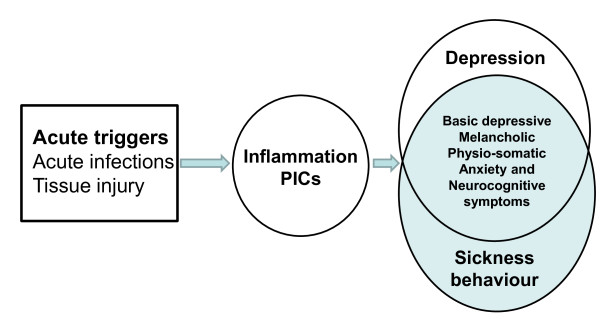
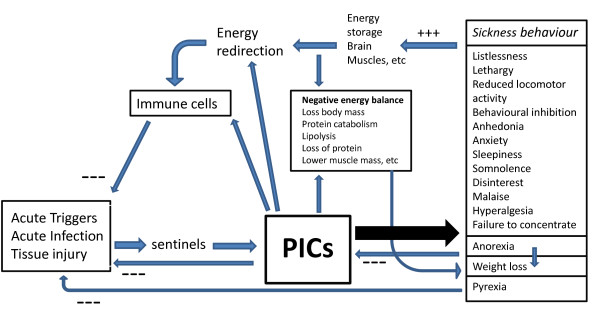
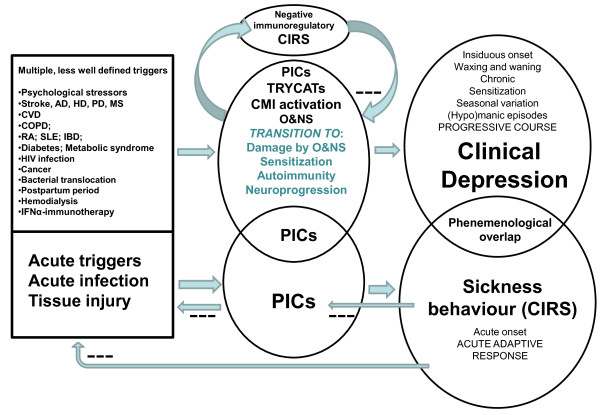
It is of considerable translational importance whether depression is a form or a consequence of sickness behavior. Sickness behavior is a behavioral complex induced by infections and immune trauma and mediated by pro-inflammatory cytokines. It is an adaptive response that enhances recovery by conserving energy to combat acute inflammation. There are considerable phenomenological similarities between sickness behavior and depression, for example, behavioral inhibition, anorexia and weight loss, and melancholic (anhedonia), physio-somatic (fatigue, hyperalgesia, malaise), anxiety and neurocognitive symptoms. In clinical depression, however, a transition occurs to sensitization of immuno-inflammatory pathways, progressive damage by oxidative and nitrosative stress to lipids, proteins, and DNA, and autoimmune responses directed against self-epitopes. The latter mechanisms are the substrate of a neuroprogressive process, whereby multiple depressive episodes cause neural tissue damage and consequent functional and cognitive sequelae. Thus, shared immuno-inflammatory pathways underpin the physiology of sickness behavior and the pathophysiology of clinical depression explaining their partially overlapping phenomenology. Inflammation may provoke a Janus-faced response with a good, acute side, generating protective inflammation through sickness behavior and a bad, chronic side, for example, clinical depression, a lifelong disorder with positive feedback loops between (neuro)inflammation and (neuro)degenerative processes following less well defined triggers.
Overview
The claims and statistics of this paper haven’t been checked yet.
Free: it reads the open-access text and checks the first 5 claims that cite a source we can check. Create a free account to check every claim.
Integrity signals
Registry
Cites
Statistics
Figures
Verification
Claims the paper makes
The claims and statistics of this paper haven’t been checked yet.
Free: it reads the open-access text and checks the first 5 claims that cite a source we can check. Create a free account to check every claim.
Claims other papers make about this one
Each is checked against this paper’s own text: does it say what the citing paper says it does?
The source backs part of the claim, not all of it — or backs it for a different population, condition or comparison.
In the citing paper
“A single systemic injection of LPS induces DLB characterized with behavioral changes similar to symptoms of acute systemic inflammation or infection triggering exacerbation of depression (49).”
From Melatonin Attenuates LPS-Induced Acute Depressive-Like Behaviors and Microglial NLRP3 Inflammasome Activation Through the SIRT1/Nrf2 Pathway (2019) · cites this paper as [49]
Experimental — accuracy not yet measuredThe cited source says what the claim attributes to it.
In the citing paper
“It has been suggested that a 'compensatory (anti)inflammatory reflex system' (CIRS) may operate in MDD [46].”
In the citing paper
“This system has been hypothesized to play a counter-regulatory (i.e.homeostatic) role in the context of peripheral inflammation.”
Self-check
Percentages, sums and reported differences re-computed from the paper’s own numbers.
The self-check needs the paper’s full text.
Citations
Cites
From inflammation to sickness and depression: when the immune system subjugates the brain
Dantzer, R., O'Connor, J. C., Freund, G. G., Johnson, R. W., & Kelley, K. W. (2008) · Nature Reviews Neuroscience · doi:10.1038/nrn2297 · Cited by 7,395 · cited 17×
“Women with a lifetime history of depression have increased inflammatory biomarkers, including IL-6 and sIL-1RA, in the early puerperium as compared to women who have never suffered from depression [115].”
BackgroundInfluentialA Meta-Analysis of Cytokines in Major Depression
Dowlati, Y., Herrmann, N., Swardfager, W., Liu, H., Sham, L., Reim, E. K., & Lanctôt, K. L. (2010) · Biological Psychiatry · doi:10.1016/j.biopsych.2009.09.033 · Cited by 4,729 · cited 2×
“In this context, there is abundant evidence that clinical depression is an immuno-inflammatory disorder characterized by among other things increased levels of PICs and acute phase proteins, including C-reactive protein and haptoglobin [11-20].”
BackgroundTracey, K. J. (2002) · Nature · doi:10.1038/nature01321 · Cited by 3,728 · cited 1×
“PIC-induced changes in neural pathways also participate in inhibiting acute inflammation, for example, enhanced production of glucocorticoids and catecholamines, and activation of cholinergic pathways [91].”
BackgroundAssociations of depression with C-reactive protein, IL-1, and IL-6: a meta-analysis.
Howren, M. B., Lamkin, D. M., & Suls, J. (2009) · Psychosomatic Medicine · doi:10.1097/psy.0b013e3181907c1b · Cited by 2,766 · cited 1×
“Recent meta-analyses and recent publications have confirmed increased levels of PICs in human depression particularly IL-6, TNFa, and IL-1, and CMI activation, evidenced by higher levels of neopterin and soluble IL-2 receptors (sIL-2Rs) [18-20,79,80].”
BackgroundPoints of control in inflammation
Nathan, C. (2002) · Nature · doi:10.1038/nature01320 · Cited by 2,738 · cited 1×
“Activation of the IRS is controlled at different levels whereby regulatory mechanisms specifically target selected control points, such as the production of pro-inflammatory mediators or the effects of mediators on the target tissues [21,89].”
BackgroundDrevets, W. C., Price, J. L., & Furey, M. L. (2008) · Brain Structure and Function · doi:10.1007/s00429-008-0189-x · Cited by 2,241 · cited 1×
“regions that process viscerosensory and regulation of emotion in humans [145-147] and rodents [148].”
BackgroundBiological basis of the behavior of sick animals
Hart, B. L. (1988) · Neuroscience & Biobehavioral Reviews · doi:10.1016/s0149-7634(88)80004-6 · Cited by 2,223 · cited 18×
“Women with a lifetime history of depression have increased inflammatory biomarkers, including IL-6 and sIL-1RA, in the early puerperium as compared to women who have never suffered from depression [115].”
BackgroundInfluentialSystemic LPS causes chronic neuroinflammation and progressive neurodegeneration
Qin, L., Wu, X., Block, M. L., Liu, Y., Breese, G. R., Hong, J., Knapp, D. J., & Crews, F. T. (2007) · Glia · doi:10.1002/glia.20467 · Cited by 2,144 · cited 16×
“Women with a lifetime history of depression have increased inflammatory biomarkers, including IL-6 and sIL-1RA, in the early puerperium as compared to women who have never suffered from depression [115].”
BackgroundInfluentialInflammation 2010: New Adventures of an Old Flame
Medzhitov, R. (2010) · Cell · doi:10.1016/j.cell.2010.03.006 · Cited by 1,834 · cited 5×
“When the resolution phase, however, is not induced, for example, when the IRS was unable to eradicate the pathogen, inflammation may persist despite the CIRS thus causing a chronic inflammatory state [21].”
BackgroundInfluentialHippocampal volume and depression: a meta-analysis of MRI studies
Videbech, P., & Ravnkilde, B. (2004) · American Journal of Psychiatry · doi:10.1176/appi.ajp.161.11.1957 · Cited by 1,590 · cited 1×
“Meta-analysis showed that in patients with chronic depression (> 2 years) or recurrent depression hippocampal volume is significantly decreased and that the latter is related to the number of episodes [140,141].”
Background
Research works printed but not linked: 1
- El-Radhi AS The role of fever in the past and present Med J Islamic World Acad Sci 2011 19 9 14
Cited by
Items 101–200 of 644
Can COVID-19 pandemic boost the epidemic of neurodegenerative diseases?
Verkhratsky, A., Li, Q., Melino, S., Melino, G., & Shi, Y. (2020) · Biology Direct · doi:10.1186/s13062-020-00282-3 · Cited by 91
Kiyota, T., Machhi, J., Lu, Y., Dyavarshetty, B., Nemati, M., Yokoyama, I., Mosley, R. L., & Gendelman, H. E. (2018) · Journal of Neuroimmunology · doi:10.1016/j.jneuroim.2018.03.009 · Cited by 80
Walker, A., McKune, A. J., Ferguson, S. A., Pyne, D. B., & Rattray, B. (2016) · Extreme Physiology & Medicine · doi:10.1186/s13728-016-0049-x · Cited by 91
Maxeiner, H., Schneider, E. M., Kurfiss, S.-T., Brettschneider, J., Tumani, H., & Bechter, K. (2014) · Cytokine · doi:10.1016/j.cyto.2014.05.008 · Cited by 84
IDO and TDO as a potential therapeutic target in different types of depression
Qin, Y., Wang, N., Zhang, X., Han, X., Zhai, X., & Lu, Y. (2018) · Metabolic Brain Disease · doi:10.1007/s11011-018-0290-7 · Cited by 81
The effect of proinflammatory cytokines in Cognitive Behavioral Therapy
Moreira, F. P., Cardoso, T. D. A., Mondin, T. C., Souza, L. D. D. M., Silva, R., Jansen, K., Oses, J. P., & Wiener, C. D. (2015) · Journal of Neuroimmunology · doi:10.1016/j.jneuroim.2015.06.004 · Cited by 77
Biomarkers for Depression: Recent Insights, Current Challenges and Future Prospects
Strawbridge, R., Young, A. H., & Cleare, A. J. (2018) · FOCUS The Journal of Lifelong Learning in Psychiatry · doi:10.1176/appi.focus.16206 · Cited by 79
“Novel methods are required to maximize consistency and clinical applicability of biologic assessments in psychiatric populations.”
Morris, G., Anderson, G., Galecki, P., Berk, M., & Maes, M. (2013) · BMC Medicine · doi:10.1186/1741-7015-11-64 · Cited by 74
“The effects of proinflammatory and cell-mediated immune (CMI) cytokines, including interferons, are more active during fever [3].”
BackgroundInfluentialSelf-citationKallaur, A. P., Reiche, E. M. V., Oliveira, S. R., Simão, A. N. C., Pereira, W. L. D. C. J., Alfieri, D. F., Flauzino, T., Proença, C. D. M., Lozovoy, M. A. B., Kaimen-Maciel, D. R., et al. (2016) · Molecular Neurobiology · doi:10.1007/s12035-015-9648-6 · Cited by 84
“Therefore, the increased IL-10 levels detected here probably reflect a compensatory Treg response that may be regarded as part of a compensatory anti-inflammatory reflex system (CIRS), which aims to attenuate an overzealous inflammatory response [79].”
BackgroundSelf-citationInflammation and Immune Regulation as Potential Drug Targets in Antidepressant Treatment
Schmidt, F. M., Kirkby, K. C., & Lichtblau, N. (2016) · Current Neuropharmacology · doi:10.2174/1570159x14666160115130414 · Cited by 82
“In preclinical studies, mice with an astrocyte-specific deletion of TNF-α showed a lack of behavioural response to antidepressant administration [73].”
BackgroundMorris, G., Reiche, E. M. V., Murru, A., Carvalho, A. F., Maes, M. H. J., Berk, M., & Puri, B. K. (2018) · Molecular Neurobiology · doi:10.1007/s12035-017-0843-5 · Cited by 79
Self-citationT Cell phenotype and T cell receptor repertoire in patients with major depressive disorder
Patas, K., Willing, A., Demiralay, C., Engler, J. B., Lupu, A., Ramien, C., Schäfer, T., Gach, C., Stumm, L., Chan, K., et al. (2018) · Frontiers in Immunology · doi:10.3389/fimmu.2018.00291 · Cited by 74
“Intriguingly, animal models have shown that virus-induced “sickness-behavior,” which bears symptomatic and immunological similarities to MDD (40, 41), depends on the CXCL10-CXCR3 axis (42).”
BackgroundCustódio, C. S., Mello, B. S. F., Cordeiro, R. C., de Araújo, F. Y. R., Chaves, J. H., Vasconcelos, S. M. M., Júnior, H. V. N., de Sousa, F. C. F., Vale, M. L., Carvalho, A. F., et al. (2013) · European Journal of Pharmacology · doi:10.1016/j.ejphar.2013.04.040 · Cited by 76
Mrugacz, M., Ostrowska, L., Bryl, A., Szulc, A., Żelazowska‐Rutkowska, B., & Mrugacz, G. (2017) · Advances in Medical Sciences · doi:10.1016/j.advms.2017.03.003 · Cited by 78
“These inflammatory pathways may lead to oxidative and nitrosative stress and progressive neuronal damage [5].”
BackgroundTang, M.-M., Lin, W.-J., Pan, Y.-Q., & Li, Y.-C. (2018) · Frontiers in Cellular Neuroscience · doi:10.3389/fncel.2018.00255 · Cited by 73
“Open Field Test (OFT) Reduction of locomotor activity is one of characteristic symptoms of major depression (Maes et al., 2012), and is linked to reductions in energy generation in the depressive episode of mood disorder (Caliyurt and Altiay, 2009).”
BackgroundSobolewska-Nowak, J., Wachowska, K., Nowak, A., Orzechowska, A., Szulc, A., Płaza, O., & Gałecki, P. (2023) · Biomedicines · doi:10.3390/biomedicines11071903 · Cited by 84
Self-citationPoon, D. C.-H., Ho, J. Y. S., Chiu, K., Wong, H.-L., & Chang, R. C. (2015) · Neuroscience & Biobehavioral Reviews · doi:10.1016/j.neubiorev.2015.07.015 · Cited by 86
Wang, J.-M., Yang, L.-H., Zhang, Y.-Y., Niu, C.-L., Cui, Y., Feng, W.-S., & Wang, G.-F. (2015) · Physiology & Behavior · doi:10.1016/j.physbeh.2015.08.008 · Cited by 72
“Excessive release of proinflammatory cytokines causes “sickness behavior” symptoms similar with those of depression, suggesting the role of cytokines in human depression [61].”
BackgroundGuo, J., Lin, P., Zhao, X., Zhang, J., Wei, X., Wang, Q., & Wang, C. (2014) · Neuroscience · doi:10.1016/j.neuroscience.2014.01.008 · Cited by 75
“…the close link between peripheral inflammation and depression (Dantzer, 2006, 2012; O’Connor et al., 2009; Gałecki et al., 2012; Leonard and Maes, 2012; Maes, 2008, 2010; Maes et al., 2012), it is reasonable to predict a beneficial effect of anti-inflammatory therapy on depression-like behavior.”
Rudolf, S., Greggersen, W., Kahl, K. G., Hüppe, M., & Schweiger, U. (2014) · Psychiatry Research · doi:10.1016/j.psychres.2014.02.016 · Cited by 71
“In addition to differences in cytokine concentrations, the subgroup of patients with atypical depression is characterized by specific behavioral features (Maes et al., 2012) that may lead to an”
BackgroundInfluentialMorris, G., Walder, K., Puri, B. K., Berk, M., & Maes, M. (2016) · Molecular Neurobiology · doi:10.1007/s12035-015-9392-y · Cited by 67
Self-citationKuwano, N., Kato, T. A., Setoyama, D., Sato-Kasai, M., Shimokawa, N., Hayakawa, K., Ohgidani, M., Sagata, N., Kubo, H., Kishimoto, J., et al. (2018) · Journal of Affective Disorders · doi:10.1016/j.jad.2018.01.014 · Cited by 69
“…serotonin production through upregulation of tryptophan degradation, and such imbalance of tryptophan-kynurenine pathway is suggested to be involved in the development of depression (Dantzer et al., 2011; Halaris et al., 2015; Maes et al., 2012; Maes et al., 2011b; Myint, 2012; Myint et al., 2012).”
InfluentialNeurodevelopmental theory of depression
Gałecki, P., & Talarowska, M. E. (2017) · Progress in Neuro-Psychopharmacology and Biological Psychiatry · doi:10.1016/j.pnpbp.2017.05.023 · Cited by 71
Self-citationKazemi, A., Noorbala, A. A., Azam, K., & Djafarian, K. (2019) · Journal of Functional Foods · doi:10.1016/j.jff.2018.11.041 · Cited by 67
The role of the gut microbiome in opioid use
Ren, M., & Lotfipour, S. (2020) · Behavioural Pharmacology · doi:10.1097/fbp.0000000000000538 · Cited by 68
“Gut, brain, and systemic inflammation are seen in acute and chronic stress and mood disorders (Maes et al., 2012; Wohleb and Delpech, 2017), as well as in opioid-dependent states and particularly in states of withdrawal (Taylor et al.”
BackgroundMidttun, H. L. E., Vindas, M. A., Nadler, L. E., Øverli, Ø., & Johansen, I. B. (2020) · Scientific Reports · doi:10.1038/s41598-020-64948-8 · Cited by 69
Florensa-Zanuy, E., Garro-Martínez, E., Adell, A., Castro, E., Díaz, Á., Pazos, Á., Mac-Dowell, K. S., Martín-Hernández, D., & Pilar-Cuéllar, F. (2021) · Biochemical Pharmacology · doi:10.1016/j.bcp.2021.114433 · Cited by 66
Walker, A. J., Kim, Y., Price, J. B., Kale, R. P., McGillivray, J., Berk, M., & Tye, S. J. (2014) · Frontiers in Psychiatry · doi:10.3389/fpsyt.2014.00034 · Cited by 73
“Activation of IDO is commonly found in later stages of mood disorders, and is a biomarker of depression-like behavior mediated by neural inflammation in animal models (48).”
BackgroundSelf-citationLassitude: The emotion of being sick
Schrock, J. M., Snodgrass, J. J., & Sugiyama, L. S. (2019) · Evolution and Human Behavior · doi:10.1016/j.evolhumbehav.2019.09.002 · Cited by 67
Kanchanatawan, B., Sirivichayakul, S., Ruxrungtham, K., Carvalho, A. F., Geffard, M., Ormstad, H., Anderson, G., & Maes, M. (2018) · Molecular Neurobiology · doi:10.1007/s12035-017-0417-6 · Cited by 63
Self-citationKamran, M., Bibi, F., Rehman, A. U., & Morris, D. W. (2022) · Genes · doi:10.3390/genes13040646 · Cited by 76
“The normal immunologic response in the human body towards pro-inflammatory cytokines and infections causes various behavioral responses, such as disturbed sleep, nausea, loss of interest and appetite, and increased body temperature, which suggest that the actions of inflammatory cytokines cause broader range of behavi…”
BackgroundAnderson, G., & Maes, M. (2014) · CNS & Neurological Disorders - Drug Targets · doi:10.2174/1871527313666140711091400 · Cited by 64
Self-citationA neuro-immune, neuro-oxidative and neuro-nitrosative model of prenatal and postpartum depression
Roomruangwong, C., Anderson, G., Berk, M., Stoyanov, D., Carvalho, A. F., & Maes, M. H. J. (2017) · Progress in Neuro-Psychopharmacology and Biological Psychiatry · doi:10.1016/j.pnpbp.2017.09.015 · Cited by 67
“Importantly, some of these newly formed NO-adducts can trigger autoimmune responses directed against “nitrosative specific epitopes” (NSEs), resulting in deleterious neurotoxic effects (Boullerne et al., 2002; Maes et al., 2012b, 2011a).”
BackgroundInfluentialSelf-citationWigner, P., Czarny, P. L., Gałecki, P., Su, K., & Śliwiński, T. (2017) · Psychiatry Research · doi:10.1016/j.psychres.2017.09.045 · Cited by 69
Self-citationNeuroimmune Impacts of Early-Life Stress on Development and Psychopathology
Brenhouse, H. C., Danese, A., & Grassi‐Oliveira, R. (2018) · Current topics in behavioral neurosciences · doi:10.1007/7854_2018_53 · Cited by 73
Rodrigues, F. T. S., de Souza, M. R. M., Lima, C. N. D. C., da Silva, F. E. R., Costa, D. V. D. S., dos Santos, C. C., Miyajima, F., de Sousa, F. C. F., Vasconcelos, S. M. M., Barichello, T., et al. (2018) · Journal of Psychiatric Research · doi:10.1016/j.jpsychires.2018.10.003 · Cited by 70
Self-citationMind and body: how the health of the body impacts on neuropsychiatry
Renoir, T., Hasebe, K., & Gray, L. J. (2013) · Frontiers in Pharmacology · doi:10.3389/fphar.2013.00158 · Cited by 72
Microglial Function during Glucose Deprivation: Inflammatory and Neuropsychiatric Implications
Churchward, M. A., Tchir, D. R., & Todd, K. G. (2018) · Molecular Neurobiology · doi:10.1007/s12035-017-0422-9 · Cited by 63
“changes and fatigue as an adaptive phenotype to prioritize recovery from infection or illness [35, 36].”
Ionescu, C. E., Popescu, C. C., Agache, M., Dinache, G., & Codreanu, C. (2022) · Medicina · doi:10.3390/medicina58111637 · Cited by 70
“This has been supported by meta-analyses showing high levels of the same proinflammatory cytokines like RA (IL6, IL1β, and TNFα) in the peripheral blood of patients with depression compared with controls [21].”
ResultLullau, A. P. M., Haga, E. M. W., Ronold, E. H., & Dwyer, G. E. (2023) · Frontiers in Neuroscience · doi:10.3389/fnins.2023.1223145 · Cited by 68
“Due to shared immuno-inflammatory pathways, both depression and immune challenges can manifest as “sickness behavior” like fatigue, anhedonia, cognitive dysfunction, psychomotor retardation, and social withdrawal (Maes et al., 2012).”
BackgroundWei, W., Sayyid, Z. N., Ma, X., Wang, T., & Dong, Y. (2018) · Frontiers in Neurology · doi:10.3389/fneur.2018.00178 · Cited by 68
“Interestingly, an extensive body of literature has shown that both anxiety and depression are also associated with a chronic low-grade inflammatory response (42, 43), increased oxidative and nitrosative stress, and activation of cell-mediated immunity (44, 45).”
BackgroundSchrepf, A., Lutgendorf, S. K., & Pyter, L. M. (2015) · Brain Behavior and Immunity · doi:10.1016/j.bbi.2015.04.010 · Cited by 67
“(2015), http://dx.doi.org/10.1016/j. gastric cancer (Kim et al., 2003), prostate cancer (Michalaki et al., 2004), head and neck cancer (Riedel et al., 2005), renal cell carcinoma (Yoshida et al., 2002), and bladder cancer (Mahmoud El-Salahy, 2002).”
InfluentialPlant Derived Phytocompound, Embelin in CNS Disorders: A Systematic Review
Kundap, U. P., Bhuvanendran, S., Kumari, Y., Othman, I., & Shaikh, M. F. (2017) · Frontiers in Pharmacology · doi:10.3389/fphar.2017.00076 · Cited by 66
“Afzal et al. (2012) revealed the anxiolytic potential of embelin using behavioral models of anxiety.”
BackgroundInfluentialPlasma and cerebrospinal fluid inflammatory cytokines in perinatal depression
Miller, E. S., Sakowicz, A., Roy, A., Yang, A., Sullivan, J. T., Grobman, W. A., & Wisner, K. L. (2018) · American Journal of Obstetrics and Gynecology · doi:10.1016/j.ajog.2018.12.015 · Cited by 66
Extracellular Vesicles and the Stress System
Makrygianni, E. A., & Chrousos, G. P. (2022) · Neuroendocrinology · doi:10.1159/000527182 · Cited by 61
Hope, H. F., Hyrich, K. L., Anderson, J., Bluett, J., Sergeant, J. C., Barton, A. C., Cordingley, L., Verstappen, S. M. M., RAMS co-investigators, Adebajo, A., et al. (2019) · Rheumatology · doi:10.1093/rheumatology/kez274 · Cited by 71
Vogelaar, L., van den Berg-Emons, R., Bussmann, H., Rozenberg, R., Timman, R., & van der Woude, C. J. (2015) · Scandinavian Journal of Gastroenterology · doi:10.3109/00365521.2015.1046135 · Cited by 59
“Sickness behavior results in less active behavior (=impaired physical activity), thereby leading to impaired physical fitness [54–56,98,99].”
BackgroundGałecka, M., Bliźniewska-Kowalska, K., Orzechowska, A., Szemraj, J., Maes, M., Berk, M., Su, K.-P., & Gałecki, P. (2021) · Journal of Personalized Medicine · doi:10.3390/jpm11020066 · Cited by 57
Self-citationTheriault, J. E., Shaffer, C., Dienel, G. A., Sander, C. Y., Hooker, J. M., Dickerson, B. C., Barrett, L. F., & Quigley, K. S. (2023) · Neuroscience & Biobehavioral Reviews · doi:10.1016/j.neubiorev.2023.105373 · Cited by 51
Daniele, S., Da Pozzo, E., Zappelli, E., & Martini, C. (2015) · Cellular Signalling · doi:10.1016/j.cellsig.2015.04.006 · Cited by 56
“Neuronal-like cell pre-treatment with TDZ for 24 or 72 h also significantly reduced the release of pro-inflammatory cytokines and counteracted the decrease in anti-inflammatory cytokines as demonstrated previously for a tricyclic anti-depressant in animal models [11,12,57,58].”
BackgroundMaes, M. H. J., Sirivichayakul, S., Matsumoto, A. K., Maes, A., Michelin, A. P., Semeão, L. D. O., Pedrão, J. V. D. L., Moreira, E. G., Barbosa, D. S., Geffard, M., et al. (2020) · Molecular Neurobiology · doi:10.1007/s12035-020-01882-w · Cited by 57
Self-citationRojo‐Wissar, D. M., Sosnowski, D. W., Ingram, M. M., Jackson, C. L., Maher, B. S., Alfano, C. A., Meltzer, L. J., & Spira, A. P. (2021) · Sleep Medicine · doi:10.1016/j.sleep.2021.10.019 · Cited by 61
A phase-specific neuroimmune model of clinical depression
Eyre, H. A., Stuart, M. J., & Baune, B. T. (2014) · Progress in Neuro-Psychopharmacology and Biological Psychiatry · doi:10.1016/j.pnpbp.2014.06.011 · Cited by 60
“…recurrent depressive episodes are illustrated by the findings that the number of episodes of depression (Videbech and Ravnkilde, 2004) and illness duration (McKinnon et al., 2009) is inversely proportional to hippocampal volume (Moylan et al., 2012) and neurocognitive function (Maes et al., 2012a).”
BackgroundInfluentialOrmstad, H., Simonsen, C. S., Broch, L., Maes, M. H. J., Anderson, G., & Celius, E. G. (2020) · Multiple Sclerosis and Related Disorders · doi:10.1016/j.msard.2020.102533 · Cited by 56
Self-citationByrne, M. L., Whittle, S., & Allen, N. B. (2016) · Psychosomatic Medicine · doi:10.1097/psy.0000000000000311 · Cited by 52
“Furthermore, cytokine-induced depression may have specific neuroimmune mechanisms (30), mainly through the inflammatory, oxidative, and nitrosative stress pathways (31,32).”
BackgroundChanges in leukocytes and CRP in different stages of major depression
Singh, D., Guest, P. C., Dobrowolny, H., Vasilevska, V., Meyer-Lotz, G., Bernstein, H., Borucki, K., Neyazi, A., Bogerts, B., Jacobs, R., et al. (2022) · Journal of Neuroinflammation · doi:10.1186/s12974-022-02429-7 · Cited by 57
“Thus, it has been proposed that MD represents a maladaptive version of cytokine-induced sickness [6].”
BackgroundGill, J., Lee, H., Barr, T. L., Baxter, T., Heinzelmann, M. M., Rak, H., & Mysliwiec, V. (2014) · Psychiatry Research · doi:10.1016/j.psychres.2014.01.046 · Cited by 59
Role of MMP-2, MMP-7, MMP-9 and TIMP-2 in the development of recurrent depressive disorder
Bobińska, K., Szemraj, J., Czarny, P. L., & Gałecki, P. (2016) · Journal of Affective Disorders · doi:10.1016/j.jad.2016.03.068 · Cited by 56
Self-citationKelly, K. A., Michalovicz, L. T., Miller, J. V., Castranova, V., Miller, D. B., & O'Callaghan, J. P. (2018) · PLoS ONE · doi:10.1371/journal.pone.0190546 · Cited by 55
Xu, N., Fan, W., Zhou, X., Liu, Y., Ma, P., Qi, S., & Gu, B. (2018) · Metabolic Brain Disease · doi:10.1007/s11011-018-0269-4 · Cited by 57
von Mücke-Heim, I.-A., Urbina-Treviño, L., Bordes, J., Ries, C., Schmidt, M. V., & Deussing, J. M. (2022) · Molecular Psychiatry · doi:10.1038/s41380-022-01762-w · Cited by 61
“Furthermore, both mice and humans exhibit so-called sickness behaviour—an evolutionary conserved biobehavioural response to infection or another immune trauma —with symptoms overlapping depressive symptomatology [92].”
BackgroundOrmstad, H., Verkerk, R. M., Amthor, K.-F., & Sandvik, L. (2014) · Journal of Molecular Neuroscience · doi:10.1007/s12031-014-0272-0 · Cited by 58
Association between toll-like receptor 4 expression and symptoms of major depressive disorder
Hung, Y.-Y., Wu, M.-K., Huang, T.-L., Huang, K.-W., & Huang, G. Y.-L. (2015) · Neuropsychiatric Disease and Treatment · doi:10.2147/ndt.s88430 · Cited by 48
“There is evidence that sickness behaviors, including weight loss and anxiety, are mediated through the effects of proinflammatory cytokines, such as IL-1, TNFα, and IL-6.(7,35) The association between TLR4 and weight loss or anxiety may be mediated by cytokines.”
BackgroundSilent Burdens in Disease: Fatigue and Depression in SLE
Fonseca, R., Bernardes, M., Terroso, G., de Sousa, M. A. B., & Figueiredo‐Braga, M. (2014) · Autoimmune Diseases · doi:10.1155/2014/790724 · Cited by 59
Duke, J. M., Randall, S. M., Palanivelu, V. T., McGarry, S., Boyd, J., Rea, S. M., & Wood, F. M. (2018) · Burns & Trauma · doi:10.1186/s41038-018-0134-z · Cited by 60
Theriault (n.d.) · doi:10.31234/osf.io/pkzr8 · Cited by 51
Amitai, M., Kaffman, S., Kroizer, E., Lebow, M., Magen, I., Benaroya-Milshtein, N., Fennig, S., Weizman, A., Apter, A., & Chen, A. (2022) · Brain, Behavior, and Immunity · doi:10.1016/j.bbi.2022.04.018 · Cited by 51
Treg cell: Critical role of regulatory T-cells in depression
Gao, X. W., Tang, Y., Kong, L., Fan, Y., Wang, C., & Wang, R. (2023) · Pharmacological Research · doi:10.1016/j.phrs.2023.106893 · Cited by 57
Maes, M. H. J., Tedesco, W. L. D., Lozovoy, M. A. B., Mori, M. T. E., Danelli, T., de Almeida, E. R. D., Tejo, A. M., Tano, Z. N., Reiche, E. M. V., & Simão, A. N. C. (2022) · Molecular Psychiatry · doi:10.1038/s41380-021-01431-4 · Cited by 54
“SSC is a highly conserved adaptive symptom complex that protects the host by reducing the motivation to search for food so that the body can save energy to meet the increased energy requirements and hypermetabolism needed to support immune cell functions and combat acute infection [13, 50].”
BackgroundInfluentialSelf-citationMaes, M. H. J., Nowak, G., Caso, J. R., Leza, J. C., Song, C., Kubera, M., Klein, H. C., Gałecki, P., Noto, C. D. S., Glaab, E., et al. (2015) · Molecular Neurobiology · doi:10.1007/s12035-015-9183-5 · Cited by 53
Self-citationSulakhiya, K., Kumar, P., Gurjar, S. S., Barua, C. C., & Hazarika, N. K. (2015) · Pharmacology Biochemistry and Behavior · doi:10.1016/j.pbb.2015.02.015 · Cited by 51
Aleem, D., & Tohid, H. (2018) · Revista Colombiana de Psiquiatría · doi:10.1016/j.rcp.2017.03.002 · Cited by 32
What SARS-CoV-2 does to our brains
Aschman, T., Mothes, R., Heppner, F. L., & Radbruch, H. (2022) · Immunity · doi:10.1016/j.immuni.2022.06.013 · Cited by 53
“…any type of infection can be coincidental or due to co-occurring factors (such as critical illness related in severely ill patients). ll Perspective myasthenia gravis (Mahmood et al., 2022; Morgello, 2020; Restivo et al., 2020; Sohal and Mansur, 2020; Song et al., 2021; Sriwastava et al., 2021).”
Liaqat, H., Parveen, A., & Kim, S. Y. (2022) · International Journal of Molecular Sciences · doi:10.3390/ijms232314968 · Cited by 53
“Previous reports indicate that patients with depression have mild chronic inflammation [52,53].”
BackgroundMacMurray, J. P., Comings, D. E., & Napolioni, V. (2013) · Brain Behavior and Immunity · doi:10.1016/j.bbi.2013.09.012 · Cited by 51
Reynoso-Moreno, I., Najar-Guerrero, I., Escareño, N., Flores-Soto, M. E., Gertsch, J., & Paredes, J. M. V. (2017) · Journal of Agricultural and Food Chemistry · doi:10.1021/acs.jafc.7b02979 · Cited by 48
Evolutionary Perspectives on Genetic and Environmental Risk Factors for Psychiatric Disorders
Keller, M. C. (2018) · Annual Review of Clinical Psychology · doi:10.1146/annurev-clinpsy-050817-084854 · Cited by 44
“Given that many depressive symptoms are hypothesized to be related to energy conservation and reduction of goal pursuit, it is telling that the typical behavioral symptoms induced by acute infections overlap highly with depressive symptoms (Maes et al. 2012).”
BackgroundChristenson, J., Whitby, S. J., Mellor, D., Thomas, J., McKune, A., Roach, P. D., & Naumovski, N. (2016) · Metabolic Syndrome and Related Disorders · doi:10.1089/met.2016.0035 · Cited by 47
Himmerich, H., Bartsch, S., Hamer, H. M., Mergl, R., Schönherr, J., Petersein, C., Munzer, A., Kirkby, K. C., Bauer, K., & Sack, U. (2014) · Oxidative Medicine and Cellular Longevity · doi:10.1155/2014/806162 · Cited by 55
Price, J. B., Bronars, C., Erhardt, S., Cullen, K. R., Schwieler, L., Berk, M., Walder, K., McGee, S. L., Frye, M. A., & Tye, S. J. (2018) · Neuroscience & Biobehavioral Reviews · doi:10.1016/j.neubiorev.2018.04.002 · Cited by 47
Self-citationChaves-Filho, A. J. M., Macêdo, D. S., de Lucena, D. F., & Maes, M. H. J. (2019) · Behavioural Brain Research · doi:10.1016/j.bbr.2019.111975 · Cited by 53
Self-citationGrygiel‐Górniak, B., Limphaibool, N., & Puszczewicz, M. (2019) · Psychiatry and Clinical Neurosciences · doi:10.1111/pcn.12826 · Cited by 51
“Role of cytokines in the etiopathogenesis of depression in connective tissue diseases There is a striking resemblance between cytokine-induced sickness behavior and depression: from the shared immuno-inflammatory pathways to overlapping symptoms of behavioral inhibition, social withdrawal, and physio-somatic and neuro…”
BackgroundMello, B. S. F., Chaves Filho, A. J. M., Custódio, C. S., Cordeiro, R. C., Miyajima, F., de Sousa, F. C. F., Vasconcelos, S. M. M., de Lucena, D. F., & Macedo, D. (2018) · Journal of Neuroimmunology · doi:10.1016/j.jneuroim.2018.04.009 · Cited by 45
Gałecki, P. (2014) · Medical Science Monitor · doi:10.12659/msm.889853 · Cited by 44
“If ROS accumulate, they activate protection systems [13].”
BackgroundSelf-citationOrmstad, H., Bryn, V., Verkerk, R. M., Skjeldal, O. H., Halvorsen, B. L., Saugstad, O. D., Isaksen, J., & Maes, M. H. J. (2018) · CNS & Neurological Disorders - Drug Targets · doi:10.2174/1871527317666180720163221 · Cited by 47
Self-citationMicrobiome and substances of abuse
Salavrakos, M., Leclercq, S., de Timary, P., & Dom, G. (2020) · Progress in Neuro-Psychopharmacology and Biological Psychiatry · doi:10.1016/j.pnpbp.2020.110113 · Cited by 48
Neuropsychological Features of Adult Mastocytosis
Moura, D. S., Georgin‐Lavialle, S., Gaillard, R., & Hermine, O. (2014) · Immunology and Allergy Clinics of North America · doi:10.1016/j.iac.2014.02.001 · Cited by 50
Kazemi, A., Noorbala, A. A., & Djafarian, K. (2020) · Journal of Human Nutrition and Dietetics · doi:10.1111/jhn.12675 · Cited by 42
Zhang, J., Lin, W., Tang, M., Zhao, Y., Zhang, K., Wang, X., & Li, Y. (2019) · Psychoneuroendocrinology · doi:10.1016/j.psyneuen.2019.104580 · Cited by 48
Tang, C., Zhang, Y., Wang, W., Li, W., & Shi, J. (2015) · Molecular Neurobiology · doi:10.1007/s12035-015-9186-2 · Cited by 48
“latter induce autonomic, endocrine, and behavioral responses that are controlled by the brain and result in sickness behavior and clinical depression [8, 9].”
BackgroundPain-Induced Pessimism and Anhedonia: Evidence From a Novel Probability-Based Judgment Bias Test
Lecorps, B., Ludwig, B. R., von Keyserlingk, M. A. G., & Weary, D. M. (2019) · Frontiers in Behavioral Neuroscience · doi:10.3389/fnbeh.2019.00054 · Cited by 49
Cunha, M. P., Pazini, F. L., Oliveira‐Giacomelli, Á., Machado, D. G., & Rodrigues, A. L. S. (2013) · Brain Research Bulletin · doi:10.1016/j.brainresbull.2013.01.005 · Cited by 45
The role of PON-1, GR, IL-18, and OxLDL in depression with and without posttraumatic stress disorder
Ogłodek, E. A. (2017) · Pharmacological Reports · doi:10.1016/j.pharep.2017.03.015 · Cited by 46
Suicide and Lyme and associated diseases
Bransfield, R. C. (2017) · Neuropsychiatric Disease and Treatment · doi:10.2147/ndt.s136137 · Cited by 43
Repeated Systemic Treatment with Rapamycin Affects Behavior and Amygdala Protein Expression in Rats
Hadamitzky, M., Herring, A., Kirchhof, J., Bendix, I., Haight, M. J., Keyvani, K., Lückemann, L., Unteroberdörster, M., & Schedlowski, M. (2018) · The International Journal of Neuropsychopharmacology · doi:10.1093/ijnp/pyy017 · Cited by 41
“Infected rodents’ sickness behavior is characterized by reduced exploration and motor activity, decreased food and water consumption, weight loss due to loss of appetite, general anhedonia, and depressive-like behavior (Hart, 1988; Dantzer, 2001b, 2001a; Dantzer et al., 2008; Steiner et al., 2011; Maes et al., 2012).”
BackgroundStroke Induces Prolonged Changes in Lipid Metabolism, the Liver and Body Composition in Mice
Haley, M., White, C., Roberts, D., O’Toole, K., Cunningham, C. J., Rivers‐Auty, J., O’Boyle, C., Lane, C. P., Heaney, O., Allan, S. M., et al. (2019) · Translational Stroke Research · doi:10.1007/s12975-019-00763-2 · Cited by 46
“Inflammation is well understood to drive sickness behaviour in rodents, which seems phenotypically similar to depression, involving decreased concentration, fatigue and anhedonia [49].”
BackgroundMehterov, N. H., Minchev, D. S., Gevezova, M., Sarafian, V. S., & Maes, M. H. J. (2022) · Molecular Neurobiology · doi:10.1007/s12035-022-02889-1 · Cited by 42
Self-citationCellular and Molecular Inflammatory Profile of the Choroid Plexus in Depression and Suicide
Devorak, J., Torres-Platas, S. G., Davoli, M. A., Prud’homme, J., Turecki, G., & Mechawar, N. (2015) · Frontiers in Psychiatry · doi:10.3389/fpsyt.2015.00138 · Cited by 45
“This would curtail the amount of ChP-derived IL-1ß (or other cytokines and intermediate messenger molecules) that could feed back into the bloodstream or gain access to the CSF by an as-of-yet unknown BCSFB transversal mechanism, or both; moreover, it could curtail the ChP’s production of IL-1ß destined for the CSF. I…”
BackgroundInfluentialPsychedelics for acquired brain injury: a review of molecular mechanisms and therapeutic potential
Allen, J., Dames, S., Foldi, C. J., & Shultz, S. R. (2024) · Molecular Psychiatry · doi:10.1038/s41380-023-02360-0 · Cited by 47
Yang, R., Lu, B., Li, T., Du, Y., Wang, X., & Jia, Y. (2015) · International Journal of Geriatric Psychiatry · doi:10.1002/gps.4315 · Cited by 44
“It has also been reported that depression is an inflammatory disorder accompanied by cell-mediated immune activation as evidenced by higher levels of neopterin and soluble IL-2 receptors (Maes et al., 2012b).”
Background
Metadata
- Authors
- Maes, M., Berk, M., Goehler, L., Song, C., Anderson, G., Gałecki, P., & Leonard, B.
- Affiliations
- Piyavate Hospital (TH)
- The Royal Melbourne Hospital (AU)
- University of Virginia (US)
- Dalhousie University (CA)
- Medical University of Lodz (PL)
- Ollscoil na Gaillimhe – University of Galway (IE)
- Corresponding author
- Maes, Michael
- Venue
- BMC Medicine
- Published
- 2012-06-29
- Volume
- 10
- Issue
- 1
- Pages
- 66-66
- ISSN
- 1741-7015 (ISSN-L)
- PMC
- PMC3391987
- OpenAlex
- W2098731039
- Cited by
- 629
- References
- 189
- Citations by year
- 2026: 24 · 2025: 36 · 2024: 51 · 2023: 57 · 2022: 63 · 2021: 39 · 2020: 41 · 2019: 47 · 2018: 53 · 2017: 44 · 2016: 40 · 2015: 54 · 2014: 40 · 2013: 26 · 2012: 11
- FWCI
- 2.71
- Type
- journal article
- Language
- en
- Open access
- gold
- doi.org
- Licence
- Locations
- BMC Medicine (publishedVersion, cc-by)
- Europe PMC (PubMed Central) (publishedVersion, cc-by)
- PubMed Central (publishedVersion, cc-by)
- PubMed (publishedVersion)
- ENLIGHTEN (Jurnal Bimbingan dan Konseling Islam) (acceptedVersion)
- ARAN (University of Galway Research Repository) (Ollscoil na Gaillimhe – University of Galway) (acceptedVersion, cc-by-nc-nd)
- Minerva Access (University of Melbourne) (submittedVersion, cc-by)
- Arrow@dit (Dublin Institute of Technology) (submittedVersion)
- ARAN (University of Galway Research Repository) (Ollscoil na Gaillimhe – University of Galway) (submittedVersion, cc-by-nc-nd)
- DOAJ (DOAJ: Directory of Open Access Journals) (submittedVersion, cc-by-sa)
- Figshare (submittedVersion, cc-by)
- ARAN (University of Galway Research Repository) (Ollscoil na Gaillimhe – University of Galway) (submittedVersion, cc-by-nc)
- Research Repository UCD (University College Dublin) (cc-by-nc)
- Funders
- Bristol-Myers Squibb
- Eli Lilly and Company
- Pfizer
- Sanofi
- Geelong Region Medical Research Foundation
- Beyond Blue
- Servier
- H. Lundbeck A/S
- National Institutes of Health
- National Health and Medical Research Council
- Cilag
- Topics
- Life Sciences › Neuroscience › Biological Psychiatry › Tryptophan and brain disorders
- Life Sciences › Neuroscience › Behavioral Neuroscience › Stress Responses and Cortisol
- Health Sciences › Medicine › Pharmacology (medical) › Treatment of Major Depression
- Keywords
- depression, sickness behavior, inflammation, inflammatory cytokines, neuroinflammation, oxidative stress, nitrosative stress, autoimmunity, anhedonia, fatigue, neurodegeneration, chronic inflammation
- MeSH terms
- Animals, Depression, Humans, Autoimmunity, Cytokines, Inflammation Mediators, Neurodegenerative Diseases, Illness Behavior
About these checks
Registry, retraction, Cites and statistics results are computed, not judged, with one exception: a printed reference that no index lists is read once by a model before it counts as a citation error. Claims are extracted by a model and kept only when their quote appears verbatim in the text; each cited source is then checked, with a model’s help, for whether it says what the claim relies on. Those verdicts can be wrong — read the claim’s quote and the cited source before relying on one.
Statistics and arithmetic are recomputed, not judged.
Confidence bands are shown only for fields calibrated on our annotated test set. None is calibrated yet, so no band is shown.
What counts as a claim ›How we measure confidence ›How we check this ›
Are you an author, or do you see a problem with this page? Request a review
Data sources
Bibliographic data: Semantic Scholar, OpenAlex, Crossref.
Contains information from the Semantic Scholar Academic Graph Datasets, made available under the ODC Attribution License (ODC-BY 1.0).
Semantic Scholar’s data is described in: Kinney, R., et al. (2023). The Semantic Scholar Open Data Platform. arXiv:2301.10140.
