

Depression and sickness behavior are Janus-faced responses to shared inflammatory pathways
Open accessThe DOI matches its Crossref record; 187 of the 189 references it cites were found in a registry or an index.
Abstract
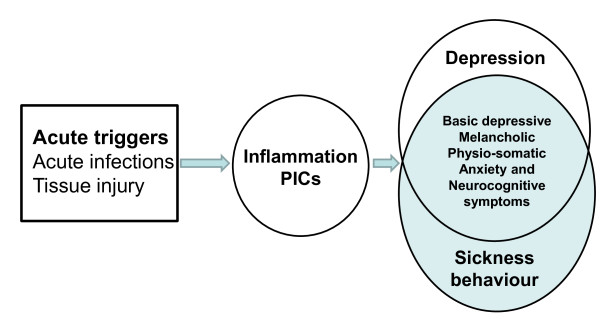
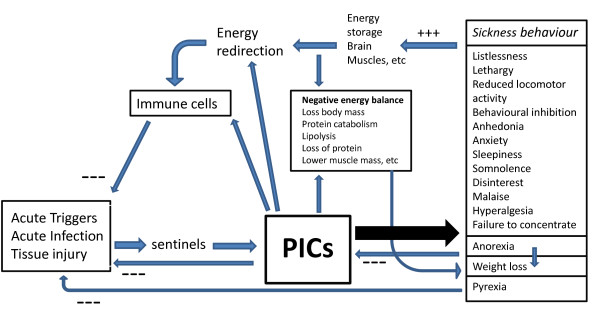
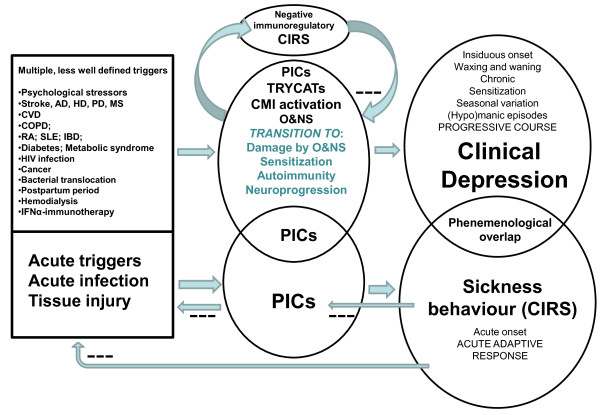
It is of considerable translational importance whether depression is a form or a consequence of sickness behavior. Sickness behavior is a behavioral complex induced by infections and immune trauma and mediated by pro-inflammatory cytokines. It is an adaptive response that enhances recovery by conserving energy to combat acute inflammation. There are considerable phenomenological similarities between sickness behavior and depression, for example, behavioral inhibition, anorexia and weight loss, and melancholic (anhedonia), physio-somatic (fatigue, hyperalgesia, malaise), anxiety and neurocognitive symptoms. In clinical depression, however, a transition occurs to sensitization of immuno-inflammatory pathways, progressive damage by oxidative and nitrosative stress to lipids, proteins, and DNA, and autoimmune responses directed against self-epitopes. The latter mechanisms are the substrate of a neuroprogressive process, whereby multiple depressive episodes cause neural tissue damage and consequent functional and cognitive sequelae. Thus, shared immuno-inflammatory pathways underpin the physiology of sickness behavior and the pathophysiology of clinical depression explaining their partially overlapping phenomenology. Inflammation may provoke a Janus-faced response with a good, acute side, generating protective inflammation through sickness behavior and a bad, chronic side, for example, clinical depression, a lifelong disorder with positive feedback loops between (neuro)inflammation and (neuro)degenerative processes following less well defined triggers.
Overview
The claims and statistics of this paper haven’t been checked yet.
Free: it reads the open-access text and checks the first 5 claims that cite a source we can check. Create a free account to check every claim.
Integrity signals
Registry
Cites
Statistics
Figures
Verification
Claims the paper makes
The claims and statistics of this paper haven’t been checked yet.
Free: it reads the open-access text and checks the first 5 claims that cite a source we can check. Create a free account to check every claim.
Claims other papers make about this one
Each is checked against this paper’s own text: does it say what the citing paper says it does?
The source backs part of the claim, not all of it — or backs it for a different population, condition or comparison.
In the citing paper
“A single systemic injection of LPS induces DLB characterized with behavioral changes similar to symptoms of acute systemic inflammation or infection triggering exacerbation of depression (49).”
From Melatonin Attenuates LPS-Induced Acute Depressive-Like Behaviors and Microglial NLRP3 Inflammasome Activation Through the SIRT1/Nrf2 Pathway (2019) · cites this paper as [49]
Experimental — accuracy not yet measuredThe cited source says what the claim attributes to it.
In the citing paper
“It has been suggested that a 'compensatory (anti)inflammatory reflex system' (CIRS) may operate in MDD [46].”
In the citing paper
“This system has been hypothesized to play a counter-regulatory (i.e.homeostatic) role in the context of peripheral inflammation.”
Self-check
Percentages, sums and reported differences re-computed from the paper’s own numbers.
The self-check needs the paper’s full text.
Citations
Cites
From inflammation to sickness and depression: when the immune system subjugates the brain
Dantzer, R., O'Connor, J. C., Freund, G. G., Johnson, R. W., & Kelley, K. W. (2008) · Nature Reviews Neuroscience · doi:10.1038/nrn2297 · Cited by 7,395 · cited 17×
“Women with a lifetime history of depression have increased inflammatory biomarkers, including IL-6 and sIL-1RA, in the early puerperium as compared to women who have never suffered from depression [115].”
BackgroundInfluentialA Meta-Analysis of Cytokines in Major Depression
Dowlati, Y., Herrmann, N., Swardfager, W., Liu, H., Sham, L., Reim, E. K., & Lanctôt, K. L. (2010) · Biological Psychiatry · doi:10.1016/j.biopsych.2009.09.033 · Cited by 4,729 · cited 2×
“In this context, there is abundant evidence that clinical depression is an immuno-inflammatory disorder characterized by among other things increased levels of PICs and acute phase proteins, including C-reactive protein and haptoglobin [11-20].”
BackgroundTracey, K. J. (2002) · Nature · doi:10.1038/nature01321 · Cited by 3,728 · cited 1×
“PIC-induced changes in neural pathways also participate in inhibiting acute inflammation, for example, enhanced production of glucocorticoids and catecholamines, and activation of cholinergic pathways [91].”
BackgroundAssociations of depression with C-reactive protein, IL-1, and IL-6: a meta-analysis.
Howren, M. B., Lamkin, D. M., & Suls, J. (2009) · Psychosomatic Medicine · doi:10.1097/psy.0b013e3181907c1b · Cited by 2,766 · cited 1×
“Recent meta-analyses and recent publications have confirmed increased levels of PICs in human depression particularly IL-6, TNFa, and IL-1, and CMI activation, evidenced by higher levels of neopterin and soluble IL-2 receptors (sIL-2Rs) [18-20,79,80].”
BackgroundPoints of control in inflammation
Nathan, C. (2002) · Nature · doi:10.1038/nature01320 · Cited by 2,738 · cited 1×
“Activation of the IRS is controlled at different levels whereby regulatory mechanisms specifically target selected control points, such as the production of pro-inflammatory mediators or the effects of mediators on the target tissues [21,89].”
BackgroundDrevets, W. C., Price, J. L., & Furey, M. L. (2008) · Brain Structure and Function · doi:10.1007/s00429-008-0189-x · Cited by 2,241 · cited 1×
“regions that process viscerosensory and regulation of emotion in humans [145-147] and rodents [148].”
BackgroundBiological basis of the behavior of sick animals
Hart, B. L. (1988) · Neuroscience & Biobehavioral Reviews · doi:10.1016/s0149-7634(88)80004-6 · Cited by 2,223 · cited 18×
“Women with a lifetime history of depression have increased inflammatory biomarkers, including IL-6 and sIL-1RA, in the early puerperium as compared to women who have never suffered from depression [115].”
BackgroundInfluentialSystemic LPS causes chronic neuroinflammation and progressive neurodegeneration
Qin, L., Wu, X., Block, M. L., Liu, Y., Breese, G. R., Hong, J., Knapp, D. J., & Crews, F. T. (2007) · Glia · doi:10.1002/glia.20467 · Cited by 2,144 · cited 16×
“Women with a lifetime history of depression have increased inflammatory biomarkers, including IL-6 and sIL-1RA, in the early puerperium as compared to women who have never suffered from depression [115].”
BackgroundInfluentialInflammation 2010: New Adventures of an Old Flame
Medzhitov, R. (2010) · Cell · doi:10.1016/j.cell.2010.03.006 · Cited by 1,834 · cited 5×
“When the resolution phase, however, is not induced, for example, when the IRS was unable to eradicate the pathogen, inflammation may persist despite the CIRS thus causing a chronic inflammatory state [21].”
BackgroundInfluentialHippocampal volume and depression: a meta-analysis of MRI studies
Videbech, P., & Ravnkilde, B. (2004) · American Journal of Psychiatry · doi:10.1176/appi.ajp.161.11.1957 · Cited by 1,590 · cited 1×
“Meta-analysis showed that in patients with chronic depression (> 2 years) or recurrent depression hippocampal volume is significantly decreased and that the latter is related to the number of episodes [140,141].”
Background
Research works printed but not linked: 1
- El-Radhi AS The role of fever in the past and present Med J Islamic World Acad Sci 2011 19 9 14
Cited by
Mind-altering microorganisms: the impact of the gut microbiota on brain and behaviour
Cryan, J. F., & Dinan, T. G. (2012) · Nature Reviews Neuroscience · doi:10.1038/nrn3346 · Cited by 4,572
Gut/brain axis and the microbiota
Mayer, E. A., Tillisch, K., & Gupta, A. (2015) · Journal of Clinical Investigation · doi:10.1172/jci76304 · Cited by 1,503
So depression is an inflammatory disease, but where does the inflammation come from?
Berk, M., Williams, L. J., Jacka, F. N., O’Neil, A., Pasco, J. A., Moylan, S., Allen, N. B., Stuart, A. L., Hayley, A. C., Byrne, M. L., et al. (2013) · BMC Medicine · doi:10.1186/1741-7015-11-200 · Cited by 1,423
“release of low doses of IL-6 and TFNα via administration of IL-1 in rats generates ‘sickness behavior’ (social withdrawal, decreased exploratory behavior) [209, 210], w hilst deletion of the”
Self-citationInflammation: Depression Fans the Flames and Feasts on the Heat
Kiecolt-Glaser, J. K., Derry, H. M., & Fagundes, C. P. (2015) · American Journal of Psychiatry · doi:10.1176/appi.ajp.2015.15020152 · Cited by 844
Penninx, B. W., Milaneschi, Y., Lamers, F., & Vogelzangs, N. (2013) · BMC Medicine · doi:10.1186/1741-7015-11-129 · Cited by 839
“Some - but not all - studies confirmed higher TRYCAT levels in depressed patients, especially those depressed cases with physio-somatic symptoms [84] and TRYCAT levels have been linked with cardiac dysfunction, pain and other somatic health complaints (see Anderson G et al.”
ResultHassamal, S. (2023) · Frontiers in Psychiatry · doi:10.3389/fpsyt.2023.1130989 · Cited by 578
“Peripheral CRP levels exceeding 3 mg/l are associated with a specific depressive phenotype resembling “sickness behavior”: anhedonia, apathy, decreased appetite, fatigue, sleepiness, pain, suicidality, and cognitive impairments (5).”
BackgroundAn active inference theory of allostasis and interoception in depression
Barrett, L. F., Quigley, K. S., & Hamilton, P. (2016) · Philosophical Transactions of the Royal Society B: Biological Sciences · doi:10.1098/rstb.2016.0011 · Cited by 554
Arioz, B. I., Tastan, B., Tarakcioglu, E., Tufekci, K. U., Olcum, M., Ersoy, N., Bagriyanik, A., Genc, K., & Genc, S. (2019) · Frontiers in Immunology · doi:10.3389/fimmu.2019.01511 · Cited by 516
“A single systemic injection of LPS induces DLB characterized with behavioral changes similar to symptoms of acute systemic inflammation or infection triggering exacerbation of depression (49).”
BackgroundSex differences in depression: Insights from clinical and preclinical studies
Eid, R. S., Gobinath, A. R., & Galea, L. A. M. (2019) · Progress in Neurobiology · doi:10.1016/j.pneurobio.2019.01.006 · Cited by 457
Köhler, C. A., Freitas, T. H., Stubbs, B., Maes, M., Solmi, M., Veronese, N., de Andrade, N. Q., Morris, G., Fernandes, B. S., Brunoni, A. R., et al. (2017) · Molecular Neurobiology · doi:10.1007/s12035-017-0632-1 · Cited by 449
“I t h a s b e e n s u g g e s t e d t h a t a Bc omp en s a t o r y (anti)inflammatory reflex system^ (CIRS) may operate in MDD [46].”
Self-citationMicrobes and mental health: A review
Rieder, R., Wisniewski, P. J., Alderman, B. L., & Campbell, S. C. (2017) · Brain, Behavior, and Immunity · doi:10.1016/j.bbi.2017.01.016 · Cited by 427
“Although the mechanisms of action are unknown, B. infantis also has been shown to normalize peripheral pro-inflammatory cytokine and tryptophan concentrations implicated with depression (Maes et al., 2012).”
BackgroundBiomarkers for depression: recent insights, current challenges and future prospects
Strawbridge, R., Young, A. H., & Cleare, A. J. (2017) · Neuropsychiatric Disease and Treatment · doi:10.2147/ndt.s114542 · Cited by 415
Gut microbiome and depression: what we know and what we need to know
Winter, G., Hart, R. A., Charlesworth, R. P. G., & Sharpley, C. F. (2018) · Reviews in the Neurosciences · doi:10.1515/revneuro-2017-0072 · Cited by 394
The Role of Exercise in Management of Mental Health Disorders: An Integrative Review
Smith, P. J., & Merwin, R. M. (2021) · Annual Review of Medicine · doi:10.1146/annurev-med-060619-022943 · Cited by 360
“The bioenergetic system is also highly influenced by inflammation (35), sharing multiple molecular pathways with neurogenesis and depression (36).”
BackgroundBeyond a neurotransmitter: The role of serotonin in inflammation and immunity
Wu, H., Denna, T. H., Storkersen, J. N., & Gerriets, V. A. (2019) · Pharmacological Research · doi:10.1016/j.phrs.2018.06.015 · Cited by 338
Inflammation and Schizophrenia
Kirkpatrick, B., & Miller, B. J. (2013) · Schizophrenia Bulletin · doi:10.1093/schbul/sbt141 · Cited by 312
The role of neuroimmune signaling in alcoholism
Crews, F. T., Lawrimore, C. J., Walter, T. J., & Coleman, L. G. (2017) · Neuropharmacology · doi:10.1016/j.neuropharm.2017.01.031 · Cited by 321
“Indeed, the similarities between sickness behavior and depression have been noted (Maes et al., 2012).”
The Compensatory Immune-Regulatory Reflex System (CIRS) in Depression and Bipolar Disorder
Maes, M., & Carvalho, A. F. (2018) · Molecular Neurobiology · doi:10.1007/s12035-018-1016-x · Cited by 306
Self-citationKopschina Feltes, P., Doorduin, J., Klein, H. C., Juárez-Orozco, L. E., Dierckx, R. A., Moriguchi-Jeckel, C. M., & de Vries, E. F. (2017) · Journal of Psychopharmacology · doi:10.1177/0269881117711708 · Cited by 279
“Pro-inflammatory cytokines, TRYCATs and O&NS together may contribute to a state called neuroprogression, related to neurodegeneration, reduced neurogenesis, neural plasticity and apoptosis (Maes et al., 2012).”
BackgroundSavitz, J., Drevets, W. C., Smith, C. M., Victor, T. A., Wurfel, B. E., Bellgowan, P. S., Bodurka, J., Teague, T. K., & Dantzer, R. (2015) · Neuropsychopharmacology · doi:10.1038/npp.2014.194 · Cited by 272
The many roads to mitochondrial dysfunction in neuroimmune and neuropsychiatric disorders
Morris, G., & Berk, M. (2015) · BMC Medicine · doi:10.1186/s12916-015-0310-y · Cited by 245
“Other findings include evidence of increased numbers of circulating Th17 T cells, diminished numbers of regulatory T cells (Tregs), and a significantly increased Th17/Treg ratio [297].”
BackgroundSelf-citationA Narrative Review of Cancer-Related Fatigue (CRF) and Its Possible Pathogenesis
Yang, S., Chu, S., Gao, Y., Ai, Q., Liu, Y., Li, X., & Chen, N. (2019) · Cells · doi:10.3390/cells8070738 · Cited by 225
Neuroimmune signaling in alcohol use disorder
Erickson, E. K., Grantham, E. K., Warden, A. S., & Harris, R. A. (2019) · Pharmacology Biochemistry and Behavior · doi:10.1016/j.pbb.2018.12.007 · Cited by 223
Toxoplasma gondii infection and behaviour – location, location, location?
McConkey, G. A., Martin, H. L., Bristow, G. C., & Webster, J. P. (2013) · Journal of Experimental Biology · doi:10.1242/jeb.074153 · Cited by 217
“IFN-γ mediates cognitive effects as sickness behaviour and has been associated with clinical depression (Maes et al., 2012; McCusker and Kelley, 2013), as exemplified by interferon therapy treatment of cancer and the resultant depressive side effects (Trask et al., 2000; Valentine and Meyers, 2005).”
Metabolic syndrome and major depression
Marazziti, D., Rutigliano, G., Baroni, S., Landi, P., & Dell'Osso, L. (2014) · CNS Spectrums · doi:10.1017/s1092852913000667 · Cited by 210
“On the other hand, acute and chronic administration of cytokines or cytokine inducers was found to trigger depressive symptoms.(73) According to the cytokine hypothesis, depression would be due to a stress-related increased production of pro-inflammatory cytokines that, in turn, would lead to indoleamine-2,3-dioxygena…”
BackgroundSavitz, J., Drevets, W. C., Wurfel, B. E., Ford, B. N., Bellgowan, P. S. F., Victor, T. A., Bodurka, J., Teague, T. K., & Dantzer, R. (2015) · Brain, Behavior, and Immunity · doi:10.1016/j.bbi.2015.02.007 · Cited by 209
“The inverse association between KynA/QA and the degree of anhedonia in the subjects with MDD is interesting given the well-characterized link between inflammation-induced sickness behavior and anhedonia (Dantzer et al., 2008; Maes et al., 2012; Yirmiya et al., 2000).”
BackgroundAntidepressant therapies inhibit inflammation and microglial M1-polarization
Kalkman, H. O., & Feuerbach, D. (2016) · Pharmacology & Therapeutics · doi:10.1016/j.pharmthera.2016.04.001 · Cited by 212
Roque, A., Ochoa-Zarzosa, A., & Torner, L. (2016) · Brain, Behavior, and Immunity · doi:10.1016/j.bbi.2015.09.017 · Cited by 190
“Depressive patients subjected to stressful events respond secreting high concentrations of IL-6 and C reactive protein (Carpenter et al., 2010; Maes et al., 2012).”
Peripheral Markers of Depression
Nobis, A., Zalewski, D., & Waszkiewicz, N. (2020) · Journal of Clinical Medicine · doi:10.3390/jcm9123793 · Cited by 197
Roles of PI3K/AKT/GSK3/mTOR Pathway in Cell Signaling of Mental Illnesses
Kitagishi, Y., Kobayashi, M., Kikuta, K., & Matsuda, S. (2012) · Depression Research and Treatment · doi:10.1155/2012/752563 · Cited by 191
“There are similarities between depression and sickness behaviors [4].”
BackgroundInflammatory theory of depression
Gałecki, P., & Talarowska, M. (2018) · Psychiatria Polska · doi:10.12740/pp/76863 · Cited by 192
“Ich nagromadzenie mobilizuje aktywność systemów protekcyjnych [20].”
BackgroundInfluentialSelf-citationHou, R., Garner, M., Holmes, C., Osmond, C., Teeling, J., Lau, L., & Baldwin, D. S. (2017) · Brain, Behavior, and Immunity · doi:10.1016/j.bbi.2017.01.021 · Cited by 191
Central pathways causing fatigue in neuro-inflammatory and autoimmune illnesses
Morris, G., Berk, M., Walder, K., & Maes, M. (2015) · BMC Medicine · doi:10.1186/s12916-014-0259-2 · Cited by 181
“Chronic systemic inflammation and oxidative stress play a major role in the etiology of depression [19,20].”
BackgroundInfluentialSelf-citationDepression, dementia and immune dysregulation
Hayley, S., Hakim, A. M., & Albert, P. R. (2021) · Brain · doi:10.1093/brain/awaa405 · Cited by 186
“These could include feeding and sleeping disturbances, as well as general malaise (Maes et al., 2012).”
BackgroundAbautret-Daly, Á., Dempsey, E., Parra-Blanco, A., Medina, C., & Harkin, A. (2018) · Acta Neuropsychiatrica · doi:10.1017/neu.2017.3 · Cited by 180
“…of immune – in fl ammatory pathways, progressive damage by oxidative and nitrosative stress, and an autoimmune response directed against self-epitopes with the latter processes leading to neural tissue damage and functional and cognitive artefacts over repeated depressive episodes (68).”
Role of chronic stress and depression in periodontal diseases
Warren, K. R., Postolache, T. T., Groer, M. E., Pinjari, O., Kelly, D. L., & Reynolds, M. A. (2014) · Periodontology 2000 · doi:10.1111/prd.12036 · Cited by 173
“Neurologic and behavioral characteristics of the chronically stressed or depressed state can be explained, in part, through the cytokine effects of fatigue, decreased mobility, anhedonia and depression (81).”
BackgroundSystemic low-grade inflammation in post-traumatic stress disorder: a systematic review
Speer, K., Upton, D., Semple, S., & McKune, A. (2018) · Journal of Inflammation Research · doi:10.2147/jir.s155903 · Cited by 171
“12 Dantzer and colleagues 13 proposed that systemic low-grade inflammation is typically defined by a two-to three-fold increase in plasma concentrations of pro-inflammatory cytokines, such as interleukin (IL)-1, tumor necrosis factor-α (TNF-α ), and IL-6.”
Meier, T. B., Drevets, W. C., Wurfel, B. E., Ford, B. N., Morris, H. M., Victor, T. A., Bodurka, J., Teague, T. K., Dantzer, R., & Savitz, J. (2016) · Brain, Behavior, and Immunity · doi:10.1016/j.bbi.2015.11.003 · Cited by 175
C-Reactive protein as a biomarker for major depressive disorder?
Orsolini, L., Pompili, S., Tempia Valenta, S., Salvi, V., & Volpe, U. (2022) · International Journal of Molecular Sciences · doi:10.3390/ijms23031616 · Cited by 171
Peripheral and central mechanisms of stress resilience
Pfau, M. L., & Russo, S. J. (2015) · Neurobiology of Stress · doi:10.1016/j.ynstr.2014.09.004 · Cited by 170
“, 2001a,b), others suggest the opposite (Hannestad et al., 2011; Maes et al., 2012), resulting in a shift in drug development efforts that focus on the use of more direct anti-inflammatory agents to promote resilience.”
BackgroundAl-Hakeim, H. K., Al-Rubaye, H. T., Al-Hadrawi, D. S., Almulla, A. F., & Maes, M. (2023) · Molecular Psychiatry · doi:10.1038/s41380-022-01836-9 · Cited by 174
“Limitations Follow-up studies should examine the same rating scales and biomarkers at later time points, including 6 months, 1 and 2 years after the acute infection, to delineate which patients show protracted chronic fatigue syndrome and GAD (which tend to be chronic disorders) and remitted depression (which most oft…”
BackgroundSelf-citationFureix, C., & Meagher, R. K. (2015) · Applied Animal Behaviour Science · doi:10.1016/j.applanim.2015.08.036 · Cited by 182
Morris, G., Berk, M., Galecki, P., Walder, K., & Maes, M. (2016) · Molecular Neurobiology · doi:10.1007/s12035-015-9090-9 · Cited by 161
Self-citationToll-like receptor signaling and stages of addiction
Crews, F. T., Walter, T. J., Coleman, L. G., & Vetreno, R. P. (2017) · Psychopharmacology · doi:10.1007/s00213-017-4560-6 · Cited by 156
Altered neuro-inflammatory gene expression in hippocampus in major depressive disorder
Mahajan, G. J., Vallender, E. J., Garrett, M. R., Challagundla, L., Overholser, J. C., Jurjus, G., Dieter, L., Syed, M., Romero, D. G., Benghuzzi, H., et al. (2018) · Progress in Neuro-Psychopharmacology and Biological Psychiatry · doi:10.1016/j.pnpbp.2017.11.017 · Cited by 159
“In subjects with a single depressive episode, there was over-representation for genes related to extracellular signal-regulated kinases/ mitogen-activated protein kinase (ERK/MAPK), TNF-R1/2, glucocorticoid receptor signaling, and retinoic acid receptor activation pathways (Supplementary Fig.”
BackgroundInfluentialMaes, M., Song, C., & Yirmiya, R. (2012) · Expert Opinion on Therapeutic Targets · doi:10.1517/14728222.2012.718331 · Cited by 159
Self-citationRole of inflammatory cytokines in depression: Focus on interleukin-1β
Farooq, R. K., Asghar, K., Kanwal, S., & Zulqernain, A. (2017) · Biomedical Reports · doi:10.3892/br.2016.807 · Cited by 153
“Additionally, inflammatory disorders have been associated with alterations in behavior (6,11).”
Lopresti, A. L., Hood, S. D., & Drummond, P. D. (2012) · Journal of Psychopharmacology · doi:10.1177/0269881112458732 · Cited by 151
“It has been argued that because depression is associated with increased oxidative and nitrosative stress, increased inflammatory pathways and lowered antioxidant defences, this may be a major cause of mitochondrial dysfunction in major depression (Gardner and Boles, 2011; Maes et al., 2012c).”
BackgroundOxidative/Nitrosative Stress and Immuno-inflammatory Pathways in Depression: Treatment Implications
Anderson, G., & Maes, M. (2014) · Current Pharmaceutical Design · doi:10.2174/13816128113196660738 · Cited by 147
“Sickness behaviour is an acute beneficial response to acute injury/insult whereas depression is a chronic disorder [11].”
BackgroundSelf-citationRybka, J., Kędziora-Kornatowska, K., Banaś-Leżańska, P., Majsterek, I., Carvalho, L. A., Cattaneo, A., Anacker, C., & Kędziora, J. (2013) · Free Radical Biology and Medicine · doi:10.1016/j.freeradbiomed.2013.05.019 · Cited by 146
Targeting classical IL-6 signalling or IL-6 trans-signalling in depression?
Maes, M., Anderson, G., Kubera, M., & Berk, M. (2014) · Expert Opinion on Therapeutic Targets · doi:10.1517/14728222.2014.888417 · Cited by 140
“Increased IL-1RA and HPA axis activity are two characteristic CIRS responses [11].”
BackgroundSelf-citationGanguly, P., & Brenhouse, H. C. (2015) · Developmental Cognitive Neuroscience · doi:10.1016/j.dcn.2014.07.001 · Cited by 136
Cell Death Pathways: a Novel Therapeutic Approach for Neuroscientists
Morris, G., Walker, A. J., Berk, M., Maes, M., & Puri, B. K. (2018) · Molecular Neurobiology · doi:10.1007/s12035-017-0793-y · Cited by 132
“TNF signalling and illness progression and severity is well documented [155, 156].”
BackgroundSelf-citationMorris, G., Anderson, G., & Maes, M. (2017) · Molecular Neurobiology · doi:10.1007/s12035-016-0170-2 · Cited by 121
“Neurological symptoms are other hallmarks of ME/CFS, including neurocognitive, autonomic, and mood disorders [4–6].”
BackgroundSelf-citationEngler, H., Brendt, P., Wischermann, J., Wegner, A., Rohling, R., Schoemberg, T., Meyer, U., Gold, R., Peters, J., Benson, S., et al. (2017) · Molecular Psychiatry · doi:10.1038/mp.2016.264 · Cited by 135
Safadi, J. M., Quinton, A. M. G., Lennox, B., Burnet, P. W. J., & Minichino, A. (2021) · Molecular Psychiatry · doi:10.1038/s41380-021-01032-1 · Cited by 133
Engler, H., Benson, S., Wegner, A., Spreitzer, I., Schedlowski, M., & Elsenbruch, S. (2015) · Brain Behavior and Immunity · doi:10.1016/j.bbi.2015.08.013 · Cited by 132
“…and is thought to be implicated in the development of mood/affective disorders, particularly depression (Dantzer et al., 2008; Haroon et al., 2012; Maes et al., 2012). sever- Both clinical observations and experimental findings in humans demonstrate that humoral and cell-mediated immune responses…”
When is it socially acceptable to feel sick?
Lopes, P. C. (2014) · Proceedings of the Royal Society B Biological Sciences · doi:10.1098/rspb.2014.0218 · Cited by 129
Kubera, M., Curzytek, K., Duda, W., Leskiewicz, M., Basta-Kaim, A., Budziszewska, B., Roman, A., Zajicova, A., Holan, V., Szczesny, E., et al. (2013) · Brain, Behavior, and Immunity · doi:10.1016/j.bbi.2013.01.001 · Cited by 113
“Moreover, LPS administration induces activation of microglia cells and produces excessive quantities of ROS/RNS and pro-inflammatory cytokines in the brain (Li et al., 2004, 2005; Qin et al., 2004).”
BackgroundResultSelf-citationImpact of antidepressants on cytokine production of depressed patients in Vitro
Munzer, A., Sack, U., Mergl, R., Schönherr, J., Petersein, C., Bartsch, S., Kirkby, K., Bauer, K., & Himmerich, H. (2013) · Toxins · doi:10.3390/toxins5112227 · Cited by 114
“In clinical depression, these inflammatory pathways may be sensitized, leading to oxidative and nitrosative stress to lipids, proteins, and deoxyribonucleic acid [6], and culminating in progressive neuronal damage.”
BackgroundAnderson, G., Berk, M., & Maes, M. (2014) · Acta Psychiatrica Scandinavica · doi:10.1111/acps.12182 · Cited by 110
“The ensuing behavioural inhibition, including listlessness, malaise, anorexia, and weight loss, is adaptive, conserves energy, and enhances recovery (154).”
BackgroundSelf-citationNoto, M. N., Maes, M. H. J., Nunes, S. O. V., Ota, V., Rossaneis, A. C., Verri, W. A., Jr., Cordeiro, Q., Belangero, S. I., Gadelha, A., Bressan, R. A., et al. (2018) · European Neuropsychopharmacology · doi:10.1016/j.euroneuro.2018.12.008 · Cited by 115
Self-citationCytokines in systemic lupus erythematosus: far beyond Th1/Th2 dualism lupus: cytokine profiles
Guimarães, P. M., Scavuzzi, B. M., Stadtlober, N. P., Franchi Santos, L. F. D. R., Lozovoy, M. A. B., Iriyoda, T. M. V., Costa, N. T., Reiche, E. M. V., Maes, M., Dichi, I., et al. (2017) · Immunology & Cell Biology · doi:10.1038/icb.2017.53 · Cited by 106
Self-citationPsychological stress and depression: risk factors for IBD
Bernstein, C. N. (2016) · Digestive Diseases · doi:10.1159/000442929 · Cited by 107
Sowa-Kućma, M., Styczeń, K., Siwek, M., Misztak, P., Nowak, R. J., Dudek, D., Rybakowski, J. K., Nowak, G., & Maes, M. (2018) · Progress in Neuro-Psychopharmacology and Biological Psychiatry · doi:10.1016/j.pnpbp.2017.08.024 · Cited by 104
“This response in soluble receptor levels is most likely part of the compensatory (anti) inflammatory reflex system (CIRS), which is a counter reflex response attenuating an overzealous immune system thereby lowering IL-1, IL-2 and TNFα signaling (Maes et al., 2012a).”
InfluentialSelf-citationEffort, symptom validity testing, performance validity testing and traumatic brain injury
Bigler, E. D. (2014) · Brain Injury · doi:10.3109/02699052.2014.947627 · Cited by 109
“Indeed, some describe this as ‘‘mental fatigue’’ [170].”
Probiotic, Prebiotic, and Brain Development
Cerdó, T., Ruíz, A., Suárez, A., & Campoy, C. (2017) · Nutrients · doi:10.3390/nu9111247 · Cited by 92
“Moreover, breastfeeding has an additional role in the establishment of an infant’s gut microbiota, since it contains bioactive molecules that are increasingly recognized as drivers of microbiota development and overall gut health [45].”
BackgroundBiomarkers of post-covid depression
Lorkiewicz, P., & Waszkiewicz, N. (2021) · Journal of Clinical Medicine · doi:10.3390/jcm10184142 · Cited by 102
Sayd, A., Antón, M., Alén, F., Caso, J. R., Pavon, J., Leza, J. C., de Fonseca, F. R., García‐Bueno, B., & Orío, L. (2014) · The International Journal of Neuropsychopharmacology · doi:10.1093/ijnp/pyu111 · Cited by 109
Morris, G., Berk, M., Klein, H. C., Walder, K. R., Gałecki, P., & Maes, M. H. J. (2016) · Molecular Neurobiology · doi:10.1007/s12035-016-9975-2 · Cited by 103
Self-citationGay, C. W., Robinson, M. E., Lai, S., O’Shea, A. M., Craggs, J. G., Price, D. D., & Staud, R. M. (2016) · Brain Connectivity · doi:10.1089/brain.2015.0366 · Cited by 105
An Act of Balance Between Adaptive and Maladaptive Immunity in Depression: a Role for T Lymphocytes
Toben, C. G., & Baune, B. T. (2015) · Journal of Neuroimmune Pharmacology · doi:10.1007/s11481-015-9620-2 · Cited by 102
Review: the role of inflammation in depression.
Patel, A. J. (2013) · PubMed · Cited by 119
Mechanisms Underlying Neurocognitive Dysfunctions in Recurrent Major Depression
Maes, M. (2015) · Medical Science Monitor · doi:10.12659/msm.893176 · Cited by 91
“However, ROS are also released by phagocytic cells to kill pathogenic organisms [94].”
BackgroundSelf-citationAllostasis, action and affect in depression: Insights from the theory of constructed emotion
Shaffer, C., Westlin, C., Quigley, K. S., Whitfield-Gabrieli, S., & Barrett, L. F. (2022) · Annual Review of Clinical Psychology · doi:10.1146/annurev-clinpsy-081219-115627 · Cited by 94
“Another possible means for cutting energetic costs is to reduce skeletomotor movements and other “sickness behaviors” that conserve metabolic resources, in conjunction with feelings of fatigue (Dantzer et al. 2014, Maes et al. 2012).”
BackgroundDifferences in the immune-inflammatory profiles of unipolar and bipolar depression
Brunoni, A. R., Supasitthumrong, T., Teixeira, A. L., Vieira, E. L., Gattaz, W. F., Benseñor, I. M., Lotufo, P. A., Lafer, B., Berk, M., Carvalho, A. F., et al. (2020) · Journal of Affective Disorders · doi:10.1016/j.jad.2019.10.037 · Cited by 94
Self-citationMason, N. L., Szabó, A., Kuypers, K. P. C., Mallaroni, P., de la Torre, R., Reckweg, J. T., Tse, D. H. Y., Hutten, N. R. P. W., Feilding, A., & Ramaekers, J. G. (2023) · Brain Behavior and Immunity · doi:10.1016/j.bbi.2023.09.004 · Cited by 102
Nunes, S. O. V., Vargas, H. O., Prado, E., Barbosa, D. S., de Melo, L. G. P., Moylan, S., Dodd, S., & Berk, M. (2013) · Neuroscience & Biobehavioral Reviews · doi:10.1016/j.neubiorev.2013.04.014 · Cited by 106
“…phase proteins, which normally coordinate the local and systemic inflammatory response to microbial pathogens, also appear to act directly on the brain where they can cause behavioral symptoms, including sickness behavior (Dantzer et al., 2008; Leonard and Maes, 2012; Maes et al., 2012a, 2012c).”
BackgroundSelf-citationFusar-Poli, L., Natale, A., Amerio, A., Cimpoesu, P., Grimaldi Filioli, P., Aguglia, E., Amore, M., Serafini, G., & Aguglia, A. (2021) · Brain Sciences · doi:10.3390/brainsci11010058 · Cited by 93
“Indeed, immunity and inflammatory imbalance may affect mental functioning from the earliest stages of neural development [5,6].”
BackgroundCrosstalk between endoplasmic reticulum stress and brain inflammation in Alzheimer's disease
Santos, L. E., & Ferreira, S. T. (2017) · Neuropharmacology · doi:10.1016/j.neuropharm.2017.11.016 · Cited by 97
Animal models of human disease: Inflammation
Webb, D. R. (2013) · Biochemical Pharmacology · doi:10.1016/j.bcp.2013.06.014 · Cited by 106
Oleoylethanolamide, Neuroinflammation, and Alcohol Abuse
Orío, L., Alén, F., Pavón, F. J., Serrano, A., & García‐Bueno, B. (2019) · Frontiers in Molecular Neuroscience · doi:10.3389/fnmol.2018.00490 · Cited by 96
Mast cells' involvement in inflammation pathways linked to depression: evidence in mastocytosis
Georgin‐Lavialle, S., Moura, D. S., Salvador, A., Chauvet‐Gélinier, J., Launay, J., Damaj, G. L., Côté, F., Soucie, E. L., Chandesris, M., Barète, S., et al. (2016) · Molecular Psychiatry · doi:10.1038/mp.2015.216 · Cited by 96
Slyepchenko, A., Maes, M., Köhler, C. A., Anderson, G., Quevedo, J., Alves, G. S., Berk, M., Fernandes, B. S., & Carvalho, A. F. (2016) · Neuroscience & Biobehavioral Reviews · doi:10.1016/j.neubiorev.2016.02.002 · Cited by 89
Self-citationPavlovian Conditioning of Immunological and Neuroendocrine Functions
Hadamitzky, M., Lückemann, L., Pacheco-López, G., & Schedlowski, M. (2020) · Physiological Reviews · doi:10.1152/physrev.00033.2018 · Cited by 84
Diagnosing and treating depression in epilepsy
Elger, C. E., Johnston, S. A., & Hoppe, C. (2016) · Seizure · doi:10.1016/j.seizure.2016.10.018 · Cited by 100
Gut microbiota regulates key modulators of social behavior
Parashar, A., & Udayabanu, M. (2016) · European Neuropsychopharmacology · doi:10.1016/j.euroneuro.2015.11.002 · Cited by 88
Sowa-Kućma, M., Styczeń, K., Siwek, M., Misztak, P., Nowak, R. J., Dudek, D., Rybakowski, J. K., Nowak, G., & Maes, M. (2018) · Neurotoxicity Research · doi:10.1007/s12640-017-9835-5 · Cited by 87
Self-citationAndrés-Rodríguez, L., Borràs, X., Feliu-Soler, A., Pérez-Aranda, A., Rozadilla-Sacanell, A., Montero-Marin, J., Maes, M., & Luciano, J. V. (2019) · Brain, Behavior, and Immunity · doi:10.1016/j.bbi.2019.02.030 · Cited by 87
Self-citationEndothelial dysfunction in neuroprogressive disorders—causes and suggested treatments
Morris, G., Puri, B. K., OLIVE, L. S., Carvalho, A. F., Berk, M., Walder, K. R., Gustad, L. T., & Maes, M. H. J. (2020) · BMC Medicine · doi:10.1186/s12916-020-01749-w · Cited by 93
Self-citationAnderson, G., Maes, M. H. J., & Berk, M. (2012) · Progress in Neuro-Psychopharmacology and Biological Psychiatry · doi:10.1016/j.pnpbp.2012.07.016 · Cited by 99
“…GSK‐3β, and it has recently been proposed that the phosphorylation and inhibition of GSK‐3β will have wider efficacy in depression, at least in part via increased nuclear factor erythroid‐derived‐2 (NF‐E2)‐ related factor thus increasing endogenous anti‐oxidant defences (Maes et al., 2012c).”
BackgroundInfluentialSelf-citationTang, M., Lin, W., Pan, Y., Guan, X., & Li, Y. (2016) · Physiology & Behavior · doi:10.1016/j.physbeh.2016.04.034 · Cited by 92
“Reduction of locomotor activity is one of characteristic symptoms of major depression [27], and is linked to reductions in energy generation in the depressive episode of mood disorder [28].”
Martin, C. R., & Mayer, E. A. (2017) · Nestlé Nutrition Institute Workshop Series · doi:10.1159/000461732 · Cited by 83
Sinagra, E., Utzeri, E., Morreale, G. C., Fabbri, C., Pace, F., & Anderloni, A. A. (2020) · World Journal of Clinical Cases · doi:10.12998/wjcc.v8.i6.1013 · Cited by 92
Morris, G., Puri, B. K., Bortolasci, C. C., Carvalho, A., Berk, M., Walder, K., Moreira, E. G., & Maes, M. (2021) · Neuroscience & Biobehavioral Reviews · doi:10.1016/j.neubiorev.2021.02.037 · Cited by 84
Self-citationKopp, B. L., Wick, D., & Herman, J. P. (2013) · Physiology & Behavior · doi:10.1016/j.physbeh.2013.05.030 · Cited by 75
“Depressed mood, anhedonia, weight change, and fatigue are characteristics of depression, but are also related to sickness behavior [6].”
BackgroundIs depression the missing link between inflammatory mediators and cancer?
Polityńska, B., Pokorska, O., Wojtukiewicz, A. M., Sawicka, M., Mysliwiec, M., Honn, K. V., Tucker, S. C., & Wojtukiewicz, M. Z. (2022) · Pharmacology & Therapeutics · doi:10.1016/j.pharmthera.2022.108293 · Cited by 89
Microbiome and Mental Health, Specifically as It Relates to Adolescents
Simkin, D. R. (2019) · Current Psychiatry Reports · doi:10.1007/s11920-019-1075-3 · Cited by 85
Basal and LPS-stimulated inflammatory markers and the course of individual symptoms of depression
van Eeden, W. A., van Hemert, A. M., Carlier, I. V. E., Penninx, B. W. J. H., Lamers, F., Fried, E. I., Schoevers, R., & Giltay, E. J. (2020) · Translational Psychiatry · doi:10.1038/s41398-020-00920-4 · Cited by 82
Schmidt, F. M., Schröder, T., Kirkby, K. C., Sander, C., Suslow, T., Holdt, L. M., Teupser, D., Hegerl, U., & Himmerich, H. (2016) · Psychiatry Research · doi:10.1016/j.psychres.2016.02.052 · Cited by 74
“The effects of cytokine alterations on sickness behavior, a temporary, reactive syndrome with symptom-overlap with MD (Dantzer et al., 2008; Maes et al., 2012) has generally been ascribed to MD, when in fact only limited, disparate data exist on the relationship of cytokines to severity of MD (Dahl…”
Metadata
- Authors
- Maes, M., Berk, M., Goehler, L., Song, C., Anderson, G., Gałecki, P., & Leonard, B.
- Affiliations
- Piyavate Hospital (TH)
- The Royal Melbourne Hospital (AU)
- University of Virginia (US)
- Dalhousie University (CA)
- Medical University of Lodz (PL)
- Ollscoil na Gaillimhe – University of Galway (IE)
- Corresponding author
- Maes, Michael
- Venue
- BMC Medicine
- Published
- 2012-06-29
- Volume
- 10
- Issue
- 1
- Pages
- 66-66
- ISSN
- 1741-7015 (ISSN-L)
- PMC
- PMC3391987
- OpenAlex
- W2098731039
- Cited by
- 629
- References
- 189
- Citations by year
- 2026: 24 · 2025: 36 · 2024: 51 · 2023: 57 · 2022: 63 · 2021: 39 · 2020: 41 · 2019: 47 · 2018: 53 · 2017: 44 · 2016: 40 · 2015: 54 · 2014: 40 · 2013: 26 · 2012: 11
- FWCI
- 2.71
- Type
- journal article
- Language
- en
- Open access
- gold
- doi.org
- Licence
- Locations
- BMC Medicine (publishedVersion, cc-by)
- Europe PMC (PubMed Central) (publishedVersion, cc-by)
- PubMed Central (publishedVersion, cc-by)
- PubMed (publishedVersion)
- ENLIGHTEN (Jurnal Bimbingan dan Konseling Islam) (acceptedVersion)
- ARAN (University of Galway Research Repository) (Ollscoil na Gaillimhe – University of Galway) (acceptedVersion, cc-by-nc-nd)
- Minerva Access (University of Melbourne) (submittedVersion, cc-by)
- Arrow@dit (Dublin Institute of Technology) (submittedVersion)
- ARAN (University of Galway Research Repository) (Ollscoil na Gaillimhe – University of Galway) (submittedVersion, cc-by-nc-nd)
- DOAJ (DOAJ: Directory of Open Access Journals) (submittedVersion, cc-by-sa)
- Figshare (submittedVersion, cc-by)
- ARAN (University of Galway Research Repository) (Ollscoil na Gaillimhe – University of Galway) (submittedVersion, cc-by-nc)
- Research Repository UCD (University College Dublin) (cc-by-nc)
- Funders
- Bristol-Myers Squibb
- Eli Lilly and Company
- Pfizer
- Sanofi
- Geelong Region Medical Research Foundation
- Beyond Blue
- Servier
- H. Lundbeck A/S
- National Institutes of Health
- National Health and Medical Research Council
- Cilag
- Topics
- Life Sciences › Neuroscience › Biological Psychiatry › Tryptophan and brain disorders
- Life Sciences › Neuroscience › Behavioral Neuroscience › Stress Responses and Cortisol
- Health Sciences › Medicine › Pharmacology (medical) › Treatment of Major Depression
- Keywords
- depression, sickness behavior, inflammation, inflammatory cytokines, neuroinflammation, oxidative stress, nitrosative stress, autoimmunity, anhedonia, fatigue, neurodegeneration, chronic inflammation
- MeSH terms
- Animals, Depression, Humans, Autoimmunity, Cytokines, Inflammation Mediators, Neurodegenerative Diseases, Illness Behavior
About these checks
Registry, retraction, Cites and statistics results are computed, not judged, with one exception: a printed reference that no index lists is read once by a model before it counts as a citation error. Claims are extracted by a model and kept only when their quote appears verbatim in the text; each cited source is then checked, with a model’s help, for whether it says what the claim relies on. Those verdicts can be wrong — read the claim’s quote and the cited source before relying on one.
Statistics and arithmetic are recomputed, not judged.
Confidence bands are shown only for fields calibrated on our annotated test set. None is calibrated yet, so no band is shown.
What counts as a claim ›How we measure confidence ›How we check this ›
Are you an author, or do you see a problem with this page? Request a review
Data sources
Bibliographic data: Semantic Scholar, OpenAlex, Crossref.
Contains information from the Semantic Scholar Academic Graph Datasets, made available under the ODC Attribution License (ODC-BY 1.0).
Semantic Scholar’s data is described in: Kinney, R., et al. (2023). The Semantic Scholar Open Data Platform. arXiv:2301.10140.
