

Depression and sickness behavior are Janus-faced responses to shared inflammatory pathways
Open accessThe DOI matches its Crossref record; 187 of the 189 references it cites were found in a registry or an index.
Abstract
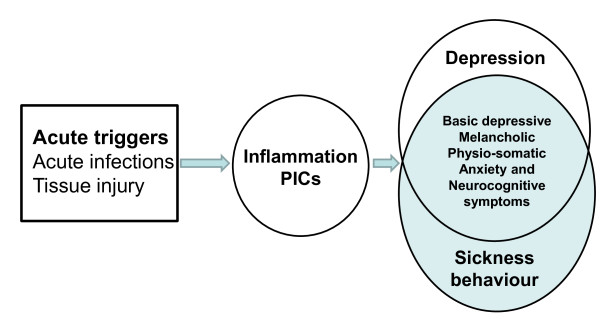
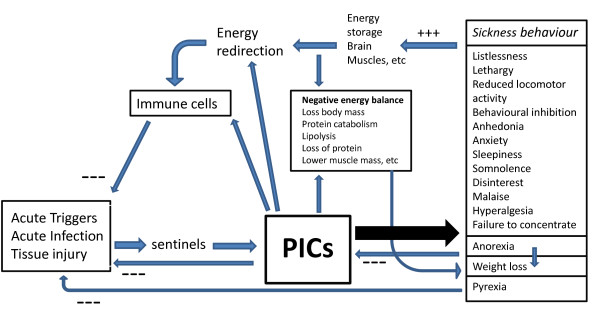
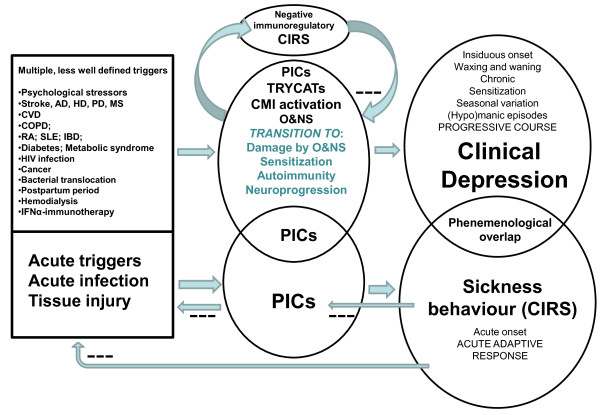
It is of considerable translational importance whether depression is a form or a consequence of sickness behavior. Sickness behavior is a behavioral complex induced by infections and immune trauma and mediated by pro-inflammatory cytokines. It is an adaptive response that enhances recovery by conserving energy to combat acute inflammation. There are considerable phenomenological similarities between sickness behavior and depression, for example, behavioral inhibition, anorexia and weight loss, and melancholic (anhedonia), physio-somatic (fatigue, hyperalgesia, malaise), anxiety and neurocognitive symptoms. In clinical depression, however, a transition occurs to sensitization of immuno-inflammatory pathways, progressive damage by oxidative and nitrosative stress to lipids, proteins, and DNA, and autoimmune responses directed against self-epitopes. The latter mechanisms are the substrate of a neuroprogressive process, whereby multiple depressive episodes cause neural tissue damage and consequent functional and cognitive sequelae. Thus, shared immuno-inflammatory pathways underpin the physiology of sickness behavior and the pathophysiology of clinical depression explaining their partially overlapping phenomenology. Inflammation may provoke a Janus-faced response with a good, acute side, generating protective inflammation through sickness behavior and a bad, chronic side, for example, clinical depression, a lifelong disorder with positive feedback loops between (neuro)inflammation and (neuro)degenerative processes following less well defined triggers.
Overview
The claims and statistics of this paper haven’t been checked yet.
Free: it reads the open-access text and checks the first 5 claims that cite a source we can check. Create a free account to check every claim.
Integrity signals
Registry
Cites
Statistics
Figures
Verification
Claims the paper makes
The claims and statistics of this paper haven’t been checked yet.
Free: it reads the open-access text and checks the first 5 claims that cite a source we can check. Create a free account to check every claim.
Claims other papers make about this one
Each is checked against this paper’s own text: does it say what the citing paper says it does?
The source backs part of the claim, not all of it — or backs it for a different population, condition or comparison.
In the citing paper
“A single systemic injection of LPS induces DLB characterized with behavioral changes similar to symptoms of acute systemic inflammation or infection triggering exacerbation of depression (49).”
From Melatonin Attenuates LPS-Induced Acute Depressive-Like Behaviors and Microglial NLRP3 Inflammasome Activation Through the SIRT1/Nrf2 Pathway (2019) · cites this paper as [49]
Experimental — accuracy not yet measuredThe cited source says what the claim attributes to it.
In the citing paper
“It has been suggested that a 'compensatory (anti)inflammatory reflex system' (CIRS) may operate in MDD [46].”
In the citing paper
“This system has been hypothesized to play a counter-regulatory (i.e.homeostatic) role in the context of peripheral inflammation.”
Self-check
Percentages, sums and reported differences re-computed from the paper’s own numbers.
The self-check needs the paper’s full text.
Citations
Cites
From inflammation to sickness and depression: when the immune system subjugates the brain
Dantzer, R., O'Connor, J. C., Freund, G. G., Johnson, R. W., & Kelley, K. W. (2008) · Nature Reviews Neuroscience · doi:10.1038/nrn2297 · Cited by 7,395 · cited 17×
“Women with a lifetime history of depression have increased inflammatory biomarkers, including IL-6 and sIL-1RA, in the early puerperium as compared to women who have never suffered from depression [115].”
BackgroundInfluentialA Meta-Analysis of Cytokines in Major Depression
Dowlati, Y., Herrmann, N., Swardfager, W., Liu, H., Sham, L., Reim, E. K., & Lanctôt, K. L. (2010) · Biological Psychiatry · doi:10.1016/j.biopsych.2009.09.033 · Cited by 4,729 · cited 2×
“In this context, there is abundant evidence that clinical depression is an immuno-inflammatory disorder characterized by among other things increased levels of PICs and acute phase proteins, including C-reactive protein and haptoglobin [11-20].”
BackgroundTracey, K. J. (2002) · Nature · doi:10.1038/nature01321 · Cited by 3,728 · cited 1×
“PIC-induced changes in neural pathways also participate in inhibiting acute inflammation, for example, enhanced production of glucocorticoids and catecholamines, and activation of cholinergic pathways [91].”
BackgroundAssociations of depression with C-reactive protein, IL-1, and IL-6: a meta-analysis.
Howren, M. B., Lamkin, D. M., & Suls, J. (2009) · Psychosomatic Medicine · doi:10.1097/psy.0b013e3181907c1b · Cited by 2,766 · cited 1×
“Recent meta-analyses and recent publications have confirmed increased levels of PICs in human depression particularly IL-6, TNFa, and IL-1, and CMI activation, evidenced by higher levels of neopterin and soluble IL-2 receptors (sIL-2Rs) [18-20,79,80].”
BackgroundPoints of control in inflammation
Nathan, C. (2002) · Nature · doi:10.1038/nature01320 · Cited by 2,738 · cited 1×
“Activation of the IRS is controlled at different levels whereby regulatory mechanisms specifically target selected control points, such as the production of pro-inflammatory mediators or the effects of mediators on the target tissues [21,89].”
BackgroundDrevets, W. C., Price, J. L., & Furey, M. L. (2008) · Brain Structure and Function · doi:10.1007/s00429-008-0189-x · Cited by 2,241 · cited 1×
“regions that process viscerosensory and regulation of emotion in humans [145-147] and rodents [148].”
BackgroundBiological basis of the behavior of sick animals
Hart, B. L. (1988) · Neuroscience & Biobehavioral Reviews · doi:10.1016/s0149-7634(88)80004-6 · Cited by 2,223 · cited 18×
“Women with a lifetime history of depression have increased inflammatory biomarkers, including IL-6 and sIL-1RA, in the early puerperium as compared to women who have never suffered from depression [115].”
BackgroundInfluentialSystemic LPS causes chronic neuroinflammation and progressive neurodegeneration
Qin, L., Wu, X., Block, M. L., Liu, Y., Breese, G. R., Hong, J., Knapp, D. J., & Crews, F. T. (2007) · Glia · doi:10.1002/glia.20467 · Cited by 2,144 · cited 16×
“Women with a lifetime history of depression have increased inflammatory biomarkers, including IL-6 and sIL-1RA, in the early puerperium as compared to women who have never suffered from depression [115].”
BackgroundInfluentialInflammation 2010: New Adventures of an Old Flame
Medzhitov, R. (2010) · Cell · doi:10.1016/j.cell.2010.03.006 · Cited by 1,834 · cited 5×
“When the resolution phase, however, is not induced, for example, when the IRS was unable to eradicate the pathogen, inflammation may persist despite the CIRS thus causing a chronic inflammatory state [21].”
BackgroundInfluentialHippocampal volume and depression: a meta-analysis of MRI studies
Videbech, P., & Ravnkilde, B. (2004) · American Journal of Psychiatry · doi:10.1176/appi.ajp.161.11.1957 · Cited by 1,590 · cited 1×
“Meta-analysis showed that in patients with chronic depression (> 2 years) or recurrent depression hippocampal volume is significantly decreased and that the latter is related to the number of episodes [140,141].”
Background
Research works printed but not linked: 1
- El-Radhi AS The role of fever in the past and present Med J Islamic World Acad Sci 2011 19 9 14
Cited by
Items 201–300 of 644
Lawes, S., Demakakos, P., Steptoe, A., Lewis, G., & Carvalho, L. A. (2018) · Psychological Medicine · doi:10.1017/s003329171800209x · Cited by 42
“Depression also shows a high co-morbidity with a number of major chronic inflammatory or autoimmune disorders, such as rheumatoid arthritis, multiple sclerosis and diabetes type 1 and 2 (Maes et al., 2012).”
BackgroundChan, S. Y., Probert, F., Radford‐Smith, D. E., Hebert, J. C., Claridge, T. D. W., Anthony, D. C., & Burnet, P. W. J. (2020) · Scientific Reports · doi:10.1038/s41598-020-74008-w · Cited by 42
León‐Rodríguez, A., Fernández‐Arjona, M. D. M., Grondona, J. M., Pedraza, C., & López-Ávalos, M. D. (2022) · Scientific Reports · doi:10.1038/s41598-022-15617-5 · Cited by 42
Wickens, R. A., Donck, L. V., Mackenzie, A. B., & Bailey, S. (2017) · Behavioural Brain Research · doi:10.1016/j.bbr.2017.07.041 · Cited by 42
Domingues, M., Casaril, A. M., Birmann, P. T., Lourenço, D. D. A., Vieira, B. M., Begnini, K. R., Lenardao, E. J., Collares, T. V., Seixas, F. K., & Savegnago, L. (2018) · Frontiers in Neuroscience · doi:10.3389/fnins.2018.00486 · Cited by 45
“Peripheral immune activation by LPS causes change in the brain’s redox system, by increasing the ROS directly by activating microglia (Maes et al., 2012; Liu et al., 2015; Slyepchenko et al., 2016).”
BackgroundTargeting the Inflammatory Pathway as a Therapeutic Tool for Major Depression
Noto, C., Rizzo, L. B., Mansur, R. B., McIntyre, R. S., Maes, M., & Brietzke, E. (2014) · Neuroimmunomodulation · doi:10.1159/000356549 · Cited by 38
Self-citationExpression and Activity of Metalloproteinases in Depression
Bobińska, K., Szemraj, J., Czarny, P., & Gałecki, P. (2016) · Medical Science Monitor · doi:10.12659/msm.895978 · Cited by 38
“Expression of both MMPs and TIMPs can be controlled by cytokines [36], and their role in the etiology and course of rDD has already been emphasized in many papers [37].”
BackgroundSelf-citationEmerging role of Gut-microbiota-brain axis in depression and therapeutic implication
Evrensel, A., & Tarhan, N. (2020) · Progress in Neuro-Psychopharmacology and Biological Psychiatry · doi:10.1016/j.pnpbp.2020.110138 · Cited by 44
Ferencová, N., Višňovcová, Z., Ondrejka, I., Funakova, D., Hrtánek, I., Kelčíková, S., & Tonhajzerová, I. (2022) · Journal of Inflammation Research · doi:10.2147/jir.s387588 · Cited by 41
Smith, R. S., Alkozei, A., Killgore, W. D. S., & Lane, R. D. (2017) · Brain Behavior and Immunity · doi:10.1016/j.bbi.2017.09.011 · Cited by 42
Kowalczyk, M., Szemraj, J., Bliźniewska, K., Maes, M., Berk, M., Su, K.-P., & Gałecki, P. (2019) · Pharmacological Reports · doi:10.1016/j.pharep.2019.05.022 · Cited by 38
Self-citationBradley, K., Stern, E. R., Alonso, C. M., Xie, H., Kim‐Schulze, S., & Gabbay, V. (2019) · Brain Behavior and Immunity · doi:10.1016/j.bbi.2019.04.014 · Cited by 38
“All of these behaviors share phenomenological similarity to clinical symptoms that reflect reward dysfunction, such as anhedonia, fatigue, malaise, anorexia, and decreased sexual desire (Maes et al., 2012).”
BackgroundIncreased random exploration in schizophrenia is associated with inflammation
Cathomas, F., Klaus, F., Guetter, K., Chung, H.-K., Raja Beharelle, A., Spiller, T. R., Schlegel, R., Seifritz, E., Hartmann-Riemer, M. N., Tobler, P. N., et al. (2021) · npj Schizophrenia · doi:10.1038/s41537-020-00133-0 · Cited by 36
Morris, G., Sominsky, L., Walder, K. R., Berk, M., Marx, W., Carvalho, A. F., Bortolasci, C. C., Maes, M. H. J., & Puri, B. K. (2022) · Molecular Neurobiology · doi:10.1007/s12035-022-02800-y · Cited by 41
Self-citationGut-Brain Axis and Neurological Disorders-How Microbiomes Affect our Mental Health
Bhatia, N. Y., Jalgaonkar, M. P., Hargude, A. B., Sherje, A. P., Oza, M. J., & Doshi, G. (2022) · CNS & Neurological Disorders - Drug Targets · doi:10.2174/1871527321666220822172039 · Cited by 44
Al-Hadrawi, D. S., Al-Rubaye, H. T., Almulla, A. F., Al‐Hakeim, H. K., & Maes, M. H. J. (2022) · Acta Neuropsychiatrica · doi:10.1017/neu.2022.21 · Cited by 41
Self-citationSong, C., Luchtman, D. W., Kang, Z., Tam, E. M., Yatham, L. N., Su, K., & Lam, R. W. M. (2015) · Journal of Affective Disorders · doi:10.1016/j.jad.2015.06.003 · Cited by 42
“macrophage activity and enhanced production of proinflammatory cytokines have been consistently reported in patients with major depressive disorder (MDD) (Song et al., 1998; Maes et al., 2012; Hoyo-Becerra et al., 2014).”
BackgroundSelf-citationOxidant/antioxidant imbalance is an inherent feature of depression
Talarowska, M. E., Szemraj, J., Berk, M., Maes, M. H. J., & Gałecki, P. (2015) · BMC Psychiatry · doi:10.1186/s12888-015-0454-5 · Cited by 37
“The symptoms of an ongoing inflammatory process, like fatigue, sleep disorders, anxiety, low mood, loss of appetite or anhedonia, correspond to the symptoms of depressive disorders [7,8].”
BackgroundSelf-citationEffect of Embelin Against Lipopolysaccharide‐induced Sickness Behaviour in Mice
Shaikh, M. A. K., Dhadde, S. B., Durg, S., Veerapur, V. P., Badami, S., Thippeswamy, B. S., & Patil, J. (2016) · Phytotherapy Research · doi:10.1002/ptr.5585 · Cited by 38
“…during sickness behaviour include lethargy, hypersomnia, hyperalgesia, changes in body temperature, lack of concentration, decreased motivation and disturbed mood, drop in locomotor activity and exploratory behaviour, anorexia, adipsia and anhedonia (Pecchi et al., 2009; Maes et al., 2012).”
BackgroundBarreto, F. S., Filho, A. J. M. C., Araújo, M. C., de Moraes, M. O., de Moraes, M. E. A., Maes, M. H. J., de Lucena, D. F., & Macêdo, D. S. (2018) · Behavioural Pharmacology · doi:10.1097/fbp.0000000000000384 · Cited by 39
Self-citationMaes, M. H. J., Kanchanatawan, B., Sirivichayakul, S., & Carvalho, A. F. (2018) · Molecular Neurobiology · doi:10.1007/s12035-018-1437-6 · Cited by 37
Self-citationKorte-Bouws, G. A. H., Albers, E., Voskamp, M. J., Hendriksen, H., de Leeuw, L. R., Güntürkün, O., de Roock, S., Vastert, S. J., & Korte, S. M. (2019) · Pharmaceuticals · doi:10.3390/ph12010009 · Cited by 40
“In agreement, it has been reported that depression and fatigue are often associated with increased levels of proinflammatory cytokines [18,19].”
BackgroundBarone, P. R. (2019) · Behavioural Pharmacology · doi:10.1097/fbp.0000000000000477 · Cited by 39
Kanchanatawan, B., Sirivichayakul, S., Ruxrungtham, K., Carvalho, A. F., Geffard, M., Anderson, G., & Maes, M. H. J. (2017) · Molecular Neurobiology · doi:10.1007/s12035-017-0465-y · Cited by 37
Self-citationO’Mahony, S. M., Clarke, G. A., McKernan, D. P., Bravo, J. A., Dinan, T. G., & Cryan, J. F. (2013) · Behavioural Brain Research · doi:10.1016/j.bbr.2013.07.023 · Cited by 41
The relationship between fibromyalgia, stress and depression
Thiagarajah, A. S., Guymer, E. K., Leech, M. T., & Littlejohn, G. O. (2014) · International Journal of Clinical Rheumatology · doi:10.2217/ijr.14.30 · Cited by 46
Potential Mechanisms Underlying the Therapeutic Effects of Electroconvulsive Therapy
Jiang, J., Wang, J., & Li, C. (2016) · Neuroscience Bulletin · doi:10.1007/s12264-016-0094-x · Cited by 42
“In addition, an increase in indoleamine 2,3 dioxygenase (IDO) has been found in MDD and its level drops following ECT [91], providing evidence for the IDO activation theory of mood disorders [99].”
BackgroundIndividual differences in inflammatory and oxidative mechanisms of stress-related mood disorders
Kalinichenko, L. S., Kornhuber, J., & Müller, C. P. (2019) · Frontiers in Neuroendocrinology · doi:10.1016/j.yfrne.2019.100783 · Cited by 37
Sleep disorders, mental health, and dry eye disease in South Korea
An, Y., & Kim, H. (2022) · Scientific Reports · doi:10.1038/s41598-022-14167-0 · Cited by 35
Couch, Y., Xie, Q., Lundberg, L., Sharp, T., & Anthony, D. C. (2015) · PLoS ONE · doi:10.1371/journal.pone.0130643 · Cited by 41
“Both Maes [7] and Dantzer [8] suggest that sickness behaviour is an acute response, characterized by similar behavioural phenomenology as depression but with a pyretic component, and that behavioural responses persisting after 24 hours should be considered depression, rather than sickness.”
BackgroundYin, J., Zhong, C., Zhu, Z., Bu, X., Xu, T., Guo, L., Wang, X., Zhang, J., Cui, Y., Li, D., et al. (2018) · Clinica Chimica Acta · doi:10.1016/j.cca.2018.01.011 · Cited by 37
Hildebrandt, H., & Eling, P. (2014) · Journal of Clinical and Experimental Neuropsychology · doi:10.1080/13803395.2014.903900 · Cited by 34
Hammad, A. M., Ibrahim, Y. A., Khdair, S. I., Hall, F. S., Alfaraj, M., Jarrar, Y. B., & Abed, A. F. (2021) · Behavioural Brain Research · doi:10.1016/j.bbr.2021.113475 · Cited by 34
Widdershoven, J. W. M. G., Kessing, D., Schiffer, A. A., Denollet, J., & Kupper, N. H. M. (2013) · Current Heart Failure Reports · doi:10.1007/s11897-013-0139-7 · Cited by 36
“On the other hand, there is evidence to suggest that depressed mood is a reflection of sickness behaviour induced by chronic inflammation [100].”
BackgroundVagus Nerve and Gut-Brain Communication
Wang, Y., Duan, C., Du, X., Zhu, Y. J., Wang, L., Hu, J., & Sun, Y. (2024) · The Neuroscientist · doi:10.1177/10738584241259702 · Cited by 44
“A large amount of evidence shows that the onset of depression and Alzheimer disease (AD) is related to chronic low-grade inflammation and increased intestinal permeability (Maes 1995; Maes and others 2012).”
Jadhav, K. K., Daouk, J., Kurkinen, K., Kraav, S., Eriksson, P., Tolmunen, T., & Kanninen, K. M. (2024) · Journal of Affective Disorders · doi:10.1016/j.jad.2024.11.071 · Cited by 38
Evaluating the Relationship between Inflammatory Load of a Diet and Depression in Young Adults
Açık, M., & Çakiroğlu, F. P. (2019) · Ecology of Food and Nutrition · doi:10.1080/03670244.2019.1602043 · Cited by 33
“Today, there is strong evidence that depression is associated with the lowgrade inflammatory response (Maes et al. 2012).”
BackgroundChen, R., Weitzner, A. S., McKennon, L. A., & Fonken, L. K. (2021) · Behavioural Brain Research · doi:10.1016/j.bbr.2021.113171 · Cited by 34
Rahman, S. U., Ali, T., Hao, Q., He, K., Li, W., Ullah, N., Zhang, Z., Jiang, Y., & Li, S. (2021) · Neurochemical Research · doi:10.1007/s11064-021-03396-w · Cited by 33
RetractedHughes, F. M., Odom, M. R., Cervantes, A., Livingston, A. J., & Purves, J. T. (2023) · International Journal of Molecular Sciences · doi:10.3390/ijms24032821 · Cited by 34
Boeck, C., Salinas-Manrique, J., Calzia, E., Radermacher, P., Arnim, C. A. F. V., Dietrich, D. E., Kolassa, I., & Karabatsiakis, A. (2018) · Scientific Reports · doi:10.1038/s41598-018-26867-7 · Cited by 35
A Reciprocal Link Between Gut Microbiota, Inflammation and Depression: A Place for Probiotics?
Eltokhi, A., & Sommer, I. E. (2022) · Frontiers in Neuroscience · doi:10.3389/fnins.2022.852506 · Cited by 36
Mittli, D. (2023) · Brain Behavior & Immunity - Health · doi:10.1016/j.bbih.2023.100703 · Cited by 42
“Behavioral alterations associated with systemic immune activation are together called sickness behavior, which is an evolutionarily conserved adaptive response in vertebrate species (Lopes et al., 2021) and shows several phenomenological similarities with clinical depression (Maes et al., 2012).”
BackgroundAntagonism between neuropeptides and monoamines in a distributed circuit for pathogen avoidance
Marquina-Solis, J., Feng, L., Vandewyer, E., Beets, I., Hawk, J. D., Colón‐Ramos, D. A., Yu, J., Fox, B. W., Schroeder, F. C., & Bargmann, C. I. (2024) · Cell Reports · doi:10.1016/j.celrep.2024.114042 · Cited by 33
von Känel, R., Mausbach, B. T., Mills, P. J., Dimsdale, J. E., Patterson, T. L., Ancoli‐Israel, S., Ziegler, M. G., Allison, M., Chattillion, E. A., & Grant, I. (2013) · The Journals of Gerontology Series B · doi:10.1093/geronb/gbt020 · Cited by 35
“For instance, proinflammatory cytokines may induce sickness behavior that resembles depressive behavior in many ways (e.g., both are characterized by behavioral inhibition; Maes et al., 2012).”
BackgroundSickness-Associated Anorexia: Mother Nature’s Idea of Immunonutrition?
van Niekerk, G., Isaacs, A. W., Nell, T. A., & Engelbrecht, A. (2016) · Mediators of Inflammation · doi:10.1155/2016/8071539 · Cited by 35
“In fact, less than 1% of dietary iron is absorbed, with iron status responding only slowly to a changing nutritional status [17].”
BackgroundMaes, M. H. J., Zhou, B., Rachayon, M., Jirakran, K., Sughondhabirom, A., Sodsai, P., & Almulla, A. F. (2024) · Journal of Affective Disorders · doi:10.1016/j.jad.2024.06.097 · Cited by 34
Self-citationEffect of chronic somatic diseases on the course of late‐life depression
Hegeman, J. M., van Fenema, E. M., Comijs, H. C., Kok, R., van der Mast, R. C., & de Waal, M. W. M. (2016) · International Journal of Geriatric Psychiatry · doi:10.1002/gps.4523 · Cited by 35
“Alternatively, depression in older persons is difficult to diagnose in the presence of somatic illness due to overlap of symptoms of depression, somatic disease, and sickness behavior, which may result in under-recognition and under-treatment of late-life depression (Furedi et al., 2003; Katon et al., 2007; Hegeman et…”
BackgroundEdible Mushrooms as a Potential Component of Dietary Interventions for Major Depressive Disorder
Fijałkowska, A., Jędrejko, K., Sułkowska‐Ziaja, K., Ziaja, M., Kała, K., & Muszyńska, B. (2022) · Foods · doi:10.3390/foods11101489 · Cited by 34
“Pro-inflammatory cytokines such as IL-1, IL-6, and TNF-α activate the HPA and cause the so-called “sickness behavior” syndrome, which is characterized by similar symptoms as MDD, such as fatigue, psychomotor slowdown, anhedonia, or cognitive impairment [31].”
BackgroundKaneko, R., Matsui, A., Watanabe, M., Harada, Y., Kanamori, M., Awata, N., Kawazoe, M., Takao, T., Kobayashi, Y., Kikutake, C., et al. (2023) · Inflammation and Regeneration · doi:10.1186/s41232-023-00257-7 · Cited by 31
“IBD is reportedly caused by neuroinflammation, activation of the hypothalamic-pituitary-adrenal axis, changes in the blood-brain barrier, and gut microbiota imbalance [10].”
BackgroundMengelkoch, S., Rose, S. M. S., Lautman, Z., Alley, J. C., Roos, L. G., Ehlert, B., Moriarity, D. P., Lancaster, S. M., Snyder, M. P., & Slavich, G. M. (2023) · Brain Behavior and Immunity · doi:10.1016/j.bbi.2023.07.022 · Cited by 32
“…in monitoring behaviors that may be mediated by the immune system, since immune system shifts — whether the result of mental or physical illness — initiate behavioral changes as well (i.e., “ sickness behavior ” ; Dantzer, 2009; Maes et al., 2012; Slavich et al., 2020a; Slavich and Auerbach, 2018).”
BackgroundAzizi-Malekabadi, H., Hosseini, M., Pourganji, M., Zabihi, H., Saeedjalali, M., & Anaeigoudari, A. (2015) · Neurology Research International · doi:10.1155/2015/627642 · Cited by 31
“The behavioral features are including malaise, hyperalgesia, pyrexia, disinterest in social interactions, lethargy, behavioral inhibition, reduced locomotor activity, lower exploration and grooming behaviors, reduction of reproductive performance, anhedonia, somnolence and sleepiness, anorexia and weight loss, failure…”
BackgroundInfluentialClark, S. M., Michael, K. C., Klaus, J., Mert, A., Romano-Verthelyi, A., Sand, J., & Tonelli, L. H. (2015) · Behavioural Brain Research · doi:10.1016/j.bbr.2014.09.030 · Cited by 29
Inamdar, A., Pich, E. M., Gee, M., Makumi, C. W., Mistry, P. C., Robertson, J., Steinberg, E., Zamuner, S., Learned, S. M., Alexander, R., et al. (2014) · Journal of Psychopharmacology · doi:10.1177/0269881114529377 · Cited by 32
“A growing body of evidence suggests that a chronic, low-grade inflammation and activation of the cell-mediated immune response are present in Major Depressive Disorder (MDD) (Dowlati et al., 2010; Kling et al., 2007; Maes et al., 1991, 2012; Miller et al., 2009; Moylan et al., 2013).”
BackgroundJutagir, D. R., Blomberg, B. B., Carver, C. S., Lechner, S. C., Timpano, K. R., Bouchard, L. C., Gudenkauf, L. M., Jacobs, J. M., Diaz, A., Lutgendorf, S. K., et al. (2017) · Breast Cancer Research and Treatment · doi:10.1007/s10549-017-4316-3 · Cited by 30
Krishna, S., Dodd, C. A., & Filipov, N. M. (2016) · Behavioural Brain Research · doi:10.1016/j.bbr.2016.01.038 · Cited by 34
“Behaviorally, acute peripheral LPS administration causes sickness behavior in rodents [14, 15] that is characterized with decreased exploratory activity, locomotion and social exploration [1618].”
BackgroundDepression development: From lifestyle changes to motivational deficits
Schulz, D. (2020) · Behavioural Brain Research · doi:10.1016/j.bbr.2020.112845 · Cited by 34
Lee, S., Oh, S. S., Jang, S.-I., & Park, E.-C. (2019) · Scientific Reports · doi:10.1038/s41598-018-36402-3 · Cited by 29
Paroxetine suppresses recombinant human P2X7 responses
Dao-Ung, P., Skarratt, K. K., Fuller, S. J., & Stokes, L. (2015) · Purinergic Signalling · doi:10.1007/s11302-015-9467-2 · Cited by 29
Almulla, A. F., & Maes, M. H. J. (2025) · CNS Drugs · doi:10.1007/s40263-025-01195-3 · Cited by 33
“…of the immune-inflammatory response (IRS) and compensatory immune-regulatory sys-tem (CIRS) and increased oxidative and nitrosative stress (O&NS) have emerged as significant features in these illnesses, suggesting a substantial contribution of immune dis-balances to their pathophysiology [17–20].”
Self-citationPearson, A. L., Pfeiffer, K. A., Gardiner, J. C., Horton, T. H., Buxton, R. T., Hunter, R. F., Breeze, V., & McDade, T. W. (2020) · BMC Public Health · doi:10.1186/s12889-020-08716-3 · Cited by 37
Basal and LPS-stimulated inflammatory markers and the course of anxiety symptoms
van Eeden, W. A., Filali, E. E., van Hemert, A. M., Carlier, I. V. E., Penninx, B. W. J. H., Lamers, F., Schoevers, R. A., & Giltay, E. J. (2021) · Brain Behavior and Immunity · doi:10.1016/j.bbi.2021.09.001 · Cited by 34
Khan, H., Nazir, S., Farooq, R. K., Khan, I. N., & Javed, A. (2022) · Frontiers in Neuroscience · doi:10.3389/fnins.2021.806713 · Cited by 38
Nasir, B., Khan, A. U., Baig, M. W., Althobaiti, Y. S., Faheem, M., & Haq, I. U. (2022) · BioMed Research International · doi:10.1155/2022/1382878 · Cited by 31
“There is ample data to support the notion that depression is accompanied by elevated oxidative and nitrosative stress, and it also has a strong association with chronic in fl ammatory response [46, 47].”
Duarte-Silva, E. P., Macêdo, D. S., Maes, M. H. J., & Peixoto, C. A. (2019) · Progress in Neuro-Psychopharmacology and Biological Psychiatry · doi:10.1016/j.pnpbp.2019.03.001 · Cited by 29
Self-citationC-reactive protein and post-stroke depressive symptoms
Kowalska, K., Pasińska, P., Klimiec, E., Pera, J., Słowik, A., Klimkowicz‐Mrowiec, A., & Dziedzic, T. (2020) · Scientific Reports · doi:10.1038/s41598-020-58478-6 · Cited by 33
Talarowska, M., Orzechowska, A., Szemraj, J., Su, K.-P., Maes, M., & Gałecki, P. (2014) · Neuropsychobiology · doi:10.1159/000363340 · Cited by 28
Self-citationInflammatory Bowel Disease and Patients With Mental Disorders: What Do We Know?
Fousekis, F. S., Katsanos, A. H., Kourtis, G., Saridi, M., Albani, E., Katsanos, K. H., & Christodoulou, D. K. (2021) · Journal of Clinical Medicine Research · doi:10.14740/jocmr4593 · Cited by 28
Li, P., Zhang, F., Li, Y., Zhang, C., Yang, Z., Zhang, Y., & Song, C. (2021) · Journal of Psychopharmacology · doi:10.1177/02698811211032473 · Cited by 32
“Email: cai.song@dal.ca behavioral alterations, including depressed mood, fatigue, and psychomotor slowing in humans, as well as anhedonia, lethargy, anxiety, and cognitive impairment in rodents (Dinel et al., 2014; Maes et al., 2012; Mello et al., 2013).”
BackgroundSelf-citationZhao, T., Wu, D., Du, J., Liu, G., Ji, G., Wang, Z., Peng, F., Man, L., Zhou, W., & Hao, A. (2022) · Frontiers in Pharmacology · doi:10.3389/fphar.2022.818423 · Cited by 32
“The ontogeny of these disorders is poorly understood, but clinical research has identified early life immune activation as a significant risk factor for the scaffolding of lifelong social deficits (Brown et al., 2004; Khandaker et al., 2014; Metcalf et al., 2017).”
BackgroundOndičová, K., Tillinger, A., Pečeňák, J., & Mravec, B. (2019) · Neurochemistry International · doi:10.1016/j.neuint.2019.02.003 · Cited by 29
“Broad evidence of the role of inflammation as an important factor for both the onset and maintenance of depression has resulted in the establishment of a cytokine theory of depression (Connor and Leonard, 1998; Maes et al., 2012).”
Subacute Neuropsychiatric Syndrome in Girls WithSHANK3Mutations Responds to Immunomodulation
Bey, A. L., Gorman, M., Gallentine, W. B., Kohlenberg, T. M., Frankovich, J., Jiang, Y., & van Haren, K. P. (2020) · PEDIATRICS · doi:10.1542/peds.2019-1490 · Cited by 29
Update on the neurodevelopmental theory of depression: is there any 'unconscious code'?
Gałecka, M., Bliźniewska-Kowalska, K., Maes, M., Su, K.-P., & Gałecki, P. (2021) · Pharmacological Reports · doi:10.1007/s43440-020-00202-2 · Cited by 27
Self-citationWhat can animal models tell us about depressive disorders?
Hoffman, K. L. (2015) · Elsevier eBooks · doi:10.1016/b978-0-08-100099-1.00002-9 · Cited by 34
Roles for Cytomegalovirus in Infection, Inflammation, and Autoimmunity
Jones, R. (2015) · Elsevier eBooks · doi:10.1016/b978-0-444-63269-2.00068-4 · Cited by 28
Depressive symptom complexes of community-dwelling older adults: a latent network model
Murri, M. B., Grassi, L. G., Caruso, R., Nanni, M. G., Zerbinati, L., Andreas, S., Ausín, B., Canuto, A., Härter, M. C., López, M. M., et al. (2021) · Molecular Psychiatry · doi:10.1038/s41380-021-01310-y · Cited by 29
Loewen, S. M., Chavesa, A. M., Murray, C. J., Traetta, M. E., Burns, S. E., Pekarik, K. H., & Tremblay, M. (2023) · Developmental Neuroscience · doi:10.1159/000530185 · Cited by 28
Gallagher, D., Kiss, A., Lanctôt, K. L., & Herrmann, N. (2016) · International Journal of Geriatric Psychiatry · doi:10.1002/gps.4645 · Cited by 30
“This finding is consistent with the syndrome of “sickness behaviour” which has been well described in acute infections and experimentally induced inflammatory states (Dantzer et al., 2008; Maes et al., 2012).”
BackgroundResultInfluentialThe role of hepcidin in chronic mild stress-induced depression
Farajdokht, F., Soleimani, M., Mehrpouya, S., Barati, M., & Nahavandi, A. (2015) · Neuroscience Letters · doi:10.1016/j.neulet.2015.01.008 · Cited by 27
ASPREE-D: Aspirin for the prevention of depression in the elderly
Berk, M., Woods, R. L., Nelson, M. R., Shah, R. C., Reid, C. M., Storey, E., Fitzgerald, S. M., Lockery, J. E., Wolfe, R. S., Mohebbi, M., et al. (2016) · International Psychogeriatrics · doi:10.1017/s104161021600079x · Cited by 29
Self-citationCunha, M. P., Pazini, F. L., Lieberknecht, V., & Rodrigues, A. L. S. (2018) · Journal of Psychiatric Research · doi:10.1016/j.jpsychires.2018.07.001 · Cited by 25
Zhao, C., Lin, M., Yang, Y., Yang, H., Gao, Z., Yan, Z., Liu, C., Yu, S., & Zhang, Y. (2025) · Nutrition Journal · doi:10.1186/s12937-025-01127-3 · Cited by 30
“Adequate intake of vitamin B1 helps reduce oxidative stress and improve metabolic health, thereby decreasing the risk of developing CKMS [46].”
Rochette, E., Saidi, O., Merlin, É., & Duché, P. (2023) · Frontiers in Immunology · doi:10.3389/fimmu.2023.1119930 · Cited by 30
Liver and inflammatory biomarker relationships to depression symptoms in healthy older adults
Savage, K. M., Porter, C., Bunnett, E. R., Hana, M., Keegan, A. P., Ogden, E., Stough, C. K. K., & Pipingas, A. (2023) · Experimental Gerontology · doi:10.1016/j.exger.2023.112186 · Cited by 26
“, 2013), as well as subclinical depression symptoms (Dowlati et al., 2010; Kӧhler et al., 2017; Maes et al., 2012; Ng et al., 2018).”
The dichotomic role of single cytokines: Fine-tuning immune responses
Silva, R. C. M. C., Travassos, L. H., & Dutra, F. F. (2023) · Cytokine · doi:10.1016/j.cyto.2023.156408 · Cited by 26
Yuxiang, X., Li, Y., Wang, C., Han, T., Yue, W., Wang, S., & Wei, J. (2024) · International Journal of Clinical and Health Psychology · doi:10.1016/j.ijchp.2023.100433 · Cited by 28
“…for its pathogenesis, such as the monoamine hypothesis (Segal et al., 1974), neuroplasticity and neurogenesis hypothesis (Duman & Monteggia, 2006), neuroendocrine hypothesis (Goodyer et al., 2000; Harris et al., 2000; Knorr et al., 2010), and depression-inflammation hypothesis (Maes et al., 2012).”
BackgroundRecontextualizing the behavioral immune system within psychoneuroimmunology.
Clark, J. A., & Fessler, D. M. T. (2014) · Evolutionary Behavioral Sciences · doi:10.1037/ebs0000024 · Cited by 29
“…infection (and its psychological correlates) have been hypothesized to function to facilitate recovery, conserve resources, avoid further infection, prevent transfer to other group members, and avoid conflict in a weakened state (Adelman & Martin, 2009; Dantzer & Kelley, 2007; Maes et al., 2012).”
BackgroundPsychiatric emergencies (part III): psychiatric symptoms resulting from organic diseases.
Testa, A. C., Giannuzzi, R., Daini, S., Bernardini, L., Petrongolo, L., & Silveri, N. G. (2013) · PubMed · Cited by 33
Kanchanatawan, B., Sirivichayakul, S., Carvalho, A. F., Anderson, G., Gałecki, P., & Maes, M. H. J. (2017) · Progress in Neuro-Psychopharmacology and Biological Psychiatry · doi:10.1016/j.pnpbp.2017.06.033 · Cited by 26
“Natural IgM isotype mediated responses are a major component of the CIRS (Schwartz-Albiez et al., 2009; Stahl and Sibrowski, 2003; Maes et al., 2006, 2013).”
BackgroundInfluentialSelf-citationGoldim, M. P. D. S., Giustina, A. D., Mathias, K., de Oliveira, A., Fileti, M. E., Carli, R. J. D., Zarbato, G. F., Garbossa, L., da Rosa, N., de Oliveira, J. M., et al. (2020) · Inflammation · doi:10.1007/s10753-020-01187-z · Cited by 25
“A link between sickness behavior and depression has been suggested [57, 58].”
BackgroundGhanizadeh, A. J., Singh, A., Berk, M., & Nami, M. (2015) · Expert Opinion on Therapeutic Targets · doi:10.1517/14728222.2015.1019866 · Cited by 26
“IDO has also been suggested as a biomarker for neural inflammation and depressive-like behaviors in animal models [44].”
BackgroundSelf-citationDuke, J. M., Randall, S. M., Boyd, J., Wood, F. M., Fear, M. W., & Rea, S. M. (2018) · Burns · doi:10.1016/j.burns.2018.05.007 · Cited by 28
The transcriptomic signature of low aggression in honey bees resembles a response to infection
Rittschof, C. C., Rubin, B. E. R., & Palmer, J. H. (2019) · BMC Genomics · doi:10.1186/s12864-019-6417-3 · Cited by 24
Han, Y.-M., Kim, M. S., Jo, J., Shin, D., Kwon, S., Seo, J. B., Kang, D., Lee, B. D., Ryu, H., Hwang, E. M., et al. (2021) · Molecular Psychiatry · doi:10.1038/s41380-021-01016-1 · Cited by 23
Nafamostat reduces systemic inflammation in TLR7-mediated virus-like illness
Yates, A. G., Weglinski, C., Ying, Y., Dunstan, I. K., Strekalova, T. V., & Anthony, D. C. (2022) · Journal of Neuroinflammation · doi:10.1186/s12974-021-02357-y · Cited by 29
“It must be acknowledged that the OF test is also a valid measure of depressive-like behaviour, which is distinct from sickness behaviour, although there is significant overlap [52].”
BackgroundSystematic identification of the role of gut microbiota in mental disorders: a TwinsUK cohort study
Delanote, J., Rojo, A. C., Wells, P. M., Steves, C. J., & Ertaylan, G. (2024) · Scientific Reports · doi:10.1038/s41598-024-53929-w · Cited by 24
Cytokines and depression in cancer patients and caregivers
Li, M., Kouzmina, E., McCusker, M., Rodin, D. L., Boutros, P. C., Paige, C. J., & Rodin, G. (2017) · Neuropsychiatric Disease and Treatment · doi:10.2147/ndt.s144774 · Cited by 24
“34 Their pro-inflammatory functions inherently trigger a compensatory anti-inflammatory reflex system (CIRS), 35 with the balance between the two determining net inflammatory effects.”
Reduced CXCL1/GRO chemokine plasma levels are a possible biomarker of elderly depression
Fanelli, G., Benedetti, F., Wang, S., Lee, S.-J., Jun, T., Masand, P. S., Patkar, A. A., Han, C., Serretti, A., Pae, C., et al. (2019) · Journal of Affective Disorders · doi:10.1016/j.jad.2019.02.042 · Cited by 27
Behavioural alterations are independent of sickness behaviour in chronic experimental Chagas disease
Vilar-Pereira, G., Ruivo, L. A. D. S., & Lannes-Vieira, J. (2015) · Memórias do Instituto Oswaldo Cruz · doi:10.1590/0074-02760150300 · Cited by 25
“Importantly, some authors regard clinical anxiety and depression as a form of sickness behaviour and/or as a consequence of the sickness behavioural response (Dantzer et al. 2008, Maes et al. 2012).”
BackgroundTraumatic events and mental health: The amplifying effects of pre-trauma systemic inflammation
Schrock, J. M., McDade, T. W., Carrico, A. W., D’Aquila, R. T., & Mustanski, B. S. (2021) · Brain Behavior and Immunity · doi:10.1016/j.bbi.2021.08.208 · Cited by 22
Metadata
- Authors
- Maes, M., Berk, M., Goehler, L., Song, C., Anderson, G., Gałecki, P., & Leonard, B.
- Affiliations
- Piyavate Hospital (TH)
- The Royal Melbourne Hospital (AU)
- University of Virginia (US)
- Dalhousie University (CA)
- Medical University of Lodz (PL)
- Ollscoil na Gaillimhe – University of Galway (IE)
- Corresponding author
- Maes, Michael
- Venue
- BMC Medicine
- Published
- 2012-06-29
- Volume
- 10
- Issue
- 1
- Pages
- 66-66
- ISSN
- 1741-7015 (ISSN-L)
- PMC
- PMC3391987
- OpenAlex
- W2098731039
- Cited by
- 629
- References
- 189
- Citations by year
- 2026: 24 · 2025: 36 · 2024: 51 · 2023: 57 · 2022: 63 · 2021: 39 · 2020: 41 · 2019: 47 · 2018: 53 · 2017: 44 · 2016: 40 · 2015: 54 · 2014: 40 · 2013: 26 · 2012: 11
- FWCI
- 2.71
- Type
- journal article
- Language
- en
- Open access
- gold
- doi.org
- Licence
- Locations
- BMC Medicine (publishedVersion, cc-by)
- Europe PMC (PubMed Central) (publishedVersion, cc-by)
- PubMed Central (publishedVersion, cc-by)
- PubMed (publishedVersion)
- ENLIGHTEN (Jurnal Bimbingan dan Konseling Islam) (acceptedVersion)
- ARAN (University of Galway Research Repository) (Ollscoil na Gaillimhe – University of Galway) (acceptedVersion, cc-by-nc-nd)
- Minerva Access (University of Melbourne) (submittedVersion, cc-by)
- Arrow@dit (Dublin Institute of Technology) (submittedVersion)
- ARAN (University of Galway Research Repository) (Ollscoil na Gaillimhe – University of Galway) (submittedVersion, cc-by-nc-nd)
- DOAJ (DOAJ: Directory of Open Access Journals) (submittedVersion, cc-by-sa)
- Figshare (submittedVersion, cc-by)
- ARAN (University of Galway Research Repository) (Ollscoil na Gaillimhe – University of Galway) (submittedVersion, cc-by-nc)
- Research Repository UCD (University College Dublin) (cc-by-nc)
- Funders
- Bristol-Myers Squibb
- Eli Lilly and Company
- Pfizer
- Sanofi
- Geelong Region Medical Research Foundation
- Beyond Blue
- Servier
- H. Lundbeck A/S
- National Institutes of Health
- National Health and Medical Research Council
- Cilag
- Topics
- Life Sciences › Neuroscience › Biological Psychiatry › Tryptophan and brain disorders
- Life Sciences › Neuroscience › Behavioral Neuroscience › Stress Responses and Cortisol
- Health Sciences › Medicine › Pharmacology (medical) › Treatment of Major Depression
- Keywords
- depression, sickness behavior, inflammation, inflammatory cytokines, neuroinflammation, oxidative stress, nitrosative stress, autoimmunity, anhedonia, fatigue, neurodegeneration, chronic inflammation
- MeSH terms
- Animals, Depression, Humans, Autoimmunity, Cytokines, Inflammation Mediators, Neurodegenerative Diseases, Illness Behavior
About these checks
Registry, retraction, Cites and statistics results are computed, not judged, with one exception: a printed reference that no index lists is read once by a model before it counts as a citation error. Claims are extracted by a model and kept only when their quote appears verbatim in the text; each cited source is then checked, with a model’s help, for whether it says what the claim relies on. Those verdicts can be wrong — read the claim’s quote and the cited source before relying on one.
Statistics and arithmetic are recomputed, not judged.
Confidence bands are shown only for fields calibrated on our annotated test set. None is calibrated yet, so no band is shown.
What counts as a claim ›How we measure confidence ›How we check this ›
Are you an author, or do you see a problem with this page? Request a review
Data sources
Bibliographic data: Semantic Scholar, OpenAlex, Crossref.
Contains information from the Semantic Scholar Academic Graph Datasets, made available under the ODC Attribution License (ODC-BY 1.0).
Semantic Scholar’s data is described in: Kinney, R., et al. (2023). The Semantic Scholar Open Data Platform. arXiv:2301.10140.
