

Depression and sickness behavior are Janus-faced responses to shared inflammatory pathways
Open accessThe DOI matches its Crossref record; 187 of the 189 references it cites were found in a registry or an index.
Abstract
It is of considerable translational importance whether depression is a form or a consequence of sickness behavior. Sickness behavior is a behavioral complex induced by infections and immune trauma and mediated by pro-inflammatory cytokines. It is an adaptive response that enhances recovery by conserving energy to combat acute inflammation. There are considerable phenomenological similarities between sickness behavior and depression, for example, behavioral inhibition, anorexia and weight loss, and melancholic (anhedonia), physio-somatic (fatigue, hyperalgesia, malaise), anxiety and neurocognitive symptoms. In clinical depression, however, a transition occurs to sensitization of immuno-inflammatory pathways, progressive damage by oxidative and nitrosative stress to lipids, proteins, and DNA, and autoimmune responses directed against self-epitopes. The latter mechanisms are the substrate of a neuroprogressive process, whereby multiple depressive episodes cause neural tissue damage and consequent functional and cognitive sequelae. Thus, shared immuno-inflammatory pathways underpin the physiology of sickness behavior and the pathophysiology of clinical depression explaining their partially overlapping phenomenology. Inflammation may provoke a Janus-faced response with a good, acute side, generating protective inflammation through sickness behavior and a bad, chronic side, for example, clinical depression, a lifelong disorder with positive feedback loops between (neuro)inflammation and (neuro)degenerative processes following less well defined triggers.
Overview
The claims and statistics of this paper haven’t been checked yet.
Free: it reads the open-access text and checks the first 5 claims that cite a source we can check. Create a free account to check every claim.
Integrity signals
Registry
Cites
Statistics
Figures
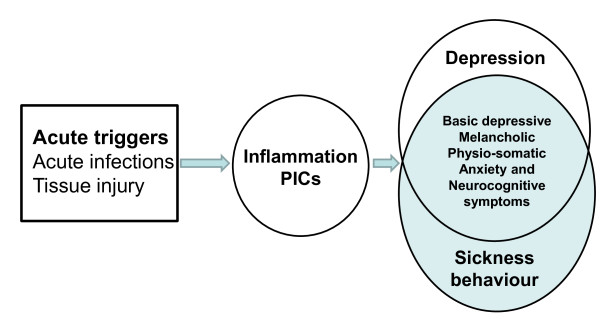
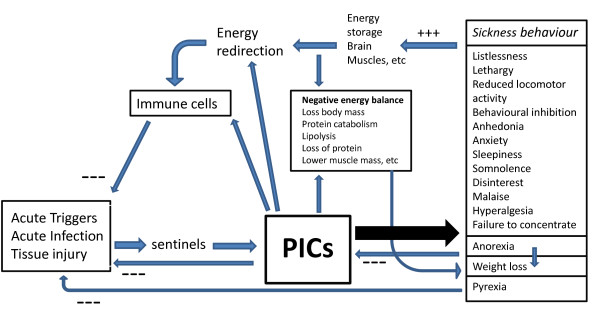
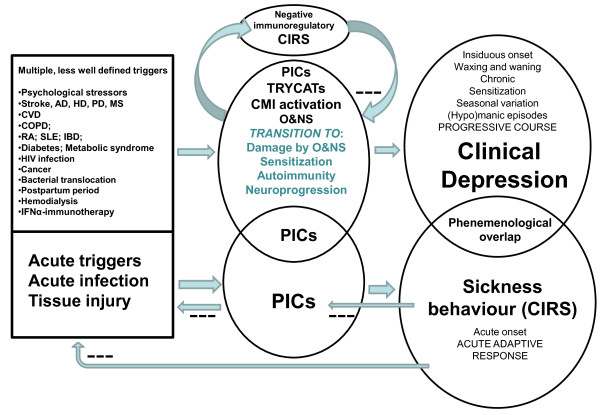
Verification
Claims the paper makes
The claims and statistics of this paper haven’t been checked yet.
Free: it reads the open-access text and checks the first 5 claims that cite a source we can check. Create a free account to check every claim.
Claims other papers make about this one
Each is checked against this paper’s own text: does it say what the citing paper says it does?
The source backs part of the claim, not all of it — or backs it for a different population, condition or comparison.
In the citing paper
“A single systemic injection of LPS induces DLB characterized with behavioral changes similar to symptoms of acute systemic inflammation or infection triggering exacerbation of depression (49).”
From Melatonin Attenuates LPS-Induced Acute Depressive-Like Behaviors and Microglial NLRP3 Inflammasome Activation Through the SIRT1/Nrf2 Pathway (2019) · cites this paper as [49]
Experimental — accuracy not yet measuredThe cited source says what the claim attributes to it.
In the citing paper
“It has been suggested that a 'compensatory (anti)inflammatory reflex system' (CIRS) may operate in MDD [46].”
In the citing paper
“This system has been hypothesized to play a counter-regulatory (i.e.homeostatic) role in the context of peripheral inflammation.”
Self-check
Percentages, sums and reported differences re-computed from the paper’s own numbers.
The self-check needs the paper’s full text.
Citations
Cites
From inflammation to sickness and depression: when the immune system subjugates the brain
Dantzer, R., O'Connor, J. C., Freund, G. G., Johnson, R. W., & Kelley, K. W. (2008) · Nature Reviews Neuroscience · doi:10.1038/nrn2297 · Cited by 7,395 · cited 17×
“Women with a lifetime history of depression have increased inflammatory biomarkers, including IL-6 and sIL-1RA, in the early puerperium as compared to women who have never suffered from depression [115].”
BackgroundInfluentialA Meta-Analysis of Cytokines in Major Depression
Dowlati, Y., Herrmann, N., Swardfager, W., Liu, H., Sham, L., Reim, E. K., & Lanctôt, K. L. (2010) · Biological Psychiatry · doi:10.1016/j.biopsych.2009.09.033 · Cited by 4,729 · cited 2×
“In this context, there is abundant evidence that clinical depression is an immuno-inflammatory disorder characterized by among other things increased levels of PICs and acute phase proteins, including C-reactive protein and haptoglobin [11-20].”
BackgroundTracey, K. J. (2002) · Nature · doi:10.1038/nature01321 · Cited by 3,728 · cited 1×
“PIC-induced changes in neural pathways also participate in inhibiting acute inflammation, for example, enhanced production of glucocorticoids and catecholamines, and activation of cholinergic pathways [91].”
BackgroundAssociations of depression with C-reactive protein, IL-1, and IL-6: a meta-analysis.
Howren, M. B., Lamkin, D. M., & Suls, J. (2009) · Psychosomatic Medicine · doi:10.1097/psy.0b013e3181907c1b · Cited by 2,766 · cited 1×
“Recent meta-analyses and recent publications have confirmed increased levels of PICs in human depression particularly IL-6, TNFa, and IL-1, and CMI activation, evidenced by higher levels of neopterin and soluble IL-2 receptors (sIL-2Rs) [18-20,79,80].”
BackgroundPoints of control in inflammation
Nathan, C. (2002) · Nature · doi:10.1038/nature01320 · Cited by 2,738 · cited 1×
“Activation of the IRS is controlled at different levels whereby regulatory mechanisms specifically target selected control points, such as the production of pro-inflammatory mediators or the effects of mediators on the target tissues [21,89].”
BackgroundDrevets, W. C., Price, J. L., & Furey, M. L. (2008) · Brain Structure and Function · doi:10.1007/s00429-008-0189-x · Cited by 2,241 · cited 1×
“regions that process viscerosensory and regulation of emotion in humans [145-147] and rodents [148].”
BackgroundBiological basis of the behavior of sick animals
Hart, B. L. (1988) · Neuroscience & Biobehavioral Reviews · doi:10.1016/s0149-7634(88)80004-6 · Cited by 2,223 · cited 18×
“Women with a lifetime history of depression have increased inflammatory biomarkers, including IL-6 and sIL-1RA, in the early puerperium as compared to women who have never suffered from depression [115].”
BackgroundInfluentialSystemic LPS causes chronic neuroinflammation and progressive neurodegeneration
Qin, L., Wu, X., Block, M. L., Liu, Y., Breese, G. R., Hong, J., Knapp, D. J., & Crews, F. T. (2007) · Glia · doi:10.1002/glia.20467 · Cited by 2,144 · cited 16×
“Women with a lifetime history of depression have increased inflammatory biomarkers, including IL-6 and sIL-1RA, in the early puerperium as compared to women who have never suffered from depression [115].”
BackgroundInfluentialInflammation 2010: New Adventures of an Old Flame
Medzhitov, R. (2010) · Cell · doi:10.1016/j.cell.2010.03.006 · Cited by 1,834 · cited 5×
“When the resolution phase, however, is not induced, for example, when the IRS was unable to eradicate the pathogen, inflammation may persist despite the CIRS thus causing a chronic inflammatory state [21].”
BackgroundInfluentialHippocampal volume and depression: a meta-analysis of MRI studies
Videbech, P., & Ravnkilde, B. (2004) · American Journal of Psychiatry · doi:10.1176/appi.ajp.161.11.1957 · Cited by 1,590 · cited 1×
“Meta-analysis showed that in patients with chronic depression (> 2 years) or recurrent depression hippocampal volume is significantly decreased and that the latter is related to the number of episodes [140,141].”
BackgroundYang, W.-S., Lee, W.-J., Funahashi, T., Tanaka, S., Matsuzawa, Y., Chao, C.-L., Chen, C.-L., Tai, T.-Y., & Chuang, L.-M. (2001) · The Journal of Clinical Endocrinology & Metabolism · doi:10.1210/jc.86.8.3815 · Cited by 1,181 · cited 1×
“In the short-term, weight reduction, but not the composition of the diet, attenuates the inflammatory response, for example, by lowering inflammatory PICs, such as IL-6 and TNF [38-40] and increasing plasma levels of adiponectin, an adipose-derived antiinflammatory protein [41].”
BackgroundBerk, M., Kapczinski, F., Andreazza, A. C., Dean, O. M., Giorlando, F., Maes, M., Yücel, M., Gama, C. S., Dodd, S., Dean, B., et al. (2011) · Neuroscience & Biobehavioral Reviews · doi:10.1016/j.neubiorev.2010.10.001 · Cited by 1,178
Self-citationKawasaki, Y., Zhang, L., Cheng, J.-K., & Ji, R.-R. (2008) · The Journal of Neuroscience · doi:10.1523/jneurosci.3338-07.2008 · Cited by 1,162 · cited 1×
“It is known that PICs mediate central sensitization, for example, behavioral responses to maternal separation [117,118].”
BackgroundMaes, M., Galecki, P., Chang, Y. S., & Berk, M. (2011) · Progress in Neuro-Psychopharmacology and Biological Psychiatry · doi:10.1016/j.pnpbp.2010.05.004 · Cited by 1,140 · cited 3×
“As with many inflammatory conditions, clinical depression is accompanied by activation of oxidative and nitrosative stress (O&NS) pathways [131].”
BackgroundInfluentialSelf-citation(2001) · Wiley eBooks · doi:10.1002/047001590x · Cited by 1,111
Evidence for an immune response in major depression: A review and hypothesis
Maes, M. (1995) · Progress in Neuro-Psychopharmacology and Biological Psychiatry · doi:10.1016/0278-5846(94)00101-m · Cited by 1,003 · cited 6×
“The existence of comparable counter regulatory processes, in particular reflex inhibition, has been described in clinical depression [11,78]: increased synthesis of the IL-1 receptor antagonist (IL-1RA), which inhibits the function of IL-1; PIC-induced activation of the cortisol-axis and the consequent immunosuppressi…”
BackgroundInfluentialSelf-citationCourse of illness, hippocampal function, and hippocampal volume in major depression
MacQueen, G. M., Campbell, S., McEwen, B. S., Macdonald, K., Amano, S., Joffe, R. T., Nahmias, C., & Young, L. T. (2003) · Proceedings of the National Academy of Sciences · doi:10.1073/pnas.0337481100 · Cited by 980 · cited 1×
“In some studies, decreased hippocampal volumes in patients with recurrent depression are associated with neurocognitive decline [142].”
BackgroundKoenigs, M., & Grafman, J. (2009) · Behavioural Brain Research · doi:10.1016/j.bbr.2009.03.004 · Cited by 956 · cited 1×
“regions that process viscerosensory and regulation of emotion in humans [145-147] and rodents [148].”
BackgroundLiu, Y., Ho, R. C.-M., & Mak, A. (2012) · Journal of Affective Disorders · doi:10.1016/j.jad.2011.08.003 · Cited by 948
Hannestad, J., DellaGioia, N., & Bloch, M. (2011) · Neuropsychopharmacology · doi:10.1038/npp.2011.132 · Cited by 914 · cited 2×
“Accordingly, a recent meta-analysis showed that antidepressant subclasses other than SSRIs did not attenuate the concentrations of pro-inflammatory cytokines [184].”
BackgroundMaes, M., Yirmyia, R., Noraberg, J., Brene, S., Hibbeln, J., Perini, G., Kubera, M., Bob, P., Lerer, B., & Maj, M. (2009) · Metabolic Brain Disease · doi:10.1007/s11011-008-9118-1 · Cited by 894 · cited 4×
“PICs, such as IL-1 and TNFa, and CMI cytokines, for example, IFNg and IL-2, TRYCATs, such as quinolinic acid, and damage by O&NS to structural fatty acids, anchorage molecules, functional proteins, DNA and mitochondria all may contribute to neuroprogression [15,17,126].”
BackgroundInfluentialSelf-citationLeonard, B., & Maes, M. (2012) · Neuroscience & Biobehavioral Reviews · doi:10.1016/j.neubiorev.2011.12.005 · Cited by 805 · cited 10×
“Administration of LPS elicits not only sickness behavior but also depressive- (suppression of social interaction and activity in the open-field test, food consumption and body weight, memory dysfunction), anxiety-like and physio-somatic behaviors [15].”
BackgroundInfluentialSelf-citationHarrison, N. A., Brydon, L., Walker, C., Gray, M. A., Steptoe, A., & Critchley, H. D. (2009) · Biological Psychiatry · doi:10.1016/j.biopsych.2009.03.015 · Cited by 756 · cited 1×
“regions that process viscerosensory and regulation of emotion in humans [145-147] and rodents [148].”
BackgroundMcKinnon, M. C., Yucel, K., Nazarov, A., & MacQueen, G. M. (2009) · Journal of Psychiatry and Neuroscience · doi:10.1139/jpn.0905 · Cited by 742
Cellular changes in the postmortem hippocampus in major depression
Stockmeier, C. A., Mahajan, G. J., Konick, L. C., Overholser, J. C., Jurjus, G. J., Meltzer, H. Y., Uylings, H. B. M., Friedman, L., & Rajkowska, G. (2004) · Biological Psychiatry · doi:10.1016/j.biopsych.2004.08.022 · Cited by 732 · cited 1×
“This effect may in part be related to a decrease in soma size of some cell types [144].”
BackgroundMaes, M., Bosmans, E., De Jongh, R., Kenis, G., Vandoolaeghe, E., & Neels, H. (1997) · Cytokine · doi:10.1006/cyto.1997.0238 · Cited by 728 · cited 1×
“Moreover, increased IL-6 and TNFa and lower serum zinc levels are associated with risk for depression and treatment-resistant depression [121-125].”
BackgroundSelf-citationMaes, M., Leonard, B. E., Myint, A. M., Kubera, M., & Verkerk, R. (2011) · Progress in Neuro-Psychopharmacology and Biological Psychiatry · doi:10.1016/j.pnpbp.2010.12.017 · Cited by 700 · cited 4×
“Lowered plasma tryptophan frequently occurs in clinical depression and is strongly associated with biomarkers of inflammation (acute phase reactants, increased cytokine levels) and CMI activation (increased serum neopterin and sIL-2Rs) [94-96].”
BackgroundResultInfluentialSelf-citationThe olfactory bulbectomised rat as a model of depression
Song, C., & Leonard, B. E. (2005) · Neuroscience & Biobehavioral Reviews · doi:10.1016/j.neubiorev.2005.03.010 · Cited by 698 · cited 2×
“Studies in humans and rodents have defined PICs as central mediators of sickness behavior [5,6,65-67].”
BackgroundSelf-citationWohleb, E. S., Hanke, M. L., Corona, A. W., Powell, N. D., Stiner, L. M., Bailey, M. T., Nelson, R. J., Godbout, J. P., & Sheridan, J. F. (2011) · The Journal of Neuroscience · doi:10.1523/jneurosci.0450-11.2011 · Cited by 638 · cited 1×
“suggesting a role for social stress factors in the regulation of microglia responses [162].”
BackgroundMaes, M., Meltzer, H. Y., Bosmans, E., Bergmans, R., Vandoolaeghe, E., Ranjan, R., & Desnyder, R. (1995) · Journal of Affective Disorders · doi:10.1016/0165-0327(95)00028-l · Cited by 622 · cited 2×
“Subchronic treatments with antidepressants do not consistently attenuate inflammatory signs in depressed patients [182,183].”
BackgroundSelf-citationEndotoxin produces a depressive-like episode in rats
Yirmiya, R. (1996) · Brain Research · doi:10.1016/0006-8993(95)01415-2 · Cited by 604 · cited 16×
“Women with a lifetime history of depression have increased inflammatory biomarkers, including IL-6 and sIL-1RA, in the early puerperium as compared to women who have never suffered from depression [115].”
BackgroundInfluentialRoubenoff, R., Roubenoff, R. A., Cannon, J. G., Kehayias, J. J., Zhuang, H., Dawson-Hughes, B., Dinarello, C. A., & Rosenberg, I. H. (1994) · Journal of Clinical Investigation · doi:10.1172/jci117244 · Cited by 584 · cited 1×
“PIC signals, for example, TNFa signals, modulate the balance between this increased energy demand and energy supply and control food intake, energy expenditure and substrate utilization [23,24].”
BackgroundSteiner, J., Walter, M., Gos, T., Guillemin, G. J., Bernstein, H.-G., Sarnyai, Z., Mawrin, C., Brisch, R., Bielau, H., zu Schwabedissen, L., et al. (2011) · Journal of Neuroinflammation · doi:10.1186/1742-2094-8-94 · Cited by 568 · cited 1×
“One study shows increased TRYCATs in adolescents with melancholic depression [110] and another study increased quinolinic acid in microglia of depressed suicide victims [111].”
BackgroundTwenge, J. M., Gentile, B., DeWall, C. N., Ma, D., Lacefield, K., & Schurtz, D. R. (2010) · Clinical Psychology Review · doi:10.1016/j.cpr.2009.10.005 · Cited by 554
Maes, M. (2011) · Progress in Neuro-Psychopharmacology and Biological Psychiatry · doi:10.1016/j.pnpbp.2010.06.014 · Cited by 544 · cited 2×
“The existence of comparable counter regulatory processes, in particular reflex inhibition, has been described in clinical depression [11,78]: increased synthesis of the IL-1 receptor antagonist (IL-1RA), which inhibits the function of IL-1; PIC-induced activation of the cortisol-axis and the consequent immunosuppressi…”
BackgroundSelf-citationFatigue and Proinflammatory Cytokine Activity in Breast Cancer Survivors
Bower, J. E., Ganz, P. A., Aziz, N., & Fahey, J. L. (2002) · Psychosomatic Medicine · doi:10.1097/00006842-200207000-00010 · Cited by 540 · cited 1×
“Motor and activity deficits are typically associated with sickness behavior [62,63] and form part of the fatigue - depression - sleep disorder cluster occurring during acute and chronic illnesses including heart disease, rheumatoid arthritis, and cancer [64].”
BackgroundMechanisms of nutrient modulation of the immune response
Cunningham-Rundles, S., McNeeley, D. F., & Moon, A. (2005) · Journal of Allergy and Clinical Immunology · doi:10.1016/j.jaci.2005.04.036 · Cited by 534 · cited 1×
“Immune responses are highly calorie dependent and increase resting energy expenditure, while sickness behavior responses, for example, motor inhibition, may conserve critical energy [27].”
BackgroundMoylan, S., Maes, M., Wray, N. R., & Berk, M. (2013) · Molecular Psychiatry · doi:10.1038/mp.2012.33 · Cited by 529
Self-citationKynurenine pathway in major depression: Evidence of impaired neuroprotection
Myint, A.-M., Kim, Y. K., Verkerk, R., Scharpé, S., Steinbusch, H., & Leonard, B. (2007) · Journal of Affective Disorders · doi:10.1016/j.jad.2006.07.013 · Cited by 527 · cited 1×
“In a recent study [109], lower levels of kynurenic acid and consequently a relatively increased kynurenine/kynurenic Maes et al.”
BackgroundSelf-citationO'Connor, J. C., André, C., Wang, Y., Lawson, M. A., Szegedi, S. S., Lestage, J., Castanon, N., Kelley, K. W., & Dantzer, R. (2009) · The Journal of Neuroscience · doi:10.1523/jneurosci.5032-08.2009 · Cited by 502 · cited 3×
“Moreover, IDOdeficient mice are resistant to the depressogenic effects of BCG, while they show a normal inflammatory response following BCG administration [104].”
BackgroundAllostatic load in bipolar disorder: Implications for pathophysiology and treatment
Kapczinski, F., Vieta, E., Andreazza, A. C., Frey, B. N., Gomes, F. A., Tramontina, J., Kauer-Sant’Anna, M., Grassi-Oliveira, R., & Post, R. M. (2008) · Neuroscience & Biobehavioral Reviews · doi:10.1016/j.neubiorev.2007.10.005 · Cited by 480 · cited 1×
“McEwen’s allostatic load model has similarly been adapted to describe this progressive pattern [58].”
Kendler, K. S., Thornton, L. M., & Gardner, C. O. (2001) · American Journal of Psychiatry · doi:10.1176/appi.ajp.158.4.582 · Cited by 480 · cited 1×
“Following more than nine previous episodes, the trigger - depression association is muted and episodes appear autonomously, disconnected from triggers [166].”
BackgroundMaes, M., Kubera, M., Leunis, J.-C., & Berk, M. (2012) · Journal of Affective Disorders · doi:10.1016/j.jad.2012.02.023 · Cited by 446
Self-citationWichers, M. C., Koek, G. H., Robaeys, G., Verkerk, R., Scharpé, S., & Maes, M. (2005) · Molecular Psychiatry · doi:10.1038/sj.mp.4001600 · Cited by 445 · cited 1×
“Physio-somatic symptoms, including fatigue, increased in the first week of treatment, and predicted cognitive-depressive symptoms some weeks to months later [165].”
BackgroundSelf-citationKubera, M., Obuchowicz, E., Goehler, L., Brzeszcz, J., & Maes, M. (2011) · Progress in Neuro-Psychopharmacology and Biological Psychiatry · doi:10.1016/j.pnpbp.2010.08.026 · Cited by 443 · cited 6×
“There is also evidence that SSRIs and TCAs inhibit the production of IL-1b, TNF-a, and IL-6 in brain cell cultures [65].”
BackgroundInfluentialSelf-citationGoehler, L. E., Gaykema, R. P. A., Opitz, N., Reddaway, R., Badr, N., & Lyte, M. (2005) · Brain, Behavior, and Immunity · doi:10.1016/j.bbi.2004.09.002 · Cited by 442 · cited 1×
“Moreover, the same pathways may activate brain regions, for example, the bed nucleus of the stria terminalis, that mediate threat-related information and infection-induced anxiety [71,73-75].”
BackgroundSelf-citationFrenois, F., Moreau, M., O’Connor, J., Lawson, M., Micon, C., Lestage, J., Kelley, K. W., Dantzer, R., & Castanon, N. (2007) · Psychoneuroendocrinology · doi:10.1016/j.psyneuen.2007.03.005 · Cited by 438 · cited 16×
“Administration of LPS elicits not only sickness behavior but also depressive- (suppression of social interaction and activity in the open-field test, food consumption and body weight, memory dysfunction), anxiety-like and physio-somatic behaviors [15].”
BackgroundInfluentialBonaccorso, S., Marino, V., Puzella, A., Pasquini, M., Biondi, M., Artini, M., Almerighi, C., Verkerk, R., Meltzer, H., & Maes, M. (2002) · Journal of Clinical Psychopharmacology · doi:10.1097/00004714-200202000-00014 · Cited by 437 · cited 1×
“During IFNa-based immunotherapy the onset of depressive symptoms is strongly associated with IDO activation, as assessed by means of the kynurenine/tryptophan ratio [101].”
MethodSelf-citationKauer-Sant'Anna, M., Kapczinski, F., Andreazza, A. C., Bond, D. J., Lam, R. W., Young, L. T., & Yatham, L. N. (2009) · The International Journal of Neuropsychopharmacology · doi:10.1017/s1461145708009310 · Cited by 435 · cited 1×
“Intriguingly, the CIRS seems to weaken with progression of the illness, and this failure to dampen inflammatory activation might play a role in the process of neuroprogression seen with multiple episodes [149].”
BackgroundKopp, H. P., Kopp, C. W., Festa, A., Krzyzanowska, K., Kriwanek, S., Minar, E., Roka, R., & Schernthaner, G. (2003) · Arteriosclerosis, Thrombosis, and Vascular Biology · doi:10.1161/01.atv.0000073313.16135.21 · Cited by 427 · cited 23×
“In the short-term, weight reduction, but not the composition of the diet, attenuates the inflammatory response, for example, by lowering inflammatory PICs, such as IL-6 and TNF [38-40] and increasing plasma levels of adiponectin, an adipose-derived antiinflammatory protein [41].”
BackgroundInfluentialThe systemic inflammatory response syndrome
Meeran, H., & Messent, M. (2001) · Trauma · doi:10.1177/146040860100300203 · Cited by 425
Kessing, L. V. (2004) · Journal of Neurology, Neurosurgery & Psychiatry · doi:10.1136/jnnp.2003.031773 · Cited by 406
Maes, M., Lin, A.-H., Delmeire, L., Van Gastel, A., Kenis, G., De Jongh, R., & Bosmans, E. (1999) · Biological Psychiatry · doi:10.1016/s0006-3223(98)00131-0 · Cited by 387 · cited 3×
“Multiple trigger factors may provoke depressive behaviors, for example, psychosocial stressors, various medical disorders, and conditions as different as hemodialysis, IFNa-based immunotherapy, and the postnatal period [25,65,80].”
BackgroundSelf-citationMaes, M., Bosmans, E., Calabrese, J., Smith, R., & Meltzer, H. Y. (1995) · Journal of Psychiatric Research · doi:10.1016/0022-3956(94)00049-w · Cited by 385 · cited 2×
“There is also evidence that immunoinflammatory processes underpin the pathophysiology not only of unipolar and bipolar depression, but also mania [127,128].”
BackgroundSelf-citationMaes, M. H. J., Kubera, M., Obuchowiczwa, E., Goehler, L. E., & Brzeszcz, J. (2011) · PubMed · Cited by 374
Self-citationMaes, M. (1999) · Neuropsychopharmacology · doi:10.1016/s0893-133x(98)00088-8 · Cited by 357 · cited 1×
“Most antidepressants, that is, TCAs, SSRIs, reversible inhibitors of monoamine oxidase A, 5-HT and noradrenaline reuptake inhibitors, and atypical antidepressants (for example, tianeptine) all increase the production of IL-10, a negative immunoregulatory cytokine and/or lower the production of IFNg, resulting in a dec…”
BackgroundSelf-citationCompensatory anti-inflammatory response syndrome
Cavaillon, J.-M., & Adib-Conquy, M. (2009) · Thrombosis and Haemostasis · doi:10.1160/th08-07-0421 · Cited by 356 · cited 25×
“For example, counter regulatory mechanisms are initiated to limit an infectious (sepsis) and non-infectious systemic inflammatory response syndrome [90,92,93].”
BackgroundInfluentialO’Brien, S. M., Scully, P., Fitzgerald, P., Scott, L. V., & Dinan, T. G. (2007) · Journal of Psychiatric Research · doi:10.1016/j.jpsychires.2006.05.013 · Cited by 355 · cited 1×
“Moreover, increased IL-6 and TNFa and lower serum zinc levels are associated with risk for depression and treatment-resistant depression [121-125].”
BackgroundAcute phase proteins in schizophrenia, mania and major depression: modulation by psychotropic drugs
Maes, M., Delange, J., Ranjan, R., Meltzer, H. Y., Desnyder, R., Cooremans, W., & Scharpé, S. (1997) · Psychiatry Research · doi:10.1016/s0165-1781(96)02915-0 · Cited by 341 · cited 2×
“There is also evidence that immunoinflammatory processes underpin the pathophysiology not only of unipolar and bipolar depression, but also mania [127,128].”
BackgroundSelf-citationConditioning and Sensitisation in the Longitudinal Course of Affective Illness
Post, R. M., Rubinow, D. R., & Ballenger, J. C. (1986) · British Journal of Psychiatry · doi:10.1192/bjp.149.2.191 · Cited by 336 · cited 1×
“Moreover, there is evidence that sensitization offers a model for episode recurrence [55].”
BackgroundLYTE, M., LI, W., OPITZ, N., GAYKEMA, R., & GOEHLER, L. (2006) · Physiology & Behavior · doi:10.1016/j.physbeh.2006.06.019 · Cited by 334 · cited 2×
“Moreover, the same pathways may activate brain regions, for example, the bed nucleus of the stria terminalis, that mediate threat-related information and infection-induced anxiety [71,73-75].”
BackgroundSelf-citationMaes, M., Fišar, Z., Medina, M., Scapagnini, G., Nowak, G., & Berk, M. (2012) · Inflammopharmacology · doi:10.1007/s10787-011-0111-7 · Cited by 325 · cited 5×
“Thus, clinical depression appears to be accompanied by a ‘resistance’ to the immunosuppressive effects of antidepressants [183].”
BackgroundInfluentialSelf-citationXia, Z., Depierre, J. W., & Nässberger, L. (1996) · Immunopharmacology · doi:10.1016/0162-3109(96)00111-7 · Cited by 318
Maes, M., Scharpé, S., Meltzer, H. Y., Okayli, G., Bosmans, E., D'Hondt, P., Vanden Bossche, B., & Cosyns, P. (1994) · Psychiatry Research · doi:10.1016/0165-1781(94)90003-5 · Cited by 302 · cited 2×
“Lowered plasma tryptophan frequently occurs in clinical depression and is strongly associated with biomarkers of inflammation (acute phase reactants, increased cytokine levels) and CMI activation (increased serum neopterin and sIL-2Rs) [94-96].”
BackgroundSelf-citationThe concept of sickness behavior: a brief chronological account of four key discoveries
Johnson, R. W. (2002) · Veterinary Immunology and Immunopathology · doi:10.1016/s0165-2427(02)00069-7 · Cited by 297 · cited 18×
“Women with a lifetime history of depression have increased inflammatory biomarkers, including IL-6 and sIL-1RA, in the early puerperium as compared to women who have never suffered from depression [115].”
BackgroundInfluentialAnisman, H. (2009) · Journal of Psychiatry and Neuroscience · doi:10.1139/jpn.0902 · Cited by 292 · cited 1×
“Cytokines such as IL-1 not only have potent primary signaling effects, but also modulate many neurotransmitters intimately involved in mood regulation such as serotonin and noradrenaline [83].”
BackgroundCytokines mediated inflammation and decreased neurogenesis in animal models of depression
Song, C., & Wang, H. (2011) · Progress in Neuro-Psychopharmacology and Biological Psychiatry · doi:10.1016/j.pnpbp.2010.06.020 · Cited by 291 · cited 1×
“Another immuno-inflammation-related pathway, which has detrimental effects in clinical depression and is not germane in sickness behavior, is neuroprogression, that is the stage related and potentially progressive process of neurodegeneration, reduced neurogenesis and neuronal plasticity, and apoptosis [15,17,123,126,…”
BackgroundSelf-citationMaes, M., Vandoolaeghe, E., Neels, H., Demedts, P., Wauters, A., Meltzer, H. Y., Altamura, C., & Desnyder, R. (1997) · Biological Psychiatry · doi:10.1016/s0006-3223(96)00365-4 · Cited by 272 · cited 1×
“Moreover, increased IL-6 and TNFa and lower serum zinc levels are associated with risk for depression and treatment-resistant depression [121-125].”
BackgroundSelf-citationJewkes, R. K., Dunkle, K., Nduna, M., Jama, P. N., & Puren, A. (2010) · Child Abuse & Neglect · doi:10.1016/j.chiabu.2010.05.002 · Cited by 269 · cited 1×
“In contrast to sickness behavior, pathogens do not play a major role in clinical depression although some authors have attempted to make links between pathogens such as herpes simplex type 2 and toxoplasma gondii and psychopathology [153,154].”
Maes, M., Bosmans, E., Suy, E., Vandervorst, C., DeJonckheere, C., & Raus, J. (1991) · Acta Psychiatrica Scandinavica · doi:10.1111/j.1600-0447.1991.tb03163.x · Cited by 268 · cited 1×
“In this context, there is abundant evidence that clinical depression is an immuno-inflammatory disorder characterized by among other things increased levels of PICs and acute phase proteins, including C-reactive protein and haptoglobin [11-20].”
BackgroundSelf-citationFever and Reduced Iron: Their Interaction as a Host Defense Response to Bacterial Infection
Kluger, M. J., & Rothenburg, B. A. (1979) · Science · doi:10.1126/science.760197 · Cited by 265 · cited 1×
“It is suggested that anorexia may limit the intake of iron, which otherwise would activate bacterial production [34].”
BackgroundHartman, O. (2009) · doi:10.1016/j.jpsychores.2008.09.018 · Cited by 261 · cited 1×
“There is a wide diversity of coping styles and beliefs on the nature of depression, some of which are adaptive while others are maladaptive [176].”
BackgroundThe evolutionary significance of depression in Pathogen Host Defense (PATHOS-D)
Raison, C. L., & Miller, A. H. (2013) · Molecular Psychiatry · doi:10.1038/mp.2012.2 · Cited by 253 · cited 1×
“As such depression is regarded as an evolutionary behavioral response that helps the immune system to fight pathogens and to avoid new pathogen exposure [26,174,175].”
BackgroundGorwood, P., Corruble, E., Falissard, B., & Goodwin, G. M. (2008) · American Journal of Psychiatry · doi:10.1176/appi.ajp.2008.07040574 · Cited by 252 · cited 1×
“Recurrent depressive episodes are correlated with increased cognitive disabilities, for example, decreased memory performance which is lowered by 2% to 3% following each depressive episode [138].”
BackgroundPlasma kynurenine levels are elevated in suicide attempters with major depressive disorder
Sublette, M. E., Galfalvy, H. C., Fuchs, D., Lapidus, M., Grunebaum, M. F., Oquendo, M. A., John Mann, J., & Postolache, T. T. (2011) · Brain, Behavior, and Immunity · doi:10.1016/j.bbi.2011.05.002 · Cited by 250 · cited 1×
“[112] detected increased plasma kynurenine levels in suicide attempters with major depression.”
BackgroundBerlim, M. T., & Turecki, G. (2007) · European Neuropsychopharmacology · doi:10.1016/j.euroneuro.2007.03.009 · Cited by 249 · cited 1×
“Moreover, up to 15% of depressed patients may develop treatment resistance, defined as a failure to respond to at least two adequate antidepressant trials [50].”
BackgroundΑ Review on the Acute Phase Response in Major Depression
Maes, M. (1993) · Reviews in the Neurosciences · doi:10.1515/revneuro.1993.4.4.407 · Cited by 239 · cited 3×
“Moreover, ‘vegetative symptoms’ of depression, such as anorexia, weight loss, and psychomotor retardation, are significantly associated with inflammatory markers in clinical depression, such as increased levels of plasma haptoglobin, an acute phase protein, synthesis of which is induced by the three abovementioned PIC…”
BackgroundSelf-citationSetting the stage: from prodrome to treatment resistance in bipolar disorder
Berk, M., Conus, P., Lucas, N., Hallam, K., Malhi, G. S., Dodd, S., Yatham, L. N., Yung, A., & McGorry, P. (2007) · Bipolar Disorders · doi:10.1111/j.1399-5618.2007.00484.x · Cited by 238 · cited 2×
“Both unipolar and bipolar depression have characteristics of a progressive illness: they both follow stages, often commencing with mild or non-specific symptoms, progressing to prodromal features of subthreshold symptoms, then an acute episode, recurrence or a chronic form of persistent, unremitting illness [16,17,48].”
BackgroundSelf-citationBonaccorso, S., Puzella, A., Marino, V., Pasquini, M., Biondi, M., Artini, M., Almerighi, C., Levrero, M., Egyed, B., Bosmans, E., et al. (2001) · Psychiatry Research · doi:10.1016/s0165-1781(01)00315-8 · Cited by 236 · cited 1×
“The onset of depressive symptoms during IFNa-based immunotherapy is strongly associated with induction of the cytokine network, including elevations in monocytic cytokines, Th-1like and Th-2-like cytokines [18,81,82].”
BackgroundSelf-citationSong, C., Lin, A., Bonaccorso, S., Heide, C., Verkerk, R., Kenis, G., Bosmans, E., Scharpe, S., Whelan, A., Cosyns, P., et al. (1998) · Journal of Affective Disorders · doi:10.1016/s0165-0327(98)00025-1 · Cited by 232 · cited 1×
“Recently, a new pathway associated with inflammation has been established in some individuals with depression, that is, activation of the tryptophan catabolite (TRYCAT) pathway [94-97].”
BackgroundSelf-citationHuang, Y., Henry, C. J., Dantzer, R., Johnson, R. W., & Godbout, J. P. (2008) · Neurobiology of Aging · doi:10.1016/j.neurobiolaging.2007.04.012 · Cited by 220 · cited 3×
“Such an exaggerated response is observed in aged as compared to adult mice [170].”
BackgroundSwiergiel, A. H., & Dunn, A. J. (2007) · Pharmacology Biochemistry and Behavior · doi:10.1016/j.pbb.2007.02.010 · Cited by 212 · cited 1×
“Certainly, it is difficult to determine whether the depressogenic and anxiogenic effects of LPS and other inflammatory triggers are genuine or related to sickness behavior [85].”
BackgroundInterleukin-1 mediates the behavioral hyperalgesia produced by lithium chloride and endotoxin
Maier, S. F., Wiertelak, E. P., Martin, D., & Watkins, L. R. (1993) · Brain Research · doi:10.1016/0006-8993(93)91446-y · Cited by 210 · cited 16×
“Women with a lifetime history of depression have increased inflammatory biomarkers, including IL-6 and sIL-1RA, in the early puerperium as compared to women who have never suffered from depression [115].”
BackgroundInfluentialMaes, M., Verkerk, R., Bonaccorso, S., Ombelet, W., Bosmans, E., & Scharpé, S. (2002) · Life Sciences · doi:10.1016/s0024-3205(02)01853-2 · Cited by 203 · cited 1×
“Likewise, in the postnatal period lowered tryptophan and increased IDO activity are related to anxiety and depressive symptoms [102].”
BackgroundSelf-citationImmune Disturbances during Major Depression: Upregulated Expression of Interleukin-2 Receptors
Maes, M., Bosmans, E., Suy, E., Vandervorst, C., De Jonckheere, C., & Raus, J. (2008) · Neuropsychobiology · doi:10.1159/000119472 · Cited by 200 · cited 1×
“In clinical depression there is evidence of a chronic, low grade inflammatory process and cell-mediated immune (CMI) activation characterized by a T helper (Th1)-like response with activation of IFNg-related pathways [77,78].”
BackgroundSelf-citationSeasonality in violent suicide but not in nonviolent suicide or homicide
(1993) · American Journal of Psychiatry · doi:10.1176/ajp.150.9.1380 · Cited by 196 · cited 1×
“There is also a seasonal variation in severity of depression and depressive symptoms, including suicide [61].”
BackgroundSelf-citationBrustolim, D., Ribeiro-dos-Santos, R., Kast, R. E., Altschuler, E. L., & Soares, M. B. P. (2006) · International Immunopharmacology · doi:10.1016/j.intimp.2005.12.007 · Cited by 194 · cited 9×
“There is also evidence that SSRIs and TCAs inhibit the production of IL-1b, TNF-a, and IL-6 in brain cell cultures [65].”
BackgroundInfluentialSong, C., Dinan, T., & Leonard, B. E. (1994) · Journal of Affective Disorders · doi:10.1016/0165-0327(94)90135-x · Cited by 193 · cited 1×
“In this context, there is abundant evidence that clinical depression is an immuno-inflammatory disorder characterized by among other things increased levels of PICs and acute phase proteins, including C-reactive protein and haptoglobin [11-20].”
BackgroundSelf-citationBerk, M., Brnabic, A., Dodd, S., Kelin, K., Tohen, M., Malhi, G. S., Berk, L., Conus, P., & McGorry, P. D. (2011) · Bipolar Disorders · doi:10.1111/j.1399-5618.2011.00889.x · Cited by 188 · cited 5×
“Both unipolar and bipolar depression have characteristics of a progressive illness: they both follow stages, often commencing with mild or non-specific symptoms, progressing to prodromal features of subthreshold symptoms, then an acute episode, recurrence or a chronic form of persistent, unremitting illness [16,17,48].”
BackgroundInfluentialSelf-citationAnhedonic and Anxiogenic Effects of Cytokine Exposure
Anisman, H., & Merali, Z. (1999) · Advances in Experimental Medicine and Biology · doi:10.1007/978-0-585-37970-8_12 · Cited by 185 · cited 1×
“For example, infection and immune activation activate bottom-up, inflammatory pathways, mediated by PICs, from the periphery to the dorsal vagal complex, and ventrolateral medulla of the caudal medulla [9,70-72].”
BackgroundHIV infection and psychiatric illness
Owe-Larsson, M., Säll, L., Salamon, E., & Allgulander, C. (2009) · African Journal of Psychiatry · doi:10.4314/ajpsy.v12i2.43729 · Cited by 184
Maes, M., Mihaylova, I., Kubera, M., & Ringel, K. (2012) · Progress in Neuro-Psychopharmacology and Biological Psychiatry · doi:10.1016/j.pnpbp.2011.09.006 · Cited by 171 · cited 5×
“Likewise, plasma IL-1 and TNFa are significantly increased in depressed patients who suffered from three or more depressive episodes [18].”
BackgroundInfluentialSelf-citationPearce, B. D., Kruszon-Moran, D., & Jones, J. L. (2012) · Biological Psychiatry · doi:10.1016/j.biopsych.2012.01.003 · Cited by 169
Liukkonen, T., Silvennoinen-Kassinen, S., Jokelainen, J., Räsänen, P., Leinonen, M., Meyer-Rochow, V. B., & Timonen, M. (2006) · Biological Psychiatry · doi:10.1016/j.biopsych.2006.02.016 · Cited by 163 · cited 1×
“Increased C-reactive protein (CRP) levels in depressed men predict not only severity of the current depressive episode, but also recurrent depression [116].”
BackgroundMaes, M., Meltzer, H. Y., Scharpè, S., Bosmans, E., Suy, E., De Meester, I., Calabrese, J., & Cosyns, P. (1993) · Psychiatry Research · doi:10.1016/0165-1781(93)90102-m · Cited by 161 · cited 2×
“Lowered plasma tryptophan frequently occurs in clinical depression and is strongly associated with biomarkers of inflammation (acute phase reactants, increased cytokine levels) and CMI activation (increased serum neopterin and sIL-2Rs) [94-96].”
BackgroundSelf-citationThe potential utility of a staging model as a course specifier: A bipolar disorder perspective
Berk, M., Hallam, K. T., & McGorry, P. D. (2007) · Journal of Affective Disorders · doi:10.1016/j.jad.2007.03.007 · Cited by 157 · cited 1×
“Although some patients may suffer from one depressive episode only, longitudinal studies performed within the last two decades have shown that clinical depression is typically an episodic or lifelong disease [47-49].”
BackgroundSelf-citationInterleukin-1 beta modulates AMPA receptor expression and phosphorylation in hippocampal neurons
Lai, A. Y., Swayze, R. D., El-Husseini, A., & Song, C. (2006) · Journal of Neuroimmunology · doi:10.1016/j.jneuroim.2006.03.001 · Cited by 151 · cited 1×
“In hippocampal neurons, IL-1b administration significantly induced cell apoptosis, reduced aa-amino-3-hydroxy-5-methyl-4-isoxazolepropionic acid receptors, but increased N-methyl-D-aspartate receptor changes similar to those observed in AD [173].”
BackgroundSelf-citationNutrient intakes and the common mental disorders in women
Jacka, F. N., Maes, M., Pasco, J. A., Williams, L. J., & Berk, M. (2012) · Journal of Affective Disorders · doi:10.1016/j.jad.2012.02.018 · Cited by 149
Self-citationCatena-Dell'Osso, M., Bellantuono, C., Consoli, G., Baroni, S., Rotella, F., & Marazziti, D. (2011) · Current Medicinal Chemistry · doi:10.2174/092986711794088353 · Cited by 148 · cited 1×
“Another immuno-inflammation-related pathway, which has detrimental effects in clinical depression and is not germane in sickness behavior, is neuroprogression, that is the stage related and potentially progressive process of neurodegeneration, reduced neurogenesis and neuronal plasticity, and apoptosis [15,17,123,126,…”
BackgroundJellema, A., Plat, J., & Mensink, R. P. (2004) · European Journal of Clinical Investigation · doi:10.1111/j.1365-2362.2004.01414.x · Cited by 144 · cited 23×
“In the short-term, weight reduction, but not the composition of the diet, attenuates the inflammatory response, for example, by lowering inflammatory PICs, such as IL-6 and TNF [38-40] and increasing plasma levels of adiponectin, an adipose-derived antiinflammatory protein [41].”
BackgroundInfluentialSHARMAN, M. J., & VOLEK, J. S. (2004) · Clinical Science · doi:10.1042/cs20040111 · Cited by 143 · cited 23×
“In the short-term, weight reduction, but not the composition of the diet, attenuates the inflammatory response, for example, by lowering inflammatory PICs, such as IL-6 and TNF [38-40] and increasing plasma levels of adiponectin, an adipose-derived antiinflammatory protein [41].”
BackgroundInfluentialCastanon, N., Bluthé, R.-M., & Dantzer, R. (2001) · Psychopharmacology · doi:10.1007/s002130000595 · Cited by 136 · cited 1×
“For example, tianeptine may reduce sickness behaviors induced by peripheral (but not central) administration of LPS and IL-1b [180].”
BackgroundAnatomical MRI study of basal ganglia in major depressive disorder
Lacerda, A. L. T., Nicoletti, M., Brambilla, P., Sassi, R. B., Mallinger, A. G., Frank, E., Kupfer, D. J., Keshavan, M. S., & Soares, J. C. (2003) · Psychiatry Research Neuroimaging · doi:10.1016/s0925-4927(03)00123-9 · Cited by 133 · cited 1×
“Treatment resistance and the duration of illness are related to decreased right caudate and left putamen volume [52,143].”
BackgroundWichers, M., Kenis, G., Koek, G. H., Robaeys, G., Nicolson, N. A., & Maes, M. H. J. (2007) · Journal of Psychosomatic Research · doi:10.1016/j.jpsychores.2006.09.007 · Cited by 133 · cited 1×
“The onset of depressive symptoms during IFNa-based immunotherapy is strongly associated with induction of the cytokine network, including elevations in monocytic cytokines, Th-1like and Th-2-like cytokines [18,81,82].”
BackgroundSelf-citationCytokines: Stress and Immunity
(1998) · CRC Press eBooks · doi:10.1201/9781420048193 · Cited by 132
Effect of short term calorie restriction on pro-inflammatory NF-kB and AP-1 in aged rat kidney
Jung, K. J., Lee, E. K., Kim, J. Y., Zou, Y., Sung, B., Heo, H.-K., Kim, M. K., Lee, J., Kim, N. D., Yu, B., et al. (2009) · Inflammation Research · doi:10.1007/s00011-008-7227-2 · Cited by 130 · cited 1×
“different intracellular signaling pathways leading to inflammation and even sickness behavior [35,36].”
BackgroundMaes, M. H. J., Scharpé, S., Bosmans, E., Vandewoude, M. F. J., Suy, E., Uyttenbroeck, W., Cooreman, W., Vandervorst, C., & Raus, J. (1992) · Progress in Neuro-Psychopharmacology and Biological Psychiatry · doi:10.1016/0278-5846(92)90056-k · Cited by 130 · cited 1×
“In this context, there is abundant evidence that clinical depression is an immuno-inflammatory disorder characterized by among other things increased levels of PICs and acute phase proteins, including C-reactive protein and haptoglobin [11-20].”
BackgroundSelf-citationImmunologic variables in acute mania of bipolar disorder
Liu, H., Yang, Y., Chou, Y.-M., Chen, K.-P., Shen, W. W., & Leu, S. (2004) · Journal of Neuroimmunology · doi:10.1016/j.jneuroim.2004.01.006 · Cited by 129 · cited 1×
“Acute mania is accompanied by increased sIL-6R and sIL-2R levels, and increases in acute phase reactants [127,128], increased sCD4, sCD8, and sIL-1R antagonist levels [129], and elevated total immunoglobulin (Ig) G1, complement proteins C3, C6 and factor B [130].”
BackgroundInflammation-Induced Lethargy Is Mediated by Suppression of Orexin Neuron Activity
Grossberg, A. J., Zhu, X., Leinninger, G. M., Levasseur, P. R., Braun, T. P., Myers, M. G., & Marks, D. L. (2011) · The Journal of Neuroscience · doi:10.1523/jneurosci.2311-11.2011 · Cited by 129 · cited 1×
“Thus, reduction in behavior associated with sickness is concomitant with an active inhibition of arousal systems [76].”
BackgroundGoehler, L. E., Lyte, M., & Gaykema, R. P. A. (2007) · Brain, Behavior, and Immunity · doi:10.1016/j.bbi.2007.02.005 · Cited by 127 · cited 3×
“Moreover, PICs are actively transported to the brain by endothelial cell transporters or may diffuse through blood-brain-barrier deficient areas [25,72].”
BackgroundSelf-citationBurton, M. D., Sparkman, N. L., & Johnson, R. W. (2011) · Journal of Neuroinflammation · doi:10.1186/1742-2094-8-54 · Cited by 126 · cited 15×
“Women with a lifetime history of depression have increased inflammatory biomarkers, including IL-6 and sIL-1RA, in the early puerperium as compared to women who have never suffered from depression [115].”
BackgroundInfluentialMaes, M. H. J., Mihaylova, I., Kubera, M., Leunis, J., & Geffard, M. (2011) · Journal of Affective Disorders · doi:10.1016/j.jad.2011.08.023 · Cited by 124 · cited 5×
“When these modified fatty acids and proteins become immunogenic, an autoimmune response may be mounted directed against these ‘neoepitopes’ thereby further damaging the function or chemical structure of these epitopes [132,133].”
BackgroundInfluentialSelf-citationMaes, M., Ombelet, W., De Jongh, Kenis, G., & Bosmans, E. (2001) · Journal of Affective Disorders · doi:10.1016/s0165-0327(00)00156-7 · Cited by 116 · cited 1×
“Women with a lifetime history of depression have increased inflammatory biomarkers, including IL-6 and sIL-1RA, in the early puerperium as compared to women who have never suffered from depression [115].”
BackgroundSelf-citationMaes, M., Ringel, K., Kubera, M., Berk, M., & Rybakowski, J. (2012) · Journal of Affective Disorders · doi:10.1016/j.jad.2011.11.016 · Cited by 116 · cited 1×
“7%) [119].”
Self-citationThe possible role of the kynurenine pathway in adolescent depression with melancholic features
Gabbay, V., Klein, R. G., Katz, Y., Mendoza, S., Guttman, L. E., Alonso, C. M., Babb, J. S., Hirsch, G. S., & Liebes, L. (2010) · Journal of Child Psychology and Psychiatry · doi:10.1111/j.1469-7610.2010.02245.x · Cited by 115 · cited 1×
“One study shows increased TRYCATs in adolescents with melancholic depression [110] and another study increased quinolinic acid in microglia of depressed suicide victims [111].”
BackgroundMaes, M. H. J. (2010) · Progress in Neuro-Psychopharmacology and Biological Psychiatry · doi:10.1016/j.pnpbp.2010.06.023 · Cited by 115 · cited 1×
“In a previous review, we concluded that there is no good quality evidence that acute infections and infections with Epstein-Barr Virus (EBV) may act as trigger factors associated with the onset of clinical depression [155].”
BackgroundSelf-citationWERNER-FELMAYER, G., WERNER, E. R., FUCHS, D., HAUSEN, A., REIBNEGGER, G., & WACHTER, H. (1989) · Biological Chemistry Hoppe-Seyler · doi:10.1515/bchm3.1989.370.2.1063 · Cited by 113 · cited 1×
“52) [98].”
Serological observations in patients suffering from acute manic episodes
Wadee, A. A., Kuschke, R. H., Wood, L. A., Berk, M., Ichim, L., & Maes, M. (2002) · Human Psychopharmacology: Clinical and Experimental · doi:10.1002/hup.390 · Cited by 105 · cited 1×
“Acute mania is accompanied by increased sIL-6R and sIL-2R levels, and increases in acute phase reactants [127,128], increased sCD4, sCD8, and sIL-1R antagonist levels [129], and elevated total immunoglobulin (Ig) G1, complement proteins C3, C6 and factor B [130].”
BackgroundSelf-citationEvolutionary medicine and chronic inflammatory state—known and new concepts in pathophysiology
Straub, R. H. (2012) · Journal of Molecular Medicine · doi:10.1007/s00109-012-0861-8 · Cited by 105 · cited 3×
“This transition is related to a number of inflammatory sequelae, including cachexia, insulin resistance, anemia, osteopenia and hypertension [152].”
BackgroundInfluentialMoroni, F., Russi, P., Gallo‐Mezo, M. A., Moneti, G., & Pellicciari, R. (1991) · Journal of Neurochemistry · doi:10.1111/j.1471-4159.1991.tb06361.x · Cited by 102 · cited 1×
“IDO is expressed in many organs, for example, kidney, lung, spleen, and duodenum, immune cells, and the brain, for example, astroglia and microglia [99,100].”
BackgroundBell, I. R., Hardin, E. E., Baldwin, C. M., & SCHWARTZ, G. E. R. (1995) · Environmental Research · doi:10.1006/enrs.1995.1052 · Cited by 101 · cited 1×
“Sensitization indicates that repeated exposure to stressors, either psychological or organic, causes time-dependent, progressive increases in susceptibility to re-exposure to any of these stressors [56,57].”
BackgroundSzuba, M. P., Guze, B. H., & Baxter, L. R. (1997) · Biological Psychiatry · doi:10.1016/s0006-3223(97)00046-2 · Cited by 99 · cited 1×
“[46].”
Wang, D., Noda, Y., Tsunekawa, H., Zhou, Y., Miyazaki, M., Senzaki, K., & Nabeshima, T. (2007) · Behavioural Brain Research · doi:10.1016/j.bbr.2007.01.003 · Cited by 97 · cited 1×
“Also, the olfactory bulbectomized rodent model of depression reflects the (neuro)inflammatory and neuroprogressive phenomena observed in clinical depression [66,67,168,169].”
BackgroundBosutti, A., Malaponte, G., Zanetti, M., Castellino, P., Heer, M., Guarnieri, G., & Biolo, G. (2008) · The Journal of Clinical Endocrinology & Metabolism · doi:10.1210/jc.2007-1684 · Cited by 95 · cited 15×
“Women with a lifetime history of depression have increased inflammatory biomarkers, including IL-6 and sIL-1RA, in the early puerperium as compared to women who have never suffered from depression [115].”
BackgroundInfluentialTaepavarapruk, P., & Song, C. (2010) · Journal of Neurochemistry · doi:10.1111/j.1471-4159.2009.06524.x · Cited by 91 · cited 1×
“receptors [172].”
Self-citationHochstrasser, T., Ullrich, C., Sperner‐Unterweger, B., & Humpel, C. (2011) · Neuroscience · doi:10.1016/j.neuroscience.2011.03.070 · Cited by 89 · cited 2×
“These O&NS-related processes together with the effects of inflammatory mediators at 5-HT neurons [120] may explain the transition from inflammation and CMI activation to damage by O&NS and autoimmune reactions, which both may aggravate the preexisting inflammation and are involved in the process of chronic depression.”
BackgroundPsychiatric Comorbidity and Other Psychological Factors in Patients with “Chronic Lyme Disease”
Hassett, A. L., Radvanski, D. C., Buyske, S. G., Savage, S. V., & Sigal, L. H. (2009) · The American Journal of Medicine · doi:10.1016/j.amjmed.2009.02.022 · Cited by 88 · cited 1×
“Some chronic infections, such as Lyme’s disease can cause prominent neuropsychiatric sequelae [158,159].”
BackgroundEarly increase in vegetative symptoms predicts IFN-α-induced cognitive-depressive changes
WICHERS, M. C., KOEK, G. H., ROBAEYS, G., PRAAMSTRA, A. J., & MAES, M. (2005) · Psychological Medicine · doi:10.1017/s0033291704003526 · Cited by 84 · cited 1×
“Another immuno-inflammation-related pathway, which has detrimental effects in clinical depression and is not germane in sickness behavior, is neuroprogression, that is the stage related and potentially progressive process of neurodegeneration, reduced neurogenesis and neuronal plasticity, and apoptosis [15,17,123,126,…”
BackgroundSelf-citationCharlton, B. G. (2000) · Medical Hypotheses · doi:10.1054/mehy.1999.0986 · Cited by 79 · cited 8×
“Moreover, acute lethargy, hyperalgesia, loss of interest, anxiety, and anhedonia are beneficial behaviors, but when chronic the same symptoms are typically not beneficial, but pathological and maladaptive: they may further isolate the depressed patient from social contacts creating a state of demotivation and demorali…”
BackgroundInfluentialMaes, M. H. J., Meltzer, H. Y., Scharpé, S., Cooreman, W., Uyttenbroeck, W., Suy, E., Vandervorst, C., Calabrese, J. R., Raus, J., & Cosyns, P. R. (1993) · Psychiatry Research · doi:10.1016/0165-1781(93)90081-q · Cited by 78 · cited 3×
“Moreover, ‘vegetative symptoms’ of depression, such as anorexia, weight loss, and psychomotor retardation, are significantly associated with inflammatory markers in clinical depression, such as increased levels of plasma haptoglobin, an acute phase protein, synthesis of which is induced by the three abovementioned PIC…”
BackgroundSelf-citationÇelik, C., Erdem, M., Çaycı, T., Özdemir, B. H., Akgül, E. Ö., Kurt, Y. G., Yaman, H., Isıntas, M., Özgen, F., & Özşahin, A. (2010) · Progress in Neuro-Psychopharmacology and Biological Psychiatry · doi:10.1016/j.pnpbp.2010.01.002 · Cited by 77 · cited 1×
“Thus, neopterin, a biomarker of CMI activation, is significantly increased in depressed patients who have experienced two or more depressive episodes than in patients who suffered only one depressive episode [18,114].”
BackgroundInflammation and depression: Is there a causal connection with dementia?
E.Leonard, B., & Myint, A. (2006) · Neurotoxicity Research · doi:10.1007/bf03033243 · Cited by 76 · cited 1×
“Another immuno-inflammation-related pathway, which has detrimental effects in clinical depression and is not germane in sickness behavior, is neuroprogression, that is the stage related and potentially progressive process of neurodegeneration, reduced neurogenesis and neuronal plasticity, and apoptosis [15,17,123,126,…”
BackgroundSelf-citationGaykema, R. P. A., & Goehler, L. E. (2009) · Brain, Behavior, and Immunity · doi:10.1016/j.bbi.2009.03.005 · Cited by 76 · cited 3×
“Activation of this danger pathway leads to the suppression of hypothalamic arousal systems, notably the tuberomammillary histaminergic system, associated with behavioral activity [68].”
BackgroundSelf-citationHarden, L. M., du Plessis, I., Roth, J., Loram, L. C., Poole, S., & Laburn, H. P. (2010) · Psychoneuroendocrinology · doi:10.1016/j.psyneuen.2010.09.003 · Cited by 74 · cited 1×
“The relative balance of pyrogenic IL-1 and non-pyrogenic IL-18, and their endogenous inhibitory factors in different CNS sites, may contribute to the presence and degree of pyrexia [32].”
BackgroundViral Infection Leading to Brain Dysfunction: More Prevalent Than Appreciated?
van den Pol, A. N. (2009) · Neuron · doi:10.1016/j.neuron.2009.09.023 · Cited by 73
Laugeray, A., Launay, J., Callebert, J., Surget, A., Belzung, C., & Barone, P. R. (2010) · Pharmacology Biochemistry and Behavior · doi:10.1016/j.pbb.2010.12.008 · Cited by 72 · cited 5×
“The chronic mild stress model also mediates some of its effects from the differential regulation of the TRYCATs in different parts of the CNS [167].”
BackgroundInfluentialAntidepressants and the placebo response
Kirsch, I. (2009) · Epidemiology and Psychiatric Sciences · doi:10.1017/s1121189x00000282 · Cited by 70 · cited 1×
“Thus, these pathways may in part explain why in many trials the clinical efficacy of antidepressants does not outperform placebo [185] and why, despite being treated with antidepressants, depressed patients show high relapse rates [186].”
BackgroundMaes, M. H. J., Mihaylova, I., & Leunis, J. (2007) · PubMed · Cited by 69
Self-citationLacosta, S., Merali, Z., & Anisman, H. (1999) · Behavioral Neuroscience · doi:10.1037//0735-7044.113.5.1030 · Cited by 67 · cited 2×
“(1999) [87] showed that systemic administration of IL-2 to mice induces reductions in exploration and impaired performance in the Morris water-maze that are not related to sickness behavior.”
BackgroundAn in-vivo magnetic resonance imaging study of the olfactory bulbectomized rat model of depression
Wrynn, A. S., Mac Sweeney, C. P., Franconi, F., Lemaire, L., Pouliquen, D., Herlidou, S., Leonard, B. E., Gandon, J.-M., & de Certaines, J. D. (2000) · Brain Research · doi:10.1016/s0006-8993(00)02619-6 · Cited by 66 · cited 1×
“Also, the olfactory bulbectomized rodent model of depression reflects the (neuro)inflammatory and neuroprogressive phenomena observed in clinical depression [66,67,168,169].”
BackgroundSelf-citationInterleukin 1 beta enhances conditioned fear memory in rats: possible involvement of glucocorticoids
Song, C., Phillips, A. G., & Leonard, B. (2003) · European Journal of Neuroscience · doi:10.1046/j.1460-9568.2003.02886.x · Cited by 66 · cited 1×
“Administration of intracerebroventricular (icv) IL-1b induces a sickness behavioral response (as indicated by reduced locomotor activity, lethargy, and reduced body weight) and a stress- or anxiety-like response [88].”
BackgroundSelf-citationMacDonald, L., Radler, M., Paolini, A. G., & Kent, S. (2011) · American Journal of Physiology-Regulatory, Integrative and Comparative Physiology · doi:10.1152/ajpregu.00057.2011 · Cited by 66 · cited 2×
“different intracellular signaling pathways leading to inflammation and even sickness behavior [35,36].”
BackgroundDepressed Patients Have Higher Body Temperature: 5-HT Transporter Long Promoter Region Effects
Rausch, J. L., Johnson, M. E., Corley, K. M., Hobby, H. M., Shendarkar, N., Fei, Y., Ganapathy, V., & Leibach, F. H. (2003) · Neuropsychobiology · doi:10.1159/000070579 · Cited by 65 · cited 1×
“74°C [45].”
Inhibition of peripheral TNF can block the malaise associated with CNS inflammatory diseases
Jiang, Y., Deacon, R., Anthony, D. C., & Campbell, S. J. (2008) · Neurobiology of Disease · doi:10.1016/j.nbd.2008.06.017 · Cited by 64 · cited 1×
“Treatments that target inflammation, for example, etanercept that blocks TNFa functions, may attenuate IL-1b-induced sickness behaviors [181].”
BackgroundDepression and Bone Metabolism
Williams, L. J., Pasco, J. A., Jacka, F. N., Henry, M. J., Dodd, S., & Berk, M. (2009) · Psychotherapy and Psychosomatics · doi:10.1159/000162297 · Cited by 62
Self-citationAntelman, S. M., Levine, J. M., & Gershon, S. (2000) · Molecular Psychiatry · doi:10.1038/sj.mp.4000721 · Cited by 60 · cited 1×
“Sensitization indicates that repeated exposure to stressors, either psychological or organic, causes time-dependent, progressive increases in susceptibility to re-exposure to any of these stressors [56,57].”
BackgroundMaes, M. H. J. (2009) · PubMed · Cited by 57
Self-citationStone, E. A., Lehmann, M. L., Lin, Y., & Quartermain, D. (2006) · Biological Psychiatry · doi:10.1016/j.biopsych.2006.04.020 · Cited by 55 · cited 1×
“Motor and activity deficits are typically associated with sickness behavior [62,63] and form part of the fatigue - depression - sleep disorder cluster occurring during acute and chronic illnesses including heart disease, rheumatoid arthritis, and cancer [64].”
BackgroundAnderson, G., Maes, M., & Berk, M. (2012) · Medical Hypotheses · doi:10.1016/j.mehy.2012.02.023 · Cited by 52 · cited 2×
“Thus, in a study comparing depression, comorbid depression + somatization, somatization alone, and controls, plasma tryptophan was even lower in somatization than in depression, while the kynurenine/kynurenic acid ratio and the kynurenine/tryptophan ratio were significantly higher in patients with somatization than de…”
BackgroundSelf-citationCastex, N., Fioramonti, J., Fargeas, M. J., & Bueno, L. P. (1995) · Brain Research · doi:10.1016/0006-8993(95)00526-v · Cited by 52 · cited 1×
“Moreover, the same pathways may activate brain regions, for example, the bed nucleus of the stria terminalis, that mediate threat-related information and infection-induced anxiety [71,73-75].”
BackgroundCytokine Regulation of AMPK signalling
Steinberg, G. (2009) · Frontiers in Bioscience · doi:10.2741/3350 · Cited by 50 · cited 1×
“PIC signals, for example, TNFa signals, modulate the balance between this increased energy demand and energy supply and control food intake, energy expenditure and substrate utilization [23,24].”
BackgroundPiser, T. M. (2010) · Brain Behavior and Immunity · doi:10.1016/j.bbi.2010.02.006 · Cited by 50
Gaykema, R. P. A., & Goehler, L. E. (2011) · Brain, Behavior, and Immunity · doi:10.1016/j.bbi.2010.11.005 · Cited by 49 · cited 3×
“Inflammatory triggers induce ‘neuraxes’, that is, ascending neural pathways, which convey information about metabolic, gastro-intestinal and cardiovascular challenges to brain regions that mediate stress-related behaviors [68,69].”
BackgroundSelf-citationKluger, M. J. (1980) · PEDIATRICS · doi:10.1542/peds.66.5.720 · Cited by 49
An Evolutionary Hypothesis of Depression and Its Symptoms, Adaptive Value, and Risk Factors
Kinney, D. K., & Tanaka, M. (2009) · Journal of Nervous & Mental Disease · doi:10.1097/nmd.0b013e3181b05fa8 · Cited by 47 · cited 1×
“As such depression is regarded as an evolutionary behavioral response that helps the immune system to fight pathogens and to avoid new pathogen exposure [26,174,175].”
BackgroundChanges in the immune system in rodent models of depression
Leonard, B. E., & Song, C. (2002) · The International Journal of Neuropsychopharmacology · doi:10.1017/s1461145702003140 · Cited by 47 · cited 2×
“Studies in humans and rodents have defined PICs as central mediators of sickness behavior [5,6,65-67].”
BackgroundSelf-citationLampe, I. K., Hulshoff Pol, H. E., Janssen, J., Schnack, H. G., Kahn, R. S., & Heeren, T. J. (2003) · American Journal of Psychiatry · doi:10.1176/appi.ajp.160.11.2052 · Cited by 47 · cited 1×
“The duration of illness, for example, is negatively correlated with the volume of cerebral grey matter [139].”
BackgroundSeasonality patterns in postpartum depression
Sylvén, S. M., Papadopoulos, F. C., Olovsson, M., Ekselius, L., Poromaa, I. S., & Skalkidou, A. (2011) · American Journal of Obstetrics and Gynecology · doi:10.1016/j.ajog.2011.01.022 · Cited by 47 · cited 1×
“Moreover, a seasonal variation is often found in unipolar and bipolar depression and depressive subgroups, including postpartum depression, with, for example, peak occurrences in spring [59,60].”
BackgroundThe biology of tryptophan depletion and mood disorders.
Toker, L., Amar, S., Bersudsky, Y., Benjamin, J., & Klein, E. (2010) · PubMed · Cited by 47
Hornstra, R. K., & Klassen, D. (1977) · Comprehensive Psychiatry · doi:10.1016/0010-440x(77)90054-2 · Cited by 46
Relationship of body energy status to inflammation-induced anorexia and weight loss
Lennie, T. A. (1998) · Physiology & Behavior · doi:10.1016/s0031-9384(98)00103-6 · Cited by 46 · cited 1×
“Inflammation-induced anorexia is directly proportional to the magnitude of the insult and is also inversely related to body weight prior to the insult [33].”
BackgroundGaykema, R. P. A., Park, S.-M., McKibbin, C. R., & Goehler, L. E. (2007) · Neuroscience · doi:10.1016/j.neuroscience.2007.10.042 · Cited by 45 · cited 1×
“Motor and activity deficits are typically associated with sickness behavior [62,63] and form part of the fatigue - depression - sleep disorder cluster occurring during acute and chronic illnesses including heart disease, rheumatoid arthritis, and cancer [64].”
BackgroundSelf-citationOutcome of hospital-treated depression at 4.5 years: An elderly and a younger adult cohort compared
Tuma, T. A. (2000) · British Journal of Psychiatry · doi:10.1192/bjp.176.3.224 · Cited by 44
EFFECTS OF BACTERIAL ENDOTOXIN ON WATER INTAKE, FOOD INTAKE, AND BODY TEMPERATURE IN THE ALBINO RAT
Holmes, J. E., & Miller, N. E. (1963) · The Journal of Experimental Medicine · doi:10.1084/jem.118.4.649 · Cited by 43 · cited 15×
“Women with a lifetime history of depression have increased inflammatory biomarkers, including IL-6 and sIL-1RA, in the early puerperium as compared to women who have never suffered from depression [115].”
BackgroundInfluentialHennessy, M. B., Paik, K. D., Caraway, J. D., Schiml, P. A., & Deak, T. (2011) · Behavioral Neuroscience · doi:10.1037/a0023559 · Cited by 41 · cited 1×
“It is known that PICs mediate central sensitization, for example, behavioral responses to maternal separation [117,118].”
BackgroundMaes, M. H. J., Maes, L., Schotte, C., Vandewoude, M. F. J., Martín, M. J. J., D'Hondt, P., Blockx, P. P., Scharpé, S., & Cosyns, P. R. (1990) · Psychiatry Research · doi:10.1016/0165-1781(90)90058-d · Cited by 40 · cited 1×
“It should be stressed that multivariate statistical analyses (pattern recognition methods) have confirmed and validated the basic symptoms of clinical depression and also the three symptom dimensions [42-44].”
BackgroundSelf-citationPredictors of mortality in beta-hemolytic streptococcal bacteremia: A population-based study
Rantala, S., Vuopio‐Varkila, J., Vuento, R., Huhtala, H., & Syrjänen, J. (2009) · Journal of Infection · doi:10.1016/j.jinf.2009.01.015 · Cited by 39 · cited 1×
“Mild to moderate pyrexia (in contrast to high fever) is a positive adaptive response as it strengthens the host defenses and resistance to infection, for example, by enhancing the phagocytosis and mobility of polymorphonuclear leukocytes and killing of bacteria and preventing viral replication [28-30].”
BackgroundSeverity of depressive episodes during the course of depressive disorder
Kessing, L. V. (2008) · British Journal of Psychiatry · doi:10.1192/bjp.bp.107.038935 · Cited by 39 · cited 1×
“This progressive course is associated with a functional deterioration, including neurocognitive decline [53,54].”
BackgroundRossi-George, A., Urbach, D., Colas, D., Goldfarb, Y., & Kusnecov, A. W. (2005) · The Journal of Neuroscience · doi:10.1523/jneurosci.0687-05.2005 · Cited by 37
The Energy Request of Inflammation
Peters, A. (2006) · Endocrinology · doi:10.1210/en.2006-0815 · Cited by 37 · cited 5×
“The energy saved by this process contributes to pyrexia and to the enhancement of the inflammatory state of immune cells [22].”
BackgroundInfluentialPark, S.-M., Gaykema, R. P. A., & Goehler, L. E. (2008) · Brain Behavior and Immunity · doi:10.1016/j.bbi.2008.05.001 · Cited by 36
Self-citationResting energy expenditure in manic episode
Caliyurt, O., & Altiay, G. (2009) · Bipolar Disorders · doi:10.1111/j.1399-5618.2008.00649.x · Cited by 35 · cited 1×
“Depression is linked to reductions in brain energy generation and mania to increased energy expenditure [51], while sickness behavior is a behavioral response, which conserves energy.”
BackgroundThe role of microglial mtDNA damage in age-dependent prolonged LPS-induced sickness behavior
Nakanishi, H., Hayashi, Y., & Wu, Z. (2011) · Neuron Glia Biology · doi:10.1017/s1740925x1100010x · Cited by 34 · cited 1×
“There is recent literature describing new concepts, such as prolonged, exaggerated and maladaptive sickness behavior [170,171].”
BackgroundEvidence for the Existence of Major Depression with and without Anxiety Features
Maes, M. H. J., Meltzer, H. Y., Cosyns, P. R., & Schotte, C. (2010) · Psychopathology · doi:10.1159/000284842 · Cited by 30 · cited 1×
“It should be stressed that multivariate statistical analyses (pattern recognition methods) have confirmed and validated the basic symptoms of clinical depression and also the three symptom dimensions [42-44].”
BackgroundSelf-citationPavlović, Z., Delić, D., Marić, N. P., Vuković, O., & Jašović‐Gašić, M. (2011) · PubMed · Cited by 29
Jancsár, S. M., & Leonard, B. E. (1981) · PubMed · Cited by 24
Self-citationImportant New Findings in Sepsis
Bone, R. C. (1997) · JAMA · doi:10.1001/jama.1997.03550030089042 · Cited by 22
Leukocyte subsets in treatment-resistant major depression.
Kubera, M., D, V. B., & Maes, M. H. J. (1999) · PubMed · Cited by 22
Self-citationTryptophan tolerance and metabolism in endogenous depression
Møller, S., Kirk, L., & Honoré, P. (2004) · Psychopharmacology · doi:10.1007/bf00430761 · Cited by 18 · cited 1×
“Thus, initial research showed no changes in urinary excretion of TRYCATs, such as xanthurenic acid and kynurenine, after tryptophan loading in depressed patients [105-108].”
BackgroundSato, T., Ronald Bottlender, A., Sievers, M., & Möller, H. (2005) · Journal of Affective Disorders · doi:10.1016/j.jad.2005.09.009 · Cited by 18 · cited 1×
“Moreover, a seasonal variation is often found in unipolar and bipolar depression and depressive subgroups, including postpartum depression, with, for example, peak occurrences in spring [59,60].”
BackgroundThe renal excretion of xanthurenic acid following L ‐tryptophan loading in depressed patients
Maes, M. H. J., Ruyter, M. D., & Suy, E. (1987) · Human Psychopharmacology Clinical and Experimental · doi:10.1002/hup.470020406 · Cited by 16 · cited 2×
“Thus, initial research showed no changes in urinary excretion of TRYCATs, such as xanthurenic acid and kynurenine, after tryptophan loading in depressed patients [105-108].”
BackgroundSelf-citationThe clinical significance of an elevated excretion of xanthurenic acid in psychiatric patients.
Hoes, M. J. A. J. M. (1979) · PubMed · Cited by 14
Takikawa, O., Yoshida, R., Yasui, H., & Hayaishi, O. (1984) · De Gruyter eBooks · doi:10.1515/9783111641546-072 · Cited by 14 · cited 1×
“IDO is expressed in many organs, for example, kidney, lung, spleen, and duodenum, immune cells, and the brain, for example, astroglia and microglia [99,100].”
BackgroundFieber – nützliches oder schädliches, zu behandelndes Symptom?
Schaffner (2006) · Therapeutische Umschau · doi:10.1024/0040-5930.63.3.185 · Cited by 13
Strijdom, S. C., & Berk, M. (1996) · PubMed · Cited by 9
Self-citationSeasonality Patterns in Postpartum Depression
Sylvén, S. M., Papadopoulos, F. C., Olovsson, M. H., Ekselius, L., Poromaa, I. S., & Skalkidou, A. (2012) · Obstetric Anesthesia Digest · doi:10.1097/01.aoa.0000414082.73924.38 · Cited by 9
Xanthurenic acid flow in 24-hour urine following L-tryptophan loading in depressive patients.
Maes, M. H. J., Ruyter, M. D., & Suy, E. (1986) · PubMed · Cited by 8
Self-citation
Research works printed but not linked: 1
- El-Radhi AS The role of fever in the past and present Med J Islamic World Acad Sci 2011 19 9 14
Cited by
Mind-altering microorganisms: the impact of the gut microbiota on brain and behaviour
Cryan, J. F., & Dinan, T. G. (2012) · Nature Reviews Neuroscience · doi:10.1038/nrn3346 · Cited by 4,572
Gut/brain axis and the microbiota
Mayer, E. A., Tillisch, K., & Gupta, A. (2015) · Journal of Clinical Investigation · doi:10.1172/jci76304 · Cited by 1,503
So depression is an inflammatory disease, but where does the inflammation come from?
Berk, M., Williams, L. J., Jacka, F. N., O’Neil, A., Pasco, J. A., Moylan, S., Allen, N. B., Stuart, A. L., Hayley, A. C., Byrne, M. L., et al. (2013) · BMC Medicine · doi:10.1186/1741-7015-11-200 · Cited by 1,423
“release of low doses of IL-6 and TFNα via administration of IL-1 in rats generates ‘sickness behavior’ (social withdrawal, decreased exploratory behavior) [209, 210], w hilst deletion of the”
Self-citationInflammation: Depression Fans the Flames and Feasts on the Heat
Kiecolt-Glaser, J. K., Derry, H. M., & Fagundes, C. P. (2015) · American Journal of Psychiatry · doi:10.1176/appi.ajp.2015.15020152 · Cited by 844
Penninx, B. W., Milaneschi, Y., Lamers, F., & Vogelzangs, N. (2013) · BMC Medicine · doi:10.1186/1741-7015-11-129 · Cited by 839
“Some - but not all - studies confirmed higher TRYCAT levels in depressed patients, especially those depressed cases with physio-somatic symptoms [84] and TRYCAT levels have been linked with cardiac dysfunction, pain and other somatic health complaints (see Anderson G et al.”
Result
Metadata
- Authors
- Maes, M., Berk, M., Goehler, L., Song, C., Anderson, G., Gałecki, P., & Leonard, B.
- Affiliations
- Piyavate Hospital (TH)
- The Royal Melbourne Hospital (AU)
- University of Virginia (US)
- Dalhousie University (CA)
- Medical University of Lodz (PL)
- Ollscoil na Gaillimhe – University of Galway (IE)
- Corresponding author
- Maes, Michael
- Venue
- BMC Medicine
- Published
- 2012-06-29
- Volume
- 10
- Issue
- 1
- Pages
- 66-66
- ISSN
- 1741-7015 (ISSN-L)
- PMC
- PMC3391987
- OpenAlex
- W2098731039
- Cited by
- 629
- References
- 189
- Citations by year
- 2026: 24 · 2025: 36 · 2024: 51 · 2023: 57 · 2022: 63 · 2021: 39 · 2020: 41 · 2019: 47 · 2018: 53 · 2017: 44 · 2016: 40 · 2015: 54 · 2014: 40 · 2013: 26 · 2012: 11
- FWCI
- 2.71
- Type
- journal article
- Language
- en
- Open access
- gold
- doi.org
- Licence
- Locations
- BMC Medicine (publishedVersion, cc-by)
- Europe PMC (PubMed Central) (publishedVersion, cc-by)
- PubMed Central (publishedVersion, cc-by)
- PubMed (publishedVersion)
- ENLIGHTEN (Jurnal Bimbingan dan Konseling Islam) (acceptedVersion)
- ARAN (University of Galway Research Repository) (Ollscoil na Gaillimhe – University of Galway) (acceptedVersion, cc-by-nc-nd)
- Minerva Access (University of Melbourne) (submittedVersion, cc-by)
- Arrow@dit (Dublin Institute of Technology) (submittedVersion)
- ARAN (University of Galway Research Repository) (Ollscoil na Gaillimhe – University of Galway) (submittedVersion, cc-by-nc-nd)
- DOAJ (DOAJ: Directory of Open Access Journals) (submittedVersion, cc-by-sa)
- Figshare (submittedVersion, cc-by)
- ARAN (University of Galway Research Repository) (Ollscoil na Gaillimhe – University of Galway) (submittedVersion, cc-by-nc)
- Research Repository UCD (University College Dublin) (cc-by-nc)
- Funders
- Bristol-Myers Squibb
- Eli Lilly and Company
- Pfizer
- Sanofi
- Geelong Region Medical Research Foundation
- Beyond Blue
- Servier
- H. Lundbeck A/S
- National Institutes of Health
- National Health and Medical Research Council
- Cilag
- Topics
- Life Sciences › Neuroscience › Biological Psychiatry › Tryptophan and brain disorders
- Life Sciences › Neuroscience › Behavioral Neuroscience › Stress Responses and Cortisol
- Health Sciences › Medicine › Pharmacology (medical) › Treatment of Major Depression
- Keywords
- depression, sickness behavior, inflammation, inflammatory cytokines, neuroinflammation, oxidative stress, nitrosative stress, autoimmunity, anhedonia, fatigue, neurodegeneration, chronic inflammation
- MeSH terms
- Animals, Depression, Humans, Autoimmunity, Cytokines, Inflammation Mediators, Neurodegenerative Diseases, Illness Behavior
About these checks
Registry, retraction, Cites and statistics results are computed, not judged, with one exception: a printed reference that no index lists is read once by a model before it counts as a citation error. Claims are extracted by a model and kept only when their quote appears verbatim in the text; each cited source is then checked, with a model’s help, for whether it says what the claim relies on. Those verdicts can be wrong — read the claim’s quote and the cited source before relying on one.
Statistics and arithmetic are recomputed, not judged.
Confidence bands are shown only for fields calibrated on our annotated test set. None is calibrated yet, so no band is shown.
What counts as a claim ›How we measure confidence ›How we check this ›
Are you an author, or do you see a problem with this page? Request a review
Data sources
Bibliographic data: Semantic Scholar, OpenAlex, Crossref.
Contains information from the Semantic Scholar Academic Graph Datasets, made available under the ODC Attribution License (ODC-BY 1.0).
Semantic Scholar’s data is described in: Kinney, R., et al. (2023). The Semantic Scholar Open Data Platform. arXiv:2301.10140.
