

Depression and sickness behavior are Janus-faced responses to shared inflammatory pathways
Open accessThe DOI matches its Crossref record; 187 of the 189 references it cites were found in a registry or an index.
Abstract
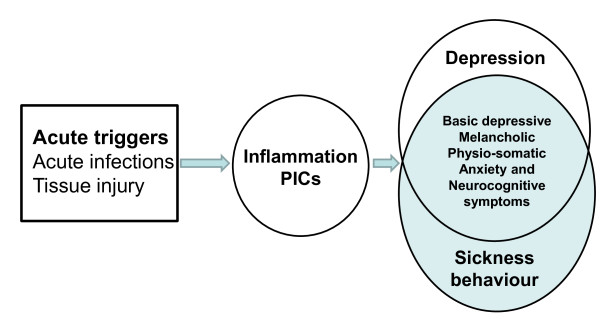
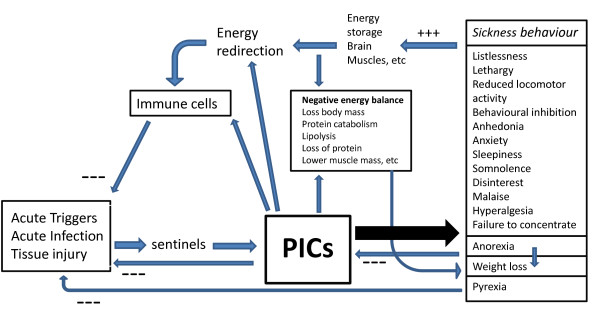
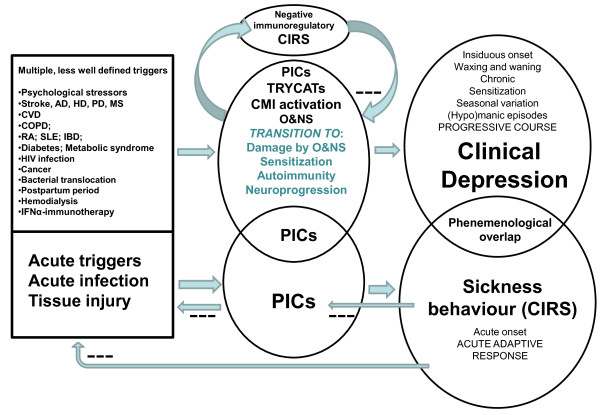
It is of considerable translational importance whether depression is a form or a consequence of sickness behavior. Sickness behavior is a behavioral complex induced by infections and immune trauma and mediated by pro-inflammatory cytokines. It is an adaptive response that enhances recovery by conserving energy to combat acute inflammation. There are considerable phenomenological similarities between sickness behavior and depression, for example, behavioral inhibition, anorexia and weight loss, and melancholic (anhedonia), physio-somatic (fatigue, hyperalgesia, malaise), anxiety and neurocognitive symptoms. In clinical depression, however, a transition occurs to sensitization of immuno-inflammatory pathways, progressive damage by oxidative and nitrosative stress to lipids, proteins, and DNA, and autoimmune responses directed against self-epitopes. The latter mechanisms are the substrate of a neuroprogressive process, whereby multiple depressive episodes cause neural tissue damage and consequent functional and cognitive sequelae. Thus, shared immuno-inflammatory pathways underpin the physiology of sickness behavior and the pathophysiology of clinical depression explaining their partially overlapping phenomenology. Inflammation may provoke a Janus-faced response with a good, acute side, generating protective inflammation through sickness behavior and a bad, chronic side, for example, clinical depression, a lifelong disorder with positive feedback loops between (neuro)inflammation and (neuro)degenerative processes following less well defined triggers.
Overview
The claims and statistics of this paper haven’t been checked yet.
Free: it reads the open-access text and checks the first 5 claims that cite a source we can check. Create a free account to check every claim.
Integrity signals
Registry
Cites
Statistics
Figures
Verification
Claims the paper makes
The claims and statistics of this paper haven’t been checked yet.
Free: it reads the open-access text and checks the first 5 claims that cite a source we can check. Create a free account to check every claim.
Claims other papers make about this one
Each is checked against this paper’s own text: does it say what the citing paper says it does?
The source backs part of the claim, not all of it — or backs it for a different population, condition or comparison.
In the citing paper
“A single systemic injection of LPS induces DLB characterized with behavioral changes similar to symptoms of acute systemic inflammation or infection triggering exacerbation of depression (49).”
From Melatonin Attenuates LPS-Induced Acute Depressive-Like Behaviors and Microglial NLRP3 Inflammasome Activation Through the SIRT1/Nrf2 Pathway (2019) · cites this paper as [49]
Experimental — accuracy not yet measuredThe cited source says what the claim attributes to it.
In the citing paper
“It has been suggested that a 'compensatory (anti)inflammatory reflex system' (CIRS) may operate in MDD [46].”
In the citing paper
“This system has been hypothesized to play a counter-regulatory (i.e.homeostatic) role in the context of peripheral inflammation.”
Self-check
Percentages, sums and reported differences re-computed from the paper’s own numbers.
The self-check needs the paper’s full text.
Citations
Cites
From inflammation to sickness and depression: when the immune system subjugates the brain
Dantzer, R., O'Connor, J. C., Freund, G. G., Johnson, R. W., & Kelley, K. W. (2008) · Nature Reviews Neuroscience · doi:10.1038/nrn2297 · Cited by 7,395 · cited 17×
“Women with a lifetime history of depression have increased inflammatory biomarkers, including IL-6 and sIL-1RA, in the early puerperium as compared to women who have never suffered from depression [115].”
BackgroundInfluentialA Meta-Analysis of Cytokines in Major Depression
Dowlati, Y., Herrmann, N., Swardfager, W., Liu, H., Sham, L., Reim, E. K., & Lanctôt, K. L. (2010) · Biological Psychiatry · doi:10.1016/j.biopsych.2009.09.033 · Cited by 4,729 · cited 2×
“In this context, there is abundant evidence that clinical depression is an immuno-inflammatory disorder characterized by among other things increased levels of PICs and acute phase proteins, including C-reactive protein and haptoglobin [11-20].”
BackgroundTracey, K. J. (2002) · Nature · doi:10.1038/nature01321 · Cited by 3,728 · cited 1×
“PIC-induced changes in neural pathways also participate in inhibiting acute inflammation, for example, enhanced production of glucocorticoids and catecholamines, and activation of cholinergic pathways [91].”
BackgroundAssociations of depression with C-reactive protein, IL-1, and IL-6: a meta-analysis.
Howren, M. B., Lamkin, D. M., & Suls, J. (2009) · Psychosomatic Medicine · doi:10.1097/psy.0b013e3181907c1b · Cited by 2,766 · cited 1×
“Recent meta-analyses and recent publications have confirmed increased levels of PICs in human depression particularly IL-6, TNFa, and IL-1, and CMI activation, evidenced by higher levels of neopterin and soluble IL-2 receptors (sIL-2Rs) [18-20,79,80].”
BackgroundPoints of control in inflammation
Nathan, C. (2002) · Nature · doi:10.1038/nature01320 · Cited by 2,738 · cited 1×
“Activation of the IRS is controlled at different levels whereby regulatory mechanisms specifically target selected control points, such as the production of pro-inflammatory mediators or the effects of mediators on the target tissues [21,89].”
BackgroundDrevets, W. C., Price, J. L., & Furey, M. L. (2008) · Brain Structure and Function · doi:10.1007/s00429-008-0189-x · Cited by 2,241 · cited 1×
“regions that process viscerosensory and regulation of emotion in humans [145-147] and rodents [148].”
BackgroundBiological basis of the behavior of sick animals
Hart, B. L. (1988) · Neuroscience & Biobehavioral Reviews · doi:10.1016/s0149-7634(88)80004-6 · Cited by 2,223 · cited 18×
“Women with a lifetime history of depression have increased inflammatory biomarkers, including IL-6 and sIL-1RA, in the early puerperium as compared to women who have never suffered from depression [115].”
BackgroundInfluentialSystemic LPS causes chronic neuroinflammation and progressive neurodegeneration
Qin, L., Wu, X., Block, M. L., Liu, Y., Breese, G. R., Hong, J., Knapp, D. J., & Crews, F. T. (2007) · Glia · doi:10.1002/glia.20467 · Cited by 2,144 · cited 16×
“Women with a lifetime history of depression have increased inflammatory biomarkers, including IL-6 and sIL-1RA, in the early puerperium as compared to women who have never suffered from depression [115].”
BackgroundInfluentialInflammation 2010: New Adventures of an Old Flame
Medzhitov, R. (2010) · Cell · doi:10.1016/j.cell.2010.03.006 · Cited by 1,834 · cited 5×
“When the resolution phase, however, is not induced, for example, when the IRS was unable to eradicate the pathogen, inflammation may persist despite the CIRS thus causing a chronic inflammatory state [21].”
BackgroundInfluentialHippocampal volume and depression: a meta-analysis of MRI studies
Videbech, P., & Ravnkilde, B. (2004) · American Journal of Psychiatry · doi:10.1176/appi.ajp.161.11.1957 · Cited by 1,590 · cited 1×
“Meta-analysis showed that in patients with chronic depression (> 2 years) or recurrent depression hippocampal volume is significantly decreased and that the latter is related to the number of episodes [140,141].”
Background
Research works printed but not linked: 1
- El-Radhi AS The role of fever in the past and present Med J Islamic World Acad Sci 2011 19 9 14
Cited by
Items 601–644 of 644
Kadry, M. O., & Megeed, R. M. A. (2024) · Future Science OA · doi:10.1080/20565623.2024.2422791
Role of Regulatory Immune Cells in Psychiatric Disorders
Balcioglu, S. S. K., & Balcıoğlu, Y. H. (2024) · Integrated science · doi:10.1007/978-3-031-72079-6_5
Psychoneuroimmunology of the Perceived Social Isolation/Loneliness
Vlachos, I. I., Ayres, C., Huber, M., Jacoby, M., Oikonomopoulos, A., Psara, E., & Cambanis, A. (2024) · Integrated science · doi:10.1007/978-3-031-73061-0_13
La inflamación como modulador de la conducta y el comportamiento alimentario durante la enfermedad
de Guadalajara, U., Cazares, H. M., Reyes-Castillo, Z., de Guadalajara, U., Miramontes, E. H. V., & de Guadalajara, U. (2025) · Journal of Behavior and Feeding · doi:10.32870/jbf.v4i8.76
Psychoneuroimmunology in the Context of Dementia
Mayegowda, S. B., Donni, S. K., Patnaik, A., & Prince, K. (2025) · Advances in medical diagnosis, treatment, and care (AMDTC) book series · doi:10.4018/979-8-3693-7432-0.ch014
A comparison of quality of life and depression in hemodialysis and peritoneal dialysis patients
Çakmak, Ü., Bora, F., Kahya, Y., Derin, S., Cihangir, M. İ., Açık, S., Elverdi, S., Günay, E., Seyidova, A., Hacıbebekoğlu, İ. E., et al. (2025) · Journal of Health Sciences and Medicine · doi:10.32322/jhsm.1669134
Zhu, W., Sobue, A., Tanaka, R., Hada, K., Ibi, D., Liu, Y., Matsuzaki, T., Nagai, T., Nabeshima, T., Kaibuchi, K., et al. (2025) · Behavioural Brain Research · doi:10.1016/j.bbr.2025.115832
Lullau, A. P. M., & Haga, E. M. W. (2025) · Neuromethods · doi:10.1007/978-1-0716-4603-8_3
Ren, X.-L., Chen, W., Ya, C., Gao, G., Jin, J.-G., Lou, E.-Y., Huang, C., Zhang, H., Lan, H., Jiang, Q.-X., et al. (2025) · Nutrition Journal · doi:10.1186/s12937-025-01265-8
“Peripheral immune alterations further support this link, including shifts in white blood cell (WBC) subsets (e.g., monocytes and neutrophils) [14].”
The Relationship between Cytokines and Social Cognition Skills in Patients with Affective Disorders
Stapper, C. A. (2024) · URN:NBN Resolver for Germany & Switzerland (German National Library) · doi:10.17879/25948533949
Kaneko, R., Matsui, A., Watanabe, M., Harada, Y., Kanamori, M., Awata, N., Kawazoe, M., Takao, T., Kobayashi, Y., Kikutake, C., et al. (2023) · Figshare · doi:10.6084/m9.figshare.22622609
Shu, Y., Liao, N., Fang, F., Shi, Q., Yan, N., & Hu, Y. (2023) · Figshare · doi:10.6084/m9.figshare.22619540
Wegerich, N. M. (2021) · heiDOK (Heidelberg University) · doi:10.11588/heidok.00029446
Shaaban, A., Tayel, M., Hassan, E., Salah, M. A., Ibrahim, M., & Said, W. (2022) · Figshare · doi:10.6084/m9.figshare.19336172
Salazar, J., Alvarado, F. A. Z., Weyand, I., Rosero-Montesuma, T. L., Tapia, B., Solís-Olive, C. D. C., Rosero, K., Bermudez, P., Gobbi, F., Bottieau, E., et al. (2024) · Figshare · doi:10.6084/m9.figshare.27124195
Kallaur, A. P. (2017) · LA Referencia (Red Federada de Repositorios Institucionales de Publicaciones Científicas)
Bogan, G. H., & Bogan, G. H. (2024) · UA Campus Repository (The University of Arizona)
Kim, J.-M., Kang, H.-J., Kim, J.-W., Jhon, M., Lee, J.-Y., Kim, S.-W., & Shin, I.-S. (2026) · Frontiers in Psychiatry · doi:10.3389/fpsyt.2025.1662993 · Cited by 1
Malik, N., & Mohamed, M. A. (2026) · Progress in Neurology and Psychiatry · doi:10.1002/pnp.70001
Melo, M. (2025) · RCMOS - Revista Científica Multidisciplinar O Saber · doi:10.51473/rcmos.v1i1.2025.1923
An, H., Zhang, L., Li, Y., Liu, J., Zhu, H., He, L., & Zhao, Y. (2026) · Medicine · doi:10.1097/md.0000000000047657
“[6,37,72]”
Associations between individual symptoms of Major Depressive Disorder and peripheral inflammation
Fellows, E. (2024) · TSpace (University of Toronto)
The biopsychosocial model of depersonalisation and derealisation: an updated framework
Dilkes, E. (2026) · Open Access at Essex (University of Essex) · doi:10.5526/err-00042956
In vitro and in vivo study of the effects of Levetiracetam on activated microglia during sepsis
Fleurance, R. (2021) · theses.fr (ABES) · doi:10.70675/0a82ed6ez6595z4366z832fz70cbe839c7ff
Boissard, É. (2023) · theses.fr (ABES) · doi:10.70675/95d775e5z6b0ez44c6z8f63z6473f8f6f430 · Cited by 3
Dakas, R. J., Kibanja, G., & Bangirana, P. (2026) · Journal of Community Psychosocial Research · doi:10.36386/jcpr.v3i1.596
“This facilitates recovery, conserves resources, and avoids further infection (Adelman & Martin, 2009; Maes et al., 2012) , suggesting that BIS research can be extended beyond disease avoidance behaviour to experiences that are elicited when a disease has set in and there is an attempt to prevent…”
Gupta, D., Gupta, M. K., Parveen, F., & Agarwal, A. (2026) · Human Nutrition & Metabolism · doi:10.1016/j.hnm.2026.200369
Neurological Perspectives on Disability in Unipolar Depression
Israr, J., Alam, S., & Kumar, A. (2026) · SpringerBriefs in modern perspectives on disability research. · doi:10.1007/978-981-95-8955-5_2
Hoque, N., Tipu, M. T. R., Bashar, M. A., Dash, R., Ahamed, K. U., Ali, M. L., Mamun, M. J. I., Akter, B., Hossain, M. K., & Proma, N. M. (2026) · Pharmacology Research & Perspectives · doi:10.1002/prp2.70272
“Numerous studies now demonstrate that depression is linked to the compensatory anti-inflammatory reflex system, cell-mediated immunity, and a persistent mild inflammatory process, which is typified through immunoregulatory mechanisms that are negative [4, 5].”
Thymus Involution across the Human Menstrual CyclePreprint
Koenig, J., Winkels, H., Sodenkamp, T., Schroeder, K. E., & Sieren, J. C. (2026) · bioRxiv (Cold Spring Harbor Laboratory) · doi:10.64898/2026.07.15.738838
“25 Both inflammatory markers (IL-6 and CRP) are thought to promote depression characteristic sickness behavior 26 via central nervous system circuitry, and are linked to specific symptom profiles, including anhedonia and reduced motivation but also a loss of appetite and decreased concentration.”
Laoumtzis, M., Evans, S. G., Barratt, D. T., Mustafa, S., & Hutchinson, M. R. (2026) · Brain Behavior and Immunity · doi:10.1016/j.bbi.2026.106933
Evaluation of visfatin levels in patients with hyperemesis gravidarum
Şanlı, C., Fener, H., Ayyıldız, H., Halisçelik, M. A., & Kalaycı, M. Z. (2026) · Scandinavian Journal of Clinical and Laboratory Investigation · doi:10.1080/00365513.2026.2713139
“Age-related alterations in inflammatory responses have been described previously; however, the potential relationship between maternal age, inflammation, and HEG requires further investigation [34].”
Mo, H., Chai, D., Zhao, L., Wang, J., Zhang, Q., Hu, M., Wang, T., Lu, W., & Wang, C. (2026) · Frontiers in Microbiology · doi:10.3389/fmicb.2026.1922527
“Since GABA metabolism shares precursors with glutathione synthesis, its disruption is associated with “multiple hits” encompassing neurotoxicity and oxidative stress (Maes et al., 2012).”
Psychotropic Drugs: A Promising Non‐Antibiotic Agent to Combat Multi‐Drug‐Resistant Microorganisms
Singh, I. P., Singh, H., Sharma, D., Keshri, A., Gaurav, N., Dhakad, M. S., & Beg, M. M. A. (2026) · Drug Development Research · doi:10.1002/ddr.70380
“…that chronic depression and stress‐mediated alteration of the gut microbiota were found to elevate systemic inflammation and permeability of the intestine via production of pro‐inflammatory cytokines (TNF‐α and IL‐6), which further worsen symptoms associated with depression (Maes et al. 2012).”
Symptoms as processes: A conceptual framework for understanding persistent psychobiological symptoms
Boulderstone, J. (2026) · New Ideas in Psychology · doi:10.1016/j.newideapsych.2026.101304
Vore, A. S., Schiml, P. A., Severino, B., Pham, L. A., Geraci, D., Deak, T., & Hennessy, M. B. (2026) · Behavioural Brain Research · doi:10.1016/j.bbr.2026.116475
Tylek, K., Kamińska, K., Trojan, E., Frydrych, J., Leśkiewicz, M., Regulska, M., Curzytek, K., Wydra-Kolarska, K., Leopoldo, M., Lacivita, E., et al. (2026) · ACS Omega · doi:10.1021/acsomega.6c04547
Major Depressive Disorder as a Comorbidity in Neurological Diseases
Izadpanah, M., Vahidinia, Z., Dahmardeh, N., & Bahlakeh, G. (2026) · IGI Global eBooks · doi:10.4018/979-8-2600-4270-0.ch005
Central signaling pathways in chemotactic signaling
Krauklis, S. A. (2023) · Illinois Digital Environment for Access to Learning and Scholarship (University of Illinois at Urbana-Champaign)
Mazaheri, M., Radahmadi, M., Hosseini-Nasab, F., & Eskandari, N. (2026) · IBRO Neuroscience Reports · doi:10.1016/j.ibneur.2026.10.009
The aetiological role of cumulative cultural evolution in eating disorders and muscle dysmorphia
Griffin, B., & Abed, R. (2026) · New Ideas in Psychology · doi:10.1016/j.newideapsych.2026.101312
Godvarthi, R., Pathak, S. S., Patel, S. S., Singh, S. A., Wankhade, P., Warbhe, R., & Narwade, S. (2026) · Biomedicines · doi:10.3390/biomedicines14112506
SEVİMLİ, E. (2025) · Marmara University Open Access System
Metadata
- Authors
- Maes, M., Berk, M., Goehler, L., Song, C., Anderson, G., Gałecki, P., & Leonard, B.
- Affiliations
- Piyavate Hospital (TH)
- The Royal Melbourne Hospital (AU)
- University of Virginia (US)
- Dalhousie University (CA)
- Medical University of Lodz (PL)
- Ollscoil na Gaillimhe – University of Galway (IE)
- Corresponding author
- Maes, Michael
- Venue
- BMC Medicine
- Published
- 2012-06-29
- Volume
- 10
- Issue
- 1
- Pages
- 66-66
- ISSN
- 1741-7015 (ISSN-L)
- PMC
- PMC3391987
- OpenAlex
- W2098731039
- Cited by
- 629
- References
- 189
- Citations by year
- 2026: 24 · 2025: 36 · 2024: 51 · 2023: 57 · 2022: 63 · 2021: 39 · 2020: 41 · 2019: 47 · 2018: 53 · 2017: 44 · 2016: 40 · 2015: 54 · 2014: 40 · 2013: 26 · 2012: 11
- FWCI
- 2.71
- Type
- journal article
- Language
- en
- Open access
- gold
- doi.org
- Licence
- Locations
- BMC Medicine (publishedVersion, cc-by)
- Europe PMC (PubMed Central) (publishedVersion, cc-by)
- PubMed Central (publishedVersion, cc-by)
- PubMed (publishedVersion)
- ENLIGHTEN (Jurnal Bimbingan dan Konseling Islam) (acceptedVersion)
- ARAN (University of Galway Research Repository) (Ollscoil na Gaillimhe – University of Galway) (acceptedVersion, cc-by-nc-nd)
- Minerva Access (University of Melbourne) (submittedVersion, cc-by)
- Arrow@dit (Dublin Institute of Technology) (submittedVersion)
- ARAN (University of Galway Research Repository) (Ollscoil na Gaillimhe – University of Galway) (submittedVersion, cc-by-nc-nd)
- DOAJ (DOAJ: Directory of Open Access Journals) (submittedVersion, cc-by-sa)
- Figshare (submittedVersion, cc-by)
- ARAN (University of Galway Research Repository) (Ollscoil na Gaillimhe – University of Galway) (submittedVersion, cc-by-nc)
- Research Repository UCD (University College Dublin) (cc-by-nc)
- Funders
- Bristol-Myers Squibb
- Eli Lilly and Company
- Pfizer
- Sanofi
- Geelong Region Medical Research Foundation
- Beyond Blue
- Servier
- H. Lundbeck A/S
- National Institutes of Health
- National Health and Medical Research Council
- Cilag
- Topics
- Life Sciences › Neuroscience › Biological Psychiatry › Tryptophan and brain disorders
- Life Sciences › Neuroscience › Behavioral Neuroscience › Stress Responses and Cortisol
- Health Sciences › Medicine › Pharmacology (medical) › Treatment of Major Depression
- Keywords
- depression, sickness behavior, inflammation, inflammatory cytokines, neuroinflammation, oxidative stress, nitrosative stress, autoimmunity, anhedonia, fatigue, neurodegeneration, chronic inflammation
- MeSH terms
- Animals, Depression, Humans, Autoimmunity, Cytokines, Inflammation Mediators, Neurodegenerative Diseases, Illness Behavior
About these checks
Registry, retraction, Cites and statistics results are computed, not judged, with one exception: a printed reference that no index lists is read once by a model before it counts as a citation error. Claims are extracted by a model and kept only when their quote appears verbatim in the text; each cited source is then checked, with a model’s help, for whether it says what the claim relies on. Those verdicts can be wrong — read the claim’s quote and the cited source before relying on one.
Statistics and arithmetic are recomputed, not judged.
Confidence bands are shown only for fields calibrated on our annotated test set. None is calibrated yet, so no band is shown.
What counts as a claim ›How we measure confidence ›How we check this ›
Are you an author, or do you see a problem with this page? Request a review
Data sources
Bibliographic data: Semantic Scholar, OpenAlex, Crossref.
Contains information from the Semantic Scholar Academic Graph Datasets, made available under the ODC Attribution License (ODC-BY 1.0).
Semantic Scholar’s data is described in: Kinney, R., et al. (2023). The Semantic Scholar Open Data Platform. arXiv:2301.10140.
