

Depression and sickness behavior are Janus-faced responses to shared inflammatory pathways
Open accessThe DOI matches its Crossref record; 187 of the 189 references it cites were found in a registry or an index.
Abstract
It is of considerable translational importance whether depression is a form or a consequence of sickness behavior. Sickness behavior is a behavioral complex induced by infections and immune trauma and mediated by pro-inflammatory cytokines. It is an adaptive response that enhances recovery by conserving energy to combat acute inflammation. There are considerable phenomenological similarities between sickness behavior and depression, for example, behavioral inhibition, anorexia and weight loss, and melancholic (anhedonia), physio-somatic (fatigue, hyperalgesia, malaise), anxiety and neurocognitive symptoms. In clinical depression, however, a transition occurs to sensitization of immuno-inflammatory pathways, progressive damage by oxidative and nitrosative stress to lipids, proteins, and DNA, and autoimmune responses directed against self-epitopes. The latter mechanisms are the substrate of a neuroprogressive process, whereby multiple depressive episodes cause neural tissue damage and consequent functional and cognitive sequelae. Thus, shared immuno-inflammatory pathways underpin the physiology of sickness behavior and the pathophysiology of clinical depression explaining their partially overlapping phenomenology. Inflammation may provoke a Janus-faced response with a good, acute side, generating protective inflammation through sickness behavior and a bad, chronic side, for example, clinical depression, a lifelong disorder with positive feedback loops between (neuro)inflammation and (neuro)degenerative processes following less well defined triggers.
Overview
The claims and statistics of this paper haven’t been checked yet.
Free: it reads the open-access text and checks the first 5 claims that cite a source we can check. Create a free account to check every claim.
Integrity signals
Registry
Cites
Statistics
Figures
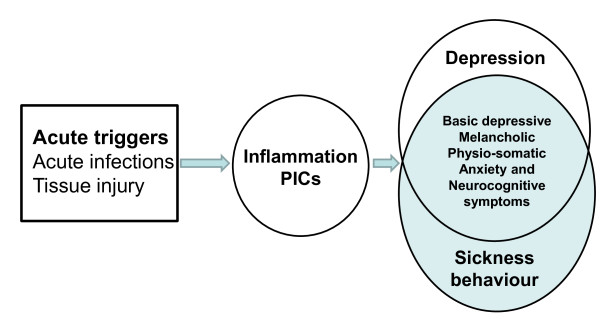
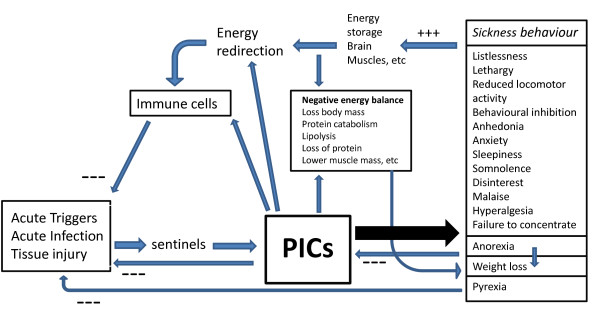
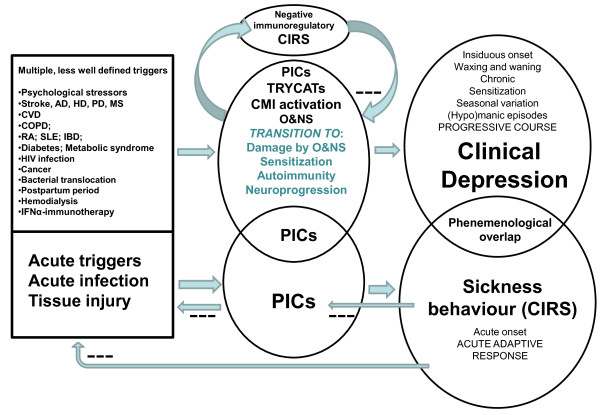
Verification
Claims the paper makes
The claims and statistics of this paper haven’t been checked yet.
Free: it reads the open-access text and checks the first 5 claims that cite a source we can check. Create a free account to check every claim.
Claims other papers make about this one
Each is checked against this paper’s own text: does it say what the citing paper says it does?
The source backs part of the claim, not all of it — or backs it for a different population, condition or comparison.
In the citing paper
“A single systemic injection of LPS induces DLB characterized with behavioral changes similar to symptoms of acute systemic inflammation or infection triggering exacerbation of depression (49).”
From Melatonin Attenuates LPS-Induced Acute Depressive-Like Behaviors and Microglial NLRP3 Inflammasome Activation Through the SIRT1/Nrf2 Pathway (2019) · cites this paper as [49]
Experimental — accuracy not yet measuredThe cited source says what the claim attributes to it.
In the citing paper
“It has been suggested that a 'compensatory (anti)inflammatory reflex system' (CIRS) may operate in MDD [46].”
In the citing paper
“This system has been hypothesized to play a counter-regulatory (i.e.homeostatic) role in the context of peripheral inflammation.”
Self-check
Percentages, sums and reported differences re-computed from the paper’s own numbers.
The self-check needs the paper’s full text.
Citations
Cites
From inflammation to sickness and depression: when the immune system subjugates the brain
Dantzer, R., O'Connor, J. C., Freund, G. G., Johnson, R. W., & Kelley, K. W. (2008) · Nature Reviews Neuroscience · doi:10.1038/nrn2297 · Cited by 7,395 · cited 17×
“Women with a lifetime history of depression have increased inflammatory biomarkers, including IL-6 and sIL-1RA, in the early puerperium as compared to women who have never suffered from depression [115].”
BackgroundInfluentialA Meta-Analysis of Cytokines in Major Depression
Dowlati, Y., Herrmann, N., Swardfager, W., Liu, H., Sham, L., Reim, E. K., & Lanctôt, K. L. (2010) · Biological Psychiatry · doi:10.1016/j.biopsych.2009.09.033 · Cited by 4,729 · cited 2×
“In this context, there is abundant evidence that clinical depression is an immuno-inflammatory disorder characterized by among other things increased levels of PICs and acute phase proteins, including C-reactive protein and haptoglobin [11-20].”
BackgroundTracey, K. J. (2002) · Nature · doi:10.1038/nature01321 · Cited by 3,728 · cited 1×
“PIC-induced changes in neural pathways also participate in inhibiting acute inflammation, for example, enhanced production of glucocorticoids and catecholamines, and activation of cholinergic pathways [91].”
BackgroundAssociations of depression with C-reactive protein, IL-1, and IL-6: a meta-analysis.
Howren, M. B., Lamkin, D. M., & Suls, J. (2009) · Psychosomatic Medicine · doi:10.1097/psy.0b013e3181907c1b · Cited by 2,766 · cited 1×
“Recent meta-analyses and recent publications have confirmed increased levels of PICs in human depression particularly IL-6, TNFa, and IL-1, and CMI activation, evidenced by higher levels of neopterin and soluble IL-2 receptors (sIL-2Rs) [18-20,79,80].”
BackgroundPoints of control in inflammation
Nathan, C. (2002) · Nature · doi:10.1038/nature01320 · Cited by 2,738 · cited 1×
“Activation of the IRS is controlled at different levels whereby regulatory mechanisms specifically target selected control points, such as the production of pro-inflammatory mediators or the effects of mediators on the target tissues [21,89].”
BackgroundDrevets, W. C., Price, J. L., & Furey, M. L. (2008) · Brain Structure and Function · doi:10.1007/s00429-008-0189-x · Cited by 2,241 · cited 1×
“regions that process viscerosensory and regulation of emotion in humans [145-147] and rodents [148].”
BackgroundBiological basis of the behavior of sick animals
Hart, B. L. (1988) · Neuroscience & Biobehavioral Reviews · doi:10.1016/s0149-7634(88)80004-6 · Cited by 2,223 · cited 18×
“Women with a lifetime history of depression have increased inflammatory biomarkers, including IL-6 and sIL-1RA, in the early puerperium as compared to women who have never suffered from depression [115].”
BackgroundInfluentialSystemic LPS causes chronic neuroinflammation and progressive neurodegeneration
Qin, L., Wu, X., Block, M. L., Liu, Y., Breese, G. R., Hong, J., Knapp, D. J., & Crews, F. T. (2007) · Glia · doi:10.1002/glia.20467 · Cited by 2,144 · cited 16×
“Women with a lifetime history of depression have increased inflammatory biomarkers, including IL-6 and sIL-1RA, in the early puerperium as compared to women who have never suffered from depression [115].”
BackgroundInfluentialInflammation 2010: New Adventures of an Old Flame
Medzhitov, R. (2010) · Cell · doi:10.1016/j.cell.2010.03.006 · Cited by 1,834 · cited 5×
“When the resolution phase, however, is not induced, for example, when the IRS was unable to eradicate the pathogen, inflammation may persist despite the CIRS thus causing a chronic inflammatory state [21].”
BackgroundInfluentialHippocampal volume and depression: a meta-analysis of MRI studies
Videbech, P., & Ravnkilde, B. (2004) · American Journal of Psychiatry · doi:10.1176/appi.ajp.161.11.1957 · Cited by 1,590 · cited 1×
“Meta-analysis showed that in patients with chronic depression (> 2 years) or recurrent depression hippocampal volume is significantly decreased and that the latter is related to the number of episodes [140,141].”
Background
Research works printed but not linked: 1
- El-Radhi AS The role of fever in the past and present Med J Islamic World Acad Sci 2011 19 9 14
Cited by
Items 301–400 of 644
Rakshasa-Loots, A. M., Bakewell, N., Sharp, D. J., Gisslén, M., Zetterberg, H., Alagaratnam, J., Wit, F. W. N. M., Kootstra, N. A., Winston, A., Reiss, P., et al. (2023) · Translational Psychiatry · doi:10.1038/s41398-023-02489-0 · Cited by 22
“Several sickness behaviours, such as fatigue, reduced appetite, and loss of interest or pleasure (motivational anhedonia), are shared across depression and inflammatory conditions [10].”
BackgroundReduced cerebral cortical thickness in Non-cirrhotic patients with hepatitis C
Hjerrild, S., Renvillard, S. G., Leutscher, P. D. C., Sørensen, L., Østergaard, L., Eskildsen, S. F., & Videbech, P. (2015) · Metabolic Brain Disease · doi:10.1007/s11011-015-9752-3 · Cited by 22
do Vale, E. M., Xavier, C. C., Nogueira, B. G., Campos, B. C., de Aquino, P. É. A., da Costa, R. O., Leal, L. K. A. M., Vasconcelos, S. M. M., Neves, K. R. T., & Viana, G. S. D. B. (2016) · Basic & Clinical Pharmacology & Toxicology · doi:10.1111/bcpt.12637 · Cited by 22
“Furthermore, evidences indicate that depression is associated with both a chronic low-grade inflammatory response and the activation of cell-mediated immunity [13, 14, 15], and it is often accompanied by unexplained painful somatic symptoms [16].”
BackgroundAmitai, M., Taler, M., Lebow, M., Baruch, R. B., Apter, A., Fennig, S., Weizman, A., & Chen, A. (2020) · European Neuropsychopharmacology · doi:10.1016/j.euroneuro.2020.07.007 · Cited by 23
Norouzi, F., Abareshi, A., Anaeigoudari, A., Shafei, M. N., Gholamnezhad, Z., Saeedjalali, M., Mohebbati, R., & Hosseini, M. (2016) · PubMed Central · Cited by 28
Elnazer, H. Y., Sampson, A. P., & Baldwin, D. S. (2021) · International Clinical Psychopharmacology · doi:10.1097/yic.0000000000000356 · Cited by 21
Shafiek, M. S., Mekky, R. Y., Nassar, N. N., El-Yamany, M. F., & Rabie, M. A. (2024) · European Journal of Pharmacology · doi:10.1016/j.ejphar.2024.176929 · Cited by 24
Maes, M. H. J., Jirakran, K., Vasupanrajit, A., Zhou, B., Tunvirachaisakul, C., & Almulla, A. F. (2024) · Journal of Psychosomatic Research · doi:10.1016/j.jpsychores.2024.111951 · Cited by 24
Self-citationSerum Matrix Metalloproteinase-9 Is Associated With Depression After Acute Ischemic Stroke
Che, B., Zhong, C., Ge, J., Li, R., Zhu, Z., Bu, X., Xu, T., Ju, Z., Liu, J., Zhang, J., et al. (2019) · Circulation Journal · doi:10.1253/circj.cj-19-0376 · Cited by 21
Towards Modeling Anhedonia and Its Treatment in Zebrafish
de Abreu, M. S., Costa, F. V., Giacomini, A. C. V. V., Demin, K. A., Zabegalov, K. N., Maslov, G. O., Kositsyn, Y. M., Petersen, E. V., Strekalova, T., Rosemberg, D. B., et al. (2021) · The International Journal of Neuropsychopharmacology · doi:10.1093/ijnp/pyab092 · Cited by 20
“For example, they both share motor retardation, anorexia, weight loss, anhedonia, somatic symptoms (fatigue, hyperalgesia, and malaise), anxiety, and neurocognitive deficits (Maes et al., 2012).”
Dogaru, I.-A., Puiu, M. G., Manea, M., & Dionisie, V. (2022) · Brain Sciences · doi:10.3390/brainsci12101403 · Cited by 23
“This energy-conserving adaptive response to infections and other inflammation-inducing situations displays similarities with depression [22].”
BackgroundGao, Y., Fan, Y., Yang, Z., Ma, Q., Zhao, B., He, X., Gao, F., Li, Q., Wang, W., Chen, C., et al. (2021) · Molecular Psychiatry · doi:10.1038/s41380-021-01362-0 · Cited by 21
“These findings suggest that the activation of the immuneinflammatory system in schizophrenia may induce alterations of the compensatory immune-regulatory system, including changes in the production of negative immune-regulatory or antiinflammatory cytokines [41, 42].”
BackgroundMajor depression and disease activity among systemic lupus erythematosus Egyptian females
Raafat, H. A., Refai, R. M. E., Alrasheed, H. A., & Din, M. N. E. (2015) · The Egyptian Rheumatologist · doi:10.1016/j.ejr.2015.09.007 · Cited by 23
“Major depression may be linked to neurotransmitter dysfunction and immune activation (lymphocyte abnormalities and cytokine expression) [10,11].”
BackgroundStress-Induced NLRP3 Inflammasome in Human Diseases
Alcocer‐Gómez, E., Castejón‐Vega, B., & Cordero, M. D. (2017) · Advances in protein chemistry and structural biology · doi:10.1016/bs.apcsb.2017.02.002 · Cited by 21
Lowe, G. L., Sutherland, M. A., Waas, J. R., Cox, N. R., Schaefer, A. L., & Stewart, M. (2020) · Applied Animal Behaviour Science · doi:10.1016/j.applanim.2020.105202 · Cited by 21
Laplana, M., Royo, J. L., García, L. F., Aluja, A., Gómez-Skármeta, J. L., & Fibla, J. (2014) · Genes Brain & Behavior · doi:10.1111/gbb.12154 · Cited by 20
“There is evidence that this behavior is mediated by pro-inflammatory cytokines such as IL-1, TNFa or IL6 (Maes et al. 2012).”
BackgroundBendix, I., Hadamitzky, M., Herz, J., & Felderhoff‐Müser, U. (2018) · Pediatric Research · doi:10.1038/s41390-018-0222-6 · Cited by 20
Kalkman, H. O. (2023) · Biomedicines · doi:10.3390/biomedicines11030806 · Cited by 18
“It is conceptualized as an adaptive response that enhances recovery by conserving energy to combat acute inflammation [35,36].”
BackgroundMedicinal Plants in the Treatment of Depression. II: Evidence from Clinical Trials
Moragrega, I., & Ríos, J. L. (2021) · Planta Medica · doi:10.1055/a-1517-6882 · Cited by 22
“In this case, there is a transition to the sensitization of the immuneinflammatory pathways, progressive damage to lipids, proteins, and DNA by oxidative and nitrosative stress, and altered autoimmune responses [74].”
BackgroundAngiotensin receptor blockers for bipolar disorder
Queiroz, A. I. D. G., Medeiros, C. D., Ribeiro, B. M. M., de Lucena, D. F., & Macêdo, D. S. (2012) · Medical Hypotheses · doi:10.1016/j.mehy.2012.11.043 · Cited by 18
Stanicki, P., Szarpak, J., Wieteska, M., Kaczyńska, A., & Milanowska, J. (2020) · Polish Journal of Surgery · doi:10.5604/01.3001.0014.3431 · Cited by 19
Proposed Pathway Linking Respiratory Infections with Depression
Karimi, Z., Chenari, M., Rezaie, F., Karimi, S., Parhizgari, N., & Mokhtari‐Azad, T. (2022) · Clinical Psychopharmacology and Neuroscience · doi:10.9758/cpn.2022.20.2.199 · Cited by 19
“lower primary inflammatory immune responses [30,61,62].”
Peripheral Biomarkers in Animal Models of Major Depressive Disorder
Carboni, L. (2013) · Disease Markers · doi:10.1155/2013/284543 · Cited by 20
“In these cases, peripheral levels of cytokines or other inflammation-related analytes are often measured [24, 28, 30, 48, 49].”
BackgroundKnopp, R. C., Baumann, K. K., Wilson, M. L., Banks, W. A., & Erickson, M. A. (2022) · International Journal of Molecular Sciences · doi:10.3390/ijms23042377 · Cited by 17
“LPS induced pronounced SBs and DBs in both WT and Tg mice, and our results suggested that the effect of LPS on weight loss was significantly greater in Tg mice vs. WT.”
BackgroundInfluentialThe lipid paradox in neuroprogressive disorders: Causes and consequences
Morris, G., Berk, M., Walder, K., O’Neil, A., Maes, M., & Puri, B. K. (2021) · Neuroscience & Biobehavioral Reviews · doi:10.1016/j.neubiorev.2021.06.017 · Cited by 17
Self-citationZhu, Y.-J., Fan, J.-J., Wu, F., Zhang, M., Song, A., Li, Y., Li, Y.-K., & Wu, W. (2022) · Inflammation · doi:10.1007/s10753-022-01683-4 · Cited by 22
“Also, there is growing evidence that depression is associated with inflammatory response [38] and neuroinflammation was considered an important mediator of MDD [39].”
BackgroundThippeswamy, B. S., Alotaibi, G., Chinnadhurai, M., Dachani, S. R., Ahmad, M. D., & Aldaajanii, K. A. (2023) · International Journal of Molecular Sciences · doi:10.3390/ijms241310413 · Cited by 17
Abdelrahman, M. S. I., Shaddad, A. M., Khaleel, W. G. E., Talaat, E. A., Safwat, S. M., & Farrag, S. (2024) · Egyptian Rheumatology and Rehabilitation · doi:10.1186/s43166-024-00242-z · Cited by 19
“Subjects without psychiatric morbidity who have high C-reactive protein (CRP) levels were shown to have lower HRQoL scores [3].”
BackgroundD’Acquisto, F., Rattazzi, L., & Piras, G. (2014) · Biochemical Pharmacology · doi:10.1016/j.bcp.2014.07.016 · Cited by 20
“comes with inflammation, also known as sickness behavior [14,16,17], should be considered as an evolutionary-conserved”
BackgroundRoomruangwong, C., Kanchanatawan, B., Carvalho, A. F., Sirivichayakul, S., Duleu, S., Geffard, M., & Maes, M. H. J. (2016) · The World Journal of Biological Psychiatry · doi:10.1080/15622975.2016.1213881 · Cited by 18
“These immune aberrations include increased levels of pro-inflammatory cytokines, e.g., interleukin-1b (IL-1b) and tumour necrosis factor a (TNF-a; Maes et al. 2012c, 2012d), acute phase reactants, e.g., C-reactive protein (CRP) and neopterin, oxidative and nitrosative stress (O&NS) biomarkers,…”
BackgroundSelf-citationSteckert, A. V., Dominguini, D., Michels, M., Abelaira, H. M., Tomaz, D. B., Sonai, B., de Moura, A. B., Matos, D., da Silva, J. B. I., Réus, G. Z., et al. (2017) · Journal of Psychiatric Research · doi:10.1016/j.jpsychires.2017.06.006 · Cited by 20
Roomruangwong, C., Barbosa, D. S., de Farias, C. C., Matsumoto, A. K., Baltus, T. H. L., Morelli, N. R., Kanchanatawan, B., Duleu, S., Geffard, M., & Maes, M. H. J. (2018) · Psychiatry and Clinical Neurosciences · doi:10.1111/pcn.12625 · Cited by 17
“Therefore, IgM responses to MDA may be part of the compensatory antiinflammatory responses system.(18,52) The results of the present study suggest that attenuated natural IgM-mediated autoimmune responses during pregnancy are accompanied by lowered regulation and thus increased susceptibility to protein oxidation and…”
BackgroundSelf-citationHennessy, M. B., Schiml, P. A., Berberich, K., Beasley, N. L., & Deak, T. (2019) · Frontiers in Behavioral Neuroscience · doi:10.3389/fnbeh.2018.00314 · Cited by 18
“Sickness is adaptive, with fever enhancing the effectiveness of the immune response (Hart, 1988; Maes et al., 2012).”
BackgroundDinis, M. A. P., Sousa, H. F. P. E., de Moura, A., Viterbo, L. M. F., & Pinto, R. J. (2019) · International Journal of Environmental Research and Public Health · doi:10.3390/ijerph16132392 · Cited by 17
Chávez-Castillo, M., Ortega, Á., Nava, M., Fuenmayor, J., Lameda, V., Velasco, M., Bermúdez, V., & Rojas, J. (2018) · Vessel Plus · doi:10.20517/2574-1209.2018.02 · Cited by 19
“A novel hypothesis posits these changes to be due to a T helper (Th1)-like response, triggering inflammatory activity via interferon γ (IFNγ)-related pathways([23]).”
BackgroundLückemann, L., Unteroberdörster, M., Gomez, E. M., Schedlowski, M., & Hadamitzky, M. (2019) · Brain Behavior and Immunity · doi:10.1016/j.bbi.2019.04.013 · Cited by 17
Qiu, T., Guo, J., Wang, L., Shi, L., Ai, M., Zhu, X., Peng, Z., & Kuang, L. (2022) · Biomolecules and Biomedicine · doi:10.17305/bjbms.2021.6825 · Cited by 27
“A single systemic LPS injection is sufficient to induce depressive-like behaviors consistent with acute systemic infection or inflammation [21].”
BackgroundGou, M., Chen, W., Li, Y., Chen, S., Feng, W., Pan, S., Luο, X., Tan, S., Tian, B., Li, W., et al. (2023) · Schizophrenia Bulletin · doi:10.1093/schbul/sbad114 · Cited by 16
Maes, M. H. J., Rachayon, M., Jirakran, K., Sughondhabirom, A., Almulla, A. F., & Sodsai, P. (2023) · Acta Neuropsychiatrica · doi:10.1017/neu.2023.35 · Cited by 16
“Recent research indicates that MDD is characterised not only by activation of M1, Th-1 and Th-17 activation but also the compensatory immunoregulatory system (CIRS), which prevents hyperinflammation and endeavours for immune homoeostasis (Maes et al ., 2012; Maes and Carvalho, 2018).”
Self-citationBarbosa, I. G., de Miranda, A. S., Berk, M., & Teixeira, A. L. (2024) · Expert Review of Neurotherapeutics · doi:10.1080/14737175.2024.2438646 · Cited by 16
“LPS is widely employed to investigate the neuroinflammatory basis of depression in mice, but whether LPS can be regarded as a model of acute depression or ‘sickness behavior’ remains a matter of debate [44,45].”
Self-citationAssociation of early and later depressive symptoms with functional outcome after ischemic stroke
Lopatkiewicz, A. M., Pera, J., Słowik, A., & Dziedzic, T. (2021) · Journal of Neural Transmission · doi:10.1007/s00702-021-02328-w · Cited by 17
Menicucci, D., Piarulli, A., & MASTORCI, F. (2013) · ARCHIVES ITALIENNES DE BIOLOGIE · doi:10.12871/00039829201334 · Cited by 20
Immunopathogenesis and Immunogenetic Variants in COVID-19
Sagulkoo, P., Plaimas, K., Suratanee, A., Simão, A. N. C., Reiche, E. M. V., & Maes, M. H. J. (2022) · Current Pharmaceutical Design · doi:10.2174/1381612828666220519150821 · Cited by 18
Self-citationShu, Y., Liao, N., Fang, F., Shi, Q., Yan, N., & Hu, Y. (2023) · BMC Neurology · doi:10.1186/s12883-023-03169-8 · Cited by 18
“Anxiety is associated with a chronic low-grade inflammatory response and increased oxidative [21, 22, 64], which may further exacerbate the vestibular degeneration and lead to difficulty with the relocation and reabsorption of the dislodged otoliths [11].”
BackgroundRivi, V., Batabyal, A., Lukowiak, K. D., Benatti, C., Rigillo, G., Tascedda, F., & Blom, J. M. C. (2023) · Biology · doi:10.3390/biology12081100 · Cited by 16
“This immune activation, then, triggers sickness behavior [51,52], a well-characterized state that encompasses neuro vegetative and behavioral alterations.”
BackgroundCytokines and glucocorticoid receptors are associated with the antidepressant-like effect of alarin
Zhuang, F., Zhou, X. P., Gao, X., Lou, D. W., Bi, X., Qin, S.-J., Sun, C., Ye, P., Wang, Y., Ma, T., et al. (2016) · Peptides · doi:10.1016/j.peptides.2016.01.002 · Cited by 17
McFarland, D. C., Applebaum, A. J., Bengtsen, E. H., Alici, Y., BREITBART, W. S., Miller, A. H., & Nelson, C. J. (2021) · Psycho-Oncology · doi:10.1002/pon.5811 · Cited by 18
Diet and acute and chronic, systemic, low-grade inflammation
Hofseth, L. J., & Hébert, J. R. (2022) · Elsevier eBooks · doi:10.1016/b978-0-12-822130-3.00011-9 · Cited by 21
Zhao, Q., Li, X., Chen, H., Wang, L., Wu, N., Ji, M., & Shen, B. (2023) · BMJ Open · doi:10.1136/bmjopen-2022-068683 · Cited by 16
Almulla, A. F., Algon, A. A. A., & Maes, M. H. J. (2024) · Psychiatry Research · doi:10.1016/j.psychres.2024.115812 · Cited by 16
Self-citationBeheshti, F., Hosseini, M., Hashemzehi, M., Soukhtanloo, M., & Asghari, A. (2019) · Toxin Reviews · doi:10.1080/15569543.2019.1673425 · Cited by 15
“The immune system stimulating components have been proposed to have a role in depression (Maes et al. 2012).”
BackgroundTito, P. A. L., Bernardino, T. C. D. S., Bellozi, P. M. Q., da Silva, M. C. M., de Miranda, A. S., Vieira, É. L. M., Moreira, F. A., Palotás, A., de Oliveira, A. C. P., & Reis, H. J. (2021) · Pharmacological Reports · doi:10.1007/s43440-021-00301-8 · Cited by 16
Li, M., Han, L., Xiao, J., Zhang, S., Liu, G., & Sun, X. (2023) · Journal of Affective Disorders · doi:10.1016/j.jad.2023.05.049 · Cited by 16
Evaluation of Duloxetine as Micronuclei Inducer in an Acute and a Subchronic Assay in Mouse
Madrigal‐Bujaidar, E., Álvarez‐González, I., Madrigal‐Santillán, E., & Morales‐González, J. A. (2015) · Biological and Pharmaceutical Bulletin · doi:10.1248/bpb.b15-00152 · Cited by 15
Poon, D. C.-H., Ho, J. Y. S., You, R., Tse, H.-L., Chiu, K., & Chang, R. C. (2015) · Journal of Neuroinflammation · doi:10.1186/s12974-015-0433-2 · Cited by 17
“Therefore, we monitored both core (anorexia, motor impairments) and behavioral (burrowing and exploratory deficits, social withdrawal) components of sickness [1, 5, 19, 71, 91] in WT and PKR−/− mice after E.”
BackgroundMethoddos Santos, J. C., Bever, S. R., Pereira-da-Silva, G., & Pyter, L. M. (2019) · Scientific Reports · doi:10.1038/s41598-018-37334-8 · Cited by 16
Jones, R. (2016) · Epidemiology Open Access · doi:10.4172/2161-1165.1000219 · Cited by 14
“Pain is one of the classic symptoms of inflammation and numerous studies have demonstrated a link between inflammation and chronic pain [63-66], with further associations between inflammation and sickness behaviour and depression [67-70].”
BackgroundGomes, D. B., Serpa, P. Z., Miorando, D., Zanatta, M. E. D. C., Carteri, C. S., Somensi, L. B., Venzon, L., dos Santos, A. C., França, T. C. S., da Silva, L. M., et al. (2022) · Evidence-based Complementary and Alternative Medicine · doi:10.1155/2022/1041656 · Cited by 17
“*is susceptibility can be attributed to the fact that the brain utilizes large amounts of oxygen and the fact that neural cells contain high levels of lipids, including nonsaturated fatty acids, with which free radicals readily react [21].”
BackgroundIs There such a Thing as Post-Viral Depression?: Implications for Precision Medicine
Park, E., Shin, C. Y., Jeon, S. J., & Ham, B. (2024) · Biomolecules & Therapeutics · doi:10.4062/biomolther.2024.170 · Cited by 14
“Regarding symptoms, sickness behavior primarily involves physical and behavioral changes, while depression includes emotional and cognitive symptoms, such as persistent sadness, hopeless-ness, and negative self-perception (Maes et al ., 2012).”
BackgroundMaes, M. H. J., Vasupanrajit, A., Jirakran, K., Zhou, B., Tunvirachaisakul, C., & Almulla, A. F. (2025) · Journal of Affective Disorders · doi:10.1016/j.jad.2025.01.101 · Cited by 15
Self-citationTowers, A. E., Oelschlager, M. L., Lorenz, M. R., Gainey, S. J., McCusker, R. H., Krauklis, S. A., & Freund, G. G. (2019) · Brain Behavior and Immunity · doi:10.1016/j.bbi.2019.05.025 · Cited by 15
“In general, activation of the neuroimmune system elicits a reduction in spontaneous locomotor activity in mice, especially as a canonical exemplar of sickness behavior (Maes et al., 2012).”
BackgroundIs the Gut Microbiota a Neglected Aspect of Gut and Brain Disorders?
Balan, Y., Gaur, A., Sakthivadivel, V., Kamble, B. D., & Sundaramurthy, R. (2021) · Cureus · doi:10.7759/cureus.19740 · Cited by 18
“Proinflammatory cytokines of IBD directly affect the brain via BBB or the vagus nerve, altering neuronal plasticity, microglial activation, and dysregulation of the HPA axis, leading to structural and functional changes in the brain [62].”
BackgroundNahar, Z., Monisha, S. T., Qusar, M. S., & Islam, M. R. (2023) · Health Science Reports · doi:10.1002/hsr2.1175 · Cited by 16
Hüfner, K., Vedova, S., Tymoszuk, P., Nelles, P., Bruckner, T., Deisenhammer, E., Egeter, J., Gálffy, M., Giesinger, J. M., Lehmann, J., et al. (2023) · Psychoneuroendocrinology · doi:10.1016/j.psyneuen.2023.106334 · Cited by 15
Shin, J., Choi, S., Park, A. Y., Ju, S., Kweon, B., Kim, D.-U., Bae, G., Han, D., Kwon, E., Hong, J., et al. (2024) · Plants · doi:10.3390/plants13121619 · Cited by 15
“The administration of LPS not only induces sickness behavior but also leads to a depressive-like state, anhedonia, and anxiety-like behavior in animals [21,22].”
BackgroundBeyond Diabetes: Semaglutide's Role in Modulating Mood Disorders through Neuroinflammation Pathways
Piątkowska‐Chmiel, I., Wicha-Komsta, K., Pawłowski, K., Syrytczyk, A., Kocki, T., Dudka, J., & Herbet, M. (2025) · Cellular and Molecular Neurobiology · doi:10.1007/s10571-025-01534-4 · Cited by 14
“General inflammation can disturb neurochemical equilibrium and impair the functioning of brain regions essential for mood regulation (Osimo et al. 2019), potentially precipitating depressive symptoms such as low mood, fatigue, and reduced interest or pleasure (Maes et al. 2012).”
Hu, Z., Wang, X., Shi, T., Yang, L., Zhang, B., Shang, B., He, R., Yi, S., He, J., Hu, J., et al. (2025) · Antioxidants · doi:10.3390/antiox14050585 · Cited by 18
Cocaine counteracts LPS-induced hypolocomotion and triggers locomotor sensitization expression
Tortorelli, L. S., Engelke, D. S., Lunardi, P. S., Souza, T. M. E., Santos-Junior, J. G., & Gonçalves, C. (2015) · Behavioural Brain Research · doi:10.1016/j.bbr.2015.03.054 · Cited by 14
Oriolo, G., Blanco‐Hinojo, L., Navinés, R., Mariñó, Z., Martín‐Hernández, D., Cavero, M., Giménez, M. D., Caso, J. R., Capuron, L., Forns, X., et al. (2019) · Brain Behavior and Immunity · doi:10.1016/j.bbi.2019.03.008 · Cited by 14
“It clinically presents as a set of neurovegetative symptoms such as fatigue, anorexia, psychomotor retardation and increased sensitivity to pain, and is also associated with increased irritability, anhedonia, social responsiveness and increased stress sensitivity (Capuron and Miller, 2004; Dantzer et al., 2008; Maes e…”
BackgroundThe effects of captopril on lipopolysaccharide-induced sickness behaviors in rats.
Abareshi, A., Anaeigoudari, A., Norouzi, F., Marefati, N., Beheshti, F., Saeedjalali, M., & Hosseini, M. (2019) · PubMed Central · doi:10.30466/vrf.2018.90760.2198 · Cited by 19
Martins, A. S. D. P., Campos, S. B. G., Goulart, M. O. F., Fabiana, & Moura, F. A. (2021) · Biocell · doi:10.32604/biocell.2021.014332 · Cited by 13
Engler, H., Brinkhoff, A., Wilde, B., Kribben, A., Rohn, H., Witzke, O., Schedlowski, M., & Benson, S. (2023) · NeuroImmunoModulation · doi:10.1159/000534444 · Cited by 15
“However, while protective in the fi rst line, excessive or persistent in fl ammation can lead to an exacerbation of sickness behavior, promoting the development of mood disorders including major depressive disorder (MDD) [4, 9, 10].”
BackgroundO’Shields, J., Mowbray, O. P., & Cooper, Z. (2023) · Social Science & Medicine · doi:10.1016/j.socscimed.2023.116481 · Cited by 15
“Additionally, repeated activation of sickness behavior can have neurodegenerative effects, helping to explain the chronicity of MDD (Maes et al., 2012).”
BackgroundHoney bee aggression: evaluating causal links to disease-resistance traits and infection
Carr, H. M., Palmer, J. H., & Rittschof, C. C. (2020) · Behavioral Ecology and Sociobiology · doi:10.1007/s00265-020-02887-0 · Cited by 13
Childhood Abuse, Body Shame, and Addictive Plastic Surgery: The Face of Trauma
Constantian, M. B. (2018) · Routledge eBooks · doi:10.4324/9781315657721 · Cited by 26
Putative involvement of sirtuin modulators in LPS-induced sickness behaviour in mice
Kinra, M., Ranadive, N., Mudgal, J., Zhang, Y., Govindula, A., Anoopkumar‐Dukie, S., Davey, A. K., Grant, G. D., Nampoothiri, M., & Arora, D. S. (2022) · Metabolic Brain Disease · doi:10.1007/s11011-022-00992-9 · Cited by 12
RETRACTED: Exploring the role of biologics in depression
Rani, T., Behl, T., Sharma, N., Makeen, H. A., Albratty, M., Alhazmi, H. A., Meraya, A. M., Bhatia, S., & BUNGAU, S. G. (2022) · Cellular Signalling · doi:10.1016/j.cellsig.2022.110409 · Cited by 12
RetractedAccelerated aging in people living with HIV: The neuroimmune feedback model
Schrock, J. M. (2024) · Brain Behavior & Immunity - Health · doi:10.1016/j.bbih.2024.100737 · Cited by 18
“Depressive symptoms (including apathy and anhedonia) play a prominent role in sickness behavior (Schrock et al., 2019), and some cases of depression may be a chronic form of sickness behavior (Maes et al., 2012).”
BackgroundBourdel‐Marchasson, I., Ostan, R., Regueme, S. C., Pinto, A., Pryen, F., Charrouf, Z., d’Alessio, P., Baudron, C. R., Guerville, F., Durrieu, J., et al. (2020) · Nutrients · doi:10.3390/nu12030800 · Cited by 14
“Together these symptoms constitute “sickness behavior” and are close to depressive symptoms [1,2].”
Al‐Hakeim, H. K., Najm, A. H., Moustafa, S. R., & Maes, M. H. J. (2020) · Journal of Affective Disorders · doi:10.1016/j.jad.2020.12.089 · Cited by 12
Self-citationShared neuroimmune and oxidative pathways underpinning Chagas disease and major depressive disorder
Duarte-Silva, E. P., Maes, M. H. J., Macêdo, D. S., Savino, W., & Peixoto, C. A. (2020) · Translational Psychiatry · doi:10.1038/s41398-020-01105-9 · Cited by 13
Self-citationStachowicz, K., Bobula, B., Kusek, M., Lenda, T., & Tokarski, K. (2021) · Brain Research · doi:10.1016/j.brainres.2021.147660 · Cited by 12
Morris, G., Walder, K. R., Berk, M., Carvalho, A. F., Marx, W., Bortolasci, C. C., Yung, A. R., Puri, B. K., & Maes, M. H. J. (2021) · Progress in Neuro-Psychopharmacology and Biological Psychiatry · doi:10.1016/j.pnpbp.2021.110481 · Cited by 13
Self-citationBaumann, K. K., Liang, W. S., Quaranta, D. V., Wilson, M., Asrat, H. S., Thysell, J. A., Sarchi, A. V., Banks, W. A., & Erickson, M. A. (2023) · International Journal of Molecular Sciences · doi:10.3390/ijms24021612 · Cited by 13
“Acute inflammatory insults can cause behavioral changes that include reduced food and fluid intake, weight loss, reduced locomotor activity, anhedonia, and other behavioral sequelae that have many similarities with depression [38].”
BackgroundPifithrin-μ Attenuates Acute Sickness Response to Lipopolysaccharide in C57BL/6J Mice
Zhang, R., Wang, J., Hu, Y., Lu, X., Jiang, B., Zhang, W., & Huang, C. (2016) · Pharmacology · doi:10.1159/000444187 · Cited by 12
Depressionen und Lebererkrankungen: Die Rolle von Mikrobiom und Inflammation
Kahl, K. G., Krüger, T. H. C., Eckermann, G., & Wedemeyer, H. H. (2018) · Fortschritte der Neurologie · Psychiatrie · doi:10.1055/s-0043-123068 · Cited by 19
Yu, W., & Kuo, H. (2023) · LUTS Lower Urinary Tract Symptoms · doi:10.1111/luts.12508 · Cited by 13
“31,43 Increasing evidence shows that central sensitization correlates with visceral pain and inflammation, causing physical and psychological problems in patients with IC/BPS. Central sensitivity might arise from dysfunction in the stress sys-tem, affecting stability and adaptability, and induce…”
BackgroundJoo, Y., Lee, M.-W., Son, Y., Chang, K., Yaqub, M. M., Kim, H.-K., Cumming, P. D., & Kim, J. (2021) · Biomedicines · doi:10.3390/biomedicines10010034 · Cited by 13
“Furthermore, our findings may support the notion that inflammatory responses in brain regions such as parts of the prefrontal cortex and anterior cingulate are associated with sickness behaviors that overlap with depressive symptoms [59,60].”
BackgroundAkasov, R., Khaydukov, E. V., Andreyuk, D., Sholina, N. V., Sheremeta, A. N., Romanov, D. V., Kostyuk, G. P., Panchenko, V. Y., & Kovalchuk, M. V. (2022) · Frontiers in Pharmacology · doi:10.3389/fphar.2022.755745 · Cited by 11
“The risk is aggravated not only by behavioral peculiarities, but also by immunological disturbances related to the nature of the mental disorder or associated medical treatment (Maes et al., 2012; Zhou et al., 2021).”
BackgroundCurcumin attenuates neuroinflammatory damage induced by LPS: Implications for the role of S100B
Seady, M., Schirmbeck, G. H., Taday, J., Fróes, F. T., Baú, J. V., Jantsch, J., Guedes, R. P., Gonçalves, C., & Leite, M. C. (2024) · The Journal of Nutritional Biochemistry · doi:10.1016/j.jnutbio.2024.109768 · Cited by 12
Koga, M., Toda, H., Kinoshita, M., Asai, F., Nagamine, M., Shimizu, K., Kobayashi, Y., Morimoto, Y., & Yoshino, A. (2020) · Progress in Neuro-Psychopharmacology and Biological Psychiatry · doi:10.1016/j.pnpbp.2020.109978 · Cited by 12
Aleem, D., & Tohid, H. (2018) · Revista Colombiana de Psiquiatría (English ed ) · doi:10.1016/j.rcpeng.2018.05.002 · Cited by 11
Yoshino, Y., Ochi, S., Yamazaki, K., Nakata, S., Abe, M., Mori, Y., & Ueno, S. (2015) · Neuroscience Letters · doi:10.1016/j.neulet.2015.05.043 · Cited by 11
Douet, V., Tanizaki, N., Franke, A. A., Li, X., & Chang, L. (2016) · Journal of Neuroimmune Pharmacology · doi:10.1007/s11481-016-9668-7 · Cited by 12
Alders, G. L., Davis, A. D., MacQUEEN, G. M., Strother, S. C., Hassel, S., Zamyadi, M., Sharma, G. B., Arnott, S. R., Downar, J. H., Harris, J. K., et al. (2019) · Journal of Affective Disorders · doi:10.1016/j.jad.2019.11.068 · Cited by 14
Interpreting antibiotic sensitivity tests.
Linton, A. H. (1961) · PubMed · Cited by 14
Guo, Y., Zhou, M. D., Yan, X., Liu, Y., & Wang, L. (2025) · BMC Pregnancy and Childbirth · doi:10.1186/s12884-025-07292-x · Cited by 10
“Furthermore, changes in immune biomarkers during pregnancy, such as C-reactive protein levels, IgA to tryptophan, and tryptophan catabo-lites (TRYCATs), can lead to physio-somatic symptoms, exacerbate BID, and further weaken self-management behavior [38, 39].”
Regional Molecular Changes in Chronic Lipopolysaccharide-Induced Neuroinflammation
Pienaar, L., Ramsamy, A., Millen, A. M. E., & Baijnath, S. (2025) · Biological Psychiatry Global Open Science · doi:10.1016/j.bpsgos.2025.100515 · Cited by 15
Zwiep, J. C., Lamers, F., Vinkers, C. H., van der Wee, N. J. A., Penninx, B. W. J. H., Nawijn, L., & Milaneschi, Y. (2025) · Brain Behavior and Immunity · doi:10.1016/j.bbi.2025.106240 · Cited by 13
Widespread Outbreaks of a Subtle Condition Leading to Hospitalisation and Death
Jones, R. (2013) · Epidemiology Open Access · doi:10.4172/2161-1165.1000137 · Cited by 10
“Would an elderly patient presenting with depression be prescribed anti-depressants if the doctors were aware that active CMV infection is associated with depression in the elderly [74] and that disturbances in immune function are now increasingly recognised as a primary cause of depression [75,76].”
Background
Metadata
- Authors
- Maes, M., Berk, M., Goehler, L., Song, C., Anderson, G., Gałecki, P., & Leonard, B.
- Affiliations
- Piyavate Hospital (TH)
- The Royal Melbourne Hospital (AU)
- University of Virginia (US)
- Dalhousie University (CA)
- Medical University of Lodz (PL)
- Ollscoil na Gaillimhe – University of Galway (IE)
- Corresponding author
- Maes, Michael
- Venue
- BMC Medicine
- Published
- 2012-06-29
- Volume
- 10
- Issue
- 1
- Pages
- 66-66
- ISSN
- 1741-7015 (ISSN-L)
- PMC
- PMC3391987
- OpenAlex
- W2098731039
- Cited by
- 629
- References
- 189
- Citations by year
- 2026: 24 · 2025: 36 · 2024: 51 · 2023: 57 · 2022: 63 · 2021: 39 · 2020: 41 · 2019: 47 · 2018: 53 · 2017: 44 · 2016: 40 · 2015: 54 · 2014: 40 · 2013: 26 · 2012: 11
- FWCI
- 2.71
- Type
- journal article
- Language
- en
- Open access
- gold
- doi.org
- Licence
- Locations
- BMC Medicine (publishedVersion, cc-by)
- Europe PMC (PubMed Central) (publishedVersion, cc-by)
- PubMed Central (publishedVersion, cc-by)
- PubMed (publishedVersion)
- ENLIGHTEN (Jurnal Bimbingan dan Konseling Islam) (acceptedVersion)
- ARAN (University of Galway Research Repository) (Ollscoil na Gaillimhe – University of Galway) (acceptedVersion, cc-by-nc-nd)
- Minerva Access (University of Melbourne) (submittedVersion, cc-by)
- Arrow@dit (Dublin Institute of Technology) (submittedVersion)
- ARAN (University of Galway Research Repository) (Ollscoil na Gaillimhe – University of Galway) (submittedVersion, cc-by-nc-nd)
- DOAJ (DOAJ: Directory of Open Access Journals) (submittedVersion, cc-by-sa)
- Figshare (submittedVersion, cc-by)
- ARAN (University of Galway Research Repository) (Ollscoil na Gaillimhe – University of Galway) (submittedVersion, cc-by-nc)
- Research Repository UCD (University College Dublin) (cc-by-nc)
- Funders
- Bristol-Myers Squibb
- Eli Lilly and Company
- Pfizer
- Sanofi
- Geelong Region Medical Research Foundation
- Beyond Blue
- Servier
- H. Lundbeck A/S
- National Institutes of Health
- National Health and Medical Research Council
- Cilag
- Topics
- Life Sciences › Neuroscience › Biological Psychiatry › Tryptophan and brain disorders
- Life Sciences › Neuroscience › Behavioral Neuroscience › Stress Responses and Cortisol
- Health Sciences › Medicine › Pharmacology (medical) › Treatment of Major Depression
- Keywords
- depression, sickness behavior, inflammation, inflammatory cytokines, neuroinflammation, oxidative stress, nitrosative stress, autoimmunity, anhedonia, fatigue, neurodegeneration, chronic inflammation
- MeSH terms
- Animals, Depression, Humans, Autoimmunity, Cytokines, Inflammation Mediators, Neurodegenerative Diseases, Illness Behavior
About these checks
Registry, retraction, Cites and statistics results are computed, not judged, with one exception: a printed reference that no index lists is read once by a model before it counts as a citation error. Claims are extracted by a model and kept only when their quote appears verbatim in the text; each cited source is then checked, with a model’s help, for whether it says what the claim relies on. Those verdicts can be wrong — read the claim’s quote and the cited source before relying on one.
Statistics and arithmetic are recomputed, not judged.
Confidence bands are shown only for fields calibrated on our annotated test set. None is calibrated yet, so no band is shown.
What counts as a claim ›How we measure confidence ›How we check this ›
Are you an author, or do you see a problem with this page? Request a review
Data sources
Bibliographic data: Semantic Scholar, OpenAlex, Crossref.
Contains information from the Semantic Scholar Academic Graph Datasets, made available under the ODC Attribution License (ODC-BY 1.0).
Semantic Scholar’s data is described in: Kinney, R., et al. (2023). The Semantic Scholar Open Data Platform. arXiv:2301.10140.
