

The DOI matches its Crossref record; 33 of the 33 references it cites were found in a registry or an index.
Tauroursodeoxycholic acid reduces glial cell activation in an animal model of acute neuroinflammation
Open accessAbstract
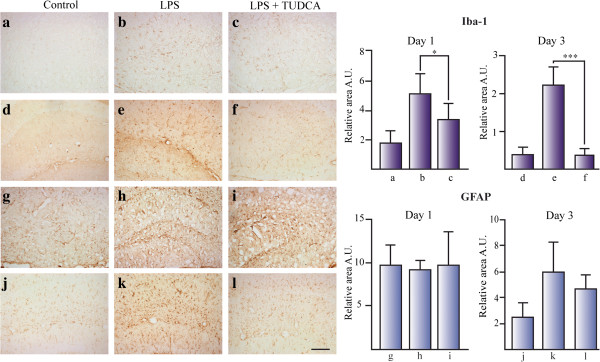
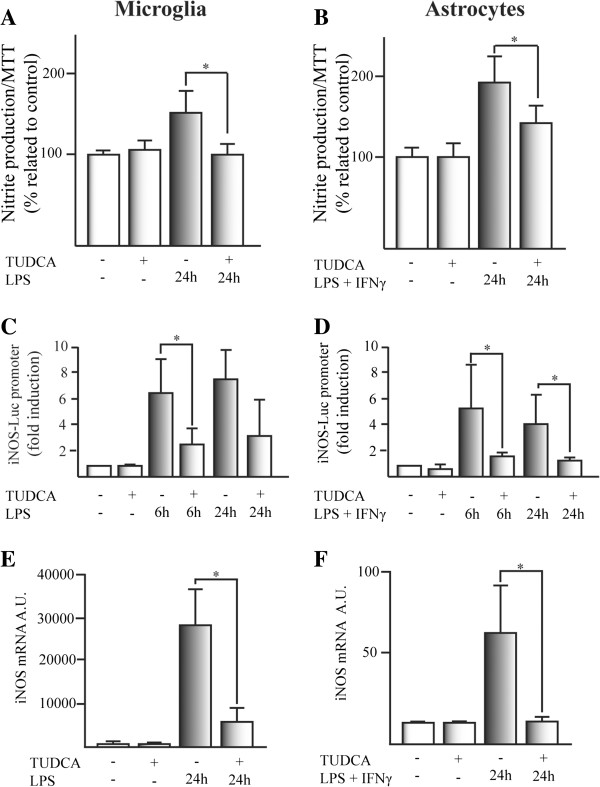
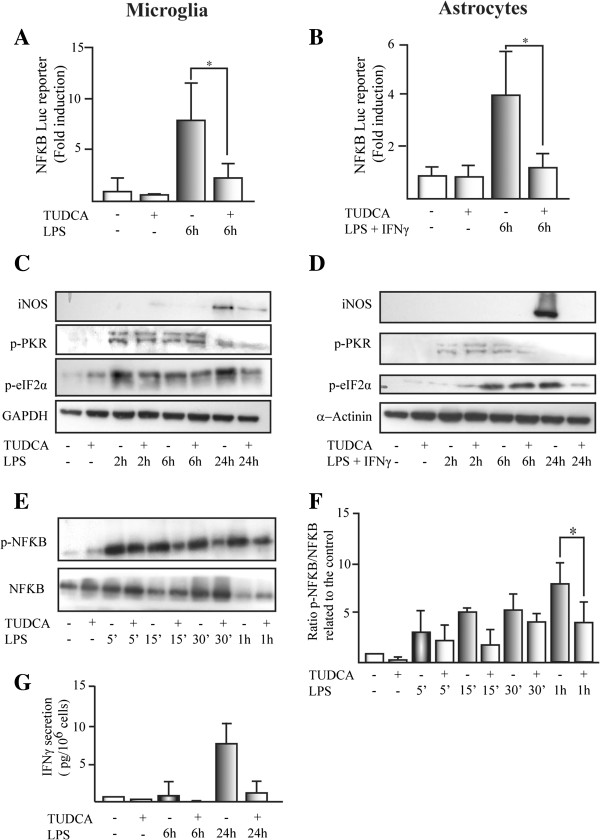
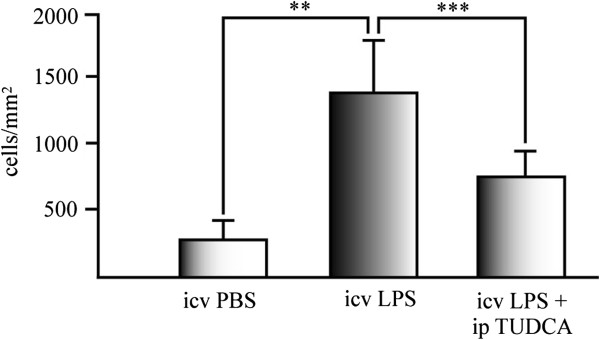
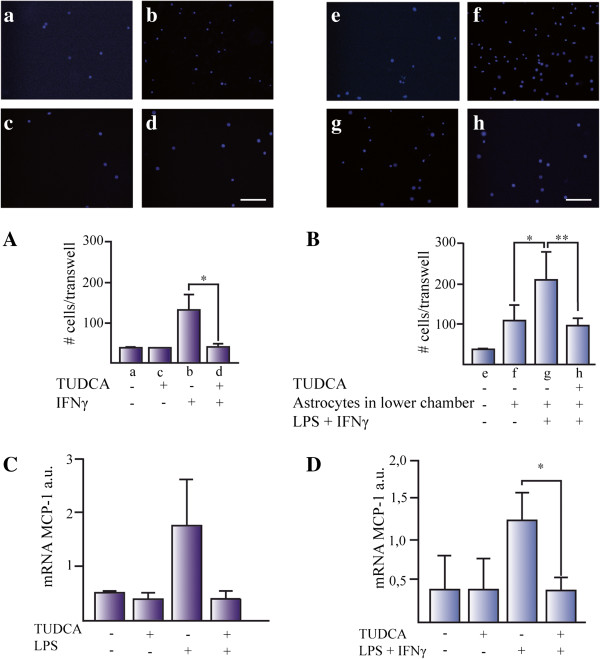
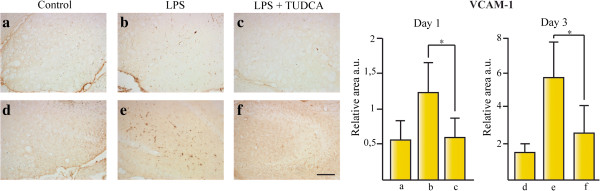
BACKGROUND: Bile acids are steroid acids found predominantly in the bile of mammals. The bile acid conjugate tauroursodeoxycholic acid (TUDCA) is a neuroprotective agent in different animal models of stroke and neurological diseases. However, the anti-inflammatory properties of TUDCA in the central nervous system (CNS) remain unknown. METHODS: The acute neuroinflammation model of intracerebroventricular (icv) injection with bacterial lipopolysaccharide (LPS) in C57BL/6 adult mice was used herein. Immunoreactivity against Iba-1, GFAP, and VCAM-1 was measured in coronal sections in the mice hippocampus. Primary cultures of microglial cells and astrocytes were obtained from neonatal Wistar rats. Glial cells were treated with proinflammatory stimuli to determine the effect of TUDCA on nitrite production and activation of inducible enzyme nitric oxide synthase (iNOS) and NFκB luciferase reporters. We studied the effect of TUDCA on transcriptional induction of iNOS and monocyte chemotactic protein-1 (MCP-1) mRNA as well as induction of protein expression and phosphorylation of different proteins from the NFκB pathway. RESULTS: TUDCA specifically reduces microglial reactivity in the hippocampus of mice treated by icv injection of LPS. TUDCA treatment reduced the production of nitrites by microglial cells and astrocytes induced by proinflammatory stimuli that led to transcriptional and translational diminution of the iNOS. This effect might be due to inhibition of the NFκB pathway, activated by proinflammatory stimuli. TUDCA decreased in vitro microglial migration induced by both IFN-γ and astrocytes treated with LPS plus IFN-γ. TUDCA inhibition of MCP-1 expression induced by proinflammatory stimuli could be in part responsible for this effect. VCAM-1 inmunoreactivity in the hippocampus of animals treated by icv LPS was reduced by TUDCA treatment, compared to animals treated with LPS alone. CONCLUSIONS: We show a triple anti-inflammatory effect of TUDCA on glial cells: i) reduced glial cell activation, ii) reduced microglial cell migratory capacity, and iii) reduced expression of chemoattractants (e.g., MCP-1) and vascular adhesion proteins (e.g., VCAM-1) required for microglial migration and blood monocyte invasion to the CNS inflammation site. Our results present a novel TUDCA anti-inflammatory mechanism, with therapeutic implications for inflammatory CNS diseases.
Overview
The claims and statistics of this paper haven’t been checked yet.
Run the check — free, no account needed. It reads the open-access text and checks the sources it cites.
Integrity signals
Registry
Cites
Statistics
Figures
Verification
Claims the paper makes
The claims and statistics of this paper haven’t been checked yet.
Run the check — free, no account needed. It reads the open-access text and checks the sources it cites.
Claims other papers make about this one
Each is checked against this paper’s own text: does it say what the citing paper says it does?
In the citing paper
“In addition, TUDCA is effective in attenuating microglial reactivity in LPS-treated mice.367,370,371”
From Microbiota–gut–brain axis and its therapeutic applications in neurodegenerative diseases (2024) · cites this paper as [370]
Self-check
Percentages, sums and reported differences re-computed from the paper’s own numbers.
The self-check needs the paper’s full text.
Citations
Cites
The Mouse Brain in Stereotaxic Coordinates
Paxinos, G. (2001) · Cited by 12,859
Analysis of nitrate, nitrite, and [15N]nitrate in biological fluids
Green, L. C., Wagner, D. A., Glogowski, J. A., Skipper, P. L., Wishnok, J. S., & Tannenbaum, S. R. (1982) · Analytical Biochemistry · doi:10.1016/0003-2697(82)90118-x · Cited by 12,061
Pathobiology of ischaemic stroke: an integrated view
Dirnagl, U., Iadecola, C., & Moskowitz, M. A. (1999) · Trends in Neurosciences · doi:10.1016/s0166-2236(99)01401-0 · Cited by 3,943
Preparation of separate astroglial and oligodendroglial cell cultures from rat cerebral tissue.
McCarthy, K. D., & de Vellis, J. (1980) · The Journal of Cell Biology · doi:10.1083/jcb.85.3.890 · Cited by 3,845
mouse brain in stereotaxic coordinates
Franklin, K. B. J., & Paxinos, G. (1997) · Cited by 3,258
Toll-like Receptor-4 Mediates Lipopolysaccharide-induced Signal Transduction
Chow, J. C., Young, D. W., Golenbock, D. T., Christ, W. J., & Gusovsky, F. (1999) · Journal of Biological Chemistry · doi:10.1074/jbc.274.16.10689 · Cited by 1,924
Dong, Y., & Benveniste, E. N. (2001) · Glia · doi:10.1002/glia.1107 · Cited by 1,325
Aloisi, F. (2001) · Glia · doi:10.1002/glia.1106 · Cited by 1,310
MCGEER, P., & MCGEER, E. (1995) · Brain Research Reviews · doi:10.1016/0165-0173(95)00011-9 · Cited by 1,287 · cited 1×
“This chronic neuroinflammation causes the loss of white and grey matter that leads to functional deficits [6,7] that characterize the pathology of neurodegenerative diseases [8,9], stroke [10], and traumatic brain injuries [11].”
BackgroundThe role of inflammation in CNS injury and disease
Lucas, S., Rothwell, N. J., & Gibson, R. M. (2006) · British Journal of Pharmacology · doi:10.1038/sj.bjp.0706400 · Cited by 1,272
Cited by
Sorted by citations
Microbiota–gut–brain axis and its therapeutic applications in neurodegenerative diseases
Loh, J. S., Mak, W. Q., Tan, L. K. S., Ng, C. X., Chan, H. H., Yeow, S. H., Foo, J. B., Ong, Y. S., How, C. W., & Khaw, K. Y. (2024) · Signal Transduction and Targeted Therapy · doi:10.1038/s41392-024-01743-1 · Cited by 1,193
Neuroinflammation in Alzheimer disease
Heneka, M. T., van der Flier, W. M., Jessen, F., Hoozemanns, J., Thal, D. R., Boche, D., Brosseron, F., Teunissen, C., Zetterberg, H., Jacobs, A. H., et al. (2025) · Nature Reviews Immunology · doi:10.1038/s41577-024-01104-7 · Cited by 638
Inflammogenesis of Secondary Spinal Cord Injury
Anwar, M. A., Shehabi, T. S. A., & Eid, A. H. (2016) · Frontiers in Cellular Neuroscience · doi:10.3389/fncel.2016.00098 · Cited by 450
Nam, H. Y., Nam, J. H., Yoon, G., Lee, J., Nam, Y., Kang, H., Cho, H.-J., Kim, J., & Hoe, H. (2018) · Journal of Neuroinflammation · doi:10.1186/s12974-018-1308-0 · Cited by 271
Kusaczuk, M. (2019) · Cells · doi:10.3390/cells8121471 · Cited by 250
Yanguas‐Casás, N., Barreda‐Manso, M. A., Nieto‐Sampedro, M., & Romero‐Ramírez, L. (2017) · Journal of Cellular Physiology · doi:10.1002/jcp.25742 · Cited by 223
Self-citationInflammatory pathways in Alzheimer’s disease mediated by gut microbiota
Qian, X.-H., Song, X.-X., Liu, X.-L., Chen, S.-D., & Tang, H.-D. (2021) · Ageing Research Reviews · doi:10.1016/j.arr.2021.101317 · Cited by 153
Metabolomic Profiling of Bile Acids in Clinical and Experimental Samples of Alzheimer’s Disease
Pan, X., Elliott, C. T., McGuinness, B., Passmore, P., Kehoe, P. G., Hölscher, C., McClean, P. L., Graham, S. F., & Green, B. D. (2017) · Metabolites · doi:10.3390/metabo7020028 · Cited by 153
Bile acids: a communication channel in the gut-brain axis
Monteiro-Cardoso, V. F., Corlianò, M., & Singaraja, R. R. (2021) · NeuroMolecular Medicine · doi:10.1007/s12017-020-08625-z · Cited by 145
Role of the intestinal microbiome, intestinal barrier and psychobiotics in depression
Trzeciak, P., & Herbet, M. (2021) · Nutrients · doi:10.3390/nu13030927 · Cited by 139
Park, T., Chen, H., Kevala, K., Lee, J.-W., & Kim, H.-Y. (2016) · Journal of Neuroinflammation · doi:10.1186/s12974-016-0751-z · Cited by 131
Dionísio, P. A., Amaral, J. D., Ribeiro, M. F., Lo, A. C., D'Hooge, R., & Rodrigues, C. M. P. (2015) · Neurobiology of Aging · doi:10.1016/j.neurobiolaging.2014.08.034 · Cited by 127
Huang, F., Pariante, C. M., & Borsini, A. (2022) · Brain, Behavior, and Immunity · doi:10.1016/j.bbi.2021.09.021 · Cited by 117
Bile Acids in Neurodegenerative Disorders
Ackerman, H. D., & Gerhard, G. S. (2016) · Frontiers in Aging Neuroscience · doi:10.3389/fnagi.2016.00263 · Cited by 120
Roles of bile acids signaling in neuromodulation under physiological and pathological conditions
Chen, X., Huang, X., Wang, D., Yu, D., Hou, S., Cui, H., & Song, L. (2023) · Cell & Bioscience · doi:10.1186/s13578-023-01053-z · Cited by 128
Yanguas‐Casás, N., Crespo‐Castrillo, A., CEBALLOS, M. L. D., Chowen, J. A., Azcoitia, Í., Arévalo, M., & García‐Segura, L. M. (2017) · Glia · doi:10.1002/glia.23263 · Cited by 126
Self-citationBile acids as key modulators of the brain-Gut-Microbiota axis in alzheimer’s disease
Mulak, A. (2021) · Journal of Alzheimer s Disease · doi:10.3233/jad-210608 · Cited by 114
Microglia activation in a model of retinal degeneration and TUDCA neuroprotective effects
Noailles, A., Fernández‐Sánchez, L., Lax, P., & Cuenca, N. (2014) · Journal of Neuroinflammation · doi:10.1186/s12974-014-0186-3 · Cited by 100
Li, S., Hua, D., Wang, Q., Yang, L., Wang, X., Luo, A., & Yang, C. (2019) · The International Journal of Neuropsychopharmacology · doi:10.1093/ijnp/pyz061 · Cited by 94
Hou, Y., Luan, J., Huang, T., Deng, T., Li, X., Xiao, Z., Zhan, J., Luo, D., Hou, Y., Xu, L., et al. (2021) · Journal of Neuroinflammation · doi:10.1186/s12974-021-02248-2 · Cited by 81
Wang, C., Yuan, J., Qin, D., Gu, J., Zhao, B., Zhang, L., Zhao, D., Chen, J., Hou, X., Yang, N., et al. (2016) · Journal of Ethnopharmacology · doi:10.1016/j.jep.2016.03.026 · Cited by 72
Cho, J. G., Lee, J. H., Hong, S. H., Lee, H. N., Kim, C. M., Kim, S. Y., Yoon, K. J., Oh, B. J., Kim, J. H., Jung, S. Y., et al. (2014) · Stem Cells · doi:10.1002/stem.1901 · Cited by 66
Kim, S. J., Ko, W.-K., Jo, M.-J., Arai, Y., Choi, H., Kumar, H., Han, I.-B., & Sohn, S. (2018) · Scientific Reports · doi:10.1038/s41598-018-21621-5 · Cited by 59
Cortez, L. M., Campeau, J. L., Norman, G., Kalayil, M., van der Merwe, J., McKenzie, D. I., & Sim, V. L. (2015) · Journal of Virology · doi:10.1128/jvi.01165-15 · Cited by 59
Tauroursodeoxycholic acid (TUDCA) is neuroprotective in a chronic mouse model of Parkinson’s disease
Cuevas, E., Burks, S., Raymick, J., Robinson, B., Gómez-Crisóstomo, N. P., Escudero-Lourdes, C., Lopez, A. G. G., Chigurupati, S., Hanig, J., Ferguson, S. A., et al. (2022) · Nutritional Neuroscience · doi:10.1080/1028415x.2020.1859729 · Cited by 57
Wu, X., Liu, C., Chen, L., Du, Y.-F., Hu, M., Reed, M. N., Long, Y., Suppiramaniam, V., Hong, H., & Tang, S.-S. (2019) · International Immunopharmacology · doi:10.1016/j.intimp.2019.03.065 · Cited by 56
Zhang, L., Zhang, J., Jiang, X., Yang, L., Zhang, Q., Wang, B., Cui, L., & Wang, X. (2019) · Neuroscience · doi:10.1016/j.neuroscience.2019.12.005 · Cited by 56
Sun, D., Gu, G., Wang, J., Chai, Y., Fan, Y., Yang, M., Xu, X. J., Gao, W., Li, F. R., Yin, D., et al. (2017) · Frontiers in Cellular Neuroscience · doi:10.3389/fncel.2017.00193 · Cited by 53
RetractedHashimoto’s thyroiditis induces neuroinflammation and emotional alterations in euthyroid mice
Cai, Y., Wang, F., Chen, Z.-X., Li, L., Fan, H., Wu, Z., Ge, J., Hu, W., Wang, Q., & Zhu, D.-F. (2018) · Journal of Neuroinflammation · doi:10.1186/s12974-018-1341-z · Cited by 56
Barrera, M., Aguilera, S., Castro, I., González, S., Carvajal, P., Molina, C., Hermoso, M. A., & González, M. (2018) · Autoimmunity Reviews · doi:10.1016/j.autrev.2018.02.009 · Cited by 51
Connecting the Gut Microbiota and Neurodegenerative Diseases: the Role of Bile Acids
Wang, S., Xu, C., Liu, H., Wei, W., Zhou, X., Qian, H., Zhou, L., Zhang, H., Wu, L. M., Chen, Z., et al. (2023) · Molecular Neurobiology · doi:10.1007/s12035-023-03340-9 · Cited by 51
Romero‐Ramírez, L., & Mey, J. (2024) · International Journal of Molecular Sciences · doi:10.3390/ijms25179279 · Cited by 50
Self-citationMicroglia and gut microbiota: A double-edged sword in Alzheimer's disease
Bano, N., Khan, S., Ahamad, S., Kanshana, J. S., Dar, N. J., Khan, S. J., Nazir, A., & Bhat, S. A. (2024) · Ageing Research Reviews · doi:10.1016/j.arr.2024.102515 · Cited by 50
The gut-brain axis in ischemic stroke: its relevance in pathology and as a therapeutic target
Benakis, C., & Liesz, A. (2022) · Neurological Research and Practice · doi:10.1186/s42466-022-00222-8 · Cited by 52
Bile acids attenuate PKM2 pathway activation in proinflammatory microglia
Romero-Ramírez, L., García-Rama, C., Wu, S., & Mey, J. (2022) · Scientific Reports · doi:10.1038/s41598-022-05408-3 · Cited by 41
Self-citationNatural Compounds from Saffron and Bear Bile Prevent Vision Loss and Retinal Degeneration
Fernández‐Sánchez, L., Lax, P., Noailles, A., Jeréz, A. A., Maneu, V., & Cuenca, N. (2015) · Molecules · doi:10.3390/molecules200813875 · Cited by 43
Castro, I., Albornoz, N., Aguilera, S., Barrera, M., González, S., Núñez, M., Carvajal, P., Jara, D., Lagos, C., Molina, C., et al. (2019) · Lara D. Veeken · doi:10.1093/rheumatology/kez316 · Cited by 41
Gronbeck, K. R., Rodrigues, C. M. P., Mahmoudi, J., Bershad, E. M., Ling, G. S. F., Bachour, S. P., & Divani, A. A. (2016) · Neurocritical Care · doi:10.1007/s12028-015-0225-7 · Cited by 37
Gómez‐Vicente, V., Lax, P., Fernández‐Sánchez, L., Rondón, N., Esquiva, G., Germaín, F., de la Villa, P., & Cuenca, N. (2015) · PLoS ONE · doi:10.1371/journal.pone.0137826 · Cited by 36
A New Drug Delivery System Based on Tauroursodeoxycholic Acid and PEDOT
Carli, S., Fioravanti, G., Armirotti, A., Ciarpella, F., Prato, M., Ottonello, G., Salerno, M., Scarpellini, A., Perrone, D., Marchesi, E., et al. (2018) · Chemistry - A European Journal · doi:10.1002/chem.201805285 · Cited by 36
Zhu, H., Wang, G., Bai, Y., Tao, Y., Wang, L., Liu, Y., Wu, H., Huang, F., Shi, H., & Wu, X. (2022) · Journal of Ethnopharmacology · doi:10.1016/j.jep.2022.115063 · Cited by 37
Yanguas‐Casás, N., Barreda-Manso, M. A., Pérez-Rial, S., Nieto‐Sampedro, M., & Romero‐Ramírez, L. (2016) · Molecular Neurobiology · doi:10.1007/s12035-016-0142-6 · Cited by 36
Self-citationStanimirov, B., Đanić, M., Pavlović, N., Zaklan, D., Lazarević, S., Mikov, M., & Stankov, K. (2025) · International Journal of Molecular Sciences · doi:10.3390/ijms262412167 · Cited by 39
Ellagic Acid Inhibits Neuroinflammation and Cognitive Impairment Induced by Lipopolysaccharides
Dornelles, G. L., de Oliveira, J. S., de Almeida, E. J. R., Mello, C. B. E., Rodrigues, B. R. E., da Silva, C. B., Petry, L. D. S., Pillat, M. M., Palma, T. V., & de Andrade, C. M. (2020) · Neurochemical Research · doi:10.1007/s11064-020-03105-z · Cited by 34
Linking Nonalcoholic Fatty Liver Disease and Brain Disease: Focusing on Bile Acid Signaling
Ren, Z., Li, C.-X., Ma, C., Chen, D., Chen, J., Xu, W., Chen, C.-A., Cheng, F., & Wang, X. (2022) · International Journal of Molecular Sciences · doi:10.3390/ijms232113045 · Cited by 32
Mendes, M. O., Rosa, A. I., Carvalho, A. N., Nunes, M. J., Dionísio, P., Rodrigues, E., Costa, D., Duarte-Silva, S., Maciel, P., Rodrigues, C. M. P., et al. (2019) · Molecular and Cellular Neuroscience · doi:10.1016/j.mcn.2019.01.003 · Cited by 31
Impairment of Hepcidin Upregulation by Lipopolysaccharide in the Interleukin-6 Knockout Mouse Brain
Zhang, F., Hou, H., Yin, Z., Chang, L. Y., Li, F., Chen, Y.-J., Ke, Y., & Qian, Z. (2017) · Frontiers in Molecular Neuroscience · doi:10.3389/fnmol.2017.00367 · Cited by 32
Fan, X., Liu, B., Zhou, J., Gu, X., Zhou, Y., Yang, Y., Guo, F., Wei, X., Wang, H., Si, N., et al. (2021) · Frontiers in Aging Neuroscience · doi:10.3389/fnagi.2021.658376 · Cited by 30
Gut microbiota–astrocyte axis: new insights into age-related cognitive decline
Zhang, L., Wei, J., Liu, X., Li, D., Pang, X., Chen, F., Cao, H., & Lei, P. (2024) · Neural Regeneration Research · doi:10.4103/nrr.nrr-d-23-01776 · Cited by 28
Beck‐Schimmer, B., Baumann, L., Restin, T., Eugster, P., Hasler, M., Booy, C., & Schläpfer, M. (2017) · European Journal of Anaesthesiology · doi:10.1097/eja.0000000000000668 · Cited by 26
Interorgan communication with the liver: novel mechanisms and therapeutic targets
Zhao, J., Zhang, X., Li, Y., Yu, J., Chen, Z., Niu, Y., Ran, S., Wang, S., Ye, W., Luo, Z., et al. (2023) · Frontiers in Immunology · doi:10.3389/fimmu.2023.1314123 · Cited by 31
Zhang, Z., Chen, J., Chen, F., Yu, D., Li, R., Lv, C., Wang, H., Li, H., Li, J., & Cai, Y. (2017) · Cell Stress and Chaperones · doi:10.1007/s12192-017-0862-1 · Cited by 25
Zhang, L., Jiang, X., Zhang, J., Gao, H., Yang, L., Li, D., Zhang, Q., Wang, B., Cui, L., & Wang, X. (2021) · International Immunopharmacology · doi:10.1016/j.intimp.2021.107986 · Cited by 24
Wu, S., Romero‐Ramírez, L., & Mey, J. (2021) · Journal of Cellular Physiology · doi:10.1002/jcp.30619 · Cited by 23
Self-citationZhou, R., He, M. X., Fan, J., Li, R., Zuo, Y.-F., Li, B., Gao, G., & Sun, T. (2022) · Frontiers in Neuroscience · doi:10.3389/fnins.2022.947295 · Cited by 23
Darmanto, A. G., Yen, T., Jan, J., Linh, T. T. D., Taliyan, R., Yang, C. H., & Sheu, J. (2024) · Pharmacological Research · doi:10.1016/j.phrs.2024.107564 · Cited by 23
Huang, L., Xu, G., Zhang, R., Wang, Y., Ji, J., Long, F., & Sun, Y. (2022) · Lipids in Health and Disease · doi:10.1186/s12944-021-01620-8 · Cited by 20
Gut microbiota in ischemic stroke: Where we stand and challenges ahead
Long, J.-X., Wang, J., Li, Y., & Chen, D. (2022) · Frontiers in Nutrition · doi:10.3389/fnut.2022.1008514 · Cited by 22
Dong, W., Huang, Y., Shu, Y., Fan, X., Tian, X., Yan, Y., Mi, J., Lu, L., Zeng, X., & Cao, Y. (2023) · Food & Function · doi:10.1039/d3fo02651e · Cited by 21
Tung, T.-H., Chen, Y., Lin, Y., & Huang, S. (2022) · Biomedicines · doi:10.3390/biomedicines10071594 · Cited by 19
Gastrointestinal Dysfunction in Stroke
Yong, H. Y. F., Ganesh, A., & Camara-Lemarroy, C. R. (2023) · Seminars in Neurology · doi:10.1055/s-0043-1771470 · Cited by 18
Liu, X., Zhu, B., Zou, H., Hu, D., Gu, Q., Liu, K., & Xu, X. (2015) · Graefe s Archive for Clinical and Experimental Ophthalmology · doi:10.1007/s00417-015-2969-3 · Cited by 18
Jo, F., Jo, H., Hilzendeger, A. M., Thompson, A. P., Cassell, M. D., Rutkowski, D. T., Davisson, R. L., Grobe, J. L., & Sigmund, C. D. (2015) · Hypertension · doi:10.1161/hypertensionaha.115.05377 · Cited by 17
Xu, K., Zheng, S., Zhai, Y., Guo, L., Tang, P., Yan, J., Wu, D., & Li, H. (2015) · International Journal of Pharmaceutics · doi:10.1016/j.ijpharm.2015.03.072 · Cited by 17
New oleyl glycoside as anti-cancer agent that targets on neutral sphingomyelinase
Romero‐Ramírez, L., García‐Álvarez, I., Casas, J., Barreda-Manso, M. A., Yanguas‐Casás, N., Nieto‐Sampedro, M., & Fernández‐Mayoralas, A. (2015) · Biochemical Pharmacology · doi:10.1016/j.bcp.2015.07.009 · Cited by 17
Self-citationKim, B., Arai, Y., Choi, B., Park, S., Ahn, J., Han, I., & Lee, S. (2017) · Journal of Industrial and Engineering Chemistry · doi:10.1016/j.jiec.2017.12.027 · Cited by 17
Wu, S., García‐Rama, C., Romero‐Ramírez, L., de Munter, J., Wolters, E. C., Kramer, B. W. W., & Mey, J. (2022) · Biomedicines · doi:10.3390/biomedicines10071501 · Cited by 15
Self-citationTauroursodeoxycholic acid: more than just a neuroprotective bile conjugate
Romero‐Ramírez, L., Nieto‐Sampedro, M., & Yanguas‐Casás, N. (2017) · Neural Regeneration Research · doi:10.4103/1673-5374.198979 · Cited by 15
Self-citationSui, K., Tveter, K. M., Bawagan, F. G., Buckendahl, P., Martinez, S. A., Jaffri, Z. H., MacDonell, A. T., Wu, Y., Duran, R. M., Shapses, S. A., et al. (2022) · Frontiers in Pharmacology · doi:10.3389/fphar.2022.900667 · Cited by 16
Mohamed, N. A., Ithmil, M. T., Elkady, A. I., & Salam, S. A. (2024) · International Journal of Molecular Sciences · doi:10.3390/ijms25136922 · Cited by 17
Chandra, S., & Vassar, R. J. (2024) · Immunological Reviews · doi:10.1111/imr.13412 · Cited by 17
Kim, K.-W., Yoon, C., Park, S., Bae, G., Kim, D., Kim, Y., & Oh, H. (2021) · Evidence-based Complementary and Alternative Medicine · doi:10.1155/2021/5901653 · Cited by 15
Zhang, Q., Liu, Y., Tang, R., Kong, S., Lv, D., Li, H., Yang, H., & Lin, L. (2024) · Carbohydrate Polymer Technologies and Applications · doi:10.1016/j.carpta.2024.100567 · Cited by 12
Effect of Tauroursodeoxycholic Acid on Inflammation after Ocular Alkali Burn
Huang, Y., Lin, L., Yang, Y., Duan, F., Yuan, M., Lou, B., & Lin, X. (2022) · International Journal of Molecular Sciences · doi:10.3390/ijms231911717 · Cited by 12
Yanguas‐Casás, N., Ojalvo‐Sanz, A. C., Martínez-Vázquez, A., Goneau, M.-F., Gilbert, M., Nieto‐Sampedro, M., & Romero‐Ramírez, L. (2019) · Toxicology and Applied Pharmacology · doi:10.1016/j.taap.2019.114627 · Cited by 10
Self-citationThe Metabolomic Mind: Microbial Metabolite Programming of Microglia
Verosky, B. G., Bailey, M. T., & Gur, T. (2025) · NeuroImmunoModulation · doi:10.1159/000545484 · Cited by 9
Zhang, Y., Li, J., Li, J., Wang, Y., Cui, M., Li, W., Chen, X., & Jiang, Y. (2025) · GeroScience · doi:10.1007/s11357-025-01790-8 · Cited by 10
Is TGR5 a therapeutic target for the treatment of spinal cord injury?
Smaling, A., Romero‐Ramírez, L., & Mey, J. (2022) · Journal of Neurochemistry · doi:10.1111/jnc.15727 · Cited by 9
Self-citationIdentification of the expression of farnesoid X receptor in astrocytes
He, H., Chen, Z., Chen, D., Lu, X., Huang, C., & Chen, J. (2021) · Neuroreport · doi:10.1097/wnr.0000000000001717 · Cited by 9
Gu, Y., Wang, M., & Mao, Y. (2026) · Frontiers in Neuroendocrinology · doi:10.1016/j.yfrne.2026.101247 · Cited by 9
Relationship Between Multiple Sclerosis, Gut Dysbiosis, and Inflammation
Jank, L., & Bhargava, P. (2023) · Neurologic Clinics · doi:10.1016/j.ncl.2023.07.005 · Cited by 8
Li, P.-S., Wang, J., Hao, H., Chen, X., He, X., & Shao, Q. (2025) · Drug Design Development and Therapy · doi:10.2147/dddt.s557300 · Cited by 7
Romero‐Ramírez, L., García‐Rama, C., & Mey, J. (2024) · Molecular Neurobiology · doi:10.1007/s12035-024-03963-6 · Cited by 5
Self-citationRole of inflammasomes in neuroinflammation after ischemic stroke
Jung, K., & Seong, S. (2021) · encephalitis · doi:10.47936/encephalitis.2021.00073 · Cited by 4
High Dose and Delayed Treatment with Bile Acids Ineffective in RML Prion-Infected Mice
Norman, G., Campeau, J. L., & Sim, V. L. (2018) · Antimicrobial Agents and Chemotherapy · doi:10.1128/aac.00222-18 · Cited by 5
Ursodeoxycholic acid alleviates multiple sclerosis via TGR5-dependent microglial regulation in mice
Sonoda, Y., Aizawa, F., Tomochika, N., Miyauchi, K., Nishibashi, A., Takahashi, S., Kosako, H., Tanida, S., Yagi, K., Niimura, T., et al. (2025) · European Journal of Pharmacology · doi:10.1016/j.ejphar.2025.177941 · Cited by 4
Atlıhan, Y. S., Öztüzün, A., Tuzcu, H., Kırımlıoğlu, E., Başsorgun, C. İ., Doğan, M. E., & Aslan, M. (2025) · Cell Biology International · doi:10.1002/cbin.70084 · Cited by 4
Xu, K., Zheng, S., Guo, L., Li, S., Wang, L., Tang, P., Yan, J., Wu, D., & Li, H. (2015) · RSC Advances · doi:10.1039/c5ra18985c · Cited by 3
Singh, G., & Aran, K. R. (2026) · Biogerontology · doi:10.1007/s10522-025-10384-y · Cited by 2
Fan, Q., Takarada-Iemata, M., Tanaka, T., Nguyen, L. D., Okitani, N., Yang, R.-R., Tamatani, T., Ishii, H., Hattori, T., Kidoya, H., et al. (2026) · Cell Death and Disease · doi:10.1038/s41419-026-08461-2 · Cited by 2
Zhang, N., Li, Y., Zhang, X., Chrenek, M. A., Wang, J., Girardot, P. E., Sellers, J. T., Geisert, E. E., Nickerson, J. M., & Boatright, J. H. (2025) · Pharmaceuticals · doi:10.3390/ph18040569 · Cited by 1
Du, X., Li, S., Wu, G., Cai, H., Sun, C.-Y., Lin, H., Cai, Y.-F., & Wang, Q. (2026) · Rejuvenation Research · doi:10.1177/15491684251409076 · Cited by 1
Update Review of the Relationship Between Gut Microbiota and Neurodegenerative Diseases
Wang, Y., Jing, G., Fu, Y., Li, Y., & Wu, C. (2024) · Diseases & Research · doi:10.54457/dr.202401007 · Cited by 1
Using TUDCA to treat Alzheimer's disease after pathology onset in APP/PS1 mice
Dionísio, P. (2014) · Portuguese National Funding Agency for Science, Research and Technology (RCAAP Project by FCT)
Using TUDCA to treat Alzheimer's disease after pathology onset in APP/PS1 mice
Farmácia, F. D. (2014)
Mendes, M. O., Rosa, A. I., Carvalho, A. N., Nunes, M. J., Dionísio, P. A., Rodrigues, E., Costa, D., Duarte‐Silva, S., Maciel, P., Rodrigues, C. M. P., et al. (2021) · Molecular and Cellular Neuroscience · doi:10.1016/j.mcn.2021.103626
C-64 進行非小細胞癌に対するCDDP+VDS+MMC療法とCDDP+VDS+IFX療法の検討
西, 耕., 中積, 泰., 水島, 豊., 中村, 裕., 山之内, 菊., 斉藤, 元., 藤村, 政., 岡藤, 和., 飴嶋, 慎., & 金森, 一. (1992) · 肺癌
Study on the Association between Bile Acid Levels and Prognostic Factors of Ischemic Stroke
霍, 燕. (2022) · Advances in Clinical Medicine · doi:10.12677/acm.2022.126730
Gut–brain communication through microbes
Green, M., & Foster, J. A. (2024) · Elsevier eBooks · doi:10.1016/b978-0-323-90144-4.00002-1
Hou, Y., Luan, J., Huang, T., Deng, T., Li, X., Xiao, Z., Zhan, J., Luo, D., Hou, Y., Xu, L., et al. (2021) · Figshare · doi:10.6084/m9.figshare.16650125
Metadata
- Authors
- Yanguas-Casás, N., Barreda-Manso, M. A., Nieto-Sampedro, M., & Romero-Ramírez, L.
- Affiliations
- Instituto Cajal (ES)
- Venue
- Journal of Neuroinflammation
- Published
- 2014-03-19
- Volume
- 11
- Issue
- 1
- Pages
- 50-50
- ISSN
- 1742-2094 (ISSN-L)
- PMC
- PMC4000131
- OpenAlex
- W2119521536
- Cited by
- 103
- References
- 33
- Citations by year
- 2026: 7 · 2025: 7 · 2024: 12 · 2023: 6 · 2022: 13 · 2021: 13 · 2020: 3 · 2019: 7 · 2018: 6 · 2017: 8 · 2016: 7 · 2015: 8 · 2014: 5
- FWCI
- 4.86
- Type
- journal article
- Language
- en
- Open access
- gold
- doi.org
- Licence
- cc-by
- Locations
- Journal of Neuroinflammation (publishedVersion, cc-by)
- Europe PMC (PubMed Central) (publishedVersion, cc-by)
- PubMed Central (publishedVersion, cc-by)
- PubMed (publishedVersion)
- DIGITAL.CSIC (Spanish National Research Council (CSIC)) (submittedVersion, cc-by)
- Funders
- Ministerio de Ciencia e Innovación (SAF2009-11257, SAF2012-40126)
- Topics
- Life Sciences › Neuroscience › Neurology › Neuroinflammation and Neurodegeneration Mechanisms
- Health Sciences › Medicine › Clinical Neurology › Traumatic Brain Injury and Neurovascular Disturbances
- Life Sciences › Neuroscience › Biological Psychiatry › Tryptophan and brain disorders
- Keywords
- tauroursodeoxycholic acid, bile acids, neuroinflammation, glial activation, microglial activation, astrocytes, lipopolysaccharide, NF-κB signaling, nitric oxide synthase, MCP-1, VCAM-1, microglial migration, hippocampus, anti-inflammatory activity, neuroprotection, blood-brain barrier
- MeSH terms
- Animals, Animals, Newborn, Calcium-Binding Proteins, Cell Movement, Cells, Cultured, Cholagogues and Choleretics, Disease Models, Animal, Encephalitis, Gene Expression Regulation, Glial Fibrillary Acidic Protein, Hippocampus, Injections, Intraventricular, Lipopolysaccharides, Mice, Inbred C57BL, Microfilament Proteins, Neuroglia, Nitrites, Taurochenodeoxycholic Acid, Rats, Wistar, Vascular Cell Adhesion Molecule-1, Cell Proliferation
About these checks
Registry, retraction, Cites and statistics results are computed, not judged, with one exception: a printed reference that no index lists is read once by a model before it counts as a citation error. Claims are extracted by a model and kept only when their quote appears verbatim in the text; each cited source is then checked, with a model’s help, for whether it says what the claim relies on. Those verdicts can be wrong — read the claim’s quote and the cited source before relying on one.
Statistics and arithmetic are recomputed, not judged.
Confidence bands are shown only for fields calibrated on our annotated test set. None is calibrated yet, so no band is shown.
What counts as a claim ›How we measure confidence ›How we check this ›
Are you an author, or do you see a problem with this page? Request a review
