

The DOI matches its Crossref record; 176 of the 177 references it cites were found in a registry or an index.
Role of carnitine in disease
Open accessAbstract
Carnitine is a conditionally essential nutrient that plays a vital role in energy production and fatty acid metabolism. Vegetarians possess a greater bioavailability than meat eaters. Distinct deficiencies arise either from genetic mutation of carnitine transporters or in association with other disorders such as liver or kidney disease. Carnitine deficiency occurs in aberrations of carnitine regulation in disorders such as diabetes, sepsis, cardiomyopathy, malnutrition, cirrhosis, endocrine disorders and with aging. Nutritional supplementation of L-carnitine, the biologically active form of carnitine, is ameliorative for uremic patients, and can improve nerve conduction, neuropathic pain and immune function in diabetes patients while it is life-saving for patients suffering primary carnitine deficiency. Clinical application of carnitine holds much promise in a range of neural disorders such as Alzheimer's disease, hepatic encephalopathy and other painful neuropathies. Topical application in dry eye offers osmoprotection and modulates immune and inflammatory responses. Carnitine has been recognized as a nutritional supplement in cardiovascular disease and there is increasing evidence that carnitine supplementation may be beneficial in treating obesity, improving glucose intolerance and total energy expenditure.
Overview
The claims and statistics of this paper haven’t been checked yet.
Run the check — free, no account needed. It reads the open-access text and checks the sources it cites.
Integrity signals
Registry
Cites
Statistics
Figures
Verification
Claims the paper makes
The claims and statistics of this paper haven’t been checked yet.
Run the check — free, no account needed. It reads the open-access text and checks the sources it cites.
Claims other papers make about this one
Each is checked against this paper’s own text: does it say what the citing paper says it does?
In the citing paper
“The bioavailability of L-carnitine in vegetarians (who are adapted to low-carnitine diets) was higher than in carnivores (42); therefore, less carnitine reaches the bacteria of the lower intestine in vegetarians.”
From Trimethylamine N -Oxide, the Microbiome, and Heart and Kidney Disease (2017) · cites this paper as [42]
In the citing paper
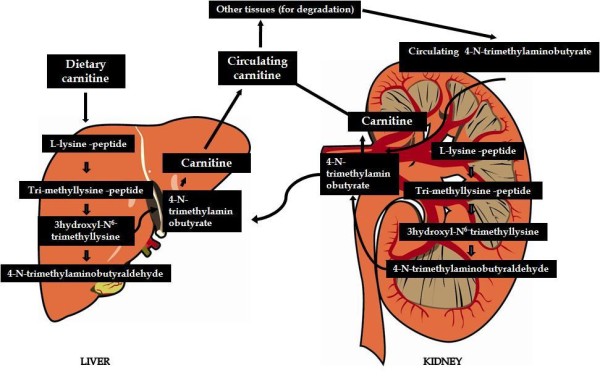
“Carnitine also can be synthesized endogenously from two essential amino acids, lysine and methionine (63).This occurs in kidney, liver, and brain (42).”
From Trimethylamine N -Oxide, the Microbiome, and Heart and Kidney Disease (2017) · cites this paper as [42]
In the citing paper
“Animal products like meat, fish, poultry, and milk (whey fraction) are highest in carnitine, whereas plants contain little carnitine (42).”
From Trimethylamine N -Oxide, the Microbiome, and Heart and Kidney Disease (2017) · cites this paper as [42]
Self-check
Percentages, sums and reported differences re-computed from the paper’s own numbers.
The self-check needs the paper’s full text.
Citations
Cites
Functional significance of cell volume regulatory mechanisms
LANG, F., BUSCH, G. L., RITTER, M., VÖLKL, H., WALDEGGER, S., GULBINS, E., & HÄUSSINGER, D. (1998) · Physiological Reviews · doi:10.1152/physrev.1998.78.1.247 · Cited by 1,891
Mutation nomenclature extensions and suggestions to describe complex mutations: A discussion
den Dunnen, J. T., & Antonarakis, S. E. (2000) · Human Mutation · doi:10.1002/(sici)1098-1004(200001)15:1 · Cited by 1,757
Watson, W. A., Litovitz, T. L., Rodgers, G. C., Klein‐Schwartz, W., Reid, N., Youniss, J., Flanagan, A., & Wruk, K. M. (2005) · The American Journal of Emergency Medicine · doi:10.1016/j.ajem.2005.05.001 · Cited by 1,147
Carnitine biosynthesis in mammals
Vaz, F. M., & Wanders, R. J. A. (2002) · Biochemical Journal · doi:10.1042/0264-6021:3610417 · Cited by 769
Ramassamy, C. (2006) · European Journal of Pharmacology · doi:10.1016/j.ejphar.2006.06.025 · Cited by 687 · cited 1×
“Based on the evidence that heat-shock proteins (Hsps) can exert neuroprotective effects against oxidative stress-related injury and that nutritional antioxidants are able to upregulate Hsps in neurons, use of nutritional antioxidants such as carnitine/acetyl-L-carnitine has been advocated to counteract the oxidative s…”
BackgroundCentral Administration of Oleic Acid Inhibits Glucose Production and Food Intake
Obici, S., Feng, Z., Morgan, K., Stein, D., Karkanias, G., & Rossetti, L. (2002) · Diabetes · doi:10.2337/diabetes.51.2.271 · Cited by 654 · cited 1×
“There is some debate in the literature regarding whether satiety depends on the cytosolic concentration of long-chain fatty acids, with the suggestion that an increased concentration correlates with satiety and decreased feeding and body weight [77-80].”
BackgroundDeCarli, L. M., & Lieber, C. S. (1967) · Journal of Nutrition · doi:10.1093/jn/91.3_suppl.331 · Cited by 607 · cited 1×
“Chronic ingestion of alcohol is known to cause hepatic steatosis [69,70].”
BackgroundWatson, W. A., Litovitz, T. L., Klein‐Schwartz, W., et al. (2004) · The American Journal of Emergency Medicine · doi:10.1016/j.ajem.2004.06.001 · Cited by 571
Pflugfelder, S. C., Tseng, S. C. G., Sanabria, O., Kell, H. Y., Garcia, C. G., Felix, C., Feuer, W. J., & Reis, B. L. (1998) · Cornea · doi:10.1097/00003226-199801000-00007 · Cited by 559 · cited 1×
“Dry eye is a common disease of the ocular surface that is associated with corneal surface irregularity and blurred vision [155-158].”
BackgroundNezu, J., Tamai, I., Oku, A., Ohashi, R., Yabuuchi, H., Hashimoto, N., Nikaido, H., Sai, Y., Koizumi, A., Shoji, Y., et al. (1999) · Nature Genetics · doi:10.1038/5030 · Cited by 553 · cited 2×
“Several mutations have been described [21,22,25,26, 29 ,31-33].”
Background
Research works printed but not linked: 1
- Rebouche C Shils M, Shike M, Ross A, et al Carnitine: Modern Nutrition in Health and Disease 2006 Philadelphia: Lippincott, Williams and Wilkins 537 544
Cited by
Sorted by citations
Items 101–200 of 613
An, J. H., Kim, Y. J., Kim, K. J., Kim, S. H., Kim, N. H., Kim, H. Y., Kim, N. H., Choi, K. M., Baik, S. H., Choi, D. S., et al. (2016) · Endocrine Journal · doi:10.1507/endocrj.ej16-0109 · Cited by 44
The Nutraceutical Value of Carnitine and Its Use in Dietary Supplements
Durazzo, A., Lucarini, M., Nazhand, A., Souto, S. B., Silva, A. M., Severino, P. B., Souto, E. B., & Santini, A. (2020) · Molecules · doi:10.3390/molecules25092127 · Cited by 46
“…acetyl-L -carnitine and Many health-beneficial actions of carnitine have been identified and reported, including suppression of apoptosis, correction of cytotoxicity by excessive acyl groups, and stabilization of the erythrocyte membrane [15] and anti-inflammatory and antioxidant properties [16].”
BackgroundA Metabolomic Aging Clock Using Human Cerebrospinal Fluid
Hwangbo, N., Zhang, X., Raftery, D., Gu, H., Hu, S., Montine, T. J., Quinn, J. F., Chung, K. A., Hiller, A., Wang, D., et al. (2021) · The Journals of Gerontology Series A · doi:10.1093/gerona/glab212 · Cited by 49
Simmons, P. A., Carlisle-Wilcox, C., Chen, R., Liu, H., & Vehige, J. G. (2015) · Clinical Therapeutics · doi:10.1016/j.clinthera.2015.01.001 · Cited by 43
Self-citationHan, J., Higgins, R., Lim, M. D., Atkinson, K., Yang, J., Lin, K., & Borchers, C. H. (2018) · Analytica Chimica Acta · doi:10.1016/j.aca.2018.01.045 · Cited by 43
Pannkuk, E. L., Laiakis, E. C., Fornace, A. J., Fatanmi, O. O., & Singh, V. K. (2018) · Health Physics · doi:10.1097/hp.0000000000000776 · Cited by 43
Takagi, A., Hawke, P., Tokuda, S., Toda, T., Higashizono, K., Nagai, E., Watanabe, M., Nakatani, E., Kanemoto, H., & Oba, N. (2021) · Journal of Cachexia Sarcopenia and Muscle · doi:10.1002/jcsm.12906 · Cited by 43
“Ninety-five per cent of carnitine is stored in these muscle types,(6) with almost all of it located inside their cells.(7) Under normal circumstances, carnitine is mainly obtained from the diet; however, it is also synthesized”
BackgroundInfluentialAiraksinen, K., Jokkala, J., Ahonen, I., Auriola, S. O. K., Kolehmainen, M., Hanhineva, K., & Tiihonen, K. (2018) · Molecular Nutrition & Food Research · doi:10.1002/mnfr.201800455 · Cited by 42
Ottosson, F. A., Smith, E., Gallo, W., Fernandez, C., & Melander, O. (2019) · The Journal of Clinical Endocrinology & Metabolism · doi:10.1210/jc.2019-00822 · Cited by 43
Nutritional Considerations for the Vegan Athlete
West, S., Monteyne, A. J., van der Heijden, I., Stephens, F. B., & Wall, B. T. (2023) · Advances in Nutrition · doi:10.1016/j.advnut.2023.04.012 · Cited by 42
“Roughly 75% of carnitine in the body is obtained through the diet, mostly in meat [183].”
BackgroundLousuebsakul, V., Thorpe, D. L., Knutsen, R., Beeson, W. L., Fraser, G. E., & Knutsen, S. F. (2013) · Public Health Nutrition · doi:10.1017/s1368980013002693 · Cited by 41
“Carnitine supplements have been shown to improve bone density in some animal and human studies((21)).”
BackgroundD’Antona, G., Nabavi, S. M., Micheletti, P., Lorenzo, A. D., Aquilani, R., Nisoli, E., Rondanelli, M., & Daglia, M. (2014) · BioMed Research International · doi:10.1155/2014/613890 · Cited by 43
“Dietary carnitine is absorbed in the small intestine and enters the bloodstream [66].”
Metabolomic‐guided discovery of Alzheimer's disease biomarkers from body fluid
Ady, C. N. A. E., Lim, S. M., Teh, L. K., Salleh, M. Z., Chin, A., Tan, M. P., Poi, P. J. H., Kamaruzzaman, S. B., Majeed, A. B. A., & Ramasamy, K. (2017) · Journal of Neuroscience Research · doi:10.1002/jnr.24048 · Cited by 41
“More important, it is recognized as a neuroprotective compound that counteracts oxidative stress–induced brain damage in AD (Flanagan et al., 2010).”
BackgroundAcetyl- l -carnitine is an anti-angiogenic agent targeting the VEGFR2 and CXCR4 pathways
Baci, D., Bruno, A., Bassani, B., Tramacere, M., Mortara, L., Albini, A., & Noonan, D. M. (2018) · Cancer Letters · doi:10.1016/j.canlet.2018.04.018 · Cited by 40
“Carnitine supplementation ha s been largely reported to be beneficial in 367 patients with primary and secondary carnitine defic i n ies, mostly including chronic inflammatory 368 diseases, such as diabetes, cardiovascular disorder and cancer [32].”
BackgroundLarrain, S., & Rinella, M. E. (2012) · Clinics in Liver Disease · doi:10.1016/j.cld.2012.05.009 · Cited by 40
“Carnitine deficiency can be primary, caused by an autosomal recessive genetic disorder, or secondary, which occurs in relation to certain diseases, drug interactions, impaired nutrition, and aging.(144,145) Carnitine is essential for the translocation of long chain fatty acids across the inner mitochondrial membrane,…”
BackgroundMetabolic Signature of Dietary Iron Overload in a Mouse Model
Volani, C., Paglia, G., Smarason, S., Pramstaller, P. P., Demetz, E., Pfeifhofer‐Obermair, C., & Weiß, G. (2018) · Cells · doi:10.3390/cells7120264 · Cited by 40
Riedel, E. O., Hinrichs, A., Kemter, E., Dahlhoff, M., Backman, M., Rathkolb, B., Prehn, C. P., Adamski, J., Renner, S., Blutke, A., et al. (2020) · Molecular Metabolism · doi:10.1016/j.molmet.2020.100978 · Cited by 41
“In humans, 75% of carnitine is obtained from the diet whereas the remaining proportion is synthetized from the essential amino acids lysine and methionine in liver, kidney and brain (reviewed in [48]).”
BackgroundLengkidworraphiphat, P., Wongpoomchai, R., Bunmee, T., Chariyakornkul, A., Chaiwang, N., & Jaturasitha, S. (2020) · Food Science of Animal Resources · doi:10.5851/kosfa.2020.e94 · Cited by 42
Partial Coated Stem Cells with Bioinspired Silica as New Generation of Cellular Hybrid Materials
Maciel, M. M., Correia, T. R., Gaspar, V. M., Rodrigues, J. M. M., Choi, I. S., & Mano, J. F. (2021) · Advanced Functional Materials · doi:10.1002/adfm.202009619 · Cited by 40
Pan, X., Yang, J. J., Shu, X., Moore, S. C., Palmer, N. D., Guasch‐Ferré, M., Herrington, D. M., Harada, S., Eliassen, A. H., Wang, T. J., et al. (2021) · American Journal of Clinical Nutrition · doi:10.1093/ajcn/nqab152 · Cited by 39
Carnitine and/or Acetylcarnitine Deficiency as a Cause of Higher Levels of Ammonia
Maldonado, C., Guevara, N., Queijo, C., González, R., Fagiolino, P. L., & Vázquez, M. (2016) · BioMed Research International · doi:10.1155/2016/2920108 · Cited by 39
“Under normal metabolic conditions acetylcarnitine (ALCAR) is the major representative of the acyl group and participates in anabolic and catabolic pathways of cellular metabolism [3].”
BackgroundSzabó, Z., Koczka, V., Marosvölgyi, T., Szabó, É., Frank, E., Polyák, É., Fekete, K., Erdelyi, A., Verzár, Z., & Figler, M. (2021) · Nutrients · doi:10.3390/nu13082593 · Cited by 41
Vitamins, Nutraceuticals, Food Additives, Enzymes, Anesthetic Aids, and Cosmetics
Alamgir, A. N. M. (2018) · Progress in drug research · doi:10.1007/978-3-319-92387-1_5 · Cited by 41
Zhang, J., Wu, Z., Cai, Y.-J., Ke, B., Huang, Y., Qiu, C.-P., Yang, Y.-B., Shi, L.-Y., & Qin, J. (2014) · Nutrition Journal · doi:10.1186/1475-2891-13-110 · Cited by 39
“L-Carnitine is an essential nutrient in lipid metabolism, which promotes the transportation of long-chain-fattyacids across the mitochondrial membrane, thus allowing the cells to break down fat and release energy from reserves of stored fat [6,7].”
BackgroundLock, M. C., Darby, J. R. T., Soo, J. Y., Brooks, D. A., Perumal, S. R., Selvanayagam, J. B., Seed, M., Macgowan, C. K., Porrello, E. R., Tellam, R. L., et al. (2019) · Frontiers in Physiology · doi:10.3389/fphys.2019.00208 · Cited by 39
“CPT was also downregulated in the adolescent sheep, which is consistent with previous studies that demonstrated a downregulation in heart failure patients (Martin et al., 2000; Flanagan et al., 2010).”
ResultPeron, G., Sut, S., Ben, S. D., Voinovich, D., & Dall’Acqua, S. (2019) · Food Research International · doi:10.1016/j.foodres.2019.108730 · Cited by 38
Yamamoto, K., Tsuchihashi‐Makaya, M., Kinugasa, Y., Iida, Y., Kamiya, K., Kihara, Y., Kono, Y., Sato, Y., Suzuki, N., Takeuchi, H., et al. (2020) · Circulation Journal · doi:10.1253/circj.cj-20-0322 · Cited by 37
Chen, X., Lu, D., Li, Z., Yue, W., Wang, J., Xiao-yan, J., Han, H., & Wang, C.-H. (2021) · Frontiers in Veterinary Science · doi:10.3389/fvets.2021.589624 · Cited by 36
“Lcarnitine is an necessary nutrient that plays a crucial role in the production of energy metabolism by transporting fatty acids into mitochondria (51).”
BackgroundLiu, T. C., Deng, K., Xue, Y., Yang, R., Yang, R., Gong, Z., & Tang, M. (2022) · Frontiers in Nutrition · doi:10.3389/fnut.2022.853058 · Cited by 37
“Of the ACs in living organisms, LAC, as the most widely studied endogenous short-chain ACs, has the highest content of ACs and participates in cell anabolism and catabolism pathway (24).”
BackgroundChen, C., Yi, X., Liu, P., Li, J., Yan, B., Zhang, D., Zhu, L., Yu, P., Li, L., Zhang, J., et al. (2023) · Research · doi:10.34133/research.0167 · Cited by 37
“In humans, 75% of carnitine is obtained from the diet, while 25% relies on autologous biosynthesis [45].”
Signorini, L. F., Granata, S., Lupo, A., & Zaza, G. (2017) · International Journal of Molecular Sciences · doi:10.3390/ijms18071481 · Cited by 37
Serum Metabolites Associated with Healthy Diets in African Americans and European Americans
Kim, H., Hu, E. A., Wong, K. E., Yu, B., Steffen, L. M., Seidelmann, S. B., Boerwinkle, E., Coresh, J., & Rebholz, C. M. (2020) · Journal of Nutrition · doi:10.1093/jn/nxaa338 · Cited by 37
“Deoxycarnitine is a precursor of l-carnitine and is thought to be derived from consumption of animal foods (35).”
BackgroundZhang, H., Yang, G., Bao, Z., Jin, Y., Wang, J., Chen, J., & Qian, M. (2021) · The Science of The Total Environment · doi:10.1016/j.scitotenv.2021.150454 · Cited by 36
Ferric reducing ability of plasma: a potential oxidative stress marker in stored plasma
Hsieh, C., & Rajashekaraiah, V. (2021) · Acta Haematologica Polonica · doi:10.5603/ahp.2021.0009 · Cited by 35
“along with maintaining the cell volume and fluid balance [42], thus protecting the erythrocyte membrane.”
BackgroundRastgoo, S., Fateh, S. T., Nikbaf‐Shandiz, M., Rasaei, N., Aali, Y., Zamani, M. M., Shiraseb, F., & Asbaghi, O. (2023) · Inflammopharmacology · doi:10.1007/s10787-023-01323-9 · Cited by 37
Strand, E., Rebnord, E. W., Flygel, M. R., Lysne, V., Svingen, G. F. T., Tell, G. S., Løland, K. H., Berge, R. K., Svardal, A. M., Nygard, O. K., et al. (2018) · The Journal of Clinical Endocrinology & Metabolism · doi:10.1210/jc.2017-02139 · Cited by 35
“Carnitine deficiency occurs when there is a net loss of carnitine through urinary secretion and includes primary deficiency due to impaired function of the carnitine transporter OCT2, which is important in the kidneys for retaining carnitine within the body (38), and secondary deficiency, characterized by elevated uri…”
Magi, S., Preziuso, A., Piccirillo, S., Giampieri, F., Cianciosi, D., Orciani, M., & Amoroso, S. (2021) · Cells · doi:10.3390/cells10082109 · Cited by 35
Roy, C., Tremblay, P.-Y., Bienvenu, J.-F., & Ayotte, P. (2016) · Journal of Chromatography B · doi:10.1016/j.jchromb.2016.05.006 · Cited by 36
Methotrexate-induced Hepatic and Renal Toxicity: Role of L-carnitine in Treatment
Tousson, E., Zaki, Z. T., Abu-Shaeir, W. A., & Hassan, H. M. (2014) · Biomedicine and Biotechnology · doi:10.12691/bb-2-4-4 · Cited by 34
“L-carnitine is absorbed from foods via both active and passive transport across enterocyte (intestinal cell) membranes [21].”
BackgroundReinke, S. N., Naz, S., Chaleckis, R., Gallart‐Ayala, H., Kolmert, J., Kermani, N. Z., Tiotiu, A. I., Broadhurst, D., Lundqvist, A. J., Olsson, H., et al. (2021) · European Respiratory Journal · doi:10.1183/13993003.01733-2021 · Cited by 34
“Carnitine deficiency has been reported to cause pathological symptoms [30].”
InfluentialMicronutrient deficiencies in critically ill patients receiving continuous renal replacement therapy
Fah, M., Althuis, L. E. V., Ohnuma, T., Winthrop, H. M., Haines, K., Williams, D. G. A., Krishnamoorthy, V., Raghunathan, K., & Wischmeyer, P. E. (2022) · Clinical Nutrition ESPEN · doi:10.1016/j.clnesp.2022.05.008 · Cited by 34
Changes in metabolic profiling of whiteleg shrimp (Penaeus vannamei) under hypoxic stress
Nguyen, T. V., Alfaro, A. C., Rodríguez, J. A., Bayot, B., & Sonnenholzner, S. (2022) · Journal of Invertebrate Pathology · doi:10.1016/j.jip.2022.107798 · Cited by 33
Lee, H., Choi, J. M., Cho, J., Kim, T., Lee, H. J., & Jung, B. H. (2018) · Chemistry and Physics of Lipids · doi:10.1016/j.chemphyslip.2018.05.005 · Cited by 33
Yang, Y., Sadri, H., Prehn, C. P., Adamski, J., Rehage, J., Dänicke, S., Saremi, B., & Sauerwein, H. (2018) · Journal of Dairy Science · doi:10.3168/jds.2018-14685 · Cited by 33
Kukharenko, A. V., Alex Brito, O., Kozhevnikova, M. V., Moskaleva, N. E., Markin, P. A., Bochkareva, N. L., Korobkova, E. O., Belenkov, Y. N., Privalova, E. V., Larcova, E. V., et al. (2020) · Clinica Chimica Acta · doi:10.1016/j.cca.2020.04.035 · Cited by 34
Li, B., Hong, Y., Gu, Y., Ye, S., Hu, K., Yao, J., Ding, K., Zhao, A., Jia, W. P., & Li, H. (2020) · Engineering · doi:10.1016/j.eng.2020.05.023 · Cited by 33
Metabolic Signatures in Apoptotic Human Cancer Cell Lines
Halama, A., Möller, G., & Adamski, J. (2011) · OMICS A Journal of Integrative Biology · doi:10.1089/omi.2010.0121 · Cited by 33
“Besides, carnitines play a vital role in energy production and fatty acid metabolism and a nutritional substitution is being explored for beneficial effects (Flanagan et al., 2010).”
Bak, S. W., Choi, H., Park, H., Lee, K., Lee, Y., Yoon, M., & Koh, S. (2015) · Molecular Neurobiology · doi:10.1007/s12035-015-9563-x · Cited by 32
“L-carnitine (4-N-trimethyl amino-3-hydroxybutyric acid, LC) is an essential co-factor in the mitochondrial oxidation of fatty acids, which produces cellular energy [8, 9].”
BackgroundMetabolite profile of COVID-19 revealed by UPLC-MS/MS-based widely targeted metabolomics
Liu, J., Li, Z., Lu, Q., Yu, Y., Zhang, S., Ke, P.-F., Zhang, F., & Li, J. (2022) · Frontiers in Immunology · doi:10.3389/fimmu.2022.894170 · Cited by 30
“Low carnitine is associated with multiple diseases, such as advanced liver cirrhosis and cerebral hemorrhage (42).”
BackgroundSalimi, A., Alyan, N., Akbari, N., Jamali, Z., & Pourahmad, J. (2020) · Drug and Chemical Toxicology · doi:10.1080/01480545.2020.1810259 · Cited by 31
“Several studies have shown that L-carnitine could attenuate the toxicity induced by valproic acid (Bohan et al. 2001, Flanagan et al. 2010).”
BackgroundNutritional Approach to Cancer Cachexia: A Proposal for Dietitians
Tanaka, K., Nakamura, S., & Narimatsu, H. (2022) · Nutrients · doi:10.3390/nu14020345 · Cited by 32
Characterization of Exosomal SLC22A5 (OCTN2) carnitine transporter
Console, L., Scalise, M., Tonazzi, A., Giangregorio, N., & Indiveri, C. (2018) · Scientific Reports · doi:10.1038/s41598-018-22170-7 · Cited by 31
Lysine: biosynthesis, catabolism and roles
Hall, C. J., & da Costa, T. P. S. (2018) · WikiJournal of Science · doi:10.15347/wjs/2018.004 · Cited by 30
The Renal Safety of L-Carnitine, L-Arginine, and Glutamine in Athletes and Bodybuilders
Davani-Davari, D., Karimzadeh, I., Sagheb, M. M., & Khalili, H. (2018) · Journal of Renal Nutrition · doi:10.1053/j.jrn.2018.08.014 · Cited by 29
The Relationship between Body Composition, Fatty Acid Metabolism and Diet in Spinal Muscular Atrophy
Watson, K. S., Boukhloufi, I., Bowerman, M., & Parson, S. H. (2021) · Brain Sciences · doi:10.3390/brainsci11020131 · Cited by 30
“Whereas longer chained fatty acids will undergo carnitine esterification at high concentrations and shorter chained fatty acids are able to diffuse into cells, C12 chain length is such that it will not readily do either and so remains in the serum [47].”
BackgroundSahebkar, A. (2015) · Journal of Medical Biochemistry · doi:10.2478/jomb-2014-0030 · Cited by 30
Ingoglia, F., Visigalli, R., Rotoli, B. M., Barilli, A., Riccardi, B., Puccini, P., Milioli, M., Lascia, M. D., Bernuzzi, G., & Dall’Asta, V. (2016) · Journal of Leukocyte Biology · doi:10.1189/jlb.1a0616-254r · Cited by 31
“evidence demonstrates that nutritional or pharmacologic supplementation with the amino acid may be beneficial for a number of human disorders [47, 48].”
BackgroundMohammadi, H., Djalali, M., Daneshpazhooh, M., Honarvar, N. M., Chams‐Davatchi, C., Sepandar, F., Fakhri, Z., Yaghubi, E., Zarei, M., & Javanbakht, M. H. (2017) · European Journal of Clinical Nutrition · doi:10.1038/ejcn.2017.131 · Cited by 30
Huang, J., Cheng, M., Hung, C., Wang, C., Hsieh, P., Shiao, M., Chen, J., Li, D., & Hung, L. (2016) · Journal of Diabetes · doi:10.1111/1753-0407.12505 · Cited by 29
“Furthermore, associations between L-carnitine deficiency and cardiomyopathy, cardiac arrhythmia, and heart failure have been reported previously.(27) Another study indicated that creatine supplements improve heart muscle strength in patients with congestive heart failure.”
BackgroundUrinary metabolite markers characterizing tuberculosis treatment failure
Luies, L., Mienie, L. J., Motshwane, C., Ronacher, K., Walzl, G., & Loots, D. T. (2017) · Metabolomics · doi:10.1007/s11306-017-1261-4 · Cited by 30
“also associated with these carnitine transporters (Flanagan et al. 2010).”
High l -Carnitine Ingestion Impairs Liver Function by Disordering Gut Bacteria Composition in Mice
Wu, Q., Zhang, X., Zhao, Y., & Yang, X. (2020) · Journal of Agricultural and Food Chemistry · doi:10.1021/acs.jafc.9b08313 · Cited by 29
Skrzypecki, J., Izdebska, J., Kamińska, A., Badowska, J., Przybek-Skrzypecka, J., Gimenez, J. B., Samborowska, E., & Szaflik, J. P. (2020) · International Ophthalmology · doi:10.1007/s10792-020-01587-y · Cited by 30
Deregulation of Lipid Homeostasis: A Fa(c)t in the Development of Metabolic Diseases
Cisa‐Wieczorek, S., & Hernández‐Álvarez, M. I. (2020) · Cells · doi:10.3390/cells9122605 · Cited by 29
Zheng, Y., Shi, X., Hou, J., Gao, S., Chao, Y., Ding, J., Chen, L., Qian, Y., Shao, G., Si, Y., et al. (2021) · Journal of Chromatography B · doi:10.1016/j.jchromb.2021.122525 · Cited by 29
Yaligar, J., Teoh, W. W., Othman, R., Verma, S. K., Phang, B. H., Lee, S. S., Wang, W. W., Toh, H. C., Gopalan, V., Sabapathy, K., et al. (2016) · Scientific Reports · doi:10.1038/srep20299 · Cited by 28
Zhao, Y., Yang, N., Gao, J., Li, H., Cai, W., Zhang, X., Ma, Y., Niu, X., Yang, G., Zhou, X., et al. (2018) · Molecular Nutrition & Food Research · doi:10.1002/mnfr.201700299 · Cited by 29
Strand, E., Lysne, V., Grinna, M. L., Bohov, P., Svardal, A. M., Nygard, O. K., Berge, R. K., & Bjørndal, B. (2019) · PPAR Research · doi:10.1155/2019/8047627 · Cited by 29
“It is also interesting to reveal PPAR effects on carnitine metabolites, which are potential biomarkers in human disease [49].”
BackgroundNiska-Blakie, J., Gopinathan, L., Low, K. N., Kien, Y. L., Goh, C. M. F., Caldez, M. J., Pfeiffenberger, E., Jones, O. S., Ong, C. B., Kurochkin, I. V., et al. (2019) · Cellular and Molecular Life Sciences · doi:10.1007/s00018-019-03359-z · Cited by 28
Decrease in hyperosmotic stress-induced corneal epithelial cell apoptosis by L-carnitine.
Khandekar, N., Willcox, M. D. P., Shih, S. M.-H., Simmons, P. A., Vehige, J. G., & Garrett, Q. (2013) · Europe PMC (PubMed Central) · Cited by 28
Self-citationProximate Composition, and L-Carnitine and Betaine Contents in Meat from Korean Indigenous Chicken
Jung, S., Bae, Y. S., Yong, H. I., Lee, H. J., Seo, D. W., Park, H.-B., Lee, J. H., & Jo, C. (2015) · Asian-Australasian Journal of Animal Sciences · doi:10.5713/ajas.15.0250 · Cited by 28
Spanou, L., Dimou, A. D., Kostara, C. E., Bairaktari, E. T., Anastasiou, E., & Tsimihodimos, V. (2022) · Diagnostics · doi:10.3390/diagnostics12112881 · Cited by 29
Hall, J. A., Fritsch, D. A., Jewell, D. E., Burris, P. A., & Gross, K. L. (2018) · Veterinary Record · doi:10.1136/vr.104865 · Cited by 27
Naidu, A. S., Wang, C., Rao, P., Mancini, F., Clemens, R., Wirakartakusumah, A., Chiu, H., Yen, C., Porretta, S., Mathai, I., et al. (2024) · npj Science of Food · doi:10.1038/s41538-024-00261-2 · Cited by 32
Goin‐Kochel, R. P., Scaglia, F., Schaaf, C. P., Berry, L. N., Dang, D., Nowell, K. P., Laakman, A. L., Dowell, L. R., Minard, C. G., Loh, A., et al. (2019) · Global Pediatric Health · doi:10.1177/2333794x19830696 · Cited by 26
Ferchaud‐Roucher, V., Barner, K., Jansson, T., & Powell, T. L. (2019) · The FASEB Journal · doi:10.1096/fj.201802444r · Cited by 26
“The transport of FAs across the mitochondrial membrane is mediatedbyCPT1andCPT2 (46, 47),which represents the rate-limiting step in mitochondrial b-oxidation of longchain FAs.”
BackgroundPlasma Metabolites Link Dietary Patterns to Stroke Risk
Bhave, V. M., Ament, Z., Patki, A., Gao, Y. L., Kijpaisalratana, N., Guo, B., Chaudhary, N. S., Guarniz, A. G., Gerszten, R. E., Correa, A., et al. (2022) · Annals of Neurology · doi:10.1002/ana.26552 · Cited by 27
“Carnitines—including C7 carnitine—are also known to have numerous functions in metabolic and cardiovascular health.(48) This study has several strengths, including a large number of incident stroke cases and controls ascertained in a prospective and biracial cohort.”
BackgroundBajkacz, S., & Baranowski, J. (2015) · Journal of Pharmaceutical and Biomedical Analysis · doi:10.1016/j.jpba.2015.02.044 · Cited by 26
Heinrich‐Sanchez, Y., & Vital, M. (2025) · Annals of Medicine · doi:10.1080/07853890.2025.2525403 · Cited by 27
“Another TMA precursor is L-carnitine, also a conditionally essential nutrient that is primarily obtained through diet from red meat; however, it can also be synthesized endogenously in various tissues from methionine and lysine [18].”
Neurotoxic Effect of Fipronil in Male Wistar Rats: Ameliorative Effect of L-Arginine and L-Carnitine
Mahmoud, Y. K., Ali, A. A., Abdelrazek, H. M. A., Aldayel, T. S., Abdel‐Daim, M. M., & Menyawi, M. A. I. E. (2021) · Biology · doi:10.3390/biology10070682 · Cited by 27
Koh, K. X., Tan, G. H., Low, S. H. H., Omar, M. F. M., Han, M. J., Iacopetta, B. J., Soo, R. A., Beloueche‐Babari, M., Bhattacharya, B., & Soong, R. (2017) · Oncotarget · doi:10.18632/oncotarget.22655 · Cited by 25
“Since lactate is the end product of glycolysis [18], and carnitine is involved in mitochondrial lipid transport [19] and acetyl-CoA equilibrium [20], the observed increase in expression of MCT2 and MCT9 prompted us to investigate the metabolic activity of the cells.”
Panchal, S. K., Poudyal, H., Ward, L. C., Waanders, J., & Brown, L. (2015) · Food & Function · doi:10.1039/c5fo00480b · Cited by 25
Binding of Per- and Polyfluoroalkyl Substances (PFAS) to the PPARγ/RXRα–DNA Complex
Almeida, N. M. S., Bali, S. K., James, D., Wang, C., & Wilson, A. K. (2023) · Journal of Chemical Information and Modeling · doi:10.1021/acs.jcim.3c01384 · Cited by 25
Ghaffari, M. H., Daniel, J., Sadri, H., Schuchardt, S., Martín‐Tereso, J., & Sauerwein, H. (2023) · Journal of Dairy Science · doi:10.3168/jds.2023-23841 · Cited by 24
“Incomplete oxidation of long-chain FA caused by impaired activity of carnitine palmitoyltransferase or depletion of intermediates of the tricarboxylic acid cycle can increase concentrations of long-chain acylCN (Flanagan et al., 2010; Murphy et al., 2012; Ramos-Roman et al., 2012).”
BackgroundConductive Paper with Antibody-Like Film for Electrical Readings of Biomolecules
Tavares, A. P. M., Ferreira, N., Truta, L. A. A. N. A., & Sales, M. G. F. (2016) · Scientific Reports · doi:10.1038/srep26132 · Cited by 24
L-Carnitine Improves Skeletal Muscle Fat Oxidation in Primary Carnitine Deficiency
Madsen, K. L., Preisler, N. R., Rasmussen, J., Hedermann, G., Olesen, J. H., Lund, A. M., & Vissing, J. (2018) · The Journal of Clinical Endocrinology & Metabolism · doi:10.1210/jc.2018-00953 · Cited by 28
Asbaghi, O., Kashkooli, S., Amini, M. R., Shahinfar, H., Djafarian, K., Clark, C. C. T., & Shab-Bidar, S. (2020) · Journal of Cardiovascular and Thoracic Research · doi:10.34172/jcvtr.2020.43 · Cited by 23
Ghaffari, M. H., Sadri, H., Schuh, K., Dusel, G., Prehn, C. P., Adamski, J., Koch, C., & Sauerwein, H. (2020) · Journal of Dairy Science · doi:10.3168/jds.2019-17713 · Cited by 23
Wang, X., Xue, M., Figueiredo-Silva, C., Wang, J., Zheng, Y., Wu, X., Han, F., & Mai, K. (2015) · Aquaculture Nutrition · doi:10.1111/anu.12271 · Cited by 23
Carnitine and Cardiac Dysfunction in Childhood Cancer Survivors Treated with Anthracyclines
Armenian, S. H., Gelehrter, S. K., Vase, T., Venkatramani, R., Landier, W., Wilson, K. D., Herrera, C., Reichman, L., Menteer, J., Mascarenhas, L., et al. (2014) · Cancer Epidemiology Biomarkers & Prevention · doi:10.1158/1055-9965.epi-13-1384 · Cited by 23
“Carnitine homeostasis is maintained through endogenous biosynthesis of L-carnitine, absorption of carnitine from dietary sources, and elimination and reabsorption by the kidneys (17).”
BackgroundRole of L-carnitine and Coenzyme Q10 as Adjuvant Therapy in Patients with Type 2 Diabetes Mellitus
Mohammed-Jawad, N. K., & Al-Sabbagh, M. S. (2014) · American journal of pharmacological sciences · doi:10.12691/ajps-2-5-2 · Cited by 24
Mels, C. M. C., Schutte, A. E., Erasmus, E., Huisman, H. W., Schutte, R., Fourie, C. M. T., Kruger, R., van Rooyen, J. M., Smith, W. T., Malan, N. T., et al. (2012) · Lipids · doi:10.1007/s11745-012-3732-8 · Cited by 24
Byrd, D. A., Zouiouich, S., Karwa, S., Li, X. S., Wang, Z., Sampson, J. N., Loftfield, E., Huang, W., Hazen, S. L., & Sinha, R. R. (2024) · Cancer · doi:10.1002/cncr.35219 · Cited by 23
“4 Choline, L ‐ alpha glycerylphosphorylcholine, phosphatidylcholine, L ‐ carnitine, and betaine are diet ‐ and endogenously derived 5,6 and contain trimethylamine substrates that are cleaved by gut bacteria to form trimethylamine, which is absorbed, travels via portal circulation to the liver, and…”
BackgroundNeuroprotective Effects of Carnitine and Its Potential Application to Ameliorate Neurotoxicity
Latham, L. E., Wang, C., Patterson, T. A., Slikker, W., & Liu, F. (2021) · Chemical Research in Toxicology · doi:10.1021/acs.chemrestox.0c00479 · Cited by 25
Metabolomics of Arterial Stiffness
Paapstel, K., & Kals, J. (2022) · Metabolites · doi:10.3390/metabo12050370 · Cited by 23
Experimental treatments for mitochondrial dysfunction in sepsis: A narrative review.
Zheng, G., Lyu, J., Huang, J., Xiang, D., Xie, M., & Zeng, Q. (2015) · PubMed Central · Cited by 22
Anti-adipogenic and antiviral effects of l -carnitine on hepatitis C virus infection
Tsukuda, Y., Suda, G., Tsunematsu, S., Ito, J., Sato, F., Terashita, K., Nakai, M., Sho, T., Maehara, O., Shimazaki, T., et al. (2016) · Journal of Medical Virology · doi:10.1002/jmv.24692 · Cited by 22
“Secondary carnitine deficiency can be caused by the increased renal tubular loss of carnitine (Fanconi syndrome), hemodialysis, a poor diet [Flanagan et al., 2010], administration of pharmacological agents such as valproic acid [Verrotti et al., 2002], and liver cirrhosis [Rudman et al., 1977].”
BackgroundInfluentialAmbroggio, L., Florin, T. A., Shah, S. S., Ruddy, R. M., Yeomans, L., Trexel, J., & Stringer, K. A. (2017) · Pharmacotherapy The Journal of Human Pharmacology and Drug Therapy · doi:10.1002/phar.1973 · Cited by 22
Sadri, H., Ghaffari, M. H., Schuh, K., Dusel, G., Koch, C., Prehn, C. P., Adamski, J., & Sauerwein, H. (2020) · Journal of Dairy Science · doi:10.3168/jds.2019-17566 · Cited by 23
Nutritional Support During Long COVID: A Systematic Scoping Review
Bradbury, J., Wilkinson, S., & Schloss, J. M. (2023) · Journal of Integrative and Complementary Medicine · doi:10.1089/jicm.2022.0821 · Cited by 21
“46 Reduced adenosine triphosphate and increased oxidative stress have been associated with the development of mitochondrial damage, and it has been associated with premature aging 47 and neurodegenerative diseases.”
Role of Supplementary L -Carnitine in Exercise and Exercise Recovery
Huang, A., & Owen, K. Q. (2012) · Medicine and sport science/Medicine and sport · doi:10.1159/000341934 · Cited by 21
Metadata
- Authors
- Flanagan, J. L., Simmons, P. A., Vehige, J., Willcox, M. D., & Garrett, Q.
- Affiliations
- Brien Holden Vision Institute (AU)
- Allergan (United States) (US)
- Corresponding author
- Flanagan, Judith L
- Venue
- Nutrition & Metabolism
- Published
- 2010
- Volume
- 7
- Issue
- 1
- Pages
- 30
- ISSN
- 1743-7075 (ISSN-L)
- PMC
- PMC2861661
- OpenAlex
- W2084023408
- Cited by
- 611
- References
- 176
- Citations by year
- 2026: 27 · 2025: 50 · 2024: 46 · 2023: 43 · 2022: 62 · 2021: 64 · 2020: 61 · 2019: 40 · 2018: 45 · 2017: 30 · 2016: 30 · 2015: 31 · 2014: 36 · 2013: 19 · 2012: 18
- FWCI
- 9.03
- Type
- journal article
- Language
- en
- Open access
- gold
- doi.org
- Licence
- cc-by
- Locations
- Nutrition & Metabolism (publishedVersion, cc-by)
- PubMed Central (publishedVersion, cc-by)
- PubMed (publishedVersion)
- UNSWorks (University of New South Wales, Sydney, Australia) (submittedVersion, cc-by-nc-nd)
- DOAJ (DOAJ: Directory of Open Access Journals) (submittedVersion)
- Funders
- Allergan
- Topics
- Life Sciences › Biochemistry, Genetics and Molecular Biology › Clinical Biochemistry › Metabolism and Genetic Disorders
- Health Sciences › Nursing › Nutrition and Dietetics › Clinical Nutrition and Gastroenterology
- Health Sciences › Nursing › Nutrition and Dietetics › Muscle metabolism and nutrition
- Keywords
- L-carnitine, carnitine deficiency, carnitine transporter, fatty acid metabolism, energy production, carnitine supplementation, primary carnitine deficiency, diabetes mellitus, sepsis, cardiomyopathy, malnutrition, liver cirrhosis, aging, uremia, neuropathic pain, Alzheimer's disease, hepatic encephalopathy, dry eye, obesity, impaired glucose tolerance, cardiovascular disease
About these checks
Registry, retraction, Cites and statistics results are computed, not judged, with one exception: a printed reference that no index lists is read once by a model before it counts as a citation error. Claims are extracted by a model and kept only when their quote appears verbatim in the text; each cited source is then checked, with a model’s help, for whether it says what the claim relies on. Those verdicts can be wrong — read the claim’s quote and the cited source before relying on one.
Statistics and arithmetic are recomputed, not judged.
Confidence bands are shown only for fields calibrated on our annotated test set. None is calibrated yet, so no band is shown.
What counts as a claim ›How we measure confidence ›How we check this ›
Are you an author, or do you see a problem with this page? Request a review
