

The DOI matches its Crossref record; 58 of the 58 references it cites were found in a registry or an index.
Fruit and vegetable consumption and proinflammatory gene expression from peripheral blood mononuclear cells in young adults: a translational study
Open accessAbstract
BACKGROUND: Fruits and vegetables are important sources of fiber and nutrients with a recognized antioxidant capacity, which could have beneficial effects on the proinflammatory status as well as some metabolic syndrome and cardiovascular disease features. The current study assessed the potential relationships of fruit and vegetable consumption with the plasma concentrations and mRNA expression values of some proinflammatory markers in young adults. METHODS: One-hundred and twenty healthy subjects (50 men/70 women; 20.8 +/- 2.6 y; 22.3 +/- 2.8 kg/m2) were enrolled. Experimental determinations included anthropometry, blood pressure and lifestyle features as well as blood biochemical and inflammatory measurements. The mRNA was isolated from peripheral blood mononuclear cells (PBMC) and the gene expression concerning selected inflammatory markers was assessed by quantitative real-time PCR. Nutritional intakes were estimated by a validated semi-quantitative food-frequency questionnaire. RESULTS: The highest tertile of energy-adjusted fruit and vegetable consumption (>660 g/d) was associated with lower plasma concentrations of C-reactive protein (CRP) and homocysteine and with lower ICAM1, IL1R1, IL6, TNFalpha and NFkappaB1 gene expression in PBMC (P for trend < 0.05), independently of gender, age, energy intake, physical activity, smoking, body mass index, systolic blood pressure and circulating non-esterified fatty acids. In addition, plasma CRP, homocysteine and TNFalpha concentrations and ICAM1, TNFalpha and NFkappaB1 gene expression in PBMC showed a descending trend as increased fiber intake (>19.5 g/d) from fruits and vegetables (P for trend < 0.05). Furthermore, the participants within the higher tertile (>11.8 mmol/d) of dietary total antioxidant capacity showed lower plasma CRP and mRNA values of ICAM1, IL1R1, IL6, TNFalpha and NFkappaB1 genes (P for trend < 0.05). The inverse association between fruit and vegetable consumption and study proinflammatory markers followed the same trend and remained statistically significant, after the inclusion of other foods/nutrients in the linear regression models. CONCLUSION: A higher fruit and vegetable consumption was independently associated not only with reduced CRP and homocysteine concentrations but also with a lower mRNA expression in PBMC of some relevant proinflammatory markers in healthy young adults.
Overview
The claims and statistics of this paper haven’t been checked yet.
Run the check — free, no account needed. It reads the open-access text and checks the sources it cites.
Integrity signals
Registry
Cites
Statistics
Figures
Verification
Claims the paper makes
The claims and statistics of this paper haven’t been checked yet.
Run the check — free, no account needed. It reads the open-access text and checks the sources it cites.
Claims other papers make about this one
Each is checked against this paper’s own text: does it say what the citing paper says it does?
The check wasn’t confident either way, so it gives no verdict — never disputed.
In the citing paper
“This was first identified by Grimble et al. (649) who showed that the ability of fish oil to lower the LPS-stimulated production of TNF-a by blood mononuclear cells was determined in part by polymorphisms within the TNF-a and TNF-b genes.”
From Dietary factors and low-grade inflammation in relation to overweight and obesity (2011) · cites this paper as [649]
Experimental — accuracy not yet measured
Self-check
Percentages, sums and reported differences re-computed from the paper’s own numbers.
The self-check needs the paper’s full text.
Citations
Cites
Analysis of Relative Gene Expression Data Using Real-Time Quantitative PCR and the 2−ΔΔCT Method
Livak, K. J., & Schmittgen, T. D. (2001) · Methods · doi:10.1006/meth.2001.1262 · Cited by 180,860 · cited 1×
“Gene expression levels were assessed and normalized by using 18s rRNA as internal control following previously described protocols [26,27].”
MethodMatthews, D. R., Hosker, J. P., Rudenski, A. S., Naylor, B. A., Treacher, D. F., & Turner, R. C. (1985) · Diabetologia · doi:10.1007/bf00280883 · Cited by 31,502 · cited 1×
“Insulin resistance was estimated by the HOMA-IR, which was calculated as follows: HOMA-IR = [fasting glucose (mmol/l) × fasting insulin (μIU/l)]/22.5 [ 24 ].”
MethodInfluentialInflammation and metabolic disorders
Hotamisligil, G. S. (2006) · Nature · doi:10.1038/nature05485 · Cited by 9,199 · cited 1×
“An altered expression of ILs, TNFα, ICAM1 genes and of their respective receptors in adipose tissue as well as in PBMC has been implicated in the higher risk of suffering metabolic syndrome and cardiovascular disease [3,4,35].”
BackgroundA Clinical Trial of the Effects of Dietary Patterns on Blood Pressure
Appel, L. J., Moore, T. J., Obarzanek, E., Vollmer, W. M., Svetkey, L. P., Sacks, F. M., Bray, G. A., Vogt, T. M., Cutler, J. A., Windhauser, M. M., et al. (1997) · New England Journal of Medicine · doi:10.1056/nejm199704173361601 · Cited by 5,981
Willett, W. C. (1998) · doi:10.1093/acprof:oso/9780195122978.001.0001 · Cited by 4,541
Mechanisms linking obesity with cardiovascular disease
Van Gaal, L. F., Mertens, I. L., & De Block, C. E. (2006) · Nature · doi:10.1038/nature05487 · Cited by 2,814 · cited 4×
“These changes appear to involve a higher production of proinflammatory and pro-atherogenic molecules such as C-reactive protein (CRP), homocysteine, selectins and adhesion molecules as well as some cytokines [1,3].”
BackgroundInfluentialAdipose tissue dysfunction in obesity, diabetes, and vascular diseases
Hajer, G. R., van Haeften, T. W., & Visseren, F. L. J. (2008) · European Heart Journal · doi:10.1093/eurheartj/ehn387 · Cited by 1,410 · cited 3×
“These changes appear to involve a higher production of proinflammatory and pro-atherogenic molecules such as C-reactive protein (CRP), homocysteine, selectins and adhesion molecules as well as some cytokines [1,3].”
BackgroundDauchet, L., Amouyel, P., Hercberg, S., & Dallongeville, J. (2006) · The Journal of Nutrition · doi:10.1093/jn/136.10.2588 · Cited by 1,204 · cited 1×
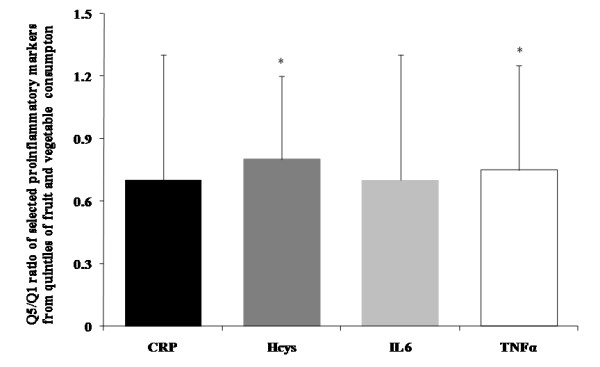
“Discussion A high intake of fruits and vegetables has been inversely associated with metabolic syndrome features [5,6], cardiovascular diseases [31,32], and total mortality [33], while greater values of proinflammatory markers such Figure 1 Ratios of protein levels of selected proinflammatory markers, calculated from…”
BackgroundDevelopment and Validation of a Food Frequency Questionnaire in Spain
Martin-Moreno, J. M., Boyle, P., Gorgojo, L., Maisonneuve, P., Fernandez‐Rodriguez, J. C., Salvini, S., & Willett, W. C. (1993) · International Journal of Epidemiology · doi:10.1093/ije/22.3.512 · Cited by 909 · cited 2×
“This semi-quantitative food frequency questionnaire, which is validated for Spanish people [16], includes 136 items, considering 13 fruit items (oranges, banana, apple, pear, strawberry, grapefruit, peach/apricot/nectarine, cherry/plum, watermelon, melon, mango, papaya, and kiwi) and 11 vegetable items (spinach, lettu…”
BackgroundCirculating Mononuclear Cells in the Obese Are in a Proinflammatory State
Ghanim, H., Aljada, A., Hofmeyer, D., Syed, T., Mohanty, P., & Dandona, P. (2004) · Circulation · doi:10.1161/01.cir.0000142055.53122.fa · Cited by 611 · cited 2×
“(PBMC) may have an important role in all these complex inflammatory processes, which are mediated by transcriptional nuclear-factors, cytokines and other proatherogenic molecules [4].”
BackgroundSalas‐Salvadó, J., Rubio, M. Á., Barbany, M., & Moreno, B. (2007) · Medicina Clínica · doi:10.1016/s0025-7753(07)72531-9 · Cited by 597 · cited 1×
“9 kg/m2), and obesity (BMI ≥ 30 kg/m2) subjects, according to the Spanish Society for Obesity Study criteria [22].”
MethodMartínez‐González, M. Á., López-Fontana, C. M., Cenarruzabeitia, J. J. V., Sánchez‐Villegas, A., & Martínez, J. A. (2005) · Public Health Nutrition · doi:10.1079/phn2005745 · Cited by 589 · cited 1×
“Time spent in each of the activities was multiplied by the MET score specific to each activity, and then interpreted over all activities obtaining a value of overall weekly MET/h [29].”
MethodNuclear Factor κB Signaling in Atherogenesis
de Winther, M. P. J., Kanters, E., Kraal, G., & Hofker, M. H. (2005) · Arteriosclerosis Thrombosis and Vascular Biology · doi:10.1161/01.atv.0000160340.72641.87 · Cited by 586
Fruit and vegetable intakes, C-reactive protein, and the metabolic syndrome
Esmaillzadeh, A., Kimiagar, M., Mehrabi, Y., Azadbakht, L., Hu, F. B., & Willett, W. C. (2006) · The American Journal of Clinical Nutrition · doi:10.1093/ajcn/84.6.1489 · Cited by 524 · cited 2×
“These results are consistent with some earlier cross-sectional studies carried out on children and adolescents [38,39] as well as middle-age adults [7,40].”
BackgroundResultHolt, E. M., Steffen, L. M., Moran, A., Basu, S., Steinberger, J., Ross, J. A., Hong, C.-P., & Sinaiko, A. R. (2009) · Journal of the American Dietetic Association · doi:10.1016/j.jada.2008.11.036 · Cited by 496 · cited 2×
“These results are consistent with some earlier cross-sectional studies carried out on children and adolescents [38,39] as well as middle-age adults [7,40].”
BackgroundResultEffects of dietary fibers on disturbances clustered in the metabolic syndrome
Galisteo, M., Duarte, J., & Zarzuelo, A. (2007) · The Journal of Nutritional Biochemistry · doi:10.1016/j.jnutbio.2007.02.009 · Cited by 484 · cited 1×
“Also, dietary fiber intake could participate in weight control and favor weight loss, hypoglycemic actions and hypolipidemic effects [45].”
BackgroundProspective Study of Nutritional Factors, Blood Pressure, and Hypertension Among US Women
Ascherio, A., Hennekens, C. H., Willett, W. C., Sacks, F. M., ROSNER, B. A., Manson, J. E., Witteman, J. C. M., & Stampfer, M. J. (1996) · Hypertension · doi:10.1161/01.hyp.27.5.1065 · Cited by 403 · cited 1×
“These results are in accordance with findings obtained in the SUN Study [5,51] and in The Dietary Approaches to Stop Hypertension (DASH) trial [52,53].”
ResultReproducibility of an FFQ validated in Spain
de la Fuente‐Arrillaga, C., Ruiz, Z. V., Bes‐Rastrollo, M., Sampson, L., & Martínez‐González, M. Á. (2010) · Public Health Nutrition · doi:10.1017/s1368980009993065 · Cited by 401
Association between dietary fiber and serum C-reactive protein
Ma, Y., Griffith, J. A., Chasan-Taber, L., Olendzki, B. C., Jackson, E., Stanek, E. J., Li, W., Pagoto, S. L., Hafner, A. R., & Ockene, I. S. (2006) · The American Journal of Clinical Nutrition · doi:10.1093/ajcn/83.4.760 · Cited by 396
Wannamethee, S. G., Lowe, G. D. O., Rumley, A., Bruckdorfer, K. R., & Whincup, P. H. (2006) · American Journal of Clinical Nutrition · doi:10.1093/ajcn.83.3.567 · Cited by 317 · cited 1×
“Discussion A high intake of fruits and vegetables has been inversely associated with metabolic syndrome features [5,6], cardiovascular diseases [31,32], and total mortality [33], while greater values of proinflammatory markers such Figure 1 Ratios of protein levels of selected proinflammatory markers, calculated from…”
BackgroundRuiz, P. A., Braune, A., Hölzlwimmer, G., Quintanilla-Fend, L., & Haller, D. (2007) · Journal of Nutrition · doi:10.1093/jn/137.5.1208 · Cited by 281 · cited 1×
“In fact, several in vitro studies have evidenced an anti-inflammatory effect of flavonoids and carotenoids, by an inhibition of NFκB activity, through suppressing the activation-related phosphorylation, and inhibiting the nuclear translocation [48-50].”
BackgroundBai, S.-K., Lee, S.-J., Na, H.-J., Ha, K.-S., Han, J.-A., Lee, H., Kwon, Y.-G., Chung, C.-K., & Kim, Y.-M. (2005) · Experimental & Molecular Medicine · doi:10.1038/emm.2005.42 · Cited by 269
Modulation of Inflammatory Genes by Natural Dietary Bioactive Compounds
Pan, M., Lai, C., Dushenkov, S., & Ho, C. (2009) · Journal of Agricultural and Food Chemistry · doi:10.1021/jf900612n · Cited by 262 · cited 1×
“Furthermore, fruits and vegetables contain several flavonoids and carotenoids with recognized antioxidant properties, which may play a role in the inverse relationship between intake of fruits and vegetables and inflammatory status [9,38,47].”
BackgroundAgudo, A., Cabrera, L., Amiano, P., Ardanáz, E., Barricarte, A., Berenguer, T., Chirlaque, M. D., Dorronsoro, M., Jakszyn, P. G., Larrañaga, N., et al. (2007) · American Journal of Clinical Nutrition · doi:10.1093/ajcn/85.6.1634 · Cited by 235 · cited 1×
“Discussion A high intake of fruits and vegetables has been inversely associated with metabolic syndrome features [5,6], cardiovascular diseases [31,32], and total mortality [33], while greater values of proinflammatory markers such Figure 1 Ratios of protein levels of selected proinflammatory markers, calculated from…”
BackgroundSánchez-Villegas, A., Delgado-Rodríguez, M., Martínez-González, M. A., & de Irala-Estévez, J. (2003) · European Journal of Clinical Nutrition · doi:10.1038/sj.ejcn.1601528 · Cited by 220 · cited 8×
“Martínez-González MA, López-Fontana C, Varo JJ, Sánchez-Villegas A, Martínez JA: Validation of the Spanish version of the physical activity questionnaire used in the Nurses' Health Study and the Health Professionals' Follow-up Study.”
MethodInfluentialWatzl, B., Kulling, S. E., Möseneder, J., Barth, S. W., & Bub, A. (2005) · American Journal of Clinical Nutrition · doi:10.1093/ajcn/82.5.1052 · Cited by 220 · cited 2×
“Thus, the intake of fruits and vegetables has been related to marked reductions in proinflammatory and oxidative stress markers [9-12].”
BackgroundCrespo, I., García‐Mediavilla, M. V., Gutiérrez, B., Sánchez‐Campos, S., Tuñón, M. J., & González‐Gallego, J. (2008) · British Journal Of Nutrition · doi:10.1017/s0007114508966083 · Cited by 188 · cited 1×
“In fact, several in vitro studies have evidenced an anti-inflammatory effect of flavonoids and carotenoids, by an inhibition of NFκB activity, through suppressing the activation-related phosphorylation, and inhibiting the nuclear translocation [ 48-50 ].”
BackgroundActivity level and risk of overweight in male health professionals.
Ching, P. L. Y. H., Willett, W. C., Rimm, E. B., Colditz, G. A., Gortmaker, S. L., & Stampfer, M. J. (1996) · American Journal of Public Health · doi:10.2105/ajph.86.1.25 · Cited by 186 · cited 1×
“To quantify the volume of activity, an activity metabolic equivalent (MET) index was computed by assigning a multiple of resting metabolic rate (MET score) to each activity [28].”
MethodWorld Health Organisation–International Society of Hypertension (WHO/ISH) Hypertension Guidelines
Whitworth, J., & Chalmers, J. (2004) · Clinical and Experimental Hypertension · doi:10.1081/ceh-200032152 · Cited by 174 · cited 1×
“Blood systolic and diastolic pressures were measured according to WHO criteria [23].”
MethodPuchau, B., Zulet, M. Á., de Echávarri, A. G., Hermsdorff, H. H. M., & Martínez, J. A. (2009) · Nutrition · doi:10.1016/j.nut.2009.06.017 · Cited by 173 · cited 4×
“Furthermore dietary total antioxidant capacity (TAC), expressed as mmol/d, was calculated by a proxy previously validated to this food-frequency questionnaire [20].”
BackgroundMethodInfluentialDeshmukh-Taskar, P., O’Neil, C. E., Nicklas, T. A., Yang, S.-J., Liu, Y., Gustat, J., & Berenson, G. S. (2009) · Public Health Nutrition · doi:10.1017/s1368980009991261 · Cited by 153 · cited 2×
“In turn, fruits and vegetables contain components such as plant proteins, potassium, magnesium, fiber, and others compounds with antioxidant capacity, whose consumption may reduce the risk of suffering metabolic syndrome manifestations [5-8].”
BackgroundAlonso, Á., de la Fuente, C., Martin-Arnau, A., de Irala, J., Martínez, J. A., & Martínez‐González, M. Á. (2004) · British Journal Of Nutrition · doi:10.1079/bjn20041196 · Cited by 152 · cited 3×
“These results are in accordance with findings obtained in the SUN Study [5,51] and in The Dietary Approaches to Stop Hypertension (DASH) trial [52,53].”
BackgroundResultBes‐Rastrollo, M., Martínez‐González, M. Á., Sánchez‐Villegas, A., de la Fuente‐Arrillaga, C., & Martínez, J. A. (2006) · Nutrition · doi:10.1016/j.nut.2005.12.006 · Cited by 142
Nutritional Epidemiology, 2nd Edition
Lauderdale, D. S. (1999) · Medicine & Science in Sports & Exercise · doi:10.1097/00005768-199901000-00041 · Cited by 141
TABLA DE COMPOSICIÓN DE ALIMENTOS
Verdú, J. M. (2009) · Cited by 141
Zapolska‐Downar, D., Siennicka, A., Kaczmarczyk, M., Kołodziej, B., & Naruszewicz, M. (2004) · The Journal of Nutritional Biochemistry · doi:10.1016/j.jnutbio.2003.11.008 · Cited by 140
Inflammation meets oxidation: NF-κB as a mediator of initial lesion development in atherosclerosis
Kütük, Ö., & Başağa, H. (2003) · Trends in Molecular Medicine · doi:10.1016/j.molmed.2003.10.007 · Cited by 138 · cited 1×
“In this regard, the activation of this transcription factor has been involved in atherosclerosis [37].”
BackgroundCrujeiras, A. B., Parra, D., Milagro, F. I., Goyenechea, E., Larrarte, E., Margareto, J., & Martínez, J. A. (2008) · OMICS A Journal of Integrative Biology · doi:10.1089/omi.2008.0001 · Cited by 119 · cited 2×
“In this context, nutrigenomic approaches have been performed as a potential useful tool to increase fundamental knowledge concerning the interactions between diet and gene expression [13,14].”
BackgroundMethodEsposito, K., Nappo, F., Giugliano, F., Giugliano, G., Marfella, R., & Giugliano, D. (2003) · The American Journal of Clinical Nutrition · doi:10.1093/ajcn/77.1.139 · Cited by 113 · cited 1×
“Thus, the intake of fruits and vegetables has been related to marked reductions in proinflammatory and oxidative stress markers [9-12].”
BackgroundHelmersson, J., Ärnlöv, J., Larsson, A. O., & Basu, S. (2008) · British Journal Of Nutrition · doi:10.1017/s0007114508147377 · Cited by 112
[Inflammatory biomarkers: the link between obesity and associated pathologies].
Zulet, M. Á., Puchau, B., Navarro, C., Martí, A., & Martínez, J. A. (2007) · PubMed · Cited by 106
Hermsdorff, H. H. M., Zulet, M. Á., Abete, I., & Martínez, J. A. (2009) · Endocrine · doi:10.1007/s12020-009-9248-1 · Cited by 90 · cited 1×
“In this context, the potential relationships between specific dietary factors and proinflammatory markers are being currently investigated [19-21,34].”
BackgroundCrujeiras, A. B., Parra, M. D., Rodríguez, M. C., de Morentin, B. E. M., & Martínez, J. A. (2006) · Nutrition · doi:10.1016/j.nut.2006.03.008 · Cited by 90 · cited 3×
“Fruits and vegetables also are important sources of dietary fiber, which appears to have an anti-inflammatory role [10,41].”
BackgroundDifferences in reported winter and summer dietary intakes in young adults in Spain
Capita, R., & Alonso‐Calleja, C. (2005) · International Journal of Food Sciences and Nutrition · doi:10.1080/09637480500407875 · Cited by 83 · cited 1×
“Third, a higher consumption of oranges and tomatoes as well as the contribution of the remaining food items to the fruit and vegetable consumption could be influenced by the season in which the questionnaires were completed [56], although the SUN food-frequency questionnaire has presented a good reproducibility [55] i…”
BackgroundOliveira, A., Rodríguez‐Artalejo, F., & Lopes, C. M. M. (2009) · European Journal of Clinical Nutrition · doi:10.1038/ejcn.2009.61 · Cited by 74 · cited 1×
“These results are consistent with some earlier cross-sectional studies carried out on children and adolescents [38,39] as well as middle-age adults [7,40].”
ResultPorrini, M., Riso, P., & Oriani, G. (2002) · European Journal of Nutrition · doi:10.1007/s003940200014 · Cited by 70 · cited 2×
“Thus, the intake of fruits and vegetables has been related to marked reductions in proinflammatory and oxidative stress markers [9-12].”
BackgroundZulet, M. Á., Puchau, B., Hermsdorff, H. H. M., Navarro, C., & Martínez, J. A. (2009) · Nutrition Research · doi:10.1016/j.nutres.2008.11.003 · Cited by 57 · cited 3×
“In this context, the potential relationships between specific dietary factors and proinflammatory markers are being currently investigated [19-21,34].”
BackgroundMethodHermsdorff, H. H. M., Puchau, B., Zulet, M. Á., & Martínez, J. A. (2010) · OMICS A Journal of Integrative Biology · doi:10.1089/omi.2009.0125 · Cited by 48 · cited 1×
“In turn, it has been also reported a positive association of proinflammatory marker concentrations and gene expression in PBMC with body fat distribution [54] in healthy young adults.”
BackgroundHermsdorff, H. H. M., Zulet, M. Á., Puchau, B., Bressan, J., & Martínez, J. A. (2008) · Nutrition · doi:10.1016/j.nut.2008.09.015 · Cited by 47 · cited 4×
“In this context, the potential relationships between specific dietary factors and proinflammatory markers are being currently investigated [19-21,34].”
BackgroundMethodInfluentialMilagro, F. I., Campión, J., & Martínez, J. A. (2007) · The Journal of Steroid Biochemistry and Molecular Biology · doi:10.1016/j.jsbmb.2006.10.006 · Cited by 46 · cited 1×
“Gene expression levels were assessed and normalized by using 18s rRNA as internal control following previously described protocols [26,27].”
MethodBressan, J., Hermsdorff, H. H. M., Zulet, M. Á., & Martínez, J. A. (2009) · Arquivos Brasileiros de Endocrinologia & Metabologia · doi:10.1590/s0004-27302009000500010 · Cited by 45 · cited 2×
“Fruits and vegetables also are important sources of dietary fiber, which appears to have an anti-inflammatory role [10,41].”
BackgroundGoyenechea, E., Parra, D., Crujeiras, A. B., Abete, I., & Martínez, J. A. (2009) · Annals of Nutrition and Metabolism · doi:10.1159/000205319 · Cited by 42 · cited 2×
“In this context, nutrigenomic approaches have been performed as a potential useful tool to increase fundamental knowledge concerning the interactions between diet and gene expression [13, 14 ].”
BackgroundMethodStea, T. H., Mansoor, M. A., Wandel, M., Uglem, S., & Frølich, W. (2008) · European Journal of Nutrition · doi:10.1007/s00394-008-0714-y · Cited by 41 · cited 1×
“For example, the intake of folate, vitamin C, and magnesium, for those fruits and vegetables have relevant content, have been associated with lower homocysteine, CRP, IL6 and E-selectin concentrations [42-44].”
BackgroundA cross-sectional study of food group intake and C-reactive protein among children
Qureshi, M. M., Singer, M. R., & Moore, L. L. (2009) · Nutrition & Metabolism · doi:10.1186/1743-7075-6-40 · Cited by 36 · cited 1×
“These results are consistent with some earlier cross-sectional studies carried out on children and adolescents [38,39] as well as middle-age adults [7,40].”
ResultOccurrence of the Vibrio cholerae Seventh Pandemic VSP-I Island and a New Variant
Grim, C. J., Choi, J., Chun, J., Jeon, Y.-S., Taviani, E., Hasan, N. A., Haley, B. J., Huq, A., & Colwell, R. R. (2010) · OMICS A Journal of Integrative Biology · doi:10.1089/omi.2009.0087 · Cited by 35
Rodríguez, M. C., Parra, M. D., Marques-Lopes, I., de Morentin, B. E. M., González, Á., & Martínez, J. A. (2005) · Plant Foods for Human Nutrition · doi:10.1007/s11130-005-8622-2 · Cited by 31 · cited 1×
“In turn, fruits and vegetables contain components such as plant proteins, potassium, magnesium, fiber, and others compounds with antioxidant capacity, whose consumption may reduce the risk of suffering metabolic syndrome manifestations [5-8].”
BackgroundPuchau, B., Hermsdorff, H. H. M., Zulet, M. Á., & Martínez, J. A. (2009) · Disease Markers · doi:10.1155/2009/978157 · Cited by 12
Puchau, B., Hermsdorff, H. H. M., Zulet, M. Á., et al. (2009) · PubMed · doi:10.3233/dma-2009-0650 · Cited by 9
Self-citation
Research works printed but not linked: 1
- Moreiras O, Carbajal A, Cabrera L, Cuadrado C: Tabla de composición de alimentos. 2006, Madrid: Ediciones Pirámide, 10
Cited by
Sorted by citations
Dietary factors and low-grade inflammation in relation to overweight and obesity
Calder, P. C., Ahluwalia, N., Brouns, F., Buetler, T., Clement, K., Cunningham, K., Esposito, K., Jönsson, L. S., Kolb, H., Lansink, M., et al. (2011) · British Journal of Nutrition · doi:10.1017/s0007114511005460 · Cited by 1,098
“A recent study reported that a high intake of vegetables and fruits was associated with a lower peripheral blood mononuclear cell gene expression for several pro-inflammatory cytokines and adhesion molecules((326)).”
Shivappa, N., Steck, S. E., Hurley, T. G., Hussey, J. R., Ma, Y., Ockene, I. S., Tabung, F. K., & Hébert, J. R. (2013) · Public Health Nutrition · doi:10.1017/s1368980013002565 · Cited by 724
“In addition, CRP and inflammatory cytokines such as IL-6 and TNF-a are increased among obese individuals, positively correlated with BMI, and central adiposity has been shown to be associated with increased inflammation(7).”
BackgroundAge-associated chronic diseases require age-old medicine: Role of chronic inflammation
Prasad, S., Sung, B., & Aggarwal, B. B. (2011) · Preventive Medicine · doi:10.1016/j.ypmed.2011.11.011 · Cited by 317
“Fruits and vegetables have been shown to suppress CVD biomarkers, including CRP, in in vitro models (Hermsdorff et al., 2010), animals (Rein et al., 2006), and humans (Franzini et al., 2010).”
BackgroundRuiz‐Canela, M., Zazpe, I., Shivappa, N., Hébert, J. R., Sánchez‐Tainta, A., Corella, D., Salas‐Salvadó, J., Fitó, M., Lamuela-Raventós, R. M., Rekondo, J., et al. (2015) · British Journal Of Nutrition · doi:10.1017/s0007114514004401 · Cited by 285
Virgin olive oil supplementation and long-term cognition: the Predimed-Navarra randomized, trial
Martínez‐Lapiscina, E. H., Clavero, P., Toledo, E., Julian, B. S., Sánchez‐Tainta, A., Corella, D., Lamuela-Raventós, R. M., Martínez, J. A., & Martínez‐González, M. Á. (2013) · The journal of nutrition health & aging · doi:10.1007/s12603-013-0027-6 · Cited by 267
Metadata
- Authors
- Hermsdorff, H. H. M., Zulet, M. Á., Puchau, B., & Martínez, J. A.
- Affiliations
- Universidad de Navarra (ES)
- Corresponding author
- Martínez, José Alfredo
- Venue
- Nutrition & Metabolism
- Published
- 2010-05-13
- Volume
- 7
- Issue
- 1
- Pages
- 42-42
- ISSN
- 1743-7075 (ISSN-L)
- PMC
- PMC2882916
- OpenAlex
- W2161028038
- Cited by
- 141
- References
- 58
- Citations by year
- 2026: 2 · 2025: 7 · 2024: 8 · 2023: 7 · 2022: 4 · 2021: 14 · 2020: 9 · 2019: 11 · 2018: 13 · 2017: 9 · 2016: 6 · 2015: 8 · 2014: 8 · 2013: 13 · 2012: 6
- FWCI
- 11.13
- Type
- journal article
- Language
- en
- Open access
- gold
- doi.org
- Licence
- cc-by
- Locations
- Nutrition & Metabolism (publishedVersion, cc-by)
- PubMed Central (publishedVersion, cc-by)
- PubMed (publishedVersion)
- Deposito Adademico Digital Universidad De Navarra (University of Navarra) (submittedVersion, other-oa)
- DOAJ (DOAJ: Directory of Open Access Journals) (submittedVersion)
- Funders
- Universidad de Navarra (LE/97)
- Gobierno de Navarra
- Topics
- Health Sciences › Medicine › Public Health, Environmental and Occupational Health › Nutritional Studies and Diet
- Health Sciences › Medicine › Biochemistry (medical) › Phytochemicals and Antioxidant Activities
- Health Sciences › Medicine › Physiology (medical) › Exercise and Physiological Responses
- Keywords
- fruit and vegetable intake, dietary fiber, pro-inflammatory gene expression, peripheral blood mononuclear cells, C-reactive protein, homocysteine, TNF-α, NFKB1, ICAM-1, IL-1 receptor, interleukin-6, total antioxidant capacity, young adults, inflammation
About these checks
Registry, retraction, Cites and statistics results are computed, not judged, with one exception: a printed reference that no index lists is read once by a model before it counts as a citation error. Claims are extracted by a model and kept only when their quote appears verbatim in the text; each cited source is then checked, with a model’s help, for whether it says what the claim relies on. Those verdicts can be wrong — read the claim’s quote and the cited source before relying on one.
Statistics and arithmetic are recomputed, not judged.
Confidence bands are shown only for fields calibrated on our annotated test set. None is calibrated yet, so no band is shown.
What counts as a claim ›How we measure confidence ›How we check this ›
Are you an author, or do you see a problem with this page? Request a review
