

The DOI matches its Crossref record; 70 of the 70 references it cites were found in a registry or an index.
Methylphenidate improves prefrontal cortical cognitive function through α2 adrenoceptor and dopamine D1 receptor actions: Relevance to therapeutic effects in Attention Deficit Hyperactivity Disorder
Open accessAbstract
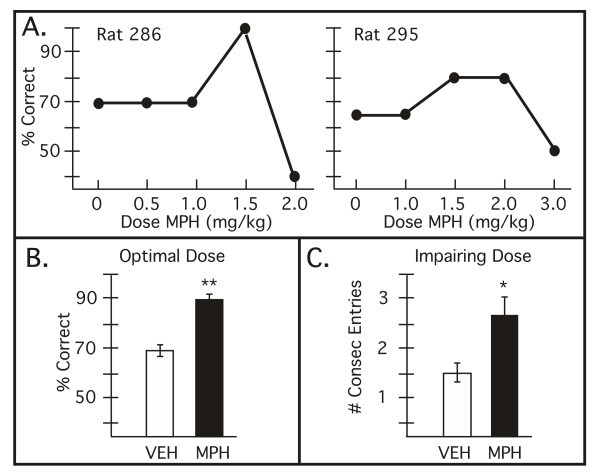
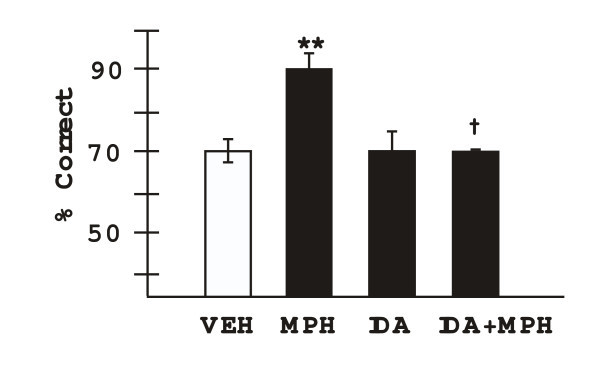
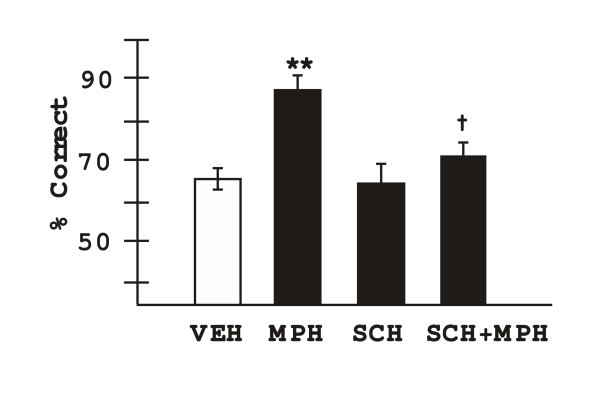
Background: Methylphenidate (MPH) is the classic treatment for Attention Deficit Hyperactivity Disorder (ADHD), yet the mechanisms underlying its therapeutic actions remain unclear. Recent studies have identified an oral, MPH dose regimen which when given to rats produces drug plasma levels similar to those measured in humans. The current study examined the effects of these low, orally-administered doses of MPH in rats performing a delayed alternation task dependent on prefrontal cortex (PFC), a brain region that is dysfunctional in ADHD, and is highly sensitive to levels of catecholamines. The receptor mechanisms underlying the enhancing effects of MPH were explored by challenging the MPH response with the noradrenergic α2 adrenoceptor antagonist, idazoxan, and the dopamine D1 antagonist, SCH23390. Results: MPH produced an inverted U dose response whereby moderate doses (1.0–2.0 mg/kg, p.o.) significantly improved delayed alternation performance, while higher doses (2.0–3.0 mg/kg, p.o.) produced perseverative errors in many animals. The enhancing effects of MPH were blocked by co-administration of either the α2 adrenoceptor antagonist, idazoxan, or the dopamine D1 antagonist, SCH23390, in doses that had no effect on their own. Conclusion: The administration of low, oral doses of MPH to rats has effects on PFC cognitive function similar to those seen in humans and patients with ADHD. The rat can thus be used as a model for examination of neural mechanisms underlying the therapeutic effects of MPH on executive functions in humans. The efficacy of idazoxan and SCH23390 in reversing the beneficial effects of MPH indicate that both noradrenergic α2 adrenoceptor and dopamine D1 receptor stimulation contribute to cognitive-enhancing effects of MPH.
Overview
The claims and statistics of this paper haven’t been checked yet.
Run the check — free, no account needed. It reads the open-access text and checks the sources it cites.
Integrity signals
Registry
Cites
Statistics
Figures
Verification
Claims the paper makes
The claims and statistics of this paper haven’t been checked yet.
Run the check — free, no account needed. It reads the open-access text and checks the sources it cites.
Claims other papers make about this one
Each is checked against this paper’s own text: does it say what the citing paper says it does?
The source backs part of the claim, not all of it — or backs it for a different population, condition or comparison.
In the citing paper
“These lower doses in rats improve PFC attention and working memory function, enhance PFC neuronal response, and reduce locomotor hyperactivity in juveniles (Arnsten and Dudley, 2005; Berridge et al., 2006; Kuczenski and Segal, 2002).”
From Catecholamine influences on prefrontal cortical function: Relevance to treatment of attention deficit/hyperactivity disorder and related disorders (2011) · cites this paper as Arnsten and Dudley, 2005
Experimental — accuracy not yet measuredThe source backs part of the claim, not all of it — or backs it for a different population, condition or comparison.
In the citing paper
“Animal studies have shown that therapeutic doses of methylphenidate and atomoxetine improve PFC function by increasing endogenous NE stimulation of α2-receptors and DA stimulation of D1-receptors in rats (Arnsten and Dudley, 2005) and monkeys (Gamo et al., 2010).”
From Catecholamine influences on prefrontal cortical function: Relevance to treatment of attention deficit/hyperactivity disorder and related disorders (2011) · cites this paper as Arnsten and Dudley, 2005
Experimental — accuracy not yet measuredThe source backs part of the claim, not all of it — or backs it for a different population, condition or comparison.
In the citing paper
“Our study reveals that stimulants may upregulate neuroimaging activation patterns in the left cerebellum compared to controls given their indirect phosphorylation of the glutamate receptor through modulating the release of norepinephrine”
From Overlapping and differential neuropharmacological mechanisms of stimulants and nonstimulants for attention-deficit/hyperactivity disorder: A comparative neuroimaging analysis (2024) · cites this paper as Arnsten & Dudley, 2005
Experimental — accuracy not yet measuredThe source backs part of the claim, not all of it — or backs it for a different population, condition or comparison.
In the citing paper
“This observation is in line with previous research demonstrating that children with ADHD tend to show impaired planning abilities (e.g., Clarke, Prior, & Kinsella, 2000) that can be restored with MPH (e.g., Arnsten & Dudley, 2005).”
From Implementation Intentions Facilitate Response Inhibition in Children with ADHD (2008) · cites this paper as Arnsten & Dudley, 2005
Experimental — accuracy not yet measuredThe source backs part of the claim, not all of it — or backs it for a different population, condition or comparison.
In the citing paper
“Further, recent physiological studies have shown that NE strengthens network connectivity of the PFC and maintains persistent firing of PFC neurons during working memory tasks through stimulation of postsynaptic α2-adrenoceptors (Arnsten and Dudley, 2005).”
From The Effects of Methylphenidate on Goal-directed Behavior in a Rat Model of ADHD (2015) · cites this paper as Arnsten and Dudley, 2005
Experimental — accuracy not yet measured
The cited source says what the claim attributes to it.
In the citing paper
“When administered in appropriate doses, these medications improve PFC function both in healthy human subjects (Elliott et al., 1997) and in animals (Arnsten and Dudley, 2005), including the reduction of locomotor hyperactivity in juvenile rats (Kuczenski and Segal, 2002).”
From Catecholamine influences on prefrontal cortical function: Relevance to treatment of attention deficit/hyperactivity disorder and related disorders (2011) · cites this paper as Arnsten and Dudley, 2005
The cited source says what the claim attributes to it.
In the citing paper
“This article reviews studies in animals showing that norepinephrine and dopamine enhance PFC function through actions at postsynaptic α2A-adrenoceptors and dopamine D1-receptors, respectively.”
From Catecholamine influences on prefrontal cortical function: Relevance to treatment of attention deficit/hyperactivity disorder and related disorders (2011) · cites this paper as Arnsten and Dudley, 2005
Self-check
Percentages, sums and reported differences re-computed from the paper’s own numbers.
The self-check needs the paper’s full text.
Citations
Cites
Principles of Frontal Lobe Function
Stuss, D. T. (2002) · Oxford University Press eBooks · doi:10.1093/acprof:oso/9780195134971.001.0001 · Cited by 1,731
Cognitive Deficit Caused by Regional Depletion of Dopamine in Prefrontal Cortex of Rhesus Monkey
Brozoski, T. J., Brown, R. M., Rosvold, H. E., & Goldman, P. S. (1979) · Science · doi:10.1126/science.112679 · Cited by 1,500
D1 Dopamine Receptors in Prefrontal Cortex: Involvement in Working Memory
Sawaguchi, T., & Goldman-Rakic, P. S. (1991) · Science · doi:10.1126/science.1825731 · Cited by 1,364
Bymaster, F. (2002) · Neuropsychopharmacology · doi:10.1016/s0893-133x(02)00346-9 · Cited by 1,123
Goldman-Rakic, P. S. (1996) · Philosophical Transactions of the Royal Society of London. Series B: Biological Sciences · doi:10.1098/rstb.1996.0129 · Cited by 1,072
Neurobiology of Executive Functions: Catecholamine Influences on Prefrontal Cortical Functions
Arnsten, A. F. T., & Li, B.-M. (2005) · Biological Psychiatry · doi:10.1016/j.biopsych.2004.08.019 · Cited by 948
Self-citationVaidya, C. J., Austin, G., Kirkorian, G., Ridlehuber, H. W., Desmond, J. E., Glover, G. H., & Gabrieli, J. D. E. (1998) · Proceedings of the National Academy of Sciences · doi:10.1073/pnas.95.24.14494 · Cited by 845
(1964) · McGraw-Hill eBooks · Cited by 838
Zahrt, J., Taylor, J. R., Mathew, R. G., & Arnsten, A. F. T. (1997) · The Journal of Neuroscience · doi:10.1523/jneurosci.17-21-08528.1997 · Cited by 796
Self-citationBarkley, R. A., Grodzinsky, G., & DuPaul, G. J. (1992) · Journal of Abnormal Child Psychology · doi:10.1007/bf00916547 · Cited by 724
Research works printed but not linked: 1
- Arnsten AFT, Castellanos FX: Neurobiology of attention regulation and its disorders. Textbook of Child and Adolescent Psychopharmacology. Edited by: Martin A, Scahill L, Charney D and Leckman J. 2002, NY, Oxford Univ. Press, 99-109.
Cited by
Sorted by citations
Inhibition and impulsivity: behavioral and neural basis of response control
Bari, A., & Robbins, T. W. (2013) · Progress in Neurobiology · doi:10.1016/j.pneurobio.2013.06.005 · Cited by 1,921
Dopamine: Functions, Signaling, and Association with Neurological Diseases
Klein, M. O., Battagello, D. S., Cardoso, A. R., Hauser, D. N., Bittencourt, J. C., & Correa, R. G. (2019) · Cellular and Molecular Neurobiology · doi:10.1007/s10571-018-0632-3 · Cited by 1,073
Amphetamine, past and present – a pharmacological and clinical perspective
Heal, D. J., Smith, S. L., Gosden, J., & Nutt, D. (2013) · Journal of Psychopharmacology · doi:10.1177/0269881113482532 · Cited by 653
Berridge, C. W., Devilbiss, D. M., Andrzejewski, M. E., Arnsten, A. F. T., Kelley, A. E., Schmeichel, B., Hamilton, C., & Spencer, R. C. (2006) · Biological Psychiatry · doi:10.1016/j.biopsych.2006.04.022 · Cited by 617
Self-citationEagle, D. M., Bari, A., & Robbins, T. W. (2008) · Psychopharmacology · doi:10.1007/s00213-008-1127-6 · Cited by 548
Arnsten, A. F. T., & Rubia, K. (2012) · Journal of the American Academy of Child & Adolescent Psychiatry · doi:10.1016/j.jaac.2012.01.008 · Cited by 568
Self-citationNext-generation GRAB sensors for monitoring dopaminergic activity in vivo
Sun, F., Zhou, J., Dai, B., Qian, T., Zeng, J., Li, X., Zhuo, Y., Zhang, Y., Wang, Y., Cheng, Q., et al. (2020) · Nature Methods · doi:10.1038/s41592-020-00981-9 · Cited by 483
Stimulants: Therapeutic Actions in ADHD
Arnsten, A. F. T. (2006) · Neuropsychopharmacology · doi:10.1038/sj.npp.1301164 · Cited by 473
Self-citationArnsten, A. F. T., & Pliszka, S. R. (2011) · Pharmacology Biochemistry and Behavior · doi:10.1016/j.pbb.2011.01.020 · Cited by 383
Self-citationArnsten, A. F. T. (2009) · CNS Drugs · doi:10.2165/00023210-200923000-00005 · Cited by 371
Self-citationAttention-Deficit/Hyperactivity Disorder and Attention Networks
Bush, G. (2010) · Neuropsychopharmacology · doi:10.1038/npp.2009.120 · Cited by 358
Hassani, S. A., Oemisch, M., Balcarras, M., Westendorff, S., Ardid, S., van der Meer, M. A. A., Tiesinga, P. H. E., & Womelsdorf, T. (2017) · Scientific Reports · doi:10.1038/srep40606 · Cited by 364
Robinson, E. S. J., Eagle, D. M., Mar, A. C., Bari, A., Banerjee, G., Jiang, X., Dalley, J. W., & Robbins, T. W. (2008) · Neuropsychopharmacology · doi:10.1038/sj.npp.1301487 · Cited by 359
Storebø, O. J., Pedersen, N., Ramstad, E., Kielsholm, M. L., Nielsen, S. S., Krogh, H. B., Moreira-Maia, C. R., Magnusson, F. L., Holmskov, M., Gerner, T., et al. (2018) · Cochrane Database of Systematic Reviews · doi:10.1002/14651858.cd012069.pub2 · Cited by 321
Arnsten, A. F. T., Scahill, L. D., & Findling, R. L. (2007) · Journal of Child and Adolescent Psychopharmacology · doi:10.1089/cap.2006.0098 · Cited by 314
Self-citationThe role of dopamine in bipolar disorder
Cousins, D. A., Butts, K. A., & Young, A. H. (2009) · Bipolar Disorders · doi:10.1111/j.1399-5618.2009.00760.x · Cited by 291
Atomoxetine improved response inhibition in adults with attention deficit/hyperactivity disorder
Chamberlain, S. R., del Campo, N., Dowson, J., Müller, U., Clark, L., Robbins, T. W., & Sahakian, B. J. (2007) · Biological Psychiatry · doi:10.1016/j.biopsych.2007.03.003 · Cited by 288
Eagle, D. M., & Baunez, C. (2009) · Neuroscience & Biobehavioral Reviews · doi:10.1016/j.neubiorev.2009.07.003 · Cited by 300
Wilens, T. E. (2008) · Journal of Clinical Psychopharmacology · doi:10.1097/jcp.0b013e318173312f · Cited by 269
Brennan, A. R., & Arnsten, A. F. T. (2008) · Annals of the New York Academy of Sciences · doi:10.1196/annals.1417.007 · Cited by 267
Self-citationPsychostimulants and Cognition: A Continuum of Behavioral and Cognitive Activation
Wood, S., Sage, J. R., Shuman, T., & Anagnostaras, S. G. (2014) · Pharmacological Reviews · doi:10.1124/pr.112.007054 · Cited by 259
The genetics of attention deficit hyperactivity disorder
Thapar, A., O’Donovan, M. C., & Owen, M. J. (2005) · Human Molecular Genetics · doi:10.1093/hmg/ddi263 · Cited by 240
Beyond polemics: science and ethics of ADHD
Singh, I. (2008) · Nature reviews. Neuroscience · doi:10.1038/nrn2514 · Cited by 233
Gamo, N. J., Wang, M., & Arnsten, A. F. T. (2010) · Journal of the American Academy of Child & Adolescent Psychiatry · doi:10.1016/j.jaac.2010.06.015 · Cited by 232
Self-citationADHD and the Prefrontal Cortex
Arnsten, A. F. T. (2009) · The Journal of Pediatrics · doi:10.1016/j.jpeds.2009.01.018 · Cited by 220
Self-citationStimulus-dependent dopamine release in attention-deficit/hyperactivity disorder.
Sikström, S., & Söderlund, G. (2007) · Psychological Review · doi:10.1037/0033-295x.114.4.1047 · Cited by 205
Arnsten, A. F. T. (2007) · Cerebral Cortex · doi:10.1093/cercor/bhm033 · Cited by 200
Self-citationThe neuropharmacology of ADHD drugs in vivo: Insights on efficacy and safety
Heal, D. J., Cheetham, S. C., & Smith, S. L. (2009) · Neuropharmacology · doi:10.1016/j.neuropharm.2009.08.020 · Cited by 198
de Jongh, R., Bolt, I. L. L. E., Schermer, M., & Olivier, B. (2008) · Neuroscience & Biobehavioral Reviews · doi:10.1016/j.neubiorev.2007.12.001 · Cited by 198
Rubia, K., Halari, R., Cubillo, A., Smith, A. B., Mohammad, A.-M., Brammer, M., & Taylor, E. (2011) · Neuropsychopharmacology · doi:10.1038/npp.2011.30 · Cited by 184
Mechanism of action of agents used in attention-deficit/hyperactivity disorder.
Wilens, T. E. (2006) · PubMed · Cited by 179
Eagle, D. M., Tufft, M. R. A., Goodchild, H. L., & Robbins, T. W. (2007) · Psychopharmacology · doi:10.1007/s00213-007-0701-7 · Cited by 176
Prefrontal cortex executive processes affected by stress in health and disease
Girotti, M., Adler, S. M., Bulin, S. E., Fucich, E. A., Paredes, D., & Morilak, D. A. (2018) · Progress in Neuro-Psychopharmacology and Biological Psychiatry · doi:10.1016/j.pnpbp.2017.07.004 · Cited by 176
Overview of Animal Models of Attention Deficit Hyperactivity Disorder (ADHD)
Russell, V. A. (2011) · Current Protocols in Neuroscience · doi:10.1002/0471142301.ns0935s54 · Cited by 182
Rubia, K., Halari, R., Mohammad, A.-M., Taylor, E., & Brammer, M. (2011) · Biological Psychiatry · doi:10.1016/j.biopsych.2011.04.018 · Cited by 171
The Cognition-Enhancing Effects of Psychostimulants Involve Direct Action in the Prefrontal Cortex
Spencer, R. C., Devilbiss, D. M., & Berridge, C. W. (2015) · Biological Psychiatry · doi:10.1016/j.biopsych.2014.09.013 · Cited by 164
Berridge, C. W., & Devilbiss, D. M. (2011) · Biological Psychiatry · doi:10.1016/j.biopsych.2010.06.023 · Cited by 160
Linking ADHD to the Neural Circuitry of Attention
Mueller, A., Hong, D. S., Shepard, S., & Moore, T. (2017) · Trends in Cognitive Sciences · doi:10.1016/j.tics.2017.03.009 · Cited by 158
Treatment of adults with attention-deficit/hyperactivity disorder
Hechtman, L. (2008) · Neuropsychiatric Disease and Treatment · doi:10.2147/ndt.s6985 · Cited by 157
Dopaminergic and Noradrenergic Contributions to Functionality in ADHD: The Role of Methylphenidate
Engert, V., & Pruessner, J. (2008) · Current Neuropharmacology · doi:10.2174/157015908787386069 · Cited by 146
Relevance of Norepinephrine–Dopamine Interactions in the Treatment of Major Depressive Disorder
Mansari, M. E., Guiard, B. P., Chernoloz, O., Ghanbari, R., Katz, N., & Blier, P. (2010) · CNS Neuroscience & Therapeutics · doi:10.1111/j.1755-5949.2010.00146.x · Cited by 153
Neurobiology of animal models of attention-deficit hyperactivity disorder
Russell, V. A. (2006) · Journal of Neuroscience Methods · doi:10.1016/j.jneumeth.2006.12.005 · Cited by 150
Chandler, D. J., Waterhouse, B. D., & Gao, W. (2014) · Frontiers in Neural Circuits · doi:10.3389/fncir.2014.00053 · Cited by 143
Sonuga-Barke, E. J. S., Wiersema, J. R., van der Meere, J. J., & Roeyers, H. (2010) · Neuropsychology Review · doi:10.1007/s11065-009-9115-0 · Cited by 142
Pharmacology of stimulants prohibited by the World Anti‐Doping Agency (WADA)
Docherty, J. R. (2008) · British Journal of Pharmacology · doi:10.1038/bjp.2008.124 · Cited by 143
Attention-Deficit/Hyperactivity Disorder: A Neuropsychological Perspective Towards DSM-V
Stefanatos, G. A., & Baron, I. S. (2007) · Neuropsychology Review · doi:10.1007/s11065-007-9020-3 · Cited by 159
Nandam, L. S., Hester, R., Wagner, J., Cummins, T. D. R., Garner, K., Dean, A. J., Kim, B.-N., Nathan, P. J., Mattingley, J. B., & Bellgrove, M. A. (2010) · Biological Psychiatry · doi:10.1016/j.biopsych.2010.11.014 · Cited by 142
Chamberlain, S. R., Robbins, T. W., Winder-Rhodes, S., Müller, U., Sahakian, B. J., Blackwell, A. D., & Barnett, J. H. (2011) · Biological Psychiatry · doi:10.1016/j.biopsych.2010.08.019 · Cited by 178
Cognitive-behavioral therapy for externalizing disorders: A meta-analysis of treatment effectiveness
Battagliese, G., Caccetta, M., Luppino, O. I., Baglioni, C., Cardi, V., Mancini, F., & Buonanno, C. (2015) · Behaviour Research and Therapy · doi:10.1016/j.brat.2015.10.008 · Cited by 153
Attention-deficit/hyperactivity disorder and the dopaminergic hypotheses
Genro, J. P., Kieling, C., Rohde, L. A., & Hutz, M. H. (2010) · Expert Review of Neurotherapeutics · doi:10.1586/ern.10.17 · Cited by 139
An Assessment of Anxiolytic Drug Screening Tests: Hormetic Dose Responses Predominate
Calabrese, E. J. (2008) · Critical Reviews in Toxicology · doi:10.1080/10408440802014238 · Cited by 132
Aiken, C. (2007) · The Journal of Clinical Psychiatry · doi:10.4088/jcp.v68n0810 · Cited by 128
Swart, J. C., Froböse, M. I., Cook, J. L., Geurts, D. E. M., Frank, M. J., Cools, R., & den Ouden, H. E. M. (2017) · eLife · doi:10.7554/elife.22169 · Cited by 140
Methylphenidate prevents high-fat diet (HFD)-induced learning/memory impairment in juvenile mice
Kaczmarczyk, M. M., Machaj, A. S., Chiu, G. S., Lawson, M. A., Gainey, S. J., York, J. M., Meling, D. D., Martin, S. A., Kwakwa, K. A., Newman, A. F., et al. (2013) · Psychoneuroendocrinology · doi:10.1016/j.psyneuen.2013.01.004 · Cited by 127
Inhibition of the norepinephrine transporter improves behavioral flexibility in rats and monkeys
Seu, E., Lang, A., Rivera, R. J., & Jentsch, J. D. (2008) · Psychopharmacology · doi:10.1007/s00213-008-1250-4 · Cited by 128
Locus Ceruleus Regulates Sensory Encoding by Neurons and Networks in Waking Animals
Devilbiss, D. M., Page, M. E., & Waterhouse, B. D. (2006) · Journal of Neuroscience · doi:10.1523/jneurosci.1776-06.2006 · Cited by 121
Methylphenidate and its Isomers
Heal, D. J., & Pierce, D. M. (2006) · CNS Drugs · doi:10.2165/00023210-200620090-00002 · Cited by 119
Devilbiss, D. M., & Berridge, C. W. (2008) · Biological Psychiatry · doi:10.1016/j.biopsych.2008.04.037 · Cited by 118
Polanczyk, G. V., Zeni, C., Genro, J. P., Guimarães, A. P., Roman, T., Hutz, M. H., & Rohde, L. A. (2007) · Archives of General Psychiatry · doi:10.1001/archpsyc.64.2.218 · Cited by 113
Prehn-Kristensen, A., Göder, R., Fischer, J., Wilhelm, I., Seeck-Hirschner, M., Aldenhoff, J., & Baving, L. (2011) · Sleep Medicine · doi:10.1016/j.sleep.2010.10.010 · Cited by 114
Willmott, C., & Ponsford, J. L. (2008) · Journal of Neurology Neurosurgery & Psychiatry · doi:10.1136/jnnp.2008.159632 · Cited by 113
Berridge, C. W., & Spencer, R. C. (2016) · Brain Research · doi:10.1016/j.brainres.2015.11.024 · Cited by 112
Pharmacological Enhancement of Memory and Executive Functioning in Laboratory Animals
Floresco, S., & Jentsch, J. D. (2010) · Neuropsychopharmacology · doi:10.1038/npp.2010.158 · Cited by 120
SIMS imaging in neurobiology and cell biology
Agüi‐Gonzalez, P., Jähne, S., & Phan, N. T. N. (2019) · Journal of Analytical Atomic Spectrometry · doi:10.1039/c9ja00118b · Cited by 109
Paine, T. A., Tomasiewicz, H. C., Zhang, K., & Carlezon, W. A. (2007) · Biological Psychiatry · doi:10.1016/j.biopsych.2006.11.017 · Cited by 104
Psychostimulants and motivated behavior: Arousal and cognition
Berridge, C. W., & Arnsten, A. F. T. (2013) · Neuroscience & Biobehavioral Reviews · doi:10.1016/j.neubiorev.2012.11.005 · Cited by 104
Self-citationHeal, D. J., Smith, S. L., Kulkarni, R. S., & Rowley, H. L. (2008) · Pharmacology Biochemistry and Behavior · doi:10.1016/j.pbb.2008.03.016 · Cited by 105
Implementation Intentions Facilitate Response Inhibition in Children with ADHD
Gawrilow, C., & Gollwitzer, P. M. (2008) · Cognitive Therapy and Research · doi:10.1007/s10608-007-9150-1 · Cited by 103
Catecholamines and cognition after traumatic brain injury
Jenkins, P. O., Mehta, M. A., & Sharp, D. J. (2016) · Brain · doi:10.1093/brain/aww128 · Cited by 102
Shellenberg, T., Stoops, W. W., Lile, J. A., & Rush, C. R. (2020) · Expert Review of Clinical Pharmacology · doi:10.1080/17512433.2020.1796636 · Cited by 98
Marquand, A. F., Simoni, S. D., O’Daly, O., Williams, S., Mourão-Miranda, J., & Mehta, M. A. (2011) · Neuropsychopharmacology · doi:10.1038/npp.2011.9 · Cited by 96
Dopamine tunes prefrontal outputs to orchestrate aversive processing
Weele, C. M. V., Siciliano, C. A., & Tye, K. M. (2018) · Brain Research · doi:10.1016/j.brainres.2018.11.044 · Cited by 98
Advancing the spontaneous hypertensive rat model of attention deficit/hyperactivity disorder.
Kantak, K. M., Singh, T., Kerstetter, K. A., Dembro, K. A., Mutebi, M. M., Harvey, R. C., Deschepper, C. F., & Dwoskin, L. P. (2008) · Behavioral Neuroscience · doi:10.1037/0735-7044.122.2.340 · Cited by 95
Sagvolden (2006) · Behavioral and Brain Functions · doi:10.1186/1744-9081-2-41 · Cited by 94
Berridge, C. W., Shumsky, J. S., Andrzejewski, M. E., McGaughy, J. A., Spencer, R. C., Devilbiss, D. M., & Waterhouse, B. D. (2011) · Biological Psychiatry · doi:10.1016/j.biopsych.2011.07.022 · Cited by 94
Progress and Promise of Attention-Deficit Hyperactivity Disorder Pharmacogenetics
Froehlich, T. E., McGough, J., & Stein, M. (2010) · CNS Drugs · doi:10.2165/11530290-000000000-00000 · Cited by 91
Ramaekers, J. G., Kuypers, K. P. C., & Samyn, N. (2006) · Addiction · doi:10.1111/j.1360-0443.2006.01566.x · Cited by 89
Intermittent Hypoxia and Cognitive Function: Implications from Chronic Animal Models
Row, B. W. (2007) · Advances in experimental medicine and biology · doi:10.1007/978-0-387-75434-5_5 · Cited by 90
Bari, A., & Aston-Jones, G. (2013) · Neuropharmacology · doi:10.1016/j.neuropharm.2012.07.020 · Cited by 85
Methylphenidate Disrupts Social Play Behavior in Adolescent Rats
Vanderschuren, L. J. M. J., Trezza, V., Griffioen-Roose, S., Schiepers, O. J. G., Van Leeuwen, N., De Vries, T. J., & Schoffelmeer, A. N. M. (2008) · Neuropsychopharmacology · doi:10.1038/npp.2008.10 · Cited by 105
Imeraj, L., Sonuga-Barke, E. J. S., Antrop, I., Roeyers, H., Wiersema, R., Bal, S., & Deboutte, D. (2012) · Neuroscience & Biobehavioral Reviews · doi:10.1016/j.neubiorev.2012.04.007 · Cited by 90
Linssen, A. M. W., Vuurman, E. F. P. M., Sambeth, A., Navé, S., Spooren, W. P. J. M., Vargas, G. A., Santarelli, L., & Riedel, W. J. (2011) · Psychopharmacology · doi:10.1007/s00213-011-2345-x · Cited by 82
The use of α-2A adrenergic agonists for the treatment of attention-deficit/hyperactivity disorder
Arnsten, A. F. T. (2010) · Expert Review of Neurotherapeutics · doi:10.1586/ern.10.133 · Cited by 83
Self-citationMohammadpour, N., Jazayeri, S., Tehrani‐Doost, M., Djalali, M., Hosseini, M., Effatpanah, M., Davari-Ashtiani, R., & Karami, E. (2016) · Nutritional Neuroscience · doi:10.1080/1028415x.2016.1262097 · Cited by 83
Robinson, E. S. J. (2011) · Psychopharmacology · doi:10.1007/s00213-011-2420-3 · Cited by 79
Sagvolden, T., & Xu, T. (2008) · Behavioral and Brain Functions · doi:10.1186/1744-9081-4-3 · Cited by 81
Yamashita, M., Fukushima, S., Shen, H.-W., Hall, F. S., Uhl, G. R., Numachi, Y., Kobayashi, H., & Sora, I. (2006) · Neuropsychopharmacology · doi:10.1038/sj.npp.1301009 · Cited by 77
Dopamine vs Noradrenaline: Inverted-U Effects and ADHD Theories
Lévy, F. (2009) · Australian & New Zealand Journal of Psychiatry · doi:10.1080/00048670802607238 · Cited by 78
Dopamine transporter genotype predicts behavioural and neural measures of response inhibition
Cummins, T. D. R., Hawi, Z., Hocking, J., Strudwick, M., Hester, R., Garavan, H., Wagner, J., Chambers, C. D., & Bellgrove, M. A. (2012) · Molecular Psychiatry · doi:10.1038/mp.2011.104 · Cited by 74
Influence of methylphenidate on brain development – an update of recent animal experiments
Grund, T., Lehmann, K., Bock, N., Rothenberger, A., & Teuchert, G. (2006) · Behavioral and Brain Functions · doi:10.1186/1744-9081-2-2 · Cited by 77
Buchmann, J. A., Gierow, W., Simone, W., Hoeppner, J., Klauer, T., Benecke, R., Haessler, F., & Wolters, A. (2007) · Biological Psychiatry · doi:10.1016/j.biopsych.2007.05.010 · Cited by 77
Psychostimulants Act Within the Prefrontal Cortex to Improve Cognitive Function
Spencer, R. C., Klein, R. M., & Berridge, C. W. (2011) · Biological Psychiatry · doi:10.1016/j.biopsych.2011.12.002 · Cited by 74
Norepinephrine and impulsivity: effects of acute yohimbine
Swann, A. C., Lijffijt, M., Lane, S. D., Cox, B., Steinberg, J. L., & Moeller, F. G. (2013) · Psychopharmacology · doi:10.1007/s00213-013-3088-7 · Cited by 73
Langen, B., & Dost, R. (2010) · ADHD Attention Deficit and Hyperactivity Disorders · doi:10.1007/s12402-010-0034-y · Cited by 71
Fumagalli, F., Cattaneo, A., Caffino, L., Ibba, M., Racagni, G., Carboni, E., Gennarelli, M., & Riva, M. A. (2010) · Pharmacological Research · doi:10.1016/j.phrs.2010.07.009 · Cited by 67
Current Pharmacological Treatments for ADHD
Groom, M. J., & Cortese, S. (2022) · Current topics in behavioral neurosciences · doi:10.1007/7854_2022_330 · Cited by 74
Low-dose methylphenidate actions on tonic and phasic locus coeruleus discharge
Devilbiss, D. M., & Berridge, C. W. (2006) · The Journal of Pharmacology and Experimental Therapeutics · doi:10.1124/jpet.106.110015 · Cited by 67
Fallon, S. J., van der Schaaf, M. E., ter Huurne, N., & Cools, R. (2016) · Journal of Cognitive Neuroscience · doi:10.1162/jocn_a_01065 · Cited by 70
Sex Differences in the Response of Children With ADHD to Once-Daily Formulations of Methylphenidate
Sonuga-Barke, E. J. S., Coghill, D., Markowitz, J. S., Swanson, J. M., Vandenberghe, M., & HATCH, S. J. (2007) · Journal of the American Academy of Child & Adolescent Psychiatry · doi:10.1097/chi.0b013e31804659f1 · Cited by 66
Methylphenidate enhances extinction of contextual fearPreprint
Abraham, A. D., Cunningham, C. L., & Lattal, K. M. (2012) · Learning & Memory · doi:10.1101/lm.024752.111 · Cited by 66
Metadata
- Authors
- Arnsten, A. F., & Dudley, A. G.
- Affiliations
- Yale University (US)
- Corresponding author
- Arnsten, Amy FT
- Venue
- Behavioral and Brain Functions
- Published
- 2005-04-22
- Volume
- 1
- Issue
- 1
- Pages
- 2-2
- ISSN
- 1744-9081 (ISSN-L)
- PMC
- PMC1143775
- OpenAlex
- W2124264649
- Cited by
- 363
- References
- 70
- Citations by year
- 2026: 3 · 2025: 7 · 2024: 10 · 2023: 9 · 2022: 17 · 2021: 7 · 2020: 8 · 2019: 14 · 2018: 13 · 2017: 19 · 2016: 18 · 2015: 16 · 2014: 27 · 2013: 28 · 2012: 27
- FWCI
- 15.31
- Type
- journal article
- Language
- en
- Open access
- gold
- doi.org
- Licence
- cc-by
- Locations
- Behavioral and Brain Functions (publishedVersion, cc-by)
- PubMed Central (publishedVersion, cc-by)
- PubMed (publishedVersion)
- DOAJ (DOAJ: Directory of Open Access Journals) (submittedVersion, cc-by-sa)
- Funders
- Shire
- National Institutes of Health (5r21mh066393-03)
- National Institute of Mental Health (R21-MH066393)
- National Institute on Drug Abuse
- Topics
- Health Sciences › Medicine › Psychiatry and Mental health › Attention Deficit Hyperactivity Disorder
- Life Sciences › Neuroscience › Cellular and Molecular Neuroscience › Neurotransmitter Receptor Influence on Behavior
- Life Sciences › Neuroscience › Cognitive Neuroscience › Neural and Behavioral Psychology Studies
- Keywords
- methylphenidate, attention deficit hyperactivity disorder, prefrontal cortex, delayed alternation, executive function, alpha2-adrenoceptors, dopamine D1 receptor, idazoxan, SCH 23390, noradrenergic signaling, dopamine signaling, perseverative errors, dose-response relationship, rat model
About these checks
Registry, retraction, Cites and statistics results are computed, not judged, with one exception: a printed reference that no index lists is read once by a model before it counts as a citation error. Claims are extracted by a model and kept only when their quote appears verbatim in the text; each cited source is then checked, with a model’s help, for whether it says what the claim relies on. Those verdicts can be wrong — read the claim’s quote and the cited source before relying on one.
Statistics and arithmetic are recomputed, not judged.
Confidence bands are shown only for fields calibrated on our annotated test set. None is calibrated yet, so no band is shown.
What counts as a claim ›How we measure confidence ›How we check this ›
Are you an author, or do you see a problem with this page? Request a review
