

Social regulation of gene expression in human leukocytes
Open accessThe DOI matches its Crossref record; 70 of the 73 references it cites were found in a registry or an index.
Abstract
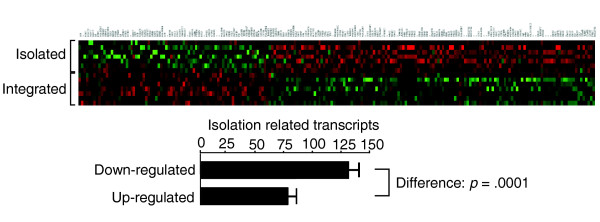
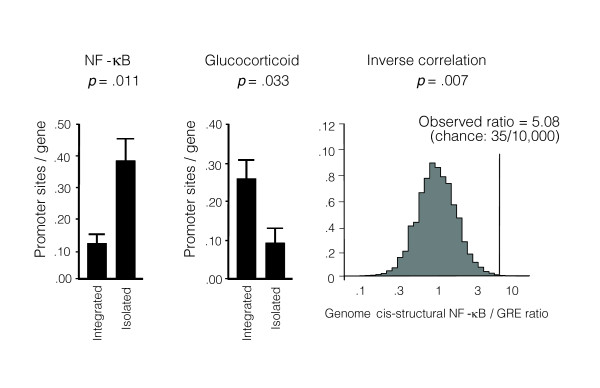
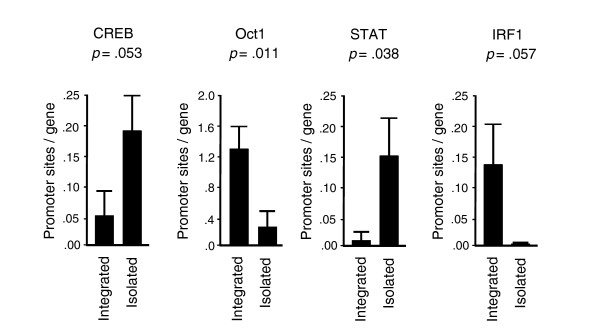
Background: Social environmental influences on human health are well established in the epidemiology literature, but their functional genomic mechanisms are unclear. The present study analyzed genome-wide transcriptional activity in people who chronically experienced high versus low levels of subjective social isolation (loneliness) to assess alterations in the activity of transcription control pathways that might contribute to increased adverse health outcomes in social isolates. Results: DNA microarray analysis identified 209 genes that were differentially expressed in circulating leukocytes from 14 high- versus low-lonely individuals, including up-regulation of genes involved in immune activation, transcription control, and cell proliferation, and down-regulation of genes supporting mature B lymphocyte function and type I interferon response. Promoter-based bioinformatic analyses showed under-expression of genes bearing anti-inflammatory glucocorticoid response elements (GREs; p = 0.032) and over-expression of genes bearing response elements for pro-inflammatory NF-κB/Rel transcription factors ( p = 0.011). This reciprocal shift in pro- and anti-inflammatory signaling was not attributable to differences in circulating cortisol levels, or to other demographic, psychological, or medical characteristics. Additional transcription control pathways showing differential activity in bioinformatic analyses included the CREB/ATF, JAK/STAT, IRF1, C/EBP, Oct, and GATA pathways. Conclusion: These data provide the first indication that human genome-wide transcriptional activity is altered in association with a social epidemiological risk factor. Impaired transcription of glucocorticoid response genes and increased activity of pro-inflammatory transcription control pathways provide a functional genomic explanation for elevated risk of inflammatory disease in individuals who experience chronically high levels of subjective social isolation.
Overview
The claims and statistics of this paper haven’t been checked yet.
Free: it reads the open-access text and checks the first 5 claims that cite a source we can check. Create a free account to check every claim.
Integrity signals
Registry
Cites
Statistics
Figures
Verification
Claims the paper makes
The claims and statistics of this paper haven’t been checked yet.
Free: it reads the open-access text and checks the first 5 claims that cite a source we can check. Create a free account to check every claim.
Claims other papers make about this one
Each is checked against this paper’s own text: does it say what the citing paper says it does?
The source backs part of the claim, not all of it — or backs it for a different population, condition or comparison.
In the citing paper
“Markers of immune activation and inflammation (e.g., pro-inflammatory cytokines and inflammatory mediators) were over-expressed in genes of the lonely relative to the socially connected group (37% of the 209 differentially expressed transcripts).”
From Loneliness matters: a theoretical and empirical review of consequences and mechanisms (2010) · cites this paper as [75]
Experimental — accuracy not yet measuredThe cited source says what the claim attributes to it.
In the citing paper
“in a genome-wide DNA microarray study, genes under-expressed by socially isolated individuals involved anti-inflammatory response elements and genes over-expressed involved proinflammatory response elements, compared to individuals who reported less social isolation”
From Close relationships, inflammation, and health (2010) · cites this paper as Cole et al., 2007
The cited source says what the claim attributes to it.
In the citing paper
“They also converge with a recent microarray profile of socially isolated individuals, which documented a similar pattern of diminished GR- and heightened NF-κB-dependent transcription (29).”
From A Functional Genomic Fingerprint of Chronic Stress in Humans: Blunted Glucocorticoid and Increased NF-κB Signaling (2008) · cites this paper as [29]
The cited source says what the claim attributes to it.
In the citing paper
“Subsequent bioinformatic analyses indicated that loneliness-associated differences in gene expression could be attributable to increased activity of the NF–κB transcription factor.”
From Loneliness matters: a theoretical and empirical review of consequences and mechanisms (2010) · cites this paper as [75]
The cited source says what the claim attributes to it.
In the citing paper
“Group differences in NF–κB/glucocorticoid receptor-mediated transcription activity were not attributable to objective indices of social isolation, nor were they explained by demographic, psychosocial (i.e., perceived stress, depression, hostility), or medical risk factors [75].”
From Loneliness matters: a theoretical and empirical review of consequences and mechanisms (2010) · cites this paper as [75]
7 more claims about this paper
Create a free account to see every claim other papers make about this one.
Self-check
Percentages, sums and reported differences re-computed from the paper’s own numbers.
The self-check needs the paper’s full text.
Citations
Cites
The CES-D Scale: A Self-Report Depression Scale for Research in the General Population
Radloff, L. S. (1977) · Applied Psychological Measurement · doi:10.1177/014662167700100306 · Cited by 53,267
Coussens, L. M., & Werb, Z. (2002) · Nature · doi:10.1038/nature01322 · Cited by 15,111
Inflammation, Atherosclerosis, and Coronary Artery Disease
Hansson, G. K. (2005) · New England Journal of Medicine · doi:10.1056/nejmra043430 · Cited by 8,773
Bolstad, B. M., Irizarry, R. A., Åstrand, M., & Speed, T. P. (2003) · Bioinformatics · doi:10.1093/bioinformatics/19.2.185 · Cited by 8,266 · cited 1×
“Robust multiarray averaging [60] was applied to quantify expression of the 22,283 assayed transcripts, and differentially expressed genes were identified as those showing ≥30% difference in mean expression levels in samples from high- versus low-lonely individuals (corresponding to a FDR of 10%) [59].”
MethodBERKMAN, L. F., & SYME, S. L. (1979) · American Journal of Epidemiology · doi:10.1093/oxfordjournals.aje.a112674 · Cited by 5,341
The Revised UCLA Loneliness Scale: concurrent and discriminant validity evidence
Russell, D., Peplau, L. A., & Cutrona, C. E. (1980) · Journal of Personality and Social Psychology · doi:10.1037/0022-3514.39.3.472 · Cited by 5,173 · cited 1×
“Social isolation Subjectively experienced social isolation was assessed by the UCLA-R Loneliness scale [53] at each yearly study visit.”
MethodAntiinflammatory Action of Glucocorticoids — New Mechanisms for Old Drugs
Rhen, T., & Cidlowski, J. A. (2005) · New England Journal of Medicine · doi:10.1056/nejmra050541 · Cited by 3,149 · cited 1×
“Cortisol activation of the glucocorticoid receptor (GR) exerts broad anti-inflammatory effects by inhibiting nuclear factor (NF)-κB/Rel transcription factors and other pro-inflammatory signaling pathways (for example, the Janus kinase-signal transducer and activator of transcription (JAK/STAT) and interferon response…”
BackgroundExpression monitoring by hybridization to high-density oligonucleotide arrays
Lockhart, D. J., Dong, H., Byrne, M. C., Follettie, M. T., Gallo, M. V., Chee, M. S., Mittmann, M., Wang, C., Kobayashi, M., Norton, H., et al. (1996) · Nature Biotechnology · doi:10.1038/nbt1296-1675 · Cited by 2,840
Uchino, B. N., Cacioppo, J. T., & Kiecolt-Glaser, J. K. (1996) · Psychological Bulletin · doi:10.1037/0033-2909.119.3.488 · Cited by 2,727 · cited 2×
“This result underscores the key role of subjective perceptual processes in transmitting the effects of social factors into physical biology via neuroendocrine alterations, and their subsequent impact on cellular gene expression [4,28,51,52].”
BackgroundSelf-citationCacioppo, J. T., Hughes, M. E., Waite, L. J., Hawkley, L. C., & Thisted, R. A. (2006) · Psychology and Aging · doi:10.1037/0882-7974.21.1.140 · Cited by 2,380 · cited 6×
“Global gene transcription profiles were assessed in circulating leukocytes from 14 individuals participating in the population-based Chicago Health Aging and Social Relations Study (CHASRS) [43].”
MethodInfluentialSelf-citation
Cited by
Items 601–700 of 741
Warren, A. (2026) · Frontiers in Psychiatry · doi:10.3389/fpsyt.2026.1863015 · Cited by 1
“Loneliness has been associated with increased expression of pro-in fl ammatory genes and elevated circulating in fl ammatory markers, including cytokines implicated in depression, cardiovascular disease, and neurodegeneration (36, 63).”
Social connectedness and retirement: Evidence from the UK
Smith, S. S. (2010) · Cited by 1
A mega-analysis of genome-wide association studies for major depressive disorder
Depressive, M. (2016) · Cited by 1
Kovaleva, M. A., Hepburn, K. W., & Spangler, S. A. (2016) · 43rd Biennial Convention (07 November - 11 November 2015) · Cited by 1
Psychoneuroimmunology and Cancer: Biobehavioral Influences on Tumor Progression
Lutgendorf, S. K., Costanzo, E. S., & Sood, A. K. (2012) · Oxford University Press eBooks · doi:10.1093/oxfordhb/9780195394399.013.0019 · Cited by 3
The Family System as a Unit of Clinical Care: The Role of Genetic Systems
Reiss, D. (2015) · Springer eBooks · doi:10.1007/978-1-4939-2923-8_10 · Cited by 1
Ducasse, D., Girod, C., & Courtet, P. (2016) · Springer eBooks · doi:10.1007/978-3-319-26282-6_10 · Cited by 2
Lin, F. R. (2012) · Elsevier eBooks · doi:10.1016/b978-0-12-384978-6.00098-4 · Cited by 4
McDermott, R. (2016) · Elsevier eBooks · doi:10.1016/b978-0-12-420190-3.00034-x · Cited by 1
Gene-Environment Interactions in Health Disparities
Kwabi‐Addo, B. (2017) · Springer eBooks · doi:10.1007/978-3-319-55865-3_10 · Cited by 2
From Microbes to Models: How Coping with Ear Infections Led to a New Paradigm
Jones, A. H. (2018) · Springer eBooks · doi:10.1007/978-3-319-73636-5_3 · Cited by 2
Steel, R. P., Hussey, B., Mastana, S. S., Lindley, M. R., & Taylor, I. M. (2020) · Health Psychology · doi:10.1037/hea0000795 · Cited by 1
“…of psychological experiences in epigenetic processes have become an increasing area of interest (Jones et al., 2018), with evidence suggesting that the subjective, rather than objective, experiences of the individual may be most important in explaining epigenetic modifications (Cole et al., 2007).”
BackgroundInfluentialCandau, J. (2018) · Anthropen · doi:10.17184/eac.anthropen.087 · Cited by 3
Linking social stress, health and social behavior through the lens of evolution
Maltseva, K. (2022) · NaUKMA Research Papers Sociology · doi:10.18523/2617-9067.2022.5.14-25 · Cited by 2
“…(Adler et al., 1994; Bosch et al., 2012; Chen, Miller, Kobor, & Cole, 2010; Cohen, Doyle, Turner, Alper, & Skoner, 2004; Cole, 2010; 2013, 2014; Cole et al., 2007; Cole, Shanahan, Gaydosh, & Harris, 2020; Irwin & Cole, 2011; Kawachi & Kennedy, 1999; Kiecolt-Glaser, Marucha, Malarkey, Mercado,…”
Strengthening Supportive Relationships
Grossman, M. (2022) · Springer eBooks · doi:10.1007/978-3-031-06101-1_11 · Cited by 1
Loneliness Modulates Inflammation to Affect the Neurocognitive Function of Older Adults
Jin, R. R., Chan, A. K. Y., & Lee, T. M. C. (2024) · Integrated science · doi:10.1007/978-3-031-73061-0_14 · Cited by 4
Naudin, M., Couchoud, C., Lassalle, M., Goin, N., François, M., Serru, M., Virdol, R., Ganea, A., Dedenis, D., Ferreira, A., et al. (2025) · Clinical Kidney Journal · doi:10.1093/ckj/sfaf213 · Cited by 1
“From a physiological perspective, social isolation may worsen the pro-inflammatory state of CKD [40 ] and is linked to lower serum albumin levels [41 ].”
Nambudripad, R. (2014) · Global Advances in Health and Medicine · doi:10.7453/gahmj.2014.025 · Cited by 1
THE EFFECT OF EMOTIONAL QUALITY MANAGEMENT ON STRESS, AND OPTIMISM IN WOMEN WITH BREAST CANCER
Padoli, Putra, S. T., Rahayu, Y. P., & Suhartono, E. A. (2011) · Folia Medica Indonesiana · Cited by 1
Solovyeva, L. N. (2017) · Regional blood circulation and microcirculation · doi:10.24884/1682-6655-2017-16-2-4-16 · Cited by 1
Psychoneuroimmunology and Genetics
Vempati, R. P., & Reddy, H. M. (2019) · IntechOpen eBooks · doi:10.5772/intechopen.82557 · Cited by 1
“Other upregulated genes are transcription factors that control chromatin structure and cell growth [15].”
BackgroundMein Körper, meine Moleküle, meine Mikroben: Neues aus der psychosomatischen Grundlagenforschung
Herrmann‐Lingen, C. (2020) · PDP – Psychodynamische Psychotherapie · doi:10.21706/pdp-19-4-369 · Cited by 1
"Pain, And Mental Health Features Before and During COVID-19 Pandemic Social Isolation in Brazil"
Sonza, A. (2021) · Biomedical Journal of Scientific & Technical Research · doi:10.26717/bjstr.2021.37.006003 · Cited by 1
“Emotional support, to participate in social activities, and satisfaction are inherent to human beings [10] and negative social experiences can induce profound effect on our emotional wellbeing [12]; loneliness on a daily basis, shows an up regulation of pro-inflammatory response genes, which may contribute to the risk…”
BackgroundMolander, P. (2022) · Springer eBooks · doi:10.1007/978-3-030-93189-6_3 · Cited by 1
Owusu‐Brackett, N., Chen, J., Li, Y., Fisher, J. L., Bhattacharyya, O., & Obeng‐Gyasi, S. (2022) · Surgery · doi:10.1016/j.surg.2022.07.047 · Cited by 1
Moyer, A. E., Mock, K. O., & Martillotti, R. (2024) · Oxford University Press eBooks · doi:10.1093/oso/9780197655504.003.0019 · Cited by 1
Jefferson, L. J., & Dunne, S. (2024) · Health An Interdisciplinary Journal for the Social Study of Health Illness and Medicine · doi:10.1177/13634593241279207
“While unpleasant itself, loneliness is an antecedent to further physical and mental health issues including suppressed immune-related functions (Cole et al., 2007), depression (Theeke et al., 2012), cognitive decline (Tilvis et al., 2004) and accelerated progression of Alzheimer’s disease (Wilson…”
Predictors of loneliness amongst university students
Tonder, V., & Isabella, J. (2020) · Cited by 1
Lavelle, L., & Hawkley, L. C. (2010) · Wiley eBooks · doi:10.1002/9780470479216.corpsy0513 · Cited by 1
Self-citationLin, A., Akafia, C. S. K., Monte, O. D., Fan, S., Fagan, N., Putnam, P. T., Tye, K. M., Chang, S. W. C., Ba, D. E., & Allsop, S. A. (2024) · bioRxiv (Cold Spring Harbor Laboratory) · doi:10.1101/2024.05.08.593229 · Cited by 1
“Social isolation can lead to pro-inflammatory gene expression, increased overall mortality 33–35 , and has been linked to increased cardiovascular risk 36 , functional decline 37 , and increased likelihood of death 38,39 .”
Ranjbaran, A., Kalita, C., Wei, J., Davis, K. M., Bruinsma, J., Mair-Meijers, H. E., Garlicki, G., Alazizi, A., Petriello, M. C., Jiang, Y., et al. (2025) · bioRxiv (Cold Spring Harbor Laboratory) · doi:10.1101/2025.10.14.682318 · Cited by 1
“This pro-inflammatory transcriptional shift has been found in relation to acute psychological stress(Kuebler et al. 2015), loneliness(Steve W. Cole et al. 2007), socioeconomic disadvantage(Miller et al. 2009), and depression(Chiang et al. 2019).”
Balfour, L. E. (2012) · University of North Florida Digital Commons (University of North Florida) · Cited by 2
Genomics approaches to study music perception and performance
Kanduri, C. (2015) · Helda - University of Helsinki Institutional Repository
Rueggeberg, R. (2011) · Spectrum Research Repository (Concordia University)
Okada, Y., Inoue, T., & Nagashima, T. (2009) · International Conference on Biometrics and Kansei Engineering (ICBAKE) · doi:10.1109/icbake.2009.26
“Cole et al. have provided a gene expression dataset obtained from peripheral blood of people experiencing chronically subjective social isolation (loneliness) [4].”
BackgroundMethodResultInfluentialEnvironment, Epigenetic, and Disease: The Modifiable Trilogy
Pelligrino, N. E., Mohler, M. C., Uddo, R. B., Lovas, D., SOTHERN, M. S., Scribner, R. A., & Zabaleta, J. (2015) · Molecular and integrative toxicology · doi:10.1007/978-1-4471-6678-8_13
The Social Network of Loneliness
Castillo, M. (2014) · American Journal of Neuroradiology · doi:10.3174/ajnr.a3964
Nature and Nurture: Evolution and Complexities
Young, G. C. (2016) · Springer eBooks · doi:10.1007/978-3-319-24094-7_12
Adams, R. N. (2016) · Purdue e-Pubs (Purdue University System) · doi:10.7912/c2hg66 · Cited by 4
“Therefore, differences in the transcription of glucocorticoid response genes and increased activity of pro-inflammatory transcription 8 control pathways between lonely and non-lonely individuals may help explain the impact of loneliness on health (Cole et al., 2007).”
Background- Self-citation
Bernabei, R., Bonuccelli, U., Maggi, S., Branch, A., Marengoni, A., Memo, M., Pecorelli, S., Peracino, A. P., Giovanni, F., Quaranta, N. A. A., et al. (2014)
Epigenetic psychiatry: potential of the pre-emptive adaptation
Skopec, R. (2017) · Global Vaccines and Immunology · doi:10.15761/gvi.1000124
Wisneski, L., & Reddy, B. (2017) · Routledge eBooks · doi:10.4324/9781315153889-19
Isgett, S. F. (2014) · Carolina Digital Repository (University of North Carolina at Chapel Hill) · doi:10.17615/13zf-gb53
Yanguas, J., Sarasola, A. C., & Segura, C. (2019) · Elsevier eBooks · doi:10.1016/b978-0-12-801238-3.11428-x
Adverse Life Trajectories Are a Risk Factor for SARS-CoV-2 IgA Seropositivity
Holuka, C., Snoeck, C. J., Mériaux, S. B., Ollert, M. W., Krüger, R., Turner, J. D., & The Con-Vince Consortium (2021) · Journal of Clinical Medicine · doi:10.3390/jcm10102159 · Cited by 1
Loneliness and Cardiovascular Disease
Agarwal, S. K. (2021) · International Journal of Medicine · doi:10.14419/ijm.v9i1.31462
[Hydromineral metabolism and acid-base equilibrium after massive small intestine resection].
Paulet, P. (1972) · PubMed
Oishi, S. (2012) · Wiley eBooks · doi:10.1002/9781444354447.refs
Social anxiety: how competition, sex, and dispersal affect our propensity to interact sociallyPreprint
Faria, G. S., Bell, V., & Raihani, N. (2021) · PsyArXiv (OSF Preprints) · doi:10.31234/osf.io/78gyx
(2015) · Duke University Press eBooks · doi:10.1215/9780822375449-013
Anneser, L. (2021) · Publication Server of Goethe University Frankfurt am Main (Goethe University Frankfurt) · doi:10.21248/gups.64464
Glucocorticoid Receptor Regulated KCNA5 Mediates Cell Proliferation in Human Fetal MembranesPreprint
Cunningham, S. J., Barrera, A., Sankaranarayanan, L., Allen, T. K., & Reddy, T. E. (2022) · Research Square · doi:10.21203/rs.3.rs-1594481/v1
(2014) · Elsevier eBooks · doi:10.1016/b978-0-12-420071-5.16001-6
Trivedi, M. K., Branton, A., Trivedi, D., Nayak, G., Wellborn, B. D., Smith, D. L., Koster, D. A., Patric, E., Singh, J., Vagt, K. S., et al. (2016) · American Journal of Bioscience and Bioengineering · doi:10.11648/j.bio.20160405.11 · Cited by 2
Strahler, J. (2012) · Springer eBooks · doi:10.1007/978-1-4419-1005-9_53
Hawkley, L. C., & Cacioppo, J. T. (2012) · Springer eBooks · doi:10.1007/978-1-4419-1005-9_812 · Cited by 2
Self-citationStrahler, J. (2020) · Springer eBooks · doi:10.1007/978-3-030-39903-0_53
Shankar, A. (2019) · Oxford University Press eBooks · doi:10.1093/obo/9780199828340-0253
The impact of isolation on brain health
Heng, V., Haney, C. W., & Smeyne, R. J. (2022) · Elsevier eBooks · doi:10.1016/b978-0-323-85654-6.00024-1 · Cited by 1
Glucocorticoid Receptor Regulated KCNA5 Mediates Cell Proliferation in Human Fetal MembranesPreprint
Cunningham, S. J., Barrera, A., Sankaranarayanan, L., Allen, T. K., & Reddy, T. E. (2022) · Research Square · doi:10.21203/rs.3.rs-1594481/v2
Lebensstilfaktoren und Schmerzen
Ekström, K. (2023) · Elsevier eBooks · doi:10.1016/b978-3-437-45252-9.00029-8
(2023) · Elsevier eBooks · doi:10.1016/b978-3-437-45252-9.09976-4
Systemic Onco-sphere: An Overview from the Host’s Perspective
Saw, P. E., & Song, E. (2023) · Springer eBooks · doi:10.1007/978-981-99-1183-7_18
Approaches to Society within the Brain
Chey, J. (2023) · Cambridge University Press eBooks · doi:10.1017/9781108974325.003
The Genomics of Cognitive Aging in Social Isolation
Lee, S., & Kwak, S. (2023) · Cambridge University Press eBooks · doi:10.1017/9781108974325.007
Society Interacting with Brain, Cognition, and Health in Late Life
Chey, J. (2023) · Cambridge University Press eBooks · doi:10.1017/9781108974325.008
Psychoneuroimmunology Linking Social Isolation with Cognitive Aging
Lee, S. (2023) · Cambridge University Press eBooks · doi:10.1017/9781108974325.011
Jefferson, L. J., & Dunne, S. (2023) · doi:10.31234/osf.io/pfvx9
Sadoughi, B. (2023) · eDiss (Georg-August-Universität Göttingen) · doi:10.53846/goediss-10248
Can social adversity alter the epigenome, trigger oral disease, and affect future generations?
Khalid, S., Kearney, M., & McReynolds, D. E. (2024) · Irish Journal of Medical Science (1971 -) · doi:10.1007/s11845-024-03697-3 · Cited by 1
“Indeed, studies have demonstrated that under conditions of social isolation [83, 84] and low SEP [85, 86], there is an alteration to the HPA axis regulatory function.”
BackgroundAssociation between loneliness and mental health among nurses: a cross-sectional research in China.
Qiao, Y., Wang, C., Tian, X., & Cao, M. (2024) · PubMed Central · doi:10.1590/1414-431x2024e13408 · Cited by 4
Hanscom, D. A., Halaris, A. E., & Erb, M. (2024) · Elsevier eBooks · doi:10.1016/b978-0-12-816996-4.00009-5
Joseph, M., Lockie, K., Mbazira, A., & Stewart, R. J. (2025) · International Journal of Geriatric Psychiatry · doi:10.1002/gps.70052 · Cited by 3
McEwen, B. S., & Chattarji, S. (2025) · Oxford University Press eBooks · doi:10.1093/med/9780190065324.003.0017 · Cited by 1
Barouki, R., Coumoul, X., & Blanc, É. (2025) · Springer eBooks · doi:10.1007/978-3-031-83019-8_5 · Cited by 1
Haghjou, M., Abadi, F. S. F., Hosseini, S. A., Raesi, R., Hushmandi, K., & Daneshi, S. (2025) · Current Cancer Therapy Reviews · doi:10.2174/0115733947377243250503004112
Social isolation, loneliness, and incident irritable bowel syndrome: a prospective cohort studyPreprint
Zhou, T., Jin, Z., Ye, K., & Shen, Z. (2025) · Research Square · doi:10.21203/rs.3.rs-6465123/v1 · Cited by 1
Enos, D., Hernández, M., Méndez, G. P., Cáceres, L., Bravo, I., Jobet, J., Castro, S., Cornejo, L., Vega, C., & Salazar, A. Μ. (2025) · Frontiers in Nephrology · doi:10.3389/fneph.2025.1599316
Choton, T., Arun, M. G., Durga, H., Jaswal, P., & Prasad, N. G. (2025) · Journal of Invertebrate Pathology · doi:10.1016/j.jip.2025.108395
Fredrickson, B. L. (2025) · Oxford University Press eBooks · doi:10.1093/9780197754825.002.0007
Cameron, B. K. (2025) · Oxford University Press eBooks · doi:10.1093/9780197754825.002.0006
Change that Lasts: Origins of the Upward Spiral Theory of Lifestyle Change
Fredrickson, B. L. (2025) · Oxford University Press eBooks · doi:10.1093/9780197754825.003.0003
Effect or Function? Origins of the Broaden-and-Build Theory
Fredrickson, B. L. (2025) · Oxford University Press eBooks · doi:10.1093/9780197754825.003.0002
Fredrickson, B. L. (2025) · Oxford University Press eBooks · doi:10.1093/9780197754825.002.0008
Follow the Data: Where Positivity and Meaning Meet
Fredrickson, B. L. (2025) · Oxford University Press eBooks · doi:10.1093/9780197754825.003.0004
Feeling as One: Origins of the Positivity Resonance Theory
Fredrickson, B. L. (2025) · Oxford University Press eBooks · doi:10.1093/9780197754825.003.0005
Fredrickson, B. L. (2025) · Oxford University Press eBooks · doi:10.1093/9780197754825.003.0001
Fredrickson, B. L. (2025) · Oxford University Press eBooks · doi:10.1093/9780197754825.002.0005
PSYCHOLOGICAL STRESS AND CANCER PROGRESSION
Kwiatkowska, A., Strużek, K., Mączka, E., Tracz, W., Świercz, P., Teper, K., Khiralla-Gawlik, S., Strzelecka, A. A., & Basak, A. E. (2025) · International Journal of Innovative Technologies in Social Science · doi:10.31435/ijitss.3(47).2025.3665
Biological Pathways Linking Loneliness to Physical Health
Uchino, B. N., Reddy, R. B., Tacana, T., & Smoot, S. (2025) · Springer eBooks · doi:10.1007/978-3-032-02959-1_17
The Link Between Loneliness and Social Isolation with Inflammation
Smith, K. J., Riddell, N. E., Poole, L., & Dunn‐Walters, D. K. (2025) · Springer eBooks · doi:10.1007/978-3-032-02959-1_16
The etiology of loneliness: insights from twin and family, genome-wide, and epigenetic studies
Freilich, C. D., & Krueger, R. F. (2025) · Current Opinion in Behavioral Sciences · doi:10.1016/j.cobeha.2025.101618
Psychologically Anchored Social Neuroscience Benefits Policy
Kubota, J. T., Welte, M., & Cloutier, J. (2025) · Policy Insights from the Behavioral and Brain Sciences · doi:10.1177/23727322251405413
“Furthermore, chronic loneliness increases in fl ammatory gene expression and elevates stress hormones (Cacioppo et al., 2015; Cole et al., 2007).”
Metadata
- Authors
- Cole, S. W., Hawkley, L. C., Arevalo, J. M., Sung, C. Y., Rose, R. M., & Cacioppo, J. T.
- Affiliations
- University of California, Los Angeles (US)
- University of Chicago (US)
- John D. and Catherine T. MacArthur Foundation (US)
- Corresponding author
- Cole, Steve W
- Venue
- Genome Biology
- Published
- 2007-09-13
- Volume
- 8
- Issue
- 9
- Pages
- R189-R189
- ISSN
- 1465-6906 (ISSN-L)
- 1474-760X
- PMC
- PMC2375027
- OpenAlex
- W2170607802
- Cited by
- 745
- References
- 73
- Citations by year
- 2026: 41 · 2025: 46 · 2024: 34 · 2023: 46 · 2022: 40 · 2021: 42 · 2020: 45 · 2019: 40 · 2018: 42 · 2017: 35 · 2016: 51 · 2015: 45 · 2014: 43 · 2013: 39 · 2012: 44
- FWCI
- 9.56
- Type
- journal article
- Language
- en
- Open access
- gold
- doi.org
- Licence
- cc-by
- creativecommons.org/licenses/by/2.0/ (tdm)
- creativecommons.org/licenses/by/2.0/ (vor)
- Locations
- Genome biology (publishedVersion, cc-by)
- PubMed Central (publishedVersion, cc-by)
- PubMed (publishedVersion)
- eScholarship (California Digital Library) (submittedVersion)
- eScholarship (California Digital Library) (submittedVersion, cc-by)
- Funders
- John D. and Catherine T. MacArthur Foundation
- John Templeton Foundation
- National Institutes of Health
- National Institute on Aging (P01 AG19811)
- National Cancer Institute (R01CA116778)
- National Institute of Allergy and Infectious Diseases (R01 AI52737, R01AI052737)
- National Center for Research Resources (P20RR020645)
- Topics
- Life Sciences › Neuroscience › Behavioral Neuroscience › Stress Responses and Cortisol
- Social Sciences › Health › Health disparities and outcomes
- Life Sciences › Biochemistry, Genetics and Molecular Biology › Molecular Biology › Genomics and Chromatin Dynamics
- Keywords
- social isolation, loneliness, gene expression, leukocytes, transcriptional regulation, glucocorticoid response element, pro-inflammatory signaling, anti-inflammatory signaling, type I interferon response, B cell function, JAK/STAT signaling, C/EBP, GATA, social determinants of health
- MeSH terms
- Aged, C-Reactive Protein, Female, Gene Expression Regulation, Glucocorticoids, Humans, Interpersonal Relations, Leukocytes, Male, Middle Aged, Models, Biological, Promoter Regions, Genetic, Signal Transduction, Genome, Human, Computational Biology
About these checks
Registry, retraction, Cites and statistics results are computed, not judged, with one exception: a printed reference that no index lists is read once by a model before it counts as a citation error. Claims are extracted by a model and kept only when their quote appears verbatim in the text; each cited source is then checked, with a model’s help, for whether it says what the claim relies on. Those verdicts can be wrong — read the claim’s quote and the cited source before relying on one.
Statistics and arithmetic are recomputed, not judged.
Confidence bands are shown only for fields calibrated on our annotated test set. None is calibrated yet, so no band is shown.
What counts as a claim ›How we measure confidence ›How we check this ›
Are you an author, or do you see a problem with this page? Request a review
Data sources
Bibliographic data: Semantic Scholar, OpenAlex, Crossref.
Contains information from the Semantic Scholar Academic Graph Datasets, made available under the ODC Attribution License (ODC-BY 1.0).
Semantic Scholar’s data is described in: Kinney, R., et al. (2023). The Semantic Scholar Open Data Platform. arXiv:2301.10140.
