

Social regulation of gene expression in human leukocytes
Open accessThe DOI matches its Crossref record; 70 of the 73 references it cites were found in a registry or an index.
Abstract
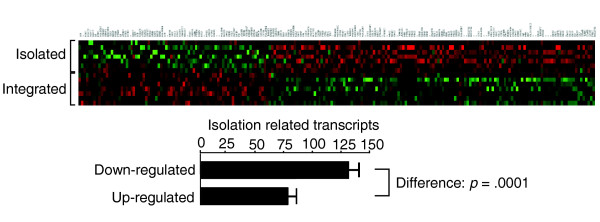
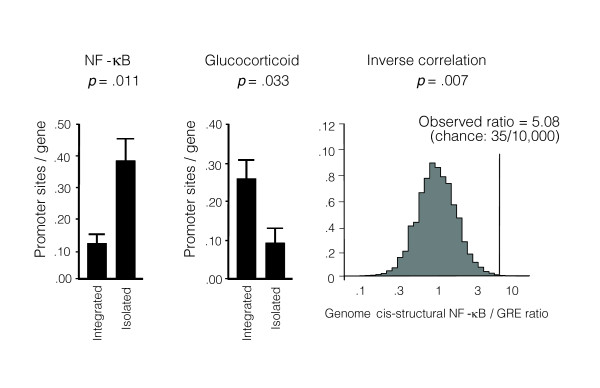
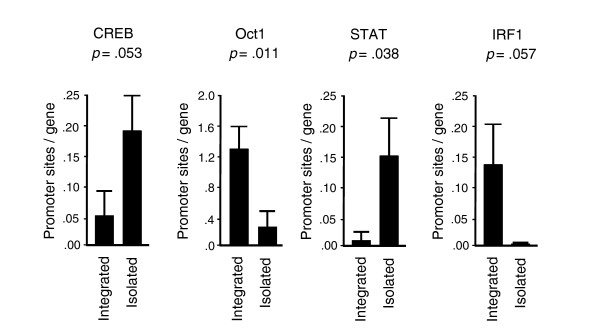
Background: Social environmental influences on human health are well established in the epidemiology literature, but their functional genomic mechanisms are unclear. The present study analyzed genome-wide transcriptional activity in people who chronically experienced high versus low levels of subjective social isolation (loneliness) to assess alterations in the activity of transcription control pathways that might contribute to increased adverse health outcomes in social isolates. Results: DNA microarray analysis identified 209 genes that were differentially expressed in circulating leukocytes from 14 high- versus low-lonely individuals, including up-regulation of genes involved in immune activation, transcription control, and cell proliferation, and down-regulation of genes supporting mature B lymphocyte function and type I interferon response. Promoter-based bioinformatic analyses showed under-expression of genes bearing anti-inflammatory glucocorticoid response elements (GREs; p = 0.032) and over-expression of genes bearing response elements for pro-inflammatory NF-κB/Rel transcription factors ( p = 0.011). This reciprocal shift in pro- and anti-inflammatory signaling was not attributable to differences in circulating cortisol levels, or to other demographic, psychological, or medical characteristics. Additional transcription control pathways showing differential activity in bioinformatic analyses included the CREB/ATF, JAK/STAT, IRF1, C/EBP, Oct, and GATA pathways. Conclusion: These data provide the first indication that human genome-wide transcriptional activity is altered in association with a social epidemiological risk factor. Impaired transcription of glucocorticoid response genes and increased activity of pro-inflammatory transcription control pathways provide a functional genomic explanation for elevated risk of inflammatory disease in individuals who experience chronically high levels of subjective social isolation.
Overview
The claims and statistics of this paper haven’t been checked yet.
Free: it reads the open-access text and checks the first 5 claims that cite a source we can check. Create a free account to check every claim.
Integrity signals
Registry
Cites
Statistics
Figures
Verification
Claims the paper makes
The claims and statistics of this paper haven’t been checked yet.
Free: it reads the open-access text and checks the first 5 claims that cite a source we can check. Create a free account to check every claim.
Claims other papers make about this one
Each is checked against this paper’s own text: does it say what the citing paper says it does?
The source backs part of the claim, not all of it — or backs it for a different population, condition or comparison.
In the citing paper
“Markers of immune activation and inflammation (e.g., pro-inflammatory cytokines and inflammatory mediators) were over-expressed in genes of the lonely relative to the socially connected group (37% of the 209 differentially expressed transcripts).”
From Loneliness matters: a theoretical and empirical review of consequences and mechanisms (2010) · cites this paper as [75]
Experimental — accuracy not yet measuredThe cited source says what the claim attributes to it.
In the citing paper
“in a genome-wide DNA microarray study, genes under-expressed by socially isolated individuals involved anti-inflammatory response elements and genes over-expressed involved proinflammatory response elements, compared to individuals who reported less social isolation”
From Close relationships, inflammation, and health (2010) · cites this paper as Cole et al., 2007
The cited source says what the claim attributes to it.
In the citing paper
“They also converge with a recent microarray profile of socially isolated individuals, which documented a similar pattern of diminished GR- and heightened NF-κB-dependent transcription (29).”
From A Functional Genomic Fingerprint of Chronic Stress in Humans: Blunted Glucocorticoid and Increased NF-κB Signaling (2008) · cites this paper as [29]
The cited source says what the claim attributes to it.
In the citing paper
“Subsequent bioinformatic analyses indicated that loneliness-associated differences in gene expression could be attributable to increased activity of the NF–κB transcription factor.”
From Loneliness matters: a theoretical and empirical review of consequences and mechanisms (2010) · cites this paper as [75]
The cited source says what the claim attributes to it.
In the citing paper
“Group differences in NF–κB/glucocorticoid receptor-mediated transcription activity were not attributable to objective indices of social isolation, nor were they explained by demographic, psychosocial (i.e., perceived stress, depression, hostility), or medical risk factors [75].”
From Loneliness matters: a theoretical and empirical review of consequences and mechanisms (2010) · cites this paper as [75]
7 more claims about this paper
Create a free account to see every claim other papers make about this one.
Self-check
Percentages, sums and reported differences re-computed from the paper’s own numbers.
The self-check needs the paper’s full text.
Citations
Cites
The CES-D Scale: A Self-Report Depression Scale for Research in the General Population
Radloff, L. S. (1977) · Applied Psychological Measurement · doi:10.1177/014662167700100306 · Cited by 53,267
Coussens, L. M., & Werb, Z. (2002) · Nature · doi:10.1038/nature01322 · Cited by 15,111
Inflammation, Atherosclerosis, and Coronary Artery Disease
Hansson, G. K. (2005) · New England Journal of Medicine · doi:10.1056/nejmra043430 · Cited by 8,773
Bolstad, B. M., Irizarry, R. A., Åstrand, M., & Speed, T. P. (2003) · Bioinformatics · doi:10.1093/bioinformatics/19.2.185 · Cited by 8,266 · cited 1×
“Robust multiarray averaging [60] was applied to quantify expression of the 22,283 assayed transcripts, and differentially expressed genes were identified as those showing ≥30% difference in mean expression levels in samples from high- versus low-lonely individuals (corresponding to a FDR of 10%) [59].”
MethodBERKMAN, L. F., & SYME, S. L. (1979) · American Journal of Epidemiology · doi:10.1093/oxfordjournals.aje.a112674 · Cited by 5,341
The Revised UCLA Loneliness Scale: concurrent and discriminant validity evidence
Russell, D., Peplau, L. A., & Cutrona, C. E. (1980) · Journal of Personality and Social Psychology · doi:10.1037/0022-3514.39.3.472 · Cited by 5,173 · cited 1×
“Social isolation Subjectively experienced social isolation was assessed by the UCLA-R Loneliness scale [53] at each yearly study visit.”
MethodAntiinflammatory Action of Glucocorticoids — New Mechanisms for Old Drugs
Rhen, T., & Cidlowski, J. A. (2005) · New England Journal of Medicine · doi:10.1056/nejmra050541 · Cited by 3,149 · cited 1×
“Cortisol activation of the glucocorticoid receptor (GR) exerts broad anti-inflammatory effects by inhibiting nuclear factor (NF)-κB/Rel transcription factors and other pro-inflammatory signaling pathways (for example, the Janus kinase-signal transducer and activator of transcription (JAK/STAT) and interferon response…”
BackgroundExpression monitoring by hybridization to high-density oligonucleotide arrays
Lockhart, D. J., Dong, H., Byrne, M. C., Follettie, M. T., Gallo, M. V., Chee, M. S., Mittmann, M., Wang, C., Kobayashi, M., Norton, H., et al. (1996) · Nature Biotechnology · doi:10.1038/nbt1296-1675 · Cited by 2,840
Uchino, B. N., Cacioppo, J. T., & Kiecolt-Glaser, J. K. (1996) · Psychological Bulletin · doi:10.1037/0033-2909.119.3.488 · Cited by 2,727 · cited 2×
“This result underscores the key role of subjective perceptual processes in transmitting the effects of social factors into physical biology via neuroendocrine alterations, and their subsequent impact on cellular gene expression [4,28,51,52].”
BackgroundSelf-citationCacioppo, J. T., Hughes, M. E., Waite, L. J., Hawkley, L. C., & Thisted, R. A. (2006) · Psychology and Aging · doi:10.1037/0882-7974.21.1.140 · Cited by 2,380 · cited 6×
“Global gene transcription profiles were assessed in circulating leukocytes from 14 individuals participating in the population-based Chicago Health Aging and Social Relations Study (CHASRS) [43].”
MethodInfluentialSelf-citation
Cited by
Items 701–741 of 741
Social isolation of aged mice drives dramatic release of inflammatory lipoxygenase-derived oxylipins
Wichmann-Costaganna, M., Petit, R., Lindner, J., Haase, M., Bachmann, V., Hofstetter, R. K., Werner, M., Frahm, C., Werz, O., & Schädel, P. (2026) · npj Aging · doi:10.1038/s41514-026-00405-6
“Moreover, genome-wide analyses revealedthat people experiencing a high degree of subjective social isolation show increased leukocyte transcriptional activity, especially in pro-in fl ammatory pathways, directly linking social isolation with in fl ammation 24 .”
Sha, S., Pan, Y., Xu, Y., & Chen, L. (2022) · Figshare · doi:10.6084/m9.figshare.20208451
Tu, L., Li, Y., Ren, X., Jiang, M., Han, L., & Zheng, X. (2024) · Figshare · doi:10.6084/m9.figshare.26333244
Wang, J., Zhang, W. S., Jiang, C. Q., Zhu, F., Jin, Y. L., Cheng, K. K., Lam, T. H., & Xu, L. (2022) · Figshare · doi:10.6084/m9.figshare.19695900
The Essential Integration: Patient-Oriented Oncology
Paul, D. (2025) · Springer eBooks · doi:10.1007/978-3-032-08808-6_14 · Cited by 1
In-hospital psychological stress and post-hospital outcomes
Ford, D. M., Lawton, R., Teale, E. A., & O'Connor, D. B. (2026) · Journal of Health Psychology · doi:10.1177/13591053251398884
“Finally, social isolation has been observed to play a role in gene expression (and therefore health): individuals high in subjective loneliness are more likely to be characterised by increased inflammation and decreased protection from viral illness (Cole et al., 2007; O’Connor et al., 2021).”
Capel, P. J. A. (2026) · Springer eBooks · doi:10.1007/978-3-662-71831-5_1
The Communication-Satisfaction Model of Relationships and Its Discontents
Fowers, B. J. (2026) · Oxford University Press eBooks · doi:10.1093/9780197506028.003.0004
Fowers, B. J. (2026) · Oxford University Press eBooks · doi:10.1093/9780197506028.003.0014
Resolving the Puzzle of Friendship
Fowers, B. J. (2026) · Oxford University Press eBooks · doi:10.1093/9780197506028.003.0012
Fowers, B. J. (2026) · Oxford University Press eBooks · doi:10.1093/9780197506028.003.0001
Fowers, B. J. (2026) · Oxford University Press eBooks · doi:10.1093/9780197506028.003.0008
The State of the Psychological Science of Friendship
Fowers, B. J. (2026) · Oxford University Press eBooks · doi:10.1093/9780197506028.003.0005
Aristotle’s Theory of Friendship
Fowers, B. J. (2026) · Oxford University Press eBooks · doi:10.1093/9780197506028.003.0007
Identification and Roles as Constitutive Aspects of Friendship
Fowers, B. J. (2026) · Oxford University Press eBooks · doi:10.1093/9780197506028.003.0010
Attachment and the Biology of Friendship
Fowers, B. J. (2026) · Oxford University Press eBooks · doi:10.1093/9780197506028.003.0009
Fowers, B. J. (2026) · Oxford University Press eBooks · doi:10.1093/9780197506028.003.0013
Historical and Cultural Variations on Friendship
Fowers, B. J. (2026) · Oxford University Press eBooks · doi:10.1093/9780197506028.003.0003
Chen, L. (2026) · Archives of Gerontology and Geriatrics · doi:10.1016/j.archger.2026.106256
Gildengers, A. G., Wang, Y., Hughes, T. F., Jacobsen, E., Karikari, T. K., Snitz, B. E., Zeng, X., Chang, C. H., & Ganguli, M. (2026) · American Journal of Geriatric Psychiatry · doi:10.1016/j.jagp.2026.05.012 · Cited by 2
Obesidad infantil e inseguridad alimentaria: análisis de alcance - 2020 a 2023
Ferreira, A. P. R., da Silva, E. N. X., Molina, M. D. C., & de Assis, S. G. (2026) · Ciência & Saúde Coletiva · doi:10.1590/1413-81232026314.22732024esp
Childhood obesity and food insecurity: scoping review - 2020 to 2023
Ferreira, A. P. R., da Silva, E. N. X., Molina, M. D. C., & de Assis, S. G. (2026) · Ciência & Saúde Coletiva · doi:10.1590/1413-81232026314.22732024en
Ugurlu, Ö., Prather, A. A., Epel, E. S., & Guevarra, D. A. (2026) · Brain Behavior & Immunity - Health · doi:10.1016/j.bbih.2026.101286
Meland, E., Hufthammer, K. O., Mildestvedt, T., Rangul, V., Vie, T. L., & Hetlevik, Ø. (2026) · BMJ Public Health · doi:10.1136/bmjph-2025-004283 · Cited by 1
We Are All Dynamic Systems: Unifying Psychology’s Subdisciplines With a Developmental Perspective
Moore, D. S. (2026) · Review of General Psychology · doi:10.1177/10892680261457087
Panuccio, A., Gimenez, J., Tiberi, M., Fabrizio, C., Termine, A., Balsamo, F., Sciamanna, G., Carrera, G., Matteocci, A., Bardi, M. D., et al. (2026) · Brain Behavior and Immunity · doi:10.1016/j.bbi.2026.106885
Sun, Y., Hou, X., 朱文芬, & Fu, Y. (2026) · Psychiatry Research · doi:10.1016/j.psychres.2026.117331
Social Isolation, Loneliness and Subclinical Atherosclerosis
Li, H., & Xia, N. (2026) · Current Atherosclerosis Reports · doi:10.1007/s11883-026-01447-7 · Cited by 1
“Loneliness is associated with an exaggerated cortisol awakening response [23], elevated circulating cortisol concentrations [24, 25], and reduced glucocorticoid receptor sensitivity [26, 27 ].”
The distinctiveness of human aging I: Anthropological and developmental foundations
Dannefer, D., Kelley, J., & Okunade, O. (2026) · Zeitschrift für Gerontologie und Geriatrie · doi:10.1007/s00391-026-02608-8
Blandl, F., Hazlett, L. I., Cole, S. W., Moieni, M., Olmstead, R., Cho, J. H., Way, B. M., Robles, T. F., & Eisenberger, N. I. (2026) · Brain Behavior and Immunity · doi:10.1016/j.bbi.2026.106927 · Cited by 1
Self-citationCasanova, G., Fattorini, G., Santini, S., Balietti, M., Barboni, I., Giacconi, R., & Lamura, G. (2026) · Frontiers in Public Health · doi:10.3389/fpubh.2026.1831731
Biomarkers for the psychology of aging
Steptoe, A., & Bloomberg, M. (2026) · Elsevier eBooks · doi:10.1016/b978-0-443-27490-9.00009-9 · Cited by 1
Tang, M. Y., Cao, M. Y., Xue, M. Y., Sun, M. C., Li, M. A., Zhang, M. X., & Hu, M. (2026) · Brain Behavior & Immunity - Health · doi:10.1016/j.bbih.2026.101360
Rubio‐Casillas, A., Redwan, E. M. M., Genova, S., & Uversky, V. N. (2026) · Applied Microbiology · doi:10.3390/applmicrobiol6100117
Laiton-Jiménez, L. A., Abdelrahman, M., Shalev, I., Sliwinski, M. J., & Veturi, Y. (2026) · Brain Behavior & Immunity - Health · doi:10.1016/j.bbih.2026.101380
“…NK-cell lineages) and were included as covariates to statistically adjust for inter-individual variation in immune cell composition, a standard practice in CTRA gene-expression analyses when flow cytometric cell counts are unavailable (Cole et al., 2007; Levine et al., 2017; Apsley et al., 2024).”
Cuello, M. A., Ibáñez, C., Bustos, M., Weiß, C., & Perez‐Cruz, P. E. (2026) · International Journal of Gynecology & Obstetrics · doi:10.1002/ijgo.71460
The Disablement Process among Elderly Chinese
Lowry, D. (2010)
Gene–Environment Interactions: Other Topics
Young, G. C. (2011) · Springer eBooks · doi:10.1007/978-1-4419-9422-6_30
Metadata
- Authors
- Cole, S. W., Hawkley, L. C., Arevalo, J. M., Sung, C. Y., Rose, R. M., & Cacioppo, J. T.
- Affiliations
- University of California, Los Angeles (US)
- University of Chicago (US)
- John D. and Catherine T. MacArthur Foundation (US)
- Corresponding author
- Cole, Steve W
- Venue
- Genome Biology
- Published
- 2007-09-13
- Volume
- 8
- Issue
- 9
- Pages
- R189-R189
- ISSN
- 1465-6906 (ISSN-L)
- 1474-760X
- PMC
- PMC2375027
- OpenAlex
- W2170607802
- Cited by
- 745
- References
- 73
- Citations by year
- 2026: 41 · 2025: 46 · 2024: 34 · 2023: 46 · 2022: 40 · 2021: 42 · 2020: 45 · 2019: 40 · 2018: 42 · 2017: 35 · 2016: 51 · 2015: 45 · 2014: 43 · 2013: 39 · 2012: 44
- FWCI
- 9.56
- Type
- journal article
- Language
- en
- Open access
- gold
- doi.org
- Licence
- cc-by
- creativecommons.org/licenses/by/2.0/ (tdm)
- creativecommons.org/licenses/by/2.0/ (vor)
- Locations
- Genome biology (publishedVersion, cc-by)
- PubMed Central (publishedVersion, cc-by)
- PubMed (publishedVersion)
- eScholarship (California Digital Library) (submittedVersion)
- eScholarship (California Digital Library) (submittedVersion, cc-by)
- Funders
- John D. and Catherine T. MacArthur Foundation
- John Templeton Foundation
- National Institutes of Health
- National Institute on Aging (P01 AG19811)
- National Cancer Institute (R01CA116778)
- National Institute of Allergy and Infectious Diseases (R01 AI52737, R01AI052737)
- National Center for Research Resources (P20RR020645)
- Topics
- Life Sciences › Neuroscience › Behavioral Neuroscience › Stress Responses and Cortisol
- Social Sciences › Health › Health disparities and outcomes
- Life Sciences › Biochemistry, Genetics and Molecular Biology › Molecular Biology › Genomics and Chromatin Dynamics
- Keywords
- social isolation, loneliness, gene expression, leukocytes, transcriptional regulation, glucocorticoid response element, pro-inflammatory signaling, anti-inflammatory signaling, type I interferon response, B cell function, JAK/STAT signaling, C/EBP, GATA, social determinants of health
- MeSH terms
- Aged, C-Reactive Protein, Female, Gene Expression Regulation, Glucocorticoids, Humans, Interpersonal Relations, Leukocytes, Male, Middle Aged, Models, Biological, Promoter Regions, Genetic, Signal Transduction, Genome, Human, Computational Biology
About these checks
Registry, retraction, Cites and statistics results are computed, not judged, with one exception: a printed reference that no index lists is read once by a model before it counts as a citation error. Claims are extracted by a model and kept only when their quote appears verbatim in the text; each cited source is then checked, with a model’s help, for whether it says what the claim relies on. Those verdicts can be wrong — read the claim’s quote and the cited source before relying on one.
Statistics and arithmetic are recomputed, not judged.
Confidence bands are shown only for fields calibrated on our annotated test set. None is calibrated yet, so no band is shown.
What counts as a claim ›How we measure confidence ›How we check this ›
Are you an author, or do you see a problem with this page? Request a review
Data sources
Bibliographic data: Semantic Scholar, OpenAlex, Crossref.
Contains information from the Semantic Scholar Academic Graph Datasets, made available under the ODC Attribution License (ODC-BY 1.0).
Semantic Scholar’s data is described in: Kinney, R., et al. (2023). The Semantic Scholar Open Data Platform. arXiv:2301.10140.
