

Composition of the adult digestive tract bacterial microbiome based on seven mouth surfaces, tonsils, throat and stool samples
Open accessThe DOI matches its Crossref record; 104 of the 104 references it cites were found in a registry or an index.
Abstract
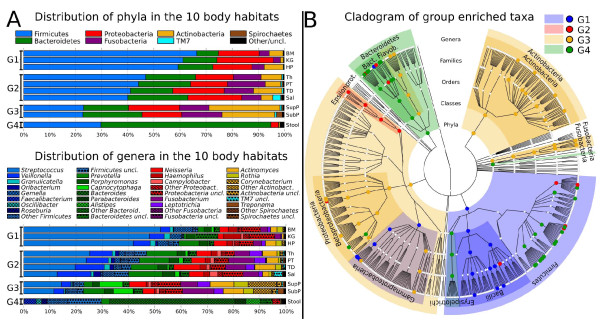
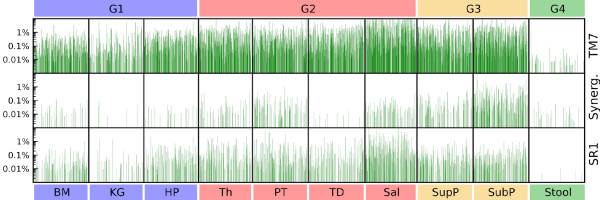
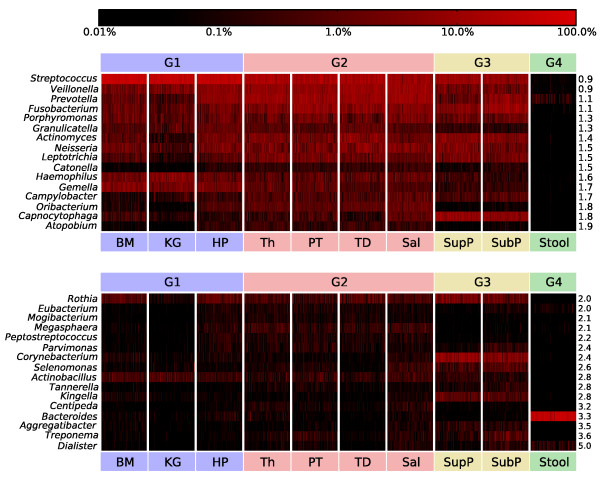
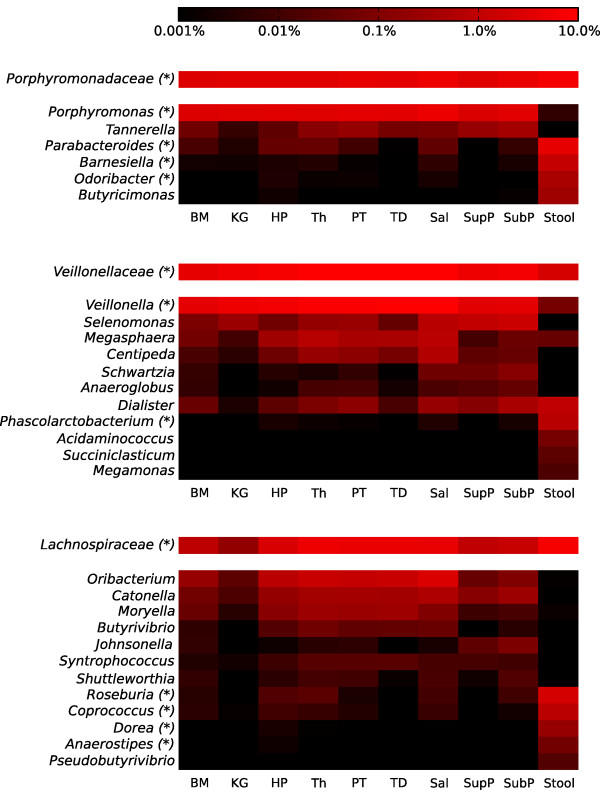
Background: To understand the relationship between our bacterial microbiome and health, it is essential to define the microbiome in the absence of disease. The digestive tract includes diverse habitats and hosts the human body's greatest bacterial density. We describe the bacterial community composition of ten digestive tract sites from more than 200 normal adults enrolled in the Human Microbiome Project, and metagenomically determined metabolic potentials of four representative sites. Results: The microbiota of these diverse habitats formed four groups based on similar community compositions: buccal mucosa, keratinized gingiva, hard palate; saliva, tongue, tonsils, throat; sub- and supra-gingival plaques; and stool. Phyla initially identified from environmental samples were detected throughout this population, primarily TM7, SR1, and Synergistetes. Genera with pathogenic members were well-represented among this disease-free cohort. Tooth-associated communities were distinct, but not entirely dissimilar, from other oral surfaces. The Porphyromonadaceae, Veillonellaceae and Lachnospiraceae families were common to all sites, but the distributions of their genera varied significantly. Most metabolic processes were distributed widely throughout the digestive tract microbiota, with variations in metagenomic abundance between body habitats. These included shifts in sugar transporter types between the supragingival plaque, other oral surfaces, and stool; hydrogen and hydrogen sulfide production were also differentially distributed. Conclusions: The microbiomes of ten digestive tract sites separated into four types based on composition. A core set of metabolic pathways was present across these diverse digestive tract habitats. These data provide a critical baseline for future studies investigating local and systemic diseases affecting human health.
Overview
The claims and statistics of this paper haven’t been checked yet.
Free: it reads the open-access text and checks the first 5 claims that cite a source we can check. Create a free account to check every claim.
Integrity signals
Registry
Cites
Statistics
Figures
Verification
Claims the paper makes
The claims and statistics of this paper haven’t been checked yet.
Free: it reads the open-access text and checks the first 5 claims that cite a source we can check. Create a free account to check every claim.
Claims other papers make about this one
Each is checked against this paper’s own text: does it say what the citing paper says it does?
The source backs part of the claim, not all of it — or backs it for a different population, condition or comparison.
In the citing paper
“The oropharynx, which is lined with a non-keratinized stratified squamous epithelium, has more diverse bacterial communities than the nasopharynx41, which are characterized by streptococcal species, Neisseria spp., Rothia spp. and anaerobes, including Veillonella spp., Prevotella spp. and Leptotrichia spp.39,41,51,52.”
From The microbiota of the respiratory tract: gatekeeper to respiratory health (2017) · cites this paper as [51]
Experimental — accuracy not yet measuredThe source backs part of the claim, not all of it — or backs it for a different population, condition or comparison.
In the citing paper
“Up to 80% of oral bacteria are dominated by about 200 species in the Phyla Firmicutes (esp. Streptococcus, Veillonella, Granulicatella, Gemella spp.) and Proteobacteria (esp. Neisseria, Haemophilus spp.), with contributions from Bacteroidetes, Actinobacteria and Fusobacteria totaling upwards of 95% of all identified oral microbiota (Figure 2)[171–177].”
From Enterosalivary nitrate metabolism and the microbiome: Intersection of microbial metabolism, nitric oxide and diet in cardiac and pulmonary vascular health (2017) · cites this paper as [173]
Experimental — accuracy not yet measuredThe cited source says what the claim attributes to it.
In the citing paper
“Further diversity exists between the varied micro-ecologies of the mouth[174,178], such as the tooth surface, gingiva, hard and soft palate, and even regionally on the tongue (Figure 2)[173,176,179].”
From Enterosalivary nitrate metabolism and the microbiome: Intersection of microbial metabolism, nitric oxide and diet in cardiac and pulmonary vascular health (2017) · cites this paper as [173]
In the citing paper
“Ecological conditions vary immensely along both the length of the GI tract as well as in cross-section from lumen to the mucosal brush-border[173,267,308,309].”
From Enterosalivary nitrate metabolism and the microbiome: Intersection of microbial metabolism, nitric oxide and diet in cardiac and pulmonary vascular health (2017) · cites this paper as [173]
Self-check
Percentages, sums and reported differences re-computed from the paper’s own numbers.
The self-check needs the paper’s full text.
Citations
Cites
Schloss, P. D., Westcott, S. L., Ryabin, T., Hall, J. R., Hartmann, M., Hollister, E. B., Lesniewski, R. A., Oakley, B. B., Parks, D. H., Robinson, C. J., et al. (2009) · Applied and Environmental Microbiology · doi:10.1128/aem.01541-09 · Cited by 19,549
Metagenomic biomarker discovery and explanation
Segata, N., Izard, J., Waldron, L., Gevers, D., Miropolsky, L., Garrett, W. S., & Huttenhower, C. (2011) · Genome Biology · doi:10.1186/gb-2011-12-6-r60 · Cited by 16,192 · cited 11×
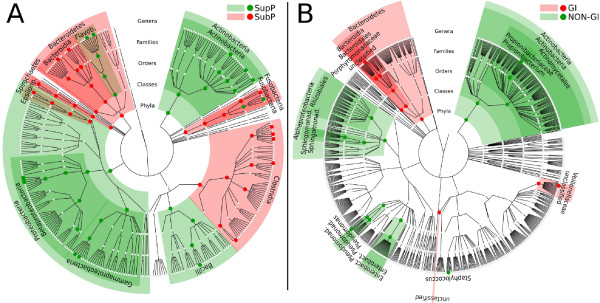
“Clades showing a statistically significant difference (by LEfSe) specifically between oral and stool samples are indiocated with asterisks.”
MethodInfluentialSelf-citationSIMPSON, E. H. (1949) · Nature · doi:10.1038/163688a0 · Cited by 14,164
Structure, function and diversity of the healthy human microbiome
The Human Microbiome Project Consortium (2012) · Nature · doi:10.1038/nature11234 · Cited by 11,726
Self-citationAn Ordination of the Upland Forest Communities of Southern Wisconsin
Bray, J. R., & Curtis, J. T. (1957) · Ecological Monographs · doi:10.2307/1942268 · Cited by 11,716 · cited 2×
“For assessing bacterial community structure similarities between different samples and body sites, we compared the relative abundances of every pair of samples in our dataset using the Bray-Curtis measure of beta diversity [31].”
MethodA human gut microbial gene catalogue established by metagenomic sequencing
MetaHIT Consortium, Qin, J., Li, R., Raes, J., Arumugam, M., Burgdorf, K. S., Manichanh, C., Nielsen, T., Pons, N., Levenez, F., et al. (2010) · Nature · doi:10.1038/nature08821 · Cited by 11,624 · cited 1×
“Previous studies of the healthy adult digestive tract microbiota have typically included less than 20 individuals [11-21] and the studies with over 100 individuals have most often focused on a single body site [22-26].”
BackgroundHuman gut microbes associated with obesity
Ley, R. E., Turnbaugh, P. J., Klein, S., & Gordon, J. I. (2006) · Nature · doi:10.1038/4441022a · Cited by 8,785 · cited 20×
“For example, using endoscopic biopsies from just two subjects, Wang et al. [77] reported 49% of 16S rRNA gene clones were from the Firmicutes and 27.7% were from Bacteroidetes.”
ResultInfluentialDiversity of the Human Intestinal Microbial Flora
Eckburg, P. B., Bik, E. M., Bernstein, C. N., Purdom, E., Dethlefsen, L., Sargent, M., Gill, S. R., Nelson, K. E., & Relman, D. A. (2005) · Science · doi:10.1126/science.1110591 · Cited by 7,913
A core gut microbiome in obese and lean twins
Turnbaugh, P. J., Hamady, M., Yatsunenko, T., Cantarel, B. L., Duncan, A., Ley, R. E., Sogin, M. L., Jones, W. J., Roe, B. A., Affourtit, J. P., et al. (2009) · Nature · doi:10.1038/nature07540 · Cited by 7,823 · cited 2×
“In a study of stool from 154 adult women (twins and their mothers), Firmicutes had a mean relative abundance of >60% using several different methods to assess the 16S rRNA gene content of stool [24].”
BackgroundMethodEnterotypes of the human gut microbiome
MetaHIT Consortium (additional members), Arumugam, M., Raes, J., Pelletier, E., Le Paslier, D., Yamada, T., Mende, D. R., Fernandes, G. R., Tap, J., Bruls, T., et al. (2011) · Nature · doi:10.1038/nature09944 · Cited by 7,548 · cited 2×
“By surveying the HMP population, these results can be further integrated into other currently ongoing studies of the cohort’s core microbiome [9] or enterotype structure [25], if any.”
BackgroundResult
Research works printed but not linked: 1
- NIH Human Microbiome Project - Core Microbiome Sampling Protocol A (HMP-A). http://www.ncbi.nlm.nih.gov/projects/gap/cgi-bin/study.cgi?study_id=phs000228.v3.p1
Cited by
Items 901–1,000 of 1,000
Focà, A., Mc, L., & Marascio, N. (2015) · CiteSeer X (The Pennsylvania State University) · Cited by 1
The interplay between genetics, the microbiome, DNA‐methylation & gene‐expression
Bonder, M. J. (2017) · Cited by 1
Oral microbiology in the microbiome era - when, how and why to perform microbiological diagnostics
Välimaa, H., Fröding, I., & Lau, E. F. (2018) · Den norske tannlegeforenings Tidende · doi:10.56373/2018-11-7 · Cited by 2
Gut bacteria and human body; a mini review
Bhat, R. S., Soliman, D. A., Aljebrin, N. A., Alsuhaibani, L. S., & Alotebi, L. M. (2019) · GSC Advanced Research and Reviews · doi:10.30574/gscarr.2019.1.1.0001 · Cited by 1
“Microbes present in saliva are mixture of bacterial populations that exist at various sites in the oral cavity, although its community composition is most similar to the tongue microbiota [24-26].”
BackgroundFrom the mouth to gut: A microbial journey!
Apoorva, S. R. (2020) · Journal of Academy of Dental Education · doi:10.25259/jade_6_2020 · Cited by 1
Role of the oral microbiota in the development of Alzheimer’s disease
Gavrilova, N., Сергеевич, Г. Н., Kotrova, A., Morozova, A., Сопрун, Л., Воловникова, В. А., & Shishkin, A. N. (2020) · Vestnik of Saint Petersburg University Medicine · doi:10.21638/spbu11.2020.401 · Cited by 1
Durkin, M. J., Seoudi, N., & NAIR, R. G. (2021) · Wiley eBooks · doi:10.1002/9781119597797.ch21 · Cited by 2
Focà, A., Liberto, M. C., & Marascio, N. (2015) · Apple Academic Press eBooks · doi:10.1201/b18597-6 · Cited by 1
The Impact of Oral Microbiome on Systemic Disease
Lee, H. (2022) · Springer eBooks · doi:10.1007/978-981-19-0120-1_25 · Cited by 1
Does Salivary Microbiome Reflect The Functional Activity Profile Of Oral Microbiota?
Станиславовна, К. Е., Igumnov, I. A., Markova, D., Belkova, N. L., & Сутурина, Л. В. (2022) · Russian Open Medical Journal · doi:10.15275/rusomj.2022.0120 · Cited by 1
Impact of Oral Microbiome on Head and Neck Cancer Development: A Critical Review
Somay, E., Yılmaz, B., Küçük, A., & Topkan, E. (2022) · Journal of Advances in Medicine and Medical Research · doi:10.9734/jammr/2022/v34i234872 · Cited by 1
Unusual gingival actinomycosis post allogeneic hematopoietic stem-cell transplant: case report
Bruno, J. S., Miranda‐Silva, W., Heidrich, V., Gonçalves, M. D. C., Novis, Y. A. S., Arrais‐Rodrigues, C., Camargo, A. A., & Fregnani, E. R. (2023) · BMC Oral Health · doi:10.1186/s12903-023-02777-7 · Cited by 1
“Actinomyces is a prevalent bacterial genus in the oral cavity, mainly found in the periodontal region [3].”
BackgroundOral microbial dysbiosis in cardiovascular diseases
Osiak, J., Wołowiec, Ł., Żukow, X., Fydrych, D., Jaśniak, A., Gawłowska, K., Staniewska, A., & Grześk, G. (2023) · Journal of Education Health and Sport · doi:10.12775/jehs.2023.41.01.013 · Cited by 2
Ждан, В. М., Ткаченко, М. В., Babanina, М. Y., Volchenko, G. V., & Kіtura, Y. M. (2024) · Актуальні проблеми сучасної медицини Вісник Української медичної стоматологічної академії · doi:10.31718/2077-1096.24.2.293 · Cited by 1
“Білок SLC17A4 присутній на апікальній мем-брані епітеліальних клітин тонкої кишки та транспортує різні органічні аніони, включаючи урат [21, 22].”
Alterations in Oral Microbiota among Orthodontic Patients and Their Impact on Oral Health: A Review
Liu, L., Jiang, L., Gao, J., & Sun, Q.-Z. (2022) · Bulletin of pioneering researches of medical and clinical science · doi:10.51847/mosc8xrl9n · Cited by 1
Heidrich, V., Fackelmann, G., Ricci, L., Spadazzi, R., Baldanzi, G., Punčochář, M., Catassi, G. N., Marchi, P., Modesto, M., Piccinno, G., et al. (2026) · Cell Press Blue · doi:10.1016/j.cpblue.2026.100034 · Cited by 2
Self-citationAsyari, A., Sari, A. M., Dini, E., Novialdi, N., Fitri, F., Indrama, E., & Bachtiar, H. (2019) · Oto Rhino Laryngologica Indonesiana · doi:10.32637/orli.v49i1.274 · Cited by 3
A framework for identifying antibiotic resistance in the human microbiome
Schmieder, R. (2013) · California State University ScholarWorks (system-wide DSpace) · Cited by 1
Characterization of the Bacterial Communities of the Tonsil of the Soft Palate of Swine
Kernaghan, S. (2013) · The Atrium (University of Guelph) · Cited by 5
Anthelmintic treatment in horses : efficacy and effects on intestinal health.
Daniels, S. (2018) · Surrey Research Insight Open Access (The University of Surrey) · Cited by 1
The relationship between tooth extraction and changes in blood microbiome in horses
Townsend, K. S. (2021) · MOspace Institutional Repository (University of Missouri) · doi:10.32469/10355/85863 · Cited by 1
Comparative in vitro sensitivity to metronidazole of Trichomonas vaginalis with isolates and clones.
Sithithaworn, P., Sithithaworn, P., Kitjaroen, K., Pairojkul, C., Ratananurakpong, S., & Sriswangwonk, T. (1989) · PubMed · Cited by 1
Oral Bacteria in Feces Reflect Loss of Intestinal BacteriaPreprint
Liao, C., Rolling, T., Zhai, B., Peled, J. U., van den Brink, M. R. M., Hohl, T. M., & Xavier, J. B. (2022) · SSRN Electronic Journal · doi:10.2139/ssrn.4008559 · Cited by 2
Zhao, F., Dong, T., Yuan, K.-Y., Wang, N., Xia, F., Liu, D., Wang, Z.-M., Ma, R., Lu, Y., & Huang, Z. (2020) · Research Square · doi:10.21203/rs.3.rs-45886/v1 · Cited by 1
Shitozawa, Y., Haro, K., Ogawa, M., Miyawaki, A., Saito, M., & Fukuda, K. (2022) · Research Square · doi:10.21203/rs.3.rs-1591509/v3 · Cited by 1
Intratumoral Microbiome of Adenoid Cystic Carcinomas and Comparison with Other Head and Neck CancersPreprint
Karpinets, T. V., Mitani, Y., Chang, C., Wu, X., Song, X., Flores, I. I., McDaniel, L. K., Hoballah, Y. M., Veguilla, F. J., Ferrarotto, R., et al. (2024) · Research Square · doi:10.21203/rs.3.rs-3952439/v1 · Cited by 1
Michon, A.-L. (2013) · theses.fr (ABES) · doi:10.70675/3a844b1bza692z4532z87eaz1b754309437e · Cited by 1
Sigurdardottir, S. L. (2014) · Skemman
Kostic, A. D. (2013) · Digital Access to Scholarship at Harvard (DASH) (Harvard University)
Gut Bacteria and Melamine Toxicity
Weinhold, B. (2013) · Environmental Health Perspectives · doi:10.1289/ehp.121-a149
CANDIDA YEASTS AND CARCINOGENIC ACETALDEHYDE IN UPPER DIGESTIVE TRACT CARCINOGENESIS
Nieminen, M. T. (2014) · Helda - University of Helsinki Institutional Repository
Metagenomic analyses of two female genital tract diseases : bacterial vaginosis and ovarian cancer
Montoya, V. (2013) · cIRcle (University of British Columbia) · doi:10.14288/1.0073777 · Cited by 2
“Provided that most metagenomic studies are in the exploratory phase, most multivariate methodologies rely on different types of clustering, PCA, or NMDS (HMPC, 2012; Segata et al., 2012; Turnbaugh et al., 2009a).”
MethodJumas‐Bilak, E. (2014)
The influence of human genetics and environment on the salivary microbiota
Stahringer, S. S. (2013) · CU Scholar (University of Colorado Boulder)
Hotz, R. (2016) · Arizona State University Library Digital Repository (Arizona State University)
Composition and Diversity of Human Oral Microbiome
Balan, P., & Seneviratne, C. J. (2017) · CRC Press eBooks · doi:10.4324/9781315120119-4
Claassen-Weitz, S. (2015) · Open University of Cape Town (University of Cape Town)
Microbiota profiling in gastrointestinal health and disease
Tedjo (2018) · Research Publications (Maastricht University) · doi:10.26481/dis.20180301dt
MECHANISMS OF COLONIZATION RESISTANCE TO SHIGELLA FLEXNERI
Kottwitz, H. (2018) · DalSpace (Dalhousie University)
Köpek ve Kedi Diş Taşı Mikrobiyomunun İleri Jenerasyon Sekanslama Kullanarak Araştırılması
Radeerom, T., Thongkorn, K., Buddhachat, K., Pradit, W., Chomdej, S., Siengdee, P., & Nganvongpanit, K. (2018) · Kafkas Universitesi Veteriner Fakultesi Dergisi · doi:10.9775/kvfd.2018.19690
Meeting Report: A Close Look at Teeth, Orofacial and Bone Development and Regeneration
Liu, Y., Li, X., Graves, D. T., Wang, S., Mao, K., Chen, Z., Zhang, X., Li, B., Kou, X., Shi, S., et al. (2019) · Dentistry 3000
Microbiota development and mucosal IgA responses during childhood in health and allergic disease
Dzidic, M. (2019) · RiuNet (Universitat Politècnica de València) · doi:10.4995/thesis/10251/125479
Lebovitz, Y. (2019) · VTechWorks (Virginia Tech)
Surface colonisation and survival of Staphylococcus aureus
Salgado, B. (2019) · University of Liverpool · doi:10.17638/03046539
BİLGİ, S. T. (2020) · International Journal of Scientific and Technological Research · doi:10.7176/jstr/6-01-04
Caractérisation du microbiome interdentaire des adolescents
Inquimbert, C. (2020) · theses.fr (ABES) · doi:10.70675/a8edc987z9f3az48d8z92ddzfb2a310ee4dd
Hassan, S. A., Bhateja, S., Arora, G., & Prathyusha, F. (2020) · The Journal of Community Health Management · doi:10.18231/j.jchm.2020.008
Practical considerations for the study of the oral microbiome
Yu, Y., Lee, S.-Y., & Na, H. S. (2020) · International Journal of Oral Biology · doi:10.11620/ijob.2020.45.3.77
Galharret, B. (2020) · Open Archive Toulouse Archive Ouverte (University of Toulouse)
Ecological Perturbations Impact Species-Specific Gene Expression of the Oral MicrobiotaPreprint
Belstrøm, D., Constancias, F., Drautz‐Moses, D. I., Schuster, S. C., Veleba, M., Mahé, F., & Givskov, M. (2020) · Research Square · doi:10.21203/rs.3.rs-104582/v1
“As a consequence of microbial adaptation to the ecological conditions being present at different oral sites, considerable taxonomic variations are observed at various oral sites [3, 4].”
BackgroundChoi, D. H., Park, J. W., Choi, J. K., Lee, K. E., Lee, W. H., Yang, J., Lee, J., Park, Y. J., Oh, C., Won, H.-R., et al. (2020) · Research Square · doi:10.21203/rs.3.rs-20841/v1
Bhardwaj, S. B. (2020) · JOURNAL OF GASTROINTESTINAL INFECTIONS · doi:10.5005/jp-journals-10068-3042
Oral bacterial findings in patients with intracranial aneurysms
Pyysalo, M. J. (2019) · UEF eRepo (University of Eastern Finland)
Towards food traceability: discovering biomolecular technologies for complex food products
Frigerio, J. (2021) · BOA (University of Milano-Bicocca) · Cited by 1
Yu, Y. (2021) · University of Groningen research database (University of Groningen / Centre for Information Technology) · doi:10.33612/diss.177562111
Respiratory microbiome and its susceptibility to Mycobacterium tuberculosis infection
Semail, N. (2019) · Universiti Sains Malaysia Institutional Repository (Universiti Sains Malaysia)
Assistance of Gut Microbiota in Depression
Reji, R. T., Krishna, R., & Kumar, R. S. (2021) · Journal of Drug Delivery and Therapeutics · doi:10.22270/jddt.v11i6-s.5202
“Fresh fecal samples are relatively easy to obtain, but the information obtained from these samples does not represent the entire picture within the gut [9,10].”
BackgroundBortolotto, F. R. (2021) · Digital Library of Theses and Dissertations (Universidade de São Paulo) · doi:10.11606/d.17.2021.tde-06122021-124241
van Trijp, M. P. H. (2022) · doi:10.18174/558735 · Cited by 1
Yadav, M., & Bhambi, M. (2021) · Elsevier eBooks · doi:10.1016/b978-0-12-819265-8.00078-4
Microbiota in utero? When and Where Microbial Establishment Starts?
Jiménez, E. (2021) · Elsevier eBooks · doi:10.1016/b978-0-12-819265-8.00073-5 · Cited by 1
Salt Taste, Nutrition, and Health
Bigiani, A. (2020) · MDPI eBooks · doi:10.3390/books978-3-03936-466-4
Krog, M. C., Hugerth, L. W., Fransson, E., Bashir, Z., Andersen, A. N., Edfeldt, G., Engstrand, L. G., Schuppe‐Koistinen, I., & Nielsen, H. S. (2021) · Research Square · doi:10.21203/rs.3.rs-696563/v2
Payne, M., & Furfaro, L. L. (2020) · Faculty Opinions – Post-Publication Peer Review of the Biomedical Literature · doi:10.3410/f.738204903.793575910
Composition and Diversity of Human Oral Microbiome
Balan, P., & Seneviratne, C. J. (2017) · Routledge eBooks · doi:10.1201/9781315120119-5
Chen, H., Yi, B., Xu, X., Liu, Q., Dai, L., & Ma, Z. (2020) · doi:10.21203/rs.3.rs-41491/v1
Kim, M.-J., Bose, S., Shin, N. R., Yang, M., Kwon, O., Song, E., Nam, Y., Nam, D., Lee, J., & Kim, H. (2020) · Research Square · doi:10.21203/rs.3.rs-54133/v1
Wirth, R., Maróti, G., Lipták, L., Mester, M., Ayoubi, A. A., Pap, B., Madléna, M., Minárovits, J., & Kovács, K. L. (2020) · Research Square · doi:10.21203/rs.3.rs-45630/v1
Bachtiar, B. M., Theodorea, C. F., Tahapary, D. L., Astrella, C., Natalina, & Bachtiar, E. W. (2021) · F1000Research · doi:10.12688/f1000research.28216.2
Li, S., & Zhang, X. (2015) · Springer eBooks · doi:10.1007/978-1-4899-7475-4_229
Chen, H., Yi, B., Xu, X., Liu, Q., Dai, L., & Ma, Z. (2020) · Research Square · doi:10.21203/rs.3.rs-46116/v1
Li, S., & Zhang, X. (2013) · Springer eBooks · doi:10.1007/978-1-4614-6418-1_229-1
Shitozawa, Y., Haro, K., Ogawa, M., Miyawaki, A., Saito, M., & Fukuda, K. (2022) · Research Square · doi:10.21203/rs.3.rs-1591509/v2
Shitozawa, Y., Haro, K., Ogawa, M., Miyawaki, A., Saito, M., & Fukuda, K. (2022) · Research Square · doi:10.21203/rs.3.rs-1591509/v1
Chen, H., & Ma, Z. S. (2022) · Evolutionary Bioinformatics · doi:10.1177/11769343221128540
Hosmani, J., Alqarni, A., Yavagal, C. M., Abullais, S. S., Khalid, I., Basheer, S. A., Ibrahim, M., Alshahrani, M. Y., & Alshahrani, A. Y. (2023) · Science of Advanced Materials · doi:10.1166/sam.2023.4493
Prediction of future caries in toddlers via salivary microbiome: A 1-year longitudinal study
Raksakmanut, R. (2022) · Chula Digiverse · doi:10.58837/chula.the.2022.270
Macrophage depletion enhances gut dysbiosis and severity in sepsis mouse model
Hiengrach, P. (2022) · Chula Digiverse · doi:10.58837/chula.the.2022.234
Ataru, I. T. O. (2022) · The Journal of Clinical Dentistry · doi:10.14399/jacd.41.266
Guo, G., cheng, Q., Li, C., Zhang, Y., Liu, L., Liu, Y., Zhong, Y., Xiang, Y., Liao, Z., & Zhang, J. (2024) · Research Square · doi:10.21203/rs.3.rs-3865545/v1
Heidrich, V. (2023) · Digital Library of Theses and Dissertations (Universidade de São Paulo) · doi:10.11606/t.46.2023.tde-11122023-201308
Intratumoral Microbiome of Adenoid Cystic Carcinomas and Comparison with other Head and Neck CancersPreprint
Karpinets, T. V., Mitani, Y., Chang, C., Wu, X., Song, X., Flores, I. I., McDaniel, L. K., Hoballah, Y. M., Veguilla, F. J., Ferrarotto, R., et al. (2024) · bioRxiv (Cold Spring Harbor Laboratory) · doi:10.1101/2024.01.30.578054
In vitro evaluation of the toxicological profile of silica nanoparticles and nanoemulsions
Zaiter, T. (2022) · theses.fr (ABES) · doi:10.70675/d4bb2113z3102z46f5zaa13z8b801a39d00e · Cited by 2
Effet de la prophylaxie orale individuelle sur l'inflammation interdentaire
Saliasi, I. (2020) · theses.fr (ABES) · doi:10.70675/e1f6b965z319dz4eeaz93dfzf68c6bf84e43
Zoonotic Negative-Sense RNA Viruses
(2024) · Frontiers research topics · doi:10.3389/978-2-8325-4589-8
Importance of Microbial Diversity on Health
Mukhopadhyay, S., Sunaina, S., Mohanty, T., Das, A., De, A. J., Dwivedi, I., & Aich, P. (2024) · Elsevier eBooks · doi:10.1016/b978-0-443-13320-6.00031-7
Wu, Z., Hullings, A. G., Ghanbari, R., Etemadi, A., Wan, Y., Zhu, B., Poustchi, H., Bagheri-Fahraji, B., Sakhvidi, M. J. Z., Shi, J., et al. (2021) · Figshare · doi:10.6084/m9.figshare.17066133
Oral immune system and microbes
Dinis, M., & Tran, N. C. (2024) · Elsevier eBooks · doi:10.1016/b978-0-323-90144-4.00005-7 · Cited by 1
Caries and obesity: A cross-sectional study of populations and microbiologyPreprint
Chen, B.-R., Yang, X.-P., Yang, W., Ma, N., Wang, M., Li, Y., Bao, M., & Wang, C. (2024) · Research Square · doi:10.21203/rs.3.rs-4928109/v1
Żeber‐Lubecka, N., Kulecka, M., Dąbrowska, M., Kluska, A., Piątkowska, M., Turkot, M. H., Pilonis, N., Yusuf, A., Nowicki-Osuch, K., Mikuła, M., et al. (2024) · Cancers · doi:10.3390/cancers16203528
Characterizing the oral microbiota of adolescents: results from the Generation R StudyPreprint
Veenman, F., Arredondo, A., Medina‐Gómez, C., Wolvius, E. B., Rivadeneira, F., Àlvarez, G., Blanc, V., & Kragt, L. (2024) · Research Square · doi:10.21203/rs.3.rs-5326178/v1
Novel Insights into the Human Microbiome and Its Functions
Singh, B., Mal, G., Kalra, R. S., & Marotta, F. (2024) · Springer eBooks · doi:10.1007/978-3-031-65459-6_1
Diet-specific impacts on the gut microbiome and their relation to health and inflammation
El-Shafie, S., & Metwaly, A. (2024) · Elsevier eBooks · doi:10.1016/b978-0-443-18979-1.00005-8
Microbiota in the oral cavity,Review
Al-Oebady, M. A. H., & Mousa, N. M. (2024) · Al-Kufa University Journal for Biology · doi:10.36320/ajb/v16.i2.15505 · Cited by 1
Metadata
- Authors
- Segata, N., Haake, S. K., Mannon, P., Lemon, K. P., Waldron, L., Gevers, D., Huttenhower, C., & Izard, J.
- Affiliations
- Harvard University (US)
- University of California, Los Angeles (US)
- University of Alabama at Birmingham (US)
- Boston Children's Hospital (US)
- Broad Institute (US)
- Corresponding author
- Izard, Jacques
- ORCID
- Venue
- Genome Biology
- Published
- 2012-06-14
- Volume
- 13
- Issue
- 6
- Pages
- R42-R42
- ISSN
- 1465-6906 (ISSN-L)
- 1474-760X
- PMC
- PMC3446314
- OpenAlex
- W2170196186
- Cited by
- 1,076
- References
- 104
- Citations by year
- 2026: 57 · 2025: 77 · 2024: 108 · 2023: 85 · 2022: 103 · 2021: 123 · 2020: 120 · 2019: 64 · 2018: 61 · 2017: 66 · 2016: 52 · 2015: 51 · 2014: 59 · 2013: 40 · 2012: 9
- FWCI
- 20.46
- Type
- journal article
- Language
- en
- Open access
- gold
- doi.org
- Licence
- cc-by
- creativecommons.org/licenses/by/2.0/ (tdm)
- creativecommons.org/licenses/by/2.0/ (vor)
- Locations
- Genome biology (publishedVersion, cc-by)
- PubMed Central (publishedVersion, cc-by)
- PubMed (publishedVersion)
- Institutional Research Information System (Università degli Studi di Trento) (submittedVersion, cc-by)
- CUNY Academic Works (City University of New York) (submittedVersion, cc-by)
- Digital Access to Scholarship at Harvard (DASH) (Harvard University) (submittedVersion, cc-by)
- Lincoln (University of Nebraska) (submittedVersion)
- eScholarship (California Digital Library) (submittedVersion)
- Funders
- National Science Foundation (1053486)
- National Institutes of Health (DBI-1053486)
- National Human Genome Research Institute (HG005969, U54HG004969, R01HG005969, HG004969)
- National Cancer Institute (R21CA139193, CA139193)
- National Institute of Dental and Craniofacial Research (DE020298, P30DE020751, R01DE021574, DE021574, RC1DE020298, DE020751)
- Army Research Office (W911NF-11-1-0473, W911NF, W911NF-11)
- Topics
- Life Sciences › Biochemistry, Genetics and Molecular Biology › Molecular Biology › Gut microbiota and health
- Health Sciences › Dentistry › Periodontics › Oral microbiology and periodontitis research
- Physical Sciences › Environmental Science › Ecology › Microbial Community Ecology and Physiology
- Keywords
- human gut microbiome, oral microbiota, buccal mucosa, gingival plaque, tongue microbiota, tonsil, saliva, stool microbiome, Porphyromonadaceae, Veillonellaceae, Lachnospiraceae, hydrogen sulfide production, sugar transporters, core metabolic pathways, healthy adults
- MeSH terms
- Adolescent, Adult, Feces, Female, Humans, Male, Mouth, Pharynx, Phylogeny, RNA, Ribosomal, 16S, Saliva, Palatine Tonsil, Bacterial Typing Techniques, Genes, rRNA, Actinobacteria, Bacteroidetes, Veillonellaceae, Metagenome, Young Adult, Biota
About these checks
Registry, retraction, Cites and statistics results are computed, not judged, with one exception: a printed reference that no index lists is read once by a model before it counts as a citation error. Claims are extracted by a model and kept only when their quote appears verbatim in the text; each cited source is then checked, with a model’s help, for whether it says what the claim relies on. Those verdicts can be wrong — read the claim’s quote and the cited source before relying on one.
Statistics and arithmetic are recomputed, not judged.
Confidence bands are shown only for fields calibrated on our annotated test set. None is calibrated yet, so no band is shown.
What counts as a claim ›How we measure confidence ›How we check this ›
Are you an author, or do you see a problem with this page? Request a review
Data sources
Bibliographic data: Semantic Scholar, OpenAlex, Crossref.
Contains information from the Semantic Scholar Academic Graph Datasets, made available under the ODC Attribution License (ODC-BY 1.0).
Semantic Scholar’s data is described in: Kinney, R., et al. (2023). The Semantic Scholar Open Data Platform. arXiv:2301.10140.
